3
TRIBHUVAN UNIVERSITY
CENTRAL DEPARTMENT OF GEOLOGY
KIRTIPUR, KATHMANDU
NEPAL.
CERTIFICATE OF APPOROVAL
Under my supervision, this proposal of dissertation entitled “Activity and consolidation of
Kathmandu Clay” of Mr. Jyoti Khatiwada is approved for the examination and submitted to the
Tribhuvan University as partial fulfillment of M.Sc. Degree in Engineering Geology.
……………………………………..
Asso. Prof. Dr. Ranjan Kumar Dahal
Central Department of Geology
Tribhuvan University
Kirtipur, Kathmandu
4
Activity and consolidation of
Kathmandu Clay.
M.Sc. Dissertation Proposal
Submitted to
Engineering Geology Program
Department Of Geology
Tribhuvan University,
Kirtipur, Kathmandu.
BY
Jyoti Khatiwada
M.Sc. Engineering Geology (4th
semester)
Thesis Supervisor
Dr. Ranjan Kumar Dahal
Associate professor, Central Department Of Geology, T.U.
Dec ,2017
5
Contents
1. Title ...........................................................................................................................................................1
2. Background ...............................................................................................................................................1
3. Literature Review......................................................................................................................................4
4. Hypothesis and Research Questions.........................................................................................................7
5. Significance Of the Study ..........................................................................................................................7
6. Objectives..................................................................................................................................................7
7. Methodology.............................................................................................................................................8
7.1 Preliminary works ...............................................................................................................................8
7.2 Fieldwork.............................................................................................................................................8
7.3 Lab work..............................................................................................................................................8
7.4 Population and sample.......................................................................................................................8
8. Data collection and Tool analysis..............................................................................................................9
9. Future prospect and Expected outcome of Proposed work.....................................................................9
10. Limitations...............................................................................................................................................9
11. Time Schedule.......................................................................................................................................10
12. Budgeting..............................................................................................................................................10
Reference....................................................................................................................................................11
Appendices..................................................................................................................................................12
1
1. Title
Activity and Consolidation of Kathmandu Clay
2. Background
Kathmandu is the capital city of Nepal. The fertile nature of soil has attracted all the
residents of Kathmandu Valley since past. Later infrastructure development and other facilities
has added tremendous population in the city. Many have intuitive knowledge that Kathmandu
Valley has unconsolidated fine sediments but negligible amount of people have studied about the
nature and properties of the soil. The Valley sediments is fluvio lacustrine deposit. Many
geoscientist have studied about the nature of Kathmandu soil but none has done a study linking
up the whole area.
Historically the valley was an ancient big lake. The weathered rocks along with the
decaying plants and organism settled on the bed rock in different layers over long period of time
to form the soil deposits with organic matters. Soil investigation reports from different
construction projects in the Kathmandu valley reveal that the majority of the particles of the soil
deposits in the different parts of the valley are sand and clay with organic content. The majority
of the soil deposit in the western and southern part of the valley is clay. This organic soil in
different part of valley was found at different depth and in different thickness. Among the people
in Kathmandu valley the soil is widely known as Kalomato, meaning black soil in Nepali
language. Kalomato possess typical characteristics of organic soil such as dark color. low
density, low permeability, high water content low shear strength high alter berg limit. Low
specific gravity and high compressibility.
Kathmandu valley is located in the central part of Nepal which stretches 30 km in east-
west and 25 km in north-south direction, covering an area of 650 sq. km. the soil in the valley
originated from weathering of rocks within the certain watershed boundary. The origin of soil in
most part of the valley is lacustrine and fluvial deposits. The maximum thickness of the
sediments above the bed rock was found to be 550 m. in Bhrikutimandap and then 475 m in
Harisiddhi (Katel, et al .1996).
2
Seven stratigraphic units; Tarebhir Conglomerate, Lukundol formation, Sunakothi
Formations, Shakhu fortmation, Gokarna formation, Thimi formation and Kalimati have been
described by Sah et al.(1995-96). The Tarebhir Formation is the basal unit which is overlained
by alluvial fan of the Itaiti Formation in the southern part and by the marginal lacustrine deposit
of the Lukundol Formation towards the northern part. Further 3 km toward the north from the
basin margin at Jorkhu the the Lukundol Formation is overlain by the open lacustrine facies of
the Kalimati Formation. The Kalimati Formation thickens northward, while the Sunakothi
Formation thickens between the central and southern part of the basin.( Mukunda Raj Paudel,
Harutaka Sakai,2008)
.
Figure 1. Location map of the study area.
3
4
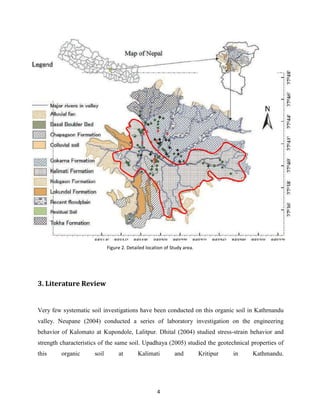
Figure 2. Detailed location of Study area.
3. Literature Review
Very few systematic soil investigations have been conducted on this organic soil in Kathrnandu
valley. Neupane (2004) conducted a series of laboratory investigation on the engineering
behavior of Kalomato at Kupondole, Lalitpur. Dhital (2004) studied stress-strain behavior and
strength characteristics of the same soil. Upadhaya (2005) studied the geotechnical properties of
this organic soil at Kalimati and Kritipur in Kathmandu.
5
Rijal (2013) studied about the correlation between sensitivity and activity of Kalomato in
Kathmandu valley. Kawan (2015) studied on the properties of clay , study of sensitivity , activity
and thixotropic characteristic of Kathmandu clay.
Soil Consistency
The knowledge of the soil consistency is important in defining or classifying a soil type or
predicting soil performance when used a construction material
1) A fine-grained soil usually exists with its particles surrounded by water.
2) The amount of water in the soil determines its state or consistency
The Atterberg limits may be used for the following:
Importance of Atterberg Limits
1) To obtain general information about a soil and its strength, compressibility, and permeability
properties.
2) Empirical correlations for some engineering properties.
3) Soil classification
U.S. Army Corps of Engineers proposed an empirical equation of the form LL= WN(N/25)tanβ
where:
N= number of blows in the liquid limit device for a 12.5 mm groove closure
WN= Corresponding water content
tanβ= 0.121 ( not for all soils) – To be determined for Kathmandu Clay
Equation LL= WN(N/25)tanβ
generally yields good results for the number of blows between 20
and 30. This procedure is generally referred to as the one-point method and was also adopted by
ASTM under designation D-4318. The reason that the one-point method yields fairly good
results is that a small range of moisture content is involved when N = 20 to N = 30.
In a recent study by Polidori (2007) that involved six inorganic soils and their respective
mixtures with fine silica sand, it was shown that
6
Activity , A Classification
< 0.75 Inactive clay
0.75 to 1.25 Normal clay
> 1.25 Active clay
PL= 0.04(LL) + 0.26 (CF) +10
And PI= 0.96(LL) + 0.26 (CF) -10
where CF clay fraction (<2 μm) in %. The experimental results of Polidori (2007) show that the
preceding relationships hold good for CF approximately equal to or greater than 30%.
The relative consistency of a cohesive soil in the natural state can be defined by a ratio called the
liquidity index (LI), which is given by:
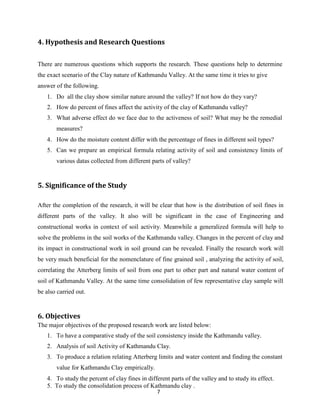
LI= (WC-PL)/PI
where : WC in situ moisture content of soil.
The in situ moisture content for a sensitive clay may be greater than the liquid limit.
In this case: LI > 1.
Soil deposits that are heavily over consolidated may have a natural moisture content less than the
plastic limit. In this case: LI < 1.
Activity of clays is the ratio of plasticity index to the percentage of particle sizes finer than 2μm
Polidori (2007) provided an empirical relationship for activity as (for CF equal to or greater than
30%)
PL= {0.96(LI)-0.26(CF)-10}/CF
Classification as per activity is:
7
4. Hypothesis and Research Questions
There are numerous questions which supports the research. These questions help to determine
the exact scenario of the Clay nature of Kathmandu Valley. At the same time it tries to give
answer of the following.
1. Do all the clay show similar nature around the valley? If not how do they vary?
2. How do percent of fines affect the activity of the clay of Kathmandu valley?
3. What adverse effect do we face due to the activeness of soil? What may be the remedial
measures?
4. How do the moisture content differ with the percentage of fines in different soil types?
5. Can we prepare an empirical formula relating activity of soil and consistency limits of
various datas collected from different parts of valley?
5. Significance of the Study
After the completion of the research, it will be clear that how is the distribution of soil fines in
different parts of the valley. It also will be significant in the case of Engineering and
constructional works in context of soil activity. Meanwhile a generalized formula will help to
solve the problems in the soil works of the Kathmandu valley. Changes in the percent of clay and
its impact in constructional work in soil ground can be revealed. Finally the research work will
be very much beneficial for the nomenclature of fine grained soil , analyzing the activity of soil,
correlating the Atterberg limits of soil from one part to other part and natural water content of
soil of Kathmandu Valley. At the same time consolidation of few representative clay sample will
be also carried out.
6. Objectives
The major objectives of the proposed research work are listed below:
1. To have a comparative study of the soil consistency inside the Kathmandu valley.
2. Analysis of soil Activity of Kathmandu Clay.
3. To produce a relation relating Atterberg limits and water content and finding the constant
value for Kathmandu Clay empirically.
4. To study the percent of clay fines in different parts of the valley and to study its effect.
5. To study the consolidation process of Kathmandu clay .
8
7. Methodology
7.1 Preliminary works
Initially possible areas will be located and the places where heavy construction is occurring
were marked using maps, then preparation of the fieldwork is done. Related papers of similar
thesis topic will be also studied. The Kathmandu area will be subdivided into grids and samples
will be collected from the grid area.
7.2 Fieldwork
Clay samples will be collected from various sites in the valley as a wide variety of clay mineral
deposit may be located in the area. Collection of the disturbed sample from the possible areas of
interest of study will be done using the apparatus needed. The soil sample will be taken from
almost similar depth range,(2-4m from the surface). Few samples will be collected undisturbed
for consolidation study.
7.3 Lab work
With a great care the sample is carried to the lab and test will be done accordingly. The
consistency of the soil can be determined using Casagrande apparatus. The percentage of fines
can be found out by hydrometric analysis. If possible X-ray diffraction to find the activity of
fines will be done to know which clay mineral is mainly responsible for the swelling and
shrinking processes. For few clay samples consolidation process will also be done.
7.4 Population and sample
Population sampling is the process of taking a subset of subjects that is representative of entire
population. The probability sampling techniques used for qualitative studies are rarely
appropriate when conducting qualitative research. So in the field sampling of soil is done
according to the limitation of time, money and effort. A representative sample of contemporary
deposit with same shape and size will be taken from a study area by making a grid.
9
8. Data collection and Tool analysis
Data will be collected by directly through the field study, experimental works and lab results.
During the field work special attention will be given to the study of natural water content and
percent of clay fines of the soil and the impact due to the clay fraction in the soil relating it to the
activity of the soil.
9. Future prospect and Expected outcome of Proposed work.
From the proposed research following achievement can be gained:
1. A relation can be obtained relating soil consistency and water content.
2. The data obtained can be used to obtain different relations and comparisons. Can help in
analysis of soil activity with the water content and activity of soil.
3. Can Prepare a map zoning the activeness of clay in Kathmandu valley.
10. Limitations
1. Due to limited budgeting , not always the sampling exactly fall on the grid surface.
2. Due to higher concentration of clay towards the center of valley, my study will be
focused on the central portion of the valley.
3. Sampling of hundreds of samples takes a long time period, so due to precipitation and
other environmental factors, the natural water content may vary slightly from reality.
4. Not always sampling will be done from the same depth, due to absence of clayey layer in
the desired depth.
.
10
11. Time Schedule
The proposed research program will schedule for six months. Detail research schedule is
presented in the table below:
Time
Work
1st
month
2nd
month
3rd
month
4th
month
5th
month
6th
month
Literature Review & Desk study
Field work and data collection
Laboratory work and data interpretation
Dissertation writing and defense
Table 1. Detailed Research Time Schedule
12. Budgeting
The tentative amount required to carry out the proposed study is presented below:
S.N Description Rate (NRs.) Total (NRs)
1 Research materials Lump sum 10,000
2 Stationary and maps Lump sum 10, 000
3 Field equipment Lump sum 10,000
4 Logistic 500 * 90 (days) 45,000
5 Thesis printing Lump sum 15, 000
6 Total - 90,000
Table 2. Tentative Budgeting For Research
11
Reference
1. A.W.Skempton (1953) , “The Colloidal "Activity" of Clays”
2. Das, B., M. (2014), “ Principles of geotechnical Engineering ” Eighth Edition, CENGAGE
Learning, ISBN-13: 978-0-495-41130-7.
3. Ennio Polidori,(2009), “Reappraisal of the activity of clay. Activity chart, Soil and
Foundation”, Vol 49, No.3, 431-441, Japanese Geotechnical Society.
4. Karl Terzaghi, Ralph B. Peck, Gholamreza Mesri,(1948)”Soil mechanics in engineering
practice”. 3rd ed.
5. Kawan T.(2015) “Properties of clays, A study of sensitivity, activity and Thixotropic
characteristic” Master’s Thesis, Tribhuvan University, Institute of Engineering, Pulchowk
Campus
6. Knappett, J. A. and Craig R. F. (2012), “ Craig’s Soil Mechanics” Eighth Edition, Spon Press,
ISBN: 978- 0-415-56125-9.
7. Neupane R.(2004) “Geotechnical Properties of an organic Deposit At Kupondole ,
Kathmandu valley” Master’s Thesis, Tribhuvan University, Institute of Engineering,
Pulchowk Campus
8. Northey, R. D. (1950): An experimental study of the structural sensitivity of clays. Ph.D.
Thesis Faculty of Science. University of London.
9. Paudel M., Sakai H.(2008)”Stratigraphy and depositional environments of basin-fill
sediments in southern Kathmandu Valley, Central Nepal” , Vol 11, pp. 61–70, Bulletin of the
Department of Geology
10. Rijal N.,(2013) “Coorelation between sensitivity and activity of Kalomato on Kathmandu
Valley” Master’s Thesis, Tribhuvan University, Institute of Engineering, Pulchowk Campus
11. Saharia G.,(2002) “A study on alluvial clays of Darrang and Kamrup district of Assam by X-Ray
and other physical methods.” PhD Thesis, Faculty of Science , Gauhati University,.
12. Sah R.B., Paudel M.,& Ghimire D. (1995-96)” Lithological succession and some vertebrate
fossil from fluvio lacustrine sediments of Kathmandu valley, Central , Nepal”.Vol. 5-6. No. 1-
4, Nashon Bulletin.
13. V.N.S. Murthy “Geotechnical Engineering: Principles and Practices of Soil Mechanics and
Foundation Engineering (Civil and Environmental Engineering)” [1 ed.]
12
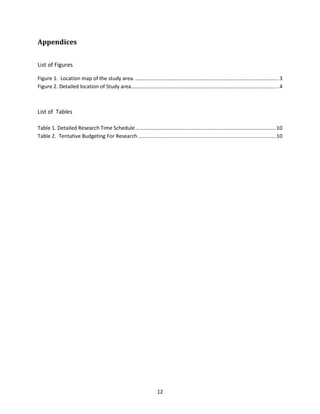
Appendices
List of Figures
Figure 1. Location map of the study area. ...................................................................................................3
Figure 2. Detailed location of Study area......................................................................................................4
List of Tables
Table 1. Detailed Research Time Schedule.................................................................................................10
Table 2. Tentative Budgeting For Research ...............................................................................................10

Thesis Proposal example

  • 1.
    3 TRIBHUVAN UNIVERSITY CENTRAL DEPARTMENTOF GEOLOGY KIRTIPUR, KATHMANDU NEPAL. CERTIFICATE OF APPOROVAL Under my supervision, this proposal of dissertation entitled “Activity and consolidation of Kathmandu Clay” of Mr. Jyoti Khatiwada is approved for the examination and submitted to the Tribhuvan University as partial fulfillment of M.Sc. Degree in Engineering Geology. …………………………………….. Asso. Prof. Dr. Ranjan Kumar Dahal Central Department of Geology Tribhuvan University Kirtipur, Kathmandu
  • 2.
    4 Activity and consolidationof Kathmandu Clay. M.Sc. Dissertation Proposal Submitted to Engineering Geology Program Department Of Geology Tribhuvan University, Kirtipur, Kathmandu. BY Jyoti Khatiwada M.Sc. Engineering Geology (4th semester) Thesis Supervisor Dr. Ranjan Kumar Dahal Associate professor, Central Department Of Geology, T.U. Dec ,2017
  • 3.
    5 Contents 1. Title ...........................................................................................................................................................1 2.Background ...............................................................................................................................................1 3. Literature Review......................................................................................................................................4 4. Hypothesis and Research Questions.........................................................................................................7 5. Significance Of the Study ..........................................................................................................................7 6. Objectives..................................................................................................................................................7 7. Methodology.............................................................................................................................................8 7.1 Preliminary works ...............................................................................................................................8 7.2 Fieldwork.............................................................................................................................................8 7.3 Lab work..............................................................................................................................................8 7.4 Population and sample.......................................................................................................................8 8. Data collection and Tool analysis..............................................................................................................9 9. Future prospect and Expected outcome of Proposed work.....................................................................9 10. Limitations...............................................................................................................................................9 11. Time Schedule.......................................................................................................................................10 12. Budgeting..............................................................................................................................................10 Reference....................................................................................................................................................11 Appendices..................................................................................................................................................12
  • 4.
    1 1. Title Activity andConsolidation of Kathmandu Clay 2. Background Kathmandu is the capital city of Nepal. The fertile nature of soil has attracted all the residents of Kathmandu Valley since past. Later infrastructure development and other facilities has added tremendous population in the city. Many have intuitive knowledge that Kathmandu Valley has unconsolidated fine sediments but negligible amount of people have studied about the nature and properties of the soil. The Valley sediments is fluvio lacustrine deposit. Many geoscientist have studied about the nature of Kathmandu soil but none has done a study linking up the whole area. Historically the valley was an ancient big lake. The weathered rocks along with the decaying plants and organism settled on the bed rock in different layers over long period of time to form the soil deposits with organic matters. Soil investigation reports from different construction projects in the Kathmandu valley reveal that the majority of the particles of the soil deposits in the different parts of the valley are sand and clay with organic content. The majority of the soil deposit in the western and southern part of the valley is clay. This organic soil in different part of valley was found at different depth and in different thickness. Among the people in Kathmandu valley the soil is widely known as Kalomato, meaning black soil in Nepali language. Kalomato possess typical characteristics of organic soil such as dark color. low density, low permeability, high water content low shear strength high alter berg limit. Low specific gravity and high compressibility. Kathmandu valley is located in the central part of Nepal which stretches 30 km in east- west and 25 km in north-south direction, covering an area of 650 sq. km. the soil in the valley originated from weathering of rocks within the certain watershed boundary. The origin of soil in most part of the valley is lacustrine and fluvial deposits. The maximum thickness of the sediments above the bed rock was found to be 550 m. in Bhrikutimandap and then 475 m in Harisiddhi (Katel, et al .1996).
  • 5.
    2 Seven stratigraphic units;Tarebhir Conglomerate, Lukundol formation, Sunakothi Formations, Shakhu fortmation, Gokarna formation, Thimi formation and Kalimati have been described by Sah et al.(1995-96). The Tarebhir Formation is the basal unit which is overlained by alluvial fan of the Itaiti Formation in the southern part and by the marginal lacustrine deposit of the Lukundol Formation towards the northern part. Further 3 km toward the north from the basin margin at Jorkhu the the Lukundol Formation is overlain by the open lacustrine facies of the Kalimati Formation. The Kalimati Formation thickens northward, while the Sunakothi Formation thickens between the central and southern part of the basin.( Mukunda Raj Paudel, Harutaka Sakai,2008) .
  • 6.
    Figure 1. Locationmap of the study area. 3
  • 7.
    4 Figure 2. Detailedlocation of Study area. 3. Literature Review Very few systematic soil investigations have been conducted on this organic soil in Kathrnandu valley. Neupane (2004) conducted a series of laboratory investigation on the engineering behavior of Kalomato at Kupondole, Lalitpur. Dhital (2004) studied stress-strain behavior and strength characteristics of the same soil. Upadhaya (2005) studied the geotechnical properties of this organic soil at Kalimati and Kritipur in Kathmandu.
  • 8.
    5 Rijal (2013) studiedabout the correlation between sensitivity and activity of Kalomato in Kathmandu valley. Kawan (2015) studied on the properties of clay , study of sensitivity , activity and thixotropic characteristic of Kathmandu clay. Soil Consistency The knowledge of the soil consistency is important in defining or classifying a soil type or predicting soil performance when used a construction material 1) A fine-grained soil usually exists with its particles surrounded by water. 2) The amount of water in the soil determines its state or consistency The Atterberg limits may be used for the following: Importance of Atterberg Limits 1) To obtain general information about a soil and its strength, compressibility, and permeability properties. 2) Empirical correlations for some engineering properties. 3) Soil classification U.S. Army Corps of Engineers proposed an empirical equation of the form LL= WN(N/25)tanβ where: N= number of blows in the liquid limit device for a 12.5 mm groove closure WN= Corresponding water content tanβ= 0.121 ( not for all soils) – To be determined for Kathmandu Clay Equation LL= WN(N/25)tanβ generally yields good results for the number of blows between 20 and 30. This procedure is generally referred to as the one-point method and was also adopted by ASTM under designation D-4318. The reason that the one-point method yields fairly good results is that a small range of moisture content is involved when N = 20 to N = 30. In a recent study by Polidori (2007) that involved six inorganic soils and their respective mixtures with fine silica sand, it was shown that
  • 9.
    6 Activity , AClassification < 0.75 Inactive clay 0.75 to 1.25 Normal clay > 1.25 Active clay PL= 0.04(LL) + 0.26 (CF) +10 And PI= 0.96(LL) + 0.26 (CF) -10 where CF clay fraction (<2 μm) in %. The experimental results of Polidori (2007) show that the preceding relationships hold good for CF approximately equal to or greater than 30%. The relative consistency of a cohesive soil in the natural state can be defined by a ratio called the liquidity index (LI), which is given by: LI= (WC-PL)/PI where : WC in situ moisture content of soil. The in situ moisture content for a sensitive clay may be greater than the liquid limit. In this case: LI > 1. Soil deposits that are heavily over consolidated may have a natural moisture content less than the plastic limit. In this case: LI < 1. Activity of clays is the ratio of plasticity index to the percentage of particle sizes finer than 2μm Polidori (2007) provided an empirical relationship for activity as (for CF equal to or greater than 30%) PL= {0.96(LI)-0.26(CF)-10}/CF Classification as per activity is:
  • 10.
    7 4. Hypothesis andResearch Questions There are numerous questions which supports the research. These questions help to determine the exact scenario of the Clay nature of Kathmandu Valley. At the same time it tries to give answer of the following. 1. Do all the clay show similar nature around the valley? If not how do they vary? 2. How do percent of fines affect the activity of the clay of Kathmandu valley? 3. What adverse effect do we face due to the activeness of soil? What may be the remedial measures? 4. How do the moisture content differ with the percentage of fines in different soil types? 5. Can we prepare an empirical formula relating activity of soil and consistency limits of various datas collected from different parts of valley? 5. Significance of the Study After the completion of the research, it will be clear that how is the distribution of soil fines in different parts of the valley. It also will be significant in the case of Engineering and constructional works in context of soil activity. Meanwhile a generalized formula will help to solve the problems in the soil works of the Kathmandu valley. Changes in the percent of clay and its impact in constructional work in soil ground can be revealed. Finally the research work will be very much beneficial for the nomenclature of fine grained soil , analyzing the activity of soil, correlating the Atterberg limits of soil from one part to other part and natural water content of soil of Kathmandu Valley. At the same time consolidation of few representative clay sample will be also carried out. 6. Objectives The major objectives of the proposed research work are listed below: 1. To have a comparative study of the soil consistency inside the Kathmandu valley. 2. Analysis of soil Activity of Kathmandu Clay. 3. To produce a relation relating Atterberg limits and water content and finding the constant value for Kathmandu Clay empirically. 4. To study the percent of clay fines in different parts of the valley and to study its effect. 5. To study the consolidation process of Kathmandu clay .
  • 11.
    8 7. Methodology 7.1 Preliminaryworks Initially possible areas will be located and the places where heavy construction is occurring were marked using maps, then preparation of the fieldwork is done. Related papers of similar thesis topic will be also studied. The Kathmandu area will be subdivided into grids and samples will be collected from the grid area. 7.2 Fieldwork Clay samples will be collected from various sites in the valley as a wide variety of clay mineral deposit may be located in the area. Collection of the disturbed sample from the possible areas of interest of study will be done using the apparatus needed. The soil sample will be taken from almost similar depth range,(2-4m from the surface). Few samples will be collected undisturbed for consolidation study. 7.3 Lab work With a great care the sample is carried to the lab and test will be done accordingly. The consistency of the soil can be determined using Casagrande apparatus. The percentage of fines can be found out by hydrometric analysis. If possible X-ray diffraction to find the activity of fines will be done to know which clay mineral is mainly responsible for the swelling and shrinking processes. For few clay samples consolidation process will also be done. 7.4 Population and sample Population sampling is the process of taking a subset of subjects that is representative of entire population. The probability sampling techniques used for qualitative studies are rarely appropriate when conducting qualitative research. So in the field sampling of soil is done according to the limitation of time, money and effort. A representative sample of contemporary deposit with same shape and size will be taken from a study area by making a grid.
  • 12.
    9 8. Data collectionand Tool analysis Data will be collected by directly through the field study, experimental works and lab results. During the field work special attention will be given to the study of natural water content and percent of clay fines of the soil and the impact due to the clay fraction in the soil relating it to the activity of the soil. 9. Future prospect and Expected outcome of Proposed work. From the proposed research following achievement can be gained: 1. A relation can be obtained relating soil consistency and water content. 2. The data obtained can be used to obtain different relations and comparisons. Can help in analysis of soil activity with the water content and activity of soil. 3. Can Prepare a map zoning the activeness of clay in Kathmandu valley. 10. Limitations 1. Due to limited budgeting , not always the sampling exactly fall on the grid surface. 2. Due to higher concentration of clay towards the center of valley, my study will be focused on the central portion of the valley. 3. Sampling of hundreds of samples takes a long time period, so due to precipitation and other environmental factors, the natural water content may vary slightly from reality. 4. Not always sampling will be done from the same depth, due to absence of clayey layer in the desired depth. .
  • 13.
    10 11. Time Schedule Theproposed research program will schedule for six months. Detail research schedule is presented in the table below: Time Work 1st month 2nd month 3rd month 4th month 5th month 6th month Literature Review & Desk study Field work and data collection Laboratory work and data interpretation Dissertation writing and defense Table 1. Detailed Research Time Schedule 12. Budgeting The tentative amount required to carry out the proposed study is presented below: S.N Description Rate (NRs.) Total (NRs) 1 Research materials Lump sum 10,000 2 Stationary and maps Lump sum 10, 000 3 Field equipment Lump sum 10,000 4 Logistic 500 * 90 (days) 45,000 5 Thesis printing Lump sum 15, 000 6 Total - 90,000 Table 2. Tentative Budgeting For Research
  • 14.
    11 Reference 1. A.W.Skempton (1953), “The Colloidal "Activity" of Clays” 2. Das, B., M. (2014), “ Principles of geotechnical Engineering ” Eighth Edition, CENGAGE Learning, ISBN-13: 978-0-495-41130-7. 3. Ennio Polidori,(2009), “Reappraisal of the activity of clay. Activity chart, Soil and Foundation”, Vol 49, No.3, 431-441, Japanese Geotechnical Society. 4. Karl Terzaghi, Ralph B. Peck, Gholamreza Mesri,(1948)”Soil mechanics in engineering practice”. 3rd ed. 5. Kawan T.(2015) “Properties of clays, A study of sensitivity, activity and Thixotropic characteristic” Master’s Thesis, Tribhuvan University, Institute of Engineering, Pulchowk Campus 6. Knappett, J. A. and Craig R. F. (2012), “ Craig’s Soil Mechanics” Eighth Edition, Spon Press, ISBN: 978- 0-415-56125-9. 7. Neupane R.(2004) “Geotechnical Properties of an organic Deposit At Kupondole , Kathmandu valley” Master’s Thesis, Tribhuvan University, Institute of Engineering, Pulchowk Campus 8. Northey, R. D. (1950): An experimental study of the structural sensitivity of clays. Ph.D. Thesis Faculty of Science. University of London. 9. Paudel M., Sakai H.(2008)”Stratigraphy and depositional environments of basin-fill sediments in southern Kathmandu Valley, Central Nepal” , Vol 11, pp. 61–70, Bulletin of the Department of Geology 10. Rijal N.,(2013) “Coorelation between sensitivity and activity of Kalomato on Kathmandu Valley” Master’s Thesis, Tribhuvan University, Institute of Engineering, Pulchowk Campus 11. Saharia G.,(2002) “A study on alluvial clays of Darrang and Kamrup district of Assam by X-Ray and other physical methods.” PhD Thesis, Faculty of Science , Gauhati University,. 12. Sah R.B., Paudel M.,& Ghimire D. (1995-96)” Lithological succession and some vertebrate fossil from fluvio lacustrine sediments of Kathmandu valley, Central , Nepal”.Vol. 5-6. No. 1- 4, Nashon Bulletin. 13. V.N.S. Murthy “Geotechnical Engineering: Principles and Practices of Soil Mechanics and Foundation Engineering (Civil and Environmental Engineering)” [1 ed.]
  • 15.
    12 Appendices List of Figures Figure1. Location map of the study area. ...................................................................................................3 Figure 2. Detailed location of Study area......................................................................................................4 List of Tables Table 1. Detailed Research Time Schedule.................................................................................................10 Table 2. Tentative Budgeting For Research ...............................................................................................10