Made by –
Aunj Raut
Krishna Sashank
LAND DEGREDATION
INTRODUCTION
The change in the characteristic and quality of soil which
adversely affect its fertility is called as Degradation.
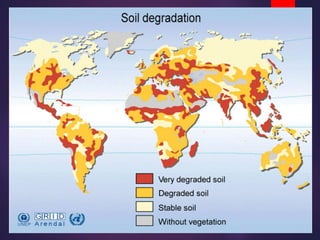
Land degradation is the most important environmental
problem currently challenging sustainable development
in many parts of the world. The problem is most acute
where the environment is intrinsically vulnerable and
where the population is losing control of its own
resources.
Land degradation means:
1) Loss of natural fertility of soil because of loss of
nutrients.
2) Less vegetation cover
3) Changes in the characteristic of soil.
4) Pollution of water resources from the contamination
of soil through which water sweeps into ground or
runoff to the water bodies.
5) Changes in climatic conditions because of unbalance
created in the environment.
Causes of land degradation
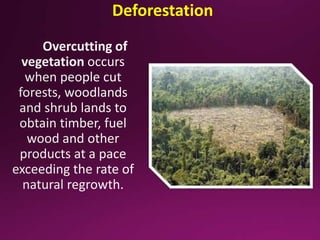
Deforestation
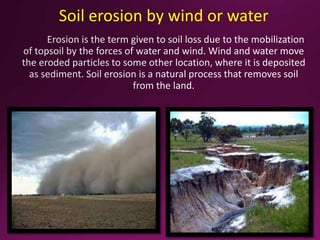
Soil erosion by wind or water
Mining
Industrialization
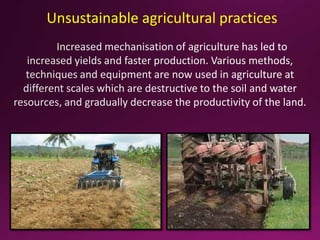
Unsustainable agricultural practices
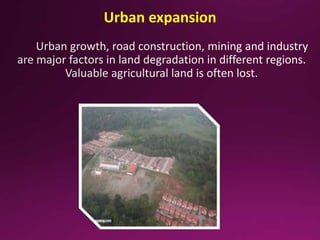
Urban expansion
Deforestation
Soil erosion by wind or water
Industrialization
Urban expansion
Unsustainable agricultural practices
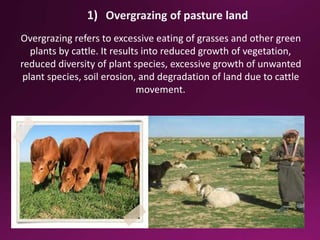
1)
Overgrazing refers to excessive eating of grasses and other green
plants by cattle. It results into reduced growth of vegetation,
reduced diversity of plant species, excessive growth of unwanted
plant species, soil erosion, and degradation of land due to cattle
movement.
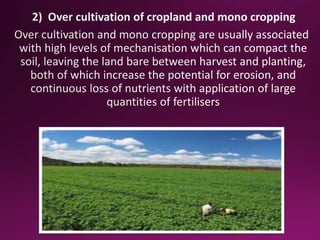
5)
EFFECTS OR IMPACTS INCLUDE:
1. Decline in the chemical, physical and/or
biological properties of soil.
2. Reduced availability of potable water.
3. Lessened volumes of surface water.
4. Impacts on livestock and agriculture e.g.
loss of animals due to dehydration,
reduced yields.
5. Decline in productivity.
6. Water and food insecurity.
7. Biodiversity loss.
CONSERVATION MEASURES
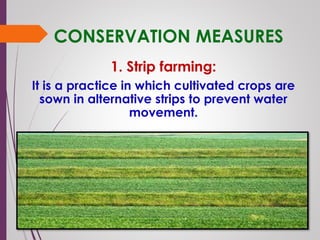
1. Strip farming:
It is a practice in which cultivated crops are
sown in alternative strips to prevent water
movement.
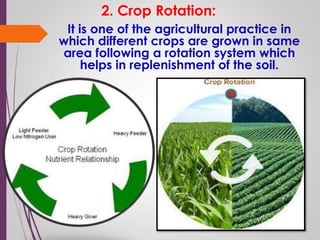
2. Crop Rotation:
It is one of the agricultural practice in
which different crops are grown in same
area following a rotation system which
helps in replenishment of the soil.
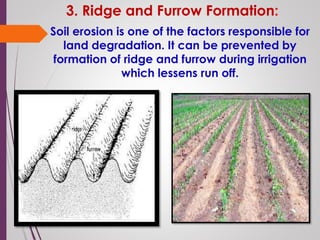
3. Ridge and Furrow Formation:
Soil erosion is one of the factors responsible for
land degradation. It can be prevented by
formation of ridge and furrow during irrigation
which lessens run off.
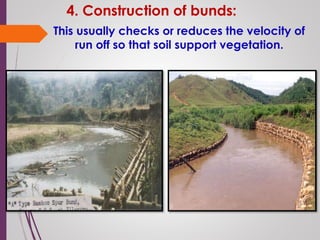
4. Construction of bunds:
This usually checks or reduces the velocity of
run off so that soil support vegetation.
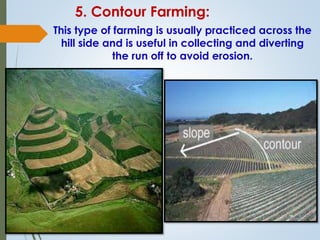
5. Contour Farming:
This type of farming is usually practiced across the
hill side and is useful in collecting and diverting
the run off to avoid erosion.
Sustainable Land
Management
The term SLM can be used to describe the
utilisation of terrestrial resources (soils, plants, water,
etc.) for the production of goods to satisfy changing
human needs, without detriment to the long-term
productive potential of these resources and their
environmental functions.
Conclusion
Land degradation occurs because of land
poor management practices. In order to assess
sustainable land management practices, the
climate resources and the risk of climate-
related natural disaster need to be
documented. The use of climate information
must be applied in developing sustainable
practices. There is need to apply sustainable
land management practices in field for
conservation of land.
Land degradation

Land degradation

  • 1.
    Made by – AunjRaut Krishna Sashank LAND DEGREDATION
  • 2.
    INTRODUCTION The change inthe characteristic and quality of soil which adversely affect its fertility is called as Degradation. Land degradation is the most important environmental problem currently challenging sustainable development in many parts of the world. The problem is most acute where the environment is intrinsically vulnerable and where the population is losing control of its own resources.
  • 3.
    Land degradation means: 1)Loss of natural fertility of soil because of loss of nutrients. 2) Less vegetation cover 3) Changes in the characteristic of soil. 4) Pollution of water resources from the contamination of soil through which water sweeps into ground or runoff to the water bodies. 5) Changes in climatic conditions because of unbalance created in the environment.
  • 5.
    Causes of landdegradation Deforestation Soil erosion by wind or water Mining Industrialization Unsustainable agricultural practices Urban expansion
  • 6.
  • 7.
    Soil erosion bywind or water
  • 8.
  • 9.
  • 10.
  • 11.
    1) Overgrazing refers toexcessive eating of grasses and other green plants by cattle. It results into reduced growth of vegetation, reduced diversity of plant species, excessive growth of unwanted plant species, soil erosion, and degradation of land due to cattle movement.
  • 14.
  • 15.
    EFFECTS OR IMPACTSINCLUDE: 1. Decline in the chemical, physical and/or biological properties of soil. 2. Reduced availability of potable water. 3. Lessened volumes of surface water. 4. Impacts on livestock and agriculture e.g. loss of animals due to dehydration, reduced yields. 5. Decline in productivity. 6. Water and food insecurity. 7. Biodiversity loss.
  • 16.
    CONSERVATION MEASURES 1. Stripfarming: It is a practice in which cultivated crops are sown in alternative strips to prevent water movement.
  • 17.
    2. Crop Rotation: Itis one of the agricultural practice in which different crops are grown in same area following a rotation system which helps in replenishment of the soil.
  • 18.
    3. Ridge andFurrow Formation: Soil erosion is one of the factors responsible for land degradation. It can be prevented by formation of ridge and furrow during irrigation which lessens run off.
  • 19.
    4. Construction ofbunds: This usually checks or reduces the velocity of run off so that soil support vegetation.
  • 20.
    5. Contour Farming: Thistype of farming is usually practiced across the hill side and is useful in collecting and diverting the run off to avoid erosion.
  • 21.
    Sustainable Land Management The termSLM can be used to describe the utilisation of terrestrial resources (soils, plants, water, etc.) for the production of goods to satisfy changing human needs, without detriment to the long-term productive potential of these resources and their environmental functions.
  • 22.
    Conclusion Land degradation occursbecause of land poor management practices. In order to assess sustainable land management practices, the climate resources and the risk of climate- related natural disaster need to be documented. The use of climate information must be applied in developing sustainable practices. There is need to apply sustainable land management practices in field for conservation of land.