USING ELECTRONIC READING DEVICES TO
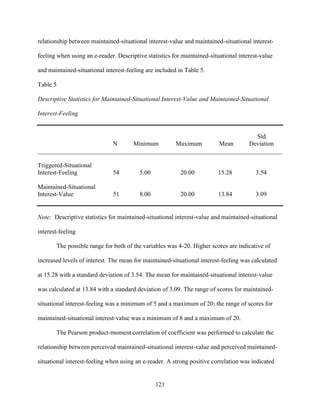
GAUGE STUDENT SITUATIONAL INTEREST IN READING:
A QUANTITATIVE STUDY WITH NINTH-GRADE
LANGUAGE ARTS STUDENTS
A Dissertation
Submitted to the School of Graduate Studies and Research
in Partial Fulfillment of the
Requirements for the Degree
Doctor of Education
Karen Louise Matis
Indiana University of Pennsylvania
August 2013
All rights reserved
INFORMATION TO ALL USERS
The quality of this reproduction is dependent upon the quality of the copy submitted.
In the unlikely event that the author did not send a complete manuscript
and there are missing pages, these will be noted. Also, if material had to be removed,
a note will indicate the deletion.
Microform Edition © ProQuest LLC.
All rights reserved. This work is protected against
unauthorized copying under Title 17, United States Code
ProQuest LLC.
789 East Eisenhower Parkway
P.O. Box 1346
Ann Arbor, MI 48106 - 1346
UMI 3588791
Published by ProQuest LLC (2013). Copyright in the Dissertation held by the Author.
UMI Number: 3588791
ii
Indiana University of Pennsylvania
School of Graduate Studies and Research
Department of Professional Studies in Education
We hereby approve the dissertation of
Karen Louise Matis
Candidate for the degree of Doctor of Education
____________________ _______________________________________________
Valeri R. Helterbran, Ed. D.
Professor of Education, Advisor
____________________ _______________________________________________
Kelli R. Paquette, Ed.D.
Professor of Education
____________________ _______________________________________________
George R. Bieger, Ph.D.
Professor of Education
ACCEPTED
__________________________________________ ______________________________
Timothy P. Mack, Ph. D.
Dean
School of Graduate Studies and Research
iii
Title: Using Electronic Reading Devices to Gauge Student Situational Interest in
Reading: A Quantitative Study with Ninth-Grade Language Arts Students
Author: Karen Louise Matis
Dissertation Chair: Dr. Valeri R. Helterbran
Dissertation Committee: Dr. Kelli R. Paquette
Dr. George R. Bieger
Students’ initial eagerness and excitement for learning to read are evident when they
enter primary grades. Their levels of enthusiasm for reading diminish through elementary
(Eccles, Wigfield, Harold, & Blumenfeld, 1993; Mazzoni, Gambell, & Koreamaki, 1999) and
middle school (McKenna & Kearn, 1990; Oldfather & McLaughlin, 1993) years. These
decreases in motivation result in undesirable learning environments, environments that rely
heavily on proficient literacy levels for knowledge acquisition. Blame for demotivation in
reading has been attributed to low self-concept of reading (Durik, Vida, & Eccles, 2006); lack of
individual motivation for task (Alexander, Kulikowich, & Jetton, 2006); lack of relevancy for
reading task (Crumpton & Gregory, 2011); conflicts in interest, attainment, utility, and cost
values (Wentzel & Wigfield, 2009); structural changes in schools (Wigfield, 2004); and “dated”
methodologies (Prensky, 2012). Technology has been identified as a positive motivational tool
for increasing student engagement and interest (Geer & Sweeney, 2012; Petkov, 2011; Rowe,
Shores, Mott, & Lester, 2011; Usher, 2012).
This study examined ninth-grade students’ situational interest when using dedicated
e-readers in their language arts class. Students voluntarily participated by completing the
Situational Interest Scale (SIS). Participants’ responses were analyzed using Statistical Package
for the Social Sciences (SPSS) to determine correlations among situational interest components.
The triggered-situational interest questions on the SIS were administered at the beginning of the
study while the maintained-situational interest components were completed six weeks later. The
iv
data indicated that all three components, triggered-situational interest, maintained-situational
interest-value, and maintained-situational interest-feeling were strongly correlated. These
findings suggest that students were initially excited to use an e-reader in the classroom, and the
initial excitement was maintained six weeks later in the form of valuing the e-readers and having
positive feelings related to using them. Even when controlling for previous use of an e-reader,
the data support using e-readers in the classroom to increase student interest in reading.
Recommendations suggest expanding research to determine if the interest leads to higher
dedicated levels of student behaviors or intrinsic motivation.
v
DEDICATION
Throughout my life, I have been blessed with the love and support of family and friends.
My broad and varied “support network” includes my personal family, my Shenango family, and
my Monroeville cohort family. Many individuals have provided encouraging words, inquiry
about my progress, and general reassurance to persist and succeed in this endeavor. Forming
strong bonds with the Prius girls provided a common thread for survival during the dissertation
process.
My parents, both high school graduates, offered unwavering encouragement for the many
educational endeavors I have pursued. Always staunch supporters of education, their love and
support has given me courage to pursue and attain this degree.
Lastly, my loving husband has been patient, understanding, and extremely tolerant during
the past four years while I pursued this dream. The sacrifices he has made in order to see my
dream become a reality are truly appreciated; I am forever in his debt for his unconditional love
and support.
vi
ACKNOWLEDGMENTS
Throughout this dissertation process, there are many individuals who have been
instrumental in seeing this study evolve from a small idea to a published dissertation. I first
thank Delta Kappa Gamma Society International and Alpha Alpha state chapter of DKG for
generous scholarship support for the past four years. With these organizations’ financial support,
I was able to purchase e-readers to undertake this study.
I also appreciate the voluntary involvement of several individuals who were instrumental
in implementing the e-reader study at Shenango. Thank you to Sandy, Rob, and Michelle, and a
special acknowledgment to Meredith for being so cooperative throughout this study.
My dissertation committee, who provided valuable and much appreciated feedback, is
greatly treasured. Finally, Dr. Valeri Helterbran, my dissertation chair, has been a personal
friend and professional mentor offering direction, feedback, encouragement, and criticism at
lightning-fast speeds. Truly understanding both my personal and professional motivations to
complete this study, Dr. Helterbran has been both inspirational and accommodating.
vii
TABLE OF CONTENTS
Chapter Page
1 INTRODUCTION…………………………………………………….. 1
Statement of the Problem……………………………………………… 7
Statement of Purpose………………………………………………….. 10
Theoretical Foundation..………………………………………………. 11
Chall’s Six Stages of Reading Development…………………. 12
Models of Interest Development……………………………… 13
Self-Determination Theory……………………………………. 16
Research Questions……………………………………………………. 17
Research Design……………………………………………………….. 18
Significance of the Study…………………………………………….... 18
Limitations of the Study……………………………………………….. 19
Definitions of Terms…………………………………………………… 20
Summary……………………………………………………………….. 22
2 REVIEW OF LITERATURE………………………………………….. 23
Chall’s Proposal for Reading Stages…………………………………… 24
Demotivation to Read…………………………………………………... 26
Interest, Attainment, Utility, and Cost Values as Motivational
Constructs………………………………………………………………. 31
Affect as a Motivational Construct……………………………………... 34
Technology as a Motivational Construct……………………………….. 39
Student Motivation to Read…………………………………………….. 45
Student Motivation to Read Incorporating Technology………… 53
Current Research Involving E-Readers…………………………. 59
Popularity of E-Readers and E-Books…………………………………... 67
Models of Interest Development………………………………………… 69
Mitchell’s Two-Stage Model of Interest Development…………. 71
Hidi and Renninger’s Four-Phase Model of Interest
Development……………………………………………………. 74
Linnenbrink-Garcia, Durik, Conley, Barron, Tauer,
Karabenick, and Harackiewicz’s Three-Factor
Model of Situational Interest Development…………………….. 78
Increasing Student Motivation Using Situational Interest……………… 80
Intrinsic and Extrinsic Motivation……………………………………… 85
Self-Determination Theory……………………………………………... 88
Summary………………………………………………………………... 96
viii
Chapter Page
3 METHODOLOGY……………………………………………………… 97
Purpose of Study and Research Questions……………………………… 97
Population and Sample………………………………………………….. 98
Instrumentation………………………………………………………….. 100
Materials……………………………………………………………….... 104
Data Collection Procedures……………………………………………… 104
Data Analysis Procedures………………………………………………... 109
Protecting Human Subjects and Permissions……………………………. 109
Assumptions, Limitations and Delimitations……………………………. 110
Summary…………………………………………………………………. 111
4 DATA AND ANALYSIS……………………………………………….. 112
Analysis of Research Question Number 1………………………………. 115
Analysis of Research Question Number 2………………………………. 118
Analysis of Research Question Number 3………………………………. 120
Analysis of Research Question Number 4………………………………. 122
Analysis of Situational Interest Controlled for Previous E-Reader
Usage……………………………………………………………………. 125
Summary………………………………………………………………… 127
5 SUMMARY, CONCLUSIONS, AND RECOMMENDATIONS……… 129
Summary of Literature Review…………………………………………. 129
Summary of Analysis and Findings…………………………………….. 131
Findings of Research Question Number 1……………………… 131
Findings of Research Question Number 2……………………… 134
Findings of Research Question Number 3……………………… 136
Findings of Research Question Number 4……………………… 137
Findings When Controlled for Previous E-Reader Usage……… 138
Implications……………………………………………………………… 142
Recommendations for Future Research.………………………………… 143
Conclusion………………………………………………………….......... 145
REFERENCES………………………………………………………………………….. 148
APPENDICES………………………………………………………………………….. 177
Appendix A – Permission to use Situational Interest Scale……………. 178
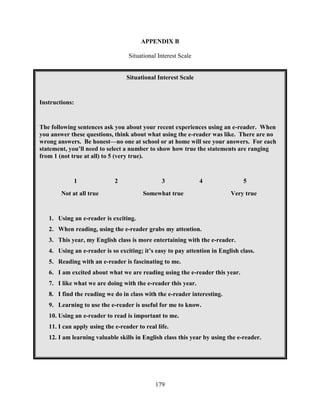
Appendix B – Situational Interest Scale……………………………….. 179
Appendix C – Institutional Review Board Permission from
Indiana University of Pennsylvania……………………. 180
Appendix D – Site Approval from District Superintendent……………. 181
ix
Appendix E – Site Approval from Building Principal…………………. 184
Appendix F – Informed Minor Assent Letter and Signature Form…….. 187
Appendix G – Informed Parent Consent Letter and Signature
Form……………………………………………………. 190
x
LIST OF TABLES
Table Page
1 Chall’s Six Stages of Reading………………………………………….. 25
2 Cronbach’s α Calculations for Situational Interest Scale
Development…………………………………………………………… 104
3 Descriptive Statistics for Triggered-Situational Interest and
Maintained Situational Interest-Value…………………………………. 117
4 Descriptive Statistics for Triggered-Situational Interest and
Maintained Situational Interest-Feeling………………………………… 119
5 Descriptive Statistics for Maintained-Situational Interest-Value and
Maintained-Situational Interest-Feeling……………………………….. 121
6 Descriptive Statistics for Triggered-Situational Interest Controlled
for Gender……………………………………………………………… 122
7 Descriptive Statistics for Maintained-Situational Interest-Feeling
Controlled for Gender…………………………………………………. 123
8 Descriptive Statistics for Maintained-Situational Interest-Value
Controlled for Gender…………………………………………………. 124
9 Situational Interest Component Controlled for Previous E-Reader
Usage…………………………………………………………………... 125
xi
LIST OF FIGURES
Figure Page
1 Theoretical base for this study……………………………………....... 11
2 Hidi and Renninger’s Four-Phase Model of Interest Development….. 14
3 Trait and state relationship in motivation…………………………….. 38
4 Motivation to read continuum………………………………………… 47
5 Student levels of dedication………………………………………….. 86
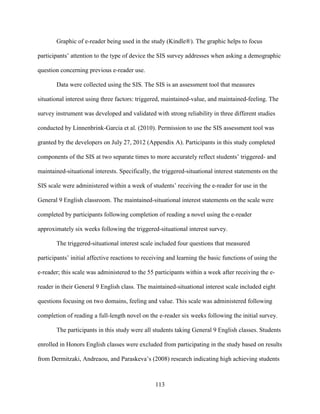
6 Dedicated Kindle® E-reader…………………………………………. 112
1
CHAPTER 1
INTRODUCTION
Literacy is a universal key to knowledge acquisition; it is a cornerstone of education.
Schools encounter a challenging task in teaching students the foundation of academic and
personal success: to become proficient readers. Literacy skills developed in early educational
years provide the initial framework. Baker and Wigfield (1999) posited that “to be lifelong
literacy learners, children must be motivated to engage in literacy activities” (p. 469) and that
simply having the ability to use cognitive skills in the reading process is not sufficient. Positive
reading attitudes have been associated with positive reading habits throughout life (Cullinan,
1987), and Guthrie, Coddington, and Wigfield (2009) placed emphasis on motivation as a means
to create lifelong readers. Young children enter primary grades eager to learn and excited for the
literacy learning experience. These levels of eagerness and excitement tend to diminish as
children progress through elementary years (Eccles, Wigfield, Harold, & Blumenfeld, 1993;
Mazzoni, Gambrell, & Korkeamaki, 1999), so that by the time children enter middle school, their
motivation for reading is measurably reduced (McKenna & Kear, 1990; Oldfather &
McLaughlin, 1993). This results in undesirable environments for both teachers and learners.
Explanations for the decrease in motivation to read point to the complexity of the
problem. Many young children entering the educational system find reading a pleasurable
activity. As children age, however, there are more options for engaging and entertaining
activities. These alternate activities are often more satisfying for the child and cause a negative
impact on reading (Dowson & McInerney, 2001; Eccles et al., 1991; McKenna, Kear, &
Ellsworth, 1995). McKenna et al. (1995) further found that as a child’s perceived value of
reading decreases, the child’s growth in ability decreases as well. A third reason for demotivation
2
in reading is social reality. Being a member of a group, for example classroom, familial, ethnic,
or gender, often causes complications of identity belief systems (McKenna et al., 1995).
Consider, when a child’s friends, or group members, choose not to engage in reading school-
related materials frequently, the child will identify with peers who are not proficient readers
(Taylor & Graham, 2007). Then, motivation difficulties are compounded when children progress
through primary grades and experience frustration with reading.
Another explanation for the decrease in motivation to read is that students indicate texts
used in their classrooms do not capture their interest (Ivey & Broaddus, 2001). The frequency of
these experiences plays a role in demotivation (McKenna et al., 1985). When a child finds
reading frustrating, the child’s attitude also becomes increasingly negative toward the task of
reading. McKenna et al. (1985) commented in their research that instructional approaches also
change as children progress through school, and these approaches can be detrimental to the
learning and reading processes. Smith and Wilhelm (2002) found that children experienced
demotivation when they believed assigned tasks were irrelevant to the reading and learning
process.
Researchers have found varying reasons for demotivation to read resulting in schools
facing the daunting challenge of teaching to students who are characterized as disinterested
readers (Ivey & Broaddus, 2001). When negative attitudes persist in middle school years,
countering unhealthy attitudes toward reading involves stimulating student interest. Thus, a
pressing concern is how teachers can address maintaining, if not increasing, student motivation
to read (Allen, Schockley, & Baumann, 1995; Sullo, 2007).
Researchers have studied factors that contribute to adolescents’ motivation to read. Irvin,
Meltzer, and Dukes (2007) identified seven factors that contribute to positive academic literacy
3
habits and skills for adolescents: (a) need for autonomy and control, (b) interest in technology
and media, (c) need to be heard beyond the traditional classroom, (d) disposition to debate, (e)
need to make a difference, (f) need to belong, and (e) sense of accomplishment. Of these factors,
technology is one focal point of interest in this study because student interest in technology is
evident, and interest in technology has been identified as a viable strategy for improving
motivation and engagement (Jackson, Boonthum-Denecke, & McNamara, 2012; Rowe,
McQuiggan, Robison, & Lester, 2009). Even so, introducing technology in classrooms has been
a slow process, and research has been limited with regard to using technology in basic education.
In addition, the need to make a difference, to belong and to achieve all coincide with affective
functioning which mediates motivated actions to either approach or avoid learning (Meyer &
Turner, 2002).
Project Tomorrow, based in California, is a national educational nonprofit organization
that supports model projects in schools and provides Internet resources for schools, parents, and
students. The vision statement of Project Tomorrow is to “ensure that today’s students are well
prepared to be tomorrow’s innovators, leaders, and engaged citizens of the world” (Project
Tomorrow, 2012). Project Tomorrow’s Technology Enhancing Student Success (TESS)
initiative provides teacher training for technology with a two-fold aim: integration in the
classroom and assessment of data. Surveying more than 1.5 million teachers, students, and
parents since 2003, Project Tomorrow’s Speak Up National Research Project captured student
attitudes about the relationship between school and technology in their published declaration, “It
is widely accepted by students that arrival at school means ‘powering down’ for a few hours” (p.
2). This clear statement speaks to the technological division between the home environment and
the educational environment and serves as another link to the decrease in motivation that occurs.
4
The New Democratic Leadership Council, a non-profit group comprised of United States
Representatives and Senators who support pro-growth educational policies, is a staunch
supporter of narrowing the technological gap between home and school with its proposal for
placing electronic reading devices in students’ hands (The New Democratic Leadership Council,
2009). Electronic reading devices are high resolution screens that provide a paper-quality text to
read. Some electronic reading devices are dedicated; they do not have the capacity to efficiently
utilize the Internet. Popular examples of this technology include Amazon’s Kindle®, Barnes and
Noble’s Nook®, and Sony’s Reader®. For the purposes of this study, dedicated electronic
reading devices will be referred to as e-readers. One of the New Democratic Leadership
Council’s goals is to reform educational systems to enable students to be competitive in the
global economy (The New Democratic Leadership Council, 2009). The Council’s policy paper
backs Project Tomorrow’s research through its proposal of an innovative plan involving e-reader
technology where every student in America’s schools would be provided a Kindle® (Freedman,
2009). The premise of this plan is twofold: (a) supplying a Kindle® for each student provides
benefits for the school in the flexibility to update texts and resources cheaply and efficiently, and
(b) the plan benefits students through a more engaging environment that makes texts more
exciting and interactive (Freedman, 2009). This second ideal is consistent with Project
Tomorrow’s sampling of students in grades 6-12 where 63% indicated they desire to include
personal highlights and add notes to books used in their courses (Project Tomorrow, 2009), a
traditionally disallowed practice in basic education.
Pilot programs with e-readers have been initiated at many institutes of higher education
including Arizona State University, Case Western Reserve University, Princeton University, and
University of Virginia. At John Jay College in New York, select freshmen received a 15-minute
5
course introducing e-readers. Following passage reading on the device, results strongly indicated
students would prefer an e-reader because of the ease of use, portability, comfort with
technology, fun and interesting design, and “coolness” factor (Kiriakova, Okamoto, Zubarev, &
Gross, 2010). A two-semester pilot program in Introductory English courses at California
Lutheran University showed favorable results for e-readers indicating that students desired to
engage in reading using the devices (Wines & Bianchi, 2010). In this study, students’ self-
reported reading more closely and enjoying the “isolated page” experience e-readers provide. In
other words, students were previously unaware of distractions that occur with traditional print
formats until they were able to focus on the single page of text on the screen of an e-reader.
Further, students indicated that dedicated e-readers eliminated distractions common with other
technological devices, such as accessing hyperlinks, e-mail, and social networking sites that
might otherwise cause less time on task reading.
Although most research piloting e-readers indicated positive outcomes in higher
education, some results included less favorable results. Higher education institutions that piloted
programs using e-readers typically focused on sustainability, cost savings, and access to
resources. Princeton University piloted the Kindle DX® in 2009 and found students were
positive about using the e-reader but found drawbacks in using the highlighting and note taking
features (Trustees of Princeton University, 2010). An additional area identified for improvement
was the need for a folder system to organize portable document format (pdf) files even though
higher education participants appreciated the convenience of accessing all course readings on
one device. Many of the higher education institutions that participated in e-reader pilot programs
have since introduced electronic notebooks instead which provide the multiple platforms higher
education students desire.
6
Although limited research is reported in the literature related to e-reader technology in
basic education, one pilot program using e-readers in this environment did report favorable
results. In Clearwater High School in Florida, early indicators showed that students using e-
readers in the classroom showed gains in reading fluency as well as reading comprehension
(Baljko, 2011). Students used the dictionary and highlighting features of the e-reader to assist
with confusing words and to comprehend text. An administrator in the district where the pilot
program was instituted indicated that the e-readers served as a leveling tool for lower achieving
students (Baljko, 2011).
On a larger scale, 10 e-reader technology programs have been introduced into 5 African
communities with positive results (Worldreader, 2012). Worldreader is a nonprofit organization
of the United States and European countries whose mission is to support literacy needs of
children in the developing world by providing digital devices and digital books (Worldreader,
2012). In 2010, Worldreader launched its first pilot study in Ghana and has continued to monitor
the progress of the program. In 2012, the Ivy League Consult Limited (ILC) Africa, an
independent research company founded by alumni of the University of Pennsylvania and
Harvard University, released results of the project’s progress in Ghana. With 481 students
participating in the study, the researchers found that using e-readers increased students’
enthusiasm toward reading, increased their technology skills, and had a positive effect on
performance on standardized test scores at the primary level (Ivy League Consult Africa, 2012).
Case studies completed by ILC Africa further showed the benefits of the e-reader program in
Ghana with indicators that participants were downloading newspapers and magazines to access
current event (Ivy League Consult Africa, 2012). One participant indicated that students who
7
read often were regarded in the school system negatively, but this attitude changed with e-
readers; students using the devices were regarded as “cool.”
Studies on a smaller scale have also indicated positive results. Larson (2010) conducted
research in a Midwestern United States public school system with an enrollment of
approximately 6,000 students. Her case study involved two second-grade students. One tested at
grade level for reading ability, while the other student, whose native language was Chinese, read
at a fifth-grade level. Using Kindle® e-readers, the researcher found that new literacy practices
were promoted and the connection between reader and text were enhanced (Larson, 2010).
Researchers also found evidence supporting the motivational value of e-readers in a study
involving six children and their parents using Kindle® e-readers during a two-week program in
the home environment (Maynard, 2010). Initially characterized in the study as a “reluctant young
reader” (Maynard, 2010, p. 236), one child was observed favoring reading with the e-reader over
his usual activities after using it during the two-week program. An additional finding conveyed
from parents in Maynard’s (2010) study was the benefit of the e-reader being a dedicated one, or
one that does not offer distractions such as hypertext and social networking access.
Statement of the Problem
In the age of digital information, it is important for teachers to motivate students by
integrating technology. The International Reading Association (2009) included in their most
recent position statement, “To become fully literate in today’s world, students must become
proficient in the new literacies of 21st
century technologies” (Summary, para. 1). Technology is
not only a motivating factor in reading, but by using technology in the process of reading and
writing, students tend to exercise more care and put forth more effort in an assignment (Irvin et
al., 2007). A positive effect was also found on student motivation to use technology outside of
8
the classroom learning environment as “implementation of one-to-one technology can have an
immense impact on learning if students are empowered to use technology as their cognitive
companion” (Li & Pow, 2011, p. 318). Some researchers found that technology supported
student motivation in a game-like environment ( Li & Pow, 2011; Malouf, 1987). Educators,
however, have been slow to implement electronic devices into learning activities even though
technology is evident in students’ home environment and sometimes even within the classroom
setting itself.
The days when children would sit down to read print material are disappearing as the
popularity of online reading increases among today’s adolescents (Mills, 2010). The average 8-
to 18-year old spends over seven hours weekly with digital media (Rideout, Foehr, & Roberts,
2010). Video games, digital music, social media, and the Internet are powerful cognitive and
affective influences in children’s lives. Clearly students are motivated to use digital formats; for
this reason, educators need to find ways to integrate technology into the learning environment.
Research indicates, however, that schools are not necessarily responsive to needs of
contemporary students (Ivey & Broaddus, 2001). Unhealthy attitudes toward school, as well as
failure of students, may result when students’ needs are not being met because of institutional
structures and curriculum (Allington, 1994; O’Brien, 1998). These negative attitudes fuel
demotivation in the learning environment.
The learning styles of students taught today have changed drastically because of their
technological backgrounds and upbringing (Prensky, 2001). The methods that were primarily
used 20 years ago are no longer as effective with what Prensky (2001) has coined “digital
natives.” Unfortunately, our system of public education has not kept pace, and educators who
grew up without digital technology are now responsible for educating those who did (Prensky,
9
2001). The use of digital resources is necessary for the workforce of today and the future (Law,
2007), and it is well-documented that the United States is moving toward digital platforms. In
October 2010, the number of homes in the United States using broadband Internet connection
was 68.2%, an increase of 4.7% from the previous year (U.S. Department of Commerce, 2011).
When schools do not migrate to digital platforms for instruction and learning, a digital separation
widens between the home environment and the public school environment. When schools are not
responsive to the learning styles and needs of digital learners, it becomes increasingly difficult to
motivate these students in the traditional classroom.
Introducing new technology in the classroom, in this case a dedicated e-reader, may
provide a link between increased motivation to read and learning in the classroom. Recent
statistics in e-book sales demonstrate the increase in popularity of this format. In their April 2009
survey, Pew Research Center reported that 2% of adults owned e-readers; ownership in e-readers
jumped to 19% in early January 2012 (Rainie, 2012), and that figure increased to 33% by late
2012 (Rainie & Duggan, 2012). In addition, e-book sales during a one-year period from February
2010 to February 2011 showed a 202.3% increase making e-books the number one ranked
format for all trade publishing categories and accounting for over $164 million in sales while
print book sales decreased by 24.8% (Sporkin, 2011). Pew Research Center also reports that 21%
of American adults have read an e-book in the previous year (Rainie, Zickuhr, Purcell, Madden,
& Brenner, 2012). Due to the increasing popularity of e-readers, educational systems need to
embrace this type of technology as a learning tool and possible resource to address the decrease
in student motivation to read and to engage students in reading for purpose and pleasure.
10
Statement of Purpose
Motivation has been an enduring concern regarding student learning and success since
the formal beginnings of education (Dewey, 1913). Motivation, an important determinant of
student success, was simply defined by Dewey as “making things interesting” (Dewey, 1913, p.
23). In order to motivate students, Dewey suggested that education needed to address a child’s
present experience, powers, and both affective and cognitive needs as well as make materials
interesting and valued. Consistent with Dewey’s ideas, research has reported a correlation
between motivation and academic functioning (Becker, McElvany, & Kortenbruck, 2010;
Guthrie, 1996; Kush, Watkins, & Brookhart, 2005).
The purpose of this quantitative study was to determine if ninth-grade students’ interest
in reading is triggered when using an e-reader and if using an e-reader maintains students’
affective interest. In addition, this study included student self-reported beliefs in the value and
usefulness of using an e-reader. This component related to the idea that if students believed using
an e-reader was valuable and useful to them, they internalized the activity and used self-
regulation (Deci, Eghrari, Patrick, & Leone, 1994) in turn providing positive influences
promoting development of intrinsic motivation to read. The approach taken in this research
considered the role of affect when using an e-reader by focusing on students’ self-report of how
they felt when using the device. This research is primarily addressing the level of students’
subjective experience of learning. It should be noted that the use of an e-reader is not a quick fix
solution but rather another possible tool that may positively affect student motivation to read.
11
Theoretical Foundation
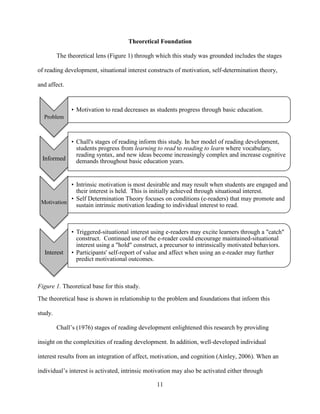
The theoretical lens (Figure 1) through which this study was grounded includes the stages
of reading development, situational interest constructs of motivation, self-determination theory,
and affect.
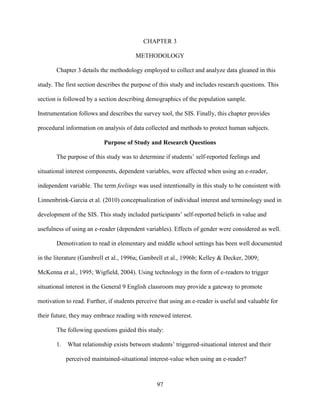
Figure 1. Theoretical base for this study.
The theoretical base is shown in relationship to the problem and foundations that inform this
study.
Chall’s (1976) stages of reading development enlightened this research by providing
insight on the complexities of reading development. In addition, well-developed individual
interest results from an integration of affect, motivation, and cognition (Ainley, 2006). When an
individual’s interest is activated, intrinsic motivation may also be activated either through
Problem
• Motivation to read decreases as students progress through basic education.
Informed
• Chall's stages of reading inform this study. In her model of reading development,
students progress from learning to read to reading to learn where vocabulary,
reading syntax, and new ideas become increasingly complex and increase cognitive
demands throughout basic education years.
Motivation
• Intrinsic motivation is most desirable and may result when students are engaged and
their interest is held. This is initially achieved through situational interest.
• Self Determination Theory focuses on conditions (e-readers) that may promote and
sustain intrinsic motivation leading to individual interest to read.
Interest
• Triggered-situational interest using e-readers may excite learners through a "catch"
construct. Continued use of the e-reader could encourage maintained-situational
interest using a "hold" construct, a precursor to intrinsically motivated behaviors.
• Participants' self-report of value and affect when using an e-reader may further
predict motivational outcomes.
12
indirect measures via situational interest or direct measures (Schiefele, 2009). Situational interest
is an affective reaction that is triggered by appealing stimuli in the classroom (Krapp, Hidi, &
Renninger, 1992), and through the use of appealing stimuli, it typically leads to increased
motivation (Hidi & Renninger, 2006).
Chall’s Six Stages of Reading Development
Even before students begin their formal education, language concepts are evident in their
lives. Chall (1976) proposed six stages for reading development that take into consideration
social, moral, and cognitive development. Each stage contains key attributes that identify it in
relation to a child’s progress in reading development. For example Stage 0, or the pre-reading
stage, depicts basic exposure to written language through simple concepts such as reading
familiar signs and pretending to read. Stages 1 and 2 are typically representative of the learning
processes that take place in the primary grades where alphabetical principles, decoding, and
fluency are a focus. These stages are labeled learning to read and are foundational in the overall
process. Stage 3 is a conversion stage where students transition from learning to read to reading
to learn and carries over into Stage 4 in the form of more complex text and vocabulary. These
stages typically occur in the intermediate and middle school years. The final stage in Chall’s
proposal, mature reading, moves the reader to construct knowledge and think critically;
cognitive demands are increased in this stage. Incorporating Chall’s stages of reading
development informs this research by identifying attributes of each stage and complications that
may result when students struggle from increasingly difficult text.
13
Models of Interest Development
Cognitive research initiated in the 1970s largely ignored affective variables in motivation
research; however, current trends have recognized affect’s role in the learning environment
(Hidi, Renninger, & Krapp, 2008). For example, research by Eccles et al. (1991) related to
student affect reported that a student’s increased desire for self-determination conflicted with the
restrictive environments found in schools. Krapp et al. (1992) posited that an individual’s
affective or emotional interest can positively, or negatively, affect the psychological state of
interest resulting in changes in the student’s attention, concentration, applied effort, and
willingness to learn. Recent models of interest development recognize affect’s role in the
learning process and reflect affective variables.
Mitchell (1993) proposed a model of situational interest development that focused on
“catching” and “holding” an individual’s interest. Initially, a student’s attention must be aroused
in the learning environment and concurrently held in order for the student to develop individual,
or intrinsic, interest. For interest to be held, the topic must be meaningful to the student beyond
the initial catch stage. Mitchell’s (1993) research addressed the importance of the learning
environment in developing student interest.
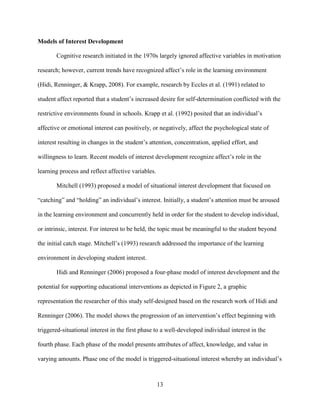
Hidi and Renninger (2006) proposed a four-phase model of interest development and the
potential for supporting educational interventions as depicted in Figure 2, a graphic
representation the researcher of this study self-designed based on the research work of Hidi and
Renninger (2006). The model shows the progression of an intervention’s effect beginning with
triggered-situational interest in the first phase to a well-developed individual interest in the
fourth phase. Each phase of the model presents attributes of affect, knowledge, and value in
varying amounts. Phase one of the model is triggered-situational interest whereby an individual’s
14
environment is altered to activate interest. In order to reach the intrinsically motivated state of
the four-phase model, a predisposition is developed throughout each phase of the model for an
individual to repeatedly reengage with increasing levels of knowledge, value, effort, and
perseverance. If an individual progresses to the fourth phase of the model, intrinsic motivational
attributes manifest themselves in the form of more background knowledge, increased value to
reengage if given the option, perseverance to complete a task even when frustrated, and the
feeling of effortlessness (Hidi & Renninger, 2006).
Figure 2. Hidi and Renninger’s Four-Phase Model of Interest Development.
The four-phase model of interest development shows components of cognitive processing
which become more distinct in the model as well-developed individual interest is approached. If
student interest is aroused through situational interest, a student may move along the
continuum’s phases advancing toward the desired state of being intrinsically motivated. In this
research, the introduction of the e-reader to the sample being studied is the medium to initiate or
trigger situational interest.
*Lasts for short
or long periods of
time
*Basis to form
connections to
content
*Supported by
the learning
environment
*Content begins
to be valued
*Student seeks
repeated
engagement with
the content
*Student seeks
opportunities for
reengagement
Triggered-
situational
interest
Fueled by affect Increase in cognitive processing
Maintained-
situational
interest
Emerging-
individual
interest
Second
Phase
Third Phase
Fourth
Phase
Well-developed-
individual
interest
15
Linnenbrink-Garcia, Durik, Conley, Barron, Tauer, Karabenick, & Harackiewicz (2010)
developed a three-factor model of situational interest. Both triggered-situational interest and
maintained-situational interest comprise this model, but maintained-situational interest is
separated into two categories to distinguish between feeling, or affective emotions, and value.
The three-factor model of situational interest does not address aspects of developing individual
interest. For the purposes of this study, the three-factor model of situational interest was utilized
which allowed factoring students’ affective reactions and perceived value for using the e-reader.
The authors of the three-factor model of situational interest used the term feeling in their research
to quantify enjoyment and excitement of an activity or use of an object in the affective domain
(Linnenbrink-Garcia, 2010).
Schraw and Lehman (2001) describe three general aspects of situational interest: text-
based, task-based, and knowledge-based. The use of encoding-task manipulations or change-of-
text manipulations can increase student interest in reading text (Schraw & Lehman, 2001).
Encoding-task manipulations include interest-enhancing strategies and engaging activities such
as competing against oneself or racing against time. A research study by Schraw and Dennison
(1994) reported using encoding-task manipulations by assigning readers different perspectives in
text resulting in participants rating the text significantly more interesting. Wade, Buxton, and
Kelly (1999) conducted research on college students using technical expository text and narrative
text on the same subject. In this study, the researchers concluded that readers will remember
important and interesting text rather than text that is only interesting or only important.
Research addressing situational interest in the context of technology is limited but
encouraging. Phillips (2007) found that having students work in a hands-on environment with
technology has the potential to increase perceived competence. This research was conducted
16
with pre-service educators measuring their perceptions of using the Internet for teaching and
learning. More recently, Burgess (2010) researched the use of virtual environments for teaching
developmental reading in a college setting. She found that a multi-user virtual environment
elicited positive outcomes related to reading achievement.
Self-Determination Theory
This study was further grounded in Deci and Ryan’s (1985) self-determination theory
(SDT). This theory was well-suited for this study because of its emphasis on intrinsic and
extrinsic motivational forces. SDT is based on the belief that in order for individuals to be
motivated, three basic motivational needs are necessary: autonomy, competence, and relatedness
(Ryan & Deci, 2000b). These three basic needs “are essential for facilitating optimal functioning
of the natural propensities for growth and integration, as well as for constructive social
development and personal well-being” (Ryan & Deci, 2000b, p. 68). Students may experience
both intrinsic and extrinsic motivation, however, an activity that is intrinsically motivated
provides a natural foundation for an individual’s learning and development (Vansteenkiste, Lens,
& Deci, 2006). This is further described by the quality of motivation factors, autonomous or
controlled, or the type of motivation that underlies a particular learning behavior. Autonomous
motivational factors are considered intrinsic and characterized by choice or personal volition of
the learner; whereas controlled motivational factors include external coercion or pressure to
complete a task (Deci & Ryan, 1985).
SDT does not focus on the causes that bring about intrinsic motivation, but rather the
conditions that promote and sustain not demote and reduce it. SDT further proposes that both
intrinsic and extrinsic motivation are situated on a continuum of motivation and not simply
either/or constructs. An individual can have both intrinsic and extrinsic motivational factors for
17
completing a task. Intrinsic motivation is highly desirable in the learning environment;
amotivation, lacking any desire to complete a task, is detrimental to the learning environment.
Deci and Ryan (1985) proposed a taxonomy of human motivation. Between the two extremes,
intrinsic motivation and amotivation, are four forms of extrinsic motivation that range from an
external to internal perceived locus of causality. In the educational environment, a student may
move along the continuum assuming a new motivation depending on the situation (Ryan, 1995).
Research Questions
Physical print materials have long been the traditional mode of reading and learning in
public schools. Some students find themselves escaping the present and interacting with print
materials; others appear amotivated, lacking the essential needs to sustain constructive
educational experiences. It was hypothesized in this study that by altering the conditions
whereby students interact with novels, maintained-situational interest and affect for using an e-
reader may result. The following research questions guided this investigation:
1. What relationship exists between students’ triggered-situational interest and their
perceived maintained-situational interest-value when using an e-reader?
2. What relationship exists between students’ triggered-situational interest and their
perceived maintained-situational interest-feelings when using an e-reader?
3. What relationship exists between students’ perceived maintained-situational interest-
value and their perceived maintained-situational interest-feelings when using an e-
reader?
4. Does gender have an effect on situational interest relationships?
The Situational Interest Scale (SIS) will be administered to ninth-grade students
participating in this study (Linnenbrink-Garcia et al., 2010). Permission to use this instrument
18
was granted by the corresponding author through electronic mail prior to conducting the study
(see Appendix A). The SIS was designed to measure dimensions of situational interest between
an individual and activity in the areas of triggered-situational interest and maintained-situational
interest (Linnenbrink-Garcia et al., 2010). The maintained-situational interest category was
subdivided into two components: (a) an affect measurement referred to as maintained-situational
interest-feeling, and (b) maintained-situational interest-value.
Research Design
This non-experimental, quantitative study involved students in ninth-grade general
English classes in a small, rural school in Western Pennsylvania. A non-experimental design
examined relationships between variables and is often referred to as correlational studies
(Mertler & Charles, 2011). In correlational studies, researchers examine relationships between
and among the study’s variables in order to determine the degrees of relationships. It is from
these relationships that researchers make predictions (Mertler & Charles, 2011). Using Statistical
Package for the Social Sciences (SPSS), a predictive analytics software, data extracted from the
SIS surveys were analyzed statistically and paired measurements using Pearson product-moment
correlation were used to determine the size of correlations as well as the direction (positive or
negative). The independent variables included triggered-situational interest, maintained-
situational interest-value, and maintained-situational interest-feeling. In addition, regression
analysis of data allowed the researcher to evaluate relationships when controlling for gender.
Significance of the Study
Diverse students require diverse learning experiences. Educators often seek methods and
materials to increase reading motivation. Focus on standards achievement means that many
reading programs lack motivational components that complement the digital natives’ learning
19
style. This investigation provided positive feedback on using e-readers as a learning tool to
increase student interest and motivation to read.
Of importance in this investigation was also the possibility that with increased interest
and motivation, student performance on assessments may improve. In a longitudinal study of
middle and high school students, researchers found the likelihood that a reciprocal relationship
between interest and achievement is likely (Koller, Baumert, & Schnabel, 2001). Additionally,
the amount of time spent reading is positively correlated to a child’s level of reading
achievement (Foertsch, 1992) and growth in reading proficiency (Taylor, Fry, & Maruyama,
1990). Research conducted by Walberg and Tsai (1984) indicated when students display positive
attitudes toward reading they tend to produce higher scores on standardized tests. If using an e-
reader helps to improve students’ interest and attitudes toward reading motivating them to read
more, research supports the likelihood of increased reading assessment scores.
Limitations of the Study
Within the parameters of this study, the researcher acknowledges that certain limitations
exist. Because the researcher selected non-probability convenience sampling using a small
number of ninth-grade participants in this quantitative study, results may not generalize well to
the larger population. For convenience to the researcher, the participants were all from one grade
level in one rural school in Western Pennsylvania. The researcher was familiar with the
participating students having taught them in earlier grades; however, the researcher will not work
with these students in a classroom environment in the future. The research sample was mainly
Caucasian providing another limitation of the study. Results may not generalize well to other
ethnicities. Further, it is understood that subjectivity was involved when students self-reported
20
their personal experiences, and that participants in this study may have considered negative or
positive feelings about the novel’s content on the assessment tool for using the e-reader.
Definitions of Terms
Dedicated electronic reading devices. High resolution screens that provide a paper-
quality text to read. Books, magazines, and newspapers can be downloaded instantly through
wireless technology. Dedicated electronic reading devices have the capacity to store thousands of
novels making each a “mini-library.” Full text novels are available to download for a fee, and
many literary classics are offered at no cost. Additionally, many publishers allow the first chapter
or two of a novel to be downloaded to entice or motivate readers to purchase the full novel. The
primary function of a dedicated electronic reading device is to display reading texts on screen.
Because of their limited and often cumbersome Internet capabilities, these devices often
eliminate or reduce some of the common interferences of digital reading such as Internet
browsing, chatting, and accessing e-mail (Vorhees, 2011). For the purposes of this study,
dedicated electronic reading devices were referred to as e-readers throughout.
Affect. “Feelings of arousal, alertness, attention, and concentration” (Ainley, 2006).
Affect has recently been recognized for its role in both emotional and motivational processes
(Hidi et al., 2008). “Affect,” “feelings,” and “emotions” are often used interchangeably in
research literature on motivation in the learning environment.
Motivation to read. “The likelihood that a child will engage in reading or choose to read”
(Gambrell, 2011a, p. 5). A highly motivated reader is identified as a person who makes effort
and time to engage in reading, actively pursues reading, and develops a habit of reading
(Gambrell, 2011a). Motivation in this investigation referred to the student’s increased or
decreased desire to read.
21
Intrinsic reading motivation. The disposition to read for pleasure, personal interest, and
the exhilaration of reading (Guthrie & Wigfield, 2000). Those who are intrinsically motivated
consider reading its own reward.
Extrinsic reading motivation. Reading to obtain an outside reward, recognition, or
incentive (Deci & Ryan, 1985). Examples of external factors include attention from teachers or
parents, good grades, or a token or prize for completing a reading task.
Triggered-situational interest. Interest aroused by conditions or factors in the
environment intended to elicit an affective reaction (Schiefele, 2009). It is based on interest or
appeal to a learning task or activity rather than individual interest (Chen, Darst, & Pangrazi,
2001) and is short-lived, environmentally activated and context-bound (Schraw & Lehman,
2001).
Maintained-situational interest. Interest that holds students’ attention through variables
that empower learners with a definitive purpose for the learning (Schraw & Lehman, 2001). It is
a longer lasting condition that holds students’ interest and makes learning personally meaningful
(Mitchell, 1993) and can lead to well-developed individual interest (Hidi & Renninger, 2006).
Personal interest. Long lasting and personally valued interest that is topic specific,
activated internally, and has both cognitive and affective qualities (Schiefele, 2009). In their
model of interest development, Hidi and Rennigner (2006) refer to this as individual interest.
Self-determination theory. Uses the concept of innate psychological needs, autonomy,
competence, and relatedness as a basis for studying motivational forces, both intrinsic and
extrinsic (Ryan & Deci, 2000b). This theory hypothesizes that humans are naturally inclined to
contribute to social structures (Deci & Ryan, 1985).
22
Digital literacy. “Socially situated practices supported by skills, strategies, and stances
that enable the representation and understanding of ideas using a range of modalities enabled by
digital tools” (O’Brien & Scharber, 2008, p. 66-67). In laymen’s terms, digital literacy is defined
as using and understanding electronic information.
Summary
Chapter 1 provides an overview of the research study beginning with a discussion of the
decline in motivation to read as children progress through school. Explanations for this decrease
in reading motivation range from fluctuations in social situations to changes in the academic
environment. The progressive decrease in motivation to read presents challenges for educators.
Through situational interest constructs, e-readers are one tool that may influence students
positively by motivating contemporary learners. Students who find using e-readers interesting
and supportive of their learning style, may move from the novelty and excitement of situational
interest constructs toward self-determined engagement with text that supports advancement
toward intrinsic motivation. Information from this study may inform future language arts
educators on the benefits of using e-readers to promote, if not maintain, students’ interest to read.
Chapter 2 presents a review of literature related to student motivation to read beginning
with a description of Chall’s stages of reading development. This model of reading development
is followed by information concerning students’ demotivation to read, the identified problem this
study addressed. The roles of value, affect, and technology as motivational constructs are each
discussed individually. Student motivation to read and the impact of technology follows.
Theoretical foundations, self-determination theory, and situational interest are explored as well.
23
CHAPTER 2
REVIEW OF LITERATURE
This chapter includes a review of literature on motivation as it relates to reading. An
exploration of current research in technology related to both reading and motivation is also
presented. Reviewing the literature provides a framework for previous research and for
describing the theoretical lens for this study. The purpose of this quantitative study was to
determine if ninth-grade students’ situational interest in reading is triggered and maintained
when using e-readers. This study explored students’ self-reported beliefs in the value and
feelings of usefulness when using an e-reader in an academic setting.
First, Chall’s stages of reading are presented as a foundation for understanding the
reading acquisition process. Next, an examination of demotivation to read outlines the
identification of this phenomenon and researchers’ ongoing efforts to discover underlying
causes. Interest was explored as a motivational construct through technology and the roles of
affect and value. Paradigms that promote motivation to read are also outlined. Technology’s role
in motivating students to read, as well as its popularity as a method to access text, provide further
support for this research study. In addition, motivational theories, self-determination, and
situational interest are explored as theoretical foundations.
The premise that motivation to read declines as students advance through elementary and
middle grades has been well-documented in the literature (Gambrell, Codling, & Palmer, 1996a;
Kelley & Decker, 2009; McKenna et al., 1995; Wigfield, 2004). Research by Gambrell et al.
(1996a) with 330 third- and fifth-grade students reported unsettling results concerning student
interest value for reading. Using the Motivation to Read Profile, a Likert-type, self-report
instrument administered in a group setting, the researchers concluded that younger students
24
participating in the study placed a higher value on reading than older students. The researchers
concluded that as children age, their value for reading diminishes. Young children typically enter
school with a contagious excitement to learn to read. Once students have learned the basics of
reading in primary grades, however, reading processes change (Chall, 1976; Weaver, 2002).
Chall’s Proposal for Reading Stages
In order to understand the evolution of decreased motivation to read, it is first beneficial
to understand the stages a student progresses through when developing reading skills. In 1976,
Jeanne Chall suggested what she referred to as “a modest proposal for reading stages” (p. 18).
Taking into consideration Erikson’s stages of social development, Kohlberg’s stages of moral
development, and Piaget’s stages of cognitive development, Chall proposed a six-stage model
identifying the stages of reading which is represented by the researcher in Table 1. Numbering
the stages from 0 to 5, Chall identified key components of each level of the reading process
describing attributes of that stage.
25
Table 1
Chall’s Six Stages of Reading
Stage 0 Birth to Age 6 Pre-Reading Simple concepts: Reading signs,
naming letters, writing name,
pretending to read
Stage 1 Grades 1 – 3 Learning to Learning alphabetic principles,
Read decoding print, reading simple texts
Stage 2 Fluency, automaticity in reading
familiar texts
Stage 3 Intermediate and Reading to Reading as a tool for learning, new
Middle School Learn words and ideas beyond the reader’s
Years scope
Stage 4 High School to Mature More varied and complex reading in
College Years Reading content, vocabulary, and cognitive
and Above demands; critical thinking expanded
Stage 5 Constructing knowledge
Chall’s initial stage focuses on basic written language concepts that occur in the first six
years of a child’s life. For example, in the pre-reading stage, a child learns to identify popular,
iconic symbols such as McDonald’s® golden arches. During the learning to read stages, a child
learns alphabetic principles, how to decode text, and develops fluency with familiar text. In
Chall’s model, a definitive distinction exists between stages 2 and 3 where learning to read
transitions to reading to learn. Beginning with stage 3, classroom materials become increasingly
unfamiliar as the reader experiences longer and more complex sentences, varying syntax,
increasingly abstract ideas, and unfamiliar vocabulary (Indrisano & Chall, 1995). A student who
struggles with the learning to read stages and does not receive support to remedy difficulties
often employs reading avoidance techniques. Chall (1990) coined the term “fourth grade slump”
26
to signify the stage where inequalities in ability to read become pronounced and if not attended
to progressively affect a student’s learning. As Chall’s stages progress, text becomes increasingly
more challenging. Students who struggle with reading processes may then feel the pressures of
falling behind in academic pursuits resulting in further disengagement in reading (Durik, Vida, &
Eccles, 2006; Kush & Watkins, 1996; McKenna et al., 1995). Chall’s stage 4 reading to learn is
where students experience processing more than one point-of-view with increased sets of facts,
opinions, views, or theories; and mature reading, Chall’s fifth and final stage, represents the
ability to use reading for knowledge and experiences (Chall, 1976). For example, in stage 5, an
individual focuses on determining what needs to be read to complete specific tasks and selecting
from larger stores of information to serve that purpose. Chall admits that “the general character
of reading changes with each succeeding stage, the characteristics of previous stages remain for
use in situations that require them” (Chall, 1976, p. 30). For example, a student may use stage 5
for academic studying or work-related tasks but revert to traits of an earlier stage for pleasure
reading. Chall’s reading stages show how increasingly complex cognitive processes are needed
to interpret text; processes that, if not developed, become deterrents to reading in the academic
setting. Difficulties experienced in the learning to read process present one obstacle for
educators and account for some decreases in student motivation to read.
Demotivation to Read
Related to the variance in stages of reading development, McKenna et al., (1995)
identified trends in both academic and recreational reading in an experiment sampling over
18,000 students representing first- through sixth-grades. These researchers found that children
begin first-grade exhibiting a positive attitude and showing excitement to learn to read as
indicated in Chall’s Stage 1; however, this has also been identified as the starting point when
27
negative attitudes arise. By sixth-grade, Chall’s stage 3, the researchers characterized student
attitudes toward reading as indifferent. As students advance through Chall’s stages 1-3, their
motivation to read declines. In reviewing this data, the researchers acknowledged the
significance of their study and emphasized the need for interventions to address students’ reading
attitudes and affective interests related to reading and not solely focus on cognitive processes. In
addition to complications in the reading learning process, motivational challenges have
contributed to reading problems.
As students progress through Chall’s stages of reading development, they tend to
experience changes in self-concept which may affect their motivation (Chall, 1976). Not only do
students receive more sophisticated feedback on their performance as they age, but they
understand the effects of that feedback (Wigfield, 2004). For example, students process teacher
feedback in terms of their personal capabilities often through comparison to their peers. Consider
students who never see their graded work displayed in the classroom and measure themselves
against peers whose work include positive comments and are displayed as examples of desired
achievement. The students whose work are displayed process the experience as positive feedback
and develop healthy self-concepts while the students whose work are not displayed process this
experience as negative feedback. This negative feedback begins to deflate their self-concept and
can result in what Merton (1948) referred to as a “self-fulfilling prophecy” to continue to be
unsuccessful. Students who recognize they are making academic gains in the learning process
typically put greater effort into tasks which lead to becoming more skillful, whereas students
who perceive they are not achieving as their peers often develop an attitude that they do not have
the ability to perform well (Schunk, 1991). Further, this negative attitude toward academic
performance that some students develop can be reversed through interventions utilizing reading
28
engagement (Schunk, 2003). In their study of 1,080 middle school students, Kelly and Decker
(2009) found that students’ self-concept in reading ability attributed to 52% of students’ overall
motivation to read. Over time, continued feedback translated into either positive or negative
changes in intrinsic motivation (Wigfield, 2004) making self-concept another threat to decreased
student motivation to read.
Similarly, a longitudinal study by Durik et al. (2006) reported the importance of self-
concept of ability related to literacy behaviors. The researchers hypothesized that a positive
correlation exists between self-concept of ability and subjective task values as a predictor of
three outcomes: (a) amount of time spent reading for personal enjoyment, (b) choice of language
arts courses in high school, and (c) career aspirations as they relate to literacy. Over 600
participants from four different school districts were tracked which resulted in the conclusion
that self-concept of literacy ability was a strong predictor of all three outcomes. When data were
initially collected during this study, participants were in fourth-grade transitioning between
Chall’s stage 2 learning to read and stage 3 reading to learn stages. When data were collected
for comparison purposes in 10th
grade, it is probable that more disparity existed with the
participants who were likely in either stage 4, reading to learn, or approaching Chall’s final
stage, mature reading. Certainly, the possibility exists that participants may also have been
struggling between Chall’s stages 3 and 4, reading to learn. Students who struggle in Chall’s
stages 3 and 4, reading to learn, have often experienced continually decreasing attitudes of self-
concept as shown in their study (Durik et al., 2006). These researchers stressed the critical
concern that students cultivate positive feelings of literacy competence which supports
Bandura’s self-efficacy theory (1997) that affective emotions related to competency are
important components for many achievement-related behaviors. Gambrell et al. (1996a) reported
29
similar results in their survey on elementary students’ motivation to read. Thus, research
indicates that as self-concept decreases in reading achievement, it becomes a barrier to
performance resulting in demotivation to read in the academic setting.
Tasks teachers assign for students to complete can affect student motivation. If students
show interest in an assigned reading task, they will likely engage with persistence using
strategies to accomplish the assignment (Alexander, Kulikowich, & Jetton, 1994). The likelihood
of a student’s success is greater when the student has a positive reading attitude toward the task.
Accordingly, students will initially assess an assigned task, but the likelihood of a student
completing a task will depend on students’ assessment of the interest of the activity. Ryan and
Deci (2000a) analyzed teacher-assigned tasks in terms of externally motivating students
indicating, “Because many tasks educators want students to perform aren’t inherently interesting
or enjoyable, knowing how to promote more active and volitional (versus passive and
controlling) forms of extrinsic motivation becomes an essential strategy for successful teaching”
(p. 55). Students need to perceive value for a reading activity in order for them to be motivated to
engage with purpose.
One of Gambrell’s (2011b) seven research-based rules of engagement aimed at
increasing student motivation to read is for educators to make reading tasks and activities
relevant to students’ lives. Boekaerts (2002) also indicated that educators should “cater to those
students who are less motivated to learn” (p. 12) by assigning meaningful tasks and activities that
are applicable to their life outside of academia. If students perceive a task as not interesting or
meaningful, lower motivation levels factor into the effort students expend to complete the task
(Boekaerts, 2002). Both Gambrell (2011b) and Boekaerts (2002) promoted the need to make
30
reading activities personal for students to increase the likelihood that they will embrace and
engage in an assigned task.
As students progress through Chall’s stages of reading development, reading tasks
become gradually more challenging for learners. The cognitive demands become increasingly
more difficult as advanced vocabulary and syntax are presented in reading material. If learners
perceive reading tasks as irrelevant or not interesting, their motivation to complete tasks will
stabilize or continue to decrease. Personally relevant coursework can increase student motivation
(Crumpton & Gregory, 2011). Unfortunately, not all students embrace an assignment with a
positive attitude. Students initially will assess the task assigned in relationship to how it will
assist them in reaching personal goals (Wigfield, 2004). If a reading task helps a student reach a
personal goal, the student will approach the task with a positive attitude. If the student perceives
the reading task as one that does not assist in reaching personal goals, the student will likely give
less effort to completing the reading task or may even abandon efforts altogether.
Yet another factor to consider in demotivation to read is the value students place on
reading. If students value a learning activity, it is less likely that they will depend on
encouragement, incentives and rewards (Boekaerts, 2002) because a valued activity is often
engaged in for personal pleasure and will be continued (Wigfield, 2004). In order for a student to
develop a value-based attitude, the student needs to show interest in an activity.
Fortunately, the decreases in motivation to read outlined above may be reversible
(Guthrie, Hoa, Wigfield, Tonks, & Perencevich, 2006). These researchers have shown that
students who exhibit mainly extrinsic reasons for reading can become more self-determining
provided they are in a supportive learning environment. Again, the importance and value of the
learning environment are instrumental in the reading development process.
31
Demotivation to read has been well-documented with elementary and middle school
students. Consequences of this phenomenon permeate students’ cognitive and social
development resulting in indifferent attitudes toward reading, decreases in motivation to learn,
and deflated self-concepts. Feelings of competence and supporting reading interventions that
spark student interest can be instrumental in breaking down the prohibitive barriers that deplete
students’ reading motivation.
Interest, Attainment, Utility, and
Cost Values as Motivational Constructs
Interest is well-established as a motivational construct in education (Wentzel & Wigfield,
2009). Wigfield (2004) discussed several dynamics that characterize the value of reading: (a)
interest value, (b) attainment value, (c) utility value, and (d) cost value. Interest value relates to
intrinsic motivation or personal value for the activity. A positive relationship exists between
interest and motivation such that in everyday language these two terms are often used
synonymously (Wentzel & Wigfield, 2009). So, if students are intrinsically motivated, they will
engage in a reading activity simply for personal interest and pleasure; likewise, if students
engage in an activity simply for the joy of it, intrinsic motivation is positively reinforced. If
students find a reading task uninteresting, they place less value on the reading task and may even
abandon efforts to complete it.
Attainment value relates to the degree of importance students place on the reading task
and how accomplishing or not accomplishing the task relates to students’ sense of self (Wigfield,
2004). Activities that students deem as relevant and interesting to them will be approached with
positive attitudes and efforts. Relevance promotes motivation (Lumsden, 1994). Berntson,
Boysen, and Cacioppo (1999) captured the essence of Lumsden’s research in their hypothesis
32
indicating that individuals have fundamental reactions for categorizing and subsequently
choosing either to approach a stimuli or withdraw from it. For example, Lumsden (1994)
provided an example where the teacher assigned a ninth-grade science class to read a section of
an article about botany. One student’s family farmed; this student enjoyed being active in the
planting aspects of his family’s livelihood. This student’s interest in reading may prove to be
assistive, so the task is approached positively with intrinsic motivation and personal value.
Contrary, another student lived in an apartment. This student found little or no relevancy to read
about botany and gave less effort in completing the reading task because it had little or no
personal value.
Utility value refers to students’ perceptions of how useful a reading activity will be in
reaching personal goals (Wigfield, 2004). Utility value plays a key role in middle and high
school levels of basic education when children begin to consider careers. Students select many of
the courses that relate to their chosen careers. Thus, if a student is interested in attending nursing
school, subjects like biology and chemistry will be useful in reaching that career goal. This same
student might perceive reading Shakespeare to be less useful and will not expend the needed
efforts to complete the activity since it offers the student no utility value.
Cost value plays a pivotal role in valuing reading (Wigfield, 2004) which may appear
even more pronounced as children progress through Chall’s developmental stages of reading
during adolescent years. As children develop social skills, they face decisions involving the cost
of completing one activity over another. Consider, a student may be assigned a reading passage
that may or may not be appealing, but the student also would like to play a video game with a
friend. The cost of completing a homework assignment often falls short of outweighing the value
that student places on being in a social situation engaged in an enjoyable activity. Selecting the
33
social situation over the academic assignment indicates the higher value of socialization over
academics. The choice of engaging in social situations at the cost of academics is a demotivating
factor for reading. Wentzel (1989) established correlations between student achievement and
focus. In her research, positive relationships were reported between high achievers who had both
academic and social goal focuses; whereas the focus of low achievers strongly favored social
skills.
Similar to cost value, grouping effects have been researched in relationship to student
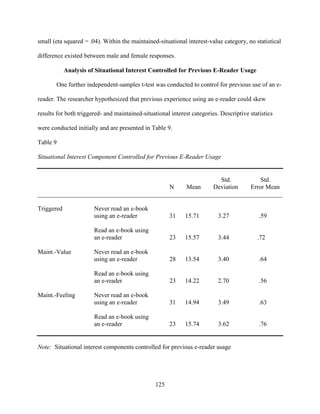
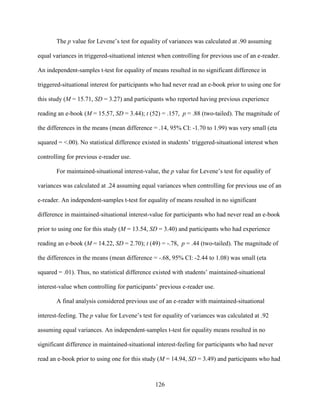
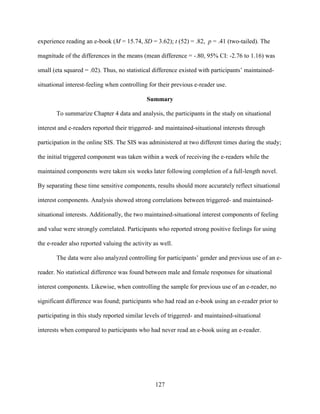
motivation and accordingly student achievement (McKenna et al., 1995; Moje, Young,
Readence, & Moore, 2000; Taylor & Graham, 2007). Studying cultural environments,
researchers identified cultural grouping effects indicating, “if a child’s cultural environment
encourages, models, and reinforces reading, more positive attitudes should result” (McKenna et
al., 1995, p. 941). For students whose environment lacks these reinforcing components, negative
student attitudes toward reading may persist making motivation a difficult hurdle for educators to
overcome. Taylor and Graham (2007) elaborated on the cultural environment effect described
with African American and Latino groupings. These researchers recognized that both groupings
valued increased academic achievement during elementary years with no statistical differences
reported when separately analyzed for gender. However, during middle school years, boys in
both groupings reported that they “look more admiringly on less academically inclined peers”
(Taylor & Graham, 2007, p. 60). Grouping effects can hinder motivation to read and achieve,
because literacy development is pivotal in adolescents’ individual and social identities
development (Moje et al., 2000).
As children progress through Chall’s stages of reading development, they also face
structural changes in school. Wigfield (2004) detailed how student-teacher relationships change
34
as children advance through basic education. For example, in elementary settings, the classroom
setting is generally characterized as personal and positive. This setting often promotes a special
bonding between students and their teacher who spend a great portion of instructional hours
together. As students advance, this structure changes with specialized disciplines becoming more
prominent. Students spend less time with a singular teacher. Wigfield (2004) noted that student-
teacher relationships change to a less personal and positive one in secondary schools. In addition,
secondary schools often focus on authority relationships with control, discipline, and
organization taking precedence over personal relationships. The relationships built at the
elementary level are typically not sustained at the secondary level.
To sum, reading value is a combination of interest value, attainment value, utility value,
and cost value. Students who are intrinsically motivated to read typically rate high in several of
these components. As children progress through elementary and middle school, their values
change; fluctuations exist in each of these reading values that could strengthen or weaken an
individual’s reading value.
Affect as a Motivating Construct
Research in the 1970s largely focused on cognition’s role in motivation theories and
tended to overlook affective variables (Hidi et al., 2008). Fodor (1975) pointed out that beliefs
concerning early research on the roles of emotion or feelings were viewed as speculative and not
stable; quantifying affect, emotions and ideas was regarded outside of the realm of factual or
scientific distinction. For example theories such as Achievement Goal Theory (Ames, 1992),
Task Value Theory (Eccles, 1983) and Self-Efficacy Theory (Bandura, 1977) disregarded
affective variables in the learning process and concentrated on cognitive variables.
35
Researchers of emotions recognized the need for identifying basic emotions to serve as
an observational baseline in research resulting in a plethora of fundamental emotions or feelings
identified as basic from which other emotions are offsets (Ortony & Turner, 1990). A variety of
fundamental emotions identified by different researchers used facial expressions as a basis
(Ekman, Friesen, & Ellsworth, 1982) or centered on the belief that emotions were hardwired
(Gray, 1982; Izard, 1969). Mowrer (1960) believed that only two basic emotions exist, pain and
pleasure, because they are “unlearned” emotional states (Ortony & Turner, 1990). Examples of
positive fundamental emotions identified include joy and surprise (Ekman et al., 1982), interest
(Izaard, 1969), and happiness (Oatley & Johnson-Laird, 1987). Disagreement among researchers
about fundamental emotions was complicated by semantics; Ortony and Turner (1990) provided
an example showing how joy, happiness, and elation may describe the same observed emotion.
Yun Dai and Sternberg (2008) suggested, “The failure to consider subjective experiences
also creates blind spots such as how a thinker’s values, attitudes, dispositions, self-
understandings, and beliefs guide his or her thinking” (p. 7). Recognition of the role of affect in
both motivational processes and in the learning environment spurred new interest in exploring
this component (Hidi et al., 2008). Affect in the educational setting includes appraisals of
students and teachers, action tendencies, wants, emotions, and physiological responses (Ortony
& Turner, 1990). Hidi et al. (2008) identified three features of interest-based motivation: (a)
interest is content-specific; (b) interest evolves when individuals and their environments interact;
and (c) cognitive and affective variables are both components of interest.
Schiefele and Csikszentmihalyi (1994, 1995) examined interest as a content-specific
component of interest-based motivation. In one study with 208 9th
- and 10th
-grade students, the
researchers examined the relationship between interest and quality of classroom experiences in
36
four different subject areas. Results indicated that interest in specific topics significantly
correlated with students’ involvement, enjoyment, concentration, and activation (Schiefele &
Csikszentmihalyi, 1994). In a second study with 108 9th
- and 10th
-grade students, these same
researchers examined the quality of students’ experiences in math (Schiefele &
Csikszentmihalyi, 1995). In addition to student responses on interest ratings, an achievement
motivation questionnaire, and results from the Preliminary Scholastic Aptitude Test (PSAT) of
the participants, the researchers also obtained math grades across five consecutive years. The
results of their analysis indicated a strong correlation between students’ interest and the quality
of their experiences when engaged in math (Schiefele & Csikszentmihalyi, 1995).
Ainley and Hidi (2002) further studied content-specific interest in the learning
environment utilizing four different text samples. The researchers used an interactive software
program that allowed students’ interactions with text samples to be monitored. Participants in the
study were given the choice to select which text they wished to read initially, and emotion probes
allowed participants to select more than one emotion while reading the text. In each of the four
text samples, a significant correlation was found connecting students’ interest in the text’s topic
to learning (Ainley & Hidi, 2002). When students responded that a text sample was likely to be
interesting, students typically completed the reading; however, when students responded that a
text sample might be uninteresting, the likelihood that they would discontinue reading the text
increased. Thus, when students indicated that a topic held their interest, they were more
persistent in completing the task (Ainley, Hidi, & Berndorff, 2002).
Students’ interaction with their environment was also identified as a component of
interest-based motivation in the educational setting (Hidi et al., 2008). Renninger (1990) studied
pre-school children during free-play evaluating their choice of play objects and actions as a
37
component of interest. This study found that children’s motivation during their free-play was
driven by their interests.
Hidi et al. (2008) pointed to situational interest “as being generated by particular aspects
of the environment that focus attention” (p. 94). This finding is supported in research by Schraw
and Dennison (1994) through narrative text manipulations in the students’ environment. In this
study, participants were placed in groups prior to reading text and provided conditions to activate
pre-reading schemata. For example, two groups were instructed to either “Read this story as if
you were interested in buying this house” or to “Read this story as if you were thinking about
robbing this house” (Schraw & Dennison, 1994, p. 5). The researchers found that activating a
specific schema prompted participants to interact with the text in a focused way and affected
interest in the activity. The questions posed to group participants represent triggered-situational
interest which resulted in positive feelings toward the task (Hidi et al., 2008). In addition, this
research supported designing curriculum for the classroom that supports attention regulation
through triggered- and maintained-situational interest constructs (Sansone, Weir, Harpster, &
Morgan, 1992).
Lastly, interest is a blend of both cognitive and affective variables (Hidi et al., 2008).
Figure 3, a graphic representation generated by this researcher based on findings reported by
Ainley and Hidi (2002), shows the relationship of individual interest and cognitive states. “Both
individual and situational factors are associated with a psychological state that involves focused
attention and increased interaction with the object that can involve both cognitive and affective
processing” (Ainley & Hidi, 2002, p. 44-45).
38
Trait and State Relationship in Motivation
Figure 3. Trait and state relationship in motivation.
Individual and situational components inform a motivational system where positive
interest-triggered action (trait) increases the likelihood of achievement (state).
Interest research has been viewed in three different aspects: (a) interest as a characteristic
of the person; (b) interest as a characteristic of the learning environment; and (c) interest as a
psychological state (Krapp et al., 1992). Individual interest, specific settings, and an individual’s
disposition can elicit mixed results. Consider that
The world and life experiences are so complex, so a given stimulus can have very
different effects on different individuals (or the same individual in different
circumstances), and a given stimulus can have similar or different effects on the
activation of positivity and the activation of negativity. (Cacioppo, Gardner, & Berntson,
1999, p. 842)
INDIVIDUAL
TRAIT
Individual
dispositions, Interest-
centered, Affective
TRAIT and STATE
interdependence in
achievement settings
SITUATIONAL
STATE
Goals - cognitive
representations of
what an individual
would like to
achieve,
performance
evaluation
39
Even so, emotions are central to developing an understanding of an individual’s motivation for
self-efficacy, setting goals, and applying strategies (Meyer & Turner, 2002).
Technology as a Motivational Construct
Many reasons are outlined to explain the decrease in student motivation to read. Add to
that ever-growing list the presence of technology. Prensky (2001) alleged that students entering
basic education “have radically changed” (p. 1) because of the amount of digital technology in
the world. It is commonplace for growing children to have access to digital toys including music
players and video games. Coining the phrase “digital natives” to describe this generation of
digital consumers, Prensky (2001) identified differences in the way digital natives learn because
of their upbringing in a technology-consumed environment. For example, digital natives are
accustomed to instant access to information and resources, and they are comfortable multi-
tasking. Our educational institutions have not kept pace with the educational learning styles of
digital natives putting educators and students at odds in the classroom (Ivey & Broaddus, 2001;
Prensky, 2001). A recent survey was commissioned by global technology producer Dell where
over 1,600 students, teachers, and parents from China, Germany, and the United States were
interviewed. The results showed that 71% of students interviewed indicated they have more
technology access and more advanced technology in their homes than what is available to them
in the school setting (Sherrodd, 2012). When an educational system is not designed to
accommodate the needs of diverse learners, students may develop negative attitudes that inhibit
and interfere with the learning process (Allington, 1994; O’Brien, 1998). Prensky (2012)
indicated, “As our kids enter our school buildings, we make them—force them, in fact—to shut
of all their connections to the light . . . no electronic connection to the world whatsoever is
permitted, unless directed and supervised by a teacher” (p. 59). He further suggested that we
40
cannot simply ignore the needs of the current generation of learners but should reconsider new
ways to approach methodology (Prensky, 2001). Digital natives are using technology to make
sense of written language from the earliest of Chall’s stages of reading; however, educational
structures are not capitalizing on contemporary students’ technological abilities and preferences
as learning tools. This disconnection has caused students to lose academic motivation by
eliminating students’ interactive world (Prensky, 2012).
Research provides explanations for a variety of reasons students’ motivation to read
declines through basic education. In sum, the following reasons are highlighted in this review:
(a) students experience changes in self-concept as they process teacher feedback and relate that
feedback to their abilities or inabilities, (b) tasks assigned to students may not be interesting or
meaningful to them, (c) as students advance in basic education, syntax, vocabulary, and content
in reading text become more challenging, (d) students assign values--interest, attainment, utility,
and cost--to a reading activity, and (e) the educational environment and the students’ home
environment are not on the same technological plateau. Teachers face many challenges in the
classroom blaming decreases in student motivation as the root cause (O’Flahavan, Gambrell,
Guthrie, Stahl, Bauman, & Avermann, 1992) and one of the most pressing issues in education
(Sullo, 2007).
Technology’s role in the learning environment has been both embraced and reproved by
researchers looking to determine its fundamental values for learners. For example, Rowe et al.
(2009) found educational games to influence students’ learning negatively providing distractions
that inhibit cognitive processing. Conversely, researchers have supported learning technologies
for their ability to promote deep learning opportunities (Jackson et al., 2012; Prensky, 2001).
Still, Papert (1998) labeled educational learning games as “edutainment,” and posited that a good
41
teacher who makes lessons challenging and relevant will be more effective than gaming
products. Dell’s 2012 opinion poll reported that 83% of teachers who responded believed
technology offers the opportunity for creating diverse learning experiences that are
individualized for students (Sherrodd, 2012).
It makes logical sense that a combination of effective teaching and technology in a
supportive role would provide the balance needed in classrooms of today’s learners, and to
support this premise, researchers worked with 137 eighth-grade students learning microbiology
in a narrative-centered learning environment (Rowe, Shores, Mott, & Lester, 2011). Students
learned new material using a software program called Crystal Island. This software is game-
based and contextualizes the content through interactive scenarios whereby students worked
collaboratively to solve problems as they learned about microbes. In addition, direct instruction
provided a supportive learning environment. The researchers found that scenarios presented in
the software game prompted student engagement, and learning outcomes were improved with the
use of a gaming environment. Concluding that engaged students experienced greater learning
gains and reported increased problem-solving performance, the researchers determined
situational interest was both triggered and maintained resulting in improved learning outcomes
(Rowe et al., 2011). In other words, “the potential for interest is in the person but the content and
the environment define the direction of interest and contribute to its development” (Hidi &
Renninger, 2006, p. 112).
The Center on Education Policy, part of George Washington University’s Graduate
School of Education and Human Development, recently released a policy paper supporting
nontraditional approaches to motivate students (Usher, 2012). One of the Center’s goals is to
support and improve education, and this is evident in their statement recognizing that alternative
42
learning approaches may be a key to promoting self-determined behaviors of competence,
interest, autonomy, and relatedness. The Center indicated that video games in learning
environments allow students to fail through repeated opportunities for trial-and-error without
feeling defeated. This type of learning environment further promotes mastery learning (Usher,
2012). The Center is cautious about using technology in learning environments and indicated that
results can vary for different age groups. Usher (2012) recognized that technology research in
educational settings continues to grow and evolve.
A study in South Australia attempted to quantify students’ self-reported importance of
technology in elementary and middle school learning environments (Geer & Sweeney, 2012).
Including a broad spectrum of participants ranging from 5- to 13-years in age (n = 460), data
were collected in a variety of formats including drawings, explanations, questionnaires, and
focus groups. Participants drew pictures that depicted themselves and various items that assisted
them in learning. Based on their drawings, categories emerged. The categories were: (a) new
technologies, such as computers and interactive whiteboards, (b) old technologies, like paper,
pencil, and television, (c) people, including parents, teachers, family, and friends, (d) physical
setting, such as furniture or library, (e) activities, including exercise, sport, or field trips, (f)
personal aspects, like brain, eyes, ears, or nourishment, and (g) learning preferences, including
group work or making posters. Participants’ drawings showed overwhelming student belief,
77%, in computers and laptops as essential to learning. Questionnaire participants (n = 100)
indicated interactive whiteboards were assistive in making concepts easier to understand and
computers or laptops provided organizational tools. The questionnaire students also indicated
that learning was fun and exciting when they used computers or laptops. The six focus groups in
the study represented various age levels with positive results for technology’s supportive role in
43
educational environments. The researchers further concluded that students come to school with
an expectation to use technology since it exists as an educational tool naturally in their
environments outside of school (Geer & Sweeney, 2012).
A similar study was conducted in Hungary with 9- and 10-year old students. In this
comparative study, one group of participants (n = 186) received traditional blackboard
instruction with printed pictures and worksheets while another group of participants (n = 193)
were placed in an interactive educational environment that included interactive whiteboards,
projectors, computers, and educational software (Glusac, Namestovski, & Krekic-Pinter, 2012).
The study used motivational questionnaires as well as an analysis of video recordings to measure
the frequency of student reactions such as raising hands. The researchers concluded that modern
educational environments were more interesting than traditional environments based on scores
averaging 17% higher in the interactive educational group (Glusca et al., 2012). This research
supported earlier research by Pannese and Carlesi (2007) indicating today’s students, who
depend on technology, need different educational methods to learn than past generations of
students.
Studies involving gaming environments have also been known to increase student
motivation and learning. In one study, the researcher designed a video game for students placed
in an alternative high school to learn about Japanese internment camps (Petkov, 2011). The video
game was designed with the premise that it would improve students’ motivation thereby
increasing learning. Petkov (2011) found that the game environment supported increased
motivation. Similarly, Rankin, Vargas, and Taylor (2009) developed educational video games for
two different chemistry lessons. These games were tested on university students whose opinions
were positive for using the video game platform to assist high school students in learning
44
chemistry concepts. The researchers used a combination of video gaming and workbook
activities in their research, and disclosed that the video games featured violence in the form of
killing monsters to collect substances needed to make certain chemical reactions (Rankin et al.,
2009). The results from Rankin et al. (2009) research may be influenced by seductive details.
Schraw and Lehman (2001) describe seductive details as highly interesting but distracting to the
learning process. In Rankin et al. (2009) research, university students were being tested on high
school chemistry lessons that may have represented previously learned material; thus, seductive
details may have influenced the students’ recommendations regarding motivation.
There is little doubt that technology is influential in motivating students in learning
environments. According to Usher and Kober (2012), “Motivation is a central part of a student’s
educational experience from preschool onward, but it has received scant attention amid an
education reform agenda focused mainly on accountability, standards and tests, teacher quality,
and school management” (p. 1). Further, Bridgeland, DiIulio, and Morison (2006) found 69% of
participants surveyed responded they dropped out of high school because they lacked interest
and were not motivated or inspired to work. Technology-supporting educational environments
promote motivation and learning (Mayer, 2011). Patterson (2012) indicated:
For education to continue helping to provide a great quality of life as it has in the past,
we’ve got to rethink how student motivation works to make school truly intrinsically
motivating so that students choose to engage in learning and their education rather than
all the distractions in front of them. (p. 18)
45
Student Motivation to Read
The role of motivation in reading is clearly a complex phenomenon. “To be motivated
means to be moved to do something” (Ryan & Deci, 2000a, p. 54); however, there exists no
formula or “magic bullet” to motivate a student to read (Gambrell, 2011a) nor is there a “quick
fix” (Guthrie, 2000). The importance of student motivation to read is “critical” because if
students lack motivation to engage in reading activities, they will not benefit from reading
instruction (Kamil, 2003).
In their quest to respond to demotivation in reading, Guthrie, Wigfield, Humenick,
Perencevich, Taboada, and Barbosa (2006) conducted research aimed at determining reading
practices and activities in the classroom setting that tend to arouse situational interest. The
researchers further attempted to identify interventions that maintained or held situational interest
over time. With 98 participating third-grade students, the researchers divided the sample into two
groups: one group received a high number of stimulating tasks while the other group received a
lower number of stimulating tasks. Stimulating tasks included interactions such as hands-on
activities, manipulatives, role-playing and making commercials related to the reading material.
Asserting that “when students experience multiple situational interests in reading, accompanied
by perceived competence, autonomy, or relatedness in reading activities, then students increase
their intrinsic reading motivation” (Guthrie et al., 2006, p. 244). The study confirmed two of the
researchers’ hypotheses: (a) student participants who were in the group receiving a high number
of reading-related stimulating tasks scored higher on comprehension assessments when
compared with student participants who were in the group receiving a low number of reading-
related stimulating tasks; and (b) student participants who were in the group receiving a high
number of reading-related stimulating tasks scored higher on motivation inventories when
46
compared with student participants who were in the group receiving a lower number of reading-
related stimulating tasks. The researchers concluded that a relationship exists between the
number of times students have the opportunity to perform stimulating tasks during reading and
acquisition of intrinsic motivation for reading (Guthrie et al., 2006). This research is important
for educators who desire to spark student interest in reading.
Baker and Wigfield (1999) reported that reading motivation is multidimensional.
Participants in their study, 371 elementary students from six different schools, completed
questionnaires to assess their dimensions of reading motivation. Following analysis, the
researchers identified seven distinct motivational profile groupings. In other words, students
were clustered based on self-reported motivational characteristics. This study indicated students’
levels of motivation should not be labeled as high or low. Students presented a mix of
characteristics that promote or demote motivation which in turn facilitated either engagement or
disengagement. Motivation in the reading classroom is further complicated by students’ response
to motivational strategies. Of significance in this study was the implication that reading activities
are important components of motivation to read strategies; every dimension of reading
motivation that was tested was statistically significantly correlated with reading activities (Baker
& Wigfield, 1999). Because of the complexity of motivation to read, the researchers cautioned
against using simple labels for children such as “motivated” or “not motivated” because children
read for different purposes.
Wigfield and Guthrie (1997) also concluded that research in reading motivation is multi-
faceted. In this study, fourth- and fifth-grade students participated in a special reading incentive
program that included extrinsic rewards and recognition for performance. Researchers found that
children’s motivation to read correlated positively with the how much and how deeply students
47
read (Wigfield & Guthrie, 1997). This conclusion means motivated students who read well will
likely continue this practice whereas children who lack motivation to read will disengage with
books reading less frequently. A positive correlation also was reported between students scoring
high on the intrinsic motivation composite and amount of time spent reading books. These
students reported reading almost three times as many minutes each day when compared to those
participants who scored lowest on the intrinsic motivation composite (Wigfield & Guthrie,
1997). This research outlines the importance of involvement in reading to promote intrinsic
motivation.
Children are motivated by a variety of factors that could be represented on a continuum
designed by this researcher based on Ryan and Deci’s (2000a) research (see Figure 4). Intrinsic
motivation, the most desirable form, features high levels of autonomy, engagement,
performance, high quality learning, and creativity, whereas decreasing degrees of these factors
lead to less desirable forms of motivation on the continuum (Ryan & Deci, 2000a).
Figure 4. Motivation to read continuum.
Motivation continuum shows varying levels of motivational components that in
increasing amounts lead to intrinsic motivation and decreasing amounts lead to extrinsic
motivation.
most desirable least desirableIntrinsic
Motivation
Extrinsic
Motivation
Autonomy
Engagement
Performance
Quality of Learning
Creativity
Increasing
amounts
Decreasing
amounts
48
Students are motivated to read by different factors. When students are intrinsically
motivated, reading and learning activities are highly-valued. Intrinsically motivated students
typically find learning activities meaningful and enjoyable (Kearsley & Shneiderman, 1999) and
often continue the activity outside of the learning context (Wigfield, 2010). These students
choose to engage in an activity, activate the needed schema networks to accomplish tasks, and
follow through with opportunities to reap the benefits of the learning experience (Brophy, 2008).
Because of these behaviors and as depicted on the motivation continuum, students with
increasing levels of autonomy, engagement, performance, and creativity experience a higher
quality of learning (Ryan & Deci, 2000a). Guthrie et al., (2006) research reporting intrinsic
motivation’s positive correlation with reading comprehension further supports findings by Ryan
and Deci (2000a) and Brophy (2008).
To elaborate, researchers theorized that in order to increase students’ intrinsic reading
motivation, teachers would need to employ situational interest constructs (Guthrie et al., 2006).
Stimulating tasks were used as variables in this research. The researchers found that the amount
of stimulating tasks correlated with increased reading comprehension when compared to students
who were placed in an intervention classroom that offered fewer stimulating tasks. These
researchers indicated that the stimulating tasks in the reading classroom were instrumental in
increasing students’ situational interest. This increase provided the needed instructional support
to advance students’ on the continuum toward longer-term intrinsic motivation and had a
positive effect on reading comprehension (Guthrie et al., 2006). The researchers noted that even
though situational interest may excite a student to read, there is no guarantee that the student will
retain that motivation, “the attraction represents a temporary, positive affective response”
(Guthrie et al., 2006, p. 243) that is characterized simply as situational interest. To expand the
49
chances that a student’s situational interest will develop into individual interest (intrinsic
motivation), the researchers suggested classroom practices that focus on student engagement,
foster a student’s perceived competence, and build positive relationships (Guthrie et al., 2006).
The role of reading engagement is important for developing intrinsic motivation.
Engaged readers find pleasure in the activity and read more frequently (Wigfield, 2004). This
behavior often is accompanied by benefits such as increased reader attention, strategy use, and
persistence (Alexander et al., 1994). The benefits of intrinsically-motivated reading related to
academics are evidenced in the National Center for Educational Statistics 2011 Nation’s Report
Card. Statistics examined for eighth-grade students indicated that a correlation exists between
reading and academic achievement (National Center for Education Statistics, 2011). For
example, among eighth-grade students who participated in the National Assessment of Education
Progress (NAEP), only 8% of those who scored below the 25th
percentile read for pleasure
almost every day. Compare this to eighth-graders who scored above the 75th
percentile where
reading for pleasure almost every day increased to 36%.
Earlier studies provide support for a trend in NAEP’s finding that the amount of reading
is positively correlated to academic success. In the 1998 NAEP Reading Report, researchers
found a consistent relationship between academic reading assigned that related to schoolwork
and students’ NAEP scores (Donahue, Voelkl, Campbell, & Mazzeo, 1999). These researchers
further conveyed that students who self-reported reading daily outperformed those who either
read less often or read fewer pages. In other research, Gaddy (1986) found that reading for
pleasure was scholastically productive. Gaddy’s research involved students’ self-report of
reading for pleasure and reading the front page of a newspaper. Reading activities in this study
positively correlated with both reading achievement and vocabulary. Yet another research study
50
showed a reliable link between exposure to print and reading outcomes (Cunningham &
Stanovich, 1997). This longitudinal study utilized a reading survey that was administered to 1st
-
grade students later comparing it to these same students as 11th
-graders. Strands surveyed include
exposure to print, reading comprehension, vocabulary, and general knowledge. Comparison of
the first-grade and eleventh-grade surveys indicated first-grade reading ability was a strong
predictor of eleventh-grade outcomes. Additionally, the study showed that exposure to print
materials was positively correlated with academic achievement. These studies point to the
importance of early and continued reading acquisition support to promote academic success and
build motivation.
Motivating students is a broad concept involving much more than simply access to print
materials. Turner and Paris (1995) engaged in observing 84 children in Chall’s initial stage, pre-
reading, over a period of five days. In this qualitative study, student engagement was observed in
literacy activities and students were interviewed about their experiences. The researchers found
that actual daily tasks in the classroom setting, as opposed to student ability or experience,
served as the most reliable indicator of student motivation. These researchers listed contextual
tasks that served as positive motivators for students such as: (a) tasks promoting authentic
reading and writing, (b) tasks demonstrating valuing literacy through communication and
enjoyment, and (c) tasks allowing active involvement in constructing meaning and
metacognitions about literacy (Turner & Paris, 1995). It is important to consider in this research
the age level of the participants who were in Chall’s initial stage of learning to read where
excitement and enthusiasm are generally at their highest levels. Turner and Paris’ (1995) study
promoted active involvement in literacy indicating that students involved in controlling their
learning reported greater ownership of both personal performance and achievement, a finding
51
consistent with self-determination theory which advances that academic competence,
achievement and well-being are promoted by autonomy supportive environments (Vansteenkiste
et al., 2006).
Of importance to consider in the scope of Turner and Paris’ findings is research that
suggested motivation to read is dependent upon the value or overall appeal that a student assigns
to a task (Eccles, 1983). Recall that motivation is multifaceted (Baker & Wigfield, 1999), so
individual students may or may not respond to classroom activities depending on personal
interest in the task (Malloy, Marinak, & Gambrell, 2010; Wigfield, 2004). While educators
attempt to make tasks interesting, student interests are diverse; too often students find many tasks
uninteresting, not enjoyable, or irrelevant to them leading to decreased levels of intrinsic
motivation. Thus, it is important for educators to promote a task’s value through actively
engaged students. Activities that are valued are often characterized by students as pleasurable
and fun, but Brophy (2008) indicated that valued activities would be better defined as “enriching
and empowering” (p. 137). Increasing a task’s value is often accomplished through forms of
extrinsic motivational strategies (Ryan & Deci, 2000a). Teachers who attempt to persuade
students to value an activity simply by reciting the adage, “You will appreciate this later in life,”
or “It will all make sense to you in a few years,” actually are indicating that the content being
taught is below students’ motivational zones of proximal development at that time (Brophy,
2008). Brophy (2008) further suggested valuing a task involves a three-tiered plan involving
developing a curriculum worthy of being learned, framing lessons with the premise that ideas
and skills to be learned are valuable, and engaging in a type of scaffolding that develops student
appreciation for tasks that promote the discovery of their values. Students must appreciate a task
if an enduring value is desired, one that promotes further use of the knowledge outside of the
52
school setting, “When developed effectively, reading and writing are not just basic skills needed
for utilitarian applications but gateways to interest development, identity exploration, self-
expression, and other enrichments to individuals’ subjective lives” (Brophy, 2008, p. 138).
Similar to students’ decline in motivation to read, researchers found that task value beliefs also
decline as students progress through basic education levels (Jacobs, Lanza, Osgood, Eccles, &
Wigfield, 2002; Watt, 2004). In a 10-year longitudinal study, Jacobs et al. (2002) tracked self-
reported beliefs of 761 children from 1st
-grade through 12th
-grade. The researchers reported that
students’ competency beliefs in language arts declined rapidly in the elementary grades but
leveled in high school. Chall’s stages of reading where elementary students transition from stage
2, learning to read, to stage 3, reading to learn, help to explain one possibility for task value
decreases. Contrary, students’ competency beliefs in mathematics appeared more stable in
elementary school but experienced rapid declines in the high school. Again, the upper stages of
Chall’s stages of reading that are characterized by increasingly difficult text structures,
vocabulary and content attempts to explain rapid declines in mathematical task value. From this
longitudinal examination, the researchers further concluded that student changes in competency
beliefs correlated with age-related declines in task values (Jacobs et al., 2002).
Watt’s (2004) research supported similar task value results. Her research with 1,323
students in 7th
-grade through 11th
-grade found intrinsic value, the enjoyment factor in completing
a task, and utility value, the perceived usefulness of the task for future interests, were most
vulnerable to declines in language arts classes. Jacobs et al. (2002) and Watt’s (2004) research
results pointed to a need for educators to focus on task engagement and task value when planning
instructional activities.
53
In their quest to discover best practices to motivate students, researchers have identified
activities aimed at arousing interest in reading. Incorporating reading related stimulating tasks is
fundamental to engagement in reading. Educators need to provide time for reading; time spent
reading correlates strongly with intrinsic motivation to read. Daily reading is also strongly linked
with academic achievement. Finally, if students do not value reading tasks, deterioration in
reading motivation progresses. Technology may provide one means to tap into students’ interests
and abilities.
Student Motivation to Read Incorporating Technology
Promoting positive task values and engaging in tasks in the learning environment are
paramount to motivating students, and technology could serve as an impetus to facilitate this as
suggested by Kearsley and Shneiderman (1999). Positive motivational effects often result from
the use of technology, especially in terms of promoting better student effort to read and write
(Irvin et al., 2007). In their implementation guide for taking action on adolescent literacy, Irvin et
al. (2007) identified interest in technology as an effective strategy to build on adolescent’s needs,
interests, and dispositions and help improve their academic literacy habits and skills.
Students today are well-connected to digital devices and are likely to continue this
practice. Prensky (2001) discussed the pervasiveness of digital technology indicating, “Things
are so fundamentally altered that it is impossible to reverse this phenomena” (p. 1) and refers to
those who have been exposed to technology since birth as “digital natives.” Digital technology
interaction has caused students to think and process information differently from generations
who did not grow up exposed to technology (Prensky, 2001). Alluding to this, “digital literacy,”
a term coined by Paul Gilster, is defined as the ability to both comprehend and use information in
a variety of formats (as cited in United Nations Education Scientific and Cultural Organization).
54
This definition has morphed almost as quickly as digital devices; a recent, expanded definition of
digital literacy is “socially situated practices supported by skills, strategies, and stances that
enable the representation and understanding of ideas using a range of modalities enabled by
digital tools” (O’Brien & Scharber, 2008, p. 66-67).
According to the Organization for Economic Cooperation and Development (OECD), our
society is immersed in digital and information technology, so the importance of being proficient
in reading is essential (OECD, 2010a) both in print and digital formats. To learn more about
students’ digital literacy experiences and proficiency, in 2009 the Programme for International
Students Assessment (PISA) conducted online performance assessments in 16 participating
countries. The United States was not one of the countries included in the digital assessment;
however, results gleaned from participating countries point to defined trends. For example, in
most of the participating countries, a relationship existed between student digital literacy and
performance reading print material (OECD, 2010b). This suggested that proficient readers in one
of these formats will likely be proficient in the other; likewise struggling readers may not find an
advantage using an alternate format. However, further analysis could contradict this; for
example, the study included information concerning the use of computers at home versus the
educational setting. In this examination of data, results indicated that frequent and leisurely use
of a computer in the home setting was associated with increased digital literacy performance.
Thus, struggling readers who frequently use home computers may increase their literacy
performances. To the contrary, frequent use in the school setting was not associated with higher
digital literacy performance (OECD, 2010b). This research suggested personal interest and
motivation were influential factors in developing literacy skills. Sullo (2007) believed,
“Connected, happier students are likely to do higher quality, academic work,” (p. 16) a statement
55
that appears to be supported by PISA results. An 88-point score differential in digital reading
performance was reported when comparing scores between the most and least enthusiastic
readers in participating countries; on average the OECD reported students who are least
enthusiastic about reading are twice as likely to score poorly in digital reading than readers who
are most enthusiastic (OECD, 2010b).
Motivation is an entry point for educators to engage students in reading. A recent report
detailed dramatic declines in literacy habits (National Endowment for the Arts, 2004). In their
2004 publication Reading at Risk outlining adults’ reading habits, the National Endowment for
the Arts (NEA) indicated that the youngest group surveyed, those between the ages of 18 and 24,
experienced the steepest decline in literary reading. Reading at Risk further described the state of
young adults’ reading habits as “distressing,” an “imminent cultural crisis,” a “dire situation,”
and suggested the state of reading as a leisure activity could escalade to virtual disappearance
(National Endowment for the Arts, 2004). In this same report, NEA suggested Internet home use
has escalated and may have an impact on literacy behaviors (National Endowment for the Arts,
2004). The NEA’s 2004 report focused on specific literary practices that did not include
electronic media, a form that has become increasingly popular with adolescents (Mills, 2010).
Reading on the Rise, a more recent NEA publication, suggested literary reading has increased,
most significantly among those in the18- to 24-year old group (National Endowment for the
Arts, 2009). In this report, both print and digital media were included. It is possible the literary
crisis decried in NEA’s 2004 report was overly exaggerated because it failed to consider new
trends in digital media.
The Kaiser Family Foundation’s series of surveys completed in 1999, 2004, and 2009,
shed support for possible oversights in NEA’s 2004 report. The Kaiser Family Foundation’s
56
research indicated increasing involvement in media for 8- to 18-year olds (Rideout et al., 2010).
In their research, media was defined as television, music and audio, computer, video games, and
print sources. In the initial survey in 1999, students reported using media 6:19 hours per day of
which 43 minutes consisted of using print sources. In 2009, media use rose to 7:38 hours per day
of which only 38 minutes represented print sources. The researchers further indicated that since
students often use multiple forms of media at the same time, the actual media exposure time in
2009 was calculated at 10:45 hours per day (Rideout et al., 2010). The increase in use of digital
forms of media and the decrease in use of print media pointed strongly to the preferred format of
today’s youth and explained possible flaws in NEA’s 2004 report.
In a similar situation involving middle school students, researchers adapted the
Motivation to Read profile for use with adolescent readers in an effort to explore possible
reasons for the decline of middle school students’ motivation to read (Pitcher, Albright,
DeLaney, Walker, Seunarinesingh, Mogge, Headley, Ridgeway, Peck, Hunt, & Dunston, 2007).
The Likert-type survey profile was administered to 384 students across the United States, and
100 participants were selected for the Adolescent Motivation to Read Conversational Interview.
The researchers discovered that participants often did not take into consideration hours spent
engaged in reading online as reading activities (Pitcher et al., 2007). This oversight might
indicate that students perceived the differences in learning environments at home and school and
considered online activities they engaged in for pleasure as non-reading activities. Taking into
account that online reading activities influence adolescents’ reading motivation, the researchers
suggested that students are engaged in multiple literacies, so educators might improve student
motivation simply by incorporating outside practices into the educational environment (Pitcher et
al., 2007). The researchers posited that “using adolescents’ preferred reading materials and
57
modes of instruction will lead to increased motivation, and perhaps to improvements in reading
outcomes” (Pitcher et al., 2007, p. 378).
Clearly students are spending more time with digital resources. Because of their rich
experiences with digital environments, students’ learning preferences also differ from earlier
generations (Nasah, DaCosta, Kinsell, & Seok, 2010). Using the Digital Propensity Index, a tool
that measures an individual’s daily technology use, the researchers found that age, gender, and
socio-economic status contributed significantly to one’s inclination to use digital information and
devices (Nasah et al., 2010). The researchers also discovered in their study that even though
participants had access to information and communication technology, the use more often
involved entertainment as opposed to facilitating learning activities. This preference is a strong
indication that technology provides a motivating environment.
Research that places digital devices in students’ hands has advanced the understanding of
technology’s motivational effects. For example, Li and Pow (2011) implemented one-to-one
personal computer tablets in a fifth-grade curriculum. The researchers found that the use of
tablets can have a positive effect in both formal and informal learning environments serving as a
student’s “cognitive companion” (Li & Pow, 2011, p. 319). Students using the tablets clocked
more time completing homework than the control group without an electronic device. Further,
students’ self-perceptions showed their belief that technology enhanced their personal learning.
For the purposes of this study, it is hypothesized that implementing technology in the form of e-
readers may improve motivation affecting students’ desire to read.
Scholastic’s national survey on reading in the digital age polled students on their interest
in reading books using digital devices (Scholastic, 2010). The results of this survey indicated a
clear interest in reading books on a digital device. For example, 63% of participants aged 9-11
58
indicated a positive interest while 56% and 53% showed an interest in the 12-14 and 15-17 age
groups respectively.
The State Educational Technology Directors Association (SETDA) is a non-profit
association that partners with the United States Department of Education. SETDA serves,
supports and represents all state educational agencies in the area of educational technology
leadership. In their most recent report, Out of Print: Reimagining the K-12 Textbook in a Digital
Age, SETDA highlighted the K-12 market for instructional materials recommending that school
districts “commit to beginning the shift from print to digital instructional materials with the next
major ‘textbook’ adoption cycle” (Fletcher, Schaffhauser, & Levin, 2012, p. 3). SETDA posited
that the transition for all textbooks to be cycled from traditional paperbound to digital could be
completed by the 2017-2018 academic school year. SETDA further indicated students need to
learn from digital content in order to be college- and career-ready (Fletcher et al., 2012).
SETDA is not alone in their forward thinking about digital formats. Arne Duncan, United
States Secretary of Education, announced that the nation must transition student learning
materials from print materials to digital formats (Lederman, 2012). This reaction may likely be a
response to South Korea’s initiative to have all textbooks in digital format by 2015. Duncan
outlined the benefits of digital learning tools focusing on cost savings to school districts and
updated materials and resources for students (Lederman, 2012).
Technology alone will not solve the various issues that plague demotivation in reading.
When technology is used in the classroom in an effective manner, it “can play a role in
stimulating curiosity and interest and in facilitating and sustaining purposeful engagement”
(Arnone, Small, Chauncey, & McKenna, 2011, p. 182). More importantly, technology can be
used as a trigger for situational interest to support autonomy, competence and active learning.
59
Arnone et al. (2011) posed concerns about the possibility of technology distracting learners when
too much information becomes overwhelming and needs processed or sorted to make sense.
Today’s students are clearly interested in digital devices. A positive relationship exists
between using technology in the home environment and digital literacy performance. With
demotivation to read threatening our youth’s literacy, educators need to incorporate practices that
motivate students to read. Children are well-connected to media for entertainment; educators
need to capitalize on this wellspring to motivate students in their preferred formats.
Current Research Involving E-Readers
Research exploring e-readers in educational settings is likely limited because of the
newness of these devices as well as cost factors in implementing them. Colleges and universities,
however, have piloted Kindle® e-readers with mixed results. Research in basic education is
scarce; however, some of the drawbacks reported in higher education settings may prove to be
beneficial for younger readers using dedicated e-readers.
Research specific to dedicated e-readers was piloted at higher education institutions with
interesting results. In 2009, over 40 Reed College students piloted the Kindle DX® for
classroom use (Marmarelli & Ringle, n.d.). Although students reported strong optimism for the
device and its ability to have a positive effect on comprehension, the e-reader was considered not
suitable for meeting higher education students’ diverse technological needs. Faculty participating
in the study did note that e-readers were instrumental in eliminating distractions more common
with technology offering multiple platforms. This particular finding might prove to be beneficial
in basic education where students using a device offering the ability to browse online, connect to
social networking sites, or play online games could easily be drawn off-task.
60
Similar results were reported for the Kindle DX® pilot at Princeton University. In this
study, 51 students received an e-reader for use during a semester (Cliatt, 2010). The goal of this
study was to determine effects on paper reduction; however, results of this study showed strong
support for use of the e-reader for recreational reading. Neither Reed College’s nor Princeton
University’s e-reader pilot studies included research on motivational aspects of e-readers, yet
positive feedback considering the use of the device for pleasure reading was noted by
participants in both studies. This result indicated e-readers do have value but not for the intended
purposes of use in higher education.
Students who participated in pilot programs involving the Kindle DX® at Princeton
University, Case Western Reserve University, and University of Virginia’s Darden Business
School reported similar concerns with the e-reader remarking that note-taking and navigating
using the device were problematic for their purposes (Education Insider, 2010). On a more
positive note, the e-readers were appreciated for their portability, and the devices were again
recommended for personal reading.
In a qualitative study at Ohio State University in 2010, four students received a second
generation Kindle® for classroom use (Noble, 2010). Students in this study reported frustration
and complications when formatting e-text citations for research papers when reading documents
on the e-reader. The students in the study were pleased with the amount of free materials
available at websites such as Project Gutenberg. These students strongly recommended that the
e-reader was best suited for leisure reading, a common thread reported in e-reader pilot studies
involving higher education students who were using the devices for multiple courses. A study
involving students, faculty members, and staff at Rochester Institute of Technology found that
those surveyed favored the Kindle® e-reader over paper, iPad®, laptops, and iPod® Touch
61
devices for reading longer passages (Voorhees, 2011). The ability to adjust text size and style
was reported as a positive benefit offered by e-readers.
What is evident from the studies available for review from higher education is dedicated
e-reading devices are unable to meet the academic needs of collegiate learners. Multiple platform
devices appear to be better suited for college students’ diverse needs. Optimism for the devices
was positive if note-taking tools were enhanced for easier use, and the devices were valued for
personal use and portability. Both students and educators in some of the studies commented
positively on the elimination of distractions common with multiple platform devices that can
entice a reader off-task.
In basic education, studies involving e-readers are just emerging, yet early research
reports positive findings. Research reviewed in basic education is presented in progression from
pre-K to high school in conjunction with Chall’s Stages of Reading Development.
A meta-analysis of existing literature related to the use of e-books in pre-K to fifth-grade
instruction, Chall’s stages 0 to 3, indicated that when e-books are used, moderate to small effects
resulted in student comprehension (Zucker, Moody, & McKenna, 2009). The reviewers
identified 7 randomized-trials and 20 quasi-experimental/observational narrative research studies
that met their review criteria. These e-book studies may not have utilized dedicated e-readers, so
they include electronic devices that offer multiple platform capabilities such as word processing,
Internet browsing, and the ability to download computer applications. The reviewers revealed
that e-books stimulated readers making the process interactive and entertaining (Zucker et al.,
2009). For the purposes of this study, results from this meta-analysis provide support in the area
of affect and motivation when using an e-reader.
62
In a study conducted in Israel, 128 kindergarten students aged five and six were placed in
four different groups (Segal-Drori, Korat, Shamir, & Klein, 2010). Each group consisted of 32
emergent readers: (a) the first group independently read e-books; (b) the second group read e-
books with adult instruction; (c) the third group read print material with adult instruction; and (d)
the fourth group represented the control group receiving the regular kindergarten program. The
study was conducted throughout four book reading sessions and found that the students in the
group with e-books and adult instruction achieved greater results in the areas of word reading
and concepts about print. This same group made greater progress than the participants in groups
one and four in phonological awareness indicating that adult instruction is an important
component of children’s success in reading (Segal-Drori et al., 2010). Related to the current
study being undertaken, consideration is given to the effect that multimedia in the form of e-
books promoted student interest in reading and had a positive effect on academic achievement.
In a case study of two second-grade students, Larson (2010) introduced dedicated e-
readers to determine their effect on literacy practices. Second-grade students are typically
represented in stages 1 and 2 of Chall’s Stages of Reading model. In these stages, students
transition from learning basic reading practices to becoming fluent and developing automaticity
with familiar text (Chall, 1976). One participant, an Asian student, was an English Language
Learner (ELL) who was reading at a fifth-grade level, likely representing Chall’s stage 3. The
other participant was reading at grade level showing strength in communication skills, likely
representing Chall’s stage 2. During the three weeks of observation, the researcher noted that
these two students used functions that enhanced e-readers such as making font adjustments,
activating text-to-speech, highlighting passages, accessing definitions through the built-in
dictionary, and performing keyword searches. Larson (2011) found that using e-readers
63
promoted new literacy practices that are unique to the e-reader device. Further, the e-reader
provided the students the opportunity to be in greater control of their learning environment
(Larson, 2011). This study showed how an e-reader can promote physical interaction through
engagement with text. Indeed, these two students were engaged through text manipulation,
discovery, and control, features that could provide needed autonomy support for less-engaged
students as well as assistance in practicing and learning skills to develop and reinforce strong
reading skills.
A recent study by Taylor (2012) examined students’ preferences in formats when
reading. This study looked at 19 second-grade students’ reading preferences. These students
represented the transitioning period between Chall’s stage 1 to stage 2, both labeled learning to
read, with the later stage representing fluency and automaticity (Chall, 1976). In Taylor’s (2012)
study, 19 students were observed and interviewed to determine their reading format preferences.
Students were given three choices when asked, “How much do you like reading books on the
computer?” The choices were, “I like it very much,” “It doesn’t matter,” or “I don’t like it.”
Fifteen of the students indicated the first choice, “I like it very much,” while the remaining four
participants were neutral on the format (Taylor, 2012). None of the students responded
negatively.
In one study involving two fourth-grade classes, students alternated between reading a
traditional print format book and reading from a dedicated Kindle® e-reader (Milone, 2011).
Students in fourth-grade are typically represented in Chall’s stage 3 where reading is used as a
tool for learning. In this stage, new vocabulary and increasingly complex ideas are presented
challenging students in the reading to learn stage. In Milone’s (2011) research, six books were
read by 31 participating students, 62% of whom indicated that given a choice between using an
64
e-reader or the traditional print format, they would select the e-reader. The instructors in the
participating classes indicated their students enjoyed using the e-readers and that the e-readers
provided a novelty effect that may motivate students who are less proficient to read more.
Important to note about this study is that after having the opportunity to use the e-reader, not all
students preferred the digital format and would choose traditional print material for future
reading assignments. This result indicated that educators need to be cognizant of their students’
preferences and learning styles to best meet their reading and motivational needs.
A study specific to middle school students in sixth-grade through eighth-grade,
representing Chall’s reading to learn stage, was conducted to determine e-readers’ effects on
students placed in reading improvement classes (Miranda, Williams-Rossi, Johnson, &
McKenzie, 2011). For 15-25 minutes, 199 participants in this study used a Kindle® e-reader for
a two-month period. Twenty-six of the participants also participated in the Motivation to Read
profile (Gambrell, Palmer, Codling, & Mazzoni, 1996b). Researchers found that overall students
like using the e-reader and believed that their reading skills had improved; most students
participating in the study read between one and four books (Miranda et al., 2011). The
researchers found interesting results when sorting the data for gender; boys’ attitudes concerning
the value of reading increased and provided self-confidence with the use of the e-reader whereas
girls’ attitudes remained unchanged. Further, the researchers also learned that students who were
not assigned the reading improvement classes and were not participants in the study inquired
about how they could get into the classes that were using the e-readers.
In Chall’s reading model, stage 4 is characterized by varied and complex reading placing
increased cognitive demands on the reader and promoting critical thinking skills for analysis of
text (Chall, 1976). Plymouth High School students under the direction of the school librarian
65
participated in a formal book club. The library purchased 20 Kindle® e-readers and permitted the
book club students to download the book club selection as well as personal choices for reading.
At the first meeting following the e-reader distribution, discussion revolved around the device
rather than the downloaded book selection students read. However, the discussion revealed
promising support for student e-reader usage. For example, one student downloaded and read
almost 30 e-books during a month’s time with the e-reader while another book club member read
19 e-books during a four-week time period. One participant indicated reading three to four times
more than typical because of the e-reader’s portability finding it much easier to carry the device.
This same student downloaded a novel for classroom use adding that the built-in features of e-
readers, such as note-taking, highlighting, and the built-in dictionary, provided needed support
for complex reading. None of the participating students involved in the book club favored the
text-to-speech function of the Kindle® indicating that the voice was distracting and robotic.
While several students initially missed the physical turning of book pages and complained of the
screen flash when turning e-book pages, they eventually got accustomed to the e-book
experience. Several students indicated they read faster with the e-reader while others felt the
device slowed down their reading rate (Harland, Plante, Marker, Falter, Thompson, Guilmett, &
Hogan, 2010). It should be noted that participation in the book club was voluntary indicating
members likely enjoyed reading and were intrinsically motivated to do so. Additionally, book
club members were permitted to download as many personal e-book choices as they wished,
another factor that increased motivation to read. For the most part, these students were not
supported with classroom instruction on how to use features of the e-reader, but were allowed to
explore the device individually and use it for the pleasure of reading. Motivational constructs of
choice, flexibility, and discovery were all present in this informal study with students self-
66
identified as robust readers. Irvin et al. (2007) indicated that technology in the learning
environment is regarded as highly motivating and is associated with more careful reading and
increased effort which is supported in the book club study.
In Scholastic’s 2010 Kids & Family Reading Report, participants in a nationally
representative online panel were randomly recruited by probability-based sampling to represent
the population (Scholastic, 2010). In this survey, both children (n = 1,045) and a parent
(n = 1,045) were surveyed on digital reading. The report indicated that as reading for fun
decreases as students progress through basic education, participants’ amount of time going
online for fun and participants’ use of a cell phone for texting or talking for fun both increased.
Further, 57% of children between the ages of 9 and 17 indicated they were interested in reading
an e-book and over a third of the participants in the same age category revealed that that would
read more books for fun if provided e-books on an electronic device (Scholastic, 2010).
Pew Internet recently surveyed Advanced Placement (AP) and National Writing Project
(NWP) educators to determine teacher use of technology both in the classroom and in teachers’
homes (Purcell, Heaps, Buchanan, & Friedrich, 2013). According to middle and high school
teachers surveyed (n = 2,462), e-reader usage for below poverty level students is about 41%
while upper income students report using e-readers at 55%. Further, the use of e-readers in the
learning environment is predominantly found in English and Language Arts classrooms (Purcell
et al., 2013).
In basic education, studies related to e-books and e-readers are more limited in scope and
frequency. Basic education has been slow to implement these devices in the classroom setting. In
the studies reviewed, small to moderate comprehension effects were noted providing support for
the use of these e-readers. Additionally, the combined effect of e-books with adult instruction
67
provided positive results with emergent readers indicating the importance of interaction with
technology and human support in the early years of reading acquisition. Using e-readers may
promote new literacy practices engaging students in the learning process and promoting intrinsic
motivation. Further, students who already are motivated readers may find motivational benefits
when using an e-reader. Important to consider is that not all students favored the e-reader format,
so educators need to be sensitive to individual students’ learning preferences. The need for
further research in the area of e-readers and their effect on learners is warranted. These initial
investigations provide optimism for the future of e-readers in educational settings. As these
devices become more affordable to individuals and institutions and as their popularity increases,
researchers continue to study their effects.
Popularity of E-Readers and E-Books
The ever-increasing popularity of e-readers and digital book format is evident in this
quote by Tom Allen, President and Chief Executive Officer of the American Associate Press,
“The public is embracing the breadth and variety of reading choices available to them. They have
made eBooks permanent additions to their lifestyle while maintaining interest in print format
books” (Sporkin, 2011, para. 8). From research presented thus far, it appears that both print and
electronic formats serve a purpose, and it is unlikely that one will eliminate the other. Providing
a viable snapshot as a whole, Sporkin’s (2011) analysis and reporting encompassed data
provided by 84 United States publishing houses for analyzing the popularity of digital platforms
in the one-year period from February 2010 to February 2011. He reported a 202.3% growth rate
was observed in e-book purchases. Further, data revealed that in February 2011, e-books were
ranked first among all categories in the trade publishing market. Increases in e-book purchases
68
are spurred on by e-book readers who find the work of one author attractive resulting in
additional purchases and often a full backlist of the author’s works (Sporkin, 2011).
Dramatic increases have also been reported for e-book sales worldwide (Sporkin, 2012).
In 2011, total e-book net sales revenue was calculated at $21.5 million representing a one-year
gain of 332.6%. The number of e-book units sold in 2011 increased over 303% (Sporkin, 2012).
This growth strongly indicates a market for e-readership and e-books that publishers predict will
continue.
Pew Research Center’s American Life Project provides valuable research concerning the
evolution of the Internet and digital resources in Americans’ daily lives. Recently, e-reading was
surveyed and found to be an increasingly popular trend with Americans (Rainie et al., 2012).
Pew’s telephone survey polled 1,377 adults who indicated they have read a book in the past year;
321 of these reported reading an e-book representing 21% of the surveyed population. Important
to the note from this research is the number of e-books the average reader consumes. The mean
number of e-books for the average e-book reader is 24 (median is 12) compared to the mean
number of traditional books for the average non e-book reader of 15 (median is 7), and 35% of
e-readers surveyed indicated that using the device has encouraged them to read more (Rainie et
al., 2012). For purposes of this research study, these are enlightening statistics. E-readers are
clearly consuming more material than traditional readers. By implementing an option to use e-
readers, students may increase their reading habits as supported by the statistics in Pew’s survey.
The e-book increase in popularity is well-documented which encourages positive effects
on an individual’s motivation to read. Chiong, Ree, Takeuchi, and Erickson (2012) indicated “e-
books may be valued for the ability to prompt less motivated young readers toward engagement
when they might otherwise avoid text altogether” (p. 2). As personal engagement increases, an
69
individual is likely to favor the more desirable state of intrinsic motivation as opposed to the less
desirable form, extrinsic motivation (Ryan & Deci, 2000b). There is little doubt that technology
is prevalent in today’s adolescents, and it needs to be implemented into curriculum (Doepker &
Ortlieb, 2011).
Models of Interest Development
The study of interest related to education formally dates to the early 20th
century with
John Dewey’s (1913) contributions in Interest and Effort in Education. Dewey’s assumptions
concerning interest included the premise that interest will lead a student to active learning which
in turn will fulfill basic intellectual and intrapersonal needs. Dewey further assumed that interest
could not be levied externally, but could be nurtured by providing motivational materials and
educational opportunities based on an individual student’s preferences. Dewey (1913) suggested
interest is comprised of three basic characteristics: (a) interest is an active state, (b) interest is
based on objects, and (c) interest is associated with high levels of personal meaning. Dewey’s
ideas about interest were not investigated or elaborated further until a resurgence of studies on
interest began about 30 years ago (Schraw & Lehman, 2001). Reasons for the lengthy interval in
researching interest constructs, as suggested by Schraw and Lehman (2001), ranged from an
emphasis on behaviorism, which focused on observable phenomenon, to the fact that interest was
rarely represented in learning theories of the time period and thus deemed not a significant area
for research. In the 1970s, emphasis on learning theories prompted researchers to explore interest
constructs.
Interest is defined as “a psychological state that, in later phases of development, is also a
predisposition to reengage content that applies to in-school and out-of-school learning for all
ages” (Hidi & Renninger, 2006, p. 111). Expanding on Dewey’s (1913) characteristics of
70
interest, Krapp and Prenzel (2011) indicated that an object, activity, field of knowledge, or goal
is always a component of interest, and that interest involves individuals’ interactions with their
environments (Hidi & Renninger, 2006). Interest is multidimensional and closely related to
intrinsic motivation or self-determination (Krapp, 2007). Krapp (2007) further stated that human
interests generally are not stable personal character traits, but represent the complexity of the
person’s collective motivational system.
Situational interest is linked to changes in student motivation (Guthrie et al., 2006). In
their study, these researchers tested situational interest constructs for a specific book in
relationship to longer-term intrinsic motivation for reading in general under the premise that,
“students who are intrinsically motivated to read, and who read widely with positive affects for a
variety of books, arrive at this state gradually” (Guthrie et al., 2006, p. 92). A pre- and post-
general motivational assessment, comprehension assessment, and reading logs were used with
120 third-grade students. Using the Concept-Oriented Reading Instruction (CORI) program
which combines reading strategy instruction with highly motivating practices, students self-
selected a trade book to read, answered questions, posed further questions on the topic, and
discussed the content with other students. This 12-week program included interest-stimulating
hands-on activities related to ecology. Results from the data collected indicated that children who
selected information books as favorites were more likely than those who chose narrative books to
respond to questionnaires with intrinsic reasons for reading. Thus, the researchers concluded that
situational interest navigated toward intrinsic interest (Guthrie et al., 2006). Those children who
selected narrative books as a favorite responded with reasons that were both intrinsic and
extrinsic; however, after the initial five-week period, the extrinsic reasons appeared to decrease.
The researchers concluded that reported changes occurring in situational interest, the reasons
71
individual children selected a specific book as a favorite, correlated to general motivation
changes in students (Guthrie et al., 2006). One reason this may have occurred considers self-
determination theory where students developed a healthier sense of competence when reading
and re-reading a book of choice. Their sense of competence and autonomy was elevated (Guthrie
et al., 2006); students became more self-determining.
Mitchell’s Two-Stage Model of Interest Development
In 1993, Mitchell proposed a theoretical model of interest development that included two
stages: a “catch” stage and a “hold” stage. The “catch” stage is closely related to person-object
theory of interest where the evolution of interest is the result of a person interacting with an
object in either a social or institutional setting (Krapp & Prenzel, 2011). Utilizing a 10th
-grade
classroom and a doctoral class exploring statistics, Mitchell’s “catch” stage included group work,
computer work, and mathematical puzzles while the “hold” stage focused on meaningfulness and
student involvement. Using an interest survey, Mitchell pre-tested two components: individual
interest in math and math anxiety. At the conclusion of the statistics classes, post-assessments
repeated the initial survey along with a measurement of the students’ situational interest level.
Mitchell concluded that a high situational interest environment, one that focuses on “catch” and
“hold” instructional methods, showed both positive and moderate effects for both the high school
and college samples. Further, Mitchell’s results indicated a statistically significant positive effect
in reducing math anxiety in the high school sample. Beneficial to educators, Mitchell found that
individuals in the sample who were initially identified as having low individual interest in
statistics reported moderate increases in their individual interest and the interestingness of the
learning environment when enrolled in a high situational interest environment (Mitchell, 1993).
This research indicated that when educators incorporate highly engaging student learning
72
environments, individual interest increases; thus, the learning environment is instrumental in
making a difference in promoting positive student interest.
Research conducted by Durik and Harackiewicz (2007), however, showed the
inconsistency of interest constructs with students. In two studies, the researchers looked closely
at environmental factors in the learning environment to determine if triggered-situational interest,
or “catch” constructs, and maintained-situational interest, or “hold” constructs, would entice
learners to seek out similar educational experiences. Initial questionnaires determined student
placement into one of two groups: students labeled “low individual interest in mathematics” and
students labeled “high individual interest in math.” In the first study labeled the “catch” study,
half of the students were provided a learning environment that included vibrant colors,
stimulating cartoons, and fun fonts. The remaining students received black and white text with a
standard 12-point font. Both conditions had available support in the form of audio enhancements.
The results of Durik and Harackiewicz’s (2007) “catch” study showed students self-reported
higher task interest and involvement in the group who received the simulating text. Conversely,
students who were labeled high individual interest in math reported diminished task involvement
but performed better than the low individual interest in math group. It is possible that high
individual interest in math students felt similar concerns as reported in Arnone et al. (2011)
research: overwhelming and over-stimulating effects of technology can be distracting.
The second study expanded the first focusing on two factors: (a) changing the vibrant
“catch” variable to be more muted and sophisticated; and (b) adding a maintained-situational
interest or “hold” variable (Durik & Harackiewicz, 2007). The “hold” variable consisted of half
of the sample receiving teaching emphasizing how the math technique could be applied to
students’ lives. The results of the second study paralleled those in the first study. The group
73
experiencing both “catch” and “hold” variables showed increased competence and task
involvement. The “hold” manipulation results pointed to the high individual interest in
mathematics group reporting the task as more interesting. This finding indicated that when an
educator shows task relevancy, students may find the task more interesting. The “hold” variable
did not affect levels of task interest for the students in the low individual interest in mathematics
group (Durik & Harackiewicz, 2007) again pointing to the diverse dynamics of interest
constructs.
A second study by Durik and Harackiewicz (2007) was expanded by other researchers to
determine if a situational interest intervention encouraging students to connect the task to their
personal lives would increase their self-reported utility value for that task (Hulleman, Godes,
Hendricks, & Harackiewicz, 2010). Using two different studies, undergraduate college
participants were first taught a new mental math technique which involved solving two-digit
math equations. Participants were divided into two groups where one group wrote a short essay
about how the math technique could be used in their life; the other group, labeled control, wrote
a short essay in response to pictures hanging on surrounding walls. The researchers found that
writing about math triggered situational interest in the technique. Further, the intervention helped
to maintain interest. The researchers concluded that utility value impacted triggered-situational
interest and was instrumental in maintaining interest in the technique (Hulleman et al., 2010).
The study was expanded to four random conditions: two relevant and two controls. The
relevant groups were each given a task that related to their personal lives. One group wrote about
how the course material could be applied to their personal lives; the other relevant group selected
a topic from the course and used either a letter format or a media report format to expand the
topic. The researchers combined these two relevant groups when no differences were reported in
74
relevance values based on the task. The control groups were provided writing assignments that
included outlining, summarizing, and locating abstracts to make connections to class learning.
This study replicated findings from the first study leading the researchers to conclude four key
results: (a) relevance interventions can trigger situational interest and maintain it, (b) some
students may respond better than others to relevance interventions, (c) perceptions of utility
value increased with relevance interventions, and (d) an association exists between perceived
utility value and a student’s performance (Hulleman et al., 2010).
A similar study by Phillips (2007) tested student involvement and meaningfulness using
technology. The sample of 93 college students enrolled in a science methods course for
elementary educators was divided into four groups. Group one was provided meaningful lessons
with connections to utility value for using technology in the classroom. Group two was
instructed on how to create websites and develop lessons with hands-on activities. Group three
received the same treatments as both groups one and two. The fourth group, control, received
neither of the aforementioned treatments. Following the six-week intervention period, the
researcher reported a moderate to large effect on group three’s situational interest measures
concluding stimulating students’ situational interest can be achieved through instructional tasks.
Phillips (2007) further found a significant difference in the learner’s personal interest when the
educator makes the learning meaningful. In fact, he concluded that directly talking to students
about why a lesson is meaningful both stimulated, or “caught,” and maintained, or “held,”
situational interest.
Hidi and Renninger’s Four-Phase Model of Interest Development
Mitchell’s 1993 model of interest development defined only the situational components
of interest or rather those components that are initiated by an individual’s environment. A more
75
recent model of interest development incorporated individual interest, or interest that is internally
driven (Hidi & Renninger, 2006) or shows an individual’s preference for an activity (Chen et al.,
2001). Hidi and Renninger (2006) suggested a four-phase model of interest development offering
more narrowly defined interest stages as well as mapping the progression of both situational and
individual interest. The four phases of interest development are: (a) triggered-situational interest,
(b) maintained-situational interest, (c) emerging-individual interest, and (d) well-developed-
individual interest. These researchers asserted that each phase is sequential and distinct, and that
movement can be progressive, regressive, dormant, or even disappear (Hidi & Renninger, 2006).
Phases are characterized by differing amounts of affect, knowledge, and value, and that
individual experiences, temperament, and genetic predispositions play a determining factor on
the length of time an individual is influenced in any particular phase. Hidi and Renninger’s
(2006) four-phase model of interest development considers both affective and cognitive domains.
Early phases and later phases of interest development differ in that early phases are
primarily characterized by focused attention and positive feelings often identified by an
individual’s “liking” or positive emotional affects (Hidi & Renninger, 2006; Krapp, 2007). Early
states of interest development promote affective experiences which may provide active attention
in later phases (Deci & Ryan, 1985; Mitchell, 1993). Later phases of interest development are
characterized by positive feelings, stored value, repeated engagement, and stored knowledge
(Hidi & Renninger, 2006) and develop over time through interaction (Chen et al., 2001). An
individual will experience differing levels of effort, self-efficacy, goal setting, and the ability to
self-regulate behavior throughout interest development phases while interest is either developing
or receding (Hidi & Renninger, 2006).
76
Phase one, triggered-situational interest, is described as a “psychological state of interest
that results from short-term changes in affective and cognitive processing” (Hidi & Renninger,
2006, p. 114). Triggered-situational interest is elicited by features in the environment or text
(Garner, Gillingham, & White, 1989; Hidi & Baird, 1988; Sadoski, 2001), and most often it is
supported externally (Davidson, Howe, Moore, & Sloboda, 1996). Phase one represents a
heightened awareness with enjoyment in the activity. More recently, technology’s role in
triggering situational interest has been demonstrated (Cordova & Lepper, 1996; Mitchell, 1993).
Triggered-situational interest may disappear as fast as it initially emerged (Schraw & Lehman,
2001). Hands-on activities are often used to create situational interest for many students (Palmer,
2004). The triggered-situational interest phase one parallels Mitchell’s (1993) “catch” stage.
Phase two, maintained-situational interest, expands on identifying traits in phase one but
includes more focused attention of an individual resulting in persistence (Hidi & Renninger,
2006). This phase mimics Mitchell’s (1993) “hold” stage and persists via meaningful tasks and
participation (Harackiewicz, Barron, & Tauer, 2000; Mitchell, 1993). Ainley (2006) theorized
that maintained-situational interest is an affective state. Similar to phase one, external supports
typically sustain this phase (Sansone & Morgan, 1992; Schraw & Dennison, 1994), and
conditions and environments that support learning contribute to this phase (Mitchell, 1993;
Schraw & Dennison, 1994). Phase one, triggered-situational interest, and phase two, maintained-
situational interest, differ in that the enjoyment resides in peripheral aspects in triggered-
situational interest whereas enjoyment is in the domain content of the material in phase two
(Linnenbrink-Garcia et al., 2010).
Emerging-individual interest, Hidi and Renninger’s (2006) third phase of interest
development, represents a transition from situational interest to individual interest. These
77
researchers describe this phase as a “psychological state of interest as well as the beginning
phases of a relatively enduring predisposition to seek repeated reengagement with particular
classes of content over time” (Hidi & Renninger, 2006, p. 114). This phase represents the
transition from situational to individual interest. An individual in this phase demonstrates
positive feelings, has stored knowledge from the previous two phases of interest, develops values
(Renninger, Cai, Lewis, Adams, & Ernst, 2011; Renninger & Wozniak, 1985), and reengages
with the interest when provided choice (Flowerday & Schraw, 2003; Katz & Assor, 2007). This
phase expresses an individual’s desire to learn more about a topic and is characterized by
persistence over time to do so (Schraw & Lehman, 2001). Encouragement from peers or
professionals benefits students in this phase helping them to persevere (Carey, Kleiner, Porch,
Farris, & Burns, 2002).
The final stage of interest development, well-developed-individual interest, shows a
genuine personal attachment to the interest through reengagement over time (Hidi & Renninger,
2006). Actual interest and enduring interest have also been used to describe this achieved state of
interest (Schiefele, Krapp, & Winteler, 1988). This stage is recognized by an individual’s
positive feelings including value for the area of interest (Renninger & Wozniak, 1985). In this
final phase of interest development, self-regulation is promoted in the individual (Sansone &
Smith, 2000) and self-determined behaviors are evident (Deci & Ryan, 1985). Linnenbrink-
Garcia et al. (2010) further indicated that in this stage of interest development, inspiration to
continue exploration deepens since the individual has developed internal value.
Krapp (2007) suggested a similar ontogenetic model of interest beginning with
conditional factors or an individual and a learning situation. From this, situational interest sparks
an individual to interact with a learning situation. This interaction can be for long or short
78
periods of time. If the individual experiences growth from situational interest to personal interest,
internalization results (Deci & Ryan, 1985). From this, an enduring development effect is
considered established individual interest (Krapp, 2007).
Linnenbrink-Garcia, Durik, Conley, Barron, Tauer, Karabenick, and Harackiewicz’s
Three-Factor Model of Situational Interest Development
In their research to develop an expanded model of situational interest, Linnenbrink-
Garcia et al. (2010) designed and analyzed four different models to determine whether situational
interest consisted of both feeling and value components in isolation. The use of feelings in
Linnenbrink-Garcia et al. (2010) model takes into consideration the researchers’
conceptualization of interest development and their theory that feeling is a separate but important
component. The models tested included a two-factor model measuring triggered-situational
interest and maintained-situational interest. The two-factor model supports Mitchell’s (1993)
proposed model comprised of “catch” and “hold” factors. A second model, a three-factor model
proposed by the researchers, measured triggered-situational interest and categorized maintained-
situational interest into two domains: feeling and value (Linnenbrink-Garcia et al., 2010). The
third model did not differentiate between triggered- and maintained-situational interest, and the
fourth model tested was a single-factored model hypothesizing that triggered- and maintained-
situational interest should not be separated.
Three different studies were conducted to test the models. The sample involved 858
undergraduate students enrolled in introductory psychology classes and utilized self-report
questionnaires measuring affective, enjoyable, and engaging domains. Each model was
examined in the first study, and both a two-factor and three-factor model were supported
(Linnenbrink-Garcia et al., 2010). The best fit was the model that supported two components of
79
maintained-situational interest based on feelings and values. Items in the questionnaire were
refined, and the researchers tested their revisions in the second study.
The second study testing situational interest models was performed in middle and high
school mathematics classes. In this study, the researchers expanded their original study to
include generalizability of their initial results. They also conducted tests to determine scale
distinctions between situational and individual interest (Linnenbrink-Garcia et al., 2010).
Additionally, a longitudinal component tested the effect of time as a factor in interest
development. The sample involved 181 students in 7th
-grade through 12th
-grade and involved
situational interest and individual interest surveys administered at the beginning of the school
year and an individual interest survey seven months later. Again, all four models of interest were
assessed, but following analysis, only the three-factor model, triggered-situational interest and
maintained- situational interest measuring separate components of feeling and value, was
acceptable. A difference noted between the two studies performed included a stronger correlation
between triggered-situational interest and maintained-situational interest in the second study with
an adolescent sample than with the college students participating in the first study. Regardless,
the researchers concluded that both their studies supported a three-factor model of situational
interest (Linnenbrink-Garcia et al., 2010), and consistent with earlier research studies, individual
and situational interest are separate, but related, constructs (Chen et al., 2001; Durik &
Harackiewicz, 2007; Flowerday, Schraw, & Stevens, 2004; Guthrie et al., 2006; Harackiewicz,
Durik, Barron, Linnenbrink-Garcia, & Tauer, 2008).
A third study by Linnenbrink-Garcia et al. (2010) focused on testing modifications to the
measurement scale. The scale was adjusted so that each measurement included an equal number
of measurement items from each dimension: four triggered-situational interest, four maintained-
80
situational interest-feeling and four maintained-situational interest-value. The sample
participants were similar to those used in the second study numbering 236. Only the three-factor
model was tested since both study one and study two supported reliability of this model. The
researchers found the small changes made to the measurement scale indeed supported earlier
study results improving the fit of the three-factor model.
Both the four-phase model of interest development (Hidi & Renninger, 2006) and the
three-factor situational interest model (Linnenbrink-Garcia et al., 2010) provided insight in the
development of both short-term and long-term interest constructs. Both models encompassed
interest from its infancy stage of triggered stimuli. The three-factor situational interest model
does not explore expansion of the effects of long-term maintained-situational interest as it may
develop into individual interest. Hidi and Renninger’s (2006) model does explore effects that
may occur beyond maintained-situational interest in the form of individual interest constructs
that support intrinsic interest development.
Increasing Student Motivation Using Situational Interest
Models of interest development show the properties of each step involved in reaching an
intrinsically-motivated stage; however, researchers have also focused on instructional practices
that are effective in stimulating situational interest to increase motivation for reading. In other
words, what classroom practices can teachers incorporate to provide the best opportunities for
students to advance along the continuum from situational to individual interest?
Research by Grolnick and Ryan (1987) suggested that using content-learning goals in
reading class increases student interest and motivation. In their study, fifth-grade students were
assigned to one of three conditions: (a) non-controlling directed (NCD), (b) controlling directed
(CD), or (c) non-directed (ND). Directed conditions oriented students to the task. During the
81
experiment, students in the NCD group were instructed that the teacher would ask them
questions about the passage after they read it. The students were informed that they would not be
tested nor graded, but instructed to “read it in whatever way is best for you” (Grolnick & Ryan,
1987, p. 893). Those in the CD group were informed that after reading the passage, they would
be tested. The students were informed to “work as hard as you can because I’ll be grading”
(Grolnick & Ryan, 1987, p. 893). Participants in the ND group were informed that after reading
the passage, the teacher would ask them questions similar to ones they experienced with a
previous reading passage. Those questions asked students personal opinion questions involving
their attitude about the passage and their enjoyment of the text. The results showed that both the
directed learning conditions groups, NCD and CD, experienced superior recall over the ND
group. In fact, follow-up testing for retention properties of the information resulted in higher
losses with the ND group suggesting that content-learning goals play a positive role in retaining
learning. Furthermore, the study found that the NCD and ND conditions facilitated learning that
was perceived by the participants as more autonomous (Grolnick & Ryan, 1987). Recall that
autonomous motivational factors are considered intrinsic (Deci & Ryan, 1985); thus, it is
possible that the CD students felt pressured and less interested in the task as they experienced
increased apprehension towards both the task and evaluation.
Offering students choices is a practice that has been shown to increase intrinsic
motivation for reading (Reynolds & Symons, 2001) though inconsistencies in research suggest
choice has negative (Flowerday et al., 2004) or diminishing consequences (Iyengar & Lepper,
2000). Reynolds and Symons (2001) conducted research with elementary students suggesting
that choice influences children’s reading in both interest and achievement. In this study, one
group of children was assigned a book to read while the remaining group was encouraged to
82
select a book of their choice. Results of this study indicated that students who were afforded a
choice learned more from their self-selected book than the sample of students who were assigned
a text (Reynolds & Symons, 2001). Research in composition classes disputed Reynolds and
Symons (2001) findings. Flowerday et al. (2004) reported a small negative effect in essay writing
when students were afforded a choice of topic; whereas, students placed in the control group who
were not provided a choice of topic wrote higher quality essays. Further, Iyengar and Lepper
(2000) found that providing students with too many choices also has a negative effect. In their
study, higher quality essays were written when student options for topic were limited. Schraw,
Flowerday, and Lehman (2001) suggested that educators need to offer students meaningful
choices to overcome negative effects. Offering choices allows students to be involved in
decision-making and the direction of their learning creating student autonomy. So, while some
research supported student choice practices to increase motivation, further research may provide
clearer direction on this phenomenon.
Several textual properties have been shown to positively affect motivation for reading.
Schiefele’s (1999) research found that interesting topics provide increased motivation for
reading. His research studied the relationship between interest and text learning concluding that
when students find a topic interesting while reading, they develop stronger deep-level meaning
for that topic (Schiefele, 1999). Additionally, appealing formats also increased student interest
and text learning (Schraw, Bruning, & Svoboda, 1995). This study examined specific textual
properties such as cohesiveness, vividness without being too sensational, and the inclusion of
concrete examples. Purposeful reading further positively affected motivation for reading. In three
studies, Schraw and Dennison (1994) confirmed their belief that assigning a purpose for reading
a passage would increase interest while reading even if the text was not intrinsically interesting.
83
In this study, participants were assigned a point-of-view purpose for reading such as the point of
view of a homeowner looking to purchase a new house. This focused reading enhanced the
purposefulness of reading the text (Schraw & Dennison, 1994).
Increasing motivation for reading can also be achieved through the use of social goals
and using cooperative learning structures. In other words, people can serve as a source of
interest. Isaac, Sansone, and Smith (1999) established that individuals found assigned activities
more interesting when they worked in a social setting, with others or a partner, than when they
worked alone. Problem solving with others contributed to interest and predicted future task
engagement. The effect was especially significant for participants identified as favoring
interpersonal learning styles (Isaac et al., 1999). Wentzel (1998) also reported positive
motivational support for adolescent students from parents, teachers, and peers. Her research
focused on school- and class-related interest, academic goal orientation, and social goal supports.
Teacher behavior is yet another instructional practice that can increase motivation for
reading. Skinner and Belmont (1993) examined teacher involvement, structures and autonomy
support. The research sample included 14 teachers and 144 children. Both behavioral and
emotional engagement of the children was assessed with important results for educators: teachers
are central to engagement experiences both behaviorally and emotionally in the classroom. The
researchers further found that when teachers incorporated autonomy supports in the classroom,
children’s motivation increased (Skinner & Belmont, 1993).
Though the use of extrinsic rewards for motivating students to read has met with
controversy in the research community, it is still a viable practice in specific settings. Deci,
Koestner, & Ryan (1999) conducted a meta-analysis consisting of 128 experiments that tested
the effects extrinsic rewards had on intrinsic motivation. Their “clear and consistent” results
84
indicated that a negative effect on intrinsic motivation results when tangible rewards are used for
interesting tasks (Deci et al., 1999, p. 653). The researchers pointed out two exceptions to their
finding: (a) rewards contingent on a specific performance that involved free-choice behavior
resulted in no effect on self-reported interest; and (b) the use of verbal rewards in the college
setting gave rise to significant positive effects on students’ intrinsic motivation (Deci et al.,
1999). These same researchers revisited their meta-analysis with new methodology in 2001 and
concluded that the negative effect of extrinsic rewards on students’ intrinsic motivation was
“robust” and “substantially undermining” (Deci, Koestner, & Ryan, 2001, p. 15). Certainly this
strong evidence is indicative of the need for supporting other measures of increasing students’
intrinsic motivation or at least being cautious in implementing these types of extrinsic supports in
the classroom.
An emphasis on mastery goals has shown positive results for increasing student
motivation to read (Ames, 1992). Ames (1992) asserted that mastery goals increase the quality of
engagement in learning which translates to students gaining knowledge. In addition, students
tended to understand stories better when mastery goals are emphasized. Students grasped the
essence of difficult text such as poetry or legends better when teachers implemented mastery
goals in the form of orientation toward developing new skills and engaging students in the
process (Ames, 1992). Educators who emphasize mastery goals may find more self-determined
learners whose achievement will increase in the long term (Ryan & Deci, 2000a).
Lastly, technology cannot be overlooked as a motivating resource. Arnone et al, (2011)
proposed “children have seemingly unlimited opportunities to invoke and exercise their
curiosity” (p. 184 ) in digital environments. Caution is put forth by researchers that technology
must be used effectively so that the learning process is not interrupted by overwhelming amounts
85
of information to sort through or distractions caused by multiple platforms (Arnone et al, 2011;
Voorhees, 2011).
Intrinsic and Extrinsic Motivation
Intrinsic motivation is defined as engaging in an activity for personal satisfaction and
enjoyment value rather than for external factors such as rewards, prodding, or pressures (Ryan &
Deci, 2000a). When a student completes a task because of external factors, the quality of that
experience as well as the effort to perform differs when compared to a student who completes a
task for intrinsic reasons (Ryan & Deci, 2000a). Intrinsic motivation is valued because it results
in learning and creativity that are high quality as well as productive (Ryan & Deci, 2000b). For
example, when students are highly motivated, they go about a task with energy, cognitive
attention, and a desire to achieve. When students, however, feel coerced into completing an
activity or are prodded to engage, the learning experience is compromised resulting in lower
quality learning experiences.
Research has indicated that skills alone will not determine if a student is motivated to act;
will is equally, if not more, important in developing intrinsic motivation (Cambria & Guthrie,
2010). In their research, Cambria and Guthrie (2010) pointed to three key determinants in
motivating and engaging students in reading: (a) interest, (b) dedication, and (c) confidence. The
interest component is strongly linked to intrinsic motivation and involves both situational and
enduring components. Situational interest, which will be discussed in more detail, involves
getting the immediate attention of students; trying to maintain that interest through student
engagement is referred to as enduring interest (Flowerday, Schraw, & Stevens, 2004). Situational
interest alone will not lead to intrinsic motivation because it is often short-lived, but enduring
interest involves processes that keep the attention of students attempting to promote the student
on the continuum toward intrinsic motivation.
86
Dedication relates to a student’s will to continue with learning tasks even when they
don’t appear interesting (Flowerday et al., 2004). As mentioned previously, not all tasks that
students are asked to complete in basic education are embraced; these are tasks that can lead to
demotivation, decreased engagement, and lower levels of extrinsically motivated behaviors.
Students’ levels of dedication can be viewed in Figure 5, a continuum related to will with
dedication behaviors to complete a task on one extreme and total avoidance behaviors on the
other. This self-generated graphic representation is the author’s efforts to represent research by
Cambria and Guthrie (2010).
Figure 5. Student levels of dedication.
This graphic shows student behaviors that tend to increase or decrease intrinsic
motivation. Increased motivation typically leads to more successful outcomes.
If students exhibit dedicated behaviors, they typically will also develop valuing
behaviors, or beliefs that the reading task has importance (Cambria & Guthrie, 2010). Dedicated
students harbor the belief that reading is a tool that will allow them to explore the world and
retain the information they read for future advancement. Because these students adopt behaviors
stays well-organized
persists in attempts
seeks assistance
employs strategies
connects efforts with outcomes
plans time for completing tasks
finishes tasks
disconnects efforts/outcomes
makes excuses
avoids eye contact
lacks organizational skills
gives up easily
leaves tasks incomplete
Dedicated
student
behaviors
leading to
increased
motivation
Avoidance
student
behaviors
leading to
decreased
motivation
Student Behaviors
87
such as being organized, asking for assistance, and completing tasks, they find victories in their
efforts related to the tasks. Students who assume avoidance behaviors such as not making eye
contact while lessons are being taught, offering excuses, and not completing tasks often see
reading as a chore, unrelated to their current or future interests, and find defeat in even their
smallest efforts (Cambria & Guthrie, 2010).
The third determinant in motivating and engaging students in reading is confidence in
ability to read and complete tasks. The importance of developing and maintaining positive
confidence or self-efficacy is well-documented because once a positive or negative association is
developed, research showed the association can be resilient to efforts to change (Hoy & Spero,
2005; Tschannen-Moran & Hoy, 2001). Efficacy expectancy is the conviction a student
possesses to successfully complete a task which determines how much effort the student makes
and how long a student will persist at the task (Bandura, 1977). Additionally, a positive
relationship exists between students who have a high level of confidence in their abilities and
their academic choices (Durik et al., 2006). A genuine concern is that students often exaggerated
beliefs in their limitations which caused them to disconnect prior to completing a task (Cambria
& Guthrie, 2010). Believing in the ability to complete a task is important for developing positive
achievement-related behaviors because feelings of competency encourage task commitment and
persistence (Bandura, 1997; Deci & Ryan, 1985).
Recent research with preservice childhood educators pointed to the critical role a teacher
plays in nurturing positive reading interest in children (Barakat & Bataineh, 2011). In their study,
these researchers found that three-fourths of the participants enrolled in a practicum course
perceived classroom practices to be instrumental in encouraging positive interest and attitudes
for reading. One component these pre-service educators found effective during their practicum
88
included providing students the opportunity to be active in conversing rather than being passive
recipients of a story. Additionally, students need the opportunity to pose questions and find
literature that offers answers to their queries. In early childhood classrooms, the researchers
concluded that media plays a role in encouraging interest through colorful pictures and
illustrations in books. Barakat and Bataineh (2011) promoted the essential need to develop
healthy interests and attitudes in reading to “ensure a generation of critical readers” (p. 179).
Self-Determination Theory
Self-determination theory (SDT) is based on the premise that people exercise choice and
control over outcomes they attain or when they decide to give up control (Deci & Ryan, 1985).
SDT defines two types of motivation based on an individual’s reason to engage in a task:
intrinsic motivation and extrinsic motivation (Ryan & Deci, 2000a). Intrinsic motivation, or
engaging in an activity for sheer pleasure, joy, or personal satisfaction, provides a higher quality
of both an individual’s experience and performance.
Extrinsic motivation can vary in the degree of autonomy. For example, a student may
engage in reading a homework assignment because the activity will help with future
achievements. This example shows some degree of personal endorsement and the opportunity for
the student to choose to complete a task. On the opposite extreme, a student may succumb to
parental pressures to complete a task feeling no sense of personal control and simply complying
with parental demands. In this example, the student feels coerced to complete the task rather than
face negative consequences (Ryan & Deci, 2000a). Somewhere in between these levels of
autonomy related to extrinsic motivation are the behaviors that prod students to attend to a task.
These may include reward systems designed to motivate student behaviors such as stickers, free
play time, or tokens that a student may accumulate for prizes.
89
Teachers place high value on intrinsically motivated behaviors because “the quality of the
experience and performance can be very different when one is behaving for intrinsic versus
extrinsic reasons” (Ryan & Deci, 2000a, p. 55). Behaviors that are intrinsically motivated result
in increased quality of learning and the likelihood that the behaviors will be repeated. Wang and
Guthrie (2004) researched the relationship between intrinsic and extrinsic motivations correlated
to text comprehension with 187 United States and 197 Chinese fourth-grade students.
Controlling for past reading achievement, extrinsic motivation, the quantity of reading for school
purposes, and the quantity of reading for pleasure, they found a positive direct association
between intrinsic motivation and participants’ comprehension of text. Conversely, controlling for
the same factors, a negative direct association with text comprehension was identified related to
extrinsic motivation. These results were similar for both cultural groups eliminating cultural
differences as an effect. However, the researchers concluded that participants’ reading was
influenced by the integration of both intrinsic and extrinsic motivations (Wang & Guthrie, 2004).
In an experiment with illusion-of-choice and intrinsic motivation, researchers found that
verbal rewards increased intrinsic motivation while physical rewards had the opposite effect
(Swann & Pittman, 1977). In their experiment, 60 students in first-grade through third-grade
were provided three play opportunities involving student choice. In one group, the teacher
suggested that since the students were near in proximity to one particular activity, they should
engage in that one first. Participants in this group who had the illusion-of-choice reported more
intrinsically motivated behaviors than groups who did not have an illusion-of-choice (Swann &
Pittman, 1977). This finding supports Choice Theory (Glasser, 1997). The basis of Choice
Theory is that an individual is the only person who controls his or her behavior. Choice theory
opposes stimulus/response psychology indicating that individuals choose to do something
90
because that choice is most satisfying at the time (Glasser, 1997). When individuals make a
choice that is not coerced, intrinsic motivation is supported and better learning results, “When
conditions are created that facilitate intrinsic motivation, students’ learning, particularly
conceptual learning and creative thinking, increases dramatically relative to that of students in
settings that foster extrinsically oriented learning” (Deci & Ryan, 1985, p. 261). The illusion-of-
choice experiment indicated that perception plays a role in intrinsically motivated behaviors.
The importance of intrinsic motivation in the reading process cannot be overlooked. One
question in a recent study conducted by Guthrie et al. (2010) sought information related to
correlations between intrinsic motivation, engagement, and time. This study included
participants in both third-grade and fifth-grade representing two different stages in Chall’s Stages
of Reading, learning to read and reading to learn. The Concept-Oriented Reading Instruction
(CORI) program was intended to increase student literacy engagement and was observed in the
discipline of science. Findings from the year-long study included enhanced literacy engagement
that was associated with an increase in intrinsic motivation. Analyzing the participants in this
study who showed no increase in intrinsic motivation, half of these students still showed an
increase in literacy engagement. The researchers concluded that a large number of students may
benefit from instruction that increases intrinsic motivation for literacy (Guthrie et al., 2010). This
research shows the importance of engaging students in literacy opportunities. If e-readers can
provide a form of engagement that positively affects students, it is hypothesized that motivation
for reading should result.
Deci and Ryan’s (1985) self-determination theory is well-suited for this study because of
its emphasis on intrinsic and extrinsic motivational forces. In SDT, motivation relies on three
basic needs: autonomy, competence, and relatedness (Ryan & Deci, 2000a). These cornerstones
91
of motivation promote intellectual and social development. In any learning situation, students
may experience both intrinsic and extrinsic motivation, however intrinsically motivated activities
are highly valued for their natural foundation for learning and development (Vansteenkiste et al.,
2006). Autonomous motivational factors are considered intrinsic and characterized by choice or
personal volition of the learner; whereas controlled motivational factors are facilitated by
external coercion, demands, or pressure to complete a task (Deci & Ryan, 1985).
SDT focuses on the conditions that promote and sustain as opposed to conditions that
demote and reduce intrinsic motivation proposing that both intrinsic and extrinsic motivation are
situated on a continuum of motivation. In other words, individuals can have both intrinsic and
extrinsic motivational factors for completing a task. As previously mentioned, intrinsic
motivation is highly valued in the learning environment, whereas amotivation is unfavorable and
often detrimental in the learning environment (Deci & Ryan, 1985).
Deci and Ryan’s (1985) taxonomy of human motivation displays the extremes between
intrinsic motivation and amotivation which includes four forms of extrinsic motivation ranging
from an external to internal perceived locus of causality. In the educational environment, a
student may move along the continuum assuming a new motivation depending on the situation
(Ryan, 1995). A student is not confined to one motivational dimension; movement can be
positive moving toward intrinsically motivated behaviors or negative moving toward
amovitation.
Self-determination theory suggests that students experience three causality orientations
by which they seek, create, and evaluate events. These orientations lead individuals to regulate
themselves depending upon the environment. Individuals regulate themselves as if in an
autonomous orientation, a controlled orientation, or an impersonal orientation (Deci & Ryan,
92
1985). The autonomous orientation relates to informational events and is characterized by a
tendency for behaviors to be initiated and internally regulated by the individual; choice, as a
motivational concept, is central to autonomous orientation. When events are initiated outside of
an individual’s sense of self, a controlled orientation exists. An impersonal orientation is a
situation that leads to amotivation. Deci and Ryan (1985) believe that individuals have some
extent of each of the motivations which predicts behaviors and may exhibit both strengths and
weaknesses in each orientation.
In basic education, or any learning experience, not all learning goals are intrinsically
interesting which affects children’s choice to engage in an activity. For this reason, extrinsic
supports are often employed to glean interest. In learning situations, research supporting a
rewards and punishment system is controversial and may even result in behaviors contradictory
to expected outcomes. Bruner (1963) stated, “Emphasis upon reward and punishment, under the
control of an outside agent such as a teacher or parent, diverts attention away from success and
failure” (p. 531). Results from school-based randomized experiments in over 250 schools in
Dallas, New York City, Washington, D.C., and Chicago challenged this thinking by testing how
monetary rewards affected student performance (Fryer, 2010). The experimenters distributed
$6,300,000 to nearly 38,000 students participating in the trials. Experiments differed slightly
across different school buildings so that many variables were tested. For example, one trial
included payments for performance on ten interim assessments with seventh-grade students. In
another trial, students in ninth-grade were paid every five weeks based on their performance in
core classes. A second-grade trial paid students $2 for each book read as long as the students
passed a quiz to determine that the book was actually read. Yet another trial was implemented in
sixth-grade through eighth-grade and was based on five measures that included attendance,
93
behavior, and three inputs related to student production. The researchers in these studies found
that monetary incentives for student output did not increase student achievement; however a
large and statistically significant increase in reading achievement was found when paying
students to read books (Fryer, 2010). The researchers used the Intrinsic Motivation Inventory
(Deci & Ryan, 1982) to measure participants’ subjective experience related to the monetary
rewards activity. Results from this measurement showed no evidence that monetary incentives
actually decreased extrinsic motivation (Fryer, 2010) which conflicts with Bruner’s (1963)
beliefs regarding rewards and punishments. Results from these studies on extrinsic motivation
point to the need for teachers to carefully design reward systems focusing on quality instructional
practices that provide opportunities for student challenge and engagement in learning activities,
“When the educational environment provides optimal challenges, rich sources of stimulation,
and a context of autonomy, this motivational wellspring of learning is likely to flourish” (Deci &
Ryan, 1985, p. 245). While intrinsic motivation is desired in the educational setting, extrinsic
supports and structures may impact and reinforce learning activities and environments positively,
however not all research supports this premise.
Reading programs sometimes provide tangible rewards as part of an incentive to read
strategy. The idea of using rewards to positively affect motivation stems from B.F. Skinner’s
Reinforcement Theory. In 1948, Skinner proposed that when behaviors are positively reinforced,
the likelihood that these behaviors are repeated or strengthened is increased (McLeod, 2007).
Motivation to read research reports mixed opinions on whether or not the use of tangible
incentives promotes intrinsic motivation. For example, in a longitudinal study in Taiwan,
researchers studied the effects of rewards practices to improve student motivation to read (Chen
& Wu, 2010). The researchers worked with 722 students in second-grade, fourth-grade, and
94
sixth-grade. The tangible rewards in this study included certificates, small gifts, and special
privileges granted to students. From a longitudinal perspective, the researchers surmised that
intangible rewards, effort attribution, and luck attribution reported predictive effects on reading
motivation (Chen & Wu, 2010). Both intangible rewards and effort attribution were shown to
positively increase both intrinsic and extrinsic reading motivation. For this reason, the
researchers concluded that intangible rewards should be the basis of an effective reward system.
Research on tangible rewards has also reported negative effects on the learning process.
Consider results of research by Deci, Koestner, and Ryan (1999) that indicated positive feedback
enhanced behaviors and interests of students, but tangible rewards were detrimental for children.
Likewise, earlier research conducted by Lepper and Greene (1975) reported that children
exhibited the tendency to work quicker when they expected a reward was being earned. The
participants in this study who anticipated and received extrinsic rewards following completion of
a desired activity showed a decrease in interest in the activity later on. The researchers concluded
that the use of extrinsic incentives may undermine students’ intrinsic interest in activities
(Lepper & Greene, 1975). This research did not indicate that extrinsic incentives should not be
used in the educational setting, but it does suggest that extrinsic incentives be limited to those
activities in the school setting that are of little intrinsic interest to students. Extrinsic incentives
can provide spontaneous and engaging opportunities that enhance interest, the first key
determinant in Cambria and Guthrie’s (2010) model promoting the development of intrinsic
interest.
Examining longitudinal relationships of intrinsic and extrinsic motivation as they relate to
reading literacy development, Becker et al. (2010) conducted research with 740 elementary
students in Berlin, Germany. Participating students were initially assessed in third-grade with
95
follow up assessments occurring in both fourth-grade and sixth-grade. The researchers
investigated reading amounts as a mediator between student motivation, both intrinsic and
extrinsic, and literacy, and they hypothesized whether a bi-directional relationship was present
between motivation and literacy. It should be noted that student self-report was solicited for the
amount of reading; this measurement may or may not take into account reading using electronic
devices as past research has indicated that students may not recognize or report this as reading
(Pitcher et al., 2007). The results of Becker et al. (2010) efforts showed a positive correlation
between fourth-grade reading literacy and intrinsic reading motivation. The participants who
engaged in reading as a desirable activity reported reading more frequently promoting better
reading skills. Likewise, the participants who indicated extrinsic reading motivation displayed
poorer reading skills. The researchers found that fourth-grade reading motivation was strongly
predicted by reading literacy reported in third-grade indicating that students who enjoy and are
proficient at reading are motivated to engage in this activity in future settings (Becker et al.,
2010). It appeared an individual’s intrinsic motivation to read correlated with the amount of
reading. For this reason, it is important for educators to identify and correct reading deficiencies
early in the reading stages to promote the likelihood that intrinsic motivation will drive reading
habits.
In the classroom, intrinsically motivated students are often a classroom teacher’s desire.
In reality, educators must create an atmosphere for students to develop interest and advance them
along the motivation to read continuum toward intrinsic motivation. This movement toward
intrinsically motivated behaviors requires classroom practices that meet students’ basic needs for
autonomy, competence, and relatedness. Extrinsic support can be instrumental in exciting student
interest, but these must be used carefully so as to not undermine the development of intrinsic
96
motivation. Situational interest constructs provide the springboard for triggering, maintaining,
and sustaining individual interest.
Summary
Chapter 2 provided a review of literature relevant to this study on motivation to read and
e-readers. Chall’s six-stage model of reading development considered social, moral, and
cognitive components that comprise the reading process. This model is referenced throughout
Chapter 2 as a consideration for identifying possible obstacles in student decreases in motivation
to read. Motivation was explored showing the interrelationship of value’s and affect’s roles in
the learning process. Further, technology’s role represented an emerging component that may be
instrumental in triggering and maintaining student interest in reading. The popularity of e-readers
and the availability of e-books were well-documented as a growing market.
Intrinsic and extrinsic motivation were explored as they related to self-determination
theory and the learning process. Interest constructs as a theoretical foundation for this research
considered three recent models of situational interest development: Mitchell’s Two-Stage, Hidi
and Renninger’s Four-Phase, and Linnenbrink-Garcia et al. Three-Factor.
Chapter 3 describes the design and methodology utilized in this study. Beginning by
identifying the population and sample, the chapter progresses to describe instrumentation and
materials needed to conduct the study. Details of the data collection and data analysis are
examined. Safeguards to protect vulnerable subjects are also included. Finally, assumptions,
limitations, and delimitations are disclosed.
97
CHAPTER 3
METHODOLOGY
Chapter 3 details the methodology employed to collect and analyze data gleaned in this
study. The first section describes the purpose of this study and includes research questions. This
section is followed by a section describing demographics of the population sample.
Instrumentation follows and describes the survey tool, the SIS. Finally, this chapter provides
procedural information on analysis of data collected and methods to protect human subjects.
Purpose of Study and Research Questions
The purpose of this study was to determine if students’ self-reported feelings and
situational interest components, dependent variables, were affected when using an e-reader,
independent variable. The term feelings was used intentionally in this study to be consistent with
Linnenbrink-Garcia et al. (2010) conceptualization of individual interest and terminology used in
development of the SIS. This study included participants’ self-reported beliefs in value and
usefulness of using an e-reader (dependent variables). Effects of gender were considered as well.
Demotivation to read in elementary and middle school settings has been well documented
in the literature (Gambrell et al., 1996a; Gambrell et al., 1996b; Kelley & Decker, 2009;
McKenna et al., 1995; Wigfield, 2004). Using technology in the form of e-readers to trigger
situational interest in the General 9 English classroom may provide a gateway to promote
motivation to read. Further, if students perceive that using an e-reader is useful and valuable for
their future, they may embrace reading with renewed interest.
The following questions guided this study:
1. What relationship exists between students’ triggered-situational interest and their
perceived maintained-situational interest-value when using an e-reader?
98
2. What relationship exists between students’ triggered-situational interest and their
perceived maintained-situational interest-feelings when using an e-reader?
3. What relationship exists between students’ perceived maintained-situational interest-
value and their perceived maintained-situational interest-feelings when using an e-
reader?
4. Does gender have an effect on situational interest relationships?
All four research questions are quantitative in nature. Cresswell (2009) defined this
approach as an experimental design that may include attitude data. An instrument is used to
collect data to measure student attitudes, and statistical procedures are employed to analyze the
information. Data for answering these questions were collected from one survey instrument, the
SIS. This study is significant because e-readers may provide a positive learning experience for
students who experience demotivation to read during elementary and middle school years.
Participating students may find motivational support through the use of e-readers that provides a
positive environment encouraging development of intrinsic student motivation to read.
Motivation levels of low-achieving students have increased when students find relevancy in a
task (Crumpton & Gregory, 2011); and, if students find using an e-reader relevant and valuable,
it is hypothesized that they may continue to use the device. In turn, their motivation levels for
reading may increase.
Population and Sample
This study took place in a small, rural school district located in Western Pennsylvania.
The school district serves an overall community of approximately 7,500; the total k-12
enrollment is 1,260. The school district reported 23.52% of students as economically
disadvantaged. Students who were invited to participate were scheduled in three General 9
99
English classes by the guidance department during course scheduling of ninth-grade students. A
requirement for graduation, students must pass at least three of the four grading periods in
General 9 English with a minimum grade of 59.5%. Advanced students were pre-selected for
Honors 9 English classes based on the English 8 teacher’s recommendation, PSSA reading
scores, and English 8 grade earned on quarterly report cards from the previous year. Honors 9
English students were not invited to participate in this study based on research demonstrating
that high achievers effectively regulate motivation during reading tasks (Dermitzaki, Andreou, &
Paraskeva, 2008). The researcher is not typically involved in the pre-selection of students placed
in General 9 English classes nor Honors 9 English classes; however, on rare occasions, having
taught the majority of these students at the seventh- and eighth-grade levels, the researcher may
have been consulted on the placement of an individual student. Further, the researcher did not
teach these students at the time the research was conducted nor is it anticipated that the
researcher will teach them in the future.
There were 112 students enrolled in ninth-grade English classes; 38 students were
scheduled in Honors 9 English classes, and 74 students were scheduled for General 9 English
classes. For this study, non-probability sampling was employed in the form of convenience
sampling. Convenience sampling selects a sample based on opportune accessibility for the
researcher (Mertler & Charles, 2011). The composition of students in the General 9 English
classes included 43 male students and 31 female students. In addition, four ninth-grade students
received services in the participating district’s learning support program. All students scheduled
in the General 9 English classes were invited to participate in the study. The research sample
ranged from 14 to 16 years of age. The ethnic summary for the grades 7-12 building where the
100
research took place included 97.6% Caucasian, non-Hispanic students; 2.2% multi-racial
students; and less than 1% of other ethnicities including African Americans.
Instrumentation
A survey was used to investigate the relationship between student interest in reading and
the using e-readers. Survey research is employed by educational researchers to describe
relationships between variables within a specified population (Mertler & Charles, 2011). The
instrument utilized for this study was the SIS (see Appendix B). The instrument was
administered at two times: the triggered-situational interest questions were taken several days
following introduction to the e-readers, while the maintained-situational interest questions were
completed following reading a full-length novel. This differs from the procedures used by
Linnenbrink-Garcia et al. (2010) in developing the SIS measurement where all items on the
instrument were asked at the conclusion of the study. By separating the triggered-situational
interest questions from maintained-situational interest questions, it is hypothesized by the
researcher that participants will more accurately relate the initial levels of excitement for using
the e-reader in the triggered-situational interest domain since it is being measured at the actual
time rather than at the conclusion of the study.
The SIS is a self-report assessment tool supporting the three-factor situational interest
model proposed by Linnenbrink-Garcia et al. (2010). The scale measures both triggered-
situational interest and maintained-situational interest. The maintained-situational interest
component is divided into two domains: (a) feeling and (b) value. Linnenbrink-Garcia et al.
(2010) used the term feeling based on their conceptualization of individual interest, and the SIS
includes components related to this term. Four statements comprise the triggered-situational
interest component and are meant to capture students’ affective responses to their environment or
101
an object (Deci & Ryan, 1985), in this study the e-reader (e.g., “Using an e-reader is exciting”).
The maintained-situational interest-feeling items on the scale measure students’ self-perceived
enjoyment and engagement with the e-reader (e.g., “I like what we are doing with the e-reader
this year”). Lastly, the maintained-situational interest-value statements represent students’
responses to whether they believe using the e-reader is important and valuable in their lives (e.g.,
“I am learning valuable skills in English class this year by using an e-reader”). Each of the
twelve statements in the SIS is rated on a Likert-type scale with five numeric scores ranging
from 1 (not at all true) to 5 (very true). Permission to use the SIS instrument and to revise it for
this research study was granted by Linnenbrink-Garcia, the corresponding author, in electronic
mail correspondence dated July 25, 2012 (see Appendix A).
The SIS was developed and validated using three different studies. The first study tested
SIS statements in a college introductory psychology course. An independent exploratory analysis
was conducted followed by a confirmatory factor analysis which compared the scale’s degree of
fit to four models of situational interest: (a) Mitchell’s (1993) two-stage “catch” and “hold”
model, (b) the SIS authors’ proposed three-factor model of situational interest measuring two
separate maintained-situational interest components of feeling and value (Linnenbrink-Garcia et
al., 2010), (c) Schiefele’s (1991) research on individual interest in the form of a two-factor model
separating feeling components and value components, and (d) a one-factor model uniting all
subcomponents into a single factor.
In the initial study, the sample (n = 858) was randomly divided into two groups. Factor
analysis was employed to address the numerous correlations in the study (Mertler & Charles,
2011). Exploratory factor analyses (EFA) of half of the sample supported two dimensions of
situational interest: maintained and triggered reinforcing both Mitchell’s (1993) two-stage model
102
of situational interest and Linnenbrink-Garcia’s et al. (2010), three-factor model. Confirmatory
factor analysis (CFA) performed on the remaining half of the sample showed statistically
significant multivariate skewness and kurtosis prompting the researchers to analyze the data
using both the standardized root mean square residual (SRMR) and the comparative fit index
(CFI). Results indicated that even though Mitchell’s (1993) two-stage model of situational
interest was supported by the EFA, only the SRMR measurement supported the authors’ model
(Linnenbrink-Garcia et al., 2010). The authors’ three-factor model supported by the EFA was
further reinforced as a reasonable model of situational interest by both the SRMR and CFI. The
third model tested based on Schiefele’s (1991) research on individual interest was not supported
by the SRMR and CFI tests. Further, the one-factor model was also deemed a poor fit following
analysis. Both plausible models, Mitchell’s (1993) and Linnenbrink-Garcia et al. (2010) were
further compared utilizing a scaled version SRMR which resulted in a best fit for the three-factor
model (Linnenbrink-Garcia et al., 2010). This model was further examined for reliability which
indicated consistency with results from the EFA.
A second study to refine the SIS tool was administered to middle and high school
students (n = 181). SIS items from the first study were revised to reflect the course content, prior
experiences of students, and course instructor. Additionally, the researchers tested possible
distinctions between situational interest and individual interest constructs. The second study
employed a longitudinal approach aimed at detecting situational interest’s contribution in
developing individual interest. This was accomplished by having participants initially complete a
task-value questionnaire (Linnenbrink-Garcia et al., 2010). A month after the initial
questionnaire, students were assessed using situational and individual interest surveys; individual
interest was assessed yet again seven months later. Of the four models of situational interest
103
assessed with the revised SIS, statistics showed that only the three-factor model was an
acceptable fit. Linnenbrink-Garcia et al. (2010) concluded that the three components of their
model, triggered-situational interest, maintained-situational interest-feeling, and maintained-
situational interest-value, differ and can be measured independently. The researchers further
tested a more complex fifth model that included variables for situational and individual interest,
but hierarchical multiple regression analysis still indicated the three-factor model was more
plausible.
Following additional revisions to the SIS that balanced each of the three components to
include four questions each, a third study was completed (n = 246). In this study only the three-
factor model will be tested based on Linnenbrink-Garcia et al. (2010) results that showed good
reliability of the SIS instrument.
Linnenbrink-Garcia et al. (2010) used the communality coefficient after extraction as a
guide to determine validity of item statements on the SIS instrument. In the first study, the results
ranged from .50 to .79 for the initial 16 questions analyzed meeting the 0.5 benchmark for
acceptable use. Three items from this exploratory factor analysis were dropped based on
agreement among the researchers that the word “class” was ambiguous and could be interpreted
as content, instructions, materials, or instructor. One additional question was eliminated for both
studies two and three in order to have an equal number of questions in each domain of the scale.
The SIS was deemed reliable based on Cronbah’s α calculations for all three of
Linnenbrink-Garcia et al. (2010) studies (see Table 2).
104
Table 2
Cronbach’s α Calculations for Situational Interest Scale Development
Triggered-SI Maintained-SI-Value Maintained-SI-Feeling
______________________________________________________________________________
Study 1 .92 .91 .92
Study 2 .81 .88 .88
Study 3 .86 .88 .92
______________________________________________________________________________
Note: Coefficients for each domain of situational interest as reported by Linnenbrink-Garcia et
al. (2010).
Materials
In addition to the SIS, Kindle® e-readers were purchased for this study. A scholarship
from Delta Kappa Gamma Society International, a professional honorary society of women
educators promoting professional and personal growth and excellence in education, provided the
researcher with funding to purchase 80 e-readers, protective coverings for each device, e-books
for the General 9 English course, and accessories as needed for maintaining the devices during
the research study. The e-readers will remain the property of the participating school district
following the study.
Data Collection Procedures
Approval to conduct this study was obtained from the Institutional Review Board for
Protection of Human Subjects (IRB) at Indiana University of Pennsylvania (see Appendix C).
The superintendent of the participating school district and the principal in the participating
school building provided documents granting permission for conducting this study (see
105
Appendices D and E). The General 9 English teacher also agreed to fully cooperate with the
researcher. The superintendent was provided a copy of the SIS instrument.
Students in the General 9 English classes were informed of the research study and invited
to participate on a voluntary basis by the district’s instructional technology (IT) specialist. Ninth-
grade students were chosen for this quantitative study because of the strong likelihood that they
have progressed beyond stage 2 of Chall’s Six Stages of Reading, learning to read (Chall, 1976).
Further, at this age level, which typically ranges between 14 and 16 years of age, students are
likely well-positioned in stage 3, reading to learn, but have not yet developed the sophisticated
level of reading identified in the final stage, mature reading. In addition, researchers have found
that by the time children enter middle school, their motivation for reading is measurably reduced
(McKenna & Kear, 1990; Oldfather & McLaughlin, 1993) which made ninth-grade students a
good sample for this study.
The participating district’s IT specialist visited the General 9 English classes to present
the research study’s information and invite students to participate in the research study on e-
readers. The study was described to students in detail, and the IT specialist encouraged students
to ask questions concerning the study. Students were provided an informative letter that
reiterated the described process, and they were given information to hand carry home for their
parents or guardians (see Appendices F and G). Informed assent forms were distributed along
with the informative letters to all students enrolled in General 9 English classes. Parental
informed consent forms were also provided to all parents or guardians of General 9 English
students. All materials, (a) the informative letter inviting General 9 English students to
participate in the study, (b) two blank student assent forms, (c) the informative letter seeking
parental consent for their child’s permission to participate in the study, (d) two blank parent
106
consent forms, and (e) a return envelope, were placed in a large manila envelope; the students’
and parents’ information were placed in separate, sealed smaller envelopes. These materials were
provided to General 9 English students at the time when the IT specialist described the research
study. Students hand carried the parent forms. The IT specialist fully disclosed all components of
the research which were also included in the invitation to participate and reiterated on the
respective assent and consent forms. Students were also informed that following completion of
the study, the researcher will present findings to all ninth-grade students.
Approximately one week after inviting General 9 English students and distributing the
forms, the principal’s secretary mailed postal cards to all parents or guardians of students invited
to participate to ensure that the study information was received and to provide the researcher’s
contact information for any questions related to the study. At no time during the duration of this
study did the researcher or any other individual associated with presenting information to
students or parents coerce participation from the students, parents, or guardians. Students were
informed that they may withdraw from participating in the research at any time by contacting the
researcher in person, by electronic mail, by telephone, or by written note. Student assent forms
and parental consent forms for participants were on file with the researcher prior to collecting
any student data for this study. Non-participant students did not participate in the SIS survey but
completed an alternate computer assignment designed by the General 9 English teacher and
administered by the researcher at the same time and place as the SIS surveys. The researcher is
employed by the school district where the study took place; however, it is not expected that the
researcher will teach the participating students in the future. Further, the researcher was not be
involved in assigning the e-readers, teaching e-reader functions, or planning day-to-day lessons
and activities related to use of the e-reader. The researcher was not in the classrooms where the
107
study took place. The researcher did administer the SIS survey at both times when measuring for
the triggered-situational interest and following the novel reading using the e-reader when
maintained-situational interest was measured.
Returned assent forms from students and returned consent forms from parents or
guardians were collected in the district’s principals’ offices in order to protect student
anonymity. To maintain and protect student confidentiality, the General 9 English classroom
teacher was not aware of which students in the General 9 English classes were participants in the
study; the researcher was the only individual privileged to this information.
Prior to distribution of the e-readers to students, the IT specialist registered each e-reader
device and downloaded electronic materials needed for the study. Each e-reader was labeled and
numbered according to the participating school district’s guidelines for new technology. Included
on each e-reader was one short story for instructional purposes to teach students how to use the
e-reader’s functions and one full-length novel for the purpose of this study. The full-length novel
was listed on the district’s approved reading materials for General 9 English classes. The e-
readers were distributed to students in each General 9 English class by the classroom teacher.
The classroom teacher instructed students on how to turn the e-reader on and how to access
preloaded electronic material on the device. Additionally, the classroom teacher informed
students of text-to-speech and text resizing capabilities available on the e-reader. Using the short
story downloaded to the device, the classroom teacher modeled and instructed all General 9
English students on e-reader functions including bookmarking, highlighting, note-taking, and use
of the dictionary. At this time, the researcher administered the first part of the survey;
participants completed demographic questions and the triggered-situational interest questions
108
from the SIS in the format of an online survey. Students who elected to not participate were
provided an alternate online activity that was designed by the General 9 English teacher.
The full-length novel was read in the General 9 English class using the e-readers. All
students in General 9 English classes were provided an e-reader for use in their General 9
English classes regardless of whether they were participants in the study. The researcher did not
visit the classrooms during the course of the study nor did the researcher have any input into the
activities or reading schedule of the novel.
Once the full-length novel was completed, all General 9 English students met the
researcher in the computer lab. Participating students completed the maintained-situational
interest questions from the SIS in the format of an online survey tool in the building’s computer
lab; an alternate online assignment designed by the General 9 English teacher was provided for
non-participants.
During administration of the SIS and alternate online activities, temporary dividers were
placed between computer monitors to assure privacy as to which activity students were working
on. Students were not aware of which task, the SIS or the alternate online activity, was being
completed by the other students in the computer lab. The SIS was completed during students’
regularly scheduled instructional time. Approximate average time for completing the instrument
was less than two minutes for the triggered-situational interest questions and less than three
minutes for the maintained-situational interest questions. The classroom teacher was neither
involved nor present in the computer lab when the SIS was being administered; the researcher
was present to protect confidentiality and anonymity of the students. The researcher informed
students that following data analysis, results on the e-reader research study would be shared with
all ninth-grade students.
109
Data Analysis Procedures
A non-experimental design was utilized for data analysis because this method is designed
to examine relationships between variables (Mertler & Charles, 2011). Correlational studies
allow researchers to examine relationships between and among the study’s variables in order to
determine the degrees of relationships. Relationships that covary prompt researchers to make
predictions about the larger population (Mertler & Charles, 2011). Using SPSS, a predictive
analytics software, data extracted from the SIS online surveys completed by participants was
statistically analyzed. Descriptive analysis determined means, standard deviations, and ranges of
scores for variables. Paired measurements using Pearson product-moment correlation was used
to determine the size of correlations as well as whether the direction was positively or negatively
correlated. The independent variables included (a) triggered-situational interest, (b) maintained-
situational interest-value, and (c) maintained-situational interest-feeling. In order to glean results
controlling for participants’ gender, regression analysis of data was employed.
Protecting Human Subjects and Permissions
Participation in this study on e-readers was completely voluntary. Informed assent
paperwork was secured from all students, vulnerable subject participants, prior to the study as
well as informed consent forms by a parent or guardian that included procedural information for
participation, withdrawal, and protection of participants. At no time were students coerced into
participating. Student participants were free to withdraw, without repercussions, at any time by
contacting the researcher in person, by electronic mail, by telephone, or by written note. The
researcher disclosed to participating students that there were no known risks for participating in
this study. Anonymity of both participants and non-participants was secured by having students
in General 9 English classes hand in assent and consent forms to the principals’ offices; the
110
General 9 English classroom teacher was unaware of which students participated. The completed
online quantitative survey is stored electronically and placed in a locked safe at the residence of
the researcher. All study-related stored documentation will be destroyed after the required three
years.
Assumptions, Limitations, and Delimitations
An assumption in this study is that participants responded to the SIS instrument
truthfully. Anonymity was maintained while the online survey was administered. In addition,
confidentiality was preserved as disclosed on signed assent and consent forms explaining the
study on e-readers and reserving the rights of participants to withdraw from the study at any time
without repercussions. A second assumption is that the participants completed the online survey
instrument independently.
Several limitations existed in this study and included the use of non-probability
convenience sampling. This method was selected by the researcher for practical purposes.
Convenience sampling is often employed in educational research as the least disruptive method
(Mertler & Charles, 2011). The results of this study may not necessarily be generalized to the
larger population.
The short story and full-length novel selections that were used in the research study may
also be considered limitations imposed by the General 9 English curriculum. It is possible that
participants did not enjoy the text selections which may have negatively influenced their
responses about the e-reader on the SIS survey even if their experience using the e-reader was
positive. Conversely, students who enjoyed the text selections but not using the e-reader may
have responded to the SIS survey positively reflecting their enjoyment of the text rather than the
use of the e-reader.
111
A final limitation was that the participants consisted mainly of Caucasians.The findings
of this research study may not represent other ethnic groups. Caucasian, non-Hispanic students
make up 97.6% of the students enrolled in the building where the study took place; other
ethnicities included 2.2% multi-racial students and less than 1% of other ethnicities including
African Americans.
This study was delimited to ninth-grade students enrolled in General 9 English classes.
Students who elected to enroll in Honors English classes were not included.
Summary
This chapter described the quantitative research design used in the present study on
demotivation to read and the use of e-readers to trigger student interest in reading. Four questions
guided the researcher’s efforts. Descriptive analysis and Pearson product-moment correlation
was used for situational interest constructs. Regression analysis accomplished determining
differences in situational interest when controlling for gender.
There were 55 ninth-grade students in general English classes who participated in this
quantitative study. Demographic information was collected during the administration of the
triggered-situational interest SIS questions. The intent of the present study was to determine
degrees of relationships between and among situational interest constructs when using an e-
reader. Chapter 4 presents the data collected and analysis of the research questions for this study.
112
CHAPTER 4
DATA AND ANALYSIS
The purpose of this research study was to examine students’ triggered-situational interest
and maintained-situational interest in reading when using an e-reader. The researcher
hypothesized that if students are initially excited to use an e-reader and that emotion extends into
the maintained situational interest components of feeling and value, then motivation to read may
be influenced positively. A non-experimental, quantitative research design was used to explore
students’ self-reported feelings and interest in reading when using an e-reader in their General 9
English class. Chapter 4 presents findings of this study by exploring each research question
along with descriptive statistics and data analysis specific to the question. The level of
confidence, or alpha level, was set at p <.05.
Demographic information was collected during administration of the triggered-situational
interest statements and included specifying gender and asking participants to indicate if they had
ever read a complete novel using an e-reader. In order to focus student attention to dedicated e-
readers similar to the one being used in the study, a graphic (see Figure 6) was included in the
survey for this particular demographic question.
Figure 6. Dedicated Kindle® E-reader.
113
Graphic of e-reader being used in the study (Kindle®). The graphic helps to focus
participants’ attention to the type of device the SIS survey addresses when asking a demographic
question concerning previous e-reader use.
Data were collected using the SIS. The SIS is an assessment tool that measures
situational interest using three factors: triggered, maintained-value, and maintained-feeling. The
survey instrument was developed and validated with strong reliability in three different studies
conducted by Linnenbrink-Garcia et al. (2010). Permission to use the SIS assessment tool was
granted by the developers on July 27, 2012 (Appendix A). Participants in this study completed
components of the SIS at two separate times to more accurately reflect students’ triggered- and
maintained-situational interests. Specifically, the triggered-situational interest statements on the
SIS scale were administered within a week of students’ receiving the e-reader for use in the
General 9 English classroom. The maintained-situational interest statements on the scale were
completed by participants following completion of reading a novel using the e-reader
approximately six weeks following the triggered-situational interest survey.
The triggered-situational interest scale included four questions that measured
participants’ initial affective reactions to receiving and learning the basic functions of using the
e-reader; this scale was administered to the 55 participants within a week after receiving the e-
reader in their General 9 English class. The maintained-situational interest scale included eight
questions focusing on two domains, feeling and value. This scale was administered following
completion of reading a full-length novel on the e-reader six weeks following the initial survey.
The participants in this study were all students taking General 9 English classes. Students
enrolled in Honors English classes were excluded from participating in the study based on results
from Dermitzaki, Andreaou, and Paraskeva’s (2008) research indicating high achieving students
114
typically perform with increased reading motivation. Participants in the study included both male
(n = 28) and female (n = 27) students. Only students who returned signed assent and parental
consent forms were permitted to participate in this study; however, all General 9 English
students were provided an e-reader. Two demographic questions were included with the
triggered-situational interest survey. The first demographic question asked participants to
indicate their gender, and the second demographic question asked whether participants had read
an entire e-book using an e-reader prior to participating in the study.
Data from the SIS were sorted into three categories: triggered-situational interest,
maintained-situational interest-value, and maintained-situational interest-feeling. The SIS
included four statements for each category using a Likert-type scale where a response of “5”
indicated very true and a response of “1” indicated not at all true. Participants’ responses for
each category were combined into three total individual scores used during analysis. Thus, each
participant had a triggered-situational interest score, a maintained-situational interest-value
score, and a maintained-situational interest-feeling score. These scores were used for statistical
analysis.
Prior to conducting Pearson product-moment correlations coefficient analysis to assess
relationships between situational interest variables, four assumptions were met. The first
assumption was that the variables being measured were from interval levels. The SIS survey
used a Likert-type scale where a “1” equaled not at all true and a “5” indicated the statement was
very true. Variables used in the analysis for research questions 1, 2, and 3 were interval
constructs created by adding the scores from the corresponding Likert-type items into one value.
The second and third assumptions tested involved generating an SPSS scatterplot to determine
that a linear relationship existed between the two variables and to ensure no significant outliers
115
existed in the data. A Shapiro-Wilk test of normality was performed to ensure a normal
distribution existed, the fourth assumption. When indicated, non-parametric tests were conducted
to test for normal distribution.
In some of the survey responses, participants left one or more answers blank. Some of the
SIS components and demographic information missing were classified as “missing completely at
random” (MCAR) according to Howell (2007). The missing data were labeled MCAR because
of the unlikelihood that it was intentionally left blank on the survey. MCAR cases were simply
omitted and SPSS analyses involved only cases where full survey data were collected. Thus,
results may not always include the full sample of participants (n = 55).
When analyzing the strength of the relationship between two variables, the researcher
used Cohen’s (1998) guidelines for interpreting value of correlation coefficient results. A small
correlation is suggested when r = .10 to .29. A medium correlation occurs when r = .30 to .49.
When a correlation is labeled strong, the value of r = .5 to 1.0.
Analysis of Research Question Number 1
What relationship exists between students’ triggered-situational interest and their
perceived maintained-situational interest-value when using an e-reader?
Prior to conducting a Pearson product-moment correlation coefficient to assess the
relationship between students’ triggered-situational interest and maintained-situational interest-
value when using an e-reader, four assumptions were determined to be met. The first assumption
was that measured variables were interval data. The second assumption was that a linear
relationship existed between the two variables. In determining that this assumption was met, the
researcher generated a scatterplot. The third assumption met involved no significant outliers.
This was observed on the scatterplot. The final assumption was that a normal distribution
116
existed. For the fourth assumption, normal distribution, a Shapiro-Wilk test of normality was
generated. The p value for triggered-situational interest was .01 which is less than the alpha level
of .05 indicating that a non-parametric test should be conducted. A one-sample Chi-square test
was conducted and reported the p value at .13 supporting the null hypothesis that equal
probabilities occur within the categories of triggered-situational interest. The Shapiro-Wilk test
of normality p value for maintained-situational interest-value was .25 indicating that the
distribution was normal. Since all four assumptions were determined to be met, the researcher
proceeded to analyze data the relationship between two variables using Pearson product-moment
correlation coefficient.
The Pearson product-moment correlation coefficient was calculated to assess the
relationship between students’ triggered-situational interest and maintained-situational interest-
value when using an e-reader. Descriptive statistics for triggered-situational interest and
maintained-situational interest-value are included in Table 3.
117
Table 3
Descriptive Statistics for Triggered-Situational Interest and Maintained Situational
Interest-Value
Std.
N Minimum Maximum Mean Deviation
______________________________________________________________________________
Triggered-Situational
Interest 54 6.00 20.00 15.65 3.31
Maintained-Situational
Interest-Value 51 8.00 20.00 13.84 3.09
Note: Descriptive statistics for triggered-situational interest and maintained-situational interest-
value.
The possible range for both of the variables was 4-20. Higher scores are indicative of
increased levels of interest. The mean for triggered-situational interest was calculated at 15.65
with a standard deviation of 3.31. The mean for maintained-situational interest-value was
calculated at 13.84 with a standard deviation of 3.09. The obtained range of scores for triggered-
situational interest was a minimum of 6 and a maximum of 20; the obtained range of scores for
maintained-situational interest-value was a minimum of 8 and a maximum of 20.
The first research question examined relationships between students’ triggered-situational
interest and maintained-situational interest-value when using an e-reader. A Pearson product-
moment correlation coefficient was calculated to assess the relationship between the two
variables. There was a strong positive correlation between the two variables where r = .57, n =
50, and p < 0.05. The two variables, students’ triggered-situational interest and maintained-
situational interest-value, were highly correlated. In other words, students’ triggered-situational
118
interest for using an e-reader in their General 9 English class was initially “caught” and “held”
six weeks later in the form of students’ valuing the use of an e-reader.
Analysis of Research Question Number 2
What relationship exists between students’ triggered-situational interest and their
perceived maintained-situational interest-feelings when using an e-reader?
Before conducting the Pearson product-moment correlation coefficient to assess the
relationship between students’ triggered-situational interest and maintained-situational interest-
feelings when using an e-reader, preliminary analyses were conducted to test normality of data.
Four assumptions were met. First, data were interval. A scatterplot was generated by the
researcher to determine the second and third assumptions: a linear relationship existed with no
significant outliers. A Shapiro-Wilk test of normality was used to determine a normal
distribution, the fourth assumption. The p value for triggered-situational interest was .02 which is
less than the alpha level of .05 indicating that a non-parametric test should be conducted. The p
value for maintained-situational interest-feelings was .00 which also indicated the need for non-
parametric testing to ensure no violations of the assumptions of normality exist. A one-sample
Chi-square test was conducted for both variables. The p value for triggered-situational interest
was .13 supporting the null hypothesis that equal probabilities occur within the categories of
triggered-situational interest. The p value for maintained-situational interest-feelings was .06
indicating that the distribution is normal. Using non-parametric testing, both variables met the
assumption of normal distribution.
Since all assumptions for normal distribution were met, a Pearson-product moment
correlation of coefficient was calculated to assess the second research question examining the
relationship between triggered-situational interest and maintained-situational interest-feeling
119
when using an e-reader. Descriptive statistics for triggered-situational interest and maintained-
situational interest-feeling are included in Table 4.
Table 4
Descriptive Statistics for Triggered-Situational Interest and Maintained Situational
Interest-Feeling
Std.
N Minimum Maximum Mean Deviation
______________________________________________________________________________
Triggered-Situational
Interest 54 6.00 20.00 15.65 3.31
Maintained-Situational
Interest-Feeling 54 5.00 20.00 15.28 3.54
Note: Descriptive statistics for triggered-situational interest and maintained-situational interest-
feeling.
The possible range for both of the variables was 4-20. Higher scores are indicative of
increased levels of interest. The mean for triggered-situational interest was calculated at 15.65
with a standard deviation of 3.31. The mean for maintained-situational interest-feeling was
calculated at 15.28 with a standard deviation of 3.54. The range of scores for triggered-
situational interest was a minimum of 6 and a maximum of 20; the range of scores for
maintained-situational interest-feeling was a minimum of 5 and a maximum of 20.
The Pearson product-moment correlation of coefficient was performed to calculate the
relationship between triggered-situational interest and maintained-situational interest-feeling
when using an e-reader. A strong positive correlation was indicated between the two variables
where r = 0.74, n = 53, and p < 0.05. The two variables being compared, students’ triggered-
120
situational interest and students’ maintained-situational interest-feeling, are highly correlated.
This indicates that when students’ interest was initially triggered from using an e-reader in their
General 9 English class, they reported positive feelings about using the e-reader persisting six
weeks after taking the initial survey.
Analysis of Research Question Number 3
What relationship exists between students’ perceived maintained-situational interest-
value and their perceived maintained-situational interest-feelings when using an e-reader?
Before conducting the Pearson product-moment correlation coefficient to assess the
relationship between students’ maintained-situational interest-value and maintained-situational
interest-feelings when using an e-reader, preliminary analyses were conducted to test normality
of data. Four assumptions were determined to be met. Both variables were interval data, the first
assumption. The researcher generated a scatterplot to verify that a linear relationship existed
between the two variables and no significant outliers existed. The fourth assumption, data were
normally distributed, was tested by generating a Shapiro-Wilk test of normality. The p value for
maintained-situational interest-feeling was .00 which is less than the alpha level of .05 indicating
that a non-parametric test should be conducted to ensure normal distribution exists. A one-
sample Chi-square test was conducted for maintained-situational interest-feeling. The p value for
maintained-situational interest was .06 supporting the null hypothesis that equal probabilities
occur within the categories of maintained-situational interest-feeling. Shapiro-Wilk p value for
maintained-situational interest-value was .25 indicating a normal distribution; non-parametric
testing was not indicated.
Since all assumptions for normal distribution were met, a Pearson-product moment
correlation of coefficient was calculated to assess the third research question examining the
121
relationship between maintained-situational interest-value and maintained-situational interest-
feeling when using an e-reader. Descriptive statistics for maintained-situational interest-value
and maintained-situational interest-feeling are included in Table 5.
Table 5
Descriptive Statistics for Maintained-Situational Interest-Value and Maintained-Situational
Interest-Feeling
Std.
N Minimum Maximum Mean Deviation
______________________________________________________________________________
Triggered-Situational
Interest-Feeling 54 5.00 20.00 15.28 3.54
Maintained-Situational
Interest-Value 51 8.00 20.00 13.84 3.09
Note: Descriptive statistics for maintained-situational interest-value and maintained-situational
interest-feeling
The possible range for both of the variables was 4-20. Higher scores are indicative of
increased levels of interest. The mean for maintained-situational interest-feeling was calculated
at 15.28 with a standard deviation of 3.54. The mean for maintained-situational interest-value
was calculated at 13.84 with a standard deviation of 3.09. The range of scores for maintained-
situational interest-feeling was a minimum of 5 and a maximum of 20; the range of scores for
maintained-situational interest-value was a minimum of 8 and a maximum of 20.
The Pearson product-moment correlation of coefficient was performed to calculate the
relationship between perceived maintained-situational interest-value and perceived maintained-
situational interest-feeling when using an e-reader. A strong positive correlation was indicated
122
between the two variables where r = 0.78, n = 50, and p < 0.05. The two variables being
compared, students’ maintained-situational interest-value and students’ maintained-situational
interest-feeling, are highly correlated. This indicates that when students’ have positive feelings
for using an e-reader in their General 9 English class, they reported valuing the activity as well.
Analysis of Research Question Number 4
Does gender have an effect on situational interest relationships?
The fourth research question probed whether differences existed when controlling for
male and female responses in each of the situational interest categories. For this, three
independent-samples t-tests were conducted to compare the means of males and females
(independent variables) in each situational interest category (dependent variables). The first
independent-samples t-test examined differences that may exist in triggered-situational interest
scores based on gender. Descriptive group statistics for triggered-situational interest are
presented in Table 6.
Table 6
Descriptive Statistics for Triggered-Situational Interest Controlled for Gender
Triggered-Situational Std. Std.
Interest N Mean Deviation Error Mean
______________________________________________________________________________
Male 28 15.29 2.68 .51
Female 25 15.88 3.89 .78
Note: Descriptive statistics for triggered-situational interest controlled for gender.
Male participants (n = 28) had a mean score of 15.29 while female participants (n = 25)
scored slightly higher with a mean of 15.88. The p value for Levene’s test for equality of
123
variances was calculated at .049 assuming equal variances in triggered-situational interest
between male and females. An independent-samples t-test for equality of means resulted in no
significant difference in triggered-situational interest scores for males (M = 15.29, SD = 2.68)
and females (M = 15.88, SD = 3.89); t (51) = -.654, p = .52 (two-tailed). The magnitude of the
differences in the means (mean difference = -.59, 95% CI: -2.42 to 1.23) was very small (eta
squared = .01). Thus, within the triggered-situational interest category, no statistical difference
existed between male and female responses.
A second independent-samples t-test examined differences that may exist in maintained-
situational interest-feeling scores based on gender. Descriptive group statistics for this group
were conducted and are presented in Table 7.
Table 7
Descriptive Statistics for Maintained-Situational Interest-Feeling Controlled for Gender
Maintained-Situational Std. Std.
Interest-Feeling N Mean Deviation Error Mean
______________________________________________________________________________
Male 27 14.78 2.94 .57
Female 26 15.65 4.07 .80
Note: Descriptive statistics for maintained-situational interest-feeling sorted by gender.
Male participants (n = 27) had a mean score of 14.78 while female participants (n = 26)
scored higher with a mean of 15.65. The p value for Levene’s test for equality of variances was
calculated at .29 assuming equal variances in maintained-situational interest-feeling between
male and females. An independent-samples t-test for equality means resulted in no significant
difference in perceived maintained-situational interest-feeling scores for males (M = 14.78,
124
SD = 2.94) and females (M = 15.65, SD = 4.07); t (51) = -.90, p = .37 (two-tailed). The
magnitude of the differences in the means (mean difference = -.88, 95% CI: -2.83 to 1.08) was
small (eta squared = .02). Within the maintained-situational interest-feeling category, no
statistical difference existed between male and female responses.
A final independent-samples t-test examined differences that may exist in maintained-
situational interest-value scores controlled for gender. Descriptive group statistics for this group
were conducted and shown in Table 8.
Table 8
Descriptive Statistics for Maintained-Situational Interest-Value Controlled for Gender
Maintained-Situational Std. Std.
Interest-Value N Mean Deviation Error Mean
______________________________________________________________________________
Male 24 13.08 2.69 .55
Female 26 14.35 3.26 .64
Note: Descriptive statistics for maintained-situational interest-value sorted by gender.
Male participants (n = 24) had a mean score of 13.08 while female participants (n = 26)
scored higher with a mean of 14.35. The p value for Levene’s test for equality of variances was
calculated at .15 assuming equal variances in maintained-situational interest-value between male
and females. An independent-samples t-test for equality means resulted in no significant
difference in perceived maintained-situational interest-feeling scores for males (M = 13.08,
SD = 2.69) and females (M = 14.35, SD = 3.26); t (48) = -1.49, p = .14 (two-tailed). The
magnitude of the differences in the means (mean difference = -1.26, 95% CI: -2.97 to .44) was
125
small (eta squared = .04). Within the maintained-situational interest-value category, no statistical
difference existed between male and female responses.
Analysis of Situational Interest Controlled for Previous E-Reader Usage
One further independent-samples t-test was conducted to control for previous use of an e-
reader. The researcher hypothesized that previous experience using an e-reader could skew
results for both triggered- and maintained-situational interest categories. Descriptive statistics
were conducted initially and are presented in Table 9.
Table 9
Situational Interest Component Controlled for Previous E-Reader Usage
Std. Std.
N Mean Deviation Error Mean
______________________________________________________________________________
Triggered Never read an e-book
using an e-reader 31 15.71 3.27 .59
Read an e-book using
an e-reader 23 15.57 3.44 .72
Maint.-Value Never read an e-book
using an e-reader 28 13.54 3.40 .64
Read an e-book using
an e-reader 23 14.22 2.70 .56
Maint.-Feeling Never read an e-book
using an e-reader 31 14.94 3.49 .63
Read an e-book using
an e-reader 23 15.74 3.62 .76
Note: Situational interest components controlled for previous e-reader usage
126
The p value for Levene’s test for equality of variances was calculated at .90 assuming
equal variances in triggered-situational interest when controlling for previous use of an e-reader.
An independent-samples t-test for equality of means resulted in no significant difference in
triggered-situational interest for participants who had never read an e-book prior to using one for
this study (M = 15.71, SD = 3.27) and participants who reported having previous experience
reading an e-book (M = 15.57, SD = 3.44); t (52) = .157, p = .88 (two-tailed). The magnitude of
the differences in the means (mean difference = .14, 95% CI: -1.70 to 1.99) was very small (eta
squared = <.00). No statistical difference existed in students’ triggered-situational interest when
controlling for previous e-reader use.
For maintained-situational interest-value, the p value for Levene’s test for equality of
variances was calculated at .24 assuming equal variances when controlling for previous use of an
e-reader. An independent-samples t-test for equality of means resulted in no significant
difference in maintained-situational interest-value for participants who had never read an e-book
prior to using one for this study (M = 13.54, SD = 3.40) and participants who had experience
reading an e-book (M = 14.22, SD = 2.70); t (49) = -.78, p = .44 (two-tailed). The magnitude of
the differences in the means (mean difference = -.68, 95% CI: -2.44 to 1.08) was small (eta
squared = .01). Thus, no statistical difference existed with students’ maintained-situational
interest-value when controlling for participants’ previous e-reader use.
A final analysis considered previous use of an e-reader with maintained-situational
interest-feeling. The p value for Levene’s test for equality of variances was calculated at .92
assuming equal variances. An independent-samples t-test for equality means resulted in no
significant difference in maintained-situational interest-feeling for participants who had never
read an e-book prior to using one for this study (M = 14.94, SD = 3.49) and participants who had
127
experience reading an e-book (M = 15.74, SD = 3.62); t (52) = .82, p = .41 (two-tailed). The
magnitude of the differences in the means (mean difference = -.80, 95% CI: -2.76 to 1.16) was
small (eta squared = .02). Thus, no statistical difference existed with participants’ maintained-
situational interest-feeling when controlling for their previous e-reader use.
Summary
To summarize Chapter 4 data and analysis, the participants in the study on situational
interest and e-readers reported their triggered- and maintained-situational interests through
participation in the online SIS. The SIS was administered at two different times during the study;
the initial triggered component was taken within a week of receiving the e-readers while the
maintained components were taken six weeks later following completion of a full-length novel.
By separating these time sensitive components, results should more accurately reflect situational
interest components. Analysis showed strong correlations between triggered- and maintained-
situational interests. Additionally, the two maintained-situational interest components of feeling
and value were strongly correlated. Participants who reported strong positive feelings for using
the e-reader also reported valuing the activity as well.
The data were also analyzed controlling for participants’ gender and previous use of an e-
reader. No statistical difference was found between male and female responses for situational
interest components. Likewise, when controlling the sample for previous use of an e-reader, no
significant difference was found; participants who had read an e-book using an e-reader prior to
participating in this study reported similar levels of triggered- and maintained-situational
interests when compared to participants who had never read an e-book using an e-reader.
128
Chapter 5 will provide a synthesis of the literature reviewed earlier in this study and the
data analyzed in this chapter. Conclusions will be discussed and recommendations made for both
educators and future researchers.
129
CHAPTER 5
SUMMARY, CONCLUSIONS, AND RECOMMENDATIONS
This research study examined students’ triggered-situational interest and maintained-
situational interest for reading when using an e-reader in a language arts classroom. Students’
situational interest was examined using the Situational Interest Scale (SIS), developed and
validated in three different studies by Linnenbrink-Garcia et al. (2010). The SIS measures both
triggered- and maintained-situational interest. Participants reported their situational interest
online at two different times during the study: students first completed triggered-situational
interest statements within a week of initially receiving the e-reader devices while maintained-
situational interest statements were completed six weeks later following completion of reading a
full-length novel. Finally, the researcher analyzed the SIS results to determine if correlations
existed between the interest components.
The results presented in this study provide support for using e-readers to excite and
engage students in reading. Study results also provide insight into students’ feelings and
perceived values placed on using an e-reader during the learning process. When students show
interest in a task, it is likely that they will continue to engage in the task (Alexander et al., 1994).
Further, Wigfield’s (2004) research on student valuation of reading suggests that less value is
placed on reading activities when they are uninteresting, irrelevant to the student’s interests and
personal goals, or unappealing.
Summary of Literature Review
Learning environments must engage and encourage students. Literacy learning studies
have indicated that excitement is evident in primary grades; however, this excitement undergoes
a downward spiral as students progress through elementary and middle school years (Eccles et
130
al., 1993; Mazzoni, 1999). Studies have also indicated the downward trend continues with
students during their middle school grades measurably reducing levels of interest and motivation
for the reading process (McKenna & Kear, 1990; Oldfather & McLaughlin, 1993). Competition
for students’ interests broadens in middle school when adolescents often value social
engagement over academics (Wigfield, 2004). Further, stimulating student interest is difficult
when students often feel disengaged from their learning environments (Ivey & Broaddus, 2001).
Implementing technology in educational settings has been slow, yet students in today’s
classroom are often well-acquainted with digital devices. According to a recent phone survey of
teens (n = 802) conducted by Pew Research Center, 78% have cell phones of which 47% are
“smart” devices (Madden, Lenhart, Duggan, Cortesi & Gasser, 2013). A “smart” phone is
considered a cellular device that provides access to the Internet. This same survey reported that
95% of teens use the Internet; 93% of teens have access to the Internet at home (Madden et al.,
2013). The popularity of technology with secondary students is evident in these statistics;
schools need to engage in learning activities that reflect students’ interests and values.
In reading research, situational interest experiences have shown to promote intrinsic
motivation for reading (Guthrie et al., 2006). Further, this study reported that student
comprehension scores were positively correlated with motivation scores when reading-
stimulating tasks were included in the classroom (Guthrie et al., 2006).
Interest and motivation are as multi-faceted as students in classrooms. Encompassing
diverse interests and needs, educators must continually seek activities that are valued by
students, enrich students’ educational and personal needs, and empower students to engage in
learning activites (Brophy, 2008). Unfortunately, language arts classes appear particularly
vulnerable to declines in student value systems (Watt, 2004). Yet reading is one cornerstone
131
from which all other learning is acquired. For this reason alone, educators must continually find
methods to engage contemporary students at all levels of Chall’s model of reading development.
Summary of Analysis and Findings
The findings, implications, and recommendations discussed in Chapter 5 are limited to
this study. The sample size as well as the study’s demographics prevents generalization of these
results to the larger population without caution and additional study.
The research questions addressed in this study were:
1. What relationship exists between students’ triggered-situational interest and their
perceived maintained-situational interest-value when using an e-reader?
2. What relationship exists between students’ triggered-situational interest and their
perceived maintained-situational interest-feelings when using an e-reader?
3. What relationship exists between students’ perceived maintained-situational interest-
value and their perceived maintained-situational interest-feelings when using an e-
reader?
4. Does gender have an effect on situational interest relationships?
Findings of Research Question Number 1
What relationship exists between students’ triggered-situational interest and their
perceived maintained-situational interest-value when using an e-reader?
The first research question explored the relationship between the initial excitement of
using an e-reader in the language arts classroom, triggered-situational interest, and the
participants’ levels of interest in the form of valuing using an e-reader, maintained-situational
interest-value, six weeks after receiving the device. Triggered-situational interest refers to
excitement and interest that is aroused by an appealing condition in the environment (Schiefele,
132
2009), in this study the introduction of an e-reader for use in the General 9 English classroom.
Maintained-situational interest encompasses a holding of attention through continued interest a
student is developing (Schraw & Lehman, 2001).
Analysis of participants’ responses to triggered-situational interest and maintained-
situational interest-value showed a strong correlation between the two situational interest
components. This correlation indicated that the participants in this study valued the use of an e-
reader six weeks after initially receiving the device. Triggered-situational interest statements
posed on the SIS included asking participants to quantify their experience using the e-reader
during the first week. Participants indicated their experiences on a Likert-type scale ranging from
“1” not at all true to “5” very true. The four triggered-situational interest questions on the SIS
related to the interest value component suggested in Wigfield’s (2004) dynamics that
characterize reading value. In other words, participants showed personal interest and engaged in
using the e-readers for the excitement and joy of initially using them as evidenced by the mean
score for triggered-situational interest statements of 15.65 (possible range 4-20); the mode for
triggered-situational interest statements was 18. Clearly, the e-reader initially offered an
interesting task that participants in this study found exciting, attention-grabbing, and
entertaining.
Chapter 2 presented research findings by Usher (2012) concerning alternative learning
approaches with technology and their importance in promoting self-determined behaviors
including interest. Students of the past have long been accustomed to the feel of print materials
which have long lost any luster for engaging students. This study promotes using e-readers as a
way to reignite student excitement for reading. Further, if students continue to engage in using
133
the e-reader, according to Ryan and Deci’s (2000a) motivation continuum, increased levels of
desired behaviors, such as continued use of an e-reader as considered in this study, are promoted.
The maintained-situational interest-value statements on the SIS asked participants to rate
their experiences with the e-reader after approximately six weeks of both classroom and personal
use. The four maintained-situational interest-value questions on the SIS linked well to Wigfield’s
(2004) utility value dynamic. Utility value takes into consideration future careers that students
may be considering and whether the activity, in this case using an e-reader, relates in some way
to reaching that career goal. Crumpton and Gregory (2011) indicated in their research that when
coursework is personally relevant, student motivation is likely to increase.
Statements on the SIS that related to maintained-situational interest-value included,
“Learning to use the e-reader is useful for me to know” and “I am learning valuable skills in
English class this year by using the e-reader.” Participants reported value in using the e-reader
with a mean score of 13.84 (possible range 4-20); mode was 12. This finding supported research
presented in Chapter 2 indicating students believe that technology is valuable in the learning
environment (Geer & Sweeney, 2012). Participants in this study clearly valued using the e-
reader, and thus it is likely that they will continue to use the e-reader.
SPSS was used to analyze correlations between triggered-situational interest and
maintained-situational interest. Results indicated that a strong correlation existed between the
two variables. To sum, students’ initial reactions of excitement and engagement for using the e-
reader translated six weeks later in the form of students’ reporting a sense of value for using the
e-reader in the classroom.
Educators cannot directly teach students to value reading; they can, however, promote
practices that encourage and inspire students to read about things they value. The e-reader
134
provides a means of connecting student interests in technology with personal and future interests.
Using an e-reader provides students with autonomy and control, factors that contribute to
positive academic literacy habits (Meltzer & Dukes, 2007). In this research study, students were
provided an e-reader for use both in the classroom and outside of their academic day. Using the
e-reader beyond the classroom allowed students autonomy to explore the functions of the e-
reader and discover their own value levels for using the device. For students to develop a strong
value system for using an e-reader, they need to feel competent; by giving students the freedom
to explore using the e-reader for personal reasons during this study, results show the value
component of maintained-situational interest strongly correlating with the triggered-situational
interest component. Providing students with a textbook or novel is a singular event; an e-reader
puts thousands of downloadable text in the hands of all students. Educators need to realize the
value of students carrying a personal library with them and having text options at their fingertips.
Findings of Research Question Number 2
What relationship exists between students’ triggered-situational interest and their
perceived maintained-situational interest-feelings when using an e-reader?
The second research question introduced maintained-situational interest-feeling
statements where participants indicated their personal feelings or affect value when using the e-
reader. Ainley (2006) theorized that maintained-situational interest is an affective state. The
maintained-situational interest-feeling variable was correlated with triggered-situational interest.
As stated previously, triggered-situational interest statements measured participants’ initial
arousal for using the e-reader through statements including “Using an e-reader is exciting” and
“This year, my English class is more entertaining with the e-reader.” These statements measured
135
triggered-situational interest, and when compared with maintained-situational interest
components, provided insight into changes reflected in the initial triggered state.
Maintained-situational interest-feeling statements on the SIS included statements related
to affect such as “I am excited about what we are reading using the e-reader this year” and
“Reading with the e-reader is fascinating to me.” The maintained-situational interest-feeling
statements are meant to capture the emotive and affective feelings students have toward using the
e-reader. In this study, the researcher acknowledges findings by Wigfield and Eccles (1992) that
indicated younger learners’ are typically in tune with their affective emotions.
SPSS analysis of participants’ responses to triggered-situational interest and maintained-
situational interest-feeling showed a strong positive correlation between the two situational
interest variables. The mean score for triggered-situational interest was 15.65 (possible range 4-
20); the mode for this variable was 18. For maintained-situational interest-feeling, the mean
score was 15.28 (possible range 4-20); mode for this variable was 16. This strong correlation
between students’ initial triggered-situational interest and later their maintained-situational
interest-feeling corresponds with participants’ SIS responses regarding excitement and feelings
using the e-reader six weeks into the study. Further, affective experiences provide insight into
values, attitudes, and dispositions (Dai & Sternberg, 2008). Schiefele and Csikszentmihalyi
(1995) found that a strong correlation existed between students’ interest and the quality of their
experiences.
The high mean score for the feeling component of maintained-situational interest is a
clear indicator that students continued to experience positive feelings about using the e-reader.
Students found using the e-reader in class to be fascinating and exciting enjoying the experience.
Teachers strive to incorporate activities and events in their lessons that excite and fascinate their
136
students. Six weeks following the initial experience, participants reported strong emotions for
using an e-reader. While educators and researchers debate the problem of demotivation in
reading, students using the e-readers in this study were connecting to the new technology and
developing strong emotions for using the e-reader in the classroom. Educators want students to
develop healthy reading attitudes and habits as a mechanism to defeat the demotivation trend
students experience as they progress through school; using an e-reader provides a vital emotional
connection between technology and reading that remained strong six weeks into this study.
Guthrie et al. (2006) stated that even when situational interest constructs provide
excitement for a student to read, the motivation may not continue or be retained by the student.
Triggered-situational interest is characterized as short-lived, so it is essential to develop personal
interest and positive feelings to move along the continuum of interest toward an intrinsic state. In
this study, the positive feelings did diminish slightly when comparing the means and modes of
the variables; however, the downtrend was not statistically significant. SPSS correlation results
support a strong relationship between the two variables.
Findings of Research Question Number 3
What relationship exists between students’ perceived maintained-situational interest-
value and their perceived maintained-situational interest-feelings when using an e-reader?
The third research question compared the two maintained-situational interest variables in
this study. Maintained-situational interest, when compared to the initial triggered state, is a
deeper form of interest that represents a tendency toward development of a meaningful
connection or a “holding” of attention (Mitchell, 1993). Linnenbrink-Garcia et al. (2010)
research supported two components of maintained-situational interest separating them for feeling
137
and value. It is maintained-situational interest that bridges the initial interest, triggered, and
individual interest (Linnenbrink-Garcia et al., 2010).
Analysis of participants’ responses to the two maintained-situational interest variables
indicated a strong correlation. The means for these two maintained-situational interest variables
were 13.84 for value and 15.28 for feeling. The mode for value was 12; the mode for feeling was
16. When students engage in an activity for affective reasons or when a task is valued, intrinsic
motivation is positively reinforced (Wentzel & Wigfield, 2009). The use of e-readers in the
General 9 English classroom “held” or maintained student interest six weeks into the study.
The difference reported in this study between value and feeling components of
maintained-situational interest may be attributed to the stage of reading development represented
by these ninth-grade students. As mentioned previously, the participants in this study are likely
transitioning in the reading to learn stages from Chall’s (1976) stage 3 in middle school years to
stage 4 in high school years. Having just reached the first year of high school, students are likely
not fully focused on career and college aspirations; these are likely secondary to their own
personal interests and social ideals. Thus, the data indicated higher emotional feelings when
using the e-reader as compared to participants’ perceived value. Regardless, the results point to
using e-readers in academic situations because students enjoy, or show an affective connection,
to using technology, in this study an e-reader, in the learning setting.
Findings of Research Question Number 4
Does gender have an effect on situational interest relationships?
For this research question, each situational interest component was analyzed controlling
for gender. Students in middle school years, or Chall’s reading to learn stages, have been known
to show grouping effects based on gender (Taylor & Graham, 2007). Research has also
138
concluded that grouping effects may have a significant negative effect that hinders adolescents’
motivation to read (Moje et al., 2000). Further, Nasah et al. (2010) reported some strong
coefficients when sorting for gender (n = 538) among video game playing and information and
communication technology preferences, that is chat utilities, web blogs, and downloading media
from the Internet.
Analysis of gender for each situational interest construct was performed by the
researcher. Though the female mean was higher than the male for each situational interest
variable, no strong impact was suggested. In other words, results indicated that no statistical
differences existed on responses to SIS statements that could be attributed to the participants’
gender.
Findings When Controlled for Previous E-Reader Usage
Triggered-situational interest is defined as engaging positive student emotions in the
learning environment to participate in the learning or activity (Schiefele, 2009). According to
Schraw and Lehman (2001), when triggered-situational interest is activated, it exists for only a
short period of time. For this reason, the researcher conducted additional analysis of participants’
SIS survey results controlling for previous e-reader usage. It was hypothesized that since
triggered-situational interest is short-lived, participants who had previous experience in the form
of reading an entire e-book using an e-reader would report lower triggered-situational interest
scores having already been exposed to the initial excitement and appeal of using the electronic
device.
On the initial SIS survey where students responded to triggered-situational interest
statements, participants were asked to indicate if they have ever read an e-book using an e-
reader. A graphic picture of an e-reader, similar to the e-reader students received in their General
139
9 English class earlier that week, was included on the SIS survey to focus student attention when
responding to this statement.
The triggered-situational interest component, that which measured students’ initial
affective reactions to using the e-reader in General 9 English class, reported 31 participants who
had never read an e-book using an e-reader and 23 participants who had the experience of
reading an e-book using an e-reader. Triggered-situational interest statements included “Using an
e-reader is so exciting; it’s easy to pay attention in English class” and “Using an e-reader is
exciting.” Independent-samples t-test for equality of means when comparing these two groups
indicated that there was no statistical difference between the triggered-situational interest scores
based on previous e-reader usage. In fact, the mean scores of these two groups showed only a .14
difference, the slightly higher score reported by those who had never read an e-book using an e-
reader previously. This result indicated participants’ initial emotions for using an e-reader in
their General 9 English class were not statistically different when taking into consideration
previous use of an e-reader. This further reflects results from Prensky’s (2001) research
indicating the positive role of technology in students’ preferred learning styles.
Similar analysis was conducted by the researcher for the maintained-situational interest
components. Boekaerts (2002) reported that when students place a personal value on reading,
they are less likely to need external incentives. For the value component, the results showed a
higher mean for maintained-situational interest for participants (n = 23) who had read an e-book
prior to this study. An independent-samples t-test for equality of means further reported that the
mean difference between participants who had read an e-book using an e-reader prior to
participating in this study (n = 23) and those who had not (n = 28) was not statistically
140
significant. It is possible that participants who reported higher values using the e-reader may
have previously valued reading in general.
The maintained-situational interest-value component in this study reported the lowest
mean of the three situational interest components analyzed. Value related statements on the SIS
included “Learning to use the e-reader is useful for me to know” and “I am learning valuable
skills in English class this year by using the e-reader.” Again, the researcher took into
consideration that participants are likely just entering Chall’s stage 4, reading to learn. In this
stage of the reading process, students experience text that is increasingly complex, vocabulary
demands more cognitive attention, and critical thinking is expanded beyond the earlier stages in
Chall’s proposal for reading stages (Chall, 1976). Adolescents in this stage of reading
development are typically experiencing several of Wigfield’s (2004) proponents that can
compromise a student’s academic values. For example, utility value considers students’
perceptions of the value of the activity in relationship to reaching personal goals. Utility value
often is a consideration in middle and high school years as children begin to explore career
considerations. Wigfield’s (2004) cost value, however, is also evident at this age. Cost value
takes into consideration an individual’s preferred interests. If other activities are more interesting
and valued, students will engage in them over using the e-reader.
The third situational interest component explored while controlling for previous e-reader
usage was maintained-situational interest-feelings. Statements such as “I like what we are doing
with the e-reader this year” and “I find the reading we do in class with the e-reader interesting”
were included in the SIS survey administered to participants. In the maintained-situational
interest-feeling component, participants who had read an e-book prior to participating in this
study (n = 23) reported a higher mean when compared to participants who never had read an e-
141
book (n = 31). Technology has been identified as a tool to engage adolescent interest (Irvin et al.,
2007) and personal interest is influential in developing students’ literacy skills (Organization for
Economic Cooperation and Development, 2010b).
Maintained-situational interest is a “hold” stage focusing on meaningfulness of a task and
continued student engagement (Mitchell, 1993). Mitchell’s research found that the use of highly
engaging student learning activities increased individual interest in positive way, yet Arnone et
al. (2011) research also reported technology can be overwhelming causing distractions for the
learner. For this reason, dedicated devices were used to minimalize distractions common with
multi-platform devices. Maintained-situational interest has been categorized as an affective state
(Ainley, 2006) and that enjoyment resides in the domain content (Linnenbrink-Garcia et al.,
2010), or in this study using the e-reader.
What is most encouraging about the data analyzed when controlling for previous usage of
an e-reader is the indication that regardless of previous exposure to this technology, students
clearly experienced robust levels of excitement for using the devices which was maintained six
weeks later in the experiment in the forms of both value and feeling. In fact, when the researcher
analyzed for students who indicated having experience with e-readers prior to this study, it was
found that the maintained-situational feeling scores were slightly higher than the triggered-
situational interest scores. In other words, students who had previously used an e-reader for
pleasure connected affectively with using the e-reader in the classroom. With these positive
results for using e-readers in the classroom, educators continue to see positive evidence
supporting how influential and engaging technology is for contemporary students and their
learning.
142
Implications
The goal of this study was to examine relationships among situational interest variables
when using an e-reader based on the three-factor model of situational interest developed by
Linnenbrink-Garcia et al. (2010). Since technology is highly prevalent in the lives of today’s
adolescents, it was hypothesized that the use of an e-reader would not only trigger students’
interest in reading but also continued to be valued and hold positive feelings for participants in
the form of maintained-situational interest. Interaction between the student and learning
situation, in this study the use of an e-reader, could grow from triggered-situational interest to
maintained-situational interest which in turn could develop into more personal interests (Deci &
Ryan, 1985).
Clearly participants experienced triggered-situational interest when initially receiving and
using the e-reader in their General 9 English class. While the maintained-situational interest
variable scores reported were slightly lower, a relationship was still strong between each set of
variables compared indicating students value using an e-reader and have positive feelings
attached to its use. With research indicating student attitudes related to reading decline as
students progress through school, it is useful for educators to have a plethora of strategies and
tools to use as interventions. Using an e-reader to trigger student interest provides yet another
method to combat the declining interest in reading and jumpstart motivation using technology.
Of importance to note is a conclusion from research conducted by Watt (2004) indicating
language arts classes were particularly vulnerable to declines in both intrinsic values and utility
values. Watt’s (2004) research could help explain the lower values for maintained-situational
interest-value reported in this study. The current study was conducted in General 9 English
classes and could have experienced some of the vulnerability discovered in Watt’s research.
143
Our society is immersed in digital information; proficiency in reading is paramount for
success in today’s digital world. Experience with multiple platforms provides students with a
choice-based reading format preference of paperbound or electronic text. In combatting the
decline in reading motivation and promoting proficiency by offering multiple choice platforms,
educators must still remember that there remains no formula or “magic bullet” to inspire a
student to read (Gambrell, 2011a) nor is there a “quick fix” (Guthrie, 2000). However,
continuing with more of the same methods that have proven ineffective does not address
individual student needs in the educational setting. Educators cannot remain passive or turn away
from the role of technology in the lives of contemporary students. Introducing an e-reader as a
method to motivate students to read may counter unhealthy attitudes that develop toward reading
and steer students in a direction that promotes favorable attitudes towards reading.
Recommendations for Future Research
The purpose of this study was to examine situational interest relationships reported by
students using e-readers in a language arts classroom. Based on results from this study, the
researcher suggests possible further studies to enhance understanding of e-readers in an academic
setting.
Curriculum is one area that future research might address. This study took place entirely
within the language arts discipline. Language arts has been identified as a vulnerable discipline
for declines in interest and motivation (Watt, 2004), so similar studies in a variety of disciplines
would shed insight into student values that promote increasing student interest for reading
outside of the language arts discipline.
The current study involved General 9 English students all reading the same novel at the
same time. It is likely that some participants may not have enjoyed that particular curriculum-
144
approved novel selection, and their responses on the SIS statements may reflect their negative
feelings toward the novel rather than their actual experiences using the e-reader device. For this
reason, situational interest components should be studied in the context of student choice.
Relevance promotes motivation (Lumsden, 1994), and research that allowed participants a
choice in text samples found a significant correlation between students’ interest levels and
learning (Ainley & Hidi, 2002). Future research that offers student e-book choices as a variable
may empower students in a positive way and promote increased interest for both reading and
using the e-reader.
The current study should also be expanded to include individual interest components as
identified in Hidi and Renninger’s (2006) four phase model of interest development that extend
beyond situational interests into individual interests. To determine whether e-readers provide a
viable link to intrinsic interest, Hidi and Renninger’s model provides a theoretic basis for the
next research steps beyond maintaining interest in using an e-reader by quantifying emerging-
individual interest or the predisposition to continue using an e-reader when provided a choice.
According to Cambria and Guthrie (2010), higher levels of student dedication lead to increased
motivation. Measuring components of student dedication may provide insight into whether e-
readers provide an extrinsic link to intrinsic behaviors.
Further research should be conducted to better explore the population of those who have
used e-readers previously and the relationship of interest now that these devices are more
affordable and prevalent in students’ lives. This study indicated previous e-reader users
maintained their triggered-situational interest in the form of increased maintained-situational
interest-feelings approximately six weeks into the study. Further research might explore the
relationship connecting to Hidi and Renninger’s (2006) four-phase interst model. This research
145
would provide insight into possible connections to emerging-individual interest and well-
developed individual interest phases of interest.
E-reader features were not included in the scope of this study; however, this area
provides opportunities for future research studies. E-reader features such as the built-in
dictionary, highlighting capabilities, and note-taking functions could be studies for their
influences supporting struggling readers at any stage of Chall’s reading process.
The small number of participants in this study (n = 55) was a limitation of this study.
Larger scale research is warranted to corroborate the findings of this study. The cost of e-reader
devices continues to decline making them affordable to more students; bring your own device
policies have become more prevalent in school systems allowing students to bring their personal
technology to school for use as a learning tool. This study could be expanded to include students
who use their personal devices as e-readers. As more public schools adopt policies that
acknowledge the importance of students’ attachment to technology and provide the pathway for
students to use personal devices in the classroom, the cost of purchasing devices for students is
eliminated as a school’s budgeting barrier.
Lastly, the target group for this study was ninth-grade students. This sample was selected
based on Chall’s reading to learn stage of the reading process. Replication of this study at
different levels of Chall’s stages may be used as a comparison to determine when situational
interest components are most effective in the reading learning process and whether the interest
components continue to develop into intrinsic behaviors.
Conclusion
The findings of this study suggest that e-readers are instrumental in the learning
environment as a tool to trigger and maintain student interest in language arts classes. Students’
146
interest was triggered at the onset of using the e-reader in the classroom and that interest was
maintained six weeks following the initial survey. As educators strive to find ways to motivate
the digital natives who are well connected to electronic devices, the same teaching methods that
were used on digital immigrants need to be altered to accommodate changes brought about by an
e-world. Schunk (2003) indicated interventions that engage students in reading can be
instrumental in reversing students’ demotivation to read; e-readers provide another positive tool
for engaging students in reading.
Educators today face increasingly difficult challenges in teaching students the foundation
of academic and personal success; non-proficient readers will continue to struggle in today’s
global environment saturated with print and digital reading materials. Finding alternate teaching
methods to meet the demands of today’s contemporary students means that educators must be
willing to include the digital tools that today’s children are exposed to from birth. Many students
are not particularly interested in the print forms of material that represent “old school” methods;
students want to be “connected” to new technologies. Educators must find ways to counter the
negative attitudes toward reading; e-readers provide one way to stimulate interest and maintain
interest in reading.
Further, the technological division that separates schools and the home environment
needs to be bridged. The interests in technology prevalent in students’ home lives need to be
reflected in their academic lives as well. Using e-readers provides a natural link bridging this
digital division. The e-readers in this study were used both for academic course work and
personal reading which likely attributed to the high interest scores participants reported. The e-
readers were not just a “school” tool but were offered as a personal reading device for students to
download e-books for pleasure reading.
147
This study contributes to the field of education by providing insight into how e-readers
can be used as a motivational tool by stimulating and maintaining student interest. Previous
higher educational studies conducted using e-readers have focused on their use with college and
university students. In basic education, studies have been mainly limited to the effects of e-
readers on comprehension in elementary grades. This study, focusing on ninth-grade students,
reported strong indicators that e-readers are instrumental in triggering student interest, e-readers
are valued for use in the classroom, and students have strong positive feelings about using the
devices. If educators are to begin to tackle the complex issue of demotivation to read, they must
promote all tools available for the diverse students in their classrooms by promoting new literacy
technologies, specifically, e-readers.
Tomorrow’s innovators are the students in today’s classrooms. Tomorrow’s leaders are
the students in today’s classrooms. Tomorrow’s engaged citizens of the world are the students in
today’s classrooms. By passively continuing to disregard the interests of students in today’s
classrooms, we perpetuate demotivation in reading putting at risk the success of our future
innovators, leaders and engaged citizens.
148
References
Ainley, M. (2006). Connecting with learning: Motivation, affect and cognition in interest
processes. Educational Psychology Review, 18(4), 391-405.
doi:10.1007/s10648-006-9033-0
Ainley, M., & Hidi, S. (2000). Dynamic measures for studying interest and learning. In P. R.
Pintrich & M. L. Maehr (Eds.), Advances in motivation and achievement: New directions
in measures and methods (Vol. 12, pp. 43-76). Retrieved from
http://books.google.com/books?hl=en&lr=&id=44GDVBU4hegC&oi=fnd&pg=PA43&ot
s=hXQ97x8Rn&sig=oxt_xh0T9yXsdbzEB5pUTaH_vtq&f=false
Ainley, M., Hidi, S., & Berndorff, D. (2002). Interest, learning, and the psychological processes
that mediate their relationship. Journal of Educational Psychology, 94(3), 545-561.
doi:10.1037/0022-0663.94.3.545
Alexander, P. A., Kulikowich, J. M., & Jetton, T. L. (1994). The role of subject matter
knowledge and interest in the processing of linear and nonlinear texts. Review of
Educational Research, 64, 201-252.
Allen, J., Shockley, B., & Baumann, J. (1995). Gathering ‘round the kitchen table: Teacher
inquiry in the NRRC School Research Consortium. Reading Teacher, 48(6), 526-529.
Allington, R. L. (1994). The schools we have. The schools we need. Reading Teacher, 48(1),
14-29.
Ames, C. (1992). Classrooms: Goals, structures, and student motivation. Journal of
Educational Psychology, 84(3), 261-271. doi:10.1037/0022-0663.84.3.261
149
Arnone, M. P., Small, R. V., Chauncey, S. A., & McKenna, H. P. (2011). Curiosity, interest and
engagement in technology-pervasive learning environments: A new research agenda.
Education Technology Research Development, 59, 181-198.
doi:10.1007/s11423-011-9190-9
Baker, L., & Wigfield, A. (1999). Dimensions of children’s motivation for reading and their
relations to reading activity and reading achievement. Reading Research Quarterly,
34(4), 452-477.
Balkjo, J. (2011, October 7). Tales of two e-reader pilots: The classroom experience (part 3).
[Web log post]. Retrieved from http://www.worldreader.org/2011/10/07/tales-of-two-e-
reader-pilots-the-classroom-experience-part-3/
Bandura, A. (1977). Self-efficacy: Toward a unifying theory of behavioral change.
Psychological Review, 84(2), 191-215.
Bandura, A. (1997). Self-efficacy: The exercise of control. Retrieved from
http://books.google.com/books?id=eJ-PN9g_o-
EC&printsec=frontcover#v=onepage&q&f=false
Barakat, A. A., & Bataineh, R. F. (2011). Preservice childhood education teachers’ perceptions
of instructional practices for developing young children’s interest in reading. Journal of
Research in Childhood Education, 25, 177-193. doi:10.1080/02568543.2011.556520
Becker, M., McElvany, N., & Kortenbruck, M. (2010). Intrinsic and extrinsic reading
motivation as predictors of reading literacy: A longitudinal study. Journal of
Educational Psychology, 102(4), 773-785. doi:10.1037/a0020084
150
Berntson, G. G., Boysen, S. T., & Cacioppo, J. T. (1993). Neurobehavioral organization and the
cardinal principle of evaluative bivalence. ANnals of the New York Academy of Sciences,
702, 75-102. doi:10.1111/j1749-6632.1993.tb17243.x
Boekaerts, M. (2002). Motivation to learn (International Academy of Education, Educational
Practices Series-10). Retrieved from
http://www.wou.edu/~jherold08/ED611/Motivation%20to%20learn%20by%20Boekaerts
.pdf
Bridgeland, J. M., DiIulio, J. J., & Morison, K. B. (2006). The silent epidemic: Perspectives of
high school dropouts. Washington, DC: Civic Enterprises. Retrieved from
http://www.temescalassociates.com/documents/resources/transition/The%20Silent%20Ep
idemic%20Perspectives%20of%20High%20School%20Dropouts.pdf
Brophy, J. (2008). Developing students’ appreciation for what is taught in schools. Educational
Psychologist, 43(3), 132-141. doi:10.1080/00461520701756511
Bruner, J. S. (1963). Needed: A theory of instruction. Educational Leadership, 20(8), 523-532.
Burgess, M. L. (2010). Optimal experience and reading achievement in virtual environments
among college level developmental readers (Doctoral dissertation). Available from
ProQuest Dissertations and Theses database. (UMI No. 3470190)
Cacioppo, J. T., Gardner, W. L., & Berntson, G. C. (1999). The affect system has parallel and
integrative processing components: Form follow function. Journal of Personality and
Social Psychology, 76(5), 839-855.
Cambria, J., & Guthrie, J. T. (2010). Motivating and engaging students in reading. The New
England Research Association Journal, 46(1), 16-29.
151
Carey, N., Kleiner, B., Porch, R., Farris, E., & Burns, S. (2002). Arts education in public
elementary and secondary schools: 1999-2000. Washington, DC: U.S. Department of
Education/Office of Educational Research and Improvement. Retrieved from
http://www.eric.ed.gov/PDFS/ED467892.pdf
Chall, J. (1976, April). The great debate: Ten years later, with a modest proposal for reading
stages. Paper presented at the Conference on Theory and Practice of Beginning Reading
Instruction, Pittsburgh, PA. Retrieved from http://eric.ed.gov/
Chall, J. (1990). The reading crisis: Why poor children fall behind. Cambridge, MA: Harvard
University Press.
Chen, A., Darst, P. W., & Pangrazi, R. P. (2001). An examination of situational interest and its
sources. British Journal of Educational Psychology, 71, 383-400. Retrieved from
http://mailer.fsu.edu/~jkeller/EDP5217/Library/Curiosity%20&%20Attention/Attention/
Chen,%20Darts,%20&%20Pangrazi(2001)%20Examination%20of%20situational%20int
erest.pdf
Chen, P-H., & Wu, J-R. (2010). Rewards for reading: Their effects on reading motivation.
Journal of Instructional Pedagogies, 3, 1-8.
Chiong, C., Ree, J., Takeuchi, L., & Erickson, I. (2012). Print books vs. e-books: Comparing
parent-child co-reading on print, basic, and enhanced e-book platforms. Retrieved from
http://joanganzcooneycenter.org/upload_kits/jgcc_ebooks_quickreport.pdf
Cliatt, C. (2010, February). Kindle pilot results highlight possibilities for paper reduction.
News at Princeton. Retrieved from http://www.princeton.edu/main/news/
Cohen, J. W. (1988). Statistical power analysis for the behavioral sciences (2nd
ed.). Hillsdale,
NJ: Lawrence Erlbaum.
152
Cordova, D. I., & Lepper, M. R. (1996). Intrinsic motivation and the process of learning:
Beneficial effects of contextualization, personalization, and choice. Journal of
Educational Psychology, 88(4), 715-730.
Creswell, J. W. (2009). Research design: Qualitative, quantitative, and mixed methods
approaches (3rd
ed.). Los Angeles, CA: SAGE.
Crumpton, H. E., & Gregory, A. (2011). “I’m not learning”: The role of academic relevancy
for low-achieving students. The Journal of Educational Research, 104(1), 42-53.
doi:10.1080/00220670903567398
Cullinan, B. W. (1987). Children’s literature in the reading program. Newark, DE:
International Reading Association.
Cunningham, A. E., & Stanovich, K. E. (1997). Early reading acquisition and its relation to
reading experience and ability 10 years later. Developmental Psychology, 33, 934-945.
doi:10.1037/0012-1649.33.6.934
Davidson, J. W., Howe, M. A., Moore, D. G., & Sloboda, J. A. (1996). The role of parental
influences in the development of musical performance. British Journal of Developmental
Psychology, 14(4), 399-412. doi:10.1111/j.2044-835x.1996.tb00714.x
Deci, E. L., Eghrari, H., Patrick, B. C., & Leone, D. (1994). Facilitating internalization: The
great-determination theory perspective. Journal of Personality, 62, 119-142.
Deci, E. L., Koestner, R., & Ryan, R. M. (1999). A meta-analytic review of experiments
examining the effects of extrinsic rewards on intrinsic motivation. Psychological
Bulletin, 125(6), 627-668. doi:10.1037/0033-2909.125.6.627
153
Deci, E. L., Koestner, R., & Ryan, R. M. (2001). Extrinsic rewards and intrinsic motivation in
education: Reconsidered once again. Review of Educational Research, 71(1), 1-27.
Retrieved from
http://selfdeterminationtheory.org/SDT/documents/2001_DeciKoestnerRyan.pdf
Deci, E. L., & Ryan, R. M. (1982). Intrinsic motivation inventory [measurement instrument].
Retrieved from http://selfdeterminationtheory.org/questionnaires
Deci, E. L., & Ryan, R. M. (1985). Intrinsic motivation and self-determination in human
behavior. New York, NY: Plenum Press.
Dermitzaki, I., Andreou, G., & Paraskeva, V. (2008). High and low reading comprehension
achievers’ strategic behaviors and their relation to performance in a reading
comprehension situation. Reading Psychology, 29(6), 471-492.
doi:10.1080/02702710802168519
Dewey, J. (1913). Interest and effort in education [Adobe Reader version]. Retrieved from
http://www.archive.org/details/interestandeffor00deweuoft
Doepker, G. M., & Ortlieb, E. (2011). Preserving adolescent readership through interest and
motivation. International Journal of Education, 31(1), 1-7.
Donahue, P. L., Voelkl, K. E., Campbell, J. R., & Mazzeo, J. (1999). NAEP 1998 reading
report card for the nation and states. Washington, DC: U.S. Department of Education,
Office of Educational Research and Improvement. Retrieved from
http://www.eric.ed.gov/PDFS/ED428332.pdf
Dowson, M., & McInerney, D. M. (2001). Psychological parameters of students’ social and
work avoidance goals: A qualitative investigation. Journal of Educational Psychology,
93, 35–42. doi:1O.1O37/0022-0663.93.1.35
154
Durik, A. M., & Harackiewicz, J. M. (2007). Different strokes for different folks: How
individual interest moderates the effects of situational factors on task interest. Journal of
Educational Psychology, 99(3), 597-610. doi:10.1037/0022-0663.99.3.597
Durik, A. M., Vida, M., & Eccles, J. S. (2006). Task values and ability beliefs as predictors of
high school literacy choices: A developmental analysis. Journal of Educational
Psychology, 98(2), 382-393. doi:10.1037/0022-0663.98.2.382
Eccles, J. (1983). Expectancies, values and academic behaviors. In J. T. Spence (Ed.),
Achievement and achievement motives (pp. 75-146). San Francisco, CA: Freeman.
Eccles, J. S., Buchanan, C., Flanagan, C., Fuligni, A., Midgley, C., & Yee, D. (1991). Control
versus autonomy during early adolescence. Journal of Social Issues, 41(4), 53-68.
doi:0022-4537/91/1200-0053
Eccles, J. S., Wigfield, A., Harold, R., & Blumenfeld, P. C. (1993). Age and gender differences
in children’s self and task perceptions during elementary school. Child Development, 64,
830-847.
Education Insider. (2010, March 1). Kindle found lacking as study tool [Web log post].
Retrieved from http://education-
portal.com/articles/Kindle_Found_Lacking_as_Study_Tool.htm
Ekman, P., Friesen, W. V., & Ellsworth, P. (1982). What emotion categories or dimensions can
observers judge from facial behavior? In P. Ekman (Ed.), Emotion in the human face
(pp. 39-55). New York, NY: Cambridge University Press.
Fletcher, G., Schaffhauser, D., & Levin, D. (2012). Out of print: Reimagining the K-12
textbook in a digital age. Washington, DC: State Educational Technology Directors
Association.
155
Flowerday, T., & Schraw, G. (2003). Effect of choice on cognitive and affective engagement.
Journal of Educational Research, 96(4), 207-215. doi:10.1080/00220670309598810
Flowerday, T., Schraw, G., & Stevens, J. (2004). The role of choice and interest in reader
engagement. The Journal of Experimental Education, 72(2), 93-114.
Fodor, J. A. (1975). The language of thought. New York, NY: Thomas Y. Cromwell.
Foertsch, M. A. (1992). Reading in and out of school:Factors influencing the literary
achievement of American students in grades 4, 8, and 12, in 1988 and 1990. Retrieved
from
http://books.google.com/books?hl=en&lr=&id=qKUrB7jThbMC&oi=fnd&pg=PA1&dq=
Foertsch,+1992&ots=fzt4CntOyI&sig=lsxMlkXwz8s8Hy6uw_-
l6wPCSsA#v=onepage&q=Foertsch%2C%201992&f=false
Freedman, T. Z. (2009). A Kindle in every backpack: A proposal for e-textbooks in American
schools. Retrieved from
http://www.dlc.org/documents/DLC_Freedman_Kindle_0709.pdf
Fryer, R. G. (2010). Financial incentives and student achievement: Evidence form randomized
trials. Retrieved from http://www.edlabs.harvard.edu/pdf/studentincenties.pdf
Gaddy, G. D. (1986). Televisions impact on high school achievement. Public Opinion
Quarterly, 50(3), 340-359.
Gambrell, L. B. (2011a). Motivation in the school reading curriculum. Journal of Reading
Education, 37(1), 5-14.
Gambrell, L. B. (2011b). Seven rules of engagement: What’s most important to know about
motivation to read. Reading Teacher, 65(3), 172-178. doi:10.1002/TRTR.01024
156
Gambrell, L. B., Codling, R. M., & Palmer, B. M. (1996a). Elementary students’ motivation to
read (National Reading Research Center Research Report No. 52). Retrieved from
http://eric.ed.gov/PDFS/ED395279.pdf
Gambrell, L. B., Palmer, B. M., Codling, R. M., & Mazzoni, S. A. (1996b). Assessing
motivation to read. Reading Teacher, 49(7), 518-533.
Garner, R., Gillingham, M. G., & White, C. S. (1989). Effects of “seductive details” on
macroprocessing and microprocessing in adults and children. Cognition and Instruction,
6(1), 41-57. doi:10.1207/s1532690xci0601_2
Geer, R., & Sweeney, T. A. (2012). Students’ voices about learning with technology. Journal
of Social Sciences, 8(2), 294-303.
Glasser, W. (1997). A new look at school failure and school success. Phi Delta Kappan, 78,
596-602.
Glusac, D., Namestovski, Z., & Krekic-Pinter, V. (2012). Impact of implementing IT tools in
elementary schools on pupils’ motivation level. Metalurgia International, 17(11), 232-
236.
Gray, J. A. (1982). The neuropsychology of anxiety. Oxford, UK: Oxford University Press.
Grolnick, W. S., & Ryan, R. M. (1987). Autonomy in children’s learning: An experimental and
individual difference investigation. Journal of Personality and Social Psychology, 52(5),
890-898. doi:10.1037/0022-3514.52.5.890
Guthrie, J. T. (1996). Educational contexts for literacy engagement in literacy. Reading
Teacher, 49(6), 432-445.
157
Guthrie, J. T. (2000). Contexts for engagement and motivation in reading. In M. Kamil, P.
Mosenthal, P. Pearson, & R. Barr (Eds.), Handbook of reading research: Volume III.
Retrieved from
http://www.readingonline.org/articles/art_index.asp?HREF=/articles/handbook/guthrie/in
dex.html
Guthrie, J. T., Coddington, C. S., & Wigfield, A. (2009). Profiles of reading motivation among
African American and Caucasian students. Journal of Literacy Research, 41(3), 317-
353. doi:10.1080/10862960903129196
Guthrie, J. T., Hoa, L. W., Wigfield, A., Tonks, S. M., & Perencevich, K. C. (2006). From
spark to fire: Can situational reading interest lead to long-term reading motivation?
Reading Research and Instruction, 45(2), 91-117.
Guthrie, J. T., Van Meter, P., McCann, A. D., Wigfield, A., Bennett, L., Poundstone, C. C.,
. . . Mitchell, A. M. (2010). Growth of literacy engagement: Changes in motivations and
strategies during concept-oriented reading instruction. In J. Malloy, B. Marinak, & L.
Gambrell (Eds.), Essential readings on motivation (pp. 129-136). Newark, DE:
International Reading Association.
Guthrie, J. T., & Wigfield, A. (2000). Engagement and motivation in reading. In M. L. Kamil,
P. B. Mosenthal, P. D. Pearson, & R. Barr (Eds.), Reading research handbook (Vol. 3,
pp. 403–422). Mahwah, NJ: Erlbaum.
Guthrie, J. T., Wigfield, A., Humenick, N. M., Perencevich, K. C., Taboada, A., & Barbosa, T.
P. (2006). Influences of stimulating tasks on reading motivation and comprehension.
The Journal of Educational Research, 99(4), 232-245.
158
Harackiewicz, J. M., Barron, K. E., & Tauer, J. M. (2000). Short-term and long-term
consequences of achievement goals: Predicting interest and performance over time.
Journal of Educational Psychology, 92(2), 316-330. doi:10.1037/0022-0663.92.2.316
Harackiewicz, J. M., Durik, A. M., Barron, K. E., Linnenbrink-Garcia, L., & Tauer, J. M.
(2008). The role of achievement goals in the development of interest: Reciprocal
relations between achievement goals, interest, and performance. Journal of Educational
Psychology, 100(1), 105-122. doi:10.1037/0022-0663.100.1.105
Harland, P., Plante, A., Marker, J., Falter, C., Thompson, K., Guilmett, K., & Hogan, M. (2010).
The high school book club—Now with Kindles! Teacher Librarian, 37(5), 57-59.
Hidi, S., & Baird, W. (1988). Strategies for increasing text-based interest and students’ recall
of expository texts. Reading Research Quarterly, 23(4), 465-483.
Hidi, S., & Renninger, K. A. (2006). The four-phase model of interest development.
Educational Psychologist, 41(2), 111-127. Retrieved from
http://www.unco.edu/cebs/psychology/kevinpugh/motivation_project/resources/hidi_renn
inger06.pdf
Hidi, S., Renninger, K. A., & Krapp, A. (2008). Interest, a motivational variable that combines
affective and cognitive functioning. In D. Yun Dai & R. J. Sternberg (Eds.), Motivation,
emotion, and cognition: Integrative perspectives on intellectual functioning and
development (pp. 89-115). Retrieved from
http://xa.yimg.com/kq/groups/14102400/1836310990/name/Motivation,+Emotion+%26+
Cognition.pdf#page=104
159
Howell, D. C. (2007). The treatment of missing data. In W. Outhwaite & S. P. Turner (Eds.),
The SAGE handbook of social science methodology (pp. 210-224). Thousand Oaks,
CA: SAGE.
Hoy, A. W., & Spero, R. B. (2005). Changes in teacher efficacy during early years of teaching:
A comparison of four measures. Teaching and Teacher Education, 21, 343-356.
Hulleman, C. S., Godes, O., Hendricks, B. L., & Harackiewicz, J. M. (2010). Enhancing interest
and performance with a utility value intervention. Journal of Educational
Psychology,102(4), 880-895. doi:10.1037/a0019506
Ivy League Consult Africa. (2012). IREAD Ghana study: Final evaluation report. Retrieved
from
http://www.worldreader.org/uploads/Worldreader%20ILC%20USAID%20iREAD%20Fi
nal%20Report%20Jan-2012.pdf
Indrisano, R., & Chall, J. S. (1995). Literacy development. Journal of Education, 177(1), 63-
83.
International Reading Association. (2009, May). New literacies and 21st
century technologies
(Position Statement). Retrieved from http://www.reading.org/Libraries/Position-
Statements-and-Resolutions/ps1067_NewLiteracies21stCentury.pdf
Irvin, J. L., Meltzer, J., & Dukes, M. S. (2007). Taking action on adolescent literacy: An
implementation guide for school leaders. Retrieved from
http://www.ascd.org/publications/books/107034.aspx
Isaac, J. D., Sansone, C., & Smith, J. L. (1999). Other people as a source of interest in an
activity. Journal of Experimental Social Psychology, 35(3), 239-265.
doi:10.1006/jesp.1999.1385
160
Ivey, G., & Broaddus, K. (2001). ‘Just plain reading’: A survey of what makes students want to
read in middle school classrooms. Reading Research Quarterly, 36(4), 350-377.
Iyengar, S. S., & Lepper, M. R. (2000). When choice is demotivating: Can one desire two
much of a good thing? Journal of Personality and Social Psychology, 79(6), 995-1006.
doi:10.1037/0022-3514.79.6.995
Izard, C. E. (1969). The emotions and emotion constructs in personality and culture research.
In R. B. Cattell & R. M. Dreger (Eds.), Handbook of modern personality theory (pp. 496-
510). New York, NY: Wiley.
Jackson, G. T., Boonthum-Denecke, C., & McNamara, D. S. (2012, May). A comparison of
gains between educational games and a traditional ITS. Proceedings of the Twenty-Fifth
International Florida Artificial Intelligence Research Society Conference, Marco Island,
FL, 444-449. Retrieved from
http://www.aaai.org/ocs/index.php/FLAIRS/FLAIRS12/paper/view/4383/4844
Jacobs, J. E., Lanza, S., Osgood, D. W., Eccles, J. S., & Wigfield, A. (2002). Changes in
children’s self-competence and values: Gender and domain differences across grades one
through twelve. Child Development, 73(2), 509-527.
Kamil, M. L. (2003). Adolescents and literacy: Reading for the 21st
century. Retrieved from
http://www.all4ed.org/files/archive/publications/AdolescentsAndLiteracy.pdf
Katz, I., & Assor, A. (2007). When choice motivates and when it does not. Educational
Psychology Review, 19(4), 429-442. doi:10.1007/s10648-006-9027-y
Kearsley, G., & Shneiderman, B. (1999). Engagement theory: A framework to technology-
based teaching and learning. Retrieved from
http://home.sprynet.com/~gkearsley/engage.html
161
Kelley, M. J., & Decker, E. O. (2009). The current state of motivation to read among middle
school students. Reading Psychology, 30, 466-485. doi:10.1080/02702710902733535
Kiriakova, M., Okamoto, K. S., Zubarev, M., & Gross, G. (2010). Aiming at a moving target:
Pilot testing e-book readers in an urban academic library. Computers in Libraries, 30(2),
20-24.
Koller, O., Baumert, J., & Schnabel, K. (2001). Does interest matter? The relationship between
academic interest and achievement in mathematics. Journal for Research in
Mathematics Education, 32(5), 448-470.
Krapp, A. (2007). An educational-psychological conceptualisation of interest. International
Journal for Educational & Vocational Guidance, 7, 5-21.
doi:10.1007/s10775-007-9113-9
Krapp, A., Hidi, S., & Renninger, A. (1992). Interest, learning and development. In K. A.
Renninger, S. Hidi, & A. Krapp (Eds.), The role of interest in learning and development
(pp. 3–25). Hillsdale, NJ: Lawrence Erlbaum Associates.
Krapp, A., & Prenzel, M. (2011). Research on interest in science: Theories, methods, and
findings. International Journal of Science Education, 33(1), 27-50.
doi:10.1080/09500693.2011.518645
Kush, J. C., & Watkins, M. W. (1996). Long-term stability of children’s attitudes toward
reading. Journal of Educational Research, 89(5), 315-320.
Kush, J. C., Watkins, M. W., & Brookhart, S. M. (2005). The temporal interactive influence of
reading achievement and reading attitude. Educational Research and Evaluation, 11, 29-
44. doi:10.1080/13803610500110141
162
Larson, L. C. (2010). Digital readers: The next chapter in e-book reading and response.
Reading Teacher, 64(1), 15-22. doi:10.1598/RT.64.1.2
Law, N. (2007). Curriculum and staff development in education. In T. Plomp, R. E. Anderson,
N. Law, A. Quale, (Eds.), Cross-national information and communication technology:
Policies and practices in education (2nd
ed., pp. 19-39). Charlotte, NC: Information.
Lederman, J. (2012, October). Arne Duncan calls for textbooks to become obsolete in favor
of digital. Huff Post Education. Retrieved from
http://www.huffingtonpost.com/2012/10/02/education-chief-wants-
tex_0_n_1933469.html
Lepper, M. R., & Greene, D. (1975). Turning play into work: Effects of adult surveillance and
extrinsic rewards on children’s intrinsic motivation. Journal of Personality and Social
Psychology, 31(3), 479-486.
Li, S. C., & Pow, J. W. C. (2011). Affordance of deep infusion of one-to-one tablets-PCs into
and beyond the classroom. International Journal of Instructional Media, 38(4), 319-326.
Linenbrink-Garcia, L., Durik, A. M., Conley, A. M., Barron, K. E., Tauer, J. M., Karabenick, S.
A., & Harackiewicz, J. M. (2010). Measuring situational interest in academic domains.
Educational and Psychological Measurement,70(4), 647-671.
doi:10.1177/0013164409355699
Lumsden, L. S. (1994). Student motivation. Research Roundup, 10(3), 2-5.
Madden, M., Lenhart, A., Duggan, M., Cortesi, S., & Gasser, U. (2013). Teens and technology.
Washington, DC: Pew Research Center. Retrieved from
http://www.pewInternet.org/Reports/2013/Teens-and-Tech.aspx
163
Malloy, J. A., Marinak, B. A., & Gambrell, L. A. (2010). We hope you dance: Creating a
community of literate souls. In J. Malloy, B. Marinak, & L. Gambrell (Eds.), Essential
readings on motivation (pp. 1-9). Newark, DE: International Reading Association.
Malouf, D. B. (1987). The effect of instructional computer games on continuing student
motivation. Journal of Special Education, 21(4), 27-38.
Marmarelli, T., & Ringle, M. (n.d.). The Reed College Kindle study. Retrieved from
http://web.reed.edu/cis/about/kindle_pilot/Reed_Kindle_report.pdf
Mayer, R. E. (2011). Towards a science of motivated learning in technology-supported
environments. Educational Technology Research and Development, 59(2), 301-308.
doi:10.1007/s11423-011-9188-3
Maynard, S. (2010). The impact of e-books on young children’s reading habits. Publishing
Research Quarterly, 26(4), 236-248. doi:10.1007/s12109-010-9180-5
Mazzoni, S. A., Gambrell, L. B., & Korkeamaki, R. L. (1999). A cross-cultural perspective of
early literacy motivation. Reading Psychology, 20(3), 237-253.
McKenna, M. C., & Kear, D. J. (1990). Measuring attitude toward reading: A new tool for
teachers. Reading Teacher, 43(8), 626-639.
McKenna, M. C., Kear, D. J., & Ellsworth, R. A. (1995). Children’s attitudes towards reading:
A national survey. Reading Research Quarterly, 30(4), 934-956. doi:10.2307/748205
McLeod, S. (2007). Skinner – operant conditioning. Retrieved from
http://www.simplypsychology.org/operant-conditioning.html
Mertler, C. A., & Charles, C. M. (2011). Introduction to educational research (7th
ed.).
Boston, MA: Pearson.
Merton, R. K. (1948). The self-fulfilling prophecy. The Antioch Review, 8(2), 193-210.
164
Meyer, D. K., & Turner, J. C. (2002). Discovering emotion in classroom motivation research.
Educational Psychologist, 37(2), 107-114.
Mills, K. A. (2010). A review of the ‘digital turn’ in new literacy studies. Review of
Educational Research, 80(2), 246-271.
Milone, M. (2011). Student comprehension of books in Kindle and traditional formats.
Retrieved from http://doc.renlearn.com/KMNet/R0054730029120B5.pdf
Miranda, T., Williams-Rossi, D., Johnson, K. A., & McKenzie, N. (2011). Reluctant readers in
middle school: Successful engagement with text using the e-reader. International
Journal of Applied Science and Technology, 1(6), 81-91. Retrieved from
http://www.ijastnet.com/journals/Vol_1_No_6_November_2011/9.pdf
Mitchell, M. (1993). Situational interest: Its multifaceted structure in the secondary
mathematics classroom. Journal of Educational Psychology, 85(3), 424-436. Retrieved
from http://www.personal.psu.edu/ryt1/blogs/totos_tidbits/mitchell.pdf
Moje, E. B., Young, J. P., Readence, J. E., & Moore, D. W. (2000). Reinventing adolescent
literacy for new times: Perennial and millennial issues. Journal of Adolescent & Adult
Literacy, 43(5), 400–410.
Mowrer, O. H. (1960). Learning theory and behavior. New York, NY: Wiley.
Nasah, A., DaCosta, B., Kinsell, C., & Seok, S. (2010). The digital literacy debate: An
investigation of digital propensity and information and communication technology.
Education Technology Research & Development, 58, 531-555.
doi:10.1007/s11423-010-9151-8
165
National Center for Education Statistics. (2011). The nation’s report card: Reading 2011 (NCES
2012-457). Retrieved from
http://nces.ed.gov/nationsreportcard/pdf/main2011/2012457.pdf
National Endowment for the Arts. (2004). Reading at risk: A survey of literary reading in
America (Research Division Report #46). Retrieved from
http://www.eric.ed.gov/PDFS/ED484208.pdf
National Endowment for the Arts. (2009). Reading on the rise: A new chapter in American
literacy (Research Division Report #03). Retrieved from
http://nea.gov/research/readingonrise.pdf
Noble, R. (2010, September). Amazon Kindle 2 pilot: E-readers in higher education.
Retrieved from http://digitalunion.osu.edu/files/2010/09/Amazon-Kindle-2-Pilot.pdf
Oatley, K., & Johnson-Laird, P. N. (1987). Towards a cognitive theory of emotions. Cognition
& Emotion, 1(1), 29-50. doi:10.1080/02699938708408362
O’Brien, T. (1998). The millennium curriculum: Confronting the issues and proposing
solutions. Support for Learning, 13(4), 147-152.
O’Brien, D., & Scharber, C. (2008). Digital literacies go to school: Potholes and possibilities.
Journal of Adolescent and Adult Literacy, 52(1), 66-68. doi:10.1598/JAAL.52.1.7
Organization for Economic Cooperation and Development. (2010a). PISA 2009 results:
Learning to learn – student engagement, strategies and practices (Vol. III). Retrieved
from http://dx.doi.org/10.1787/9789264083943-en
Organization for Economic Cooperation and Development. (2010b). PISA 2009 results: Students
on line – digital technologies and performance (Vol. VI). Retrieved from
http://dx.doi.org/10.1787/9789264112995.en
166
O’Flahavan, J., Gambrell, L. B., Guthrie, J., Stahl, S., Bauman, J. F., & Alvermann, D. E.
(1992). Poll results guide activities of research center. Reading Today, 10(1), 12.
Oldfather, P., & McLaughlin, J. (1993). Gaining and losing voice: A longitudinal study of
students’ continuing impulse to learn across elementary and middle school contexts.
Research in Middle Level Education, 17(1), 1-25.
Ortony, A., & Turner, T. J. (1990). What’s basic about basic emotions? Psychological Review,
97(3), 315-331.
Palmer, D. (2004). Situational interest and the attitudes towards science of primary teacher
education student. International Journal of Science Education, 26(7), 895-908.
Pannese, L., & Carlesi, M. (2007). Games and learning come together to maximize
effectiveness: The challenge of bridging the gap. British Journal of Educational
Technology, 38(3), 438-454. doi:10.1111/j.1467-8535.2007.00708.x
Papert, S. (1998). Does easy do it? Children, games, and learning. Game Developer, 5(6), 88.
Retrieved from http://www.papert.org/articles/Doeseasydoit.htm
Patterson, G. A. (2012). Blending education for high-octane motivation. Phi Delta Kappan,
9(2), 14-18.
Petkov, M. M. (2011). Using a serious game to motivate high school students to want to learn
about history (Master’s thesis). Retrieved from http://docs.lib.purdue.edu/cgttheses/7
Phillips, M. M. (2007). The influence of situational factors on the nurturance of personal interest
and perceived competence (Doctoral dissertation). Available from ProQuest
Dissertations and Theses database. (UMI No. 3298099)
167
Pitcher, S. M., Albright, L. K., DeLaney, C. J., Walker, N. T., Seunarinesingh, K., Mogge, S.,
Headley, K. N., Ridgeway, V. G., Peck, S., Hunt, R., & Dunston, P. J. (2007). Assessing
adolescents’ motivation to read. Journal of Adolescent and Adult Literacy, 50(5), 378-
396. doi:10.1598/JAAL.50.5.5
Prensky, M. (2001). Digital natives, digital immigrants. On the Horizon, 9(5), 1-6.
Prensky, M. (2012). From digital natives to digital wisdom: Hopeful essays for 21st
century
learning. Retrieved from
http://books.google.com/books?hl=en&lr=&id=nSKzj6lj0egC&oi=fnd&pg=PR1&dq=Pr
ensky+and+turning+on+the+lights&ots=QpFEhHcGe6&sig=mKyQ9wgPc_ewiKvPPwf
AfTy6CWc#v=onepage&q&f=false
Project Tomorrow. (2009, March). Speak up 2008 for students, teachers, parents, and
administrators: Selected national findings. Retrieved from
http://www.tomorrow.org/speakup/pdfs/SU08_findings_final_mar24.pdf
Project Tomorrow. (2012). About us. Retrieved from
http://www.tomorrow.org/about/about.html
Purcell, K., Heaps, A., Buchanan, J., & Friedrich, L. (2013, February). How teachers are
using technology at home and in their classrooms. Retrieved from
http://pewInternet.org/Reports/2013/Teachers-and-technology
Rainie, L. (2012). Tablet and e-book reader ownership nearly double over the holiday gift-
giving period. Washington, DC: Pew Research Center. Retrieved from
http://libraries.pewInternet.org/2012/01/23/tablet-and-e-book-reader-ownership-nearly-
double-over-the-holiday-gift-giving-period/
168
Rainie, L., & Duggan, M. (2012). E-book reading jumps; print book reading declines.
Washington, DC: Pew Research Center. Retrieved from
http://libraries.pewInternet.org/2012/12/27/e-book-reading-jumps-print-book-reading-
delcines/
Rainie, L., Zickuhr, K., Purcell, K., Madden, M., & Brenner, J. (2012, April). The rise of e-
reading. Retrieved from http://libraries.pewInternet.org/2012/04/04/the-rise-of-e-reading/
Rankin, J. R., Vargas, S. S., & Taylor, P. F. (2009). Testing metaphorical educational FPS
games. International Journal of Computer Games Technology, 2009,1-5.
doi:10.1155/2009/456763
Renninger, K. A. (1990). Children’s play interest, representation, and activity. In R. Fivush &
J. A. Hudson (Eds.), Knowing and remembering in young children (Emory symposia in
cognition), (Vol. 3, pp. 127-165). New York, NY: Cambridge University Press.
Renninger, K. A., Cai, M., Lewis, M. C., Adams, M. M., & Ernst, K. L. (2011). Motivation and
learning in an online, unmoderated, mathematics workshop for teachers. Educational
Technology Research & Development, 59(2), 229-247. doi:10.1007/s11423-011-9195-4
Renninger, K. A., & Wozniak, R. H. (1985). Effect of interest an attentional shift, recognition,
and recall in young children. Developmental Psychology, 21, 624-632.
doi:10.1037/0012-1649.21.4.624
Reynolds, P. L., & Symons, S. (2001). Motivational variables and children’s text search.
Journal of Educational Psychology, 93(1), 14-22. doi:10.1037/0022-0663.93.1.14
Rideout, V. J., Foehr, U. G., & Roberts, D. F. (2010). Generation M2: Media in the lives of 8-
to 18-year-olds. Retrieved from http://www.kff.org/entmedia/upload/8010.pdf
169
Rowe, J. P., McQuiggan, S. W., Robison, T. L., & Lester, J. C. (2009, July). Off-task behavior
in narrative-centered learning environments. Proceedings of the Fourteenth International
Conference on Artificial Intelligence in Education (AIED-09), Brighton, United
Kingdom, 99-106. Retrieved from http://www4.ncsu.edu/~jprowe/papers/AIED2009.pdf
Rowe, J. P., Shores, L. R., Mott, B. W., & Lester, J. C. (2011). Integrating learning, problem
solving, and engagement in narrative-centered learning environments. International
Journal of Artificial Intelligence in Education, 21, 115-133. doi:10.3233/JAI-2011-019
Ryan, R. M. (1995). Psychological needs and the facilitation of integrative processes. Journal
of Personality, 63(3), 397-427. Retrieved from
http://www.selfdeterminationtheory.org/SDT/documents/1995_Ryan.pdf
Ryan, R. M., & Deci, E. L. (2000a). Intrinsic & extrinsic motivations: Classic definitions and
new directions. Contemporary Educational Psychology, 25, 54-67.
doi:10.1006/ceps.1999.1020
Ryan, R. M., & Deci, E. L. (2000b). Self-determination theory and the facilitation of intrinsic
motivation, social development, and well-being. American Psychologist, 55(1), 68-78.
Sadoski, M. (2001). Resolving the effects of concreteness on interest, comprehension, and
learning important ideas from text. Educational Psychology, 13(3), 263-281.
doi:10.1040-726X/01/0900-0263
Sansone, C., & Morgan, C. (1992). Intrinsic motivation and education: Competence in context.
Motivation and Emotion, 16(3), 249-270. doi:10.1007/BF00991654
Sansone, C., & Smith, J. J. (2000). The ‘how’ of goal pursuit: Interest and self-regulation.
Psychological Inquiry, 11(4), 306-309.
170
Sansone, C., Weir, C., Harpster, L., & Morgan, C. (1992). Once a boring task always a boring
task? Interest as a self-regulating mechanism. Journal of Personality and Social
Psychology, 63(3), 379-390. doi:10.1037/0022-3514.63.3.379
Schiefele, U. (1991). Interest, learning, and motivation. Educational Psychologist, 26(3/4),
299-323. doi:10.1207/s15326985ep2603&4_5
Schiefele, U. (1999). Interest and learning from text. Scientific Studies of Reading, 3(3), 257-
279.
Schiefele, U. (2009). Situational and individual interest. In K. R. Wentzel & A. Wigfield (Eds.),
Handbook of motivation at school (pp. 197-222). New York, NY: Routledge.
Schiefele, U., & Czikszentmihalyi, M. (1994). Interest and the quality of experience in
classrooms. European Journal of Psychology of Education, 9(3), 251-269.
doi:10.1007/BF03172784
Schiefele, U., & Czikszentmihalyi, M. (1995). Motivation and ability as factors in mathematics
experience and achievement. Journal for Research in Mathematics Education, 26(2),
163-181. doi:10.2307/749208
Schiefele, U., Krapp, A., & Winteler, A. (1988, April). Conceptualization and measurement of
interest. Paper presented at the Annual Meeting of the American Educational Research
Association, New Orleans, LA. Retrieved from
http://www.eric.ed.gov/PDFS/ED292885.pdf
Scholastic. (2010). 2010 kids & family reading report: Turning the page in the digital age.
Retrieved from
http://mediaroom.scholastic.com/themes/bare_bones/2010_KFRR.pdf
171
Schraw, G., Bruning, R., & Svoboda, C. (1995). Sources of situational interest. Journal of
Literacy Research, 27(1), 1-18. doi:10.1080/10862969509547866
Schraw, G., & Dennison, R. S. (1994). The effect of reader purpose on interest and recall.
Journal of Literacy Research, 26(1), 1–18. doi:10.1080/10862969409547834
Schraw, G., Flowerday, T., & Lehman, S. (2001). Increasing situational interest in the
classroom. Educational Psychology Review, 13(3), 211-224.
doi:10.1040-726x/01/0900-0211
Schraw, G., & Lehman, S. (2001). Situational interest: A review of literature and directions for
future research. Educational Psychology Review, 13(1), 23-52.
doi:10.1040-726X/01/0300-0023
Schunk, D. H. (1991). Self-efficacy and academic motivation. Educational Psychologist, 26,
207-231.
Schunk, D. H. (2003). Self-efficacy for reading and writing: Influence of modeling, goal setting,
and self-evaluation. Reading and Writing Quarterly, 19(2), 159-172.
Segal-Drori, O., Korat, O., Shamir, A., & Klein, P. S. (2010). Reading electronic and printed
books with and without adult instruction: Effects on emergent reading. Reading &
Writing, 23(8), 913-930. doi:10.1007/s11145-009-9182-x
Sherrodd, K. (2012, September). China is ahead of the U.S. and Germany in use of
technology in learning, according to Dell-commissioned opinion poll. Retrieved from
http://content.dell.com/us/en/corp/d/secure/innovation-in-education.aspx
Skinner, E. A., & Belmont, M. J. (1993). Motivation in the classroom: Reciprocal effects of
teacher behavior and student engagement across the school year. Journal of Educational
Psychology, 85(4), 571-581. doi:10.1037/0022-0663.85.4.571
172
Smith, M. W., & Wilhelm, J. D. (2002). “Reading don’t fix no chevys”: Literacy in the lives of
young men. Portsmouth, NH: Heinemann.
Sporkin, A. (2011, April). Popularity of books in digital platforms continues to grow,
according to AAP publishers February 2011 sales report: E-books rank as #1 format
among all trade categories for the month. Retrieved from
http://www.scribd.com/doc/53012383/February-2011-Sales-Figures-from-the-American-
Publishing-Association
Sporkin, A. (2012, May). US publishers see rapid sales growth worldwide in print and e-
formats. Retrieved from Association of American Publishers website:
http://www.publishers.org
Sullo, B. (2007). Activating the desire to learn. Alexandria, VA: Association for Supervision
and Curriculum Development.
Swann Jr., W. B., & Pittman, T. S. (1977). Initiating play activity of children: The moderating
influence of verbal cues on intrinsic motivation. Child Development, 48(3), 1128-1132.
doi:10.1111/1467-8624.ep10404249
Taylor, A. Z., & Graham, S. (2007). An examination of the relationship between achievement
values and perceptions of barriers among low-SES African American and Latino
students. Journal of Educational Psychology, 99(1), 52-64.
doi:10.1037/0022-0663.99.1.52
Taylor, B. M., Frye, B. J., & Maruyama, G. M. (1990). Time spent reading and reading growth.
American Educational Research Journal, 27(2), 351-362.
doi:10.3102/00028312027002351
173
Taylor, M. F. (2012). Digital reading: A look at a second grade class. School Library Monthly,
29(2), 11-14.
The New Democratic Leadership Council. (2009, May). About the DLC: Where ideas begin.
Retrieved from http://www.dlc.org/documents/Where_Ideas_Happen.pdf
Trustees of Princeton University. (2010). The E-reader pilot at Princeton. Retrieved from
http://www.princeton.edu/ereaderpilot
Tschannen-Moran, M., & Hoy, A. W. (2001). Teacher efficacy: Capturing an elusive construct.
Teaching and Teacher Learning, 17, 783-805.
Turner, J., & Paris, S. G. (1995). How literacy tasks influence children’s motivation for literacy.
Reading Teacher, 48(8), 662-673.
United Nations Education, Scientific and Cultural Organization. (n.d.). Education & ICTs:
Digital literacy. Retrieved from http://portal.unesco.org/education
U.S. Department of Commerce, National Telecommunications & Information Administration.
(2011). Digital nation: Expanding Internet usage. Retrieved from
http://www.ntia.doc.gov/report/2011/digital-nation-expanding-Internet-usage-ntia-
research-preview
Usher, A. (2012). What nontraditional approaches can motivate unenthusiastic students?
Washington, DC: Center on Education Policy. Retrieved from http://www.cep-dc.org
Usher, A., & Kober, N. (2012). Summary: Student motivation—An overlooked piece of school
reform. Washington, DC: Center on Education Policy. Retrieved from http://www.cep-
dc.org
174
Vansteenkiste, M., Lens, W., & Deci, E. L. (2006). Intrinsic versus extrinsic goal contents in
self-determination theory: Another look at the quality of academic motivation.
Educational Psychologist, 41(1), 19-31.
Voorhees, G. (2011). Congeniality of reading on digital devices: Measurement and analysis of
reader experience (Master’s thesis). Available from ProQuest Dissertations and Theses
database. (UMI No. 1492599)
Wade, S. E., Buxton, W. M., & Kelly, M. (1999). Using think-alouds to examine reader-text
interest. Reading Research Quarterly, 34(2), 194–216.
Walberg, H. J., & Tsai, S. (1984). Reading achievement and diminishing returns to time.
Journal of Educational Psychology, 76(3), 442-451. doi:10.1037/0022-0663.76.3.442
Wang, J. H., & Guthrie, J. T. (2004). Modeling the effects of intrinsic motivation, extrinsic
motivation, amount of reading, and past achievement on text comprehension between
U.S. and Chinese students. Reading Research Quarterly, 39(2), 162-186.
doi:10.1598/RRQ.39.2.2
Watt, H. M. G. (2004). Development of adolescents’ self-perceptions, values, and task
perceptions according to gender and domain in 7th
- through eleventh-grade Australian
students. Child Development, 75(5), 1556-1574.
Weaver, C. (2002). Teaching comprehension strategies and phonics skills. In Reading process
and practice (3 ed.). Retrieved from
https://www.heinemann.com/shared/onlineresources/e00377/chapter14.pdf
Wentzel, K. R. (1989). Adolescent classroom goals, standards for performance, and academic
achievement: An interactionist perspective. Journal of Educational Psychology, 81(2),
131-142. doi:10.1037/0022-0063.81.2.131
175
Wentzel, K. R. (1998). Social relationships and motivation in middle school: The role of
parents, teachers, and peers. Journal of Educational Psychology, 90(2), 202-209.
doi:10.1037/0022-0663.90.2.202
Wentzel, K. R., & Wigfield, A. (2009). Handbook of motivation at school. Retrieved from
http://books.google.com/books?id=DEkh5geegI8C&printsec=frontcover&source=gbs_ge
_summary_r&cad=0#v=onepage&q&f=false
Wigfield, A. (2004). Motivation for reading during the early adolescent and adolescent years.
In D. Strickland & D. Alvermann (Eds.), Bridging the literacy achievement gap, grades
4-12 (pp. 56-69). Retrieved from
http://books.google.com/books?id=LNbKjAzJs0UC&printsec=frontcover&dq=Bridging+
the+literacy+achievement+gap&hl=en&sa=X&ei=vvaST4i4FoaJ6QHjpp2mBA&ved=0
CEIQ6AEwAA#v=onepage&q=Bridging%20the%20literacy%20achievement%20gap&f
=false
Wigfield, A. (2010). Children’s motivations for reading and reading engagement. In J. Malloy,
B. Marinak, & L. Gambrell (Eds.), Essential readings on motivation, (pp. 13-27).
Newark, DE: International Reading Association.
Wigfield, A., & Guthrie, J. T. (1997). Relations of children’s motivation for reading to the
amount and breadth of their reading. Journal of Educational Psychology, 89(3), 420-432.
Wines, J., & Bianchi, J. (2010). Teaching and learning with e-readers: A case study at LCU.
EDUCAUSE Quarterly Magazine, 33(3). Retrieved from
http://www.educause.edu/EDUCAUSE+Quarterly/EDUCAUSEQuarterlyMagazineVolu
m/TeachingandLearningwithEReader/213704
176
Worldreader. (2012). Worldreader’s mission. Retrieved from
http://www.worldreader.org/what-we-do
Yun Dai, D., & Sternberg, R. J. (2008). Beyond cognitivism: Toward an integrated
understanding of intellectual functioning and development. In D. Yun Dai & R. J.
Sternberg (Eds.), Motivation,emotion, and cognition: Integrative perspectives on
intellectual functioning and development (pp. 3-38). Retrieved from
http://xa.yimg.com/kq/groups/14102400/1836310990/name/Motivation,+Emotion+%26+
Cognition.pdf#page=104
Zucker, T. A., Moody, A. K., & McKenna, M. C. (2009). The effect of electronic books on
pre-kindergarten-to-grade 5 students’ literacy and language outcomes: A research
synthesis. Journal of Educational Computing Research, 40(1), 47-87.
doi:10.2190/EC.40.1.c
177
APPENDICES
178
APPENDIX A
Permission to use Situational Interest Scale
179
APPENDIX B
Situational Interest Scale
Instructions:
The following sentences ask you about your recent experiences using an e-reader. When
you answer these questions, think about what using the e-reader was like. There are no
wrong answers. Be honest—no one at school or at home will see your answers. For each
statement, you’ll need to select a number to show how true the statements are ranging
from 1 (not true at all) to 5 (very true).
1 2 3 4 5
Not at all true Somewhat true Very true
1. Using an e-reader is exciting.
2. When reading, using the e-reader grabs my attention.
3. This year, my English class is more entertaining with the e-reader.
4. Using an e-reader is so exciting; it’s easy to pay attention in English class.
5. Reading with an e-reader is fascinating to me.
6. I am excited about what we are reading using the e-reader this year.
7. I like what we are doing with the e-reader this year.
8. I find the reading we do in class with the e-reader interesting.
9. Learning to use the e-reader is useful for me to know.
10. Using an e-reader to read is important to me.
11. I can apply using the e-reader to real life.
12. I am learning valuable skills in English class this year by using the e-reader.
180
APPENDIX C Institutional Review Board Permission from Indiana University of Pennsylvania
181
APPENDIX D
Site Approval from District Superintendent
Professional Studies in Education Department
303 Davis Hall
Indiana, PA 15705
724-357-2400
Date
Dr. Superintendent (Pseudonym)
Happy Valley School District (Pseudonym)
123 Skip Rope Road
Happy Valley, PA (Pseudonym)
Dear Dr. Superintendent (Pseudonym),
I am requesting permission to include the Happy Valley School District (pseudonym) in
the following study: “Using Electronic Reading Devices to Gauge Situational Interest in
Reading.” This letter is to request your formal permission to allow 9th
-grade students at Happy
Valley High School (pseudonym) to participate in a survey that examines their motivation,
interest and perceived value in using a dedicated electronic reading device. I would like to invite
the current General 9 English students to participate in the study and to use the data to examine
the effects of using an e-reader on their motivation to read. This information will be valuable to
reading and motivation research, but more importantly, it would be beneficial to the Happy
Valley (pseudonym) community and Happy Valley’s (pseudonym) current instructional staff
members. E-readers will be provided for all students in General 9 English classes using funds I
received from a modest scholarship from Delta Kappa Gamma Society International. The e-
readers will remain the property of Happy Valley School District (pseudonym).
As with any research, student participation is voluntary and with the understanding that
the participants can withdraw from the research at any time by contacting me in person, by
electronic mail, by telephone, or in writing. Willingness to participate or not participate in the
study has no bearing on a student’s academic grades. Again, student participation is completely
voluntary.
Following reading a novel using the e-reader, 9th
-grade students will be asked to
complete an online survey of twelve statements that reflect their experience using the e-reader.
The survey will be completed during their English class. Again, confidentiality will be
maintained. Any presentation or publications that discuss the findings of this research will
continue to maintain confidentiality in order to protect the identity of all participants.
Signature Date
Professional
Studies in
Education
Department
303 Davis Hall
Indiana,
Pennsylvania
15705
724-357-2400
APPENDIX A:
Letters of
Consent –
Parent/Guardia
n Consent
December 5, 2011
182
This study will be conducted for research purposes, and there are no known risks in
participating in this study. One potential benefit of this study, however, is that it will provide
some information for educational practices regarding student motivation to read. It is possible
that students find the experience enjoyable resulting in an increase in their motivation to read.
If you are comfortable with Happy Valley’s (pseudonym) 9th
-grade students participating
in this research, please respond with a letter of permission typed on official Happy Valley School
District (pseudonym) letterhead. If you need further clarification on the information presented,
please feel free to contact me. An executive summary of the findings from this study will be
made available to you upon request.
Thank you for your consideration,
Principal Investigator: Faculty Sponsor:
Karen L. Matis, D.Ed. candidate Dr. Valeri Helterbran
Indiana University of Pennsylvania Indiana University of Pennsylvania
3303 Old Pittsburgh Road 323 Davis Hall, IUP
New Castle, PA 16101 570 South Eleventh Street
724-654-8437 Indiana, PA 15705
mgrq@iup.edu 724-357-2400
vhelter@iup.edu
183
184
APPENDIX E
Site Approval from Building Principal
Professional Studies in Education Department
303 Davis Hall
Indiana, PA 15705
724-357-2400
Date
Mr. Principal (Pseudonym)
Happy Valley School District (Pseudonym)
123 Skip Rope Road
Happy Valley, PA (Pseudonym)
Dear Mr. Principal (Pseudonym),
As part of the process of completing my doctorate in Curriculum and Instruction at
Indiana University of Pennsylvania, I am required to conduct research for my dissertation. I am
writing to ask for your permission to conduct research in Happy Valley’s (pseudonym) General 9
English classrooms in the Winter/Spring seasons of the 2012-2013 academic school year.
This research examines students’ motivation, interest and perceived value in using a
dedicated electronic reading device. I would like to allow the current 9th
-grade General English
students to participate in the study and to use the data to examine the effects of using a dedicated
e-reader on students’ motivation to read. This information will be valuable to reading and
motivation research, but more importantly, it would be beneficial to the Happy Valley
(pseudonym) community and current instructional staff members. E-readers will be provided for
all students in General 9 English classes using funds I received from a modest scholarship from
Delta Kappa Gamma Society International. The e-readers will remain the property of Happy
Valley School District (pseudonym).
As with any research, student participation is voluntary and with the understanding that
the participants can withdraw from the research at any time by contacting me in person, by
electronic mail, by telephone, or by written note. A student’s willingness to participate or not
participate in the study has no bearing on his/her academic grades or relationship with the
classroom teacher or researcher. Again, participation is completely voluntary.
Following reading a novel using the e-reader, participating 9th
-grade students will be
asked to complete an online survey of twelve statements during their general English class.
Signature Date
Professional
Studies in
Education
Department
303 Davis Hall
Indiana,
Pennsylvania
15705
724-357-2400
APPENDIX A:
Letters of
Consent –
Parent/Guardia
n Consent
December 5, 2011
185
Again, student confidentiality and anonymity will be maintained. Any presentation or
publications that discuss the findings of this research will continue to maintain confidentiality in
order to protect the identity of all participants and the school district.
This study will be conducted for research purposes, and there are no known risks in
participating in this study. One potential benefit of this study, however, is that it will provide
some information for teachers related to student motivation to read. Further, students may find
using an e-reader enjoyable resulting in an increase in their motivation to read.
If you agree to allow me to work with you to complete this research in the manner
described above, please respond granting permission in either a letter or electronic mail format.
If you need further clarification on the information presented, please feel free to contact me. An
executive summary of the findings from this study will be made available to you upon request.
Thank you for your consideration,
Principal Investigator: Faculty Sponsor:
Karen L. Matis, D.Ed. candidate Dr. Valeri Helterbran
Indiana University of Pennsylvania Indiana University of Pennsylvania
3303 Old Pittsburgh Road 323 Davis Hall, IUP
New Castle, PA 16101 570 South Eleventh Street
724-654-8437 Indiana, PA 15705
mgrq@iup.edu 724-357-2400
vhelter@iup.edu
186
187
APPENDIX F
Informed Minor Assent Letter and Signature Form
Professional Studies in Education Department
303 Davis Hall
Indiana, PA 15705
724-357-2400
Date
Dear Grade 9 English Student,
My name is Karen Matis, and some of you know me as the reading teacher at Happy
Valley (pseudonym). I want you to think of me in a different role—think of me as a researcher
at Indiana University of Pennsylvania working on my dissertation to fulfill requirements for my
doctoral degree. In other words, just like you, I am also a student. As part of my doctoral
studies, I am conducting a research study on electronic reading devices; I’ll refer to them as e-
readers. You probably know these devices by their more popular brand names: Amazon’s
Kindle®, Barnes and Noble’s Nook®, and Sony’s Reader®. Information that follows provides
you with information about this study so that you may make an informed decision about whether
or not you wish to participate. You are eligible for this research study on e-readers because you
are a student taking a 9th
-grade English class at Happy Valley High School (pseudonym) in
Happy Valley, PA (pseudonym).
I would like to know what effect e-readers have on student motivation to read.
Participation in this study will not require any additional time from you beyond your regularly
assigned classroom requirements. You are not required to participate in this study, and whether
you decide to participate or not, there will be no effect on your grades in English class. The
research study consists of an online survey of 12 statements that you will respond to in
relationship to your experiences using the e-reader. There’s no writing involved, you’ll simply
select a number between 1 and 5 to let me know about your experiences. The best news is there
are no wrong answers; the survey is merely about your experiences using the e-reader. No
additional time is required for participation; the survey will be administered during English 9
class time in the computer lab. You won’t need to provide your name on the survey; your
identity is protected and you will remain anonymous throughout the study. Even I will not know
how you responded individually to the online survey. You don’t need to provide an e-reader for
this study; I received a modest scholarship from Delta Kappa Gamma Society International to
purchase e-readers for use in your English class. The e-reader will be on loan to you just like
textbooks in your other classes; at the end of the 2012-2013 school year, your English 9 teacher
will collect the e-reader during class. The e-reader remains the property of Happy Valley High
School (pseudonym); however, if you wish, you may continue to use the device for the
remainder of this school year following the research.
This study is being conducted for research purposes, and there are no known risks or
discomforts associated with participating in this study. Hey, you may find the learning
Signature Date
Professional
Studies in
Education
Department
303 Davis Hall
Indiana,
Pennsylvania
15705
724-357-2400
APPENDIX A:
Letters of
Consent –
Parent/Guardia
n Consent
December 5, 2011
188
experience with an e-reader enjoyable! One potential benefit is that information collected from
this study may help your teachers understand new methods to increase students’ motivation to
read.
Your parent(s) will be informed about this research study in the information packet I’m
providing them. Please understand that your participation in this study is voluntary. You are
free to decide not to participate in this study on e-readers or you may withdraw at any time
without any negative effects on your relationship with the classroom teacher, researcher, or
school. Your decision will not result in any loss of benefits to which you are otherwise entitled.
If you choose to participate, you may withdraw at any time by notifying me in person, by
electronic mail, by telephone, or by written note. Upon your request to withdraw, any previously
collected data relating to you will be destroyed. Should you choose to participate, all
information will be confidential and will have no bearing on your academic standing or the
services you receive from Happy Valley High School (pseudonym). Your responses will be
considered only in combination with those of other participants in this study. The information
gleaned from this study may be published in educational journals, presented at educational
meetings, or shared with the educational professional community, but your identity will be kept
strictly confidential. After I have analyzed the results of the study, I will share results them with
all 9th
-grade students.
If you are comfortable participating in this study, please sign and date the colored copy of
the attached minor assent form and return it in the enclosed envelope to the Principal’s Office at
school. A returned, signed assent indicates you are willing to participate. There are two copies;
please keep the white copy for yourself. If you choose not to participate, please return all copies
of this to the Principal’s Office. If you have any questions about this study, it’s okay for you to
ask me. My telephone number is 724-654-8437 and my e-mail address is mgrq@iup.edu.
This project has been approved by the Indiana University of Pennsylvania Institutional
Review Board for the Protection of Human Subjects (phone 724-357-7730).
Best wishes for continued success in 9th
-grade,
Principal Investigator:
Karen L. Matis, D.Ed. candidate, Indiana University of Pennsylvania
3303 Old Pittsburgh Road
New Castle, PA 16101
724-654-8437
mgrq@iup.edu
Faculty Sponsor:
Dr. Valeri Helterbran 724-357-2400
Indiana University of Pennsylvania vhelter@iup.edu
323 Davis Hall, IUP
570 South Eleventh Street
Indiana, PA 15705
189
MINOR VOLUNTARY ASSENT FORM SIGNATURE PAGE
Please return this form with the Parent Consent Form
I have read and understand the information in the letter, and I assent to participate in this study
on motivation to read using e-readers in my English 9 classroom. I understand that participation
involves completing an online survey during the regular English 9 class time period. I further
understand that precautions will be taken to ensure my participation and responses will be kept
confidential, and that participation will have no effect on my academic assessments during the
study. I understand that I may withdraw at any time by notifying the researcher in person, by
electronic mail, by telephone, or by written note. I will keep the white copy of this voluntary
informed consent form for myself and will return the colored copy to the Principal’s Office in the
envelope provided. The signed consent form will be placed in a sealed envelope to remain with
the researcher.
I also understand that parental/guardian permission is a requirement for my participation.
Name (PLEASE PRINT) _________________________________________________________
Signature _____________________________________________________ Date ____________
I do not have a personal e-mail account.
I do have a personal e-mail account. __________________________________________
e-mail address of student
190
APPENDIX G
Informed Parent Consent Letter and Signature Form
Professional Studies in Education Department
303 Davis Hall
Indiana, PA 15705
724-357-2400
Date
Dear Parent/Guardian,
My name is Karen Matis, and it’s likely that your child was scheduled in my reading
classes in 7th
- and 8th
-grades. My purpose in contacting you is as a researcher in a doctoral
program at Indiana University of Pennsylvania. As a doctoral student, I am engaged in scholarly
research for my dissertation. Your child has been invited to participate in my research study on
electronic reading devices; I’ll refer to them as e-readers. You probably know these devices by
their more popular brand names: Amazon’s Kindle®, Barnes and Noble’s Nook®, and Sony’s
Reader®. Information that follows provides you with knowledge about this study so that you
may make an informed decision whether or not you wish for your child to participate. Your
child qualifies for this study because he/she is in a regular English 9 class at Happy Valley
(pseudonym). Willingness to participate or not participate in the study has no bearing on your
child’s academic grades. In fact, the English 9 teacher will not be aware of whether your child
participates or not. Again, participation is completely voluntary.
I would like to know what effect e-readers have on 9th
-grade students’ motivation to read.
Participation in this study will not require any additional time from your child beyond the
regularly assigned classroom requirements. Participation in this study is not required, and
whether your child decides to participate or not, there will be no effect on the evaluation of
performance in English class. The study consists of an online survey of 12 statements for
participants to rate in relationship to their reading experiences using the e-reader. The survey
will be administered during English 9 class time in the computer lab. The survey will not
include your child’s name; to protect your child’s identity, he/she will remain anonymous
throughout the study. Even I will not know how he/she answered. Funding for purchasing e-
readers has been secured through a modest scholarship to the researcher from Delta Kappa
Gamma Society International; your child will be provided an e-reader for use in English 9 class
whether or not he/she participates in the research study. Just like textbooks assigned for student
use, the e-reader is on loan to students and will remain the property of Happy Valley High
School (pseudonym).
Signature Date
Professional
Studies in
Education
Department
303 Davis Hall
Indiana,
Pennsylvania
15705
724-357-2400
APPENDIX A:
Letters of
Consent –
Parent/Guardia
n Consent
December 5, 2011
191
This study is being conducted for research purposes, and there are no known risks or
discomforts associated with participating in this study. Your child may find the learning
experience enjoyable. One potential benefit is that information collected from this study may
help teachers to understand new methods to increase student motivation to read. Another
potential benefit is that your child finds using an e-reader enjoyable and reads more!
Please understand that your child’s participation in this study is voluntary. Students are
free to decide to not participate in this study on motivation and e-readers, or they may withdraw
at any time without adversely affecting their relationship with the classroom teacher, researcher,
or school. The decision will not result in any loss of benefits to which your child is otherwise
entitled. If your child chooses to participate, he/she may withdraw at any time by notifying me
in person, by electronic mail, by telephone, or by written note. Upon request to withdraw, any
previously collected data pertaining to your child will be destroyed. Should you give permission
for your child to participate, all information will be held in the strictest of confidence and will
have no bearing on academic standing or services received from Happy Valley High School
(pseudonym). All participant responses will be considered only in combination with those of
other participants in this study. The information gleaned from this study may be published in
educational journals, presented at educational meetings, or shared with the educational
professional community, but participants’ identities will be kept strictly confidential. I will share
a synopsis of the study’s results with all students in the 9th
-grade class following data analysis.
If you are comfortable with your child participating in this research study, please sign and
date the colored copy of the Parental Voluntary Consent Form Signature Page and return it in the
enclosed envelope to the Principal’s Office at the Junior-Senior High School. A returned, signed
letter implies your consent. If you need further clarification on the information presented, please
feel free to contact me. There are two copies; please keep the white copy for yourself. If you
choose not to have your child participate, please return all copies of this to the Principal’s Office.
An executive summary of findings from this study will be made available to you upon request.
Should you have any questions, please do not hesitate to contact me via e-mail at mgrq@iup.edu
or by contacting me at home at 724-654-8437.
This project has been approved by the Indiana University of Pennsylvania Institutional
Review Board for the Protection of Human Subjects (phone 724-357-7730).
Thanks for your consideration,
Principal Investigator: Faculty Sponsor:
Karen L. Matis, D.Ed. candidate Dr. Valeri Helterbran
Indiana University of Pennsylvania Indiana University of Pennsylvania
3303 Old Pittsburgh Road 323 Davis Hall, IUP
New Castle, PA 16101 570 South Eleventh Street
724-654-8437 Indiana, PA 15705
mgrq@iup.edu 724-357-2400
vhelter@iup.edu
192
PARENTAL VOLUNTARY CONSENT FORM SIGNATURE PAGE
I have read and understand the information in the letter, and I consent to allow my child to
participate in this study on motivation to read using e-readers in his/her English 9 classroom. I
understand that participation will involve my child completing an online survey during the
regular English 9 class time period. I further understand that precautions will be taken to ensure
that my child’s participation and responses will be kept confidential, and that participation will
have no effect on academic assessments during the study. I understand that I may withdraw my
child at any time by notifying the researcher in person, by electronic mail, by telephone, or by
written note. I will keep the white copy of this voluntary informed consent form for myself and
will return the colored copy to the Principal’s Office of the High School in the envelope
provided. This signed consent form will be placed in a sealed envelope to remain with the
researcher.
I also understand that my child’s agreement to participate is a requirement for participation and
that he/she has received a Minor Voluntary Assent Form for signature.
I agree to allow my child to participate in the study on motivation to read using e-readers in the 9th-
grade language arts classroom as described above.
Parent/Guardian (PLEASE PRINT) ________________________________________________
Signature _____________________________________________________ Date ____________
Home phone number ____________________________________________________________
Cell phone number ______________________________________________________________
Student Name (PLEASE PRINT) __________________________________________________
Parent e-mail address ____________________________________________________________

Thesis 1

  • 1.
    USING ELECTRONIC READINGDEVICES TO GAUGE STUDENT SITUATIONAL INTEREST IN READING: A QUANTITATIVE STUDY WITH NINTH-GRADE LANGUAGE ARTS STUDENTS A Dissertation Submitted to the School of Graduate Studies and Research in Partial Fulfillment of the Requirements for the Degree Doctor of Education Karen Louise Matis Indiana University of Pennsylvania August 2013
  • 2.
    All rights reserved INFORMATIONTO ALL USERS The quality of this reproduction is dependent upon the quality of the copy submitted. In the unlikely event that the author did not send a complete manuscript and there are missing pages, these will be noted. Also, if material had to be removed, a note will indicate the deletion. Microform Edition © ProQuest LLC. All rights reserved. This work is protected against unauthorized copying under Title 17, United States Code ProQuest LLC. 789 East Eisenhower Parkway P.O. Box 1346 Ann Arbor, MI 48106 - 1346 UMI 3588791 Published by ProQuest LLC (2013). Copyright in the Dissertation held by the Author. UMI Number: 3588791
  • 3.
    ii Indiana University ofPennsylvania School of Graduate Studies and Research Department of Professional Studies in Education We hereby approve the dissertation of Karen Louise Matis Candidate for the degree of Doctor of Education ____________________ _______________________________________________ Valeri R. Helterbran, Ed. D. Professor of Education, Advisor ____________________ _______________________________________________ Kelli R. Paquette, Ed.D. Professor of Education ____________________ _______________________________________________ George R. Bieger, Ph.D. Professor of Education ACCEPTED __________________________________________ ______________________________ Timothy P. Mack, Ph. D. Dean School of Graduate Studies and Research
  • 4.
    iii Title: Using ElectronicReading Devices to Gauge Student Situational Interest in Reading: A Quantitative Study with Ninth-Grade Language Arts Students Author: Karen Louise Matis Dissertation Chair: Dr. Valeri R. Helterbran Dissertation Committee: Dr. Kelli R. Paquette Dr. George R. Bieger Students’ initial eagerness and excitement for learning to read are evident when they enter primary grades. Their levels of enthusiasm for reading diminish through elementary (Eccles, Wigfield, Harold, & Blumenfeld, 1993; Mazzoni, Gambell, & Koreamaki, 1999) and middle school (McKenna & Kearn, 1990; Oldfather & McLaughlin, 1993) years. These decreases in motivation result in undesirable learning environments, environments that rely heavily on proficient literacy levels for knowledge acquisition. Blame for demotivation in reading has been attributed to low self-concept of reading (Durik, Vida, & Eccles, 2006); lack of individual motivation for task (Alexander, Kulikowich, & Jetton, 2006); lack of relevancy for reading task (Crumpton & Gregory, 2011); conflicts in interest, attainment, utility, and cost values (Wentzel & Wigfield, 2009); structural changes in schools (Wigfield, 2004); and “dated” methodologies (Prensky, 2012). Technology has been identified as a positive motivational tool for increasing student engagement and interest (Geer & Sweeney, 2012; Petkov, 2011; Rowe, Shores, Mott, & Lester, 2011; Usher, 2012). This study examined ninth-grade students’ situational interest when using dedicated e-readers in their language arts class. Students voluntarily participated by completing the Situational Interest Scale (SIS). Participants’ responses were analyzed using Statistical Package for the Social Sciences (SPSS) to determine correlations among situational interest components. The triggered-situational interest questions on the SIS were administered at the beginning of the study while the maintained-situational interest components were completed six weeks later. The
  • 5.
    iv data indicated thatall three components, triggered-situational interest, maintained-situational interest-value, and maintained-situational interest-feeling were strongly correlated. These findings suggest that students were initially excited to use an e-reader in the classroom, and the initial excitement was maintained six weeks later in the form of valuing the e-readers and having positive feelings related to using them. Even when controlling for previous use of an e-reader, the data support using e-readers in the classroom to increase student interest in reading. Recommendations suggest expanding research to determine if the interest leads to higher dedicated levels of student behaviors or intrinsic motivation.
  • 6.
    v DEDICATION Throughout my life,I have been blessed with the love and support of family and friends. My broad and varied “support network” includes my personal family, my Shenango family, and my Monroeville cohort family. Many individuals have provided encouraging words, inquiry about my progress, and general reassurance to persist and succeed in this endeavor. Forming strong bonds with the Prius girls provided a common thread for survival during the dissertation process. My parents, both high school graduates, offered unwavering encouragement for the many educational endeavors I have pursued. Always staunch supporters of education, their love and support has given me courage to pursue and attain this degree. Lastly, my loving husband has been patient, understanding, and extremely tolerant during the past four years while I pursued this dream. The sacrifices he has made in order to see my dream become a reality are truly appreciated; I am forever in his debt for his unconditional love and support.
  • 7.
    vi ACKNOWLEDGMENTS Throughout this dissertationprocess, there are many individuals who have been instrumental in seeing this study evolve from a small idea to a published dissertation. I first thank Delta Kappa Gamma Society International and Alpha Alpha state chapter of DKG for generous scholarship support for the past four years. With these organizations’ financial support, I was able to purchase e-readers to undertake this study. I also appreciate the voluntary involvement of several individuals who were instrumental in implementing the e-reader study at Shenango. Thank you to Sandy, Rob, and Michelle, and a special acknowledgment to Meredith for being so cooperative throughout this study. My dissertation committee, who provided valuable and much appreciated feedback, is greatly treasured. Finally, Dr. Valeri Helterbran, my dissertation chair, has been a personal friend and professional mentor offering direction, feedback, encouragement, and criticism at lightning-fast speeds. Truly understanding both my personal and professional motivations to complete this study, Dr. Helterbran has been both inspirational and accommodating.
  • 8.
    vii TABLE OF CONTENTS ChapterPage 1 INTRODUCTION…………………………………………………….. 1 Statement of the Problem……………………………………………… 7 Statement of Purpose………………………………………………….. 10 Theoretical Foundation..………………………………………………. 11 Chall’s Six Stages of Reading Development…………………. 12 Models of Interest Development……………………………… 13 Self-Determination Theory……………………………………. 16 Research Questions……………………………………………………. 17 Research Design……………………………………………………….. 18 Significance of the Study…………………………………………….... 18 Limitations of the Study……………………………………………….. 19 Definitions of Terms…………………………………………………… 20 Summary……………………………………………………………….. 22 2 REVIEW OF LITERATURE………………………………………….. 23 Chall’s Proposal for Reading Stages…………………………………… 24 Demotivation to Read…………………………………………………... 26 Interest, Attainment, Utility, and Cost Values as Motivational Constructs………………………………………………………………. 31 Affect as a Motivational Construct……………………………………... 34 Technology as a Motivational Construct……………………………….. 39 Student Motivation to Read…………………………………………….. 45 Student Motivation to Read Incorporating Technology………… 53 Current Research Involving E-Readers…………………………. 59 Popularity of E-Readers and E-Books…………………………………... 67 Models of Interest Development………………………………………… 69 Mitchell’s Two-Stage Model of Interest Development…………. 71 Hidi and Renninger’s Four-Phase Model of Interest Development……………………………………………………. 74 Linnenbrink-Garcia, Durik, Conley, Barron, Tauer, Karabenick, and Harackiewicz’s Three-Factor Model of Situational Interest Development…………………….. 78 Increasing Student Motivation Using Situational Interest……………… 80 Intrinsic and Extrinsic Motivation……………………………………… 85 Self-Determination Theory……………………………………………... 88 Summary………………………………………………………………... 96
  • 9.
    viii Chapter Page 3 METHODOLOGY………………………………………………………97 Purpose of Study and Research Questions……………………………… 97 Population and Sample………………………………………………….. 98 Instrumentation………………………………………………………….. 100 Materials……………………………………………………………….... 104 Data Collection Procedures……………………………………………… 104 Data Analysis Procedures………………………………………………... 109 Protecting Human Subjects and Permissions……………………………. 109 Assumptions, Limitations and Delimitations……………………………. 110 Summary…………………………………………………………………. 111 4 DATA AND ANALYSIS……………………………………………….. 112 Analysis of Research Question Number 1………………………………. 115 Analysis of Research Question Number 2………………………………. 118 Analysis of Research Question Number 3………………………………. 120 Analysis of Research Question Number 4………………………………. 122 Analysis of Situational Interest Controlled for Previous E-Reader Usage……………………………………………………………………. 125 Summary………………………………………………………………… 127 5 SUMMARY, CONCLUSIONS, AND RECOMMENDATIONS……… 129 Summary of Literature Review…………………………………………. 129 Summary of Analysis and Findings…………………………………….. 131 Findings of Research Question Number 1……………………… 131 Findings of Research Question Number 2……………………… 134 Findings of Research Question Number 3……………………… 136 Findings of Research Question Number 4……………………… 137 Findings When Controlled for Previous E-Reader Usage……… 138 Implications……………………………………………………………… 142 Recommendations for Future Research.………………………………… 143 Conclusion………………………………………………………….......... 145 REFERENCES………………………………………………………………………….. 148 APPENDICES………………………………………………………………………….. 177 Appendix A – Permission to use Situational Interest Scale……………. 178 Appendix B – Situational Interest Scale……………………………….. 179 Appendix C – Institutional Review Board Permission from Indiana University of Pennsylvania……………………. 180 Appendix D – Site Approval from District Superintendent……………. 181
  • 10.
    ix Appendix E –Site Approval from Building Principal…………………. 184 Appendix F – Informed Minor Assent Letter and Signature Form…….. 187 Appendix G – Informed Parent Consent Letter and Signature Form……………………………………………………. 190
  • 11.
    x LIST OF TABLES TablePage 1 Chall’s Six Stages of Reading………………………………………….. 25 2 Cronbach’s α Calculations for Situational Interest Scale Development…………………………………………………………… 104 3 Descriptive Statistics for Triggered-Situational Interest and Maintained Situational Interest-Value…………………………………. 117 4 Descriptive Statistics for Triggered-Situational Interest and Maintained Situational Interest-Feeling………………………………… 119 5 Descriptive Statistics for Maintained-Situational Interest-Value and Maintained-Situational Interest-Feeling……………………………….. 121 6 Descriptive Statistics for Triggered-Situational Interest Controlled for Gender……………………………………………………………… 122 7 Descriptive Statistics for Maintained-Situational Interest-Feeling Controlled for Gender…………………………………………………. 123 8 Descriptive Statistics for Maintained-Situational Interest-Value Controlled for Gender…………………………………………………. 124 9 Situational Interest Component Controlled for Previous E-Reader Usage…………………………………………………………………... 125
  • 12.
    xi LIST OF FIGURES FigurePage 1 Theoretical base for this study……………………………………....... 11 2 Hidi and Renninger’s Four-Phase Model of Interest Development….. 14 3 Trait and state relationship in motivation…………………………….. 38 4 Motivation to read continuum………………………………………… 47 5 Student levels of dedication………………………………………….. 86 6 Dedicated Kindle® E-reader…………………………………………. 112
  • 13.
    1 CHAPTER 1 INTRODUCTION Literacy isa universal key to knowledge acquisition; it is a cornerstone of education. Schools encounter a challenging task in teaching students the foundation of academic and personal success: to become proficient readers. Literacy skills developed in early educational years provide the initial framework. Baker and Wigfield (1999) posited that “to be lifelong literacy learners, children must be motivated to engage in literacy activities” (p. 469) and that simply having the ability to use cognitive skills in the reading process is not sufficient. Positive reading attitudes have been associated with positive reading habits throughout life (Cullinan, 1987), and Guthrie, Coddington, and Wigfield (2009) placed emphasis on motivation as a means to create lifelong readers. Young children enter primary grades eager to learn and excited for the literacy learning experience. These levels of eagerness and excitement tend to diminish as children progress through elementary years (Eccles, Wigfield, Harold, & Blumenfeld, 1993; Mazzoni, Gambrell, & Korkeamaki, 1999), so that by the time children enter middle school, their motivation for reading is measurably reduced (McKenna & Kear, 1990; Oldfather & McLaughlin, 1993). This results in undesirable environments for both teachers and learners. Explanations for the decrease in motivation to read point to the complexity of the problem. Many young children entering the educational system find reading a pleasurable activity. As children age, however, there are more options for engaging and entertaining activities. These alternate activities are often more satisfying for the child and cause a negative impact on reading (Dowson & McInerney, 2001; Eccles et al., 1991; McKenna, Kear, & Ellsworth, 1995). McKenna et al. (1995) further found that as a child’s perceived value of reading decreases, the child’s growth in ability decreases as well. A third reason for demotivation
  • 14.
    2 in reading issocial reality. Being a member of a group, for example classroom, familial, ethnic, or gender, often causes complications of identity belief systems (McKenna et al., 1995). Consider, when a child’s friends, or group members, choose not to engage in reading school- related materials frequently, the child will identify with peers who are not proficient readers (Taylor & Graham, 2007). Then, motivation difficulties are compounded when children progress through primary grades and experience frustration with reading. Another explanation for the decrease in motivation to read is that students indicate texts used in their classrooms do not capture their interest (Ivey & Broaddus, 2001). The frequency of these experiences plays a role in demotivation (McKenna et al., 1985). When a child finds reading frustrating, the child’s attitude also becomes increasingly negative toward the task of reading. McKenna et al. (1985) commented in their research that instructional approaches also change as children progress through school, and these approaches can be detrimental to the learning and reading processes. Smith and Wilhelm (2002) found that children experienced demotivation when they believed assigned tasks were irrelevant to the reading and learning process. Researchers have found varying reasons for demotivation to read resulting in schools facing the daunting challenge of teaching to students who are characterized as disinterested readers (Ivey & Broaddus, 2001). When negative attitudes persist in middle school years, countering unhealthy attitudes toward reading involves stimulating student interest. Thus, a pressing concern is how teachers can address maintaining, if not increasing, student motivation to read (Allen, Schockley, & Baumann, 1995; Sullo, 2007). Researchers have studied factors that contribute to adolescents’ motivation to read. Irvin, Meltzer, and Dukes (2007) identified seven factors that contribute to positive academic literacy
  • 15.
    3 habits and skillsfor adolescents: (a) need for autonomy and control, (b) interest in technology and media, (c) need to be heard beyond the traditional classroom, (d) disposition to debate, (e) need to make a difference, (f) need to belong, and (e) sense of accomplishment. Of these factors, technology is one focal point of interest in this study because student interest in technology is evident, and interest in technology has been identified as a viable strategy for improving motivation and engagement (Jackson, Boonthum-Denecke, & McNamara, 2012; Rowe, McQuiggan, Robison, & Lester, 2009). Even so, introducing technology in classrooms has been a slow process, and research has been limited with regard to using technology in basic education. In addition, the need to make a difference, to belong and to achieve all coincide with affective functioning which mediates motivated actions to either approach or avoid learning (Meyer & Turner, 2002). Project Tomorrow, based in California, is a national educational nonprofit organization that supports model projects in schools and provides Internet resources for schools, parents, and students. The vision statement of Project Tomorrow is to “ensure that today’s students are well prepared to be tomorrow’s innovators, leaders, and engaged citizens of the world” (Project Tomorrow, 2012). Project Tomorrow’s Technology Enhancing Student Success (TESS) initiative provides teacher training for technology with a two-fold aim: integration in the classroom and assessment of data. Surveying more than 1.5 million teachers, students, and parents since 2003, Project Tomorrow’s Speak Up National Research Project captured student attitudes about the relationship between school and technology in their published declaration, “It is widely accepted by students that arrival at school means ‘powering down’ for a few hours” (p. 2). This clear statement speaks to the technological division between the home environment and the educational environment and serves as another link to the decrease in motivation that occurs.
  • 16.
    4 The New DemocraticLeadership Council, a non-profit group comprised of United States Representatives and Senators who support pro-growth educational policies, is a staunch supporter of narrowing the technological gap between home and school with its proposal for placing electronic reading devices in students’ hands (The New Democratic Leadership Council, 2009). Electronic reading devices are high resolution screens that provide a paper-quality text to read. Some electronic reading devices are dedicated; they do not have the capacity to efficiently utilize the Internet. Popular examples of this technology include Amazon’s Kindle®, Barnes and Noble’s Nook®, and Sony’s Reader®. For the purposes of this study, dedicated electronic reading devices will be referred to as e-readers. One of the New Democratic Leadership Council’s goals is to reform educational systems to enable students to be competitive in the global economy (The New Democratic Leadership Council, 2009). The Council’s policy paper backs Project Tomorrow’s research through its proposal of an innovative plan involving e-reader technology where every student in America’s schools would be provided a Kindle® (Freedman, 2009). The premise of this plan is twofold: (a) supplying a Kindle® for each student provides benefits for the school in the flexibility to update texts and resources cheaply and efficiently, and (b) the plan benefits students through a more engaging environment that makes texts more exciting and interactive (Freedman, 2009). This second ideal is consistent with Project Tomorrow’s sampling of students in grades 6-12 where 63% indicated they desire to include personal highlights and add notes to books used in their courses (Project Tomorrow, 2009), a traditionally disallowed practice in basic education. Pilot programs with e-readers have been initiated at many institutes of higher education including Arizona State University, Case Western Reserve University, Princeton University, and University of Virginia. At John Jay College in New York, select freshmen received a 15-minute
  • 17.
    5 course introducing e-readers.Following passage reading on the device, results strongly indicated students would prefer an e-reader because of the ease of use, portability, comfort with technology, fun and interesting design, and “coolness” factor (Kiriakova, Okamoto, Zubarev, & Gross, 2010). A two-semester pilot program in Introductory English courses at California Lutheran University showed favorable results for e-readers indicating that students desired to engage in reading using the devices (Wines & Bianchi, 2010). In this study, students’ self- reported reading more closely and enjoying the “isolated page” experience e-readers provide. In other words, students were previously unaware of distractions that occur with traditional print formats until they were able to focus on the single page of text on the screen of an e-reader. Further, students indicated that dedicated e-readers eliminated distractions common with other technological devices, such as accessing hyperlinks, e-mail, and social networking sites that might otherwise cause less time on task reading. Although most research piloting e-readers indicated positive outcomes in higher education, some results included less favorable results. Higher education institutions that piloted programs using e-readers typically focused on sustainability, cost savings, and access to resources. Princeton University piloted the Kindle DX® in 2009 and found students were positive about using the e-reader but found drawbacks in using the highlighting and note taking features (Trustees of Princeton University, 2010). An additional area identified for improvement was the need for a folder system to organize portable document format (pdf) files even though higher education participants appreciated the convenience of accessing all course readings on one device. Many of the higher education institutions that participated in e-reader pilot programs have since introduced electronic notebooks instead which provide the multiple platforms higher education students desire.
  • 18.
    6 Although limited researchis reported in the literature related to e-reader technology in basic education, one pilot program using e-readers in this environment did report favorable results. In Clearwater High School in Florida, early indicators showed that students using e- readers in the classroom showed gains in reading fluency as well as reading comprehension (Baljko, 2011). Students used the dictionary and highlighting features of the e-reader to assist with confusing words and to comprehend text. An administrator in the district where the pilot program was instituted indicated that the e-readers served as a leveling tool for lower achieving students (Baljko, 2011). On a larger scale, 10 e-reader technology programs have been introduced into 5 African communities with positive results (Worldreader, 2012). Worldreader is a nonprofit organization of the United States and European countries whose mission is to support literacy needs of children in the developing world by providing digital devices and digital books (Worldreader, 2012). In 2010, Worldreader launched its first pilot study in Ghana and has continued to monitor the progress of the program. In 2012, the Ivy League Consult Limited (ILC) Africa, an independent research company founded by alumni of the University of Pennsylvania and Harvard University, released results of the project’s progress in Ghana. With 481 students participating in the study, the researchers found that using e-readers increased students’ enthusiasm toward reading, increased their technology skills, and had a positive effect on performance on standardized test scores at the primary level (Ivy League Consult Africa, 2012). Case studies completed by ILC Africa further showed the benefits of the e-reader program in Ghana with indicators that participants were downloading newspapers and magazines to access current event (Ivy League Consult Africa, 2012). One participant indicated that students who
  • 19.
    7 read often wereregarded in the school system negatively, but this attitude changed with e- readers; students using the devices were regarded as “cool.” Studies on a smaller scale have also indicated positive results. Larson (2010) conducted research in a Midwestern United States public school system with an enrollment of approximately 6,000 students. Her case study involved two second-grade students. One tested at grade level for reading ability, while the other student, whose native language was Chinese, read at a fifth-grade level. Using Kindle® e-readers, the researcher found that new literacy practices were promoted and the connection between reader and text were enhanced (Larson, 2010). Researchers also found evidence supporting the motivational value of e-readers in a study involving six children and their parents using Kindle® e-readers during a two-week program in the home environment (Maynard, 2010). Initially characterized in the study as a “reluctant young reader” (Maynard, 2010, p. 236), one child was observed favoring reading with the e-reader over his usual activities after using it during the two-week program. An additional finding conveyed from parents in Maynard’s (2010) study was the benefit of the e-reader being a dedicated one, or one that does not offer distractions such as hypertext and social networking access. Statement of the Problem In the age of digital information, it is important for teachers to motivate students by integrating technology. The International Reading Association (2009) included in their most recent position statement, “To become fully literate in today’s world, students must become proficient in the new literacies of 21st century technologies” (Summary, para. 1). Technology is not only a motivating factor in reading, but by using technology in the process of reading and writing, students tend to exercise more care and put forth more effort in an assignment (Irvin et al., 2007). A positive effect was also found on student motivation to use technology outside of
  • 20.
    8 the classroom learningenvironment as “implementation of one-to-one technology can have an immense impact on learning if students are empowered to use technology as their cognitive companion” (Li & Pow, 2011, p. 318). Some researchers found that technology supported student motivation in a game-like environment ( Li & Pow, 2011; Malouf, 1987). Educators, however, have been slow to implement electronic devices into learning activities even though technology is evident in students’ home environment and sometimes even within the classroom setting itself. The days when children would sit down to read print material are disappearing as the popularity of online reading increases among today’s adolescents (Mills, 2010). The average 8- to 18-year old spends over seven hours weekly with digital media (Rideout, Foehr, & Roberts, 2010). Video games, digital music, social media, and the Internet are powerful cognitive and affective influences in children’s lives. Clearly students are motivated to use digital formats; for this reason, educators need to find ways to integrate technology into the learning environment. Research indicates, however, that schools are not necessarily responsive to needs of contemporary students (Ivey & Broaddus, 2001). Unhealthy attitudes toward school, as well as failure of students, may result when students’ needs are not being met because of institutional structures and curriculum (Allington, 1994; O’Brien, 1998). These negative attitudes fuel demotivation in the learning environment. The learning styles of students taught today have changed drastically because of their technological backgrounds and upbringing (Prensky, 2001). The methods that were primarily used 20 years ago are no longer as effective with what Prensky (2001) has coined “digital natives.” Unfortunately, our system of public education has not kept pace, and educators who grew up without digital technology are now responsible for educating those who did (Prensky,
  • 21.
    9 2001). The useof digital resources is necessary for the workforce of today and the future (Law, 2007), and it is well-documented that the United States is moving toward digital platforms. In October 2010, the number of homes in the United States using broadband Internet connection was 68.2%, an increase of 4.7% from the previous year (U.S. Department of Commerce, 2011). When schools do not migrate to digital platforms for instruction and learning, a digital separation widens between the home environment and the public school environment. When schools are not responsive to the learning styles and needs of digital learners, it becomes increasingly difficult to motivate these students in the traditional classroom. Introducing new technology in the classroom, in this case a dedicated e-reader, may provide a link between increased motivation to read and learning in the classroom. Recent statistics in e-book sales demonstrate the increase in popularity of this format. In their April 2009 survey, Pew Research Center reported that 2% of adults owned e-readers; ownership in e-readers jumped to 19% in early January 2012 (Rainie, 2012), and that figure increased to 33% by late 2012 (Rainie & Duggan, 2012). In addition, e-book sales during a one-year period from February 2010 to February 2011 showed a 202.3% increase making e-books the number one ranked format for all trade publishing categories and accounting for over $164 million in sales while print book sales decreased by 24.8% (Sporkin, 2011). Pew Research Center also reports that 21% of American adults have read an e-book in the previous year (Rainie, Zickuhr, Purcell, Madden, & Brenner, 2012). Due to the increasing popularity of e-readers, educational systems need to embrace this type of technology as a learning tool and possible resource to address the decrease in student motivation to read and to engage students in reading for purpose and pleasure.
  • 22.
    10 Statement of Purpose Motivationhas been an enduring concern regarding student learning and success since the formal beginnings of education (Dewey, 1913). Motivation, an important determinant of student success, was simply defined by Dewey as “making things interesting” (Dewey, 1913, p. 23). In order to motivate students, Dewey suggested that education needed to address a child’s present experience, powers, and both affective and cognitive needs as well as make materials interesting and valued. Consistent with Dewey’s ideas, research has reported a correlation between motivation and academic functioning (Becker, McElvany, & Kortenbruck, 2010; Guthrie, 1996; Kush, Watkins, & Brookhart, 2005). The purpose of this quantitative study was to determine if ninth-grade students’ interest in reading is triggered when using an e-reader and if using an e-reader maintains students’ affective interest. In addition, this study included student self-reported beliefs in the value and usefulness of using an e-reader. This component related to the idea that if students believed using an e-reader was valuable and useful to them, they internalized the activity and used self- regulation (Deci, Eghrari, Patrick, & Leone, 1994) in turn providing positive influences promoting development of intrinsic motivation to read. The approach taken in this research considered the role of affect when using an e-reader by focusing on students’ self-report of how they felt when using the device. This research is primarily addressing the level of students’ subjective experience of learning. It should be noted that the use of an e-reader is not a quick fix solution but rather another possible tool that may positively affect student motivation to read.
  • 23.
    11 Theoretical Foundation The theoreticallens (Figure 1) through which this study was grounded includes the stages of reading development, situational interest constructs of motivation, self-determination theory, and affect. Figure 1. Theoretical base for this study. The theoretical base is shown in relationship to the problem and foundations that inform this study. Chall’s (1976) stages of reading development enlightened this research by providing insight on the complexities of reading development. In addition, well-developed individual interest results from an integration of affect, motivation, and cognition (Ainley, 2006). When an individual’s interest is activated, intrinsic motivation may also be activated either through Problem • Motivation to read decreases as students progress through basic education. Informed • Chall's stages of reading inform this study. In her model of reading development, students progress from learning to read to reading to learn where vocabulary, reading syntax, and new ideas become increasingly complex and increase cognitive demands throughout basic education years. Motivation • Intrinsic motivation is most desirable and may result when students are engaged and their interest is held. This is initially achieved through situational interest. • Self Determination Theory focuses on conditions (e-readers) that may promote and sustain intrinsic motivation leading to individual interest to read. Interest • Triggered-situational interest using e-readers may excite learners through a "catch" construct. Continued use of the e-reader could encourage maintained-situational interest using a "hold" construct, a precursor to intrinsically motivated behaviors. • Participants' self-report of value and affect when using an e-reader may further predict motivational outcomes.
  • 24.
    12 indirect measures viasituational interest or direct measures (Schiefele, 2009). Situational interest is an affective reaction that is triggered by appealing stimuli in the classroom (Krapp, Hidi, & Renninger, 1992), and through the use of appealing stimuli, it typically leads to increased motivation (Hidi & Renninger, 2006). Chall’s Six Stages of Reading Development Even before students begin their formal education, language concepts are evident in their lives. Chall (1976) proposed six stages for reading development that take into consideration social, moral, and cognitive development. Each stage contains key attributes that identify it in relation to a child’s progress in reading development. For example Stage 0, or the pre-reading stage, depicts basic exposure to written language through simple concepts such as reading familiar signs and pretending to read. Stages 1 and 2 are typically representative of the learning processes that take place in the primary grades where alphabetical principles, decoding, and fluency are a focus. These stages are labeled learning to read and are foundational in the overall process. Stage 3 is a conversion stage where students transition from learning to read to reading to learn and carries over into Stage 4 in the form of more complex text and vocabulary. These stages typically occur in the intermediate and middle school years. The final stage in Chall’s proposal, mature reading, moves the reader to construct knowledge and think critically; cognitive demands are increased in this stage. Incorporating Chall’s stages of reading development informs this research by identifying attributes of each stage and complications that may result when students struggle from increasingly difficult text.
  • 25.
    13 Models of InterestDevelopment Cognitive research initiated in the 1970s largely ignored affective variables in motivation research; however, current trends have recognized affect’s role in the learning environment (Hidi, Renninger, & Krapp, 2008). For example, research by Eccles et al. (1991) related to student affect reported that a student’s increased desire for self-determination conflicted with the restrictive environments found in schools. Krapp et al. (1992) posited that an individual’s affective or emotional interest can positively, or negatively, affect the psychological state of interest resulting in changes in the student’s attention, concentration, applied effort, and willingness to learn. Recent models of interest development recognize affect’s role in the learning process and reflect affective variables. Mitchell (1993) proposed a model of situational interest development that focused on “catching” and “holding” an individual’s interest. Initially, a student’s attention must be aroused in the learning environment and concurrently held in order for the student to develop individual, or intrinsic, interest. For interest to be held, the topic must be meaningful to the student beyond the initial catch stage. Mitchell’s (1993) research addressed the importance of the learning environment in developing student interest. Hidi and Renninger (2006) proposed a four-phase model of interest development and the potential for supporting educational interventions as depicted in Figure 2, a graphic representation the researcher of this study self-designed based on the research work of Hidi and Renninger (2006). The model shows the progression of an intervention’s effect beginning with triggered-situational interest in the first phase to a well-developed individual interest in the fourth phase. Each phase of the model presents attributes of affect, knowledge, and value in varying amounts. Phase one of the model is triggered-situational interest whereby an individual’s
  • 26.
    14 environment is alteredto activate interest. In order to reach the intrinsically motivated state of the four-phase model, a predisposition is developed throughout each phase of the model for an individual to repeatedly reengage with increasing levels of knowledge, value, effort, and perseverance. If an individual progresses to the fourth phase of the model, intrinsic motivational attributes manifest themselves in the form of more background knowledge, increased value to reengage if given the option, perseverance to complete a task even when frustrated, and the feeling of effortlessness (Hidi & Renninger, 2006). Figure 2. Hidi and Renninger’s Four-Phase Model of Interest Development. The four-phase model of interest development shows components of cognitive processing which become more distinct in the model as well-developed individual interest is approached. If student interest is aroused through situational interest, a student may move along the continuum’s phases advancing toward the desired state of being intrinsically motivated. In this research, the introduction of the e-reader to the sample being studied is the medium to initiate or trigger situational interest. *Lasts for short or long periods of time *Basis to form connections to content *Supported by the learning environment *Content begins to be valued *Student seeks repeated engagement with the content *Student seeks opportunities for reengagement Triggered- situational interest Fueled by affect Increase in cognitive processing Maintained- situational interest Emerging- individual interest Second Phase Third Phase Fourth Phase Well-developed- individual interest
  • 27.
    15 Linnenbrink-Garcia, Durik, Conley,Barron, Tauer, Karabenick, & Harackiewicz (2010) developed a three-factor model of situational interest. Both triggered-situational interest and maintained-situational interest comprise this model, but maintained-situational interest is separated into two categories to distinguish between feeling, or affective emotions, and value. The three-factor model of situational interest does not address aspects of developing individual interest. For the purposes of this study, the three-factor model of situational interest was utilized which allowed factoring students’ affective reactions and perceived value for using the e-reader. The authors of the three-factor model of situational interest used the term feeling in their research to quantify enjoyment and excitement of an activity or use of an object in the affective domain (Linnenbrink-Garcia, 2010). Schraw and Lehman (2001) describe three general aspects of situational interest: text- based, task-based, and knowledge-based. The use of encoding-task manipulations or change-of- text manipulations can increase student interest in reading text (Schraw & Lehman, 2001). Encoding-task manipulations include interest-enhancing strategies and engaging activities such as competing against oneself or racing against time. A research study by Schraw and Dennison (1994) reported using encoding-task manipulations by assigning readers different perspectives in text resulting in participants rating the text significantly more interesting. Wade, Buxton, and Kelly (1999) conducted research on college students using technical expository text and narrative text on the same subject. In this study, the researchers concluded that readers will remember important and interesting text rather than text that is only interesting or only important. Research addressing situational interest in the context of technology is limited but encouraging. Phillips (2007) found that having students work in a hands-on environment with technology has the potential to increase perceived competence. This research was conducted
  • 28.
    16 with pre-service educatorsmeasuring their perceptions of using the Internet for teaching and learning. More recently, Burgess (2010) researched the use of virtual environments for teaching developmental reading in a college setting. She found that a multi-user virtual environment elicited positive outcomes related to reading achievement. Self-Determination Theory This study was further grounded in Deci and Ryan’s (1985) self-determination theory (SDT). This theory was well-suited for this study because of its emphasis on intrinsic and extrinsic motivational forces. SDT is based on the belief that in order for individuals to be motivated, three basic motivational needs are necessary: autonomy, competence, and relatedness (Ryan & Deci, 2000b). These three basic needs “are essential for facilitating optimal functioning of the natural propensities for growth and integration, as well as for constructive social development and personal well-being” (Ryan & Deci, 2000b, p. 68). Students may experience both intrinsic and extrinsic motivation, however, an activity that is intrinsically motivated provides a natural foundation for an individual’s learning and development (Vansteenkiste, Lens, & Deci, 2006). This is further described by the quality of motivation factors, autonomous or controlled, or the type of motivation that underlies a particular learning behavior. Autonomous motivational factors are considered intrinsic and characterized by choice or personal volition of the learner; whereas controlled motivational factors include external coercion or pressure to complete a task (Deci & Ryan, 1985). SDT does not focus on the causes that bring about intrinsic motivation, but rather the conditions that promote and sustain not demote and reduce it. SDT further proposes that both intrinsic and extrinsic motivation are situated on a continuum of motivation and not simply either/or constructs. An individual can have both intrinsic and extrinsic motivational factors for
  • 29.
    17 completing a task.Intrinsic motivation is highly desirable in the learning environment; amotivation, lacking any desire to complete a task, is detrimental to the learning environment. Deci and Ryan (1985) proposed a taxonomy of human motivation. Between the two extremes, intrinsic motivation and amotivation, are four forms of extrinsic motivation that range from an external to internal perceived locus of causality. In the educational environment, a student may move along the continuum assuming a new motivation depending on the situation (Ryan, 1995). Research Questions Physical print materials have long been the traditional mode of reading and learning in public schools. Some students find themselves escaping the present and interacting with print materials; others appear amotivated, lacking the essential needs to sustain constructive educational experiences. It was hypothesized in this study that by altering the conditions whereby students interact with novels, maintained-situational interest and affect for using an e- reader may result. The following research questions guided this investigation: 1. What relationship exists between students’ triggered-situational interest and their perceived maintained-situational interest-value when using an e-reader? 2. What relationship exists between students’ triggered-situational interest and their perceived maintained-situational interest-feelings when using an e-reader? 3. What relationship exists between students’ perceived maintained-situational interest- value and their perceived maintained-situational interest-feelings when using an e- reader? 4. Does gender have an effect on situational interest relationships? The Situational Interest Scale (SIS) will be administered to ninth-grade students participating in this study (Linnenbrink-Garcia et al., 2010). Permission to use this instrument
  • 30.
    18 was granted bythe corresponding author through electronic mail prior to conducting the study (see Appendix A). The SIS was designed to measure dimensions of situational interest between an individual and activity in the areas of triggered-situational interest and maintained-situational interest (Linnenbrink-Garcia et al., 2010). The maintained-situational interest category was subdivided into two components: (a) an affect measurement referred to as maintained-situational interest-feeling, and (b) maintained-situational interest-value. Research Design This non-experimental, quantitative study involved students in ninth-grade general English classes in a small, rural school in Western Pennsylvania. A non-experimental design examined relationships between variables and is often referred to as correlational studies (Mertler & Charles, 2011). In correlational studies, researchers examine relationships between and among the study’s variables in order to determine the degrees of relationships. It is from these relationships that researchers make predictions (Mertler & Charles, 2011). Using Statistical Package for the Social Sciences (SPSS), a predictive analytics software, data extracted from the SIS surveys were analyzed statistically and paired measurements using Pearson product-moment correlation were used to determine the size of correlations as well as the direction (positive or negative). The independent variables included triggered-situational interest, maintained- situational interest-value, and maintained-situational interest-feeling. In addition, regression analysis of data allowed the researcher to evaluate relationships when controlling for gender. Significance of the Study Diverse students require diverse learning experiences. Educators often seek methods and materials to increase reading motivation. Focus on standards achievement means that many reading programs lack motivational components that complement the digital natives’ learning
  • 31.
    19 style. This investigationprovided positive feedback on using e-readers as a learning tool to increase student interest and motivation to read. Of importance in this investigation was also the possibility that with increased interest and motivation, student performance on assessments may improve. In a longitudinal study of middle and high school students, researchers found the likelihood that a reciprocal relationship between interest and achievement is likely (Koller, Baumert, & Schnabel, 2001). Additionally, the amount of time spent reading is positively correlated to a child’s level of reading achievement (Foertsch, 1992) and growth in reading proficiency (Taylor, Fry, & Maruyama, 1990). Research conducted by Walberg and Tsai (1984) indicated when students display positive attitudes toward reading they tend to produce higher scores on standardized tests. If using an e- reader helps to improve students’ interest and attitudes toward reading motivating them to read more, research supports the likelihood of increased reading assessment scores. Limitations of the Study Within the parameters of this study, the researcher acknowledges that certain limitations exist. Because the researcher selected non-probability convenience sampling using a small number of ninth-grade participants in this quantitative study, results may not generalize well to the larger population. For convenience to the researcher, the participants were all from one grade level in one rural school in Western Pennsylvania. The researcher was familiar with the participating students having taught them in earlier grades; however, the researcher will not work with these students in a classroom environment in the future. The research sample was mainly Caucasian providing another limitation of the study. Results may not generalize well to other ethnicities. Further, it is understood that subjectivity was involved when students self-reported
  • 32.
    20 their personal experiences,and that participants in this study may have considered negative or positive feelings about the novel’s content on the assessment tool for using the e-reader. Definitions of Terms Dedicated electronic reading devices. High resolution screens that provide a paper- quality text to read. Books, magazines, and newspapers can be downloaded instantly through wireless technology. Dedicated electronic reading devices have the capacity to store thousands of novels making each a “mini-library.” Full text novels are available to download for a fee, and many literary classics are offered at no cost. Additionally, many publishers allow the first chapter or two of a novel to be downloaded to entice or motivate readers to purchase the full novel. The primary function of a dedicated electronic reading device is to display reading texts on screen. Because of their limited and often cumbersome Internet capabilities, these devices often eliminate or reduce some of the common interferences of digital reading such as Internet browsing, chatting, and accessing e-mail (Vorhees, 2011). For the purposes of this study, dedicated electronic reading devices were referred to as e-readers throughout. Affect. “Feelings of arousal, alertness, attention, and concentration” (Ainley, 2006). Affect has recently been recognized for its role in both emotional and motivational processes (Hidi et al., 2008). “Affect,” “feelings,” and “emotions” are often used interchangeably in research literature on motivation in the learning environment. Motivation to read. “The likelihood that a child will engage in reading or choose to read” (Gambrell, 2011a, p. 5). A highly motivated reader is identified as a person who makes effort and time to engage in reading, actively pursues reading, and develops a habit of reading (Gambrell, 2011a). Motivation in this investigation referred to the student’s increased or decreased desire to read.
  • 33.
    21 Intrinsic reading motivation.The disposition to read for pleasure, personal interest, and the exhilaration of reading (Guthrie & Wigfield, 2000). Those who are intrinsically motivated consider reading its own reward. Extrinsic reading motivation. Reading to obtain an outside reward, recognition, or incentive (Deci & Ryan, 1985). Examples of external factors include attention from teachers or parents, good grades, or a token or prize for completing a reading task. Triggered-situational interest. Interest aroused by conditions or factors in the environment intended to elicit an affective reaction (Schiefele, 2009). It is based on interest or appeal to a learning task or activity rather than individual interest (Chen, Darst, & Pangrazi, 2001) and is short-lived, environmentally activated and context-bound (Schraw & Lehman, 2001). Maintained-situational interest. Interest that holds students’ attention through variables that empower learners with a definitive purpose for the learning (Schraw & Lehman, 2001). It is a longer lasting condition that holds students’ interest and makes learning personally meaningful (Mitchell, 1993) and can lead to well-developed individual interest (Hidi & Renninger, 2006). Personal interest. Long lasting and personally valued interest that is topic specific, activated internally, and has both cognitive and affective qualities (Schiefele, 2009). In their model of interest development, Hidi and Rennigner (2006) refer to this as individual interest. Self-determination theory. Uses the concept of innate psychological needs, autonomy, competence, and relatedness as a basis for studying motivational forces, both intrinsic and extrinsic (Ryan & Deci, 2000b). This theory hypothesizes that humans are naturally inclined to contribute to social structures (Deci & Ryan, 1985).
  • 34.
    22 Digital literacy. “Sociallysituated practices supported by skills, strategies, and stances that enable the representation and understanding of ideas using a range of modalities enabled by digital tools” (O’Brien & Scharber, 2008, p. 66-67). In laymen’s terms, digital literacy is defined as using and understanding electronic information. Summary Chapter 1 provides an overview of the research study beginning with a discussion of the decline in motivation to read as children progress through school. Explanations for this decrease in reading motivation range from fluctuations in social situations to changes in the academic environment. The progressive decrease in motivation to read presents challenges for educators. Through situational interest constructs, e-readers are one tool that may influence students positively by motivating contemporary learners. Students who find using e-readers interesting and supportive of their learning style, may move from the novelty and excitement of situational interest constructs toward self-determined engagement with text that supports advancement toward intrinsic motivation. Information from this study may inform future language arts educators on the benefits of using e-readers to promote, if not maintain, students’ interest to read. Chapter 2 presents a review of literature related to student motivation to read beginning with a description of Chall’s stages of reading development. This model of reading development is followed by information concerning students’ demotivation to read, the identified problem this study addressed. The roles of value, affect, and technology as motivational constructs are each discussed individually. Student motivation to read and the impact of technology follows. Theoretical foundations, self-determination theory, and situational interest are explored as well.
  • 35.
    23 CHAPTER 2 REVIEW OFLITERATURE This chapter includes a review of literature on motivation as it relates to reading. An exploration of current research in technology related to both reading and motivation is also presented. Reviewing the literature provides a framework for previous research and for describing the theoretical lens for this study. The purpose of this quantitative study was to determine if ninth-grade students’ situational interest in reading is triggered and maintained when using e-readers. This study explored students’ self-reported beliefs in the value and feelings of usefulness when using an e-reader in an academic setting. First, Chall’s stages of reading are presented as a foundation for understanding the reading acquisition process. Next, an examination of demotivation to read outlines the identification of this phenomenon and researchers’ ongoing efforts to discover underlying causes. Interest was explored as a motivational construct through technology and the roles of affect and value. Paradigms that promote motivation to read are also outlined. Technology’s role in motivating students to read, as well as its popularity as a method to access text, provide further support for this research study. In addition, motivational theories, self-determination, and situational interest are explored as theoretical foundations. The premise that motivation to read declines as students advance through elementary and middle grades has been well-documented in the literature (Gambrell, Codling, & Palmer, 1996a; Kelley & Decker, 2009; McKenna et al., 1995; Wigfield, 2004). Research by Gambrell et al. (1996a) with 330 third- and fifth-grade students reported unsettling results concerning student interest value for reading. Using the Motivation to Read Profile, a Likert-type, self-report instrument administered in a group setting, the researchers concluded that younger students
  • 36.
    24 participating in thestudy placed a higher value on reading than older students. The researchers concluded that as children age, their value for reading diminishes. Young children typically enter school with a contagious excitement to learn to read. Once students have learned the basics of reading in primary grades, however, reading processes change (Chall, 1976; Weaver, 2002). Chall’s Proposal for Reading Stages In order to understand the evolution of decreased motivation to read, it is first beneficial to understand the stages a student progresses through when developing reading skills. In 1976, Jeanne Chall suggested what she referred to as “a modest proposal for reading stages” (p. 18). Taking into consideration Erikson’s stages of social development, Kohlberg’s stages of moral development, and Piaget’s stages of cognitive development, Chall proposed a six-stage model identifying the stages of reading which is represented by the researcher in Table 1. Numbering the stages from 0 to 5, Chall identified key components of each level of the reading process describing attributes of that stage.
  • 37.
    25 Table 1 Chall’s SixStages of Reading Stage 0 Birth to Age 6 Pre-Reading Simple concepts: Reading signs, naming letters, writing name, pretending to read Stage 1 Grades 1 – 3 Learning to Learning alphabetic principles, Read decoding print, reading simple texts Stage 2 Fluency, automaticity in reading familiar texts Stage 3 Intermediate and Reading to Reading as a tool for learning, new Middle School Learn words and ideas beyond the reader’s Years scope Stage 4 High School to Mature More varied and complex reading in College Years Reading content, vocabulary, and cognitive and Above demands; critical thinking expanded Stage 5 Constructing knowledge Chall’s initial stage focuses on basic written language concepts that occur in the first six years of a child’s life. For example, in the pre-reading stage, a child learns to identify popular, iconic symbols such as McDonald’s® golden arches. During the learning to read stages, a child learns alphabetic principles, how to decode text, and develops fluency with familiar text. In Chall’s model, a definitive distinction exists between stages 2 and 3 where learning to read transitions to reading to learn. Beginning with stage 3, classroom materials become increasingly unfamiliar as the reader experiences longer and more complex sentences, varying syntax, increasingly abstract ideas, and unfamiliar vocabulary (Indrisano & Chall, 1995). A student who struggles with the learning to read stages and does not receive support to remedy difficulties often employs reading avoidance techniques. Chall (1990) coined the term “fourth grade slump”
  • 38.
    26 to signify thestage where inequalities in ability to read become pronounced and if not attended to progressively affect a student’s learning. As Chall’s stages progress, text becomes increasingly more challenging. Students who struggle with reading processes may then feel the pressures of falling behind in academic pursuits resulting in further disengagement in reading (Durik, Vida, & Eccles, 2006; Kush & Watkins, 1996; McKenna et al., 1995). Chall’s stage 4 reading to learn is where students experience processing more than one point-of-view with increased sets of facts, opinions, views, or theories; and mature reading, Chall’s fifth and final stage, represents the ability to use reading for knowledge and experiences (Chall, 1976). For example, in stage 5, an individual focuses on determining what needs to be read to complete specific tasks and selecting from larger stores of information to serve that purpose. Chall admits that “the general character of reading changes with each succeeding stage, the characteristics of previous stages remain for use in situations that require them” (Chall, 1976, p. 30). For example, a student may use stage 5 for academic studying or work-related tasks but revert to traits of an earlier stage for pleasure reading. Chall’s reading stages show how increasingly complex cognitive processes are needed to interpret text; processes that, if not developed, become deterrents to reading in the academic setting. Difficulties experienced in the learning to read process present one obstacle for educators and account for some decreases in student motivation to read. Demotivation to Read Related to the variance in stages of reading development, McKenna et al., (1995) identified trends in both academic and recreational reading in an experiment sampling over 18,000 students representing first- through sixth-grades. These researchers found that children begin first-grade exhibiting a positive attitude and showing excitement to learn to read as indicated in Chall’s Stage 1; however, this has also been identified as the starting point when
  • 39.
    27 negative attitudes arise.By sixth-grade, Chall’s stage 3, the researchers characterized student attitudes toward reading as indifferent. As students advance through Chall’s stages 1-3, their motivation to read declines. In reviewing this data, the researchers acknowledged the significance of their study and emphasized the need for interventions to address students’ reading attitudes and affective interests related to reading and not solely focus on cognitive processes. In addition to complications in the reading learning process, motivational challenges have contributed to reading problems. As students progress through Chall’s stages of reading development, they tend to experience changes in self-concept which may affect their motivation (Chall, 1976). Not only do students receive more sophisticated feedback on their performance as they age, but they understand the effects of that feedback (Wigfield, 2004). For example, students process teacher feedback in terms of their personal capabilities often through comparison to their peers. Consider students who never see their graded work displayed in the classroom and measure themselves against peers whose work include positive comments and are displayed as examples of desired achievement. The students whose work are displayed process the experience as positive feedback and develop healthy self-concepts while the students whose work are not displayed process this experience as negative feedback. This negative feedback begins to deflate their self-concept and can result in what Merton (1948) referred to as a “self-fulfilling prophecy” to continue to be unsuccessful. Students who recognize they are making academic gains in the learning process typically put greater effort into tasks which lead to becoming more skillful, whereas students who perceive they are not achieving as their peers often develop an attitude that they do not have the ability to perform well (Schunk, 1991). Further, this negative attitude toward academic performance that some students develop can be reversed through interventions utilizing reading
  • 40.
    28 engagement (Schunk, 2003).In their study of 1,080 middle school students, Kelly and Decker (2009) found that students’ self-concept in reading ability attributed to 52% of students’ overall motivation to read. Over time, continued feedback translated into either positive or negative changes in intrinsic motivation (Wigfield, 2004) making self-concept another threat to decreased student motivation to read. Similarly, a longitudinal study by Durik et al. (2006) reported the importance of self- concept of ability related to literacy behaviors. The researchers hypothesized that a positive correlation exists between self-concept of ability and subjective task values as a predictor of three outcomes: (a) amount of time spent reading for personal enjoyment, (b) choice of language arts courses in high school, and (c) career aspirations as they relate to literacy. Over 600 participants from four different school districts were tracked which resulted in the conclusion that self-concept of literacy ability was a strong predictor of all three outcomes. When data were initially collected during this study, participants were in fourth-grade transitioning between Chall’s stage 2 learning to read and stage 3 reading to learn stages. When data were collected for comparison purposes in 10th grade, it is probable that more disparity existed with the participants who were likely in either stage 4, reading to learn, or approaching Chall’s final stage, mature reading. Certainly, the possibility exists that participants may also have been struggling between Chall’s stages 3 and 4, reading to learn. Students who struggle in Chall’s stages 3 and 4, reading to learn, have often experienced continually decreasing attitudes of self- concept as shown in their study (Durik et al., 2006). These researchers stressed the critical concern that students cultivate positive feelings of literacy competence which supports Bandura’s self-efficacy theory (1997) that affective emotions related to competency are important components for many achievement-related behaviors. Gambrell et al. (1996a) reported
  • 41.
    29 similar results intheir survey on elementary students’ motivation to read. Thus, research indicates that as self-concept decreases in reading achievement, it becomes a barrier to performance resulting in demotivation to read in the academic setting. Tasks teachers assign for students to complete can affect student motivation. If students show interest in an assigned reading task, they will likely engage with persistence using strategies to accomplish the assignment (Alexander, Kulikowich, & Jetton, 1994). The likelihood of a student’s success is greater when the student has a positive reading attitude toward the task. Accordingly, students will initially assess an assigned task, but the likelihood of a student completing a task will depend on students’ assessment of the interest of the activity. Ryan and Deci (2000a) analyzed teacher-assigned tasks in terms of externally motivating students indicating, “Because many tasks educators want students to perform aren’t inherently interesting or enjoyable, knowing how to promote more active and volitional (versus passive and controlling) forms of extrinsic motivation becomes an essential strategy for successful teaching” (p. 55). Students need to perceive value for a reading activity in order for them to be motivated to engage with purpose. One of Gambrell’s (2011b) seven research-based rules of engagement aimed at increasing student motivation to read is for educators to make reading tasks and activities relevant to students’ lives. Boekaerts (2002) also indicated that educators should “cater to those students who are less motivated to learn” (p. 12) by assigning meaningful tasks and activities that are applicable to their life outside of academia. If students perceive a task as not interesting or meaningful, lower motivation levels factor into the effort students expend to complete the task (Boekaerts, 2002). Both Gambrell (2011b) and Boekaerts (2002) promoted the need to make
  • 42.
    30 reading activities personalfor students to increase the likelihood that they will embrace and engage in an assigned task. As students progress through Chall’s stages of reading development, reading tasks become gradually more challenging for learners. The cognitive demands become increasingly more difficult as advanced vocabulary and syntax are presented in reading material. If learners perceive reading tasks as irrelevant or not interesting, their motivation to complete tasks will stabilize or continue to decrease. Personally relevant coursework can increase student motivation (Crumpton & Gregory, 2011). Unfortunately, not all students embrace an assignment with a positive attitude. Students initially will assess the task assigned in relationship to how it will assist them in reaching personal goals (Wigfield, 2004). If a reading task helps a student reach a personal goal, the student will approach the task with a positive attitude. If the student perceives the reading task as one that does not assist in reaching personal goals, the student will likely give less effort to completing the reading task or may even abandon efforts altogether. Yet another factor to consider in demotivation to read is the value students place on reading. If students value a learning activity, it is less likely that they will depend on encouragement, incentives and rewards (Boekaerts, 2002) because a valued activity is often engaged in for personal pleasure and will be continued (Wigfield, 2004). In order for a student to develop a value-based attitude, the student needs to show interest in an activity. Fortunately, the decreases in motivation to read outlined above may be reversible (Guthrie, Hoa, Wigfield, Tonks, & Perencevich, 2006). These researchers have shown that students who exhibit mainly extrinsic reasons for reading can become more self-determining provided they are in a supportive learning environment. Again, the importance and value of the learning environment are instrumental in the reading development process.
  • 43.
    31 Demotivation to readhas been well-documented with elementary and middle school students. Consequences of this phenomenon permeate students’ cognitive and social development resulting in indifferent attitudes toward reading, decreases in motivation to learn, and deflated self-concepts. Feelings of competence and supporting reading interventions that spark student interest can be instrumental in breaking down the prohibitive barriers that deplete students’ reading motivation. Interest, Attainment, Utility, and Cost Values as Motivational Constructs Interest is well-established as a motivational construct in education (Wentzel & Wigfield, 2009). Wigfield (2004) discussed several dynamics that characterize the value of reading: (a) interest value, (b) attainment value, (c) utility value, and (d) cost value. Interest value relates to intrinsic motivation or personal value for the activity. A positive relationship exists between interest and motivation such that in everyday language these two terms are often used synonymously (Wentzel & Wigfield, 2009). So, if students are intrinsically motivated, they will engage in a reading activity simply for personal interest and pleasure; likewise, if students engage in an activity simply for the joy of it, intrinsic motivation is positively reinforced. If students find a reading task uninteresting, they place less value on the reading task and may even abandon efforts to complete it. Attainment value relates to the degree of importance students place on the reading task and how accomplishing or not accomplishing the task relates to students’ sense of self (Wigfield, 2004). Activities that students deem as relevant and interesting to them will be approached with positive attitudes and efforts. Relevance promotes motivation (Lumsden, 1994). Berntson, Boysen, and Cacioppo (1999) captured the essence of Lumsden’s research in their hypothesis
  • 44.
    32 indicating that individualshave fundamental reactions for categorizing and subsequently choosing either to approach a stimuli or withdraw from it. For example, Lumsden (1994) provided an example where the teacher assigned a ninth-grade science class to read a section of an article about botany. One student’s family farmed; this student enjoyed being active in the planting aspects of his family’s livelihood. This student’s interest in reading may prove to be assistive, so the task is approached positively with intrinsic motivation and personal value. Contrary, another student lived in an apartment. This student found little or no relevancy to read about botany and gave less effort in completing the reading task because it had little or no personal value. Utility value refers to students’ perceptions of how useful a reading activity will be in reaching personal goals (Wigfield, 2004). Utility value plays a key role in middle and high school levels of basic education when children begin to consider careers. Students select many of the courses that relate to their chosen careers. Thus, if a student is interested in attending nursing school, subjects like biology and chemistry will be useful in reaching that career goal. This same student might perceive reading Shakespeare to be less useful and will not expend the needed efforts to complete the activity since it offers the student no utility value. Cost value plays a pivotal role in valuing reading (Wigfield, 2004) which may appear even more pronounced as children progress through Chall’s developmental stages of reading during adolescent years. As children develop social skills, they face decisions involving the cost of completing one activity over another. Consider, a student may be assigned a reading passage that may or may not be appealing, but the student also would like to play a video game with a friend. The cost of completing a homework assignment often falls short of outweighing the value that student places on being in a social situation engaged in an enjoyable activity. Selecting the
  • 45.
    33 social situation overthe academic assignment indicates the higher value of socialization over academics. The choice of engaging in social situations at the cost of academics is a demotivating factor for reading. Wentzel (1989) established correlations between student achievement and focus. In her research, positive relationships were reported between high achievers who had both academic and social goal focuses; whereas the focus of low achievers strongly favored social skills. Similar to cost value, grouping effects have been researched in relationship to student motivation and accordingly student achievement (McKenna et al., 1995; Moje, Young, Readence, & Moore, 2000; Taylor & Graham, 2007). Studying cultural environments, researchers identified cultural grouping effects indicating, “if a child’s cultural environment encourages, models, and reinforces reading, more positive attitudes should result” (McKenna et al., 1995, p. 941). For students whose environment lacks these reinforcing components, negative student attitudes toward reading may persist making motivation a difficult hurdle for educators to overcome. Taylor and Graham (2007) elaborated on the cultural environment effect described with African American and Latino groupings. These researchers recognized that both groupings valued increased academic achievement during elementary years with no statistical differences reported when separately analyzed for gender. However, during middle school years, boys in both groupings reported that they “look more admiringly on less academically inclined peers” (Taylor & Graham, 2007, p. 60). Grouping effects can hinder motivation to read and achieve, because literacy development is pivotal in adolescents’ individual and social identities development (Moje et al., 2000). As children progress through Chall’s stages of reading development, they also face structural changes in school. Wigfield (2004) detailed how student-teacher relationships change
  • 46.
    34 as children advancethrough basic education. For example, in elementary settings, the classroom setting is generally characterized as personal and positive. This setting often promotes a special bonding between students and their teacher who spend a great portion of instructional hours together. As students advance, this structure changes with specialized disciplines becoming more prominent. Students spend less time with a singular teacher. Wigfield (2004) noted that student- teacher relationships change to a less personal and positive one in secondary schools. In addition, secondary schools often focus on authority relationships with control, discipline, and organization taking precedence over personal relationships. The relationships built at the elementary level are typically not sustained at the secondary level. To sum, reading value is a combination of interest value, attainment value, utility value, and cost value. Students who are intrinsically motivated to read typically rate high in several of these components. As children progress through elementary and middle school, their values change; fluctuations exist in each of these reading values that could strengthen or weaken an individual’s reading value. Affect as a Motivating Construct Research in the 1970s largely focused on cognition’s role in motivation theories and tended to overlook affective variables (Hidi et al., 2008). Fodor (1975) pointed out that beliefs concerning early research on the roles of emotion or feelings were viewed as speculative and not stable; quantifying affect, emotions and ideas was regarded outside of the realm of factual or scientific distinction. For example theories such as Achievement Goal Theory (Ames, 1992), Task Value Theory (Eccles, 1983) and Self-Efficacy Theory (Bandura, 1977) disregarded affective variables in the learning process and concentrated on cognitive variables.
  • 47.
    35 Researchers of emotionsrecognized the need for identifying basic emotions to serve as an observational baseline in research resulting in a plethora of fundamental emotions or feelings identified as basic from which other emotions are offsets (Ortony & Turner, 1990). A variety of fundamental emotions identified by different researchers used facial expressions as a basis (Ekman, Friesen, & Ellsworth, 1982) or centered on the belief that emotions were hardwired (Gray, 1982; Izard, 1969). Mowrer (1960) believed that only two basic emotions exist, pain and pleasure, because they are “unlearned” emotional states (Ortony & Turner, 1990). Examples of positive fundamental emotions identified include joy and surprise (Ekman et al., 1982), interest (Izaard, 1969), and happiness (Oatley & Johnson-Laird, 1987). Disagreement among researchers about fundamental emotions was complicated by semantics; Ortony and Turner (1990) provided an example showing how joy, happiness, and elation may describe the same observed emotion. Yun Dai and Sternberg (2008) suggested, “The failure to consider subjective experiences also creates blind spots such as how a thinker’s values, attitudes, dispositions, self- understandings, and beliefs guide his or her thinking” (p. 7). Recognition of the role of affect in both motivational processes and in the learning environment spurred new interest in exploring this component (Hidi et al., 2008). Affect in the educational setting includes appraisals of students and teachers, action tendencies, wants, emotions, and physiological responses (Ortony & Turner, 1990). Hidi et al. (2008) identified three features of interest-based motivation: (a) interest is content-specific; (b) interest evolves when individuals and their environments interact; and (c) cognitive and affective variables are both components of interest. Schiefele and Csikszentmihalyi (1994, 1995) examined interest as a content-specific component of interest-based motivation. In one study with 208 9th - and 10th -grade students, the researchers examined the relationship between interest and quality of classroom experiences in
  • 48.
    36 four different subjectareas. Results indicated that interest in specific topics significantly correlated with students’ involvement, enjoyment, concentration, and activation (Schiefele & Csikszentmihalyi, 1994). In a second study with 108 9th - and 10th -grade students, these same researchers examined the quality of students’ experiences in math (Schiefele & Csikszentmihalyi, 1995). In addition to student responses on interest ratings, an achievement motivation questionnaire, and results from the Preliminary Scholastic Aptitude Test (PSAT) of the participants, the researchers also obtained math grades across five consecutive years. The results of their analysis indicated a strong correlation between students’ interest and the quality of their experiences when engaged in math (Schiefele & Csikszentmihalyi, 1995). Ainley and Hidi (2002) further studied content-specific interest in the learning environment utilizing four different text samples. The researchers used an interactive software program that allowed students’ interactions with text samples to be monitored. Participants in the study were given the choice to select which text they wished to read initially, and emotion probes allowed participants to select more than one emotion while reading the text. In each of the four text samples, a significant correlation was found connecting students’ interest in the text’s topic to learning (Ainley & Hidi, 2002). When students responded that a text sample was likely to be interesting, students typically completed the reading; however, when students responded that a text sample might be uninteresting, the likelihood that they would discontinue reading the text increased. Thus, when students indicated that a topic held their interest, they were more persistent in completing the task (Ainley, Hidi, & Berndorff, 2002). Students’ interaction with their environment was also identified as a component of interest-based motivation in the educational setting (Hidi et al., 2008). Renninger (1990) studied pre-school children during free-play evaluating their choice of play objects and actions as a
  • 49.
    37 component of interest.This study found that children’s motivation during their free-play was driven by their interests. Hidi et al. (2008) pointed to situational interest “as being generated by particular aspects of the environment that focus attention” (p. 94). This finding is supported in research by Schraw and Dennison (1994) through narrative text manipulations in the students’ environment. In this study, participants were placed in groups prior to reading text and provided conditions to activate pre-reading schemata. For example, two groups were instructed to either “Read this story as if you were interested in buying this house” or to “Read this story as if you were thinking about robbing this house” (Schraw & Dennison, 1994, p. 5). The researchers found that activating a specific schema prompted participants to interact with the text in a focused way and affected interest in the activity. The questions posed to group participants represent triggered-situational interest which resulted in positive feelings toward the task (Hidi et al., 2008). In addition, this research supported designing curriculum for the classroom that supports attention regulation through triggered- and maintained-situational interest constructs (Sansone, Weir, Harpster, & Morgan, 1992). Lastly, interest is a blend of both cognitive and affective variables (Hidi et al., 2008). Figure 3, a graphic representation generated by this researcher based on findings reported by Ainley and Hidi (2002), shows the relationship of individual interest and cognitive states. “Both individual and situational factors are associated with a psychological state that involves focused attention and increased interaction with the object that can involve both cognitive and affective processing” (Ainley & Hidi, 2002, p. 44-45).
  • 50.
    38 Trait and StateRelationship in Motivation Figure 3. Trait and state relationship in motivation. Individual and situational components inform a motivational system where positive interest-triggered action (trait) increases the likelihood of achievement (state). Interest research has been viewed in three different aspects: (a) interest as a characteristic of the person; (b) interest as a characteristic of the learning environment; and (c) interest as a psychological state (Krapp et al., 1992). Individual interest, specific settings, and an individual’s disposition can elicit mixed results. Consider that The world and life experiences are so complex, so a given stimulus can have very different effects on different individuals (or the same individual in different circumstances), and a given stimulus can have similar or different effects on the activation of positivity and the activation of negativity. (Cacioppo, Gardner, & Berntson, 1999, p. 842) INDIVIDUAL TRAIT Individual dispositions, Interest- centered, Affective TRAIT and STATE interdependence in achievement settings SITUATIONAL STATE Goals - cognitive representations of what an individual would like to achieve, performance evaluation
  • 51.
    39 Even so, emotionsare central to developing an understanding of an individual’s motivation for self-efficacy, setting goals, and applying strategies (Meyer & Turner, 2002). Technology as a Motivational Construct Many reasons are outlined to explain the decrease in student motivation to read. Add to that ever-growing list the presence of technology. Prensky (2001) alleged that students entering basic education “have radically changed” (p. 1) because of the amount of digital technology in the world. It is commonplace for growing children to have access to digital toys including music players and video games. Coining the phrase “digital natives” to describe this generation of digital consumers, Prensky (2001) identified differences in the way digital natives learn because of their upbringing in a technology-consumed environment. For example, digital natives are accustomed to instant access to information and resources, and they are comfortable multi- tasking. Our educational institutions have not kept pace with the educational learning styles of digital natives putting educators and students at odds in the classroom (Ivey & Broaddus, 2001; Prensky, 2001). A recent survey was commissioned by global technology producer Dell where over 1,600 students, teachers, and parents from China, Germany, and the United States were interviewed. The results showed that 71% of students interviewed indicated they have more technology access and more advanced technology in their homes than what is available to them in the school setting (Sherrodd, 2012). When an educational system is not designed to accommodate the needs of diverse learners, students may develop negative attitudes that inhibit and interfere with the learning process (Allington, 1994; O’Brien, 1998). Prensky (2012) indicated, “As our kids enter our school buildings, we make them—force them, in fact—to shut of all their connections to the light . . . no electronic connection to the world whatsoever is permitted, unless directed and supervised by a teacher” (p. 59). He further suggested that we
  • 52.
    40 cannot simply ignorethe needs of the current generation of learners but should reconsider new ways to approach methodology (Prensky, 2001). Digital natives are using technology to make sense of written language from the earliest of Chall’s stages of reading; however, educational structures are not capitalizing on contemporary students’ technological abilities and preferences as learning tools. This disconnection has caused students to lose academic motivation by eliminating students’ interactive world (Prensky, 2012). Research provides explanations for a variety of reasons students’ motivation to read declines through basic education. In sum, the following reasons are highlighted in this review: (a) students experience changes in self-concept as they process teacher feedback and relate that feedback to their abilities or inabilities, (b) tasks assigned to students may not be interesting or meaningful to them, (c) as students advance in basic education, syntax, vocabulary, and content in reading text become more challenging, (d) students assign values--interest, attainment, utility, and cost--to a reading activity, and (e) the educational environment and the students’ home environment are not on the same technological plateau. Teachers face many challenges in the classroom blaming decreases in student motivation as the root cause (O’Flahavan, Gambrell, Guthrie, Stahl, Bauman, & Avermann, 1992) and one of the most pressing issues in education (Sullo, 2007). Technology’s role in the learning environment has been both embraced and reproved by researchers looking to determine its fundamental values for learners. For example, Rowe et al. (2009) found educational games to influence students’ learning negatively providing distractions that inhibit cognitive processing. Conversely, researchers have supported learning technologies for their ability to promote deep learning opportunities (Jackson et al., 2012; Prensky, 2001). Still, Papert (1998) labeled educational learning games as “edutainment,” and posited that a good
  • 53.
    41 teacher who makeslessons challenging and relevant will be more effective than gaming products. Dell’s 2012 opinion poll reported that 83% of teachers who responded believed technology offers the opportunity for creating diverse learning experiences that are individualized for students (Sherrodd, 2012). It makes logical sense that a combination of effective teaching and technology in a supportive role would provide the balance needed in classrooms of today’s learners, and to support this premise, researchers worked with 137 eighth-grade students learning microbiology in a narrative-centered learning environment (Rowe, Shores, Mott, & Lester, 2011). Students learned new material using a software program called Crystal Island. This software is game- based and contextualizes the content through interactive scenarios whereby students worked collaboratively to solve problems as they learned about microbes. In addition, direct instruction provided a supportive learning environment. The researchers found that scenarios presented in the software game prompted student engagement, and learning outcomes were improved with the use of a gaming environment. Concluding that engaged students experienced greater learning gains and reported increased problem-solving performance, the researchers determined situational interest was both triggered and maintained resulting in improved learning outcomes (Rowe et al., 2011). In other words, “the potential for interest is in the person but the content and the environment define the direction of interest and contribute to its development” (Hidi & Renninger, 2006, p. 112). The Center on Education Policy, part of George Washington University’s Graduate School of Education and Human Development, recently released a policy paper supporting nontraditional approaches to motivate students (Usher, 2012). One of the Center’s goals is to support and improve education, and this is evident in their statement recognizing that alternative
  • 54.
    42 learning approaches maybe a key to promoting self-determined behaviors of competence, interest, autonomy, and relatedness. The Center indicated that video games in learning environments allow students to fail through repeated opportunities for trial-and-error without feeling defeated. This type of learning environment further promotes mastery learning (Usher, 2012). The Center is cautious about using technology in learning environments and indicated that results can vary for different age groups. Usher (2012) recognized that technology research in educational settings continues to grow and evolve. A study in South Australia attempted to quantify students’ self-reported importance of technology in elementary and middle school learning environments (Geer & Sweeney, 2012). Including a broad spectrum of participants ranging from 5- to 13-years in age (n = 460), data were collected in a variety of formats including drawings, explanations, questionnaires, and focus groups. Participants drew pictures that depicted themselves and various items that assisted them in learning. Based on their drawings, categories emerged. The categories were: (a) new technologies, such as computers and interactive whiteboards, (b) old technologies, like paper, pencil, and television, (c) people, including parents, teachers, family, and friends, (d) physical setting, such as furniture or library, (e) activities, including exercise, sport, or field trips, (f) personal aspects, like brain, eyes, ears, or nourishment, and (g) learning preferences, including group work or making posters. Participants’ drawings showed overwhelming student belief, 77%, in computers and laptops as essential to learning. Questionnaire participants (n = 100) indicated interactive whiteboards were assistive in making concepts easier to understand and computers or laptops provided organizational tools. The questionnaire students also indicated that learning was fun and exciting when they used computers or laptops. The six focus groups in the study represented various age levels with positive results for technology’s supportive role in
  • 55.
    43 educational environments. Theresearchers further concluded that students come to school with an expectation to use technology since it exists as an educational tool naturally in their environments outside of school (Geer & Sweeney, 2012). A similar study was conducted in Hungary with 9- and 10-year old students. In this comparative study, one group of participants (n = 186) received traditional blackboard instruction with printed pictures and worksheets while another group of participants (n = 193) were placed in an interactive educational environment that included interactive whiteboards, projectors, computers, and educational software (Glusac, Namestovski, & Krekic-Pinter, 2012). The study used motivational questionnaires as well as an analysis of video recordings to measure the frequency of student reactions such as raising hands. The researchers concluded that modern educational environments were more interesting than traditional environments based on scores averaging 17% higher in the interactive educational group (Glusca et al., 2012). This research supported earlier research by Pannese and Carlesi (2007) indicating today’s students, who depend on technology, need different educational methods to learn than past generations of students. Studies involving gaming environments have also been known to increase student motivation and learning. In one study, the researcher designed a video game for students placed in an alternative high school to learn about Japanese internment camps (Petkov, 2011). The video game was designed with the premise that it would improve students’ motivation thereby increasing learning. Petkov (2011) found that the game environment supported increased motivation. Similarly, Rankin, Vargas, and Taylor (2009) developed educational video games for two different chemistry lessons. These games were tested on university students whose opinions were positive for using the video game platform to assist high school students in learning
  • 56.
    44 chemistry concepts. Theresearchers used a combination of video gaming and workbook activities in their research, and disclosed that the video games featured violence in the form of killing monsters to collect substances needed to make certain chemical reactions (Rankin et al., 2009). The results from Rankin et al. (2009) research may be influenced by seductive details. Schraw and Lehman (2001) describe seductive details as highly interesting but distracting to the learning process. In Rankin et al. (2009) research, university students were being tested on high school chemistry lessons that may have represented previously learned material; thus, seductive details may have influenced the students’ recommendations regarding motivation. There is little doubt that technology is influential in motivating students in learning environments. According to Usher and Kober (2012), “Motivation is a central part of a student’s educational experience from preschool onward, but it has received scant attention amid an education reform agenda focused mainly on accountability, standards and tests, teacher quality, and school management” (p. 1). Further, Bridgeland, DiIulio, and Morison (2006) found 69% of participants surveyed responded they dropped out of high school because they lacked interest and were not motivated or inspired to work. Technology-supporting educational environments promote motivation and learning (Mayer, 2011). Patterson (2012) indicated: For education to continue helping to provide a great quality of life as it has in the past, we’ve got to rethink how student motivation works to make school truly intrinsically motivating so that students choose to engage in learning and their education rather than all the distractions in front of them. (p. 18)
  • 57.
    45 Student Motivation toRead The role of motivation in reading is clearly a complex phenomenon. “To be motivated means to be moved to do something” (Ryan & Deci, 2000a, p. 54); however, there exists no formula or “magic bullet” to motivate a student to read (Gambrell, 2011a) nor is there a “quick fix” (Guthrie, 2000). The importance of student motivation to read is “critical” because if students lack motivation to engage in reading activities, they will not benefit from reading instruction (Kamil, 2003). In their quest to respond to demotivation in reading, Guthrie, Wigfield, Humenick, Perencevich, Taboada, and Barbosa (2006) conducted research aimed at determining reading practices and activities in the classroom setting that tend to arouse situational interest. The researchers further attempted to identify interventions that maintained or held situational interest over time. With 98 participating third-grade students, the researchers divided the sample into two groups: one group received a high number of stimulating tasks while the other group received a lower number of stimulating tasks. Stimulating tasks included interactions such as hands-on activities, manipulatives, role-playing and making commercials related to the reading material. Asserting that “when students experience multiple situational interests in reading, accompanied by perceived competence, autonomy, or relatedness in reading activities, then students increase their intrinsic reading motivation” (Guthrie et al., 2006, p. 244). The study confirmed two of the researchers’ hypotheses: (a) student participants who were in the group receiving a high number of reading-related stimulating tasks scored higher on comprehension assessments when compared with student participants who were in the group receiving a low number of reading- related stimulating tasks; and (b) student participants who were in the group receiving a high number of reading-related stimulating tasks scored higher on motivation inventories when
  • 58.
    46 compared with studentparticipants who were in the group receiving a lower number of reading- related stimulating tasks. The researchers concluded that a relationship exists between the number of times students have the opportunity to perform stimulating tasks during reading and acquisition of intrinsic motivation for reading (Guthrie et al., 2006). This research is important for educators who desire to spark student interest in reading. Baker and Wigfield (1999) reported that reading motivation is multidimensional. Participants in their study, 371 elementary students from six different schools, completed questionnaires to assess their dimensions of reading motivation. Following analysis, the researchers identified seven distinct motivational profile groupings. In other words, students were clustered based on self-reported motivational characteristics. This study indicated students’ levels of motivation should not be labeled as high or low. Students presented a mix of characteristics that promote or demote motivation which in turn facilitated either engagement or disengagement. Motivation in the reading classroom is further complicated by students’ response to motivational strategies. Of significance in this study was the implication that reading activities are important components of motivation to read strategies; every dimension of reading motivation that was tested was statistically significantly correlated with reading activities (Baker & Wigfield, 1999). Because of the complexity of motivation to read, the researchers cautioned against using simple labels for children such as “motivated” or “not motivated” because children read for different purposes. Wigfield and Guthrie (1997) also concluded that research in reading motivation is multi- faceted. In this study, fourth- and fifth-grade students participated in a special reading incentive program that included extrinsic rewards and recognition for performance. Researchers found that children’s motivation to read correlated positively with the how much and how deeply students
  • 59.
    47 read (Wigfield &Guthrie, 1997). This conclusion means motivated students who read well will likely continue this practice whereas children who lack motivation to read will disengage with books reading less frequently. A positive correlation also was reported between students scoring high on the intrinsic motivation composite and amount of time spent reading books. These students reported reading almost three times as many minutes each day when compared to those participants who scored lowest on the intrinsic motivation composite (Wigfield & Guthrie, 1997). This research outlines the importance of involvement in reading to promote intrinsic motivation. Children are motivated by a variety of factors that could be represented on a continuum designed by this researcher based on Ryan and Deci’s (2000a) research (see Figure 4). Intrinsic motivation, the most desirable form, features high levels of autonomy, engagement, performance, high quality learning, and creativity, whereas decreasing degrees of these factors lead to less desirable forms of motivation on the continuum (Ryan & Deci, 2000a). Figure 4. Motivation to read continuum. Motivation continuum shows varying levels of motivational components that in increasing amounts lead to intrinsic motivation and decreasing amounts lead to extrinsic motivation. most desirable least desirableIntrinsic Motivation Extrinsic Motivation Autonomy Engagement Performance Quality of Learning Creativity Increasing amounts Decreasing amounts
  • 60.
    48 Students are motivatedto read by different factors. When students are intrinsically motivated, reading and learning activities are highly-valued. Intrinsically motivated students typically find learning activities meaningful and enjoyable (Kearsley & Shneiderman, 1999) and often continue the activity outside of the learning context (Wigfield, 2010). These students choose to engage in an activity, activate the needed schema networks to accomplish tasks, and follow through with opportunities to reap the benefits of the learning experience (Brophy, 2008). Because of these behaviors and as depicted on the motivation continuum, students with increasing levels of autonomy, engagement, performance, and creativity experience a higher quality of learning (Ryan & Deci, 2000a). Guthrie et al., (2006) research reporting intrinsic motivation’s positive correlation with reading comprehension further supports findings by Ryan and Deci (2000a) and Brophy (2008). To elaborate, researchers theorized that in order to increase students’ intrinsic reading motivation, teachers would need to employ situational interest constructs (Guthrie et al., 2006). Stimulating tasks were used as variables in this research. The researchers found that the amount of stimulating tasks correlated with increased reading comprehension when compared to students who were placed in an intervention classroom that offered fewer stimulating tasks. These researchers indicated that the stimulating tasks in the reading classroom were instrumental in increasing students’ situational interest. This increase provided the needed instructional support to advance students’ on the continuum toward longer-term intrinsic motivation and had a positive effect on reading comprehension (Guthrie et al., 2006). The researchers noted that even though situational interest may excite a student to read, there is no guarantee that the student will retain that motivation, “the attraction represents a temporary, positive affective response” (Guthrie et al., 2006, p. 243) that is characterized simply as situational interest. To expand the
  • 61.
    49 chances that astudent’s situational interest will develop into individual interest (intrinsic motivation), the researchers suggested classroom practices that focus on student engagement, foster a student’s perceived competence, and build positive relationships (Guthrie et al., 2006). The role of reading engagement is important for developing intrinsic motivation. Engaged readers find pleasure in the activity and read more frequently (Wigfield, 2004). This behavior often is accompanied by benefits such as increased reader attention, strategy use, and persistence (Alexander et al., 1994). The benefits of intrinsically-motivated reading related to academics are evidenced in the National Center for Educational Statistics 2011 Nation’s Report Card. Statistics examined for eighth-grade students indicated that a correlation exists between reading and academic achievement (National Center for Education Statistics, 2011). For example, among eighth-grade students who participated in the National Assessment of Education Progress (NAEP), only 8% of those who scored below the 25th percentile read for pleasure almost every day. Compare this to eighth-graders who scored above the 75th percentile where reading for pleasure almost every day increased to 36%. Earlier studies provide support for a trend in NAEP’s finding that the amount of reading is positively correlated to academic success. In the 1998 NAEP Reading Report, researchers found a consistent relationship between academic reading assigned that related to schoolwork and students’ NAEP scores (Donahue, Voelkl, Campbell, & Mazzeo, 1999). These researchers further conveyed that students who self-reported reading daily outperformed those who either read less often or read fewer pages. In other research, Gaddy (1986) found that reading for pleasure was scholastically productive. Gaddy’s research involved students’ self-report of reading for pleasure and reading the front page of a newspaper. Reading activities in this study positively correlated with both reading achievement and vocabulary. Yet another research study
  • 62.
    50 showed a reliablelink between exposure to print and reading outcomes (Cunningham & Stanovich, 1997). This longitudinal study utilized a reading survey that was administered to 1st - grade students later comparing it to these same students as 11th -graders. Strands surveyed include exposure to print, reading comprehension, vocabulary, and general knowledge. Comparison of the first-grade and eleventh-grade surveys indicated first-grade reading ability was a strong predictor of eleventh-grade outcomes. Additionally, the study showed that exposure to print materials was positively correlated with academic achievement. These studies point to the importance of early and continued reading acquisition support to promote academic success and build motivation. Motivating students is a broad concept involving much more than simply access to print materials. Turner and Paris (1995) engaged in observing 84 children in Chall’s initial stage, pre- reading, over a period of five days. In this qualitative study, student engagement was observed in literacy activities and students were interviewed about their experiences. The researchers found that actual daily tasks in the classroom setting, as opposed to student ability or experience, served as the most reliable indicator of student motivation. These researchers listed contextual tasks that served as positive motivators for students such as: (a) tasks promoting authentic reading and writing, (b) tasks demonstrating valuing literacy through communication and enjoyment, and (c) tasks allowing active involvement in constructing meaning and metacognitions about literacy (Turner & Paris, 1995). It is important to consider in this research the age level of the participants who were in Chall’s initial stage of learning to read where excitement and enthusiasm are generally at their highest levels. Turner and Paris’ (1995) study promoted active involvement in literacy indicating that students involved in controlling their learning reported greater ownership of both personal performance and achievement, a finding
  • 63.
    51 consistent with self-determinationtheory which advances that academic competence, achievement and well-being are promoted by autonomy supportive environments (Vansteenkiste et al., 2006). Of importance to consider in the scope of Turner and Paris’ findings is research that suggested motivation to read is dependent upon the value or overall appeal that a student assigns to a task (Eccles, 1983). Recall that motivation is multifaceted (Baker & Wigfield, 1999), so individual students may or may not respond to classroom activities depending on personal interest in the task (Malloy, Marinak, & Gambrell, 2010; Wigfield, 2004). While educators attempt to make tasks interesting, student interests are diverse; too often students find many tasks uninteresting, not enjoyable, or irrelevant to them leading to decreased levels of intrinsic motivation. Thus, it is important for educators to promote a task’s value through actively engaged students. Activities that are valued are often characterized by students as pleasurable and fun, but Brophy (2008) indicated that valued activities would be better defined as “enriching and empowering” (p. 137). Increasing a task’s value is often accomplished through forms of extrinsic motivational strategies (Ryan & Deci, 2000a). Teachers who attempt to persuade students to value an activity simply by reciting the adage, “You will appreciate this later in life,” or “It will all make sense to you in a few years,” actually are indicating that the content being taught is below students’ motivational zones of proximal development at that time (Brophy, 2008). Brophy (2008) further suggested valuing a task involves a three-tiered plan involving developing a curriculum worthy of being learned, framing lessons with the premise that ideas and skills to be learned are valuable, and engaging in a type of scaffolding that develops student appreciation for tasks that promote the discovery of their values. Students must appreciate a task if an enduring value is desired, one that promotes further use of the knowledge outside of the
  • 64.
    52 school setting, “Whendeveloped effectively, reading and writing are not just basic skills needed for utilitarian applications but gateways to interest development, identity exploration, self- expression, and other enrichments to individuals’ subjective lives” (Brophy, 2008, p. 138). Similar to students’ decline in motivation to read, researchers found that task value beliefs also decline as students progress through basic education levels (Jacobs, Lanza, Osgood, Eccles, & Wigfield, 2002; Watt, 2004). In a 10-year longitudinal study, Jacobs et al. (2002) tracked self- reported beliefs of 761 children from 1st -grade through 12th -grade. The researchers reported that students’ competency beliefs in language arts declined rapidly in the elementary grades but leveled in high school. Chall’s stages of reading where elementary students transition from stage 2, learning to read, to stage 3, reading to learn, help to explain one possibility for task value decreases. Contrary, students’ competency beliefs in mathematics appeared more stable in elementary school but experienced rapid declines in the high school. Again, the upper stages of Chall’s stages of reading that are characterized by increasingly difficult text structures, vocabulary and content attempts to explain rapid declines in mathematical task value. From this longitudinal examination, the researchers further concluded that student changes in competency beliefs correlated with age-related declines in task values (Jacobs et al., 2002). Watt’s (2004) research supported similar task value results. Her research with 1,323 students in 7th -grade through 11th -grade found intrinsic value, the enjoyment factor in completing a task, and utility value, the perceived usefulness of the task for future interests, were most vulnerable to declines in language arts classes. Jacobs et al. (2002) and Watt’s (2004) research results pointed to a need for educators to focus on task engagement and task value when planning instructional activities.
  • 65.
    53 In their questto discover best practices to motivate students, researchers have identified activities aimed at arousing interest in reading. Incorporating reading related stimulating tasks is fundamental to engagement in reading. Educators need to provide time for reading; time spent reading correlates strongly with intrinsic motivation to read. Daily reading is also strongly linked with academic achievement. Finally, if students do not value reading tasks, deterioration in reading motivation progresses. Technology may provide one means to tap into students’ interests and abilities. Student Motivation to Read Incorporating Technology Promoting positive task values and engaging in tasks in the learning environment are paramount to motivating students, and technology could serve as an impetus to facilitate this as suggested by Kearsley and Shneiderman (1999). Positive motivational effects often result from the use of technology, especially in terms of promoting better student effort to read and write (Irvin et al., 2007). In their implementation guide for taking action on adolescent literacy, Irvin et al. (2007) identified interest in technology as an effective strategy to build on adolescent’s needs, interests, and dispositions and help improve their academic literacy habits and skills. Students today are well-connected to digital devices and are likely to continue this practice. Prensky (2001) discussed the pervasiveness of digital technology indicating, “Things are so fundamentally altered that it is impossible to reverse this phenomena” (p. 1) and refers to those who have been exposed to technology since birth as “digital natives.” Digital technology interaction has caused students to think and process information differently from generations who did not grow up exposed to technology (Prensky, 2001). Alluding to this, “digital literacy,” a term coined by Paul Gilster, is defined as the ability to both comprehend and use information in a variety of formats (as cited in United Nations Education Scientific and Cultural Organization).
  • 66.
    54 This definition hasmorphed almost as quickly as digital devices; a recent, expanded definition of digital literacy is “socially situated practices supported by skills, strategies, and stances that enable the representation and understanding of ideas using a range of modalities enabled by digital tools” (O’Brien & Scharber, 2008, p. 66-67). According to the Organization for Economic Cooperation and Development (OECD), our society is immersed in digital and information technology, so the importance of being proficient in reading is essential (OECD, 2010a) both in print and digital formats. To learn more about students’ digital literacy experiences and proficiency, in 2009 the Programme for International Students Assessment (PISA) conducted online performance assessments in 16 participating countries. The United States was not one of the countries included in the digital assessment; however, results gleaned from participating countries point to defined trends. For example, in most of the participating countries, a relationship existed between student digital literacy and performance reading print material (OECD, 2010b). This suggested that proficient readers in one of these formats will likely be proficient in the other; likewise struggling readers may not find an advantage using an alternate format. However, further analysis could contradict this; for example, the study included information concerning the use of computers at home versus the educational setting. In this examination of data, results indicated that frequent and leisurely use of a computer in the home setting was associated with increased digital literacy performance. Thus, struggling readers who frequently use home computers may increase their literacy performances. To the contrary, frequent use in the school setting was not associated with higher digital literacy performance (OECD, 2010b). This research suggested personal interest and motivation were influential factors in developing literacy skills. Sullo (2007) believed, “Connected, happier students are likely to do higher quality, academic work,” (p. 16) a statement
  • 67.
    55 that appears tobe supported by PISA results. An 88-point score differential in digital reading performance was reported when comparing scores between the most and least enthusiastic readers in participating countries; on average the OECD reported students who are least enthusiastic about reading are twice as likely to score poorly in digital reading than readers who are most enthusiastic (OECD, 2010b). Motivation is an entry point for educators to engage students in reading. A recent report detailed dramatic declines in literacy habits (National Endowment for the Arts, 2004). In their 2004 publication Reading at Risk outlining adults’ reading habits, the National Endowment for the Arts (NEA) indicated that the youngest group surveyed, those between the ages of 18 and 24, experienced the steepest decline in literary reading. Reading at Risk further described the state of young adults’ reading habits as “distressing,” an “imminent cultural crisis,” a “dire situation,” and suggested the state of reading as a leisure activity could escalade to virtual disappearance (National Endowment for the Arts, 2004). In this same report, NEA suggested Internet home use has escalated and may have an impact on literacy behaviors (National Endowment for the Arts, 2004). The NEA’s 2004 report focused on specific literary practices that did not include electronic media, a form that has become increasingly popular with adolescents (Mills, 2010). Reading on the Rise, a more recent NEA publication, suggested literary reading has increased, most significantly among those in the18- to 24-year old group (National Endowment for the Arts, 2009). In this report, both print and digital media were included. It is possible the literary crisis decried in NEA’s 2004 report was overly exaggerated because it failed to consider new trends in digital media. The Kaiser Family Foundation’s series of surveys completed in 1999, 2004, and 2009, shed support for possible oversights in NEA’s 2004 report. The Kaiser Family Foundation’s
  • 68.
    56 research indicated increasinginvolvement in media for 8- to 18-year olds (Rideout et al., 2010). In their research, media was defined as television, music and audio, computer, video games, and print sources. In the initial survey in 1999, students reported using media 6:19 hours per day of which 43 minutes consisted of using print sources. In 2009, media use rose to 7:38 hours per day of which only 38 minutes represented print sources. The researchers further indicated that since students often use multiple forms of media at the same time, the actual media exposure time in 2009 was calculated at 10:45 hours per day (Rideout et al., 2010). The increase in use of digital forms of media and the decrease in use of print media pointed strongly to the preferred format of today’s youth and explained possible flaws in NEA’s 2004 report. In a similar situation involving middle school students, researchers adapted the Motivation to Read profile for use with adolescent readers in an effort to explore possible reasons for the decline of middle school students’ motivation to read (Pitcher, Albright, DeLaney, Walker, Seunarinesingh, Mogge, Headley, Ridgeway, Peck, Hunt, & Dunston, 2007). The Likert-type survey profile was administered to 384 students across the United States, and 100 participants were selected for the Adolescent Motivation to Read Conversational Interview. The researchers discovered that participants often did not take into consideration hours spent engaged in reading online as reading activities (Pitcher et al., 2007). This oversight might indicate that students perceived the differences in learning environments at home and school and considered online activities they engaged in for pleasure as non-reading activities. Taking into account that online reading activities influence adolescents’ reading motivation, the researchers suggested that students are engaged in multiple literacies, so educators might improve student motivation simply by incorporating outside practices into the educational environment (Pitcher et al., 2007). The researchers posited that “using adolescents’ preferred reading materials and
  • 69.
    57 modes of instructionwill lead to increased motivation, and perhaps to improvements in reading outcomes” (Pitcher et al., 2007, p. 378). Clearly students are spending more time with digital resources. Because of their rich experiences with digital environments, students’ learning preferences also differ from earlier generations (Nasah, DaCosta, Kinsell, & Seok, 2010). Using the Digital Propensity Index, a tool that measures an individual’s daily technology use, the researchers found that age, gender, and socio-economic status contributed significantly to one’s inclination to use digital information and devices (Nasah et al., 2010). The researchers also discovered in their study that even though participants had access to information and communication technology, the use more often involved entertainment as opposed to facilitating learning activities. This preference is a strong indication that technology provides a motivating environment. Research that places digital devices in students’ hands has advanced the understanding of technology’s motivational effects. For example, Li and Pow (2011) implemented one-to-one personal computer tablets in a fifth-grade curriculum. The researchers found that the use of tablets can have a positive effect in both formal and informal learning environments serving as a student’s “cognitive companion” (Li & Pow, 2011, p. 319). Students using the tablets clocked more time completing homework than the control group without an electronic device. Further, students’ self-perceptions showed their belief that technology enhanced their personal learning. For the purposes of this study, it is hypothesized that implementing technology in the form of e- readers may improve motivation affecting students’ desire to read. Scholastic’s national survey on reading in the digital age polled students on their interest in reading books using digital devices (Scholastic, 2010). The results of this survey indicated a clear interest in reading books on a digital device. For example, 63% of participants aged 9-11
  • 70.
    58 indicated a positiveinterest while 56% and 53% showed an interest in the 12-14 and 15-17 age groups respectively. The State Educational Technology Directors Association (SETDA) is a non-profit association that partners with the United States Department of Education. SETDA serves, supports and represents all state educational agencies in the area of educational technology leadership. In their most recent report, Out of Print: Reimagining the K-12 Textbook in a Digital Age, SETDA highlighted the K-12 market for instructional materials recommending that school districts “commit to beginning the shift from print to digital instructional materials with the next major ‘textbook’ adoption cycle” (Fletcher, Schaffhauser, & Levin, 2012, p. 3). SETDA posited that the transition for all textbooks to be cycled from traditional paperbound to digital could be completed by the 2017-2018 academic school year. SETDA further indicated students need to learn from digital content in order to be college- and career-ready (Fletcher et al., 2012). SETDA is not alone in their forward thinking about digital formats. Arne Duncan, United States Secretary of Education, announced that the nation must transition student learning materials from print materials to digital formats (Lederman, 2012). This reaction may likely be a response to South Korea’s initiative to have all textbooks in digital format by 2015. Duncan outlined the benefits of digital learning tools focusing on cost savings to school districts and updated materials and resources for students (Lederman, 2012). Technology alone will not solve the various issues that plague demotivation in reading. When technology is used in the classroom in an effective manner, it “can play a role in stimulating curiosity and interest and in facilitating and sustaining purposeful engagement” (Arnone, Small, Chauncey, & McKenna, 2011, p. 182). More importantly, technology can be used as a trigger for situational interest to support autonomy, competence and active learning.
  • 71.
    59 Arnone et al.(2011) posed concerns about the possibility of technology distracting learners when too much information becomes overwhelming and needs processed or sorted to make sense. Today’s students are clearly interested in digital devices. A positive relationship exists between using technology in the home environment and digital literacy performance. With demotivation to read threatening our youth’s literacy, educators need to incorporate practices that motivate students to read. Children are well-connected to media for entertainment; educators need to capitalize on this wellspring to motivate students in their preferred formats. Current Research Involving E-Readers Research exploring e-readers in educational settings is likely limited because of the newness of these devices as well as cost factors in implementing them. Colleges and universities, however, have piloted Kindle® e-readers with mixed results. Research in basic education is scarce; however, some of the drawbacks reported in higher education settings may prove to be beneficial for younger readers using dedicated e-readers. Research specific to dedicated e-readers was piloted at higher education institutions with interesting results. In 2009, over 40 Reed College students piloted the Kindle DX® for classroom use (Marmarelli & Ringle, n.d.). Although students reported strong optimism for the device and its ability to have a positive effect on comprehension, the e-reader was considered not suitable for meeting higher education students’ diverse technological needs. Faculty participating in the study did note that e-readers were instrumental in eliminating distractions more common with technology offering multiple platforms. This particular finding might prove to be beneficial in basic education where students using a device offering the ability to browse online, connect to social networking sites, or play online games could easily be drawn off-task.
  • 72.
    60 Similar results werereported for the Kindle DX® pilot at Princeton University. In this study, 51 students received an e-reader for use during a semester (Cliatt, 2010). The goal of this study was to determine effects on paper reduction; however, results of this study showed strong support for use of the e-reader for recreational reading. Neither Reed College’s nor Princeton University’s e-reader pilot studies included research on motivational aspects of e-readers, yet positive feedback considering the use of the device for pleasure reading was noted by participants in both studies. This result indicated e-readers do have value but not for the intended purposes of use in higher education. Students who participated in pilot programs involving the Kindle DX® at Princeton University, Case Western Reserve University, and University of Virginia’s Darden Business School reported similar concerns with the e-reader remarking that note-taking and navigating using the device were problematic for their purposes (Education Insider, 2010). On a more positive note, the e-readers were appreciated for their portability, and the devices were again recommended for personal reading. In a qualitative study at Ohio State University in 2010, four students received a second generation Kindle® for classroom use (Noble, 2010). Students in this study reported frustration and complications when formatting e-text citations for research papers when reading documents on the e-reader. The students in the study were pleased with the amount of free materials available at websites such as Project Gutenberg. These students strongly recommended that the e-reader was best suited for leisure reading, a common thread reported in e-reader pilot studies involving higher education students who were using the devices for multiple courses. A study involving students, faculty members, and staff at Rochester Institute of Technology found that those surveyed favored the Kindle® e-reader over paper, iPad®, laptops, and iPod® Touch
  • 73.
    61 devices for readinglonger passages (Voorhees, 2011). The ability to adjust text size and style was reported as a positive benefit offered by e-readers. What is evident from the studies available for review from higher education is dedicated e-reading devices are unable to meet the academic needs of collegiate learners. Multiple platform devices appear to be better suited for college students’ diverse needs. Optimism for the devices was positive if note-taking tools were enhanced for easier use, and the devices were valued for personal use and portability. Both students and educators in some of the studies commented positively on the elimination of distractions common with multiple platform devices that can entice a reader off-task. In basic education, studies involving e-readers are just emerging, yet early research reports positive findings. Research reviewed in basic education is presented in progression from pre-K to high school in conjunction with Chall’s Stages of Reading Development. A meta-analysis of existing literature related to the use of e-books in pre-K to fifth-grade instruction, Chall’s stages 0 to 3, indicated that when e-books are used, moderate to small effects resulted in student comprehension (Zucker, Moody, & McKenna, 2009). The reviewers identified 7 randomized-trials and 20 quasi-experimental/observational narrative research studies that met their review criteria. These e-book studies may not have utilized dedicated e-readers, so they include electronic devices that offer multiple platform capabilities such as word processing, Internet browsing, and the ability to download computer applications. The reviewers revealed that e-books stimulated readers making the process interactive and entertaining (Zucker et al., 2009). For the purposes of this study, results from this meta-analysis provide support in the area of affect and motivation when using an e-reader.
  • 74.
    62 In a studyconducted in Israel, 128 kindergarten students aged five and six were placed in four different groups (Segal-Drori, Korat, Shamir, & Klein, 2010). Each group consisted of 32 emergent readers: (a) the first group independently read e-books; (b) the second group read e- books with adult instruction; (c) the third group read print material with adult instruction; and (d) the fourth group represented the control group receiving the regular kindergarten program. The study was conducted throughout four book reading sessions and found that the students in the group with e-books and adult instruction achieved greater results in the areas of word reading and concepts about print. This same group made greater progress than the participants in groups one and four in phonological awareness indicating that adult instruction is an important component of children’s success in reading (Segal-Drori et al., 2010). Related to the current study being undertaken, consideration is given to the effect that multimedia in the form of e- books promoted student interest in reading and had a positive effect on academic achievement. In a case study of two second-grade students, Larson (2010) introduced dedicated e- readers to determine their effect on literacy practices. Second-grade students are typically represented in stages 1 and 2 of Chall’s Stages of Reading model. In these stages, students transition from learning basic reading practices to becoming fluent and developing automaticity with familiar text (Chall, 1976). One participant, an Asian student, was an English Language Learner (ELL) who was reading at a fifth-grade level, likely representing Chall’s stage 3. The other participant was reading at grade level showing strength in communication skills, likely representing Chall’s stage 2. During the three weeks of observation, the researcher noted that these two students used functions that enhanced e-readers such as making font adjustments, activating text-to-speech, highlighting passages, accessing definitions through the built-in dictionary, and performing keyword searches. Larson (2011) found that using e-readers
  • 75.
    63 promoted new literacypractices that are unique to the e-reader device. Further, the e-reader provided the students the opportunity to be in greater control of their learning environment (Larson, 2011). This study showed how an e-reader can promote physical interaction through engagement with text. Indeed, these two students were engaged through text manipulation, discovery, and control, features that could provide needed autonomy support for less-engaged students as well as assistance in practicing and learning skills to develop and reinforce strong reading skills. A recent study by Taylor (2012) examined students’ preferences in formats when reading. This study looked at 19 second-grade students’ reading preferences. These students represented the transitioning period between Chall’s stage 1 to stage 2, both labeled learning to read, with the later stage representing fluency and automaticity (Chall, 1976). In Taylor’s (2012) study, 19 students were observed and interviewed to determine their reading format preferences. Students were given three choices when asked, “How much do you like reading books on the computer?” The choices were, “I like it very much,” “It doesn’t matter,” or “I don’t like it.” Fifteen of the students indicated the first choice, “I like it very much,” while the remaining four participants were neutral on the format (Taylor, 2012). None of the students responded negatively. In one study involving two fourth-grade classes, students alternated between reading a traditional print format book and reading from a dedicated Kindle® e-reader (Milone, 2011). Students in fourth-grade are typically represented in Chall’s stage 3 where reading is used as a tool for learning. In this stage, new vocabulary and increasingly complex ideas are presented challenging students in the reading to learn stage. In Milone’s (2011) research, six books were read by 31 participating students, 62% of whom indicated that given a choice between using an
  • 76.
    64 e-reader or thetraditional print format, they would select the e-reader. The instructors in the participating classes indicated their students enjoyed using the e-readers and that the e-readers provided a novelty effect that may motivate students who are less proficient to read more. Important to note about this study is that after having the opportunity to use the e-reader, not all students preferred the digital format and would choose traditional print material for future reading assignments. This result indicated that educators need to be cognizant of their students’ preferences and learning styles to best meet their reading and motivational needs. A study specific to middle school students in sixth-grade through eighth-grade, representing Chall’s reading to learn stage, was conducted to determine e-readers’ effects on students placed in reading improvement classes (Miranda, Williams-Rossi, Johnson, & McKenzie, 2011). For 15-25 minutes, 199 participants in this study used a Kindle® e-reader for a two-month period. Twenty-six of the participants also participated in the Motivation to Read profile (Gambrell, Palmer, Codling, & Mazzoni, 1996b). Researchers found that overall students like using the e-reader and believed that their reading skills had improved; most students participating in the study read between one and four books (Miranda et al., 2011). The researchers found interesting results when sorting the data for gender; boys’ attitudes concerning the value of reading increased and provided self-confidence with the use of the e-reader whereas girls’ attitudes remained unchanged. Further, the researchers also learned that students who were not assigned the reading improvement classes and were not participants in the study inquired about how they could get into the classes that were using the e-readers. In Chall’s reading model, stage 4 is characterized by varied and complex reading placing increased cognitive demands on the reader and promoting critical thinking skills for analysis of text (Chall, 1976). Plymouth High School students under the direction of the school librarian
  • 77.
    65 participated in aformal book club. The library purchased 20 Kindle® e-readers and permitted the book club students to download the book club selection as well as personal choices for reading. At the first meeting following the e-reader distribution, discussion revolved around the device rather than the downloaded book selection students read. However, the discussion revealed promising support for student e-reader usage. For example, one student downloaded and read almost 30 e-books during a month’s time with the e-reader while another book club member read 19 e-books during a four-week time period. One participant indicated reading three to four times more than typical because of the e-reader’s portability finding it much easier to carry the device. This same student downloaded a novel for classroom use adding that the built-in features of e- readers, such as note-taking, highlighting, and the built-in dictionary, provided needed support for complex reading. None of the participating students involved in the book club favored the text-to-speech function of the Kindle® indicating that the voice was distracting and robotic. While several students initially missed the physical turning of book pages and complained of the screen flash when turning e-book pages, they eventually got accustomed to the e-book experience. Several students indicated they read faster with the e-reader while others felt the device slowed down their reading rate (Harland, Plante, Marker, Falter, Thompson, Guilmett, & Hogan, 2010). It should be noted that participation in the book club was voluntary indicating members likely enjoyed reading and were intrinsically motivated to do so. Additionally, book club members were permitted to download as many personal e-book choices as they wished, another factor that increased motivation to read. For the most part, these students were not supported with classroom instruction on how to use features of the e-reader, but were allowed to explore the device individually and use it for the pleasure of reading. Motivational constructs of choice, flexibility, and discovery were all present in this informal study with students self-
  • 78.
    66 identified as robustreaders. Irvin et al. (2007) indicated that technology in the learning environment is regarded as highly motivating and is associated with more careful reading and increased effort which is supported in the book club study. In Scholastic’s 2010 Kids & Family Reading Report, participants in a nationally representative online panel were randomly recruited by probability-based sampling to represent the population (Scholastic, 2010). In this survey, both children (n = 1,045) and a parent (n = 1,045) were surveyed on digital reading. The report indicated that as reading for fun decreases as students progress through basic education, participants’ amount of time going online for fun and participants’ use of a cell phone for texting or talking for fun both increased. Further, 57% of children between the ages of 9 and 17 indicated they were interested in reading an e-book and over a third of the participants in the same age category revealed that that would read more books for fun if provided e-books on an electronic device (Scholastic, 2010). Pew Internet recently surveyed Advanced Placement (AP) and National Writing Project (NWP) educators to determine teacher use of technology both in the classroom and in teachers’ homes (Purcell, Heaps, Buchanan, & Friedrich, 2013). According to middle and high school teachers surveyed (n = 2,462), e-reader usage for below poverty level students is about 41% while upper income students report using e-readers at 55%. Further, the use of e-readers in the learning environment is predominantly found in English and Language Arts classrooms (Purcell et al., 2013). In basic education, studies related to e-books and e-readers are more limited in scope and frequency. Basic education has been slow to implement these devices in the classroom setting. In the studies reviewed, small to moderate comprehension effects were noted providing support for the use of these e-readers. Additionally, the combined effect of e-books with adult instruction
  • 79.
    67 provided positive resultswith emergent readers indicating the importance of interaction with technology and human support in the early years of reading acquisition. Using e-readers may promote new literacy practices engaging students in the learning process and promoting intrinsic motivation. Further, students who already are motivated readers may find motivational benefits when using an e-reader. Important to consider is that not all students favored the e-reader format, so educators need to be sensitive to individual students’ learning preferences. The need for further research in the area of e-readers and their effect on learners is warranted. These initial investigations provide optimism for the future of e-readers in educational settings. As these devices become more affordable to individuals and institutions and as their popularity increases, researchers continue to study their effects. Popularity of E-Readers and E-Books The ever-increasing popularity of e-readers and digital book format is evident in this quote by Tom Allen, President and Chief Executive Officer of the American Associate Press, “The public is embracing the breadth and variety of reading choices available to them. They have made eBooks permanent additions to their lifestyle while maintaining interest in print format books” (Sporkin, 2011, para. 8). From research presented thus far, it appears that both print and electronic formats serve a purpose, and it is unlikely that one will eliminate the other. Providing a viable snapshot as a whole, Sporkin’s (2011) analysis and reporting encompassed data provided by 84 United States publishing houses for analyzing the popularity of digital platforms in the one-year period from February 2010 to February 2011. He reported a 202.3% growth rate was observed in e-book purchases. Further, data revealed that in February 2011, e-books were ranked first among all categories in the trade publishing market. Increases in e-book purchases
  • 80.
    68 are spurred onby e-book readers who find the work of one author attractive resulting in additional purchases and often a full backlist of the author’s works (Sporkin, 2011). Dramatic increases have also been reported for e-book sales worldwide (Sporkin, 2012). In 2011, total e-book net sales revenue was calculated at $21.5 million representing a one-year gain of 332.6%. The number of e-book units sold in 2011 increased over 303% (Sporkin, 2012). This growth strongly indicates a market for e-readership and e-books that publishers predict will continue. Pew Research Center’s American Life Project provides valuable research concerning the evolution of the Internet and digital resources in Americans’ daily lives. Recently, e-reading was surveyed and found to be an increasingly popular trend with Americans (Rainie et al., 2012). Pew’s telephone survey polled 1,377 adults who indicated they have read a book in the past year; 321 of these reported reading an e-book representing 21% of the surveyed population. Important to the note from this research is the number of e-books the average reader consumes. The mean number of e-books for the average e-book reader is 24 (median is 12) compared to the mean number of traditional books for the average non e-book reader of 15 (median is 7), and 35% of e-readers surveyed indicated that using the device has encouraged them to read more (Rainie et al., 2012). For purposes of this research study, these are enlightening statistics. E-readers are clearly consuming more material than traditional readers. By implementing an option to use e- readers, students may increase their reading habits as supported by the statistics in Pew’s survey. The e-book increase in popularity is well-documented which encourages positive effects on an individual’s motivation to read. Chiong, Ree, Takeuchi, and Erickson (2012) indicated “e- books may be valued for the ability to prompt less motivated young readers toward engagement when they might otherwise avoid text altogether” (p. 2). As personal engagement increases, an
  • 81.
    69 individual is likelyto favor the more desirable state of intrinsic motivation as opposed to the less desirable form, extrinsic motivation (Ryan & Deci, 2000b). There is little doubt that technology is prevalent in today’s adolescents, and it needs to be implemented into curriculum (Doepker & Ortlieb, 2011). Models of Interest Development The study of interest related to education formally dates to the early 20th century with John Dewey’s (1913) contributions in Interest and Effort in Education. Dewey’s assumptions concerning interest included the premise that interest will lead a student to active learning which in turn will fulfill basic intellectual and intrapersonal needs. Dewey further assumed that interest could not be levied externally, but could be nurtured by providing motivational materials and educational opportunities based on an individual student’s preferences. Dewey (1913) suggested interest is comprised of three basic characteristics: (a) interest is an active state, (b) interest is based on objects, and (c) interest is associated with high levels of personal meaning. Dewey’s ideas about interest were not investigated or elaborated further until a resurgence of studies on interest began about 30 years ago (Schraw & Lehman, 2001). Reasons for the lengthy interval in researching interest constructs, as suggested by Schraw and Lehman (2001), ranged from an emphasis on behaviorism, which focused on observable phenomenon, to the fact that interest was rarely represented in learning theories of the time period and thus deemed not a significant area for research. In the 1970s, emphasis on learning theories prompted researchers to explore interest constructs. Interest is defined as “a psychological state that, in later phases of development, is also a predisposition to reengage content that applies to in-school and out-of-school learning for all ages” (Hidi & Renninger, 2006, p. 111). Expanding on Dewey’s (1913) characteristics of
  • 82.
    70 interest, Krapp andPrenzel (2011) indicated that an object, activity, field of knowledge, or goal is always a component of interest, and that interest involves individuals’ interactions with their environments (Hidi & Renninger, 2006). Interest is multidimensional and closely related to intrinsic motivation or self-determination (Krapp, 2007). Krapp (2007) further stated that human interests generally are not stable personal character traits, but represent the complexity of the person’s collective motivational system. Situational interest is linked to changes in student motivation (Guthrie et al., 2006). In their study, these researchers tested situational interest constructs for a specific book in relationship to longer-term intrinsic motivation for reading in general under the premise that, “students who are intrinsically motivated to read, and who read widely with positive affects for a variety of books, arrive at this state gradually” (Guthrie et al., 2006, p. 92). A pre- and post- general motivational assessment, comprehension assessment, and reading logs were used with 120 third-grade students. Using the Concept-Oriented Reading Instruction (CORI) program which combines reading strategy instruction with highly motivating practices, students self- selected a trade book to read, answered questions, posed further questions on the topic, and discussed the content with other students. This 12-week program included interest-stimulating hands-on activities related to ecology. Results from the data collected indicated that children who selected information books as favorites were more likely than those who chose narrative books to respond to questionnaires with intrinsic reasons for reading. Thus, the researchers concluded that situational interest navigated toward intrinsic interest (Guthrie et al., 2006). Those children who selected narrative books as a favorite responded with reasons that were both intrinsic and extrinsic; however, after the initial five-week period, the extrinsic reasons appeared to decrease. The researchers concluded that reported changes occurring in situational interest, the reasons
  • 83.
    71 individual children selecteda specific book as a favorite, correlated to general motivation changes in students (Guthrie et al., 2006). One reason this may have occurred considers self- determination theory where students developed a healthier sense of competence when reading and re-reading a book of choice. Their sense of competence and autonomy was elevated (Guthrie et al., 2006); students became more self-determining. Mitchell’s Two-Stage Model of Interest Development In 1993, Mitchell proposed a theoretical model of interest development that included two stages: a “catch” stage and a “hold” stage. The “catch” stage is closely related to person-object theory of interest where the evolution of interest is the result of a person interacting with an object in either a social or institutional setting (Krapp & Prenzel, 2011). Utilizing a 10th -grade classroom and a doctoral class exploring statistics, Mitchell’s “catch” stage included group work, computer work, and mathematical puzzles while the “hold” stage focused on meaningfulness and student involvement. Using an interest survey, Mitchell pre-tested two components: individual interest in math and math anxiety. At the conclusion of the statistics classes, post-assessments repeated the initial survey along with a measurement of the students’ situational interest level. Mitchell concluded that a high situational interest environment, one that focuses on “catch” and “hold” instructional methods, showed both positive and moderate effects for both the high school and college samples. Further, Mitchell’s results indicated a statistically significant positive effect in reducing math anxiety in the high school sample. Beneficial to educators, Mitchell found that individuals in the sample who were initially identified as having low individual interest in statistics reported moderate increases in their individual interest and the interestingness of the learning environment when enrolled in a high situational interest environment (Mitchell, 1993). This research indicated that when educators incorporate highly engaging student learning
  • 84.
    72 environments, individual interestincreases; thus, the learning environment is instrumental in making a difference in promoting positive student interest. Research conducted by Durik and Harackiewicz (2007), however, showed the inconsistency of interest constructs with students. In two studies, the researchers looked closely at environmental factors in the learning environment to determine if triggered-situational interest, or “catch” constructs, and maintained-situational interest, or “hold” constructs, would entice learners to seek out similar educational experiences. Initial questionnaires determined student placement into one of two groups: students labeled “low individual interest in mathematics” and students labeled “high individual interest in math.” In the first study labeled the “catch” study, half of the students were provided a learning environment that included vibrant colors, stimulating cartoons, and fun fonts. The remaining students received black and white text with a standard 12-point font. Both conditions had available support in the form of audio enhancements. The results of Durik and Harackiewicz’s (2007) “catch” study showed students self-reported higher task interest and involvement in the group who received the simulating text. Conversely, students who were labeled high individual interest in math reported diminished task involvement but performed better than the low individual interest in math group. It is possible that high individual interest in math students felt similar concerns as reported in Arnone et al. (2011) research: overwhelming and over-stimulating effects of technology can be distracting. The second study expanded the first focusing on two factors: (a) changing the vibrant “catch” variable to be more muted and sophisticated; and (b) adding a maintained-situational interest or “hold” variable (Durik & Harackiewicz, 2007). The “hold” variable consisted of half of the sample receiving teaching emphasizing how the math technique could be applied to students’ lives. The results of the second study paralleled those in the first study. The group
  • 85.
    73 experiencing both “catch”and “hold” variables showed increased competence and task involvement. The “hold” manipulation results pointed to the high individual interest in mathematics group reporting the task as more interesting. This finding indicated that when an educator shows task relevancy, students may find the task more interesting. The “hold” variable did not affect levels of task interest for the students in the low individual interest in mathematics group (Durik & Harackiewicz, 2007) again pointing to the diverse dynamics of interest constructs. A second study by Durik and Harackiewicz (2007) was expanded by other researchers to determine if a situational interest intervention encouraging students to connect the task to their personal lives would increase their self-reported utility value for that task (Hulleman, Godes, Hendricks, & Harackiewicz, 2010). Using two different studies, undergraduate college participants were first taught a new mental math technique which involved solving two-digit math equations. Participants were divided into two groups where one group wrote a short essay about how the math technique could be used in their life; the other group, labeled control, wrote a short essay in response to pictures hanging on surrounding walls. The researchers found that writing about math triggered situational interest in the technique. Further, the intervention helped to maintain interest. The researchers concluded that utility value impacted triggered-situational interest and was instrumental in maintaining interest in the technique (Hulleman et al., 2010). The study was expanded to four random conditions: two relevant and two controls. The relevant groups were each given a task that related to their personal lives. One group wrote about how the course material could be applied to their personal lives; the other relevant group selected a topic from the course and used either a letter format or a media report format to expand the topic. The researchers combined these two relevant groups when no differences were reported in
  • 86.
    74 relevance values basedon the task. The control groups were provided writing assignments that included outlining, summarizing, and locating abstracts to make connections to class learning. This study replicated findings from the first study leading the researchers to conclude four key results: (a) relevance interventions can trigger situational interest and maintain it, (b) some students may respond better than others to relevance interventions, (c) perceptions of utility value increased with relevance interventions, and (d) an association exists between perceived utility value and a student’s performance (Hulleman et al., 2010). A similar study by Phillips (2007) tested student involvement and meaningfulness using technology. The sample of 93 college students enrolled in a science methods course for elementary educators was divided into four groups. Group one was provided meaningful lessons with connections to utility value for using technology in the classroom. Group two was instructed on how to create websites and develop lessons with hands-on activities. Group three received the same treatments as both groups one and two. The fourth group, control, received neither of the aforementioned treatments. Following the six-week intervention period, the researcher reported a moderate to large effect on group three’s situational interest measures concluding stimulating students’ situational interest can be achieved through instructional tasks. Phillips (2007) further found a significant difference in the learner’s personal interest when the educator makes the learning meaningful. In fact, he concluded that directly talking to students about why a lesson is meaningful both stimulated, or “caught,” and maintained, or “held,” situational interest. Hidi and Renninger’s Four-Phase Model of Interest Development Mitchell’s 1993 model of interest development defined only the situational components of interest or rather those components that are initiated by an individual’s environment. A more
  • 87.
    75 recent model ofinterest development incorporated individual interest, or interest that is internally driven (Hidi & Renninger, 2006) or shows an individual’s preference for an activity (Chen et al., 2001). Hidi and Renninger (2006) suggested a four-phase model of interest development offering more narrowly defined interest stages as well as mapping the progression of both situational and individual interest. The four phases of interest development are: (a) triggered-situational interest, (b) maintained-situational interest, (c) emerging-individual interest, and (d) well-developed- individual interest. These researchers asserted that each phase is sequential and distinct, and that movement can be progressive, regressive, dormant, or even disappear (Hidi & Renninger, 2006). Phases are characterized by differing amounts of affect, knowledge, and value, and that individual experiences, temperament, and genetic predispositions play a determining factor on the length of time an individual is influenced in any particular phase. Hidi and Renninger’s (2006) four-phase model of interest development considers both affective and cognitive domains. Early phases and later phases of interest development differ in that early phases are primarily characterized by focused attention and positive feelings often identified by an individual’s “liking” or positive emotional affects (Hidi & Renninger, 2006; Krapp, 2007). Early states of interest development promote affective experiences which may provide active attention in later phases (Deci & Ryan, 1985; Mitchell, 1993). Later phases of interest development are characterized by positive feelings, stored value, repeated engagement, and stored knowledge (Hidi & Renninger, 2006) and develop over time through interaction (Chen et al., 2001). An individual will experience differing levels of effort, self-efficacy, goal setting, and the ability to self-regulate behavior throughout interest development phases while interest is either developing or receding (Hidi & Renninger, 2006).
  • 88.
    76 Phase one, triggered-situationalinterest, is described as a “psychological state of interest that results from short-term changes in affective and cognitive processing” (Hidi & Renninger, 2006, p. 114). Triggered-situational interest is elicited by features in the environment or text (Garner, Gillingham, & White, 1989; Hidi & Baird, 1988; Sadoski, 2001), and most often it is supported externally (Davidson, Howe, Moore, & Sloboda, 1996). Phase one represents a heightened awareness with enjoyment in the activity. More recently, technology’s role in triggering situational interest has been demonstrated (Cordova & Lepper, 1996; Mitchell, 1993). Triggered-situational interest may disappear as fast as it initially emerged (Schraw & Lehman, 2001). Hands-on activities are often used to create situational interest for many students (Palmer, 2004). The triggered-situational interest phase one parallels Mitchell’s (1993) “catch” stage. Phase two, maintained-situational interest, expands on identifying traits in phase one but includes more focused attention of an individual resulting in persistence (Hidi & Renninger, 2006). This phase mimics Mitchell’s (1993) “hold” stage and persists via meaningful tasks and participation (Harackiewicz, Barron, & Tauer, 2000; Mitchell, 1993). Ainley (2006) theorized that maintained-situational interest is an affective state. Similar to phase one, external supports typically sustain this phase (Sansone & Morgan, 1992; Schraw & Dennison, 1994), and conditions and environments that support learning contribute to this phase (Mitchell, 1993; Schraw & Dennison, 1994). Phase one, triggered-situational interest, and phase two, maintained- situational interest, differ in that the enjoyment resides in peripheral aspects in triggered- situational interest whereas enjoyment is in the domain content of the material in phase two (Linnenbrink-Garcia et al., 2010). Emerging-individual interest, Hidi and Renninger’s (2006) third phase of interest development, represents a transition from situational interest to individual interest. These
  • 89.
    77 researchers describe thisphase as a “psychological state of interest as well as the beginning phases of a relatively enduring predisposition to seek repeated reengagement with particular classes of content over time” (Hidi & Renninger, 2006, p. 114). This phase represents the transition from situational to individual interest. An individual in this phase demonstrates positive feelings, has stored knowledge from the previous two phases of interest, develops values (Renninger, Cai, Lewis, Adams, & Ernst, 2011; Renninger & Wozniak, 1985), and reengages with the interest when provided choice (Flowerday & Schraw, 2003; Katz & Assor, 2007). This phase expresses an individual’s desire to learn more about a topic and is characterized by persistence over time to do so (Schraw & Lehman, 2001). Encouragement from peers or professionals benefits students in this phase helping them to persevere (Carey, Kleiner, Porch, Farris, & Burns, 2002). The final stage of interest development, well-developed-individual interest, shows a genuine personal attachment to the interest through reengagement over time (Hidi & Renninger, 2006). Actual interest and enduring interest have also been used to describe this achieved state of interest (Schiefele, Krapp, & Winteler, 1988). This stage is recognized by an individual’s positive feelings including value for the area of interest (Renninger & Wozniak, 1985). In this final phase of interest development, self-regulation is promoted in the individual (Sansone & Smith, 2000) and self-determined behaviors are evident (Deci & Ryan, 1985). Linnenbrink- Garcia et al. (2010) further indicated that in this stage of interest development, inspiration to continue exploration deepens since the individual has developed internal value. Krapp (2007) suggested a similar ontogenetic model of interest beginning with conditional factors or an individual and a learning situation. From this, situational interest sparks an individual to interact with a learning situation. This interaction can be for long or short
  • 90.
    78 periods of time.If the individual experiences growth from situational interest to personal interest, internalization results (Deci & Ryan, 1985). From this, an enduring development effect is considered established individual interest (Krapp, 2007). Linnenbrink-Garcia, Durik, Conley, Barron, Tauer, Karabenick, and Harackiewicz’s Three-Factor Model of Situational Interest Development In their research to develop an expanded model of situational interest, Linnenbrink- Garcia et al. (2010) designed and analyzed four different models to determine whether situational interest consisted of both feeling and value components in isolation. The use of feelings in Linnenbrink-Garcia et al. (2010) model takes into consideration the researchers’ conceptualization of interest development and their theory that feeling is a separate but important component. The models tested included a two-factor model measuring triggered-situational interest and maintained-situational interest. The two-factor model supports Mitchell’s (1993) proposed model comprised of “catch” and “hold” factors. A second model, a three-factor model proposed by the researchers, measured triggered-situational interest and categorized maintained- situational interest into two domains: feeling and value (Linnenbrink-Garcia et al., 2010). The third model did not differentiate between triggered- and maintained-situational interest, and the fourth model tested was a single-factored model hypothesizing that triggered- and maintained- situational interest should not be separated. Three different studies were conducted to test the models. The sample involved 858 undergraduate students enrolled in introductory psychology classes and utilized self-report questionnaires measuring affective, enjoyable, and engaging domains. Each model was examined in the first study, and both a two-factor and three-factor model were supported (Linnenbrink-Garcia et al., 2010). The best fit was the model that supported two components of
  • 91.
    79 maintained-situational interest basedon feelings and values. Items in the questionnaire were refined, and the researchers tested their revisions in the second study. The second study testing situational interest models was performed in middle and high school mathematics classes. In this study, the researchers expanded their original study to include generalizability of their initial results. They also conducted tests to determine scale distinctions between situational and individual interest (Linnenbrink-Garcia et al., 2010). Additionally, a longitudinal component tested the effect of time as a factor in interest development. The sample involved 181 students in 7th -grade through 12th -grade and involved situational interest and individual interest surveys administered at the beginning of the school year and an individual interest survey seven months later. Again, all four models of interest were assessed, but following analysis, only the three-factor model, triggered-situational interest and maintained- situational interest measuring separate components of feeling and value, was acceptable. A difference noted between the two studies performed included a stronger correlation between triggered-situational interest and maintained-situational interest in the second study with an adolescent sample than with the college students participating in the first study. Regardless, the researchers concluded that both their studies supported a three-factor model of situational interest (Linnenbrink-Garcia et al., 2010), and consistent with earlier research studies, individual and situational interest are separate, but related, constructs (Chen et al., 2001; Durik & Harackiewicz, 2007; Flowerday, Schraw, & Stevens, 2004; Guthrie et al., 2006; Harackiewicz, Durik, Barron, Linnenbrink-Garcia, & Tauer, 2008). A third study by Linnenbrink-Garcia et al. (2010) focused on testing modifications to the measurement scale. The scale was adjusted so that each measurement included an equal number of measurement items from each dimension: four triggered-situational interest, four maintained-
  • 92.
    80 situational interest-feeling andfour maintained-situational interest-value. The sample participants were similar to those used in the second study numbering 236. Only the three-factor model was tested since both study one and study two supported reliability of this model. The researchers found the small changes made to the measurement scale indeed supported earlier study results improving the fit of the three-factor model. Both the four-phase model of interest development (Hidi & Renninger, 2006) and the three-factor situational interest model (Linnenbrink-Garcia et al., 2010) provided insight in the development of both short-term and long-term interest constructs. Both models encompassed interest from its infancy stage of triggered stimuli. The three-factor situational interest model does not explore expansion of the effects of long-term maintained-situational interest as it may develop into individual interest. Hidi and Renninger’s (2006) model does explore effects that may occur beyond maintained-situational interest in the form of individual interest constructs that support intrinsic interest development. Increasing Student Motivation Using Situational Interest Models of interest development show the properties of each step involved in reaching an intrinsically-motivated stage; however, researchers have also focused on instructional practices that are effective in stimulating situational interest to increase motivation for reading. In other words, what classroom practices can teachers incorporate to provide the best opportunities for students to advance along the continuum from situational to individual interest? Research by Grolnick and Ryan (1987) suggested that using content-learning goals in reading class increases student interest and motivation. In their study, fifth-grade students were assigned to one of three conditions: (a) non-controlling directed (NCD), (b) controlling directed (CD), or (c) non-directed (ND). Directed conditions oriented students to the task. During the
  • 93.
    81 experiment, students inthe NCD group were instructed that the teacher would ask them questions about the passage after they read it. The students were informed that they would not be tested nor graded, but instructed to “read it in whatever way is best for you” (Grolnick & Ryan, 1987, p. 893). Those in the CD group were informed that after reading the passage, they would be tested. The students were informed to “work as hard as you can because I’ll be grading” (Grolnick & Ryan, 1987, p. 893). Participants in the ND group were informed that after reading the passage, the teacher would ask them questions similar to ones they experienced with a previous reading passage. Those questions asked students personal opinion questions involving their attitude about the passage and their enjoyment of the text. The results showed that both the directed learning conditions groups, NCD and CD, experienced superior recall over the ND group. In fact, follow-up testing for retention properties of the information resulted in higher losses with the ND group suggesting that content-learning goals play a positive role in retaining learning. Furthermore, the study found that the NCD and ND conditions facilitated learning that was perceived by the participants as more autonomous (Grolnick & Ryan, 1987). Recall that autonomous motivational factors are considered intrinsic (Deci & Ryan, 1985); thus, it is possible that the CD students felt pressured and less interested in the task as they experienced increased apprehension towards both the task and evaluation. Offering students choices is a practice that has been shown to increase intrinsic motivation for reading (Reynolds & Symons, 2001) though inconsistencies in research suggest choice has negative (Flowerday et al., 2004) or diminishing consequences (Iyengar & Lepper, 2000). Reynolds and Symons (2001) conducted research with elementary students suggesting that choice influences children’s reading in both interest and achievement. In this study, one group of children was assigned a book to read while the remaining group was encouraged to
  • 94.
    82 select a bookof their choice. Results of this study indicated that students who were afforded a choice learned more from their self-selected book than the sample of students who were assigned a text (Reynolds & Symons, 2001). Research in composition classes disputed Reynolds and Symons (2001) findings. Flowerday et al. (2004) reported a small negative effect in essay writing when students were afforded a choice of topic; whereas, students placed in the control group who were not provided a choice of topic wrote higher quality essays. Further, Iyengar and Lepper (2000) found that providing students with too many choices also has a negative effect. In their study, higher quality essays were written when student options for topic were limited. Schraw, Flowerday, and Lehman (2001) suggested that educators need to offer students meaningful choices to overcome negative effects. Offering choices allows students to be involved in decision-making and the direction of their learning creating student autonomy. So, while some research supported student choice practices to increase motivation, further research may provide clearer direction on this phenomenon. Several textual properties have been shown to positively affect motivation for reading. Schiefele’s (1999) research found that interesting topics provide increased motivation for reading. His research studied the relationship between interest and text learning concluding that when students find a topic interesting while reading, they develop stronger deep-level meaning for that topic (Schiefele, 1999). Additionally, appealing formats also increased student interest and text learning (Schraw, Bruning, & Svoboda, 1995). This study examined specific textual properties such as cohesiveness, vividness without being too sensational, and the inclusion of concrete examples. Purposeful reading further positively affected motivation for reading. In three studies, Schraw and Dennison (1994) confirmed their belief that assigning a purpose for reading a passage would increase interest while reading even if the text was not intrinsically interesting.
  • 95.
    83 In this study,participants were assigned a point-of-view purpose for reading such as the point of view of a homeowner looking to purchase a new house. This focused reading enhanced the purposefulness of reading the text (Schraw & Dennison, 1994). Increasing motivation for reading can also be achieved through the use of social goals and using cooperative learning structures. In other words, people can serve as a source of interest. Isaac, Sansone, and Smith (1999) established that individuals found assigned activities more interesting when they worked in a social setting, with others or a partner, than when they worked alone. Problem solving with others contributed to interest and predicted future task engagement. The effect was especially significant for participants identified as favoring interpersonal learning styles (Isaac et al., 1999). Wentzel (1998) also reported positive motivational support for adolescent students from parents, teachers, and peers. Her research focused on school- and class-related interest, academic goal orientation, and social goal supports. Teacher behavior is yet another instructional practice that can increase motivation for reading. Skinner and Belmont (1993) examined teacher involvement, structures and autonomy support. The research sample included 14 teachers and 144 children. Both behavioral and emotional engagement of the children was assessed with important results for educators: teachers are central to engagement experiences both behaviorally and emotionally in the classroom. The researchers further found that when teachers incorporated autonomy supports in the classroom, children’s motivation increased (Skinner & Belmont, 1993). Though the use of extrinsic rewards for motivating students to read has met with controversy in the research community, it is still a viable practice in specific settings. Deci, Koestner, & Ryan (1999) conducted a meta-analysis consisting of 128 experiments that tested the effects extrinsic rewards had on intrinsic motivation. Their “clear and consistent” results
  • 96.
    84 indicated that anegative effect on intrinsic motivation results when tangible rewards are used for interesting tasks (Deci et al., 1999, p. 653). The researchers pointed out two exceptions to their finding: (a) rewards contingent on a specific performance that involved free-choice behavior resulted in no effect on self-reported interest; and (b) the use of verbal rewards in the college setting gave rise to significant positive effects on students’ intrinsic motivation (Deci et al., 1999). These same researchers revisited their meta-analysis with new methodology in 2001 and concluded that the negative effect of extrinsic rewards on students’ intrinsic motivation was “robust” and “substantially undermining” (Deci, Koestner, & Ryan, 2001, p. 15). Certainly this strong evidence is indicative of the need for supporting other measures of increasing students’ intrinsic motivation or at least being cautious in implementing these types of extrinsic supports in the classroom. An emphasis on mastery goals has shown positive results for increasing student motivation to read (Ames, 1992). Ames (1992) asserted that mastery goals increase the quality of engagement in learning which translates to students gaining knowledge. In addition, students tended to understand stories better when mastery goals are emphasized. Students grasped the essence of difficult text such as poetry or legends better when teachers implemented mastery goals in the form of orientation toward developing new skills and engaging students in the process (Ames, 1992). Educators who emphasize mastery goals may find more self-determined learners whose achievement will increase in the long term (Ryan & Deci, 2000a). Lastly, technology cannot be overlooked as a motivating resource. Arnone et al, (2011) proposed “children have seemingly unlimited opportunities to invoke and exercise their curiosity” (p. 184 ) in digital environments. Caution is put forth by researchers that technology must be used effectively so that the learning process is not interrupted by overwhelming amounts
  • 97.
    85 of information tosort through or distractions caused by multiple platforms (Arnone et al, 2011; Voorhees, 2011). Intrinsic and Extrinsic Motivation Intrinsic motivation is defined as engaging in an activity for personal satisfaction and enjoyment value rather than for external factors such as rewards, prodding, or pressures (Ryan & Deci, 2000a). When a student completes a task because of external factors, the quality of that experience as well as the effort to perform differs when compared to a student who completes a task for intrinsic reasons (Ryan & Deci, 2000a). Intrinsic motivation is valued because it results in learning and creativity that are high quality as well as productive (Ryan & Deci, 2000b). For example, when students are highly motivated, they go about a task with energy, cognitive attention, and a desire to achieve. When students, however, feel coerced into completing an activity or are prodded to engage, the learning experience is compromised resulting in lower quality learning experiences. Research has indicated that skills alone will not determine if a student is motivated to act; will is equally, if not more, important in developing intrinsic motivation (Cambria & Guthrie, 2010). In their research, Cambria and Guthrie (2010) pointed to three key determinants in motivating and engaging students in reading: (a) interest, (b) dedication, and (c) confidence. The interest component is strongly linked to intrinsic motivation and involves both situational and enduring components. Situational interest, which will be discussed in more detail, involves getting the immediate attention of students; trying to maintain that interest through student engagement is referred to as enduring interest (Flowerday, Schraw, & Stevens, 2004). Situational interest alone will not lead to intrinsic motivation because it is often short-lived, but enduring interest involves processes that keep the attention of students attempting to promote the student on the continuum toward intrinsic motivation.
  • 98.
    86 Dedication relates toa student’s will to continue with learning tasks even when they don’t appear interesting (Flowerday et al., 2004). As mentioned previously, not all tasks that students are asked to complete in basic education are embraced; these are tasks that can lead to demotivation, decreased engagement, and lower levels of extrinsically motivated behaviors. Students’ levels of dedication can be viewed in Figure 5, a continuum related to will with dedication behaviors to complete a task on one extreme and total avoidance behaviors on the other. This self-generated graphic representation is the author’s efforts to represent research by Cambria and Guthrie (2010). Figure 5. Student levels of dedication. This graphic shows student behaviors that tend to increase or decrease intrinsic motivation. Increased motivation typically leads to more successful outcomes. If students exhibit dedicated behaviors, they typically will also develop valuing behaviors, or beliefs that the reading task has importance (Cambria & Guthrie, 2010). Dedicated students harbor the belief that reading is a tool that will allow them to explore the world and retain the information they read for future advancement. Because these students adopt behaviors stays well-organized persists in attempts seeks assistance employs strategies connects efforts with outcomes plans time for completing tasks finishes tasks disconnects efforts/outcomes makes excuses avoids eye contact lacks organizational skills gives up easily leaves tasks incomplete Dedicated student behaviors leading to increased motivation Avoidance student behaviors leading to decreased motivation Student Behaviors
  • 99.
    87 such as beingorganized, asking for assistance, and completing tasks, they find victories in their efforts related to the tasks. Students who assume avoidance behaviors such as not making eye contact while lessons are being taught, offering excuses, and not completing tasks often see reading as a chore, unrelated to their current or future interests, and find defeat in even their smallest efforts (Cambria & Guthrie, 2010). The third determinant in motivating and engaging students in reading is confidence in ability to read and complete tasks. The importance of developing and maintaining positive confidence or self-efficacy is well-documented because once a positive or negative association is developed, research showed the association can be resilient to efforts to change (Hoy & Spero, 2005; Tschannen-Moran & Hoy, 2001). Efficacy expectancy is the conviction a student possesses to successfully complete a task which determines how much effort the student makes and how long a student will persist at the task (Bandura, 1977). Additionally, a positive relationship exists between students who have a high level of confidence in their abilities and their academic choices (Durik et al., 2006). A genuine concern is that students often exaggerated beliefs in their limitations which caused them to disconnect prior to completing a task (Cambria & Guthrie, 2010). Believing in the ability to complete a task is important for developing positive achievement-related behaviors because feelings of competency encourage task commitment and persistence (Bandura, 1997; Deci & Ryan, 1985). Recent research with preservice childhood educators pointed to the critical role a teacher plays in nurturing positive reading interest in children (Barakat & Bataineh, 2011). In their study, these researchers found that three-fourths of the participants enrolled in a practicum course perceived classroom practices to be instrumental in encouraging positive interest and attitudes for reading. One component these pre-service educators found effective during their practicum
  • 100.
    88 included providing studentsthe opportunity to be active in conversing rather than being passive recipients of a story. Additionally, students need the opportunity to pose questions and find literature that offers answers to their queries. In early childhood classrooms, the researchers concluded that media plays a role in encouraging interest through colorful pictures and illustrations in books. Barakat and Bataineh (2011) promoted the essential need to develop healthy interests and attitudes in reading to “ensure a generation of critical readers” (p. 179). Self-Determination Theory Self-determination theory (SDT) is based on the premise that people exercise choice and control over outcomes they attain or when they decide to give up control (Deci & Ryan, 1985). SDT defines two types of motivation based on an individual’s reason to engage in a task: intrinsic motivation and extrinsic motivation (Ryan & Deci, 2000a). Intrinsic motivation, or engaging in an activity for sheer pleasure, joy, or personal satisfaction, provides a higher quality of both an individual’s experience and performance. Extrinsic motivation can vary in the degree of autonomy. For example, a student may engage in reading a homework assignment because the activity will help with future achievements. This example shows some degree of personal endorsement and the opportunity for the student to choose to complete a task. On the opposite extreme, a student may succumb to parental pressures to complete a task feeling no sense of personal control and simply complying with parental demands. In this example, the student feels coerced to complete the task rather than face negative consequences (Ryan & Deci, 2000a). Somewhere in between these levels of autonomy related to extrinsic motivation are the behaviors that prod students to attend to a task. These may include reward systems designed to motivate student behaviors such as stickers, free play time, or tokens that a student may accumulate for prizes.
  • 101.
    89 Teachers place highvalue on intrinsically motivated behaviors because “the quality of the experience and performance can be very different when one is behaving for intrinsic versus extrinsic reasons” (Ryan & Deci, 2000a, p. 55). Behaviors that are intrinsically motivated result in increased quality of learning and the likelihood that the behaviors will be repeated. Wang and Guthrie (2004) researched the relationship between intrinsic and extrinsic motivations correlated to text comprehension with 187 United States and 197 Chinese fourth-grade students. Controlling for past reading achievement, extrinsic motivation, the quantity of reading for school purposes, and the quantity of reading for pleasure, they found a positive direct association between intrinsic motivation and participants’ comprehension of text. Conversely, controlling for the same factors, a negative direct association with text comprehension was identified related to extrinsic motivation. These results were similar for both cultural groups eliminating cultural differences as an effect. However, the researchers concluded that participants’ reading was influenced by the integration of both intrinsic and extrinsic motivations (Wang & Guthrie, 2004). In an experiment with illusion-of-choice and intrinsic motivation, researchers found that verbal rewards increased intrinsic motivation while physical rewards had the opposite effect (Swann & Pittman, 1977). In their experiment, 60 students in first-grade through third-grade were provided three play opportunities involving student choice. In one group, the teacher suggested that since the students were near in proximity to one particular activity, they should engage in that one first. Participants in this group who had the illusion-of-choice reported more intrinsically motivated behaviors than groups who did not have an illusion-of-choice (Swann & Pittman, 1977). This finding supports Choice Theory (Glasser, 1997). The basis of Choice Theory is that an individual is the only person who controls his or her behavior. Choice theory opposes stimulus/response psychology indicating that individuals choose to do something
  • 102.
    90 because that choiceis most satisfying at the time (Glasser, 1997). When individuals make a choice that is not coerced, intrinsic motivation is supported and better learning results, “When conditions are created that facilitate intrinsic motivation, students’ learning, particularly conceptual learning and creative thinking, increases dramatically relative to that of students in settings that foster extrinsically oriented learning” (Deci & Ryan, 1985, p. 261). The illusion-of- choice experiment indicated that perception plays a role in intrinsically motivated behaviors. The importance of intrinsic motivation in the reading process cannot be overlooked. One question in a recent study conducted by Guthrie et al. (2010) sought information related to correlations between intrinsic motivation, engagement, and time. This study included participants in both third-grade and fifth-grade representing two different stages in Chall’s Stages of Reading, learning to read and reading to learn. The Concept-Oriented Reading Instruction (CORI) program was intended to increase student literacy engagement and was observed in the discipline of science. Findings from the year-long study included enhanced literacy engagement that was associated with an increase in intrinsic motivation. Analyzing the participants in this study who showed no increase in intrinsic motivation, half of these students still showed an increase in literacy engagement. The researchers concluded that a large number of students may benefit from instruction that increases intrinsic motivation for literacy (Guthrie et al., 2010). This research shows the importance of engaging students in literacy opportunities. If e-readers can provide a form of engagement that positively affects students, it is hypothesized that motivation for reading should result. Deci and Ryan’s (1985) self-determination theory is well-suited for this study because of its emphasis on intrinsic and extrinsic motivational forces. In SDT, motivation relies on three basic needs: autonomy, competence, and relatedness (Ryan & Deci, 2000a). These cornerstones
  • 103.
    91 of motivation promoteintellectual and social development. In any learning situation, students may experience both intrinsic and extrinsic motivation, however intrinsically motivated activities are highly valued for their natural foundation for learning and development (Vansteenkiste et al., 2006). Autonomous motivational factors are considered intrinsic and characterized by choice or personal volition of the learner; whereas controlled motivational factors are facilitated by external coercion, demands, or pressure to complete a task (Deci & Ryan, 1985). SDT focuses on the conditions that promote and sustain as opposed to conditions that demote and reduce intrinsic motivation proposing that both intrinsic and extrinsic motivation are situated on a continuum of motivation. In other words, individuals can have both intrinsic and extrinsic motivational factors for completing a task. As previously mentioned, intrinsic motivation is highly valued in the learning environment, whereas amotivation is unfavorable and often detrimental in the learning environment (Deci & Ryan, 1985). Deci and Ryan’s (1985) taxonomy of human motivation displays the extremes between intrinsic motivation and amotivation which includes four forms of extrinsic motivation ranging from an external to internal perceived locus of causality. In the educational environment, a student may move along the continuum assuming a new motivation depending on the situation (Ryan, 1995). A student is not confined to one motivational dimension; movement can be positive moving toward intrinsically motivated behaviors or negative moving toward amovitation. Self-determination theory suggests that students experience three causality orientations by which they seek, create, and evaluate events. These orientations lead individuals to regulate themselves depending upon the environment. Individuals regulate themselves as if in an autonomous orientation, a controlled orientation, or an impersonal orientation (Deci & Ryan,
  • 104.
    92 1985). The autonomousorientation relates to informational events and is characterized by a tendency for behaviors to be initiated and internally regulated by the individual; choice, as a motivational concept, is central to autonomous orientation. When events are initiated outside of an individual’s sense of self, a controlled orientation exists. An impersonal orientation is a situation that leads to amotivation. Deci and Ryan (1985) believe that individuals have some extent of each of the motivations which predicts behaviors and may exhibit both strengths and weaknesses in each orientation. In basic education, or any learning experience, not all learning goals are intrinsically interesting which affects children’s choice to engage in an activity. For this reason, extrinsic supports are often employed to glean interest. In learning situations, research supporting a rewards and punishment system is controversial and may even result in behaviors contradictory to expected outcomes. Bruner (1963) stated, “Emphasis upon reward and punishment, under the control of an outside agent such as a teacher or parent, diverts attention away from success and failure” (p. 531). Results from school-based randomized experiments in over 250 schools in Dallas, New York City, Washington, D.C., and Chicago challenged this thinking by testing how monetary rewards affected student performance (Fryer, 2010). The experimenters distributed $6,300,000 to nearly 38,000 students participating in the trials. Experiments differed slightly across different school buildings so that many variables were tested. For example, one trial included payments for performance on ten interim assessments with seventh-grade students. In another trial, students in ninth-grade were paid every five weeks based on their performance in core classes. A second-grade trial paid students $2 for each book read as long as the students passed a quiz to determine that the book was actually read. Yet another trial was implemented in sixth-grade through eighth-grade and was based on five measures that included attendance,
  • 105.
    93 behavior, and threeinputs related to student production. The researchers in these studies found that monetary incentives for student output did not increase student achievement; however a large and statistically significant increase in reading achievement was found when paying students to read books (Fryer, 2010). The researchers used the Intrinsic Motivation Inventory (Deci & Ryan, 1982) to measure participants’ subjective experience related to the monetary rewards activity. Results from this measurement showed no evidence that monetary incentives actually decreased extrinsic motivation (Fryer, 2010) which conflicts with Bruner’s (1963) beliefs regarding rewards and punishments. Results from these studies on extrinsic motivation point to the need for teachers to carefully design reward systems focusing on quality instructional practices that provide opportunities for student challenge and engagement in learning activities, “When the educational environment provides optimal challenges, rich sources of stimulation, and a context of autonomy, this motivational wellspring of learning is likely to flourish” (Deci & Ryan, 1985, p. 245). While intrinsic motivation is desired in the educational setting, extrinsic supports and structures may impact and reinforce learning activities and environments positively, however not all research supports this premise. Reading programs sometimes provide tangible rewards as part of an incentive to read strategy. The idea of using rewards to positively affect motivation stems from B.F. Skinner’s Reinforcement Theory. In 1948, Skinner proposed that when behaviors are positively reinforced, the likelihood that these behaviors are repeated or strengthened is increased (McLeod, 2007). Motivation to read research reports mixed opinions on whether or not the use of tangible incentives promotes intrinsic motivation. For example, in a longitudinal study in Taiwan, researchers studied the effects of rewards practices to improve student motivation to read (Chen & Wu, 2010). The researchers worked with 722 students in second-grade, fourth-grade, and
  • 106.
    94 sixth-grade. The tangiblerewards in this study included certificates, small gifts, and special privileges granted to students. From a longitudinal perspective, the researchers surmised that intangible rewards, effort attribution, and luck attribution reported predictive effects on reading motivation (Chen & Wu, 2010). Both intangible rewards and effort attribution were shown to positively increase both intrinsic and extrinsic reading motivation. For this reason, the researchers concluded that intangible rewards should be the basis of an effective reward system. Research on tangible rewards has also reported negative effects on the learning process. Consider results of research by Deci, Koestner, and Ryan (1999) that indicated positive feedback enhanced behaviors and interests of students, but tangible rewards were detrimental for children. Likewise, earlier research conducted by Lepper and Greene (1975) reported that children exhibited the tendency to work quicker when they expected a reward was being earned. The participants in this study who anticipated and received extrinsic rewards following completion of a desired activity showed a decrease in interest in the activity later on. The researchers concluded that the use of extrinsic incentives may undermine students’ intrinsic interest in activities (Lepper & Greene, 1975). This research did not indicate that extrinsic incentives should not be used in the educational setting, but it does suggest that extrinsic incentives be limited to those activities in the school setting that are of little intrinsic interest to students. Extrinsic incentives can provide spontaneous and engaging opportunities that enhance interest, the first key determinant in Cambria and Guthrie’s (2010) model promoting the development of intrinsic interest. Examining longitudinal relationships of intrinsic and extrinsic motivation as they relate to reading literacy development, Becker et al. (2010) conducted research with 740 elementary students in Berlin, Germany. Participating students were initially assessed in third-grade with
  • 107.
    95 follow up assessmentsoccurring in both fourth-grade and sixth-grade. The researchers investigated reading amounts as a mediator between student motivation, both intrinsic and extrinsic, and literacy, and they hypothesized whether a bi-directional relationship was present between motivation and literacy. It should be noted that student self-report was solicited for the amount of reading; this measurement may or may not take into account reading using electronic devices as past research has indicated that students may not recognize or report this as reading (Pitcher et al., 2007). The results of Becker et al. (2010) efforts showed a positive correlation between fourth-grade reading literacy and intrinsic reading motivation. The participants who engaged in reading as a desirable activity reported reading more frequently promoting better reading skills. Likewise, the participants who indicated extrinsic reading motivation displayed poorer reading skills. The researchers found that fourth-grade reading motivation was strongly predicted by reading literacy reported in third-grade indicating that students who enjoy and are proficient at reading are motivated to engage in this activity in future settings (Becker et al., 2010). It appeared an individual’s intrinsic motivation to read correlated with the amount of reading. For this reason, it is important for educators to identify and correct reading deficiencies early in the reading stages to promote the likelihood that intrinsic motivation will drive reading habits. In the classroom, intrinsically motivated students are often a classroom teacher’s desire. In reality, educators must create an atmosphere for students to develop interest and advance them along the motivation to read continuum toward intrinsic motivation. This movement toward intrinsically motivated behaviors requires classroom practices that meet students’ basic needs for autonomy, competence, and relatedness. Extrinsic support can be instrumental in exciting student interest, but these must be used carefully so as to not undermine the development of intrinsic
  • 108.
    96 motivation. Situational interestconstructs provide the springboard for triggering, maintaining, and sustaining individual interest. Summary Chapter 2 provided a review of literature relevant to this study on motivation to read and e-readers. Chall’s six-stage model of reading development considered social, moral, and cognitive components that comprise the reading process. This model is referenced throughout Chapter 2 as a consideration for identifying possible obstacles in student decreases in motivation to read. Motivation was explored showing the interrelationship of value’s and affect’s roles in the learning process. Further, technology’s role represented an emerging component that may be instrumental in triggering and maintaining student interest in reading. The popularity of e-readers and the availability of e-books were well-documented as a growing market. Intrinsic and extrinsic motivation were explored as they related to self-determination theory and the learning process. Interest constructs as a theoretical foundation for this research considered three recent models of situational interest development: Mitchell’s Two-Stage, Hidi and Renninger’s Four-Phase, and Linnenbrink-Garcia et al. Three-Factor. Chapter 3 describes the design and methodology utilized in this study. Beginning by identifying the population and sample, the chapter progresses to describe instrumentation and materials needed to conduct the study. Details of the data collection and data analysis are examined. Safeguards to protect vulnerable subjects are also included. Finally, assumptions, limitations, and delimitations are disclosed.
  • 109.
    97 CHAPTER 3 METHODOLOGY Chapter 3details the methodology employed to collect and analyze data gleaned in this study. The first section describes the purpose of this study and includes research questions. This section is followed by a section describing demographics of the population sample. Instrumentation follows and describes the survey tool, the SIS. Finally, this chapter provides procedural information on analysis of data collected and methods to protect human subjects. Purpose of Study and Research Questions The purpose of this study was to determine if students’ self-reported feelings and situational interest components, dependent variables, were affected when using an e-reader, independent variable. The term feelings was used intentionally in this study to be consistent with Linnenbrink-Garcia et al. (2010) conceptualization of individual interest and terminology used in development of the SIS. This study included participants’ self-reported beliefs in value and usefulness of using an e-reader (dependent variables). Effects of gender were considered as well. Demotivation to read in elementary and middle school settings has been well documented in the literature (Gambrell et al., 1996a; Gambrell et al., 1996b; Kelley & Decker, 2009; McKenna et al., 1995; Wigfield, 2004). Using technology in the form of e-readers to trigger situational interest in the General 9 English classroom may provide a gateway to promote motivation to read. Further, if students perceive that using an e-reader is useful and valuable for their future, they may embrace reading with renewed interest. The following questions guided this study: 1. What relationship exists between students’ triggered-situational interest and their perceived maintained-situational interest-value when using an e-reader?
  • 110.
    98 2. What relationshipexists between students’ triggered-situational interest and their perceived maintained-situational interest-feelings when using an e-reader? 3. What relationship exists between students’ perceived maintained-situational interest- value and their perceived maintained-situational interest-feelings when using an e- reader? 4. Does gender have an effect on situational interest relationships? All four research questions are quantitative in nature. Cresswell (2009) defined this approach as an experimental design that may include attitude data. An instrument is used to collect data to measure student attitudes, and statistical procedures are employed to analyze the information. Data for answering these questions were collected from one survey instrument, the SIS. This study is significant because e-readers may provide a positive learning experience for students who experience demotivation to read during elementary and middle school years. Participating students may find motivational support through the use of e-readers that provides a positive environment encouraging development of intrinsic student motivation to read. Motivation levels of low-achieving students have increased when students find relevancy in a task (Crumpton & Gregory, 2011); and, if students find using an e-reader relevant and valuable, it is hypothesized that they may continue to use the device. In turn, their motivation levels for reading may increase. Population and Sample This study took place in a small, rural school district located in Western Pennsylvania. The school district serves an overall community of approximately 7,500; the total k-12 enrollment is 1,260. The school district reported 23.52% of students as economically disadvantaged. Students who were invited to participate were scheduled in three General 9
  • 111.
    99 English classes bythe guidance department during course scheduling of ninth-grade students. A requirement for graduation, students must pass at least three of the four grading periods in General 9 English with a minimum grade of 59.5%. Advanced students were pre-selected for Honors 9 English classes based on the English 8 teacher’s recommendation, PSSA reading scores, and English 8 grade earned on quarterly report cards from the previous year. Honors 9 English students were not invited to participate in this study based on research demonstrating that high achievers effectively regulate motivation during reading tasks (Dermitzaki, Andreou, & Paraskeva, 2008). The researcher is not typically involved in the pre-selection of students placed in General 9 English classes nor Honors 9 English classes; however, on rare occasions, having taught the majority of these students at the seventh- and eighth-grade levels, the researcher may have been consulted on the placement of an individual student. Further, the researcher did not teach these students at the time the research was conducted nor is it anticipated that the researcher will teach them in the future. There were 112 students enrolled in ninth-grade English classes; 38 students were scheduled in Honors 9 English classes, and 74 students were scheduled for General 9 English classes. For this study, non-probability sampling was employed in the form of convenience sampling. Convenience sampling selects a sample based on opportune accessibility for the researcher (Mertler & Charles, 2011). The composition of students in the General 9 English classes included 43 male students and 31 female students. In addition, four ninth-grade students received services in the participating district’s learning support program. All students scheduled in the General 9 English classes were invited to participate in the study. The research sample ranged from 14 to 16 years of age. The ethnic summary for the grades 7-12 building where the
  • 112.
    100 research took placeincluded 97.6% Caucasian, non-Hispanic students; 2.2% multi-racial students; and less than 1% of other ethnicities including African Americans. Instrumentation A survey was used to investigate the relationship between student interest in reading and the using e-readers. Survey research is employed by educational researchers to describe relationships between variables within a specified population (Mertler & Charles, 2011). The instrument utilized for this study was the SIS (see Appendix B). The instrument was administered at two times: the triggered-situational interest questions were taken several days following introduction to the e-readers, while the maintained-situational interest questions were completed following reading a full-length novel. This differs from the procedures used by Linnenbrink-Garcia et al. (2010) in developing the SIS measurement where all items on the instrument were asked at the conclusion of the study. By separating the triggered-situational interest questions from maintained-situational interest questions, it is hypothesized by the researcher that participants will more accurately relate the initial levels of excitement for using the e-reader in the triggered-situational interest domain since it is being measured at the actual time rather than at the conclusion of the study. The SIS is a self-report assessment tool supporting the three-factor situational interest model proposed by Linnenbrink-Garcia et al. (2010). The scale measures both triggered- situational interest and maintained-situational interest. The maintained-situational interest component is divided into two domains: (a) feeling and (b) value. Linnenbrink-Garcia et al. (2010) used the term feeling based on their conceptualization of individual interest, and the SIS includes components related to this term. Four statements comprise the triggered-situational interest component and are meant to capture students’ affective responses to their environment or
  • 113.
    101 an object (Deci& Ryan, 1985), in this study the e-reader (e.g., “Using an e-reader is exciting”). The maintained-situational interest-feeling items on the scale measure students’ self-perceived enjoyment and engagement with the e-reader (e.g., “I like what we are doing with the e-reader this year”). Lastly, the maintained-situational interest-value statements represent students’ responses to whether they believe using the e-reader is important and valuable in their lives (e.g., “I am learning valuable skills in English class this year by using an e-reader”). Each of the twelve statements in the SIS is rated on a Likert-type scale with five numeric scores ranging from 1 (not at all true) to 5 (very true). Permission to use the SIS instrument and to revise it for this research study was granted by Linnenbrink-Garcia, the corresponding author, in electronic mail correspondence dated July 25, 2012 (see Appendix A). The SIS was developed and validated using three different studies. The first study tested SIS statements in a college introductory psychology course. An independent exploratory analysis was conducted followed by a confirmatory factor analysis which compared the scale’s degree of fit to four models of situational interest: (a) Mitchell’s (1993) two-stage “catch” and “hold” model, (b) the SIS authors’ proposed three-factor model of situational interest measuring two separate maintained-situational interest components of feeling and value (Linnenbrink-Garcia et al., 2010), (c) Schiefele’s (1991) research on individual interest in the form of a two-factor model separating feeling components and value components, and (d) a one-factor model uniting all subcomponents into a single factor. In the initial study, the sample (n = 858) was randomly divided into two groups. Factor analysis was employed to address the numerous correlations in the study (Mertler & Charles, 2011). Exploratory factor analyses (EFA) of half of the sample supported two dimensions of situational interest: maintained and triggered reinforcing both Mitchell’s (1993) two-stage model
  • 114.
    102 of situational interestand Linnenbrink-Garcia’s et al. (2010), three-factor model. Confirmatory factor analysis (CFA) performed on the remaining half of the sample showed statistically significant multivariate skewness and kurtosis prompting the researchers to analyze the data using both the standardized root mean square residual (SRMR) and the comparative fit index (CFI). Results indicated that even though Mitchell’s (1993) two-stage model of situational interest was supported by the EFA, only the SRMR measurement supported the authors’ model (Linnenbrink-Garcia et al., 2010). The authors’ three-factor model supported by the EFA was further reinforced as a reasonable model of situational interest by both the SRMR and CFI. The third model tested based on Schiefele’s (1991) research on individual interest was not supported by the SRMR and CFI tests. Further, the one-factor model was also deemed a poor fit following analysis. Both plausible models, Mitchell’s (1993) and Linnenbrink-Garcia et al. (2010) were further compared utilizing a scaled version SRMR which resulted in a best fit for the three-factor model (Linnenbrink-Garcia et al., 2010). This model was further examined for reliability which indicated consistency with results from the EFA. A second study to refine the SIS tool was administered to middle and high school students (n = 181). SIS items from the first study were revised to reflect the course content, prior experiences of students, and course instructor. Additionally, the researchers tested possible distinctions between situational interest and individual interest constructs. The second study employed a longitudinal approach aimed at detecting situational interest’s contribution in developing individual interest. This was accomplished by having participants initially complete a task-value questionnaire (Linnenbrink-Garcia et al., 2010). A month after the initial questionnaire, students were assessed using situational and individual interest surveys; individual interest was assessed yet again seven months later. Of the four models of situational interest
  • 115.
    103 assessed with therevised SIS, statistics showed that only the three-factor model was an acceptable fit. Linnenbrink-Garcia et al. (2010) concluded that the three components of their model, triggered-situational interest, maintained-situational interest-feeling, and maintained- situational interest-value, differ and can be measured independently. The researchers further tested a more complex fifth model that included variables for situational and individual interest, but hierarchical multiple regression analysis still indicated the three-factor model was more plausible. Following additional revisions to the SIS that balanced each of the three components to include four questions each, a third study was completed (n = 246). In this study only the three- factor model will be tested based on Linnenbrink-Garcia et al. (2010) results that showed good reliability of the SIS instrument. Linnenbrink-Garcia et al. (2010) used the communality coefficient after extraction as a guide to determine validity of item statements on the SIS instrument. In the first study, the results ranged from .50 to .79 for the initial 16 questions analyzed meeting the 0.5 benchmark for acceptable use. Three items from this exploratory factor analysis were dropped based on agreement among the researchers that the word “class” was ambiguous and could be interpreted as content, instructions, materials, or instructor. One additional question was eliminated for both studies two and three in order to have an equal number of questions in each domain of the scale. The SIS was deemed reliable based on Cronbah’s α calculations for all three of Linnenbrink-Garcia et al. (2010) studies (see Table 2).
  • 116.
    104 Table 2 Cronbach’s αCalculations for Situational Interest Scale Development Triggered-SI Maintained-SI-Value Maintained-SI-Feeling ______________________________________________________________________________ Study 1 .92 .91 .92 Study 2 .81 .88 .88 Study 3 .86 .88 .92 ______________________________________________________________________________ Note: Coefficients for each domain of situational interest as reported by Linnenbrink-Garcia et al. (2010). Materials In addition to the SIS, Kindle® e-readers were purchased for this study. A scholarship from Delta Kappa Gamma Society International, a professional honorary society of women educators promoting professional and personal growth and excellence in education, provided the researcher with funding to purchase 80 e-readers, protective coverings for each device, e-books for the General 9 English course, and accessories as needed for maintaining the devices during the research study. The e-readers will remain the property of the participating school district following the study. Data Collection Procedures Approval to conduct this study was obtained from the Institutional Review Board for Protection of Human Subjects (IRB) at Indiana University of Pennsylvania (see Appendix C). The superintendent of the participating school district and the principal in the participating school building provided documents granting permission for conducting this study (see
  • 117.
    105 Appendices D andE). The General 9 English teacher also agreed to fully cooperate with the researcher. The superintendent was provided a copy of the SIS instrument. Students in the General 9 English classes were informed of the research study and invited to participate on a voluntary basis by the district’s instructional technology (IT) specialist. Ninth- grade students were chosen for this quantitative study because of the strong likelihood that they have progressed beyond stage 2 of Chall’s Six Stages of Reading, learning to read (Chall, 1976). Further, at this age level, which typically ranges between 14 and 16 years of age, students are likely well-positioned in stage 3, reading to learn, but have not yet developed the sophisticated level of reading identified in the final stage, mature reading. In addition, researchers have found that by the time children enter middle school, their motivation for reading is measurably reduced (McKenna & Kear, 1990; Oldfather & McLaughlin, 1993) which made ninth-grade students a good sample for this study. The participating district’s IT specialist visited the General 9 English classes to present the research study’s information and invite students to participate in the research study on e- readers. The study was described to students in detail, and the IT specialist encouraged students to ask questions concerning the study. Students were provided an informative letter that reiterated the described process, and they were given information to hand carry home for their parents or guardians (see Appendices F and G). Informed assent forms were distributed along with the informative letters to all students enrolled in General 9 English classes. Parental informed consent forms were also provided to all parents or guardians of General 9 English students. All materials, (a) the informative letter inviting General 9 English students to participate in the study, (b) two blank student assent forms, (c) the informative letter seeking parental consent for their child’s permission to participate in the study, (d) two blank parent
  • 118.
    106 consent forms, and(e) a return envelope, were placed in a large manila envelope; the students’ and parents’ information were placed in separate, sealed smaller envelopes. These materials were provided to General 9 English students at the time when the IT specialist described the research study. Students hand carried the parent forms. The IT specialist fully disclosed all components of the research which were also included in the invitation to participate and reiterated on the respective assent and consent forms. Students were also informed that following completion of the study, the researcher will present findings to all ninth-grade students. Approximately one week after inviting General 9 English students and distributing the forms, the principal’s secretary mailed postal cards to all parents or guardians of students invited to participate to ensure that the study information was received and to provide the researcher’s contact information for any questions related to the study. At no time during the duration of this study did the researcher or any other individual associated with presenting information to students or parents coerce participation from the students, parents, or guardians. Students were informed that they may withdraw from participating in the research at any time by contacting the researcher in person, by electronic mail, by telephone, or by written note. Student assent forms and parental consent forms for participants were on file with the researcher prior to collecting any student data for this study. Non-participant students did not participate in the SIS survey but completed an alternate computer assignment designed by the General 9 English teacher and administered by the researcher at the same time and place as the SIS surveys. The researcher is employed by the school district where the study took place; however, it is not expected that the researcher will teach the participating students in the future. Further, the researcher was not be involved in assigning the e-readers, teaching e-reader functions, or planning day-to-day lessons and activities related to use of the e-reader. The researcher was not in the classrooms where the
  • 119.
    107 study took place.The researcher did administer the SIS survey at both times when measuring for the triggered-situational interest and following the novel reading using the e-reader when maintained-situational interest was measured. Returned assent forms from students and returned consent forms from parents or guardians were collected in the district’s principals’ offices in order to protect student anonymity. To maintain and protect student confidentiality, the General 9 English classroom teacher was not aware of which students in the General 9 English classes were participants in the study; the researcher was the only individual privileged to this information. Prior to distribution of the e-readers to students, the IT specialist registered each e-reader device and downloaded electronic materials needed for the study. Each e-reader was labeled and numbered according to the participating school district’s guidelines for new technology. Included on each e-reader was one short story for instructional purposes to teach students how to use the e-reader’s functions and one full-length novel for the purpose of this study. The full-length novel was listed on the district’s approved reading materials for General 9 English classes. The e- readers were distributed to students in each General 9 English class by the classroom teacher. The classroom teacher instructed students on how to turn the e-reader on and how to access preloaded electronic material on the device. Additionally, the classroom teacher informed students of text-to-speech and text resizing capabilities available on the e-reader. Using the short story downloaded to the device, the classroom teacher modeled and instructed all General 9 English students on e-reader functions including bookmarking, highlighting, note-taking, and use of the dictionary. At this time, the researcher administered the first part of the survey; participants completed demographic questions and the triggered-situational interest questions
  • 120.
    108 from the SISin the format of an online survey. Students who elected to not participate were provided an alternate online activity that was designed by the General 9 English teacher. The full-length novel was read in the General 9 English class using the e-readers. All students in General 9 English classes were provided an e-reader for use in their General 9 English classes regardless of whether they were participants in the study. The researcher did not visit the classrooms during the course of the study nor did the researcher have any input into the activities or reading schedule of the novel. Once the full-length novel was completed, all General 9 English students met the researcher in the computer lab. Participating students completed the maintained-situational interest questions from the SIS in the format of an online survey tool in the building’s computer lab; an alternate online assignment designed by the General 9 English teacher was provided for non-participants. During administration of the SIS and alternate online activities, temporary dividers were placed between computer monitors to assure privacy as to which activity students were working on. Students were not aware of which task, the SIS or the alternate online activity, was being completed by the other students in the computer lab. The SIS was completed during students’ regularly scheduled instructional time. Approximate average time for completing the instrument was less than two minutes for the triggered-situational interest questions and less than three minutes for the maintained-situational interest questions. The classroom teacher was neither involved nor present in the computer lab when the SIS was being administered; the researcher was present to protect confidentiality and anonymity of the students. The researcher informed students that following data analysis, results on the e-reader research study would be shared with all ninth-grade students.
  • 121.
    109 Data Analysis Procedures Anon-experimental design was utilized for data analysis because this method is designed to examine relationships between variables (Mertler & Charles, 2011). Correlational studies allow researchers to examine relationships between and among the study’s variables in order to determine the degrees of relationships. Relationships that covary prompt researchers to make predictions about the larger population (Mertler & Charles, 2011). Using SPSS, a predictive analytics software, data extracted from the SIS online surveys completed by participants was statistically analyzed. Descriptive analysis determined means, standard deviations, and ranges of scores for variables. Paired measurements using Pearson product-moment correlation was used to determine the size of correlations as well as whether the direction was positively or negatively correlated. The independent variables included (a) triggered-situational interest, (b) maintained- situational interest-value, and (c) maintained-situational interest-feeling. In order to glean results controlling for participants’ gender, regression analysis of data was employed. Protecting Human Subjects and Permissions Participation in this study on e-readers was completely voluntary. Informed assent paperwork was secured from all students, vulnerable subject participants, prior to the study as well as informed consent forms by a parent or guardian that included procedural information for participation, withdrawal, and protection of participants. At no time were students coerced into participating. Student participants were free to withdraw, without repercussions, at any time by contacting the researcher in person, by electronic mail, by telephone, or by written note. The researcher disclosed to participating students that there were no known risks for participating in this study. Anonymity of both participants and non-participants was secured by having students in General 9 English classes hand in assent and consent forms to the principals’ offices; the
  • 122.
    110 General 9 Englishclassroom teacher was unaware of which students participated. The completed online quantitative survey is stored electronically and placed in a locked safe at the residence of the researcher. All study-related stored documentation will be destroyed after the required three years. Assumptions, Limitations, and Delimitations An assumption in this study is that participants responded to the SIS instrument truthfully. Anonymity was maintained while the online survey was administered. In addition, confidentiality was preserved as disclosed on signed assent and consent forms explaining the study on e-readers and reserving the rights of participants to withdraw from the study at any time without repercussions. A second assumption is that the participants completed the online survey instrument independently. Several limitations existed in this study and included the use of non-probability convenience sampling. This method was selected by the researcher for practical purposes. Convenience sampling is often employed in educational research as the least disruptive method (Mertler & Charles, 2011). The results of this study may not necessarily be generalized to the larger population. The short story and full-length novel selections that were used in the research study may also be considered limitations imposed by the General 9 English curriculum. It is possible that participants did not enjoy the text selections which may have negatively influenced their responses about the e-reader on the SIS survey even if their experience using the e-reader was positive. Conversely, students who enjoyed the text selections but not using the e-reader may have responded to the SIS survey positively reflecting their enjoyment of the text rather than the use of the e-reader.
  • 123.
    111 A final limitationwas that the participants consisted mainly of Caucasians.The findings of this research study may not represent other ethnic groups. Caucasian, non-Hispanic students make up 97.6% of the students enrolled in the building where the study took place; other ethnicities included 2.2% multi-racial students and less than 1% of other ethnicities including African Americans. This study was delimited to ninth-grade students enrolled in General 9 English classes. Students who elected to enroll in Honors English classes were not included. Summary This chapter described the quantitative research design used in the present study on demotivation to read and the use of e-readers to trigger student interest in reading. Four questions guided the researcher’s efforts. Descriptive analysis and Pearson product-moment correlation was used for situational interest constructs. Regression analysis accomplished determining differences in situational interest when controlling for gender. There were 55 ninth-grade students in general English classes who participated in this quantitative study. Demographic information was collected during the administration of the triggered-situational interest SIS questions. The intent of the present study was to determine degrees of relationships between and among situational interest constructs when using an e- reader. Chapter 4 presents the data collected and analysis of the research questions for this study.
  • 124.
    112 CHAPTER 4 DATA ANDANALYSIS The purpose of this research study was to examine students’ triggered-situational interest and maintained-situational interest in reading when using an e-reader. The researcher hypothesized that if students are initially excited to use an e-reader and that emotion extends into the maintained situational interest components of feeling and value, then motivation to read may be influenced positively. A non-experimental, quantitative research design was used to explore students’ self-reported feelings and interest in reading when using an e-reader in their General 9 English class. Chapter 4 presents findings of this study by exploring each research question along with descriptive statistics and data analysis specific to the question. The level of confidence, or alpha level, was set at p <.05. Demographic information was collected during administration of the triggered-situational interest statements and included specifying gender and asking participants to indicate if they had ever read a complete novel using an e-reader. In order to focus student attention to dedicated e- readers similar to the one being used in the study, a graphic (see Figure 6) was included in the survey for this particular demographic question. Figure 6. Dedicated Kindle® E-reader.
  • 125.
    113 Graphic of e-readerbeing used in the study (Kindle®). The graphic helps to focus participants’ attention to the type of device the SIS survey addresses when asking a demographic question concerning previous e-reader use. Data were collected using the SIS. The SIS is an assessment tool that measures situational interest using three factors: triggered, maintained-value, and maintained-feeling. The survey instrument was developed and validated with strong reliability in three different studies conducted by Linnenbrink-Garcia et al. (2010). Permission to use the SIS assessment tool was granted by the developers on July 27, 2012 (Appendix A). Participants in this study completed components of the SIS at two separate times to more accurately reflect students’ triggered- and maintained-situational interests. Specifically, the triggered-situational interest statements on the SIS scale were administered within a week of students’ receiving the e-reader for use in the General 9 English classroom. The maintained-situational interest statements on the scale were completed by participants following completion of reading a novel using the e-reader approximately six weeks following the triggered-situational interest survey. The triggered-situational interest scale included four questions that measured participants’ initial affective reactions to receiving and learning the basic functions of using the e-reader; this scale was administered to the 55 participants within a week after receiving the e- reader in their General 9 English class. The maintained-situational interest scale included eight questions focusing on two domains, feeling and value. This scale was administered following completion of reading a full-length novel on the e-reader six weeks following the initial survey. The participants in this study were all students taking General 9 English classes. Students enrolled in Honors English classes were excluded from participating in the study based on results from Dermitzaki, Andreaou, and Paraskeva’s (2008) research indicating high achieving students
  • 126.
    114 typically perform withincreased reading motivation. Participants in the study included both male (n = 28) and female (n = 27) students. Only students who returned signed assent and parental consent forms were permitted to participate in this study; however, all General 9 English students were provided an e-reader. Two demographic questions were included with the triggered-situational interest survey. The first demographic question asked participants to indicate their gender, and the second demographic question asked whether participants had read an entire e-book using an e-reader prior to participating in the study. Data from the SIS were sorted into three categories: triggered-situational interest, maintained-situational interest-value, and maintained-situational interest-feeling. The SIS included four statements for each category using a Likert-type scale where a response of “5” indicated very true and a response of “1” indicated not at all true. Participants’ responses for each category were combined into three total individual scores used during analysis. Thus, each participant had a triggered-situational interest score, a maintained-situational interest-value score, and a maintained-situational interest-feeling score. These scores were used for statistical analysis. Prior to conducting Pearson product-moment correlations coefficient analysis to assess relationships between situational interest variables, four assumptions were met. The first assumption was that the variables being measured were from interval levels. The SIS survey used a Likert-type scale where a “1” equaled not at all true and a “5” indicated the statement was very true. Variables used in the analysis for research questions 1, 2, and 3 were interval constructs created by adding the scores from the corresponding Likert-type items into one value. The second and third assumptions tested involved generating an SPSS scatterplot to determine that a linear relationship existed between the two variables and to ensure no significant outliers
  • 127.
    115 existed in thedata. A Shapiro-Wilk test of normality was performed to ensure a normal distribution existed, the fourth assumption. When indicated, non-parametric tests were conducted to test for normal distribution. In some of the survey responses, participants left one or more answers blank. Some of the SIS components and demographic information missing were classified as “missing completely at random” (MCAR) according to Howell (2007). The missing data were labeled MCAR because of the unlikelihood that it was intentionally left blank on the survey. MCAR cases were simply omitted and SPSS analyses involved only cases where full survey data were collected. Thus, results may not always include the full sample of participants (n = 55). When analyzing the strength of the relationship between two variables, the researcher used Cohen’s (1998) guidelines for interpreting value of correlation coefficient results. A small correlation is suggested when r = .10 to .29. A medium correlation occurs when r = .30 to .49. When a correlation is labeled strong, the value of r = .5 to 1.0. Analysis of Research Question Number 1 What relationship exists between students’ triggered-situational interest and their perceived maintained-situational interest-value when using an e-reader? Prior to conducting a Pearson product-moment correlation coefficient to assess the relationship between students’ triggered-situational interest and maintained-situational interest- value when using an e-reader, four assumptions were determined to be met. The first assumption was that measured variables were interval data. The second assumption was that a linear relationship existed between the two variables. In determining that this assumption was met, the researcher generated a scatterplot. The third assumption met involved no significant outliers. This was observed on the scatterplot. The final assumption was that a normal distribution
  • 128.
    116 existed. For thefourth assumption, normal distribution, a Shapiro-Wilk test of normality was generated. The p value for triggered-situational interest was .01 which is less than the alpha level of .05 indicating that a non-parametric test should be conducted. A one-sample Chi-square test was conducted and reported the p value at .13 supporting the null hypothesis that equal probabilities occur within the categories of triggered-situational interest. The Shapiro-Wilk test of normality p value for maintained-situational interest-value was .25 indicating that the distribution was normal. Since all four assumptions were determined to be met, the researcher proceeded to analyze data the relationship between two variables using Pearson product-moment correlation coefficient. The Pearson product-moment correlation coefficient was calculated to assess the relationship between students’ triggered-situational interest and maintained-situational interest- value when using an e-reader. Descriptive statistics for triggered-situational interest and maintained-situational interest-value are included in Table 3.
  • 129.
    117 Table 3 Descriptive Statisticsfor Triggered-Situational Interest and Maintained Situational Interest-Value Std. N Minimum Maximum Mean Deviation ______________________________________________________________________________ Triggered-Situational Interest 54 6.00 20.00 15.65 3.31 Maintained-Situational Interest-Value 51 8.00 20.00 13.84 3.09 Note: Descriptive statistics for triggered-situational interest and maintained-situational interest- value. The possible range for both of the variables was 4-20. Higher scores are indicative of increased levels of interest. The mean for triggered-situational interest was calculated at 15.65 with a standard deviation of 3.31. The mean for maintained-situational interest-value was calculated at 13.84 with a standard deviation of 3.09. The obtained range of scores for triggered- situational interest was a minimum of 6 and a maximum of 20; the obtained range of scores for maintained-situational interest-value was a minimum of 8 and a maximum of 20. The first research question examined relationships between students’ triggered-situational interest and maintained-situational interest-value when using an e-reader. A Pearson product- moment correlation coefficient was calculated to assess the relationship between the two variables. There was a strong positive correlation between the two variables where r = .57, n = 50, and p < 0.05. The two variables, students’ triggered-situational interest and maintained- situational interest-value, were highly correlated. In other words, students’ triggered-situational
  • 130.
    118 interest for usingan e-reader in their General 9 English class was initially “caught” and “held” six weeks later in the form of students’ valuing the use of an e-reader. Analysis of Research Question Number 2 What relationship exists between students’ triggered-situational interest and their perceived maintained-situational interest-feelings when using an e-reader? Before conducting the Pearson product-moment correlation coefficient to assess the relationship between students’ triggered-situational interest and maintained-situational interest- feelings when using an e-reader, preliminary analyses were conducted to test normality of data. Four assumptions were met. First, data were interval. A scatterplot was generated by the researcher to determine the second and third assumptions: a linear relationship existed with no significant outliers. A Shapiro-Wilk test of normality was used to determine a normal distribution, the fourth assumption. The p value for triggered-situational interest was .02 which is less than the alpha level of .05 indicating that a non-parametric test should be conducted. The p value for maintained-situational interest-feelings was .00 which also indicated the need for non- parametric testing to ensure no violations of the assumptions of normality exist. A one-sample Chi-square test was conducted for both variables. The p value for triggered-situational interest was .13 supporting the null hypothesis that equal probabilities occur within the categories of triggered-situational interest. The p value for maintained-situational interest-feelings was .06 indicating that the distribution is normal. Using non-parametric testing, both variables met the assumption of normal distribution. Since all assumptions for normal distribution were met, a Pearson-product moment correlation of coefficient was calculated to assess the second research question examining the relationship between triggered-situational interest and maintained-situational interest-feeling
  • 131.
    119 when using ane-reader. Descriptive statistics for triggered-situational interest and maintained- situational interest-feeling are included in Table 4. Table 4 Descriptive Statistics for Triggered-Situational Interest and Maintained Situational Interest-Feeling Std. N Minimum Maximum Mean Deviation ______________________________________________________________________________ Triggered-Situational Interest 54 6.00 20.00 15.65 3.31 Maintained-Situational Interest-Feeling 54 5.00 20.00 15.28 3.54 Note: Descriptive statistics for triggered-situational interest and maintained-situational interest- feeling. The possible range for both of the variables was 4-20. Higher scores are indicative of increased levels of interest. The mean for triggered-situational interest was calculated at 15.65 with a standard deviation of 3.31. The mean for maintained-situational interest-feeling was calculated at 15.28 with a standard deviation of 3.54. The range of scores for triggered- situational interest was a minimum of 6 and a maximum of 20; the range of scores for maintained-situational interest-feeling was a minimum of 5 and a maximum of 20. The Pearson product-moment correlation of coefficient was performed to calculate the relationship between triggered-situational interest and maintained-situational interest-feeling when using an e-reader. A strong positive correlation was indicated between the two variables where r = 0.74, n = 53, and p < 0.05. The two variables being compared, students’ triggered-
  • 132.
    120 situational interest andstudents’ maintained-situational interest-feeling, are highly correlated. This indicates that when students’ interest was initially triggered from using an e-reader in their General 9 English class, they reported positive feelings about using the e-reader persisting six weeks after taking the initial survey. Analysis of Research Question Number 3 What relationship exists between students’ perceived maintained-situational interest- value and their perceived maintained-situational interest-feelings when using an e-reader? Before conducting the Pearson product-moment correlation coefficient to assess the relationship between students’ maintained-situational interest-value and maintained-situational interest-feelings when using an e-reader, preliminary analyses were conducted to test normality of data. Four assumptions were determined to be met. Both variables were interval data, the first assumption. The researcher generated a scatterplot to verify that a linear relationship existed between the two variables and no significant outliers existed. The fourth assumption, data were normally distributed, was tested by generating a Shapiro-Wilk test of normality. The p value for maintained-situational interest-feeling was .00 which is less than the alpha level of .05 indicating that a non-parametric test should be conducted to ensure normal distribution exists. A one- sample Chi-square test was conducted for maintained-situational interest-feeling. The p value for maintained-situational interest was .06 supporting the null hypothesis that equal probabilities occur within the categories of maintained-situational interest-feeling. Shapiro-Wilk p value for maintained-situational interest-value was .25 indicating a normal distribution; non-parametric testing was not indicated. Since all assumptions for normal distribution were met, a Pearson-product moment correlation of coefficient was calculated to assess the third research question examining the
  • 133.
    121 relationship between maintained-situationalinterest-value and maintained-situational interest- feeling when using an e-reader. Descriptive statistics for maintained-situational interest-value and maintained-situational interest-feeling are included in Table 5. Table 5 Descriptive Statistics for Maintained-Situational Interest-Value and Maintained-Situational Interest-Feeling Std. N Minimum Maximum Mean Deviation ______________________________________________________________________________ Triggered-Situational Interest-Feeling 54 5.00 20.00 15.28 3.54 Maintained-Situational Interest-Value 51 8.00 20.00 13.84 3.09 Note: Descriptive statistics for maintained-situational interest-value and maintained-situational interest-feeling The possible range for both of the variables was 4-20. Higher scores are indicative of increased levels of interest. The mean for maintained-situational interest-feeling was calculated at 15.28 with a standard deviation of 3.54. The mean for maintained-situational interest-value was calculated at 13.84 with a standard deviation of 3.09. The range of scores for maintained- situational interest-feeling was a minimum of 5 and a maximum of 20; the range of scores for maintained-situational interest-value was a minimum of 8 and a maximum of 20. The Pearson product-moment correlation of coefficient was performed to calculate the relationship between perceived maintained-situational interest-value and perceived maintained- situational interest-feeling when using an e-reader. A strong positive correlation was indicated
  • 134.
    122 between the twovariables where r = 0.78, n = 50, and p < 0.05. The two variables being compared, students’ maintained-situational interest-value and students’ maintained-situational interest-feeling, are highly correlated. This indicates that when students’ have positive feelings for using an e-reader in their General 9 English class, they reported valuing the activity as well. Analysis of Research Question Number 4 Does gender have an effect on situational interest relationships? The fourth research question probed whether differences existed when controlling for male and female responses in each of the situational interest categories. For this, three independent-samples t-tests were conducted to compare the means of males and females (independent variables) in each situational interest category (dependent variables). The first independent-samples t-test examined differences that may exist in triggered-situational interest scores based on gender. Descriptive group statistics for triggered-situational interest are presented in Table 6. Table 6 Descriptive Statistics for Triggered-Situational Interest Controlled for Gender Triggered-Situational Std. Std. Interest N Mean Deviation Error Mean ______________________________________________________________________________ Male 28 15.29 2.68 .51 Female 25 15.88 3.89 .78 Note: Descriptive statistics for triggered-situational interest controlled for gender. Male participants (n = 28) had a mean score of 15.29 while female participants (n = 25) scored slightly higher with a mean of 15.88. The p value for Levene’s test for equality of
  • 135.
    123 variances was calculatedat .049 assuming equal variances in triggered-situational interest between male and females. An independent-samples t-test for equality of means resulted in no significant difference in triggered-situational interest scores for males (M = 15.29, SD = 2.68) and females (M = 15.88, SD = 3.89); t (51) = -.654, p = .52 (two-tailed). The magnitude of the differences in the means (mean difference = -.59, 95% CI: -2.42 to 1.23) was very small (eta squared = .01). Thus, within the triggered-situational interest category, no statistical difference existed between male and female responses. A second independent-samples t-test examined differences that may exist in maintained- situational interest-feeling scores based on gender. Descriptive group statistics for this group were conducted and are presented in Table 7. Table 7 Descriptive Statistics for Maintained-Situational Interest-Feeling Controlled for Gender Maintained-Situational Std. Std. Interest-Feeling N Mean Deviation Error Mean ______________________________________________________________________________ Male 27 14.78 2.94 .57 Female 26 15.65 4.07 .80 Note: Descriptive statistics for maintained-situational interest-feeling sorted by gender. Male participants (n = 27) had a mean score of 14.78 while female participants (n = 26) scored higher with a mean of 15.65. The p value for Levene’s test for equality of variances was calculated at .29 assuming equal variances in maintained-situational interest-feeling between male and females. An independent-samples t-test for equality means resulted in no significant difference in perceived maintained-situational interest-feeling scores for males (M = 14.78,
  • 136.
    124 SD = 2.94)and females (M = 15.65, SD = 4.07); t (51) = -.90, p = .37 (two-tailed). The magnitude of the differences in the means (mean difference = -.88, 95% CI: -2.83 to 1.08) was small (eta squared = .02). Within the maintained-situational interest-feeling category, no statistical difference existed between male and female responses. A final independent-samples t-test examined differences that may exist in maintained- situational interest-value scores controlled for gender. Descriptive group statistics for this group were conducted and shown in Table 8. Table 8 Descriptive Statistics for Maintained-Situational Interest-Value Controlled for Gender Maintained-Situational Std. Std. Interest-Value N Mean Deviation Error Mean ______________________________________________________________________________ Male 24 13.08 2.69 .55 Female 26 14.35 3.26 .64 Note: Descriptive statistics for maintained-situational interest-value sorted by gender. Male participants (n = 24) had a mean score of 13.08 while female participants (n = 26) scored higher with a mean of 14.35. The p value for Levene’s test for equality of variances was calculated at .15 assuming equal variances in maintained-situational interest-value between male and females. An independent-samples t-test for equality means resulted in no significant difference in perceived maintained-situational interest-feeling scores for males (M = 13.08, SD = 2.69) and females (M = 14.35, SD = 3.26); t (48) = -1.49, p = .14 (two-tailed). The magnitude of the differences in the means (mean difference = -1.26, 95% CI: -2.97 to .44) was
  • 137.
    125 small (eta squared= .04). Within the maintained-situational interest-value category, no statistical difference existed between male and female responses. Analysis of Situational Interest Controlled for Previous E-Reader Usage One further independent-samples t-test was conducted to control for previous use of an e- reader. The researcher hypothesized that previous experience using an e-reader could skew results for both triggered- and maintained-situational interest categories. Descriptive statistics were conducted initially and are presented in Table 9. Table 9 Situational Interest Component Controlled for Previous E-Reader Usage Std. Std. N Mean Deviation Error Mean ______________________________________________________________________________ Triggered Never read an e-book using an e-reader 31 15.71 3.27 .59 Read an e-book using an e-reader 23 15.57 3.44 .72 Maint.-Value Never read an e-book using an e-reader 28 13.54 3.40 .64 Read an e-book using an e-reader 23 14.22 2.70 .56 Maint.-Feeling Never read an e-book using an e-reader 31 14.94 3.49 .63 Read an e-book using an e-reader 23 15.74 3.62 .76 Note: Situational interest components controlled for previous e-reader usage
  • 138.
    126 The p valuefor Levene’s test for equality of variances was calculated at .90 assuming equal variances in triggered-situational interest when controlling for previous use of an e-reader. An independent-samples t-test for equality of means resulted in no significant difference in triggered-situational interest for participants who had never read an e-book prior to using one for this study (M = 15.71, SD = 3.27) and participants who reported having previous experience reading an e-book (M = 15.57, SD = 3.44); t (52) = .157, p = .88 (two-tailed). The magnitude of the differences in the means (mean difference = .14, 95% CI: -1.70 to 1.99) was very small (eta squared = <.00). No statistical difference existed in students’ triggered-situational interest when controlling for previous e-reader use. For maintained-situational interest-value, the p value for Levene’s test for equality of variances was calculated at .24 assuming equal variances when controlling for previous use of an e-reader. An independent-samples t-test for equality of means resulted in no significant difference in maintained-situational interest-value for participants who had never read an e-book prior to using one for this study (M = 13.54, SD = 3.40) and participants who had experience reading an e-book (M = 14.22, SD = 2.70); t (49) = -.78, p = .44 (two-tailed). The magnitude of the differences in the means (mean difference = -.68, 95% CI: -2.44 to 1.08) was small (eta squared = .01). Thus, no statistical difference existed with students’ maintained-situational interest-value when controlling for participants’ previous e-reader use. A final analysis considered previous use of an e-reader with maintained-situational interest-feeling. The p value for Levene’s test for equality of variances was calculated at .92 assuming equal variances. An independent-samples t-test for equality means resulted in no significant difference in maintained-situational interest-feeling for participants who had never read an e-book prior to using one for this study (M = 14.94, SD = 3.49) and participants who had
  • 139.
    127 experience reading ane-book (M = 15.74, SD = 3.62); t (52) = .82, p = .41 (two-tailed). The magnitude of the differences in the means (mean difference = -.80, 95% CI: -2.76 to 1.16) was small (eta squared = .02). Thus, no statistical difference existed with participants’ maintained- situational interest-feeling when controlling for their previous e-reader use. Summary To summarize Chapter 4 data and analysis, the participants in the study on situational interest and e-readers reported their triggered- and maintained-situational interests through participation in the online SIS. The SIS was administered at two different times during the study; the initial triggered component was taken within a week of receiving the e-readers while the maintained components were taken six weeks later following completion of a full-length novel. By separating these time sensitive components, results should more accurately reflect situational interest components. Analysis showed strong correlations between triggered- and maintained- situational interests. Additionally, the two maintained-situational interest components of feeling and value were strongly correlated. Participants who reported strong positive feelings for using the e-reader also reported valuing the activity as well. The data were also analyzed controlling for participants’ gender and previous use of an e- reader. No statistical difference was found between male and female responses for situational interest components. Likewise, when controlling the sample for previous use of an e-reader, no significant difference was found; participants who had read an e-book using an e-reader prior to participating in this study reported similar levels of triggered- and maintained-situational interests when compared to participants who had never read an e-book using an e-reader.
  • 140.
    128 Chapter 5 willprovide a synthesis of the literature reviewed earlier in this study and the data analyzed in this chapter. Conclusions will be discussed and recommendations made for both educators and future researchers.
  • 141.
    129 CHAPTER 5 SUMMARY, CONCLUSIONS,AND RECOMMENDATIONS This research study examined students’ triggered-situational interest and maintained- situational interest for reading when using an e-reader in a language arts classroom. Students’ situational interest was examined using the Situational Interest Scale (SIS), developed and validated in three different studies by Linnenbrink-Garcia et al. (2010). The SIS measures both triggered- and maintained-situational interest. Participants reported their situational interest online at two different times during the study: students first completed triggered-situational interest statements within a week of initially receiving the e-reader devices while maintained- situational interest statements were completed six weeks later following completion of reading a full-length novel. Finally, the researcher analyzed the SIS results to determine if correlations existed between the interest components. The results presented in this study provide support for using e-readers to excite and engage students in reading. Study results also provide insight into students’ feelings and perceived values placed on using an e-reader during the learning process. When students show interest in a task, it is likely that they will continue to engage in the task (Alexander et al., 1994). Further, Wigfield’s (2004) research on student valuation of reading suggests that less value is placed on reading activities when they are uninteresting, irrelevant to the student’s interests and personal goals, or unappealing. Summary of Literature Review Learning environments must engage and encourage students. Literacy learning studies have indicated that excitement is evident in primary grades; however, this excitement undergoes a downward spiral as students progress through elementary and middle school years (Eccles et
  • 142.
    130 al., 1993; Mazzoni,1999). Studies have also indicated the downward trend continues with students during their middle school grades measurably reducing levels of interest and motivation for the reading process (McKenna & Kear, 1990; Oldfather & McLaughlin, 1993). Competition for students’ interests broadens in middle school when adolescents often value social engagement over academics (Wigfield, 2004). Further, stimulating student interest is difficult when students often feel disengaged from their learning environments (Ivey & Broaddus, 2001). Implementing technology in educational settings has been slow, yet students in today’s classroom are often well-acquainted with digital devices. According to a recent phone survey of teens (n = 802) conducted by Pew Research Center, 78% have cell phones of which 47% are “smart” devices (Madden, Lenhart, Duggan, Cortesi & Gasser, 2013). A “smart” phone is considered a cellular device that provides access to the Internet. This same survey reported that 95% of teens use the Internet; 93% of teens have access to the Internet at home (Madden et al., 2013). The popularity of technology with secondary students is evident in these statistics; schools need to engage in learning activities that reflect students’ interests and values. In reading research, situational interest experiences have shown to promote intrinsic motivation for reading (Guthrie et al., 2006). Further, this study reported that student comprehension scores were positively correlated with motivation scores when reading- stimulating tasks were included in the classroom (Guthrie et al., 2006). Interest and motivation are as multi-faceted as students in classrooms. Encompassing diverse interests and needs, educators must continually seek activities that are valued by students, enrich students’ educational and personal needs, and empower students to engage in learning activites (Brophy, 2008). Unfortunately, language arts classes appear particularly vulnerable to declines in student value systems (Watt, 2004). Yet reading is one cornerstone
  • 143.
    131 from which allother learning is acquired. For this reason alone, educators must continually find methods to engage contemporary students at all levels of Chall’s model of reading development. Summary of Analysis and Findings The findings, implications, and recommendations discussed in Chapter 5 are limited to this study. The sample size as well as the study’s demographics prevents generalization of these results to the larger population without caution and additional study. The research questions addressed in this study were: 1. What relationship exists between students’ triggered-situational interest and their perceived maintained-situational interest-value when using an e-reader? 2. What relationship exists between students’ triggered-situational interest and their perceived maintained-situational interest-feelings when using an e-reader? 3. What relationship exists between students’ perceived maintained-situational interest- value and their perceived maintained-situational interest-feelings when using an e- reader? 4. Does gender have an effect on situational interest relationships? Findings of Research Question Number 1 What relationship exists between students’ triggered-situational interest and their perceived maintained-situational interest-value when using an e-reader? The first research question explored the relationship between the initial excitement of using an e-reader in the language arts classroom, triggered-situational interest, and the participants’ levels of interest in the form of valuing using an e-reader, maintained-situational interest-value, six weeks after receiving the device. Triggered-situational interest refers to excitement and interest that is aroused by an appealing condition in the environment (Schiefele,
  • 144.
    132 2009), in thisstudy the introduction of an e-reader for use in the General 9 English classroom. Maintained-situational interest encompasses a holding of attention through continued interest a student is developing (Schraw & Lehman, 2001). Analysis of participants’ responses to triggered-situational interest and maintained- situational interest-value showed a strong correlation between the two situational interest components. This correlation indicated that the participants in this study valued the use of an e- reader six weeks after initially receiving the device. Triggered-situational interest statements posed on the SIS included asking participants to quantify their experience using the e-reader during the first week. Participants indicated their experiences on a Likert-type scale ranging from “1” not at all true to “5” very true. The four triggered-situational interest questions on the SIS related to the interest value component suggested in Wigfield’s (2004) dynamics that characterize reading value. In other words, participants showed personal interest and engaged in using the e-readers for the excitement and joy of initially using them as evidenced by the mean score for triggered-situational interest statements of 15.65 (possible range 4-20); the mode for triggered-situational interest statements was 18. Clearly, the e-reader initially offered an interesting task that participants in this study found exciting, attention-grabbing, and entertaining. Chapter 2 presented research findings by Usher (2012) concerning alternative learning approaches with technology and their importance in promoting self-determined behaviors including interest. Students of the past have long been accustomed to the feel of print materials which have long lost any luster for engaging students. This study promotes using e-readers as a way to reignite student excitement for reading. Further, if students continue to engage in using
  • 145.
    133 the e-reader, accordingto Ryan and Deci’s (2000a) motivation continuum, increased levels of desired behaviors, such as continued use of an e-reader as considered in this study, are promoted. The maintained-situational interest-value statements on the SIS asked participants to rate their experiences with the e-reader after approximately six weeks of both classroom and personal use. The four maintained-situational interest-value questions on the SIS linked well to Wigfield’s (2004) utility value dynamic. Utility value takes into consideration future careers that students may be considering and whether the activity, in this case using an e-reader, relates in some way to reaching that career goal. Crumpton and Gregory (2011) indicated in their research that when coursework is personally relevant, student motivation is likely to increase. Statements on the SIS that related to maintained-situational interest-value included, “Learning to use the e-reader is useful for me to know” and “I am learning valuable skills in English class this year by using the e-reader.” Participants reported value in using the e-reader with a mean score of 13.84 (possible range 4-20); mode was 12. This finding supported research presented in Chapter 2 indicating students believe that technology is valuable in the learning environment (Geer & Sweeney, 2012). Participants in this study clearly valued using the e- reader, and thus it is likely that they will continue to use the e-reader. SPSS was used to analyze correlations between triggered-situational interest and maintained-situational interest. Results indicated that a strong correlation existed between the two variables. To sum, students’ initial reactions of excitement and engagement for using the e- reader translated six weeks later in the form of students’ reporting a sense of value for using the e-reader in the classroom. Educators cannot directly teach students to value reading; they can, however, promote practices that encourage and inspire students to read about things they value. The e-reader
  • 146.
    134 provides a meansof connecting student interests in technology with personal and future interests. Using an e-reader provides students with autonomy and control, factors that contribute to positive academic literacy habits (Meltzer & Dukes, 2007). In this research study, students were provided an e-reader for use both in the classroom and outside of their academic day. Using the e-reader beyond the classroom allowed students autonomy to explore the functions of the e- reader and discover their own value levels for using the device. For students to develop a strong value system for using an e-reader, they need to feel competent; by giving students the freedom to explore using the e-reader for personal reasons during this study, results show the value component of maintained-situational interest strongly correlating with the triggered-situational interest component. Providing students with a textbook or novel is a singular event; an e-reader puts thousands of downloadable text in the hands of all students. Educators need to realize the value of students carrying a personal library with them and having text options at their fingertips. Findings of Research Question Number 2 What relationship exists between students’ triggered-situational interest and their perceived maintained-situational interest-feelings when using an e-reader? The second research question introduced maintained-situational interest-feeling statements where participants indicated their personal feelings or affect value when using the e- reader. Ainley (2006) theorized that maintained-situational interest is an affective state. The maintained-situational interest-feeling variable was correlated with triggered-situational interest. As stated previously, triggered-situational interest statements measured participants’ initial arousal for using the e-reader through statements including “Using an e-reader is exciting” and “This year, my English class is more entertaining with the e-reader.” These statements measured
  • 147.
    135 triggered-situational interest, andwhen compared with maintained-situational interest components, provided insight into changes reflected in the initial triggered state. Maintained-situational interest-feeling statements on the SIS included statements related to affect such as “I am excited about what we are reading using the e-reader this year” and “Reading with the e-reader is fascinating to me.” The maintained-situational interest-feeling statements are meant to capture the emotive and affective feelings students have toward using the e-reader. In this study, the researcher acknowledges findings by Wigfield and Eccles (1992) that indicated younger learners’ are typically in tune with their affective emotions. SPSS analysis of participants’ responses to triggered-situational interest and maintained- situational interest-feeling showed a strong positive correlation between the two situational interest variables. The mean score for triggered-situational interest was 15.65 (possible range 4- 20); the mode for this variable was 18. For maintained-situational interest-feeling, the mean score was 15.28 (possible range 4-20); mode for this variable was 16. This strong correlation between students’ initial triggered-situational interest and later their maintained-situational interest-feeling corresponds with participants’ SIS responses regarding excitement and feelings using the e-reader six weeks into the study. Further, affective experiences provide insight into values, attitudes, and dispositions (Dai & Sternberg, 2008). Schiefele and Csikszentmihalyi (1995) found that a strong correlation existed between students’ interest and the quality of their experiences. The high mean score for the feeling component of maintained-situational interest is a clear indicator that students continued to experience positive feelings about using the e-reader. Students found using the e-reader in class to be fascinating and exciting enjoying the experience. Teachers strive to incorporate activities and events in their lessons that excite and fascinate their
  • 148.
    136 students. Six weeksfollowing the initial experience, participants reported strong emotions for using an e-reader. While educators and researchers debate the problem of demotivation in reading, students using the e-readers in this study were connecting to the new technology and developing strong emotions for using the e-reader in the classroom. Educators want students to develop healthy reading attitudes and habits as a mechanism to defeat the demotivation trend students experience as they progress through school; using an e-reader provides a vital emotional connection between technology and reading that remained strong six weeks into this study. Guthrie et al. (2006) stated that even when situational interest constructs provide excitement for a student to read, the motivation may not continue or be retained by the student. Triggered-situational interest is characterized as short-lived, so it is essential to develop personal interest and positive feelings to move along the continuum of interest toward an intrinsic state. In this study, the positive feelings did diminish slightly when comparing the means and modes of the variables; however, the downtrend was not statistically significant. SPSS correlation results support a strong relationship between the two variables. Findings of Research Question Number 3 What relationship exists between students’ perceived maintained-situational interest- value and their perceived maintained-situational interest-feelings when using an e-reader? The third research question compared the two maintained-situational interest variables in this study. Maintained-situational interest, when compared to the initial triggered state, is a deeper form of interest that represents a tendency toward development of a meaningful connection or a “holding” of attention (Mitchell, 1993). Linnenbrink-Garcia et al. (2010) research supported two components of maintained-situational interest separating them for feeling
  • 149.
    137 and value. Itis maintained-situational interest that bridges the initial interest, triggered, and individual interest (Linnenbrink-Garcia et al., 2010). Analysis of participants’ responses to the two maintained-situational interest variables indicated a strong correlation. The means for these two maintained-situational interest variables were 13.84 for value and 15.28 for feeling. The mode for value was 12; the mode for feeling was 16. When students engage in an activity for affective reasons or when a task is valued, intrinsic motivation is positively reinforced (Wentzel & Wigfield, 2009). The use of e-readers in the General 9 English classroom “held” or maintained student interest six weeks into the study. The difference reported in this study between value and feeling components of maintained-situational interest may be attributed to the stage of reading development represented by these ninth-grade students. As mentioned previously, the participants in this study are likely transitioning in the reading to learn stages from Chall’s (1976) stage 3 in middle school years to stage 4 in high school years. Having just reached the first year of high school, students are likely not fully focused on career and college aspirations; these are likely secondary to their own personal interests and social ideals. Thus, the data indicated higher emotional feelings when using the e-reader as compared to participants’ perceived value. Regardless, the results point to using e-readers in academic situations because students enjoy, or show an affective connection, to using technology, in this study an e-reader, in the learning setting. Findings of Research Question Number 4 Does gender have an effect on situational interest relationships? For this research question, each situational interest component was analyzed controlling for gender. Students in middle school years, or Chall’s reading to learn stages, have been known to show grouping effects based on gender (Taylor & Graham, 2007). Research has also
  • 150.
    138 concluded that groupingeffects may have a significant negative effect that hinders adolescents’ motivation to read (Moje et al., 2000). Further, Nasah et al. (2010) reported some strong coefficients when sorting for gender (n = 538) among video game playing and information and communication technology preferences, that is chat utilities, web blogs, and downloading media from the Internet. Analysis of gender for each situational interest construct was performed by the researcher. Though the female mean was higher than the male for each situational interest variable, no strong impact was suggested. In other words, results indicated that no statistical differences existed on responses to SIS statements that could be attributed to the participants’ gender. Findings When Controlled for Previous E-Reader Usage Triggered-situational interest is defined as engaging positive student emotions in the learning environment to participate in the learning or activity (Schiefele, 2009). According to Schraw and Lehman (2001), when triggered-situational interest is activated, it exists for only a short period of time. For this reason, the researcher conducted additional analysis of participants’ SIS survey results controlling for previous e-reader usage. It was hypothesized that since triggered-situational interest is short-lived, participants who had previous experience in the form of reading an entire e-book using an e-reader would report lower triggered-situational interest scores having already been exposed to the initial excitement and appeal of using the electronic device. On the initial SIS survey where students responded to triggered-situational interest statements, participants were asked to indicate if they have ever read an e-book using an e- reader. A graphic picture of an e-reader, similar to the e-reader students received in their General
  • 151.
    139 9 English classearlier that week, was included on the SIS survey to focus student attention when responding to this statement. The triggered-situational interest component, that which measured students’ initial affective reactions to using the e-reader in General 9 English class, reported 31 participants who had never read an e-book using an e-reader and 23 participants who had the experience of reading an e-book using an e-reader. Triggered-situational interest statements included “Using an e-reader is so exciting; it’s easy to pay attention in English class” and “Using an e-reader is exciting.” Independent-samples t-test for equality of means when comparing these two groups indicated that there was no statistical difference between the triggered-situational interest scores based on previous e-reader usage. In fact, the mean scores of these two groups showed only a .14 difference, the slightly higher score reported by those who had never read an e-book using an e- reader previously. This result indicated participants’ initial emotions for using an e-reader in their General 9 English class were not statistically different when taking into consideration previous use of an e-reader. This further reflects results from Prensky’s (2001) research indicating the positive role of technology in students’ preferred learning styles. Similar analysis was conducted by the researcher for the maintained-situational interest components. Boekaerts (2002) reported that when students place a personal value on reading, they are less likely to need external incentives. For the value component, the results showed a higher mean for maintained-situational interest for participants (n = 23) who had read an e-book prior to this study. An independent-samples t-test for equality of means further reported that the mean difference between participants who had read an e-book using an e-reader prior to participating in this study (n = 23) and those who had not (n = 28) was not statistically
  • 152.
    140 significant. It ispossible that participants who reported higher values using the e-reader may have previously valued reading in general. The maintained-situational interest-value component in this study reported the lowest mean of the three situational interest components analyzed. Value related statements on the SIS included “Learning to use the e-reader is useful for me to know” and “I am learning valuable skills in English class this year by using the e-reader.” Again, the researcher took into consideration that participants are likely just entering Chall’s stage 4, reading to learn. In this stage of the reading process, students experience text that is increasingly complex, vocabulary demands more cognitive attention, and critical thinking is expanded beyond the earlier stages in Chall’s proposal for reading stages (Chall, 1976). Adolescents in this stage of reading development are typically experiencing several of Wigfield’s (2004) proponents that can compromise a student’s academic values. For example, utility value considers students’ perceptions of the value of the activity in relationship to reaching personal goals. Utility value often is a consideration in middle and high school years as children begin to explore career considerations. Wigfield’s (2004) cost value, however, is also evident at this age. Cost value takes into consideration an individual’s preferred interests. If other activities are more interesting and valued, students will engage in them over using the e-reader. The third situational interest component explored while controlling for previous e-reader usage was maintained-situational interest-feelings. Statements such as “I like what we are doing with the e-reader this year” and “I find the reading we do in class with the e-reader interesting” were included in the SIS survey administered to participants. In the maintained-situational interest-feeling component, participants who had read an e-book prior to participating in this study (n = 23) reported a higher mean when compared to participants who never had read an e-
  • 153.
    141 book (n =31). Technology has been identified as a tool to engage adolescent interest (Irvin et al., 2007) and personal interest is influential in developing students’ literacy skills (Organization for Economic Cooperation and Development, 2010b). Maintained-situational interest is a “hold” stage focusing on meaningfulness of a task and continued student engagement (Mitchell, 1993). Mitchell’s research found that the use of highly engaging student learning activities increased individual interest in positive way, yet Arnone et al. (2011) research also reported technology can be overwhelming causing distractions for the learner. For this reason, dedicated devices were used to minimalize distractions common with multi-platform devices. Maintained-situational interest has been categorized as an affective state (Ainley, 2006) and that enjoyment resides in the domain content (Linnenbrink-Garcia et al., 2010), or in this study using the e-reader. What is most encouraging about the data analyzed when controlling for previous usage of an e-reader is the indication that regardless of previous exposure to this technology, students clearly experienced robust levels of excitement for using the devices which was maintained six weeks later in the experiment in the forms of both value and feeling. In fact, when the researcher analyzed for students who indicated having experience with e-readers prior to this study, it was found that the maintained-situational feeling scores were slightly higher than the triggered- situational interest scores. In other words, students who had previously used an e-reader for pleasure connected affectively with using the e-reader in the classroom. With these positive results for using e-readers in the classroom, educators continue to see positive evidence supporting how influential and engaging technology is for contemporary students and their learning.
  • 154.
    142 Implications The goal ofthis study was to examine relationships among situational interest variables when using an e-reader based on the three-factor model of situational interest developed by Linnenbrink-Garcia et al. (2010). Since technology is highly prevalent in the lives of today’s adolescents, it was hypothesized that the use of an e-reader would not only trigger students’ interest in reading but also continued to be valued and hold positive feelings for participants in the form of maintained-situational interest. Interaction between the student and learning situation, in this study the use of an e-reader, could grow from triggered-situational interest to maintained-situational interest which in turn could develop into more personal interests (Deci & Ryan, 1985). Clearly participants experienced triggered-situational interest when initially receiving and using the e-reader in their General 9 English class. While the maintained-situational interest variable scores reported were slightly lower, a relationship was still strong between each set of variables compared indicating students value using an e-reader and have positive feelings attached to its use. With research indicating student attitudes related to reading decline as students progress through school, it is useful for educators to have a plethora of strategies and tools to use as interventions. Using an e-reader to trigger student interest provides yet another method to combat the declining interest in reading and jumpstart motivation using technology. Of importance to note is a conclusion from research conducted by Watt (2004) indicating language arts classes were particularly vulnerable to declines in both intrinsic values and utility values. Watt’s (2004) research could help explain the lower values for maintained-situational interest-value reported in this study. The current study was conducted in General 9 English classes and could have experienced some of the vulnerability discovered in Watt’s research.
  • 155.
    143 Our society isimmersed in digital information; proficiency in reading is paramount for success in today’s digital world. Experience with multiple platforms provides students with a choice-based reading format preference of paperbound or electronic text. In combatting the decline in reading motivation and promoting proficiency by offering multiple choice platforms, educators must still remember that there remains no formula or “magic bullet” to inspire a student to read (Gambrell, 2011a) nor is there a “quick fix” (Guthrie, 2000). However, continuing with more of the same methods that have proven ineffective does not address individual student needs in the educational setting. Educators cannot remain passive or turn away from the role of technology in the lives of contemporary students. Introducing an e-reader as a method to motivate students to read may counter unhealthy attitudes that develop toward reading and steer students in a direction that promotes favorable attitudes towards reading. Recommendations for Future Research The purpose of this study was to examine situational interest relationships reported by students using e-readers in a language arts classroom. Based on results from this study, the researcher suggests possible further studies to enhance understanding of e-readers in an academic setting. Curriculum is one area that future research might address. This study took place entirely within the language arts discipline. Language arts has been identified as a vulnerable discipline for declines in interest and motivation (Watt, 2004), so similar studies in a variety of disciplines would shed insight into student values that promote increasing student interest for reading outside of the language arts discipline. The current study involved General 9 English students all reading the same novel at the same time. It is likely that some participants may not have enjoyed that particular curriculum-
  • 156.
    144 approved novel selection,and their responses on the SIS statements may reflect their negative feelings toward the novel rather than their actual experiences using the e-reader device. For this reason, situational interest components should be studied in the context of student choice. Relevance promotes motivation (Lumsden, 1994), and research that allowed participants a choice in text samples found a significant correlation between students’ interest levels and learning (Ainley & Hidi, 2002). Future research that offers student e-book choices as a variable may empower students in a positive way and promote increased interest for both reading and using the e-reader. The current study should also be expanded to include individual interest components as identified in Hidi and Renninger’s (2006) four phase model of interest development that extend beyond situational interests into individual interests. To determine whether e-readers provide a viable link to intrinsic interest, Hidi and Renninger’s model provides a theoretic basis for the next research steps beyond maintaining interest in using an e-reader by quantifying emerging- individual interest or the predisposition to continue using an e-reader when provided a choice. According to Cambria and Guthrie (2010), higher levels of student dedication lead to increased motivation. Measuring components of student dedication may provide insight into whether e- readers provide an extrinsic link to intrinsic behaviors. Further research should be conducted to better explore the population of those who have used e-readers previously and the relationship of interest now that these devices are more affordable and prevalent in students’ lives. This study indicated previous e-reader users maintained their triggered-situational interest in the form of increased maintained-situational interest-feelings approximately six weeks into the study. Further research might explore the relationship connecting to Hidi and Renninger’s (2006) four-phase interst model. This research
  • 157.
    145 would provide insightinto possible connections to emerging-individual interest and well- developed individual interest phases of interest. E-reader features were not included in the scope of this study; however, this area provides opportunities for future research studies. E-reader features such as the built-in dictionary, highlighting capabilities, and note-taking functions could be studies for their influences supporting struggling readers at any stage of Chall’s reading process. The small number of participants in this study (n = 55) was a limitation of this study. Larger scale research is warranted to corroborate the findings of this study. The cost of e-reader devices continues to decline making them affordable to more students; bring your own device policies have become more prevalent in school systems allowing students to bring their personal technology to school for use as a learning tool. This study could be expanded to include students who use their personal devices as e-readers. As more public schools adopt policies that acknowledge the importance of students’ attachment to technology and provide the pathway for students to use personal devices in the classroom, the cost of purchasing devices for students is eliminated as a school’s budgeting barrier. Lastly, the target group for this study was ninth-grade students. This sample was selected based on Chall’s reading to learn stage of the reading process. Replication of this study at different levels of Chall’s stages may be used as a comparison to determine when situational interest components are most effective in the reading learning process and whether the interest components continue to develop into intrinsic behaviors. Conclusion The findings of this study suggest that e-readers are instrumental in the learning environment as a tool to trigger and maintain student interest in language arts classes. Students’
  • 158.
    146 interest was triggeredat the onset of using the e-reader in the classroom and that interest was maintained six weeks following the initial survey. As educators strive to find ways to motivate the digital natives who are well connected to electronic devices, the same teaching methods that were used on digital immigrants need to be altered to accommodate changes brought about by an e-world. Schunk (2003) indicated interventions that engage students in reading can be instrumental in reversing students’ demotivation to read; e-readers provide another positive tool for engaging students in reading. Educators today face increasingly difficult challenges in teaching students the foundation of academic and personal success; non-proficient readers will continue to struggle in today’s global environment saturated with print and digital reading materials. Finding alternate teaching methods to meet the demands of today’s contemporary students means that educators must be willing to include the digital tools that today’s children are exposed to from birth. Many students are not particularly interested in the print forms of material that represent “old school” methods; students want to be “connected” to new technologies. Educators must find ways to counter the negative attitudes toward reading; e-readers provide one way to stimulate interest and maintain interest in reading. Further, the technological division that separates schools and the home environment needs to be bridged. The interests in technology prevalent in students’ home lives need to be reflected in their academic lives as well. Using e-readers provides a natural link bridging this digital division. The e-readers in this study were used both for academic course work and personal reading which likely attributed to the high interest scores participants reported. The e- readers were not just a “school” tool but were offered as a personal reading device for students to download e-books for pleasure reading.
  • 159.
    147 This study contributesto the field of education by providing insight into how e-readers can be used as a motivational tool by stimulating and maintaining student interest. Previous higher educational studies conducted using e-readers have focused on their use with college and university students. In basic education, studies have been mainly limited to the effects of e- readers on comprehension in elementary grades. This study, focusing on ninth-grade students, reported strong indicators that e-readers are instrumental in triggering student interest, e-readers are valued for use in the classroom, and students have strong positive feelings about using the devices. If educators are to begin to tackle the complex issue of demotivation to read, they must promote all tools available for the diverse students in their classrooms by promoting new literacy technologies, specifically, e-readers. Tomorrow’s innovators are the students in today’s classrooms. Tomorrow’s leaders are the students in today’s classrooms. Tomorrow’s engaged citizens of the world are the students in today’s classrooms. By passively continuing to disregard the interests of students in today’s classrooms, we perpetuate demotivation in reading putting at risk the success of our future innovators, leaders and engaged citizens.
  • 160.
    148 References Ainley, M. (2006).Connecting with learning: Motivation, affect and cognition in interest processes. Educational Psychology Review, 18(4), 391-405. doi:10.1007/s10648-006-9033-0 Ainley, M., & Hidi, S. (2000). Dynamic measures for studying interest and learning. In P. R. Pintrich & M. L. Maehr (Eds.), Advances in motivation and achievement: New directions in measures and methods (Vol. 12, pp. 43-76). Retrieved from http://books.google.com/books?hl=en&lr=&id=44GDVBU4hegC&oi=fnd&pg=PA43&ot s=hXQ97x8Rn&sig=oxt_xh0T9yXsdbzEB5pUTaH_vtq&f=false Ainley, M., Hidi, S., & Berndorff, D. (2002). Interest, learning, and the psychological processes that mediate their relationship. Journal of Educational Psychology, 94(3), 545-561. doi:10.1037/0022-0663.94.3.545 Alexander, P. A., Kulikowich, J. M., & Jetton, T. L. (1994). The role of subject matter knowledge and interest in the processing of linear and nonlinear texts. Review of Educational Research, 64, 201-252. Allen, J., Shockley, B., & Baumann, J. (1995). Gathering ‘round the kitchen table: Teacher inquiry in the NRRC School Research Consortium. Reading Teacher, 48(6), 526-529. Allington, R. L. (1994). The schools we have. The schools we need. Reading Teacher, 48(1), 14-29. Ames, C. (1992). Classrooms: Goals, structures, and student motivation. Journal of Educational Psychology, 84(3), 261-271. doi:10.1037/0022-0663.84.3.261
  • 161.
    149 Arnone, M. P.,Small, R. V., Chauncey, S. A., & McKenna, H. P. (2011). Curiosity, interest and engagement in technology-pervasive learning environments: A new research agenda. Education Technology Research Development, 59, 181-198. doi:10.1007/s11423-011-9190-9 Baker, L., & Wigfield, A. (1999). Dimensions of children’s motivation for reading and their relations to reading activity and reading achievement. Reading Research Quarterly, 34(4), 452-477. Balkjo, J. (2011, October 7). Tales of two e-reader pilots: The classroom experience (part 3). [Web log post]. Retrieved from http://www.worldreader.org/2011/10/07/tales-of-two-e- reader-pilots-the-classroom-experience-part-3/ Bandura, A. (1977). Self-efficacy: Toward a unifying theory of behavioral change. Psychological Review, 84(2), 191-215. Bandura, A. (1997). Self-efficacy: The exercise of control. Retrieved from http://books.google.com/books?id=eJ-PN9g_o- EC&printsec=frontcover#v=onepage&q&f=false Barakat, A. A., & Bataineh, R. F. (2011). Preservice childhood education teachers’ perceptions of instructional practices for developing young children’s interest in reading. Journal of Research in Childhood Education, 25, 177-193. doi:10.1080/02568543.2011.556520 Becker, M., McElvany, N., & Kortenbruck, M. (2010). Intrinsic and extrinsic reading motivation as predictors of reading literacy: A longitudinal study. Journal of Educational Psychology, 102(4), 773-785. doi:10.1037/a0020084
  • 162.
    150 Berntson, G. G.,Boysen, S. T., & Cacioppo, J. T. (1993). Neurobehavioral organization and the cardinal principle of evaluative bivalence. ANnals of the New York Academy of Sciences, 702, 75-102. doi:10.1111/j1749-6632.1993.tb17243.x Boekaerts, M. (2002). Motivation to learn (International Academy of Education, Educational Practices Series-10). Retrieved from http://www.wou.edu/~jherold08/ED611/Motivation%20to%20learn%20by%20Boekaerts .pdf Bridgeland, J. M., DiIulio, J. J., & Morison, K. B. (2006). The silent epidemic: Perspectives of high school dropouts. Washington, DC: Civic Enterprises. Retrieved from http://www.temescalassociates.com/documents/resources/transition/The%20Silent%20Ep idemic%20Perspectives%20of%20High%20School%20Dropouts.pdf Brophy, J. (2008). Developing students’ appreciation for what is taught in schools. Educational Psychologist, 43(3), 132-141. doi:10.1080/00461520701756511 Bruner, J. S. (1963). Needed: A theory of instruction. Educational Leadership, 20(8), 523-532. Burgess, M. L. (2010). Optimal experience and reading achievement in virtual environments among college level developmental readers (Doctoral dissertation). Available from ProQuest Dissertations and Theses database. (UMI No. 3470190) Cacioppo, J. T., Gardner, W. L., & Berntson, G. C. (1999). The affect system has parallel and integrative processing components: Form follow function. Journal of Personality and Social Psychology, 76(5), 839-855. Cambria, J., & Guthrie, J. T. (2010). Motivating and engaging students in reading. The New England Research Association Journal, 46(1), 16-29.
  • 163.
    151 Carey, N., Kleiner,B., Porch, R., Farris, E., & Burns, S. (2002). Arts education in public elementary and secondary schools: 1999-2000. Washington, DC: U.S. Department of Education/Office of Educational Research and Improvement. Retrieved from http://www.eric.ed.gov/PDFS/ED467892.pdf Chall, J. (1976, April). The great debate: Ten years later, with a modest proposal for reading stages. Paper presented at the Conference on Theory and Practice of Beginning Reading Instruction, Pittsburgh, PA. Retrieved from http://eric.ed.gov/ Chall, J. (1990). The reading crisis: Why poor children fall behind. Cambridge, MA: Harvard University Press. Chen, A., Darst, P. W., & Pangrazi, R. P. (2001). An examination of situational interest and its sources. British Journal of Educational Psychology, 71, 383-400. Retrieved from http://mailer.fsu.edu/~jkeller/EDP5217/Library/Curiosity%20&%20Attention/Attention/ Chen,%20Darts,%20&%20Pangrazi(2001)%20Examination%20of%20situational%20int erest.pdf Chen, P-H., & Wu, J-R. (2010). Rewards for reading: Their effects on reading motivation. Journal of Instructional Pedagogies, 3, 1-8. Chiong, C., Ree, J., Takeuchi, L., & Erickson, I. (2012). Print books vs. e-books: Comparing parent-child co-reading on print, basic, and enhanced e-book platforms. Retrieved from http://joanganzcooneycenter.org/upload_kits/jgcc_ebooks_quickreport.pdf Cliatt, C. (2010, February). Kindle pilot results highlight possibilities for paper reduction. News at Princeton. Retrieved from http://www.princeton.edu/main/news/ Cohen, J. W. (1988). Statistical power analysis for the behavioral sciences (2nd ed.). Hillsdale, NJ: Lawrence Erlbaum.
  • 164.
    152 Cordova, D. I.,& Lepper, M. R. (1996). Intrinsic motivation and the process of learning: Beneficial effects of contextualization, personalization, and choice. Journal of Educational Psychology, 88(4), 715-730. Creswell, J. W. (2009). Research design: Qualitative, quantitative, and mixed methods approaches (3rd ed.). Los Angeles, CA: SAGE. Crumpton, H. E., & Gregory, A. (2011). “I’m not learning”: The role of academic relevancy for low-achieving students. The Journal of Educational Research, 104(1), 42-53. doi:10.1080/00220670903567398 Cullinan, B. W. (1987). Children’s literature in the reading program. Newark, DE: International Reading Association. Cunningham, A. E., & Stanovich, K. E. (1997). Early reading acquisition and its relation to reading experience and ability 10 years later. Developmental Psychology, 33, 934-945. doi:10.1037/0012-1649.33.6.934 Davidson, J. W., Howe, M. A., Moore, D. G., & Sloboda, J. A. (1996). The role of parental influences in the development of musical performance. British Journal of Developmental Psychology, 14(4), 399-412. doi:10.1111/j.2044-835x.1996.tb00714.x Deci, E. L., Eghrari, H., Patrick, B. C., & Leone, D. (1994). Facilitating internalization: The great-determination theory perspective. Journal of Personality, 62, 119-142. Deci, E. L., Koestner, R., & Ryan, R. M. (1999). A meta-analytic review of experiments examining the effects of extrinsic rewards on intrinsic motivation. Psychological Bulletin, 125(6), 627-668. doi:10.1037/0033-2909.125.6.627
  • 165.
    153 Deci, E. L.,Koestner, R., & Ryan, R. M. (2001). Extrinsic rewards and intrinsic motivation in education: Reconsidered once again. Review of Educational Research, 71(1), 1-27. Retrieved from http://selfdeterminationtheory.org/SDT/documents/2001_DeciKoestnerRyan.pdf Deci, E. L., & Ryan, R. M. (1982). Intrinsic motivation inventory [measurement instrument]. Retrieved from http://selfdeterminationtheory.org/questionnaires Deci, E. L., & Ryan, R. M. (1985). Intrinsic motivation and self-determination in human behavior. New York, NY: Plenum Press. Dermitzaki, I., Andreou, G., & Paraskeva, V. (2008). High and low reading comprehension achievers’ strategic behaviors and their relation to performance in a reading comprehension situation. Reading Psychology, 29(6), 471-492. doi:10.1080/02702710802168519 Dewey, J. (1913). Interest and effort in education [Adobe Reader version]. Retrieved from http://www.archive.org/details/interestandeffor00deweuoft Doepker, G. M., & Ortlieb, E. (2011). Preserving adolescent readership through interest and motivation. International Journal of Education, 31(1), 1-7. Donahue, P. L., Voelkl, K. E., Campbell, J. R., & Mazzeo, J. (1999). NAEP 1998 reading report card for the nation and states. Washington, DC: U.S. Department of Education, Office of Educational Research and Improvement. Retrieved from http://www.eric.ed.gov/PDFS/ED428332.pdf Dowson, M., & McInerney, D. M. (2001). Psychological parameters of students’ social and work avoidance goals: A qualitative investigation. Journal of Educational Psychology, 93, 35–42. doi:1O.1O37/0022-0663.93.1.35
  • 166.
    154 Durik, A. M.,& Harackiewicz, J. M. (2007). Different strokes for different folks: How individual interest moderates the effects of situational factors on task interest. Journal of Educational Psychology, 99(3), 597-610. doi:10.1037/0022-0663.99.3.597 Durik, A. M., Vida, M., & Eccles, J. S. (2006). Task values and ability beliefs as predictors of high school literacy choices: A developmental analysis. Journal of Educational Psychology, 98(2), 382-393. doi:10.1037/0022-0663.98.2.382 Eccles, J. (1983). Expectancies, values and academic behaviors. In J. T. Spence (Ed.), Achievement and achievement motives (pp. 75-146). San Francisco, CA: Freeman. Eccles, J. S., Buchanan, C., Flanagan, C., Fuligni, A., Midgley, C., & Yee, D. (1991). Control versus autonomy during early adolescence. Journal of Social Issues, 41(4), 53-68. doi:0022-4537/91/1200-0053 Eccles, J. S., Wigfield, A., Harold, R., & Blumenfeld, P. C. (1993). Age and gender differences in children’s self and task perceptions during elementary school. Child Development, 64, 830-847. Education Insider. (2010, March 1). Kindle found lacking as study tool [Web log post]. Retrieved from http://education- portal.com/articles/Kindle_Found_Lacking_as_Study_Tool.htm Ekman, P., Friesen, W. V., & Ellsworth, P. (1982). What emotion categories or dimensions can observers judge from facial behavior? In P. Ekman (Ed.), Emotion in the human face (pp. 39-55). New York, NY: Cambridge University Press. Fletcher, G., Schaffhauser, D., & Levin, D. (2012). Out of print: Reimagining the K-12 textbook in a digital age. Washington, DC: State Educational Technology Directors Association.
  • 167.
    155 Flowerday, T., &Schraw, G. (2003). Effect of choice on cognitive and affective engagement. Journal of Educational Research, 96(4), 207-215. doi:10.1080/00220670309598810 Flowerday, T., Schraw, G., & Stevens, J. (2004). The role of choice and interest in reader engagement. The Journal of Experimental Education, 72(2), 93-114. Fodor, J. A. (1975). The language of thought. New York, NY: Thomas Y. Cromwell. Foertsch, M. A. (1992). Reading in and out of school:Factors influencing the literary achievement of American students in grades 4, 8, and 12, in 1988 and 1990. Retrieved from http://books.google.com/books?hl=en&lr=&id=qKUrB7jThbMC&oi=fnd&pg=PA1&dq= Foertsch,+1992&ots=fzt4CntOyI&sig=lsxMlkXwz8s8Hy6uw_- l6wPCSsA#v=onepage&q=Foertsch%2C%201992&f=false Freedman, T. Z. (2009). A Kindle in every backpack: A proposal for e-textbooks in American schools. Retrieved from http://www.dlc.org/documents/DLC_Freedman_Kindle_0709.pdf Fryer, R. G. (2010). Financial incentives and student achievement: Evidence form randomized trials. Retrieved from http://www.edlabs.harvard.edu/pdf/studentincenties.pdf Gaddy, G. D. (1986). Televisions impact on high school achievement. Public Opinion Quarterly, 50(3), 340-359. Gambrell, L. B. (2011a). Motivation in the school reading curriculum. Journal of Reading Education, 37(1), 5-14. Gambrell, L. B. (2011b). Seven rules of engagement: What’s most important to know about motivation to read. Reading Teacher, 65(3), 172-178. doi:10.1002/TRTR.01024
  • 168.
    156 Gambrell, L. B.,Codling, R. M., & Palmer, B. M. (1996a). Elementary students’ motivation to read (National Reading Research Center Research Report No. 52). Retrieved from http://eric.ed.gov/PDFS/ED395279.pdf Gambrell, L. B., Palmer, B. M., Codling, R. M., & Mazzoni, S. A. (1996b). Assessing motivation to read. Reading Teacher, 49(7), 518-533. Garner, R., Gillingham, M. G., & White, C. S. (1989). Effects of “seductive details” on macroprocessing and microprocessing in adults and children. Cognition and Instruction, 6(1), 41-57. doi:10.1207/s1532690xci0601_2 Geer, R., & Sweeney, T. A. (2012). Students’ voices about learning with technology. Journal of Social Sciences, 8(2), 294-303. Glasser, W. (1997). A new look at school failure and school success. Phi Delta Kappan, 78, 596-602. Glusac, D., Namestovski, Z., & Krekic-Pinter, V. (2012). Impact of implementing IT tools in elementary schools on pupils’ motivation level. Metalurgia International, 17(11), 232- 236. Gray, J. A. (1982). The neuropsychology of anxiety. Oxford, UK: Oxford University Press. Grolnick, W. S., & Ryan, R. M. (1987). Autonomy in children’s learning: An experimental and individual difference investigation. Journal of Personality and Social Psychology, 52(5), 890-898. doi:10.1037/0022-3514.52.5.890 Guthrie, J. T. (1996). Educational contexts for literacy engagement in literacy. Reading Teacher, 49(6), 432-445.
  • 169.
    157 Guthrie, J. T.(2000). Contexts for engagement and motivation in reading. In M. Kamil, P. Mosenthal, P. Pearson, & R. Barr (Eds.), Handbook of reading research: Volume III. Retrieved from http://www.readingonline.org/articles/art_index.asp?HREF=/articles/handbook/guthrie/in dex.html Guthrie, J. T., Coddington, C. S., & Wigfield, A. (2009). Profiles of reading motivation among African American and Caucasian students. Journal of Literacy Research, 41(3), 317- 353. doi:10.1080/10862960903129196 Guthrie, J. T., Hoa, L. W., Wigfield, A., Tonks, S. M., & Perencevich, K. C. (2006). From spark to fire: Can situational reading interest lead to long-term reading motivation? Reading Research and Instruction, 45(2), 91-117. Guthrie, J. T., Van Meter, P., McCann, A. D., Wigfield, A., Bennett, L., Poundstone, C. C., . . . Mitchell, A. M. (2010). Growth of literacy engagement: Changes in motivations and strategies during concept-oriented reading instruction. In J. Malloy, B. Marinak, & L. Gambrell (Eds.), Essential readings on motivation (pp. 129-136). Newark, DE: International Reading Association. Guthrie, J. T., & Wigfield, A. (2000). Engagement and motivation in reading. In M. L. Kamil, P. B. Mosenthal, P. D. Pearson, & R. Barr (Eds.), Reading research handbook (Vol. 3, pp. 403–422). Mahwah, NJ: Erlbaum. Guthrie, J. T., Wigfield, A., Humenick, N. M., Perencevich, K. C., Taboada, A., & Barbosa, T. P. (2006). Influences of stimulating tasks on reading motivation and comprehension. The Journal of Educational Research, 99(4), 232-245.
  • 170.
    158 Harackiewicz, J. M.,Barron, K. E., & Tauer, J. M. (2000). Short-term and long-term consequences of achievement goals: Predicting interest and performance over time. Journal of Educational Psychology, 92(2), 316-330. doi:10.1037/0022-0663.92.2.316 Harackiewicz, J. M., Durik, A. M., Barron, K. E., Linnenbrink-Garcia, L., & Tauer, J. M. (2008). The role of achievement goals in the development of interest: Reciprocal relations between achievement goals, interest, and performance. Journal of Educational Psychology, 100(1), 105-122. doi:10.1037/0022-0663.100.1.105 Harland, P., Plante, A., Marker, J., Falter, C., Thompson, K., Guilmett, K., & Hogan, M. (2010). The high school book club—Now with Kindles! Teacher Librarian, 37(5), 57-59. Hidi, S., & Baird, W. (1988). Strategies for increasing text-based interest and students’ recall of expository texts. Reading Research Quarterly, 23(4), 465-483. Hidi, S., & Renninger, K. A. (2006). The four-phase model of interest development. Educational Psychologist, 41(2), 111-127. Retrieved from http://www.unco.edu/cebs/psychology/kevinpugh/motivation_project/resources/hidi_renn inger06.pdf Hidi, S., Renninger, K. A., & Krapp, A. (2008). Interest, a motivational variable that combines affective and cognitive functioning. In D. Yun Dai & R. J. Sternberg (Eds.), Motivation, emotion, and cognition: Integrative perspectives on intellectual functioning and development (pp. 89-115). Retrieved from http://xa.yimg.com/kq/groups/14102400/1836310990/name/Motivation,+Emotion+%26+ Cognition.pdf#page=104
  • 171.
    159 Howell, D. C.(2007). The treatment of missing data. In W. Outhwaite & S. P. Turner (Eds.), The SAGE handbook of social science methodology (pp. 210-224). Thousand Oaks, CA: SAGE. Hoy, A. W., & Spero, R. B. (2005). Changes in teacher efficacy during early years of teaching: A comparison of four measures. Teaching and Teacher Education, 21, 343-356. Hulleman, C. S., Godes, O., Hendricks, B. L., & Harackiewicz, J. M. (2010). Enhancing interest and performance with a utility value intervention. Journal of Educational Psychology,102(4), 880-895. doi:10.1037/a0019506 Ivy League Consult Africa. (2012). IREAD Ghana study: Final evaluation report. Retrieved from http://www.worldreader.org/uploads/Worldreader%20ILC%20USAID%20iREAD%20Fi nal%20Report%20Jan-2012.pdf Indrisano, R., & Chall, J. S. (1995). Literacy development. Journal of Education, 177(1), 63- 83. International Reading Association. (2009, May). New literacies and 21st century technologies (Position Statement). Retrieved from http://www.reading.org/Libraries/Position- Statements-and-Resolutions/ps1067_NewLiteracies21stCentury.pdf Irvin, J. L., Meltzer, J., & Dukes, M. S. (2007). Taking action on adolescent literacy: An implementation guide for school leaders. Retrieved from http://www.ascd.org/publications/books/107034.aspx Isaac, J. D., Sansone, C., & Smith, J. L. (1999). Other people as a source of interest in an activity. Journal of Experimental Social Psychology, 35(3), 239-265. doi:10.1006/jesp.1999.1385
  • 172.
    160 Ivey, G., &Broaddus, K. (2001). ‘Just plain reading’: A survey of what makes students want to read in middle school classrooms. Reading Research Quarterly, 36(4), 350-377. Iyengar, S. S., & Lepper, M. R. (2000). When choice is demotivating: Can one desire two much of a good thing? Journal of Personality and Social Psychology, 79(6), 995-1006. doi:10.1037/0022-3514.79.6.995 Izard, C. E. (1969). The emotions and emotion constructs in personality and culture research. In R. B. Cattell & R. M. Dreger (Eds.), Handbook of modern personality theory (pp. 496- 510). New York, NY: Wiley. Jackson, G. T., Boonthum-Denecke, C., & McNamara, D. S. (2012, May). A comparison of gains between educational games and a traditional ITS. Proceedings of the Twenty-Fifth International Florida Artificial Intelligence Research Society Conference, Marco Island, FL, 444-449. Retrieved from http://www.aaai.org/ocs/index.php/FLAIRS/FLAIRS12/paper/view/4383/4844 Jacobs, J. E., Lanza, S., Osgood, D. W., Eccles, J. S., & Wigfield, A. (2002). Changes in children’s self-competence and values: Gender and domain differences across grades one through twelve. Child Development, 73(2), 509-527. Kamil, M. L. (2003). Adolescents and literacy: Reading for the 21st century. Retrieved from http://www.all4ed.org/files/archive/publications/AdolescentsAndLiteracy.pdf Katz, I., & Assor, A. (2007). When choice motivates and when it does not. Educational Psychology Review, 19(4), 429-442. doi:10.1007/s10648-006-9027-y Kearsley, G., & Shneiderman, B. (1999). Engagement theory: A framework to technology- based teaching and learning. Retrieved from http://home.sprynet.com/~gkearsley/engage.html
  • 173.
    161 Kelley, M. J.,& Decker, E. O. (2009). The current state of motivation to read among middle school students. Reading Psychology, 30, 466-485. doi:10.1080/02702710902733535 Kiriakova, M., Okamoto, K. S., Zubarev, M., & Gross, G. (2010). Aiming at a moving target: Pilot testing e-book readers in an urban academic library. Computers in Libraries, 30(2), 20-24. Koller, O., Baumert, J., & Schnabel, K. (2001). Does interest matter? The relationship between academic interest and achievement in mathematics. Journal for Research in Mathematics Education, 32(5), 448-470. Krapp, A. (2007). An educational-psychological conceptualisation of interest. International Journal for Educational & Vocational Guidance, 7, 5-21. doi:10.1007/s10775-007-9113-9 Krapp, A., Hidi, S., & Renninger, A. (1992). Interest, learning and development. In K. A. Renninger, S. Hidi, & A. Krapp (Eds.), The role of interest in learning and development (pp. 3–25). Hillsdale, NJ: Lawrence Erlbaum Associates. Krapp, A., & Prenzel, M. (2011). Research on interest in science: Theories, methods, and findings. International Journal of Science Education, 33(1), 27-50. doi:10.1080/09500693.2011.518645 Kush, J. C., & Watkins, M. W. (1996). Long-term stability of children’s attitudes toward reading. Journal of Educational Research, 89(5), 315-320. Kush, J. C., Watkins, M. W., & Brookhart, S. M. (2005). The temporal interactive influence of reading achievement and reading attitude. Educational Research and Evaluation, 11, 29- 44. doi:10.1080/13803610500110141
  • 174.
    162 Larson, L. C.(2010). Digital readers: The next chapter in e-book reading and response. Reading Teacher, 64(1), 15-22. doi:10.1598/RT.64.1.2 Law, N. (2007). Curriculum and staff development in education. In T. Plomp, R. E. Anderson, N. Law, A. Quale, (Eds.), Cross-national information and communication technology: Policies and practices in education (2nd ed., pp. 19-39). Charlotte, NC: Information. Lederman, J. (2012, October). Arne Duncan calls for textbooks to become obsolete in favor of digital. Huff Post Education. Retrieved from http://www.huffingtonpost.com/2012/10/02/education-chief-wants- tex_0_n_1933469.html Lepper, M. R., & Greene, D. (1975). Turning play into work: Effects of adult surveillance and extrinsic rewards on children’s intrinsic motivation. Journal of Personality and Social Psychology, 31(3), 479-486. Li, S. C., & Pow, J. W. C. (2011). Affordance of deep infusion of one-to-one tablets-PCs into and beyond the classroom. International Journal of Instructional Media, 38(4), 319-326. Linenbrink-Garcia, L., Durik, A. M., Conley, A. M., Barron, K. E., Tauer, J. M., Karabenick, S. A., & Harackiewicz, J. M. (2010). Measuring situational interest in academic domains. Educational and Psychological Measurement,70(4), 647-671. doi:10.1177/0013164409355699 Lumsden, L. S. (1994). Student motivation. Research Roundup, 10(3), 2-5. Madden, M., Lenhart, A., Duggan, M., Cortesi, S., & Gasser, U. (2013). Teens and technology. Washington, DC: Pew Research Center. Retrieved from http://www.pewInternet.org/Reports/2013/Teens-and-Tech.aspx
  • 175.
    163 Malloy, J. A.,Marinak, B. A., & Gambrell, L. A. (2010). We hope you dance: Creating a community of literate souls. In J. Malloy, B. Marinak, & L. Gambrell (Eds.), Essential readings on motivation (pp. 1-9). Newark, DE: International Reading Association. Malouf, D. B. (1987). The effect of instructional computer games on continuing student motivation. Journal of Special Education, 21(4), 27-38. Marmarelli, T., & Ringle, M. (n.d.). The Reed College Kindle study. Retrieved from http://web.reed.edu/cis/about/kindle_pilot/Reed_Kindle_report.pdf Mayer, R. E. (2011). Towards a science of motivated learning in technology-supported environments. Educational Technology Research and Development, 59(2), 301-308. doi:10.1007/s11423-011-9188-3 Maynard, S. (2010). The impact of e-books on young children’s reading habits. Publishing Research Quarterly, 26(4), 236-248. doi:10.1007/s12109-010-9180-5 Mazzoni, S. A., Gambrell, L. B., & Korkeamaki, R. L. (1999). A cross-cultural perspective of early literacy motivation. Reading Psychology, 20(3), 237-253. McKenna, M. C., & Kear, D. J. (1990). Measuring attitude toward reading: A new tool for teachers. Reading Teacher, 43(8), 626-639. McKenna, M. C., Kear, D. J., & Ellsworth, R. A. (1995). Children’s attitudes towards reading: A national survey. Reading Research Quarterly, 30(4), 934-956. doi:10.2307/748205 McLeod, S. (2007). Skinner – operant conditioning. Retrieved from http://www.simplypsychology.org/operant-conditioning.html Mertler, C. A., & Charles, C. M. (2011). Introduction to educational research (7th ed.). Boston, MA: Pearson. Merton, R. K. (1948). The self-fulfilling prophecy. The Antioch Review, 8(2), 193-210.
  • 176.
    164 Meyer, D. K.,& Turner, J. C. (2002). Discovering emotion in classroom motivation research. Educational Psychologist, 37(2), 107-114. Mills, K. A. (2010). A review of the ‘digital turn’ in new literacy studies. Review of Educational Research, 80(2), 246-271. Milone, M. (2011). Student comprehension of books in Kindle and traditional formats. Retrieved from http://doc.renlearn.com/KMNet/R0054730029120B5.pdf Miranda, T., Williams-Rossi, D., Johnson, K. A., & McKenzie, N. (2011). Reluctant readers in middle school: Successful engagement with text using the e-reader. International Journal of Applied Science and Technology, 1(6), 81-91. Retrieved from http://www.ijastnet.com/journals/Vol_1_No_6_November_2011/9.pdf Mitchell, M. (1993). Situational interest: Its multifaceted structure in the secondary mathematics classroom. Journal of Educational Psychology, 85(3), 424-436. Retrieved from http://www.personal.psu.edu/ryt1/blogs/totos_tidbits/mitchell.pdf Moje, E. B., Young, J. P., Readence, J. E., & Moore, D. W. (2000). Reinventing adolescent literacy for new times: Perennial and millennial issues. Journal of Adolescent & Adult Literacy, 43(5), 400–410. Mowrer, O. H. (1960). Learning theory and behavior. New York, NY: Wiley. Nasah, A., DaCosta, B., Kinsell, C., & Seok, S. (2010). The digital literacy debate: An investigation of digital propensity and information and communication technology. Education Technology Research & Development, 58, 531-555. doi:10.1007/s11423-010-9151-8
  • 177.
    165 National Center forEducation Statistics. (2011). The nation’s report card: Reading 2011 (NCES 2012-457). Retrieved from http://nces.ed.gov/nationsreportcard/pdf/main2011/2012457.pdf National Endowment for the Arts. (2004). Reading at risk: A survey of literary reading in America (Research Division Report #46). Retrieved from http://www.eric.ed.gov/PDFS/ED484208.pdf National Endowment for the Arts. (2009). Reading on the rise: A new chapter in American literacy (Research Division Report #03). Retrieved from http://nea.gov/research/readingonrise.pdf Noble, R. (2010, September). Amazon Kindle 2 pilot: E-readers in higher education. Retrieved from http://digitalunion.osu.edu/files/2010/09/Amazon-Kindle-2-Pilot.pdf Oatley, K., & Johnson-Laird, P. N. (1987). Towards a cognitive theory of emotions. Cognition & Emotion, 1(1), 29-50. doi:10.1080/02699938708408362 O’Brien, T. (1998). The millennium curriculum: Confronting the issues and proposing solutions. Support for Learning, 13(4), 147-152. O’Brien, D., & Scharber, C. (2008). Digital literacies go to school: Potholes and possibilities. Journal of Adolescent and Adult Literacy, 52(1), 66-68. doi:10.1598/JAAL.52.1.7 Organization for Economic Cooperation and Development. (2010a). PISA 2009 results: Learning to learn – student engagement, strategies and practices (Vol. III). Retrieved from http://dx.doi.org/10.1787/9789264083943-en Organization for Economic Cooperation and Development. (2010b). PISA 2009 results: Students on line – digital technologies and performance (Vol. VI). Retrieved from http://dx.doi.org/10.1787/9789264112995.en
  • 178.
    166 O’Flahavan, J., Gambrell,L. B., Guthrie, J., Stahl, S., Bauman, J. F., & Alvermann, D. E. (1992). Poll results guide activities of research center. Reading Today, 10(1), 12. Oldfather, P., & McLaughlin, J. (1993). Gaining and losing voice: A longitudinal study of students’ continuing impulse to learn across elementary and middle school contexts. Research in Middle Level Education, 17(1), 1-25. Ortony, A., & Turner, T. J. (1990). What’s basic about basic emotions? Psychological Review, 97(3), 315-331. Palmer, D. (2004). Situational interest and the attitudes towards science of primary teacher education student. International Journal of Science Education, 26(7), 895-908. Pannese, L., & Carlesi, M. (2007). Games and learning come together to maximize effectiveness: The challenge of bridging the gap. British Journal of Educational Technology, 38(3), 438-454. doi:10.1111/j.1467-8535.2007.00708.x Papert, S. (1998). Does easy do it? Children, games, and learning. Game Developer, 5(6), 88. Retrieved from http://www.papert.org/articles/Doeseasydoit.htm Patterson, G. A. (2012). Blending education for high-octane motivation. Phi Delta Kappan, 9(2), 14-18. Petkov, M. M. (2011). Using a serious game to motivate high school students to want to learn about history (Master’s thesis). Retrieved from http://docs.lib.purdue.edu/cgttheses/7 Phillips, M. M. (2007). The influence of situational factors on the nurturance of personal interest and perceived competence (Doctoral dissertation). Available from ProQuest Dissertations and Theses database. (UMI No. 3298099)
  • 179.
    167 Pitcher, S. M.,Albright, L. K., DeLaney, C. J., Walker, N. T., Seunarinesingh, K., Mogge, S., Headley, K. N., Ridgeway, V. G., Peck, S., Hunt, R., & Dunston, P. J. (2007). Assessing adolescents’ motivation to read. Journal of Adolescent and Adult Literacy, 50(5), 378- 396. doi:10.1598/JAAL.50.5.5 Prensky, M. (2001). Digital natives, digital immigrants. On the Horizon, 9(5), 1-6. Prensky, M. (2012). From digital natives to digital wisdom: Hopeful essays for 21st century learning. Retrieved from http://books.google.com/books?hl=en&lr=&id=nSKzj6lj0egC&oi=fnd&pg=PR1&dq=Pr ensky+and+turning+on+the+lights&ots=QpFEhHcGe6&sig=mKyQ9wgPc_ewiKvPPwf AfTy6CWc#v=onepage&q&f=false Project Tomorrow. (2009, March). Speak up 2008 for students, teachers, parents, and administrators: Selected national findings. Retrieved from http://www.tomorrow.org/speakup/pdfs/SU08_findings_final_mar24.pdf Project Tomorrow. (2012). About us. Retrieved from http://www.tomorrow.org/about/about.html Purcell, K., Heaps, A., Buchanan, J., & Friedrich, L. (2013, February). How teachers are using technology at home and in their classrooms. Retrieved from http://pewInternet.org/Reports/2013/Teachers-and-technology Rainie, L. (2012). Tablet and e-book reader ownership nearly double over the holiday gift- giving period. Washington, DC: Pew Research Center. Retrieved from http://libraries.pewInternet.org/2012/01/23/tablet-and-e-book-reader-ownership-nearly- double-over-the-holiday-gift-giving-period/
  • 180.
    168 Rainie, L., &Duggan, M. (2012). E-book reading jumps; print book reading declines. Washington, DC: Pew Research Center. Retrieved from http://libraries.pewInternet.org/2012/12/27/e-book-reading-jumps-print-book-reading- delcines/ Rainie, L., Zickuhr, K., Purcell, K., Madden, M., & Brenner, J. (2012, April). The rise of e- reading. Retrieved from http://libraries.pewInternet.org/2012/04/04/the-rise-of-e-reading/ Rankin, J. R., Vargas, S. S., & Taylor, P. F. (2009). Testing metaphorical educational FPS games. International Journal of Computer Games Technology, 2009,1-5. doi:10.1155/2009/456763 Renninger, K. A. (1990). Children’s play interest, representation, and activity. In R. Fivush & J. A. Hudson (Eds.), Knowing and remembering in young children (Emory symposia in cognition), (Vol. 3, pp. 127-165). New York, NY: Cambridge University Press. Renninger, K. A., Cai, M., Lewis, M. C., Adams, M. M., & Ernst, K. L. (2011). Motivation and learning in an online, unmoderated, mathematics workshop for teachers. Educational Technology Research & Development, 59(2), 229-247. doi:10.1007/s11423-011-9195-4 Renninger, K. A., & Wozniak, R. H. (1985). Effect of interest an attentional shift, recognition, and recall in young children. Developmental Psychology, 21, 624-632. doi:10.1037/0012-1649.21.4.624 Reynolds, P. L., & Symons, S. (2001). Motivational variables and children’s text search. Journal of Educational Psychology, 93(1), 14-22. doi:10.1037/0022-0663.93.1.14 Rideout, V. J., Foehr, U. G., & Roberts, D. F. (2010). Generation M2: Media in the lives of 8- to 18-year-olds. Retrieved from http://www.kff.org/entmedia/upload/8010.pdf
  • 181.
    169 Rowe, J. P.,McQuiggan, S. W., Robison, T. L., & Lester, J. C. (2009, July). Off-task behavior in narrative-centered learning environments. Proceedings of the Fourteenth International Conference on Artificial Intelligence in Education (AIED-09), Brighton, United Kingdom, 99-106. Retrieved from http://www4.ncsu.edu/~jprowe/papers/AIED2009.pdf Rowe, J. P., Shores, L. R., Mott, B. W., & Lester, J. C. (2011). Integrating learning, problem solving, and engagement in narrative-centered learning environments. International Journal of Artificial Intelligence in Education, 21, 115-133. doi:10.3233/JAI-2011-019 Ryan, R. M. (1995). Psychological needs and the facilitation of integrative processes. Journal of Personality, 63(3), 397-427. Retrieved from http://www.selfdeterminationtheory.org/SDT/documents/1995_Ryan.pdf Ryan, R. M., & Deci, E. L. (2000a). Intrinsic & extrinsic motivations: Classic definitions and new directions. Contemporary Educational Psychology, 25, 54-67. doi:10.1006/ceps.1999.1020 Ryan, R. M., & Deci, E. L. (2000b). Self-determination theory and the facilitation of intrinsic motivation, social development, and well-being. American Psychologist, 55(1), 68-78. Sadoski, M. (2001). Resolving the effects of concreteness on interest, comprehension, and learning important ideas from text. Educational Psychology, 13(3), 263-281. doi:10.1040-726X/01/0900-0263 Sansone, C., & Morgan, C. (1992). Intrinsic motivation and education: Competence in context. Motivation and Emotion, 16(3), 249-270. doi:10.1007/BF00991654 Sansone, C., & Smith, J. J. (2000). The ‘how’ of goal pursuit: Interest and self-regulation. Psychological Inquiry, 11(4), 306-309.
  • 182.
    170 Sansone, C., Weir,C., Harpster, L., & Morgan, C. (1992). Once a boring task always a boring task? Interest as a self-regulating mechanism. Journal of Personality and Social Psychology, 63(3), 379-390. doi:10.1037/0022-3514.63.3.379 Schiefele, U. (1991). Interest, learning, and motivation. Educational Psychologist, 26(3/4), 299-323. doi:10.1207/s15326985ep2603&4_5 Schiefele, U. (1999). Interest and learning from text. Scientific Studies of Reading, 3(3), 257- 279. Schiefele, U. (2009). Situational and individual interest. In K. R. Wentzel & A. Wigfield (Eds.), Handbook of motivation at school (pp. 197-222). New York, NY: Routledge. Schiefele, U., & Czikszentmihalyi, M. (1994). Interest and the quality of experience in classrooms. European Journal of Psychology of Education, 9(3), 251-269. doi:10.1007/BF03172784 Schiefele, U., & Czikszentmihalyi, M. (1995). Motivation and ability as factors in mathematics experience and achievement. Journal for Research in Mathematics Education, 26(2), 163-181. doi:10.2307/749208 Schiefele, U., Krapp, A., & Winteler, A. (1988, April). Conceptualization and measurement of interest. Paper presented at the Annual Meeting of the American Educational Research Association, New Orleans, LA. Retrieved from http://www.eric.ed.gov/PDFS/ED292885.pdf Scholastic. (2010). 2010 kids & family reading report: Turning the page in the digital age. Retrieved from http://mediaroom.scholastic.com/themes/bare_bones/2010_KFRR.pdf
  • 183.
    171 Schraw, G., Bruning,R., & Svoboda, C. (1995). Sources of situational interest. Journal of Literacy Research, 27(1), 1-18. doi:10.1080/10862969509547866 Schraw, G., & Dennison, R. S. (1994). The effect of reader purpose on interest and recall. Journal of Literacy Research, 26(1), 1–18. doi:10.1080/10862969409547834 Schraw, G., Flowerday, T., & Lehman, S. (2001). Increasing situational interest in the classroom. Educational Psychology Review, 13(3), 211-224. doi:10.1040-726x/01/0900-0211 Schraw, G., & Lehman, S. (2001). Situational interest: A review of literature and directions for future research. Educational Psychology Review, 13(1), 23-52. doi:10.1040-726X/01/0300-0023 Schunk, D. H. (1991). Self-efficacy and academic motivation. Educational Psychologist, 26, 207-231. Schunk, D. H. (2003). Self-efficacy for reading and writing: Influence of modeling, goal setting, and self-evaluation. Reading and Writing Quarterly, 19(2), 159-172. Segal-Drori, O., Korat, O., Shamir, A., & Klein, P. S. (2010). Reading electronic and printed books with and without adult instruction: Effects on emergent reading. Reading & Writing, 23(8), 913-930. doi:10.1007/s11145-009-9182-x Sherrodd, K. (2012, September). China is ahead of the U.S. and Germany in use of technology in learning, according to Dell-commissioned opinion poll. Retrieved from http://content.dell.com/us/en/corp/d/secure/innovation-in-education.aspx Skinner, E. A., & Belmont, M. J. (1993). Motivation in the classroom: Reciprocal effects of teacher behavior and student engagement across the school year. Journal of Educational Psychology, 85(4), 571-581. doi:10.1037/0022-0663.85.4.571
  • 184.
    172 Smith, M. W.,& Wilhelm, J. D. (2002). “Reading don’t fix no chevys”: Literacy in the lives of young men. Portsmouth, NH: Heinemann. Sporkin, A. (2011, April). Popularity of books in digital platforms continues to grow, according to AAP publishers February 2011 sales report: E-books rank as #1 format among all trade categories for the month. Retrieved from http://www.scribd.com/doc/53012383/February-2011-Sales-Figures-from-the-American- Publishing-Association Sporkin, A. (2012, May). US publishers see rapid sales growth worldwide in print and e- formats. Retrieved from Association of American Publishers website: http://www.publishers.org Sullo, B. (2007). Activating the desire to learn. Alexandria, VA: Association for Supervision and Curriculum Development. Swann Jr., W. B., & Pittman, T. S. (1977). Initiating play activity of children: The moderating influence of verbal cues on intrinsic motivation. Child Development, 48(3), 1128-1132. doi:10.1111/1467-8624.ep10404249 Taylor, A. Z., & Graham, S. (2007). An examination of the relationship between achievement values and perceptions of barriers among low-SES African American and Latino students. Journal of Educational Psychology, 99(1), 52-64. doi:10.1037/0022-0663.99.1.52 Taylor, B. M., Frye, B. J., & Maruyama, G. M. (1990). Time spent reading and reading growth. American Educational Research Journal, 27(2), 351-362. doi:10.3102/00028312027002351
  • 185.
    173 Taylor, M. F.(2012). Digital reading: A look at a second grade class. School Library Monthly, 29(2), 11-14. The New Democratic Leadership Council. (2009, May). About the DLC: Where ideas begin. Retrieved from http://www.dlc.org/documents/Where_Ideas_Happen.pdf Trustees of Princeton University. (2010). The E-reader pilot at Princeton. Retrieved from http://www.princeton.edu/ereaderpilot Tschannen-Moran, M., & Hoy, A. W. (2001). Teacher efficacy: Capturing an elusive construct. Teaching and Teacher Learning, 17, 783-805. Turner, J., & Paris, S. G. (1995). How literacy tasks influence children’s motivation for literacy. Reading Teacher, 48(8), 662-673. United Nations Education, Scientific and Cultural Organization. (n.d.). Education & ICTs: Digital literacy. Retrieved from http://portal.unesco.org/education U.S. Department of Commerce, National Telecommunications & Information Administration. (2011). Digital nation: Expanding Internet usage. Retrieved from http://www.ntia.doc.gov/report/2011/digital-nation-expanding-Internet-usage-ntia- research-preview Usher, A. (2012). What nontraditional approaches can motivate unenthusiastic students? Washington, DC: Center on Education Policy. Retrieved from http://www.cep-dc.org Usher, A., & Kober, N. (2012). Summary: Student motivation—An overlooked piece of school reform. Washington, DC: Center on Education Policy. Retrieved from http://www.cep- dc.org
  • 186.
    174 Vansteenkiste, M., Lens,W., & Deci, E. L. (2006). Intrinsic versus extrinsic goal contents in self-determination theory: Another look at the quality of academic motivation. Educational Psychologist, 41(1), 19-31. Voorhees, G. (2011). Congeniality of reading on digital devices: Measurement and analysis of reader experience (Master’s thesis). Available from ProQuest Dissertations and Theses database. (UMI No. 1492599) Wade, S. E., Buxton, W. M., & Kelly, M. (1999). Using think-alouds to examine reader-text interest. Reading Research Quarterly, 34(2), 194–216. Walberg, H. J., & Tsai, S. (1984). Reading achievement and diminishing returns to time. Journal of Educational Psychology, 76(3), 442-451. doi:10.1037/0022-0663.76.3.442 Wang, J. H., & Guthrie, J. T. (2004). Modeling the effects of intrinsic motivation, extrinsic motivation, amount of reading, and past achievement on text comprehension between U.S. and Chinese students. Reading Research Quarterly, 39(2), 162-186. doi:10.1598/RRQ.39.2.2 Watt, H. M. G. (2004). Development of adolescents’ self-perceptions, values, and task perceptions according to gender and domain in 7th - through eleventh-grade Australian students. Child Development, 75(5), 1556-1574. Weaver, C. (2002). Teaching comprehension strategies and phonics skills. In Reading process and practice (3 ed.). Retrieved from https://www.heinemann.com/shared/onlineresources/e00377/chapter14.pdf Wentzel, K. R. (1989). Adolescent classroom goals, standards for performance, and academic achievement: An interactionist perspective. Journal of Educational Psychology, 81(2), 131-142. doi:10.1037/0022-0063.81.2.131
  • 187.
    175 Wentzel, K. R.(1998). Social relationships and motivation in middle school: The role of parents, teachers, and peers. Journal of Educational Psychology, 90(2), 202-209. doi:10.1037/0022-0663.90.2.202 Wentzel, K. R., & Wigfield, A. (2009). Handbook of motivation at school. Retrieved from http://books.google.com/books?id=DEkh5geegI8C&printsec=frontcover&source=gbs_ge _summary_r&cad=0#v=onepage&q&f=false Wigfield, A. (2004). Motivation for reading during the early adolescent and adolescent years. In D. Strickland & D. Alvermann (Eds.), Bridging the literacy achievement gap, grades 4-12 (pp. 56-69). Retrieved from http://books.google.com/books?id=LNbKjAzJs0UC&printsec=frontcover&dq=Bridging+ the+literacy+achievement+gap&hl=en&sa=X&ei=vvaST4i4FoaJ6QHjpp2mBA&ved=0 CEIQ6AEwAA#v=onepage&q=Bridging%20the%20literacy%20achievement%20gap&f =false Wigfield, A. (2010). Children’s motivations for reading and reading engagement. In J. Malloy, B. Marinak, & L. Gambrell (Eds.), Essential readings on motivation, (pp. 13-27). Newark, DE: International Reading Association. Wigfield, A., & Guthrie, J. T. (1997). Relations of children’s motivation for reading to the amount and breadth of their reading. Journal of Educational Psychology, 89(3), 420-432. Wines, J., & Bianchi, J. (2010). Teaching and learning with e-readers: A case study at LCU. EDUCAUSE Quarterly Magazine, 33(3). Retrieved from http://www.educause.edu/EDUCAUSE+Quarterly/EDUCAUSEQuarterlyMagazineVolu m/TeachingandLearningwithEReader/213704
  • 188.
    176 Worldreader. (2012). Worldreader’smission. Retrieved from http://www.worldreader.org/what-we-do Yun Dai, D., & Sternberg, R. J. (2008). Beyond cognitivism: Toward an integrated understanding of intellectual functioning and development. In D. Yun Dai & R. J. Sternberg (Eds.), Motivation,emotion, and cognition: Integrative perspectives on intellectual functioning and development (pp. 3-38). Retrieved from http://xa.yimg.com/kq/groups/14102400/1836310990/name/Motivation,+Emotion+%26+ Cognition.pdf#page=104 Zucker, T. A., Moody, A. K., & McKenna, M. C. (2009). The effect of electronic books on pre-kindergarten-to-grade 5 students’ literacy and language outcomes: A research synthesis. Journal of Educational Computing Research, 40(1), 47-87. doi:10.2190/EC.40.1.c
  • 189.
  • 190.
    178 APPENDIX A Permission touse Situational Interest Scale
  • 191.
    179 APPENDIX B Situational InterestScale Situational Interest Scale Instructions: The following sentences ask you about your recent experiences using an e-reader. When you answer these questions, think about what using the e-reader was like. There are no wrong answers. Be honest—no one at school or at home will see your answers. For each statement, you’ll need to select a number to show how true the statements are ranging from 1 (not true at all) to 5 (very true). 1 2 3 4 5 Not at all true Somewhat true Very true 1. Using an e-reader is exciting. 2. When reading, using the e-reader grabs my attention. 3. This year, my English class is more entertaining with the e-reader. 4. Using an e-reader is so exciting; it’s easy to pay attention in English class. 5. Reading with an e-reader is fascinating to me. 6. I am excited about what we are reading using the e-reader this year. 7. I like what we are doing with the e-reader this year. 8. I find the reading we do in class with the e-reader interesting. 9. Learning to use the e-reader is useful for me to know. 10. Using an e-reader to read is important to me. 11. I can apply using the e-reader to real life. 12. I am learning valuable skills in English class this year by using the e-reader.
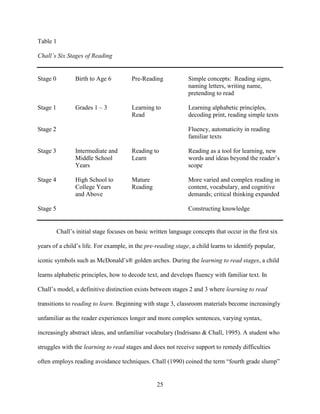
  • 192.
    180 APPENDIX C InstitutionalReview Board Permission from Indiana University of Pennsylvania
  • 193.
    181 APPENDIX D Site Approvalfrom District Superintendent Professional Studies in Education Department 303 Davis Hall Indiana, PA 15705 724-357-2400 Date Dr. Superintendent (Pseudonym) Happy Valley School District (Pseudonym) 123 Skip Rope Road Happy Valley, PA (Pseudonym) Dear Dr. Superintendent (Pseudonym), I am requesting permission to include the Happy Valley School District (pseudonym) in the following study: “Using Electronic Reading Devices to Gauge Situational Interest in Reading.” This letter is to request your formal permission to allow 9th -grade students at Happy Valley High School (pseudonym) to participate in a survey that examines their motivation, interest and perceived value in using a dedicated electronic reading device. I would like to invite the current General 9 English students to participate in the study and to use the data to examine the effects of using an e-reader on their motivation to read. This information will be valuable to reading and motivation research, but more importantly, it would be beneficial to the Happy Valley (pseudonym) community and Happy Valley’s (pseudonym) current instructional staff members. E-readers will be provided for all students in General 9 English classes using funds I received from a modest scholarship from Delta Kappa Gamma Society International. The e- readers will remain the property of Happy Valley School District (pseudonym). As with any research, student participation is voluntary and with the understanding that the participants can withdraw from the research at any time by contacting me in person, by electronic mail, by telephone, or in writing. Willingness to participate or not participate in the study has no bearing on a student’s academic grades. Again, student participation is completely voluntary. Following reading a novel using the e-reader, 9th -grade students will be asked to complete an online survey of twelve statements that reflect their experience using the e-reader. The survey will be completed during their English class. Again, confidentiality will be maintained. Any presentation or publications that discuss the findings of this research will continue to maintain confidentiality in order to protect the identity of all participants. Signature Date Professional Studies in Education Department 303 Davis Hall Indiana, Pennsylvania 15705 724-357-2400 APPENDIX A: Letters of Consent – Parent/Guardia n Consent December 5, 2011
  • 194.
    182 This study willbe conducted for research purposes, and there are no known risks in participating in this study. One potential benefit of this study, however, is that it will provide some information for educational practices regarding student motivation to read. It is possible that students find the experience enjoyable resulting in an increase in their motivation to read. If you are comfortable with Happy Valley’s (pseudonym) 9th -grade students participating in this research, please respond with a letter of permission typed on official Happy Valley School District (pseudonym) letterhead. If you need further clarification on the information presented, please feel free to contact me. An executive summary of the findings from this study will be made available to you upon request. Thank you for your consideration, Principal Investigator: Faculty Sponsor: Karen L. Matis, D.Ed. candidate Dr. Valeri Helterbran Indiana University of Pennsylvania Indiana University of Pennsylvania 3303 Old Pittsburgh Road 323 Davis Hall, IUP New Castle, PA 16101 570 South Eleventh Street 724-654-8437 Indiana, PA 15705 mgrq@iup.edu 724-357-2400 vhelter@iup.edu
  • 195.
  • 196.
    184 APPENDIX E Site Approvalfrom Building Principal Professional Studies in Education Department 303 Davis Hall Indiana, PA 15705 724-357-2400 Date Mr. Principal (Pseudonym) Happy Valley School District (Pseudonym) 123 Skip Rope Road Happy Valley, PA (Pseudonym) Dear Mr. Principal (Pseudonym), As part of the process of completing my doctorate in Curriculum and Instruction at Indiana University of Pennsylvania, I am required to conduct research for my dissertation. I am writing to ask for your permission to conduct research in Happy Valley’s (pseudonym) General 9 English classrooms in the Winter/Spring seasons of the 2012-2013 academic school year. This research examines students’ motivation, interest and perceived value in using a dedicated electronic reading device. I would like to allow the current 9th -grade General English students to participate in the study and to use the data to examine the effects of using a dedicated e-reader on students’ motivation to read. This information will be valuable to reading and motivation research, but more importantly, it would be beneficial to the Happy Valley (pseudonym) community and current instructional staff members. E-readers will be provided for all students in General 9 English classes using funds I received from a modest scholarship from Delta Kappa Gamma Society International. The e-readers will remain the property of Happy Valley School District (pseudonym). As with any research, student participation is voluntary and with the understanding that the participants can withdraw from the research at any time by contacting me in person, by electronic mail, by telephone, or by written note. A student’s willingness to participate or not participate in the study has no bearing on his/her academic grades or relationship with the classroom teacher or researcher. Again, participation is completely voluntary. Following reading a novel using the e-reader, participating 9th -grade students will be asked to complete an online survey of twelve statements during their general English class. Signature Date Professional Studies in Education Department 303 Davis Hall Indiana, Pennsylvania 15705 724-357-2400 APPENDIX A: Letters of Consent – Parent/Guardia n Consent December 5, 2011
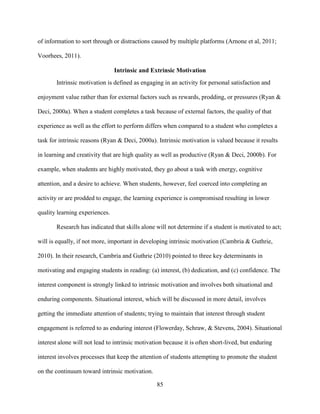
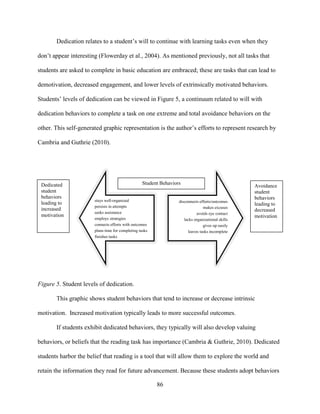
  • 197.
    185 Again, student confidentialityand anonymity will be maintained. Any presentation or publications that discuss the findings of this research will continue to maintain confidentiality in order to protect the identity of all participants and the school district. This study will be conducted for research purposes, and there are no known risks in participating in this study. One potential benefit of this study, however, is that it will provide some information for teachers related to student motivation to read. Further, students may find using an e-reader enjoyable resulting in an increase in their motivation to read. If you agree to allow me to work with you to complete this research in the manner described above, please respond granting permission in either a letter or electronic mail format. If you need further clarification on the information presented, please feel free to contact me. An executive summary of the findings from this study will be made available to you upon request. Thank you for your consideration, Principal Investigator: Faculty Sponsor: Karen L. Matis, D.Ed. candidate Dr. Valeri Helterbran Indiana University of Pennsylvania Indiana University of Pennsylvania 3303 Old Pittsburgh Road 323 Davis Hall, IUP New Castle, PA 16101 570 South Eleventh Street 724-654-8437 Indiana, PA 15705 mgrq@iup.edu 724-357-2400 vhelter@iup.edu
  • 198.
  • 199.
    187 APPENDIX F Informed MinorAssent Letter and Signature Form Professional Studies in Education Department 303 Davis Hall Indiana, PA 15705 724-357-2400 Date Dear Grade 9 English Student, My name is Karen Matis, and some of you know me as the reading teacher at Happy Valley (pseudonym). I want you to think of me in a different role—think of me as a researcher at Indiana University of Pennsylvania working on my dissertation to fulfill requirements for my doctoral degree. In other words, just like you, I am also a student. As part of my doctoral studies, I am conducting a research study on electronic reading devices; I’ll refer to them as e- readers. You probably know these devices by their more popular brand names: Amazon’s Kindle®, Barnes and Noble’s Nook®, and Sony’s Reader®. Information that follows provides you with information about this study so that you may make an informed decision about whether or not you wish to participate. You are eligible for this research study on e-readers because you are a student taking a 9th -grade English class at Happy Valley High School (pseudonym) in Happy Valley, PA (pseudonym). I would like to know what effect e-readers have on student motivation to read. Participation in this study will not require any additional time from you beyond your regularly assigned classroom requirements. You are not required to participate in this study, and whether you decide to participate or not, there will be no effect on your grades in English class. The research study consists of an online survey of 12 statements that you will respond to in relationship to your experiences using the e-reader. There’s no writing involved, you’ll simply select a number between 1 and 5 to let me know about your experiences. The best news is there are no wrong answers; the survey is merely about your experiences using the e-reader. No additional time is required for participation; the survey will be administered during English 9 class time in the computer lab. You won’t need to provide your name on the survey; your identity is protected and you will remain anonymous throughout the study. Even I will not know how you responded individually to the online survey. You don’t need to provide an e-reader for this study; I received a modest scholarship from Delta Kappa Gamma Society International to purchase e-readers for use in your English class. The e-reader will be on loan to you just like textbooks in your other classes; at the end of the 2012-2013 school year, your English 9 teacher will collect the e-reader during class. The e-reader remains the property of Happy Valley High School (pseudonym); however, if you wish, you may continue to use the device for the remainder of this school year following the research. This study is being conducted for research purposes, and there are no known risks or discomforts associated with participating in this study. Hey, you may find the learning Signature Date Professional Studies in Education Department 303 Davis Hall Indiana, Pennsylvania 15705 724-357-2400 APPENDIX A: Letters of Consent – Parent/Guardia n Consent December 5, 2011
  • 200.
    188 experience with ane-reader enjoyable! One potential benefit is that information collected from this study may help your teachers understand new methods to increase students’ motivation to read. Your parent(s) will be informed about this research study in the information packet I’m providing them. Please understand that your participation in this study is voluntary. You are free to decide not to participate in this study on e-readers or you may withdraw at any time without any negative effects on your relationship with the classroom teacher, researcher, or school. Your decision will not result in any loss of benefits to which you are otherwise entitled. If you choose to participate, you may withdraw at any time by notifying me in person, by electronic mail, by telephone, or by written note. Upon your request to withdraw, any previously collected data relating to you will be destroyed. Should you choose to participate, all information will be confidential and will have no bearing on your academic standing or the services you receive from Happy Valley High School (pseudonym). Your responses will be considered only in combination with those of other participants in this study. The information gleaned from this study may be published in educational journals, presented at educational meetings, or shared with the educational professional community, but your identity will be kept strictly confidential. After I have analyzed the results of the study, I will share results them with all 9th -grade students. If you are comfortable participating in this study, please sign and date the colored copy of the attached minor assent form and return it in the enclosed envelope to the Principal’s Office at school. A returned, signed assent indicates you are willing to participate. There are two copies; please keep the white copy for yourself. If you choose not to participate, please return all copies of this to the Principal’s Office. If you have any questions about this study, it’s okay for you to ask me. My telephone number is 724-654-8437 and my e-mail address is mgrq@iup.edu. This project has been approved by the Indiana University of Pennsylvania Institutional Review Board for the Protection of Human Subjects (phone 724-357-7730). Best wishes for continued success in 9th -grade, Principal Investigator: Karen L. Matis, D.Ed. candidate, Indiana University of Pennsylvania 3303 Old Pittsburgh Road New Castle, PA 16101 724-654-8437 mgrq@iup.edu Faculty Sponsor: Dr. Valeri Helterbran 724-357-2400 Indiana University of Pennsylvania vhelter@iup.edu 323 Davis Hall, IUP 570 South Eleventh Street Indiana, PA 15705
  • 201.
    189 MINOR VOLUNTARY ASSENTFORM SIGNATURE PAGE Please return this form with the Parent Consent Form I have read and understand the information in the letter, and I assent to participate in this study on motivation to read using e-readers in my English 9 classroom. I understand that participation involves completing an online survey during the regular English 9 class time period. I further understand that precautions will be taken to ensure my participation and responses will be kept confidential, and that participation will have no effect on my academic assessments during the study. I understand that I may withdraw at any time by notifying the researcher in person, by electronic mail, by telephone, or by written note. I will keep the white copy of this voluntary informed consent form for myself and will return the colored copy to the Principal’s Office in the envelope provided. The signed consent form will be placed in a sealed envelope to remain with the researcher. I also understand that parental/guardian permission is a requirement for my participation. Name (PLEASE PRINT) _________________________________________________________ Signature _____________________________________________________ Date ____________ I do not have a personal e-mail account. I do have a personal e-mail account. __________________________________________ e-mail address of student
  • 202.
    190 APPENDIX G Informed ParentConsent Letter and Signature Form Professional Studies in Education Department 303 Davis Hall Indiana, PA 15705 724-357-2400 Date Dear Parent/Guardian, My name is Karen Matis, and it’s likely that your child was scheduled in my reading classes in 7th - and 8th -grades. My purpose in contacting you is as a researcher in a doctoral program at Indiana University of Pennsylvania. As a doctoral student, I am engaged in scholarly research for my dissertation. Your child has been invited to participate in my research study on electronic reading devices; I’ll refer to them as e-readers. You probably know these devices by their more popular brand names: Amazon’s Kindle®, Barnes and Noble’s Nook®, and Sony’s Reader®. Information that follows provides you with knowledge about this study so that you may make an informed decision whether or not you wish for your child to participate. Your child qualifies for this study because he/she is in a regular English 9 class at Happy Valley (pseudonym). Willingness to participate or not participate in the study has no bearing on your child’s academic grades. In fact, the English 9 teacher will not be aware of whether your child participates or not. Again, participation is completely voluntary. I would like to know what effect e-readers have on 9th -grade students’ motivation to read. Participation in this study will not require any additional time from your child beyond the regularly assigned classroom requirements. Participation in this study is not required, and whether your child decides to participate or not, there will be no effect on the evaluation of performance in English class. The study consists of an online survey of 12 statements for participants to rate in relationship to their reading experiences using the e-reader. The survey will be administered during English 9 class time in the computer lab. The survey will not include your child’s name; to protect your child’s identity, he/she will remain anonymous throughout the study. Even I will not know how he/she answered. Funding for purchasing e- readers has been secured through a modest scholarship to the researcher from Delta Kappa Gamma Society International; your child will be provided an e-reader for use in English 9 class whether or not he/she participates in the research study. Just like textbooks assigned for student use, the e-reader is on loan to students and will remain the property of Happy Valley High School (pseudonym). Signature Date Professional Studies in Education Department 303 Davis Hall Indiana, Pennsylvania 15705 724-357-2400 APPENDIX A: Letters of Consent – Parent/Guardia n Consent December 5, 2011
  • 203.
    191 This study isbeing conducted for research purposes, and there are no known risks or discomforts associated with participating in this study. Your child may find the learning experience enjoyable. One potential benefit is that information collected from this study may help teachers to understand new methods to increase student motivation to read. Another potential benefit is that your child finds using an e-reader enjoyable and reads more! Please understand that your child’s participation in this study is voluntary. Students are free to decide to not participate in this study on motivation and e-readers, or they may withdraw at any time without adversely affecting their relationship with the classroom teacher, researcher, or school. The decision will not result in any loss of benefits to which your child is otherwise entitled. If your child chooses to participate, he/she may withdraw at any time by notifying me in person, by electronic mail, by telephone, or by written note. Upon request to withdraw, any previously collected data pertaining to your child will be destroyed. Should you give permission for your child to participate, all information will be held in the strictest of confidence and will have no bearing on academic standing or services received from Happy Valley High School (pseudonym). All participant responses will be considered only in combination with those of other participants in this study. The information gleaned from this study may be published in educational journals, presented at educational meetings, or shared with the educational professional community, but participants’ identities will be kept strictly confidential. I will share a synopsis of the study’s results with all students in the 9th -grade class following data analysis. If you are comfortable with your child participating in this research study, please sign and date the colored copy of the Parental Voluntary Consent Form Signature Page and return it in the enclosed envelope to the Principal’s Office at the Junior-Senior High School. A returned, signed letter implies your consent. If you need further clarification on the information presented, please feel free to contact me. There are two copies; please keep the white copy for yourself. If you choose not to have your child participate, please return all copies of this to the Principal’s Office. An executive summary of findings from this study will be made available to you upon request. Should you have any questions, please do not hesitate to contact me via e-mail at mgrq@iup.edu or by contacting me at home at 724-654-8437. This project has been approved by the Indiana University of Pennsylvania Institutional Review Board for the Protection of Human Subjects (phone 724-357-7730). Thanks for your consideration, Principal Investigator: Faculty Sponsor: Karen L. Matis, D.Ed. candidate Dr. Valeri Helterbran Indiana University of Pennsylvania Indiana University of Pennsylvania 3303 Old Pittsburgh Road 323 Davis Hall, IUP New Castle, PA 16101 570 South Eleventh Street 724-654-8437 Indiana, PA 15705 mgrq@iup.edu 724-357-2400 vhelter@iup.edu
  • 204.
    192 PARENTAL VOLUNTARY CONSENTFORM SIGNATURE PAGE I have read and understand the information in the letter, and I consent to allow my child to participate in this study on motivation to read using e-readers in his/her English 9 classroom. I understand that participation will involve my child completing an online survey during the regular English 9 class time period. I further understand that precautions will be taken to ensure that my child’s participation and responses will be kept confidential, and that participation will have no effect on academic assessments during the study. I understand that I may withdraw my child at any time by notifying the researcher in person, by electronic mail, by telephone, or by written note. I will keep the white copy of this voluntary informed consent form for myself and will return the colored copy to the Principal’s Office of the High School in the envelope provided. This signed consent form will be placed in a sealed envelope to remain with the researcher. I also understand that my child’s agreement to participate is a requirement for participation and that he/she has received a Minor Voluntary Assent Form for signature. I agree to allow my child to participate in the study on motivation to read using e-readers in the 9th- grade language arts classroom as described above. Parent/Guardian (PLEASE PRINT) ________________________________________________ Signature _____________________________________________________ Date ____________ Home phone number ____________________________________________________________ Cell phone number ______________________________________________________________ Student Name (PLEASE PRINT) __________________________________________________ Parent e-mail address ____________________________________________________________