Theoretical Foundations
to Demonstrate Learning
Nate Cradit – Michigan BPA
What do students learn and gain
through BPA participation?
Overview
• Considering additional dimensions of learning
– Astin’s Involvement Theory
– Noncognitive Variables
• How do you tell that story?
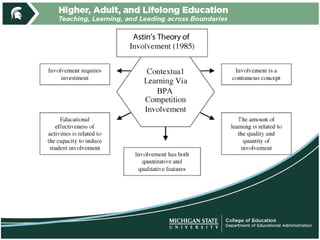
Astin’s Theory of Student Involvement
The more energy a student puts into the academic
environment, the more successful they will be.
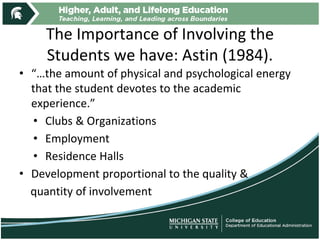
The Importance of Involving the
Students we have: Astin (1984).
• “…the amount of physical and psychological energy
that the student devotes to the academic
experience.”
• Clubs & Organizations
• Employment
• Residence Halls
• Development proportional to the quality &
quantity of involvement
BPA
How do you measure involvement?
Noncognitive Variables
•What else do students know?
•What other skills might be valuable for life?
•8 variables, arguing for use in admissions
decisions
•Many universities adopting, and even corporate
hiring staff
•Soft skills, expanded and quantified
(Sedlacek, 2004)
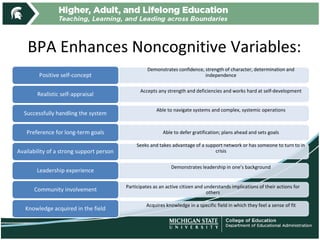
BPA Enhances Noncognitive Variables:
Demonstrates confidence, strength of character, determination and
independencePositive self-concept
Accepts any strength and deficiencies and works hard at self-development
Realistic self-appraisal
Able to navigate systems and complex, systemic operations
Successfully handling the system
Able to defer gratification; plans ahead and sets goalsPreference for long-term goals
Seeks and takes advantage of a support network or has someone to turn to in
crisisAvailability of a strong support person
Demonstrates leadership in one’s background
Leadership experience
Participates as an active citizen and understands implications of their actions for
others
Community involvement
Acquires knowledge in a specific field in which they feel a sense of fit
Knowledge acquired in the field
Based on the theories we talked
about today, are there any new
strategies that you might use to
measure learning and share success
in new ways?
BPA provides students the opportunity to become
meaningfully involved in their academic
environment, and to grow in the noncognitive
areas linked to resilience and success.
Through this opportunity, BPA students are more
likely to persist and graduate. They are well-
positioned for career success and societal
economic development.

Theoretical Foundations for CTSO Learning Outcomes

  • 1.
    Theoretical Foundations to DemonstrateLearning Nate Cradit – Michigan BPA
  • 2.
    What do studentslearn and gain through BPA participation?
  • 3.
    Overview • Considering additionaldimensions of learning – Astin’s Involvement Theory – Noncognitive Variables • How do you tell that story?
  • 4.
    Astin’s Theory ofStudent Involvement The more energy a student puts into the academic environment, the more successful they will be.
  • 5.
    The Importance ofInvolving the Students we have: Astin (1984). • “…the amount of physical and psychological energy that the student devotes to the academic experience.” • Clubs & Organizations • Employment • Residence Halls • Development proportional to the quality & quantity of involvement
  • 6.
  • 7.
    How do youmeasure involvement?
  • 9.
    Noncognitive Variables •What elsedo students know? •What other skills might be valuable for life? •8 variables, arguing for use in admissions decisions •Many universities adopting, and even corporate hiring staff •Soft skills, expanded and quantified (Sedlacek, 2004)
  • 10.
    BPA Enhances NoncognitiveVariables: Demonstrates confidence, strength of character, determination and independencePositive self-concept Accepts any strength and deficiencies and works hard at self-development Realistic self-appraisal Able to navigate systems and complex, systemic operations Successfully handling the system Able to defer gratification; plans ahead and sets goalsPreference for long-term goals Seeks and takes advantage of a support network or has someone to turn to in crisisAvailability of a strong support person Demonstrates leadership in one’s background Leadership experience Participates as an active citizen and understands implications of their actions for others Community involvement Acquires knowledge in a specific field in which they feel a sense of fit Knowledge acquired in the field
  • 11.
    Based on thetheories we talked about today, are there any new strategies that you might use to measure learning and share success in new ways?
  • 12.
    BPA provides studentsthe opportunity to become meaningfully involved in their academic environment, and to grow in the noncognitive areas linked to resilience and success. Through this opportunity, BPA students are more likely to persist and graduate. They are well- positioned for career success and societal economic development.