Unless otherwise noted, the content of this course material is
licensed under a Creative Commons Attribution - Non-Commercial
- Share Alike 3.0 License.
Copyright 2007, Elif Oral, Arno Kumagai
The following information is intended to inform and educate and is not a tool for self-diagnosis or a replacement for medical evaluation,
advice, diagnosis or treatment by a healthcare professional. You should speak to your physician or make an appointment to be seen if
you have questions or concerns about this information or your medical condition. You assume all responsibility for use and potential
liability associated with any use of the material.
Material contains copyrighted content, used in accordance with U.S. law. Copyright holders of content included in this material should
contact open.michigan@umich.edu with any questions, corrections, or clarifications regarding the use of content. The Regents of the
University of Michigan do not license the use of third party content posted to this site unless such a license is specifically granted in
connection with particular content objects. Users of content are responsible for their compliance with applicable law.
Update on Obesity
Elif Arioglu Oral, M.D.
Assistant Professor of Medicine
Division of Endocrinology and Metabolism,
Department of Internal Medicine,
University of Michigan, Ann Arbor, MI.
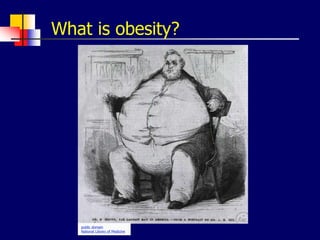
What is obesity?
public domain
National Library of Medicine
What is Obesity
Image of cover of
New Yorker
Magazine removed
Obesity
 Measurement and definition
 Physiology
 Environmental causes
 Genetic causes of obesity
 Endocrine causes of obesity
 Medical risks
Obesity treatment
 Goals of treatment
 Prevention
 Diet
 Exercise
 Behavior modification
 Drug Therapy
 Specific Drugs
 Drugs on the horizon
 Gastric surgery
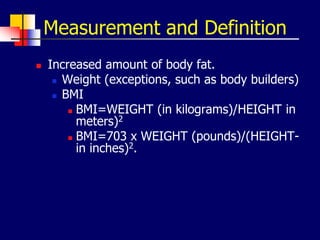
Measurement and Definition
 Increased amount of body fat.
 Weight (exceptions, such as body builders)
 BMI
 BMI=WEIGHT (in kilograms)/HEIGHT in
meters)2
 BMI=703 x WEIGHT (pounds)/(HEIGHT-
in inches)2.
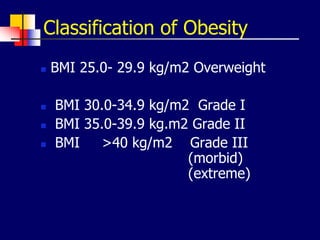
Classification of Obesity
 BMI 25.0- 29.9 kg/m2 Overweight
 BMI 30.0-34.9 kg/m2 Grade I
 BMI 35.0-39.9 kg.m2 Grade II
 BMI >40 kg/m2 Grade III
(morbid)
(extreme)
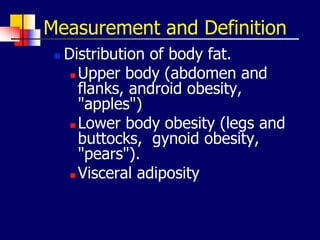
Measurement and Definition
 Distribution of body fat.
 Upper body (abdomen and
flanks, android obesity,
"apples")
 Lower body obesity (legs and
buttocks, gynoid obesity,
"pears").
 Visceral adiposity
Measurement and Definition
 Research techniques
 Skin fold thickness
 Waist : hip ratio
 Waist circumference
 >35 inches (88 cm) in women
 >40 inches (102 cm) in men
 Bioelectric impedence
 Infrared interactance
 Underwater weighing
 Isotope distribution
 DEXA
 CT
 MRI
Physiology
 Central weight-control center
 Hypothalamus
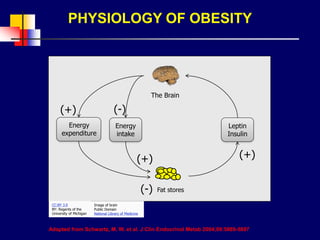
 Feed-back control of body weight
 Leptin and other adipocyte signals
 Signals from the “gut”
 Balance between energy intake and
expenditure
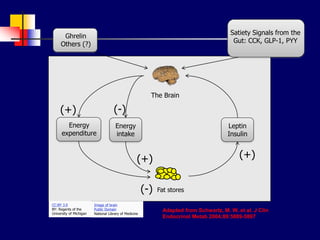
Adapted from Schwartz, M. W. et al. J Clin Endocrinol Metab 2004;89:5889-5897
PHYSIOLOGY OF OBESITY
Energy
expenditure
Energy
intake
Leptin
Insulin
(+)
(+)
(+)
(-)
(-)
Fat stores
The Brain
CC:BY 3.0
BY: Regents of the
University of Michigan
Image of brain
Public Domain
National Library of Medicine
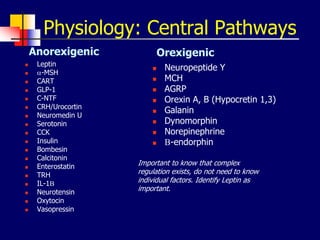
Physiology: Central Pathways
 Leptin
 a-MSH
 CART
 GLP-1
 C-NTF
 CRH/Urocortin
 Neuromedin U
 Serotonin
 CCK
 Insulin
 Bombesin
 Calcitonin
 Enterostatin
 TRH
 IL-1B
 Neurotensin
 Oxytocin
 Vasopressin
 Neuropeptide Y
 MCH
 AGRP
 Orexin A, B (Hypocretin 1,3)
 Galanin
 Dynomorphin
 Norepinephrine
 B-endorphin
Anorexigenic Orexigenic
Important to know that complex
regulation exists, do not need to know
individual factors. Identify Leptin as
important.
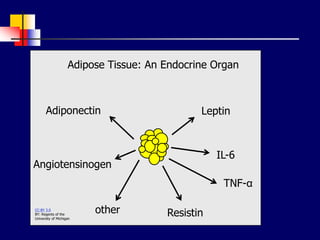
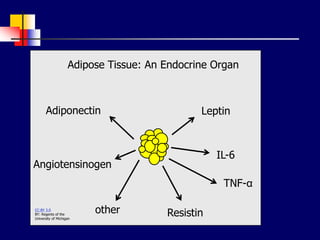
Adiponectin
Angiotensinogen
Resistin
IL-6
TNF-α
Leptin
other
Adipose Tissue: An Endocrine Organ
CC:BY 3.0
BY: Regents of the
University of Michigan
Leptin: Of Mice and Man
Image of before
and after leptin
replacement in boy
removed
Image of before
and after leptin
replacement in
mouse removed
Physiology: Leptin
 A 16-KD hormone produced predominantly by
adipocytes
 Circulating levels are determined chiefly by fat mass
 Increased leptin synthesis/secretion
 Re-feeding (after fasting)
 Adiposity
 Glucocorticoids
 Insulin
 Thiazolidinediones while fasting
 Inhibition of leptin synthesis/secretion
 Sympathetic stimulation
 Circulates partially protein- bound
Physiology: Leptin
 Leptin receptor:
 is a member of the cytokine receptor family
 exists as a number of splice variants
 the long form signaling via JAK2 and STAT3 to regulate
transcription.
 short receptor forms important for leptin transport,
clearance, and signaling via non-J AK/STAT pathways.
 Leptin’s chief physiologic role:
A read out of adiposity and nutritional status,
allowing the body to respond to starvation
Physiology: Leptin
 Leptin's central actions :
 Increase energy expenditure (via physical activity,
sympathetic nervous system activity)
 Decrease food intake
 Decrease body weight
 Increase insulin sensitivity
 Help signal the onset of puberty
 Regulate other pituitary hormone axes
 Leptin’s peripheral actions
 Stimulate angiogenesis
 Hematopoietic cell proliferation
 T-cell immnunity
Two key points—the EO rules!
 Fat is not our foe, it is a
functional endocrine organ.
Too much fat is bad. Too
little is also bad
“Just Right”
Adiponectin
Angiotensinogen
Resistin
IL-6
TNF-α
Leptin
other
Adipose Tissue: An Endocrine Organ
CC:BY 3.0
BY: Regents of the
University of Michigan
Lipodystrophy Syndromes
 Paucity of adipose tissue
 Insulin resistance
 Hypertriglyceridemia
 Fatty infiltration of liver and
other tissues
Image of woman
with lipodystrophy
removed
Energy
expenditure
Energy
intake
Leptin
Insulin
(+)
(+)
(+)
(-)
(-)
Fat stores
Ghrelin
Others (?)
Satiety Signals from the
Gut: CCK, GLP-1, PYY
Adapted from Schwartz, M. W. et al. J Clin
Endocrinol Metab 2004;89:5889-5897
The Brain
CC:BY 3.0
BY: Regents of the
University of Michigan
Image of brain
Public Domain
National Library of Medicine
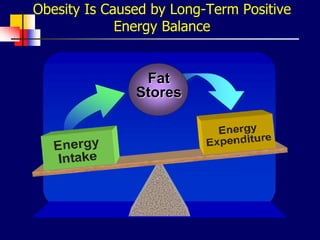
Obesity Is Caused by Long-Term Positive
Energy Balance
Fat
Stores
Balancing Intake vs Expenditure
Changes in the environment
Energy dense food overabundant
Opportunity for expenditure reduced
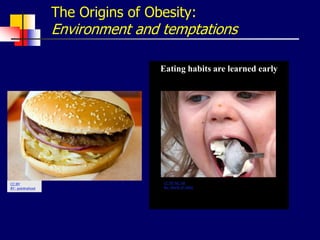
Eating habits are learned early
The Origins of Obesity:
Environment and temptations
CC:BY-NC-SA
By: World of Oddy
CC:BY
BY: pointnshoot
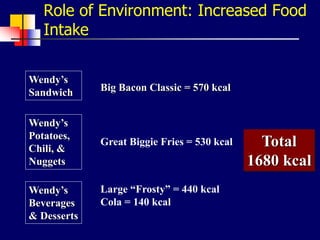
Role of Environment: Increased Food
Intake
Large “Frosty” = 440 kcal
Cola = 140 kcal
Big Bacon Classic = 570 kcal
Great Biggie Fries = 530 kcal Total
1680 kcal
Wendy’s
Sandwich
Wendy’s
Potatoes,
Chili, &
Nuggets
Wendy’s
Beverages
& Desserts
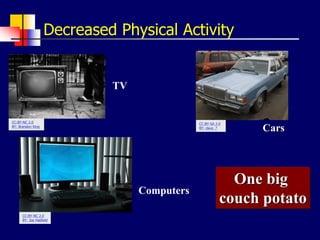
Decreased Physical Activity
Computers
Cars
TV
One big
couch potato
CC:BY-NC 2.0
BY: Brandon King
CC:BY-SA 2.0
BY: dave_7
CC:BY-NC 2.0
BY: Joe Hatfield
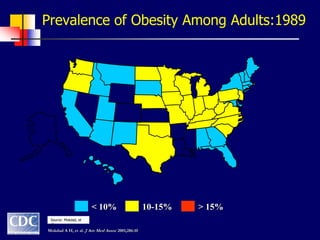
Prevalence of Obesity Among Adults:1989
< 10% 10-15% > 15%
Mokdad A H, et al. J Am Med Assoc 2001;286:10
Source: Mokdad, et
al.
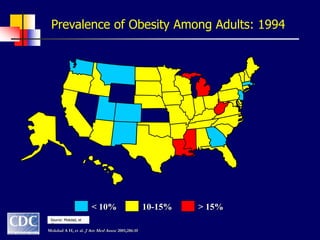
< 10% 10-15% > 15%
Prevalence of Obesity Among Adults: 1994
Mokdad A H, et al. J Am Med Assoc 2001;286:10
Source: Mokdad, et
al.
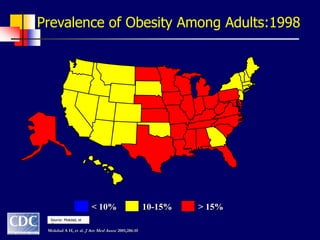
< 10% 10-15% > 15%
Prevalence of Obesity Among Adults:1998
Mokdad A H, et al. J Am Med Assoc 2001;286:10
Source: Mokdad, et
al.
Genetic bases of obesity
 Big genetic component
 Estimated at 40-70%
 Most of obesity polygeneic or
oligogeneic
 Thrifty gene hypothesis
 Monogeneic forms of obesity
 Isolated genes
 Syndromic obesity
Monogeneic obesity
 Leptin
 A few families
 Leptin receptor
 A single family
 MC4-Receptor
 Most common defect
Endocrine Causes of Obesity
 Hypothalamic injury or tumor
 Cushing’s syndrome
 Hypothyroidism
 Hypogonadism
 Growth hormone deficiency
 Polycystic ovarian syndrome
 Manifestation of obesity versus cause
Heterogeneity
 Important concept
 Not all obese are equal
Medical Risks of Obesity
 Mortality (less in African Americans)
 Insulin resistance/Type 2 diabetes
 Hypertension
 Hyperlipidemia
 Arthritis
 Obesity/hypoventilation syndrome=sleep
apnea
 Gallbladder disease
 Cancer (breast, colon, prostate, ovarian,
endometrial)
Not increased: osteoporosis or psychiatric disease
Obesity treatment
 Goals of treatment
 Prevention
 Diet
 Exercise
 Behavior modification
 Drug Therapy
 Specific Drugs
 Drugs on the horizon
 Surgical therapy
Goals of treatment
 Reduce co-morbidities
 Maintain minimum of 5% weight loss
5-year success only 5%
Key Features of Long-Term Losers
 Adopted a routine exercise regimen
 Weighed routinely (and taking action)
 Eating breakfast, not skipping meals
Diet
 Caloric restriction (fat <30%,
unsaturated fat <10%)
 High fat, low carbohydrate diets
 Regaining popularity
 CHO<20%, fat >50%
 Many variations
Two views:
1) Simple law of thermodynamics
2) Human metabolism is complex and futile cycles
between CHO and fat metabolism exist. Thus,
composition of diet matters.
Exercise
 More benefit than just the calories
burned
 Goal: make long-lasting
 Minimum regimen: 30 minutes of brisk
walking 5 times a week
 (Diabetes Prevention Program)
 More active lifestyle: fidget, walk more
for chores, use stairs, etc.
Behavior Modification
 Self-monitoring
 Goal setting
 Slow eating rate
 Food log
 Adequate sleep –especially age <40
years
individualized
Obesity treatment
Drug Therapy
 Approved Drugs
 Drugs on the horizon
Approved Drugs
 Sibutramine (Meridia)
 Orlistat (Xenical)
 Other FDA Approved
drugs
Two important questions
 Whom to treat?
 For how long?
Focus on co-morbidities
“Metabolic fitness “
For FDA and insurance carriers:
BMI>30 or >27 kg/m2 with
comorbidities
Sibutramine (Meridia)
 Approved : 1998
 Mechanism: Serotonin, norepinephrine and
dopamine reuptake inhibitor, does not
promote serotonin release
 Responders lose >4 pounds in the first 4
weeks of treatment
 Side-effects: hypertension, increased heart
rate, dry mouth, constipation, insomnia,
and headache
 Contraindicated with PPH, valvular heart
disease, MAOI or serotoninergics
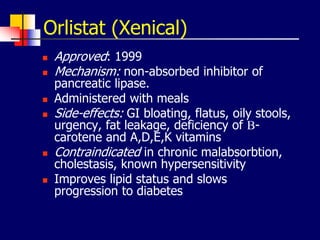
Orlistat (Xenical)
 Approved: 1999
 Mechanism: non-absorbed inhibitor of
pancreatic lipase.
 Administered with meals
 Side-effects: GI bloating, flatus, oily stools,
urgency, fat leakage, deficiency of B-
carotene and A,D,E,K vitamins
 Contraindicated in chronic malabsorbtion,
cholestasis, known hypersensitivity
 Improves lipid status and slows
progression to diabetes
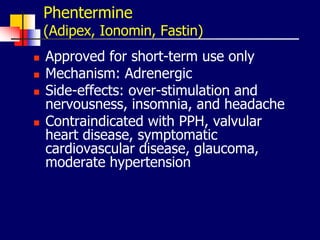
Phentermine
(Adipex, Ionomin, Fastin)
 Approved for short-term use only
 Mechanism: Adrenergic
 Side-effects: over-stimulation and
nervousness, insomnia, and headache
 Contraindicated with PPH, valvular
heart disease, symptomatic
cardiovascular disease, glaucoma,
moderate hypertension
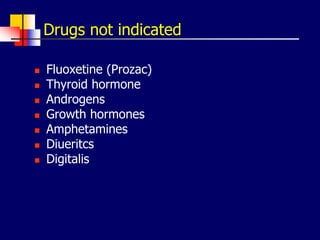
Drugs not indicated
 Fluoxetine (Prozac)
 Thyroid hormone
 Androgens
 Growth hormones
 Amphetamines
 Diueritcs
 Digitalis
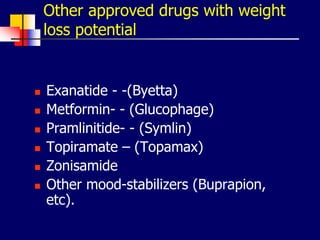
Other approved drugs with weight
loss potential
 Exanatide - -(Byetta)
 Metformin- - (Glucophage)
 Pramlinitide- - (Symlin)
 Topiramate – (Topamax)
 Zonisamide
 Other mood-stabilizers (Buprapion,
etc).
Drugs on the horizon: in later stages
of development
 Leptin
 Cannabinoid Receptor 1 Antagonist:
Rimonabant (ACCOMPLIA)
Newer generation under development
 New intestinal lipase inhibitor-ATL692
 PYY 3-36
 Growth hormone fragment AOD9604 (aa
177 to 191)
Bray G: Medical Clinics of North America 91 (2007):1225-1253
LEPTIN (recombinant human methionyl leptin
METRELEPTIN ; AMYLIN CORP.)
 Administered subcutaneously
 Very effective in leptin-deficiency related
obesity (mutations in ob gene)
 Phase II in general obesity with a wide
range of effect in individuals
 Factors that determine responders not
clear (relative deficiency at baseline?)
 Role in long-term weight maintenance?
 Role in combination therapies?
 Surprising metabolic benefits in
lipodystrophy, role in HIV lipodystrophy?
Cannabinoid Receptor 1 Antagonist:
Rimonabant (ACCOMPLIA, Sanofi)
 Works by selectively blocking the CB1 receptors,
helping normalize the over-activation of the
Endocannabinoid System
 Weight loss
 Less food-craving
 Less tobacco-craving
 Improved lipid profiles with raised HDL levels
 Improved insulin sensitivity
 Side-effect tolerability (?): profound nausea /
dysphoria or depression, increased suicide (?)
 US market projected date: FDA rejected in 2007,
but approved in Europe and Canada
Emerging Concepts in Medical
Therapy
 Chronic therapy (continuous or
intermittent)
 Individualized therapy (one-drug-for-all
not realistic)
 Combination therapy (very successful
preclinical results with Symlin and
Leptin combination)
Surgical Treatment of Obesity
 Highly effective and reduces mortality
 1% mortality
 Life-long commitment with behavior
modification
 Life-long need for medical follow-up
 Indications:
 BMI>40 (or >35 with co-morbidities)
 Failure of previous weight loss attempts
 Well-informed and highly motivated patient
Some considerations
 Patients need to understand
 What is going to happen
 Requirement of a support system
 Eating disorders and emotional eating need
to be addressed
 Lifelong need for supplementation
 Unknown medical risks
 Exaggerated reactive hypoglycemia?
PEDIATRIC OBESITY
 Extreme cases deserve work-up for
specific monogeneic or syndromic
causes
 Major goal: prevent adult obesity and
co-morbidities
 Focus on diet/exercise and behavior
modification (stress adequate sleep)
 Only approved drug: Orlistat
CONCLUSIONS
 Treatment of obesity should be directed
at achieving metabolic fitness.
 Diet, exercise, behavior modification are
rarely effective for long-term.
 No magic bullet exists so far.
Sample Question 1
 If a patient has height of 150 cm and a
weight of 150 kg, how would you classify
this patient’s habitus?
 A) Normal weight
 B) Overweight
 C) Mildly obese
 D) Morbidly obese
Sample Question 2
 What would you like to know before you
assume that patient needs therapy for
his condition?
Sample Question 3
 What would you recommend as the first
step of his management?
 For how long?
 What would be the goal for his therapy?
 If he returns to his 6 month f/u visit with a
weight of 140 kg, what would you
recommend next?
 What if he had returned at 160 kg?
Sample Question 4
 What gene defect is responsible from the
most common monogeneic form of
obesity?
Sample Question 5
 What are the predictors of successful
weight maintenance for long-term?
Disclaimer—remember when
evaluating the lecture quality…
 Dr. Kumagai is responsible for the
contents of this lecture, though he will
adamantly refuse responsibility and
blame Dr. Lash for how boring it is.
 Dr. Oral is a very pleasant person and
cannot take criticism very well.

EOral-Obesity.ppt

  • 1.
    Unless otherwise noted,the content of this course material is licensed under a Creative Commons Attribution - Non-Commercial - Share Alike 3.0 License. Copyright 2007, Elif Oral, Arno Kumagai The following information is intended to inform and educate and is not a tool for self-diagnosis or a replacement for medical evaluation, advice, diagnosis or treatment by a healthcare professional. You should speak to your physician or make an appointment to be seen if you have questions or concerns about this information or your medical condition. You assume all responsibility for use and potential liability associated with any use of the material. Material contains copyrighted content, used in accordance with U.S. law. Copyright holders of content included in this material should contact open.michigan@umich.edu with any questions, corrections, or clarifications regarding the use of content. The Regents of the University of Michigan do not license the use of third party content posted to this site unless such a license is specifically granted in connection with particular content objects. Users of content are responsible for their compliance with applicable law.
  • 2.
    Update on Obesity ElifArioglu Oral, M.D. Assistant Professor of Medicine Division of Endocrinology and Metabolism, Department of Internal Medicine, University of Michigan, Ann Arbor, MI.
  • 3.
    What is obesity? publicdomain National Library of Medicine
  • 4.
    What is Obesity Imageof cover of New Yorker Magazine removed
  • 5.
    Obesity  Measurement anddefinition  Physiology  Environmental causes  Genetic causes of obesity  Endocrine causes of obesity  Medical risks
  • 6.
    Obesity treatment  Goalsof treatment  Prevention  Diet  Exercise  Behavior modification  Drug Therapy  Specific Drugs  Drugs on the horizon  Gastric surgery
  • 7.
    Measurement and Definition Increased amount of body fat.  Weight (exceptions, such as body builders)  BMI  BMI=WEIGHT (in kilograms)/HEIGHT in meters)2  BMI=703 x WEIGHT (pounds)/(HEIGHT- in inches)2.
  • 8.
    Classification of Obesity BMI 25.0- 29.9 kg/m2 Overweight  BMI 30.0-34.9 kg/m2 Grade I  BMI 35.0-39.9 kg.m2 Grade II  BMI >40 kg/m2 Grade III (morbid) (extreme)
  • 9.
    Measurement and Definition Distribution of body fat.  Upper body (abdomen and flanks, android obesity, "apples")  Lower body obesity (legs and buttocks, gynoid obesity, "pears").  Visceral adiposity
  • 10.
    Measurement and Definition Research techniques  Skin fold thickness  Waist : hip ratio  Waist circumference  >35 inches (88 cm) in women  >40 inches (102 cm) in men  Bioelectric impedence  Infrared interactance  Underwater weighing  Isotope distribution  DEXA  CT  MRI
  • 11.
    Physiology  Central weight-controlcenter  Hypothalamus  Feed-back control of body weight  Leptin and other adipocyte signals  Signals from the “gut”  Balance between energy intake and expenditure
  • 12.
    Adapted from Schwartz,M. W. et al. J Clin Endocrinol Metab 2004;89:5889-5897 PHYSIOLOGY OF OBESITY Energy expenditure Energy intake Leptin Insulin (+) (+) (+) (-) (-) Fat stores The Brain CC:BY 3.0 BY: Regents of the University of Michigan Image of brain Public Domain National Library of Medicine
  • 13.
    Physiology: Central Pathways Leptin  a-MSH  CART  GLP-1  C-NTF  CRH/Urocortin  Neuromedin U  Serotonin  CCK  Insulin  Bombesin  Calcitonin  Enterostatin  TRH  IL-1B  Neurotensin  Oxytocin  Vasopressin  Neuropeptide Y  MCH  AGRP  Orexin A, B (Hypocretin 1,3)  Galanin  Dynomorphin  Norepinephrine  B-endorphin Anorexigenic Orexigenic Important to know that complex regulation exists, do not need to know individual factors. Identify Leptin as important.
  • 14.
    Adiponectin Angiotensinogen Resistin IL-6 TNF-α Leptin other Adipose Tissue: AnEndocrine Organ CC:BY 3.0 BY: Regents of the University of Michigan
  • 15.
    Leptin: Of Miceand Man Image of before and after leptin replacement in boy removed Image of before and after leptin replacement in mouse removed
  • 16.
    Physiology: Leptin  A16-KD hormone produced predominantly by adipocytes  Circulating levels are determined chiefly by fat mass  Increased leptin synthesis/secretion  Re-feeding (after fasting)  Adiposity  Glucocorticoids  Insulin  Thiazolidinediones while fasting  Inhibition of leptin synthesis/secretion  Sympathetic stimulation  Circulates partially protein- bound
  • 17.
    Physiology: Leptin  Leptinreceptor:  is a member of the cytokine receptor family  exists as a number of splice variants  the long form signaling via JAK2 and STAT3 to regulate transcription.  short receptor forms important for leptin transport, clearance, and signaling via non-J AK/STAT pathways.  Leptin’s chief physiologic role: A read out of adiposity and nutritional status, allowing the body to respond to starvation
  • 18.
    Physiology: Leptin  Leptin'scentral actions :  Increase energy expenditure (via physical activity, sympathetic nervous system activity)  Decrease food intake  Decrease body weight  Increase insulin sensitivity  Help signal the onset of puberty  Regulate other pituitary hormone axes  Leptin’s peripheral actions  Stimulate angiogenesis  Hematopoietic cell proliferation  T-cell immnunity
  • 19.
    Two key points—theEO rules!  Fat is not our foe, it is a functional endocrine organ. Too much fat is bad. Too little is also bad “Just Right”
  • 20.
    Adiponectin Angiotensinogen Resistin IL-6 TNF-α Leptin other Adipose Tissue: AnEndocrine Organ CC:BY 3.0 BY: Regents of the University of Michigan
  • 21.
    Lipodystrophy Syndromes  Paucityof adipose tissue  Insulin resistance  Hypertriglyceridemia  Fatty infiltration of liver and other tissues Image of woman with lipodystrophy removed
  • 22.
    Energy expenditure Energy intake Leptin Insulin (+) (+) (+) (-) (-) Fat stores Ghrelin Others (?) SatietySignals from the Gut: CCK, GLP-1, PYY Adapted from Schwartz, M. W. et al. J Clin Endocrinol Metab 2004;89:5889-5897 The Brain CC:BY 3.0 BY: Regents of the University of Michigan Image of brain Public Domain National Library of Medicine
  • 23.
    Obesity Is Causedby Long-Term Positive Energy Balance Fat Stores
  • 24.
    Balancing Intake vsExpenditure Changes in the environment Energy dense food overabundant Opportunity for expenditure reduced
  • 25.
    Eating habits arelearned early The Origins of Obesity: Environment and temptations CC:BY-NC-SA By: World of Oddy CC:BY BY: pointnshoot
  • 26.
    Role of Environment:Increased Food Intake Large “Frosty” = 440 kcal Cola = 140 kcal Big Bacon Classic = 570 kcal Great Biggie Fries = 530 kcal Total 1680 kcal Wendy’s Sandwich Wendy’s Potatoes, Chili, & Nuggets Wendy’s Beverages & Desserts
  • 27.
    Decreased Physical Activity Computers Cars TV Onebig couch potato CC:BY-NC 2.0 BY: Brandon King CC:BY-SA 2.0 BY: dave_7 CC:BY-NC 2.0 BY: Joe Hatfield
  • 28.
    Prevalence of ObesityAmong Adults:1989 < 10% 10-15% > 15% Mokdad A H, et al. J Am Med Assoc 2001;286:10 Source: Mokdad, et al.
  • 29.
    < 10% 10-15%> 15% Prevalence of Obesity Among Adults: 1994 Mokdad A H, et al. J Am Med Assoc 2001;286:10 Source: Mokdad, et al.
  • 30.
    < 10% 10-15%> 15% Prevalence of Obesity Among Adults:1998 Mokdad A H, et al. J Am Med Assoc 2001;286:10 Source: Mokdad, et al.
  • 31.
    Genetic bases ofobesity  Big genetic component  Estimated at 40-70%  Most of obesity polygeneic or oligogeneic  Thrifty gene hypothesis  Monogeneic forms of obesity  Isolated genes  Syndromic obesity
  • 32.
    Monogeneic obesity  Leptin A few families  Leptin receptor  A single family  MC4-Receptor  Most common defect
  • 33.
    Endocrine Causes ofObesity  Hypothalamic injury or tumor  Cushing’s syndrome  Hypothyroidism  Hypogonadism  Growth hormone deficiency  Polycystic ovarian syndrome  Manifestation of obesity versus cause
  • 34.
  • 35.
    Medical Risks ofObesity  Mortality (less in African Americans)  Insulin resistance/Type 2 diabetes  Hypertension  Hyperlipidemia  Arthritis  Obesity/hypoventilation syndrome=sleep apnea  Gallbladder disease  Cancer (breast, colon, prostate, ovarian, endometrial) Not increased: osteoporosis or psychiatric disease
  • 36.
    Obesity treatment  Goalsof treatment  Prevention  Diet  Exercise  Behavior modification  Drug Therapy  Specific Drugs  Drugs on the horizon  Surgical therapy
  • 37.
    Goals of treatment Reduce co-morbidities  Maintain minimum of 5% weight loss 5-year success only 5%
  • 38.
    Key Features ofLong-Term Losers  Adopted a routine exercise regimen  Weighed routinely (and taking action)  Eating breakfast, not skipping meals
  • 39.
    Diet  Caloric restriction(fat <30%, unsaturated fat <10%)  High fat, low carbohydrate diets  Regaining popularity  CHO<20%, fat >50%  Many variations Two views: 1) Simple law of thermodynamics 2) Human metabolism is complex and futile cycles between CHO and fat metabolism exist. Thus, composition of diet matters.
  • 40.
    Exercise  More benefitthan just the calories burned  Goal: make long-lasting  Minimum regimen: 30 minutes of brisk walking 5 times a week  (Diabetes Prevention Program)  More active lifestyle: fidget, walk more for chores, use stairs, etc.
  • 41.
    Behavior Modification  Self-monitoring Goal setting  Slow eating rate  Food log  Adequate sleep –especially age <40 years individualized
  • 42.
    Obesity treatment Drug Therapy Approved Drugs  Drugs on the horizon
  • 43.
    Approved Drugs  Sibutramine(Meridia)  Orlistat (Xenical)  Other FDA Approved drugs
  • 44.
    Two important questions Whom to treat?  For how long? Focus on co-morbidities “Metabolic fitness “ For FDA and insurance carriers: BMI>30 or >27 kg/m2 with comorbidities
  • 45.
    Sibutramine (Meridia)  Approved: 1998  Mechanism: Serotonin, norepinephrine and dopamine reuptake inhibitor, does not promote serotonin release  Responders lose >4 pounds in the first 4 weeks of treatment  Side-effects: hypertension, increased heart rate, dry mouth, constipation, insomnia, and headache  Contraindicated with PPH, valvular heart disease, MAOI or serotoninergics
  • 46.
    Orlistat (Xenical)  Approved:1999  Mechanism: non-absorbed inhibitor of pancreatic lipase.  Administered with meals  Side-effects: GI bloating, flatus, oily stools, urgency, fat leakage, deficiency of B- carotene and A,D,E,K vitamins  Contraindicated in chronic malabsorbtion, cholestasis, known hypersensitivity  Improves lipid status and slows progression to diabetes
  • 47.
    Phentermine (Adipex, Ionomin, Fastin) Approved for short-term use only  Mechanism: Adrenergic  Side-effects: over-stimulation and nervousness, insomnia, and headache  Contraindicated with PPH, valvular heart disease, symptomatic cardiovascular disease, glaucoma, moderate hypertension
  • 48.
    Drugs not indicated Fluoxetine (Prozac)  Thyroid hormone  Androgens  Growth hormones  Amphetamines  Diueritcs  Digitalis
  • 49.
    Other approved drugswith weight loss potential  Exanatide - -(Byetta)  Metformin- - (Glucophage)  Pramlinitide- - (Symlin)  Topiramate – (Topamax)  Zonisamide  Other mood-stabilizers (Buprapion, etc).
  • 50.
    Drugs on thehorizon: in later stages of development  Leptin  Cannabinoid Receptor 1 Antagonist: Rimonabant (ACCOMPLIA) Newer generation under development  New intestinal lipase inhibitor-ATL692  PYY 3-36  Growth hormone fragment AOD9604 (aa 177 to 191) Bray G: Medical Clinics of North America 91 (2007):1225-1253
  • 51.
    LEPTIN (recombinant humanmethionyl leptin METRELEPTIN ; AMYLIN CORP.)  Administered subcutaneously  Very effective in leptin-deficiency related obesity (mutations in ob gene)  Phase II in general obesity with a wide range of effect in individuals  Factors that determine responders not clear (relative deficiency at baseline?)  Role in long-term weight maintenance?  Role in combination therapies?  Surprising metabolic benefits in lipodystrophy, role in HIV lipodystrophy?
  • 52.
    Cannabinoid Receptor 1Antagonist: Rimonabant (ACCOMPLIA, Sanofi)  Works by selectively blocking the CB1 receptors, helping normalize the over-activation of the Endocannabinoid System  Weight loss  Less food-craving  Less tobacco-craving  Improved lipid profiles with raised HDL levels  Improved insulin sensitivity  Side-effect tolerability (?): profound nausea / dysphoria or depression, increased suicide (?)  US market projected date: FDA rejected in 2007, but approved in Europe and Canada
  • 53.
    Emerging Concepts inMedical Therapy  Chronic therapy (continuous or intermittent)  Individualized therapy (one-drug-for-all not realistic)  Combination therapy (very successful preclinical results with Symlin and Leptin combination)
  • 54.
    Surgical Treatment ofObesity  Highly effective and reduces mortality  1% mortality  Life-long commitment with behavior modification  Life-long need for medical follow-up  Indications:  BMI>40 (or >35 with co-morbidities)  Failure of previous weight loss attempts  Well-informed and highly motivated patient
  • 55.
    Some considerations  Patientsneed to understand  What is going to happen  Requirement of a support system  Eating disorders and emotional eating need to be addressed  Lifelong need for supplementation  Unknown medical risks  Exaggerated reactive hypoglycemia?
  • 56.
    PEDIATRIC OBESITY  Extremecases deserve work-up for specific monogeneic or syndromic causes  Major goal: prevent adult obesity and co-morbidities  Focus on diet/exercise and behavior modification (stress adequate sleep)  Only approved drug: Orlistat
  • 57.
    CONCLUSIONS  Treatment ofobesity should be directed at achieving metabolic fitness.  Diet, exercise, behavior modification are rarely effective for long-term.  No magic bullet exists so far.
  • 58.
    Sample Question 1 If a patient has height of 150 cm and a weight of 150 kg, how would you classify this patient’s habitus?  A) Normal weight  B) Overweight  C) Mildly obese  D) Morbidly obese
  • 59.
    Sample Question 2 What would you like to know before you assume that patient needs therapy for his condition?
  • 60.
    Sample Question 3 What would you recommend as the first step of his management?  For how long?  What would be the goal for his therapy?  If he returns to his 6 month f/u visit with a weight of 140 kg, what would you recommend next?  What if he had returned at 160 kg?
  • 61.
    Sample Question 4 What gene defect is responsible from the most common monogeneic form of obesity?
  • 62.
    Sample Question 5 What are the predictors of successful weight maintenance for long-term?
  • 63.
    Disclaimer—remember when evaluating thelecture quality…  Dr. Kumagai is responsible for the contents of this lecture, though he will adamantly refuse responsibility and blame Dr. Lash for how boring it is.  Dr. Oral is a very pleasant person and cannot take criticism very well.