SUMMARY
1. WHEN, WHERE, AND WHO INVENTED THE WASHING
MACHINE…………………………………………………………..3
2. ADVANCES AND DISADVANTAGES…………………….4
3. HOW THE WOMEN WASH THE CLOTHES…………..5
4. THE MECHANISM OF THE WASHING MACHINE…….6
5. HOW THE WASHING MACHINE WORKS……………….7
6. DIFERENT TYPES OF WASHING MACHINES ALONG
THE HISTORY……………………………………………………..8
7. WHAT CHANGES IN LIFES…………………..9
8. WHAT CAME LATER?.................................10
9. COVER……………………………………………………………….11
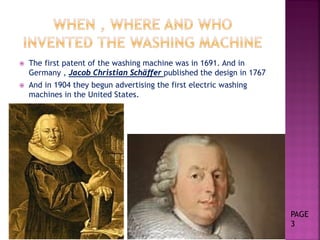
 The first patent of the washing machine was in 1691. And in
Germany , Jacob Christian Schäffer published the design in 1767
 And in 1904 they begun advertising the first electric washing
machines in the United States.
PAGE
3
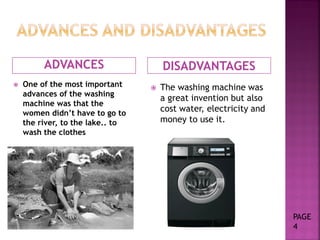
ADVANCES DISADVANTAGES
 One of the most important
advances of the washing
machine was that the
women didn’t have to go to
the river, to the lake.. to
wash the clothes
 The washing machine was
a great invention but also
cost water, electricity and
money to use it.
PAGE
4
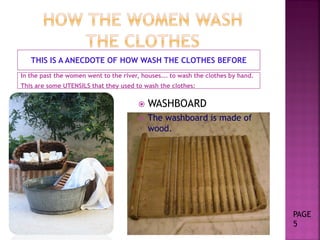
 WASHBOARD
 The washboard is made of
wood.
THIS IS A ANECDOTE OF HOW WASH THE CLOTHES BEFORE
In the past the women went to the river, houses…. to wash the clothes by hand.
This are some UTENSILS that they used to wash the clothes:
PAGE
5
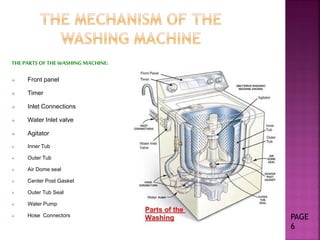
THE PARTS OF THE WASHING MACHINE:
 Front panel
 Timer
 Inlet Connections
 Water Inlet valve
 Agitator
 Inner Tub
 Outer Tub
 Air Dome seal
 Center Post Gasket
 Outer Tub Seal
 Water Pump
 Hose Connectors PAGE
6
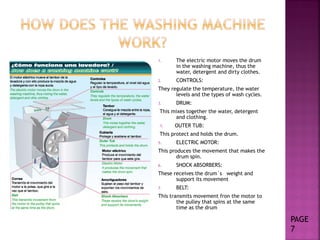
1. The electric motor moves the drum
in the washing machine, thus the
water, detergent and dirty clothes.
2. CONTROLS:
They regulate the temperature, the water
levels and the types of wash cycles.
3. DRUM:
This mixes together the water, detergent
and clothing.
4. OUTER TUB:
This protect and holds the drum.
5. ELECTRIC MOTOR:
This produces the movement that makes the
drum spin.
6. SHOCK ABSORBERS:
These receives the drum´s weight and
support its movement
7. BELT:
This transmits movement fron the motor to
the pulley that spins at the same
time as the drum
PAGE
7
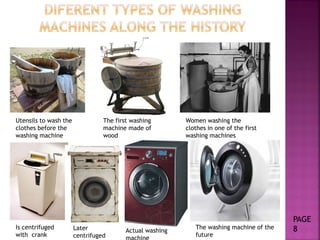
Utensils to wash the
clothes before the
washing machine
The first washing
machine made of
wood
Women washing the
clothes in one of the first
washing machines
Is centrifuged
with crank
Later
centrifuged
Actual washing
The washing machine of the
future
PAGE
8
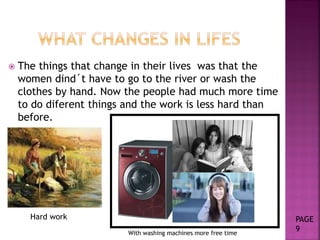
 The things that change in their lives was that the
women dind´t have to go to the river or wash the
clothes by hand. Now the people had much more time
to do diferent things and the work is less hard than
before.
With washing machines more free time
Hard work PAGE
9
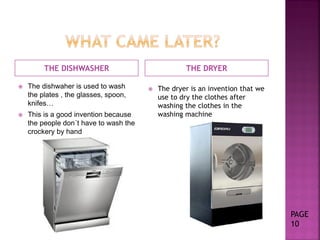
THE DISHWASHER THE DRYER
 The dishwaher is used to wash
the plates , the glasses, spoon,
knifes…
 This is a good invention because
the people don´t have to wash the
crockery by hand
 The dryer is an invention that we
use to dry the clothes after
washing the clothes in the
washing machine
PAGE
10
THE END
BY:
LAURA SINOVAS
HERNÁNDEZ AND
VIRGINIA SANTOS
LOPEZ
PAGE
11

The washing machine

  • 2.
    SUMMARY 1. WHEN, WHERE,AND WHO INVENTED THE WASHING MACHINE…………………………………………………………..3 2. ADVANCES AND DISADVANTAGES…………………….4 3. HOW THE WOMEN WASH THE CLOTHES…………..5 4. THE MECHANISM OF THE WASHING MACHINE…….6 5. HOW THE WASHING MACHINE WORKS……………….7 6. DIFERENT TYPES OF WASHING MACHINES ALONG THE HISTORY……………………………………………………..8 7. WHAT CHANGES IN LIFES…………………..9 8. WHAT CAME LATER?.................................10 9. COVER……………………………………………………………….11
  • 3.
     The firstpatent of the washing machine was in 1691. And in Germany , Jacob Christian Schäffer published the design in 1767  And in 1904 they begun advertising the first electric washing machines in the United States. PAGE 3
  • 4.
    ADVANCES DISADVANTAGES  Oneof the most important advances of the washing machine was that the women didn’t have to go to the river, to the lake.. to wash the clothes  The washing machine was a great invention but also cost water, electricity and money to use it. PAGE 4
  • 5.
     WASHBOARD  Thewashboard is made of wood. THIS IS A ANECDOTE OF HOW WASH THE CLOTHES BEFORE In the past the women went to the river, houses…. to wash the clothes by hand. This are some UTENSILS that they used to wash the clothes: PAGE 5
  • 6.
    THE PARTS OFTHE WASHING MACHINE:  Front panel  Timer  Inlet Connections  Water Inlet valve  Agitator  Inner Tub  Outer Tub  Air Dome seal  Center Post Gasket  Outer Tub Seal  Water Pump  Hose Connectors PAGE 6
  • 7.
    1. The electricmotor moves the drum in the washing machine, thus the water, detergent and dirty clothes. 2. CONTROLS: They regulate the temperature, the water levels and the types of wash cycles. 3. DRUM: This mixes together the water, detergent and clothing. 4. OUTER TUB: This protect and holds the drum. 5. ELECTRIC MOTOR: This produces the movement that makes the drum spin. 6. SHOCK ABSORBERS: These receives the drum´s weight and support its movement 7. BELT: This transmits movement fron the motor to the pulley that spins at the same time as the drum PAGE 7
  • 8.
    Utensils to washthe clothes before the washing machine The first washing machine made of wood Women washing the clothes in one of the first washing machines Is centrifuged with crank Later centrifuged Actual washing The washing machine of the future PAGE 8
  • 9.
     The thingsthat change in their lives was that the women dind´t have to go to the river or wash the clothes by hand. Now the people had much more time to do diferent things and the work is less hard than before. With washing machines more free time Hard work PAGE 9
  • 10.
    THE DISHWASHER THEDRYER  The dishwaher is used to wash the plates , the glasses, spoon, knifes…  This is a good invention because the people don´t have to wash the crockery by hand  The dryer is an invention that we use to dry the clothes after washing the clothes in the washing machine PAGE 10
  • 11.
    THE END BY: LAURA SINOVAS HERNÁNDEZAND VIRGINIA SANTOS LOPEZ PAGE 11