The location of using
vertical garden
Case Studier: Shaymaa Jalil
University of salahaddin
College of engineering
Architectural department
2015
Abstract
Millions of us find ourselves surrounded by
sterile structures. We have become alienated
from our natural origins. Our health and life
depend on thriving plants for food and
oxygen. It is crucial for us to reconnect with
plants and bring them back into our lives.
Vertical garden with the another name green
wall is the term of used to refer to all form of
vegetated wall surfaces .
Green walls are not only spectacularly
beautiful, but also helpful in enlivening the
ambiance. Green walls can absorb heated gas
in the air, lower both indoor and outdoor
temperature, providing a healthier indoor air
quality as well as a more beautiful space
Green walls can examine two major
categories: Green Facades and Living Walls.
This categories can be divided into other
categories. Green façades are made up of
climbing plants either growing directly on a
wall or in specially designed supporting
structures. The plant shoot system grows up
the side of the building while being rooted to
the ground. On the other hand, in a living
wall the modular panels are often comprised
of polypropylene plastic containers,
geotextiles, irrigation systems, a growing
medium and vegetation.
• Content
• Definition
• History of vertical garden
• Types of vertical garden
• The location of using
• Structure
• Maintenance
• Social effects
• Conclusion
1
1
2
3
15
21
22
24
• Definition
A vertical garden is a garden that grows up
rather than out. Usually, people install
vertical gardens to save space, but they also
can offer fascinating aesthetics. They work
well in small areas and urban environments
with little outside space for a garden.
• History of vertical garden
The ancient concept of Green walls was built
in Babylon about 2500 years ago. In ancient
Babylon, King Nebuchadnezzar II built the
Hanging Gardens of Babylon: a wonder of the
ancient world, and ancestor of the modern
green wall.
1
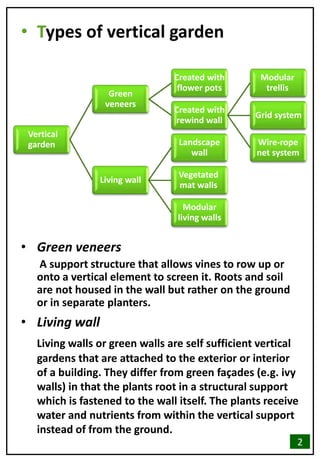
Vertical
garden
Green
veneers
Created with
flower pots
Created with
rewind wall
Modular
trellis
Grid system
Wire-rope
net system
Living wall
Landscape
wall
Vegetated
mat walls
Modular
living walls
• Types of vertical garden
• Green veneers
A support structure that allows vines to row up or
onto a vertical element to screen it. Roots and soil
are not housed in the wall but rather on the ground
or in separate planters.
• Living wall
Living walls or green walls are self sufficient vertical
gardens that are attached to the exterior or interior
of a building. They differ from green façades (e.g. ivy
walls) in that the plants root in a structural support
which is fastened to the wall itself. The plants receive
water and nutrients from within the vertical support
instead of from the ground.
2
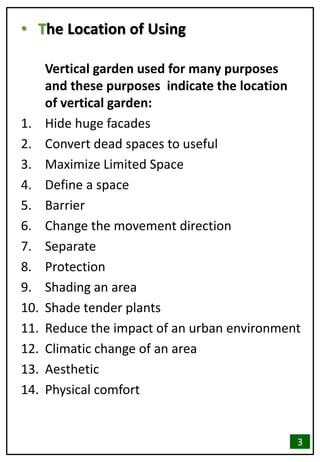
• The Location of Using
Vertical garden used for many purposes
and these purposes indicate the location
of vertical garden:
1. Hide huge facades
2. Convert dead spaces to useful
3. Maximize Limited Space
4. Define a space
5. Barrier
6. Change the movement direction
7. Separate
8. Protection
9. Shading an area
10. Shade tender plants
11. Reduce the impact of an urban environment
12. Climatic change of an area
13. Aesthetic
14. Physical comfort
3
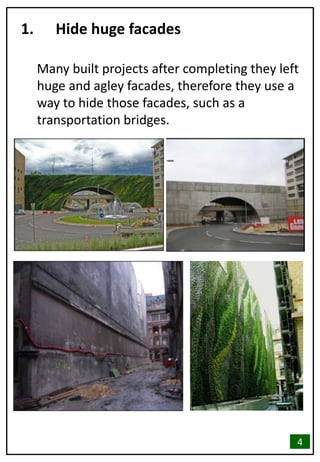
1. Hide huge facades
Many built projects after completing they left
huge and agley facades, therefore they use a
way to hide those facades, such as a
transportation bridges.
4
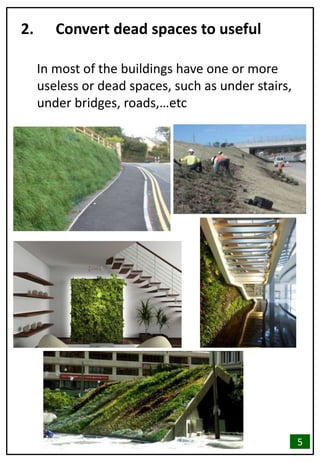
2. Convert dead spaces to useful
In most of the buildings have one or more
useless or dead spaces, such as under stairs,
under bridges, roads,…etc
5
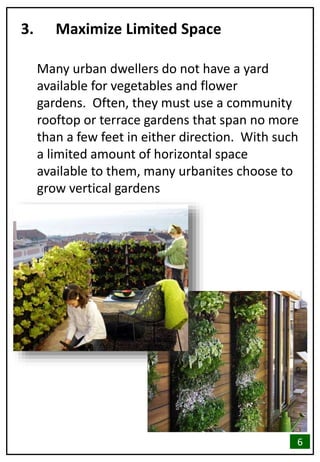
3. Maximize Limited Space
Many urban dwellers do not have a yard
available for vegetables and flower
gardens. Often, they must use a community
rooftop or terrace gardens that span no more
than a few feet in either direction. With such
a limited amount of horizontal space
available to them, many urbanites choose to
grow vertical gardens
6
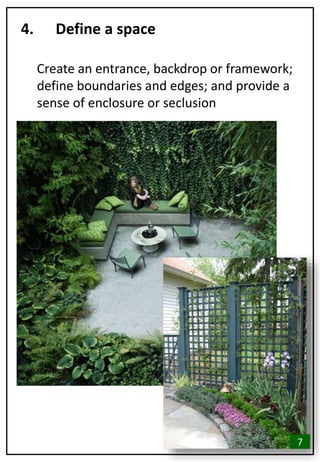
4. Define a space
Create an entrance, backdrop or framework;
define boundaries and edges; and provide a
sense of enclosure or seclusion
7
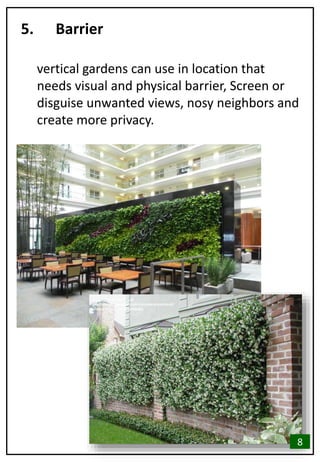
5. Barrier
vertical gardens can use in location that
needs visual and physical barrier, Screen or
disguise unwanted views, nosy neighbors and
create more privacy.
8
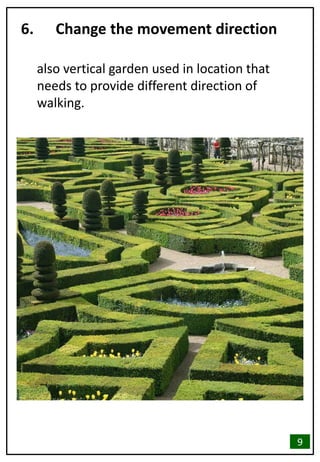
6. Change the movement direction
also vertical garden used in location that
needs to provide different direction of
walking.
9
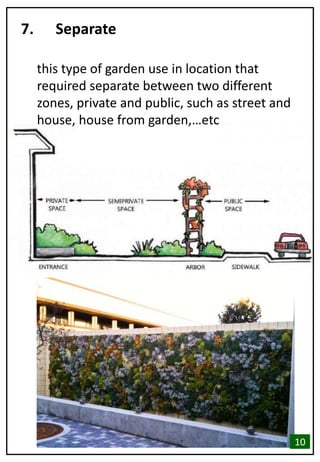
7. Separate
this type of garden use in location that
required separate between two different
zones, private and public, such as street and
house, house from garden,…etc
10
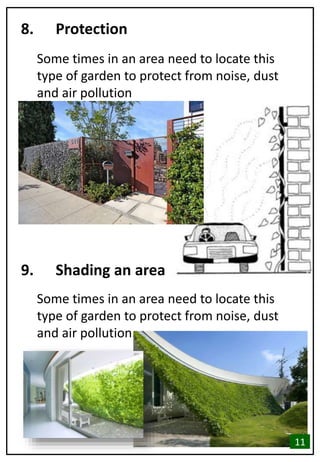
8. Protection
Some times in an area need to locate this
type of garden to protect from noise, dust
and air pollution
9. Shading an area
Some times in an area need to locate this
type of garden to protect from noise, dust
and air pollution.
11
10. Shade tender plants
Some times in a garden need to locate this
type of garden to protect tender plants that
should not expose to direct sun light
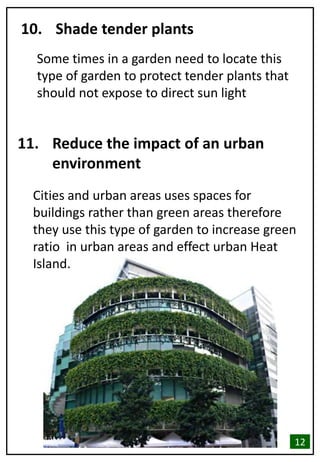
11. Reduce the impact of an urban
environment
Cities and urban areas uses spaces for
buildings rather than green areas therefore
they use this type of garden to increase green
ratio in urban areas and effect urban Heat
Island.
12
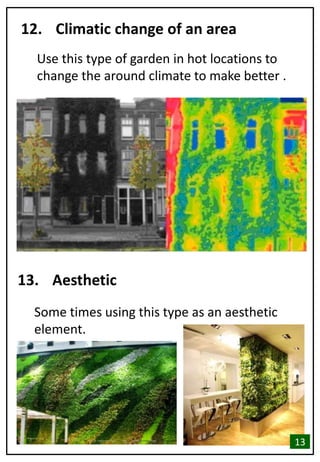
12. Climatic change of an area
Use this type of garden in hot locations to
change the around climate to make better .
13. Aesthetic
Some times using this type as an aesthetic
element.
13
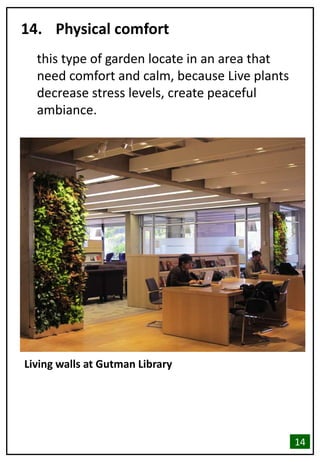
14. Physical comfort
this type of garden locate in an area that
need comfort and calm, because Live plants
decrease stress levels, create peaceful
ambiance.
Living walls at Gutman Library
14
Water the
tongue
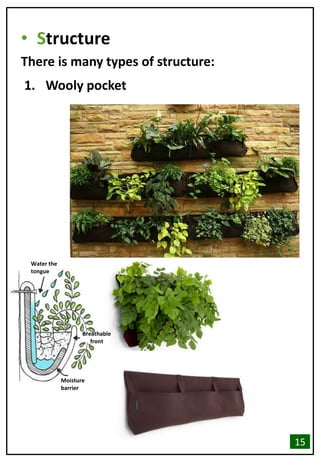
• Structure
There is many types of structure:
1. Wooly pocket
Moisture
barrier
Breathable
front
15
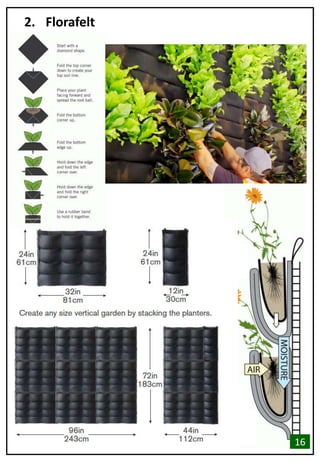
2. Florafelt
16
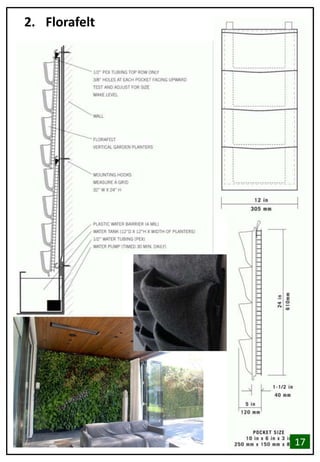
2. Florafelt
17
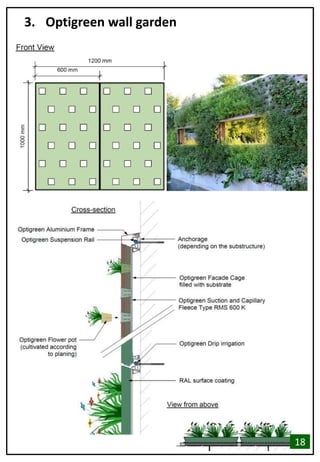
3. Optigreen wall garden
18
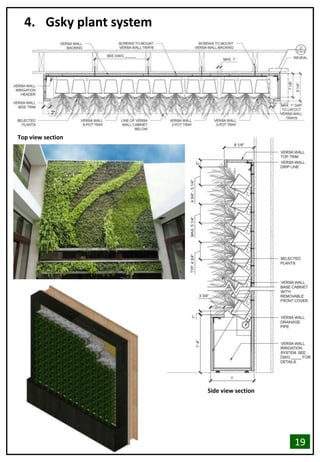
4. Gsky plant system
Top view section
Side view section
19
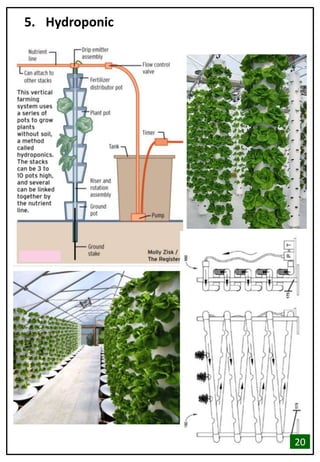
5. Hydroponic
20
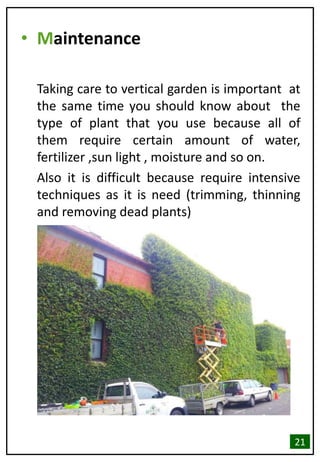
• Maintenance
Taking care to vertical garden is important at
the same time you should know about the
type of plant that you use because all of
them require certain amount of water,
fertilizer ,sun light , moisture and so on.
Also it is difficult because require intensive
techniques as it is need (trimming, thinning
and removing dead plants)
21
• Environmental effects
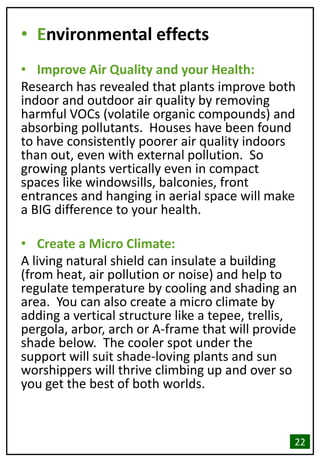
• Improve Air Quality and your Health:
Research has revealed that plants improve both
indoor and outdoor air quality by removing
harmful VOCs (volatile organic compounds) and
absorbing pollutants. Houses have been found
to have consistently poorer air quality indoors
than out, even with external pollution. So
growing plants vertically even in compact
spaces like windowsills, balconies, front
entrances and hanging in aerial space will make
a BIG difference to your health.
• Create a Micro Climate:
A living natural shield can insulate a building
(from heat, air pollution or noise) and help to
regulate temperature by cooling and shading an
area. You can also create a micro climate by
adding a vertical structure like a tepee, trellis,
pergola, arbor, arch or A-frame that will provide
shade below. The cooler spot under the
support will suit shade-loving plants and sun
worshippers will thrive climbing up and over so
you get the best of both worlds.
22
• Enhance Visual Appeal:
Improve the beauty of your garden and increase
‘curb appeal’ by adding character, variety,
structure and color. Create ‘eye candy’ by
planting at eye level with vertical garden
structures like hanging baskets and window
boxes.
• Energy saving
• Sustainable
• Building protection
• Property value
23
• Conclusion
Nowadays the increasing of the ratio of
inhabitant is effect on the using areas as
buildings rather than green areas, so they
thought to use the method of using gardens
vertically not horizontally because the
horizontal gardens wastes more spaces
rather than vertical garden.
In my opinion the vertical garden is the best
idea for crowded urban areas and cities.
24
• Reference
1. www.optigreen.com/planning-aids/cad-
drawings/system.../wall-garden/
2. www.slideshare.net/glopezsez/vertical-gardens-
green-walls
3. themicrogardener.com/12-reasons-why-you-should-
garden-vertically/
4. theselfsufficientliving.com/vertical-gardening-ideas-
designs-and-plans/
5. www.doityourself.com/stry/advantages-of-growing-
a-vertical-garden
6. www.sundaygardener.net/reasons-to-try-vertical-
gardening/
7. cdn.intechopen.com/pdfs/45441/InTech-
Vertical_gardens.pdf
8. www.bribach.com/vimg/docs/Florafelt-Vertical-
Garden-Guide.pdf
9. www.zeroemissioncities.at/Praesentation_Blanc.pdf
10.www.ecoliteracy.org/.../Creating-Gardens-of-
Goodness-Annies-Homegro...

The location of using vertical garden

  • 1.
    The location ofusing vertical garden Case Studier: Shaymaa Jalil University of salahaddin College of engineering Architectural department 2015
  • 2.
    Abstract Millions of usfind ourselves surrounded by sterile structures. We have become alienated from our natural origins. Our health and life depend on thriving plants for food and oxygen. It is crucial for us to reconnect with plants and bring them back into our lives. Vertical garden with the another name green wall is the term of used to refer to all form of vegetated wall surfaces . Green walls are not only spectacularly beautiful, but also helpful in enlivening the ambiance. Green walls can absorb heated gas in the air, lower both indoor and outdoor temperature, providing a healthier indoor air quality as well as a more beautiful space
  • 3.
    Green walls canexamine two major categories: Green Facades and Living Walls. This categories can be divided into other categories. Green façades are made up of climbing plants either growing directly on a wall or in specially designed supporting structures. The plant shoot system grows up the side of the building while being rooted to the ground. On the other hand, in a living wall the modular panels are often comprised of polypropylene plastic containers, geotextiles, irrigation systems, a growing medium and vegetation.
  • 4.
    • Content • Definition •History of vertical garden • Types of vertical garden • The location of using • Structure • Maintenance • Social effects • Conclusion 1 1 2 3 15 21 22 24
  • 5.
    • Definition A verticalgarden is a garden that grows up rather than out. Usually, people install vertical gardens to save space, but they also can offer fascinating aesthetics. They work well in small areas and urban environments with little outside space for a garden. • History of vertical garden The ancient concept of Green walls was built in Babylon about 2500 years ago. In ancient Babylon, King Nebuchadnezzar II built the Hanging Gardens of Babylon: a wonder of the ancient world, and ancestor of the modern green wall. 1
  • 6.
    Vertical garden Green veneers Created with flower pots Createdwith rewind wall Modular trellis Grid system Wire-rope net system Living wall Landscape wall Vegetated mat walls Modular living walls • Types of vertical garden • Green veneers A support structure that allows vines to row up or onto a vertical element to screen it. Roots and soil are not housed in the wall but rather on the ground or in separate planters. • Living wall Living walls or green walls are self sufficient vertical gardens that are attached to the exterior or interior of a building. They differ from green façades (e.g. ivy walls) in that the plants root in a structural support which is fastened to the wall itself. The plants receive water and nutrients from within the vertical support instead of from the ground. 2
  • 7.
    • The Locationof Using Vertical garden used for many purposes and these purposes indicate the location of vertical garden: 1. Hide huge facades 2. Convert dead spaces to useful 3. Maximize Limited Space 4. Define a space 5. Barrier 6. Change the movement direction 7. Separate 8. Protection 9. Shading an area 10. Shade tender plants 11. Reduce the impact of an urban environment 12. Climatic change of an area 13. Aesthetic 14. Physical comfort 3
  • 8.
    1. Hide hugefacades Many built projects after completing they left huge and agley facades, therefore they use a way to hide those facades, such as a transportation bridges. 4
  • 9.
    2. Convert deadspaces to useful In most of the buildings have one or more useless or dead spaces, such as under stairs, under bridges, roads,…etc 5
  • 10.
    3. Maximize LimitedSpace Many urban dwellers do not have a yard available for vegetables and flower gardens. Often, they must use a community rooftop or terrace gardens that span no more than a few feet in either direction. With such a limited amount of horizontal space available to them, many urbanites choose to grow vertical gardens 6
  • 11.
    4. Define aspace Create an entrance, backdrop or framework; define boundaries and edges; and provide a sense of enclosure or seclusion 7
  • 12.
    5. Barrier vertical gardenscan use in location that needs visual and physical barrier, Screen or disguise unwanted views, nosy neighbors and create more privacy. 8
  • 13.
    6. Change themovement direction also vertical garden used in location that needs to provide different direction of walking. 9
  • 14.
    7. Separate this typeof garden use in location that required separate between two different zones, private and public, such as street and house, house from garden,…etc 10
  • 15.
    8. Protection Some timesin an area need to locate this type of garden to protect from noise, dust and air pollution 9. Shading an area Some times in an area need to locate this type of garden to protect from noise, dust and air pollution. 11
  • 16.
    10. Shade tenderplants Some times in a garden need to locate this type of garden to protect tender plants that should not expose to direct sun light 11. Reduce the impact of an urban environment Cities and urban areas uses spaces for buildings rather than green areas therefore they use this type of garden to increase green ratio in urban areas and effect urban Heat Island. 12
  • 17.
    12. Climatic changeof an area Use this type of garden in hot locations to change the around climate to make better . 13. Aesthetic Some times using this type as an aesthetic element. 13
  • 18.
    14. Physical comfort thistype of garden locate in an area that need comfort and calm, because Live plants decrease stress levels, create peaceful ambiance. Living walls at Gutman Library 14
  • 19.
    Water the tongue • Structure Thereis many types of structure: 1. Wooly pocket Moisture barrier Breathable front 15
  • 20.
  • 21.
  • 22.
  • 23.
    4. Gsky plantsystem Top view section Side view section 19
  • 24.
  • 25.
    • Maintenance Taking careto vertical garden is important at the same time you should know about the type of plant that you use because all of them require certain amount of water, fertilizer ,sun light , moisture and so on. Also it is difficult because require intensive techniques as it is need (trimming, thinning and removing dead plants) 21
  • 26.
    • Environmental effects •Improve Air Quality and your Health: Research has revealed that plants improve both indoor and outdoor air quality by removing harmful VOCs (volatile organic compounds) and absorbing pollutants. Houses have been found to have consistently poorer air quality indoors than out, even with external pollution. So growing plants vertically even in compact spaces like windowsills, balconies, front entrances and hanging in aerial space will make a BIG difference to your health. • Create a Micro Climate: A living natural shield can insulate a building (from heat, air pollution or noise) and help to regulate temperature by cooling and shading an area. You can also create a micro climate by adding a vertical structure like a tepee, trellis, pergola, arbor, arch or A-frame that will provide shade below. The cooler spot under the support will suit shade-loving plants and sun worshippers will thrive climbing up and over so you get the best of both worlds. 22
  • 27.
    • Enhance VisualAppeal: Improve the beauty of your garden and increase ‘curb appeal’ by adding character, variety, structure and color. Create ‘eye candy’ by planting at eye level with vertical garden structures like hanging baskets and window boxes. • Energy saving • Sustainable • Building protection • Property value 23
  • 28.
    • Conclusion Nowadays theincreasing of the ratio of inhabitant is effect on the using areas as buildings rather than green areas, so they thought to use the method of using gardens vertically not horizontally because the horizontal gardens wastes more spaces rather than vertical garden. In my opinion the vertical garden is the best idea for crowded urban areas and cities. 24
  • 29.
    • Reference 1. www.optigreen.com/planning-aids/cad- drawings/system.../wall-garden/ 2.www.slideshare.net/glopezsez/vertical-gardens- green-walls 3. themicrogardener.com/12-reasons-why-you-should- garden-vertically/ 4. theselfsufficientliving.com/vertical-gardening-ideas- designs-and-plans/ 5. www.doityourself.com/stry/advantages-of-growing- a-vertical-garden 6. www.sundaygardener.net/reasons-to-try-vertical- gardening/ 7. cdn.intechopen.com/pdfs/45441/InTech- Vertical_gardens.pdf 8. www.bribach.com/vimg/docs/Florafelt-Vertical- Garden-Guide.pdf 9. www.zeroemissioncities.at/Praesentation_Blanc.pdf 10.www.ecoliteracy.org/.../Creating-Gardens-of- Goodness-Annies-Homegro...