USING WEBSITES
By
Sandra Rodríguez
Rodolfo Augusto Sánchez
Javier Mosquera
Diego Alexander Montoya
Table of content
 1. Introduction: Using websites in the classroom
 2. ESL websites or Authentic websites?
 3. How to find useful websites
 4. How to evaluate websites
 5. Planning lessons Using Internet
 6. Working with lower levels of Language Proficiency
 7. Web teachig: dos and dont’s
USING WEBSITES IN THE
CLASSROOM
 Skills
 Efective use of Internet
 Resources
 Sources
 Sharing and collaboration
 Online/Offline work
 Part of learning process
 Computers as tools or learning resources
ELT WEBSITES OR AUTHENTIC
WEBSITES
 Objectives
 Language vs task
ELT WEBSITES OR AUTHENTIC
WEBSITES
 Why ELT sites?
 Why Authentic websites?
 http://learnenglishteens.britishcouncil.org/skills/reading-
skills-practice
ESL site
Authentic site
http://www.americanbountyrestaurant.co
m/menus/
HOW TO FIND USEFUL
WEBSITES
 There are three basic ways of searching on the
Internet
 *Search engines
 *Subject guides
 *Real language searches
SEARCH ENGINES
 The most well-know is Google (www.google.com)
 How do you find exactly what do you want?
 The key to good searching in Google is to define your
keywords properly.
 Use the “phrase” search technique which involves
wrapping part of a phrase in inverted commas.
SUBJECT GUIDES
 Yahoo! derives its description of subject guide from
the fact that it divides its content into subject areas,
and subdivisions of those areas. Instead of a
keyword search from the main page, users browse
the section which best reflects their interests, and
then search.
REAL LANGUAGE SEARCHES
 A real language search such as Ask (www.ask.com)
allows the user to type simple questions as search
queries.
 Your choice of search facility will depend on how
you like to work, and which site you find
particularly attractive and useful.
There are also subject- or media-
specific search sites
 . http://images.google.com/ -Google image search,
allows you to search an enormous collection of
images in various formats. A good place to start
looking for illustrations for worksheets, teaching
materials, projects or presentations.
 http://froogle.google.com/ - Google shopping search, gives you access to
comparative shopping results for products. Use this to find products you
are interested in, read reviews and find the best prices.
 http://video.search.yahoo.com/ - Yahoo! video search allows you to
search a large database of online video material by keyword or category.
Ideal if you want to demonstrate something in a more lively way, for
music videos and other multimedia classes.
 http://www.altavista.com/video - AltaVista video search works in the
same way as the Yahoo! one above, but videos are also classified by
different formats, allowing for a range of multimedia players and
software to be used to watch them.
 http://www.altavista.com/audio/default - AltaVista audio search gives
you access to a large online collection of audio files. Particularly good for
searching for the popular MP3 format song files.
 http://search.singingfish.com/sfi^/home.jsp - Singing Fish multimedia
search, combining both audio and video results in one interface. It has a
large collection of sources, and you can search by category, including
movies, news, TV sports and a host of others.
 http://w.blinkx.com/ - Blinkx TV video search allows you to search
popular TV broadcasters like the BBC and CNN for short video clips on a
wide variety of subjects
 You may also like to try one of the meta search
sites. These are sites which search more than one
search engine at the same time, giving you, for
example, the ability to search Yahoo!, Google and
Ask from one single page. Examples include:
http://www.dogpile.com/ - Dogpile.
http://www.kartoo.com/ - KartOO. .
http://www.mamma.com/ - Mamma.
How to evaluate
websites
- How useful and appropriate they are for the
classroom.
- Does a website enhance and complement the
other materials and activities you have planned
for the class?
Criteria for evaluating
websites
1. Accuracy
- Check qualifications, experience.
- Cross – reference with other similar websites and
encyclopedias .
2. Currency
- Check factual information against other reliable
sources.
- Check for information at the bottom/top of the
page.
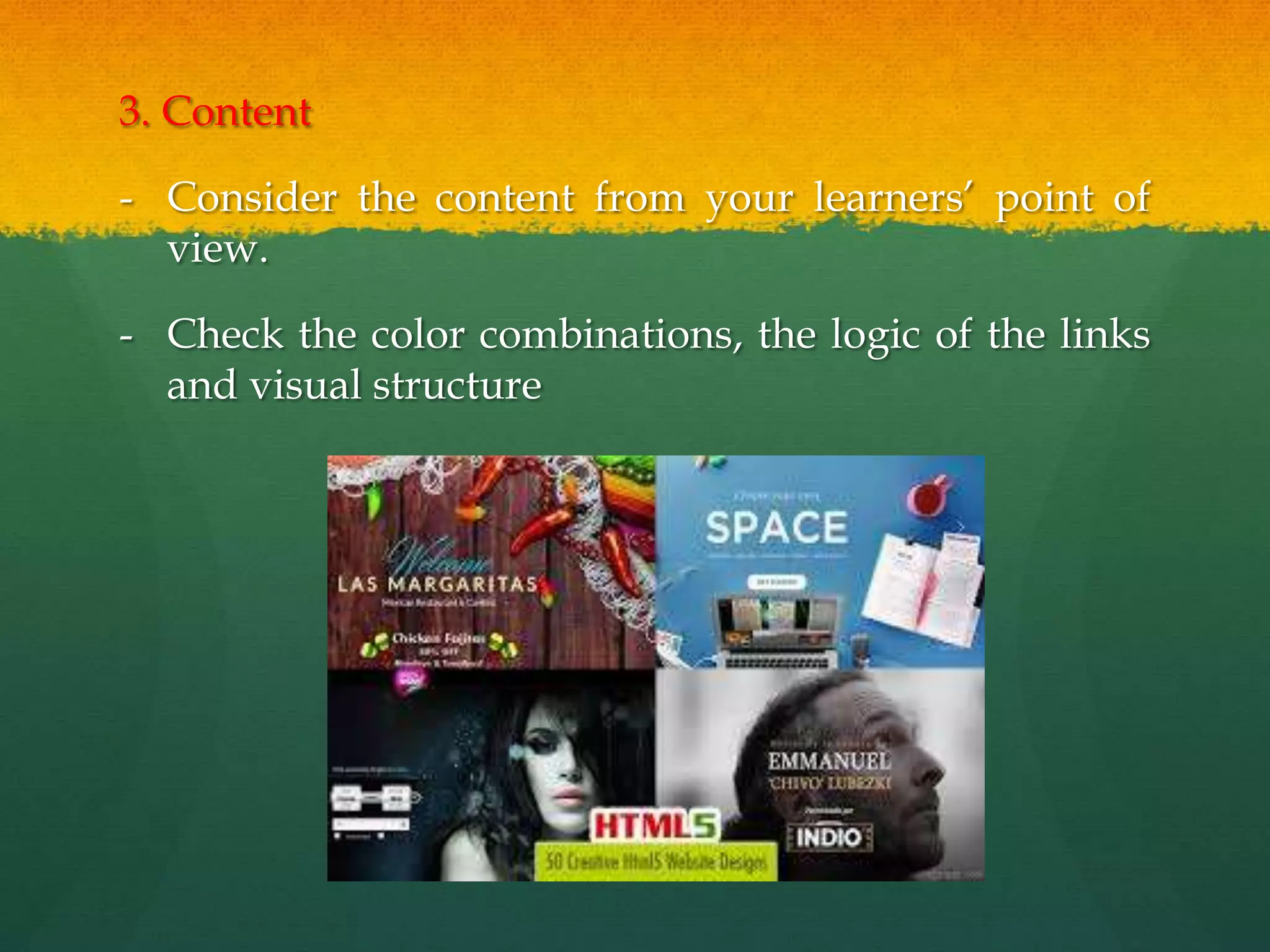
3. Content
- Consider the content from your learners’ point of
view.
- Check the color combinations, the logic of the links
and visual structure
4. Functionality
- Be sure to check all pages, and follow all links to all
pages you intend to use.
- Check how quickly it loads for learners; check
sound, video and animation work.
Planning lessons using the
Internet
 Visit the websites you intend to use and make sure
you know your way around them properly.
 Try to use sites which are made by large institutions
and commercial organizations rather than personal
homepages.
 Make sure you're familiar with the content. Your
ability to answer questions as they arise will add to
your confidence and also inspire confidence in your
learners.
Typical web-based session
Divide into three parts (www): warmer, web, what
next.
 Warmer: This part prepares your learners for what
they are going to be doing in the web part of the
lesson.
 Web: to take learners to a computer room for this
part rather than spend the entire class in there.
 What next: .This part should deal with the tasks set
for the web part and then proceed with the activities
about the lesson.
 More limited (short texts)
 Right websites. (comfort levels)
 short lessons.
LOWER LEVELS WEBSITES INCLUDE:
1. Backup plan:
2. Team teach:
3.Web page:
4. Work in pairs or groups of three:
5. Maintain control over all learning activities:
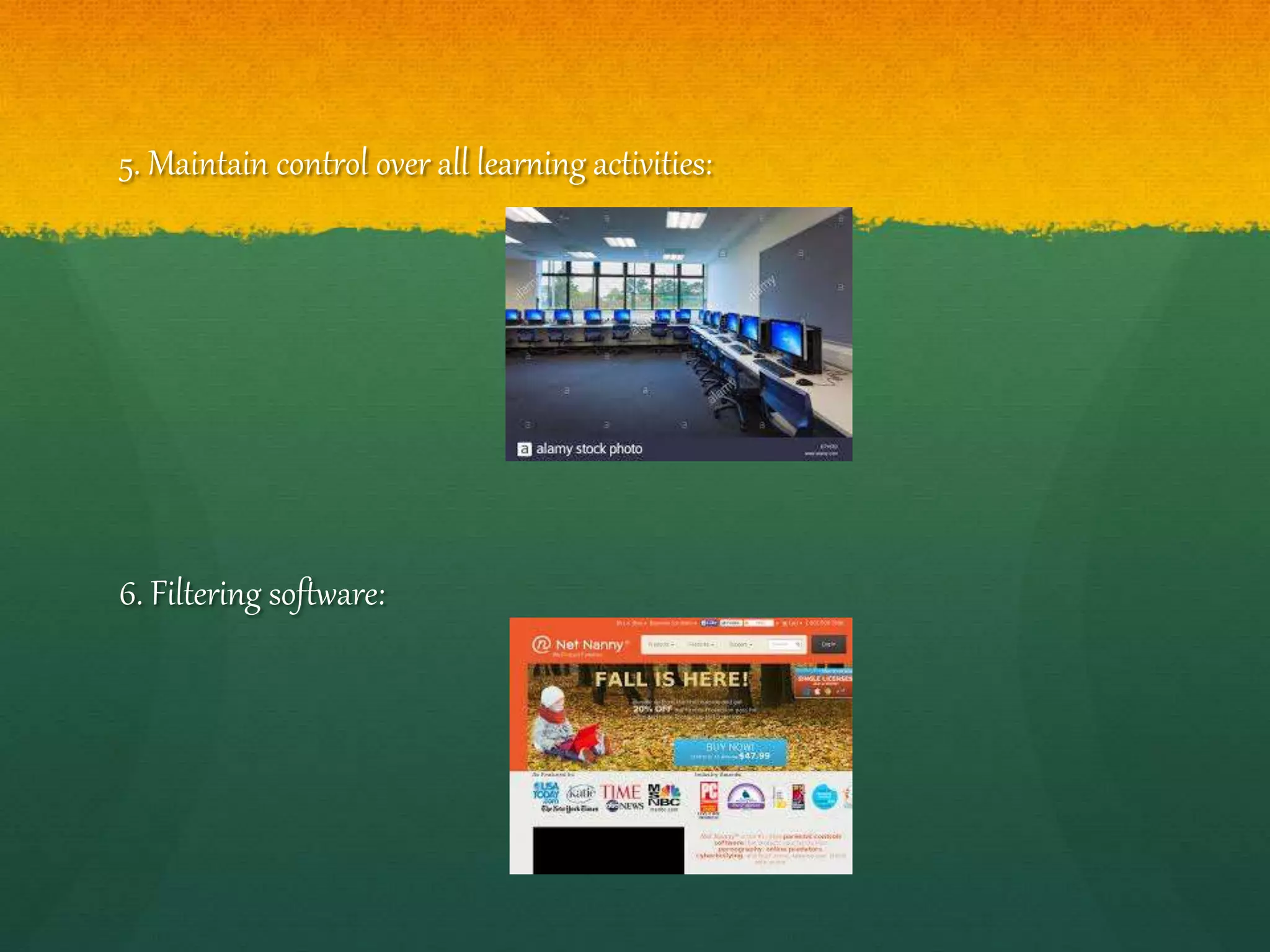
6. Filtering software:

The use of Websites

  • 1.
    USING WEBSITES By Sandra Rodríguez RodolfoAugusto Sánchez Javier Mosquera Diego Alexander Montoya
  • 2.
    Table of content 1. Introduction: Using websites in the classroom  2. ESL websites or Authentic websites?  3. How to find useful websites  4. How to evaluate websites  5. Planning lessons Using Internet  6. Working with lower levels of Language Proficiency  7. Web teachig: dos and dont’s
  • 3.
    USING WEBSITES INTHE CLASSROOM  Skills  Efective use of Internet  Resources  Sources  Sharing and collaboration  Online/Offline work  Part of learning process  Computers as tools or learning resources
  • 4.
    ELT WEBSITES ORAUTHENTIC WEBSITES  Objectives  Language vs task
  • 5.
    ELT WEBSITES ORAUTHENTIC WEBSITES  Why ELT sites?  Why Authentic websites?  http://learnenglishteens.britishcouncil.org/skills/reading- skills-practice ESL site Authentic site http://www.americanbountyrestaurant.co m/menus/
  • 6.
    HOW TO FINDUSEFUL WEBSITES  There are three basic ways of searching on the Internet  *Search engines  *Subject guides  *Real language searches
  • 7.
    SEARCH ENGINES  Themost well-know is Google (www.google.com)  How do you find exactly what do you want?  The key to good searching in Google is to define your keywords properly.  Use the “phrase” search technique which involves wrapping part of a phrase in inverted commas.
  • 8.
    SUBJECT GUIDES  Yahoo!derives its description of subject guide from the fact that it divides its content into subject areas, and subdivisions of those areas. Instead of a keyword search from the main page, users browse the section which best reflects their interests, and then search.
  • 9.
    REAL LANGUAGE SEARCHES A real language search such as Ask (www.ask.com) allows the user to type simple questions as search queries.  Your choice of search facility will depend on how you like to work, and which site you find particularly attractive and useful.
  • 10.
    There are alsosubject- or media- specific search sites  . http://images.google.com/ -Google image search, allows you to search an enormous collection of images in various formats. A good place to start looking for illustrations for worksheets, teaching materials, projects or presentations.
  • 11.
     http://froogle.google.com/ -Google shopping search, gives you access to comparative shopping results for products. Use this to find products you are interested in, read reviews and find the best prices.  http://video.search.yahoo.com/ - Yahoo! video search allows you to search a large database of online video material by keyword or category. Ideal if you want to demonstrate something in a more lively way, for music videos and other multimedia classes.  http://www.altavista.com/video - AltaVista video search works in the same way as the Yahoo! one above, but videos are also classified by different formats, allowing for a range of multimedia players and software to be used to watch them.  http://www.altavista.com/audio/default - AltaVista audio search gives you access to a large online collection of audio files. Particularly good for searching for the popular MP3 format song files.  http://search.singingfish.com/sfi^/home.jsp - Singing Fish multimedia search, combining both audio and video results in one interface. It has a large collection of sources, and you can search by category, including movies, news, TV sports and a host of others.  http://w.blinkx.com/ - Blinkx TV video search allows you to search popular TV broadcasters like the BBC and CNN for short video clips on a wide variety of subjects
  • 12.
     You mayalso like to try one of the meta search sites. These are sites which search more than one search engine at the same time, giving you, for example, the ability to search Yahoo!, Google and Ask from one single page. Examples include: http://www.dogpile.com/ - Dogpile. http://www.kartoo.com/ - KartOO. . http://www.mamma.com/ - Mamma.
  • 13.
    How to evaluate websites -How useful and appropriate they are for the classroom. - Does a website enhance and complement the other materials and activities you have planned for the class?
  • 14.
    Criteria for evaluating websites 1.Accuracy - Check qualifications, experience. - Cross – reference with other similar websites and encyclopedias .
  • 15.
    2. Currency - Checkfactual information against other reliable sources. - Check for information at the bottom/top of the page.
  • 16.
    3. Content - Considerthe content from your learners’ point of view. - Check the color combinations, the logic of the links and visual structure
  • 17.
    4. Functionality - Besure to check all pages, and follow all links to all pages you intend to use. - Check how quickly it loads for learners; check sound, video and animation work.
  • 18.
    Planning lessons usingthe Internet  Visit the websites you intend to use and make sure you know your way around them properly.  Try to use sites which are made by large institutions and commercial organizations rather than personal homepages.  Make sure you're familiar with the content. Your ability to answer questions as they arise will add to your confidence and also inspire confidence in your learners.
  • 19.
    Typical web-based session Divideinto three parts (www): warmer, web, what next.  Warmer: This part prepares your learners for what they are going to be doing in the web part of the lesson.  Web: to take learners to a computer room for this part rather than spend the entire class in there.  What next: .This part should deal with the tasks set for the web part and then proceed with the activities about the lesson.
  • 20.
     More limited(short texts)  Right websites. (comfort levels)  short lessons.
  • 21.
  • 22.
    1. Backup plan: 2.Team teach:
  • 23.
    3.Web page: 4. Workin pairs or groups of three:
  • 24.
    5. Maintain controlover all learning activities: 6. Filtering software: