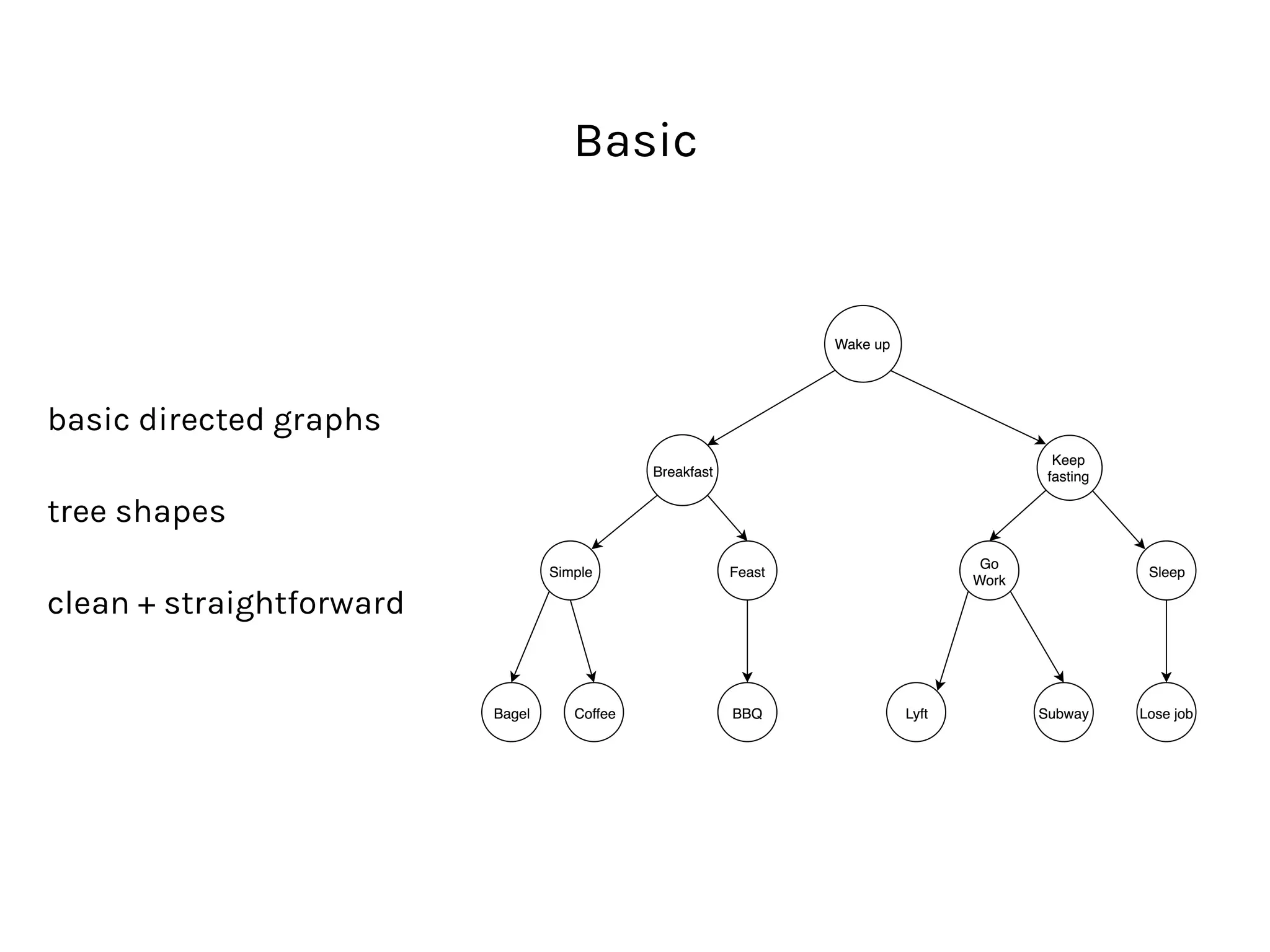
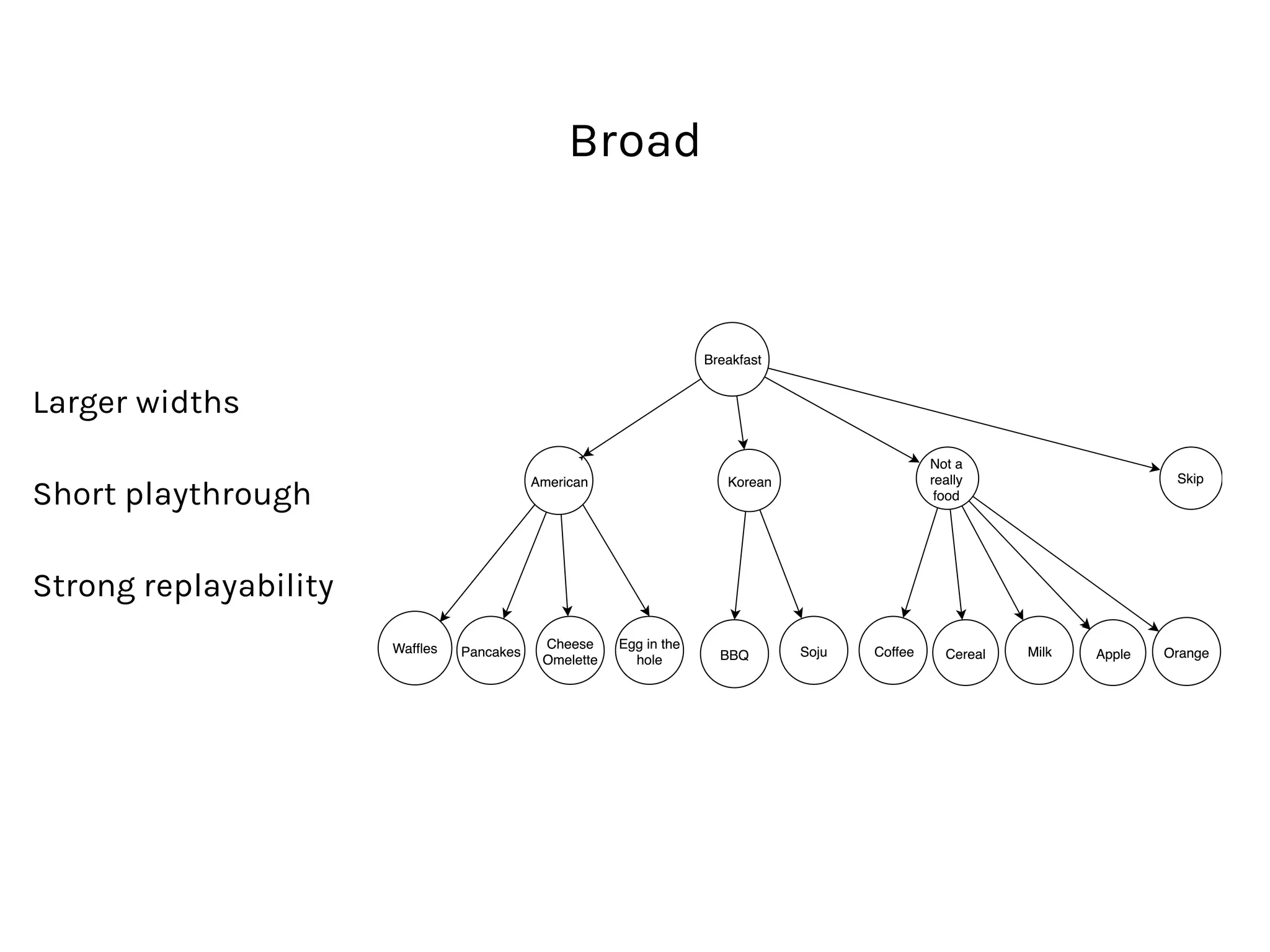
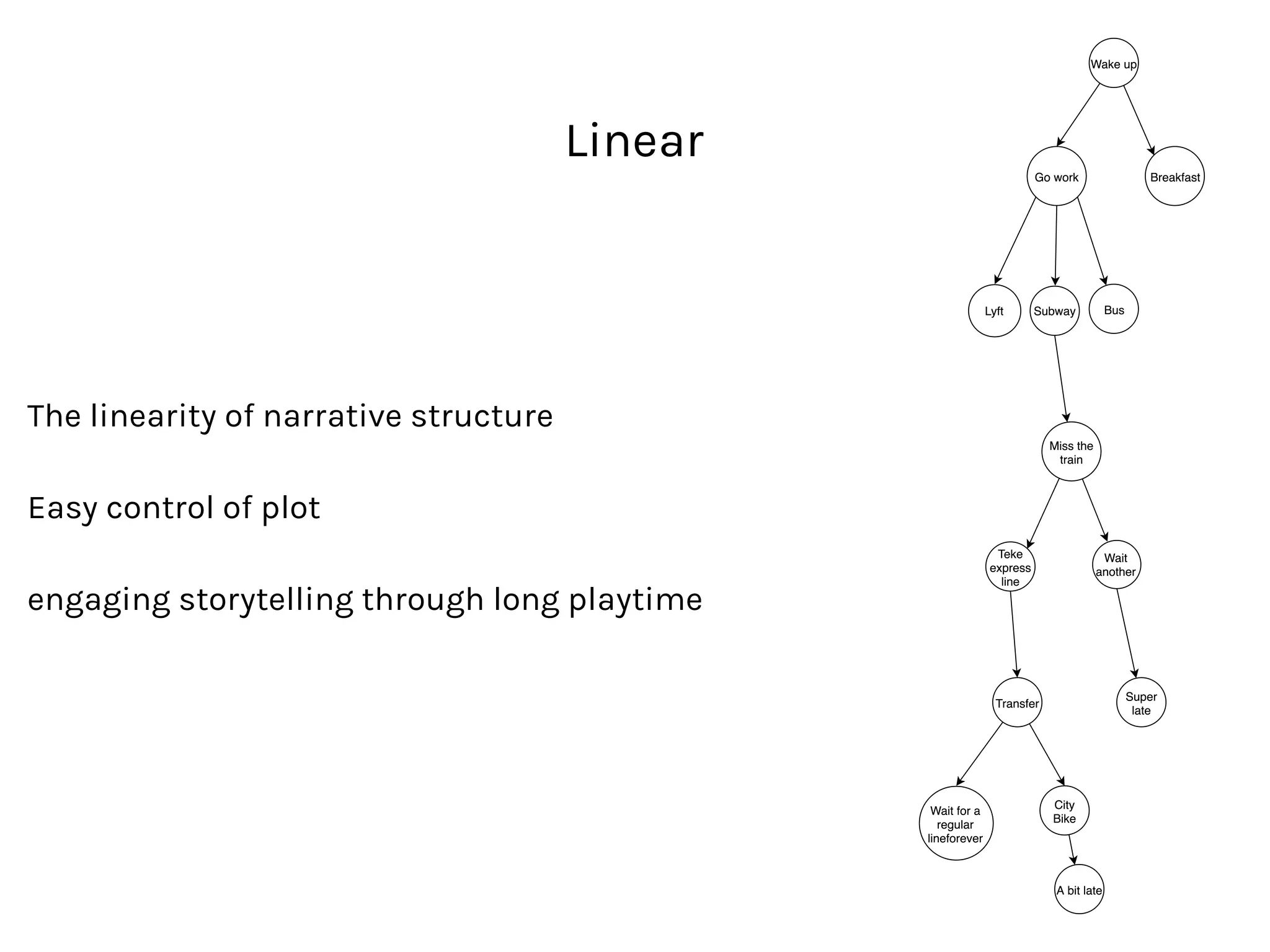
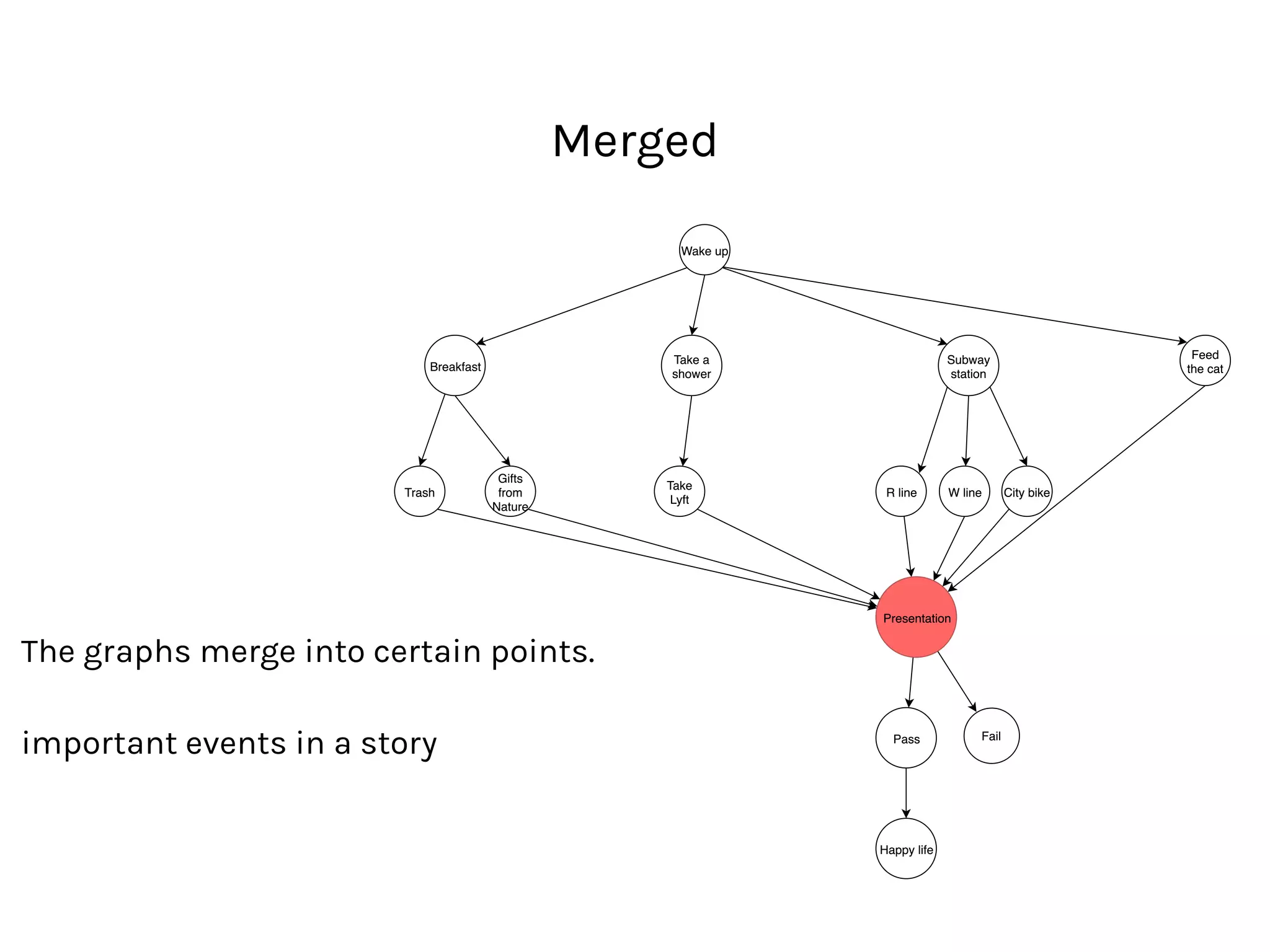
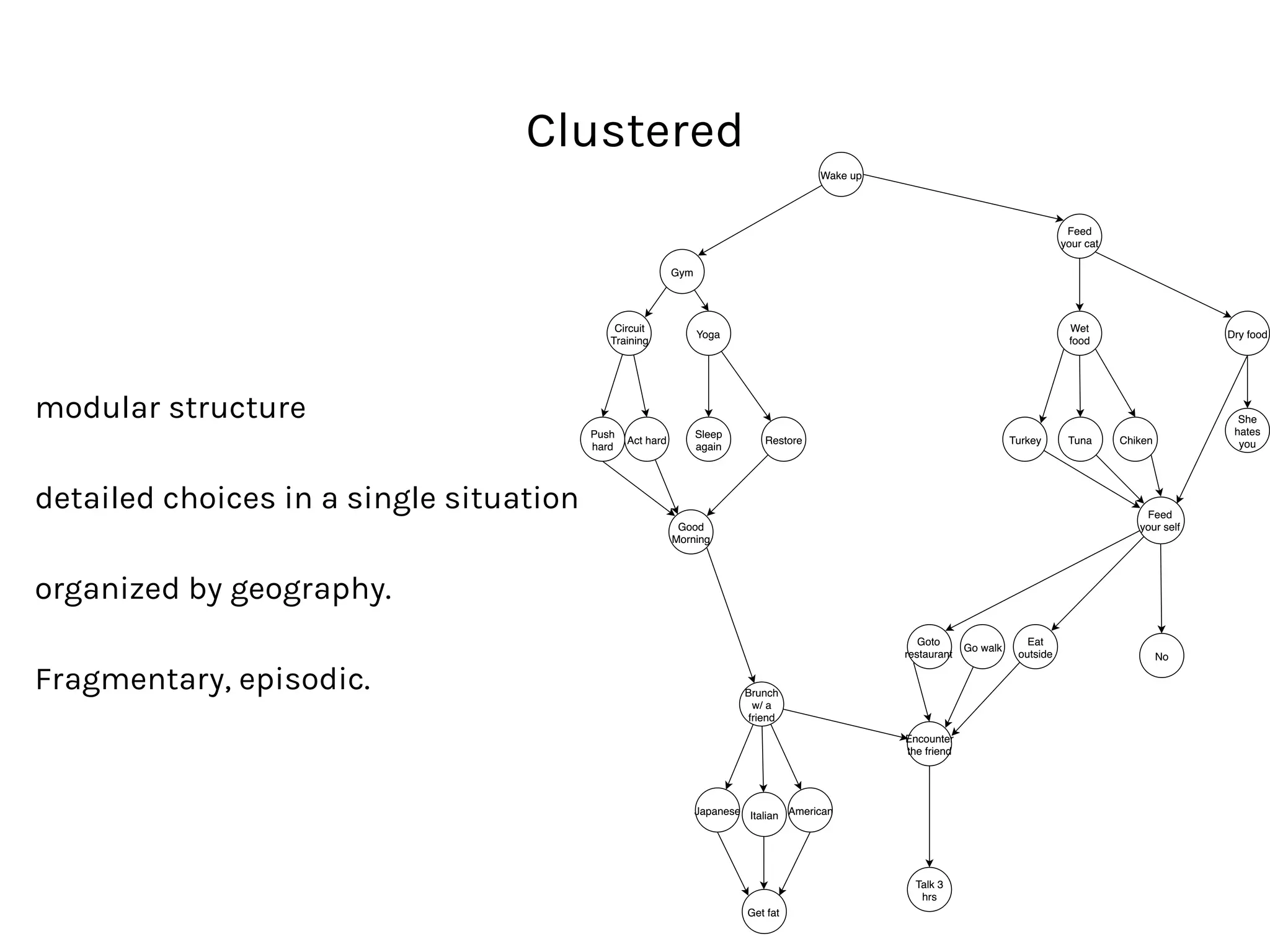
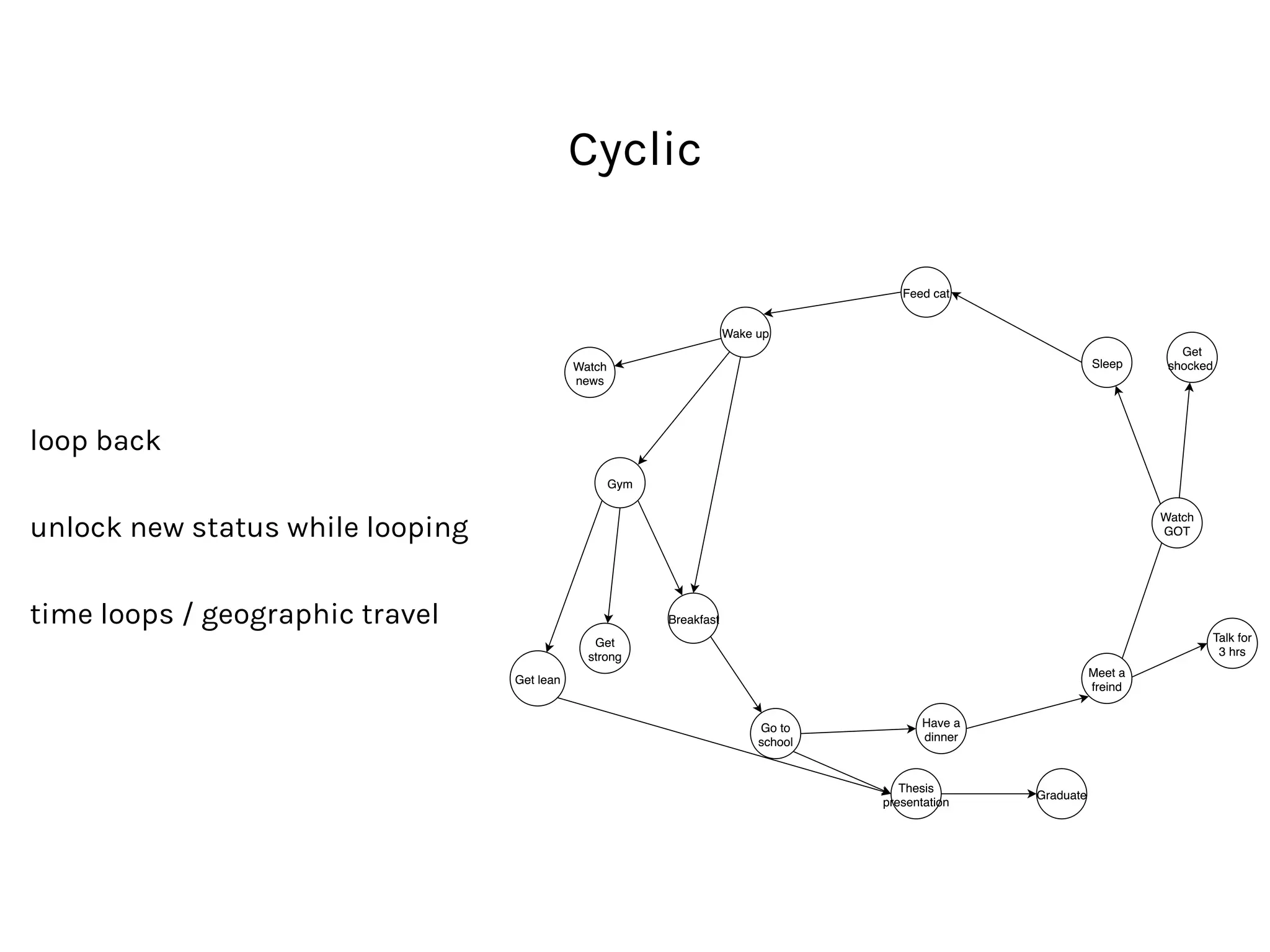
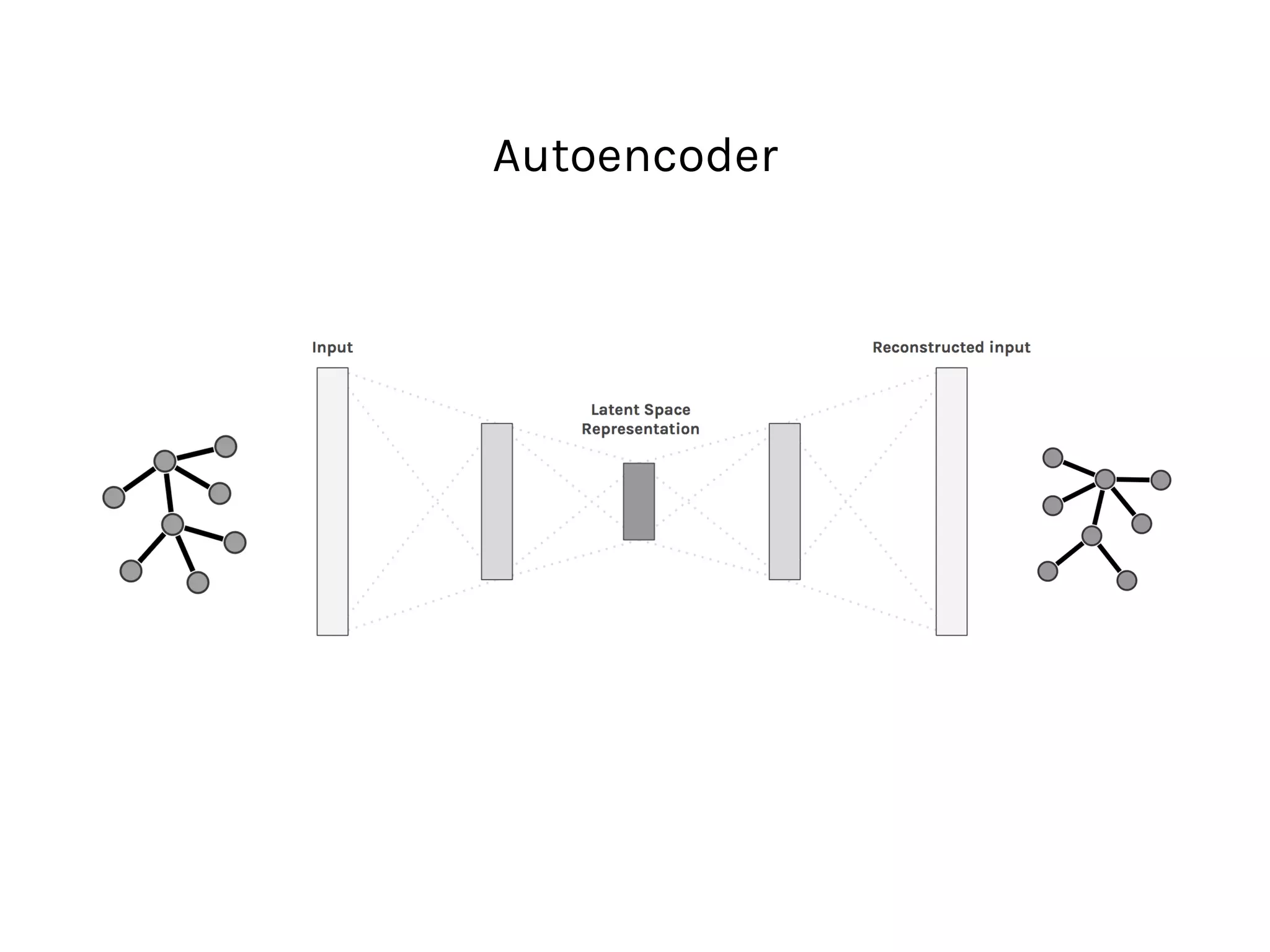
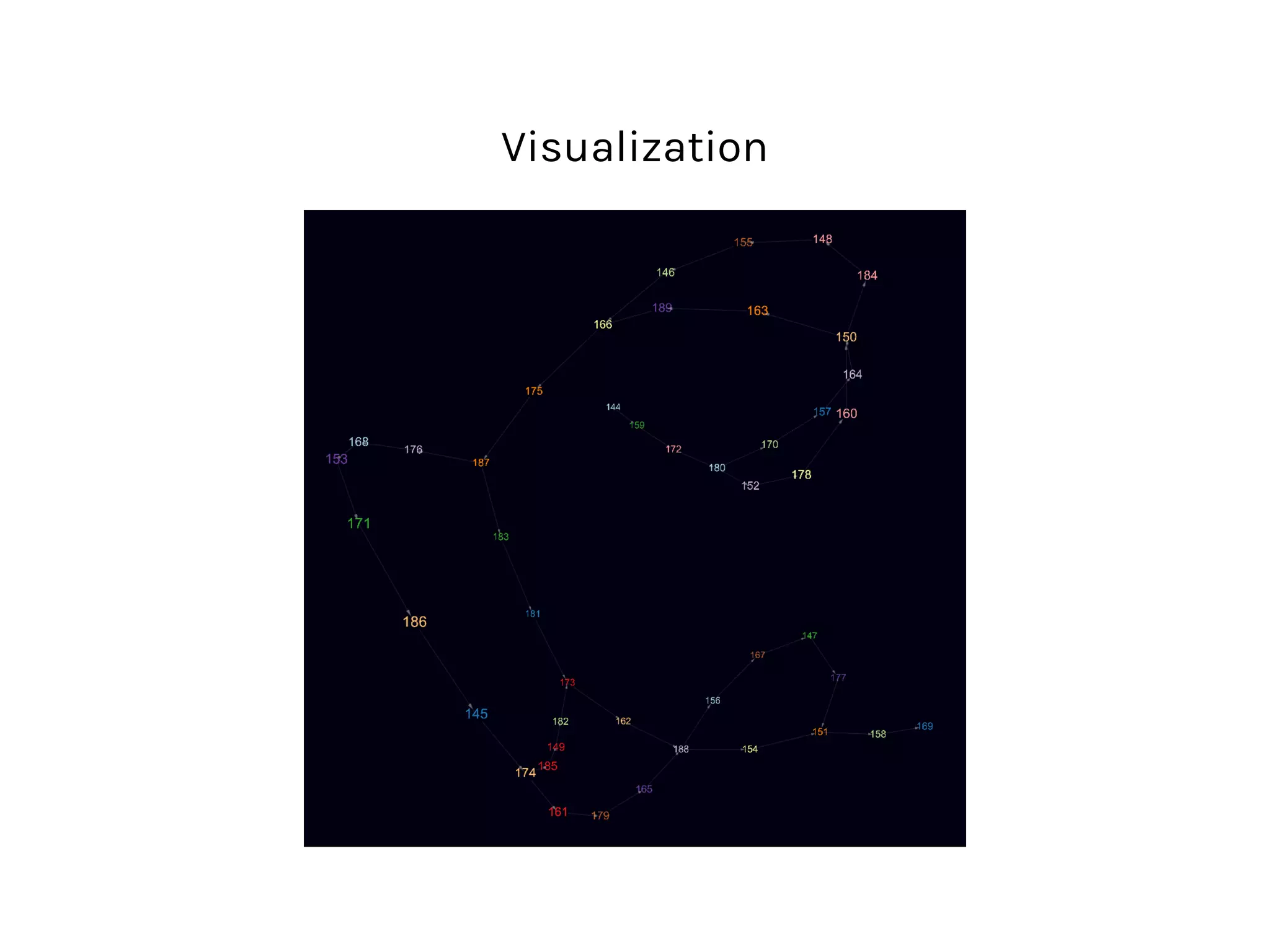
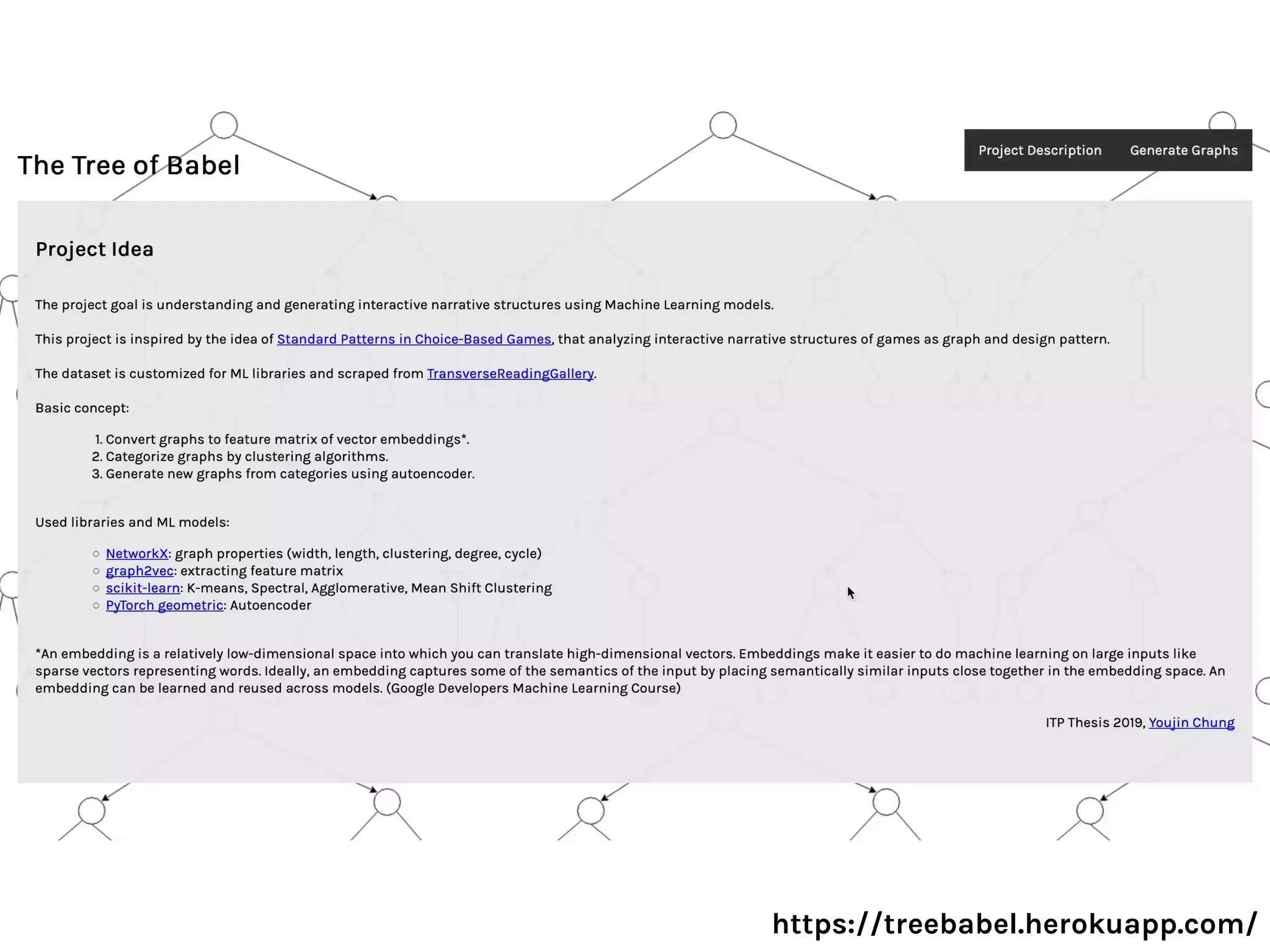
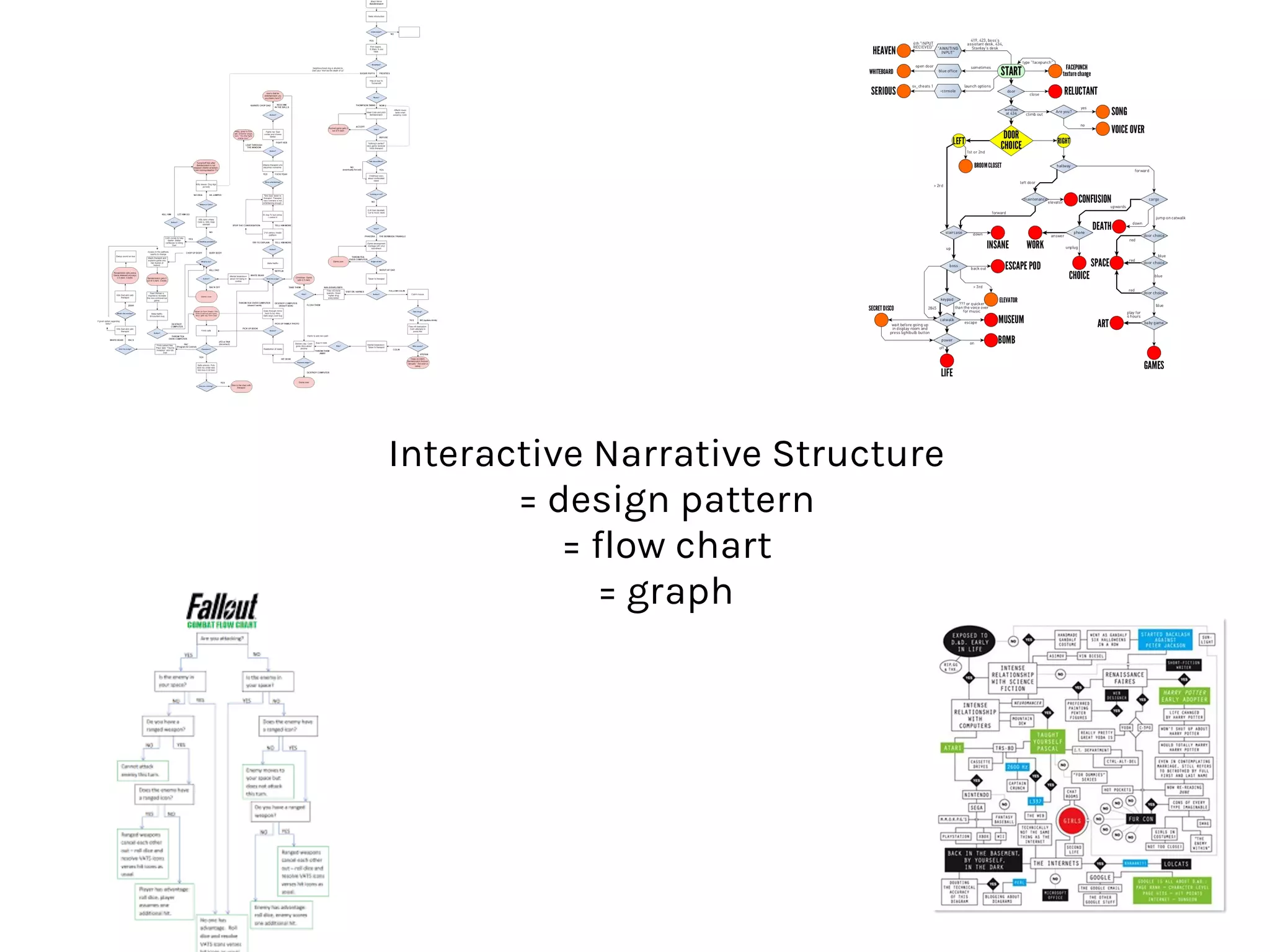
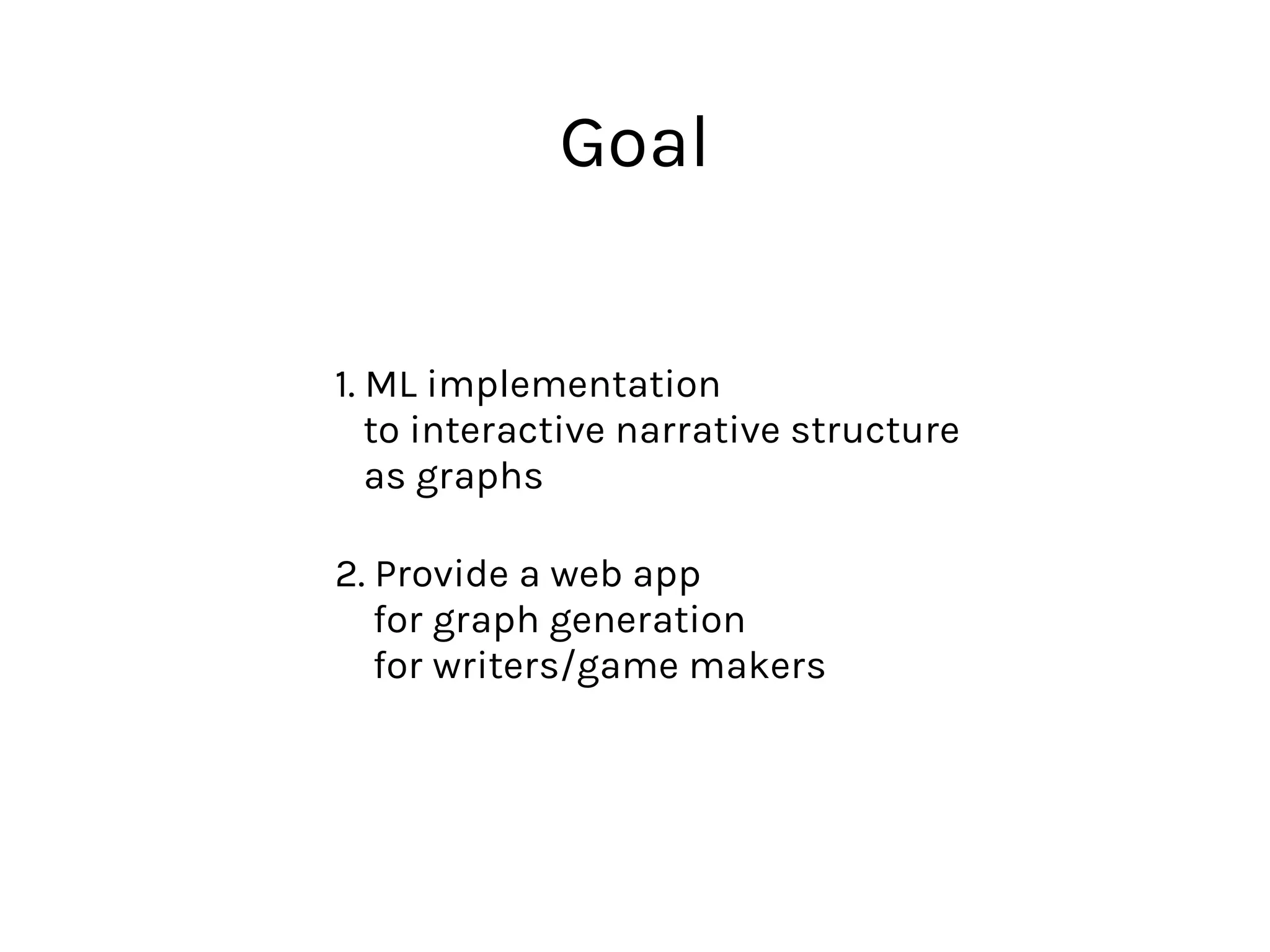
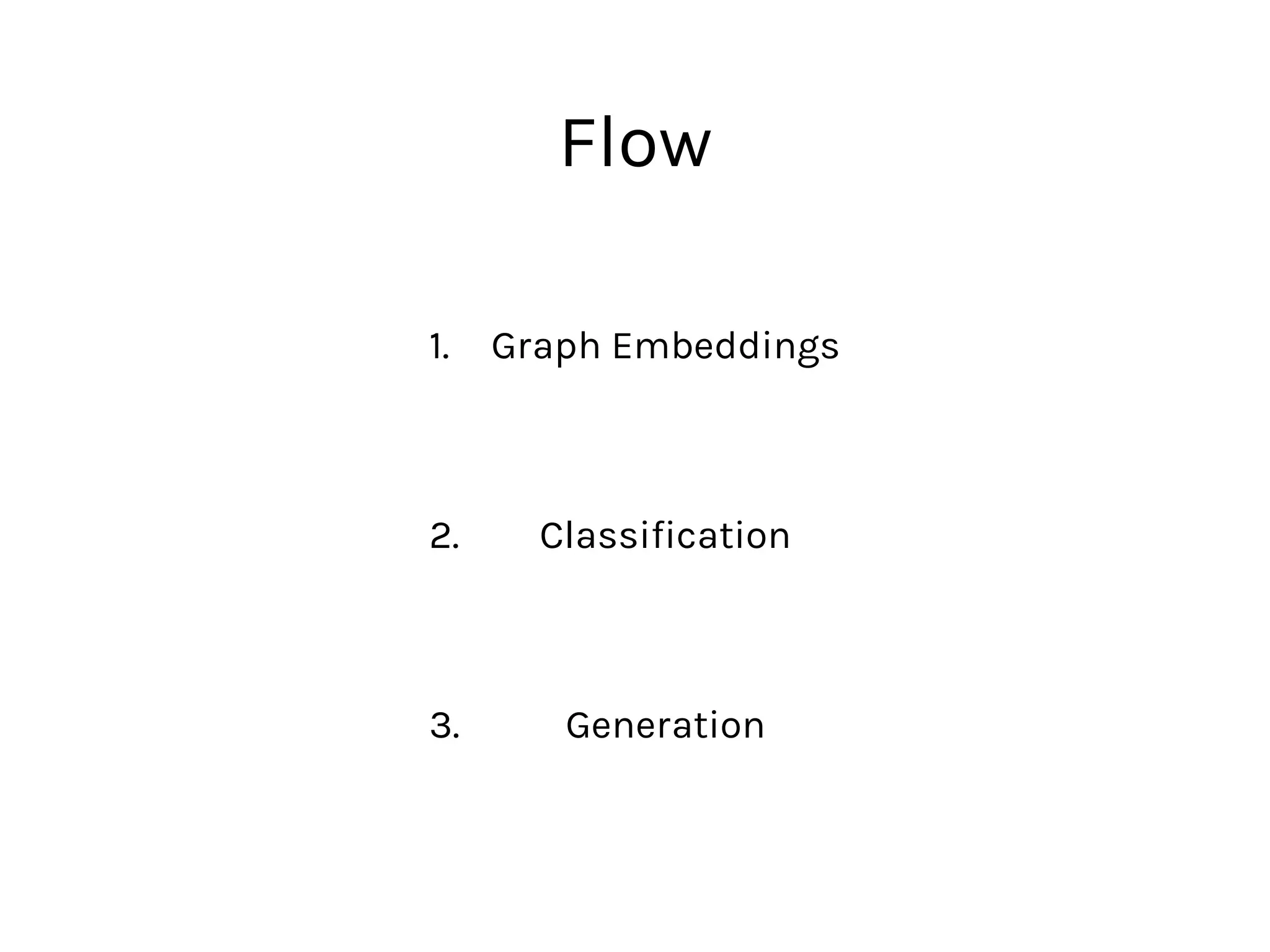
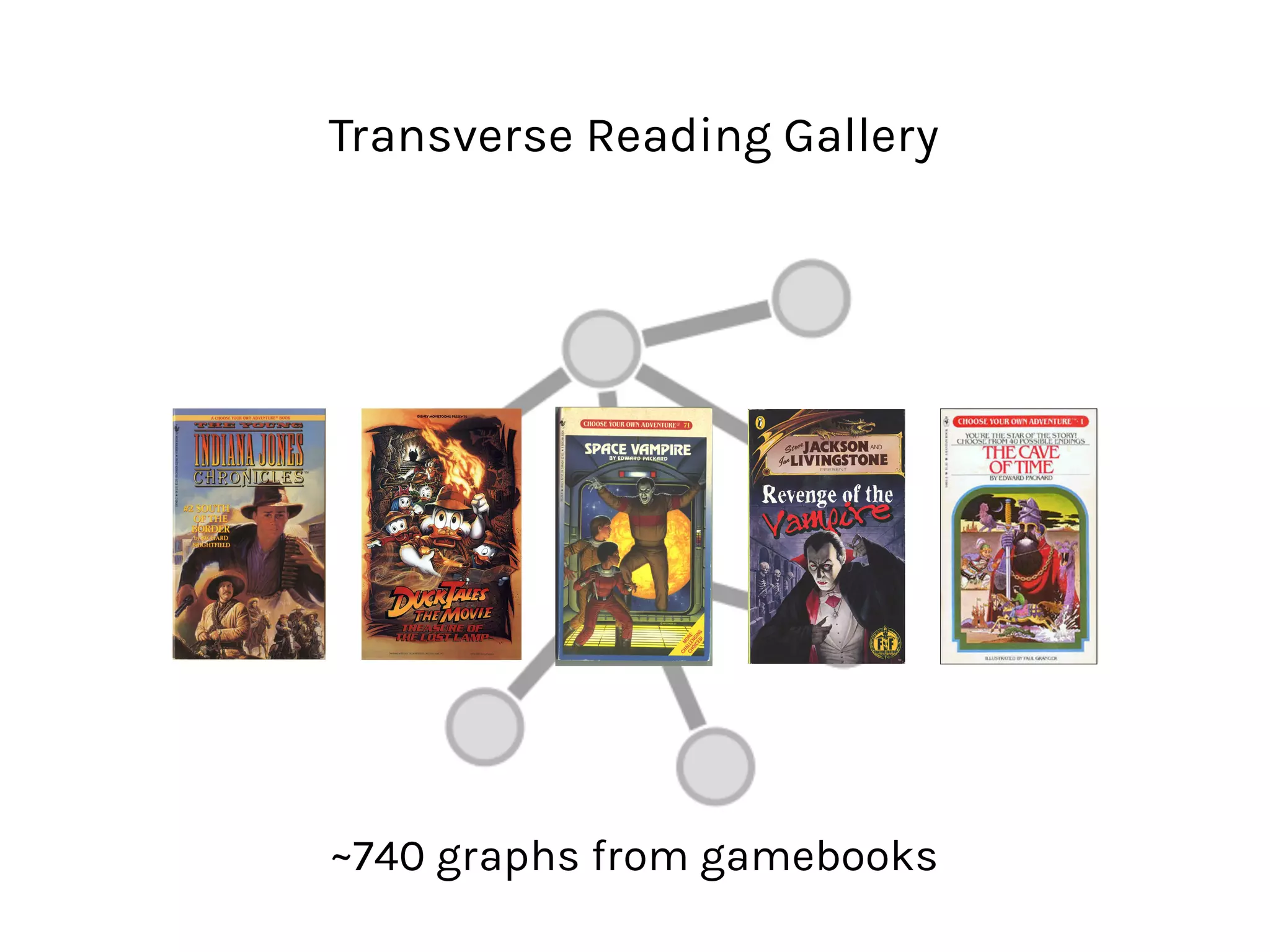
This document discusses using machine learning techniques like graph embeddings and classification models to analyze and generate interactive narrative structures represented as graphs. It presents research on applying these methods to a dataset of over 700 narrative graphs from gamebooks to learn their properties and classifications. The goal is to develop a web app for automated narrative graph generation to assist writers and game developers. Key techniques discussed include generating graph embeddings, using them for classification into categories like "Basic" or "Broad", and exploring autoencoders for graph generation.
![Graph embeddings
↔
[-0.13391995429992676,
-0.03493423014879227,
0.005581242498010397,
-0.05787748470902443,]](https://image.slidesharecdn.com/treeofbabel-190706075531/75/The-Tree-of-Babel-10-2048.jpg)
![Raw data to graph embeddings
Graph representation
{“nodes": [[1], [2], [18], … ],
"edge_index": [[1, 2], [2, 18], [2, 12], … ]}
Data formatting
{-0.13786359131336212,
-0.028311695903539658,
0.017919035628437996,
… ,
-0.05109648406505585}
Graph embeddings](https://image.slidesharecdn.com/treeofbabel-190706075531/75/The-Tree-of-Babel-12-2048.jpg)
![Classification
Clustering Algorithms Self Classification
[Basic,
Broad,
Long,
Merged,
Clustered,
Cycle]
using graph properties](https://image.slidesharecdn.com/treeofbabel-190706075531/75/The-Tree-of-Babel-14-2048.jpg)