The Solar SystemAlec Haller
What is the Solar System?The Solar System is a “group” of 8 planets, one son, and with multiple planets having natural satellites (moons).
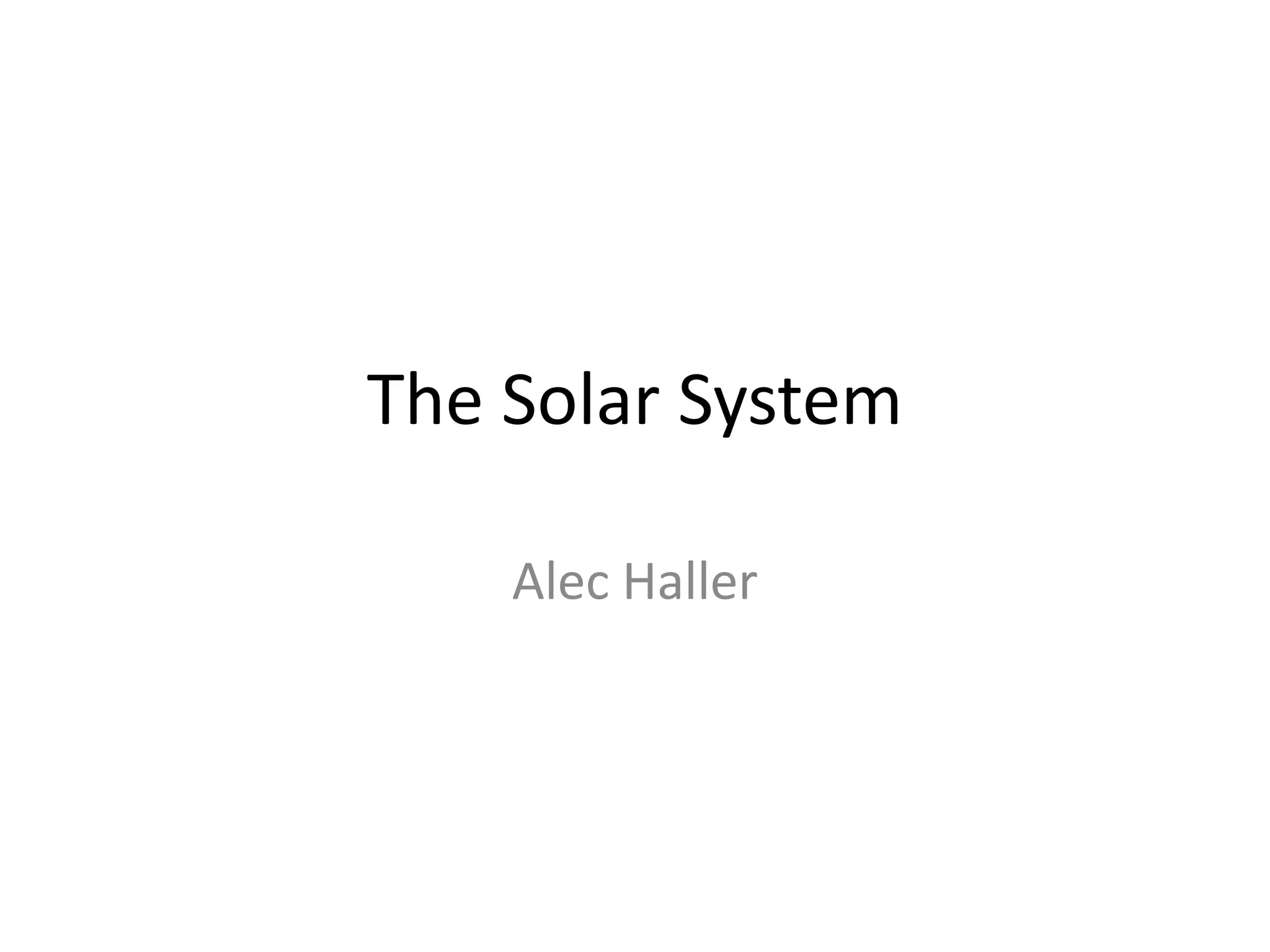
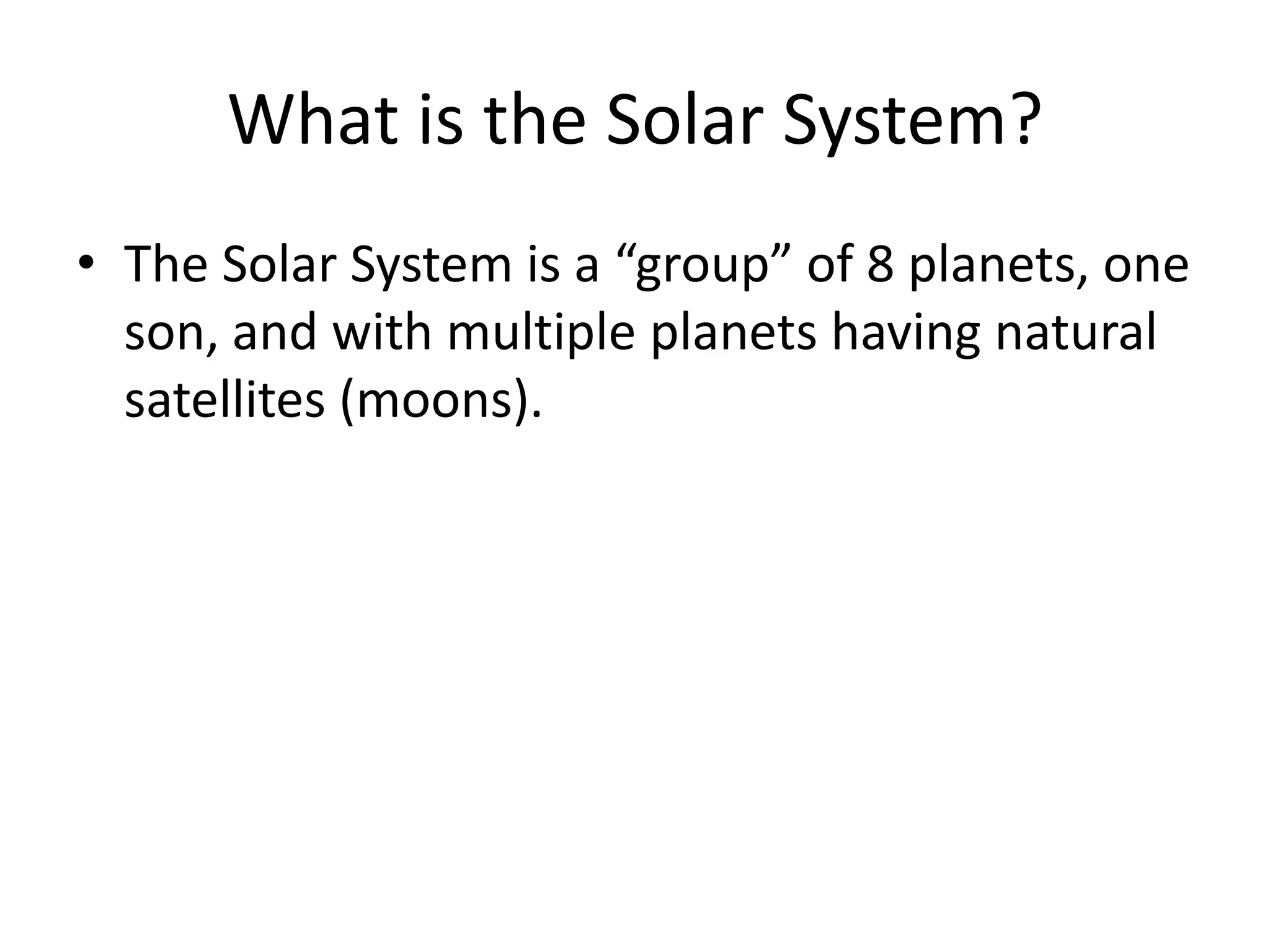
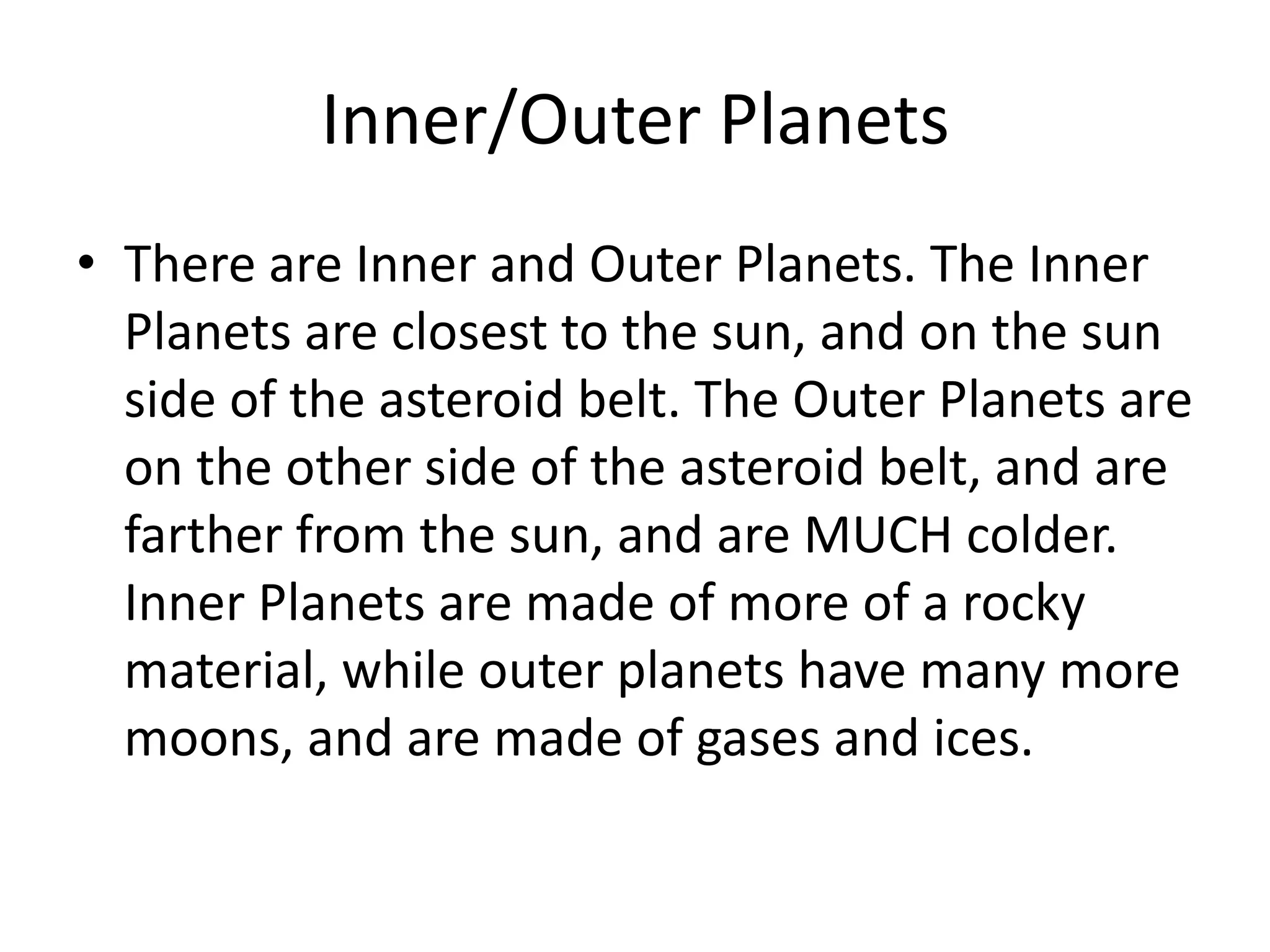
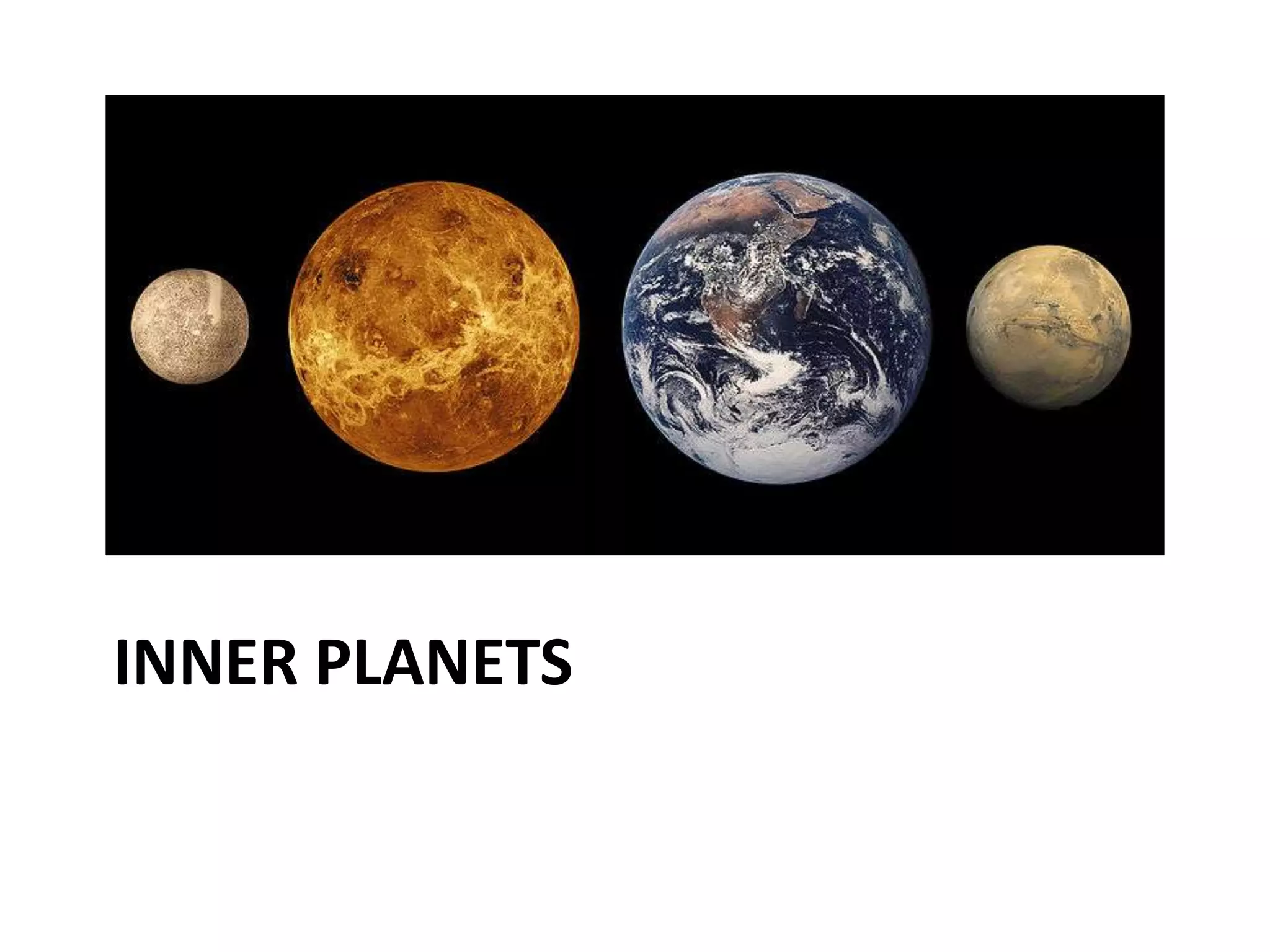
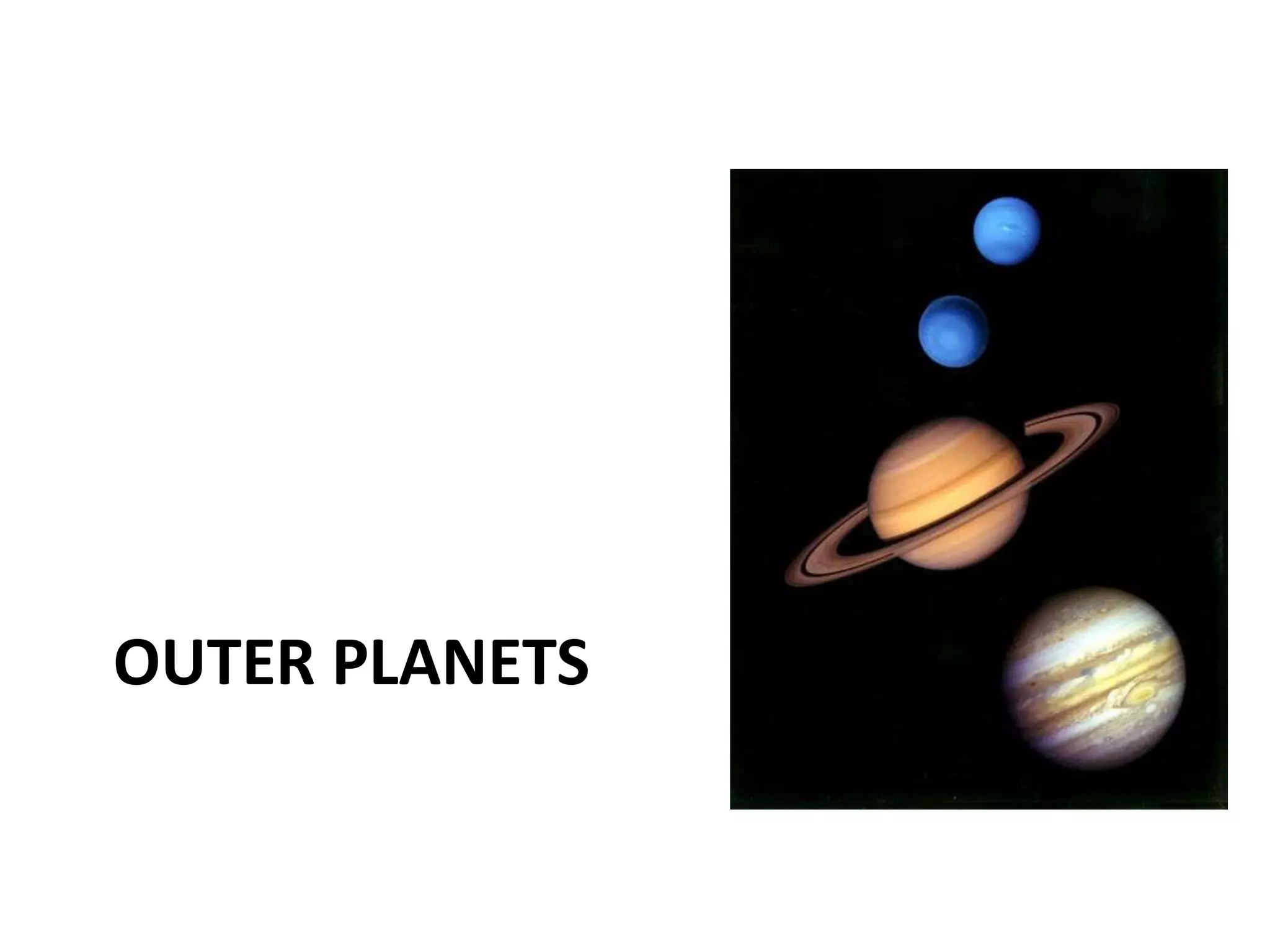
Inner/Outer PlanetsThere are Inner and Outer Planets. The Inner Planets are closest to the sun, and on the sun side of the asteroid belt. The Outer Planets are on the other side of the asteroid belt, and are farther from the sun, and are MUCH colder. Inner Planets are made of more of a rocky material, while outer planets have many more moons, and are made of gases and ices.
Inner planets
Mercury, VenusMercury and Venus are the two closest planets closest to the sun (Mercury being the closest). Venus is the hottest planet.
EarthEarth is the third closest planet to the sun, and is the only known planet in the universe to hold life. Earth has one natural satellite, called the Moon.
MarsMars is the forth planet from the sun, and the final planet in the Inner Planets. Mars is currently the “planet of study”.
Outer planets
JupiterJupiter is the largest planet in the Solar System, and is made of gases. Jupiter has 63 known natural satellites (moons).
SaturnSaturn, the second largest planet in the solar system, has 62 confirmed satellites. It also has a relatively large system of rings.
UranusUranus is the second-farthest planet from the sun, and has 27 known natural satellites.
NeptuneNeptune is the farthest planet away from the sun, and has 13 moons.
Dwarf Planet: PlutoAs of 2006, Pluto, which used to be the ninth and smallest planet of the Solar System, was changed to the newly created definition, Dwarf Planet (because of its small size, being .6% of earth’s size).
Creation and end of the solar system
CreationThe Solar System formed from the gravitational collapse of a giant molecular cloud 4.568 billion years ago.
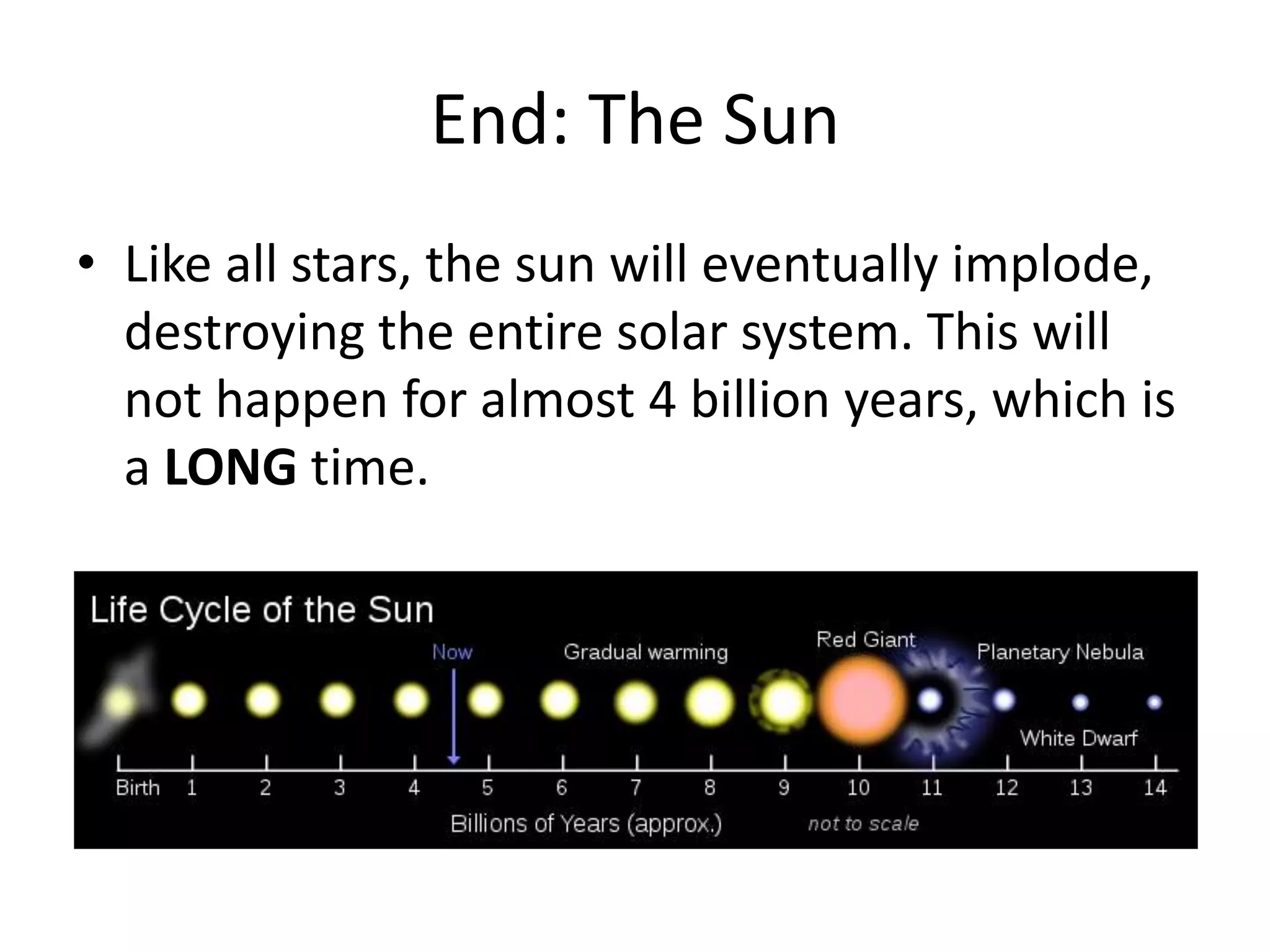
End: The SunLike all stars, the sun will eventually implode, destroying the entire solar system. This will not happen for almost 4 billion years, which is a LONG time.
Resources"The Solar System - Astronomy For Kids - KidsAstronomy.com." Astronomy For Kids - KidsAstronomy.com. N.p., n.d. Web. 20 Feb. 2011. <http://www.kidsastronomy.com/solar_system.htm>. Wikipedia contributors. "Solar System." Wikipedia, The Free Encyclopedia. Wikipedia, The Free Encyclopedia, 16 Feb. 2011. Web. 21 Feb. 2011.

The solar system

  • 1.
  • 2.
    What is theSolar System?The Solar System is a “group” of 8 planets, one son, and with multiple planets having natural satellites (moons).
  • 3.
    Inner/Outer PlanetsThere areInner and Outer Planets. The Inner Planets are closest to the sun, and on the sun side of the asteroid belt. The Outer Planets are on the other side of the asteroid belt, and are farther from the sun, and are MUCH colder. Inner Planets are made of more of a rocky material, while outer planets have many more moons, and are made of gases and ices.
  • 4.
  • 5.
    Mercury, VenusMercury andVenus are the two closest planets closest to the sun (Mercury being the closest). Venus is the hottest planet.
  • 6.
    EarthEarth is thethird closest planet to the sun, and is the only known planet in the universe to hold life. Earth has one natural satellite, called the Moon.
  • 7.
    MarsMars is theforth planet from the sun, and the final planet in the Inner Planets. Mars is currently the “planet of study”.
  • 8.
  • 9.
    JupiterJupiter is thelargest planet in the Solar System, and is made of gases. Jupiter has 63 known natural satellites (moons).
  • 10.
    SaturnSaturn, the secondlargest planet in the solar system, has 62 confirmed satellites. It also has a relatively large system of rings.
  • 11.
    UranusUranus is thesecond-farthest planet from the sun, and has 27 known natural satellites.
  • 12.
    NeptuneNeptune is thefarthest planet away from the sun, and has 13 moons.
  • 13.
    Dwarf Planet: PlutoAsof 2006, Pluto, which used to be the ninth and smallest planet of the Solar System, was changed to the newly created definition, Dwarf Planet (because of its small size, being .6% of earth’s size).
  • 14.
    Creation and endof the solar system
  • 15.
    CreationThe Solar Systemformed from the gravitational collapse of a giant molecular cloud 4.568 billion years ago.
  • 16.
    End: The SunLikeall stars, the sun will eventually implode, destroying the entire solar system. This will not happen for almost 4 billion years, which is a LONG time.
  • 17.
    Resources"The Solar System- Astronomy For Kids - KidsAstronomy.com." Astronomy For Kids - KidsAstronomy.com. N.p., n.d. Web. 20 Feb. 2011. <http://www.kidsastronomy.com/solar_system.htm>. Wikipedia contributors. "Solar System." Wikipedia, The Free Encyclopedia. Wikipedia, The Free Encyclopedia, 16 Feb. 2011. Web. 21 Feb. 2011.