SOLAR
SYSTEM
DEFINITION
The region of the universe near the sun that
includes the sun, the nine known major
planets and their moons or satellites, and
objects such as asteroids and comets that
travel in independent orbits. The major
planets, in order of their average distance
from the sun, are Mercury, Venus, the Earth,
Mars, Jupiter, Saturn, Uranus, Neptune.
MERCURY
Mercury is the closest planet to
the Sun but, perhaps
surprisingly, it does not have the
highest temperatures. It is the
second densest planet of the
Solar System, but also the
smallest planet. The structure of
Mercury makes it the most
similar planet to Earth
VENUS
Venus is the second
planet from the Sun
and the sixth-largest.
Together with Mercury,
they are the only
planets without a
satellite, even though
Mercury is closer to
the sun, Venus is the
hottest planet
EARTH
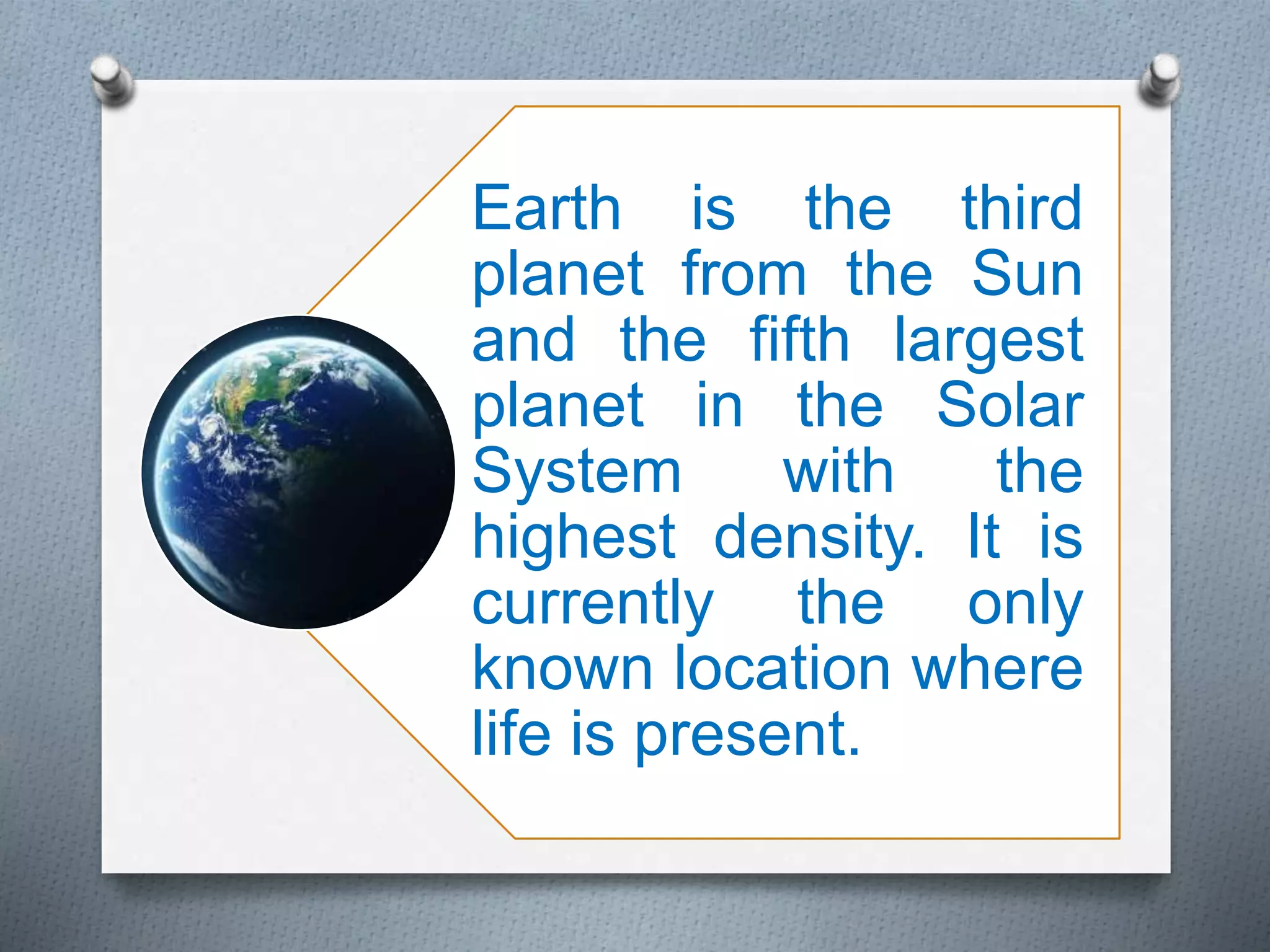
Earth is the third
planet from the Sun
and the fifth largest
planet in the Solar
System with the
highest density. It is
currently the only
known location where
life is present.
MARS
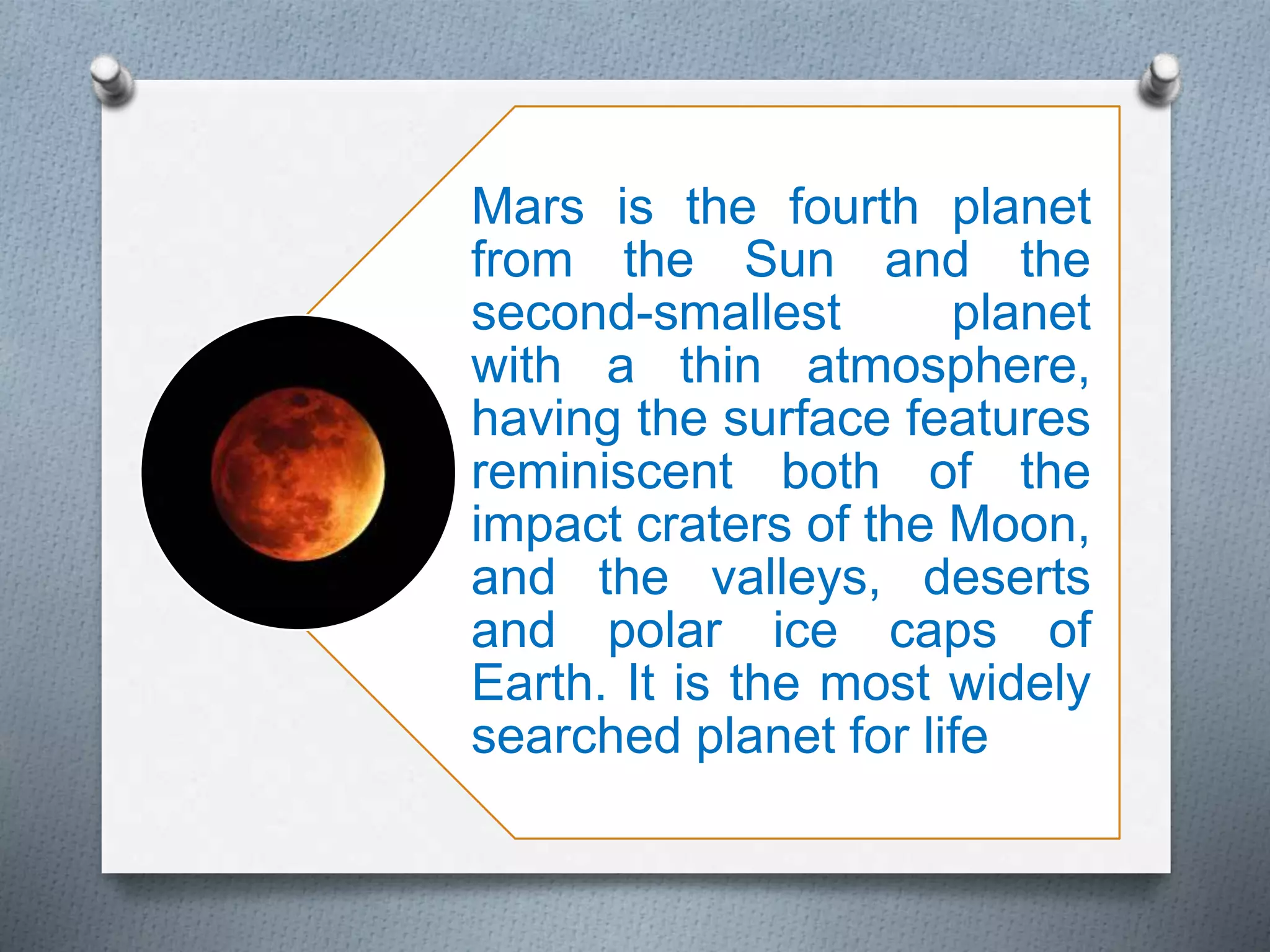
Mars is the fourth planet
from the Sun and the
second-smallest planet
with a thin atmosphere,
having the surface features
reminiscent both of the
impact craters of the Moon,
and the valleys, deserts
and polar ice caps of
Earth. It is the most widely
searched planet for life
JUPITER
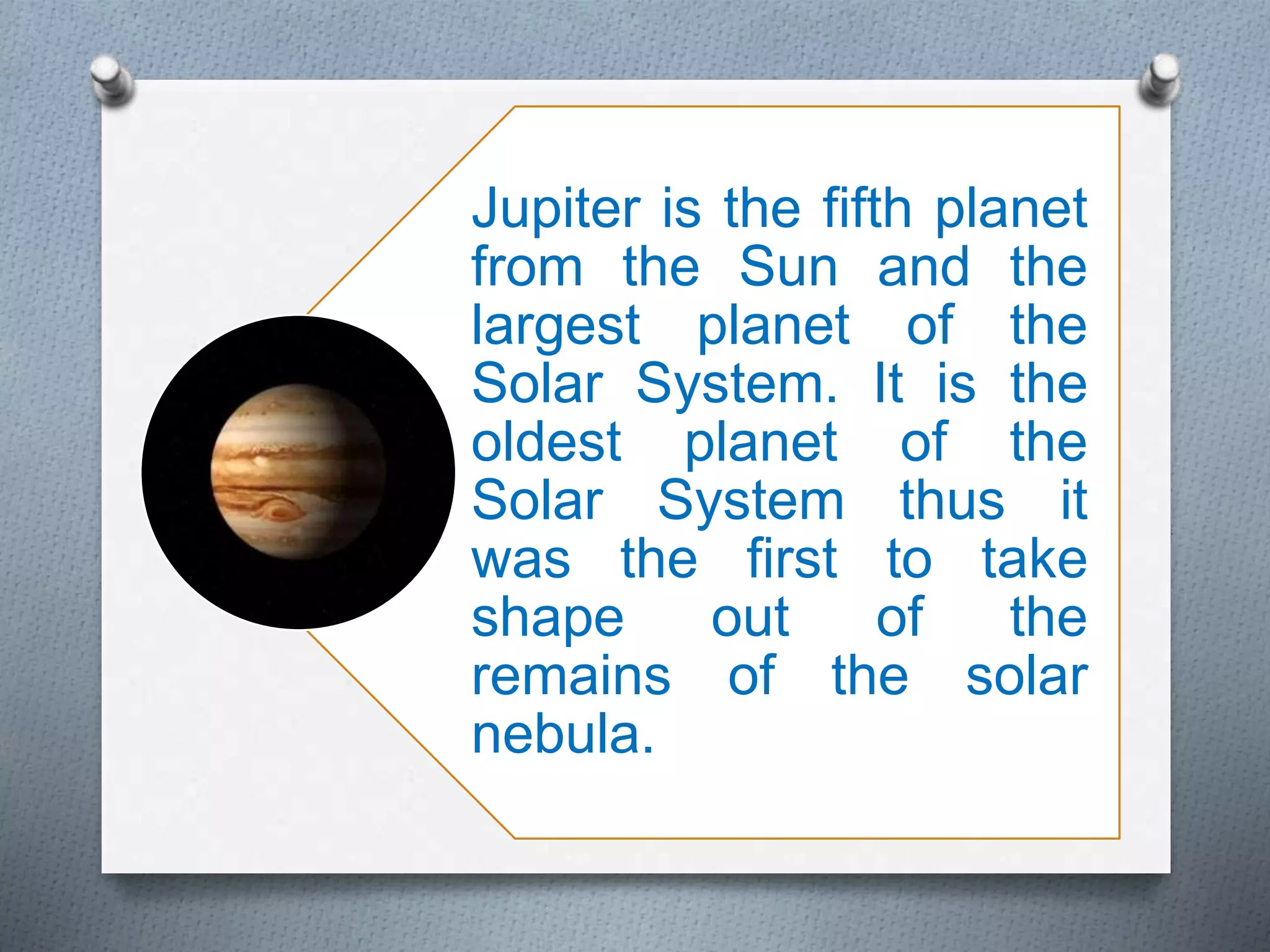
Jupiter is the fifth planet
from the Sun and the
largest planet of the
Solar System. It is the
oldest planet of the
Solar System thus it
was the first to take
shape out of the
remains of the solar
nebula.
SATURN
Saturn is the sixth planet
from the Sun, with the
largest planetary rings in the
Solar System. It is the
second-largest planet after
Jupiter, and recently, with
many other moons being
discovered, it surpassed the
number of Jupiter’s moons
and is now considered the
planet with the most
numerous satellites
URANUS
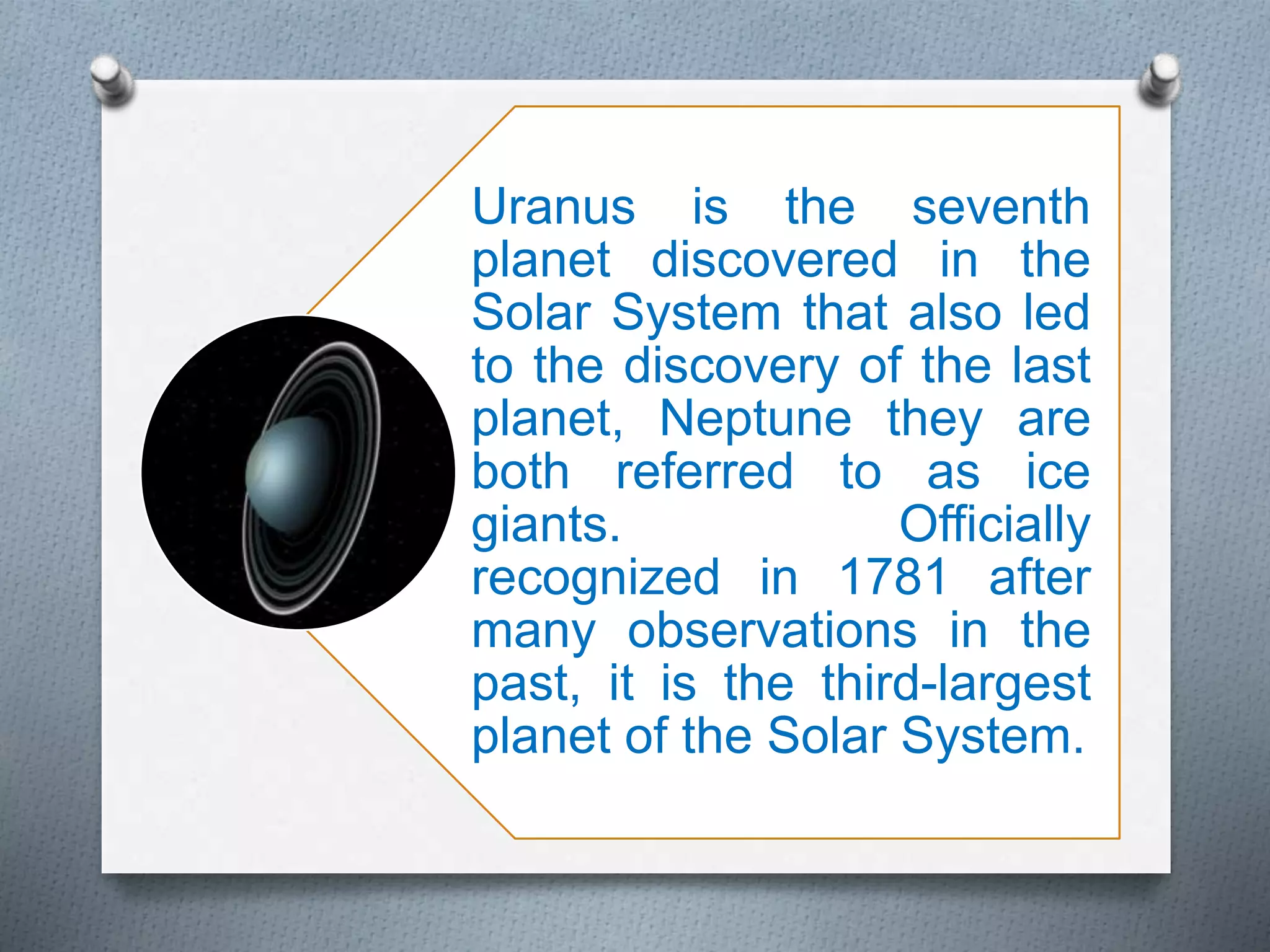
Uranus is the seventh
planet discovered in the
Solar System that also led
to the discovery of the last
planet, Neptune they are
both referred to as ice
giants. Officially
recognized in 1781 after
many observations in the
past, it is the third-largest
planet of the Solar System.
NEPTUNE
Neptune is the fourth
largest and the farthest
planet of the Solar System
with the most powerful
wind speeds out of all the
planets. It is the smallest of
the gas giants and is the
first planet to be
discovered by
mathematical predictions in
1846.
Solar system

Solar system

  • 1.
  • 2.
    DEFINITION The region ofthe universe near the sun that includes the sun, the nine known major planets and their moons or satellites, and objects such as asteroids and comets that travel in independent orbits. The major planets, in order of their average distance from the sun, are Mercury, Venus, the Earth, Mars, Jupiter, Saturn, Uranus, Neptune.
  • 3.
  • 4.
    Mercury is theclosest planet to the Sun but, perhaps surprisingly, it does not have the highest temperatures. It is the second densest planet of the Solar System, but also the smallest planet. The structure of Mercury makes it the most similar planet to Earth
  • 5.
  • 6.
    Venus is thesecond planet from the Sun and the sixth-largest. Together with Mercury, they are the only planets without a satellite, even though Mercury is closer to the sun, Venus is the hottest planet
  • 7.
  • 8.
    Earth is thethird planet from the Sun and the fifth largest planet in the Solar System with the highest density. It is currently the only known location where life is present.
  • 9.
  • 10.
    Mars is thefourth planet from the Sun and the second-smallest planet with a thin atmosphere, having the surface features reminiscent both of the impact craters of the Moon, and the valleys, deserts and polar ice caps of Earth. It is the most widely searched planet for life
  • 11.
  • 12.
    Jupiter is thefifth planet from the Sun and the largest planet of the Solar System. It is the oldest planet of the Solar System thus it was the first to take shape out of the remains of the solar nebula.
  • 13.
  • 14.
    Saturn is thesixth planet from the Sun, with the largest planetary rings in the Solar System. It is the second-largest planet after Jupiter, and recently, with many other moons being discovered, it surpassed the number of Jupiter’s moons and is now considered the planet with the most numerous satellites
  • 15.
  • 16.
    Uranus is theseventh planet discovered in the Solar System that also led to the discovery of the last planet, Neptune they are both referred to as ice giants. Officially recognized in 1781 after many observations in the past, it is the third-largest planet of the Solar System.
  • 17.
  • 18.
    Neptune is thefourth largest and the farthest planet of the Solar System with the most powerful wind speeds out of all the planets. It is the smallest of the gas giants and is the first planet to be discovered by mathematical predictions in 1846.