Power point presentation by Aahaan
 Also known as terrestrial planets , telluric
planets and rocky planets.
 These planets are made from rocks.
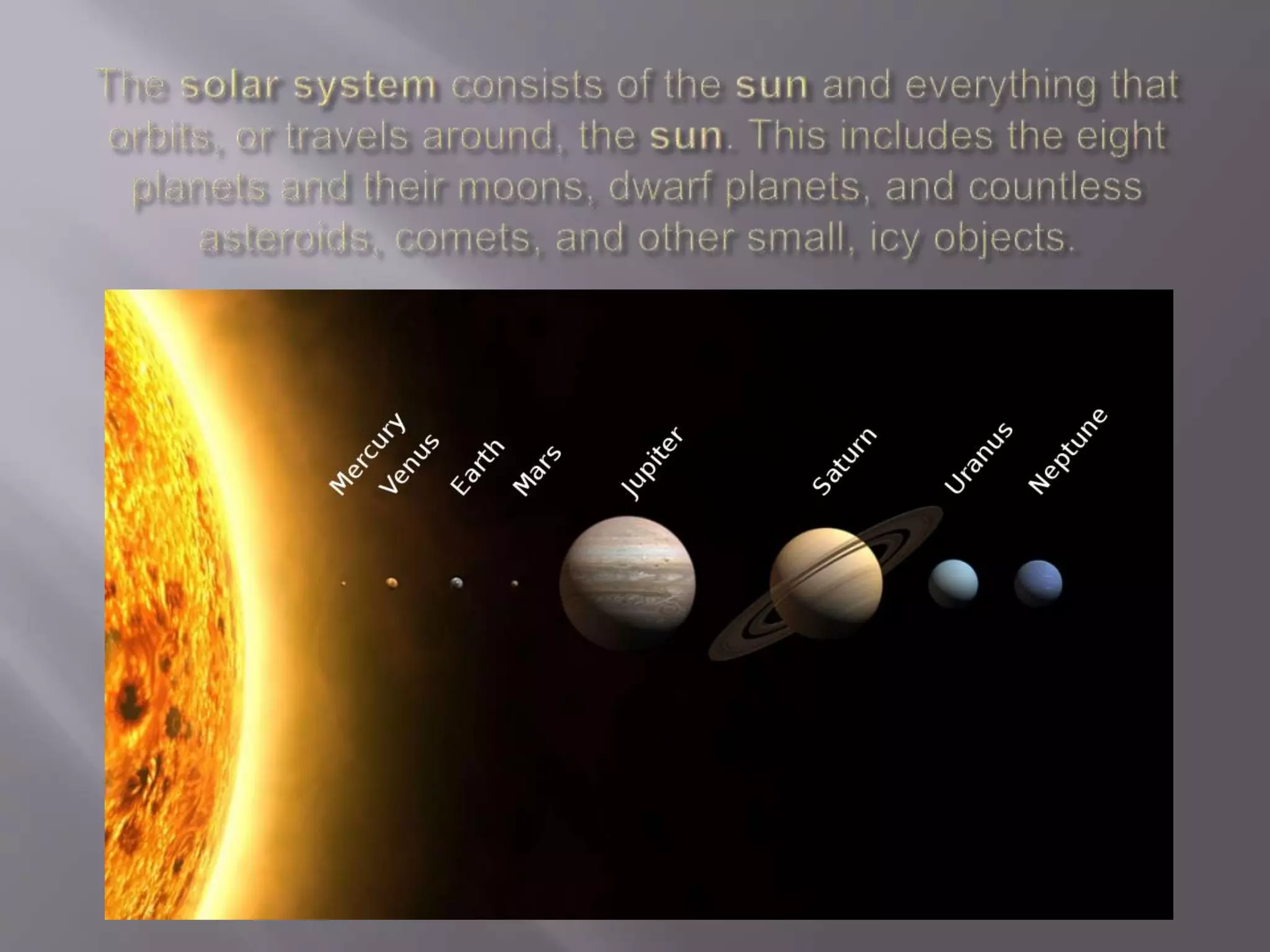
 This includes Mercury, Venus, Earth, Mars.
 Mercury is the smallest and
innermost planet in the Solar System.
 Its orbit around the Sun takes 87.97 days, the
shortest of all the planets in the Solar System.
 Venus is the second planet from the Sun.
 It is named after the Roman goddess of love
and beauty.
 As the second-brightest natural object in the
night sky after the Moon.
 Earth is the third planet from the Sun and is
the largest of the terrestrial planets.
 The Earth is the only planet in our solar
system not to be named after a Greek god.
 Mars is the fourth planet from the Sun and the
second-smallest planet in the Solar System
after Mercury.
 These planets are mostly made up of gas.
 They are divided into two categories;
 Gas giants.
 Ice giants.
 This includes Jupiter , Saturn , Uranus ,
Neptune.
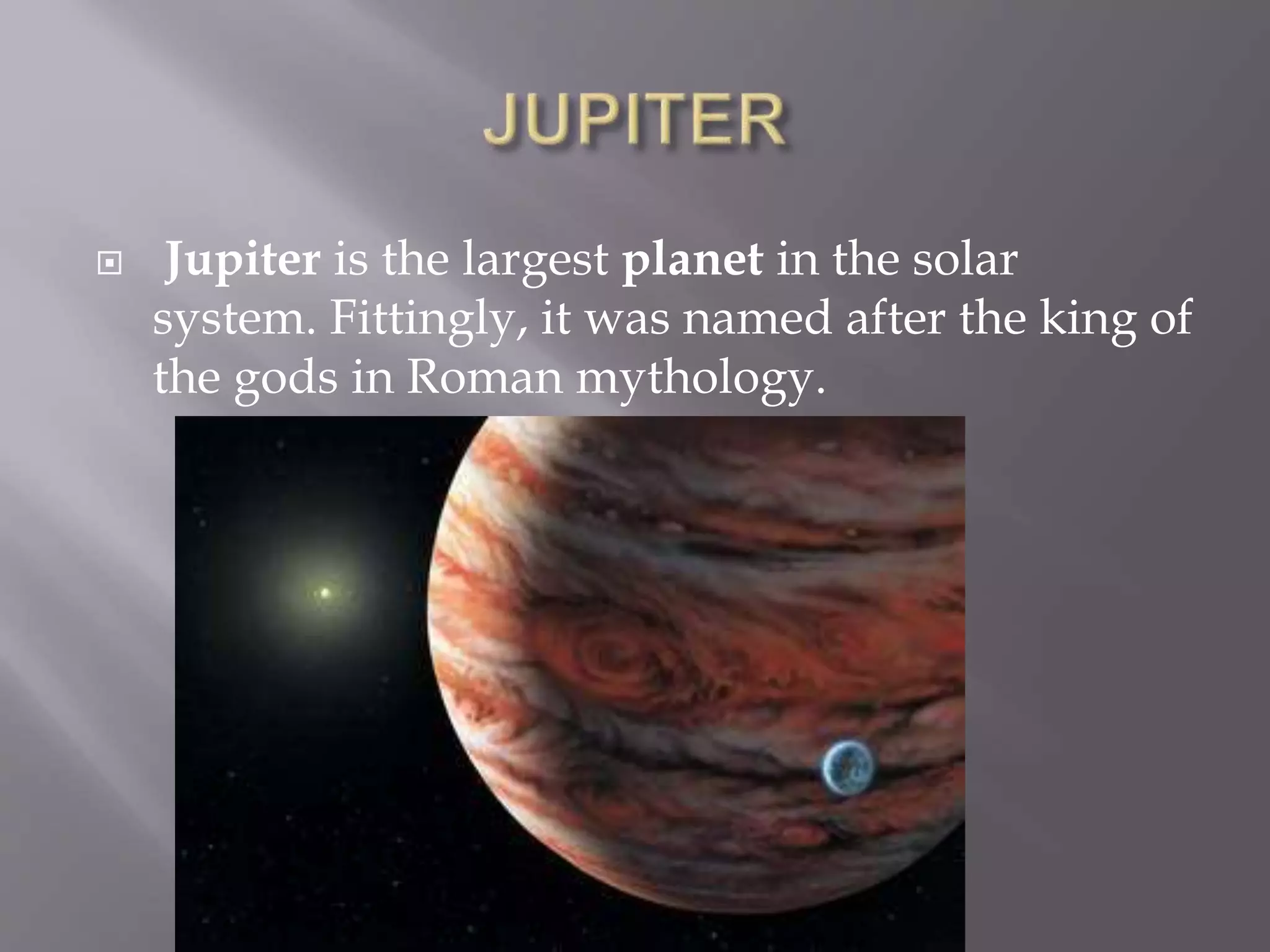
 Jupiter is the largest planet in the solar
system. Fittingly, it was named after the king of
the gods in Roman mythology.
 Saturn is the sixth planet from the sun and the
second-largest planet in the solar system.
 Uranus is the seventh planet from the Sun. It
has the third-largest planetary radius and
fourth-largest planetary mass in the Solar
system.
 Neptune is the fourth largest and the
farthest planet of the Solar System with the
most powerful wind speeds out of all
the planets.
 Nebulas are made by dust particles of a dead
star.
 The dust particles colide with each other to
form new stars.
 Eg . Butterfly nebula, helix nebula,cats eye
nebula.
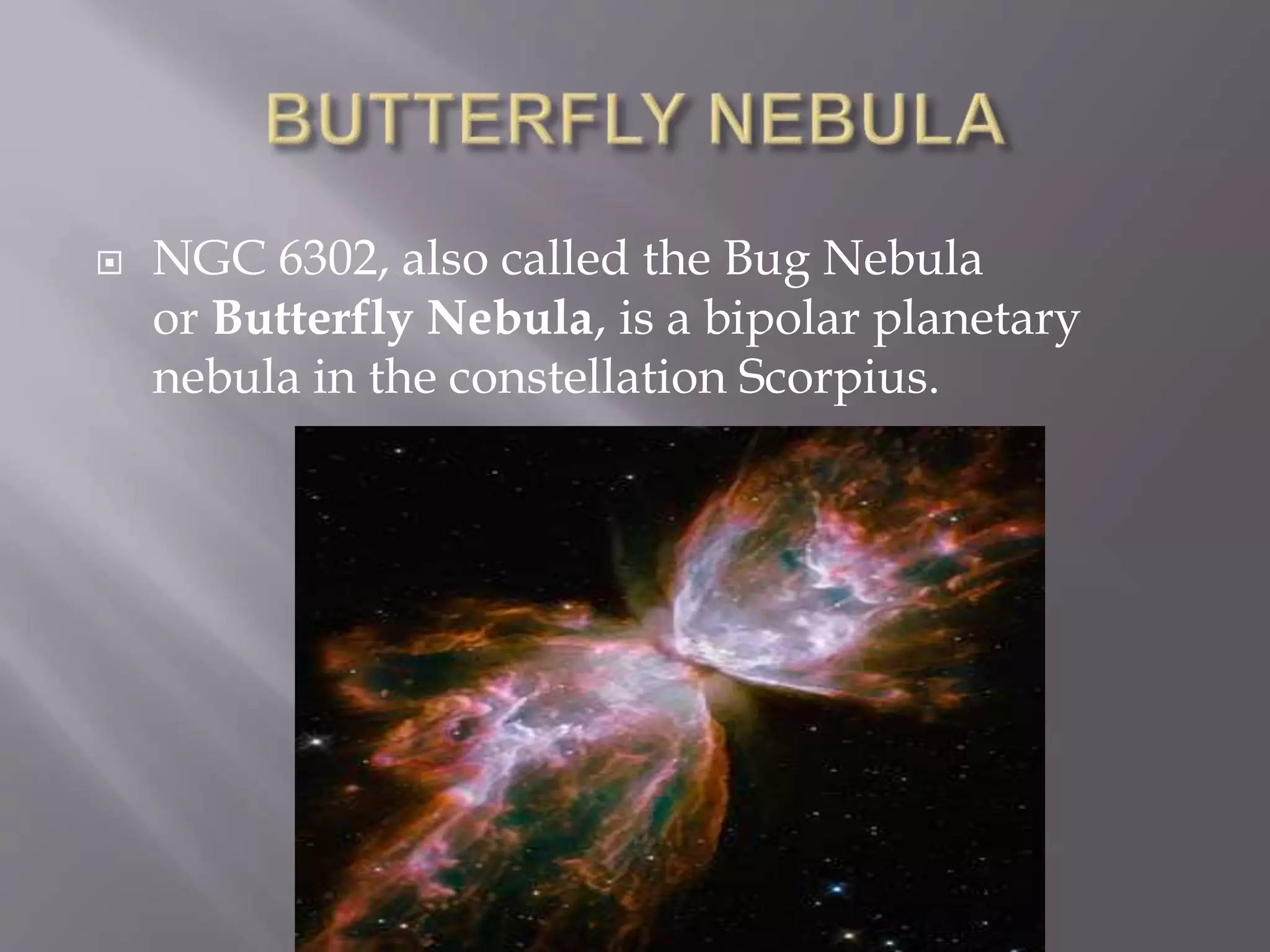
 NGC 6302, also called the Bug Nebula
or Butterfly Nebula, is a bipolar planetary
nebula in the constellation Scorpius.
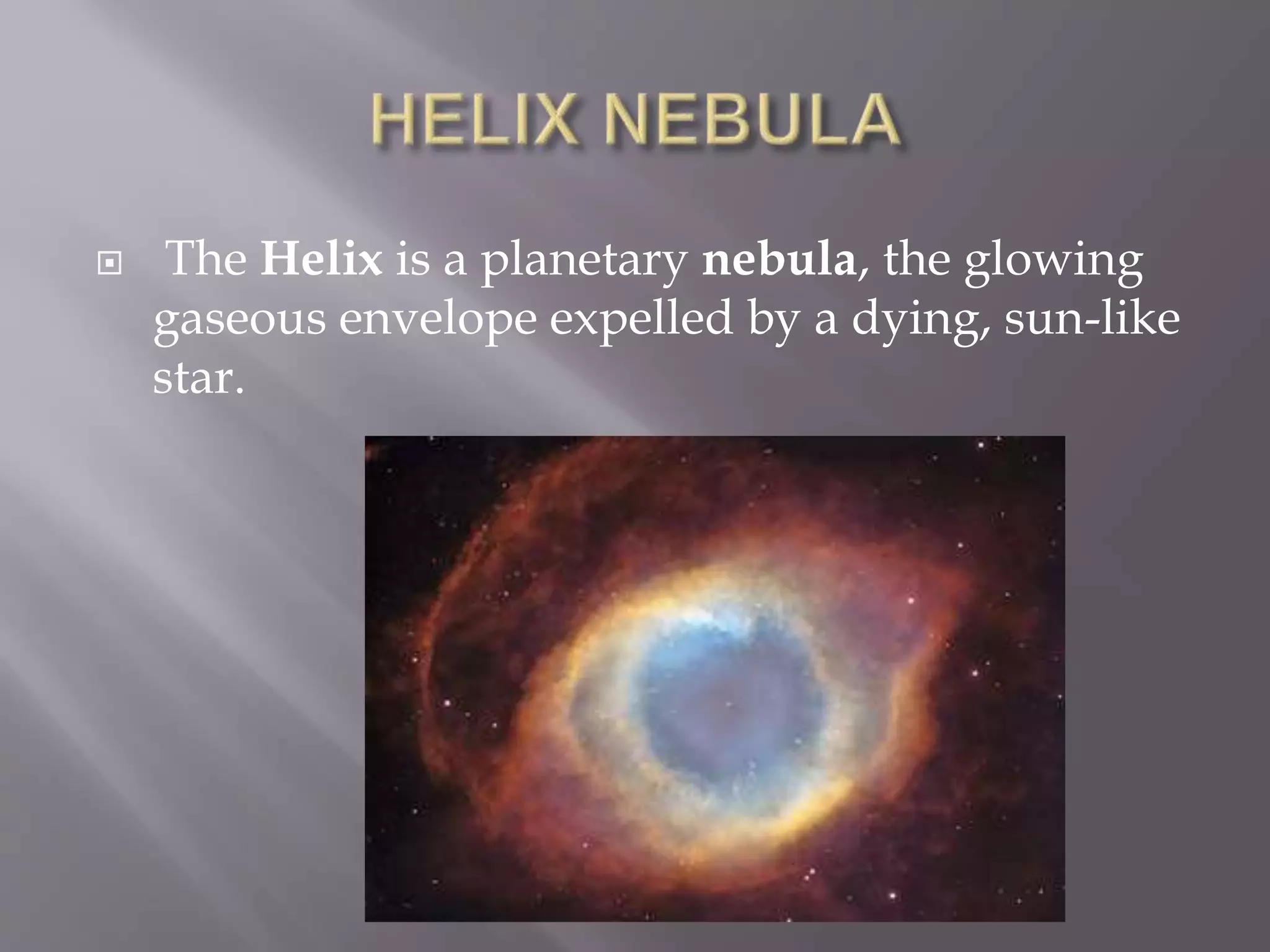
 The Helix is a planetary nebula, the glowing
gaseous envelope expelled by a dying, sun-like
star.
 The Cat's Eye Nebula or NGC 6543, is a
planetary nebula in the northern constellation
of Draco, discovered by William Herschel on
February 15, 1786.
Our solar system & nebula

Our solar system & nebula

  • 1.
  • 4.
     Also knownas terrestrial planets , telluric planets and rocky planets.  These planets are made from rocks.  This includes Mercury, Venus, Earth, Mars.
  • 5.
     Mercury isthe smallest and innermost planet in the Solar System.  Its orbit around the Sun takes 87.97 days, the shortest of all the planets in the Solar System.
  • 6.
     Venus isthe second planet from the Sun.  It is named after the Roman goddess of love and beauty.  As the second-brightest natural object in the night sky after the Moon.
  • 7.
     Earth isthe third planet from the Sun and is the largest of the terrestrial planets.  The Earth is the only planet in our solar system not to be named after a Greek god.
  • 8.
     Mars isthe fourth planet from the Sun and the second-smallest planet in the Solar System after Mercury.
  • 9.
     These planetsare mostly made up of gas.  They are divided into two categories;  Gas giants.  Ice giants.  This includes Jupiter , Saturn , Uranus , Neptune.
  • 10.
     Jupiter isthe largest planet in the solar system. Fittingly, it was named after the king of the gods in Roman mythology.
  • 11.
     Saturn isthe sixth planet from the sun and the second-largest planet in the solar system.
  • 12.
     Uranus isthe seventh planet from the Sun. It has the third-largest planetary radius and fourth-largest planetary mass in the Solar system.
  • 13.
     Neptune isthe fourth largest and the farthest planet of the Solar System with the most powerful wind speeds out of all the planets.
  • 14.
     Nebulas aremade by dust particles of a dead star.  The dust particles colide with each other to form new stars.  Eg . Butterfly nebula, helix nebula,cats eye nebula.
  • 15.
     NGC 6302,also called the Bug Nebula or Butterfly Nebula, is a bipolar planetary nebula in the constellation Scorpius.
  • 16.
     The Helixis a planetary nebula, the glowing gaseous envelope expelled by a dying, sun-like star.
  • 17.
     The Cat'sEye Nebula or NGC 6543, is a planetary nebula in the northern constellation of Draco, discovered by William Herschel on February 15, 1786.