Solar system
Monika Kutelytė, 8a
Content
 Mercury
 Venus
 Earth
 Mars
 Jupiter
 Saturn
 Saturn
 Uranus
 Neptune
 Pluto
 Summary
Mercury
 Mercury is the
smallest and
closest to the Sun
of the eight planets
in the Solar System
 Mercury orbital
period of about 88
Earth days.
Venus
 Venus is the
second planet from
the Sun, orbiting it
every 224,7 Earth
days.
 Venus is a
terrestrial planet
and is sometimes
called Earth‘s
„sister planet“.
Earth
 Earth is the third
planet from the Sun
and the only
astronomical object
known to
accommodate life.
 Earth had water.
Mars
 Mars is the fourth
planet from the
Sun and the
second smallest
planet in the Solar
Systm, after
Mercury.
 Mars is often
described as the
„Red Planet“.
Jupiter
 Jupiter is the fifth
planet from the
Sun and the largest
planet in the Solar
System.
 Jupiter is a gas
giant, along with
Saturn.
Saturn
 Saturn is the
Saturn is the sixth
planet from the
Sun and the
second largest
planet in the Solar
System, after
Jupiter.
 Saturn has a
prominent ring
system.
Uranus
 Uranus is the
seventh planet
from the Sun.
 Uranus is similar in
composition to
Neptune.
Neptune
 Neptune is the
eighth and farthest
planet from the
Sun in the Solar
System.
 It is the fourth-
largest planet by
diameter and the
third-largest by
mass.
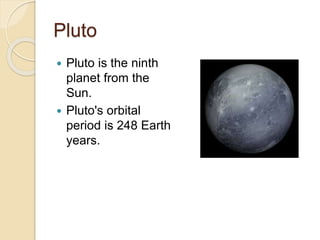
Pluto
 Pluto is the ninth
planet from the
Sun.
 Pluto's orbital
period is 248 Earth
years.
Summary
 The Solar System
formed 4.6 billion
years ago.
 In the Solar system
are nine planets.

Solar system

  • 1.
  • 2.
    Content  Mercury  Venus Earth  Mars  Jupiter  Saturn  Saturn  Uranus  Neptune  Pluto  Summary
  • 3.
    Mercury  Mercury isthe smallest and closest to the Sun of the eight planets in the Solar System  Mercury orbital period of about 88 Earth days.
  • 4.
    Venus  Venus isthe second planet from the Sun, orbiting it every 224,7 Earth days.  Venus is a terrestrial planet and is sometimes called Earth‘s „sister planet“.
  • 5.
    Earth  Earth isthe third planet from the Sun and the only astronomical object known to accommodate life.  Earth had water.
  • 6.
    Mars  Mars isthe fourth planet from the Sun and the second smallest planet in the Solar Systm, after Mercury.  Mars is often described as the „Red Planet“.
  • 7.
    Jupiter  Jupiter isthe fifth planet from the Sun and the largest planet in the Solar System.  Jupiter is a gas giant, along with Saturn.
  • 8.
    Saturn  Saturn isthe Saturn is the sixth planet from the Sun and the second largest planet in the Solar System, after Jupiter.  Saturn has a prominent ring system.
  • 9.
    Uranus  Uranus isthe seventh planet from the Sun.  Uranus is similar in composition to Neptune.
  • 10.
    Neptune  Neptune isthe eighth and farthest planet from the Sun in the Solar System.  It is the fourth- largest planet by diameter and the third-largest by mass.
  • 11.
    Pluto  Pluto isthe ninth planet from the Sun.  Pluto's orbital period is 248 Earth years.
  • 12.
    Summary  The SolarSystem formed 4.6 billion years ago.  In the Solar system are nine planets.