 Protecting our internal organs
 Manufacturing blood cells
 Supporting and giving shape to the body
 Facilitating movement with the help of
muscles
 Storing minerals such as calcium
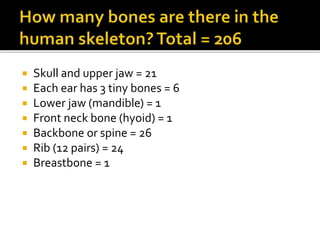
 Skull and upper jaw = 21
 Each ear has 3 tiny bones = 6
 Lower jaw (mandible) = 1
 Front neck bone (hyoid) = 1
 Backbone or spine = 26
 Rib (12 pairs) = 24
 Breastbone = 1
 Each upper limb has 32 bones: 2 in shoulder, 2
in arm, 8 in wrist, 19 in hand and fingers = 64
 Each lower limb has 31 bones: 1 in hip, 4 in
leg, 7 in ankle, 19 in foot and toes = 62
1. Long bones
2. Short bones
3. Flat bones
4. Irregular- shaped bones
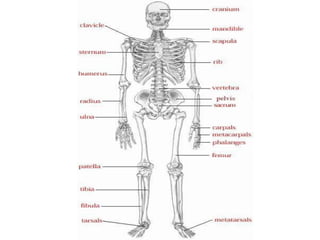
 Clavicle
 Radius
 Metacarpals
 Femur
 Fibula
 Humerus
 Ulna
 Phalanges
 Tibia
 Metatarsals
 Tarsals
 Carpals
 Petellas
 Cranium (Skull)
 Sternum
 Ribs
 Pelvis
 Scapula
 All bones in the spinal column.
1. Bones become stronger in order to deal with
the stress that exercise places on them.
2. The cartilage at the end of bones becomes
thicker and better at shock absorption.
3. Tendons become thicker and more capable
of withstanding greater force.
4. Ligaments will stretch slightly to enable
greater flexibility at the joint.
Please do EnjoyYour Day!!

The skeletal system

  • 3.
     Protecting ourinternal organs  Manufacturing blood cells  Supporting and giving shape to the body  Facilitating movement with the help of muscles  Storing minerals such as calcium
  • 4.
     Skull andupper jaw = 21  Each ear has 3 tiny bones = 6  Lower jaw (mandible) = 1  Front neck bone (hyoid) = 1  Backbone or spine = 26  Rib (12 pairs) = 24  Breastbone = 1
  • 5.
     Each upperlimb has 32 bones: 2 in shoulder, 2 in arm, 8 in wrist, 19 in hand and fingers = 64  Each lower limb has 31 bones: 1 in hip, 4 in leg, 7 in ankle, 19 in foot and toes = 62
  • 6.
    1. Long bones 2.Short bones 3. Flat bones 4. Irregular- shaped bones
  • 7.
     Clavicle  Radius Metacarpals  Femur  Fibula  Humerus  Ulna  Phalanges  Tibia  Metatarsals
  • 8.
  • 9.
     Cranium (Skull) Sternum  Ribs  Pelvis  Scapula
  • 10.
     All bonesin the spinal column.
  • 12.
    1. Bones becomestronger in order to deal with the stress that exercise places on them. 2. The cartilage at the end of bones becomes thicker and better at shock absorption. 3. Tendons become thicker and more capable of withstanding greater force. 4. Ligaments will stretch slightly to enable greater flexibility at the joint.
  • 13.