By Raff & Shannon The Skeletal System
Contents Introduction The skull Information page Arms & legs  Spine Ribcage Hands and feet What are the bones made of?  What are the possible diseases? What other system’s is it related to? What are the main parts of the skeletal system? What’s the strongest bone? What are the most sensitive bones? Did you know Joints Fractures THE END!
Introduction The skeleton is a rigid structure of bones which provides an anchor for the muscles and skin and protects vital organs. Imagine yourself as a piece of blob - you would have to have a box to keep your head up, but thanks to the skeletal system you wouldn’t be a blob you would be a building held up by walls. Listen carefully because there will be a quiz at the end.
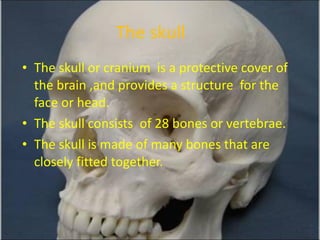
The skull  The skull or cranium  is a protective cover of the brain ,and provides a structure  for the face or head.  The skull consists  of 28 bones or vertebrae. The skull is made of many bones that are closely fitted together.
Information page The human body has 206 bones as a adult, when you are born you have 300 bones.  Bones are connected to each other by ligaments. Organs are protected by the skeleton. The brain is protected by the skull and the heart, liver and lungs are protected by the rib and sternum. The skeleton serves many functions; provides the shape of the body as well as supporting, protecting and allowing movement, producing blood, and storing minerals.
The arms consists  of 3 main bones and 15 other little ones. The humerus bone (above elbow to shoulder) The ulna bone (below elbow to hand) The radius bone (below elbow to hand) arms
hands: There are 27 bones and 5 fingers in each hand. Fingers are also called digits. The hand is very flexible with lots of joints. The thumb is the most flexible thanks to the saddle joint.  hands
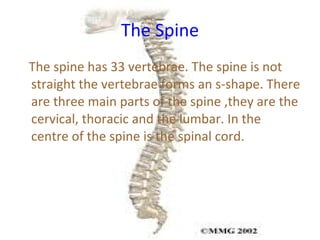
The Spine The spine has 33 vertebrae. The spine is not straight the vertebrae forms an s-shape. There are three main parts of the spine ,they are the cervical, thoracic and the lumbar. In the centre of the spine is the spinal cord.
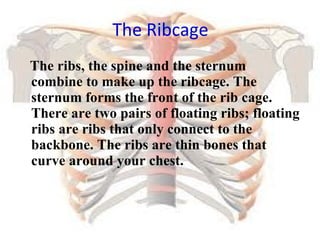
The Ribcage The ribs, the spine and the sternum combine to make up the ribcage. The sternum forms the front of the rib cage. There are two pairs of floating ribs; floating ribs are ribs that only connect to the backbone. The ribs are thin bones that curve around your chest.
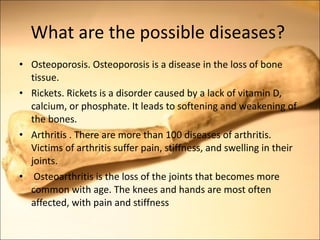
What are the possible diseases? Osteoporosis. Osteoporosis is a disease in the loss of bone tissue. Rickets. Rickets is a disorder caused by a lack of vitamin D, calcium, or phosphate. It leads to softening and weakening of the bones. Arthritis . There are more than 100 diseases of arthritis. Victims of arthritis suffer pain, stiffness, and swelling in their joints. Osteoarthritis is the loss of the joints that becomes more common with age. The knees and hands are most often affected, with pain and stiffness
What are bones made of? Bones are made of calcium, mineral salt, cells and living parts of your body. They also contain stringlike material called collagen. Bones have a red and yellow tube called the marrow. The marrow is a tube that makes red blood cells to replace the destroyed and worn out ones. The marrow also stores fat and sugar. An average of 2.6 million red blood cells are made every second by the marrow. The outer layer is called hard bone, the spongy bone is a honeycomb of bone cells with spaces between them.
Legs  The human leg consists of 8 bones, 4 per leg. The leg’s main function in the human is for support of the rest of the body. The leg extends from just below the pelvic girdle to the ankle. The femur bone The tibia bone The fibula bone The patella bone
Does the skeleton system work with other systems? The skeleton gives the shape and goodness of the body. With no skeleton, the body and its muscles would be a tissue on the floor. Muscles attach to some bones which allows you to move your arms, legs, etc. With no skeleton, muscle could not act. The skeleton also allows tunnels for the circulatory vessels and nerves to move.
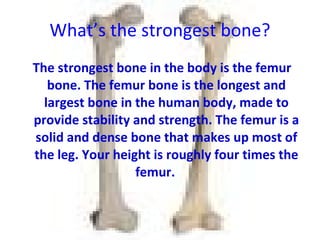
What’s the strongest bone? The strongest bone in the body is the femur bone. The femur bone is the longest and largest bone in the human body, made to provide stability and strength. The femur is a solid and dense bone that makes up most of the leg. Your height is roughly four times the femur.
Most sensitive bones?   The most sensitive bones in the human body are the: hips shoulders spine thighs sternum and skull.
Did you know?  That giraffes and humans have the same amount of bones in their necks? Giraffes just have much longer ones! Did you know? That the funny bone isn’t actually a bone? It’s a nerve, located in the elbow, close to the humerus bone and that’s how it got it’s name.
Joints  We can bend, swivel, stretch, pivot, and point. Our bodies can perform more than one kind of motion because we have joints.  You have over 230 moveable and semi-moveable joints in your body.  Hinge  ball and socket  gliding joint.  Plan joint  Saddle joint Candyloid joint
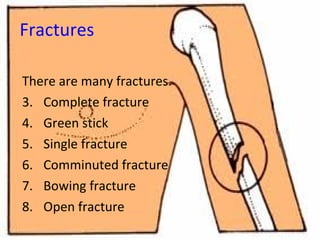
Fractures  There are many fractures. Complete fracture Green stick Single fracture Comminuted fracture  Bowing fracture Open fracture
The end Now for the quiz

Ppt0000003

  • 1.
    By Raff &Shannon The Skeletal System
  • 2.
    Contents Introduction Theskull Information page Arms & legs Spine Ribcage Hands and feet What are the bones made of? What are the possible diseases? What other system’s is it related to? What are the main parts of the skeletal system? What’s the strongest bone? What are the most sensitive bones? Did you know Joints Fractures THE END!
  • 3.
    Introduction The skeletonis a rigid structure of bones which provides an anchor for the muscles and skin and protects vital organs. Imagine yourself as a piece of blob - you would have to have a box to keep your head up, but thanks to the skeletal system you wouldn’t be a blob you would be a building held up by walls. Listen carefully because there will be a quiz at the end.
  • 4.
    The skull The skull or cranium is a protective cover of the brain ,and provides a structure for the face or head. The skull consists of 28 bones or vertebrae. The skull is made of many bones that are closely fitted together.
  • 5.
    Information page Thehuman body has 206 bones as a adult, when you are born you have 300 bones. Bones are connected to each other by ligaments. Organs are protected by the skeleton. The brain is protected by the skull and the heart, liver and lungs are protected by the rib and sternum. The skeleton serves many functions; provides the shape of the body as well as supporting, protecting and allowing movement, producing blood, and storing minerals.
  • 6.
    The arms consists of 3 main bones and 15 other little ones. The humerus bone (above elbow to shoulder) The ulna bone (below elbow to hand) The radius bone (below elbow to hand) arms
  • 7.
    hands: There are27 bones and 5 fingers in each hand. Fingers are also called digits. The hand is very flexible with lots of joints. The thumb is the most flexible thanks to the saddle joint. hands
  • 8.
    The Spine Thespine has 33 vertebrae. The spine is not straight the vertebrae forms an s-shape. There are three main parts of the spine ,they are the cervical, thoracic and the lumbar. In the centre of the spine is the spinal cord.
  • 9.
    The Ribcage Theribs, the spine and the sternum combine to make up the ribcage. The sternum forms the front of the rib cage. There are two pairs of floating ribs; floating ribs are ribs that only connect to the backbone. The ribs are thin bones that curve around your chest.
  • 10.
    What are thepossible diseases? Osteoporosis. Osteoporosis is a disease in the loss of bone tissue. Rickets. Rickets is a disorder caused by a lack of vitamin D, calcium, or phosphate. It leads to softening and weakening of the bones. Arthritis . There are more than 100 diseases of arthritis. Victims of arthritis suffer pain, stiffness, and swelling in their joints. Osteoarthritis is the loss of the joints that becomes more common with age. The knees and hands are most often affected, with pain and stiffness
  • 11.
    What are bonesmade of? Bones are made of calcium, mineral salt, cells and living parts of your body. They also contain stringlike material called collagen. Bones have a red and yellow tube called the marrow. The marrow is a tube that makes red blood cells to replace the destroyed and worn out ones. The marrow also stores fat and sugar. An average of 2.6 million red blood cells are made every second by the marrow. The outer layer is called hard bone, the spongy bone is a honeycomb of bone cells with spaces between them.
  • 12.
    Legs Thehuman leg consists of 8 bones, 4 per leg. The leg’s main function in the human is for support of the rest of the body. The leg extends from just below the pelvic girdle to the ankle. The femur bone The tibia bone The fibula bone The patella bone
  • 13.
    Does the skeletonsystem work with other systems? The skeleton gives the shape and goodness of the body. With no skeleton, the body and its muscles would be a tissue on the floor. Muscles attach to some bones which allows you to move your arms, legs, etc. With no skeleton, muscle could not act. The skeleton also allows tunnels for the circulatory vessels and nerves to move.
  • 14.
    What’s the strongestbone? The strongest bone in the body is the femur bone. The femur bone is the longest and largest bone in the human body, made to provide stability and strength. The femur is a solid and dense bone that makes up most of the leg. Your height is roughly four times the femur.
  • 15.
    Most sensitive bones?  The most sensitive bones in the human body are the: hips shoulders spine thighs sternum and skull.
  • 16.
    Did you know? That giraffes and humans have the same amount of bones in their necks? Giraffes just have much longer ones! Did you know? That the funny bone isn’t actually a bone? It’s a nerve, located in the elbow, close to the humerus bone and that’s how it got it’s name.
  • 17.
    Joints Wecan bend, swivel, stretch, pivot, and point. Our bodies can perform more than one kind of motion because we have joints. You have over 230 moveable and semi-moveable joints in your body. Hinge ball and socket gliding joint. Plan joint Saddle joint Candyloid joint
  • 18.
    Fractures Thereare many fractures. Complete fracture Green stick Single fracture Comminuted fracture Bowing fracture Open fracture
  • 19.
    The end Nowfor the quiz