The Size of Business and Economies of
Scale
-Miss.Kinnari Kotecha
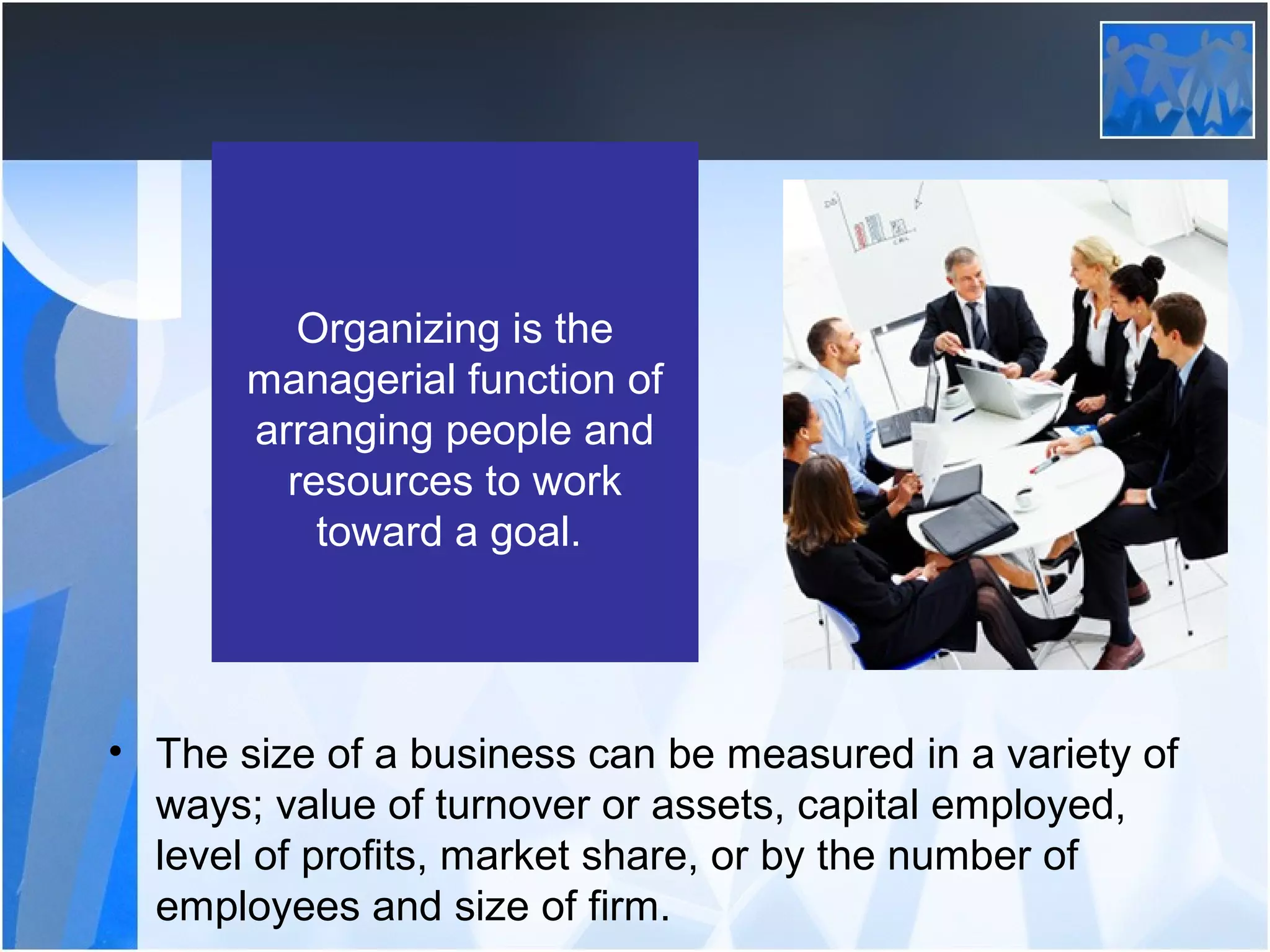
Organizing is the
managerial function of
arranging people and
resources to work
toward a goal.
• The size of a business can be measured in a variety of
ways; value of turnover or assets, capital employed,
level of profits, market share, or by the number of
employees and size of firm.
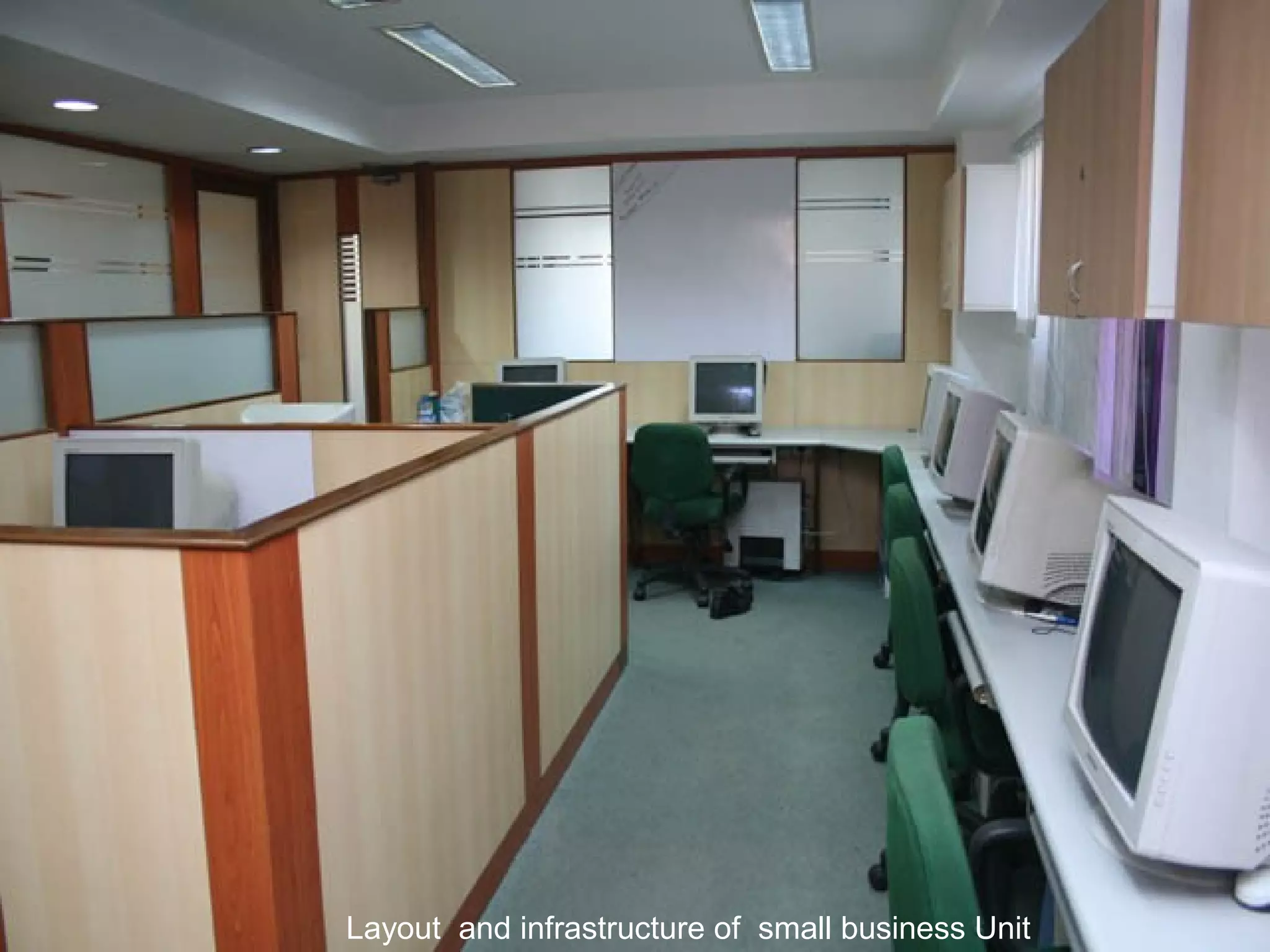
Layout and infrastructure of small business Unit
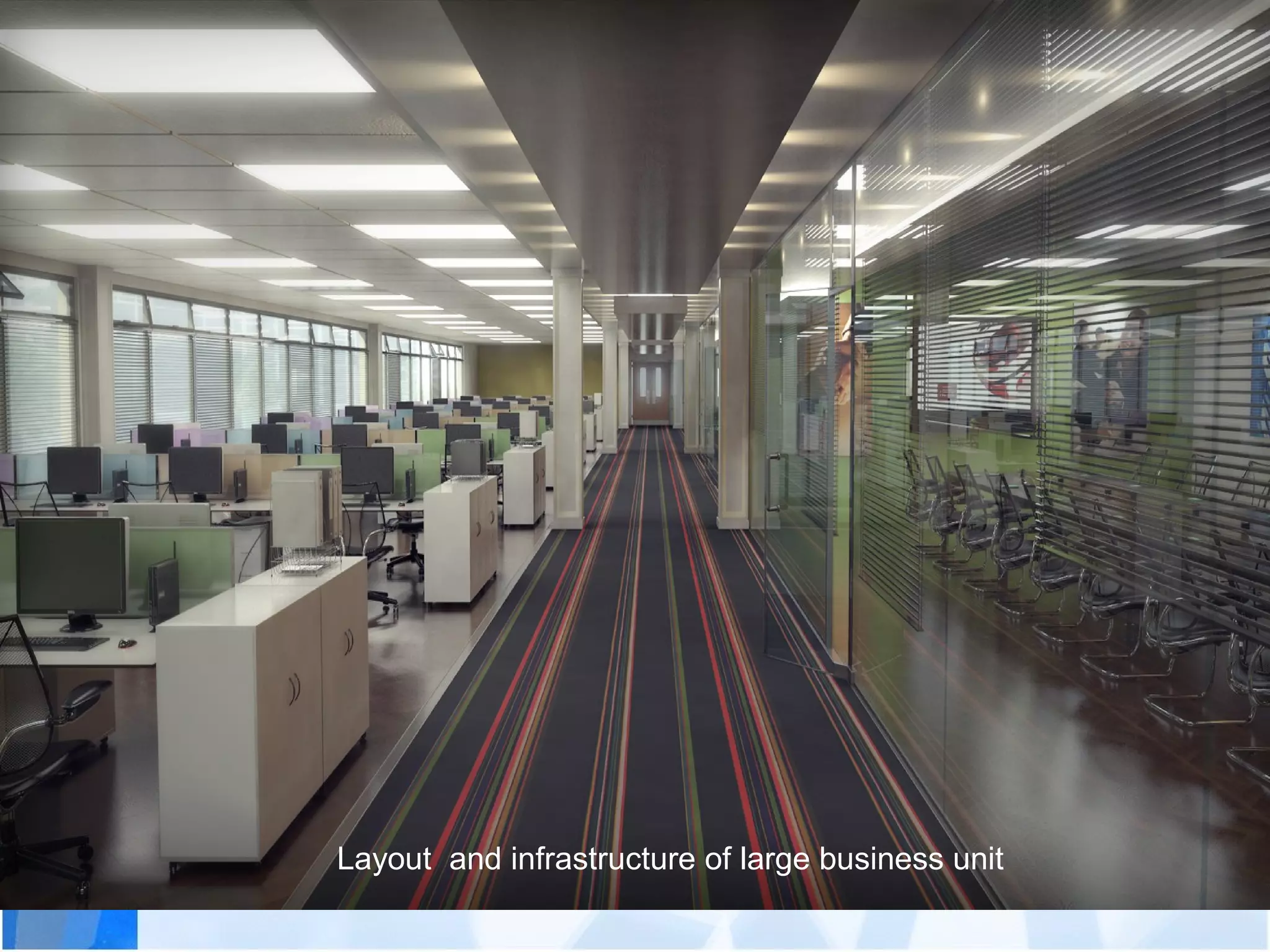
Layout and infrastructure of large business unit
WHY DO FIRMS WANT TO GROW?
• There may be several reasons why firms may wish to
grow. To aid analysis it is worth considering three
general reasons:
• To achieve greater market share or prestige.
• To achieve greater security from diversification and/or
product differentiation.
• To achieve cost reductions by taking advantage of
economies of scale.
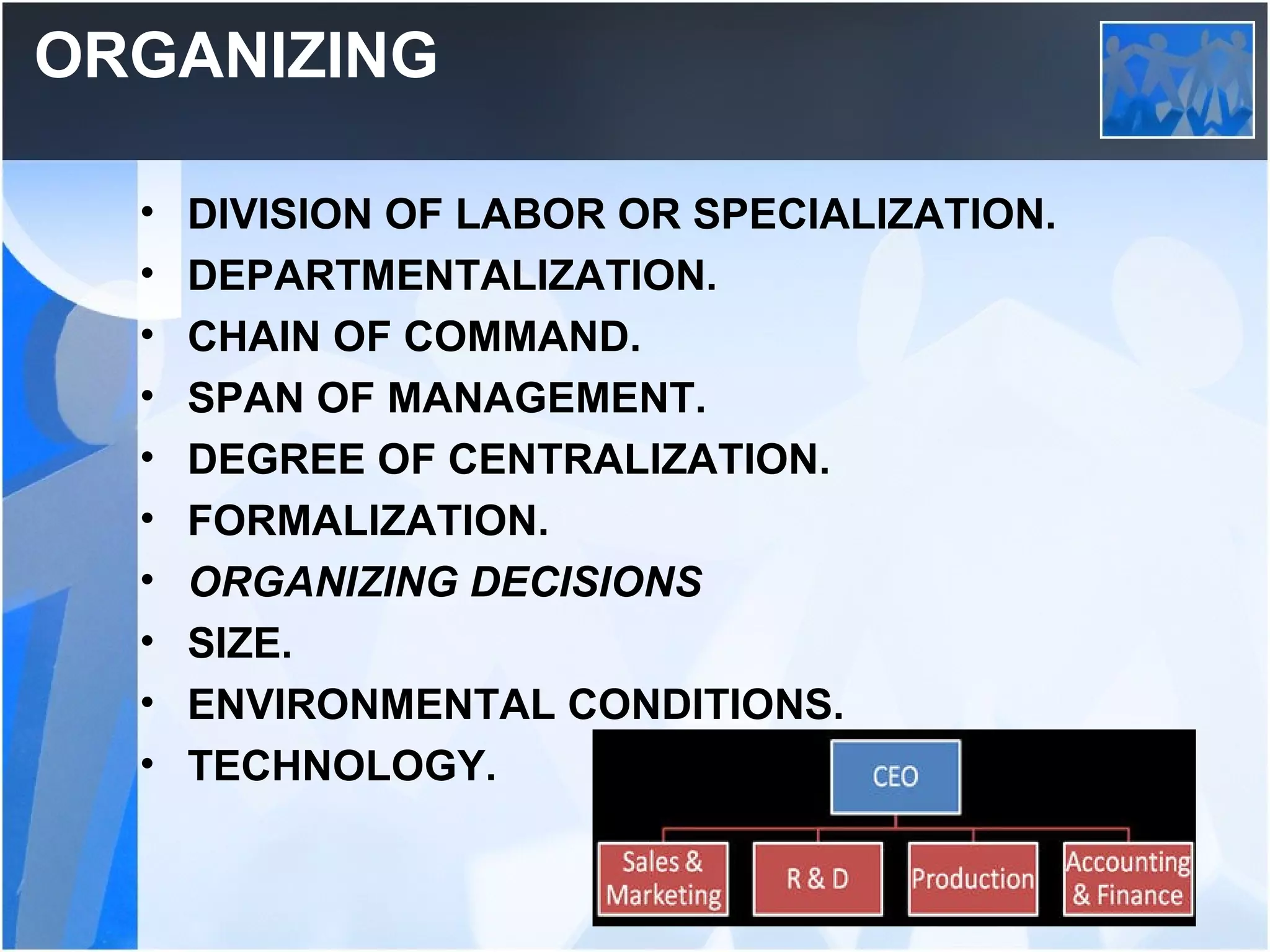
ORGANIZING
• DIVISION OF LABOR OR SPECIALIZATION.
• DEPARTMENTALIZATION.
• CHAIN OF COMMAND.
• SPAN OF MANAGEMENT.
• DEGREE OF CENTRALIZATION.
• FORMALIZATION.
• ORGANIZING DECISIONS
• SIZE.
• ENVIRONMENTAL CONDITIONS.
• TECHNOLOGY.
HOW CAN FIRMS GROW?
• Through internal expansion e.g. by
reinvesting past profits or savings.
• Through external expansion; e.g. by
integrating or merging with other firms.
INTEGRATION
• There are two general methods of integrating
• Horizontal Integration: This type of merger
takes place between firms in the same
industrial sector (i.e. primary, secondary, or
tertiary) and at the same stage of the
production process.
• For example, the Rowntree-Nestle merger
involved two firms in the secondary sector,
both at the manufacturing stage.
• Example: Glaxo Wellcome Plc. and SmithKline
Beecham Plc. megamerger
The two British pharmaceutical heavyweights Glaxo
Wellcome PLC and SmithKline Beecham PLC early
this year announced plans to merge resulting in the
largest drug manufacturing company globally. The
merger created a company valued at $182.4 billion and
with a 7.3 per cent share of the global pharmaceutical
market. The merged company expected $1.6 billion in
pretax cost savings after three years. The two
companies have complementary drug portfolios, and a
merger would let them pool their research and
development funds and would give the merged
company a bigger sales and marketing force.
Vertical Integration
• This type of merger takes place between
firms either in the same industrial sector
or in different industrial sectors, both of
whom are engaged at producing
products at different stages in the
production process. A business can
integrate vertically through;
• Example: Merger of Usha Martin and Usha
Beltron
Usha Martin and Usha Beltron merged their
businesses to enhance shareholder value,
through business synergies. The merger will
also enable both the companies to pool
resources and streamline business and finance
with operational efficiencies and cost reduction
and also help in development of new products
that require synergies.
• Backward vertical integration. This involves the
merging of a firm with another engaged at an earlier
stage of the production process.
• For example, a clothing manufacturer taking over a
textile firm.
• For example, an automobile company may own a tire
company, a glass company, and a metal company.
Control of these three subsidiaries is intended to create
a stable supply of inputs and ensure a consistent
quality in their final product. It was the main business
approach of Ford and other car companies in the
1920s, who sought to minimize costs by centralizing
the production of cars and car parts.
• Forward vertical integration. This
involves the merging of a firm with
another engage at a later stage of the
production process.
• For example, a manufacturing firm taking
over a retail outlet.
• The Indian petrochemical giant Reliance Industries is a
great example of vertical integration in modern
business. Reliance's backward integration into
polyester fibres from textiles and further into
petrochemicals was started by Dhirubhai Ambani.
Reliance has entered the oil and natural gas sector,
along with retail sector. Reliance now has a complete
vertical product portfolio from oil and gas production,
refining, petrochemicals, synthetic garments and retail
outlets.
• en.wikipedia.org/wiki/Vertical_integr
• www.quickmba.com/strategy/vertical-in...
• www.wikinvest.com/wiki/Vertical_integ
• www.investopedia.com/terms/f/forwardi
• www.allbusiness.com/glossaries/forwar

The size of business and economies of scale igcse

  • 1.
    The Size ofBusiness and Economies of Scale -Miss.Kinnari Kotecha
  • 2.
    Organizing is the managerialfunction of arranging people and resources to work toward a goal. • The size of a business can be measured in a variety of ways; value of turnover or assets, capital employed, level of profits, market share, or by the number of employees and size of firm.
  • 3.
    Layout and infrastructureof small business Unit
  • 4.
    Layout and infrastructureof large business unit
  • 5.
    WHY DO FIRMSWANT TO GROW? • There may be several reasons why firms may wish to grow. To aid analysis it is worth considering three general reasons: • To achieve greater market share or prestige. • To achieve greater security from diversification and/or product differentiation. • To achieve cost reductions by taking advantage of economies of scale.
  • 6.
    ORGANIZING • DIVISION OFLABOR OR SPECIALIZATION. • DEPARTMENTALIZATION. • CHAIN OF COMMAND. • SPAN OF MANAGEMENT. • DEGREE OF CENTRALIZATION. • FORMALIZATION. • ORGANIZING DECISIONS • SIZE. • ENVIRONMENTAL CONDITIONS. • TECHNOLOGY.
  • 8.
    HOW CAN FIRMSGROW? • Through internal expansion e.g. by reinvesting past profits or savings. • Through external expansion; e.g. by integrating or merging with other firms.
  • 9.
    INTEGRATION • There aretwo general methods of integrating • Horizontal Integration: This type of merger takes place between firms in the same industrial sector (i.e. primary, secondary, or tertiary) and at the same stage of the production process. • For example, the Rowntree-Nestle merger involved two firms in the secondary sector, both at the manufacturing stage.
  • 10.
    • Example: GlaxoWellcome Plc. and SmithKline Beecham Plc. megamerger The two British pharmaceutical heavyweights Glaxo Wellcome PLC and SmithKline Beecham PLC early this year announced plans to merge resulting in the largest drug manufacturing company globally. The merger created a company valued at $182.4 billion and with a 7.3 per cent share of the global pharmaceutical market. The merged company expected $1.6 billion in pretax cost savings after three years. The two companies have complementary drug portfolios, and a merger would let them pool their research and development funds and would give the merged company a bigger sales and marketing force.
  • 11.
    Vertical Integration • Thistype of merger takes place between firms either in the same industrial sector or in different industrial sectors, both of whom are engaged at producing products at different stages in the production process. A business can integrate vertically through;
  • 12.
    • Example: Mergerof Usha Martin and Usha Beltron Usha Martin and Usha Beltron merged their businesses to enhance shareholder value, through business synergies. The merger will also enable both the companies to pool resources and streamline business and finance with operational efficiencies and cost reduction and also help in development of new products that require synergies.
  • 13.
    • Backward verticalintegration. This involves the merging of a firm with another engaged at an earlier stage of the production process. • For example, a clothing manufacturer taking over a textile firm. • For example, an automobile company may own a tire company, a glass company, and a metal company. Control of these three subsidiaries is intended to create a stable supply of inputs and ensure a consistent quality in their final product. It was the main business approach of Ford and other car companies in the 1920s, who sought to minimize costs by centralizing the production of cars and car parts.
  • 14.
    • Forward verticalintegration. This involves the merging of a firm with another engage at a later stage of the production process. • For example, a manufacturing firm taking over a retail outlet.
  • 15.
    • The Indianpetrochemical giant Reliance Industries is a great example of vertical integration in modern business. Reliance's backward integration into polyester fibres from textiles and further into petrochemicals was started by Dhirubhai Ambani. Reliance has entered the oil and natural gas sector, along with retail sector. Reliance now has a complete vertical product portfolio from oil and gas production, refining, petrochemicals, synthetic garments and retail outlets.
  • 16.
    • en.wikipedia.org/wiki/Vertical_integr • www.quickmba.com/strategy/vertical-in... •www.wikinvest.com/wiki/Vertical_integ • www.investopedia.com/terms/f/forwardi • www.allbusiness.com/glossaries/forwar