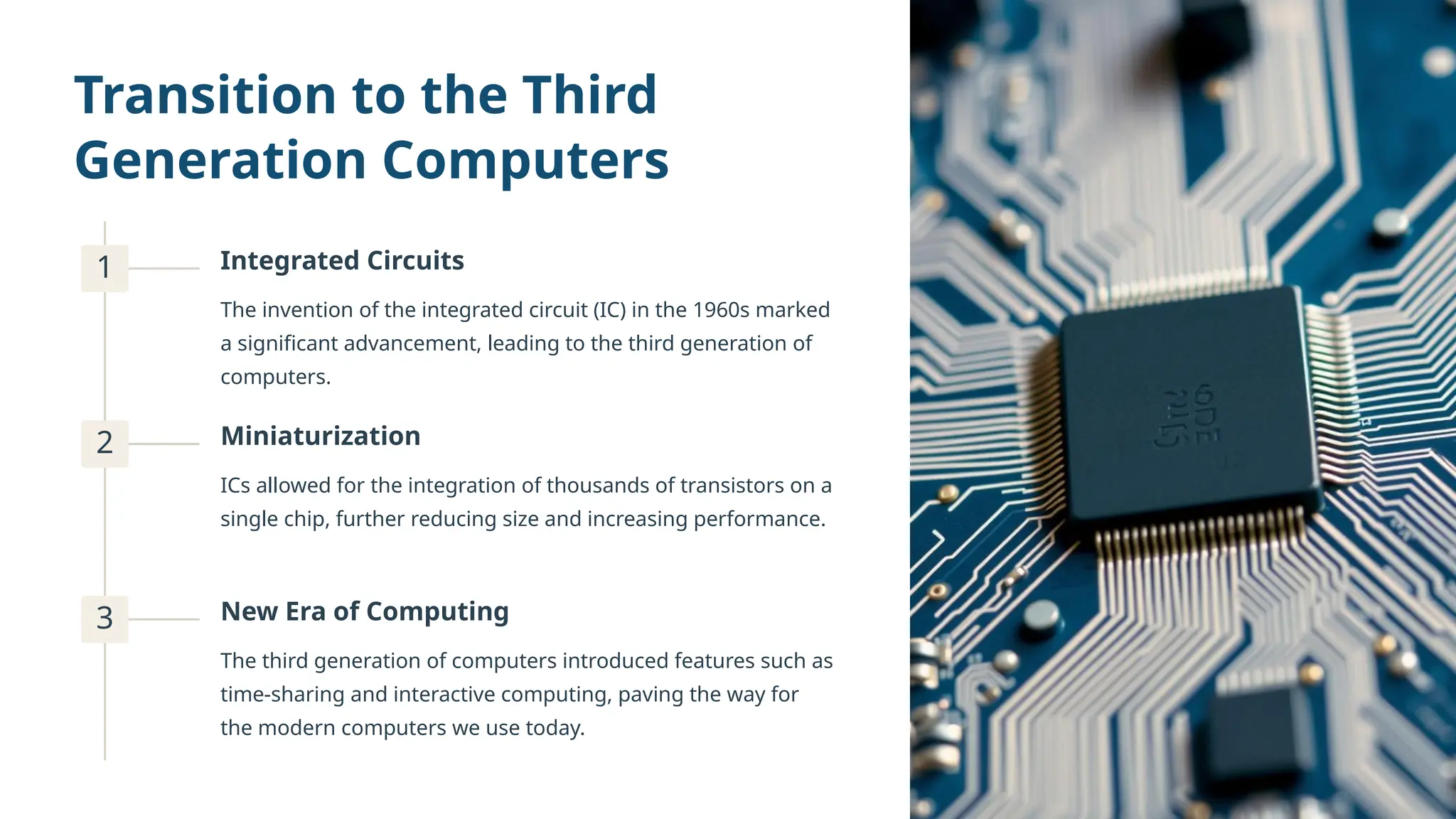
The second generation of computers transitioned from vacuum tubes to transistors, resulting in smaller, more reliable, and efficient machines. Key features included magnetic core memory, batch processing, and the emergence of high-level programming languages like Fortran and COBOL. However, limitations such as limited memory capacity and the need for air conditioning persisted before the eventual shift to integrated circuits in the third generation of computers.