The role of systems analysis in co-learning

                Walter Rossing
 Wageningen Centre for Agro-ecology and Systems
   Analysis (WaCASA), Wageningen University
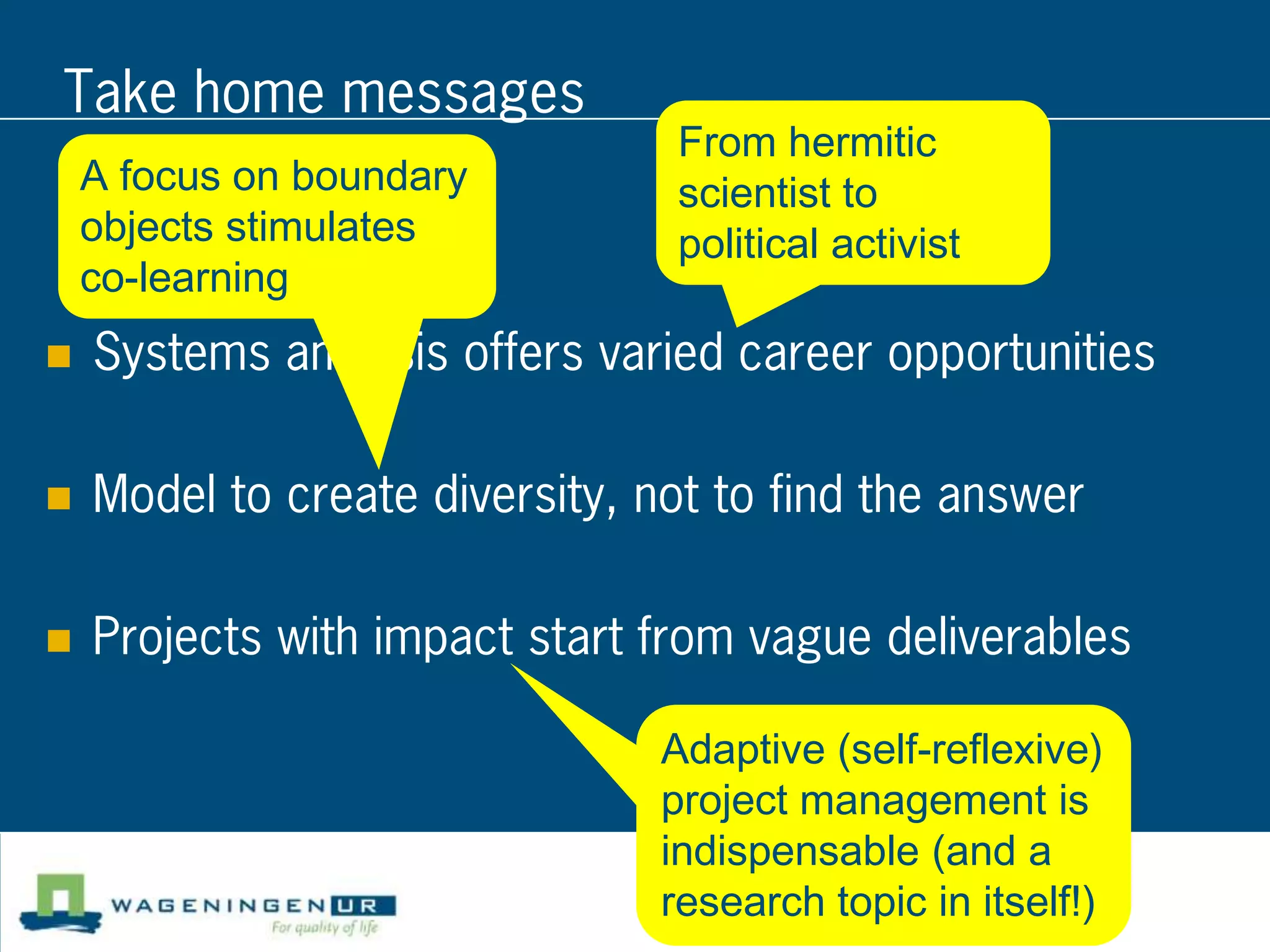
Take home messages


   Systems analysis offers varied career opportunities

   Model to create diversity, not to find the answer

   Projects with impact start from vague deliverables
Outline of presentation


   Learning and systems research cycles
   Different types of problems and systems research
   Co-learning and boundary work
   Knowledge for different uses
   Effective co-learning strategies
   Challenges for systems science
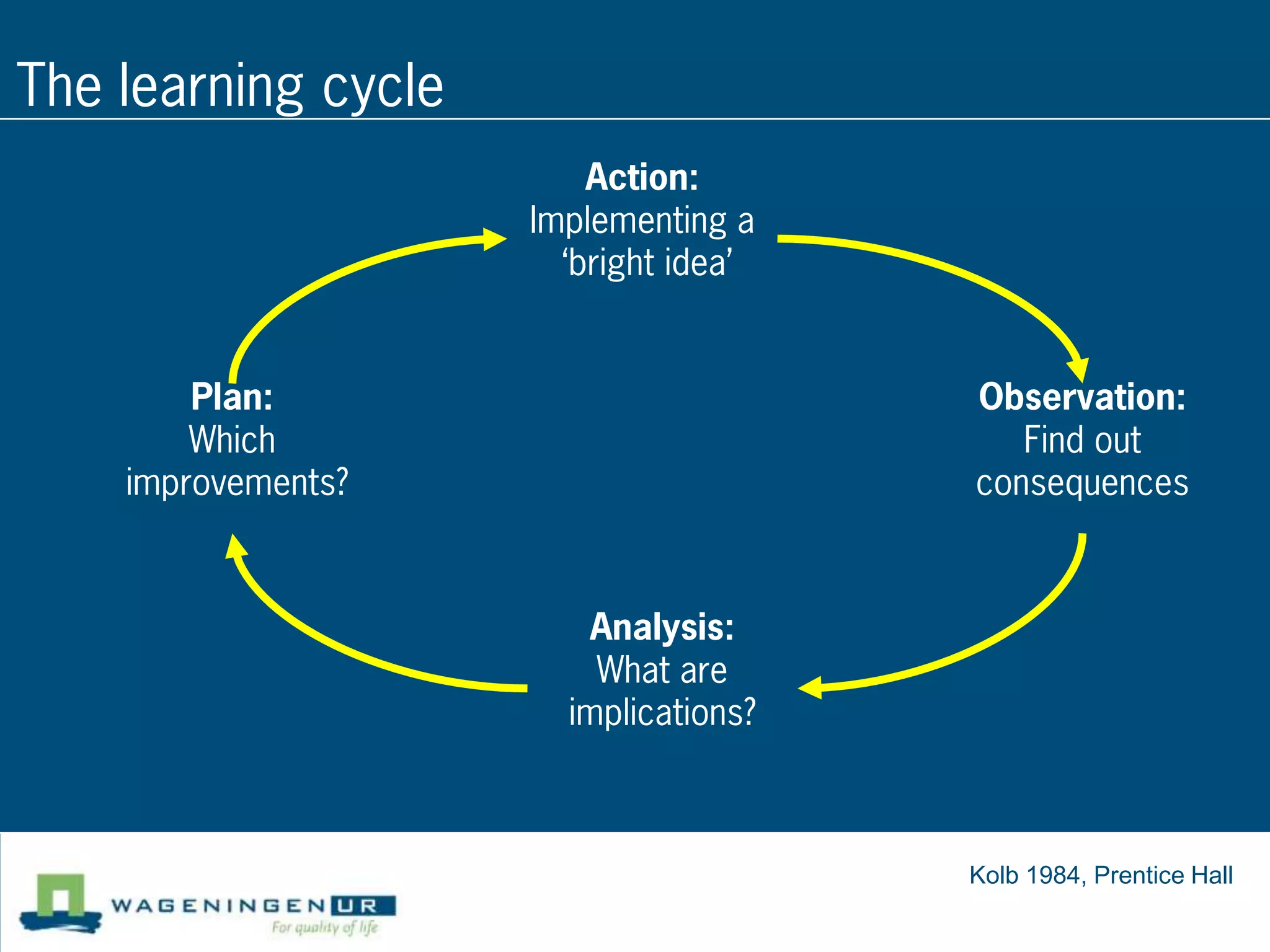
Learning


   Learning is the process whereby knowledge is created
    through the transformation of experience: the learning
    cycle (Kolb 1984, Prentice Hall)
       Abstract versus concrete
       Active versus reflective
The learning cycle
                         Action:
                     Implementing a
                       ‘bright idea’


        Plan:                          Observation:
        Which                             Find out
    improvements?                      consequences


                        Analysis:
                         What are
                       implications?


                                       Kolb 1984, Prentice Hall
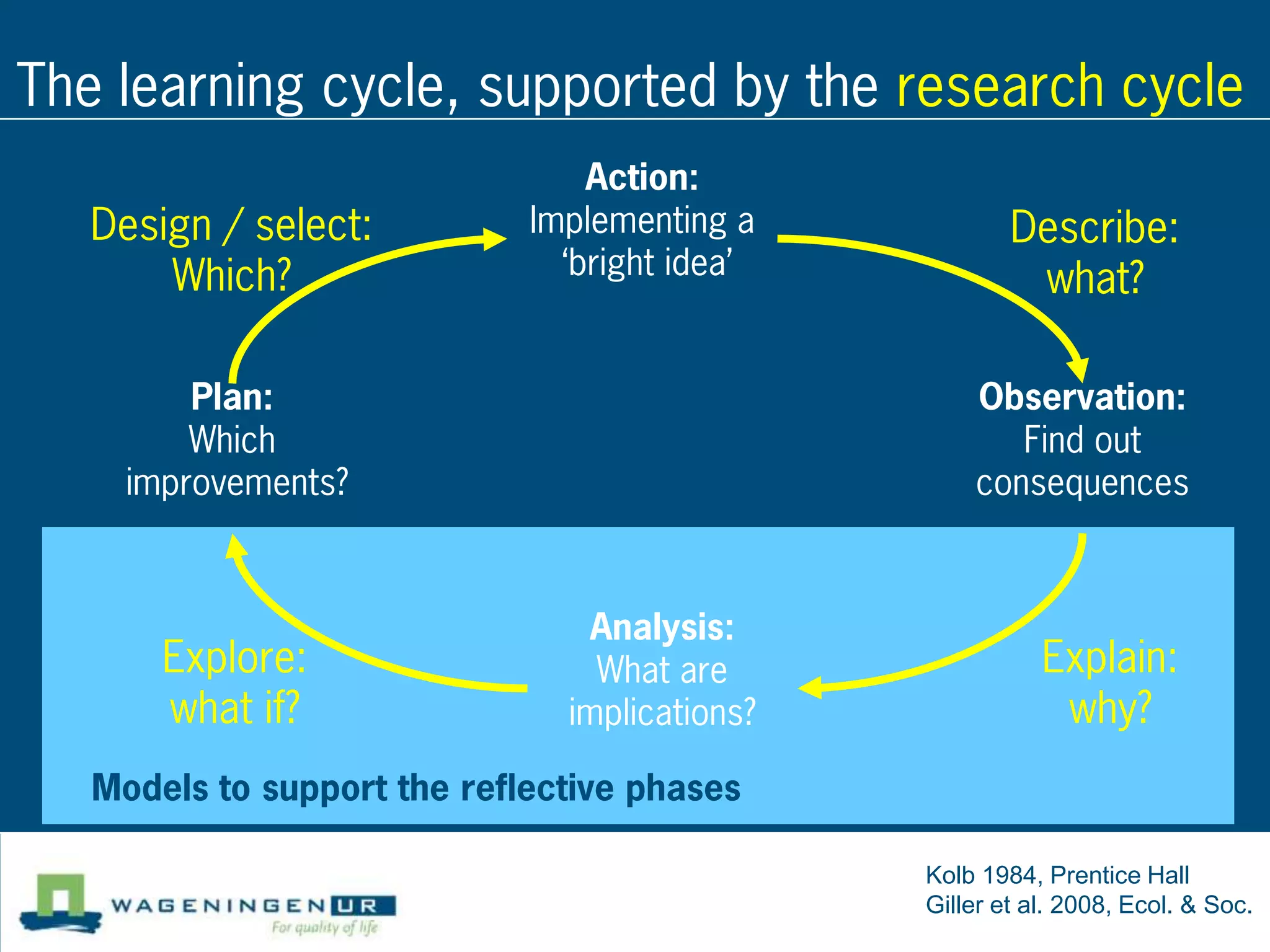
The learning cycle, supported by the research cycle
                                 Action:
   Design / select:          Implementing a            Describe:
       Which?                  ‘bright idea’
                                                        what?

         Plan:                                     Observation:
         Which                                        Find out
     improvements?                                 consequences


                                Analysis:
       Explore:                  What are                 Explain:
       what if?                implications?               why?
   Models to support the reflective phases

                                               Kolb 1984, Prentice Hall
                                               Giller et al. 2008, Ecol. & Soc.
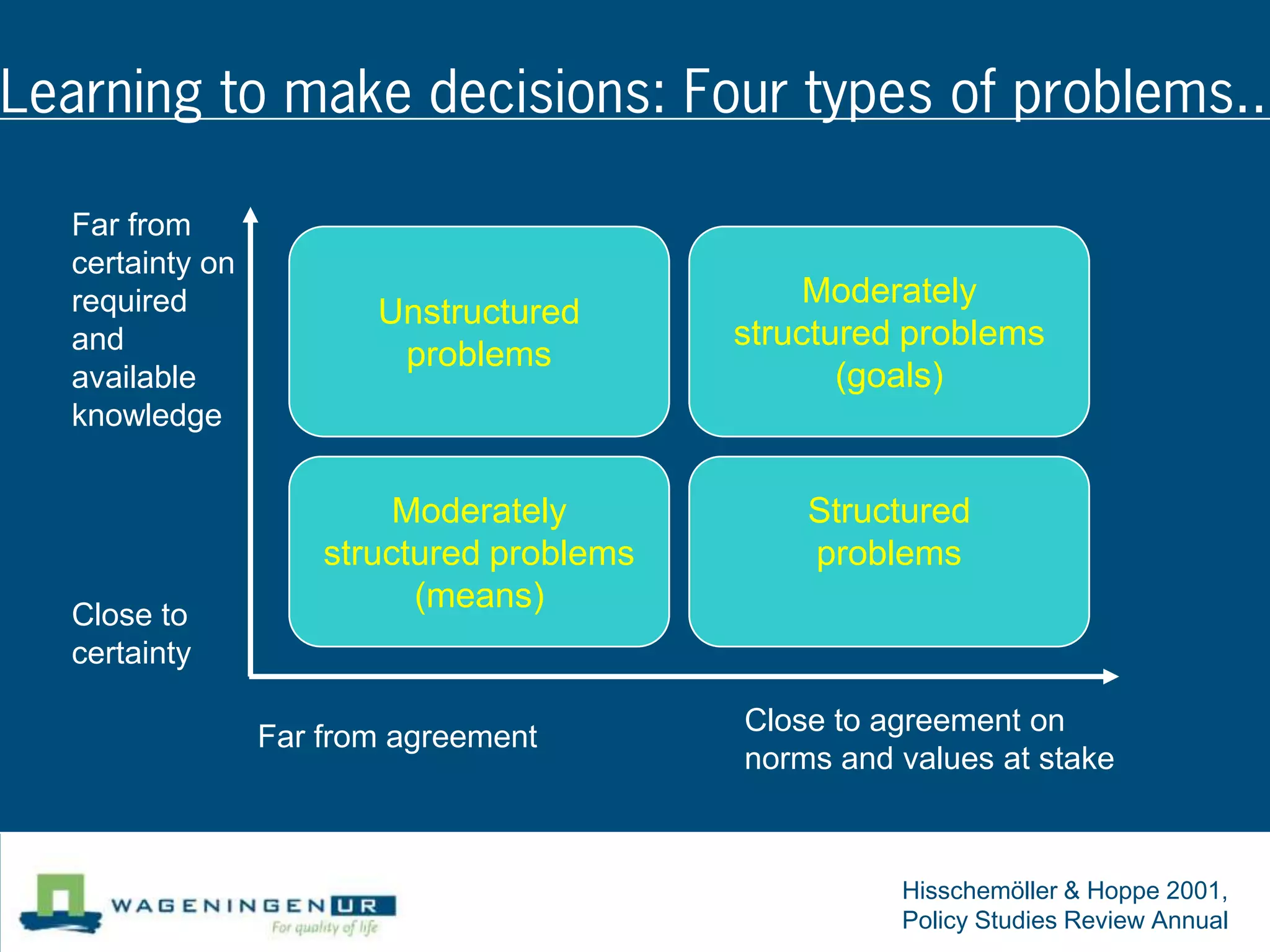
Learning to make decisions: Four types of problems..

  Far from
  certainty on
  required                                      Moderately
                        Unstructured
  and                                      structured problems
                         problems
  available                                       (goals)
  knowledge


                          Moderately           Structured
                     structured problems       problems
                           (means)
  Close to
  certainty

                                           Close to agreement on
                 Far from agreement
                                           norms and values at stake


                                                     Hisschemöller & Hoppe 2001,
                                                     Policy Studies Review Annual
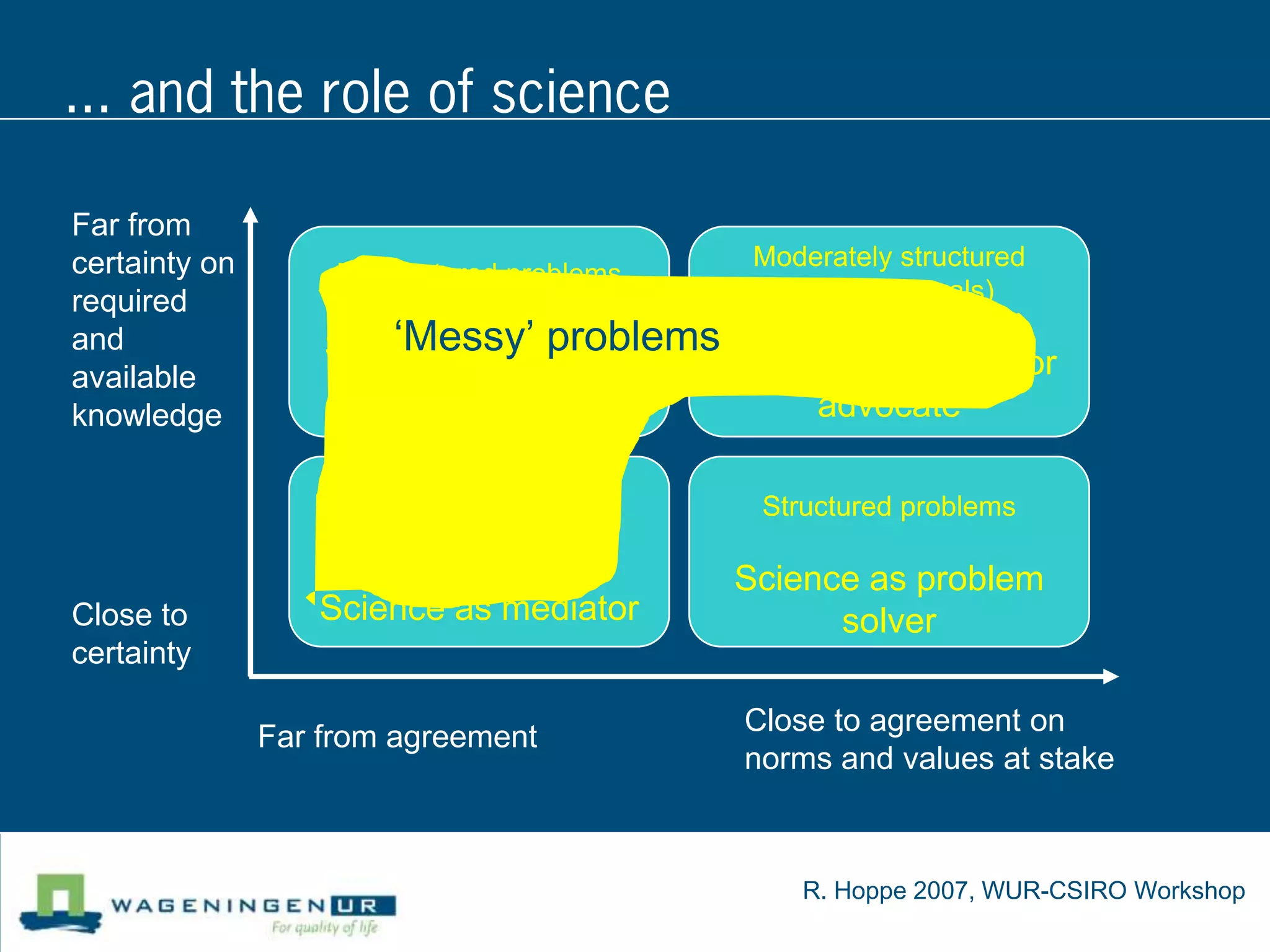
... and the role of science

Far from
certainty on                                 Moderately structured
                    Unstructured problems
required                                       problems (goals)
and                    ‘Messy’ problems
                   Science as problem
available                               Science as analyst or
                       recognizer            advocate
knowledge

                    Moderately structured    Structured problems
                     problems (means)
                                            Science as problem
Close to          Science as mediator             solver
certainty

                                            Close to agreement on
               Far from agreement
                                            norms and values at stake


                                                R. Hoppe 2007, WUR-CSIRO Workshop
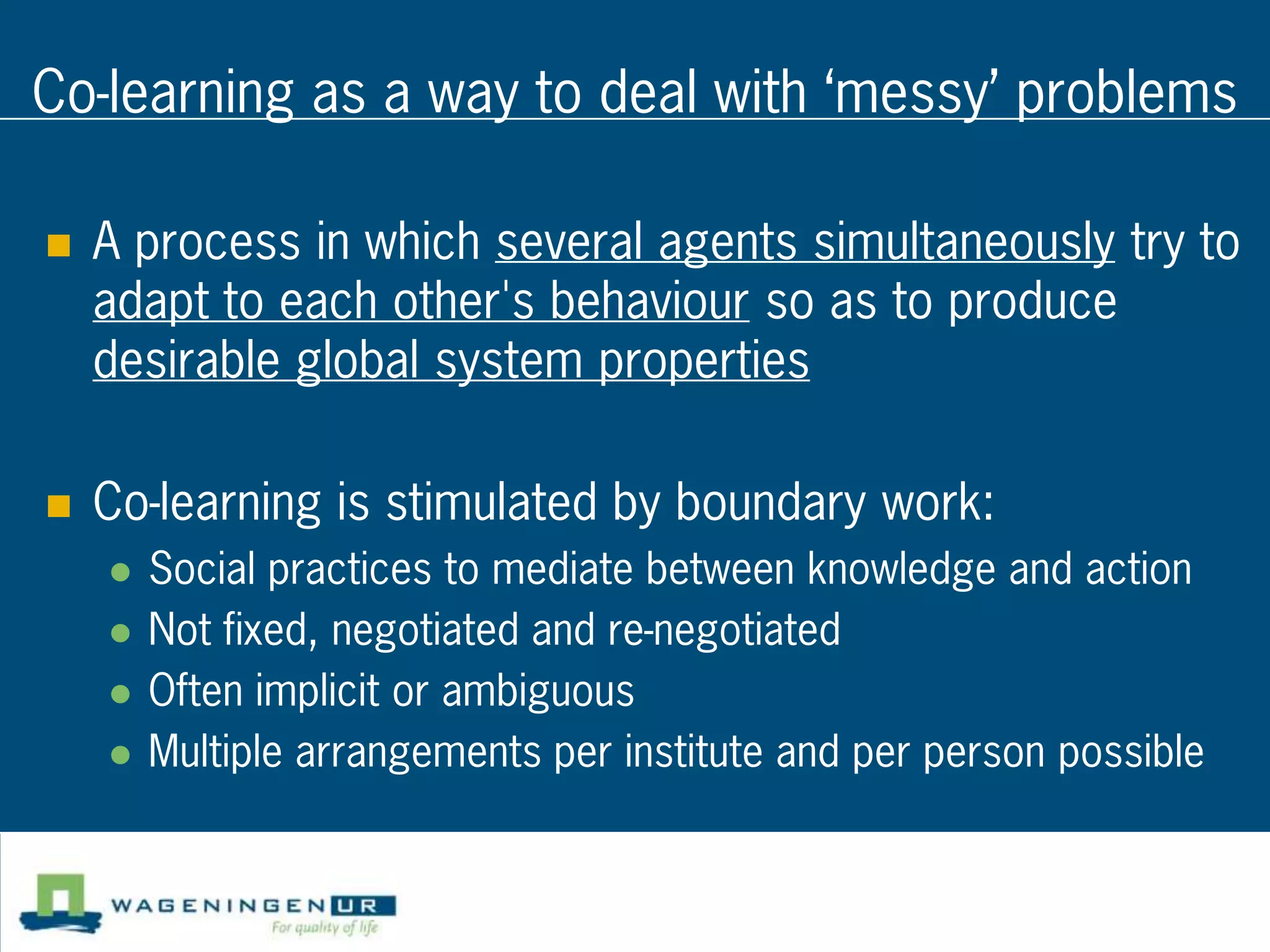
Co-learning as a way to deal with ‘messy’ problems

   A process in which several agents simultaneously try to
    adapt to each other's behaviour so as to produce
    desirable global system properties

   Co-learning is stimulated by boundary work:
       Social practices to mediate between knowledge and action
       Not fixed, negotiated and re-negotiated
       Often implicit or ambiguous
       Multiple arrangements per institute and per person possible
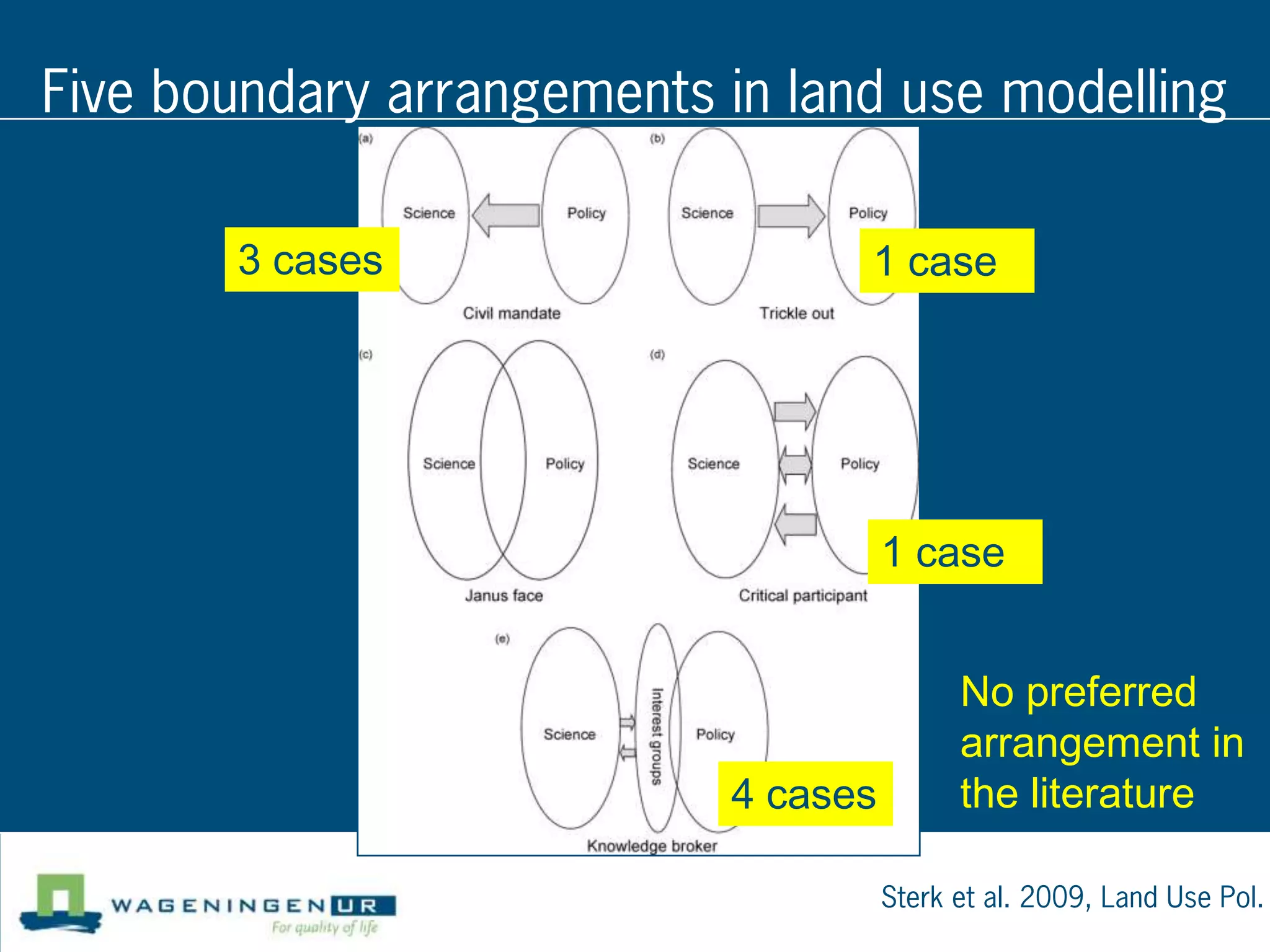
Five boundary arrangements in land use modelling

       3 cases                   1 case


                                     1 case


                                           No preferred
                                           arrangement in
                           4 cases         the literature

                                     Sterk et al. 2009, Land Use Pol.
Outline of presentation


   Learning and systems research cycles
   Different types of problems and systems research
   Co-learning and boundary work
   Knowledge for different uses
   Effective co-learning strategies
   Challenges for systems science
Outline of presentation


   Learning and systems research cycles
   Different types of problems and systems research
   Co-learning and boundary work
   Knowledge for different uses
   Effective co-learning strategies
   Challenges for systems science
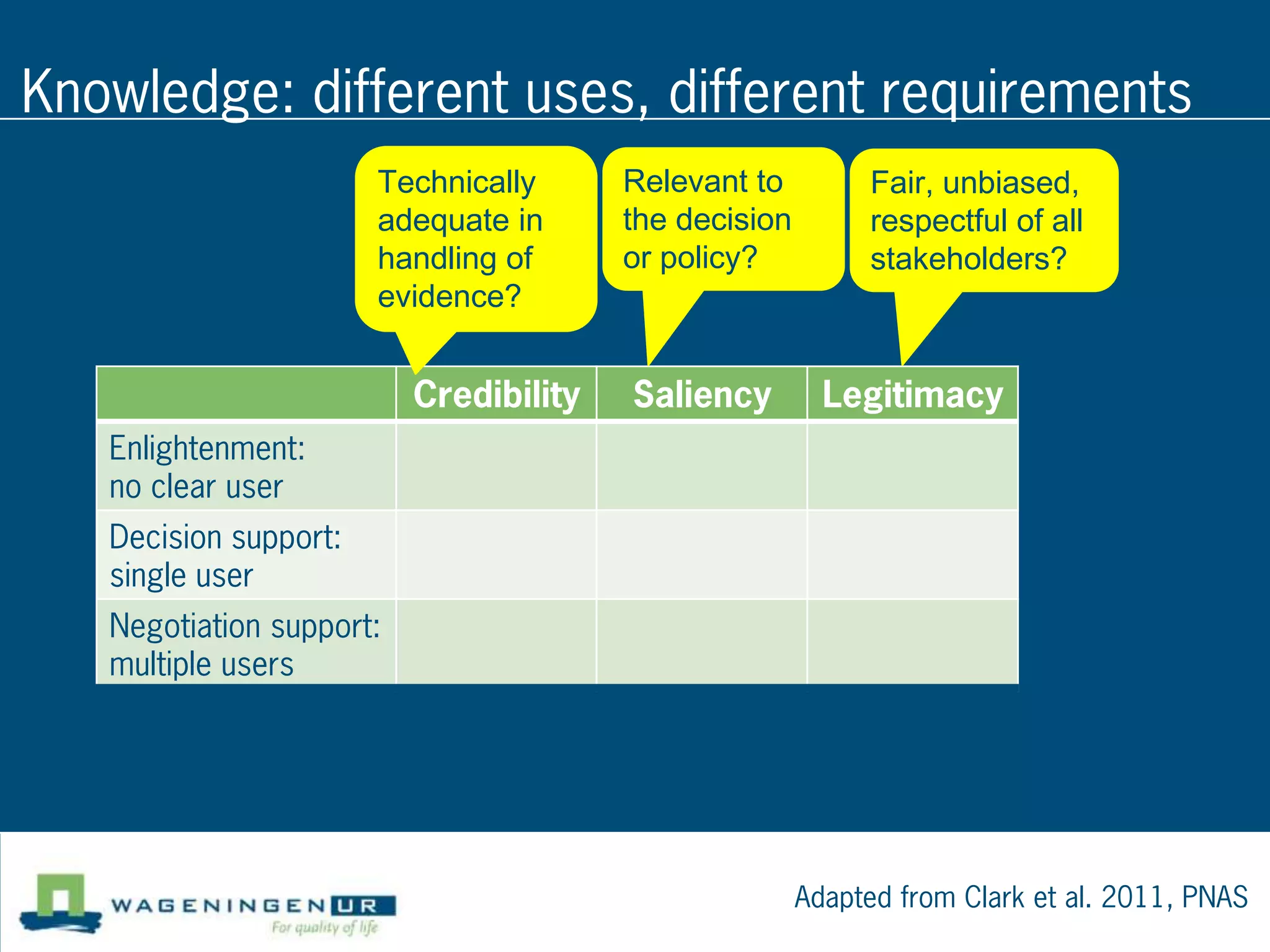
Knowledge: different uses, different requirements
                       Technically      Relevant to          Fair, unbiased,
                       adequate in      the decision         respectful of all
                       handling of      or policy?           stakeholders?
                       evidence?


                          Credibility   Saliency         Legitimacy
   Enlightenment:
   no clear user
   Decision support:
   single user
   Negotiation support:
   multiple users


                                                       Adapted from Clark et al. 2011, PNAS
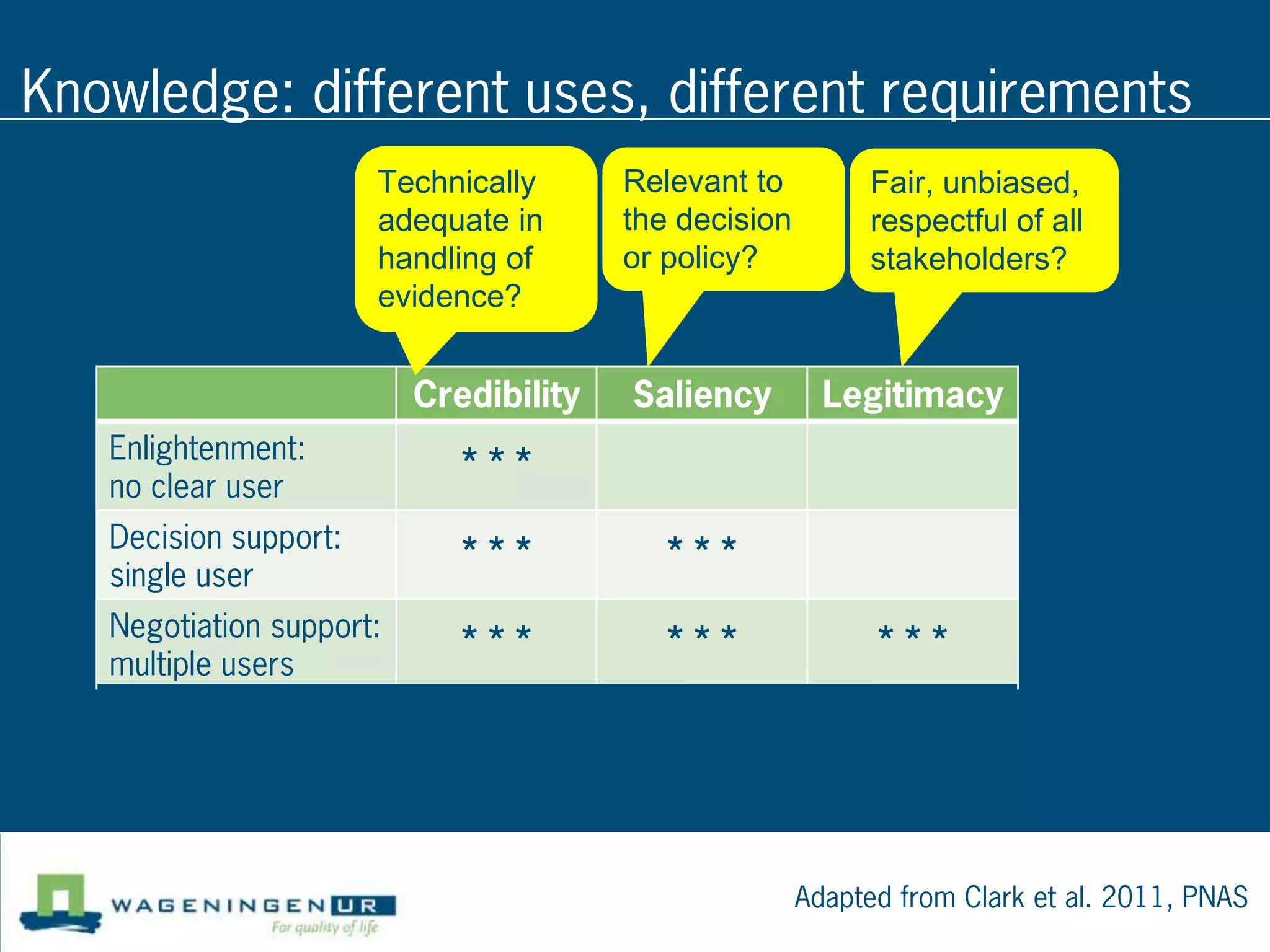
Knowledge: different uses, different requirements
                       Technically      Relevant to          Fair, unbiased,
                       adequate in      the decision         respectful of all
                       handling of      or policy?           stakeholders?
                       evidence?


                          Credibility   Saliency         Legitimacy
   Enlightenment:
   no clear user            ***
   Decision support:
   single user              ***           ***
   Negotiation support:
   multiple users           ***           ***                ***
   Deviation from
                               -            ++               +++
   science tradition


                                                       Adapted from Clark et al. 2011, PNAS
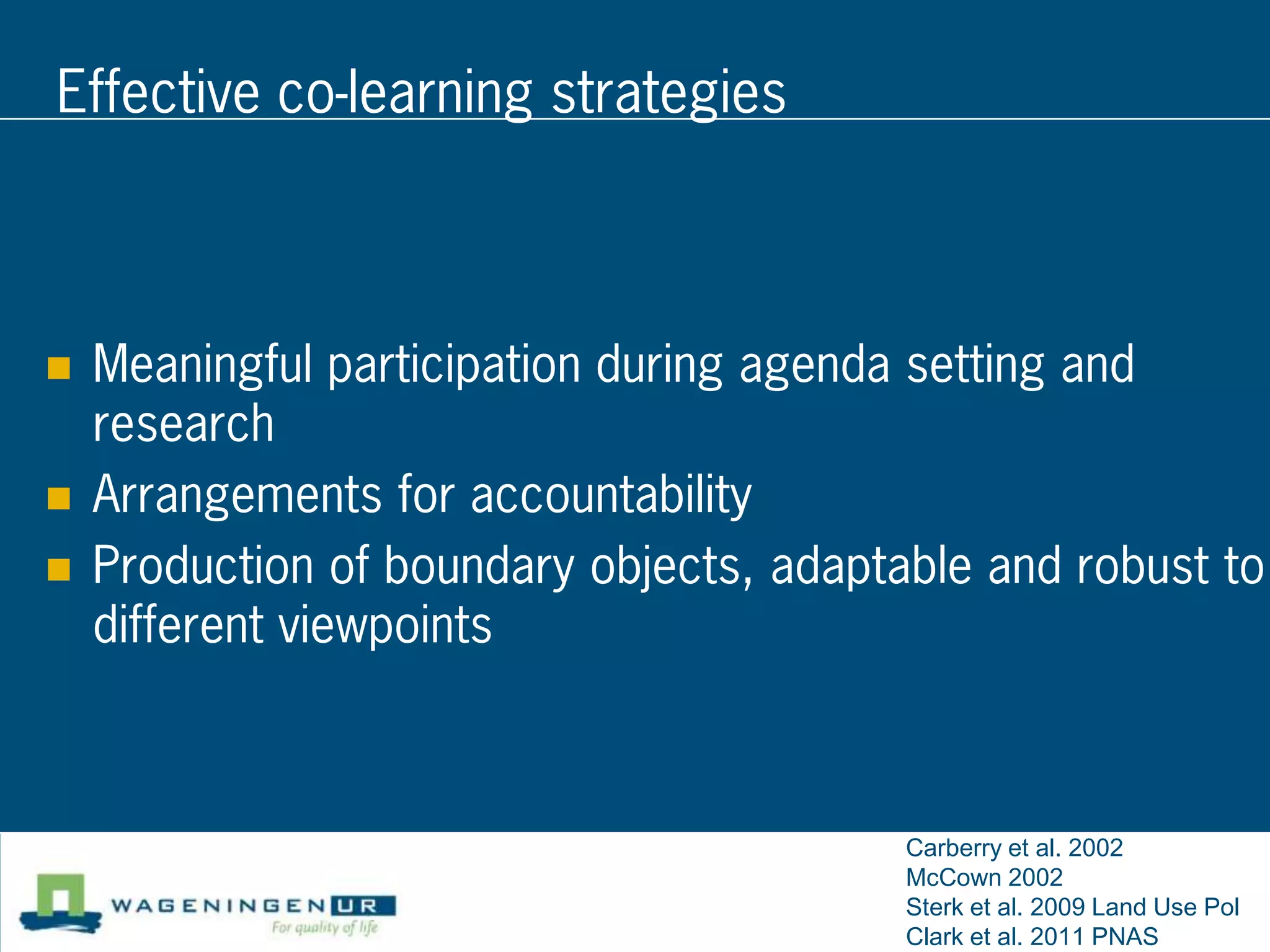
Effective co-learning strategies


   Meaningful participation during agenda setting and
    research
   Arrangements for accountability
   Production of boundary objects, adaptable and robust to
    different viewpoints


                                          Carberry et al. 2002
                                          McCown 2002
                                          Sterk et al. 2009 Land Use Pol
                                          Clark et al. 2011 PNAS
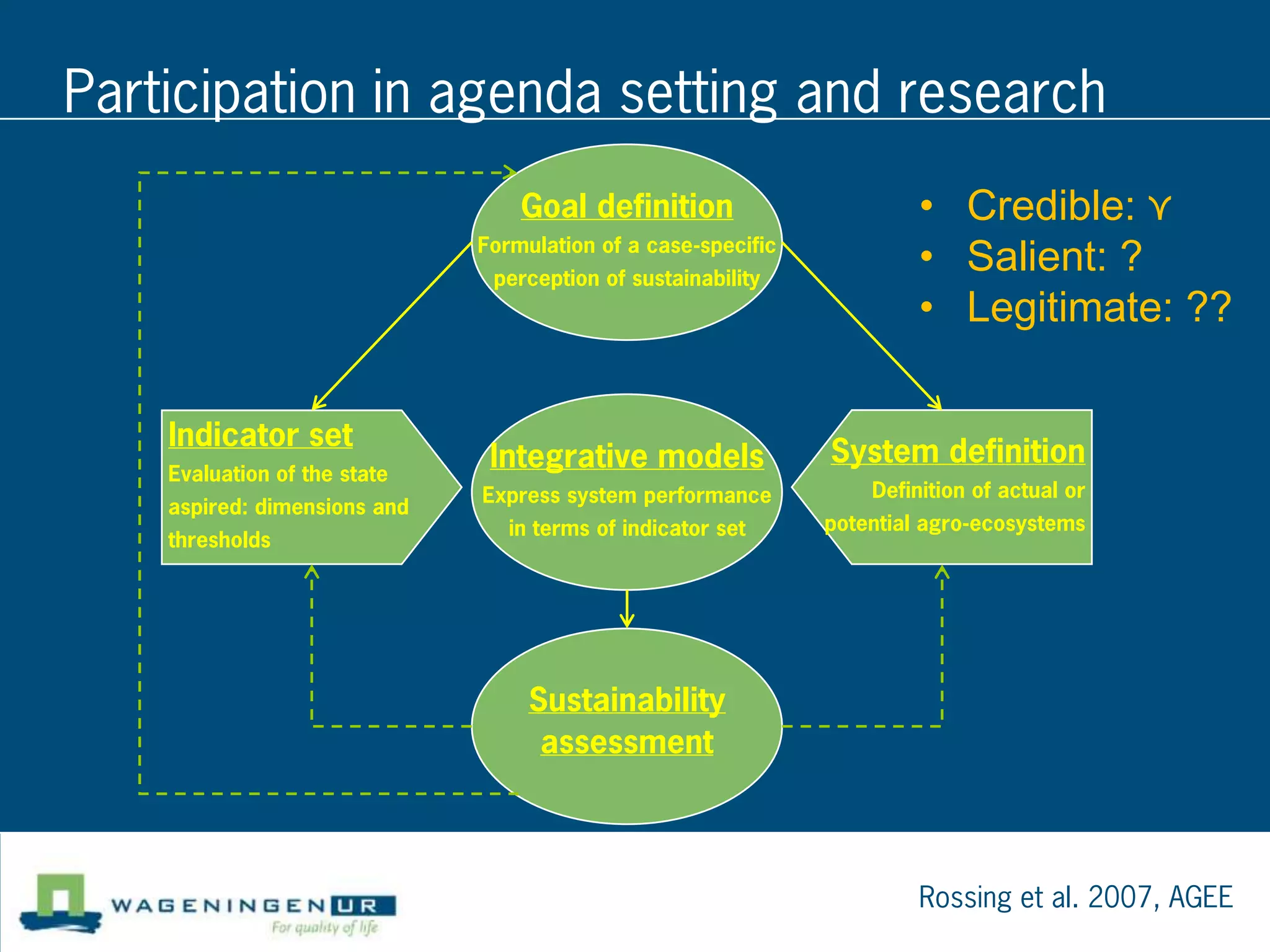
Participation in agenda setting and research
                                  Goal definition                       • Credible: ⋎
                              Formulation of a case-specific
                               perception of sustainability
                                                                        • Salient: ?
                                                                        • Legitimate: ??

    Indicator set
                               Integrative models              System definition
    Evaluation of the state
                              Express system performance           Definition of actual or
    aspired: dimensions and
                                 in terms of indicator set     potential agro-ecosystems
    thresholds


                                   Sustainability
                                    assessment


                                                                        Rossing et al. 2007, AGEE
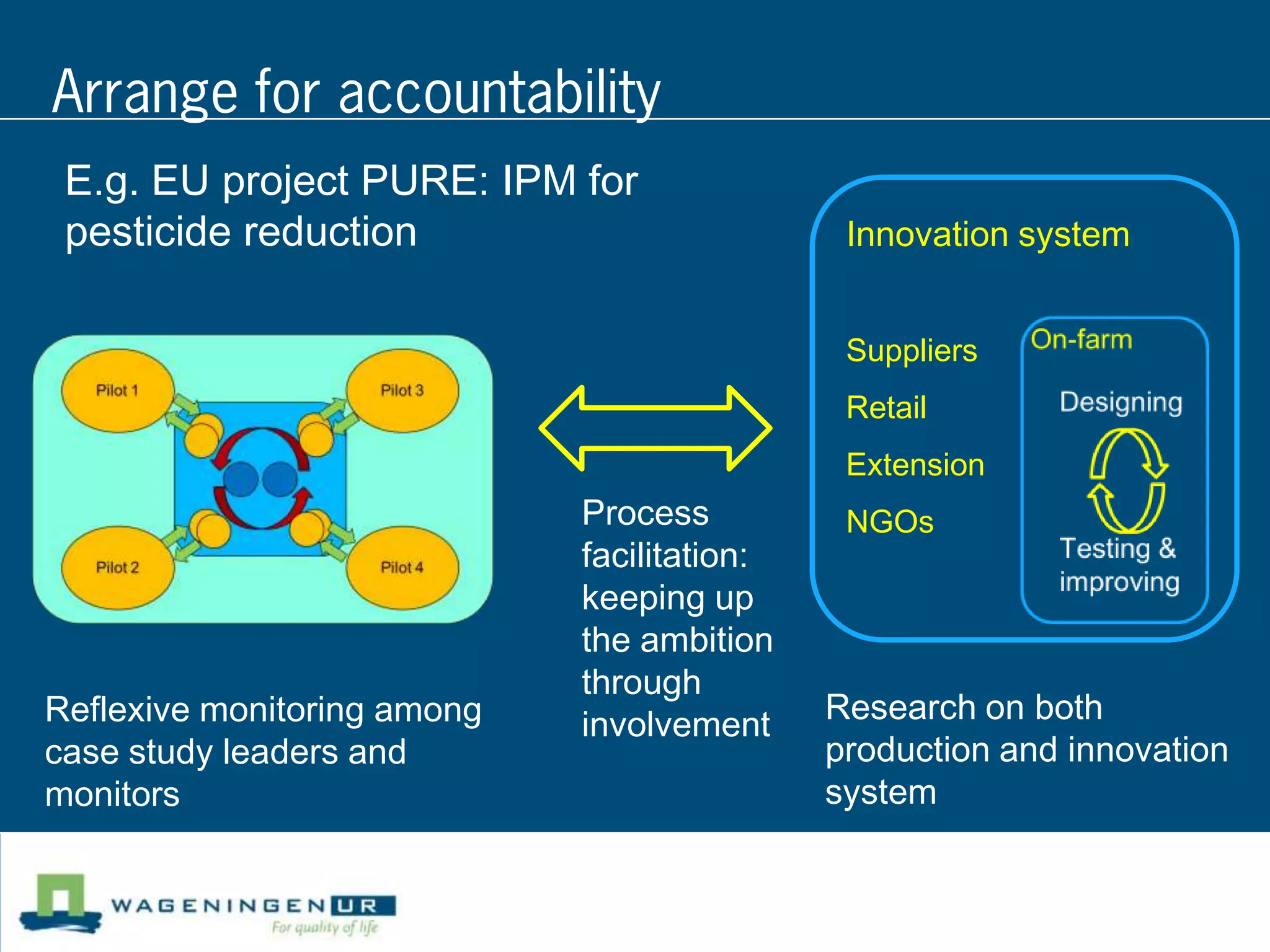
Arrange for accountability
 E.g. EU project PURE: IPM for
 pesticide reduction                          Innovation system


                                              Suppliers
                                              Retail
                                              Extension
                             Process          NGOs
                             facilitation:
                             keeping up
                             the ambition
                             through
Reflexive monitoring among   involvement     Research on both
case study leaders and                       production and innovation
monitors                                     system
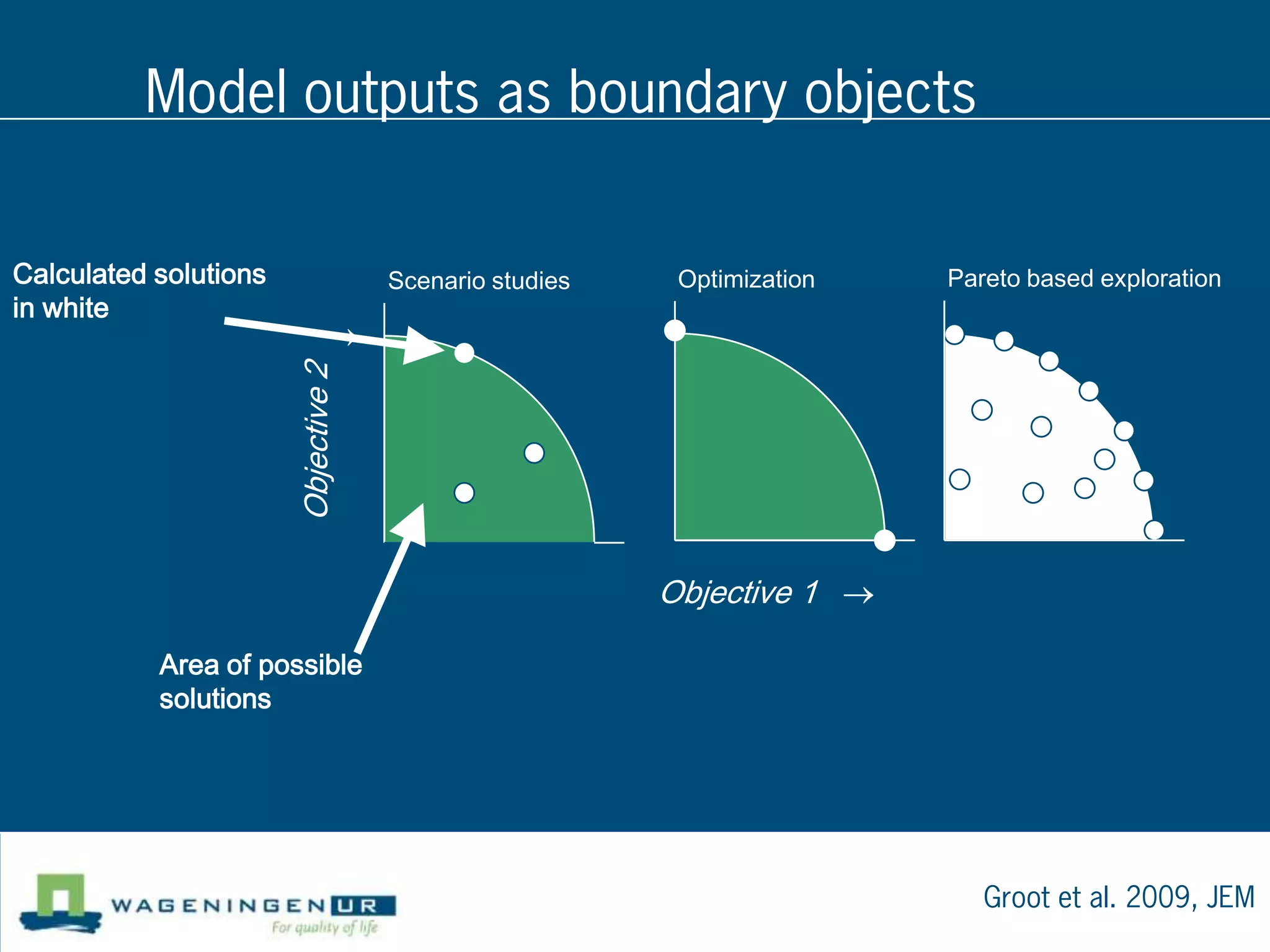
Model outputs as boundary objects


Calculated solutions                 Scenario studies    Optimization   Pareto based exploration
in white               Objective 2


                                                        Objective 1

           Area of possible
           solutions


                                                                           Groot et al. 2009, JEM
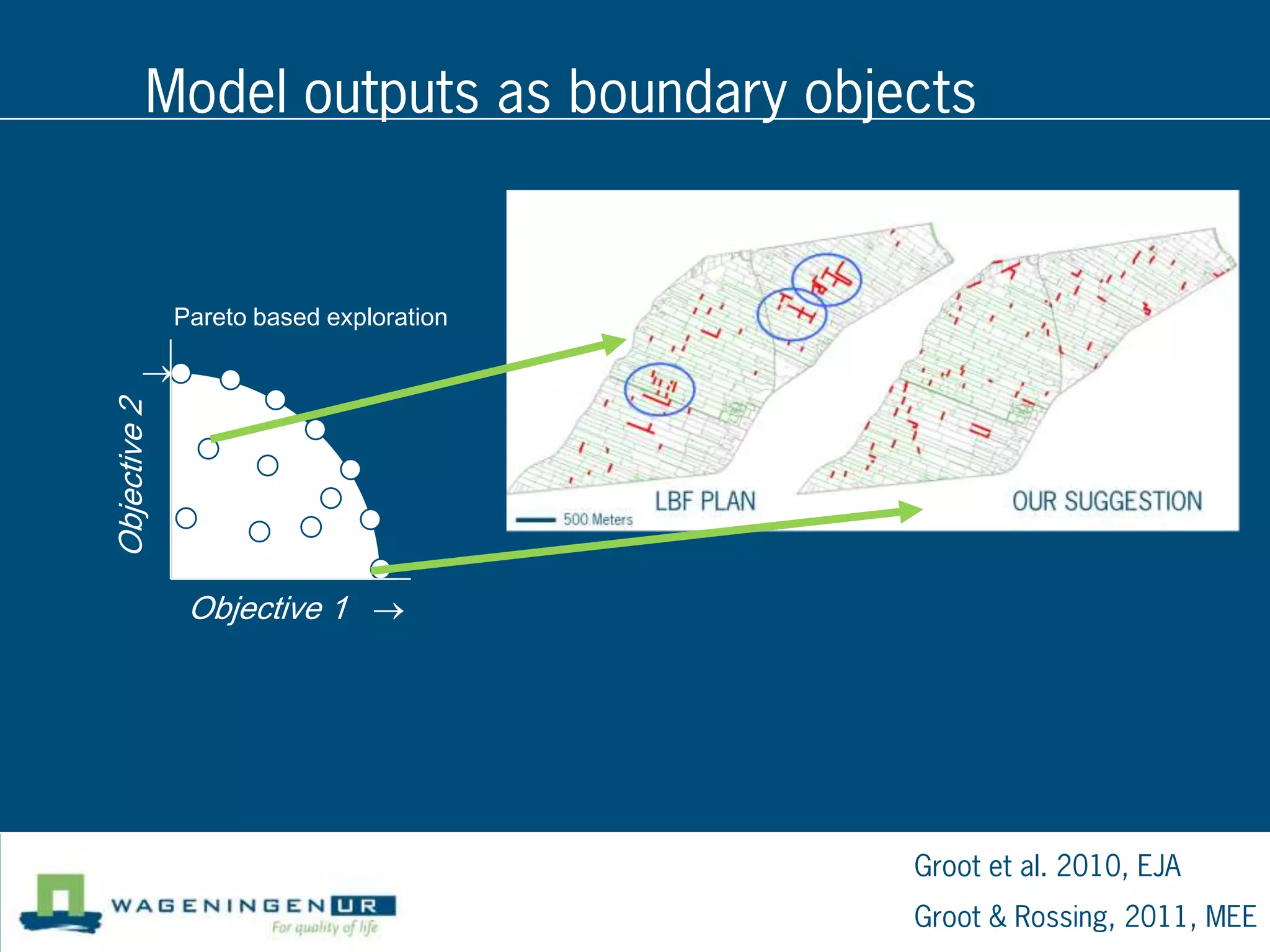
Model outputs as boundary objects


              Pareto based exploration
Objective 2


               Objective 1


                                         Groot et al. 2010, EJA
                                         Groot & Rossing, 2011, MEE
Challenges for systems science from boundary work

    Requirements on knowledge
        Credibility: science business-as-usual
        Saliency: specificity versus generality
        Legitimacy: research versus social embedding
    Requirements on organization of research (projects!)
        Accommodating multiple disciplines, stakeholders, levels of
         analysis
        Providing governance to balance the above
        Focus on research products that stimulate co-learning
Take home messages
                                 From hermitic
    A focus on boundary          scientist to
    objects stimulates           political activist
    co-learning
   Systems analysis offers varied career opportunities

   Model to create diversity, not to find the answer

   Projects with impact start from vague deliverables

                                Adaptive (self-reflexive)
                                project management is
                                indispensable (and a
                                research topic in itself!)
Thank you for your attention!


© Wageningen UR

The role of systems analysis in co-learning. Walter Rossing

  • 1.
    The role ofsystems analysis in co-learning Walter Rossing Wageningen Centre for Agro-ecology and Systems Analysis (WaCASA), Wageningen University
  • 2.
    Take home messages  Systems analysis offers varied career opportunities  Model to create diversity, not to find the answer  Projects with impact start from vague deliverables
  • 3.
    Outline of presentation  Learning and systems research cycles  Different types of problems and systems research  Co-learning and boundary work  Knowledge for different uses  Effective co-learning strategies  Challenges for systems science
  • 4.
    Learning  Learning is the process whereby knowledge is created through the transformation of experience: the learning cycle (Kolb 1984, Prentice Hall)  Abstract versus concrete  Active versus reflective
  • 5.
    The learning cycle Action: Implementing a ‘bright idea’ Plan: Observation: Which Find out improvements? consequences Analysis: What are implications? Kolb 1984, Prentice Hall
  • 6.
    The learning cycle,supported by the research cycle Action: Design / select: Implementing a Describe: Which? ‘bright idea’ what? Plan: Observation: Which Find out improvements? consequences Analysis: Explore: What are Explain: what if? implications? why? Models to support the reflective phases Kolb 1984, Prentice Hall Giller et al. 2008, Ecol. & Soc.
  • 7.
    Learning to makedecisions: Four types of problems.. Far from certainty on required Moderately Unstructured and structured problems problems available (goals) knowledge Moderately Structured structured problems problems (means) Close to certainty Close to agreement on Far from agreement norms and values at stake Hisschemöller & Hoppe 2001, Policy Studies Review Annual
  • 8.
    ... and therole of science Far from certainty on Moderately structured Unstructured problems required problems (goals) and ‘Messy’ problems Science as problem available Science as analyst or recognizer advocate knowledge Moderately structured Structured problems problems (means) Science as problem Close to Science as mediator solver certainty Close to agreement on Far from agreement norms and values at stake R. Hoppe 2007, WUR-CSIRO Workshop
  • 9.
    Co-learning as away to deal with ‘messy’ problems  A process in which several agents simultaneously try to adapt to each other's behaviour so as to produce desirable global system properties  Co-learning is stimulated by boundary work:  Social practices to mediate between knowledge and action  Not fixed, negotiated and re-negotiated  Often implicit or ambiguous  Multiple arrangements per institute and per person possible
  • 10.
    Five boundary arrangementsin land use modelling 3 cases 1 case 1 case No preferred arrangement in 4 cases the literature Sterk et al. 2009, Land Use Pol.
  • 11.
    Outline of presentation  Learning and systems research cycles  Different types of problems and systems research  Co-learning and boundary work  Knowledge for different uses  Effective co-learning strategies  Challenges for systems science
  • 12.
    Outline of presentation  Learning and systems research cycles  Different types of problems and systems research  Co-learning and boundary work  Knowledge for different uses  Effective co-learning strategies  Challenges for systems science
  • 13.
    Knowledge: different uses,different requirements Technically Relevant to Fair, unbiased, adequate in the decision respectful of all handling of or policy? stakeholders? evidence? Credibility Saliency Legitimacy Enlightenment: no clear user Decision support: single user Negotiation support: multiple users Adapted from Clark et al. 2011, PNAS
  • 14.
    Knowledge: different uses,different requirements Technically Relevant to Fair, unbiased, adequate in the decision respectful of all handling of or policy? stakeholders? evidence? Credibility Saliency Legitimacy Enlightenment: no clear user *** Decision support: single user *** *** Negotiation support: multiple users *** *** *** Deviation from - ++ +++ science tradition Adapted from Clark et al. 2011, PNAS
  • 15.
    Effective co-learning strategies  Meaningful participation during agenda setting and research  Arrangements for accountability  Production of boundary objects, adaptable and robust to different viewpoints Carberry et al. 2002 McCown 2002 Sterk et al. 2009 Land Use Pol Clark et al. 2011 PNAS
  • 16.
    Participation in agendasetting and research Goal definition • Credible: ⋎ Formulation of a case-specific perception of sustainability • Salient: ? • Legitimate: ?? Indicator set Integrative models System definition Evaluation of the state Express system performance Definition of actual or aspired: dimensions and in terms of indicator set potential agro-ecosystems thresholds Sustainability assessment Rossing et al. 2007, AGEE
  • 17.
    Arrange for accountability E.g. EU project PURE: IPM for pesticide reduction Innovation system Suppliers Retail Extension Process NGOs facilitation: keeping up the ambition through Reflexive monitoring among involvement Research on both case study leaders and production and innovation monitors system
  • 18.
    Model outputs asboundary objects Calculated solutions Scenario studies Optimization Pareto based exploration in white Objective 2 Objective 1 Area of possible solutions Groot et al. 2009, JEM
  • 19.
    Model outputs asboundary objects Pareto based exploration Objective 2 Objective 1 Groot et al. 2010, EJA Groot & Rossing, 2011, MEE
  • 20.
    Challenges for systemsscience from boundary work  Requirements on knowledge  Credibility: science business-as-usual  Saliency: specificity versus generality  Legitimacy: research versus social embedding  Requirements on organization of research (projects!)  Accommodating multiple disciplines, stakeholders, levels of analysis  Providing governance to balance the above  Focus on research products that stimulate co-learning
  • 21.
    Take home messages From hermitic A focus on boundary scientist to objects stimulates political activist co-learning  Systems analysis offers varied career opportunities  Model to create diversity, not to find the answer  Projects with impact start from vague deliverables Adaptive (self-reflexive) project management is indispensable (and a research topic in itself!)
  • 22.
    Thank you foryour attention! © Wageningen UR