Evaluation techniques of teaching:
       focus groups and the
    Nominal Group Technique

     Tünde Varga-Atkins, eLearning Unit
           University of Liverpool
                 15 November 2012
                 SEDA Conference
          Aston Business School, Birmingham
OUTLINE

• Introduction
• Demonstration of the Nominal Group
  Technique
• Benefits and disadvantages of NGT
• A new, combined two-staged
  approach: Nominal Focus Group
• Reflections in own context
OUTCOMES

• Familiar with the NGT and its stages.
• Aware of the benefits and potential
  challenges of NGT.
• Contrast focus groups & NGT.
• Consider a combined approach of
  FG&NGT.
• Reflect on the evaluation technique in
  own context.
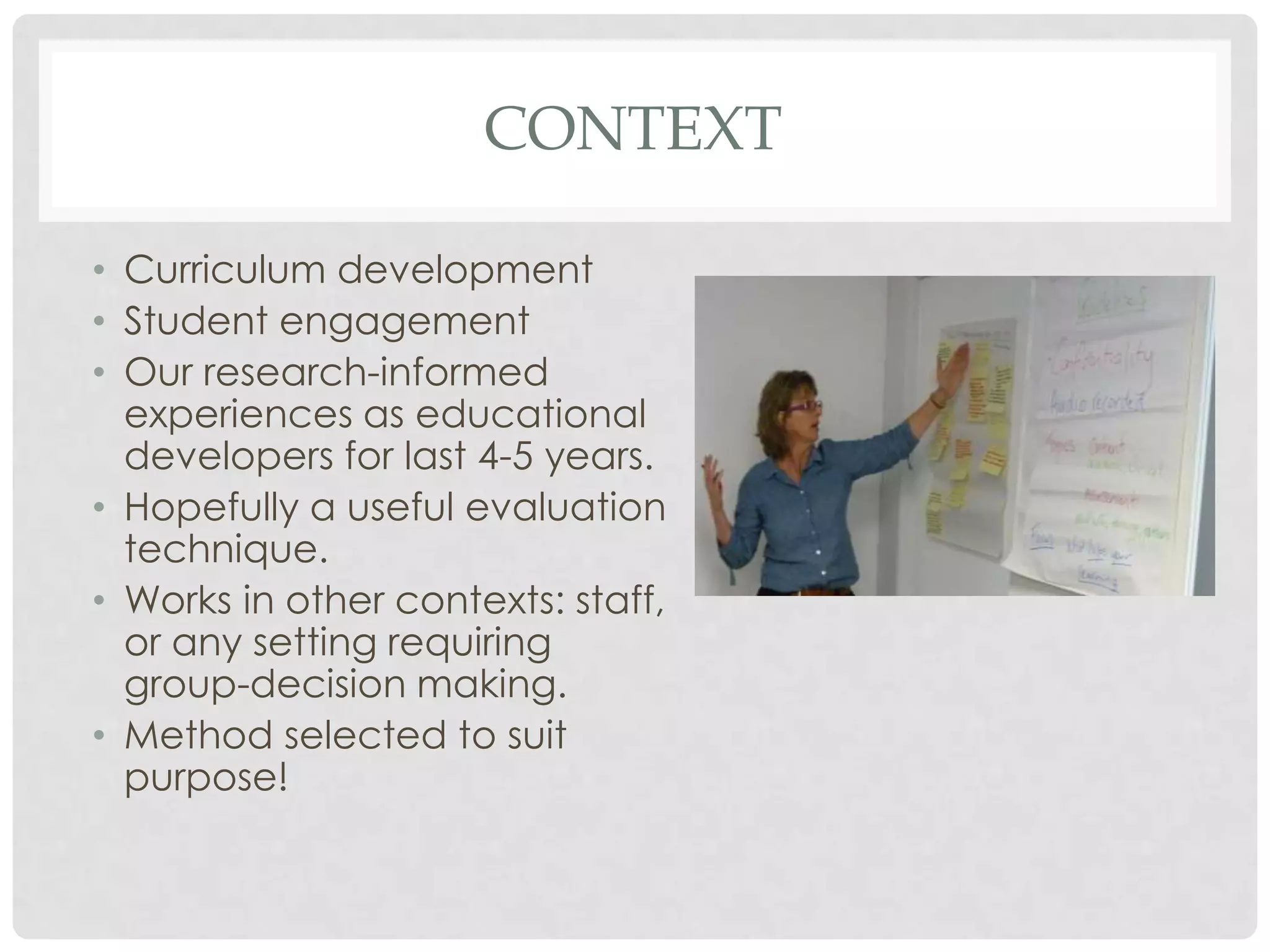
CONTEXT

• Curriculum development
• Student engagement
• Our research-informed
  experiences as educational
  developers for last 4-5 years.
• Hopefully a useful evaluation
  technique.
• Works in other contexts: staff,
  or any setting requiring
  group-decision making.
• Method selected to suit
  purpose!
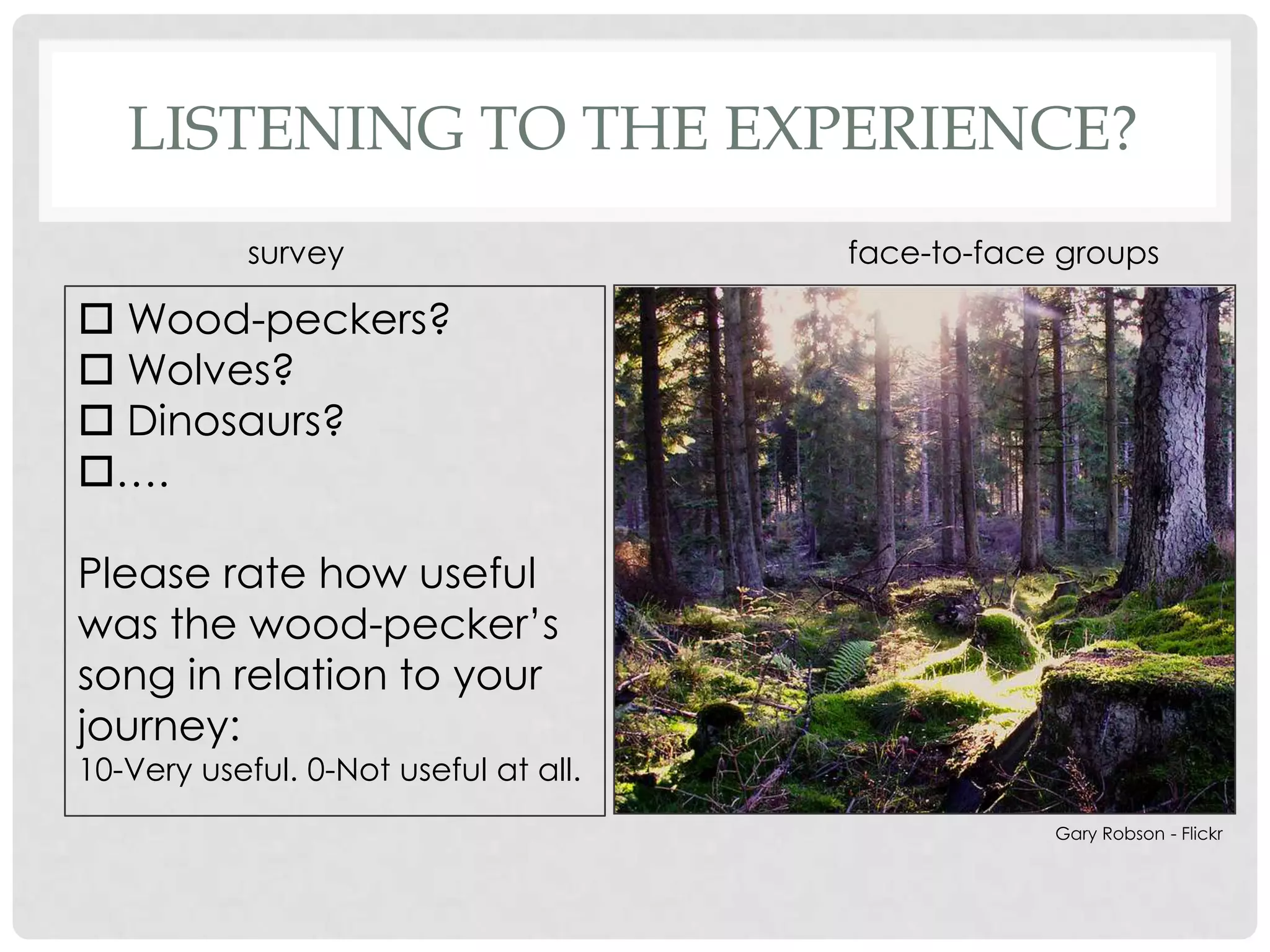
LISTENING TO THE EXPERIENCE?
        survey                     face-to-face groups

 Wood-peckers?
 Wolves?
 Dinosaurs?               “I found it extremely
….                        helpful to have not just an
                           idea what is going on,
                           but to hear what is said
“with the questionnaire,   by students.”(staff)
you never know if [you]
give the right question
out.”(staff)
LISTENING TO THE EXPERIENCE?
            survey                     face-to-face groups

 Wood-peckers?
 Wolves?
 Dinosaurs?
….

Please rate how useful
was the wood-pecker‟s
song in relation to your
journey:
10-Very useful. 0-Not useful at all.
                                                   Gary Robson - Flickr
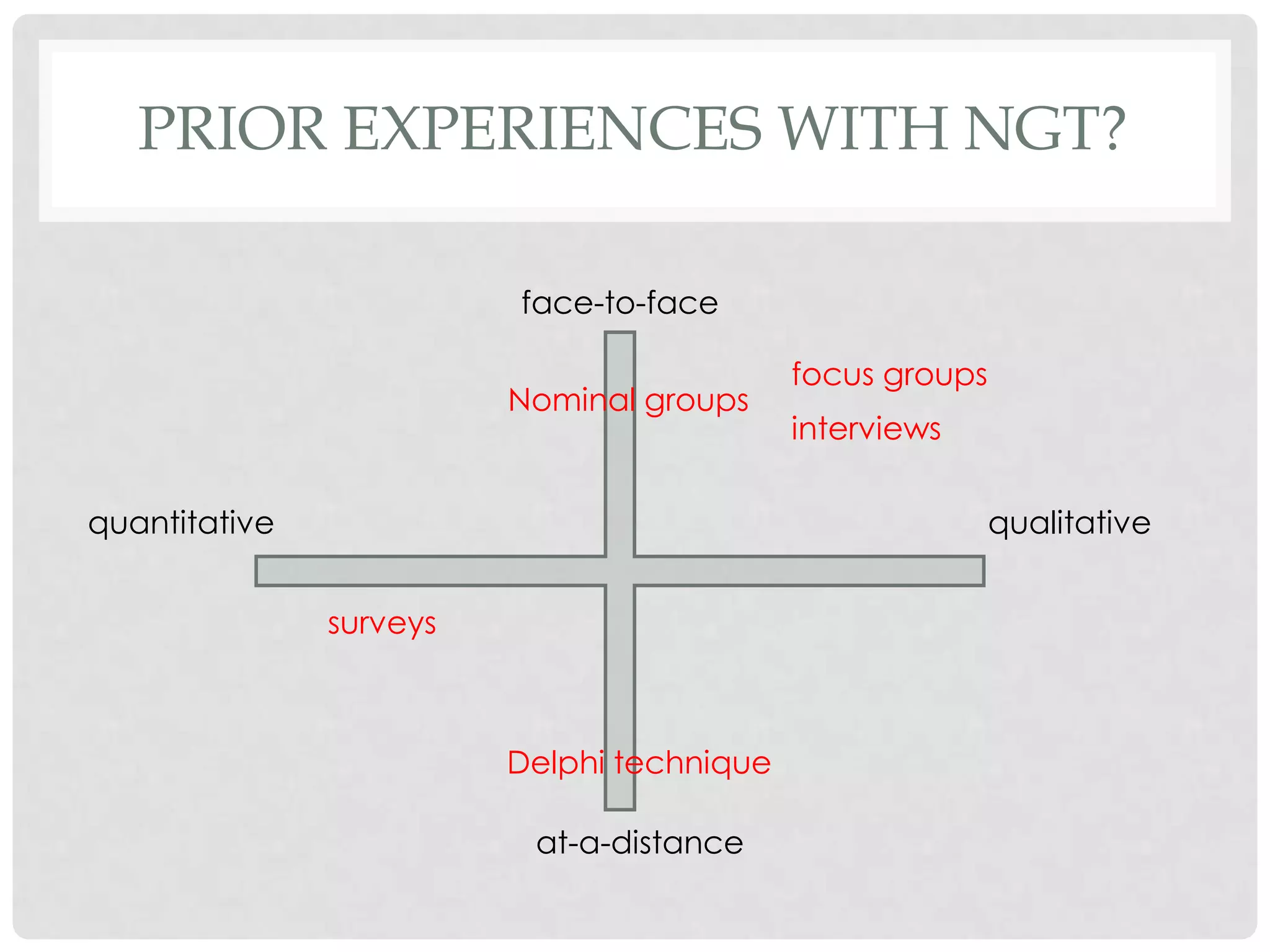
PRIOR EXPERIENCES WITH NGT?

                         face-to-face

                                            focus groups
                         Nominal groups
                                            interviews

quantitative                                               qualitative


               surveys


                         Delphi technique

                          at-a-distance
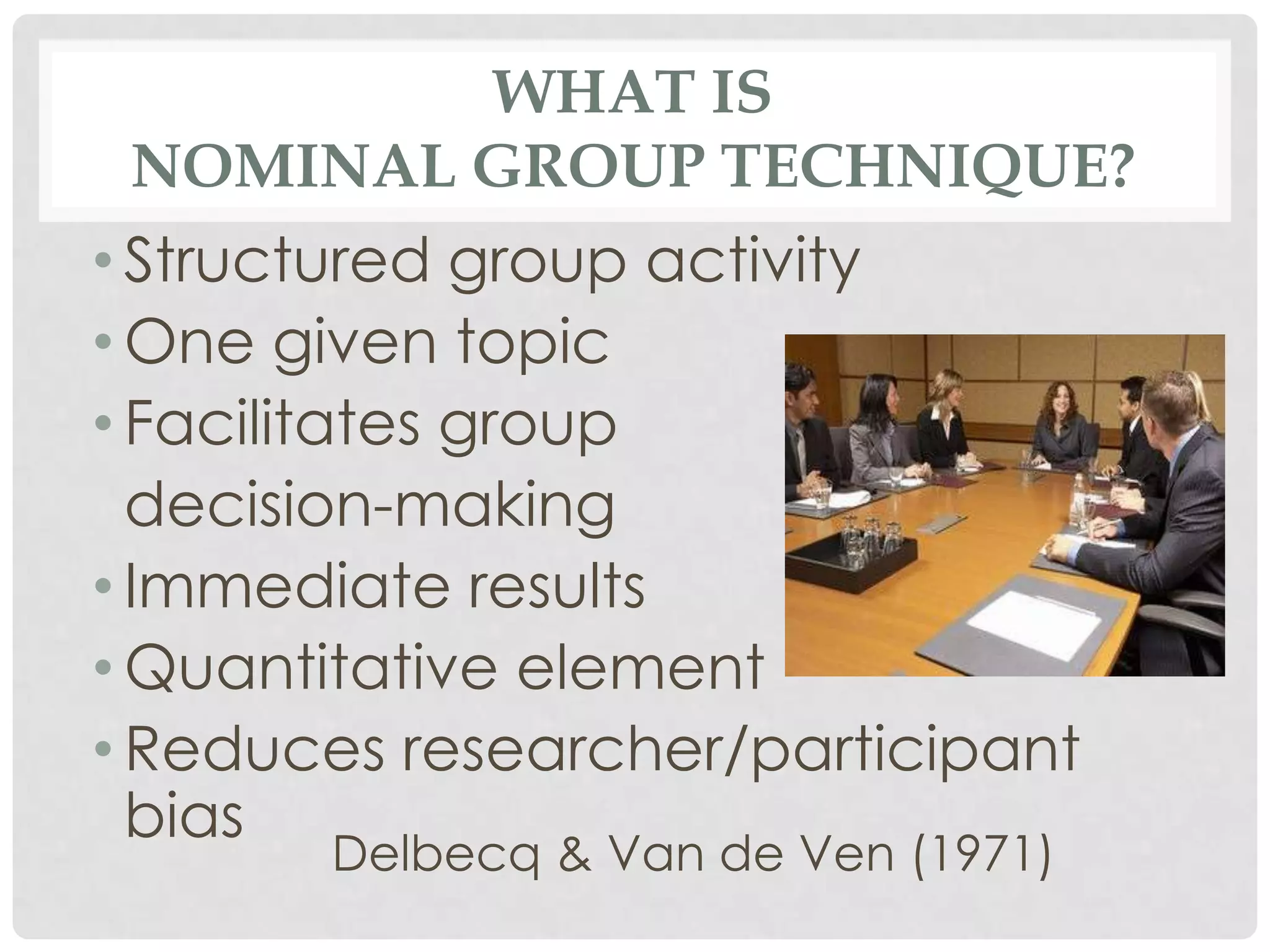
WHAT IS
 NOMINAL GROUP TECHNIQUE?
• Structured group activity
• One given topic
• Facilitates group
  decision-making
• Immediate results
• Quantitative element
• Reduces researcher/participant
  bias
       Delbecq & Van de Ven (1971)
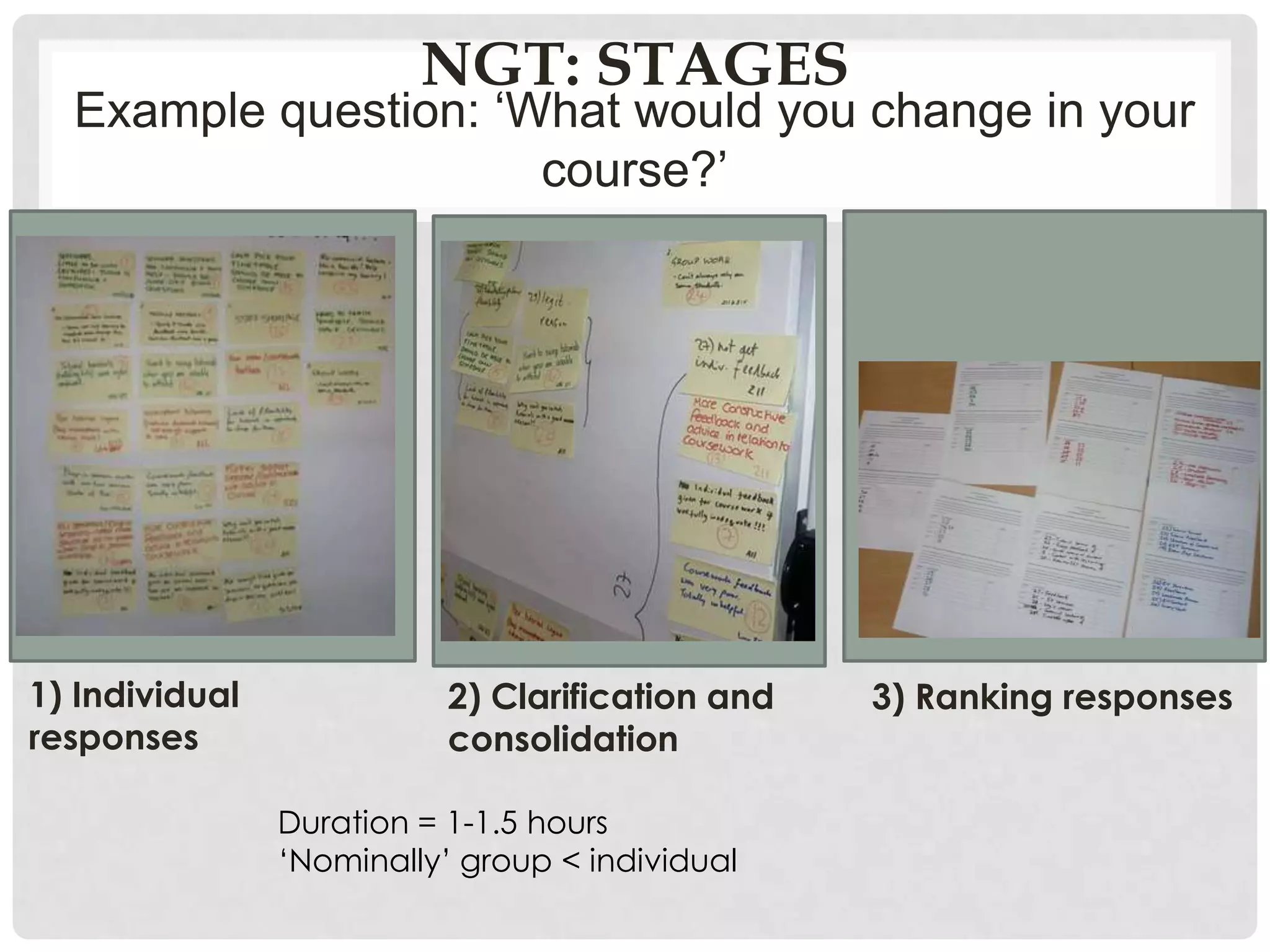
NGT: STAGES
  Example question: „What would you change in your
                      course?‟


1) Individual              2) Clarification and   3) Ranking responses
responses                  consolidation

                Duration = 1-1.5 hours
                „Nominally‟ group < individual
AND NOW: LET’S HAVE A GO...
     THE QUESTION IS:

  In your current role as
   educational developer
  what is one
   key challenging issue
   you are facing?

  [purpose: identifying top 3 key ones to tackle together]
  [normally we would ask participants to write 2-3 – but
    shortening the task here due to time constraints]
STAGE 1: CHALLENGING ISSUE(S)

       1        2      3
       .


4
           5     6
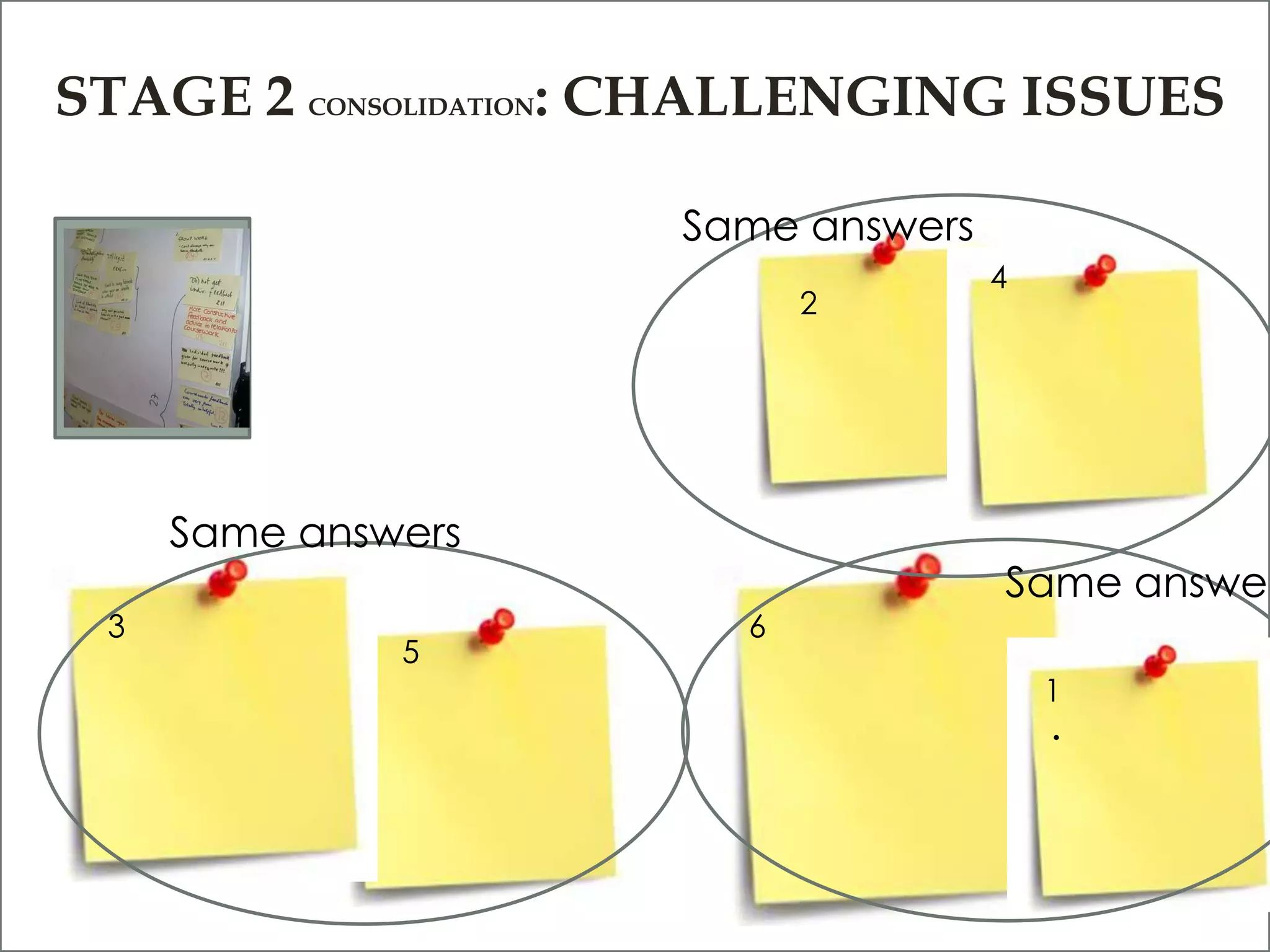
STAGE 2 CONSOLIDATION: CHALLENGING ISSUES

                     Same answers
                                    4
                            2


     Same answers
                                    Same answer
 3                      6
              5
                                        1
                                        .
STAGE 3 RANKING:
  YOUR TOP 3 KEY CHALLENGES
                            that you want the group/SEDA etc. to tackle…


           Item no.   Item description

3 points   1
2 points   2
1 points   4
                      [normally top 5 but for brevity
                      only doing 3]
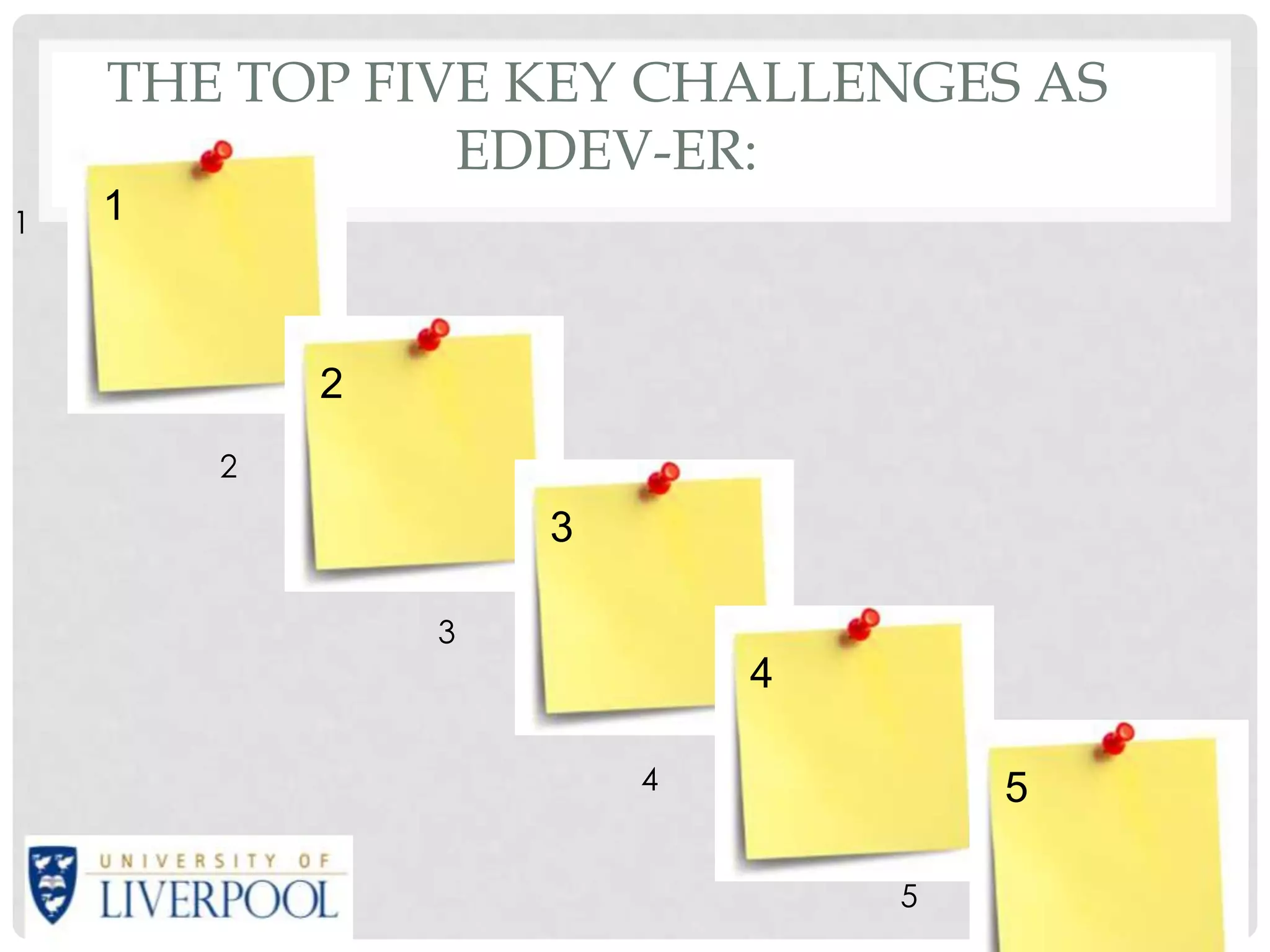
THE TOP FIVE KEY CHALLENGES AS
               EDDEV-ER:
1   1


            2
        2

                    3

                3
                            4

                        4           5

                                5
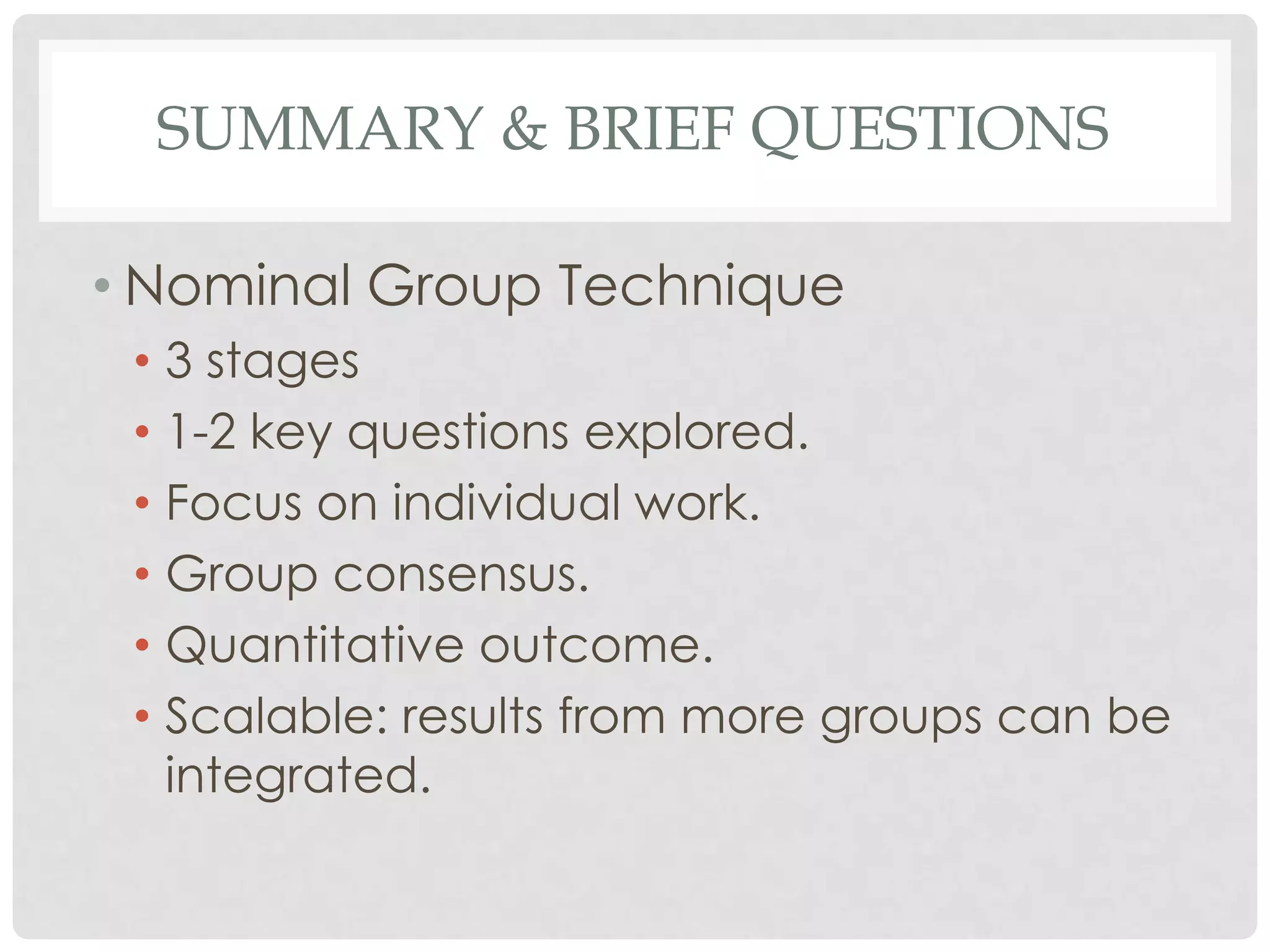
SUMMARY & BRIEF QUESTIONS

• Nominal Group Technique
 • 3 stages
 • 1-2 key questions explored.
 • Focus on individual work.
 • Group consensus.
 • Quantitative outcome.
 • Scalable: results from more groups can be
   integrated.
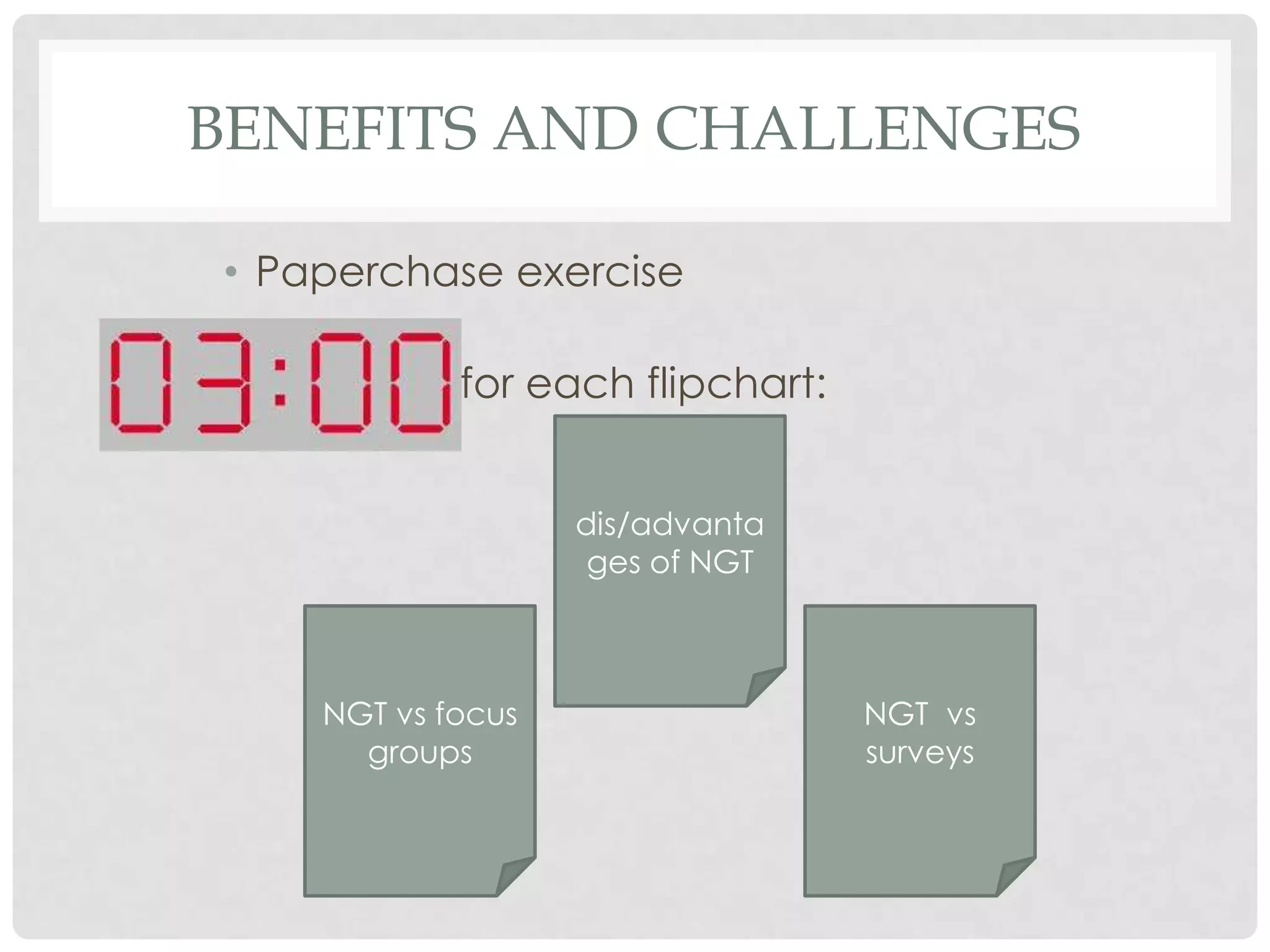
BENEFITS AND CHALLENGES

• Paperchase exercise

• 3 minutes for each flipchart:


                    dis/advanta
                     ges of NGT


     NGT vs focus                 NGT vs
       groups                     surveys
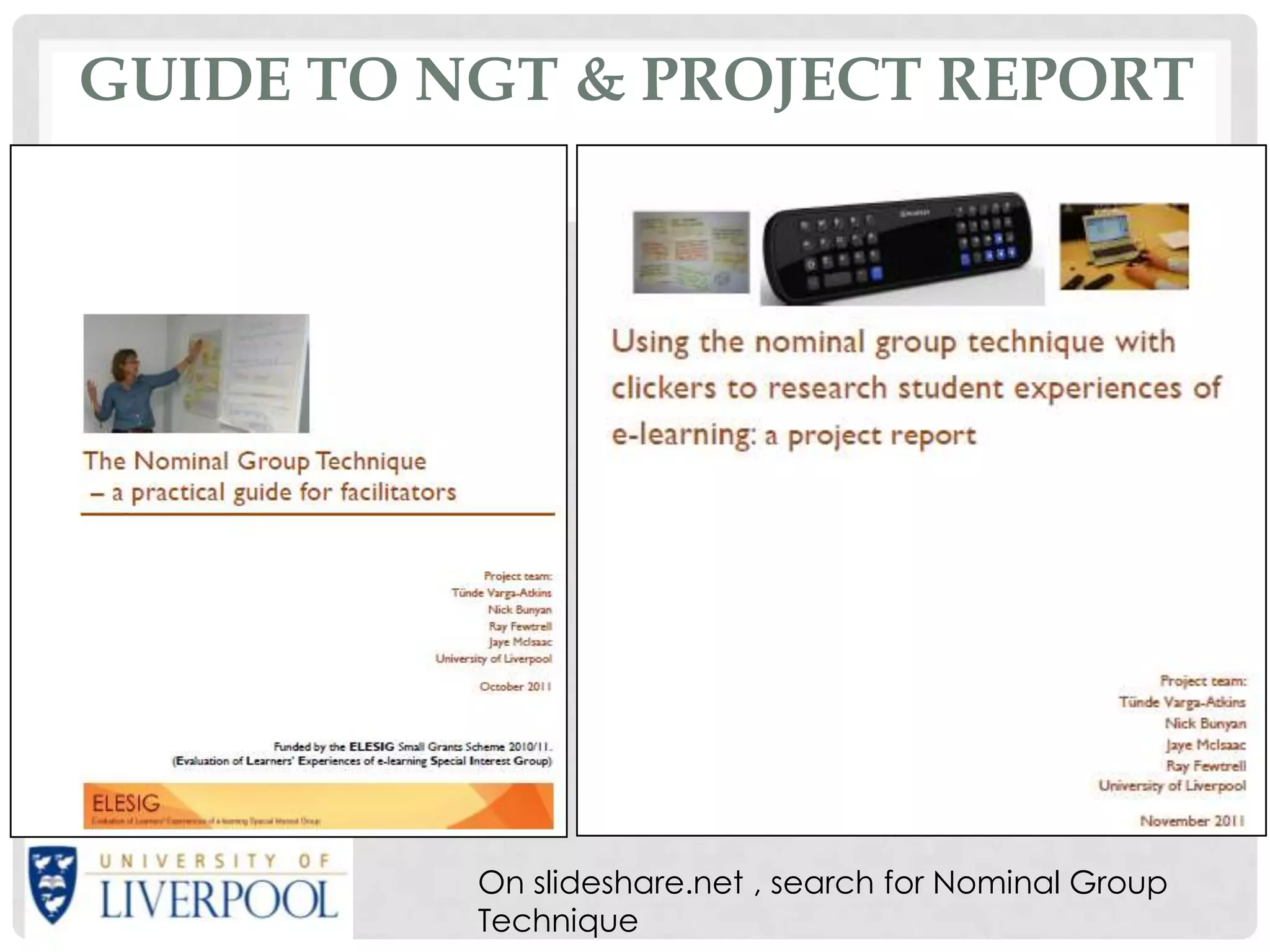
GUIDE TO NGT & PROJECT REPORT


                                           See References
          On slideshare.net , search for Nominal Group
          Technique
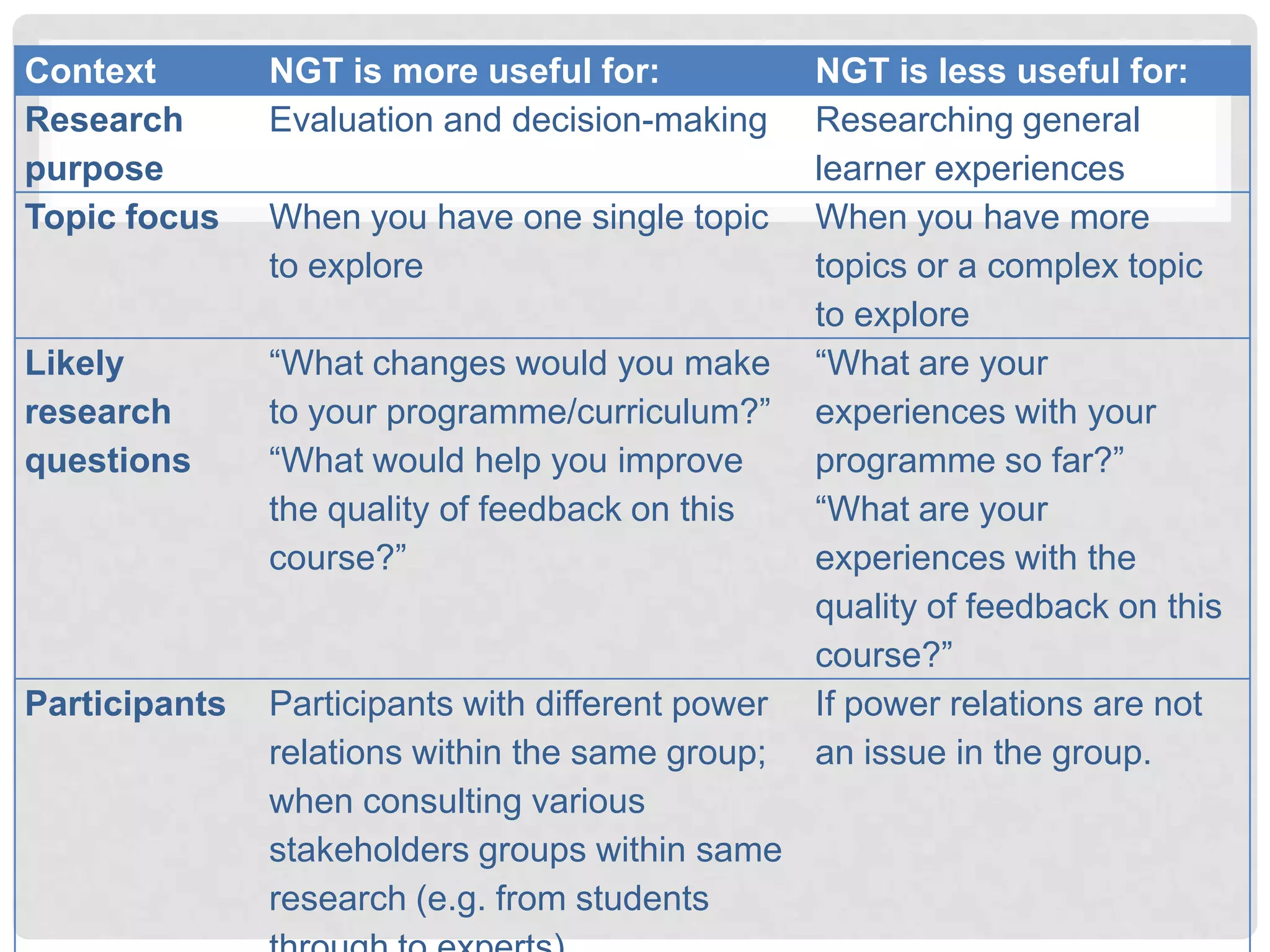
Context        NGT is more useful for:             NGT is less useful for:
Research       Evaluation and decision-making      Researching general
purpose                                            learner experiences
Topic focus    When you have one single topic      When you have more
               to explore                          topics or a complex topic
                                                   to explore
Likely         “What changes would you make        “What are your
research       to your programme/curriculum?”      experiences with your
questions      “What would help you improve        programme so far?”
               the quality of feedback on this     “What are your
               course?”                            experiences with the
                                                   quality of feedback on this
                                                   course?”
Participants   Participants with different power   If power relations are not
               relations within the same group;    an issue in the group.
               when consulting various
               stakeholders groups within same
               research (e.g. from students
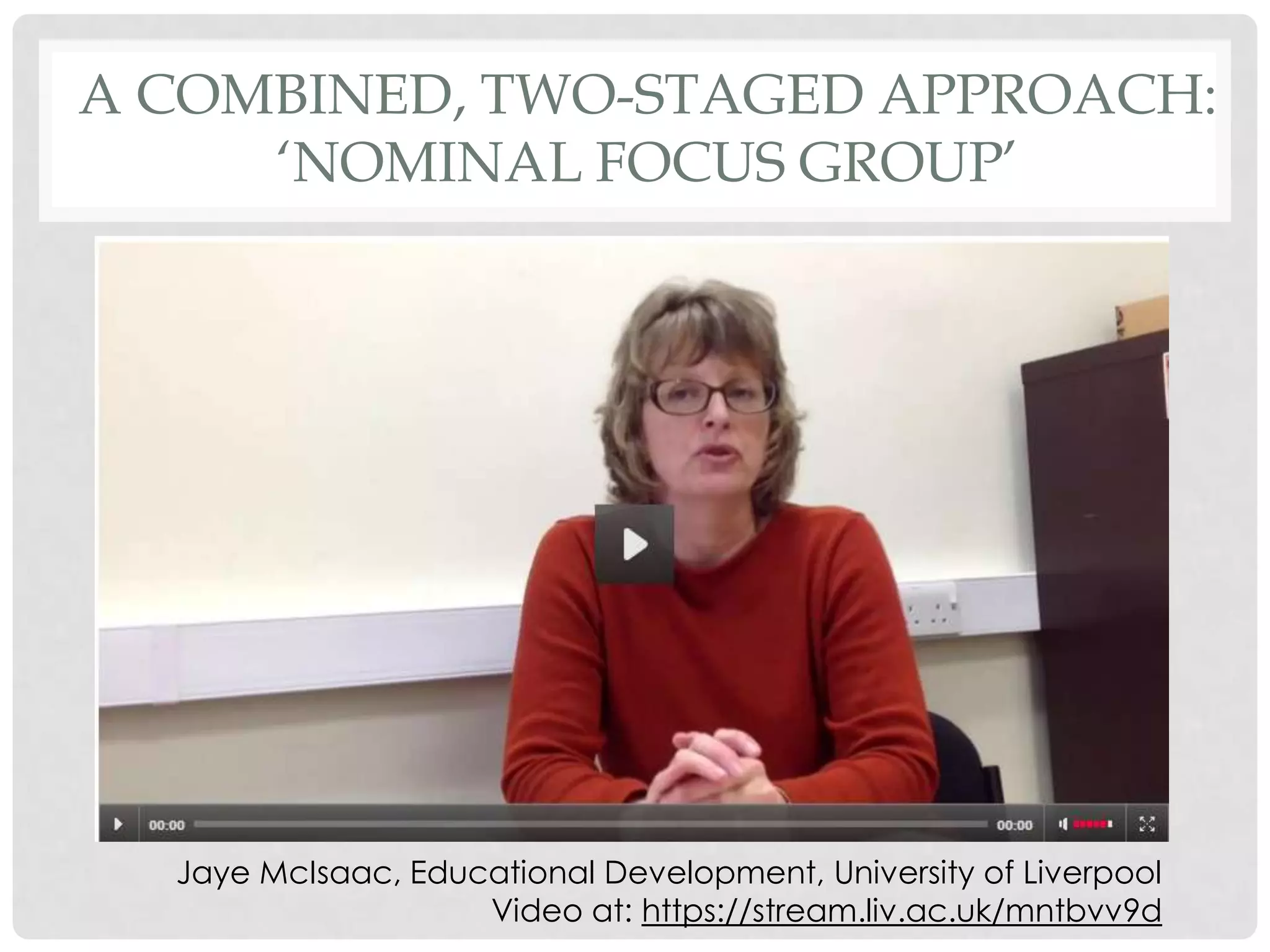
A COMBINED, TWO-STAGED APPROACH:
     ‘NOMINAL FOCUS GROUP’


                       Why?
                      What is it?


  Jaye McIsaac, Educational Development, University of Liverpool
                    Video at: https://stream.liv.ac.uk/mntbvv9d
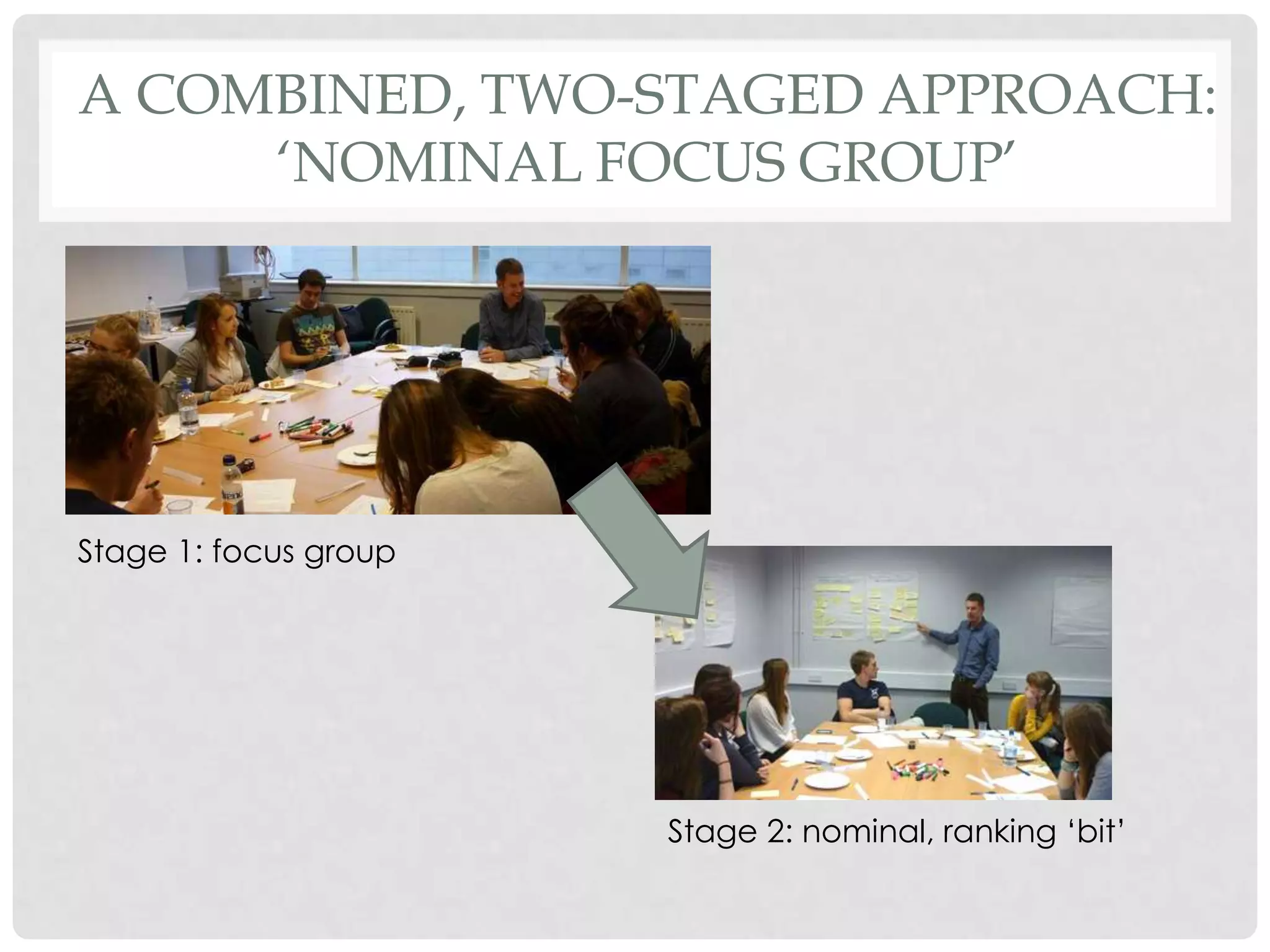
A COMBINED, TWO-STAGED APPROACH:
     ‘NOMINAL FOCUS GROUP’


Stage 1: focus group


                       Stage 2: nominal, ranking „bit‟
STUDENT EVALUATION ON
EVALUATION (SURVEY, N=13)
            This is the Worlde cloud of the student
            survey responses on the group
            process.
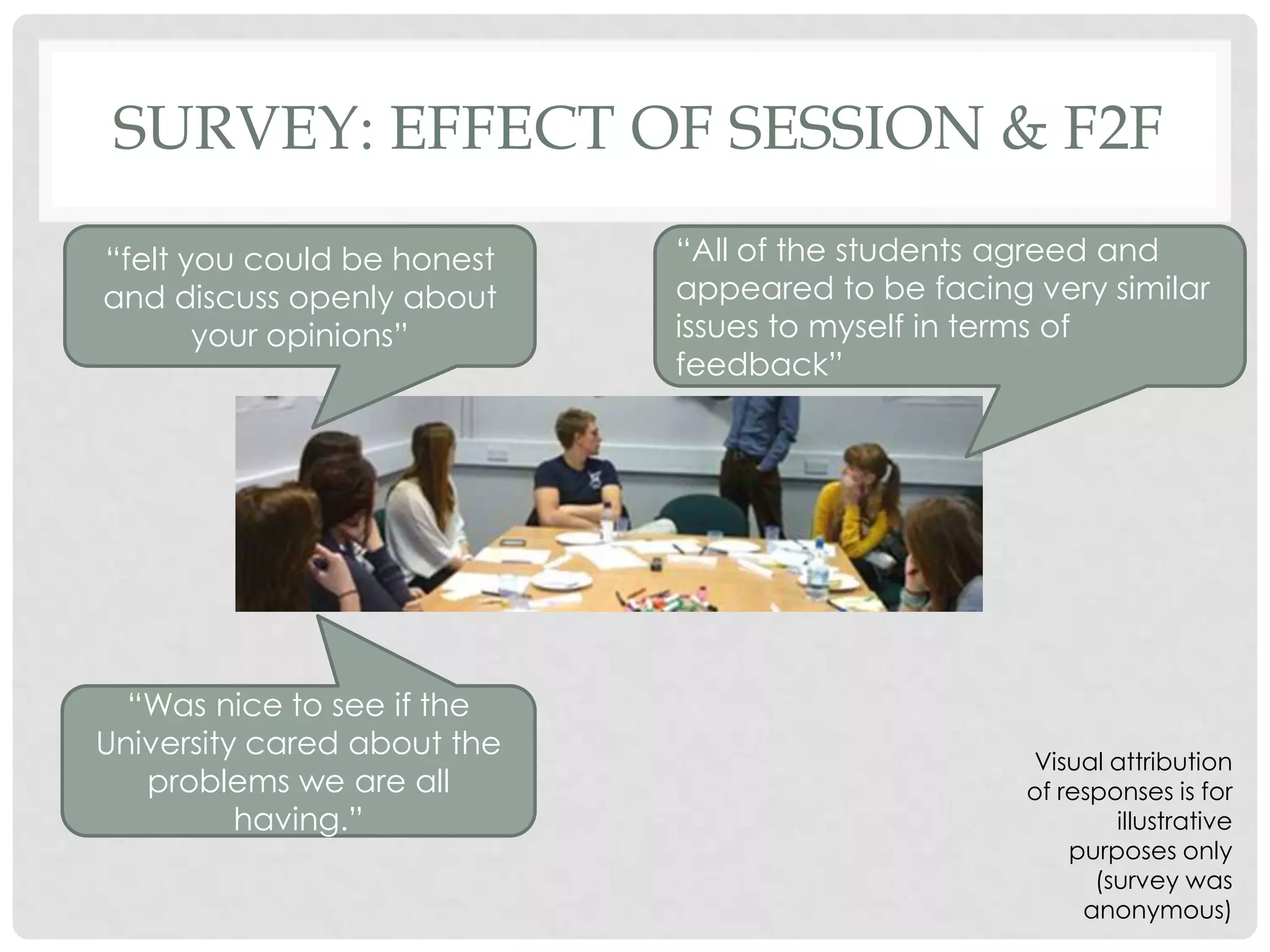
SURVEY: EFFECT OF SESSION & F2F
“felt you could be honest    “All of the students agreed and
and discuss openly about     appeared to be facing very similar
       your opinions”        issues to myself in terms of
                             feedback”


  “Was nice to see if the
University cared about the
                                                   Visual attribution
   problems we are all                             of responses is for
          having.”                                         illustrative
                                                       purposes only
                                                         (survey was
                                                        anonymous)
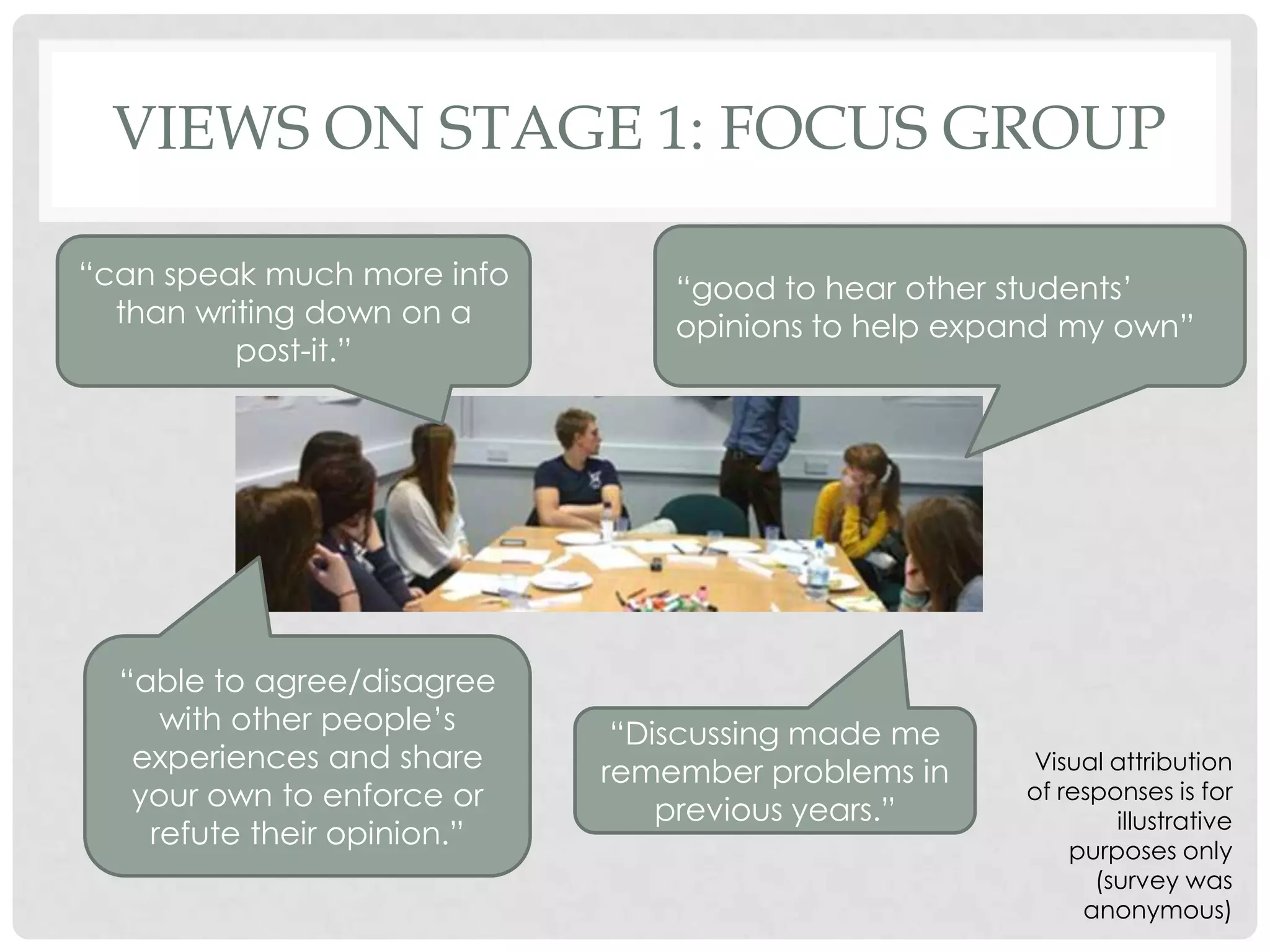
VIEWS ON STAGE 1: FOCUS GROUP

“can speak much more info        “good to hear other students‟
  than writing down on a         opinions to help expand my own”
          post-it.”


  “able to agree/disagree
     with other people‟s      “Discussing made me
   experiences and share     remember problems in    Visual attribution
   your own to enforce or        previous years.”
                                                     of responses is for
                                                             illustrative
    refute their opinion.”                               purposes only
                                                           (survey was
                                                          anonymous)
VIEWS ON STAGE 2: ‘NOMINAL’ BIT
   “outlined the main
problems with feedback                       “[gave] more time to
and made it clear what is                    think about answers.”
  needed to improve.”


      “if individuals didn‟t contribute
      much in the open discussion, their
      views were still taken in to account                     Visual attribution
      [in stage 2]”                                            of responses is for
                                                                       illustrative
                                                                   purposes only
                                                                     (survey was
                                                                    anonymous)
SURVEY: VIEWS ON COMBINATION

    “The open discussion
allowed many ideas to be
put forward, where as the
second part of the session
 allowed a summary of all
   of the views that were
         discussed.”


                                “The open discussion
                              helped to get me thinking
                              of my own experience of       Visual attribution
                             feedback, whilst writing my    of responses is for
                              opinion on the post-it note           illustrative
                               helped get my opinion            purposes only
                                                                  (survey was
                                       across..”                 anonymous)
STAFF PERCEPTIONS ON THE TWO-
STAGED ‘NOMINAL FOCUS GROUP’


            “Yes the nominal group
            technique, in the end it
            brought everything together
            into a sharper point again.
            … It kind of made it easier
            for us to identify what the
            students thought was the
            most important thing...”
STAFF PERCEPTION ON THE
 ‘NOMINAL FOCUS GROUP’


         “dealing with basically a bullet
         point, … you might get the
         meaning wrong. You might
         not understand, really what
         they meant. Whereas [the
         Focus Group the citations from
         students] explained a bit more
         of what they meant. ”
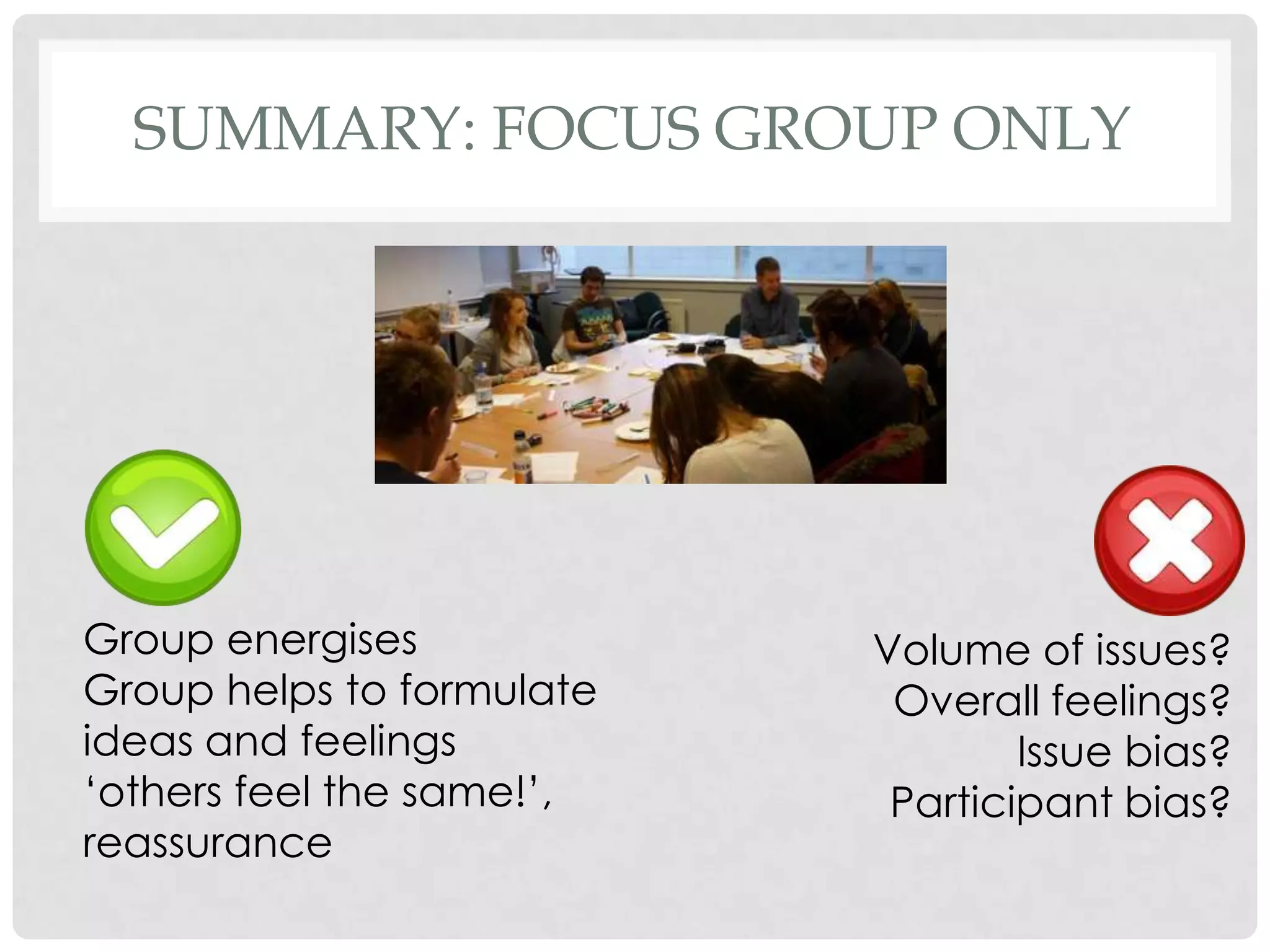
SUMMARY: FOCUS GROUP ONLY


Group energises            Volume of issues?
Group helps to formulate    Overall feelings?
ideas and feelings                 Issue bias?
„others feel the same!‟,    Participant bias?
reassurance
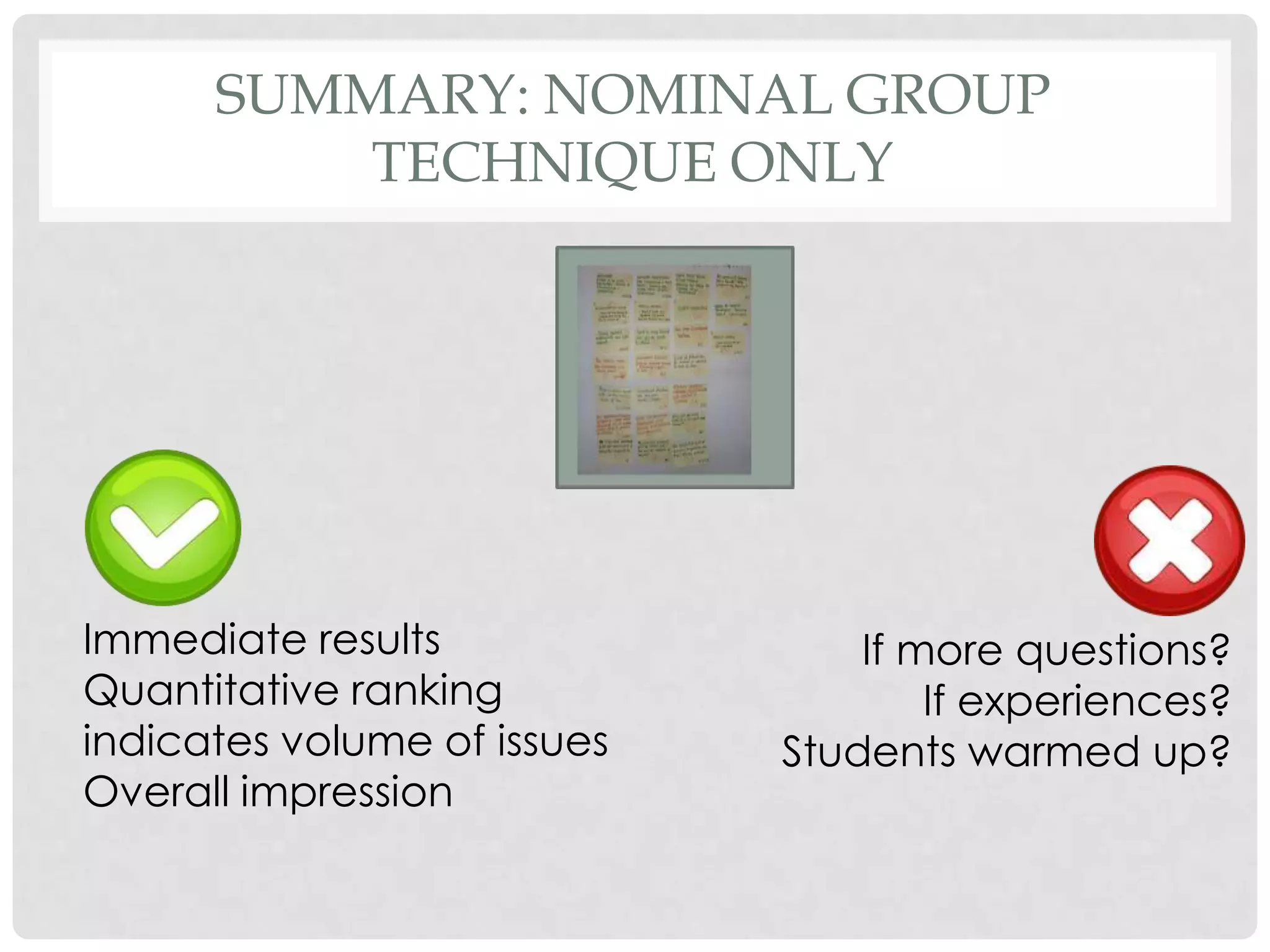
SUMMARY: NOMINAL GROUP
          TECHNIQUE ONLY


Immediate results                If more questions?
Quantitative ranking                 If experiences?
indicates volume of issues   Students warmed up?
Overall impression
SUMMARY: ADVANTAGES OF
  2-STAGED NOMINAL FOCUS GROUP


       Stage 1: FG                Stage 2: NGT

Group energises            Immediate results
Group helps to formulate   Quantitative ranking
ideas and feelings         indicates volume of issues
„Others feel the same!‟    Overall impression
SMALL-GROUP DISCUSSION

• What is the relevance of these techniques (NFG,
  NGT, FG) in your context?

 • What methods and techniques does your institution /
   department use for evaluation of teaching?
 • What works well?
 • What are the challenges? Opportunities?
 • Any relevance of these methods?
 • Or considerations for using these methods?
KEY MESSAGE


We have found the two-staged
 „Nominal Focus Group‟ to be
an efficient and useful method
                             for
   evaluation of teaching &
   curriculumalldevelopment.
   [It is a technique to add to your repertoire of evaluation
  methods. It may not suit    contexts, and the full evaluation
     cycle is the most important including a feedback loop and
                          action on results! ]
[OUTCOMES]        YOU:

• Are now familiar with the NGT and its
  stages.
• Discussed benefits and potential
  challenges of NGT.
• Contrasted focus groups & NGT.
• Considered a combined approach of
  FG&NGT.
• Reflected on methods in own context.
THANK YOU

Contact:
 Tünde Varga-Atkins
 tva@liverpool.ac.uk
 #tundeva
 #elearninglpool
  http://liverpool.academia.edu/T%C3%BCndeVargaAtkins

Today‟s resources on http://slideshare.net(search for nominal
  group technique)
REFERENCES
• Delbecq, A., Van de Ven, Andrew, & Gustafson, D.
  (1975). Group techniques for program planning  a  :
  guide to nominal group and Delphi processes.
  Glenview Ill.: Scott Foresman.
• Further references in:
   • Varga-Atkins, McIsaac et al (2011) Using the nominal
     group technique with clickers to research student
     experiences of e-learning: a project report
     [http://slidesha.re/xQlBCg ]
   • Varga-Atkins, McIsaac et al (2011) The Nominal Group
     Technique – a practical guide for facilitators
     [http://slidesha.re/AmYOgv]
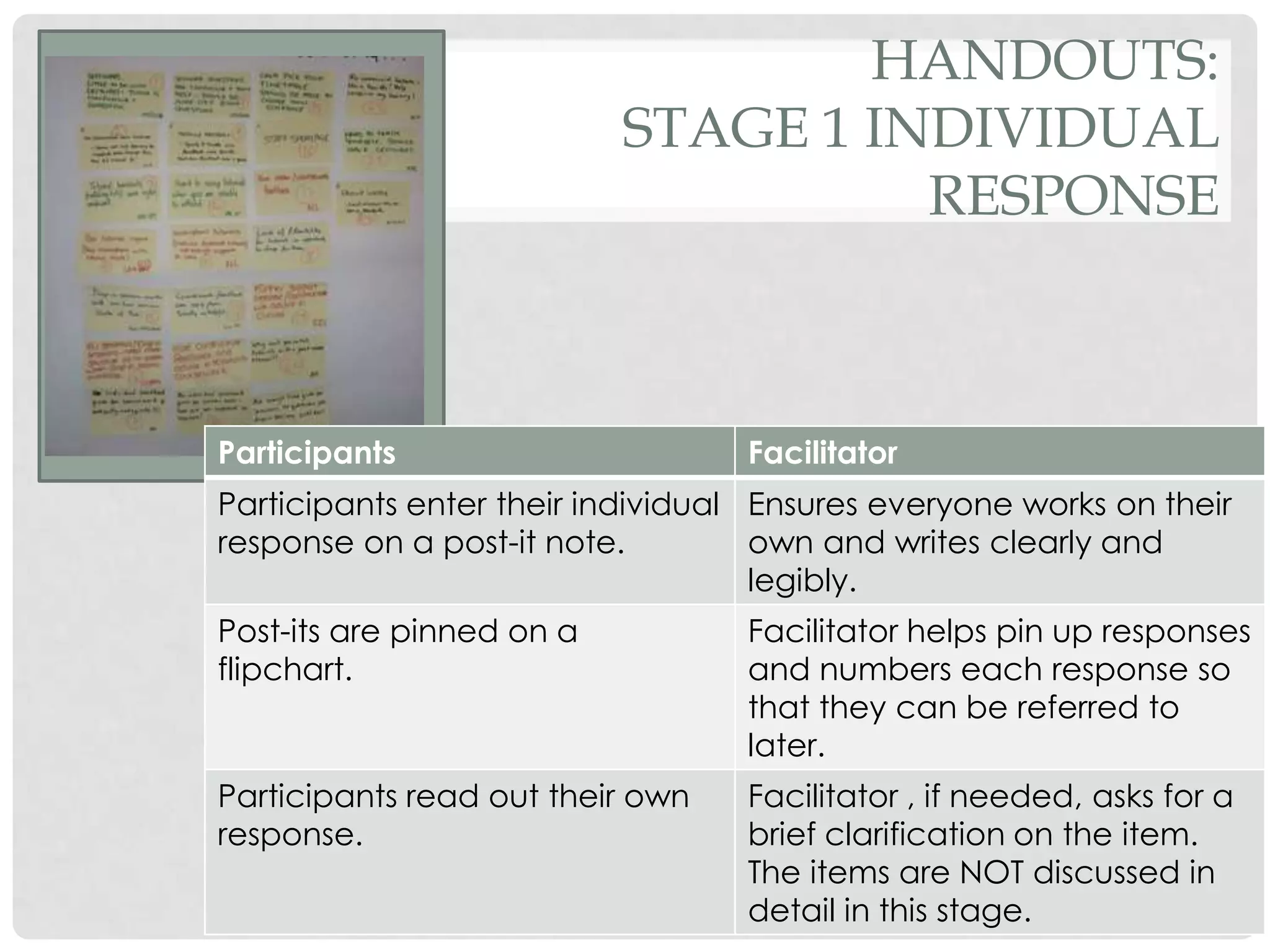
HANDOUTS:
                           STAGE 1 INDIVIDUAL
                                     RESPONSE


Participants                       Facilitator
Participants enter their individual Ensures everyone works on their
response on a post-it note.         own and writes clearly and
                                    legibly.
Post-its are pinned on a           Facilitator helps pin up responses
flipchart.                         and numbers each response so
                                   that they can be referred to
                                   later.
Participants read out their own    Facilitator , if needed, asks for a
response.                          brief clarification on the item.
                                   The items are NOT discussed in
                                   detail in this stage.
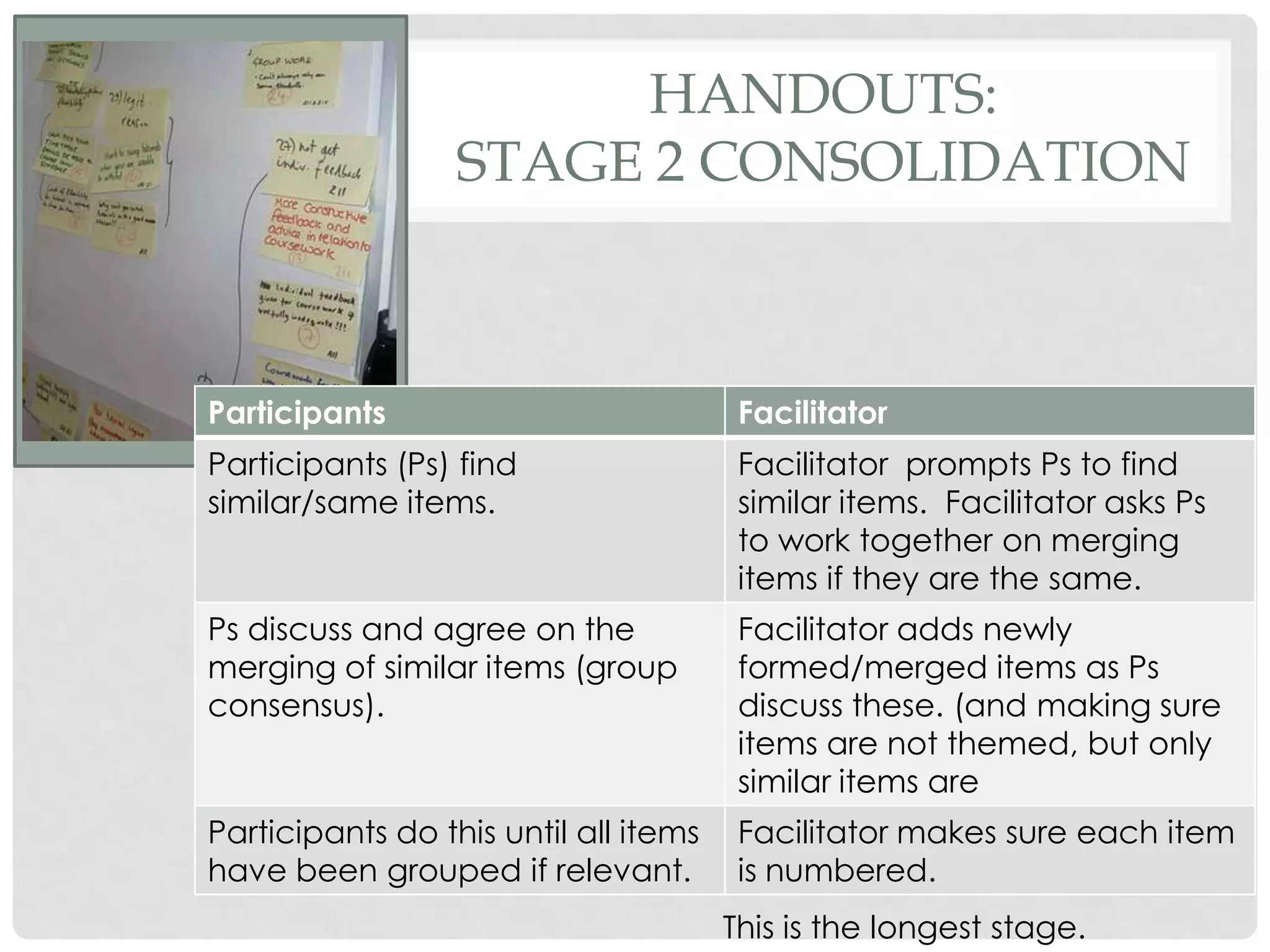
HANDOUTS:
                  STAGE 2 CONSOLIDATION


Participants                            Facilitator
Participants (Ps) find                  Facilitator prompts Ps to find
similar/same items.                     similar items. Facilitator asks Ps
                                        to work together on merging
                                        items if they are the same.
Ps discuss and agree on the             Facilitator adds newly
merging of similar items (group         formed/merged items as Ps
consensus).                             discuss these. (and making sure
                                        items are not themed, but only
                                        similar items are
Participants do this until all items    Facilitator makes sure each item
have been grouped if relevant.          is numbered.
                                       This is the longest stage.
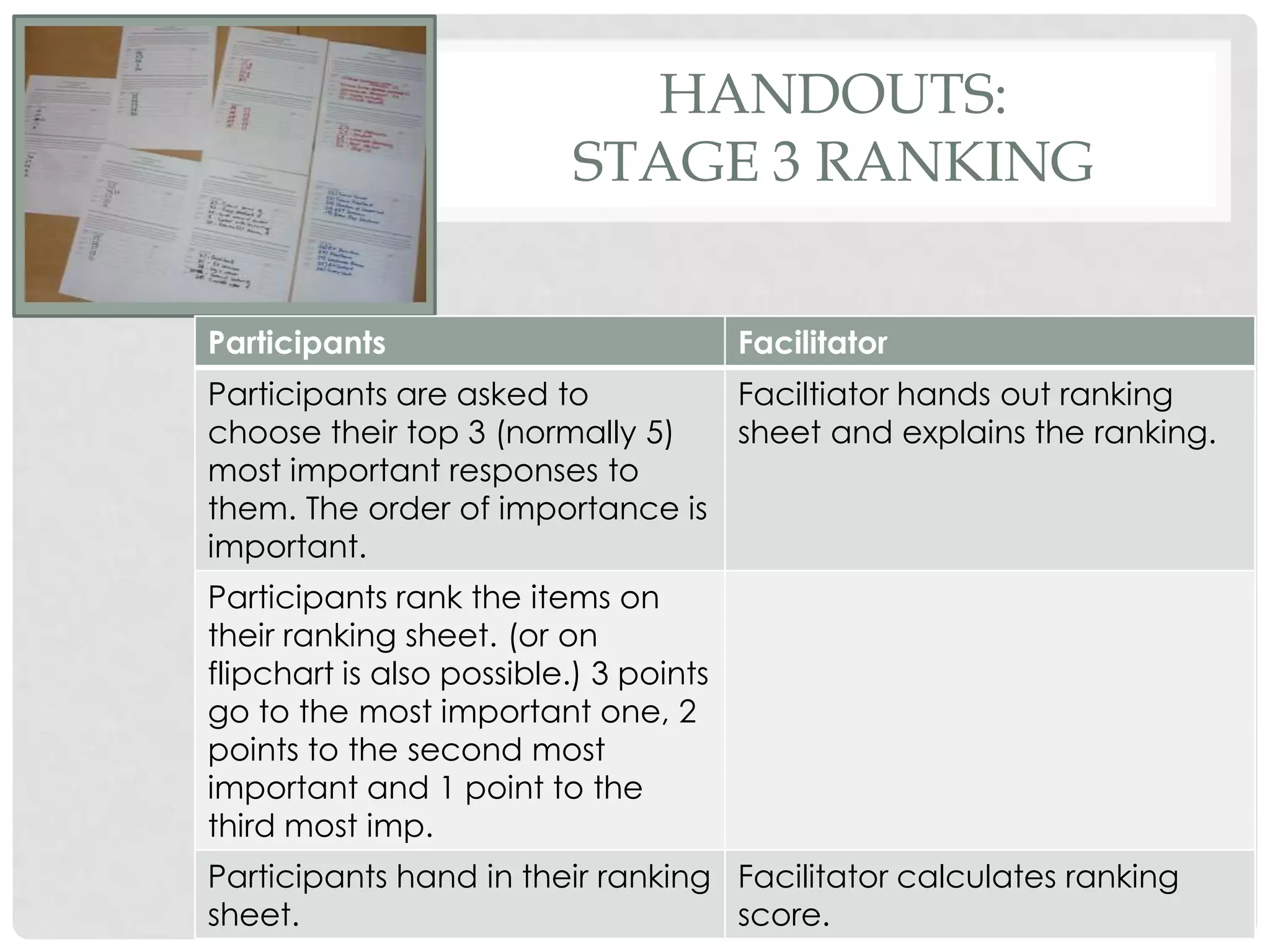
HANDOUTS:
                          STAGE 3 RANKING


Participants                            Facilitator
Participants are asked to        Faciltiator hands out ranking
choose their top 3 (normally 5)  sheet and explains the ranking.
most important responses to
them. The order of importance is
important.
Participants rank the items on
their ranking sheet. (or on
flipchart is also possible.) 3 points
go to the most important one, 2
points to the second most
important and 1 point to the
third most imp.
Participants hand in their ranking Facilitator calculates ranking
sheet.                             score.
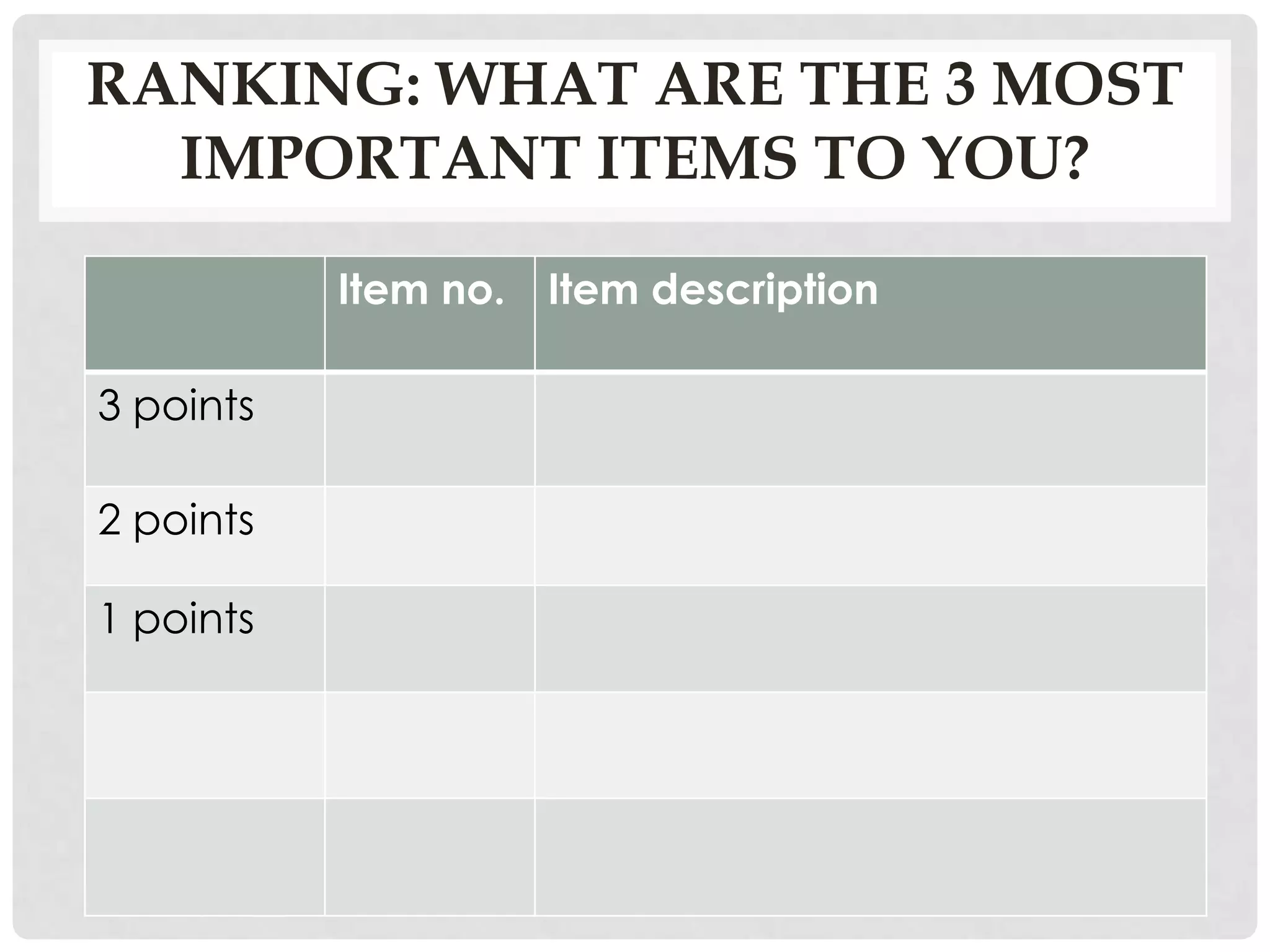
RANKING: WHAT ARE THE 3 MOST
  IMPORTANT ITEMS TO YOU?

           Item no.   Item description

3 points

2 points

1 points

Evaluation techniques of teaching: focus groups and Nominal Group Technique

  • 1.
    Evaluation techniques ofteaching: focus groups and the Nominal Group Technique Tünde Varga-Atkins, eLearning Unit University of Liverpool 15 November 2012 SEDA Conference Aston Business School, Birmingham
  • 2.
    OUTLINE • Introduction • Demonstrationof the Nominal Group Technique • Benefits and disadvantages of NGT • A new, combined two-staged approach: Nominal Focus Group • Reflections in own context
  • 3.
    OUTCOMES • Familiar withthe NGT and its stages. • Aware of the benefits and potential challenges of NGT. • Contrast focus groups & NGT. • Consider a combined approach of FG&NGT. • Reflect on the evaluation technique in own context.
  • 4.
    CONTEXT • Curriculum development •Student engagement • Our research-informed experiences as educational developers for last 4-5 years. • Hopefully a useful evaluation technique. • Works in other contexts: staff, or any setting requiring group-decision making. • Method selected to suit purpose!
  • 5.
    LISTENING TO THEEXPERIENCE? survey face-to-face groups  Wood-peckers?  Wolves?  Dinosaurs? “I found it extremely …. helpful to have not just an idea what is going on, but to hear what is said “with the questionnaire, by students.”(staff) you never know if [you] give the right question out.”(staff)
  • 6.
    LISTENING TO THEEXPERIENCE? survey face-to-face groups  Wood-peckers?  Wolves?  Dinosaurs? …. Please rate how useful was the wood-pecker‟s song in relation to your journey: 10-Very useful. 0-Not useful at all. Gary Robson - Flickr
  • 7.
    PRIOR EXPERIENCES WITHNGT? face-to-face focus groups Nominal groups interviews quantitative qualitative surveys Delphi technique at-a-distance
  • 8.
    WHAT IS NOMINALGROUP TECHNIQUE? • Structured group activity • One given topic • Facilitates group decision-making • Immediate results • Quantitative element • Reduces researcher/participant bias Delbecq & Van de Ven (1971)
  • 9.
    NGT: STAGES Example question: „What would you change in your course?‟ 1) Individual 2) Clarification and 3) Ranking responses responses consolidation Duration = 1-1.5 hours „Nominally‟ group < individual
  • 10.
    AND NOW: LET’SHAVE A GO... THE QUESTION IS: In your current role as educational developer what is one key challenging issue you are facing? [purpose: identifying top 3 key ones to tackle together] [normally we would ask participants to write 2-3 – but shortening the task here due to time constraints]
  • 11.
    STAGE 1: CHALLENGINGISSUE(S) 1 2 3 . 4 5 6
  • 12.
    STAGE 2 CONSOLIDATION:CHALLENGING ISSUES Same answers 4 2 Same answers Same answer 3 6 5 1 .
  • 13.
    STAGE 3 RANKING: YOUR TOP 3 KEY CHALLENGES that you want the group/SEDA etc. to tackle… Item no. Item description 3 points 1 2 points 2 1 points 4 [normally top 5 but for brevity only doing 3]
  • 14.
    THE TOP FIVEKEY CHALLENGES AS EDDEV-ER: 1 1 2 2 3 3 4 4 5 5
  • 15.
    SUMMARY & BRIEFQUESTIONS • Nominal Group Technique • 3 stages • 1-2 key questions explored. • Focus on individual work. • Group consensus. • Quantitative outcome. • Scalable: results from more groups can be integrated.
  • 16.
    BENEFITS AND CHALLENGES •Paperchase exercise • 3 minutes for each flipchart: dis/advanta ges of NGT NGT vs focus NGT vs groups surveys
  • 17.
    GUIDE TO NGT& PROJECT REPORT See References On slideshare.net , search for Nominal Group Technique
  • 18.
    Context NGT is more useful for: NGT is less useful for: Research Evaluation and decision-making Researching general purpose learner experiences Topic focus When you have one single topic When you have more to explore topics or a complex topic to explore Likely “What changes would you make “What are your research to your programme/curriculum?” experiences with your questions “What would help you improve programme so far?” the quality of feedback on this “What are your course?” experiences with the quality of feedback on this course?” Participants Participants with different power If power relations are not relations within the same group; an issue in the group. when consulting various stakeholders groups within same research (e.g. from students
  • 19.
    A COMBINED, TWO-STAGEDAPPROACH: ‘NOMINAL FOCUS GROUP’ Why? What is it? Jaye McIsaac, Educational Development, University of Liverpool Video at: https://stream.liv.ac.uk/mntbvv9d
  • 20.
    A COMBINED, TWO-STAGEDAPPROACH: ‘NOMINAL FOCUS GROUP’ Stage 1: focus group Stage 2: nominal, ranking „bit‟
  • 21.
    STUDENT EVALUATION ON EVALUATION(SURVEY, N=13) This is the Worlde cloud of the student survey responses on the group process.
  • 22.
    SURVEY: EFFECT OFSESSION & F2F “felt you could be honest “All of the students agreed and and discuss openly about appeared to be facing very similar your opinions” issues to myself in terms of feedback” “Was nice to see if the University cared about the Visual attribution problems we are all of responses is for having.” illustrative purposes only (survey was anonymous)
  • 23.
    VIEWS ON STAGE1: FOCUS GROUP “can speak much more info “good to hear other students‟ than writing down on a opinions to help expand my own” post-it.” “able to agree/disagree with other people‟s “Discussing made me experiences and share remember problems in Visual attribution your own to enforce or previous years.” of responses is for illustrative refute their opinion.” purposes only (survey was anonymous)
  • 24.
    VIEWS ON STAGE2: ‘NOMINAL’ BIT “outlined the main problems with feedback “[gave] more time to and made it clear what is think about answers.” needed to improve.” “if individuals didn‟t contribute much in the open discussion, their views were still taken in to account Visual attribution [in stage 2]” of responses is for illustrative purposes only (survey was anonymous)
  • 25.
    SURVEY: VIEWS ONCOMBINATION “The open discussion allowed many ideas to be put forward, where as the second part of the session allowed a summary of all of the views that were discussed.” “The open discussion helped to get me thinking of my own experience of Visual attribution feedback, whilst writing my of responses is for opinion on the post-it note illustrative helped get my opinion purposes only (survey was across..” anonymous)
  • 26.
    STAFF PERCEPTIONS ONTHE TWO- STAGED ‘NOMINAL FOCUS GROUP’ “Yes the nominal group technique, in the end it brought everything together into a sharper point again. … It kind of made it easier for us to identify what the students thought was the most important thing...”
  • 27.
    STAFF PERCEPTION ONTHE ‘NOMINAL FOCUS GROUP’ “dealing with basically a bullet point, … you might get the meaning wrong. You might not understand, really what they meant. Whereas [the Focus Group the citations from students] explained a bit more of what they meant. ”
  • 28.
    SUMMARY: FOCUS GROUPONLY Group energises Volume of issues? Group helps to formulate Overall feelings? ideas and feelings Issue bias? „others feel the same!‟, Participant bias? reassurance
  • 29.
    SUMMARY: NOMINAL GROUP TECHNIQUE ONLY Immediate results If more questions? Quantitative ranking If experiences? indicates volume of issues Students warmed up? Overall impression
  • 30.
    SUMMARY: ADVANTAGES OF 2-STAGED NOMINAL FOCUS GROUP Stage 1: FG Stage 2: NGT Group energises Immediate results Group helps to formulate Quantitative ranking ideas and feelings indicates volume of issues „Others feel the same!‟ Overall impression
  • 31.
    SMALL-GROUP DISCUSSION • Whatis the relevance of these techniques (NFG, NGT, FG) in your context? • What methods and techniques does your institution / department use for evaluation of teaching? • What works well? • What are the challenges? Opportunities? • Any relevance of these methods? • Or considerations for using these methods?
  • 32.
    KEY MESSAGE We havefound the two-staged „Nominal Focus Group‟ to be an efficient and useful method for evaluation of teaching & curriculumalldevelopment. [It is a technique to add to your repertoire of evaluation methods. It may not suit contexts, and the full evaluation cycle is the most important including a feedback loop and action on results! ]
  • 33.
    [OUTCOMES] YOU: • Are now familiar with the NGT and its stages. • Discussed benefits and potential challenges of NGT. • Contrasted focus groups & NGT. • Considered a combined approach of FG&NGT. • Reflected on methods in own context.
  • 34.
    THANK YOU Contact: TündeVarga-Atkins tva@liverpool.ac.uk #tundeva #elearninglpool http://liverpool.academia.edu/T%C3%BCndeVargaAtkins Today‟s resources on http://slideshare.net(search for nominal group technique)
  • 35.
    REFERENCES • Delbecq, A.,Van de Ven, Andrew, & Gustafson, D. (1975). Group techniques for program planning  a : guide to nominal group and Delphi processes. Glenview Ill.: Scott Foresman. • Further references in: • Varga-Atkins, McIsaac et al (2011) Using the nominal group technique with clickers to research student experiences of e-learning: a project report [http://slidesha.re/xQlBCg ] • Varga-Atkins, McIsaac et al (2011) The Nominal Group Technique – a practical guide for facilitators [http://slidesha.re/AmYOgv]
  • 36.
    HANDOUTS: STAGE 1 INDIVIDUAL RESPONSE Participants Facilitator Participants enter their individual Ensures everyone works on their response on a post-it note. own and writes clearly and legibly. Post-its are pinned on a Facilitator helps pin up responses flipchart. and numbers each response so that they can be referred to later. Participants read out their own Facilitator , if needed, asks for a response. brief clarification on the item. The items are NOT discussed in detail in this stage.
  • 37.
    HANDOUTS: STAGE 2 CONSOLIDATION Participants Facilitator Participants (Ps) find Facilitator prompts Ps to find similar/same items. similar items. Facilitator asks Ps to work together on merging items if they are the same. Ps discuss and agree on the Facilitator adds newly merging of similar items (group formed/merged items as Ps consensus). discuss these. (and making sure items are not themed, but only similar items are Participants do this until all items Facilitator makes sure each item have been grouped if relevant. is numbered. This is the longest stage.
  • 38.
    HANDOUTS: STAGE 3 RANKING Participants Facilitator Participants are asked to Faciltiator hands out ranking choose their top 3 (normally 5) sheet and explains the ranking. most important responses to them. The order of importance is important. Participants rank the items on their ranking sheet. (or on flipchart is also possible.) 3 points go to the most important one, 2 points to the second most important and 1 point to the third most imp. Participants hand in their ranking Facilitator calculates ranking sheet. score.
  • 39.
    RANKING: WHAT ARETHE 3 MOST IMPORTANT ITEMS TO YOU? Item no. Item description 3 points 2 points 1 points

Editor's Notes

  • #4 JayeThis session will be of interest to anyone who designs and delivers student evaluation and feedback.This interactive problem-solving demonstration aims to:1. offer a direct experience of an efficient student evaluation method, the Nominal Group Technique (NGT)(linked short research paper164) and;2. invite participants to consider two ‘problems’: How to make the face-to-face NGT process more efficient through the use of technologies What technologies could be used to carry out the NGT process online, synchronously or asynchronouslyAlert use of mobile phones and distributelittle slips of paper with the phone number on and a sample text message   
  • #9 Using it in HE context: a few refs here from our project report Originated by Delbecq &amp; Van de Ven (1971) Astructured face-to-face group session with the purpose of achieving group consensus and action planning on a chosen topic.Used for: curriculum design,review or evaluation.Benefits: - Encourages equal participation from all members, resulting in prioritised group consent that is immediately available.- Useful alternative to focus group sessions. Useful when undertaking action planning- Efficiency has been well documented (see Chapple &amp; Murphy, 1996)Next – outline of stages &amp; purpose
  • #10 TundeStructured and deliberate stagesNominal’ Group = only in name group, most activities are individual but end product is one based on group consensus, thus ‘group’ in nature.Example: Curriculum Review at UoL – focus group work been highly productive with students. This one from Life Sciences, where starting point was exploration of what was not working for students. Two key themes: student engagement with the subject and self learning. Course team wanted to get better at feedback to students and to get some feedback from on curriculum review, from students – so this process included.
  • #12 Tunde introduces taskThis is an individual stage. tundeasks each participant to put a post-it on the flipchart.Responses are put on a post it note and on the flipchart and read out aloud by the students.The facilitator then numbers each item.
  • #13 ConsolidationAre any responses the same?If so, put them near each other. Merge or delete items as appropriate or create a new item from 2-3 similar. (Not themeing!)Amend text if needed. Re-number So that each item is given a number.
  • #14 TundeThis is the final stage. Individual again.Each participant gets a ranking sheet, they choose from the flipchart their top five priorities. Ranking sheet is handed in and ranks calculated by facilitator.
  • #15 Jaye
  • #17 Each flip chart has two sections: advantages / disadvantages
  • #20 Disadvantage of NGT can be: one question can be explored, students are not warmed upDisadvantage of focus groups can be: bias, volume and ‘ratio’ of feeling does not come acrossAdvantage of NGt: ranking gives you an indication of the problem-volume, objectiveAdvantage of focus groups: students like hearing what they
  • #21 Disadvantage of NGT can be: one question can be explored, students are not warmed upDisadvantage of focus groups can be: bias, volume and ‘ratio’ of feeling does not come acrossAdvantage of NGt: ranking gives you an indication of the problem-volume, objectiveAdvantage of focus groups: students like hearing what they
  • #23 CareNeutralityGroup-feel“felt you could be honest and discuss openly about your opinions”“Was nice to see if the University cared about the problems we are all having.”“All of the students agreed and appeared to be facing very similar issues to myself in terms of feedback”
  • #24 CareNeutralityGroup-feel“felt you could be honest and discuss openly about your opinions”“Was nice to see if the University cared about the problems we are all having.”“All of the students agreed and appeared to be facing very similar issues to myself in terms of feedback”
  • #25 CareNeutralityGroup-feel“felt you could be honest and discuss openly about your opinions”“Was nice to see if the University cared about the problems we are all having.”“All of the students agreed and appeared to be facing very similar issues to myself in terms of feedback”
  • #26 CareNeutralityGroup-feel“felt you could be honest and discuss openly about your opinions”“Was nice to see if the University cared about the problems we are all having.”“All of the students agreed and appeared to be facing very similar issues to myself in terms of feedback”
  • #27 I mean in the Focus Group, I think it was helpful because it extended more, and if you would only use the nominal group technique, you would be dealing with basically a bullet point, which sometimes, you might get the meaning wrong. You might not understand, really what they meant. Whereas throughout what was reported from the Focus Group, the citations from the students, it explained a bit more of what they meant by certain things.
  • #28 I mean in the Focus Group, I think it was helpful because it extended more, and if you would only use the nominal group technique, you would be dealing with basically a bullet point, which sometimes, you might get the meaning wrong. You might not understand, really what they meant. Whereas throughout what was reported from the Focus Group, the citations from the students, it explained a bit more of what they meant by certain things.
  • #32 Should this be all group discussion? Or pairs? If about 12 people?
  • #40 TundeThis is the final stage. Individual again.Each participant gets a ranking sheet, they choose from the flipchart their top five priorities. Ranking sheet is handed in and ranks calculated by facilitator.