The Most Persecuted Minority
in the World?
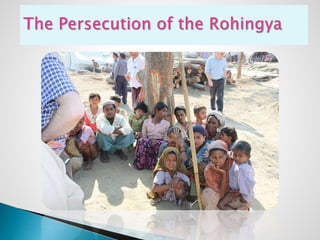
 The Persecution of the Rohingya
 The Refugee Crisis
 The Rohinga Boat People
 Aung Sang Sui Khi
 International Condemnation
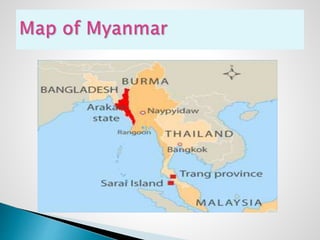
 Burma has a population of approximately
53.2 million
 It is predominately Bhuddist but about 5
% of its people are Muslims, which
includes the Rohingya people
 Burma became an independent state in
1948
 In 2011, the military junta was officially
dissolved following a 2010 general
election, and a nominally civilian
government was installed
 The release of Aung San Suu Kyi and
other political prisoners improved the
country's human rights record and
foreign relations, and led to the easing
of trade and other economic sanctions
 Myanmar is predominantly Buddhist (88%–90% of the
population), with small minorities of other faiths,
including a small minority of Muslims (5%). The
nation is dominated by its ethnic Bamar (or Burman)
majority (68%), most of whom are Buddhist
 For most of its independent years, the country has
been engrossed in rampant ethnic strife and its
myriad ethnic groups have been involved in one of
the world's longest running on-going civil
 During this time, the United Nations (UN) and several
other organisations have reported consistent and
systematic human rights violations in the country,
particularly against the Rohingya
 In modern times, the persecution of the
Rohingya Muslims dates back to the 1970s
 According to Amnesty International, the
Rohingya have suffered from human rights
violations under past military dictatorships
since 1978
 Since then, they have regularly been made the
target of persecution by the government and
nationalist Buddhists
 Rohingya Muslims are devoid of all kinds of
political and economic rights
 They are denied citizenship under the 1982
Myanmar nationality law, so they are a
stateless people
 They are also restricted from freedom of
movement, state education and civil service
jobs. The legal conditions faced by the
Rohingya in Myanmar have been compared
with Apartheid
 Ban on Travel
 Restrictions on Education
 Restrictions on Employment
 Marriage Restrictions
 Discrimination against Islamic Culture and
Religion
 In its 2016 Atrocities Prevention Report, the U.S. Department of
State summarized:
 The situation in Rakhine State is grim, in part due to a mix of
long-term historical tensions between the Rakhine and Rohingya
communities, socio-political conflict, socio-economic
underdevelopment, and a long-standing marginalization of both
Rakhine and Rohingya by the Government of Burma. The World
Bank estimates Rakhine State has the highest poverty rate in
Burma (78 percent) and is the poorest state in the country. The
lack of investment by the central government has resulted in
poor infrastructure and inferior social services, while lack of rule
of law has led to inadequate security conditions.
Members of the Rohingya community in particular reportedly face
abuses by the Government of Burma, including those involving
torture, unlawful arrest and detention, restricted movement,
restrictions on religious practice, and discrimination in
employment and access to social services.
 Wide-scale human rights violations, including
extrajudicial killings, gang rapes, arson and
infanticides
 To date, Myanmar has yet to allow the media
and human rights groups to enter the
persecuted areas, which has been termed an
“information black hole”
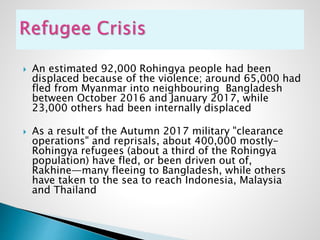
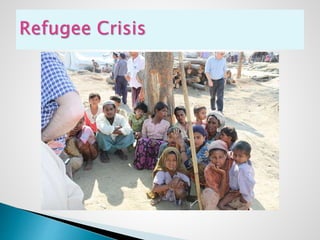
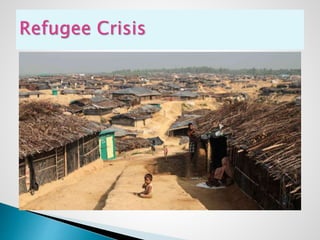
 An estimated 92,000 Rohingya people had been
displaced because of the violence; around 65,000 had
fled from Myanmar into neighbouring Bangladesh
between October 2016 and January 2017, while
23,000 others had been internally displaced
 As a result of the Autumn 2017 military "clearance
operations" and reprisals, about 400,000 mostly-
Rohingya refugees (about a third of the Rohingya
population) have fled, or been driven out of,
Rakhine—many fleeing to Bangladesh, while others
have taken to the sea to reach Indonesia, Malaysia
and Thailand
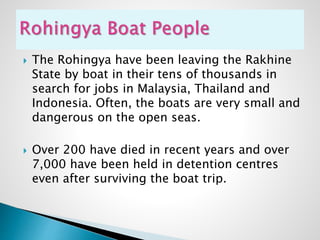
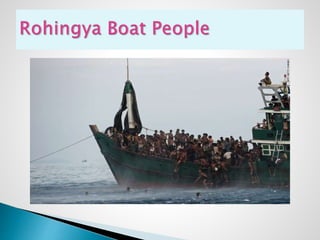
 The Rohingya have been leaving the Rakhine
State by boat in their tens of thousands in
search for jobs in Malaysia, Thailand and
Indonesia. Often, the boats are very small and
dangerous on the open seas.
 Over 200 have died in recent years and over
7,000 have been held in detention centres
even after surviving the boat trip.
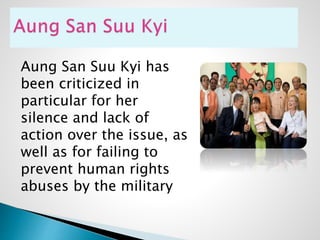
Aung San Suu Kyi has
been criticized in
particular for her
silence and lack of
action over the issue, as
well as for failing to
prevent human rights
abuses by the military
 In August 2017, Aung San Suu Kyi defended
the government's actions, stating the
government "...had already started defending
all the people in Rakhine in the best way
possible and expressed that there should be
no misinformation to create trouble between
the two countries." She denied that the
security services were systematically abusing
the Rohingya, claiming instead that they are
simply trying to hunt down organised and
violent Rohingya militants.
 Her inaction, on behalf of the Rohingya,
brought a plea for action from fellow Noble
Peace Prize laureate Malala Yousafzai.
Numerous people have called for her Nobel
Prize to be revoked, including Nobel Peace
Prize laureate Desmond Tutu. She stated in
response: "show me a country without
human rights issues.“
 Fake News

The rohingya people minorities presentation

  • 1.
    The Most PersecutedMinority in the World?
  • 2.
     The Persecutionof the Rohingya  The Refugee Crisis  The Rohinga Boat People  Aung Sang Sui Khi  International Condemnation
  • 3.
     Burma hasa population of approximately 53.2 million  It is predominately Bhuddist but about 5 % of its people are Muslims, which includes the Rohingya people  Burma became an independent state in 1948
  • 5.
     In 2011,the military junta was officially dissolved following a 2010 general election, and a nominally civilian government was installed  The release of Aung San Suu Kyi and other political prisoners improved the country's human rights record and foreign relations, and led to the easing of trade and other economic sanctions
  • 6.
     Myanmar ispredominantly Buddhist (88%–90% of the population), with small minorities of other faiths, including a small minority of Muslims (5%). The nation is dominated by its ethnic Bamar (or Burman) majority (68%), most of whom are Buddhist  For most of its independent years, the country has been engrossed in rampant ethnic strife and its myriad ethnic groups have been involved in one of the world's longest running on-going civil  During this time, the United Nations (UN) and several other organisations have reported consistent and systematic human rights violations in the country, particularly against the Rohingya
  • 8.
     In moderntimes, the persecution of the Rohingya Muslims dates back to the 1970s  According to Amnesty International, the Rohingya have suffered from human rights violations under past military dictatorships since 1978  Since then, they have regularly been made the target of persecution by the government and nationalist Buddhists
  • 9.
     Rohingya Muslimsare devoid of all kinds of political and economic rights  They are denied citizenship under the 1982 Myanmar nationality law, so they are a stateless people  They are also restricted from freedom of movement, state education and civil service jobs. The legal conditions faced by the Rohingya in Myanmar have been compared with Apartheid
  • 10.
     Ban onTravel  Restrictions on Education  Restrictions on Employment  Marriage Restrictions  Discrimination against Islamic Culture and Religion
  • 11.
     In its2016 Atrocities Prevention Report, the U.S. Department of State summarized:  The situation in Rakhine State is grim, in part due to a mix of long-term historical tensions between the Rakhine and Rohingya communities, socio-political conflict, socio-economic underdevelopment, and a long-standing marginalization of both Rakhine and Rohingya by the Government of Burma. The World Bank estimates Rakhine State has the highest poverty rate in Burma (78 percent) and is the poorest state in the country. The lack of investment by the central government has resulted in poor infrastructure and inferior social services, while lack of rule of law has led to inadequate security conditions. Members of the Rohingya community in particular reportedly face abuses by the Government of Burma, including those involving torture, unlawful arrest and detention, restricted movement, restrictions on religious practice, and discrimination in employment and access to social services.
  • 12.
     Wide-scale humanrights violations, including extrajudicial killings, gang rapes, arson and infanticides  To date, Myanmar has yet to allow the media and human rights groups to enter the persecuted areas, which has been termed an “information black hole”
  • 13.
     An estimated92,000 Rohingya people had been displaced because of the violence; around 65,000 had fled from Myanmar into neighbouring Bangladesh between October 2016 and January 2017, while 23,000 others had been internally displaced  As a result of the Autumn 2017 military "clearance operations" and reprisals, about 400,000 mostly- Rohingya refugees (about a third of the Rohingya population) have fled, or been driven out of, Rakhine—many fleeing to Bangladesh, while others have taken to the sea to reach Indonesia, Malaysia and Thailand
  • 16.
     The Rohingyahave been leaving the Rakhine State by boat in their tens of thousands in search for jobs in Malaysia, Thailand and Indonesia. Often, the boats are very small and dangerous on the open seas.  Over 200 have died in recent years and over 7,000 have been held in detention centres even after surviving the boat trip.
  • 19.
    Aung San SuuKyi has been criticized in particular for her silence and lack of action over the issue, as well as for failing to prevent human rights abuses by the military
  • 20.
     In August2017, Aung San Suu Kyi defended the government's actions, stating the government "...had already started defending all the people in Rakhine in the best way possible and expressed that there should be no misinformation to create trouble between the two countries." She denied that the security services were systematically abusing the Rohingya, claiming instead that they are simply trying to hunt down organised and violent Rohingya militants.
  • 21.
     Her inaction,on behalf of the Rohingya, brought a plea for action from fellow Noble Peace Prize laureate Malala Yousafzai. Numerous people have called for her Nobel Prize to be revoked, including Nobel Peace Prize laureate Desmond Tutu. She stated in response: "show me a country without human rights issues.“  Fake News

Editor's Notes

  • #10 The Myanmar government consider them to be Bangladeshi, while the Bangladeshi claim they are Burmese and will do not want them.
  • #15 Displaced Rohingya people in Kutupalong Refugee Camp in Bangladesh
  • #16 Kutupalong Refugee Camp in Bangladesh
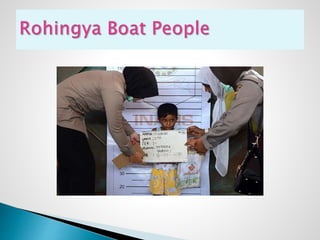
  • #19 Anwar Sah, a three-year old Rohingya boy from Burma, is photographed during an Indonesian police identification process (AFP)