Presented by  Angela Maiers, 2007 The Road to Meaning: Teaching Students To Successfully Navigate Nonfiction Texts
To nav·i·gate  ( návvi gàyt  )    Definition:  The act or process of moving through a place or towards an identified destination by plotting and following a defined route or course.
“ Final Destination” Students will have the ability to construct new understandings by interacting across and within texts, summarizing, analyzing, and evaluating them actively.  They must be able to use literacy for creative and critical thinking and for advanced problem solving.  Proficient and advanced readers know and apply multiple strategies to text in order  to construct meanings from multiple perspectives and understand how their meanings may differ from those of others. NAEP, 2002
Successful Navigation Requires…
Driver Rules and Responsibilities Know  Where  You Are Going? (Destination) Know  Why  You Are Going? (Purpose) Know  HOW  You Are Going to Get There? (Plan) MUST be  ACTIVE,ALERT  at ALL TIMES!!
Successful Navigation After During Before Reading Driving
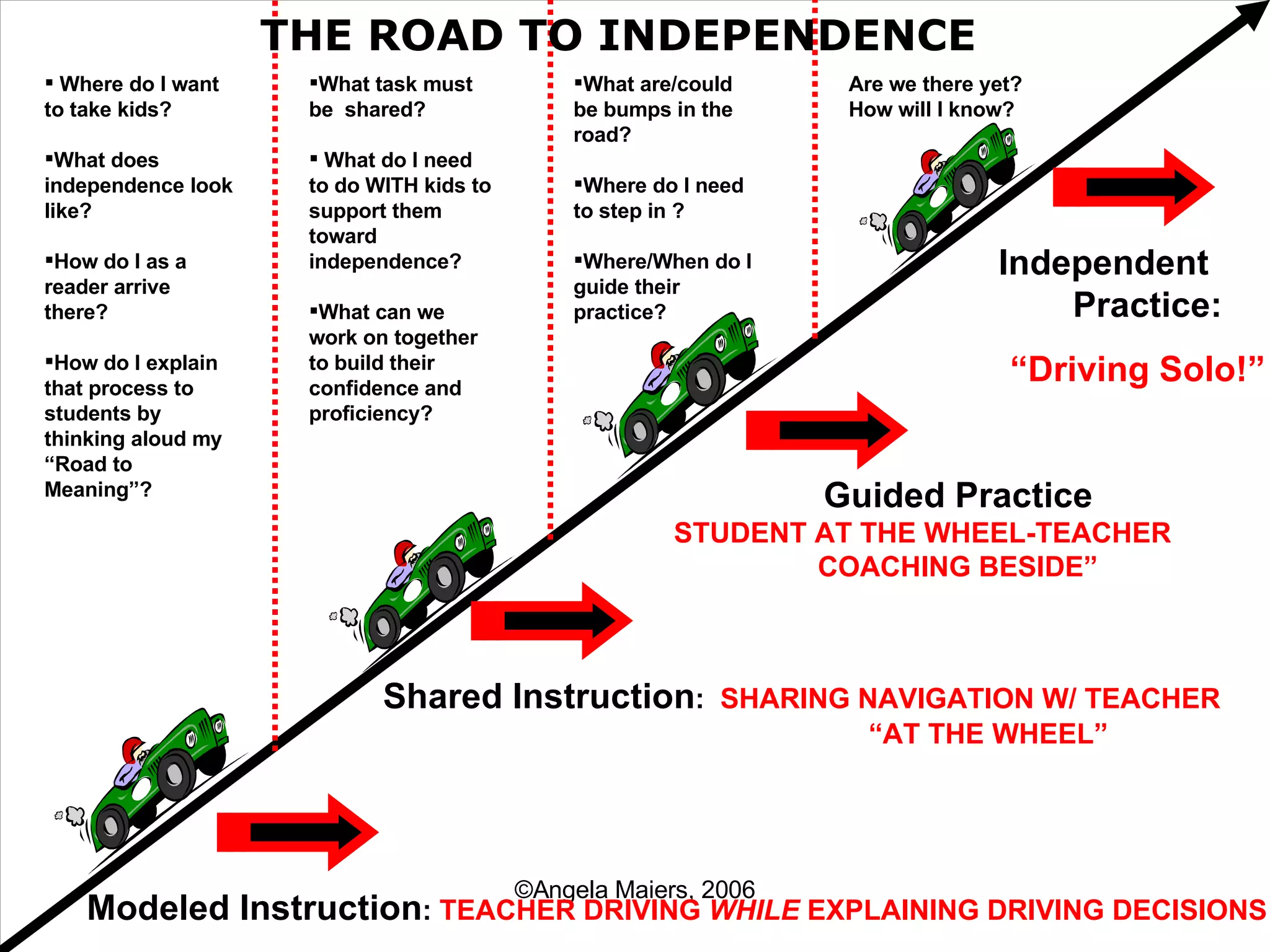
Modeled Instruction :  TEACHER DRIVING  WHILE  EXPLAINING DRIVING DECISIONS Shared Instruction :  SHARING NAVIGATION W/ TEACHER “ AT THE WHEEL” Guided Practice STUDENT AT THE WHEEL-TEACHER  COACHING BESIDE” Independent  Practice:  “ Driving Solo!” Where do I want to take kids? What does  independence look like? How do I as a reader arrive there? How do I explain that process to students by thinking aloud my “ Road to Meaning”? What task must be  shared? What do I need to do WITH kids to support them  toward independence? What can we work on together to build their confidence and proficiency? What are/could be bumps in the road? Where do I need to step in ? Where/When do I guide their practice? Are we there yet? How will I know? THE ROAD TO INDEPENDENCE
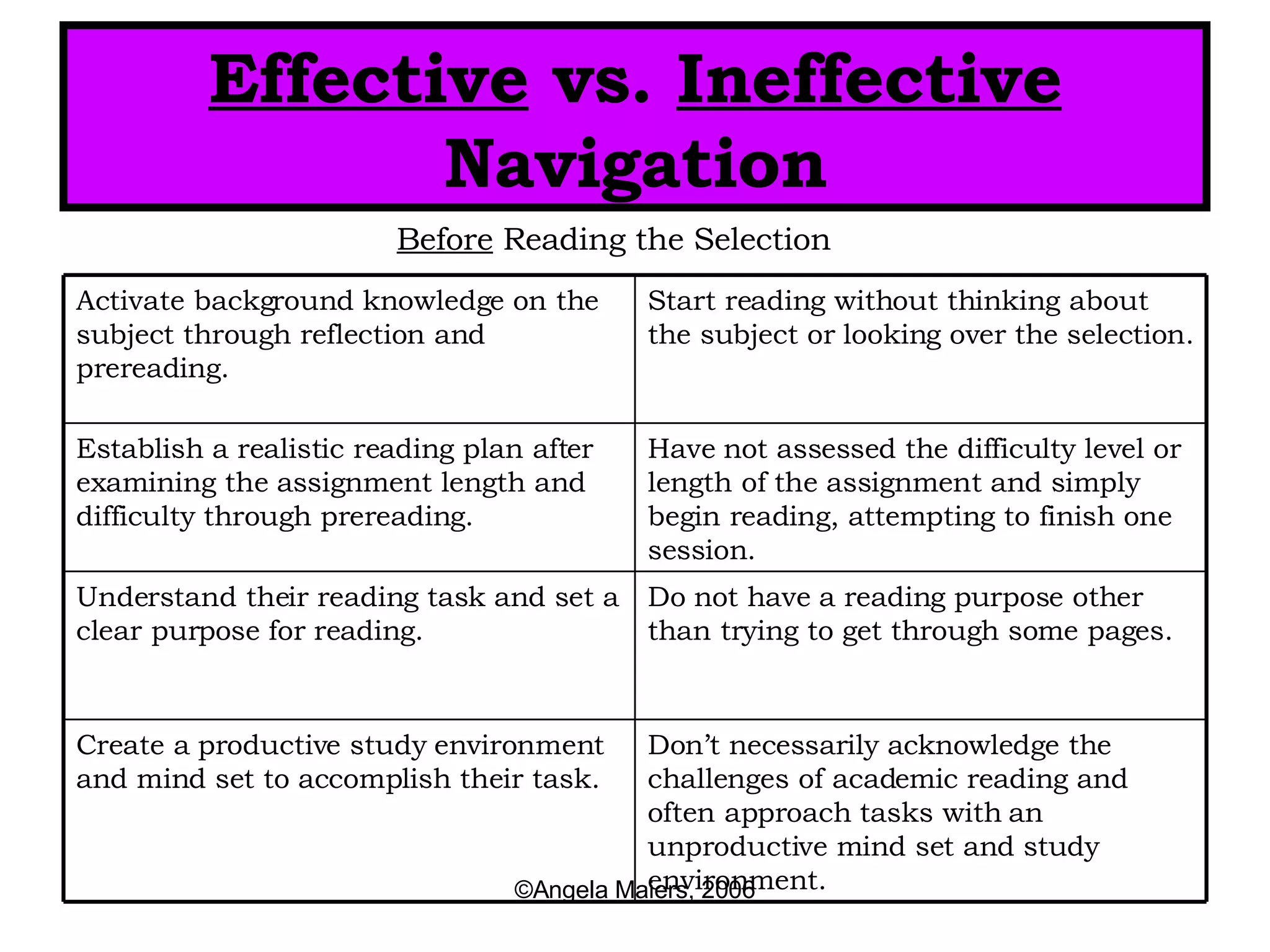
Effective  vs.  Ineffective  Navigation Before  Reading the Selection Don’t necessarily acknowledge the challenges of academic reading and often approach tasks with an unproductive mind set and study environment.  Create a productive study environment and mind set to accomplish their task.  Do not have a reading purpose other than trying to get through some pages. Understand their reading task and set a clear purpose for reading. Have not assessed the difficulty level or length of the assignment and simply begin reading, attempting to finish one session.  Establish a realistic reading plan after examining the assignment length and difficulty through prereading. Start reading without thinking about the subject or looking over the selection. Activate background knowledge on the subject through reflection and prereading.
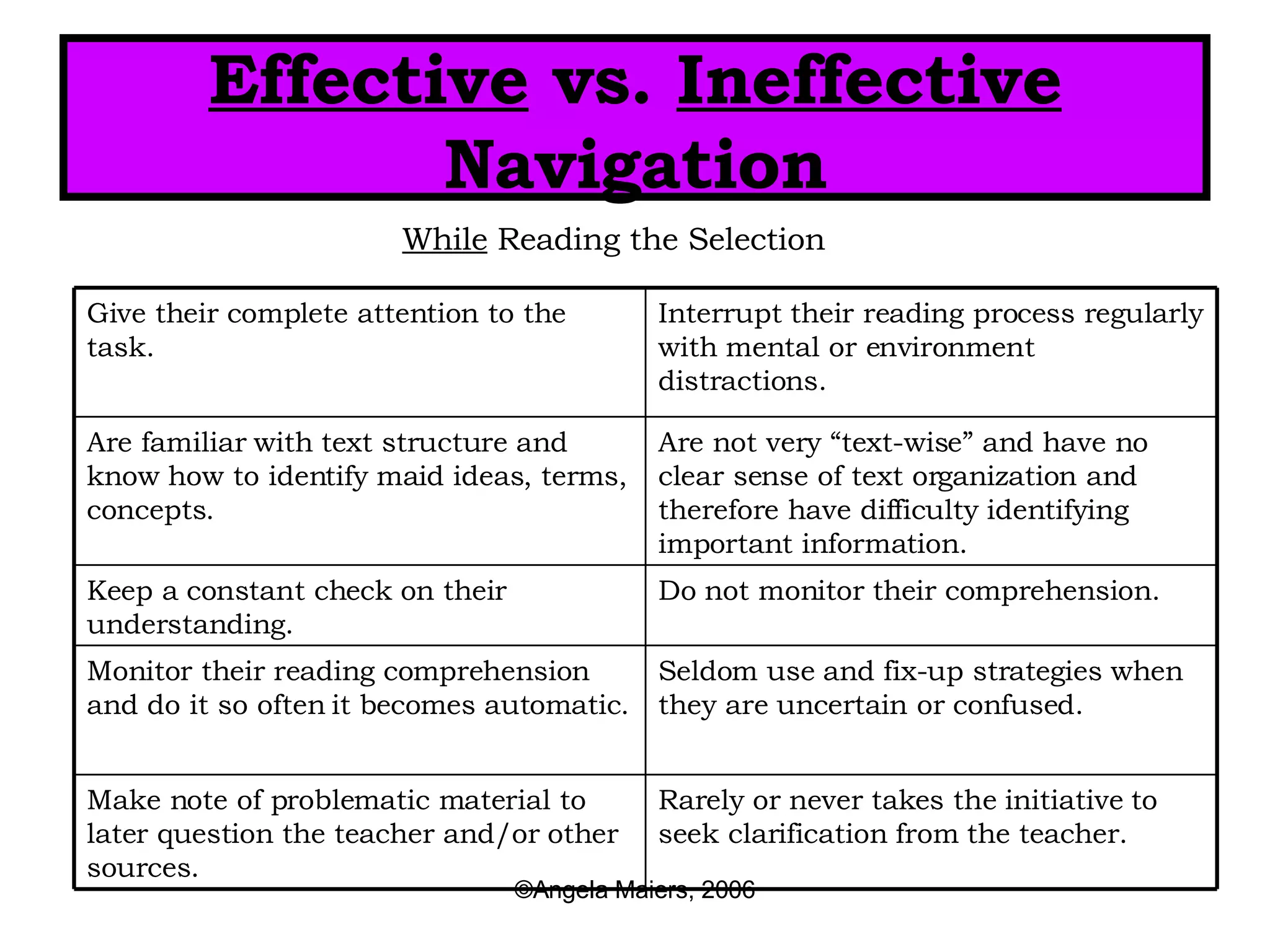
Effective  vs.  Ineffective  Navigation While  Reading the Selection Rarely or never takes the initiative to seek clarification from the teacher.  Make note of problematic material to later question the teacher and/or other sources. Seldom use and fix-up strategies when they are uncertain or confused.  Monitor their reading comprehension and do it so often it becomes automatic. Do not monitor their comprehension. Keep a constant check on their understanding.  Are not very “text-wise” and have no clear sense of text organization and therefore have difficulty identifying important information.  Are familiar with text structure and know how to identify maid ideas, terms, concepts. Interrupt their reading process regularly with mental or environment distractions. Give their complete attention to the task.
Effective  vs.  Ineffective  Strategies After  Reading the Selection Simply glance over or reread pages of the assigned reading before a test.  Synthesize and organize the main ideas for review and study purposes. Do not identify and organize the main ideas for study purposed. Identify, highlight and annotate main ideas within the text. Do not follow with any form of comprehension self-check. Evaluate comprehension of what was read.  Are not entirely certain what they have read. Decide if they have achieved their reading goal.
Elements of Nonfiction Instruction Genre Awareness Text Features Text Structures Content Specific Understandings (Math, Science, History, etc…) Challenges:  “Road Hazards”  Navigating 101
Nonfiction is like an orange… Because nonfiction is about reading and connecting The  sections  to the writers  whole idea  about the topic. BIG  Topic Section Topic Section Topic
Main Idea Web Topic: Oil Spills
 
 
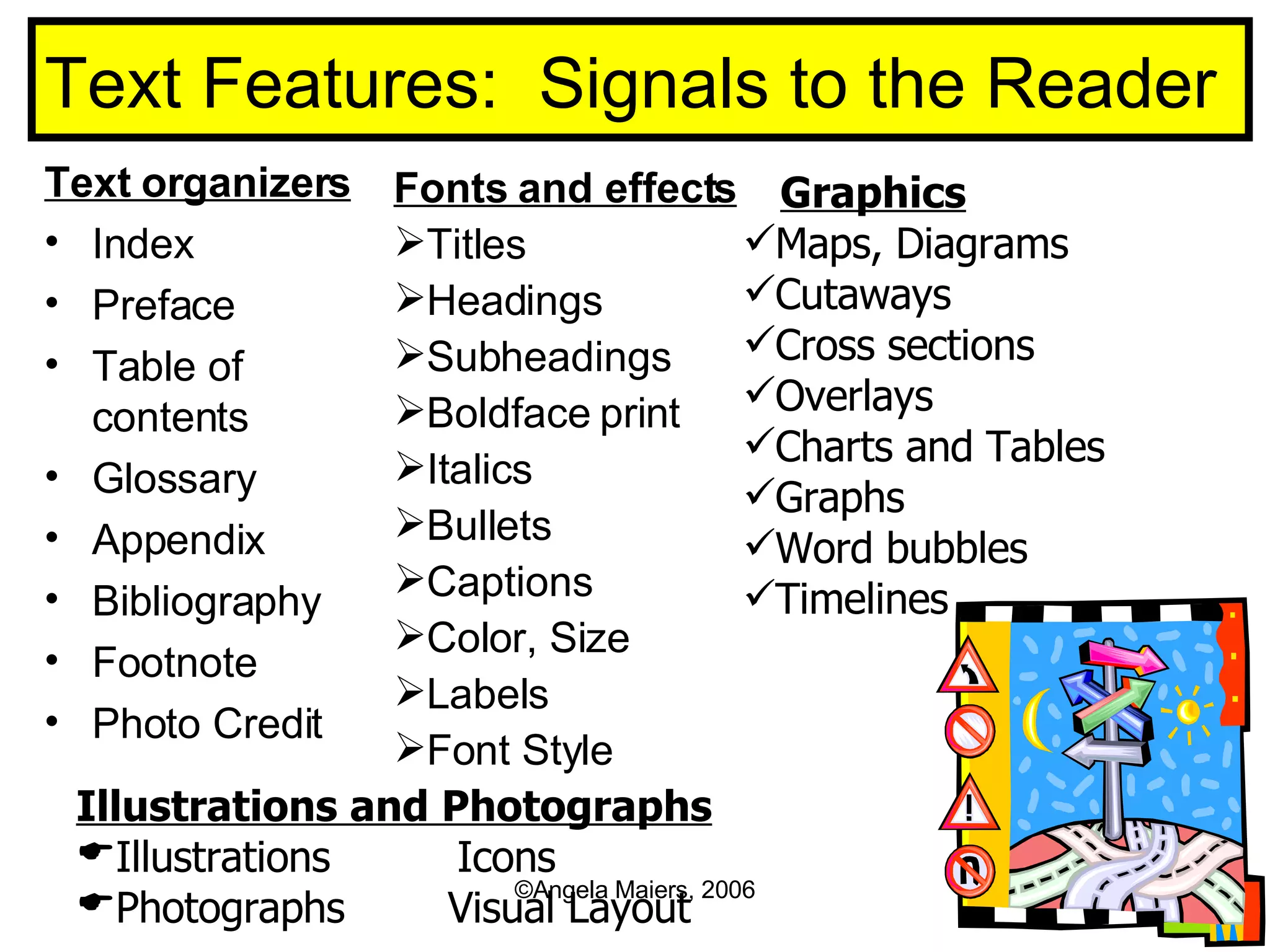
Text Features:  Signals to the Reader  Text organizers Index  Preface  Table of contents  Glossary  Appendix  Bibliography Footnote Photo Credit Fonts and effects Titles  Headings Subheadings  Boldface print  Italics  Bullets  Captions  Color, Size Labels Font Style  Illustrations and Photographs Illustrations  Icons Photographs  Visual Layout Graphics Maps, Diagrams Cutaways  Cross sections  Overlays  Charts and Tables  Graphs  Word bubbles  Timelines
 
Are Headings Important:   You Decide!?!
The procedure is actually quite simple.  First, you arrange things into different groups.  Of course, one pile may be sufficient depending on how much there is.  If you have to go somewhere else due to lack of facilities, that is the next step. It is very important not to overdue things.  The whole procedure will at first seem complicated, but soon  will become just another fact of life.  It is difficult to foresee any end to the necessity for this task in the immediate future, but then one can never tell.  After the entire procedure is complete, one arranges the materials onto different groups once again.  Then, you are ready to be put items into their proper places.  Eventually, they will be used once more, and the whole cycle will have to begin again.
A newspaper is better than a magazine, and on a seashore is a better place than a street.  At first, it is better to run than walk.  Also, you may have to try several times.  It takes some skill but it is fairly easy to learn.  Even young children can enjoy it.  Once successful , complications are minimal.  Birds seldom get too close.  One needs lots of room.  Rain soaks fast.  Too many people doing the same thing can also cause problems.  If there are no complications, it can be very peaceful. A rock will serve as an anchor.  If things break loose from it, however, you will not get a  second chance.
Poised between going on and back, pulled  both ways taut like a tightrope-walker. Fingertips pointing the opposites, now bouncing tiptoe like a dropped ball or a kid skipping rope, come on , come on, Running a scattering of steps sidewise, how he teeters, skitters, tingles, teases, and taunts them.  He is only flirting, crowd him, crowd him.  Delicate, delicate, delicate, …NOW!
What  DO  Headings Do? GIVE THE TOPIC!! Indicate aspect of the topic Set up Expectations Hint about the Main Idea Help Reader prepare and focus Provide transition between parts the text Allow the reader to make more successful connections B, D, and A reading Provide preview of the entire article
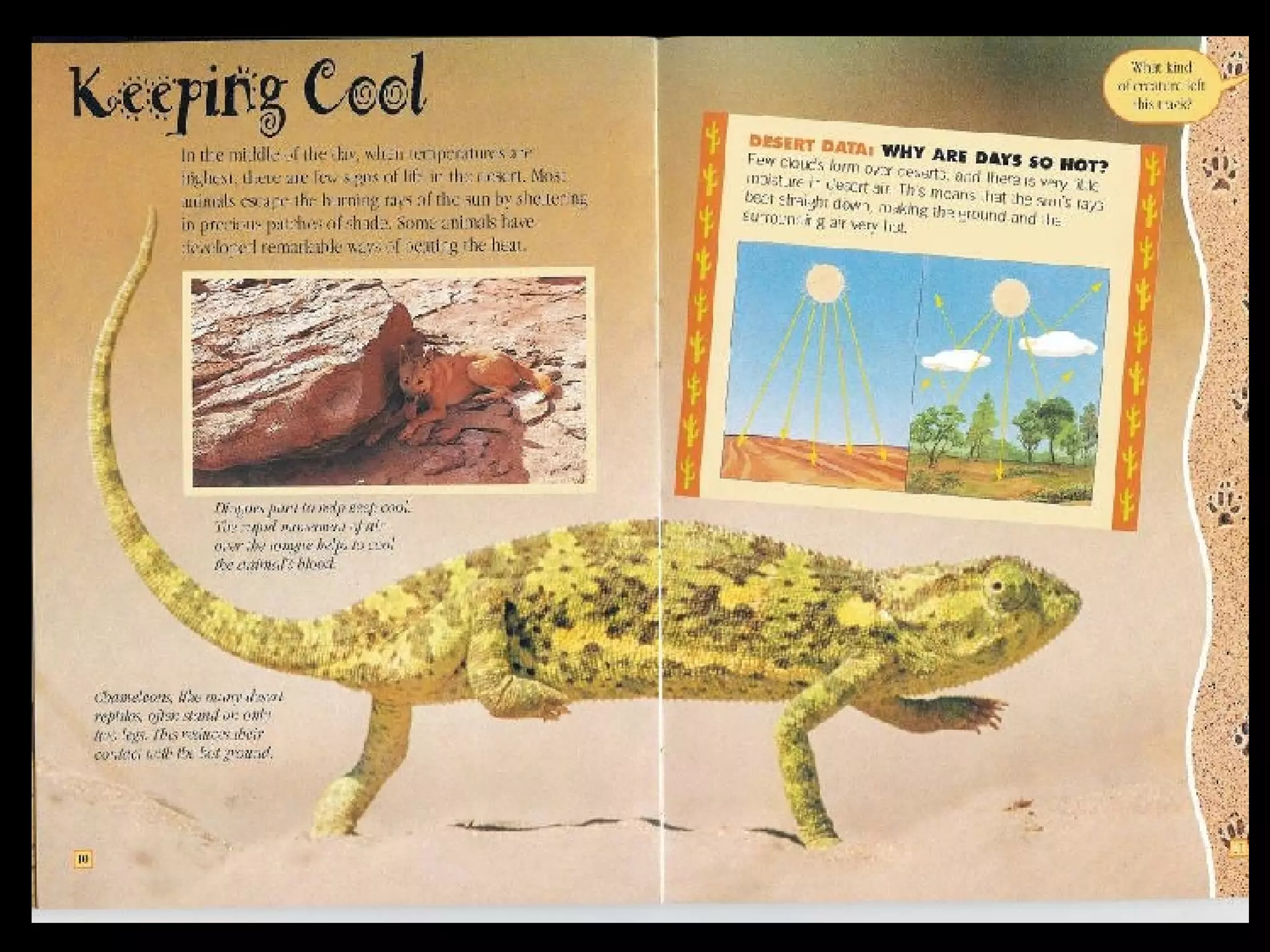
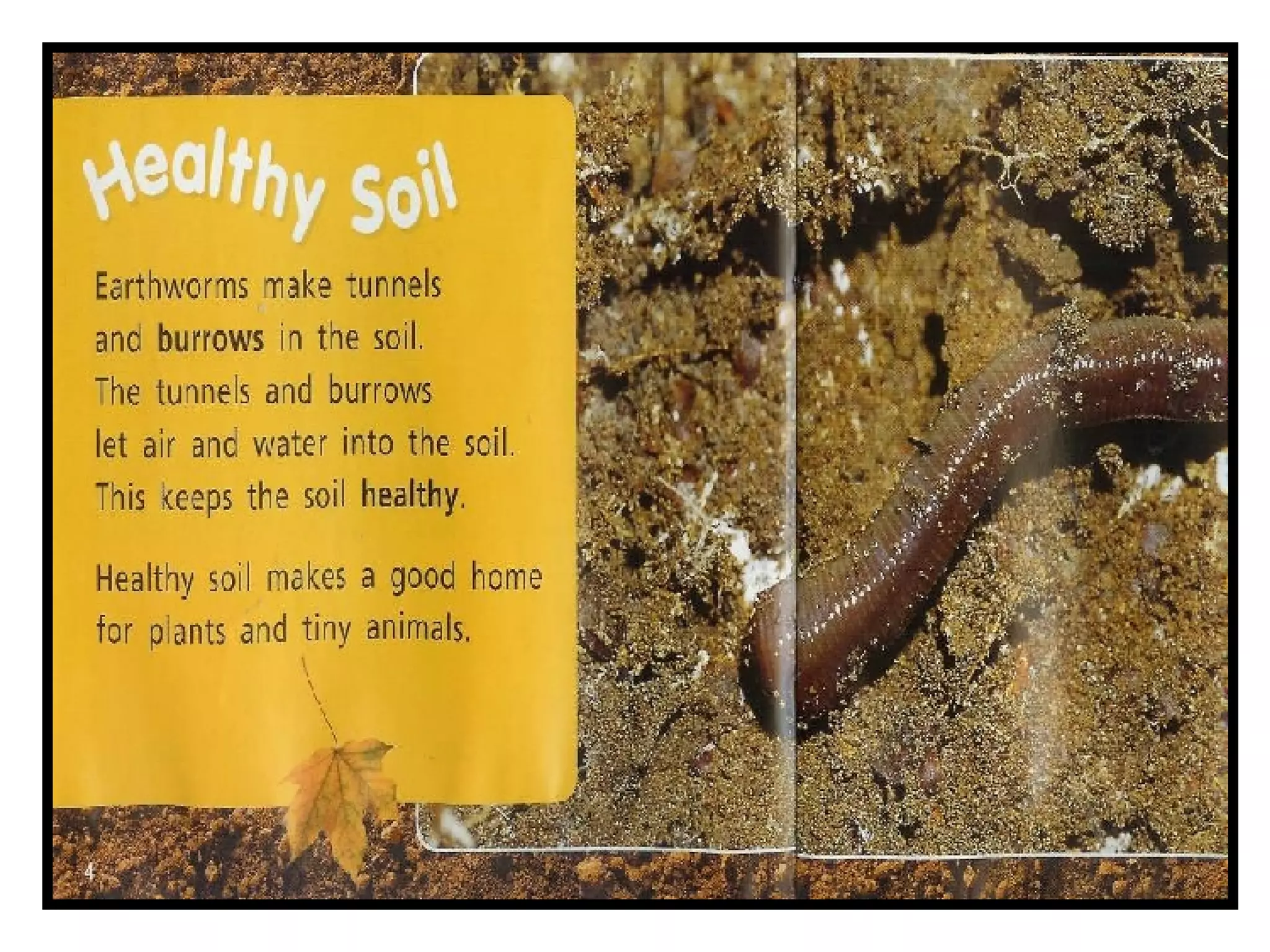
Print Size Cutaways Index Glossary It allows me to see the chapters and topics and know exactly what pages they are on so I can get to the information I need in the quickest way. Located in the front of the book to share a list of key topics or chapter  in which the book addresses in the order in which they appear in the text Table of Contents It allows the reader to see inside or a smaller part of a large area so we can understand it in a more detailed way A smaller more detailed section of the larger photo or illustration Close-Up Helps the readers take something familiar to show how it relates or compares with something new Show size relationship between two or more objects of ideas Comparison Tells the reader what to focus on in the picture that is important Information directly relating to a photo or illustration Caption How it Helps Purpose Convention
Visual Text:  Cross Section
Text Structure:  The Roadmap to Meaning Description Compare/Contrast Cause and Effect Chronology/Sequence Procedural Persuasive Question/Answer Problem/Solution
The  Places You Will Go
“ Text-Wiseness” Teaching students how to recognize and represent the organizational patterns commonly used by authors can  significantly  influence students’ learning and comprehension. Palinstar, Ogle, Carr, 97
 
 
Signal Words Point the Way… Text Structure & Signal Words Description/ Hierarchical List Cause &  Effect Compare / Contrast Problem/ Solution Question  & Answer Sequence For instance For example Furthermore Such as Also To begin with Most important Also In fact In addition And to illustrate Since Because This led to On account of Due to As a result of For this reason Consequentially Then…so… Therefore thus In like manner Likewise Similar to The difference  between As opposed to After all However And yet But Nevertheless On the other  hand One reason for the… A solution A problem Where The question is One answer is Recommendations include How When What Next Why Who How many The best  estimate It could be that One may  conclude Until Before After Finally Lastly First…last… Now…then On (date) At (time) First, second Meanwhile Not long after initially
The fire was started by sparks from a campfire left by a careless camper.  Thousands of acres of important watershed burned before the fire was brought under control.  As a result of the fire, trees and the grasslands on the slopes of the valley were gone.  Smoking black stumps were all that remained of tall pine trees.
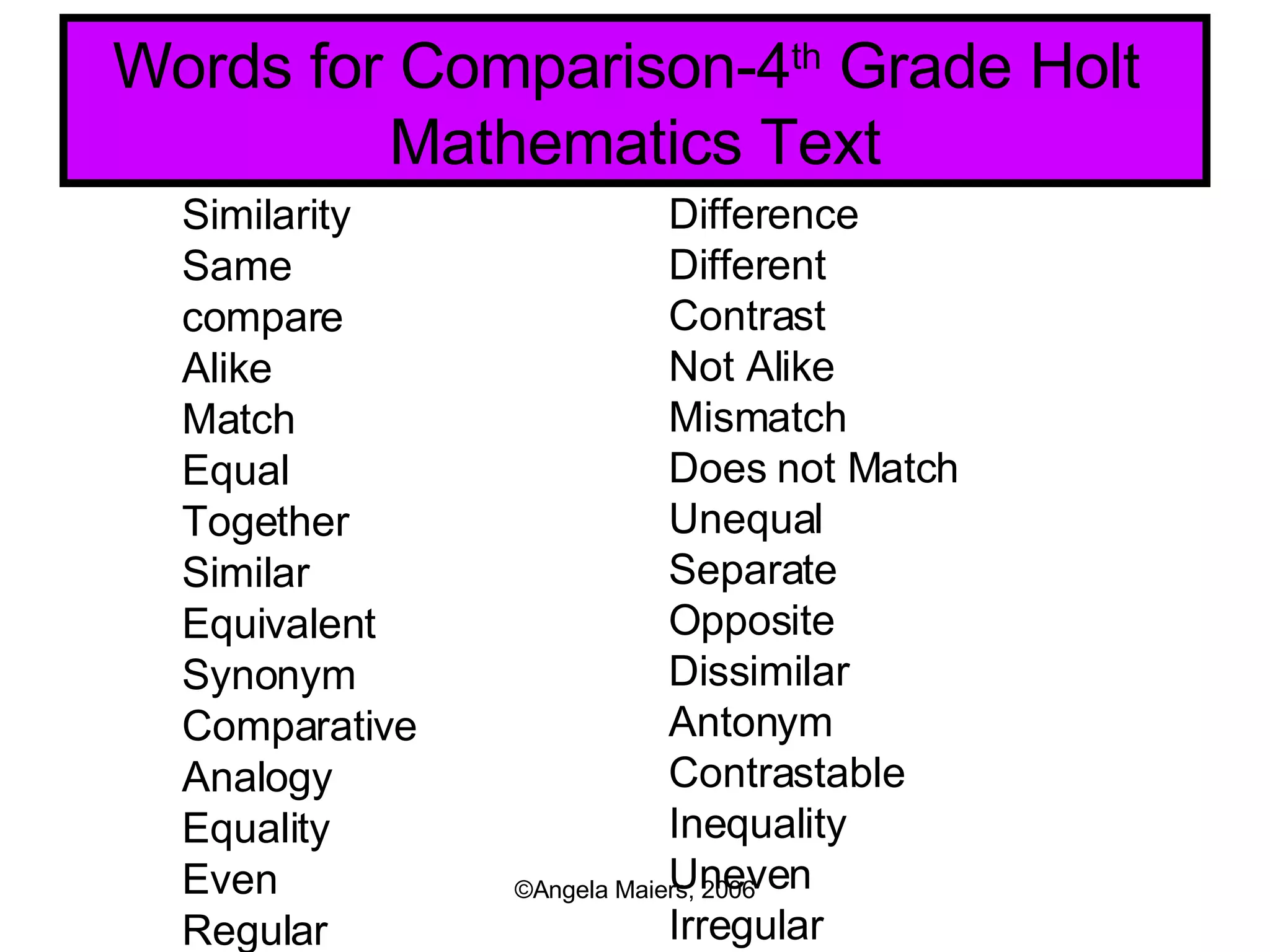
Words for Comparison-4 th  Grade Holt  Mathematics Text Similarity  Same compare Alike Match Equal Together Similar Equivalent Synonym Comparative Analogy Equality Even Regular Difference Different Contrast Not Alike Mismatch Does not Match Unequal Separate Opposite Dissimilar Antonym Contrastable Inequality  Uneven Irregular
 
tail mouth
 
 
Content Specific Understanding Careful reading or skimming Scanning Assessing the text through the index Using heading ,captions, pictures,… Determining what to read, order of reading Noting organizational pattern Deterring what to pay attention to Determining what to ignore What information fits with schema, what is new:  how to sort it
AREAS OF EXPERTISE Things readers of science know… Things readers of literature know… Things writers know… Things readers of history know… Things readers of math know… Things readers of internet know… Things readers of_________ know…
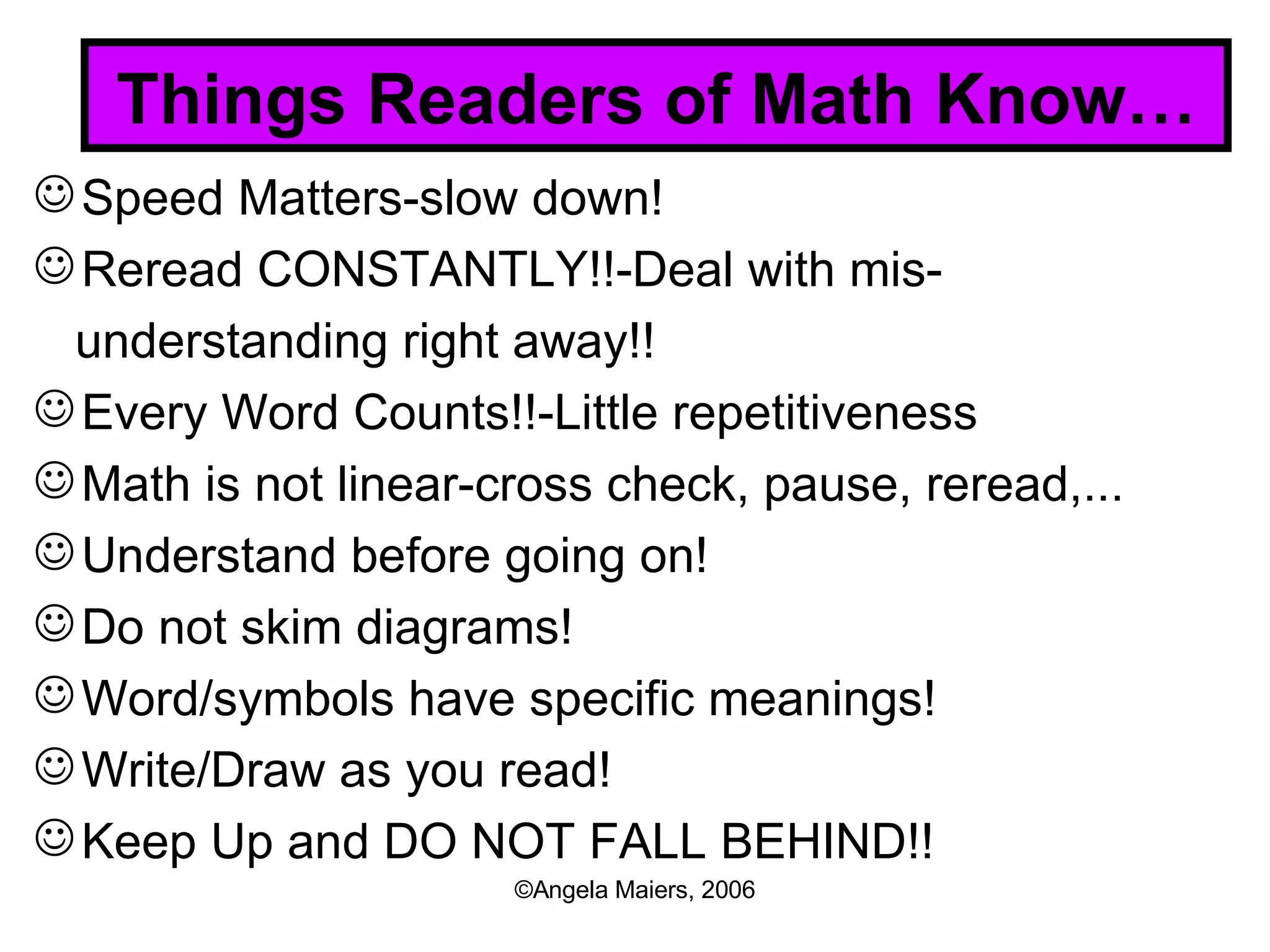
Things Readers of Math Know… Speed Matters-slow down! Reread CONSTANTLY!!-Deal with mis- understanding right away!! Every Word Counts!!-Little repetitiveness Math is not linear-cross check, pause, reread,... Understand before going on! Do not skim diagrams! Word/symbols have specific meanings! Write/Draw as you read! Keep Up and DO NOT FALL BEHIND!!
Things Readers of Science Know… Use and activate prior knowledge Formulate hypothesis Establish plans Evaluating and understanding concepts Compare/Contrast Making inferences Describe and recognize patterns Determining importance of information Visuals are critical!
Things Readers of History Know… History is about the human condition Must relate to life today! Reading visual information-critical Focus on causes and outcomes Connecting prior understandings and using them for future problems Inferring concepts/words in sentences and paragraphs… Special knowledge of dates, symbols, and terminology needed to read, write, and discuss understandings of history in language of historians
Navigating Nonfiction: The  BIG  Picture
 
 
Whole Group Explicit Instruction :  9 Week Plan NF NF NF F F F NF NF NF WK 9 WK 8 WK 7 WK 6 WK 5 WK 4  WK 3 WK 2 WK 1
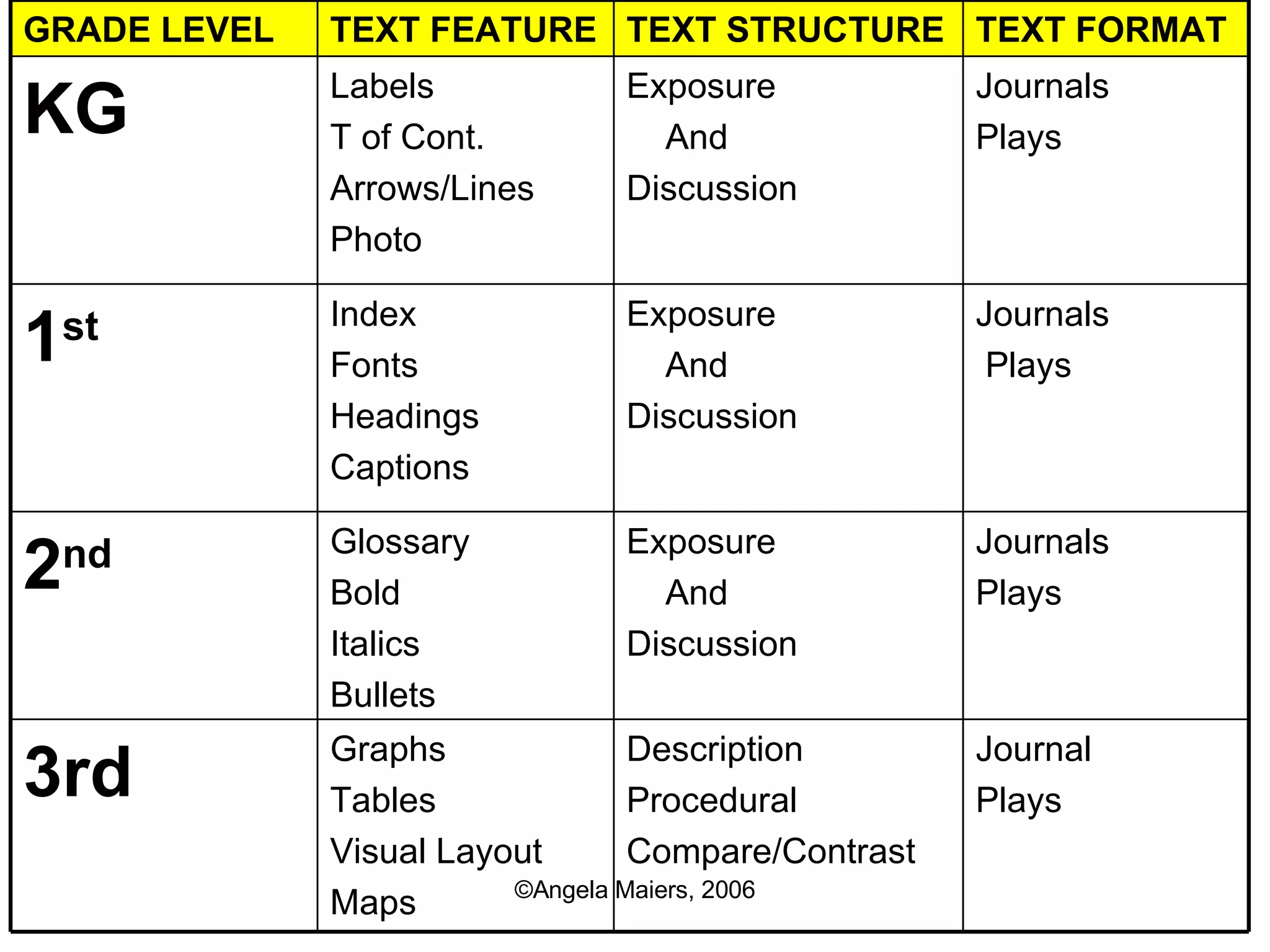
Journal Plays Description Procedural Compare/Contrast Graphs Tables Visual Layout Maps 3rd Journals Plays Exposure And Discussion Glossary Bold Italics Bullets 2 nd Journals Plays Exposure And Discussion Index Fonts Headings Captions 1 st Journals Plays Exposure And Discussion Labels T of Cont. Arrows/Lines Photo KG TEXT FORMAT TEXT STRUCTURE TEXT FEATURE GRADE LEVEL
Editorials Emails Diary Memoirs Chronology Persuasion Problem and Solution Timelines Sidebars Bibliography Footnotes Asteric 6th Editorials Emails Diary Memoirs Chronology Persuasion Problem and Solution Timelines Sidebars Bibliography Footnotes Asteric 5th Editorials Emails Diary Memoirs Cause and Effect Question and Answer Data Analysis Sub Heading Quotations Diagrams 4th TEXT FORMAT TEXT STRUCTURE TEXT FEATURE GRADE LEVEL
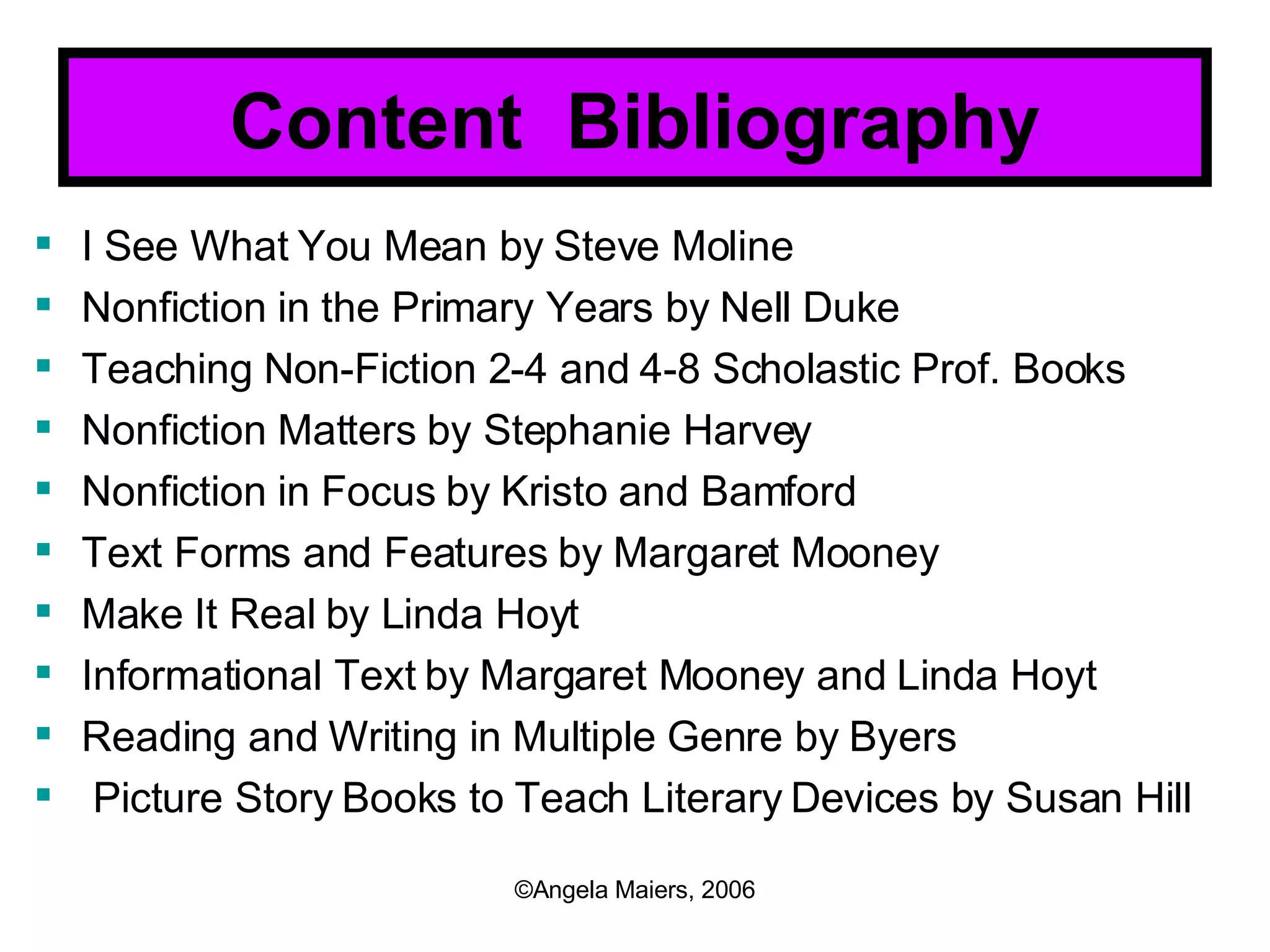
Content  Bibliography I See What You Mean by Steve Moline Nonfiction in the Primary Years by Nell Duke Teaching Non-Fiction 2-4 and 4-8 Scholastic Prof. Books Nonfiction Matters by Stephanie Harvey Nonfiction in Focus by Kristo and Bamford Text Forms and Features by Margaret Mooney Make It Real by Linda Hoyt Informational Text by Margaret Mooney and Linda Hoyt Reading and Writing in Multiple Genre by Byers Picture Story Books to Teach Literary Devices by Susan Hill

The Road to Meaning

  • 1.
    Presented by Angela Maiers, 2007 The Road to Meaning: Teaching Students To Successfully Navigate Nonfiction Texts
  • 2.
    To nav·i·gate ( návvi gàyt )   Definition:  The act or process of moving through a place or towards an identified destination by plotting and following a defined route or course.
  • 3.
    “ Final Destination”Students will have the ability to construct new understandings by interacting across and within texts, summarizing, analyzing, and evaluating them actively. They must be able to use literacy for creative and critical thinking and for advanced problem solving. Proficient and advanced readers know and apply multiple strategies to text in order to construct meanings from multiple perspectives and understand how their meanings may differ from those of others. NAEP, 2002
  • 4.
  • 5.
    Driver Rules andResponsibilities Know Where You Are Going? (Destination) Know Why You Are Going? (Purpose) Know HOW You Are Going to Get There? (Plan) MUST be ACTIVE,ALERT at ALL TIMES!!
  • 6.
    Successful Navigation AfterDuring Before Reading Driving
  • 7.
    Modeled Instruction : TEACHER DRIVING WHILE EXPLAINING DRIVING DECISIONS Shared Instruction : SHARING NAVIGATION W/ TEACHER “ AT THE WHEEL” Guided Practice STUDENT AT THE WHEEL-TEACHER COACHING BESIDE” Independent Practice: “ Driving Solo!” Where do I want to take kids? What does independence look like? How do I as a reader arrive there? How do I explain that process to students by thinking aloud my “ Road to Meaning”? What task must be shared? What do I need to do WITH kids to support them toward independence? What can we work on together to build their confidence and proficiency? What are/could be bumps in the road? Where do I need to step in ? Where/When do I guide their practice? Are we there yet? How will I know? THE ROAD TO INDEPENDENCE
  • 8.
    Effective vs. Ineffective Navigation Before Reading the Selection Don’t necessarily acknowledge the challenges of academic reading and often approach tasks with an unproductive mind set and study environment. Create a productive study environment and mind set to accomplish their task. Do not have a reading purpose other than trying to get through some pages. Understand their reading task and set a clear purpose for reading. Have not assessed the difficulty level or length of the assignment and simply begin reading, attempting to finish one session. Establish a realistic reading plan after examining the assignment length and difficulty through prereading. Start reading without thinking about the subject or looking over the selection. Activate background knowledge on the subject through reflection and prereading.
  • 9.
    Effective vs. Ineffective Navigation While Reading the Selection Rarely or never takes the initiative to seek clarification from the teacher. Make note of problematic material to later question the teacher and/or other sources. Seldom use and fix-up strategies when they are uncertain or confused. Monitor their reading comprehension and do it so often it becomes automatic. Do not monitor their comprehension. Keep a constant check on their understanding. Are not very “text-wise” and have no clear sense of text organization and therefore have difficulty identifying important information. Are familiar with text structure and know how to identify maid ideas, terms, concepts. Interrupt their reading process regularly with mental or environment distractions. Give their complete attention to the task.
  • 10.
    Effective vs. Ineffective Strategies After Reading the Selection Simply glance over or reread pages of the assigned reading before a test. Synthesize and organize the main ideas for review and study purposes. Do not identify and organize the main ideas for study purposed. Identify, highlight and annotate main ideas within the text. Do not follow with any form of comprehension self-check. Evaluate comprehension of what was read. Are not entirely certain what they have read. Decide if they have achieved their reading goal.
  • 11.
    Elements of NonfictionInstruction Genre Awareness Text Features Text Structures Content Specific Understandings (Math, Science, History, etc…) Challenges: “Road Hazards” Navigating 101
  • 12.
    Nonfiction is likean orange… Because nonfiction is about reading and connecting The sections to the writers whole idea about the topic. BIG Topic Section Topic Section Topic
  • 13.
    Main Idea WebTopic: Oil Spills
  • 14.
  • 15.
  • 16.
    Text Features: Signals to the Reader Text organizers Index Preface Table of contents Glossary Appendix Bibliography Footnote Photo Credit Fonts and effects Titles Headings Subheadings Boldface print Italics Bullets Captions Color, Size Labels Font Style Illustrations and Photographs Illustrations Icons Photographs Visual Layout Graphics Maps, Diagrams Cutaways Cross sections Overlays Charts and Tables Graphs Word bubbles Timelines
  • 17.
  • 18.
  • 19.
    The procedure isactually quite simple. First, you arrange things into different groups. Of course, one pile may be sufficient depending on how much there is. If you have to go somewhere else due to lack of facilities, that is the next step. It is very important not to overdue things. The whole procedure will at first seem complicated, but soon will become just another fact of life. It is difficult to foresee any end to the necessity for this task in the immediate future, but then one can never tell. After the entire procedure is complete, one arranges the materials onto different groups once again. Then, you are ready to be put items into their proper places. Eventually, they will be used once more, and the whole cycle will have to begin again.
  • 20.
    A newspaper isbetter than a magazine, and on a seashore is a better place than a street. At first, it is better to run than walk. Also, you may have to try several times. It takes some skill but it is fairly easy to learn. Even young children can enjoy it. Once successful , complications are minimal. Birds seldom get too close. One needs lots of room. Rain soaks fast. Too many people doing the same thing can also cause problems. If there are no complications, it can be very peaceful. A rock will serve as an anchor. If things break loose from it, however, you will not get a second chance.
  • 21.
    Poised between goingon and back, pulled both ways taut like a tightrope-walker. Fingertips pointing the opposites, now bouncing tiptoe like a dropped ball or a kid skipping rope, come on , come on, Running a scattering of steps sidewise, how he teeters, skitters, tingles, teases, and taunts them. He is only flirting, crowd him, crowd him. Delicate, delicate, delicate, …NOW!
  • 22.
    What DO Headings Do? GIVE THE TOPIC!! Indicate aspect of the topic Set up Expectations Hint about the Main Idea Help Reader prepare and focus Provide transition between parts the text Allow the reader to make more successful connections B, D, and A reading Provide preview of the entire article
  • 23.
    Print Size CutawaysIndex Glossary It allows me to see the chapters and topics and know exactly what pages they are on so I can get to the information I need in the quickest way. Located in the front of the book to share a list of key topics or chapter in which the book addresses in the order in which they appear in the text Table of Contents It allows the reader to see inside or a smaller part of a large area so we can understand it in a more detailed way A smaller more detailed section of the larger photo or illustration Close-Up Helps the readers take something familiar to show how it relates or compares with something new Show size relationship between two or more objects of ideas Comparison Tells the reader what to focus on in the picture that is important Information directly relating to a photo or illustration Caption How it Helps Purpose Convention
  • 24.
    Visual Text: Cross Section
  • 25.
    Text Structure: The Roadmap to Meaning Description Compare/Contrast Cause and Effect Chronology/Sequence Procedural Persuasive Question/Answer Problem/Solution
  • 26.
    The PlacesYou Will Go
  • 27.
    “ Text-Wiseness” Teachingstudents how to recognize and represent the organizational patterns commonly used by authors can significantly influence students’ learning and comprehension. Palinstar, Ogle, Carr, 97
  • 28.
  • 29.
  • 30.
    Signal Words Pointthe Way… Text Structure & Signal Words Description/ Hierarchical List Cause & Effect Compare / Contrast Problem/ Solution Question & Answer Sequence For instance For example Furthermore Such as Also To begin with Most important Also In fact In addition And to illustrate Since Because This led to On account of Due to As a result of For this reason Consequentially Then…so… Therefore thus In like manner Likewise Similar to The difference between As opposed to After all However And yet But Nevertheless On the other hand One reason for the… A solution A problem Where The question is One answer is Recommendations include How When What Next Why Who How many The best estimate It could be that One may conclude Until Before After Finally Lastly First…last… Now…then On (date) At (time) First, second Meanwhile Not long after initially
  • 31.
    The fire wasstarted by sparks from a campfire left by a careless camper. Thousands of acres of important watershed burned before the fire was brought under control. As a result of the fire, trees and the grasslands on the slopes of the valley were gone. Smoking black stumps were all that remained of tall pine trees.
  • 32.
    Words for Comparison-4th Grade Holt Mathematics Text Similarity Same compare Alike Match Equal Together Similar Equivalent Synonym Comparative Analogy Equality Even Regular Difference Different Contrast Not Alike Mismatch Does not Match Unequal Separate Opposite Dissimilar Antonym Contrastable Inequality Uneven Irregular
  • 33.
  • 34.
  • 35.
  • 36.
  • 37.
    Content Specific UnderstandingCareful reading or skimming Scanning Assessing the text through the index Using heading ,captions, pictures,… Determining what to read, order of reading Noting organizational pattern Deterring what to pay attention to Determining what to ignore What information fits with schema, what is new: how to sort it
  • 38.
    AREAS OF EXPERTISEThings readers of science know… Things readers of literature know… Things writers know… Things readers of history know… Things readers of math know… Things readers of internet know… Things readers of_________ know…
  • 39.
    Things Readers ofMath Know… Speed Matters-slow down! Reread CONSTANTLY!!-Deal with mis- understanding right away!! Every Word Counts!!-Little repetitiveness Math is not linear-cross check, pause, reread,... Understand before going on! Do not skim diagrams! Word/symbols have specific meanings! Write/Draw as you read! Keep Up and DO NOT FALL BEHIND!!
  • 40.
    Things Readers ofScience Know… Use and activate prior knowledge Formulate hypothesis Establish plans Evaluating and understanding concepts Compare/Contrast Making inferences Describe and recognize patterns Determining importance of information Visuals are critical!
  • 41.
    Things Readers ofHistory Know… History is about the human condition Must relate to life today! Reading visual information-critical Focus on causes and outcomes Connecting prior understandings and using them for future problems Inferring concepts/words in sentences and paragraphs… Special knowledge of dates, symbols, and terminology needed to read, write, and discuss understandings of history in language of historians
  • 42.
  • 43.
  • 44.
  • 45.
    Whole Group ExplicitInstruction : 9 Week Plan NF NF NF F F F NF NF NF WK 9 WK 8 WK 7 WK 6 WK 5 WK 4 WK 3 WK 2 WK 1
  • 46.
    Journal Plays DescriptionProcedural Compare/Contrast Graphs Tables Visual Layout Maps 3rd Journals Plays Exposure And Discussion Glossary Bold Italics Bullets 2 nd Journals Plays Exposure And Discussion Index Fonts Headings Captions 1 st Journals Plays Exposure And Discussion Labels T of Cont. Arrows/Lines Photo KG TEXT FORMAT TEXT STRUCTURE TEXT FEATURE GRADE LEVEL
  • 47.
    Editorials Emails DiaryMemoirs Chronology Persuasion Problem and Solution Timelines Sidebars Bibliography Footnotes Asteric 6th Editorials Emails Diary Memoirs Chronology Persuasion Problem and Solution Timelines Sidebars Bibliography Footnotes Asteric 5th Editorials Emails Diary Memoirs Cause and Effect Question and Answer Data Analysis Sub Heading Quotations Diagrams 4th TEXT FORMAT TEXT STRUCTURE TEXT FEATURE GRADE LEVEL
  • 48.
    Content BibliographyI See What You Mean by Steve Moline Nonfiction in the Primary Years by Nell Duke Teaching Non-Fiction 2-4 and 4-8 Scholastic Prof. Books Nonfiction Matters by Stephanie Harvey Nonfiction in Focus by Kristo and Bamford Text Forms and Features by Margaret Mooney Make It Real by Linda Hoyt Informational Text by Margaret Mooney and Linda Hoyt Reading and Writing in Multiple Genre by Byers Picture Story Books to Teach Literary Devices by Susan Hill