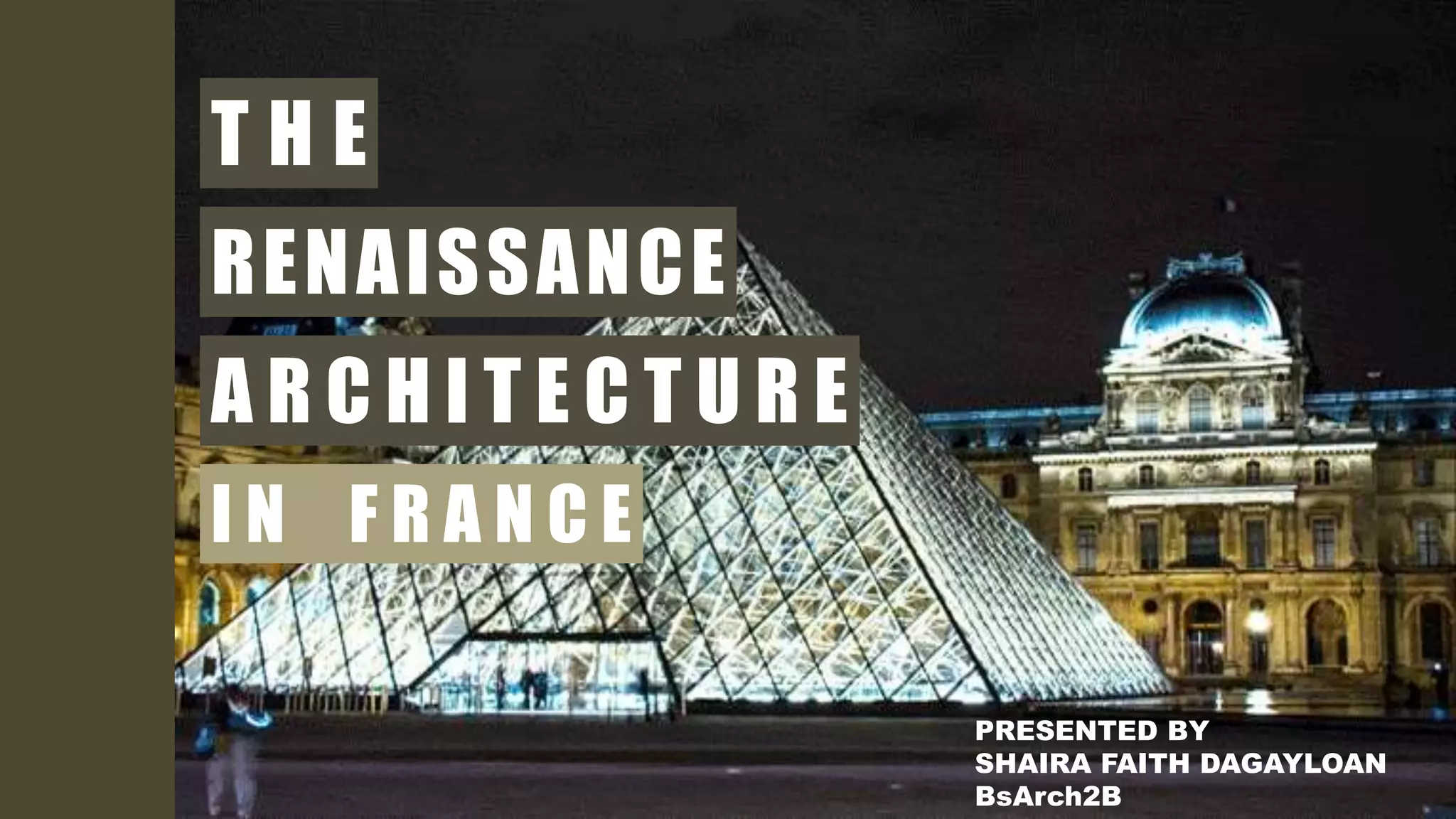
T H E
A R C H I T E C T U R E
RENAISSANCE
I N F R A N C E
PRESENTED BY
SHAIRA FAITH DAGAYLOAN
BsArch2B
The Renaissance Architecture in France
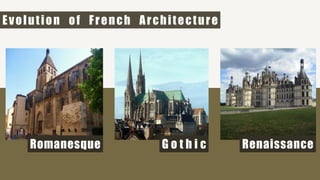
Romanesque G o t h i c
Evolution of French Architecture
Renaissance
T h e R e n a i s s a n c e i n F r a n c e
French Renaissance Architecture is the style of architecture which was imported to
France from Italy during the early 16 century and developed in the light of local
architectural traditions.
During the early years of the 16th century the Frence were involved in wars in
Northern Italy, bringing back to France not just the Renaissance art treasures as their
war booty, but also stylistic ideas. In the Loire Valley a wave of building was carried and
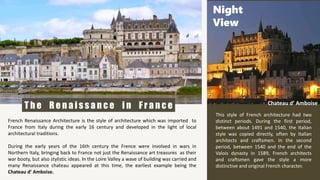
many Renaissance chateau appeared at this time, the earliest example being the
Chateau d’ Amboise.
Night
View
This style of French architecture had two
distinct periods. During the first period,
between about 1491 and 1540, the Italian
style was copied directly, often by Italian
architects and craftsmen. In the second
period, between 1540 and the end of the
Valois dynasty in 1589, French architects
and craftsmen gave the style a more
distinctive and original French character.
Chateau d’ Amboise
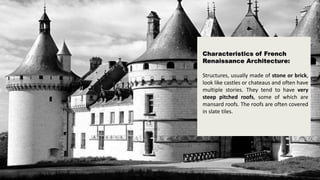
Characteristics of French
Renaissance Architecture:
Structures, usually made of stone or brick,
look like castles or chateaus and often have
multiple stories. They tend to have very
steep pitched roofs, some of which are
mansard roofs. The roofs are often covered
in slate tiles.
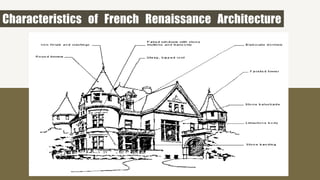
Characteristics of French Renaissance Architecture
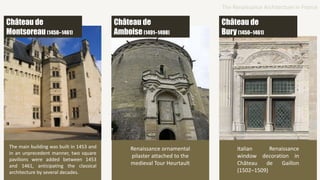
The main building was built in 1453 and
in an unprecedent manner, two square
pavilions were added between 1453
and 1461, anticipating the classical
architecture by several decades.
Château de
Amboise(1491–1498)
Renaissance ornamental
pilaster attached to the
medieval Tour Heurtault
Château de
Bury(1450–1461)
Italian Renaissance
window decoration in
Château de Gaillon
(1502–1509)
Château de
Montsoreau (1450–1461)
The Renaissance Architecture in France
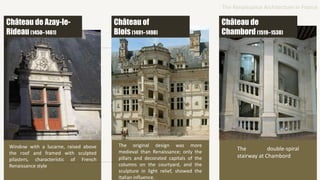
Window with a lucarne, raised above
the roof and framed with sculpted
pilasters, characteristic of French
Renaissance style
The original design was more
medieval than Renaissance; only the
pillars and decorated capitals of the
columns on the courtyard, and the
sculpture in light relief, showed the
Italian influence.
The double-spiral
stairway at Chambord
Château de Azay-le-
Rideau(1450–1461)
Château of
Blois(1491–1498)
Château de
Chambord(1519–1538)
The Renaissance Architecture in France
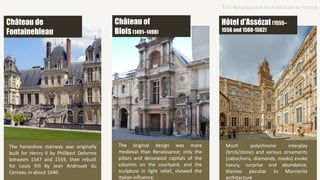
The horseshoe stairway was originally
built for Henry II by Philibert Delorme
between 1547 and 1559, then rebuilt
for Louis XIII by Jean Androuet du
Cerceau in about 1640.
The original design was more
medieval than Renaissance; only the
pillars and decorated capitals of the
columns on the courtyard, and the
sculpture in light relief, showed the
Italian influence.
Much polychrome interplay
(brick/stone) and various ornaments
(cabochons, diamonds, masks) evoke
luxury, surprise and abundance,
themes peculiar to Mannerist
architecture
The Renaissance Architecture in France
Château de
Fontainebleau
Château of
Blois(1491–1498)
Hôtel d'Assézat (1555–
1556 and 1560-1562)
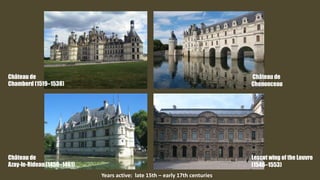
Château de
Chambord (1519–1538)
Château de
Chenonceau
Years active: late 15th – early 17th centuries
Château de
Azay-le-Rideau (1450–1461)
Lescot wing of the Louvre
(1546–1553)
THAT’S ALL!
T H A N K S F O R
L I S T E N I N G
by: DAGAYLOAN, SHAIRA FAITH B.

The Renaissance Architecture in Ftance

  • 1.
    T H E AR C H I T E C T U R E RENAISSANCE I N F R A N C E PRESENTED BY SHAIRA FAITH DAGAYLOAN BsArch2B
  • 2.
  • 3.
    Romanesque G ot h i c Evolution of French Architecture Renaissance
  • 4.
    T h eR e n a i s s a n c e i n F r a n c e French Renaissance Architecture is the style of architecture which was imported to France from Italy during the early 16 century and developed in the light of local architectural traditions. During the early years of the 16th century the Frence were involved in wars in Northern Italy, bringing back to France not just the Renaissance art treasures as their war booty, but also stylistic ideas. In the Loire Valley a wave of building was carried and many Renaissance chateau appeared at this time, the earliest example being the Chateau d’ Amboise. Night View This style of French architecture had two distinct periods. During the first period, between about 1491 and 1540, the Italian style was copied directly, often by Italian architects and craftsmen. In the second period, between 1540 and the end of the Valois dynasty in 1589, French architects and craftsmen gave the style a more distinctive and original French character. Chateau d’ Amboise
  • 5.
    Characteristics of French RenaissanceArchitecture: Structures, usually made of stone or brick, look like castles or chateaus and often have multiple stories. They tend to have very steep pitched roofs, some of which are mansard roofs. The roofs are often covered in slate tiles.
  • 6.
    Characteristics of FrenchRenaissance Architecture
  • 7.
    The main buildingwas built in 1453 and in an unprecedent manner, two square pavilions were added between 1453 and 1461, anticipating the classical architecture by several decades. Château de Amboise(1491–1498) Renaissance ornamental pilaster attached to the medieval Tour Heurtault Château de Bury(1450–1461) Italian Renaissance window decoration in Château de Gaillon (1502–1509) Château de Montsoreau (1450–1461) The Renaissance Architecture in France
  • 8.
    Window with alucarne, raised above the roof and framed with sculpted pilasters, characteristic of French Renaissance style The original design was more medieval than Renaissance; only the pillars and decorated capitals of the columns on the courtyard, and the sculpture in light relief, showed the Italian influence. The double-spiral stairway at Chambord Château de Azay-le- Rideau(1450–1461) Château of Blois(1491–1498) Château de Chambord(1519–1538) The Renaissance Architecture in France
  • 9.
    The horseshoe stairwaywas originally built for Henry II by Philibert Delorme between 1547 and 1559, then rebuilt for Louis XIII by Jean Androuet du Cerceau in about 1640. The original design was more medieval than Renaissance; only the pillars and decorated capitals of the columns on the courtyard, and the sculpture in light relief, showed the Italian influence. Much polychrome interplay (brick/stone) and various ornaments (cabochons, diamonds, masks) evoke luxury, surprise and abundance, themes peculiar to Mannerist architecture The Renaissance Architecture in France Château de Fontainebleau Château of Blois(1491–1498) Hôtel d'Assézat (1555– 1556 and 1560-1562)
  • 10.
    Château de Chambord (1519–1538) Châteaude Chenonceau Years active: late 15th – early 17th centuries Château de Azay-le-Rideau (1450–1461) Lescot wing of the Louvre (1546–1553)
  • 11.
    THAT’S ALL! T HA N K S F O R L I S T E N I N G by: DAGAYLOAN, SHAIRA FAITH B.

Editor's Notes