THE PRESENT PERFECT
  AND THE PRESENT
PERFECT CONTINUOUS:
    FINISHED AND
 UNFINISHED ACTIONS
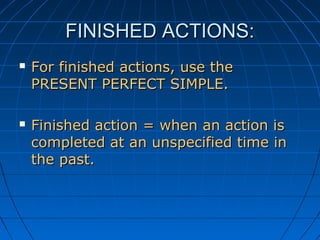
FINISHED ACTIONS:
   For finished actions, use the
    PRESENT PERFECT SIMPLE.

   Finished action = when an action is
    completed at an unspecified time in
    the past.
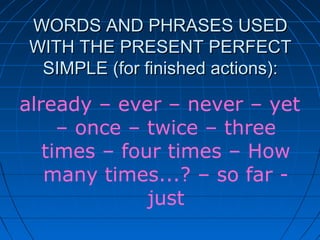
WORDS AND PHRASES USED
WITH THE PRESENT PERFECT
 SIMPLE (for finished actions):

already – ever – never – yet
     – once – twice – three
   times – four times – How
   many times...? – so far -
              just
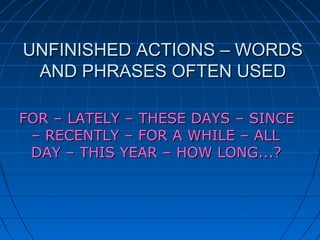
UNFINISHED ACTIONS – WORDS
 AND PHRASES OFTEN USED

FOR – LATELY – THESE DAYS – SINCE
 – RECENTLY – FOR A WHILE – ALL
 DAY – THIS YEAR – HOW LONG...?
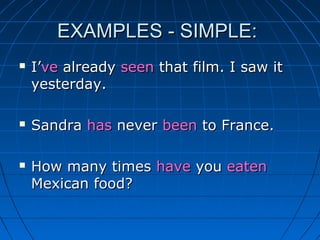
EXAMPLES - SIMPLE:
   I’ve already seen that film. I saw it
    yesterday.

   Sandra has never been to France.

   How many times have you eaten
    Mexican food?
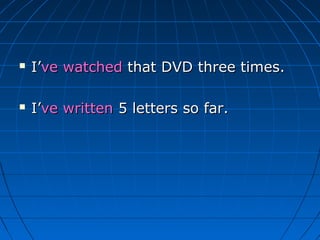
   I’ve watched that DVD three times.

   I’ve written 5 letters so far.
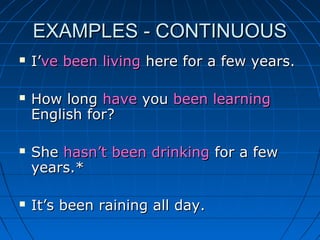
EXAMPLES - CONTINUOUS
   I’ve been living here for a few years.

   How long have you been learning
    English for?

   She hasn’t been drinking for a few
    years.*

   It’s been raining all day.
   For non-continuous verbs we should
    use the present perfect. Some of
    these verbs include: want, know,
    need, like, have (possession), cost
    etc.

   I’ve wanted to do this for a long
    time.
   She’s had many cars in her life.
   They’ve needed help for a while.
VERY RECENTLY FINISHED
      ACTIONS: AN EXCEPTION
   The Present Perfect Continuous is
    preferred to describe very recently
    completed actions when results can
    still be seen.
EXAMPLES:
   They’ve been practicing. I see them
    putting their instruments away.

   Have you been drinking? I can smell
    alcohol on your breath.

   Why are you so wet? – I’ve been
    washing the car.
UNFINISHED OR CONTINUING
        ACTIONS
Sometimes there's really no
difference in meaning
between the two tenses.
This is especially the case
with verbs such as 'live',
‘listen’, 'work' and 'study‘.
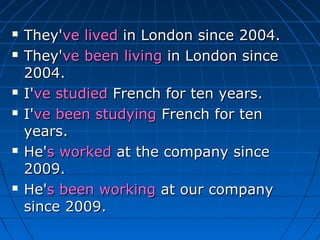
   They've lived in London since 2004.
   They've been living in London since
    2004.
   I've studied French for ten years.
   I've been studying French for ten
    years.
   He's worked at the company since
    2009.
   He's been working at our company
    since 2009.
Sometimes, there is a difference
        in meaning:
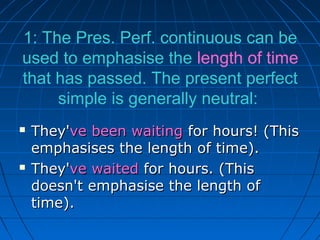
1: The Pres. Perf. continuous can be
used to emphasise the length of time
that has passed. The present perfect
     simple is generally neutral:
   They've been waiting for hours! (This
    emphasises the length of time).
   They've waited for hours. (This
    doesn't emphasise the length of
    time).
2: On the other hand, the present
perfect simple is often used when
 we're talking about how much or
how many. This isn't possible with
 the present perfect continuous:
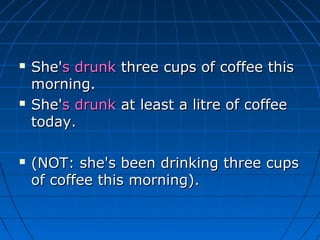
   She's drunk three cups of coffee this
    morning.
   She's drunk at least a litre of coffee
    today.

   (NOT: she's been drinking three cups
    of coffee this morning).
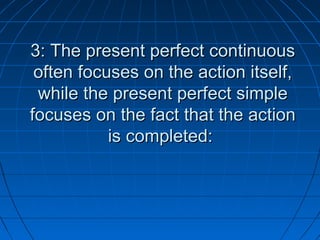
3: The present perfect continuous
 often focuses on the action itself,
 while the present perfect simple
focuses on the fact that the action
           is completed:
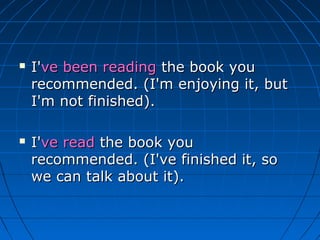
   I've been reading the book you
    recommended. (I'm enjoying it, but
    I'm not finished).

   I've read the book you
    recommended. (I've finished it, so
    we can talk about it).
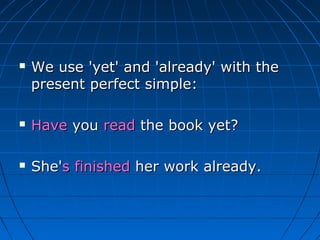
   We use 'yet' and 'already' with the
    present perfect simple:

   Have you read the book yet?

   She's finished her work already.
   This difference is often used to talk
    about different kinds of results in the
    present.
    The present perfect simple is used
    when the action is finished, and the
    result comes from the action being
    finished:
   I've eaten dinner, so let's go out.

   She's done all her homework, so she
    can relax this evening.

   I've made a cake. Would you like
    some?
   The present perfect continuous is
    used when the result comes from the
    action itself.
    It doesn't matter if the whole action
    is finished or not.
    The result is often something we can
    see, hear, smell, or feel:
   I've been eating dinner, so there are
    plates all over the table.

   She's been doing her homework, so
    she's tired.

   I've been making a cake, that's why
    the kitchen is such a mess.
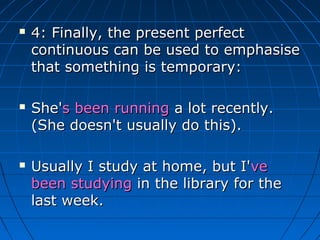
   4: Finally, the present perfect
    continuous can be used to emphasise
    that something is temporary:

   She's been running a lot recently.
    (She doesn't usually do this).

   Usually I study at home, but I've
    been studying in the library for the
    last week.
THE PRESENT PERFECT AND THE PRESENT PERFECT CONTINUOUS - Senac Upper Intermediate

THE PRESENT PERFECT AND THE PRESENT PERFECT CONTINUOUS - Senac Upper Intermediate

  • 1.
    THE PRESENT PERFECT AND THE PRESENT PERFECT CONTINUOUS: FINISHED AND UNFINISHED ACTIONS
  • 2.
    FINISHED ACTIONS:  For finished actions, use the PRESENT PERFECT SIMPLE.  Finished action = when an action is completed at an unspecified time in the past.
  • 3.
    WORDS AND PHRASESUSED WITH THE PRESENT PERFECT SIMPLE (for finished actions): already – ever – never – yet – once – twice – three times – four times – How many times...? – so far - just
  • 4.
    UNFINISHED ACTIONS –WORDS AND PHRASES OFTEN USED FOR – LATELY – THESE DAYS – SINCE – RECENTLY – FOR A WHILE – ALL DAY – THIS YEAR – HOW LONG...?
  • 5.
    EXAMPLES - SIMPLE:  I’ve already seen that film. I saw it yesterday.  Sandra has never been to France.  How many times have you eaten Mexican food?
  • 6.
    I’ve watched that DVD three times.  I’ve written 5 letters so far.
  • 7.
    EXAMPLES - CONTINUOUS  I’ve been living here for a few years.  How long have you been learning English for?  She hasn’t been drinking for a few years.*  It’s been raining all day.
  • 8.
    For non-continuous verbs we should use the present perfect. Some of these verbs include: want, know, need, like, have (possession), cost etc.  I’ve wanted to do this for a long time.  She’s had many cars in her life.  They’ve needed help for a while.
  • 9.
    VERY RECENTLY FINISHED ACTIONS: AN EXCEPTION  The Present Perfect Continuous is preferred to describe very recently completed actions when results can still be seen.
  • 10.
    EXAMPLES:  They’ve been practicing. I see them putting their instruments away.  Have you been drinking? I can smell alcohol on your breath.  Why are you so wet? – I’ve been washing the car.
  • 11.
    UNFINISHED OR CONTINUING ACTIONS Sometimes there's really no difference in meaning between the two tenses. This is especially the case with verbs such as 'live', ‘listen’, 'work' and 'study‘.
  • 12.
    They've lived in London since 2004.  They've been living in London since 2004.  I've studied French for ten years.  I've been studying French for ten years.  He's worked at the company since 2009.  He's been working at our company since 2009.
  • 13.
    Sometimes, there isa difference in meaning:
  • 14.
    1: The Pres.Perf. continuous can be used to emphasise the length of time that has passed. The present perfect simple is generally neutral:  They've been waiting for hours! (This emphasises the length of time).  They've waited for hours. (This doesn't emphasise the length of time).
  • 15.
    2: On theother hand, the present perfect simple is often used when we're talking about how much or how many. This isn't possible with the present perfect continuous:
  • 16.
    She's drunk three cups of coffee this morning.  She's drunk at least a litre of coffee today.  (NOT: she's been drinking three cups of coffee this morning).
  • 17.
    3: The presentperfect continuous often focuses on the action itself, while the present perfect simple focuses on the fact that the action is completed:
  • 18.
    I've been reading the book you recommended. (I'm enjoying it, but I'm not finished).  I've read the book you recommended. (I've finished it, so we can talk about it).
  • 19.
    We use 'yet' and 'already' with the present perfect simple:  Have you read the book yet?  She's finished her work already.
  • 20.
    This difference is often used to talk about different kinds of results in the present. The present perfect simple is used when the action is finished, and the result comes from the action being finished:
  • 21.
    I've eaten dinner, so let's go out.  She's done all her homework, so she can relax this evening.  I've made a cake. Would you like some?
  • 22.
    The present perfect continuous is used when the result comes from the action itself. It doesn't matter if the whole action is finished or not. The result is often something we can see, hear, smell, or feel:
  • 23.
    I've been eating dinner, so there are plates all over the table.  She's been doing her homework, so she's tired.  I've been making a cake, that's why the kitchen is such a mess.
  • 24.
    4: Finally, the present perfect continuous can be used to emphasise that something is temporary:  She's been running a lot recently. (She doesn't usually do this).  Usually I study at home, but I've been studying in the library for the last week.