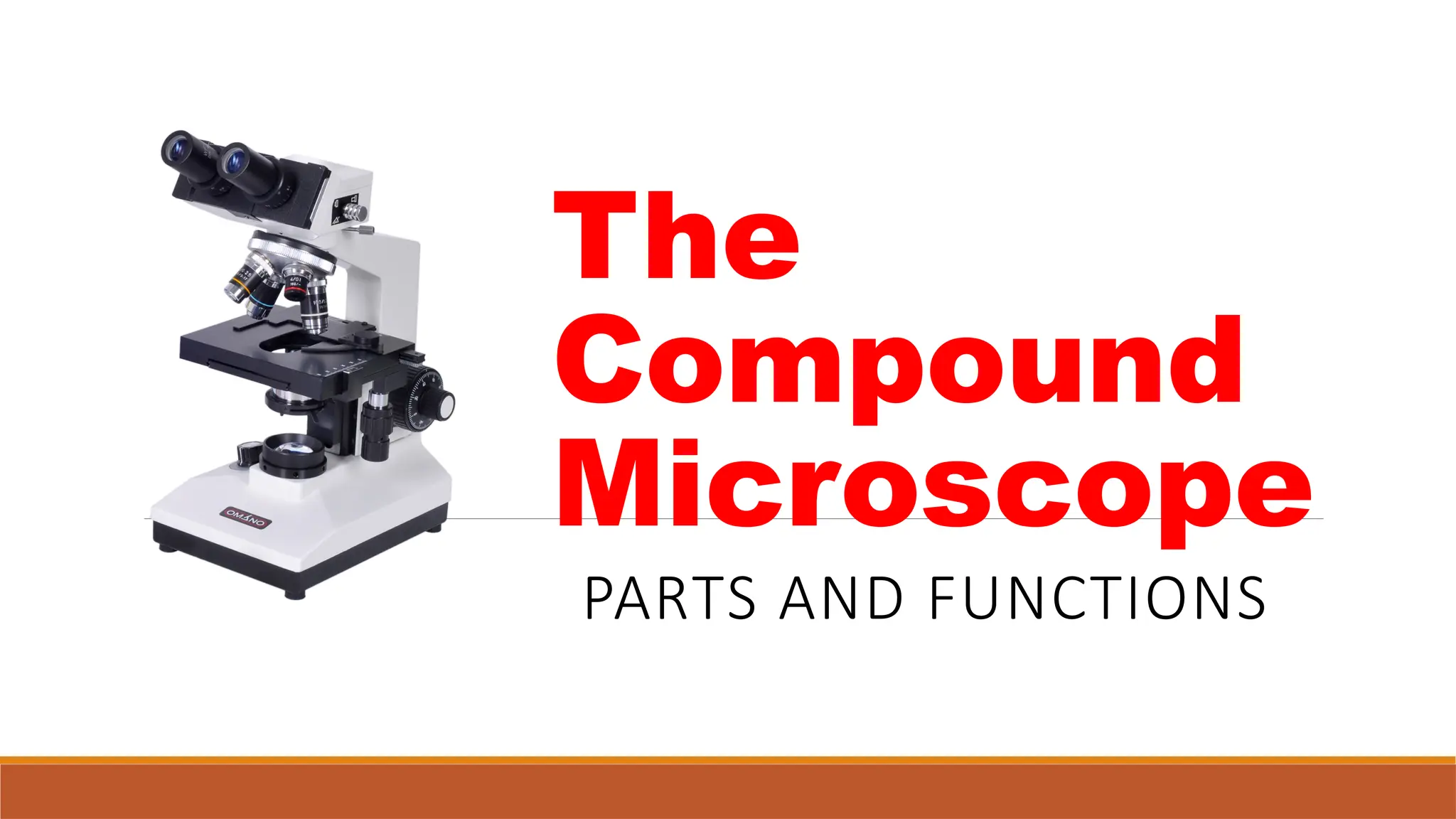
The
Compound
Microscope
PARTS AND FUNCTIONS
Learning Competency:
Identify the parts and functions, and
demonstrate proper handling and storing of
a compound microscope
1.What part of the microscope
should you hold when carrying
it?
a) The base and the arm
b) The stage
c) The eyepiece
d) The objective lenses
2.Which part of the microscope is
used to adjust the focus on the
specimen?
a) The arm
b) The coarse and fine focus knobs
c) The base
d) The illuminator
3. What is the function of the objective
lens on a compound microscope?
a) To support the microscope slide
b) To reflect light towards the eyepiece
c) To magnify the specimen for viewing
d) To adjust the amount of light passing
through the specimen
4. When storing the microscope, what
position should the objective lenses be
in?
a) The highest power objective lens should be
clicked into place
b) The lowest power objective lens should be
clicked into place
c) Any objective lens can be clicked into place
d) The objective lenses should be removed
5. Which part of the microscope
allows you to change between
different objective lenses?
a) The stage
b) The eyepiece
c) The nosepiece
d) The diaphragm
The correct answers are:
1.a) The base and the arm
2.b) The coarse and fine focus knobs
3.c) To magnify the specimen for viewing
4.b) The lowest power objective lens should be
clicked into place
5.c) The nosepiece
Microscope
A microscope is an instrument
that produces enlarged images of
small objects, allowing the
observer to closely examine
minute structures that are
otherwise too small to be seen by
the naked eye.
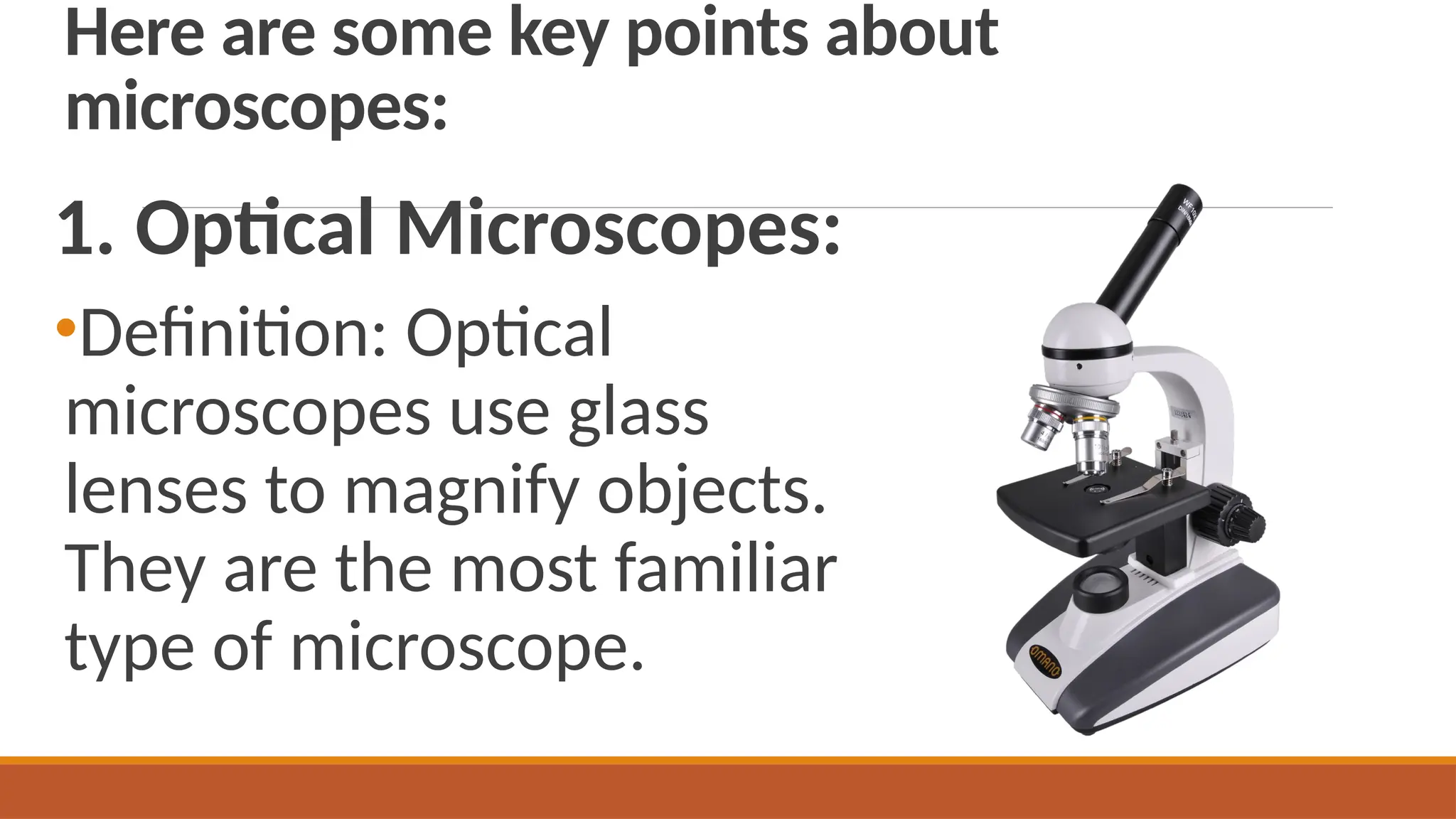
Here are some key points about
microscopes:
1. Optical Microscopes:
•Definition: Optical
microscopes use glass
lenses to magnify objects.
They are the most familiar
type of microscope.
Uses:
• Biological Research: Scientists use
optical microscopes to study cells,
tissues, and microorganisms.
• Medical Diagnosis: Doctors use them to
examine blood samples, diagnose
diseases, and identify pathogens.
• Education: Microscopes are essential
tools in schools and universities for
teaching biology and other sciences.
Types of Optical Microscopes:
•Compound Microscope: Consists of multiple lenses
(objectives and ocular) and uses visible light. It can
magnify up to 2,000×.
•Darkfield Microscope: Creates a white specimen
against a black background by scattering light.
•Fluorescence Microscope: Uses ultraviolet light to
view fluorescently labeled specimens.
•Contrast/Phase Microscope: Examines structures
inside cells using different refractive indexes
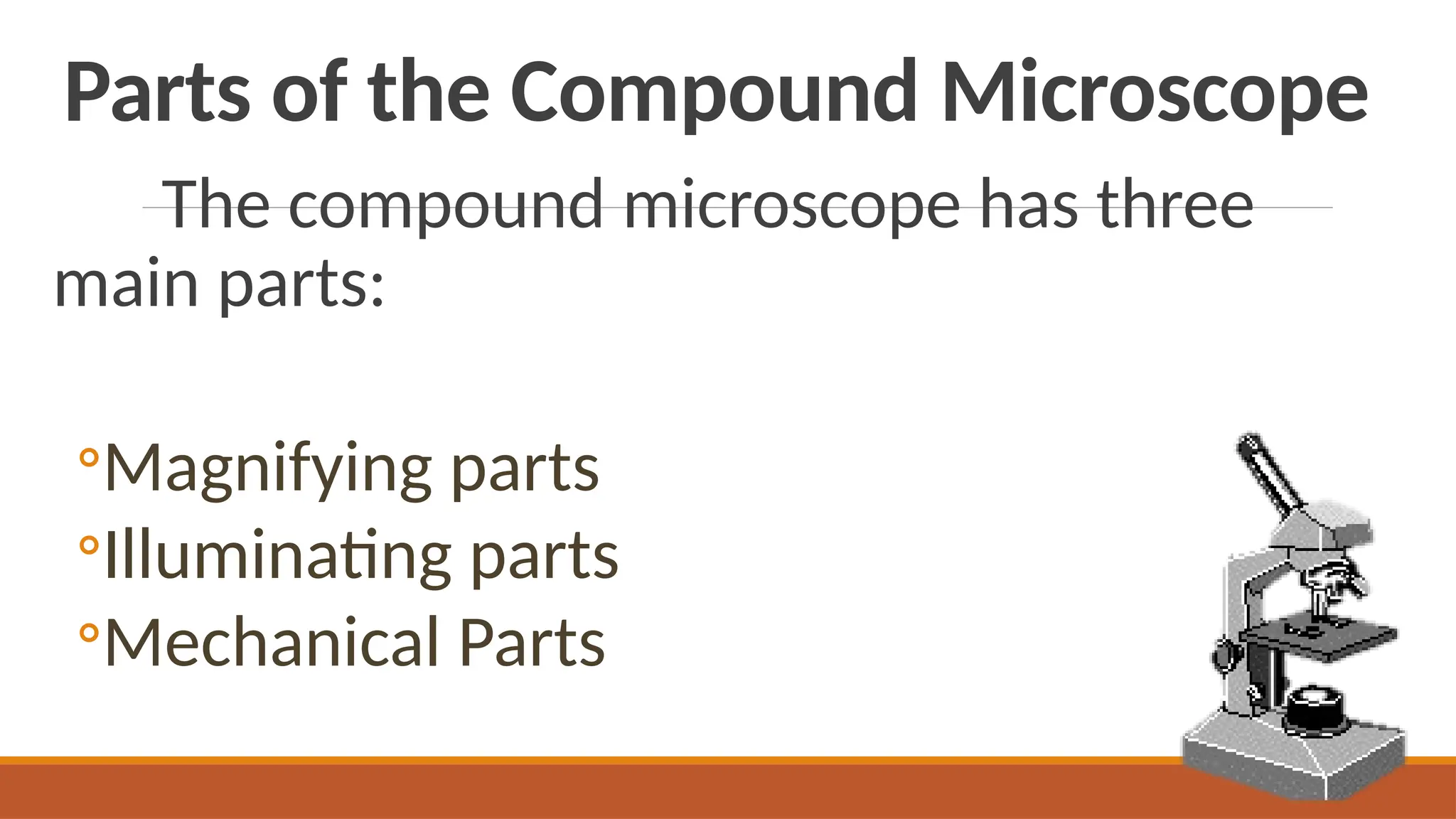
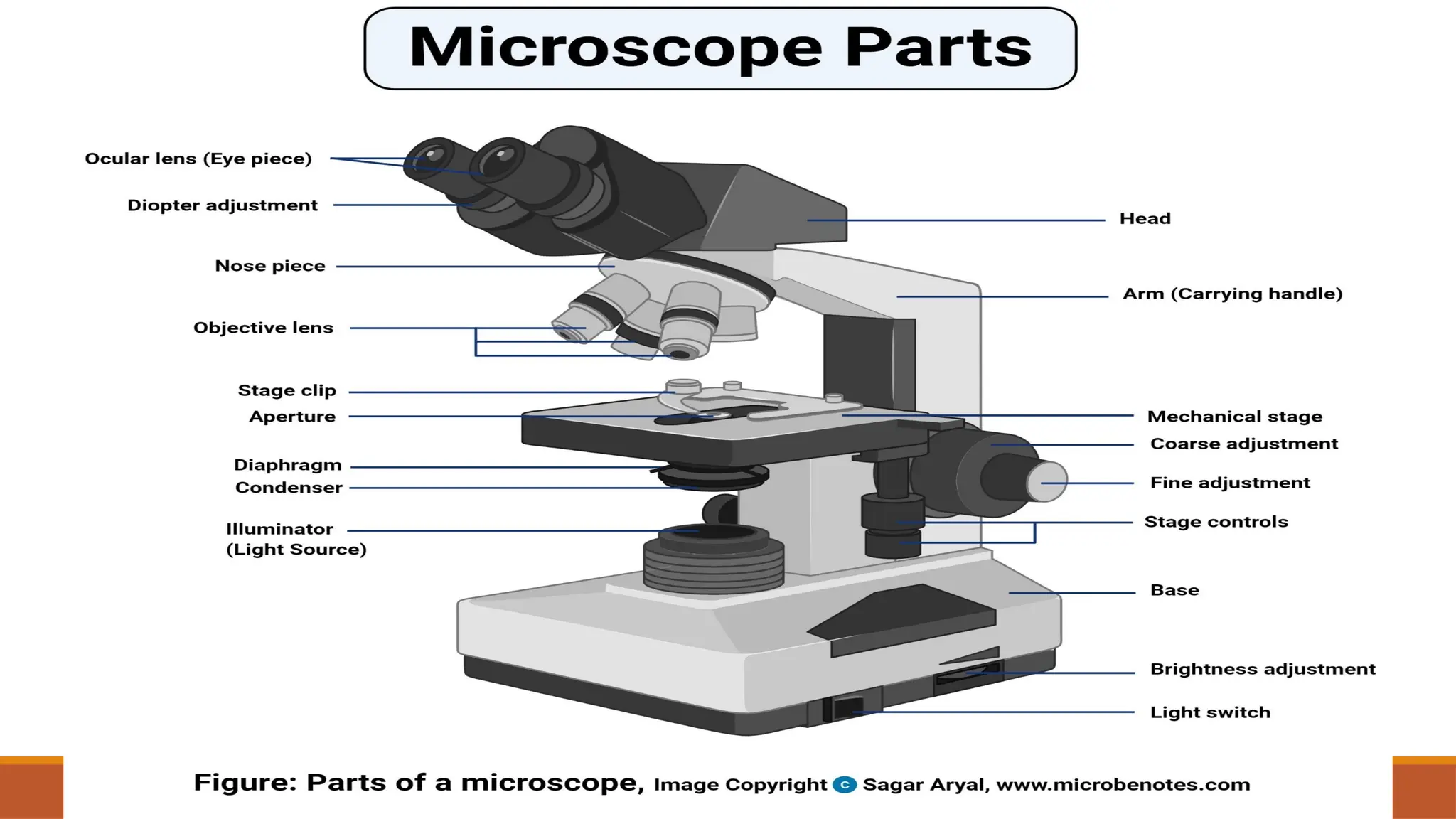
Parts of the Compound Microscope
The compound microscope has three
main parts:
◦Magnifying parts
◦Illuminating parts
◦Mechanical Parts
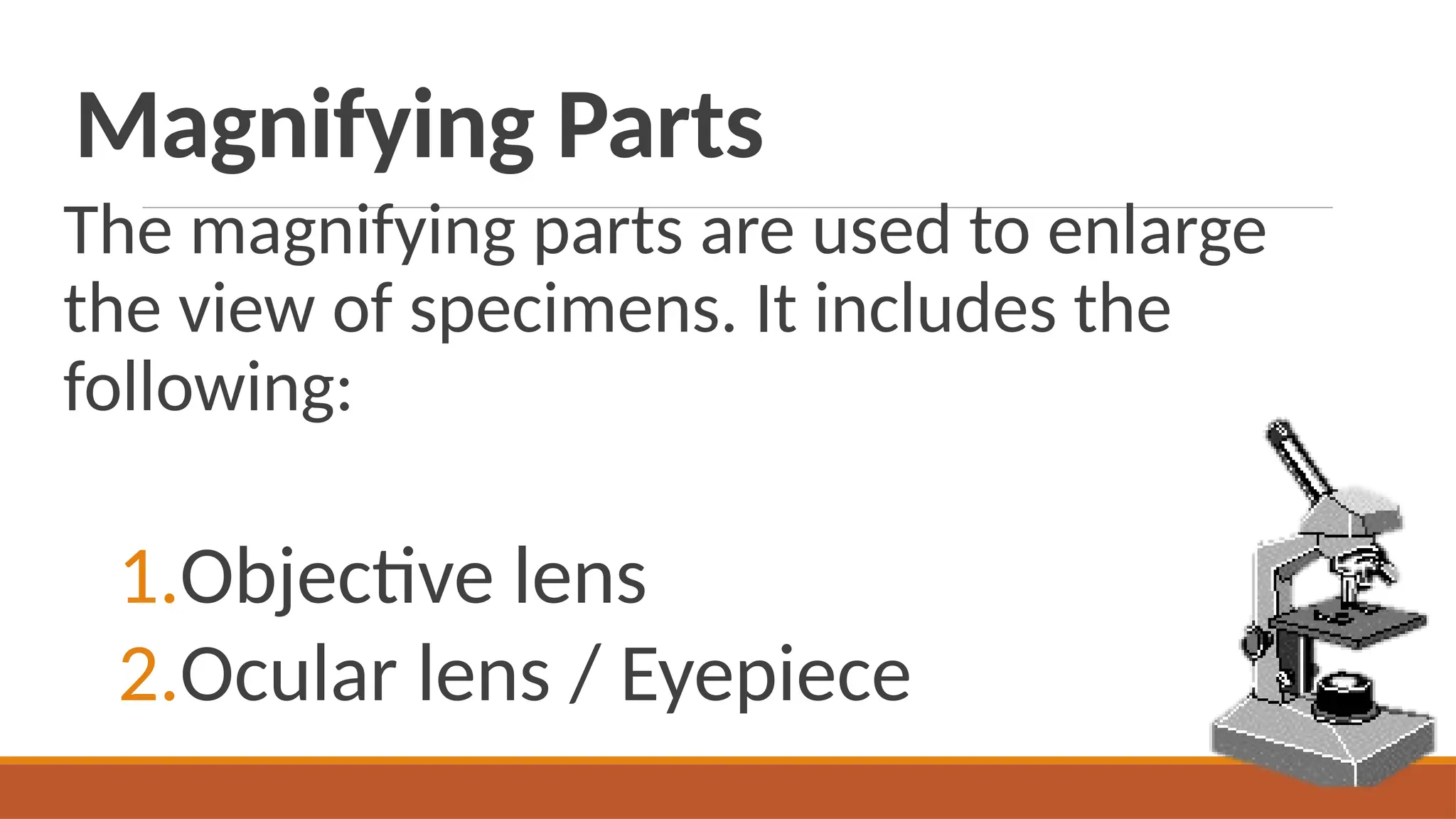
Magnifying Parts
The magnifying parts are used to enlarge
the view of specimens. It includes the
following:
1.Objective lens
2.Ocular lens / Eyepiece
1. Objective Lens
The most important of the optical parts.
Commonly, there are three or four objective
lenses:
◦Scanner
◦low power objective (LPO)
◦high power objective (HPO)
◦oil immersion objective (OIO)
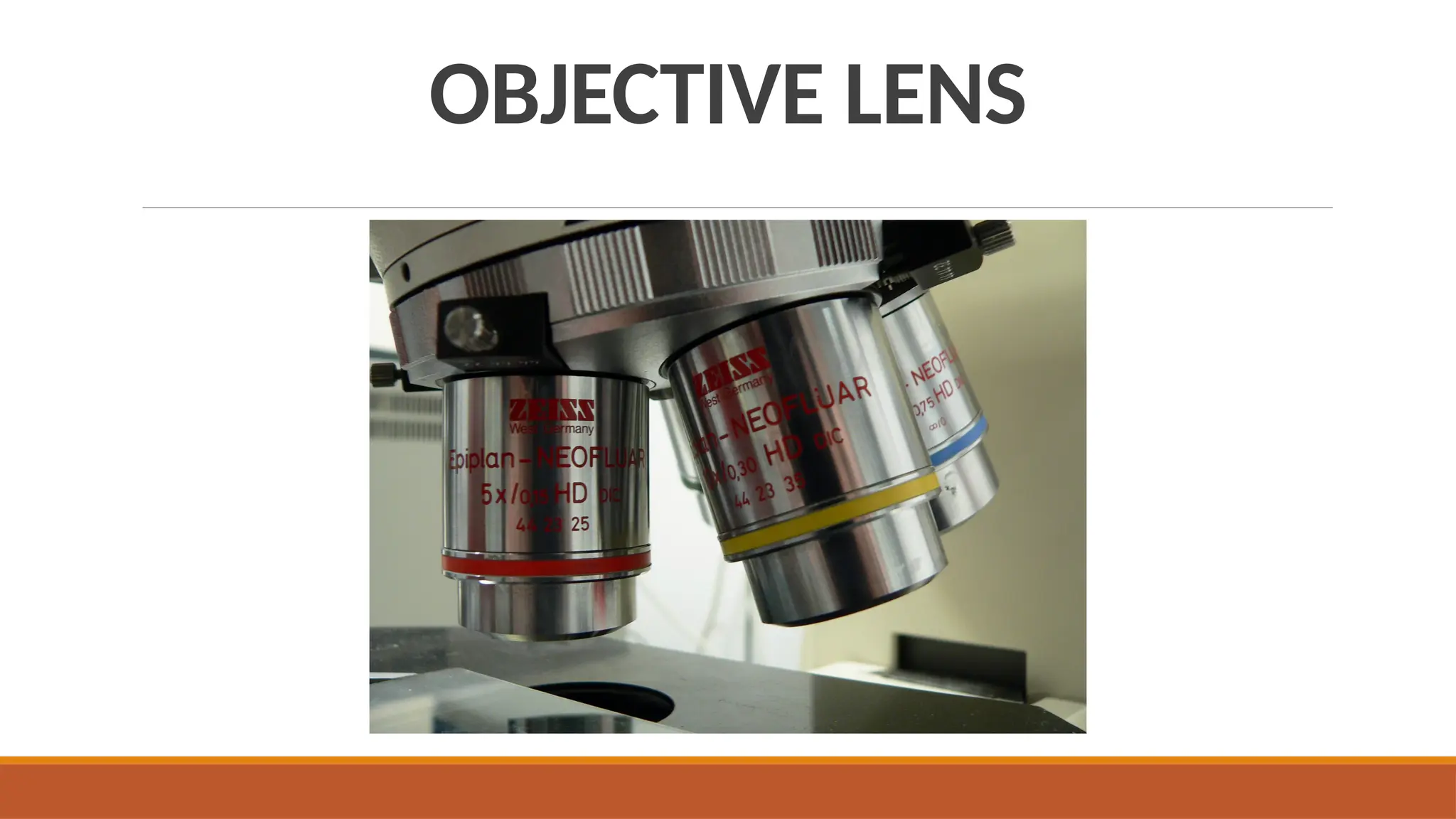
OBJECTIVE LENS
Objective Lens
◦Scanner – marked with a red line and the
shortest among the other objective and is
usually marked 4x.
◦low power objective (LPO) – marked with a
yellow line and usually have a magnification
power 10x. It locates and shows the structure
of the specimen.
◦high power objective (HPO) – is a long and slender and
is usually marked 40x or 60x. It shows the detailed
structure of the specimen.
◦oil immersion objective (OIO) – is a special type of
objective lens; it may be long or short. It is used to
increase the resolution of microscope. It has a small
lens at its end that is usually marked 99x or 100x. A
drop of cedar oil is used on the specimen before it is
viewed under the lens.
Objective Lens
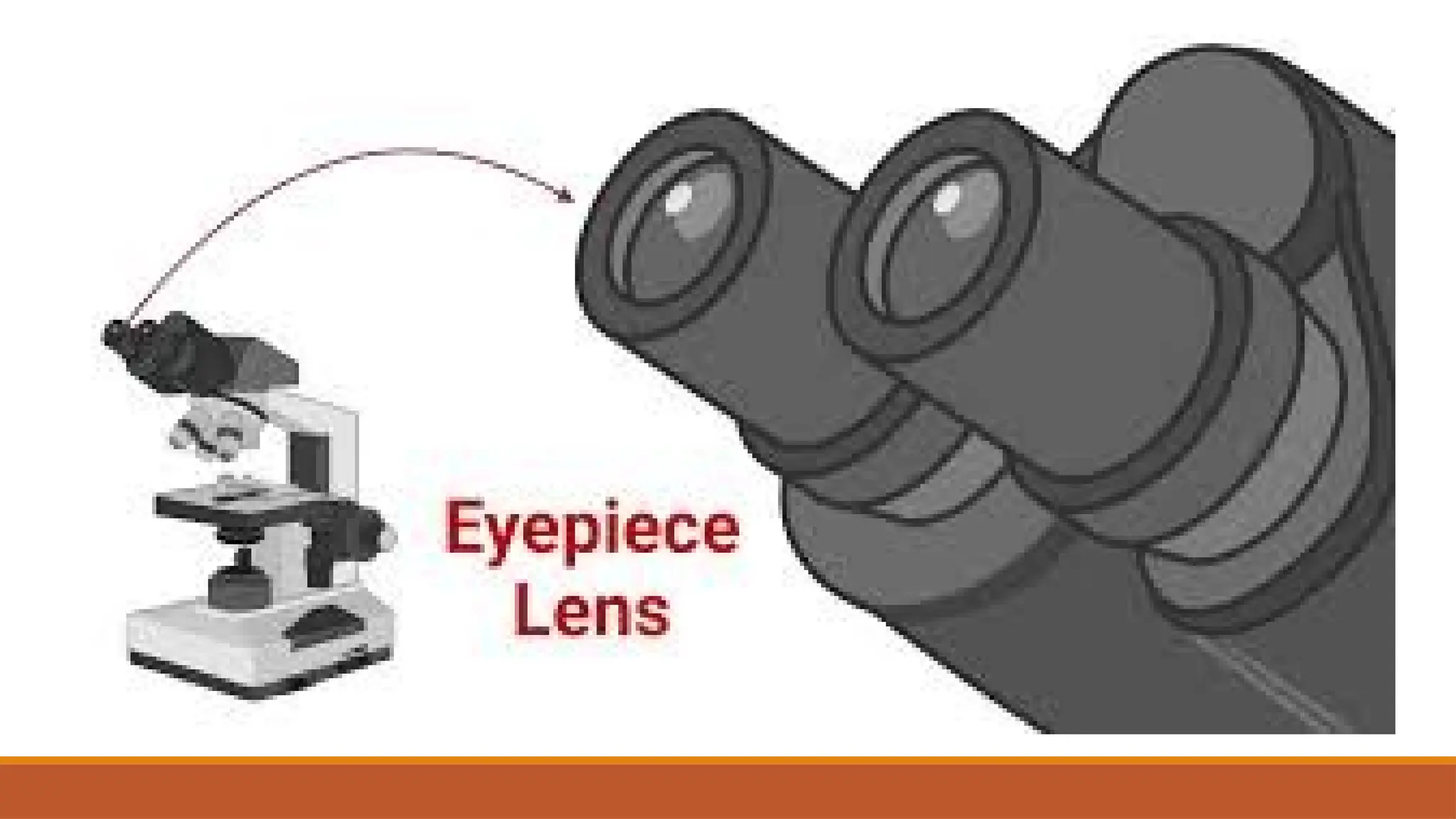
2. Ocular lens / Eyepiece
Magnifies the image formed by the
objectives. It is attached to the upper
end of the microscope and usually
marked 5x, 10x, 15x or 20x.
Illuminating Parts
The illuminating parts are used to supply light
to the slide on the stage. Following are these
parts:
1.Mirror
2.Numerical Aperture
3.Condenser
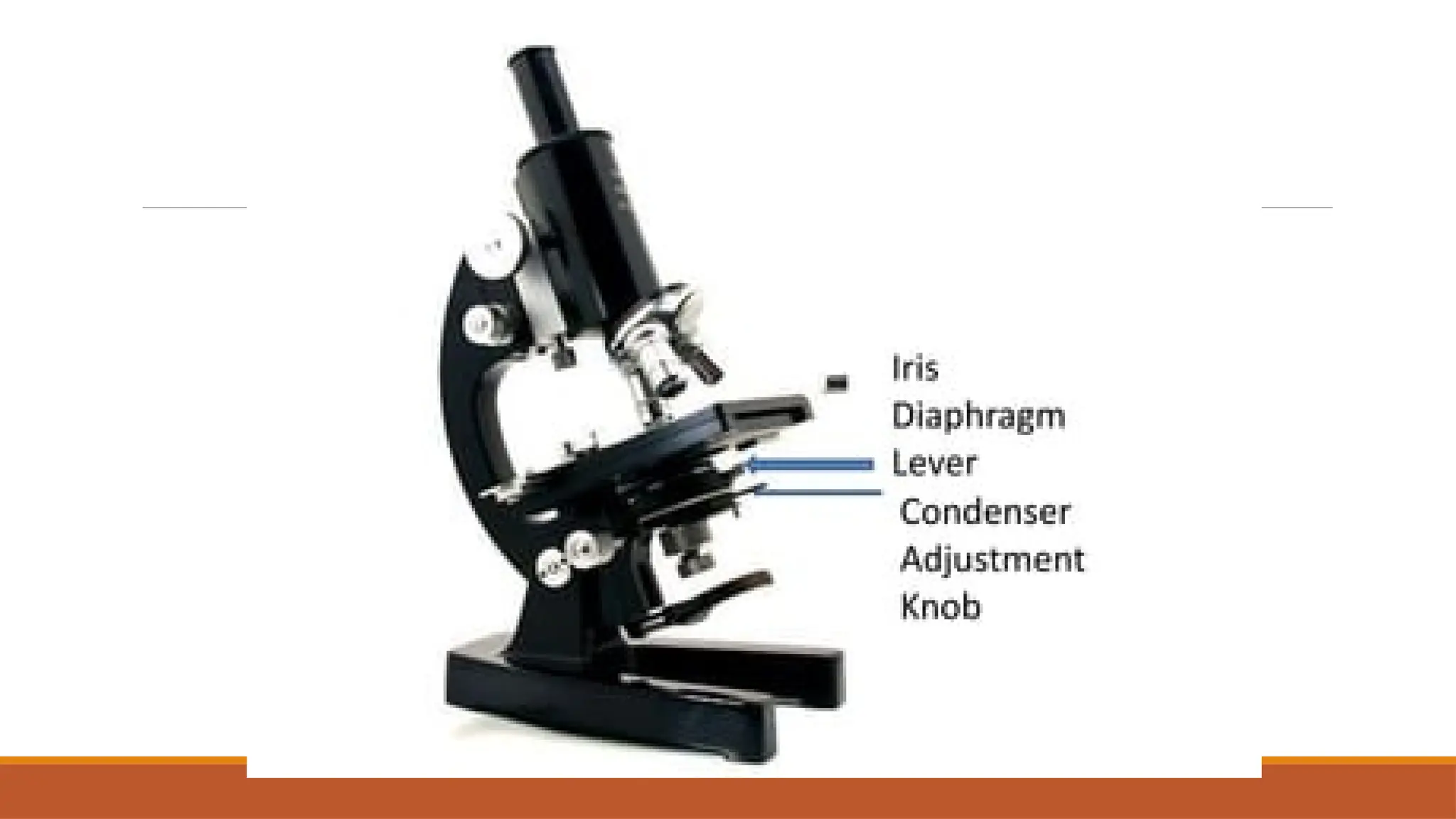
4.Iris Diaphragm
1. Mirror
- collects and reflects light from an external
light source up into the microscope. It has
adjustable sides that may be plain or concave.
2. Numerical aperture
- measures the microscope’s ability to
gather light an resolve fine details of a specimen
at a fixed distance.
3. Condenser
- directs the maximum amount of light upon
an object.
4. Iris Diaphragm
- a flat disc located beneath the
condenser. It has an adjustable opening or
aperture hat may be reduced or enlarged to any
size by adjusting its lever.
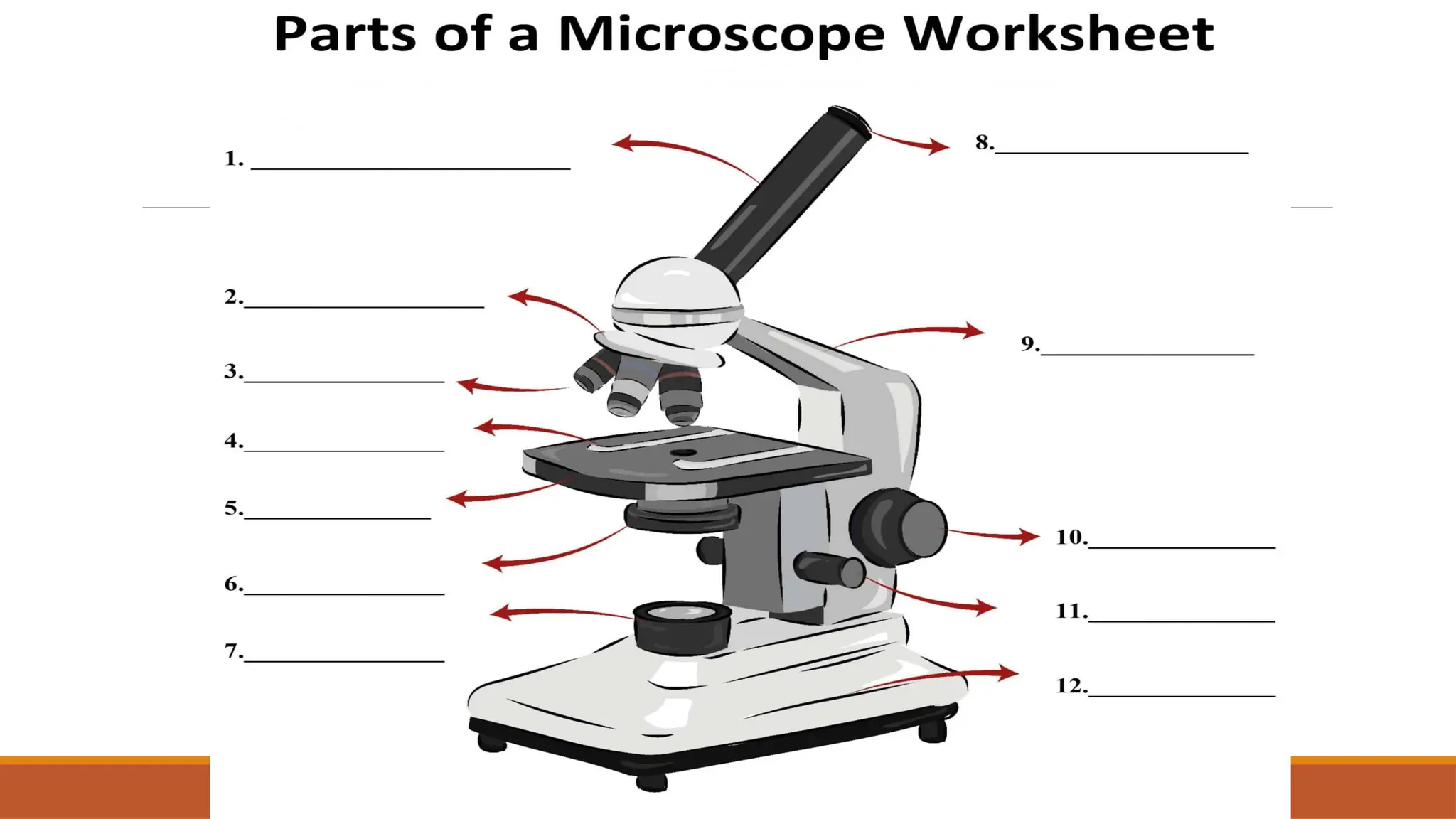
Mechanical Parts
The mechanical parts are used to support and
move parts of the microscope. Following are these
parts:
1.Arm 7. Revolving nosepiece
2.Stage 8. Base
3.Stage Clips 9. Inclination joint
4.Body tube
5.Draw tube
6.Adjustment knobs
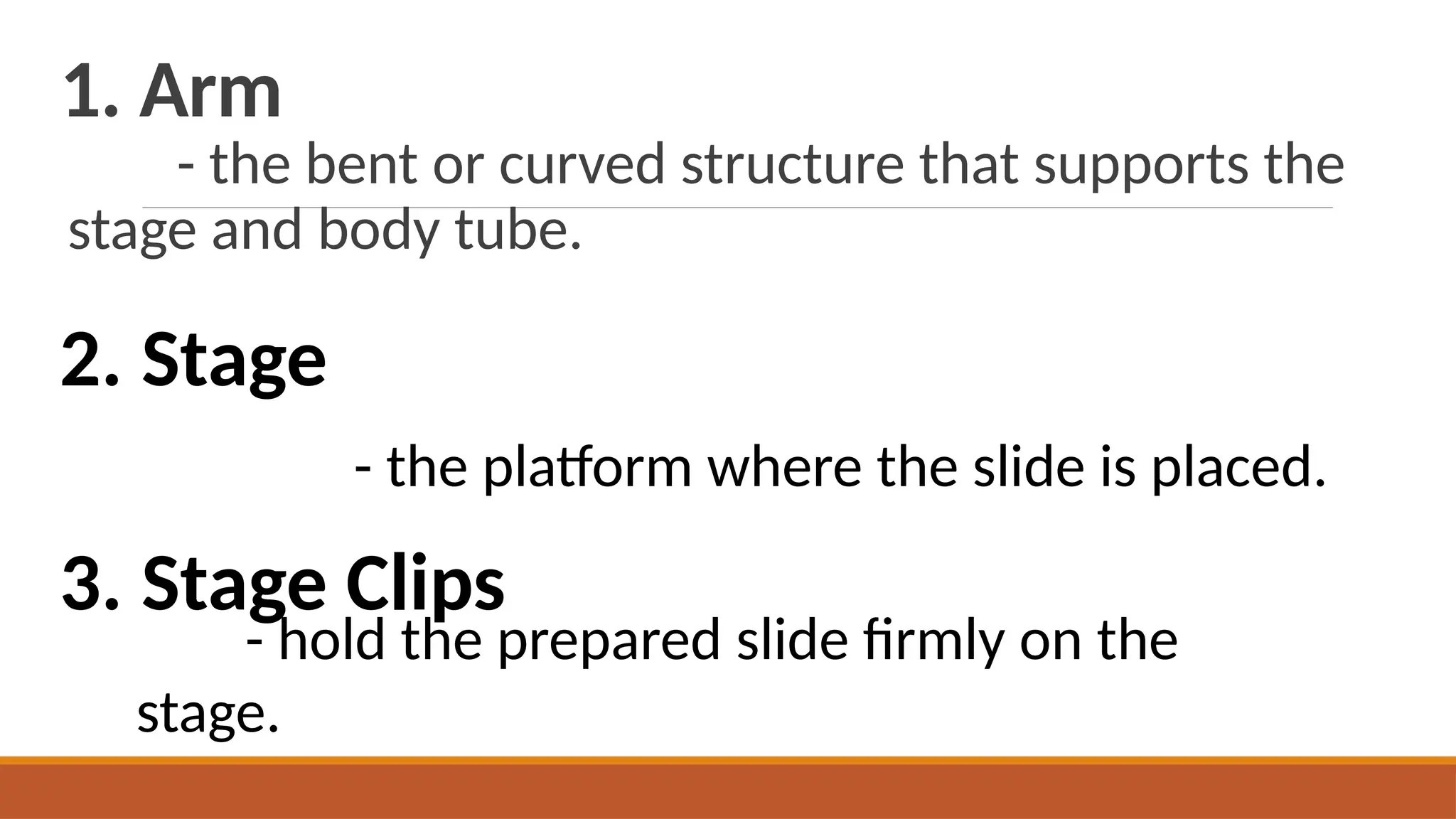
1. Arm
- the bent or curved structure that supports the
stage and body tube.
2. Stage
- the platform where the slide is placed.
3. Stage Clips
- hold the prepared slide firmly on the
stage.
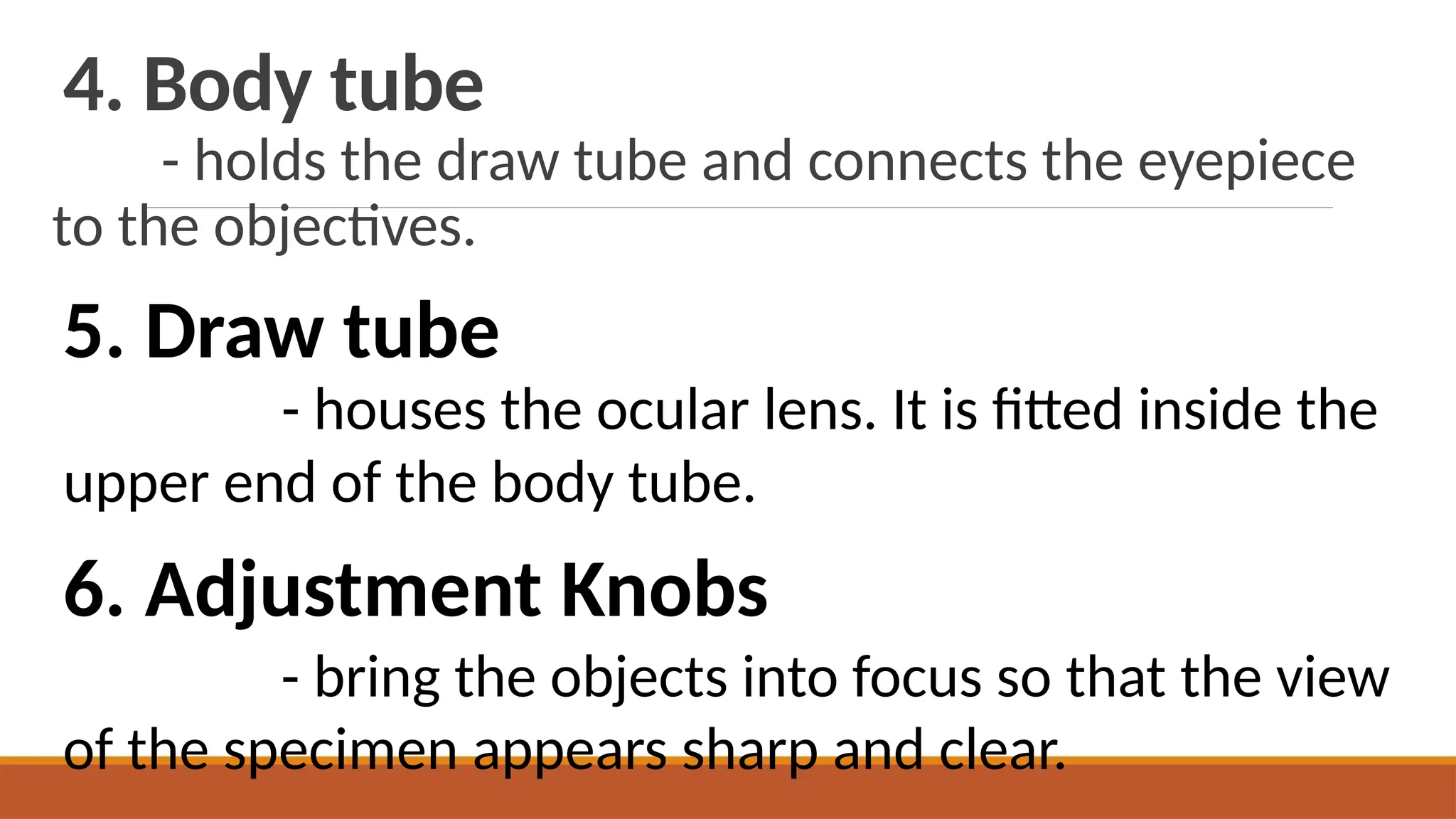
4. Body tube
- holds the draw tube and connects the eyepiece
to the objectives.
5. Draw tube
- houses the ocular lens. It is fitted inside the
upper end of the body tube.
6. Adjustment Knobs
- bring the objects into focus so that the view
of the specimen appears sharp and clear.
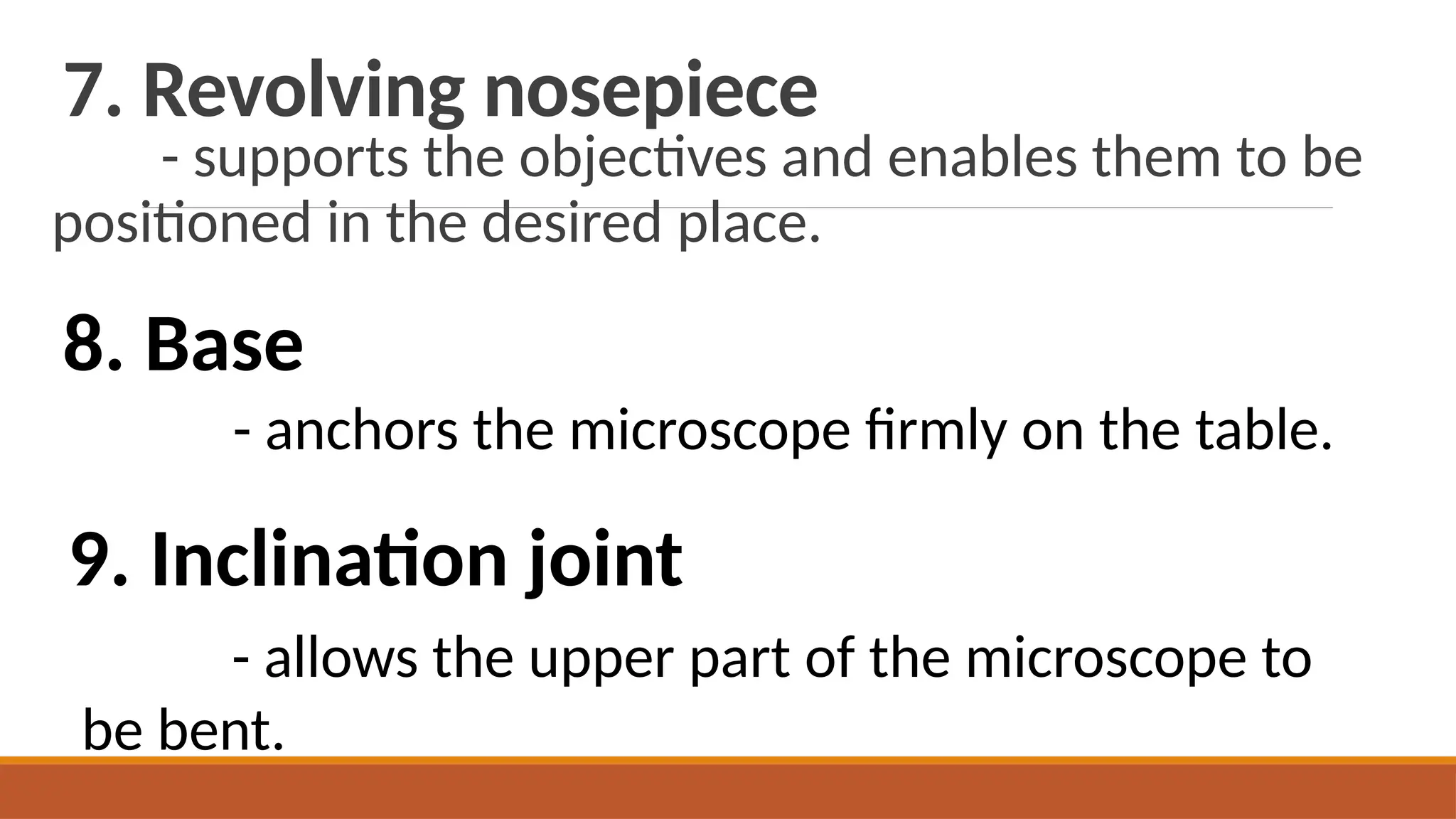
7. Revolving nosepiece
- supports the objectives and enables them to be
positioned in the desired place.
8. Base
- anchors the microscope firmly on the table.
9. Inclination joint
- allows the upper part of the microscope to
be bent.
THE PARTS OF THE MICROSCOPE: UNDERSTANDING MICROSCOPY

THE PARTS OF THE MICROSCOPE: UNDERSTANDING MICROSCOPY

  • 2.
  • 3.
    Learning Competency: Identify theparts and functions, and demonstrate proper handling and storing of a compound microscope
  • 4.
    1.What part ofthe microscope should you hold when carrying it? a) The base and the arm b) The stage c) The eyepiece d) The objective lenses
  • 5.
    2.Which part ofthe microscope is used to adjust the focus on the specimen? a) The arm b) The coarse and fine focus knobs c) The base d) The illuminator
  • 6.
    3. What isthe function of the objective lens on a compound microscope? a) To support the microscope slide b) To reflect light towards the eyepiece c) To magnify the specimen for viewing d) To adjust the amount of light passing through the specimen
  • 7.
    4. When storingthe microscope, what position should the objective lenses be in? a) The highest power objective lens should be clicked into place b) The lowest power objective lens should be clicked into place c) Any objective lens can be clicked into place d) The objective lenses should be removed
  • 8.
    5. Which partof the microscope allows you to change between different objective lenses? a) The stage b) The eyepiece c) The nosepiece d) The diaphragm
  • 9.
    The correct answersare: 1.a) The base and the arm 2.b) The coarse and fine focus knobs 3.c) To magnify the specimen for viewing 4.b) The lowest power objective lens should be clicked into place 5.c) The nosepiece
  • 10.
    Microscope A microscope isan instrument that produces enlarged images of small objects, allowing the observer to closely examine minute structures that are otherwise too small to be seen by the naked eye.
  • 11.
    Here are somekey points about microscopes: 1. Optical Microscopes: •Definition: Optical microscopes use glass lenses to magnify objects. They are the most familiar type of microscope.
  • 12.
    Uses: • Biological Research:Scientists use optical microscopes to study cells, tissues, and microorganisms. • Medical Diagnosis: Doctors use them to examine blood samples, diagnose diseases, and identify pathogens. • Education: Microscopes are essential tools in schools and universities for teaching biology and other sciences.
  • 13.
    Types of OpticalMicroscopes: •Compound Microscope: Consists of multiple lenses (objectives and ocular) and uses visible light. It can magnify up to 2,000×. •Darkfield Microscope: Creates a white specimen against a black background by scattering light. •Fluorescence Microscope: Uses ultraviolet light to view fluorescently labeled specimens. •Contrast/Phase Microscope: Examines structures inside cells using different refractive indexes
  • 14.
    Parts of theCompound Microscope The compound microscope has three main parts: ◦Magnifying parts ◦Illuminating parts ◦Mechanical Parts
  • 15.
    Magnifying Parts The magnifyingparts are used to enlarge the view of specimens. It includes the following: 1.Objective lens 2.Ocular lens / Eyepiece
  • 16.
    1. Objective Lens Themost important of the optical parts. Commonly, there are three or four objective lenses: ◦Scanner ◦low power objective (LPO) ◦high power objective (HPO) ◦oil immersion objective (OIO)
  • 17.
  • 18.
    Objective Lens ◦Scanner –marked with a red line and the shortest among the other objective and is usually marked 4x. ◦low power objective (LPO) – marked with a yellow line and usually have a magnification power 10x. It locates and shows the structure of the specimen.
  • 19.
    ◦high power objective(HPO) – is a long and slender and is usually marked 40x or 60x. It shows the detailed structure of the specimen. ◦oil immersion objective (OIO) – is a special type of objective lens; it may be long or short. It is used to increase the resolution of microscope. It has a small lens at its end that is usually marked 99x or 100x. A drop of cedar oil is used on the specimen before it is viewed under the lens. Objective Lens
  • 20.
    2. Ocular lens/ Eyepiece Magnifies the image formed by the objectives. It is attached to the upper end of the microscope and usually marked 5x, 10x, 15x or 20x.
  • 22.
    Illuminating Parts The illuminatingparts are used to supply light to the slide on the stage. Following are these parts: 1.Mirror 2.Numerical Aperture 3.Condenser 4.Iris Diaphragm
  • 24.
    1. Mirror - collectsand reflects light from an external light source up into the microscope. It has adjustable sides that may be plain or concave. 2. Numerical aperture - measures the microscope’s ability to gather light an resolve fine details of a specimen at a fixed distance.
  • 25.
    3. Condenser - directsthe maximum amount of light upon an object. 4. Iris Diaphragm - a flat disc located beneath the condenser. It has an adjustable opening or aperture hat may be reduced or enlarged to any size by adjusting its lever.
  • 26.
    Mechanical Parts The mechanicalparts are used to support and move parts of the microscope. Following are these parts: 1.Arm 7. Revolving nosepiece 2.Stage 8. Base 3.Stage Clips 9. Inclination joint 4.Body tube 5.Draw tube 6.Adjustment knobs
  • 27.
    1. Arm - thebent or curved structure that supports the stage and body tube. 2. Stage - the platform where the slide is placed. 3. Stage Clips - hold the prepared slide firmly on the stage.
  • 28.
    4. Body tube -holds the draw tube and connects the eyepiece to the objectives. 5. Draw tube - houses the ocular lens. It is fitted inside the upper end of the body tube. 6. Adjustment Knobs - bring the objects into focus so that the view of the specimen appears sharp and clear.
  • 29.
    7. Revolving nosepiece -supports the objectives and enables them to be positioned in the desired place. 8. Base - anchors the microscope firmly on the table. 9. Inclination joint - allows the upper part of the microscope to be bent.