The Most Important Ten
Simple Rules
Philip E. Bourne PhD, FACMI
Stephenson Dean of Data Science
Professor of Biomedical Engineering
peb6a@virginia.edu
https://www.slideshare.net/pebourne
1
@pebourne
ECML PKDD 2020 Sept. 14, 2020
This is not a lecture …
as much as it can be, it is a discussion
….
Acknowledgement:
The context for this discussion draws
from over 1000 Simple Rules..
https://doi.org/10.1371/journal.pcbi.1006670 2
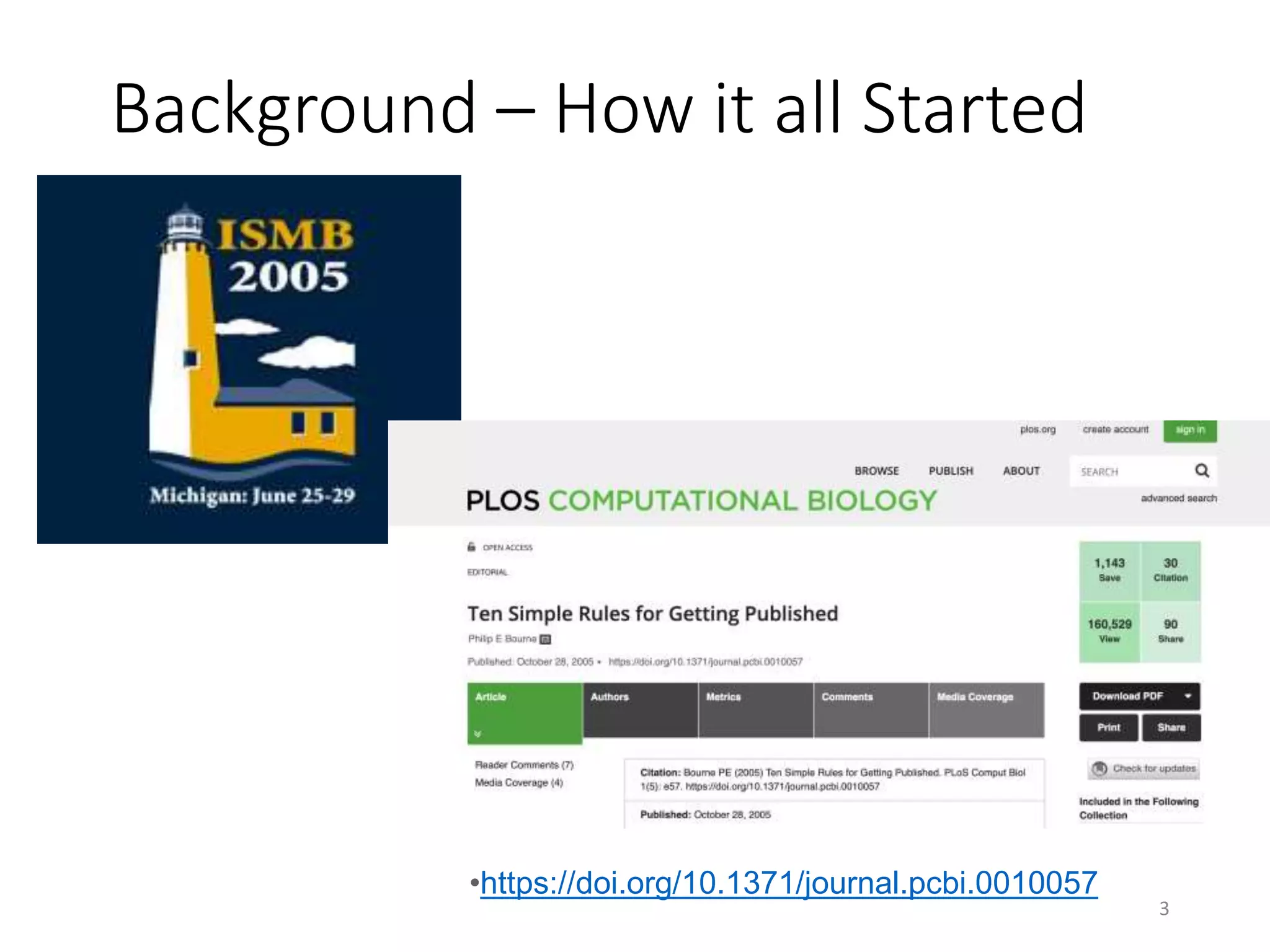
Background – How it all Started
3
•https://doi.org/10.1371/journal.pcbi.0010057
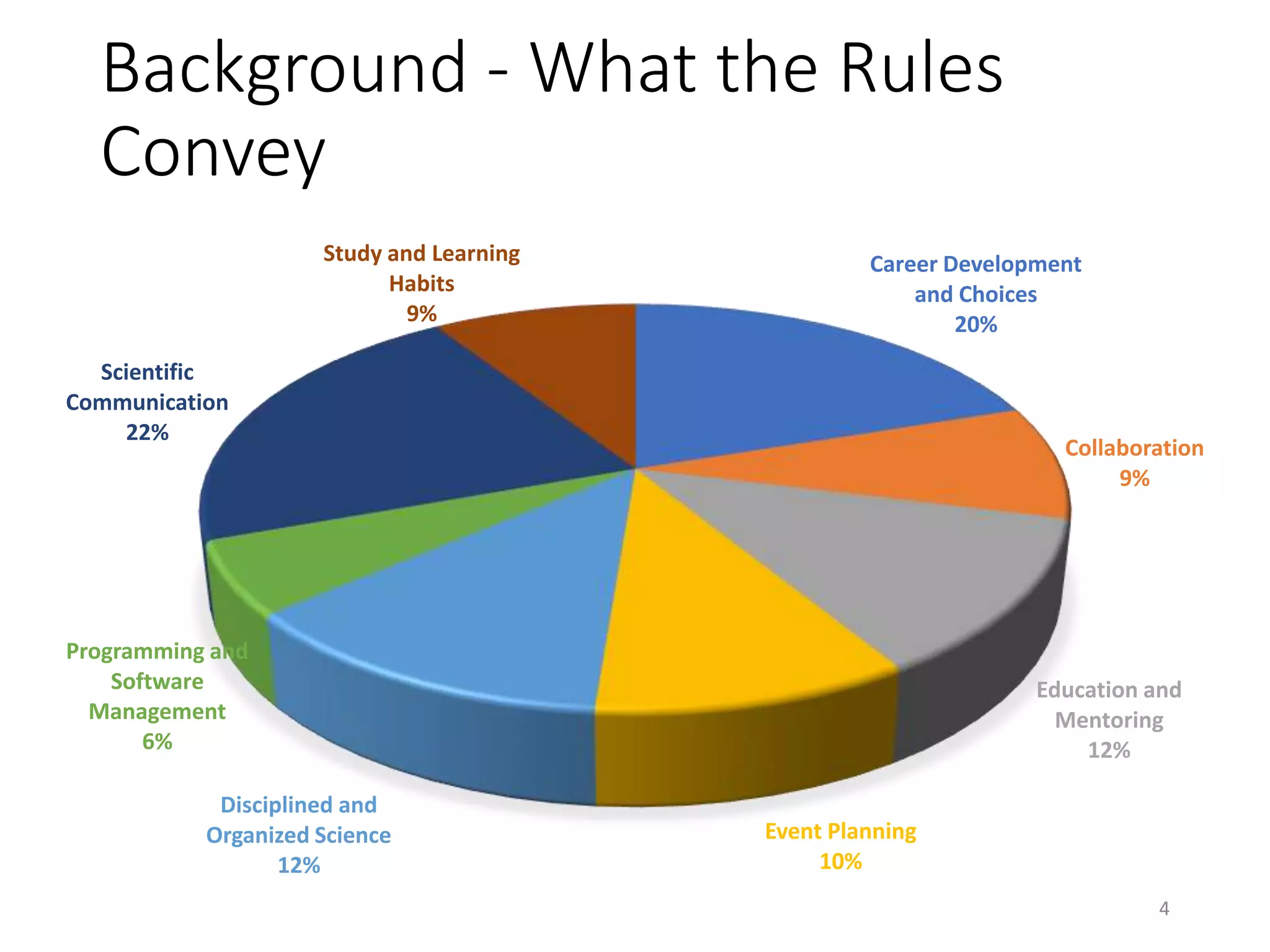
Background - What the Rules
Convey
4
Career Development
and Choices
20%
Collaboration
9%
Education and
Mentoring
12%
Event Planning
10%
Disciplined and
Organized Science
12%
Programming and
Software
Management
6%
Scientific
Communication
22%
Study and Learning
Habits
9%
Survey Question 1
What are the most important issues
for you?
www.slido.com #G419
5
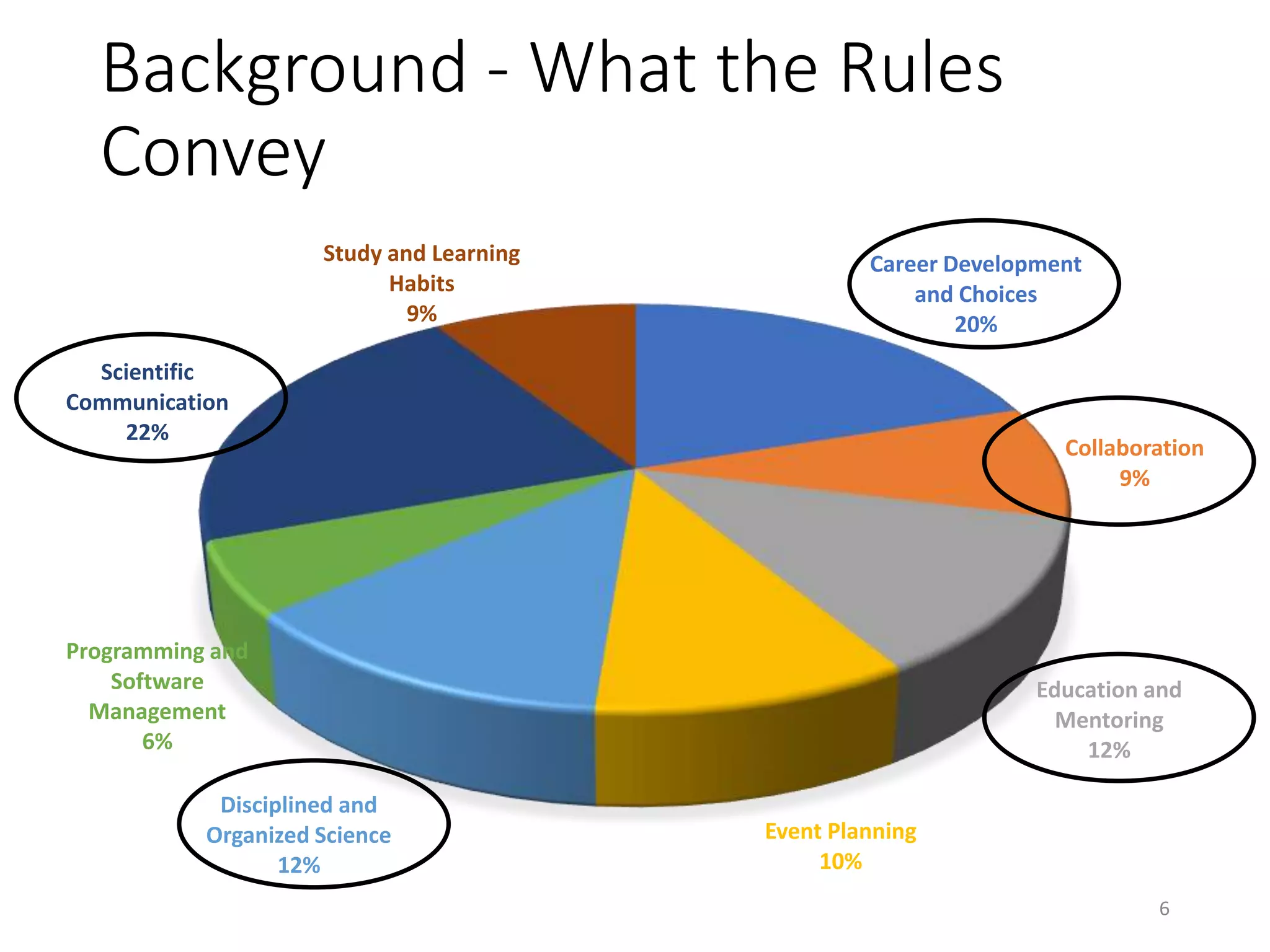
Background - What the Rules
Convey
6
Career Development
and Choices
20%
Collaboration
9%
Education and
Mentoring
12%
Event Planning
10%
Disciplined and
Organized Science
12%
Programming and
Software
Management
6%
Scientific
Communication
22%
Study and Learning
Habits
9%
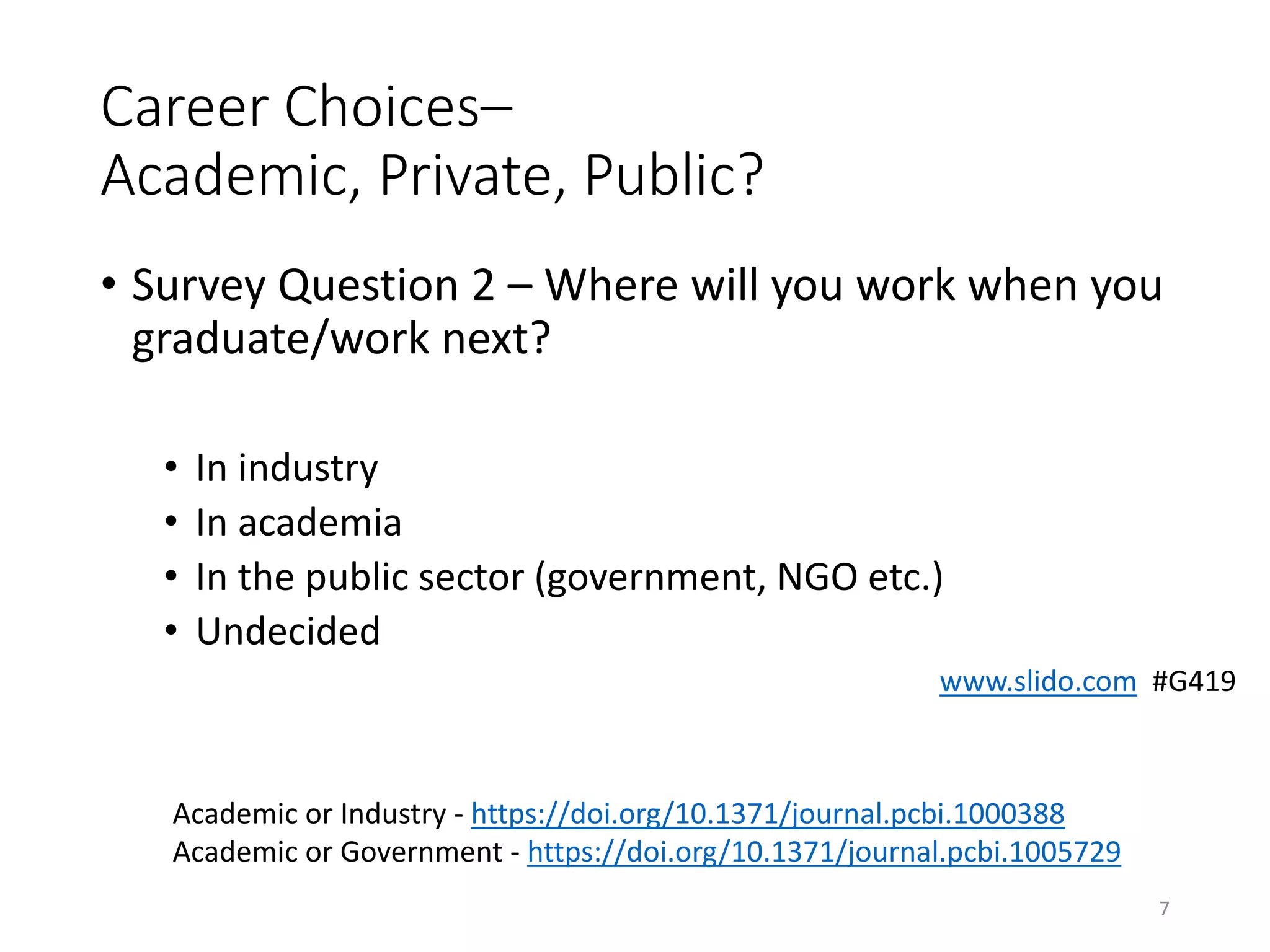
Career Choices–
Academic, Private, Public?
• Survey Question 2 – Where will you work when you
graduate/work next?
• In industry
• In academia
• In the public sector (government, NGO etc.)
• Undecided
7
Academic or Industry - https://doi.org/10.1371/journal.pcbi.1000388
Academic or Government - https://doi.org/10.1371/journal.pcbi.1005729
www.slido.com #G419
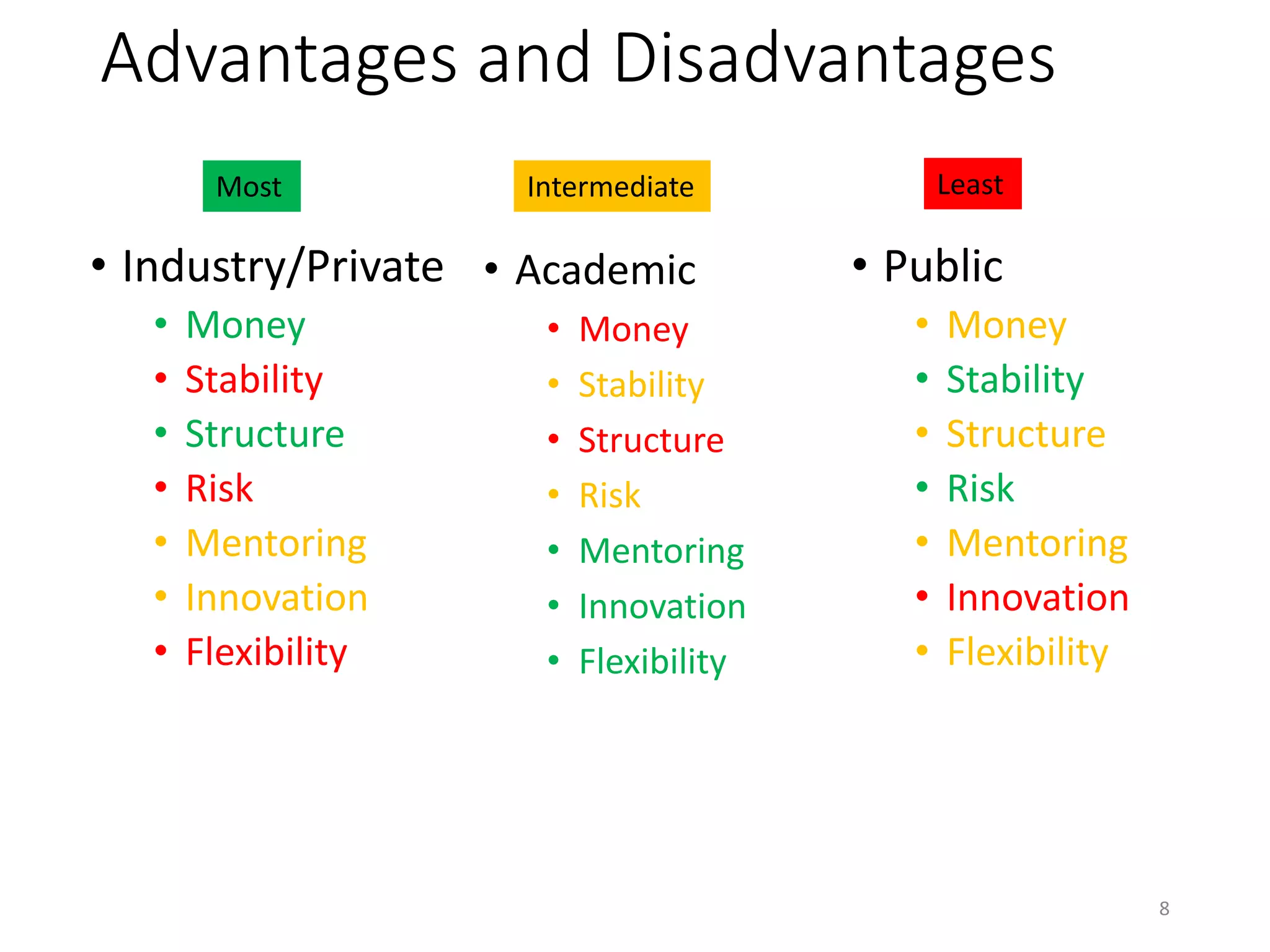
Advantages and Disadvantages
• Industry/Private
• Money
• Stability
• Structure
• Risk
• Mentoring
• Innovation
• Flexibility
8
• Academic
• Money
• Stability
• Structure
• Risk
• Mentoring
• Innovation
• Flexibility
• Public
• Money
• Stability
• Structure
• Risk
• Mentoring
• Innovation
• Flexibility
Most Intermediate Least
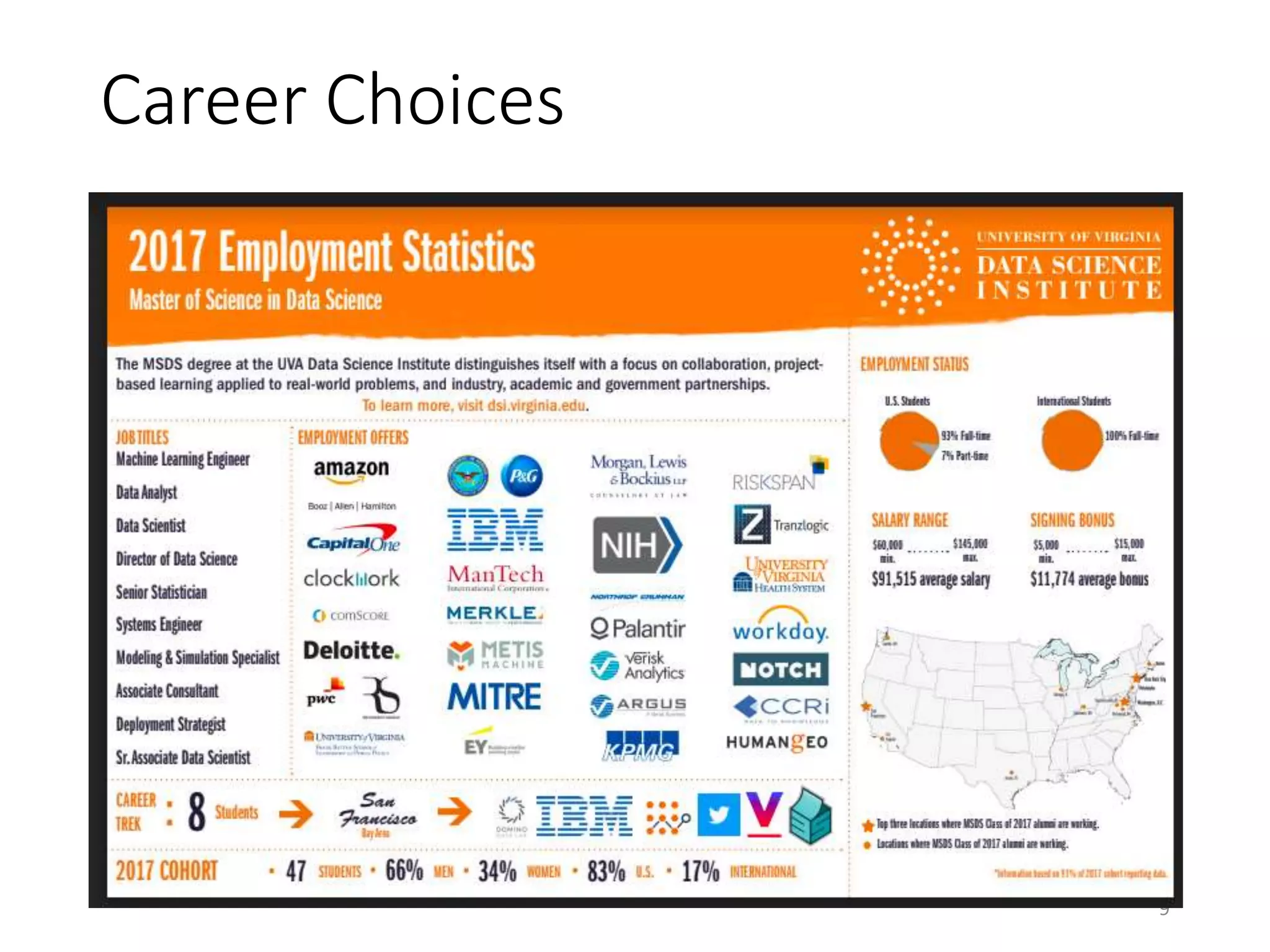
Career Choices
9
Survey 3 –
Do you think you are working on an
important problem?
10
www.slido.com #G419
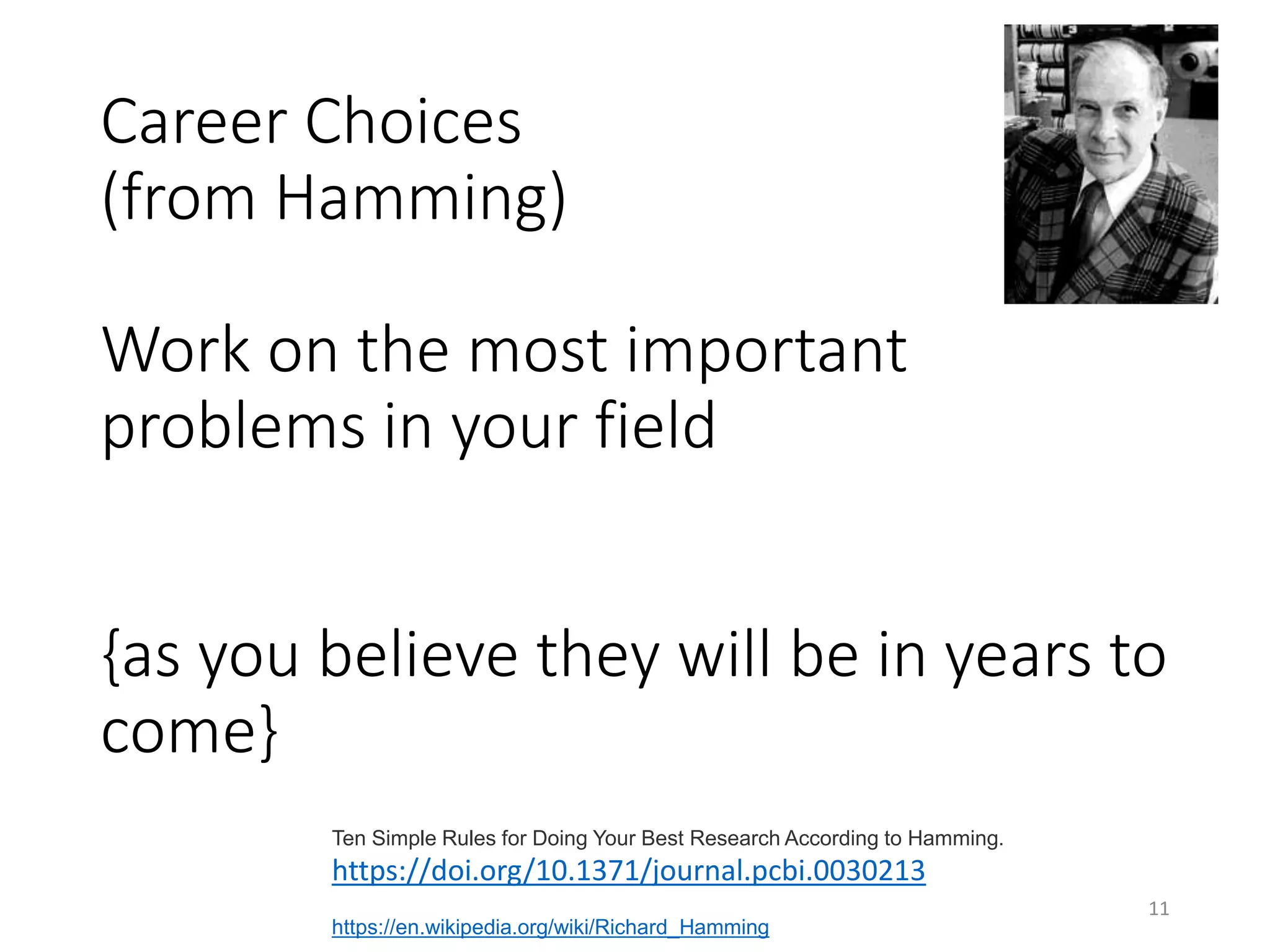
Career Choices
(from Hamming)
Work on the most important
problems in your field
{as you believe they will be in years to
come}
11
Ten Simple Rules for Doing Your Best Research According to Hamming.
https://doi.org/10.1371/journal.pcbi.0030213
https://en.wikipedia.org/wiki/Richard_Hamming
.. And Remember
• Don’t be modest in your choices
• “Luck favors the prepared mind” Louis Pasteur
• Age is a factor – your most inspired work will come
early; experience comes later
• Take risks
• Only blame yourself
• Knowledge and productivity are like compound interest
• Tolerate and explore ambiguity
• Leave your door open
12
Survey 4 –
In making career choices should you
follow your heart or your brain?
13
www.slido.com #G419
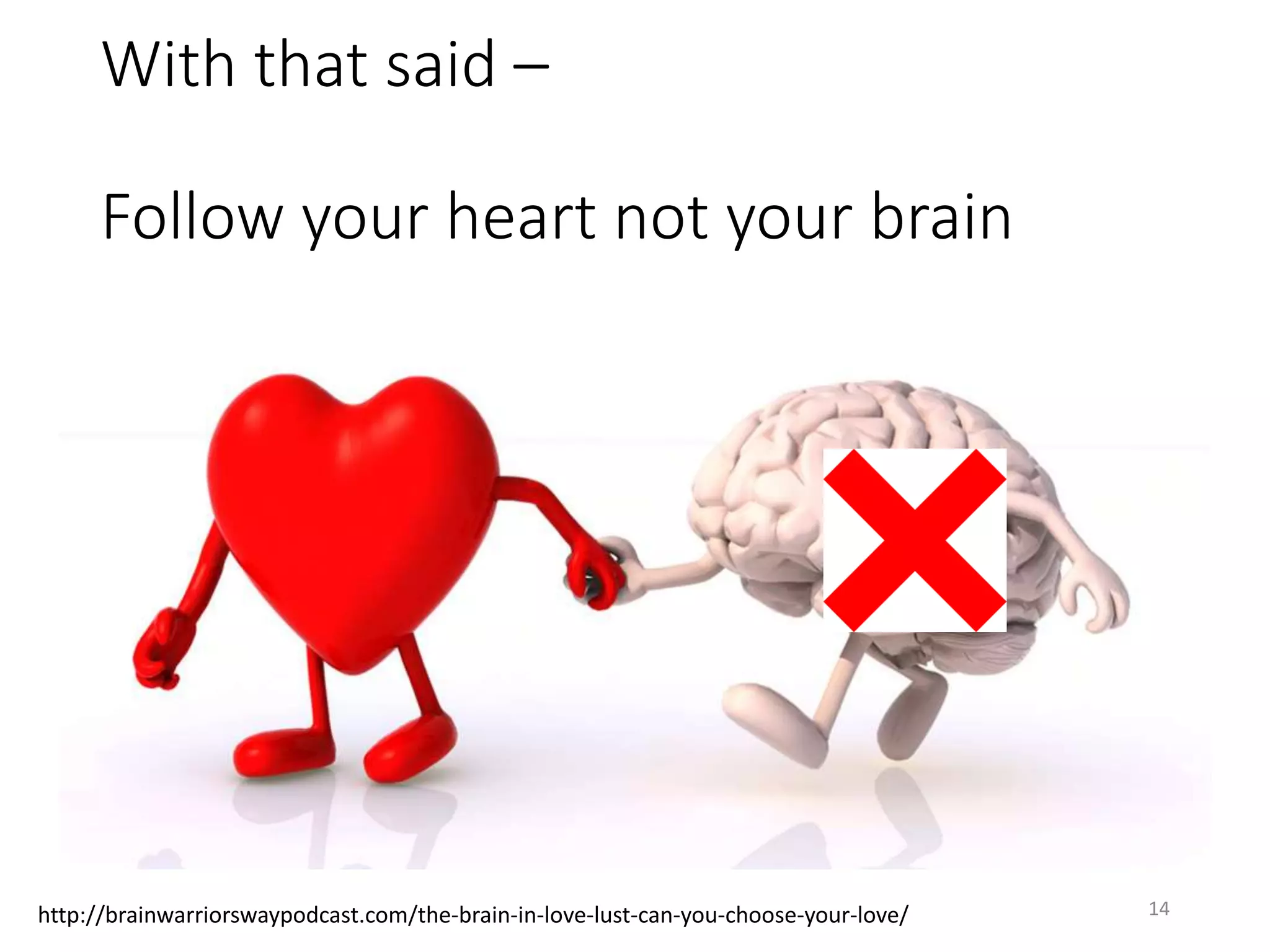
With that said –
Follow your heart not your brain
14http://brainwarriorswaypodcast.com/the-brain-in-love-lust-can-you-choose-your-love/
Collaboration
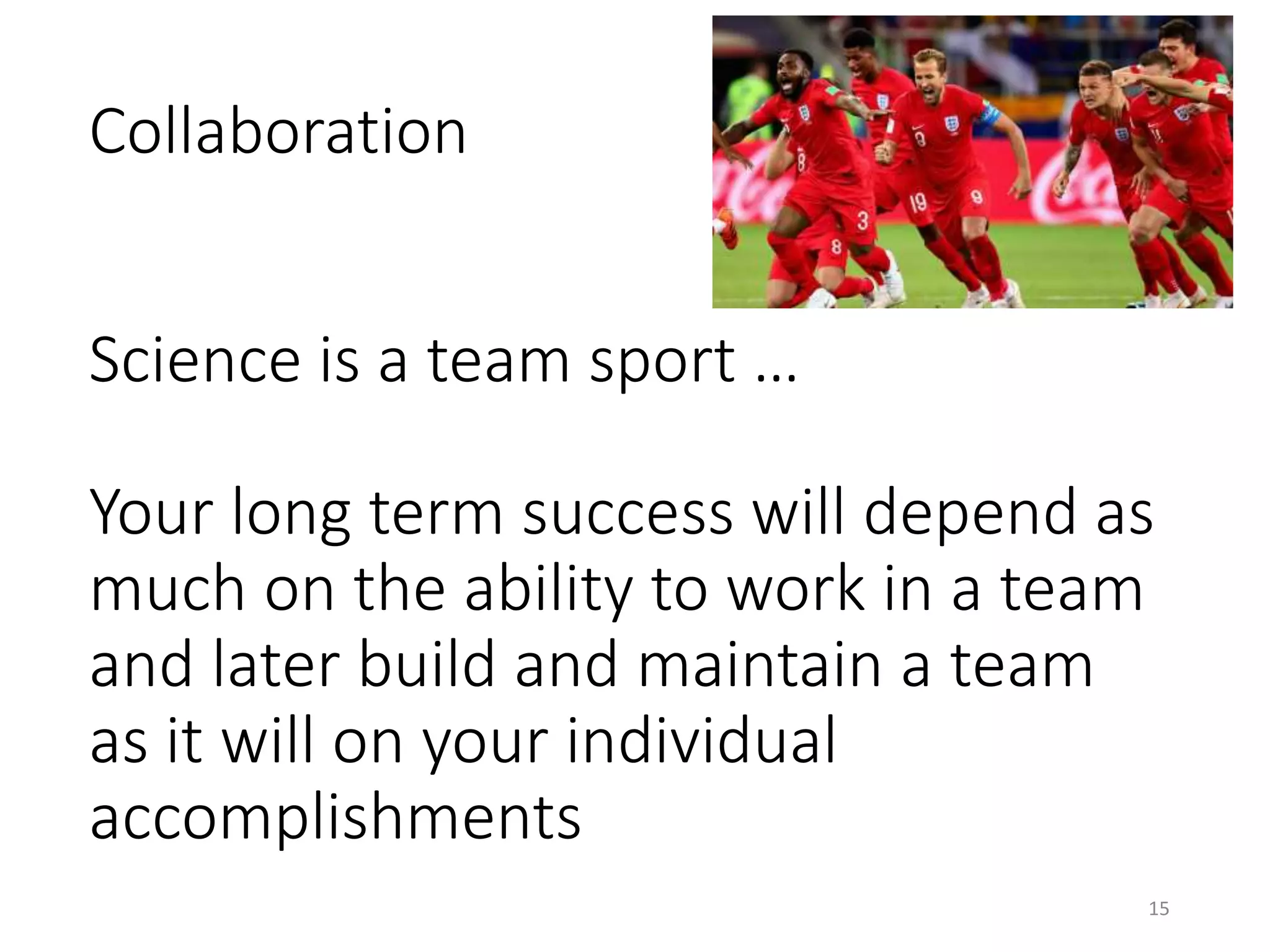
Science is a team sport …
Your long term success will depend as
much on the ability to work in a team
and later build and maintain a team
as it will on your individual
accomplishments
15
Collaboration
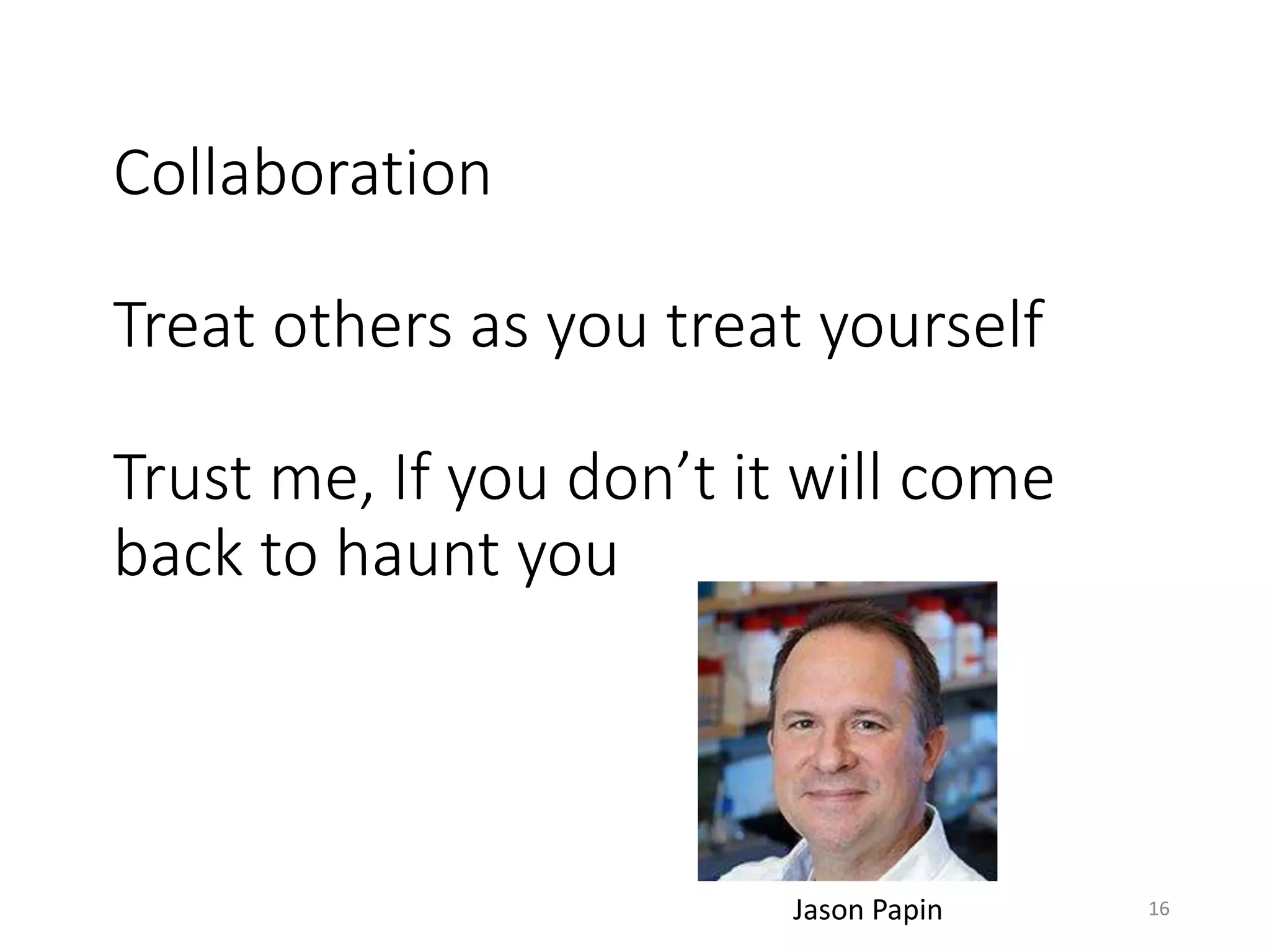
Treat others as you treat yourself
Trust me, If you don’t it will come
back to haunt you
16Jason Papin
Survey 5 –
Enter words that you think define a
good collaboration
17
www.slido.com #G419
... Rules for Collaboration
• Pick collaborations carefully – learn NO
• Define roles at the beginning
• Stick to your tasks
• Be open and honest
• Give respect = get respect
• Document
• Acknowledge
• Communicate, communicate, communicate
18
Communication …
You wont succeed unless you can
communicate what you are
doing/done…
Written, verbal, video, social media
What you communicate is your
legacy
19
… Rules for Communication
• Talk/write to the audience not at it
• If the attendee/reader can remember 3 things from
your communication in a week you have done very
well
• Less is more
• We have evolved to love stories
• Enthusiasm is contagious
20
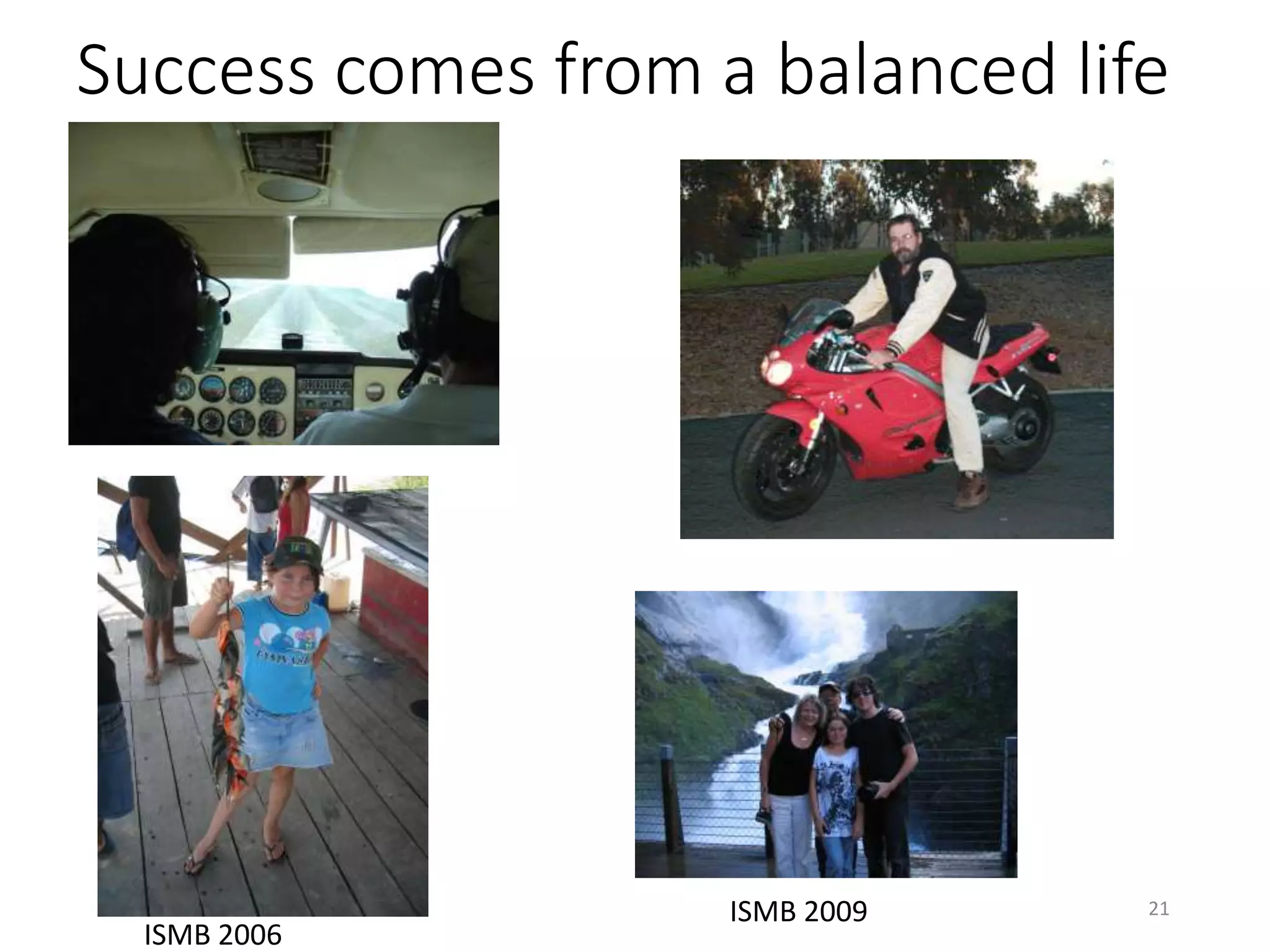
Success comes from a balanced life
21
ISMB 2006
ISMB 2009
Survey 6 - Discussion
•What is important to you in developing
your career that we have not touched
upon?
22
www.slido.com #G419

The Most Important Ten Simple Rules

  • 1.
    The Most ImportantTen Simple Rules Philip E. Bourne PhD, FACMI Stephenson Dean of Data Science Professor of Biomedical Engineering peb6a@virginia.edu https://www.slideshare.net/pebourne 1 @pebourne ECML PKDD 2020 Sept. 14, 2020
  • 2.
    This is nota lecture … as much as it can be, it is a discussion …. Acknowledgement: The context for this discussion draws from over 1000 Simple Rules.. https://doi.org/10.1371/journal.pcbi.1006670 2
  • 3.
    Background – Howit all Started 3 •https://doi.org/10.1371/journal.pcbi.0010057
  • 4.
    Background - Whatthe Rules Convey 4 Career Development and Choices 20% Collaboration 9% Education and Mentoring 12% Event Planning 10% Disciplined and Organized Science 12% Programming and Software Management 6% Scientific Communication 22% Study and Learning Habits 9%
  • 5.
    Survey Question 1 Whatare the most important issues for you? www.slido.com #G419 5
  • 6.
    Background - Whatthe Rules Convey 6 Career Development and Choices 20% Collaboration 9% Education and Mentoring 12% Event Planning 10% Disciplined and Organized Science 12% Programming and Software Management 6% Scientific Communication 22% Study and Learning Habits 9%
  • 7.
    Career Choices– Academic, Private,Public? • Survey Question 2 – Where will you work when you graduate/work next? • In industry • In academia • In the public sector (government, NGO etc.) • Undecided 7 Academic or Industry - https://doi.org/10.1371/journal.pcbi.1000388 Academic or Government - https://doi.org/10.1371/journal.pcbi.1005729 www.slido.com #G419
  • 8.
    Advantages and Disadvantages •Industry/Private • Money • Stability • Structure • Risk • Mentoring • Innovation • Flexibility 8 • Academic • Money • Stability • Structure • Risk • Mentoring • Innovation • Flexibility • Public • Money • Stability • Structure • Risk • Mentoring • Innovation • Flexibility Most Intermediate Least
  • 9.
  • 10.
    Survey 3 – Doyou think you are working on an important problem? 10 www.slido.com #G419
  • 11.
    Career Choices (from Hamming) Workon the most important problems in your field {as you believe they will be in years to come} 11 Ten Simple Rules for Doing Your Best Research According to Hamming. https://doi.org/10.1371/journal.pcbi.0030213 https://en.wikipedia.org/wiki/Richard_Hamming
  • 12.
    .. And Remember •Don’t be modest in your choices • “Luck favors the prepared mind” Louis Pasteur • Age is a factor – your most inspired work will come early; experience comes later • Take risks • Only blame yourself • Knowledge and productivity are like compound interest • Tolerate and explore ambiguity • Leave your door open 12
  • 13.
    Survey 4 – Inmaking career choices should you follow your heart or your brain? 13 www.slido.com #G419
  • 14.
    With that said– Follow your heart not your brain 14http://brainwarriorswaypodcast.com/the-brain-in-love-lust-can-you-choose-your-love/
  • 15.
    Collaboration Science is ateam sport … Your long term success will depend as much on the ability to work in a team and later build and maintain a team as it will on your individual accomplishments 15
  • 16.
    Collaboration Treat others asyou treat yourself Trust me, If you don’t it will come back to haunt you 16Jason Papin
  • 17.
    Survey 5 – Enterwords that you think define a good collaboration 17 www.slido.com #G419
  • 18.
    ... Rules forCollaboration • Pick collaborations carefully – learn NO • Define roles at the beginning • Stick to your tasks • Be open and honest • Give respect = get respect • Document • Acknowledge • Communicate, communicate, communicate 18
  • 19.
    Communication … You wontsucceed unless you can communicate what you are doing/done… Written, verbal, video, social media What you communicate is your legacy 19
  • 20.
    … Rules forCommunication • Talk/write to the audience not at it • If the attendee/reader can remember 3 things from your communication in a week you have done very well • Less is more • We have evolved to love stories • Enthusiasm is contagious 20
  • 21.
    Success comes froma balanced life 21 ISMB 2006 ISMB 2009
  • 22.
    Survey 6 -Discussion •What is important to you in developing your career that we have not touched upon? 22 www.slido.com #G419