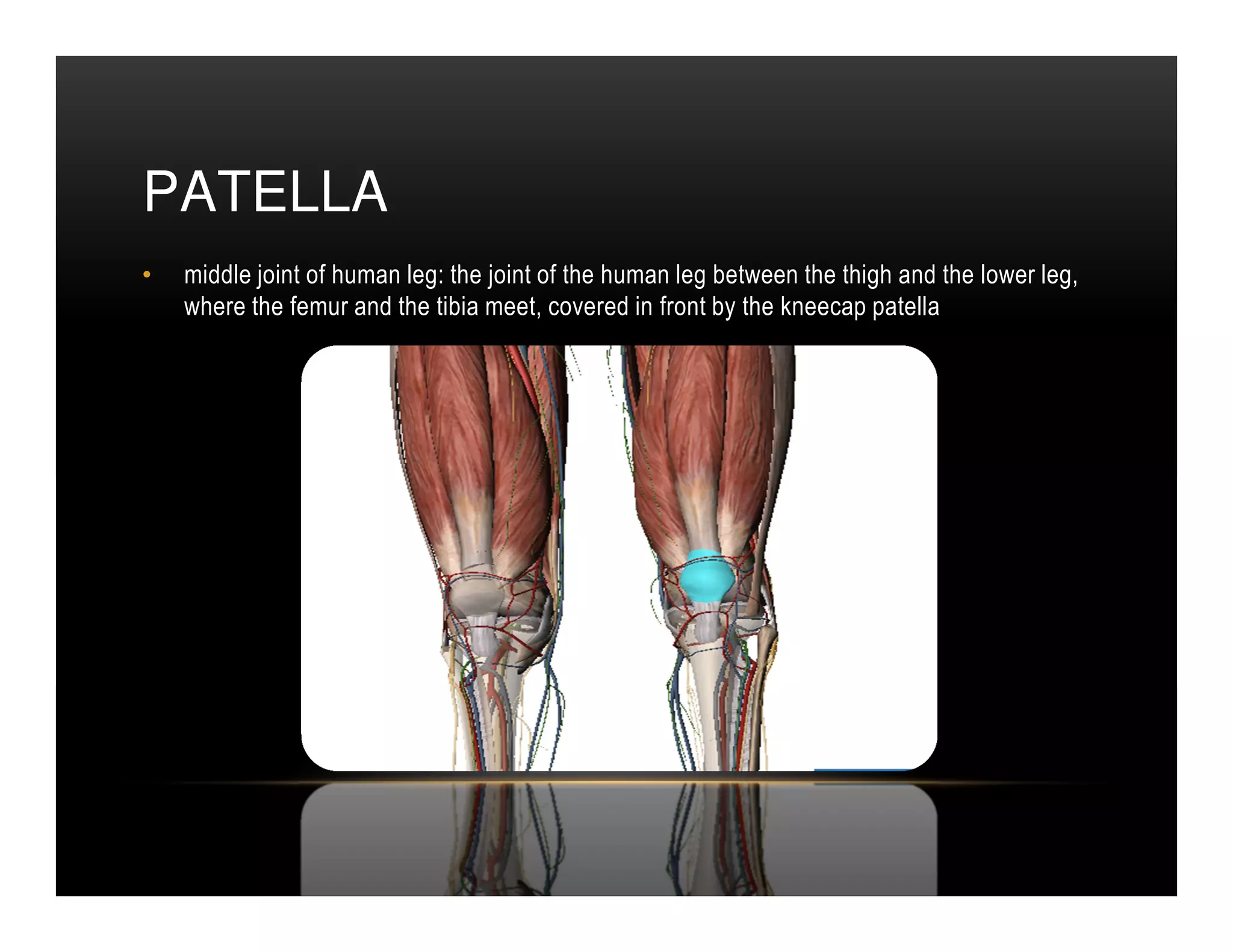
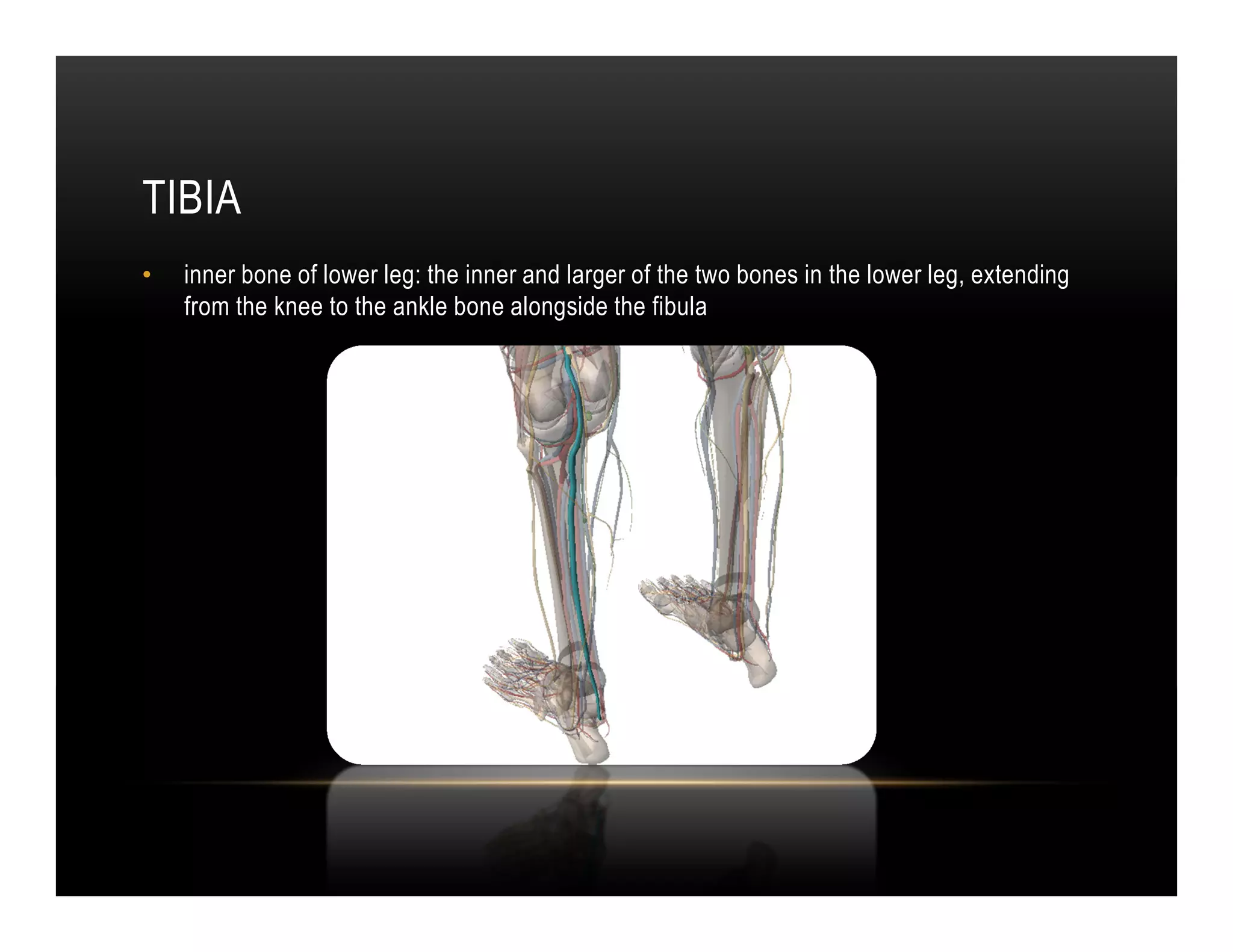
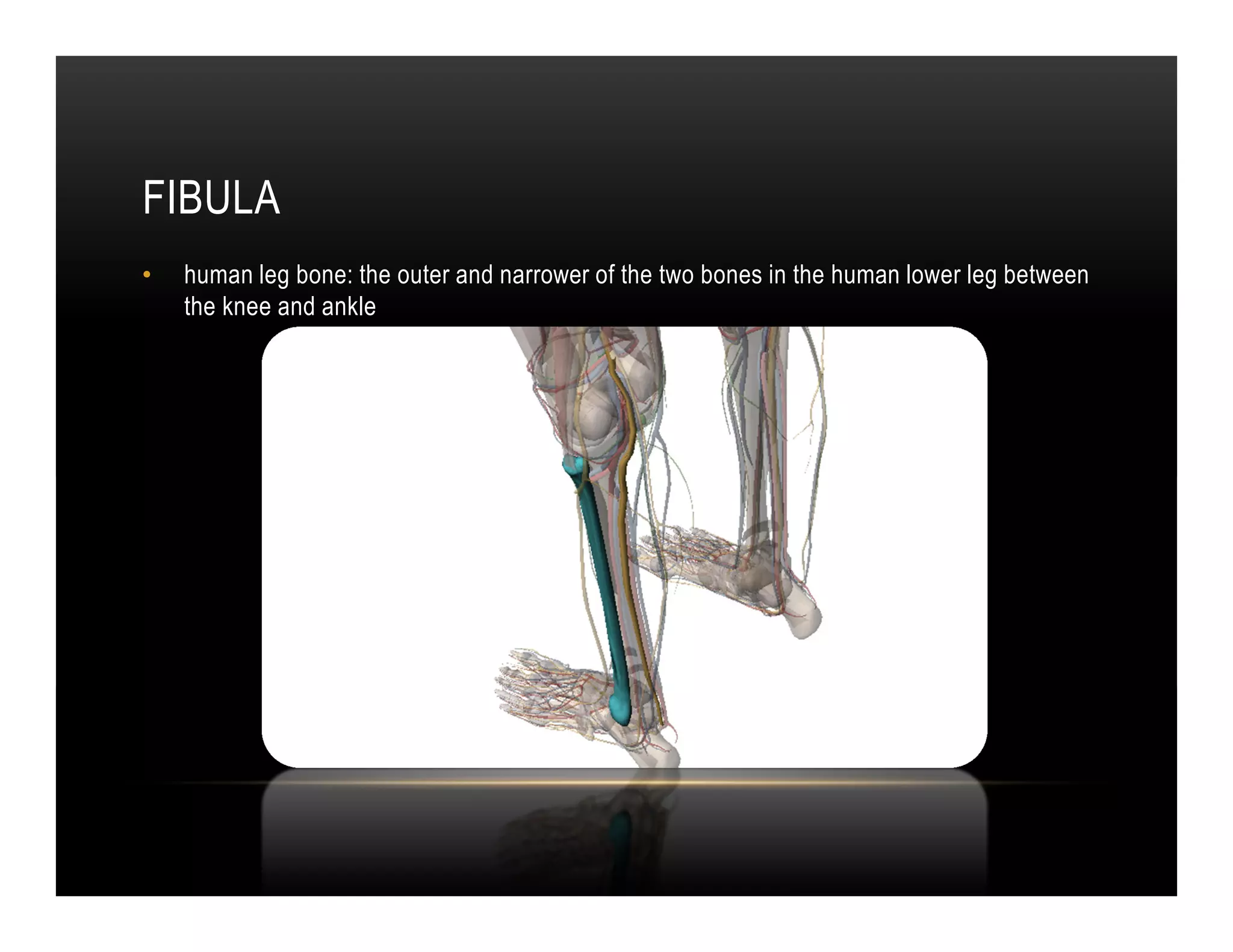
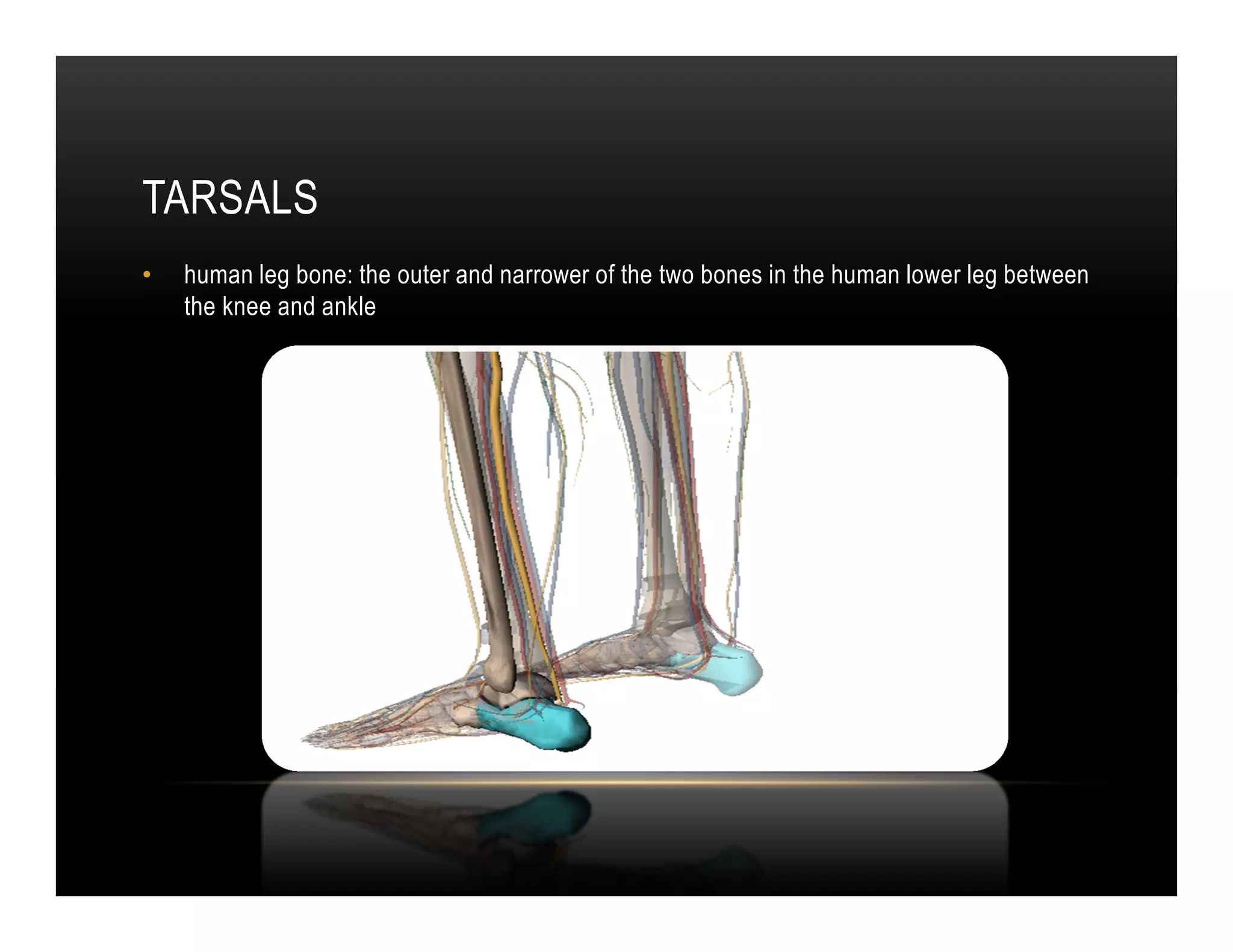
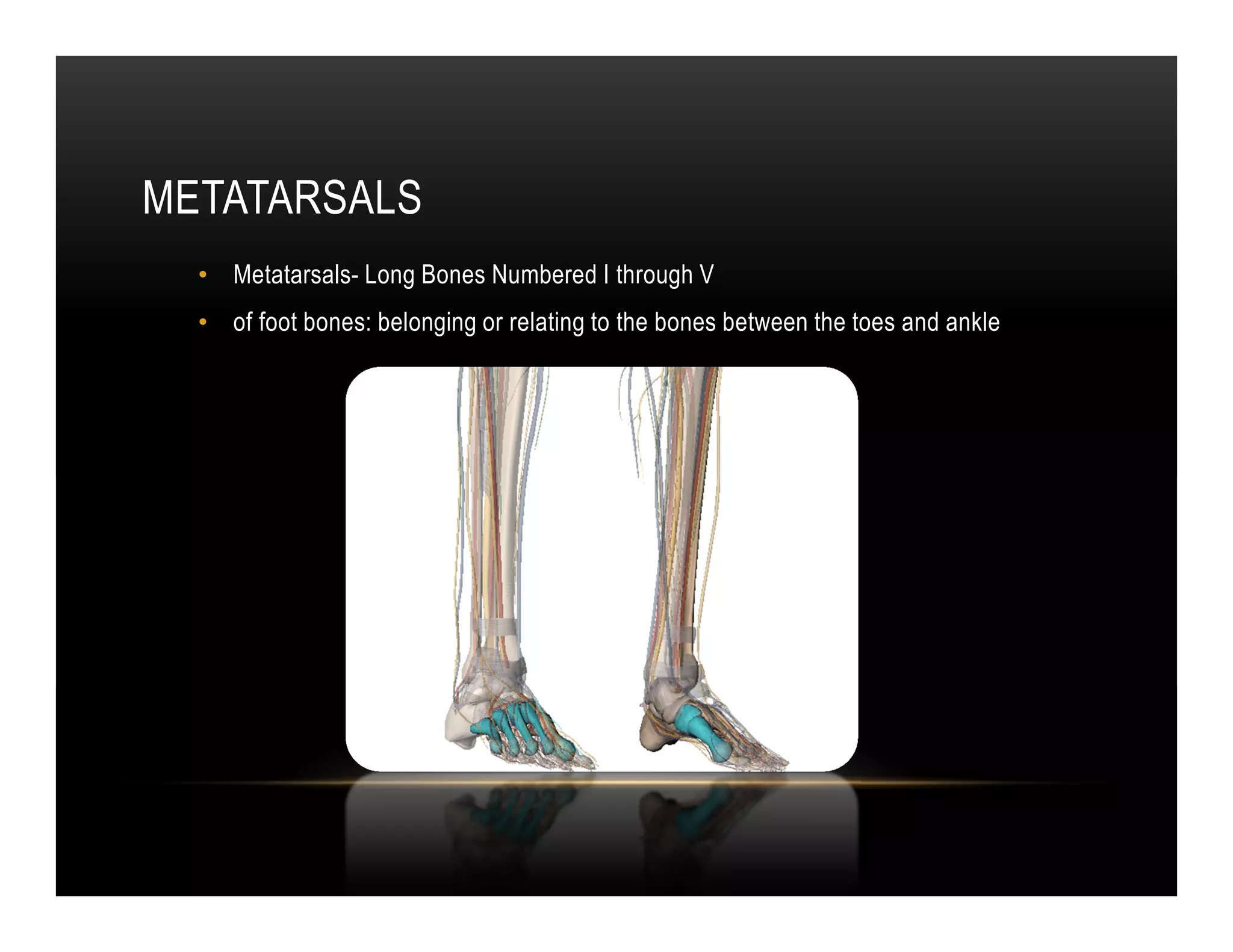
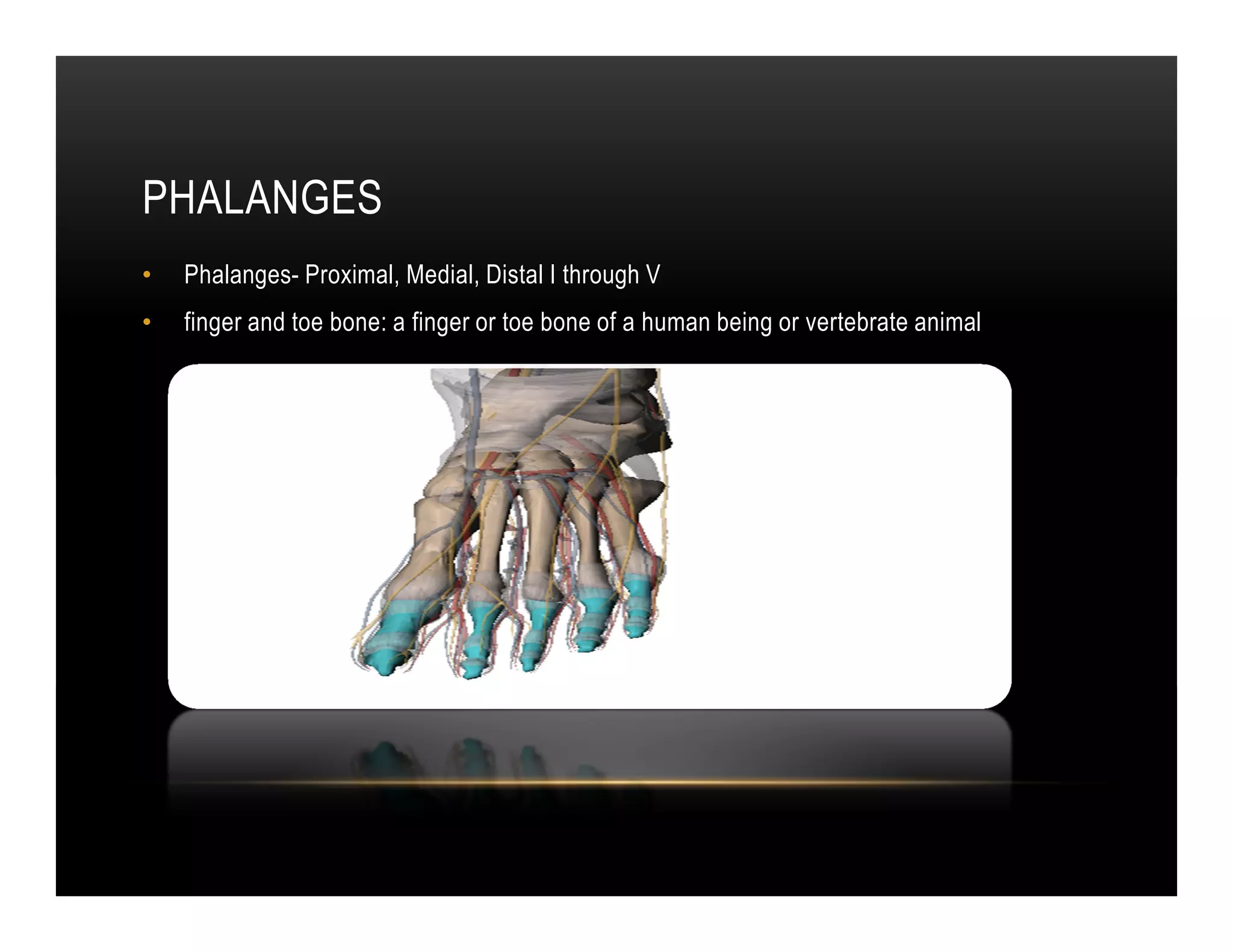
The upper and lower extremities of humans are homologous, having a common evolutionary origin and basic plan, but profound changes in function have led to significant differences between them. The lower extremity includes bones like the pelvis, femur, tibia, fibula, tarsals, metatarsals, and phalanges, while the upper extremity contains analogous bones like the shoulder girdle, humerus, radius, ulna, carpals, metacarpals and finger phalanges.






![2 Osteology_of_the_lower_limb[1].1111111pptx](https://cdn.slidesharecdn.com/ss_thumbnails/2osteologyofthelowerlimb1-240303214000-c583864f-thumbnail.jpg?width=640&height=640&fit=bounds)


