THE
LANGUAGE
OF
RESEARCH
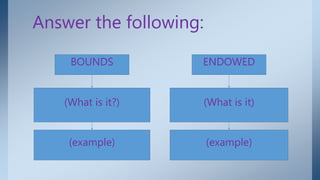
Answer the following:
BOUNDS
(What is it?)
(example)
(What is it)
(example)
ENDOWED
Characteristics
of the language
of Research
• Research is searching for truth in a systematic way or
in a scientific method. Doing thing in this manner
means going into a world of science deals mostly
with facts, principles, theories, generation and
methods.
• Research also have a bounds and endowed.
Research-Language
Formation
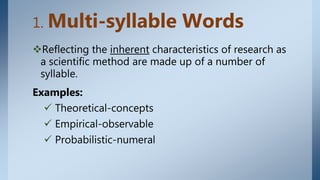
1. Multi-syllable Words
Reflecting the inherent characteristics of research as
a scientific method are made up of a number of
syllable.
Examples:
 Theoretical-concepts
 Empirical-observable
 Probabilistic-numeral
2. Types and form of questions
Research has its own types of question
It has to ask questions that describe show
relationships, and give reasons behind the
occurrence of somethings.
Example:
.
.
3. Span of time covered by the
Research
Owing to the length of time-months or years-that
takes place in a study.
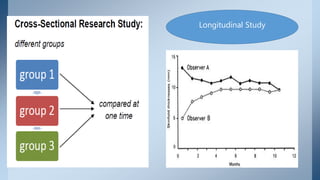
Cross-sectional study- involve a one-time
collection of data in a span of
a time.
Longitudinal study- repeated collection of
data for the purpose of finding out changes
of patterns over time.
Longitudinal Study
4. Variable relationship
 A variable has effects on another variable, based on
cause-effect relationships and on a certain pattern that
may result in positive or negative relationship.
Independent variable- the cause of something
Dependent variable- bears the effects of the
independent variable
Extraneous variable- extra or unexpected
variable cropping up outside the
research design
Confounding variable- unstable variable
5. Formulation of Hypothesis
It signals the occurrence of a Scientific or
investigative way of doing things.
Null Hypothesis- guessing negative result
Alternative Hypothesis- for positive result
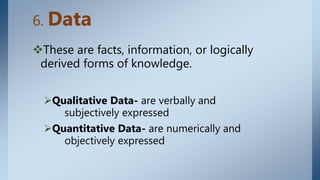
6. Data
These are facts, information, or logically
derived forms of knowledge.
Qualitative Data- are verbally and
subjectively expressed
Quantitative Data- are numerically and
objectively expressed
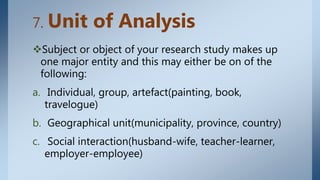
7. Unit of Analysis
Subject or object of your research study makes up
one major entity and this may either be on of the
following:
a. Individual, group, artefact(painting, book,
travelogue)
b. Geographical unit(municipality, province, country)
c. Social interaction(husband-wife, teacher-learner,
employer-employee)
Operational
Definition
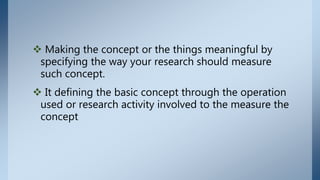
 Making the concept or the things meaningful by
specifying the way your research should measure
such concept.
 It defining the basic concept through the operation
used or research activity involved to the measure the
concept
Guidelines in Giving
Operational Definitions
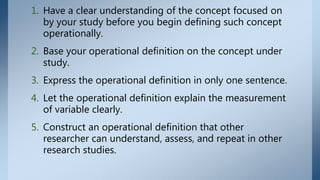
1. Have a clear understanding of the concept focused on
by your study before you begin defining such concept
operationally.
2. Base your operational definition on the concept under
study.
3. Express the operational definition in only one sentence.
4. Let the operational definition explain the measurement
of variable clearly.
5. Construct an operational definition that other
researcher can understand, assess, and repeat in other
research studies.
Example of
Operational
Definition
1. Defining Tempersture
2. Defining Electric Current
3. Defining Anger
4. Defining Virgo
Quiz 2
• 2 Characteristics language of research.
• 7 research-language formation
• 2 research introduced terms of studies
• 4 kinds of variables
• Explain operational definition. (5pts)

The language of research

  • 1.
  • 2.
    Answer the following: BOUNDS (Whatis it?) (example) (What is it) (example) ENDOWED
  • 3.
  • 4.
    • Research issearching for truth in a systematic way or in a scientific method. Doing thing in this manner means going into a world of science deals mostly with facts, principles, theories, generation and methods. • Research also have a bounds and endowed.
  • 5.
  • 6.
    1. Multi-syllable Words Reflectingthe inherent characteristics of research as a scientific method are made up of a number of syllable. Examples:  Theoretical-concepts  Empirical-observable  Probabilistic-numeral
  • 7.
    2. Types andform of questions Research has its own types of question It has to ask questions that describe show relationships, and give reasons behind the occurrence of somethings. Example: . .
  • 8.
    3. Span oftime covered by the Research Owing to the length of time-months or years-that takes place in a study. Cross-sectional study- involve a one-time collection of data in a span of a time. Longitudinal study- repeated collection of data for the purpose of finding out changes of patterns over time.
  • 9.
  • 10.
    4. Variable relationship A variable has effects on another variable, based on cause-effect relationships and on a certain pattern that may result in positive or negative relationship. Independent variable- the cause of something Dependent variable- bears the effects of the independent variable Extraneous variable- extra or unexpected variable cropping up outside the research design Confounding variable- unstable variable
  • 11.
    5. Formulation ofHypothesis It signals the occurrence of a Scientific or investigative way of doing things. Null Hypothesis- guessing negative result Alternative Hypothesis- for positive result
  • 12.
    6. Data These arefacts, information, or logically derived forms of knowledge. Qualitative Data- are verbally and subjectively expressed Quantitative Data- are numerically and objectively expressed
  • 13.
    7. Unit ofAnalysis Subject or object of your research study makes up one major entity and this may either be on of the following: a. Individual, group, artefact(painting, book, travelogue) b. Geographical unit(municipality, province, country) c. Social interaction(husband-wife, teacher-learner, employer-employee)
  • 14.
  • 15.
     Making theconcept or the things meaningful by specifying the way your research should measure such concept.  It defining the basic concept through the operation used or research activity involved to the measure the concept
  • 16.
  • 17.
    1. Have aclear understanding of the concept focused on by your study before you begin defining such concept operationally. 2. Base your operational definition on the concept under study. 3. Express the operational definition in only one sentence. 4. Let the operational definition explain the measurement of variable clearly. 5. Construct an operational definition that other researcher can understand, assess, and repeat in other research studies.
  • 18.
  • 19.
  • 20.
  • 21.
  • 22.
  • 23.
    Quiz 2 • 2Characteristics language of research. • 7 research-language formation • 2 research introduced terms of studies • 4 kinds of variables • Explain operational definition. (5pts)