STRUCTURE

The Italian educational system is strongly
centralized
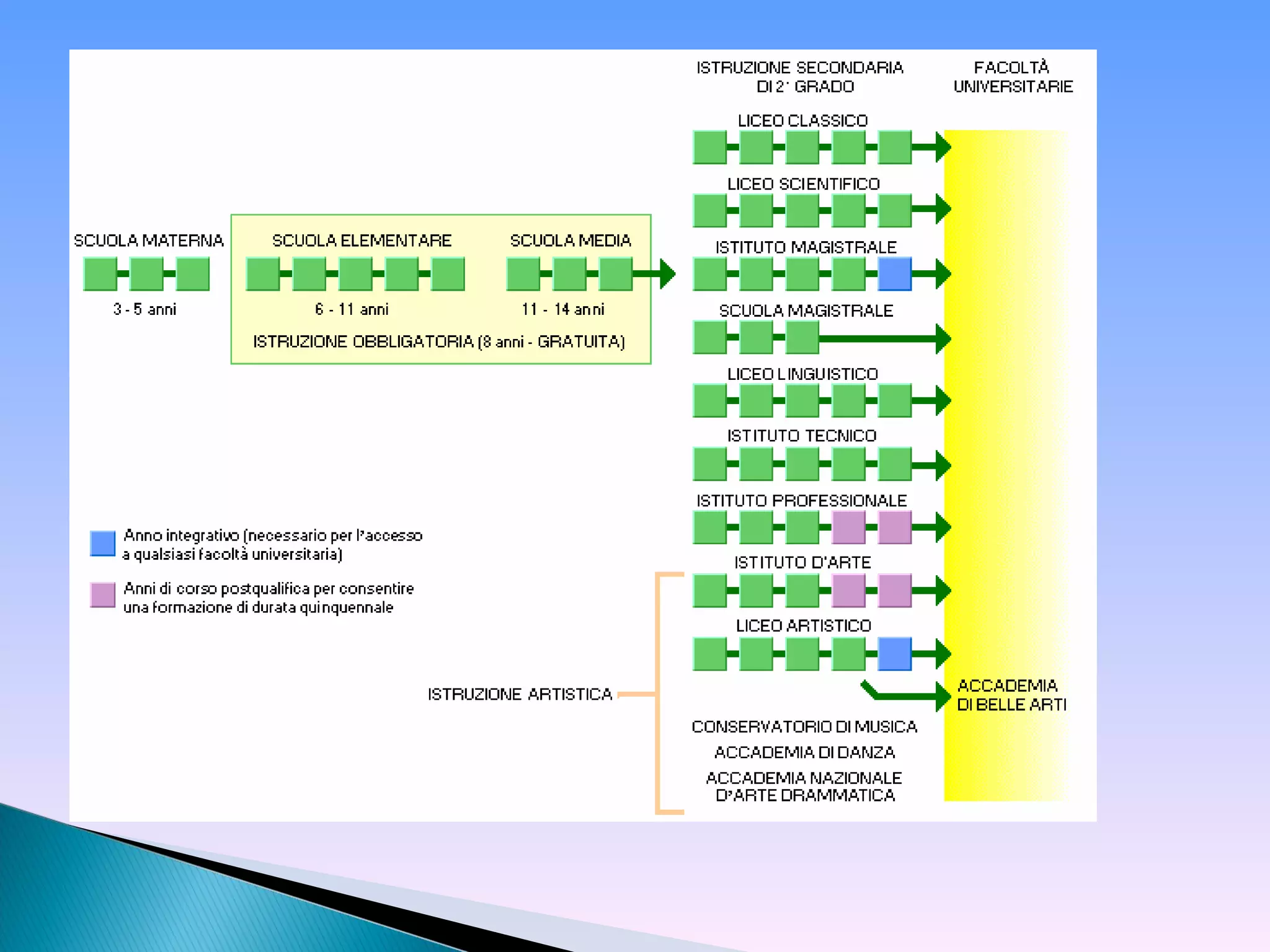
From 3 to 5 the NURSERY SCHOOL


From 6 to 11 the PRIMARY SCHOOL


From 11 to 14 the LOWER SECONDARY SCHOOL (Scuola Media)


From 14 to 19 the UPPER SECONDARY SCHOOL
Compulsory education begins at age six
and ends at age fifteen, after the Middle
School Diploma and the first year of
upper secondary school
After the LOWER SECONDARY SCHOOL, i.e. after 8 school years

students can choose among several options:

«Liceo   Classico» focusing on humanities
«Liceo   Scientifico» focusing on sciences
«Liceo   Linguistico» focusing on foreign languages
«Liceo   Artistico» focusing on arts
«Liceo   Tecnologico» focusing on technical education

All these High Schools provide the students the possibilities to face
any Faculty.

«Technical High Schools» split into several tracks (Agricultural,
Commercial, Industrial, Chemical, etc.)

«Vocational High Schools» (for Hairdressers….)
High schools last FIVE years and
conclude at the end of grade 13
with a national final exam (“State
Exam”)
Pecularities of the Italian School System


At the beginning of the first year of each school level (elementary,
middle, high
school), the students are split up into Class groups which will be
the same for several years.

The students of the same age do not mix to form different class
groups; they have lessons always in the same classroom, where the
different teachers turn over.
That’s because once students have chosen their track, syllabi are fixed, there is
no (or very limited) options. (i.e. different languages, or religion vs. individual
study or optional subject);

• Classes last 60 minutes and take place (on average) only in the morning;

• One teacher for each subject accompanies the same group of students for
several years (three in middle school, between two and five in high school);

The number of teaching hours per subject and the curricula are defined by
ministerial decree in the whole country.

• While the subjects and hours must be the same for every school, the curricula
are only a sort of concise guide-line in order to reach the educational objectives
required by the system, through the didactic planning, which is mainly the
teachers‘ task.

The italian school system

  • 2.
    STRUCTURE The Italian educationalsystem is strongly centralized
  • 3.
    From 3 to5 the NURSERY SCHOOL From 6 to 11 the PRIMARY SCHOOL From 11 to 14 the LOWER SECONDARY SCHOOL (Scuola Media) From 14 to 19 the UPPER SECONDARY SCHOOL
  • 4.
    Compulsory education beginsat age six and ends at age fifteen, after the Middle School Diploma and the first year of upper secondary school
  • 5.
    After the LOWERSECONDARY SCHOOL, i.e. after 8 school years students can choose among several options: «Liceo Classico» focusing on humanities «Liceo Scientifico» focusing on sciences «Liceo Linguistico» focusing on foreign languages «Liceo Artistico» focusing on arts «Liceo Tecnologico» focusing on technical education All these High Schools provide the students the possibilities to face any Faculty. «Technical High Schools» split into several tracks (Agricultural, Commercial, Industrial, Chemical, etc.) «Vocational High Schools» (for Hairdressers….)
  • 6.
    High schools lastFIVE years and conclude at the end of grade 13 with a national final exam (“State Exam”)
  • 8.
    Pecularities of theItalian School System At the beginning of the first year of each school level (elementary, middle, high school), the students are split up into Class groups which will be the same for several years. The students of the same age do not mix to form different class groups; they have lessons always in the same classroom, where the different teachers turn over.
  • 9.
    That’s because oncestudents have chosen their track, syllabi are fixed, there is no (or very limited) options. (i.e. different languages, or religion vs. individual study or optional subject); • Classes last 60 minutes and take place (on average) only in the morning; • One teacher for each subject accompanies the same group of students for several years (three in middle school, between two and five in high school); The number of teaching hours per subject and the curricula are defined by ministerial decree in the whole country. • While the subjects and hours must be the same for every school, the curricula are only a sort of concise guide-line in order to reach the educational objectives required by the system, through the didactic planning, which is mainly the teachers‘ task.