What is a Constitution?
 A constitution is a set of rules that
guides how a country, state, or other
political organization works.
 The constitution may tell what the
branches of the government are, what
powers they have, and how they work.
 It may also state the rights of citizens.
Between December
1946 and November
1949, the Constituent
Assembly drafted a
constitution for
independent India. The
constitution was
enforced with effect
from January 26, 1950.
From that day India
became Republic of
India.
Purpose of the Constitution:
i) A Constitution lays out certain ideals that form the basis of the kind of country
that we as citizens aspire to live in.
(ii) It tells us about the fundamental nature of our society.
(iii) It helps serve as a set of rules and principles that all persons in a country can
agree upon as the basis of the way in which they want the country to be governed.
(iv) This includes the type of government and also an agreement on certain ideals
that they all believe the country should uphold.
(vi) In a democracy, leaders exercise their power responsibly on the behalf of the
people. It defines country’s political system.
(vii) In democratic societies, the constitution lays down the rules that guard against
the misuse of authority by our political leaders. It lays certain important guidelines
that govern decision making processes.
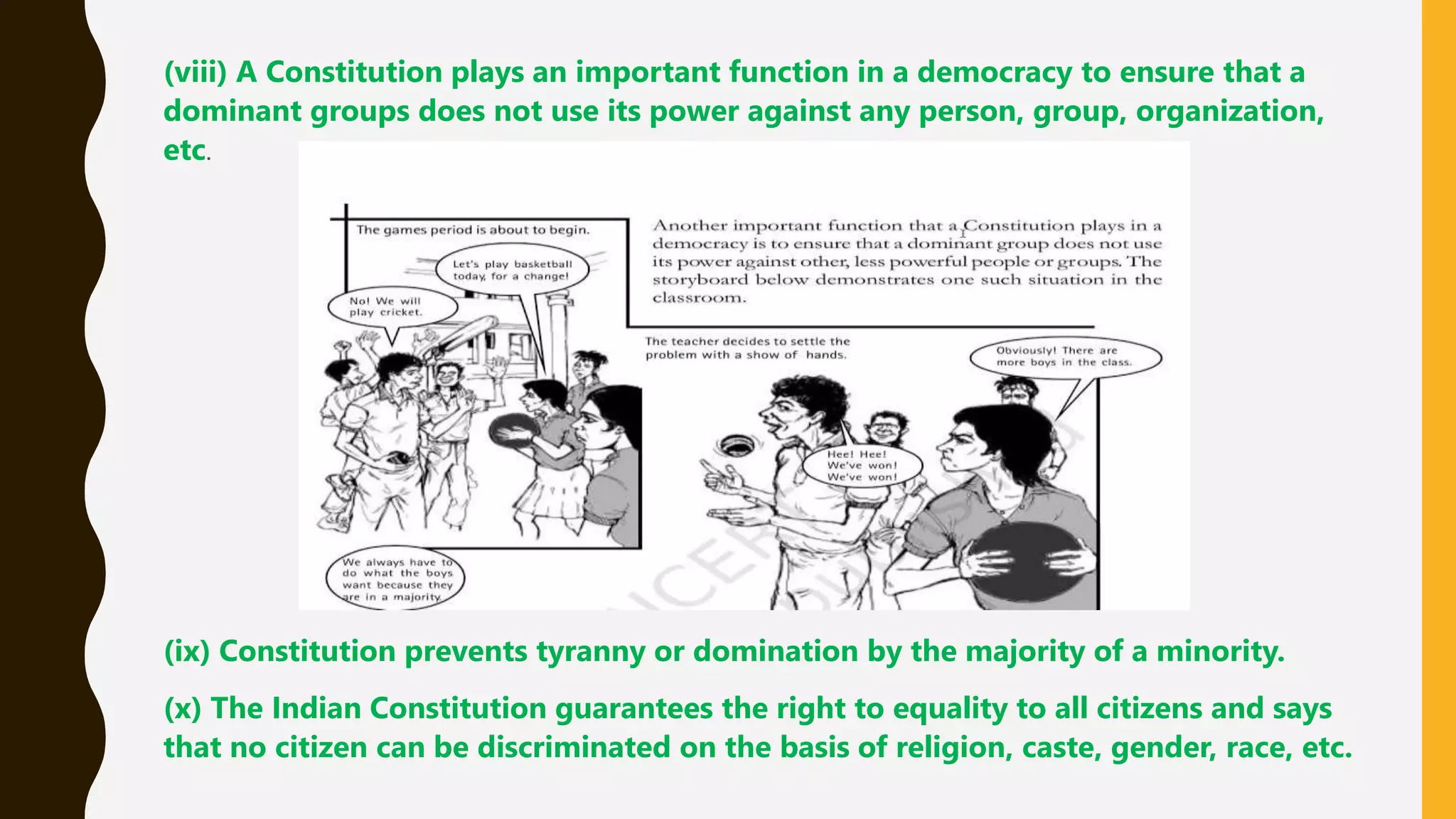
(viii) A Constitution plays an important function in a democracy to ensure that a
dominant groups does not use its power against any person, group, organization,
etc.
(ix) Constitution prevents tyranny or domination by the majority of a minority.
(x) The Indian Constitution guarantees the right to equality to all citizens and says
that no citizen can be discriminated on the basis of religion, caste, gender, race, etc.
LET US DISCUSS
• Video - Making of Indian Constitution
• https://www.youtube.com/watch?v=UQLPat5oaN8
• *Concept map – The making of the Constitution
• Class discussion- Monarchy and Nepal’s Constitution
1) Federalism:
It refers to the existence of more than one level of government in
the country. These are at the state and at the central levels. Citizens
are governed by laws and policies made by each of these levels of
government.
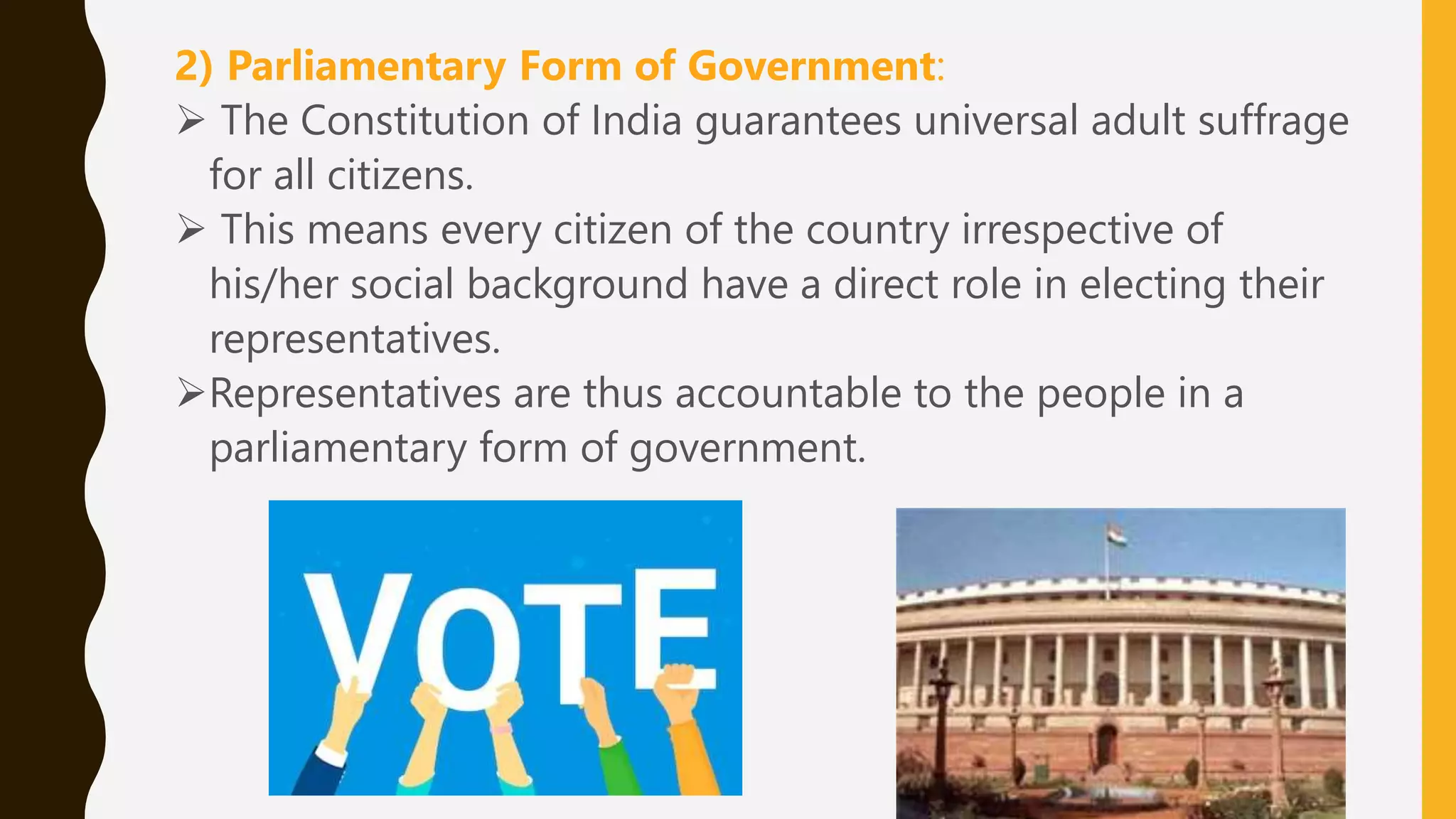
2) Parliamentary Form of Government:
 The Constitution of India guarantees universal adult suffrage
for all citizens.
 This means every citizen of the country irrespective of
his/her social background have a direct role in electing their
representatives.
Representatives are thus accountable to the people in a
parliamentary form of government.
3) Separation of Powers:
There are three organs of the State.
4) Fundamental Rights:
(i) The Fundamental Rights are referred to as the ‘conscience’ of Indian Constitution.
Fundamental Rights protect citizens against the arbitrary and absolute exercise of power by the
state.
(ii) The Constitution guarantees the rights of individuals against the State as well as against
other individuals.
(iii) There are six Fundamental Rights in the Indian Constitution, which are:
(i) Right to Equality;
(ii) Right to Freedom;
(iii) Right against Exploitation;
(iv) Right to Freedom of Religion;
(v) Cultural and Educational Rights;
(vi) Right to Constitution Remedies.
5) Secularism
A secular state is one in which the
state does not officially promote any
one religion as the state religion.
The Constitution plays a crucial role in
laying out the ideals that we would like
all citizens of the country to adhere to,
including the representatives that we
elect to rule us.
Constitution has been changed over
the years to reflect new concerns of
the polity that involves a change in the
fundamental nature of the country.
LET US DISCUSS
* 12-word summary- Advantage of the class
parliament
* Text book story board review
*Comparative study -
*Rules now and then ( colonial rules)
* Worksheet discussion

The Indian Constitution ppt

  • 2.
    What is aConstitution?  A constitution is a set of rules that guides how a country, state, or other political organization works.  The constitution may tell what the branches of the government are, what powers they have, and how they work.  It may also state the rights of citizens.
  • 4.
    Between December 1946 andNovember 1949, the Constituent Assembly drafted a constitution for independent India. The constitution was enforced with effect from January 26, 1950. From that day India became Republic of India.
  • 5.
    Purpose of theConstitution: i) A Constitution lays out certain ideals that form the basis of the kind of country that we as citizens aspire to live in. (ii) It tells us about the fundamental nature of our society. (iii) It helps serve as a set of rules and principles that all persons in a country can agree upon as the basis of the way in which they want the country to be governed. (iv) This includes the type of government and also an agreement on certain ideals that they all believe the country should uphold. (vi) In a democracy, leaders exercise their power responsibly on the behalf of the people. It defines country’s political system. (vii) In democratic societies, the constitution lays down the rules that guard against the misuse of authority by our political leaders. It lays certain important guidelines that govern decision making processes.
  • 6.
    (viii) A Constitutionplays an important function in a democracy to ensure that a dominant groups does not use its power against any person, group, organization, etc. (ix) Constitution prevents tyranny or domination by the majority of a minority. (x) The Indian Constitution guarantees the right to equality to all citizens and says that no citizen can be discriminated on the basis of religion, caste, gender, race, etc.
  • 7.
    LET US DISCUSS •Video - Making of Indian Constitution • https://www.youtube.com/watch?v=UQLPat5oaN8 • *Concept map – The making of the Constitution • Class discussion- Monarchy and Nepal’s Constitution
  • 9.
    1) Federalism: It refersto the existence of more than one level of government in the country. These are at the state and at the central levels. Citizens are governed by laws and policies made by each of these levels of government.
  • 10.
    2) Parliamentary Formof Government:  The Constitution of India guarantees universal adult suffrage for all citizens.  This means every citizen of the country irrespective of his/her social background have a direct role in electing their representatives. Representatives are thus accountable to the people in a parliamentary form of government.
  • 11.
    3) Separation ofPowers: There are three organs of the State.
  • 12.
    4) Fundamental Rights: (i)The Fundamental Rights are referred to as the ‘conscience’ of Indian Constitution. Fundamental Rights protect citizens against the arbitrary and absolute exercise of power by the state. (ii) The Constitution guarantees the rights of individuals against the State as well as against other individuals. (iii) There are six Fundamental Rights in the Indian Constitution, which are: (i) Right to Equality; (ii) Right to Freedom; (iii) Right against Exploitation; (iv) Right to Freedom of Religion; (v) Cultural and Educational Rights; (vi) Right to Constitution Remedies.
  • 13.
    5) Secularism A secularstate is one in which the state does not officially promote any one religion as the state religion. The Constitution plays a crucial role in laying out the ideals that we would like all citizens of the country to adhere to, including the representatives that we elect to rule us. Constitution has been changed over the years to reflect new concerns of the polity that involves a change in the fundamental nature of the country.
  • 14.
    LET US DISCUSS *12-word summary- Advantage of the class parliament * Text book story board review *Comparative study - *Rules now and then ( colonial rules) * Worksheet discussion