THE HUMAN
SKELETON
Julieth Cano – Mrs. Schell
Definition
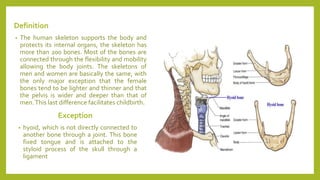
• The human skeleton supports the body and
protects its internal organs, the skeleton has
more than 200 bones. Most of the bones are
connected through the flexibility and mobility
allowing the body joints. The skeletons of
men and women are basically the same, with
the only major exception that the female
bones tend to be lighter and thinner and that
the pelvis is wider and deeper than that of
men.This last difference facilitates childbirth.
Exception
• hyoid, which is not directly connected to
another bone through a joint. This bone
fixed tongue and is attached to the
styloid process of the skull through a
ligament
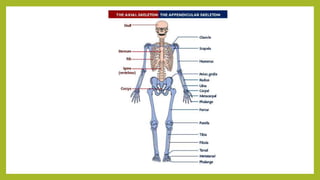
Axial Skeleton
• The axial skeleton consists of 80 bones along
the central axis of the human body is
composed of the bones of the skull, ear bones
(bones in the ear), sternum and spine
Cranial Bones (8): Parietal (2); Temporary(2);
Front(1); Occipital(1); Ethmoid(1); Sphenoid(1).
Bones of the face(14): Jawbone(2); Zygomatic(2);
Mandible(1) Nasal (2); Platino (2); Turbinate(2);
Lacrimal (2) and theVomer(1)
Auditory Ossicles (6): Hammer (2); Yunque(2);
Stirrup (2)
Spine (26): Cervical Vertebrae (7); Thoracic
Vertebrae (12); Lumbar vertebrae (5); Sacro
(1, but are 5 Birth fuses in the adult); Coccyx
(1, but are 4 birth, fuses in adults varies
between 3 and 5)
Chest: Ribcage(25); Breastbone (1) and Ribs
(24)
FUNCTION: It is the main structure of the body
and protects the internal organs of the body and
delicate
Appendicular Skeleton
• It contains 128 bones that form the lower and
upper limbs of the body, such as waist bone
(shoulder bones, shoulder girdle and hip or pelvic
girdle)
Superior Limbs: 64 bones
Shoulder: it consists of clavicle (2) and shoulder
blade(2).
Arm: Humeral (2)
Forearm: Ulna (2) and Radio (2)
Hand: Carpo or wrist (16); metarcapal or hand (10)
and Phalanges or fingers (18)
• Lower extremities: it consists of osseous and 62
are:
Hips: is located the Ilium (2)
Thigh: Femur (2)
Leg: the following bones are found: Fibula (2);Tibia (2)
and Kneecap (2)
Feet:The tarso (16); Metatarsal(10) and Phalanges (26)
Function:The main function of the
appendicular Skeleton is the movement,
contains specialized bones for locomotion
and includes extremities joints that
connect the trunk (axial skeleton)
Some related careers on the study of the human skeleton…
• All branches of medicine are responsible for studying the human body and in some specific areas.
For human skeleton some races that may be related are forensic anthropologists or Doctors
Traumatologists (traumatology and orthopedics) For example:
DoctorsTraumatologists: This branch of medicine is responsible for studying injuries or fractures of
the locomotor system (collectively bone, joint and ligament) for that a study of the axial skeleton and
appendicular required, structure and function of bones.
When a bone is fractured often only it affects the injured bone or can somehow affect another part of
the bone, also affects the function of that bone. From an anatomist view is the study of the
composition and structure of bones and overall the human skeleton and from a physiological point of
view is the study of that which functions meet every bone and as they do to perform those functions.
The human Skeleton

The human Skeleton

  • 1.
  • 2.
    Definition • The humanskeleton supports the body and protects its internal organs, the skeleton has more than 200 bones. Most of the bones are connected through the flexibility and mobility allowing the body joints. The skeletons of men and women are basically the same, with the only major exception that the female bones tend to be lighter and thinner and that the pelvis is wider and deeper than that of men.This last difference facilitates childbirth. Exception • hyoid, which is not directly connected to another bone through a joint. This bone fixed tongue and is attached to the styloid process of the skull through a ligament
  • 3.
    Axial Skeleton • Theaxial skeleton consists of 80 bones along the central axis of the human body is composed of the bones of the skull, ear bones (bones in the ear), sternum and spine Cranial Bones (8): Parietal (2); Temporary(2); Front(1); Occipital(1); Ethmoid(1); Sphenoid(1). Bones of the face(14): Jawbone(2); Zygomatic(2); Mandible(1) Nasal (2); Platino (2); Turbinate(2); Lacrimal (2) and theVomer(1) Auditory Ossicles (6): Hammer (2); Yunque(2); Stirrup (2) Spine (26): Cervical Vertebrae (7); Thoracic Vertebrae (12); Lumbar vertebrae (5); Sacro (1, but are 5 Birth fuses in the adult); Coccyx (1, but are 4 birth, fuses in adults varies between 3 and 5) Chest: Ribcage(25); Breastbone (1) and Ribs (24) FUNCTION: It is the main structure of the body and protects the internal organs of the body and delicate
  • 4.
    Appendicular Skeleton • Itcontains 128 bones that form the lower and upper limbs of the body, such as waist bone (shoulder bones, shoulder girdle and hip or pelvic girdle) Superior Limbs: 64 bones Shoulder: it consists of clavicle (2) and shoulder blade(2). Arm: Humeral (2) Forearm: Ulna (2) and Radio (2) Hand: Carpo or wrist (16); metarcapal or hand (10) and Phalanges or fingers (18) • Lower extremities: it consists of osseous and 62 are: Hips: is located the Ilium (2) Thigh: Femur (2) Leg: the following bones are found: Fibula (2);Tibia (2) and Kneecap (2) Feet:The tarso (16); Metatarsal(10) and Phalanges (26) Function:The main function of the appendicular Skeleton is the movement, contains specialized bones for locomotion and includes extremities joints that connect the trunk (axial skeleton)
  • 6.
    Some related careerson the study of the human skeleton… • All branches of medicine are responsible for studying the human body and in some specific areas. For human skeleton some races that may be related are forensic anthropologists or Doctors Traumatologists (traumatology and orthopedics) For example: DoctorsTraumatologists: This branch of medicine is responsible for studying injuries or fractures of the locomotor system (collectively bone, joint and ligament) for that a study of the axial skeleton and appendicular required, structure and function of bones. When a bone is fractured often only it affects the injured bone or can somehow affect another part of the bone, also affects the function of that bone. From an anatomist view is the study of the composition and structure of bones and overall the human skeleton and from a physiological point of view is the study of that which functions meet every bone and as they do to perform those functions.