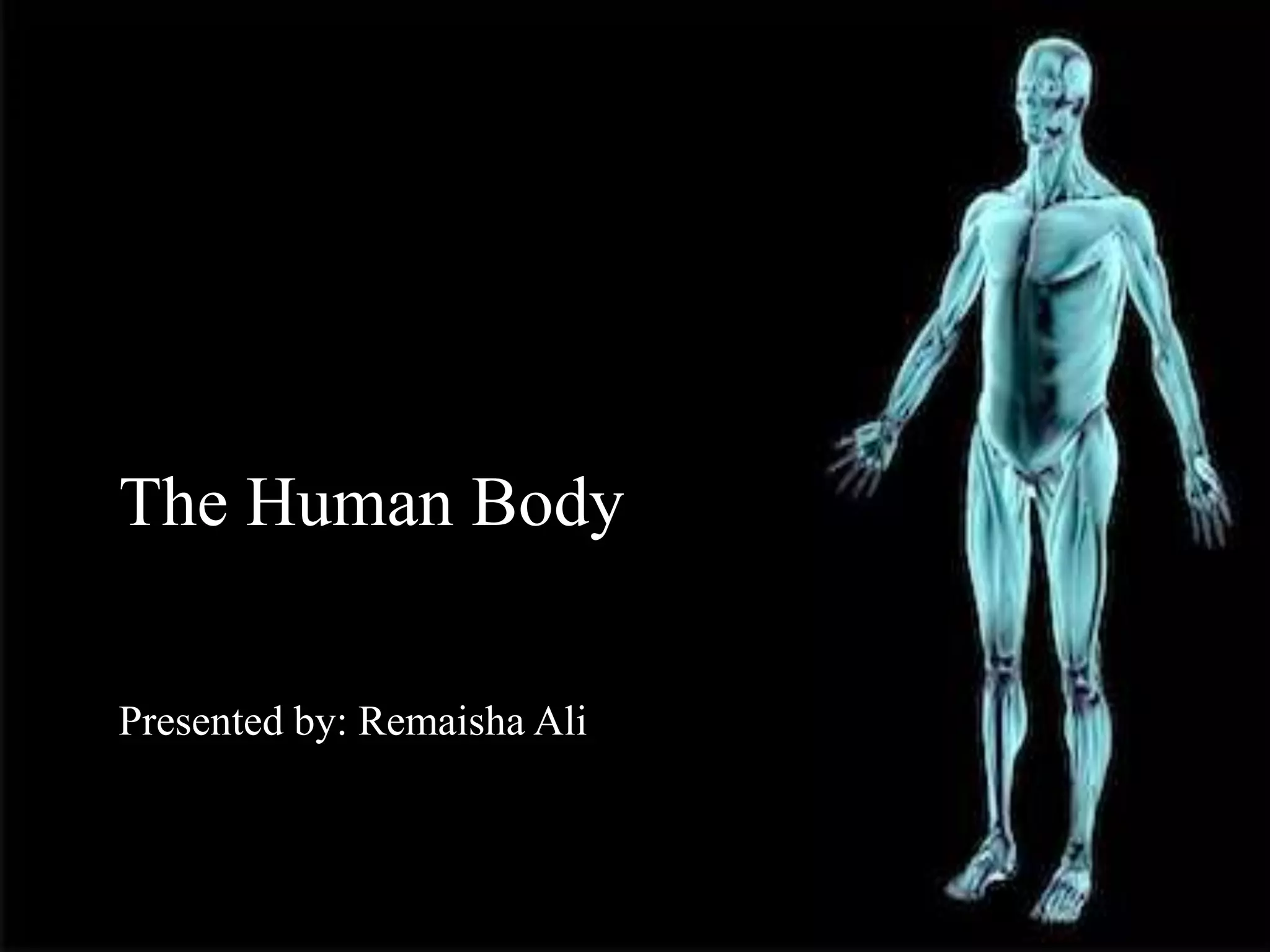
The Human Body
Presented by: Remaisha Ali
Topics:
• Cells
• Tissues
Functions of different tissue types
• Organs
• Organ System
• Musculoskeletal system
The skeletal system
The muscular system
• Bones
 Keeping bones strong
Cells
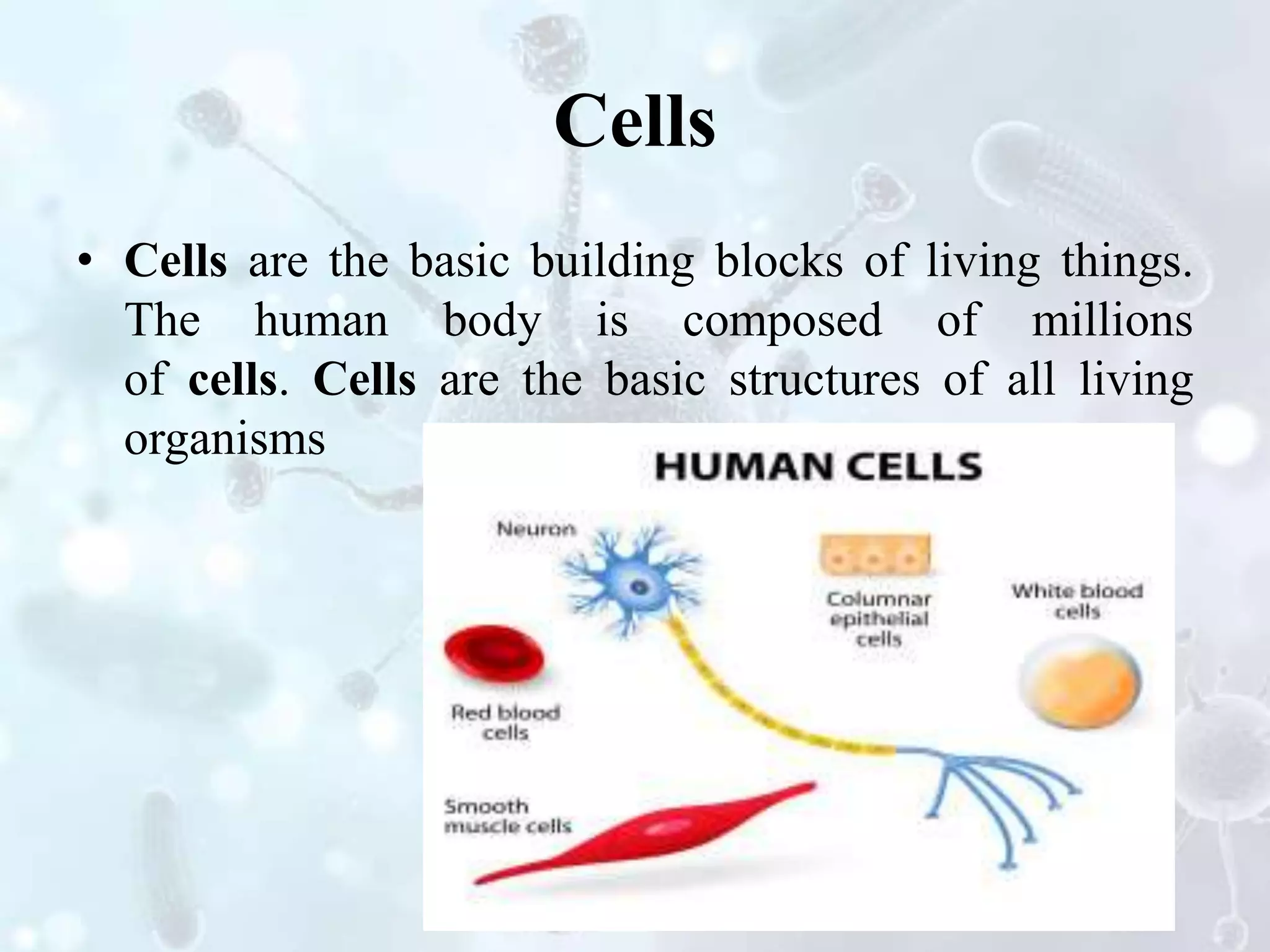
• Cells are the basic building blocks of living things.
The human body is composed of millions
of cells. Cells are the basic structures of all living
organisms
Tissues
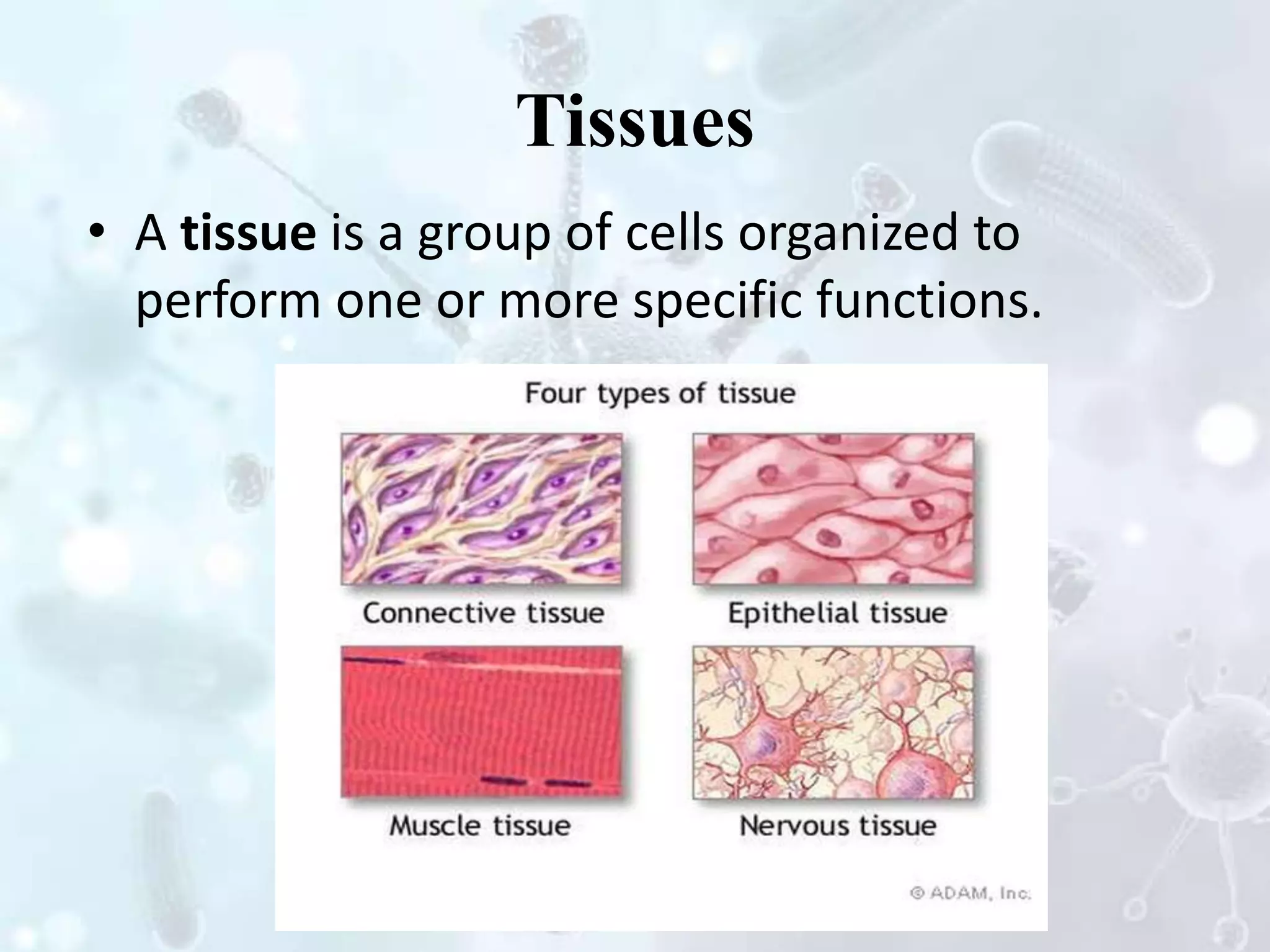
• A tissue is a group of cells organized to
perform one or more specific functions.
Different tissues types and their
functions:
• Epithelial tissues: Covers some parts of the
body.
• Connective tissue: provides support and
protection to organs.
• Muscle tissue: allows the body to move.
• Nervous tissues: Send signal to and from the
brain.
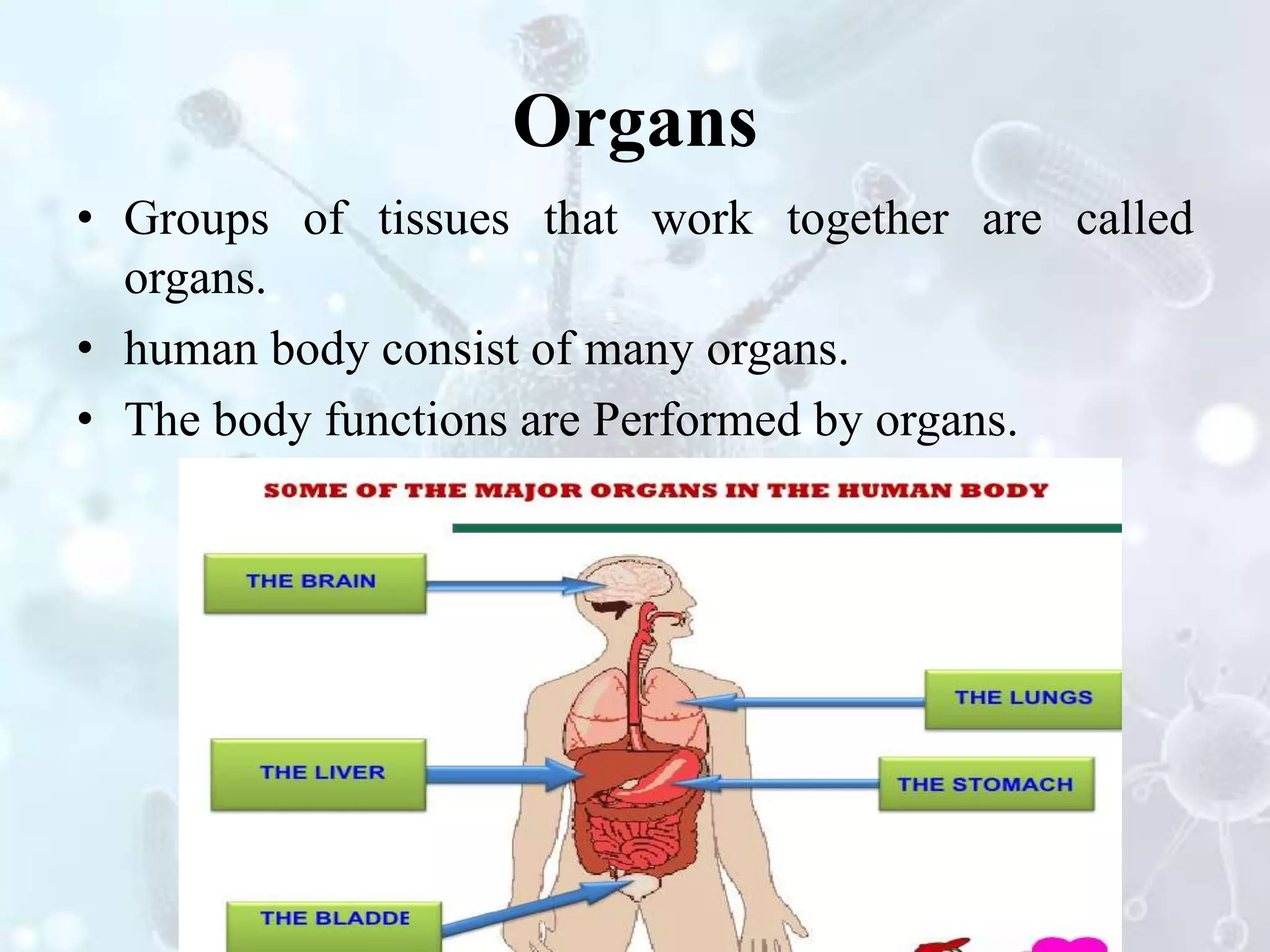
Organs
• Groups of tissues that work together are called
organs.
• human body consist of many organs.
• The body functions are Performed by organs.
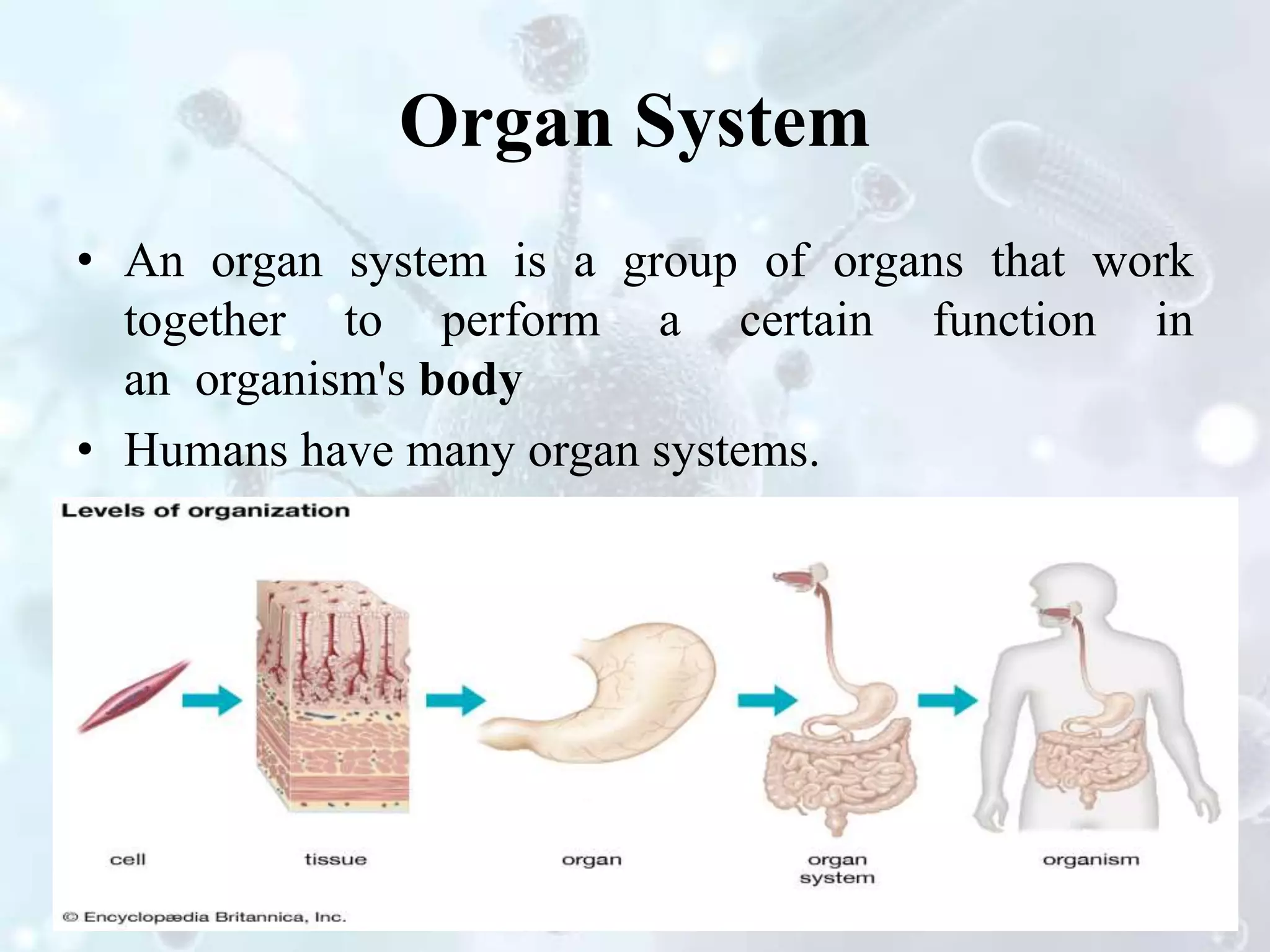
Organ System
• An organ system is a group of organs that work
together to perform a certain function in
an organism's body
• Humans have many organ systems.
The Musculoskeletal System
• A Combination of the skeletal and the muscular
systems.
The Skeletal System
• All the bones together make
Up the skeleton.
• It is present in all animals
that have a back bone.
Functions of the skeletal system
The major functions of the skeletal system are:
• Body support for example backbone helps
you to stand straight.
• Movement of the body.
• protection of internal organs for example
skull protects the brain , rib cage protects the
lungs and heart.
Composition of Skeletal System
• The skeletal system is composed of Bones
and joints.
• Bone: A form of connective tissue that is part
of the skeletal system of vertebrates and is
composed principally of calcium.
• Joints: A place where two or more bones meet
with the help of tissue called ligament.
Ligaments
• A ligament is the fibrous connective tissue that
connects bones to other bones.
The Muscular System
• The Muscular system consists of muscles and
tendons.
• Tendons are tissue attaching a muscle to a bone
• Muscles are the only tissue in the body that has
the ability to contract and therefore move the
other parts of the body.
.
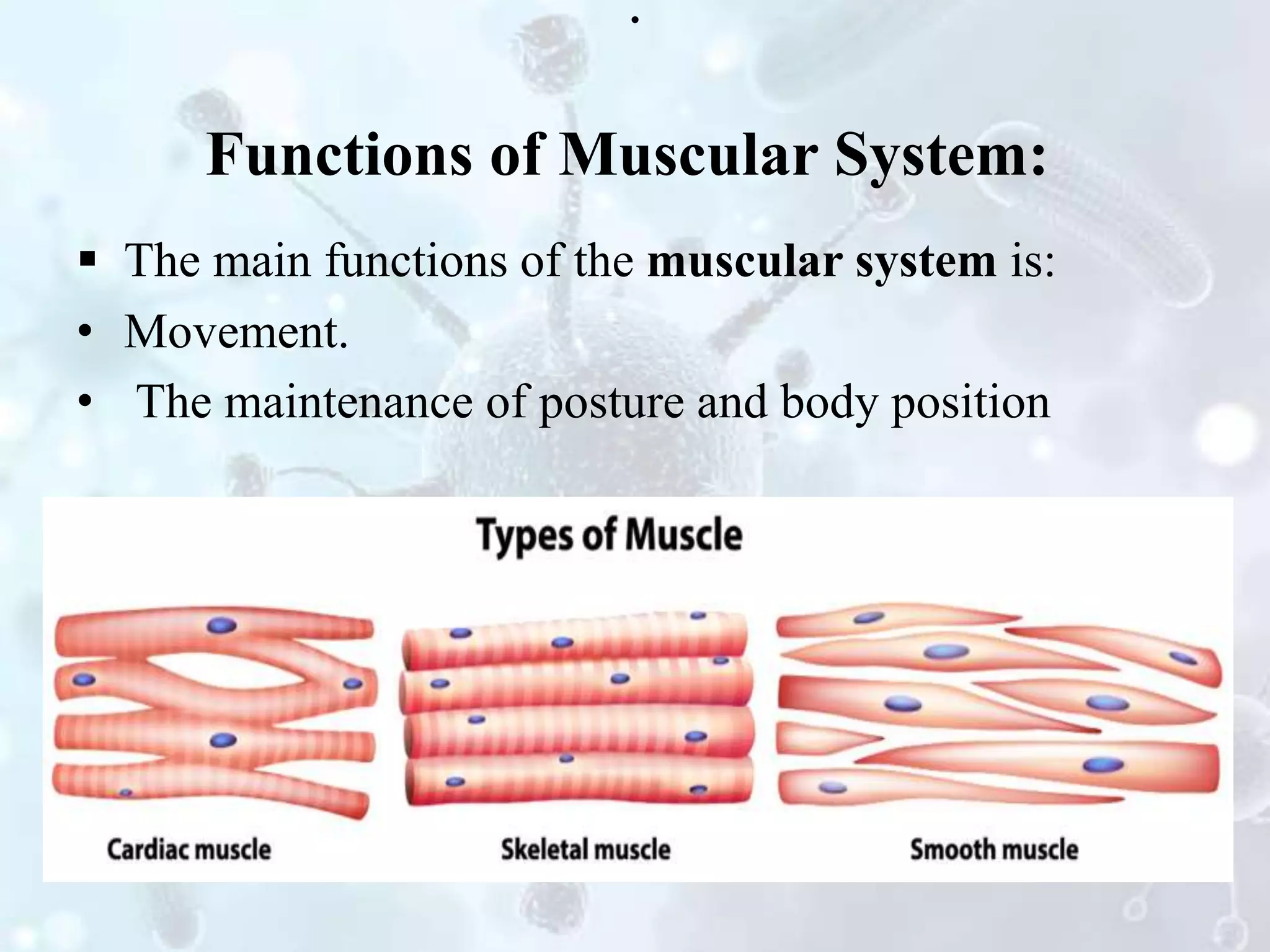
Functions of Muscular System:
 The main functions of the muscular system is:
• Movement.
• The maintenance of posture and body position
Bones
• The adult human skeleton is made up of 206 bones.
• Bones are made of connective tissue.
• These include the bones of the skull, spine , ribs,
arms and legs.
• The major functions of the bones are body support,
movement, protection of internal
organs, storage of minerals and fat.
Keeping Bones Strong
Thank you….

The human body

  • 1.
    The Human Body Presentedby: Remaisha Ali
  • 2.
    Topics: • Cells • Tissues Functionsof different tissue types • Organs • Organ System • Musculoskeletal system The skeletal system The muscular system • Bones  Keeping bones strong
  • 3.
    Cells • Cells arethe basic building blocks of living things. The human body is composed of millions of cells. Cells are the basic structures of all living organisms
  • 4.
    Tissues • A tissueis a group of cells organized to perform one or more specific functions.
  • 6.
    Different tissues typesand their functions: • Epithelial tissues: Covers some parts of the body. • Connective tissue: provides support and protection to organs. • Muscle tissue: allows the body to move. • Nervous tissues: Send signal to and from the brain.
  • 7.
    Organs • Groups oftissues that work together are called organs. • human body consist of many organs. • The body functions are Performed by organs.
  • 8.
    Organ System • Anorgan system is a group of organs that work together to perform a certain function in an organism's body • Humans have many organ systems.
  • 10.
    The Musculoskeletal System •A Combination of the skeletal and the muscular systems.
  • 11.
    The Skeletal System •All the bones together make Up the skeleton. • It is present in all animals that have a back bone.
  • 12.
    Functions of theskeletal system The major functions of the skeletal system are: • Body support for example backbone helps you to stand straight. • Movement of the body. • protection of internal organs for example skull protects the brain , rib cage protects the lungs and heart.
  • 13.
    Composition of SkeletalSystem • The skeletal system is composed of Bones and joints. • Bone: A form of connective tissue that is part of the skeletal system of vertebrates and is composed principally of calcium. • Joints: A place where two or more bones meet with the help of tissue called ligament.
  • 15.
    Ligaments • A ligamentis the fibrous connective tissue that connects bones to other bones.
  • 16.
    The Muscular System •The Muscular system consists of muscles and tendons. • Tendons are tissue attaching a muscle to a bone • Muscles are the only tissue in the body that has the ability to contract and therefore move the other parts of the body.
  • 17.
    . Functions of MuscularSystem:  The main functions of the muscular system is: • Movement. • The maintenance of posture and body position
  • 19.
    Bones • The adulthuman skeleton is made up of 206 bones. • Bones are made of connective tissue. • These include the bones of the skull, spine , ribs, arms and legs. • The major functions of the bones are body support, movement, protection of internal organs, storage of minerals and fat.
  • 20.
  • 21.

Editor's Notes