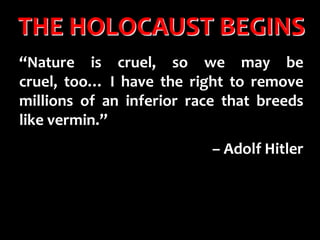
THE HOLOCAUST BEGINS“Nature is cruel, so we may be cruel, too… I have the right to remove millions of an inferior race that breeds like vermin.” – Adolf Hitler
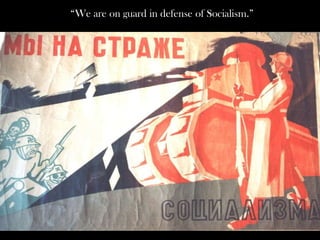
“We are on guard in defense of Socialism.”
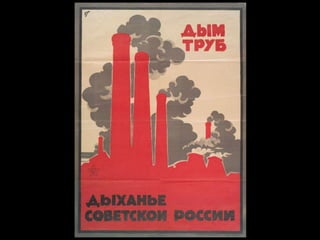
“Preparing Resistance to the Growing Reaction!”
August 22, 1939:The Nazi-SovietNon-Aggression Pact, 1939
September 1, 1939: German invasion of Poland
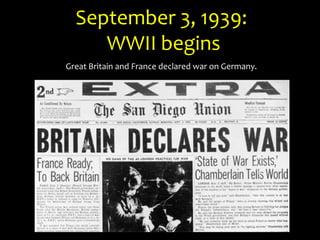
September 3, 1939:  WWII begins Great Britain and France declared war on Germany.
Blitzkrieg:1.5 million German soldiers in five armies
2000 tanks
1000 airplanes
German Troops March into Warsaw
Sitzkrieg, or The “Phoney War”
Invasion of Denmark & NorwayApril 9, 1940
Invasion of the Netherlands, Belgium, and LuxembourgMay 10, 1940“Blitzkrieg: German soldiers being parachuted into Holland - May 10, 1940”
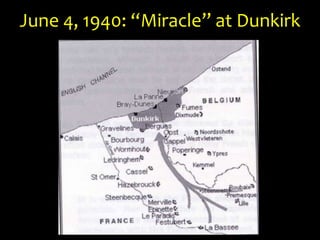
Invasion of France: May 13, 1940DunkirkDunkirkEvacuation at Dunkirk, June 4, 1940
June 4, 1940: “Miracle” at Dunkirk
France SurrendersJune, 1940
Vichy France - Led by Marshal Henri-Philippe Petain
“Stamps” drawn on the blank borders of a sheet of postage stamps by Karl Schwesig, a non-Jew interred in Gurs concentration camp in France.The words “Liberty, Equality and Fraternity” were the motto of the French Revolution.  The founding principle’s of the state.  The stamps tell ironically what Schwesig believed had become of these noble ideas.
Italy Joins the AxisJune 10, 1940Benito Mussolini with Adolf Hitler. Mussolini was Prime Minister & Dictator of fascist Italy, 1922-1943.Italy enters World War II as a Germany ally hoping to establish a  “New Roman Empire.”  Although allied with Germany, Mussolini did not willingly cooperate in the Nazi plan to kill the Jews of Europe.
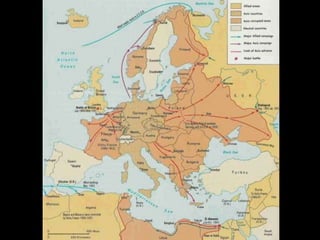
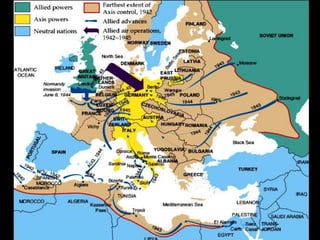
By Summer 1940,Germany controlled all of western and central Europe.
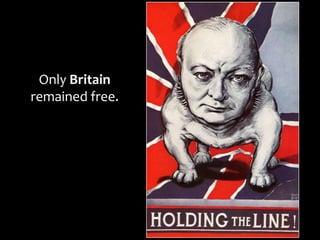
Only Britain remained free.
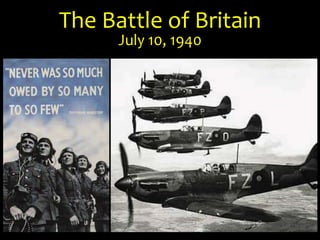
The Battle of BritainJuly 10, 1940
“The Painter and the Clipper”, 1940Arthur Szyk
The Tripartite PactSeptember 27, 1940Adolf Hitler, Nazi GermanyEmperor Hirohito, JapanBenito Mussolini, Italy
Rome-Berlin-Tokyo Axis, 1940The Tripartite Pact
Attack in the WestWith the invasion of each country in Western Europe, anti-Jewish policies followed patterns seen previously in Germany between 1933-1939.Jews were categorized.
Civil liberties were restricted and property confiscated.
Jews were dismissed from universities and civil service jobs.
Jewish businesses taken over.
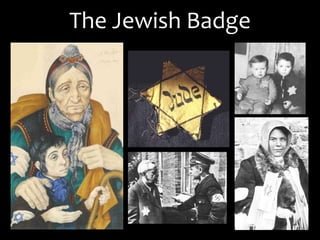
Jews were isolated and forced to wear a star.
Jews were assembled in large cities.
Jews were deported to camps in the east.
The Division of Poland
Gentile Poles assembled for forced labor. June 1943 A German soldier stands on a toppled Polish monument. Krakow, Poland
Polish boys imprisoned in Auschwitz look out from behind the barbed wire fence. Approximately 40,000 Polish children were kidnapped and imprisoned in the camp before being transferred to Germany during "Heuaktion" (Hay Action), The children were used as slave laborers in Germany.
Isolation of Polish Jews  1. Humiliation & Terror  2. Forced Labor  3. Expulsion  4. The Jewish Badge
Humiliation & TerrorGerman soldiers cutting the beard of a Jew.Jewish men forced to race against one another while riding on the backs of their fellows.  Harassment of a Jewish man.A soldier tutors two Jewish men on how to give the Nazi salute correctly.
Forced LaborJews rounded up for forced labor October, 1939Jews forced to sweep the streets.
ExpulsionPolish Exiles, 1941  Arthur Szyk
The Jewish Badge
FranceBelgiumHollandGermany, Alsace,  Bohemia-MoraviaParts of Greece, Serbia, Belgrade, Sofia (armband)Part of SlovakiaRomaniaParts of Bulgaria  (a button)Parts of Bulgaria, Poland, Hungary, Greece, Lithuania, LatviaParts of Poland, East  & Upper Silesia
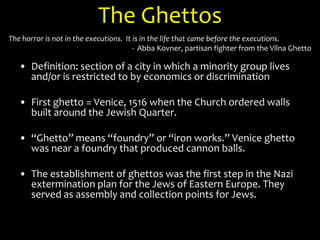
The GhettosThe horror is not in the executions.  It is in the life that came before the executions. -  Abba Kovner, partisan fighter from the Vilna GhettoDefinition: section of a city in which a minority group lives and/or is restricted to by economics or discriminationFirst ghetto = Venice, 1516 when the Church ordered walls built around the Jewish Quarter. “Ghetto” means “foundry” or “iron works.” Venice ghetto was near a foundry that produced cannon balls.The establishment of ghettos was the first step in the Nazi extermination plan for the Jews of Eastern Europe. They served as assembly and collection points for Jews.
Jews were said to be carriers of epidemic illnesses thus the need to isolate them in ghettos.
By 1942, most of the Jews of Eastern Europe were concentrated in more than 800 ghettos.
By the Fall of 1944, no ghettos remained. More than 800 ghettos were established by the Nazis in Eastern Europe.
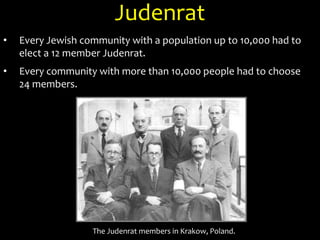
JudenratEvery Jewish community with a population up to 10,000 had to elect a 12 member Judenrat.
Every community with more than 10,000 people had to choose 24 members. The Judenrat members in Krakow, Poland.
The Judenrat had the following functions: Transmit German directives to Jewish population Use Jewish police to enforce German will Establish hospitals, kitchens, schools, recreation facilities, and orphanages based on available resources Oversee taxes, banking, grievances, labor, public health, social welfare, postal service, housing and religious services Deliver Jewish property, labor, and lives to Germans Judenrat leaders rationalized cooperation, claiming it saved some Jewish lives.  Jewish community members often viewed their Judenrat as betrayers.
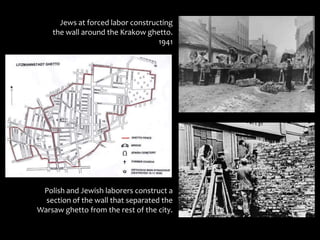
Jews at forced labor constructing the wall around the Krakow ghetto. 1941Polish and Jewish laborers construct a section of the wall that separated the Warsaw ghetto from the rest of the city.
Ghetto boundaries drawn by Nazis encompassing existing run-down neighborhoods, often lacking basic facilities such as sewers and lighting.
Non-Jewish residents evicted before Jews forced to move in. In Warsaw, 113,000 Poles had to leave and 138,000 Jews moved in.
The largest ghetto was in Warsaw which contained almost ½ million Jews surrounded by 11 miles of walls and barbed wire.Daily LifeNazi officer terrorizes elderly woman with a whip.A brother feed his young sister in the Lodz Ghetto. Jewish men remove loaves of bread from a wagon at the soup kitchen in the Kielce ghetto. Children selling books to earn money.
Jew chopping up furniture to use as fuel.Lodz Ghetto.The ghetto orchestra, Lodz.Girls eating in soup kitchen, Warsaw.
Jews using a wooden bridge to cross from one section of the Lodz Ghetto to the other.Communal kitchen for children, Warsaw Ghetto.Burials, a part of daily life.Street scene, Warsaw Ghetto.
Jewish LifeJewish women baking matzos for Passover in the Warsaw Ghetto. Celebrating the Passover Seder in the Warsaw Ghetto. Reading the Torah.Celebrating the beginning of the Sabbath in the Lodz Ghetto. Jewish men praying in the Krakow Ghetto.
Living ConditionsWith little food and diseases rampant in the crowded ghettos, the living conditions became unbearable.
By mid-1941, Jews received a ration card that provided only 184 calories per day.
No meat, only bread and/or potatoes8-14 people per room
No fuel for heat
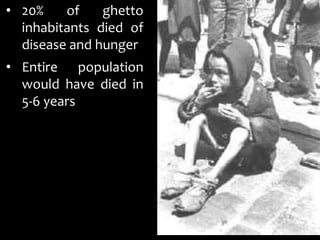
No plumbing = waste thrown in street, no bathing, extreme thirst20% of ghetto inhabitants died of disease and hunger
Entire population would have died in 5-6 yearsSmuggling
Forced LaborJewish women press Nazi military uniforms in the Glubokoye Ghetto. Jewish women moving human excrement, Lodz, Poland. Jewish children making boxes in the Glubokoye Ghetto. A workshop in the Warsaw Ghetto. Child in a ghetto factory, Kovno, Lithuania.Making shoes. Kovno, Lithuania.
“Liquidation/Resettlement”Spring 1942-Summer 1944: Final Solution
Liquidations = often unannounced, chaotic, violent; sometimes announced and Jews were forced to choose who would goNazi lies convinced many Jews they were being resettled for hard labor
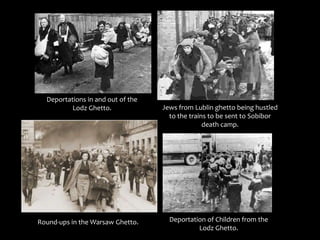
News of mass shootings and gassings met with disbelief by JewsDeportation of the elderly and sick from the Lodz Ghetto to Chelmno. Passengers in a train car. Lodz, Poland
By Spring 1943, 2.7 out of 3.3 million Polish Jews were dead.Jews from the Lodz ghetto board trains for the death camp at Chelmno.
Deportations in and out of the Lodz Ghetto.Jews from Lublin ghetto being hustled to the trains to be sent to Sobibor death camp. Deportation of Children from the Lodz Ghetto. Round-ups in the Warsaw Ghetto.
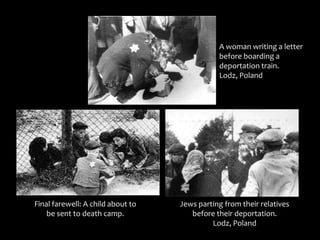
A woman writing a letter before boarding a deportation train.         Lodz, Poland Jews parting from their relatives before their deportation.          Lodz, PolandFinal farewell: A child about to be sent to death camp.
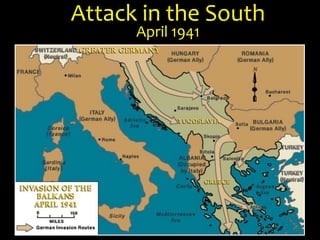
Attack in the SouthApril 1941
Bulgaria: 50,000 Jews pre-war
March 1, 1941 – joined Axis to regain territory lost after World War I
No history of Anti-Semitism; resisted German pressure to enact Anti-Semitic policies until 1943
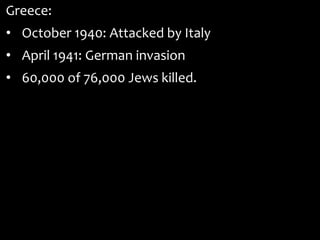
Finally, in 1943, sent 12,000 Jews from occupied Greek territories to Treblinka.
October 1944: switched to Allied side
Only country in Europe whose Jewish population in 1945 was larger than prewar.Hungary:November 1940: joined Axis
Hitler allowed Hungary self-rule; did not deport 725,000 Jews = “safe” haven,
1941: Assisted in German invasions of Yugoslavia and Soviet Union
March 19, 1944: after Stalingrad, Hungary sought separate peace with Allies; Germans occupy Hungary
April 1944: in less two months the SS under Eichmann deport 440,000 Jews to AuschwitzRomania:3rd largest Jewish population in Europe: 757,000

The holocaust begins

  • 1.
    THE HOLOCAUST BEGINS“Natureis cruel, so we may be cruel, too… I have the right to remove millions of an inferior race that breeds like vermin.” – Adolf Hitler
  • 3.
    “We are onguard in defense of Socialism.”
  • 4.
    “Preparing Resistance tothe Growing Reaction!”
  • 7.
    August 22, 1939:TheNazi-SovietNon-Aggression Pact, 1939
  • 12.
    September 1, 1939:German invasion of Poland
  • 13.
    September 3, 1939: WWII begins Great Britain and France declared war on Germany.
  • 14.
    Blitzkrieg:1.5 million Germansoldiers in five armies
  • 15.
  • 16.
  • 17.
  • 18.
    Sitzkrieg, or The“Phoney War”
  • 19.
    Invasion of Denmark& NorwayApril 9, 1940
  • 20.
    Invasion of theNetherlands, Belgium, and LuxembourgMay 10, 1940“Blitzkrieg: German soldiers being parachuted into Holland - May 10, 1940”
  • 21.
    Invasion of France:May 13, 1940DunkirkDunkirkEvacuation at Dunkirk, June 4, 1940
  • 23.
    June 4, 1940:“Miracle” at Dunkirk
  • 25.
  • 26.
    Vichy France -Led by Marshal Henri-Philippe Petain
  • 27.
    “Stamps” drawn onthe blank borders of a sheet of postage stamps by Karl Schwesig, a non-Jew interred in Gurs concentration camp in France.The words “Liberty, Equality and Fraternity” were the motto of the French Revolution. The founding principle’s of the state. The stamps tell ironically what Schwesig believed had become of these noble ideas.
  • 28.
    Italy Joins theAxisJune 10, 1940Benito Mussolini with Adolf Hitler. Mussolini was Prime Minister & Dictator of fascist Italy, 1922-1943.Italy enters World War II as a Germany ally hoping to establish a “New Roman Empire.” Although allied with Germany, Mussolini did not willingly cooperate in the Nazi plan to kill the Jews of Europe.
  • 29.
    By Summer 1940,Germanycontrolled all of western and central Europe.
  • 30.
  • 31.
    The Battle ofBritainJuly 10, 1940
  • 32.
    “The Painter andthe Clipper”, 1940Arthur Szyk
  • 33.
    The Tripartite PactSeptember27, 1940Adolf Hitler, Nazi GermanyEmperor Hirohito, JapanBenito Mussolini, Italy
  • 34.
  • 35.
    Attack in theWestWith the invasion of each country in Western Europe, anti-Jewish policies followed patterns seen previously in Germany between 1933-1939.Jews were categorized.
  • 36.
    Civil liberties wererestricted and property confiscated.
  • 37.
    Jews were dismissedfrom universities and civil service jobs.
  • 38.
  • 39.
    Jews were isolatedand forced to wear a star.
  • 40.
    Jews were assembledin large cities.
  • 41.
    Jews were deportedto camps in the east.
  • 43.
  • 46.
    Gentile Poles assembledfor forced labor. June 1943 A German soldier stands on a toppled Polish monument. Krakow, Poland
  • 47.
    Polish boys imprisonedin Auschwitz look out from behind the barbed wire fence. Approximately 40,000 Polish children were kidnapped and imprisoned in the camp before being transferred to Germany during "Heuaktion" (Hay Action), The children were used as slave laborers in Germany.
  • 48.
    Isolation of PolishJews 1. Humiliation & Terror 2. Forced Labor 3. Expulsion 4. The Jewish Badge
  • 49.
    Humiliation & TerrorGermansoldiers cutting the beard of a Jew.Jewish men forced to race against one another while riding on the backs of their fellows. Harassment of a Jewish man.A soldier tutors two Jewish men on how to give the Nazi salute correctly.
  • 50.
    Forced LaborJews roundedup for forced labor October, 1939Jews forced to sweep the streets.
  • 51.
  • 52.
  • 53.
    FranceBelgiumHollandGermany, Alsace, Bohemia-MoraviaParts of Greece, Serbia, Belgrade, Sofia (armband)Part of SlovakiaRomaniaParts of Bulgaria (a button)Parts of Bulgaria, Poland, Hungary, Greece, Lithuania, LatviaParts of Poland, East & Upper Silesia
  • 54.
    The GhettosThe horroris not in the executions. It is in the life that came before the executions. - Abba Kovner, partisan fighter from the Vilna GhettoDefinition: section of a city in which a minority group lives and/or is restricted to by economics or discriminationFirst ghetto = Venice, 1516 when the Church ordered walls built around the Jewish Quarter. “Ghetto” means “foundry” or “iron works.” Venice ghetto was near a foundry that produced cannon balls.The establishment of ghettos was the first step in the Nazi extermination plan for the Jews of Eastern Europe. They served as assembly and collection points for Jews.
  • 55.
    Jews were saidto be carriers of epidemic illnesses thus the need to isolate them in ghettos.
  • 56.
    By 1942, mostof the Jews of Eastern Europe were concentrated in more than 800 ghettos.
  • 57.
    By the Fallof 1944, no ghettos remained. More than 800 ghettos were established by the Nazis in Eastern Europe.
  • 59.
    JudenratEvery Jewish communitywith a population up to 10,000 had to elect a 12 member Judenrat.
  • 60.
    Every community withmore than 10,000 people had to choose 24 members. The Judenrat members in Krakow, Poland.
  • 61.
    The Judenrat hadthe following functions: Transmit German directives to Jewish population Use Jewish police to enforce German will Establish hospitals, kitchens, schools, recreation facilities, and orphanages based on available resources Oversee taxes, banking, grievances, labor, public health, social welfare, postal service, housing and religious services Deliver Jewish property, labor, and lives to Germans Judenrat leaders rationalized cooperation, claiming it saved some Jewish lives. Jewish community members often viewed their Judenrat as betrayers.
  • 63.
    Jews at forcedlabor constructing the wall around the Krakow ghetto. 1941Polish and Jewish laborers construct a section of the wall that separated the Warsaw ghetto from the rest of the city.
  • 64.
    Ghetto boundaries drawnby Nazis encompassing existing run-down neighborhoods, often lacking basic facilities such as sewers and lighting.
  • 65.
    Non-Jewish residents evictedbefore Jews forced to move in. In Warsaw, 113,000 Poles had to leave and 138,000 Jews moved in.
  • 66.
    The largest ghettowas in Warsaw which contained almost ½ million Jews surrounded by 11 miles of walls and barbed wire.Daily LifeNazi officer terrorizes elderly woman with a whip.A brother feed his young sister in the Lodz Ghetto. Jewish men remove loaves of bread from a wagon at the soup kitchen in the Kielce ghetto. Children selling books to earn money.
  • 67.
    Jew chopping upfurniture to use as fuel.Lodz Ghetto.The ghetto orchestra, Lodz.Girls eating in soup kitchen, Warsaw.
  • 68.
    Jews using awooden bridge to cross from one section of the Lodz Ghetto to the other.Communal kitchen for children, Warsaw Ghetto.Burials, a part of daily life.Street scene, Warsaw Ghetto.
  • 69.
    Jewish LifeJewish womenbaking matzos for Passover in the Warsaw Ghetto. Celebrating the Passover Seder in the Warsaw Ghetto. Reading the Torah.Celebrating the beginning of the Sabbath in the Lodz Ghetto. Jewish men praying in the Krakow Ghetto.
  • 70.
    Living ConditionsWith littlefood and diseases rampant in the crowded ghettos, the living conditions became unbearable.
  • 71.
    By mid-1941, Jewsreceived a ration card that provided only 184 calories per day.
  • 72.
    No meat, onlybread and/or potatoes8-14 people per room
  • 73.
  • 74.
    No plumbing =waste thrown in street, no bathing, extreme thirst20% of ghetto inhabitants died of disease and hunger
  • 75.
    Entire population wouldhave died in 5-6 yearsSmuggling
  • 76.
    Forced LaborJewish womenpress Nazi military uniforms in the Glubokoye Ghetto. Jewish women moving human excrement, Lodz, Poland. Jewish children making boxes in the Glubokoye Ghetto. A workshop in the Warsaw Ghetto. Child in a ghetto factory, Kovno, Lithuania.Making shoes. Kovno, Lithuania.
  • 77.
  • 78.
    Liquidations = oftenunannounced, chaotic, violent; sometimes announced and Jews were forced to choose who would goNazi lies convinced many Jews they were being resettled for hard labor
  • 79.
    News of massshootings and gassings met with disbelief by JewsDeportation of the elderly and sick from the Lodz Ghetto to Chelmno. Passengers in a train car. Lodz, Poland
  • 80.
    By Spring 1943,2.7 out of 3.3 million Polish Jews were dead.Jews from the Lodz ghetto board trains for the death camp at Chelmno.
  • 81.
    Deportations in andout of the Lodz Ghetto.Jews from Lublin ghetto being hustled to the trains to be sent to Sobibor death camp. Deportation of Children from the Lodz Ghetto. Round-ups in the Warsaw Ghetto.
  • 82.
    A woman writinga letter before boarding a deportation train. Lodz, Poland Jews parting from their relatives before their deportation. Lodz, PolandFinal farewell: A child about to be sent to death camp.
  • 83.
    Attack in theSouthApril 1941
  • 84.
  • 85.
    March 1, 1941– joined Axis to regain territory lost after World War I
  • 86.
    No history ofAnti-Semitism; resisted German pressure to enact Anti-Semitic policies until 1943
  • 87.
    Finally, in 1943,sent 12,000 Jews from occupied Greek territories to Treblinka.
  • 88.
  • 89.
    Only country inEurope whose Jewish population in 1945 was larger than prewar.Hungary:November 1940: joined Axis
  • 90.
    Hitler allowed Hungaryself-rule; did not deport 725,000 Jews = “safe” haven,
  • 91.
    1941: Assisted inGerman invasions of Yugoslavia and Soviet Union
  • 92.
    March 19, 1944:after Stalingrad, Hungary sought separate peace with Allies; Germans occupy Hungary
  • 93.
    April 1944: inless two months the SS under Eichmann deport 440,000 Jews to AuschwitzRomania:3rd largest Jewish population in Europe: 757,000