The HEA advantage:
professional recognition in
     learning and teaching
 Jo Webb, Head of Academic Services and National Teaching
                   Fellow, Department of Library Services,
                                       jwebb@dmu.ac.uk
The Higher Education
          Academy
• Founded in 2004
  – merger of
    • Institute for Learning and Teaching in Higher
      Education (ILTHE)
    • Learning and Teaching Support Network
    • TQEF National Co-ordination Team
• ILTHE founded in 2000 post Dearing
  report
HEA mission
•   We support the sector in providing the best possible learning experience for all
    students.
•   We do this by working with individual academics to give them access to professional
    recognition, advice and support, as well as networking and development opportunities
    to enhance their teaching. Our network of 24 discipline-based subject centres
    provides a range of services to subject departments including resources, events and
    workshops and we also liaise directly with UK institutions, providing national
    leadership in developing and disseminating evidence-informed practice about
    enhancing the student learning experience.
•   We work across the four nations of the UK, recognising the distinctive policy contexts
    and priorities in England and each of the devolved administrations in Scotland, Wales
    and Northern Ireland, but also providing opportunities to share expertise among them.
•   We are an independent organisation funded by grants from the four UK higher
    education funding bodies, subscriptions from higher education institutions, and grant
    and contract income for specific initiatives.

From: http://www.heacademy.ac.uk/aboutus
Professional recognition
• Associate, Fellow or Senior Fellow of the
  Academy
  – Associate and Fellow
  – 2 membership routes
     • Completion of a recognized qualification
     • Application based on experience
  – See
    http://www.heacademy.ac.uk/ourwork/supportingin
    dividuals/professionalrecognition
• National Teaching Fellowship Scheme (in
  England and NI)
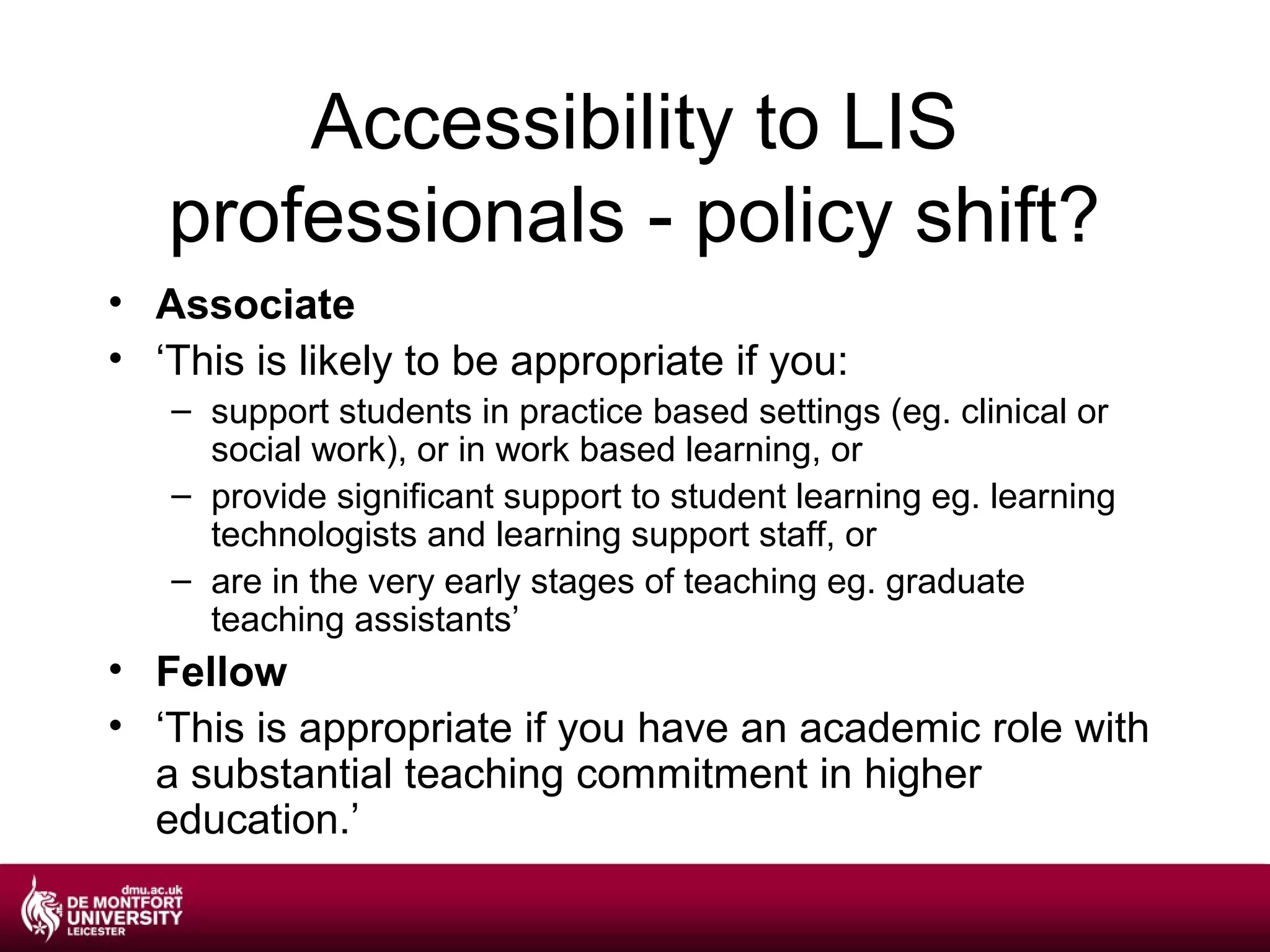
Accessibility to LIS
   professionals - policy shift?
• Associate
• ‘This is likely to be appropriate if you:
   – support students in practice based settings (eg. clinical or
     social work), or in work based learning, or
   – provide significant support to student learning eg. learning
     technologists and learning support staff, or
   – are in the very early stages of teaching eg. graduate
     teaching assistants’
• Fellow
• ‘This is appropriate if you have an academic role with
  a substantial teaching commitment in higher
  education.’
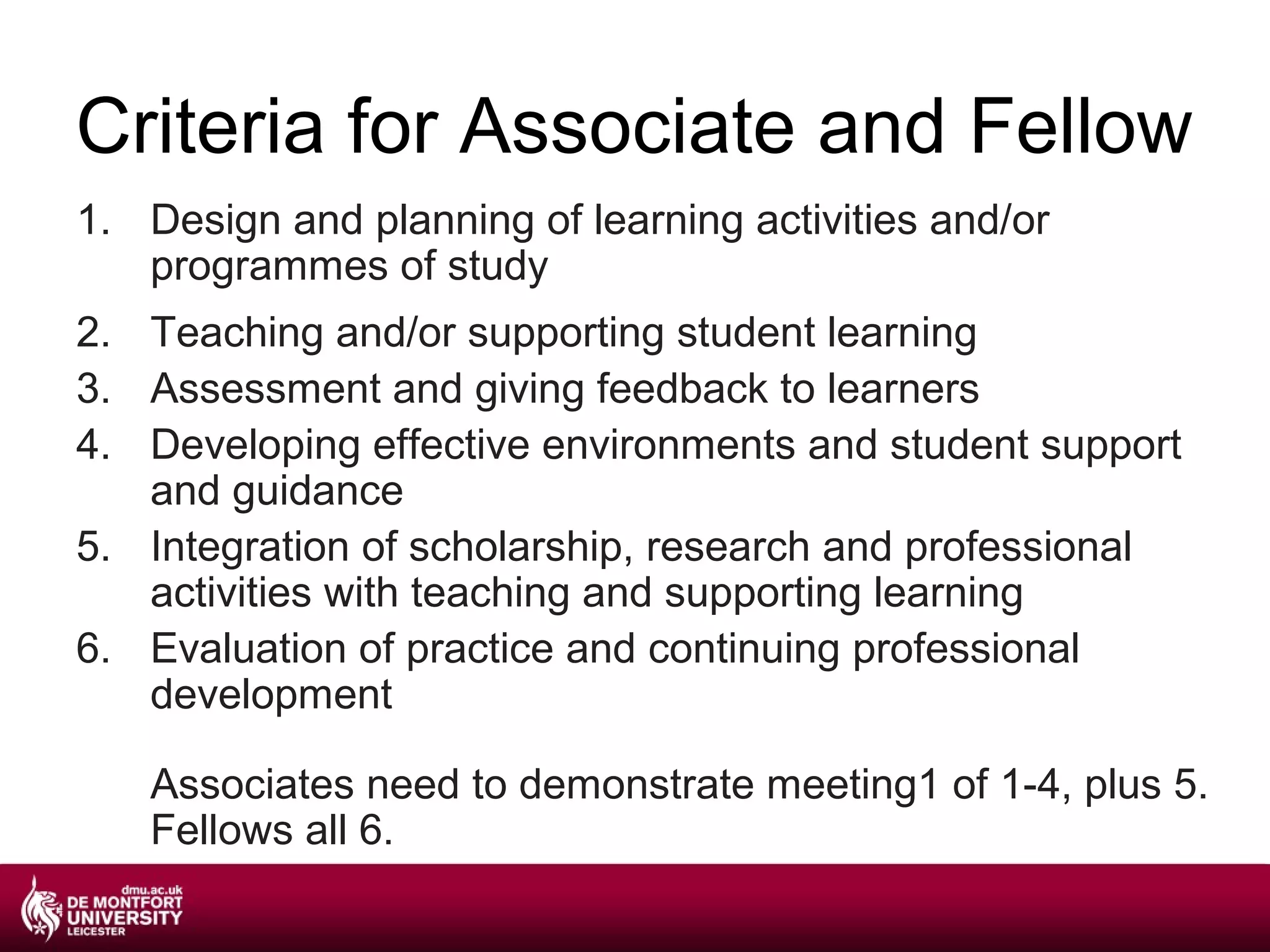
Criteria for Associate and Fellow
1. Design and planning of learning activities and/or
   programmes of study
2. Teaching and/or supporting student learning
3. Assessment and giving feedback to learners
4. Developing effective environments and student support
   and guidance
5. Integration of scholarship, research and professional
   activities with teaching and supporting learning
6. Evaluation of practice and continuing professional
   development

   Associates need to demonstrate meeting1 of 1-4, plus 5.
   Fellows all 6.
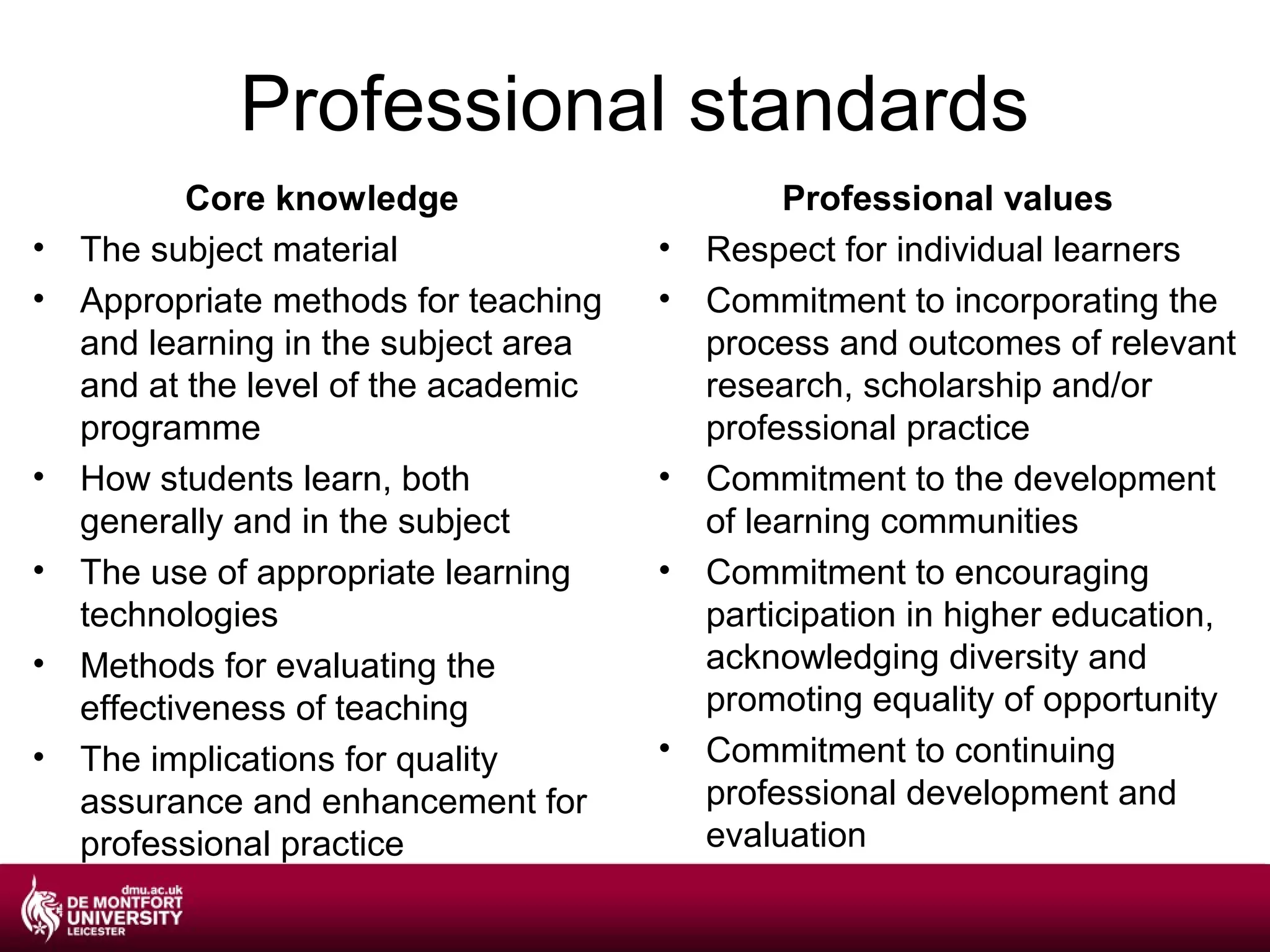
Professional standards
            Core knowledge                      Professional values
•   The subject material               •   Respect for individual learners
•   Appropriate methods for teaching   •   Commitment to incorporating the
    and learning in the subject area       process and outcomes of relevant
    and at the level of the academic       research, scholarship and/or
    programme                              professional practice
•   How students learn, both           •   Commitment to the development
    generally and in the subject           of learning communities
•   The use of appropriate learning    •   Commitment to encouraging
    technologies                           participation in higher education,
•   Methods for evaluating the             acknowledging diversity and
    effectiveness of teaching              promoting equality of opportunity
•   The implications for quality       •   Commitment to continuing
    assurance and enhancement for          professional development and
    professional practice                  evaluation
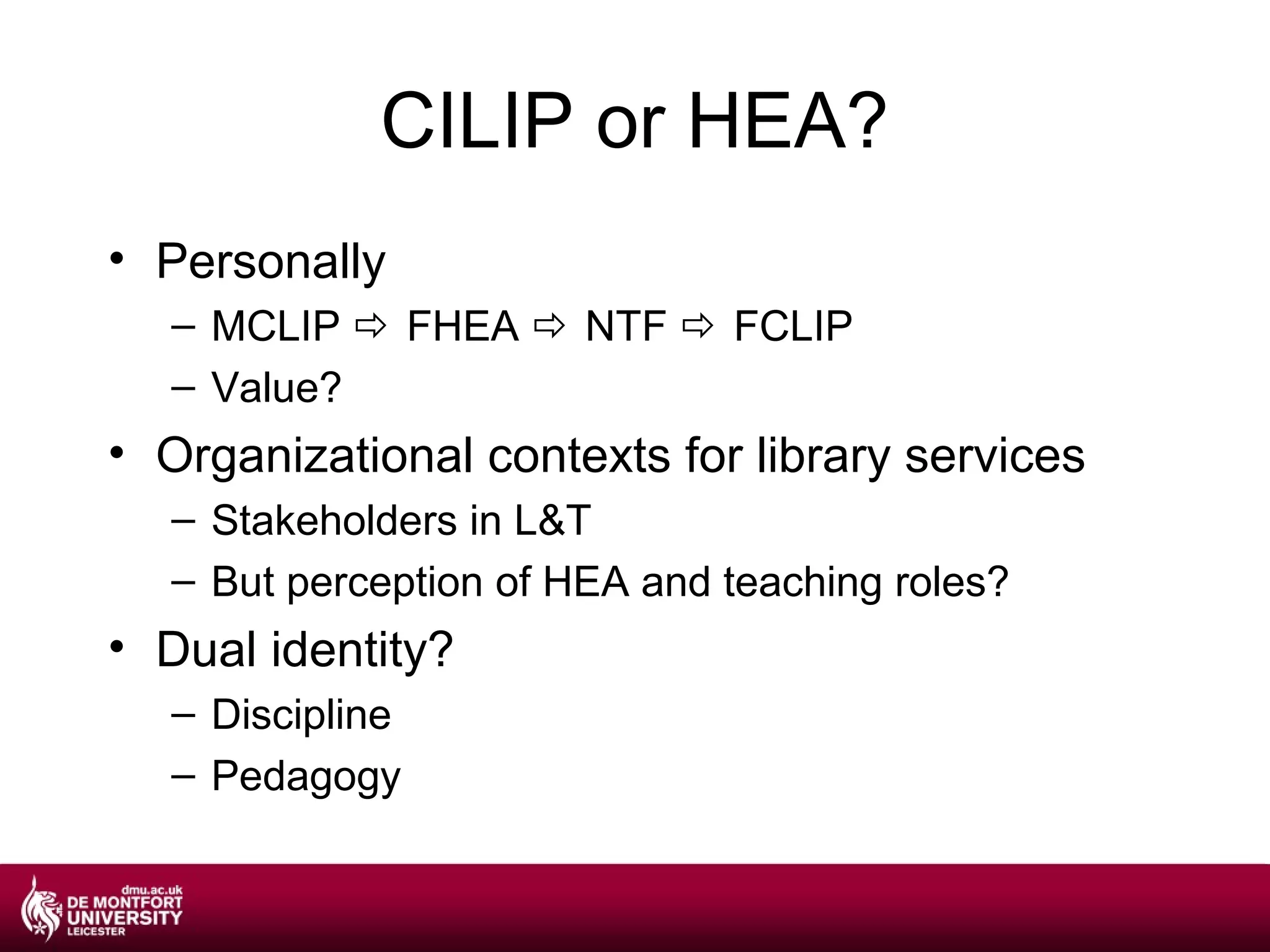
CILIP or HEA?
• Personally
  – MCLIP  FHEA  NTF  FCLIP
  – Value?
• Organizational contexts for library services
  – Stakeholders in L&T
  – But perception of HEA and teaching roles?
• Dual identity?
  – Discipline
  – Pedagogy
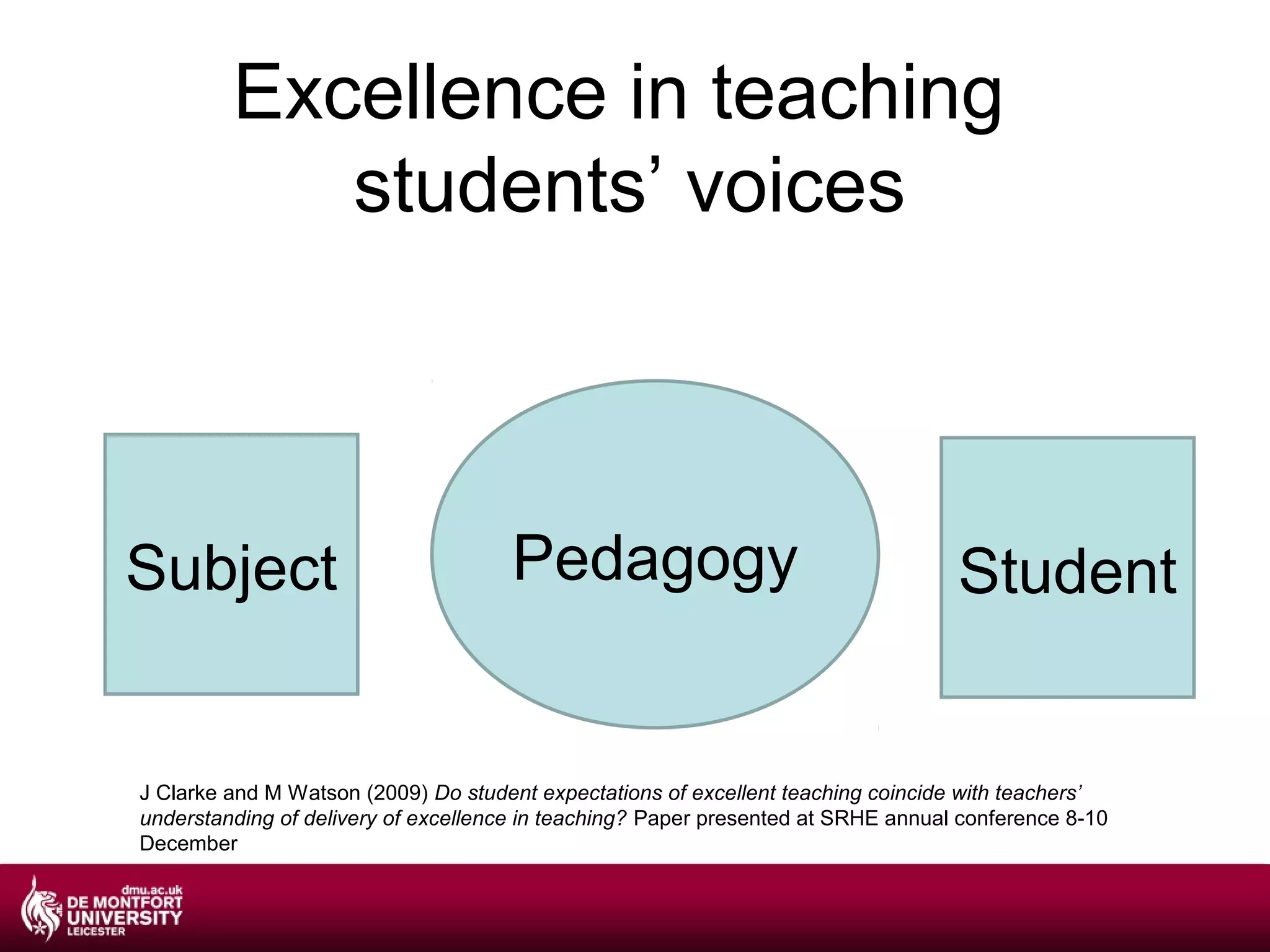
Excellence in teaching
            students’ voices


Subject                               Pedagogy                                     Student


J Clarke and M Watson (2009) Do student expectations of excellent teaching coincide with teachers’
understanding of delivery of excellence in teaching? Paper presented at SRHE annual conference 8-10
December
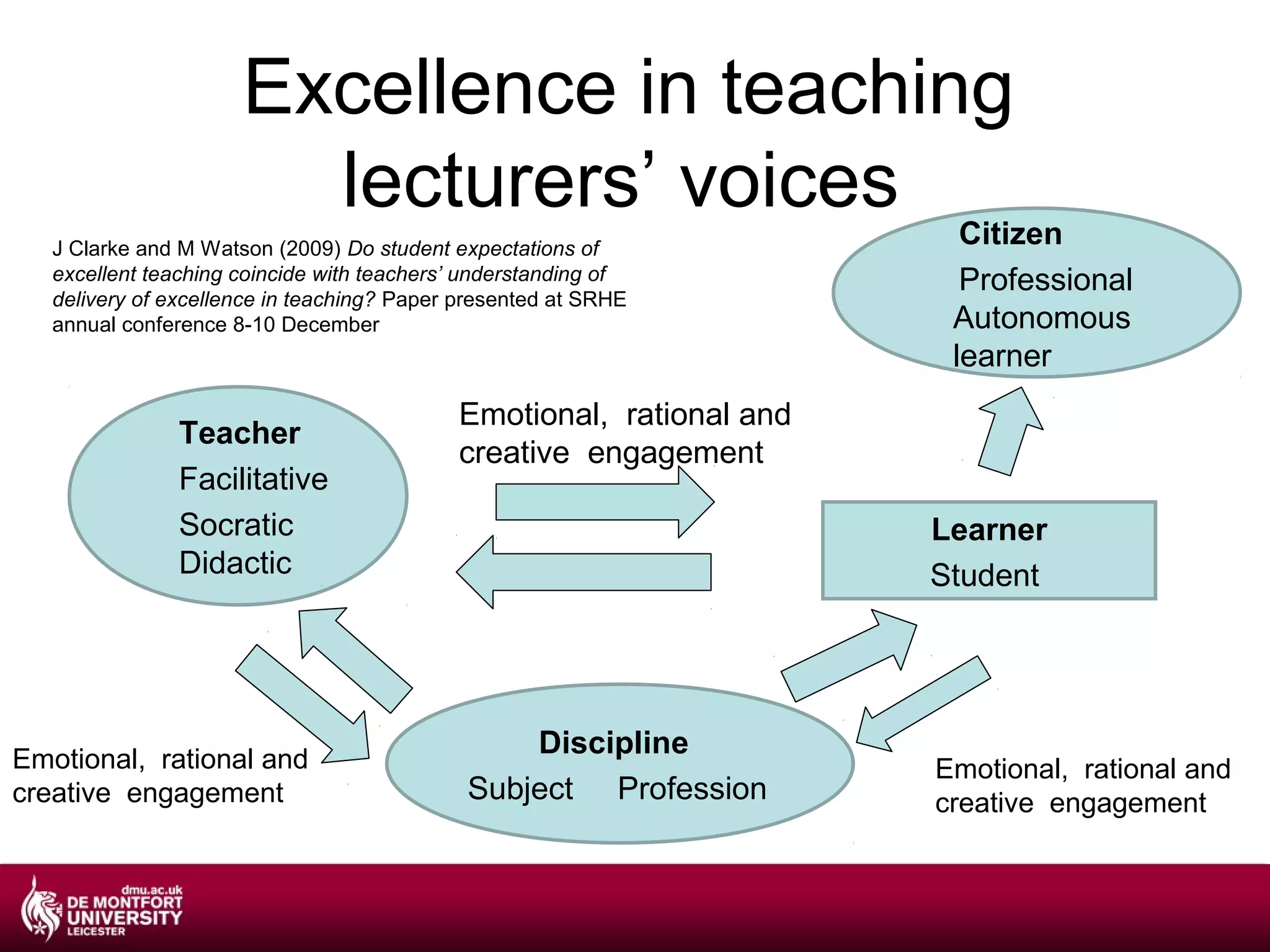
Excellence in teaching
                        lecturers’ voices Citizen
   J Clarke and M Watson (2009) Do student expectations of
   excellent teaching coincide with teachers’ understanding of          Professional
   delivery of excellence in teaching? Paper presented at SRHE
   annual conference 8-10 December                                     Autonomous
                                                                       learner
                                            Emotional, rational and
                Teacher
                                            creative engagement
                Facilitative
                Socratic                                              Learner
                Didactic                                              Student


Emotional, rational and
                                                 Discipline
                                                                      Emotional, rational and
creative engagement                          Subject Profession       creative engagement
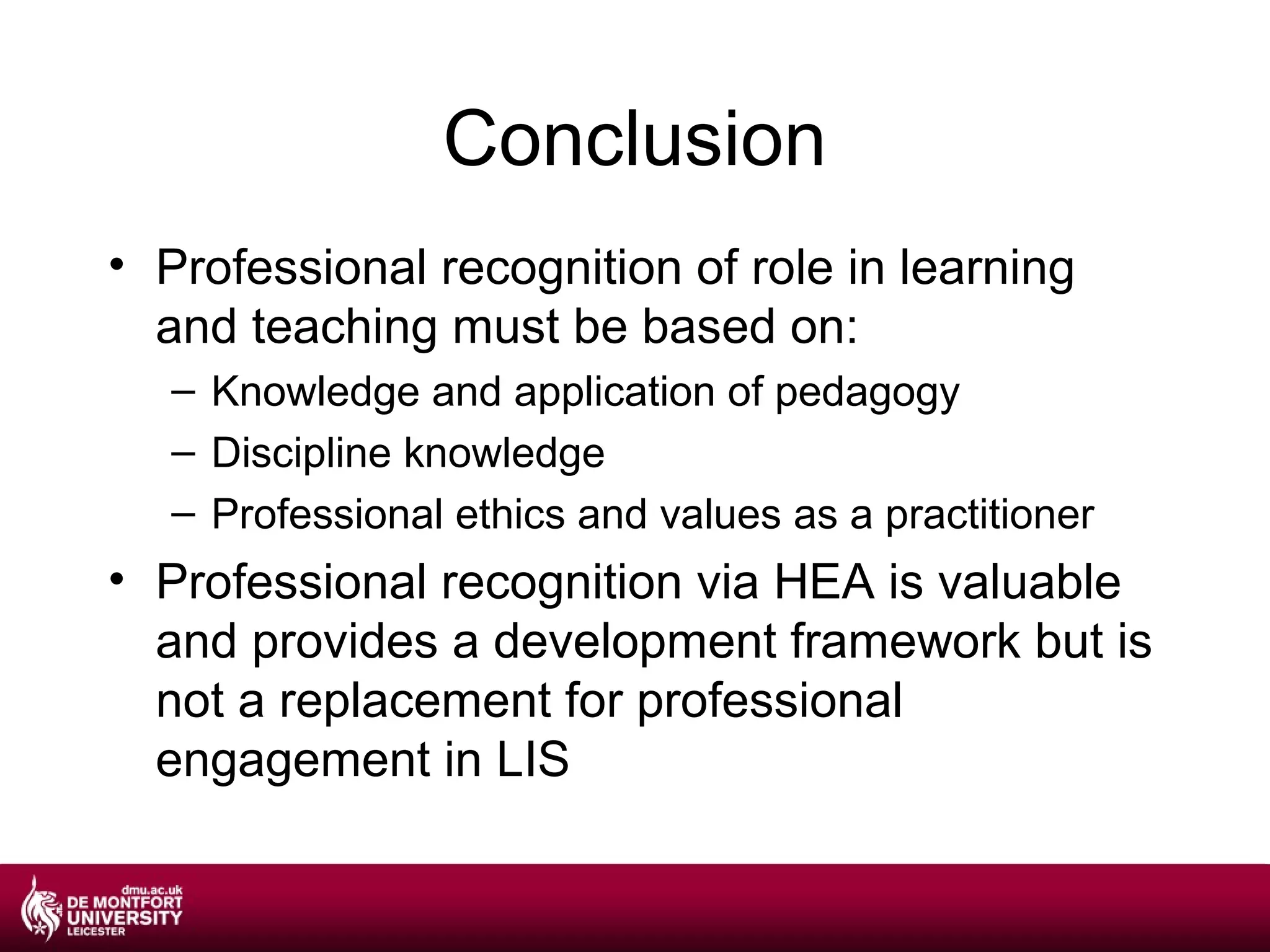
Conclusion
• Professional recognition of role in learning
  and teaching must be based on:
   – Knowledge and application of pedagogy
   – Discipline knowledge
   – Professional ethics and values as a practitioner
• Professional recognition via HEA is valuable
  and provides a development framework but is
  not a replacement for professional
  engagement in LIS

The HEA advantage: professional recognition in learning and teaching

  • 1.
    The HEA advantage: professionalrecognition in learning and teaching Jo Webb, Head of Academic Services and National Teaching Fellow, Department of Library Services, jwebb@dmu.ac.uk
  • 2.
    The Higher Education Academy • Founded in 2004 – merger of • Institute for Learning and Teaching in Higher Education (ILTHE) • Learning and Teaching Support Network • TQEF National Co-ordination Team • ILTHE founded in 2000 post Dearing report
  • 3.
    HEA mission • We support the sector in providing the best possible learning experience for all students. • We do this by working with individual academics to give them access to professional recognition, advice and support, as well as networking and development opportunities to enhance their teaching. Our network of 24 discipline-based subject centres provides a range of services to subject departments including resources, events and workshops and we also liaise directly with UK institutions, providing national leadership in developing and disseminating evidence-informed practice about enhancing the student learning experience. • We work across the four nations of the UK, recognising the distinctive policy contexts and priorities in England and each of the devolved administrations in Scotland, Wales and Northern Ireland, but also providing opportunities to share expertise among them. • We are an independent organisation funded by grants from the four UK higher education funding bodies, subscriptions from higher education institutions, and grant and contract income for specific initiatives. From: http://www.heacademy.ac.uk/aboutus
  • 4.
    Professional recognition • Associate,Fellow or Senior Fellow of the Academy – Associate and Fellow – 2 membership routes • Completion of a recognized qualification • Application based on experience – See http://www.heacademy.ac.uk/ourwork/supportingin dividuals/professionalrecognition • National Teaching Fellowship Scheme (in England and NI)
  • 5.
    Accessibility to LIS professionals - policy shift? • Associate • ‘This is likely to be appropriate if you: – support students in practice based settings (eg. clinical or social work), or in work based learning, or – provide significant support to student learning eg. learning technologists and learning support staff, or – are in the very early stages of teaching eg. graduate teaching assistants’ • Fellow • ‘This is appropriate if you have an academic role with a substantial teaching commitment in higher education.’
  • 6.
    Criteria for Associateand Fellow 1. Design and planning of learning activities and/or programmes of study 2. Teaching and/or supporting student learning 3. Assessment and giving feedback to learners 4. Developing effective environments and student support and guidance 5. Integration of scholarship, research and professional activities with teaching and supporting learning 6. Evaluation of practice and continuing professional development Associates need to demonstrate meeting1 of 1-4, plus 5. Fellows all 6.
  • 7.
    Professional standards Core knowledge Professional values • The subject material • Respect for individual learners • Appropriate methods for teaching • Commitment to incorporating the and learning in the subject area process and outcomes of relevant and at the level of the academic research, scholarship and/or programme professional practice • How students learn, both • Commitment to the development generally and in the subject of learning communities • The use of appropriate learning • Commitment to encouraging technologies participation in higher education, • Methods for evaluating the acknowledging diversity and effectiveness of teaching promoting equality of opportunity • The implications for quality • Commitment to continuing assurance and enhancement for professional development and professional practice evaluation
  • 8.
    CILIP or HEA? •Personally – MCLIP  FHEA  NTF  FCLIP – Value? • Organizational contexts for library services – Stakeholders in L&T – But perception of HEA and teaching roles? • Dual identity? – Discipline – Pedagogy
  • 9.
    Excellence in teaching students’ voices Subject Pedagogy Student J Clarke and M Watson (2009) Do student expectations of excellent teaching coincide with teachers’ understanding of delivery of excellence in teaching? Paper presented at SRHE annual conference 8-10 December
  • 10.
    Excellence in teaching lecturers’ voices Citizen J Clarke and M Watson (2009) Do student expectations of excellent teaching coincide with teachers’ understanding of Professional delivery of excellence in teaching? Paper presented at SRHE annual conference 8-10 December Autonomous learner Emotional, rational and Teacher creative engagement Facilitative Socratic Learner Didactic Student Emotional, rational and Discipline Emotional, rational and creative engagement Subject Profession creative engagement
  • 11.
    Conclusion • Professional recognitionof role in learning and teaching must be based on: – Knowledge and application of pedagogy – Discipline knowledge – Professional ethics and values as a practitioner • Professional recognition via HEA is valuable and provides a development framework but is not a replacement for professional engagement in LIS