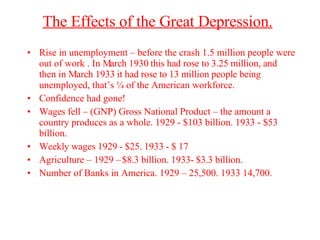
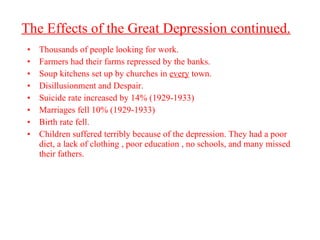
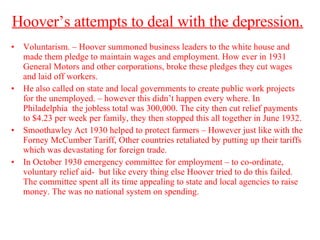
The Great Depression had severe effects on the United States economy and population in the 1930s. Unemployment rose dramatically to over 13 million people, one quarter of the workforce, as GDP was cut nearly in half. Farmers and banks were especially hard hit, with thousands of bank closures and repossessed farms. Soup kitchens and poverty were widespread as living standards declined sharply. President Hoover initially relied on voluntary measures by businesses to maintain employment and wages, but these efforts failed as layoffs increased. His other measures, like public works projects, were inadequate and uneven across states and localities.