THE GREAT DEPRESSION Impact Photos by photographer Dorothea Lange
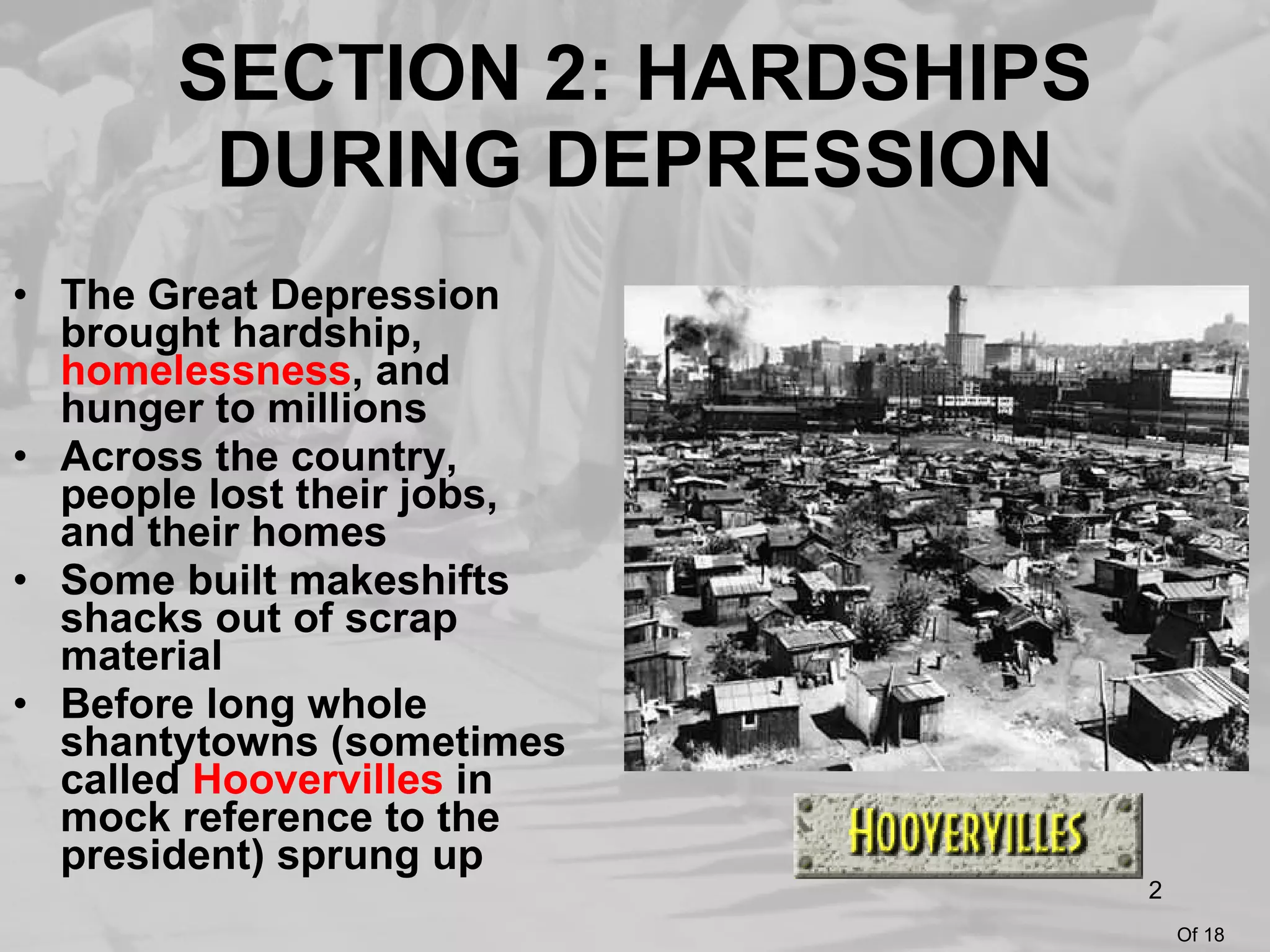
SECTION 2: HARDSHIPS DURING DEPRESSION The Great Depression brought hardship,  homelessness , and hunger to millions Across the country, people lost their jobs, and their homes Some built makeshifts shacks out of scrap material Before long whole shantytowns (sometimes called  Hoovervilles  in mock reference to the president) sprung up Of 18
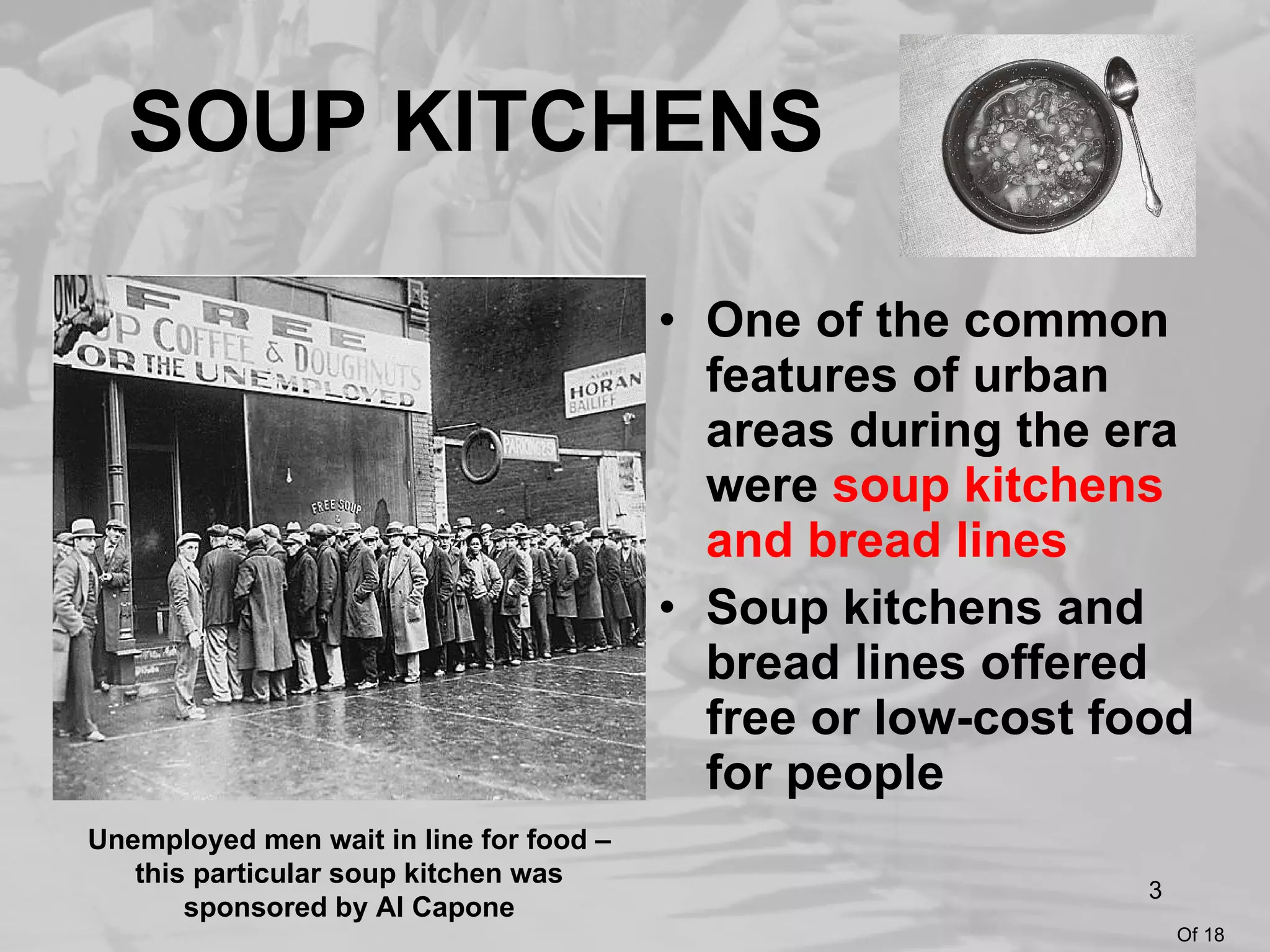
SOUP KITCHENS One of the common features of urban areas during the era were  soup kitchens and bread lines Soup kitchens and bread lines offered free or low-cost food for people Unemployed men wait in line for food – this particular soup kitchen was sponsored by Al Capone Of 18
CONDITIONS FOR MINORITIES Conditions for African Americans and Latinos were especially difficult Unemployment  was the highest among minorities and their  pay  was the  lowest Increased violence  (24 lynchings in 1933 alone)   marred the 1930s Many Mexicans were “encouraged” to return to their homeland   As conditions deteriorated, violence against blacks increased Of 18
RURAL LIFE DURING THE DEPRESSION While the Depression was difficult for everyone, farmers did have one advantage;  they could grow food for their families Thousands of farmers, however,  lost their land Many turned to tenant farming and barely scraped out a living Between 1929-1932 almost ½ million farmers lost their land Of 18
THE DUST BOWL A  severe drought  gripped the Great Plains in the  early 1930s Wind scattered the topsoil, exposing sand and grit The resulting  dust traveled  hundreds of miles One storm in 1934 picked up millions of tons of dust from the Plains an carried it to the East Coast Kansas Farmer, 1933 Of 18
Dust storm approaching Stratford, Texas - 1934 Of 18
Storm approaching Elkhart, Kansas in 1937 Of 18
Dust buried cars and wagons in South Dakota in 1936 Of 18
HARDEST HIT REGIONS Kansas, Oklahoma, Texas, New Mexico, and Colorado were the hardest hit regions during the Dust Bowl Many farmers migrated  to California and other Pacific Coast states Boy covers his mouth to avoid dust, 1935 Of 18
Photographer Dorothea Lange captures a family headed west to escape the dust storms Of 18
Of 18
HOBOES TRAVEL AMERICA The 1930s created the term  “hoboes”  to describe  poor drifters 300,000 transients – or hoboes – hitched rides around the country on trains and slept under bridges (thousands were teenagers / at peak 250K) Injuries and death was common  on railroad property; over 50,000 people were hurt or killed Of 18
EFFECTS OF DEPRESSION Suicide rate rose  more than 30% between 1928-1932 Alcoholism rose  sharply in urban areas Three times as many people were admitted to  state mental hospitals  as in normal times Many people showed great  kindness to strangers Additionally, many people developed habits of  savings & thriftiness Of 18
BONUS ARMY A 1932 incident further damaged Hoover’s image That spring about  15,000 World War I vets  arrived in Washington to support a proposed bill The  Patman Bill  would have authorized Congress to pay a bonus to WWI vets immediately The bonus was scheduled to be paid in 1945 --- The Army  vets wanted it NOW Of 18
BONUS ARMY TURNED DOWN Hoover called the Bonus marchers, “Communists and criminals” On June 17, 1932 the  Senate voted down the Patman Bill Thousands of Bonus Army soldiers protest – Spring 1932 Of 18
BONUS MARCHERS CLASH WITH SOLDIERS Hoover told the Bonus marchers to go home– most did 2,000 refused to leave Hoover sent a force of 1,000 soldiers under the command of General  Douglas MacArthur  and his aide  Dwight Eisenhower Of 18
AMERICANS SHOCKED AT TREATMENT OF WWI VETS MacArthur’s 12 th  infantry gassed more than 1,000  marchers, including an 11-month old baby, who died Two vets were shot and scores injured Americans were outraged and once again,  Hoover’s image suffered   Of 18

Effects of great depression basics

  • 1.
    THE GREAT DEPRESSIONImpact Photos by photographer Dorothea Lange
  • 2.
    SECTION 2: HARDSHIPSDURING DEPRESSION The Great Depression brought hardship, homelessness , and hunger to millions Across the country, people lost their jobs, and their homes Some built makeshifts shacks out of scrap material Before long whole shantytowns (sometimes called Hoovervilles in mock reference to the president) sprung up Of 18
  • 3.
    SOUP KITCHENS Oneof the common features of urban areas during the era were soup kitchens and bread lines Soup kitchens and bread lines offered free or low-cost food for people Unemployed men wait in line for food – this particular soup kitchen was sponsored by Al Capone Of 18
  • 4.
    CONDITIONS FOR MINORITIESConditions for African Americans and Latinos were especially difficult Unemployment was the highest among minorities and their pay was the lowest Increased violence (24 lynchings in 1933 alone) marred the 1930s Many Mexicans were “encouraged” to return to their homeland As conditions deteriorated, violence against blacks increased Of 18
  • 5.
    RURAL LIFE DURINGTHE DEPRESSION While the Depression was difficult for everyone, farmers did have one advantage; they could grow food for their families Thousands of farmers, however, lost their land Many turned to tenant farming and barely scraped out a living Between 1929-1932 almost ½ million farmers lost their land Of 18
  • 6.
    THE DUST BOWLA severe drought gripped the Great Plains in the early 1930s Wind scattered the topsoil, exposing sand and grit The resulting dust traveled hundreds of miles One storm in 1934 picked up millions of tons of dust from the Plains an carried it to the East Coast Kansas Farmer, 1933 Of 18
  • 7.
    Dust storm approachingStratford, Texas - 1934 Of 18
  • 8.
    Storm approaching Elkhart,Kansas in 1937 Of 18
  • 9.
    Dust buried carsand wagons in South Dakota in 1936 Of 18
  • 10.
    HARDEST HIT REGIONSKansas, Oklahoma, Texas, New Mexico, and Colorado were the hardest hit regions during the Dust Bowl Many farmers migrated to California and other Pacific Coast states Boy covers his mouth to avoid dust, 1935 Of 18
  • 11.
    Photographer Dorothea Langecaptures a family headed west to escape the dust storms Of 18
  • 12.
  • 13.
    HOBOES TRAVEL AMERICAThe 1930s created the term “hoboes” to describe poor drifters 300,000 transients – or hoboes – hitched rides around the country on trains and slept under bridges (thousands were teenagers / at peak 250K) Injuries and death was common on railroad property; over 50,000 people were hurt or killed Of 18
  • 14.
    EFFECTS OF DEPRESSIONSuicide rate rose more than 30% between 1928-1932 Alcoholism rose sharply in urban areas Three times as many people were admitted to state mental hospitals as in normal times Many people showed great kindness to strangers Additionally, many people developed habits of savings & thriftiness Of 18
  • 15.
    BONUS ARMY A1932 incident further damaged Hoover’s image That spring about 15,000 World War I vets arrived in Washington to support a proposed bill The Patman Bill would have authorized Congress to pay a bonus to WWI vets immediately The bonus was scheduled to be paid in 1945 --- The Army vets wanted it NOW Of 18
  • 16.
    BONUS ARMY TURNEDDOWN Hoover called the Bonus marchers, “Communists and criminals” On June 17, 1932 the Senate voted down the Patman Bill Thousands of Bonus Army soldiers protest – Spring 1932 Of 18
  • 17.
    BONUS MARCHERS CLASHWITH SOLDIERS Hoover told the Bonus marchers to go home– most did 2,000 refused to leave Hoover sent a force of 1,000 soldiers under the command of General Douglas MacArthur and his aide Dwight Eisenhower Of 18
  • 18.
    AMERICANS SHOCKED ATTREATMENT OF WWI VETS MacArthur’s 12 th infantry gassed more than 1,000 marchers, including an 11-month old baby, who died Two vets were shot and scores injured Americans were outraged and once again, Hoover’s image suffered Of 18