Modularized Developmental Education at MTDA: 3/8/10Montana Digital AcademyRyan Schrenk, Instructional Coordinator
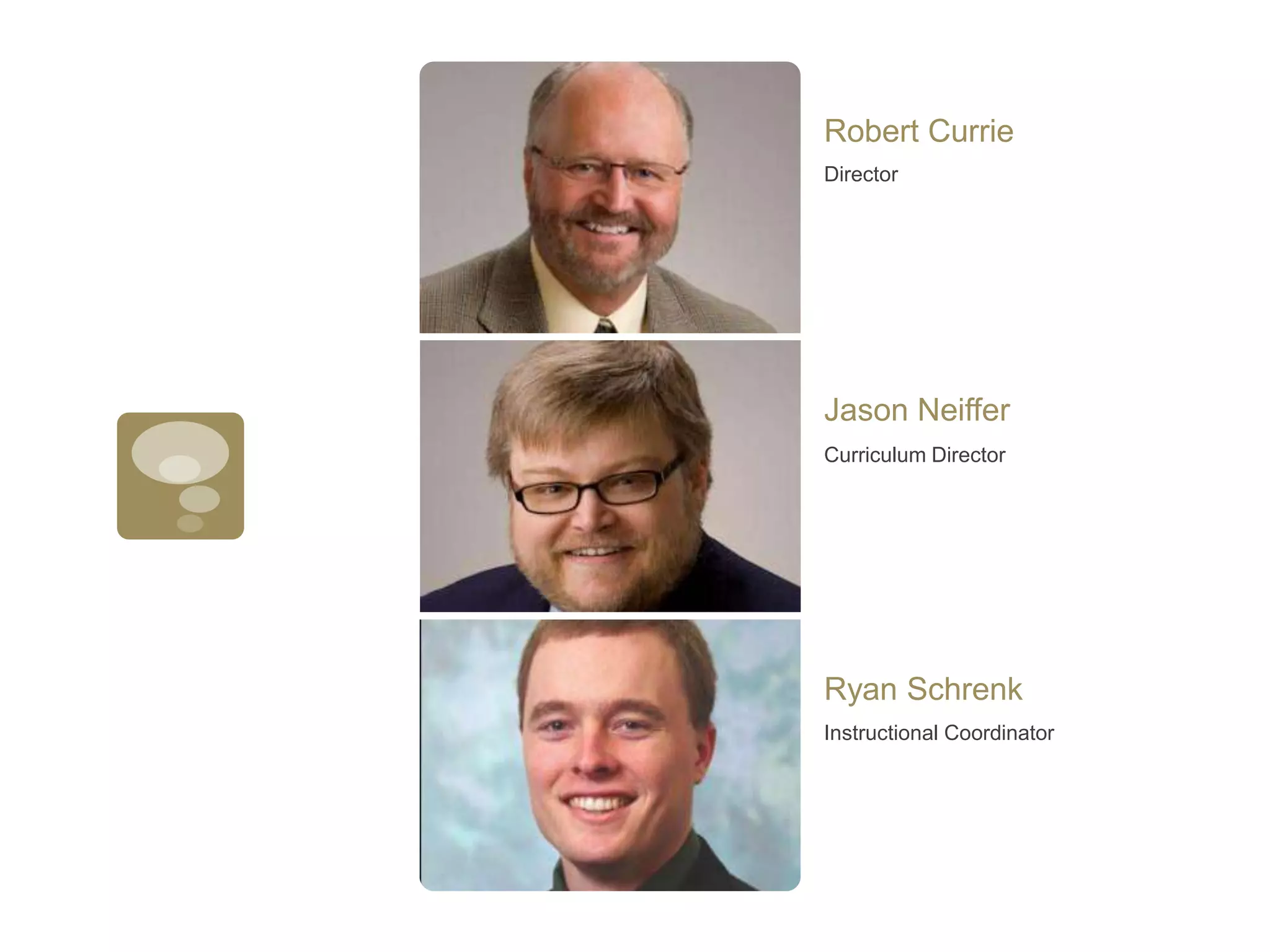
DirectorRobert CurrieCurriculum DirectorJason NeifferInstructional CoordinatorRyan Schrenk
Ian Jeffrey Schrenk – Born 3/9/10Where I was a year ago tomorrow:Montana Digital Academy – employed December 1, 2011Pilot underway with 2 schoolsWhere I was 4 months ago:MTDA Connect Credit Retrieval– Over 300 enrollments, 29 schools and counting.  Today: What it is, how it works and how it can work for you…Where we are today:
MTDA SummaryWhat is the Montana Digital Academy (MTDA)?
Montana Digital Academy20-7-1201. Montana virtual academy -- purposes -- governance. (1) There is a Montana virtual academy at a unit of the Montana university system.      (2) The purposes of the Montana virtual academy are to:      (a) make distance learning opportunities available to all school-age children through public school districts in the state of Montana;      (b) offer high-quality instructors who are licensed and endorsed in Montana and courses that are in compliance with all relevant education and distance learning rules, standards, and policies; and      (c) emphasize the core subject matters required under the accreditation standards, offer advanced courses for dual credit in collaboration with the Montana university system, and offer enrichment courses.
Montana Digital AcademyFunded by 61st LegislatureFree to Montana K-12 StudentsHoused at UM College of EducationExecutive Director and Curriculum DirectorHired Early 2010Curriculum, Courses Created and Faculty Hired 2010First Courses September 2010Instructional Program Coordinator Hired December 2010
Three Types of OfferingsMTDA CoursesDual Credit CoursesMTDA Connect (Credit Retrieval)
Credit Recovery, Credit Retrieval"What I think we want to use online learning to do is to escapethe traditional factory model that treats every student the same way on the same day" –Bill Gates January 28, 2010 USNews
Credit Recovery or Credit RetrievalUsually defined as an in-school opportunity for students to earn academic credits that they have lost, or are about to lose, by failing a regular course. –edweek.org 10/20/2008
History of Credit RetrievalRemediation in math increased 72% in public 4-year colleges between 1950-19801983 – Nation at Risk PublishedNation At Risk led to NCLBAlliance for Excellent Education (2008) – 30% of HS students fail to graduate on time---Loupa(2010)Montana has new statewide tracking system now (AIM number) with numbers quoted around 78% graduation rate
Gates – 1 to 1 ComputingImprove academic achievementEqualizing access to digital resourcesChange the nature and quality of instructionImprove economic competitiveness by providing students with real-world skills
Why credit retrieval to keep pace?Factors for dropoutEarly grade academic achievementHigh school test scores Being held back a grade-California Dropout Research Project (2008)
Types of Credit Retrieval1.  Focused Learning EffortsK-12After school programsSaturday or summer SchoolBlock schedulingAcademiesEarly ID of at-risk populationCollegeFast-track/focused programsAdult Basic EdVeteran’s Upward Bound
Commercial Computer-Based Solutions2.  Commercial ProductsAventaPLATONovaNETApexFlorida VirtualK-12.comKhan Academy (http://www.khanacademy.org/)
Credit Retrieval is needed How does a school decide what, who and how?How do they afford it?How to staff it?Who has time to plan, coordinate, support it?
MTDA Connect- home-grown attempt to:Combine intrusive focused learning With individualized/computer based solution
MTDA Connect Credit Retrieval ProgramWhat is it? How Does It Work?
MTDA RoleProvide scalable state-wide solution for Credit Retrieval
MTDA Connect ChargeAccessible/secure/comprehensive solutionPurchased centrally, shared widelyTechnical supportEnrollment managementCurricular oversightIntegrated solution?  Coming Soon
How Schools Get InvolvedDistrict Rep contacts usFills outenrollment form(s)Go through short orientationFigure out how to support students locally
How MTDA Connect WorksMTDA + local facilitator + academic coachOnline access 24/7 to curriculumModular, individualized, self-pacedModule tests open for 2 triesPost-tests unlocked manually and monitored locally
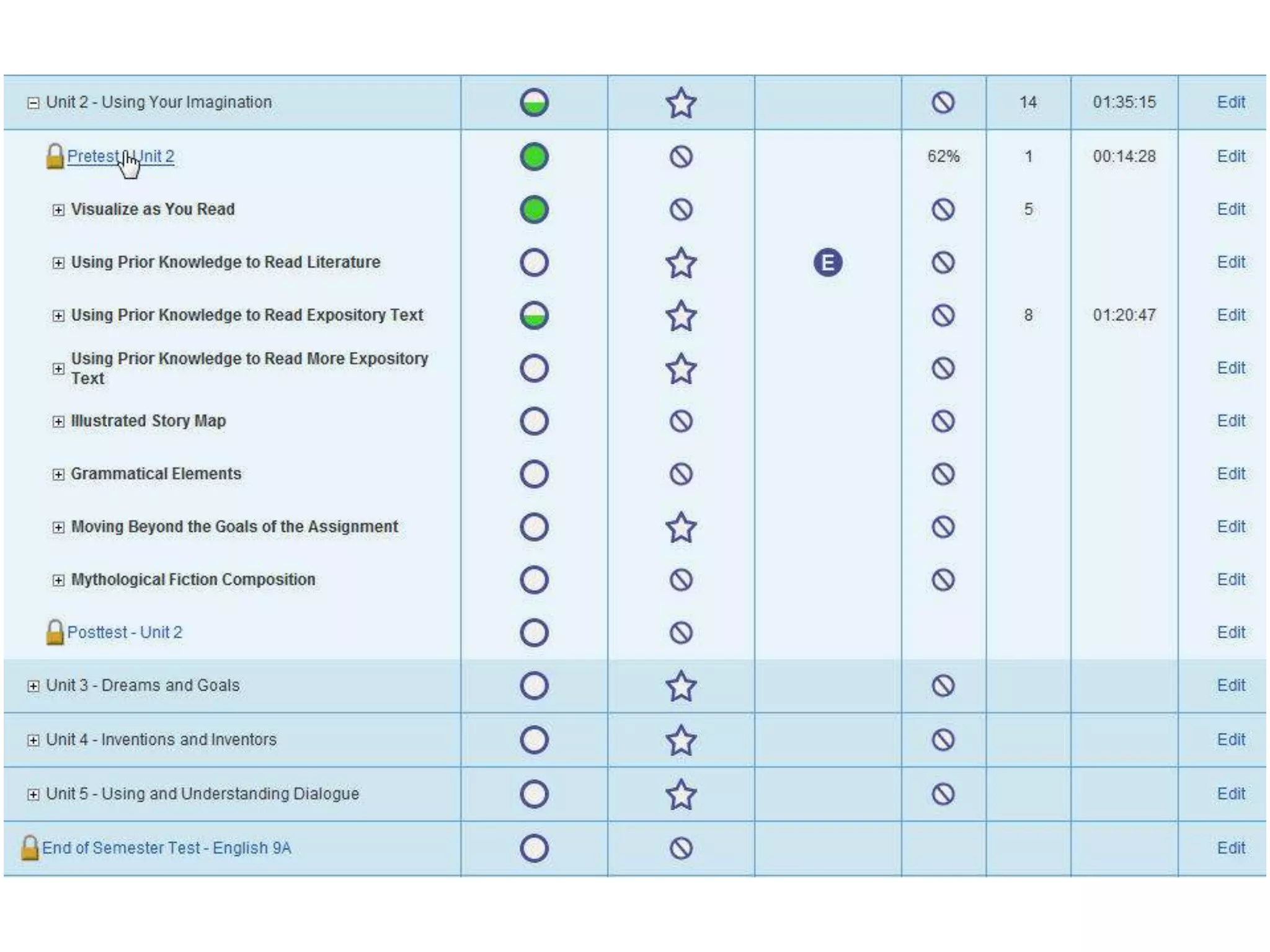
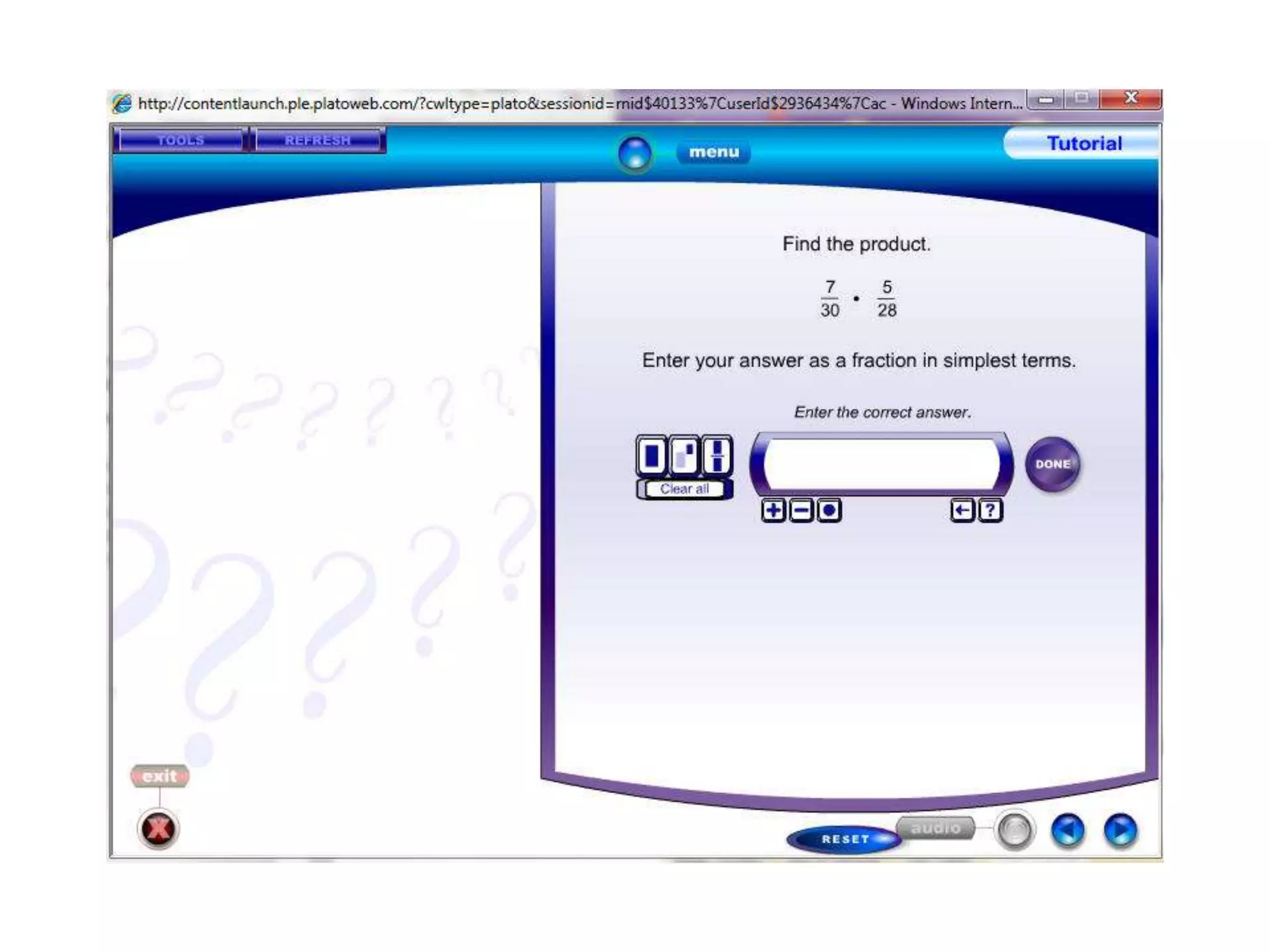
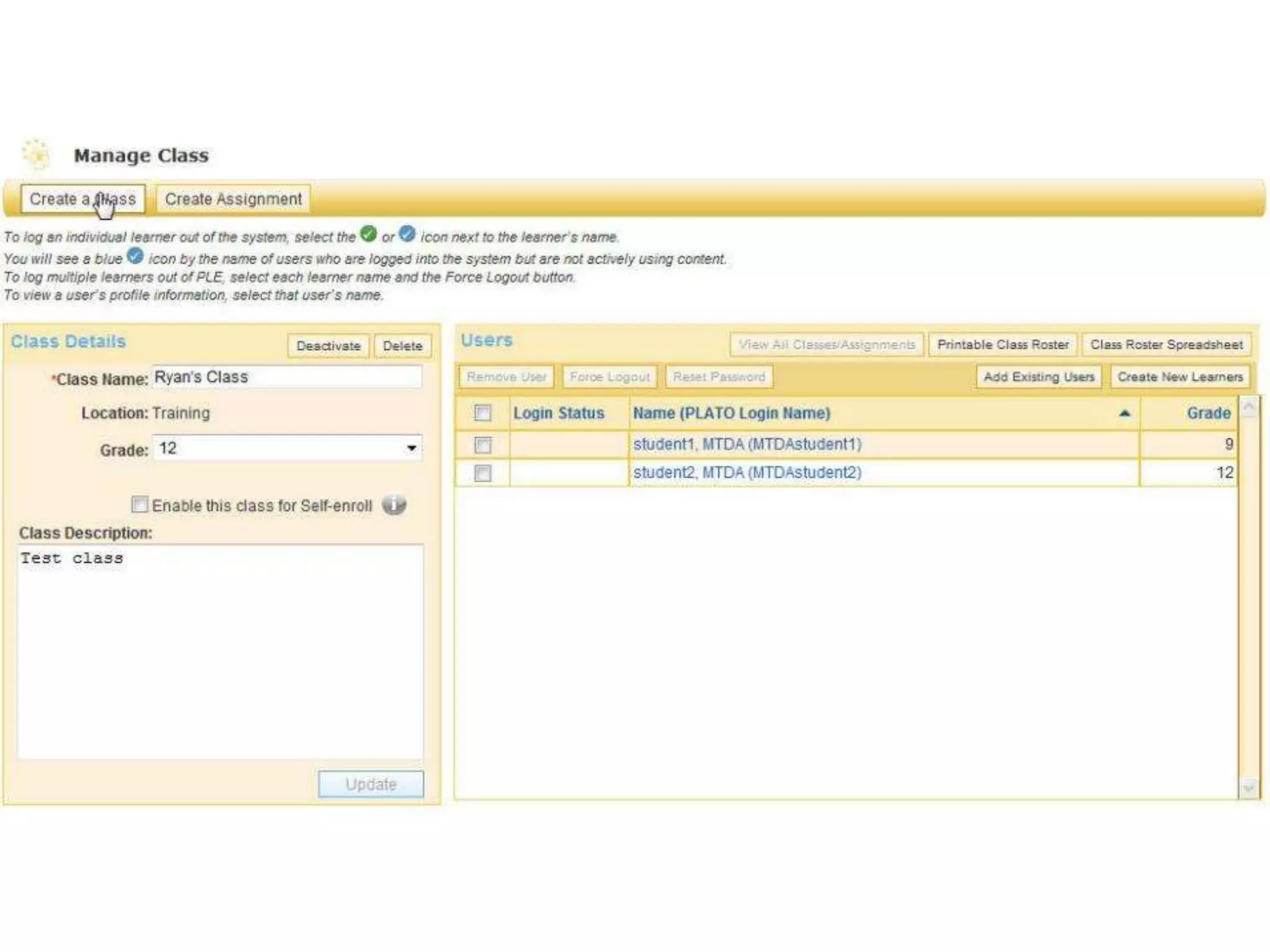
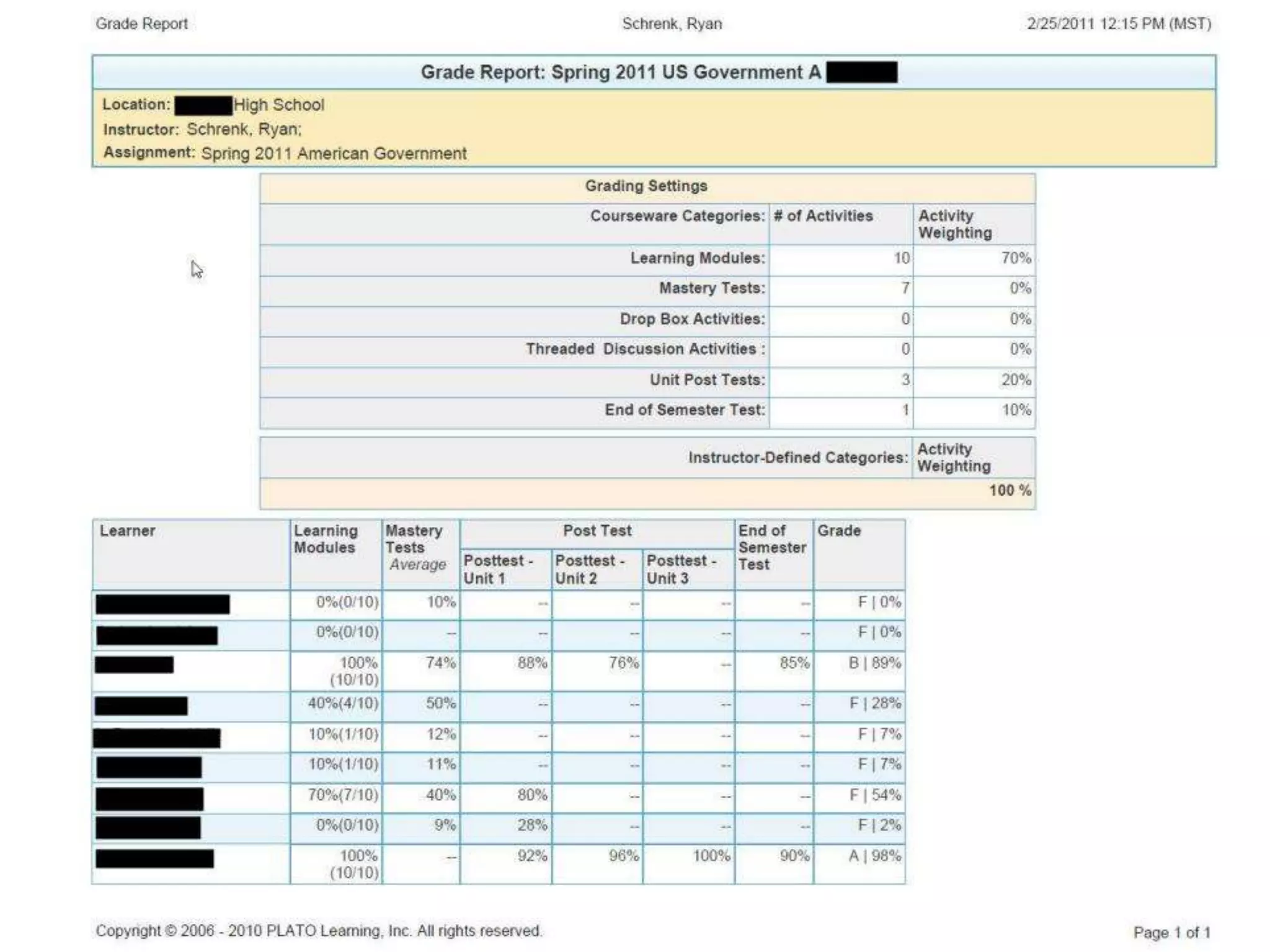
How MTDA Connect WorksPLATO VocabularyTracking and communication Pre-test, module exemption or module mastery, post-testGrade reports
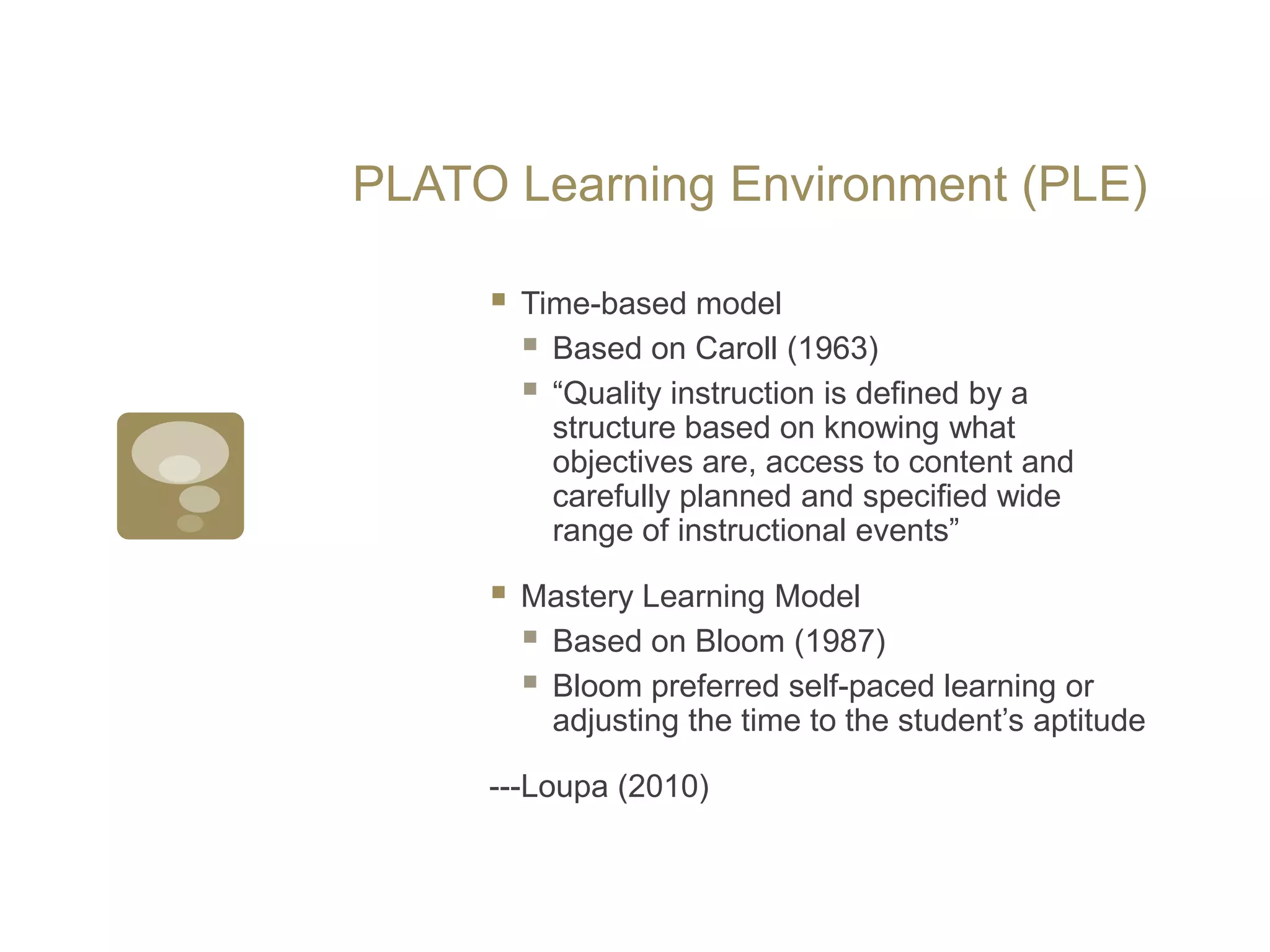
PLATO Learning Environment (PLE)Time-based modelBased on Caroll (1963) “Quality instruction is defined by a structure based on knowing what objectives are, access to content and carefully planned and specified wide range of instructional events”Mastery Learning ModelBased on Bloom (1987)Bloom preferred self-paced learning or adjusting the time to the student’s aptitude---Loupa (2010)
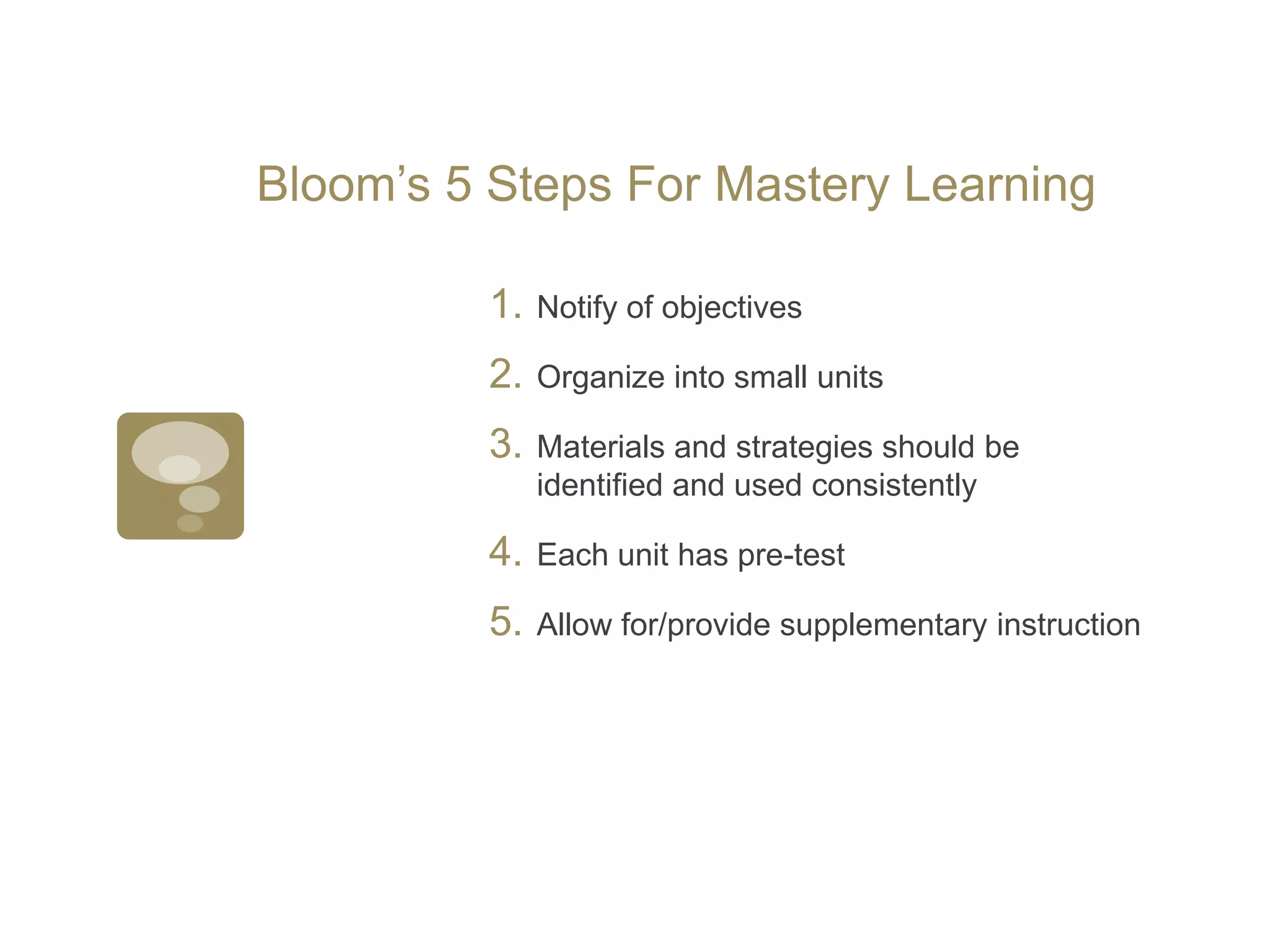
Bloom’s 5 Steps For Mastery LearningNotify of objectivesOrganize into small unitsMaterials and strategies should be identified and used consistentlyEach unit has pre-testAllow for/provide supplementary instruction
Academic CoachRole Responsibilities
Why use coaches?Wide variety of programs at local levelBalance with local needs to provide supportGrading or teaching needsChanges equation for studentsSubject matter certifiedModifications to curriculum
CommunicationMonthly meeting with MTDA and CoachesPLE messagingEmail to facilitators and studentsGoogle docs and dropbox.com for shared filesToll free fax to email service for written workPhone calls
Taking Content Retrieval to the Next LevelAnalysis of curriculum/prioritize offline activitiesSupport SiteTeacher MaterialsCurriculum mapsSuggestions for improvementsModifications and PlanningMonthly Update Meetings
Site FacilitatorWays to track and support credit retrieval students
FacilitatorsClass managementLocal eyes and ears for MTDA ConnectPasswordsEnrollmentsTracking and ManagementHelp logging in then making students do itWorking on curriculumFormative assistanceConduit for communicationTracking workGrades and final assessment
Final Lesson…so far"Man who stand on hill with mouth open will wait long time for roast duck to drop in.“ - Cofucius
Do’s and Don’tsDo somethingDon’t wait, our students need us
Do’s and Don’tsDo use technology to deliverDon’t use it to babysit or purely reward
Do’s and Don’tsDo get “intrusive” in Credit Retrieval or Remedial EducationDon’t expect different results without changing the variables
Questions? Interested in discussing or partnering?Contact Ryan Schrenkryan.schrenk@mso.umt.eduryan.schrenk@montanadigitalacademy.org406-243-6122Skype: ryan.schrenkTwitter: hardball8This presentation is available at slideshare:http://www.slideshare.net/rschrenk

Modularized developmental ed at x li 2011 3 8_2011

  • 1.
    Modularized Developmental Educationat MTDA: 3/8/10Montana Digital AcademyRyan Schrenk, Instructional Coordinator
  • 2.
    DirectorRobert CurrieCurriculum DirectorJasonNeifferInstructional CoordinatorRyan Schrenk
  • 3.
    Ian Jeffrey Schrenk– Born 3/9/10Where I was a year ago tomorrow:Montana Digital Academy – employed December 1, 2011Pilot underway with 2 schoolsWhere I was 4 months ago:MTDA Connect Credit Retrieval– Over 300 enrollments, 29 schools and counting. Today: What it is, how it works and how it can work for you…Where we are today:
  • 4.
    MTDA SummaryWhat isthe Montana Digital Academy (MTDA)?
  • 5.
    Montana Digital Academy20-7-1201.Montana virtual academy -- purposes -- governance. (1) There is a Montana virtual academy at a unit of the Montana university system.      (2) The purposes of the Montana virtual academy are to:      (a) make distance learning opportunities available to all school-age children through public school districts in the state of Montana;      (b) offer high-quality instructors who are licensed and endorsed in Montana and courses that are in compliance with all relevant education and distance learning rules, standards, and policies; and      (c) emphasize the core subject matters required under the accreditation standards, offer advanced courses for dual credit in collaboration with the Montana university system, and offer enrichment courses.
  • 6.
    Montana Digital AcademyFundedby 61st LegislatureFree to Montana K-12 StudentsHoused at UM College of EducationExecutive Director and Curriculum DirectorHired Early 2010Curriculum, Courses Created and Faculty Hired 2010First Courses September 2010Instructional Program Coordinator Hired December 2010
  • 7.
    Three Types ofOfferingsMTDA CoursesDual Credit CoursesMTDA Connect (Credit Retrieval)
  • 8.
    Credit Recovery, CreditRetrieval"What I think we want to use online learning to do is to escapethe traditional factory model that treats every student the same way on the same day" –Bill Gates January 28, 2010 USNews
  • 9.
    Credit Recovery orCredit RetrievalUsually defined as an in-school opportunity for students to earn academic credits that they have lost, or are about to lose, by failing a regular course. –edweek.org 10/20/2008
  • 10.
    History of CreditRetrievalRemediation in math increased 72% in public 4-year colleges between 1950-19801983 – Nation at Risk PublishedNation At Risk led to NCLBAlliance for Excellent Education (2008) – 30% of HS students fail to graduate on time---Loupa(2010)Montana has new statewide tracking system now (AIM number) with numbers quoted around 78% graduation rate
  • 11.
    Gates – 1to 1 ComputingImprove academic achievementEqualizing access to digital resourcesChange the nature and quality of instructionImprove economic competitiveness by providing students with real-world skills
  • 12.
    Why credit retrievalto keep pace?Factors for dropoutEarly grade academic achievementHigh school test scores Being held back a grade-California Dropout Research Project (2008)
  • 13.
    Types of CreditRetrieval1. Focused Learning EffortsK-12After school programsSaturday or summer SchoolBlock schedulingAcademiesEarly ID of at-risk populationCollegeFast-track/focused programsAdult Basic EdVeteran’s Upward Bound
  • 14.
    Commercial Computer-Based Solutions2. Commercial ProductsAventaPLATONovaNETApexFlorida VirtualK-12.comKhan Academy (http://www.khanacademy.org/)
  • 15.
    Credit Retrieval isneeded How does a school decide what, who and how?How do they afford it?How to staff it?Who has time to plan, coordinate, support it?
  • 16.
    MTDA Connect- home-grownattempt to:Combine intrusive focused learning With individualized/computer based solution
  • 17.
    MTDA Connect CreditRetrieval ProgramWhat is it? How Does It Work?
  • 18.
    MTDA RoleProvide scalablestate-wide solution for Credit Retrieval
  • 19.
    MTDA Connect ChargeAccessible/secure/comprehensivesolutionPurchased centrally, shared widelyTechnical supportEnrollment managementCurricular oversightIntegrated solution? Coming Soon
  • 20.
    How Schools GetInvolvedDistrict Rep contacts usFills outenrollment form(s)Go through short orientationFigure out how to support students locally
  • 21.
    How MTDA ConnectWorksMTDA + local facilitator + academic coachOnline access 24/7 to curriculumModular, individualized, self-pacedModule tests open for 2 triesPost-tests unlocked manually and monitored locally
  • 22.
    How MTDA ConnectWorksPLATO VocabularyTracking and communication Pre-test, module exemption or module mastery, post-testGrade reports
  • 27.
    PLATO Learning Environment(PLE)Time-based modelBased on Caroll (1963) “Quality instruction is defined by a structure based on knowing what objectives are, access to content and carefully planned and specified wide range of instructional events”Mastery Learning ModelBased on Bloom (1987)Bloom preferred self-paced learning or adjusting the time to the student’s aptitude---Loupa (2010)
  • 28.
    Bloom’s 5 StepsFor Mastery LearningNotify of objectivesOrganize into small unitsMaterials and strategies should be identified and used consistentlyEach unit has pre-testAllow for/provide supplementary instruction
  • 29.
  • 30.
    Why use coaches?Widevariety of programs at local levelBalance with local needs to provide supportGrading or teaching needsChanges equation for studentsSubject matter certifiedModifications to curriculum
  • 31.
    CommunicationMonthly meeting withMTDA and CoachesPLE messagingEmail to facilitators and studentsGoogle docs and dropbox.com for shared filesToll free fax to email service for written workPhone calls
  • 32.
    Taking Content Retrievalto the Next LevelAnalysis of curriculum/prioritize offline activitiesSupport SiteTeacher MaterialsCurriculum mapsSuggestions for improvementsModifications and PlanningMonthly Update Meetings
  • 33.
    Site FacilitatorWays totrack and support credit retrieval students
  • 34.
    FacilitatorsClass managementLocal eyesand ears for MTDA ConnectPasswordsEnrollmentsTracking and ManagementHelp logging in then making students do itWorking on curriculumFormative assistanceConduit for communicationTracking workGrades and final assessment
  • 35.
    Final Lesson…so far"Manwho stand on hill with mouth open will wait long time for roast duck to drop in.“ - Cofucius
  • 36.
    Do’s and Don’tsDosomethingDon’t wait, our students need us
  • 37.
    Do’s and Don’tsDouse technology to deliverDon’t use it to babysit or purely reward
  • 38.
    Do’s and Don’tsDoget “intrusive” in Credit Retrieval or Remedial EducationDon’t expect different results without changing the variables
  • 39.
    Questions? Interested indiscussing or partnering?Contact Ryan Schrenkryan.schrenk@mso.umt.eduryan.schrenk@montanadigitalacademy.org406-243-6122Skype: ryan.schrenkTwitter: hardball8This presentation is available at slideshare:http://www.slideshare.net/rschrenk

Editor's Notes

  • #8 First Courses Fall 2010, Second Semester Started, over 4000 enrollments for the first year nowDual Credit with 2 Colleges and UMPiloted Connect last Fall, expanding as we meetMany requests leading up to Spring 2011
  • #13 Thus, the need. Once students step out of line, they need to have a way to get back in.
  • #23 Classes, assignments, modules, mastery
  • #29 3 – examples are instruction, modeling, practice, formative and summative assessment,reteaching and reinforcement
  • #31 Continuum of programs from nothing but sign up and send off to those with scheduled rooms, technology, and staff dedicated to CR
  • #33 Coaches will allow the Connect program to grow and evolve from the Montana educators’ expertise they can provide. I find that putting the curriculum into creative/innovative teachers’ hands is always the best way to make it evolve.
  • #39 The answer is not to do more time in the same old way or increase credits. Invest in it now, get intrusive, get modular, get individualized and make it supported.