Tweet us at
@norfolkchamber
#FutureOfNorfolk15
Sponsored by:
Ten Years of Disruption
…a look over the horizon
James Duez
Entrepreneur, Angel Investor, NED
Rainbird, Optalysys, Cuju Media, Tribal Toad
@jamesduez
2015
WHERE ARE
WE NOW?
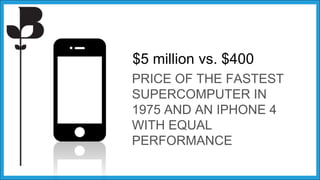
$5 million vs. $400
PRICE OF THE FASTEST
SUPERCOMPUTER IN
1975 AND AN IPHONE 4
WITH EQUAL
PERFORMANCE
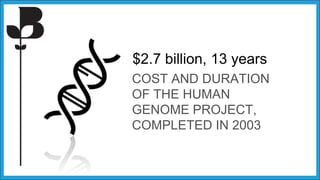
$2.7 billion, 13 years
COST AND DURATION
OF THE HUMAN
GENOME PROJECT,
COMPLETED IN 2003
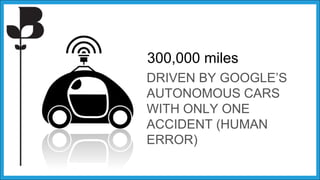
300,000 miles
DRIVEN BY GOOGLE’S
AUTONOMOUS CARS
WITH ONLY ONE
ACCIDENT (HUMAN
ERROR)
3x
INCREASE IN
EFFICIENCY OF NORTH
AMERICAN GAS WELLS
BETWEEN 2007 AND
2011
85%
DROP IN COST PER
WATT OF A SOLAR
PHOTOVOLTAIC CELL
SINCE 2000
2025
WHERE ARE WE
HEADING?
2-3 billion
MORE PEOPLE WITH
ACCESS TO THE
INTERNET IN 2025
$100, 1 hour
COST AND TIME TO
SEQUENCE A HUMAN
GENOME IN THE NEXT
DECADE
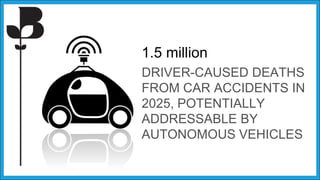
1.5 million
DRIVER-CAUSED DEATHS
FROM CAR ACCIDENTS IN
2025, POTENTIALLY
ADDRESSABLE BY
AUTONOMOUS VEHICLES
100-200%
POTENTIAL INCREASE IN
NORTH AMERICAN OIL
PRODUCTION BY 2025,
DRIVEN BY HYDRAULIC
FRACKING
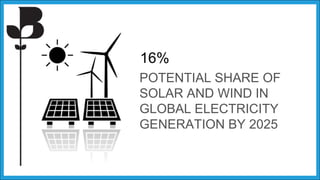
16%
POTENTIAL SHARE OF
SOLAR AND WIND IN
GLOBAL ELECTRICITY
GENERATION BY 2025
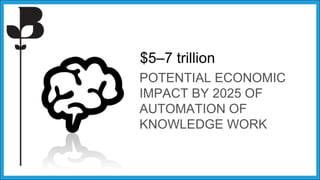
$5–7 trillion
POTENTIAL ECONOMIC
IMPACT BY 2025 OF
AUTOMATION OF
KNOWLEDGE WORK
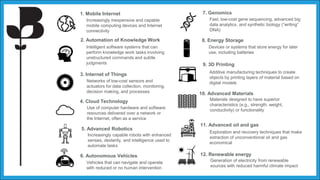
1. Mobile Internet
Increasingly inexpensive and capable
mobile computing devices and Internet
connectivity
2. Automation of Knowledge Work
Intelligent software systems that can
perform knowledge work tasks involving
unstructured commands and subtle
judgments
3. Internet of Things
Networks of low-cost sensors and
actuators for data collection, monitoring,
decision making, and processes
4. Cloud Technology
Use of computer hardware and software
resources delivered over a network or
the Internet, often as a service
5. Advanced Robotics
Increasingly capable robots with enhanced
senses, dexterity, and intelligence used to
automate tasks
6. Autonomous Vehicles
Vehicles that can navigate and operate
with reduced or no human intervention
7. Genomics
Fast, low-cost gene sequencing, advanced big
data analytics, and synthetic biology (“writing”
DNA)
8. Energy Storage
Devices or systems that store energy for later
use, including batteries
9. 3D Printing
Additive manufacturing techniques to create
objects by printing layers of material based on
digital models
10. Advanced Materials
Materials designed to have superior
characteristics (e.g., strength, weight,
conductivity) or functionality
11. Advanced oil and gas
Exploration and recovery techniques that make
extraction of unconventional oil and gas
economical
12. Renewable energy
Generation of electricity from renewable
sources with reduced harmful climate impact

THE FUTURE IS HERE - James Duez, Rainbird

  • 1.
    Tweet us at @norfolkchamber #FutureOfNorfolk15 Sponsoredby: Ten Years of Disruption …a look over the horizon James Duez Entrepreneur, Angel Investor, NED Rainbird, Optalysys, Cuju Media, Tribal Toad @jamesduez
  • 2.
  • 3.
    $5 million vs.$400 PRICE OF THE FASTEST SUPERCOMPUTER IN 1975 AND AN IPHONE 4 WITH EQUAL PERFORMANCE
  • 4.
    $2.7 billion, 13years COST AND DURATION OF THE HUMAN GENOME PROJECT, COMPLETED IN 2003
  • 5.
    300,000 miles DRIVEN BYGOOGLE’S AUTONOMOUS CARS WITH ONLY ONE ACCIDENT (HUMAN ERROR)
  • 6.
    3x INCREASE IN EFFICIENCY OFNORTH AMERICAN GAS WELLS BETWEEN 2007 AND 2011
  • 7.
    85% DROP IN COSTPER WATT OF A SOLAR PHOTOVOLTAIC CELL SINCE 2000
  • 8.
  • 9.
    2-3 billion MORE PEOPLEWITH ACCESS TO THE INTERNET IN 2025
  • 10.
    $100, 1 hour COSTAND TIME TO SEQUENCE A HUMAN GENOME IN THE NEXT DECADE
  • 11.
    1.5 million DRIVER-CAUSED DEATHS FROMCAR ACCIDENTS IN 2025, POTENTIALLY ADDRESSABLE BY AUTONOMOUS VEHICLES
  • 12.
    100-200% POTENTIAL INCREASE IN NORTHAMERICAN OIL PRODUCTION BY 2025, DRIVEN BY HYDRAULIC FRACKING
  • 13.
    16% POTENTIAL SHARE OF SOLARAND WIND IN GLOBAL ELECTRICITY GENERATION BY 2025
  • 14.
    $5–7 trillion POTENTIAL ECONOMIC IMPACTBY 2025 OF AUTOMATION OF KNOWLEDGE WORK
  • 15.
    1. Mobile Internet Increasinglyinexpensive and capable mobile computing devices and Internet connectivity 2. Automation of Knowledge Work Intelligent software systems that can perform knowledge work tasks involving unstructured commands and subtle judgments 3. Internet of Things Networks of low-cost sensors and actuators for data collection, monitoring, decision making, and processes 4. Cloud Technology Use of computer hardware and software resources delivered over a network or the Internet, often as a service 5. Advanced Robotics Increasingly capable robots with enhanced senses, dexterity, and intelligence used to automate tasks 6. Autonomous Vehicles Vehicles that can navigate and operate with reduced or no human intervention 7. Genomics Fast, low-cost gene sequencing, advanced big data analytics, and synthetic biology (“writing” DNA) 8. Energy Storage Devices or systems that store energy for later use, including batteries 9. 3D Printing Additive manufacturing techniques to create objects by printing layers of material based on digital models 10. Advanced Materials Materials designed to have superior characteristics (e.g., strength, weight, conductivity) or functionality 11. Advanced oil and gas Exploration and recovery techniques that make extraction of unconventional oil and gas economical 12. Renewable energy Generation of electricity from renewable sources with reduced harmful climate impact

Editor's Notes

  • #4 Sales of smartphones and tablets have grown 6 x since launch of iPhone in 2007
  • #5 It’s not just about disease - 100 x Increase in acreage of genetically modified crops, 1996–2012
  • #6 They are licensed for testing on UK roads this year as long as they are duel control and a sober driver is behind the wheel.
  • #7 Fracking may be contentious but it’s big business.
  • #8 Nearly 20 x Growth in solar and wind generation capacity since 2000
  • #9 Where we are is staggering when you think about it, but let’s consider where we will be in ten years.
  • #10 There are 4.3 billion people remaining to be connected to the Internet, potentially through mobile Internet Currently $1.7 trillion GDP related to the Internet Internet is: evolving rapidly more accessible driving more applications across businesses and the public sector, more efficient delivery of services creating many opportunities to increase workforce productivity [warning sign] In developing economies, the mobile Internet will bring billions more into the connected world.
  • #11 Today, a human genome can be sequenced for a few thousand dollars and in a few hours. With the work Optalysys is doing, that might come down to 60 seconds. The next step is synthetic biology—the ability to precisely customise organisms by “writing” DNA Profound impact on medicine, agriculture, biofuels and drug discovery. Consider: 26 million - Annual deaths from cancer, cardiovascular disease, or type 2 diabetes 2.5 billion - People employed in agriculture —————- $6.5 trillion - spent in health-care costs $1.1 trillion - the global value of wheat, rice, maize, soy, and barley
  • #12 It is now possible to create cars, trucks, aircraft, and boats that are completely or partly autonomous. From drone aircraft on the battlefield to Google’s self-driving car to fork lifts and mining equipment. Autonomous cars and trucks could enable a revolution in ground transportation—regulatory and public acceptance permitting. Even if not fully adopted… there is value in systems that assist drivers in steering, braking, and collision avoidance The transportation industry is the world’s biggest employer.
  • #13 The combination of horizontal drilling and hydraulic fracturing makes it possible to reach oil and gas deposits that were known to exist but that were not economically accessible Eventually advances could even unlock new types of reserves, including coal-bed methane tight sandstones methane clathrates -potentially ushering in another new energy “revolution.”
  • #14 By 2025, only 16% of energy consumption will be renewable.
  • #15 You will see that one of the largest areas of disruption is the automation of knowledge work. This has the potential to disrupt the labour force to the tune of 140 million workers. Business that embrace artificial intelligence and other forms of automation will thrive. Those that don’t will struggle.
  • #16 Let’s see the list of the top 12 disruptive technologies by impact to the global economy? I have a question for you to ponder on: There is a proliferation of start-ups that are coming for traditional businesses, creating new models and disrupting markets. They can innovate fast - some like Rainbird benefitting from start-up accelerators and the availability of cloud-based technologies - that mean they can be a start-up on a Monday and have the infrastructure of a bank by Friday. How will your business maximise the opportunity to embrace new technology and innovate - to stay ahead over the next ten years?