
Internet Revolution:
Understanding Internet History
Let’s compare to…
 Telephone: by Bell on March 10, 1876, “Come
here Watson, I want you”
 Telegraph: by Morse, who began the idea of
telegraph in December 1837 and could ask
Congress for $30,000 years after (in 1843)
 Radio wave: Telsa in 1895 & patent by Marconi in
1896
 TV: Dr. Zworykin @ RCA vs. Philo Farnsworth
from Idaho in 1927
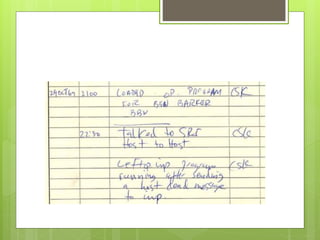
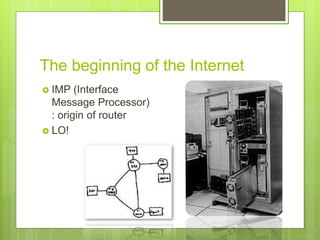
The beginning of the Internet
 IMP (Interface
Message Processor)
: origin of router
 LO!
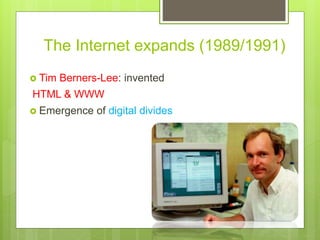
The Internet expands (1989/1991)
 Tim Berners-Lee: invented
HTML & WWW
 Emergence of digital divides
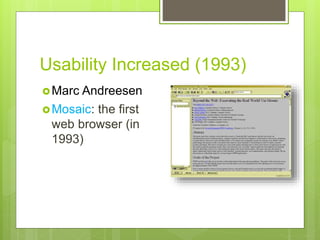
Usability Increased (1993)
Marc Andreesen
Mosaic: the first
web browser (in
1993)
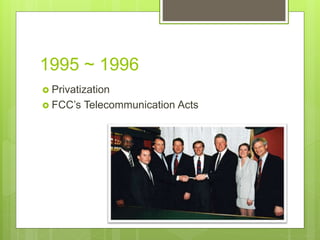
1995 ~ 1996
 Privatization
 FCC’s Telecommunication Acts
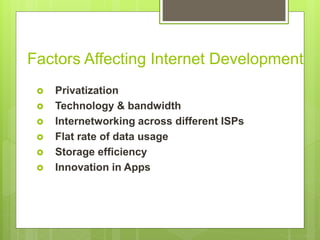
Factors Affecting Internet Development
 Privatization
 Technology & bandwidth
 Internetworking across different ISPs
 Flat rate of data usage
 Storage efficiency
 Innovation in Apps
Technology Affordances
“the possible actions a person can perform on
an object”
What kind of affordances can we think of with
the computer and internet?
Digital Divide
Gap between those people with
effective access to digital and
information technology (“haves”)
and those without (“have-not”)
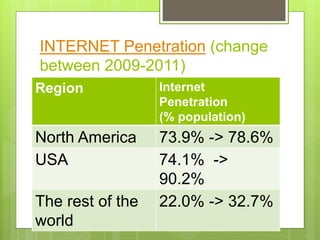
Region Internet
Penetration
(% population)
North America 73.9% -> 78.6%
USA 74.1% ->
90.2%
The rest of the
world
22.0% -> 32.7%
INTERNET Penetration (change
between 2009-2011)
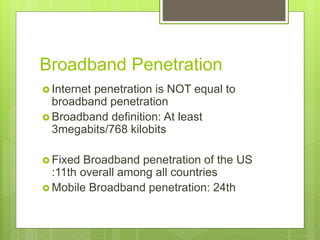
 Internet penetration is NOT equal to
broadband penetration
 Broadband definition: At least
3megabits/768 kilobits
 Fixed Broadband penetration of the US
:11th overall among all countries
 Mobile Broadband penetration: 24th
Broadband Penetration
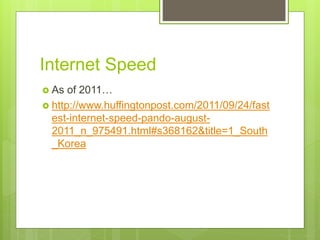
 As of 2011…
 http://www.huffingtonpost.com/2011/09/24/fast
est-internet-speed-pando-august-
2011_n_975491.html#s368162&title=1_South
_Korea
Internet Speed
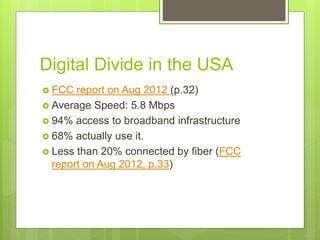
 FCC report on Aug 2012 (p.32)
 Average Speed: 5.8 Mbps
 94% access to broadband infrastructure
 68% actually use it.
 Less than 20% connected by fiber (FCC
report on Aug 2012, p.33)
Digital Divide in the USA
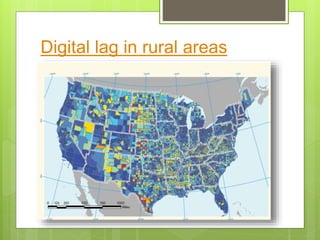
Digital lag in rural areas
 Ordinary people have different opinions about
digital divide in rural areas.
 Is it a human right? Is it a utility (necessity)
such as electricity, highway, etc.?
 Should the nation invest significant amount of
federal funds for a small fraction of people
who want the high-speed in rural areas?
Digital Divide as Moral and
Political issues
Types of Digital Culture
 Techno-elites
 Hackers
 Virtual communitarians
 Participators (the Fifth Estate)

COM494 Internet Revolution

  • 1.
  • 3.
    Let’s compare to… Telephone: by Bell on March 10, 1876, “Come here Watson, I want you”  Telegraph: by Morse, who began the idea of telegraph in December 1837 and could ask Congress for $30,000 years after (in 1843)  Radio wave: Telsa in 1895 & patent by Marconi in 1896  TV: Dr. Zworykin @ RCA vs. Philo Farnsworth from Idaho in 1927
  • 5.
    The beginning ofthe Internet  IMP (Interface Message Processor) : origin of router  LO!
  • 6.
    The Internet expands(1989/1991)  Tim Berners-Lee: invented HTML & WWW  Emergence of digital divides
  • 7.
    Usability Increased (1993) MarcAndreesen Mosaic: the first web browser (in 1993)
  • 8.
    1995 ~ 1996 Privatization  FCC’s Telecommunication Acts
  • 10.
    Factors Affecting InternetDevelopment  Privatization  Technology & bandwidth  Internetworking across different ISPs  Flat rate of data usage  Storage efficiency  Innovation in Apps
  • 11.
    Technology Affordances “the possibleactions a person can perform on an object” What kind of affordances can we think of with the computer and internet?
  • 13.
    Digital Divide Gap betweenthose people with effective access to digital and information technology (“haves”) and those without (“have-not”)
  • 14.
    Region Internet Penetration (% population) NorthAmerica 73.9% -> 78.6% USA 74.1% -> 90.2% The rest of the world 22.0% -> 32.7% INTERNET Penetration (change between 2009-2011)
  • 15.
     Internet penetrationis NOT equal to broadband penetration  Broadband definition: At least 3megabits/768 kilobits  Fixed Broadband penetration of the US :11th overall among all countries  Mobile Broadband penetration: 24th Broadband Penetration
  • 16.
     As of2011…  http://www.huffingtonpost.com/2011/09/24/fast est-internet-speed-pando-august- 2011_n_975491.html#s368162&title=1_South _Korea Internet Speed
  • 17.
     FCC reporton Aug 2012 (p.32)  Average Speed: 5.8 Mbps  94% access to broadband infrastructure  68% actually use it.  Less than 20% connected by fiber (FCC report on Aug 2012, p.33) Digital Divide in the USA
  • 18.
    Digital lag inrural areas
  • 19.
     Ordinary peoplehave different opinions about digital divide in rural areas.  Is it a human right? Is it a utility (necessity) such as electricity, highway, etc.?  Should the nation invest significant amount of federal funds for a small fraction of people who want the high-speed in rural areas? Digital Divide as Moral and Political issues
  • 20.
    Types of DigitalCulture  Techno-elites  Hackers  Virtual communitarians  Participators (the Fifth Estate)

Editor's Notes

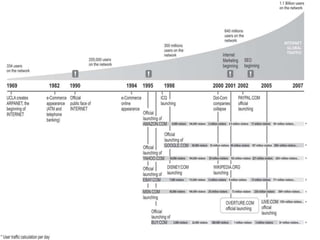
  • #3 SEO – search engine optimization
  • #6 UCLA, Stanford, UC-Santa Barbara, Utah
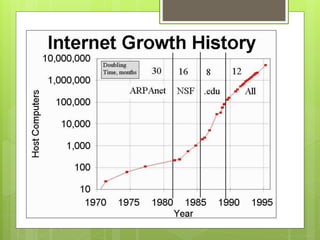
  • #10 In every time unit (e.g. 30 months during Arpanet era), the number of host computers increased in double.
  • #13 Los indignados (aka 15M) : successful to keep the traditional SMOs away from the movement.
  • #19 Blue-ish :HigherRed: as low as 0-5 Light green: 40%
  • #20 Tax money is not small: In 2011, proposed in $18 billion in federal funds to get 98 percent of the nation connected to the Internet for the wireless broadband