Maha Hammady,MBBCh,MMSc
CYTOSKELETON
By/ Maha Hammady Hemdan
MBBCh- MMSc - Faculty of Medicine, Alexandria University. 2015
Supervised by:
Prof. Dr. Amany Abd-Elmonem Soliman
Maha Hammady,MBBCh,MMSc
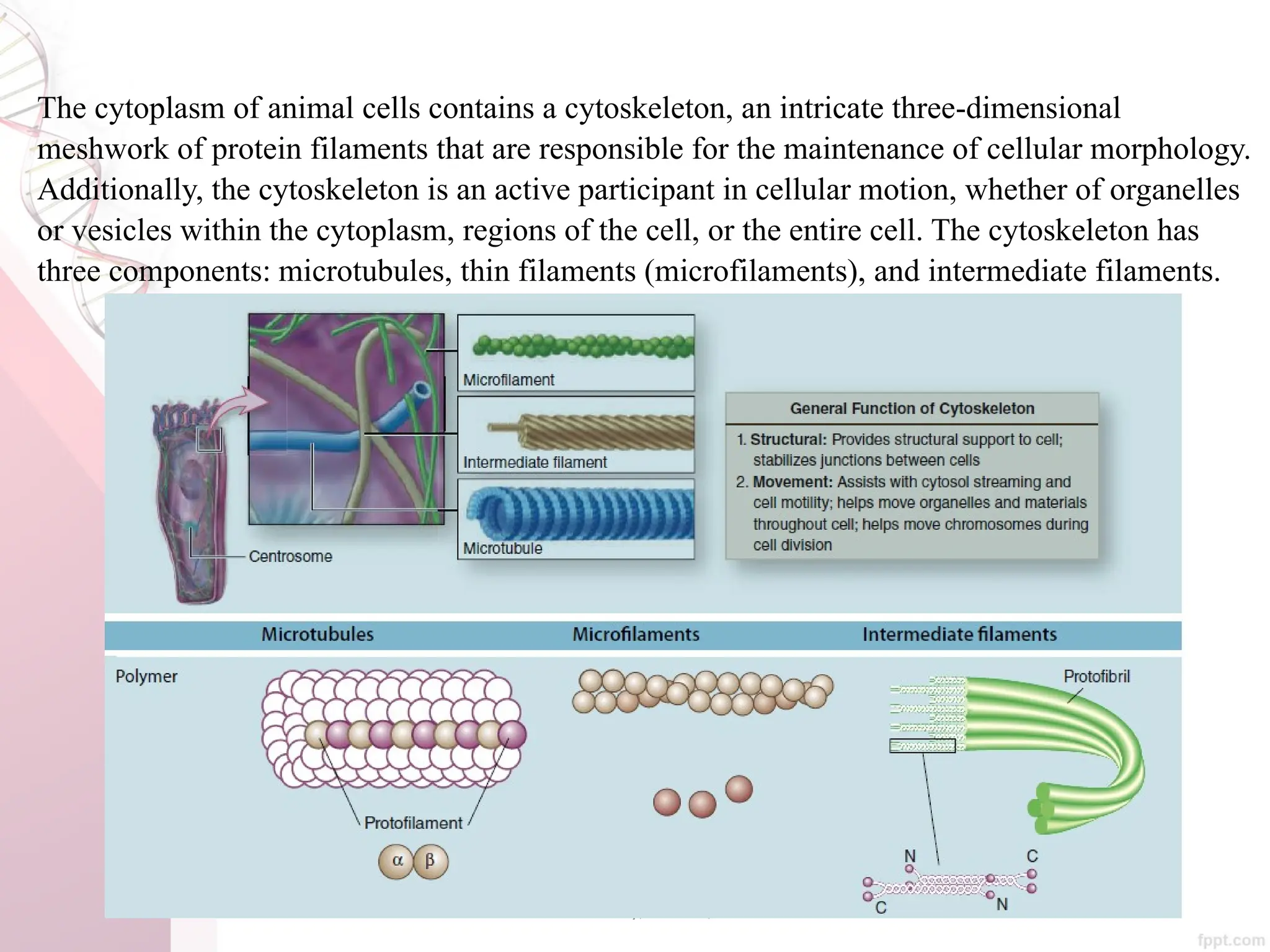
The cytoplasm of animal cells contains a cytoskeleton, an intricate three-dimensional
meshwork of protein filaments that are responsible for the maintenance of cellular morphology.
Additionally, the cytoskeleton is an active participant in cellular motion, whether of organelles
or vesicles within the cytoplasm, regions of the cell, or the entire cell. The cytoskeleton has
three components: microtubules, thin filaments (microfilaments), and intermediate filaments.
Maha Hammady,MBBCh,MMSc
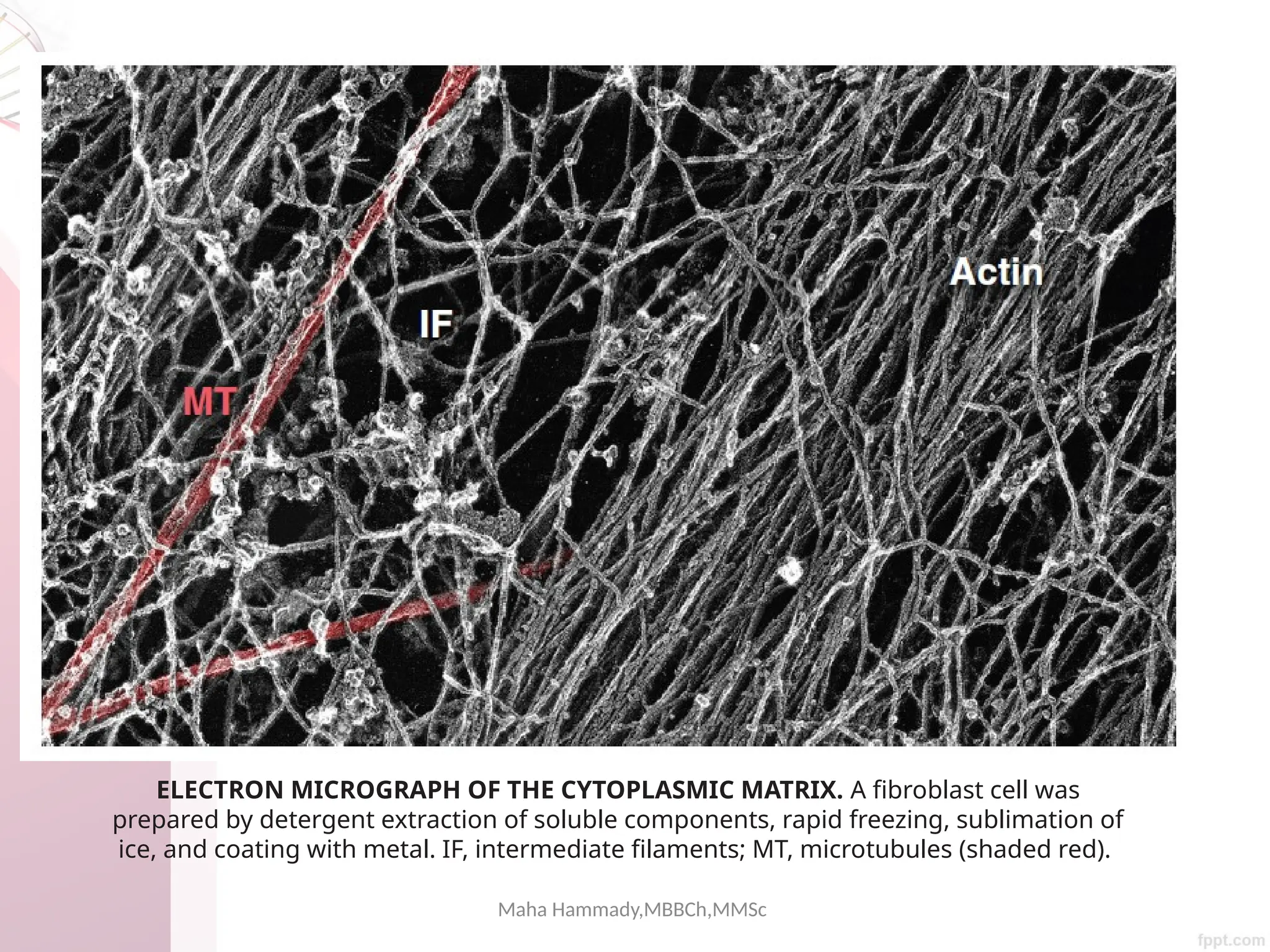
ELECTRON MICROGRAPH OF THE CYTOPLASMIC MATRIX. A fibroblast cell was
prepared by detergent extraction of soluble components, rapid freezing, sublimation of
ice, and coating with metal. IF, intermediate filaments; MT, microtubules (shaded red).
Maha Hammady,MBBCh,MMSc
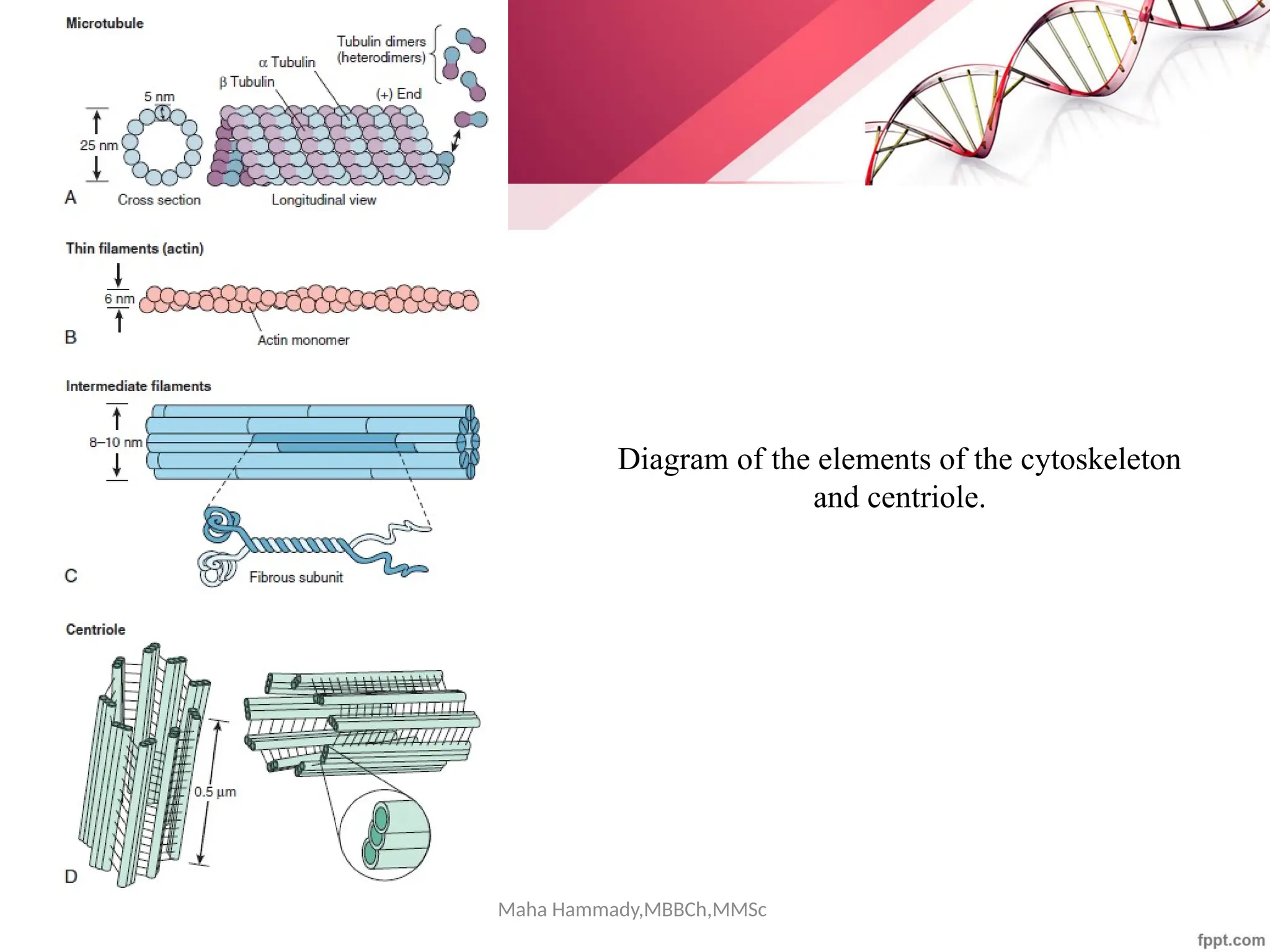
Diagram of the elements of the cytoskeleton
and centriole.
Maha Hammady,MBBCh,MMSc
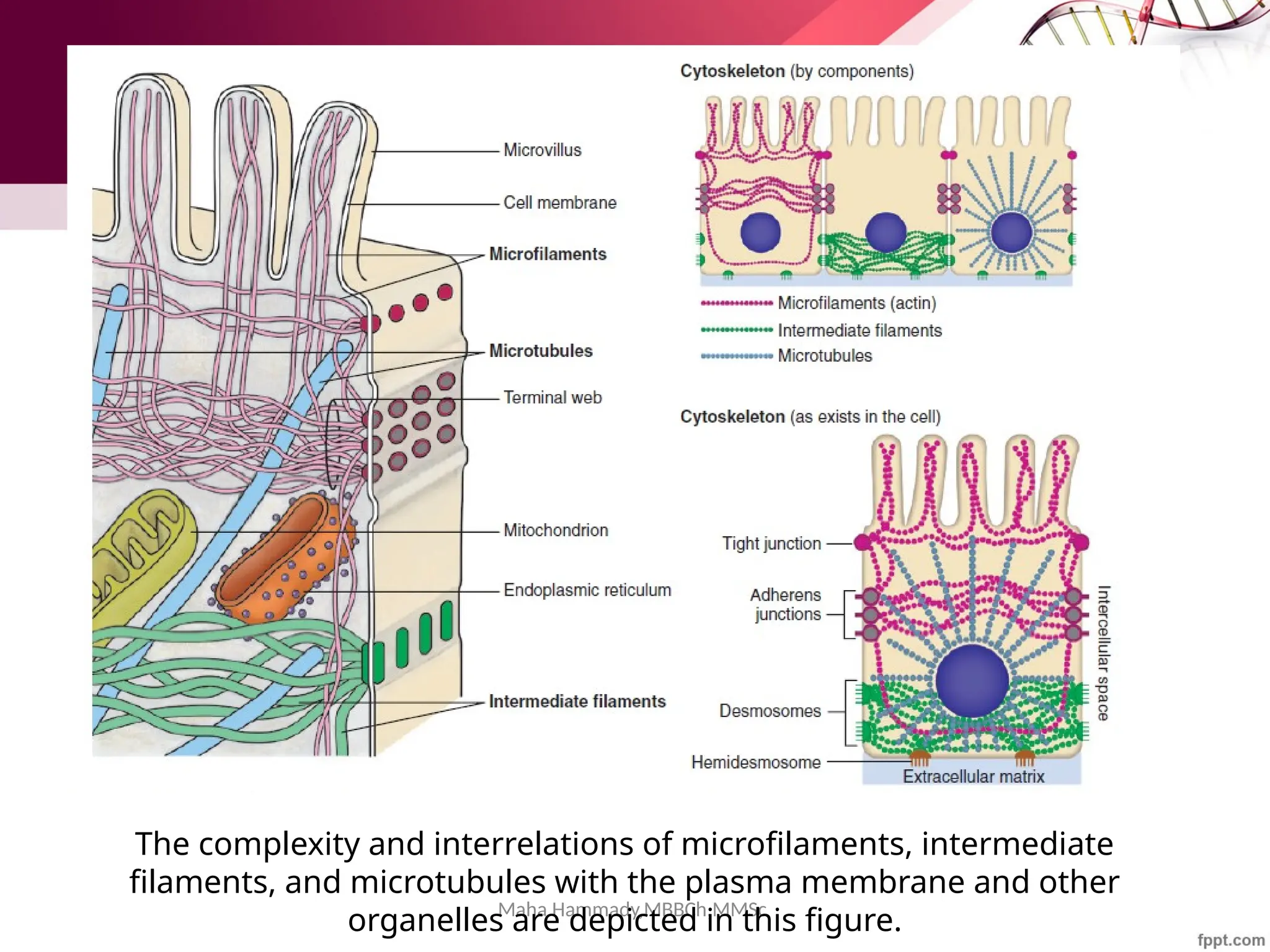
The complexity and interrelations of microfilaments, intermediate
filaments, and microtubules with the plasma membrane and other
organelles are depicted in this figure.
Maha Hammady,MBBCh,MMSc
Microtubules
01
02
03
04
05
Definition
Location
structure
Assembly and disassembly
Dynamic instability
06 Proteins associated proteins
Types of microtubules
07
08 Visualization
Maha Hammady,MBBCh,MMSc
Definition
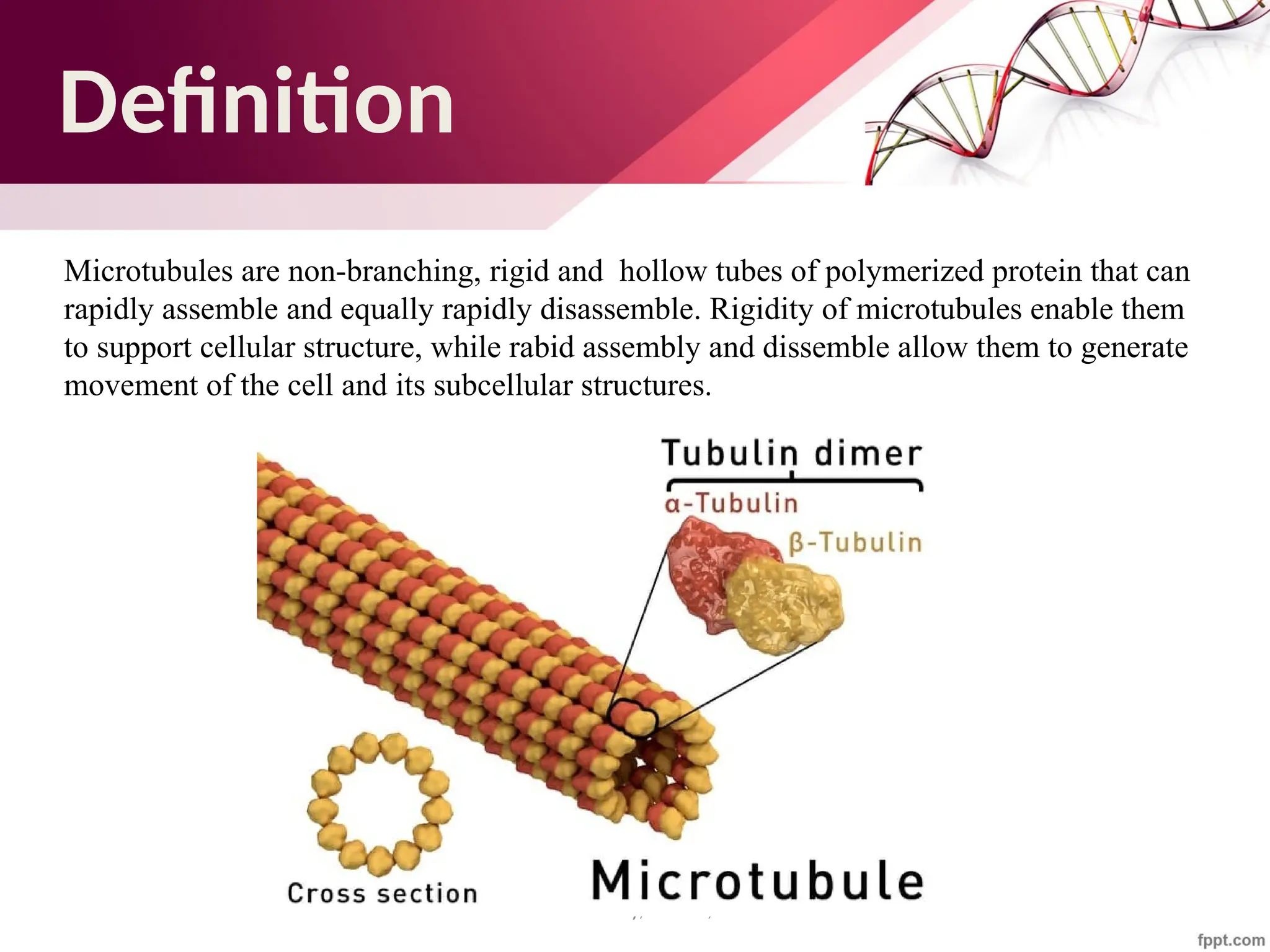
Microtubules are non-branching, rigid and hollow tubes of polymerized protein that can
rapidly assemble and equally rapidly disassemble. Rigidity of microtubules enable them
to support cellular structure, while rabid assembly and dissemble allow them to generate
movement of the cell and its subcellular structures.
Maha Hammady,MBBCh,MMSc
Location
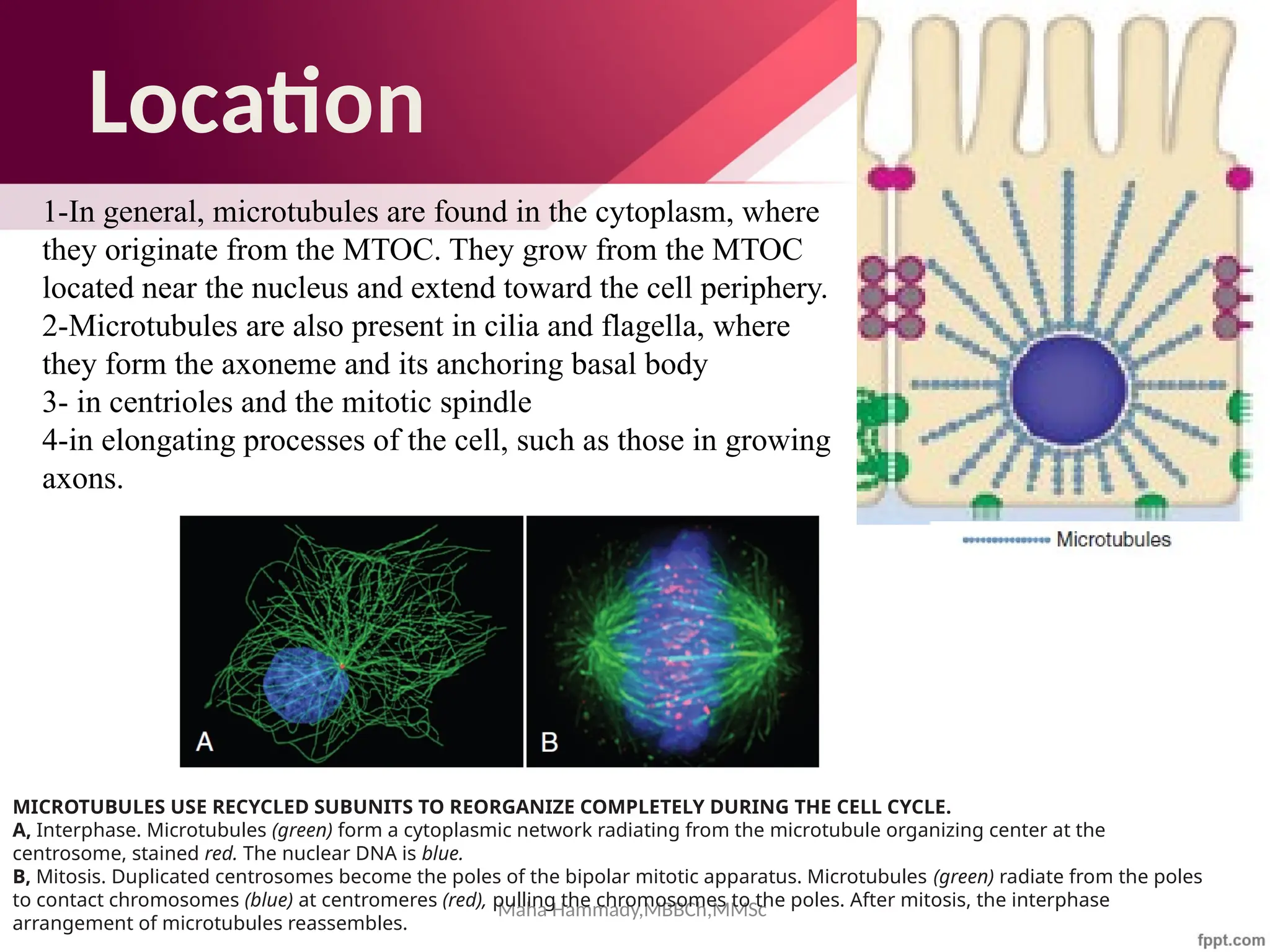
1-In general, microtubules are found in the cytoplasm, where
they originate from the MTOC. They grow from the MTOC
located near the nucleus and extend toward the cell periphery.
2-Microtubules are also present in cilia and flagella, where
they form the axoneme and its anchoring basal body
3- in centrioles and the mitotic spindle
4-in elongating processes of the cell, such as those in growing
axons.
MICROTUBULES USE RECYCLED SUBUNITS TO REORGANIZE COMPLETELY DURING THE CELL CYCLE.
A, Interphase. Microtubules (green) form a cytoplasmic network radiating from the microtubule organizing center at the
centrosome, stained red. The nuclear DNA is blue.
B, Mitosis. Duplicated centrosomes become the poles of the bipolar mitotic apparatus. Microtubules (green) radiate from the poles
to contact chromosomes (blue) at centromeres (red), pulling the chromosomes to the poles. After mitosis, the interphase
arrangement of microtubules reassembles.
Maha Hammady,MBBCh,MMSc
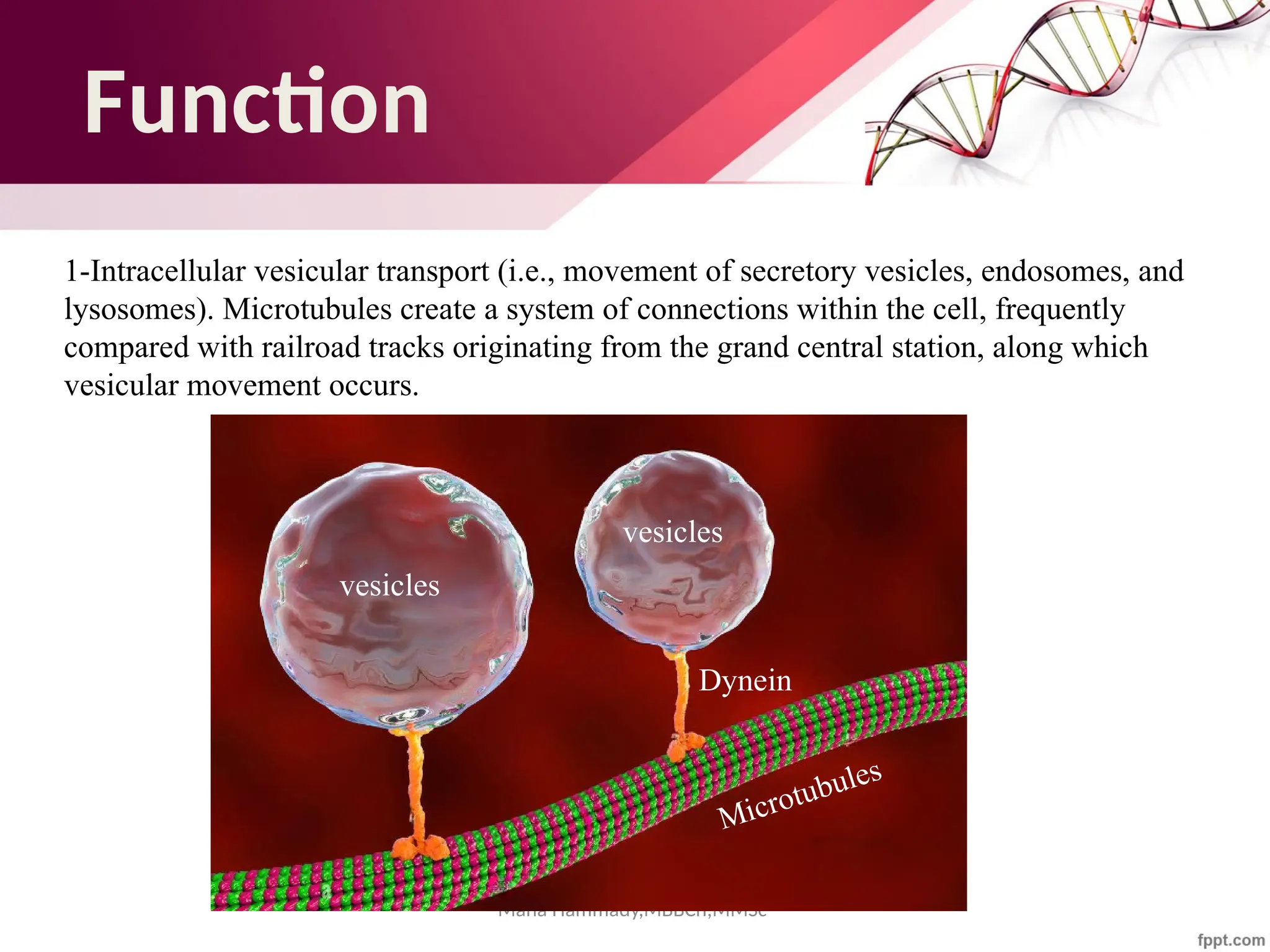
vesicles
vesicles
Function
1-Intracellular vesicular transport (i.e., movement of secretory vesicles, endosomes, and
lysosomes). Microtubules create a system of connections within the cell, frequently
compared with railroad tracks originating from the grand central station, along which
vesicular movement occurs.
Microtubules
Dynein
Maha Hammady,MBBCh,MMSc
Function
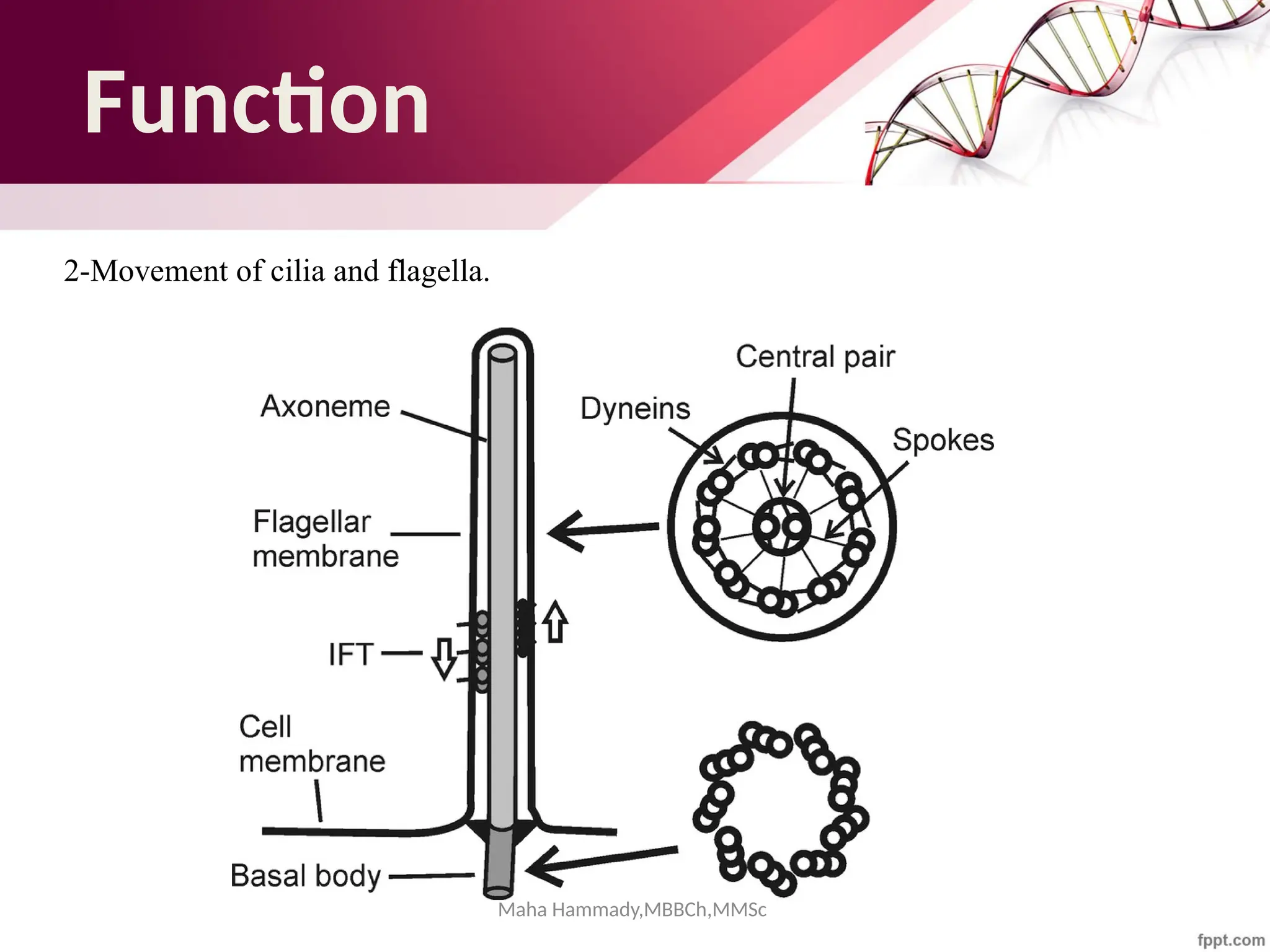
2-Movement of cilia and flagella.
Maha Hammady,MBBCh,MMSc
Function
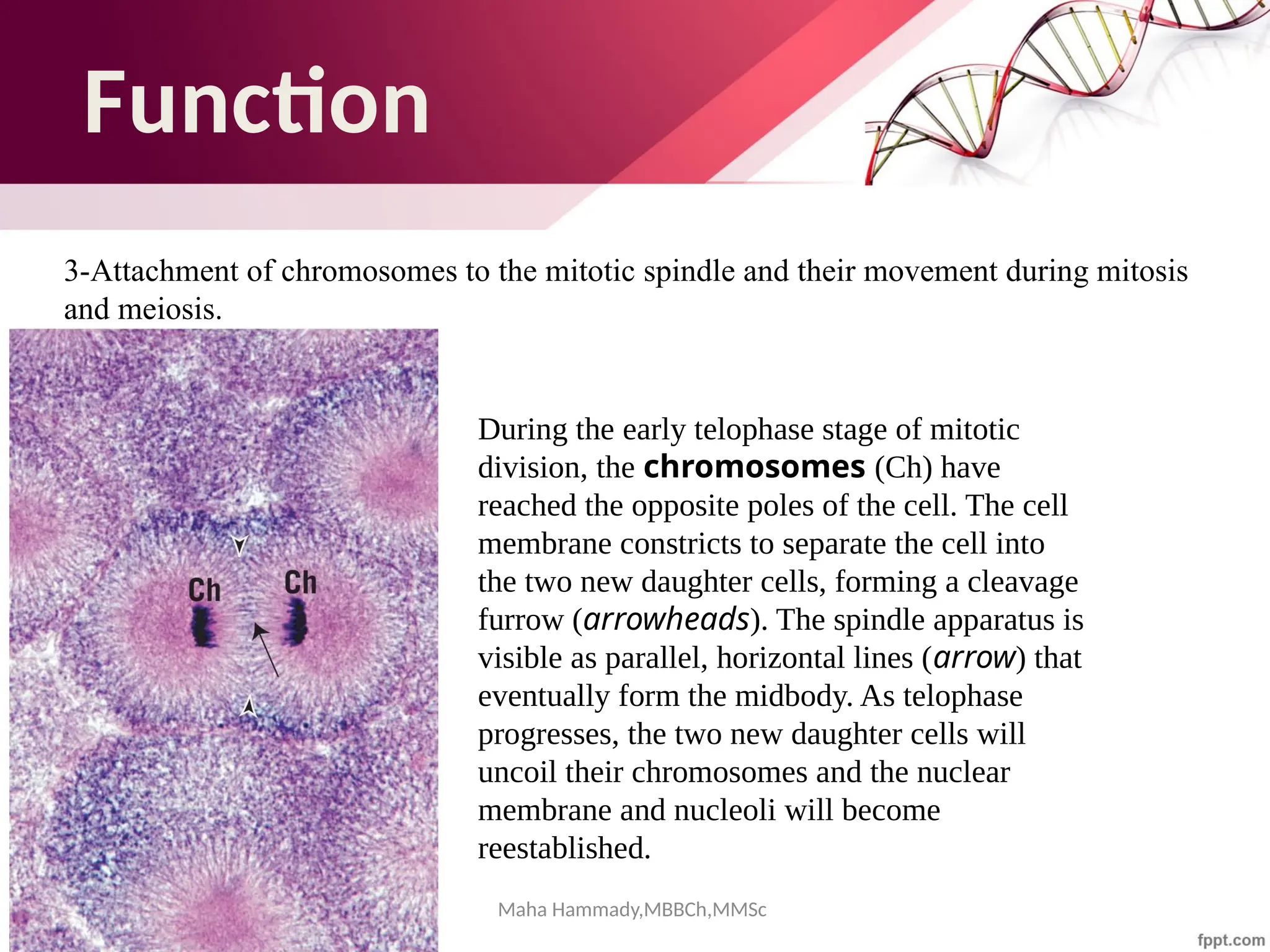
3-Attachment of chromosomes to the mitotic spindle and their movement during mitosis
and meiosis.
During the early telophase stage of mitotic
division, the chromosomes (Ch) have
reached the opposite poles of the cell. The cell
membrane constricts to separate the cell into
the two new daughter cells, forming a cleavage
furrow (arrowheads). The spindle apparatus is
visible as parallel, horizontal lines (arrow) that
eventually form the midbody. As telophase
progresses, the two new daughter cells will
uncoil their chromosomes and the nuclear
membrane and nucleoli will become
reestablished.
Maha Hammady,MBBCh,MMSc
Function
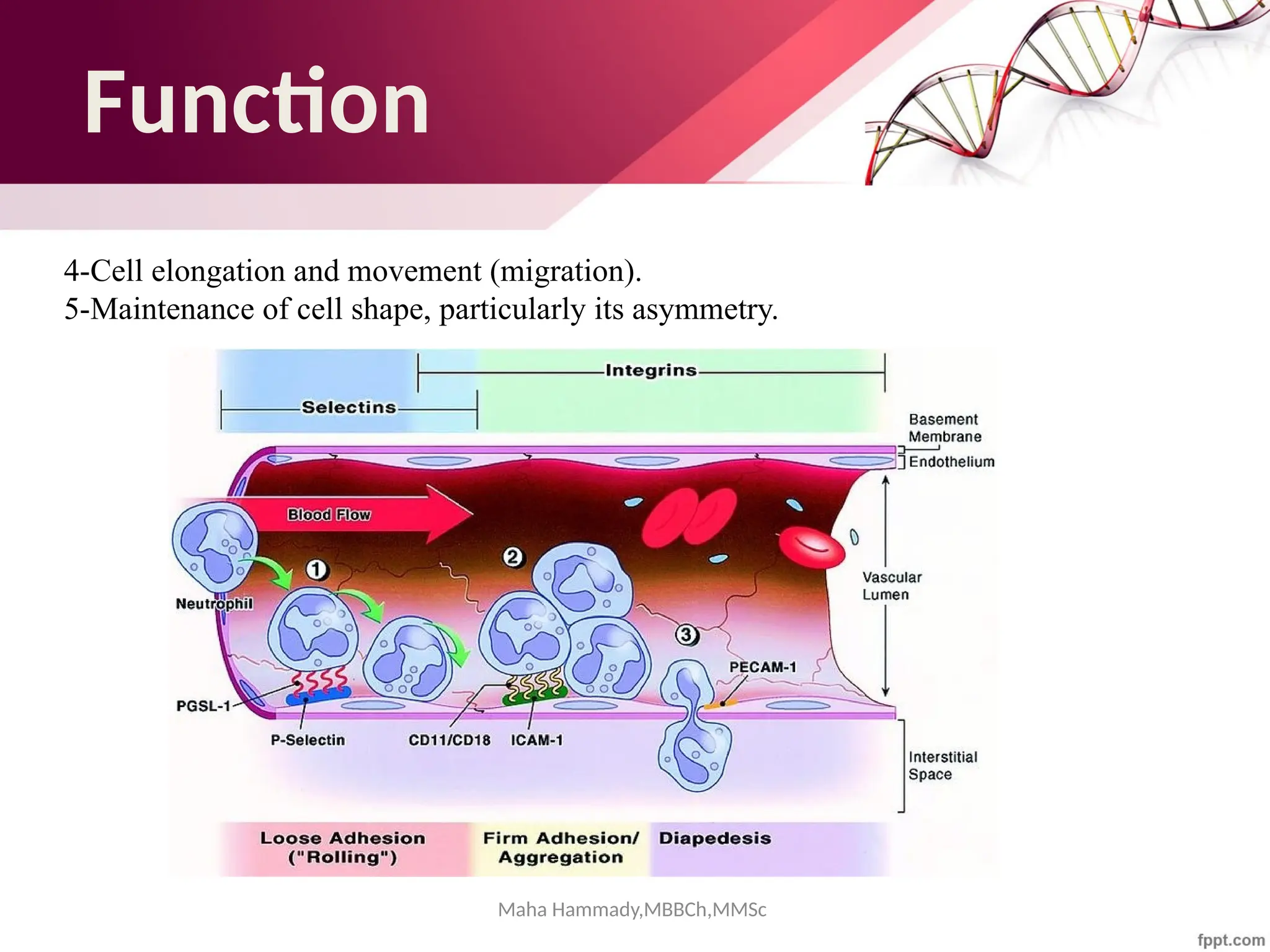
4-Cell elongation and movement (migration).
5-Maintenance of cell shape, particularly its asymmetry.
Maha Hammady,MBBCh,MMSc
Structure
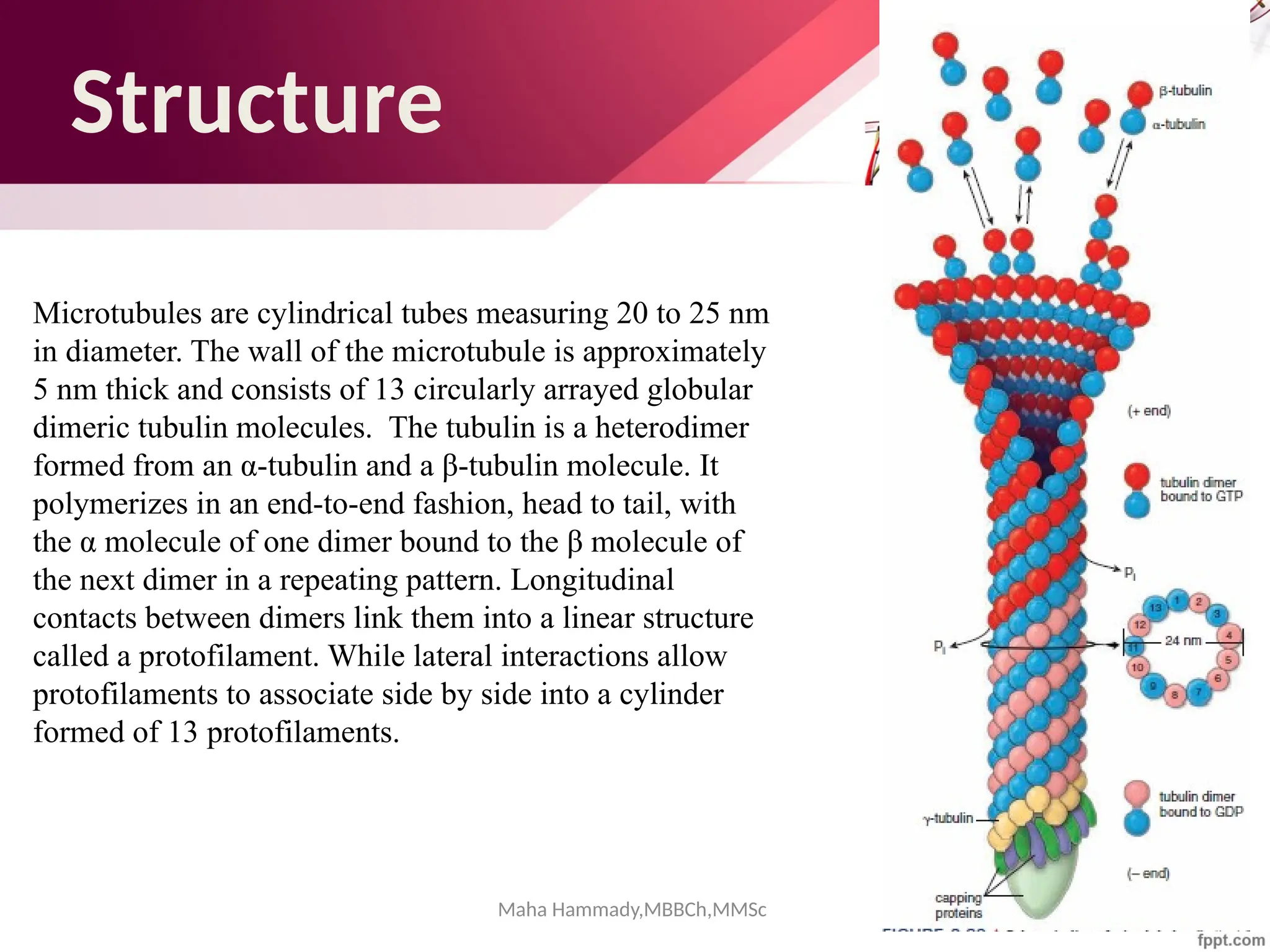
Microtubules are cylindrical tubes measuring 20 to 25 nm
in diameter. The wall of the microtubule is approximately
5 nm thick and consists of 13 circularly arrayed globular
dimeric tubulin molecules. The tubulin is a heterodimer
formed from an α-tubulin and a β-tubulin molecule. It
polymerizes in an end-to-end fashion, head to tail, with
the α molecule of one dimer bound to the β molecule of
the next dimer in a repeating pattern. Longitudinal
contacts between dimers link them into a linear structure
called a protofilament. While lateral interactions allow
protofilaments to associate side by side into a cylinder
formed of 13 protofilaments.
Maha Hammady,MBBCh,MMSc
Formation (assembly
and disassembly)
Microtubule formation can be traced to hundreds of γ-tubulin rings that form
an integral part of the MTOC and function as templates for the correct
assembly of microtubules. The α - and β -tubulin dimers are added to a γ-
tubulin ring in an end-to-end fashion.
Polymerization of tubulin dimers requires the presence of guanosine
triphosphate (GTP) and Mg2+
. Each tubulin molecule binds GTP before it is
incorporated into the forming microtubule. The tubulin dimers containing
GTP have a conformation that favors stronger lateral interactions between
dimers resulting in polymerization.
As a result of this polymerization pattern, microtubules are polar structures
because all the dimers in each protofilament have the same orientation. Each
microtubule possesses a nongrowing (-) end that corresponds to α-tubulin; in
the cell, it is usually embedded in the MTOC and often stabilized by actin-
capping proteins. The growing (+) end of microtubules corresponds to β-
tubulin and extends the cell periphery.
Maha Hammady,MBBCh,MMSc
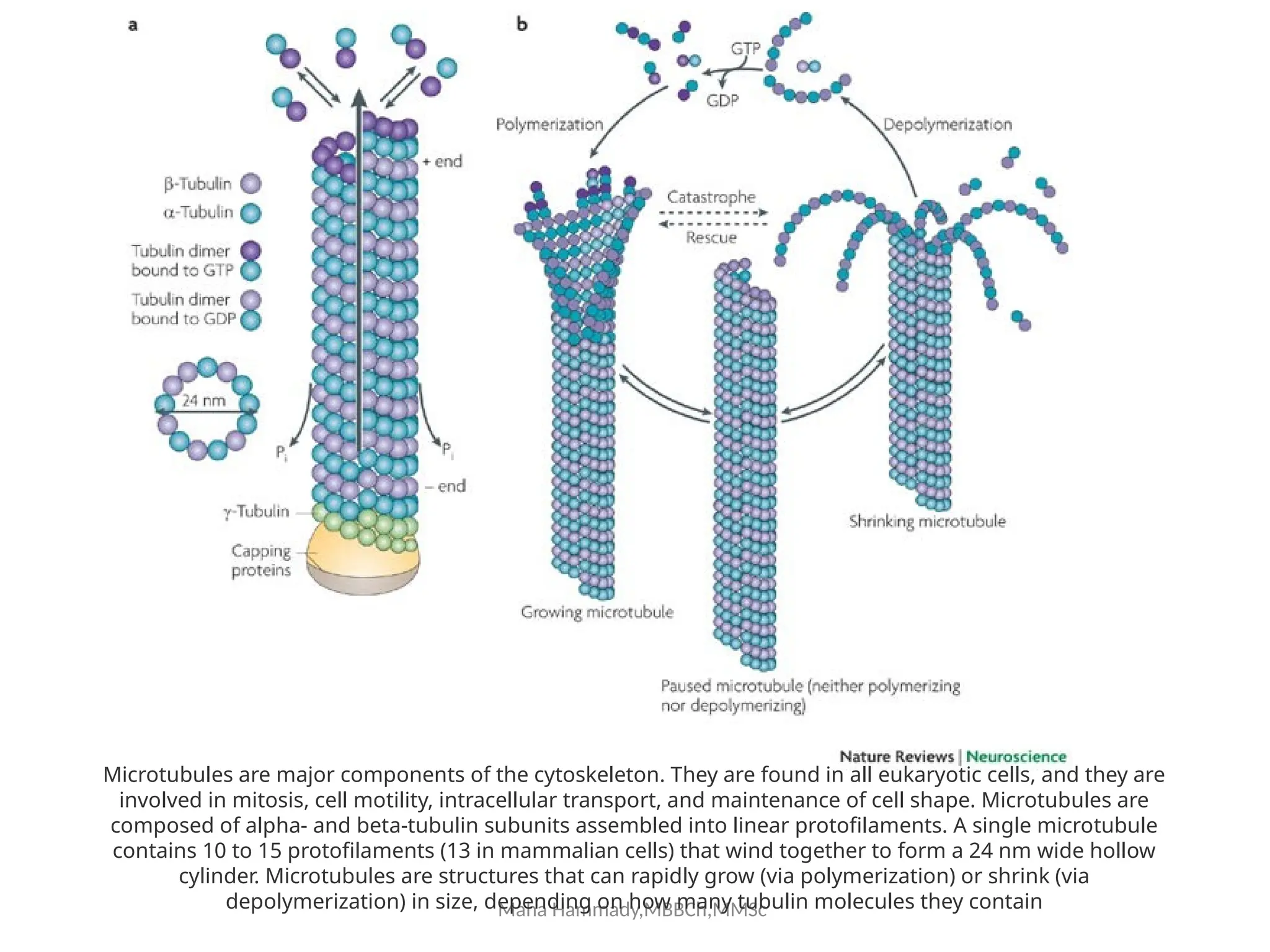
Microtubules are major components of the cytoskeleton. They are found in all eukaryotic cells, and they are
involved in mitosis, cell motility, intracellular transport, and maintenance of cell shape. Microtubules are
composed of alpha- and beta-tubulin subunits assembled into linear protofilaments. A single microtubule
contains 10 to 15 protofilaments (13 in mammalian cells) that wind together to form a 24 nm wide hollow
cylinder. Microtubules are structures that can rapidly grow (via polymerization) or shrink (via
depolymerization) in size, depending on how many tubulin molecules they contain
Maha Hammady,MBBCh,MMSc
Dynamic Instability
Tubulin dimers dissociate from microtubules in the steady state, which adds a pool of free tubulin
dimers to the cytoplasm. This pool is in equilibrium with the polymerized tubulin in the
microtubules; therefore, polymerization and depolymerization are in equilibrium. Microtubules are
constantly growing toward the cell periphery by addition (polymerization) of tubulin dimers and
then suddenly shrinking in the direction of the MTOC by removal (depolymerization) of tubulin
dimers. This constant remodeling process, known as dynamic instability, is linked to a pattern of
GTP hydrolysis during the microtubule assembly and disassembly process. The tubulin dimers
bound to GTP at the growing (+) end of the microtubule protect it from disassembly. In contrast,
tubulin dimers bound to GDP are prone to depolymerization that leads to a rapid microtubule
disassembly and shrinking. During disassembly, the tubulin dimers bound to GDP lose lateral
interaction with each other and protofilaments of the tubulin dimers curl away from the end of the
microtubule, producing “split ends”. The process of switching from a growing to a shrinking
microtubule is often called a microtubule catastrophe. The average half-life of a microtubule is only
about 10 minutes. The speed of polymerization or depolymerization can be modified by interaction
with specific microtubule-associated proteins (MAPs). These proteins, regulate microtubule
assembly and anchor the microtubules to specific organelles. When the microtubule encounters
stabilization factors (such as MAPs), it is captured and changes its dynamic behavior. This selective
stabilization process allows the cell to establish an organized system of microtubules linking
peripheral structures and organelles with the MTOC.
Maha Hammady,MBBCh,MMSc
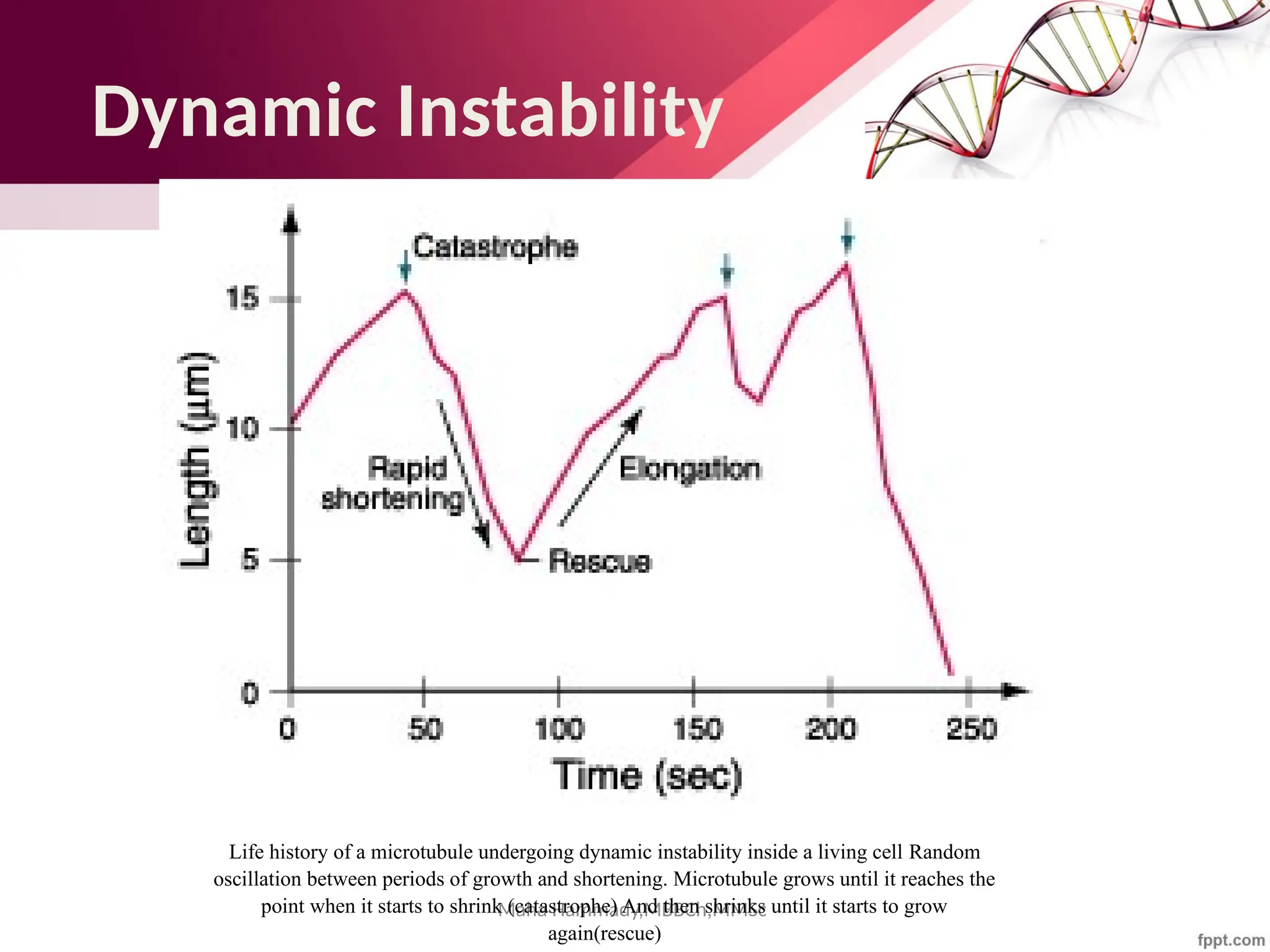
Life history of a microtubule undergoing dynamic instability inside a living cell Random
oscillation between periods of growth and shortening. Microtubule grows until it reaches the
point when it starts to shrink (catastrophe) And then shrinks until it starts to grow
again(rescue)
Dynamic Instability
Maha Hammady,MBBCh,MMSc
Proteins Involved In Microtubule
Assembly And Disassembly
1-Microtubules associated proteins (MAPs):
The speed of polymerization or depolymerization can be modified by interaction with
specific microtubule-associated proteins (MAPs). These proteins, such as MAP-1, -2, -3,
and -4, MAP-tau, MAP-Lis 1 and TOG, regulate microtubule assembly and anchor the
microtubules to specific organelles. MAPs are also responsible for the existence of
stable populations of non-depolymerizing microtubules in the cell, such as those found
in cilia and flagella. MAP-1,-2 and Tau are isolated from neuronal cells, while MAP-4 is
present in all non-nueronal cells.
The primary functions of the MAPs are to prevent depolymerization of microtubules
and to assist in the intracellular movement of organelles and vesicles, whereas Lis 1
functions during brain development and is responsible for the formation of sulci and gyri
of the cerebral hemispheres.
Maha Hammady,MBBCh,MMSc
Proteins Involved In Microtubule
Assembly And Disassembly
1-Microtubules associated proteins (MAPs):
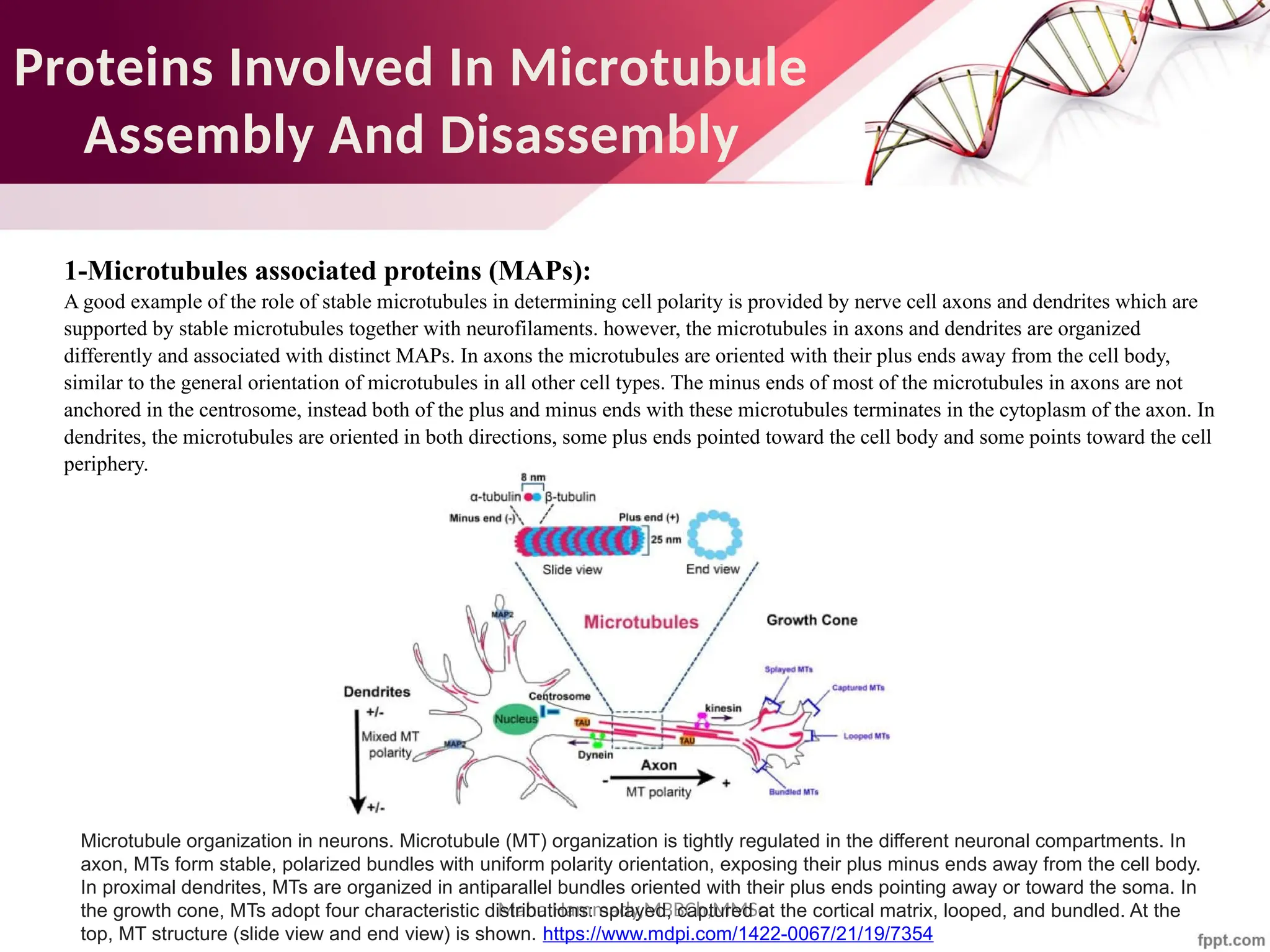
A good example of the role of stable microtubules in determining cell polarity is provided by nerve cell axons and dendrites which are
supported by stable microtubules together with neurofilaments. however, the microtubules in axons and dendrites are organized
differently and associated with distinct MAPs. In axons the microtubules are oriented with their plus ends away from the cell body,
similar to the general orientation of microtubules in all other cell types. The minus ends of most of the microtubules in axons are not
anchored in the centrosome, instead both of the plus and minus ends with these microtubules terminates in the cytoplasm of the axon. In
dendrites, the microtubules are oriented in both directions, some plus ends pointed toward the cell body and some points toward the cell
periphery.
Microtubule organization in neurons. Microtubule (MT) organization is tightly regulated in the different neuronal compartments. In
axon, MTs form stable, polarized bundles with uniform polarity orientation, exposing their plus minus ends away from the cell body.
In proximal dendrites, MTs are organized in antiparallel bundles oriented with their plus ends pointing away or toward the soma. In
the growth cone, MTs adopt four characteristic distributions: splayed, captured at the cortical matrix, looped, and bundled. At the
top, MT structure (slide view and end view) is shown. https://www.mdpi.com/1422-0067/21/19/7354
Maha Hammady,MBBCh,MMSc
Proteins Involved In Microtubule
Assembly And Disassembly
1-Microtubules associated proteins (MAPs):
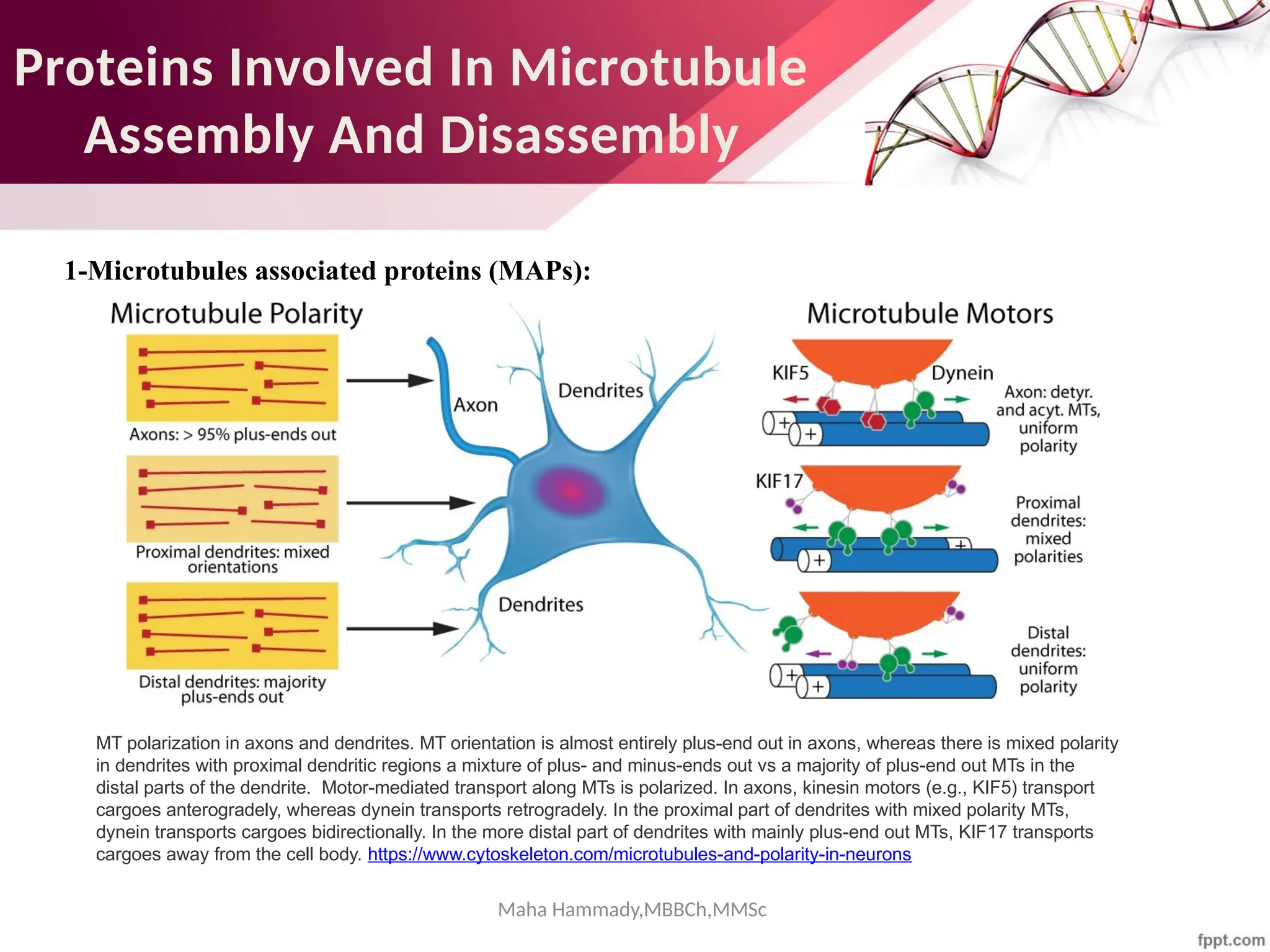
MT polarization in axons and dendrites. MT orientation is almost entirely plus-end out in axons, whereas there is mixed polarity
in dendrites with proximal dendritic regions a mixture of plus- and minus-ends out vs a majority of plus-end out MTs in the
distal parts of the dendrite. Motor-mediated transport along MTs is polarized. In axons, kinesin motors (e.g., KIF5) transport
cargoes anterogradely, whereas dynein transports retrogradely. In the proximal part of dendrites with mixed polarity MTs,
dynein transports cargoes bidirectionally. In the more distal part of dendrites with mainly plus-end out MTs, KIF17 transports
cargoes away from the cell body. https://www.cytoskeleton.com/microtubules-and-polarity-in-neurons
Maha Hammady,MBBCh,MMSc
Proteins Involved In Microtubule
Assembly And Disassembly
1-Microtubules associated proteins (MAPs):
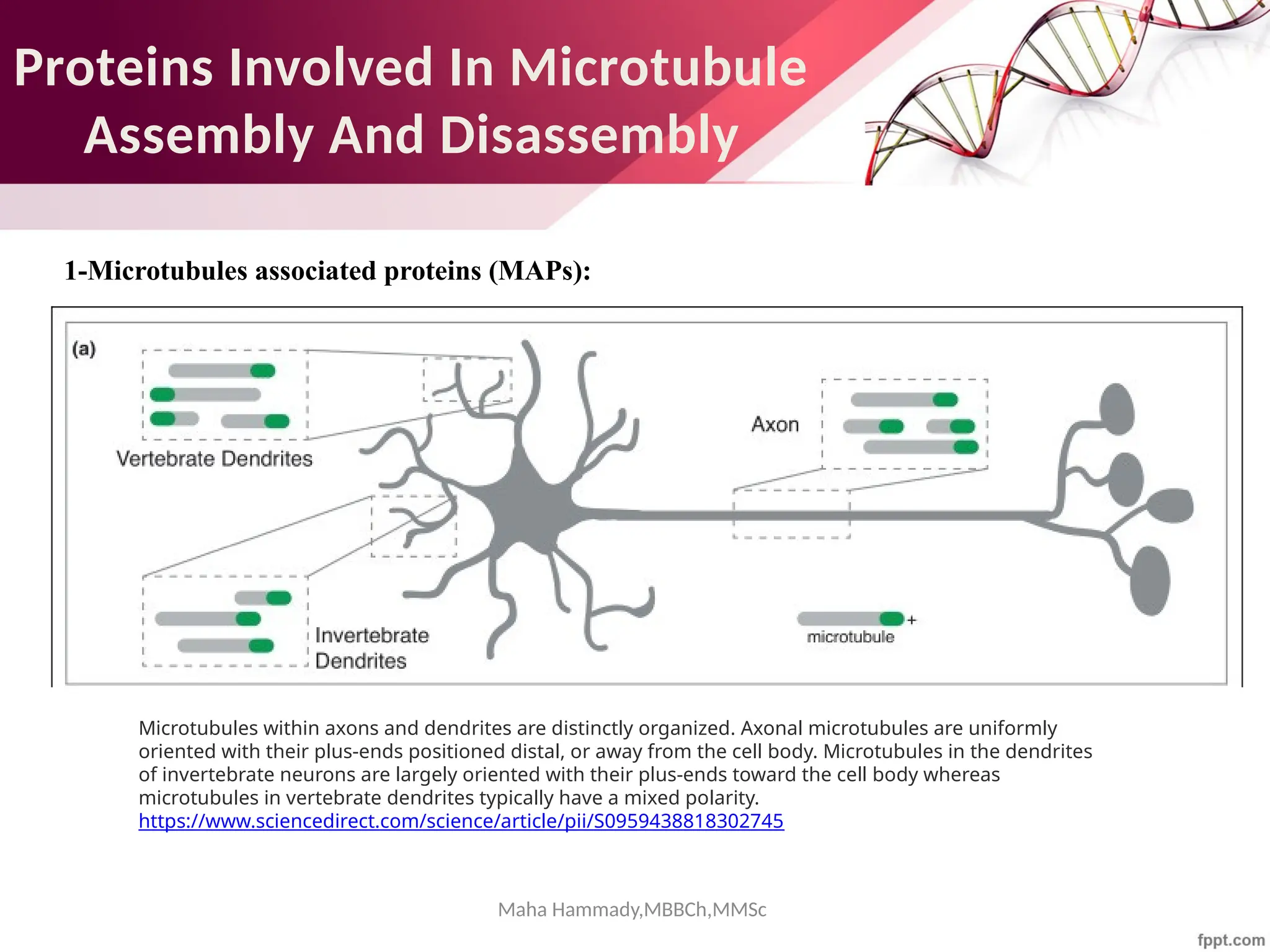
Microtubules within axons and dendrites are distinctly organized. Axonal microtubules are uniformly
oriented with their plus-ends positioned distal, or away from the cell body. Microtubules in the dendrites
of invertebrate neurons are largely oriented with their plus-ends toward the cell body whereas
microtubules in vertebrate dendrites typically have a mixed polarity.
https://www.sciencedirect.com/science/article/pii/S0959438818302745
Maha Hammady,MBBCh,MMSc
Proteins Involved In Microtubule
Assembly And Disassembly
1-Microtubules associated proteins (MAPs):
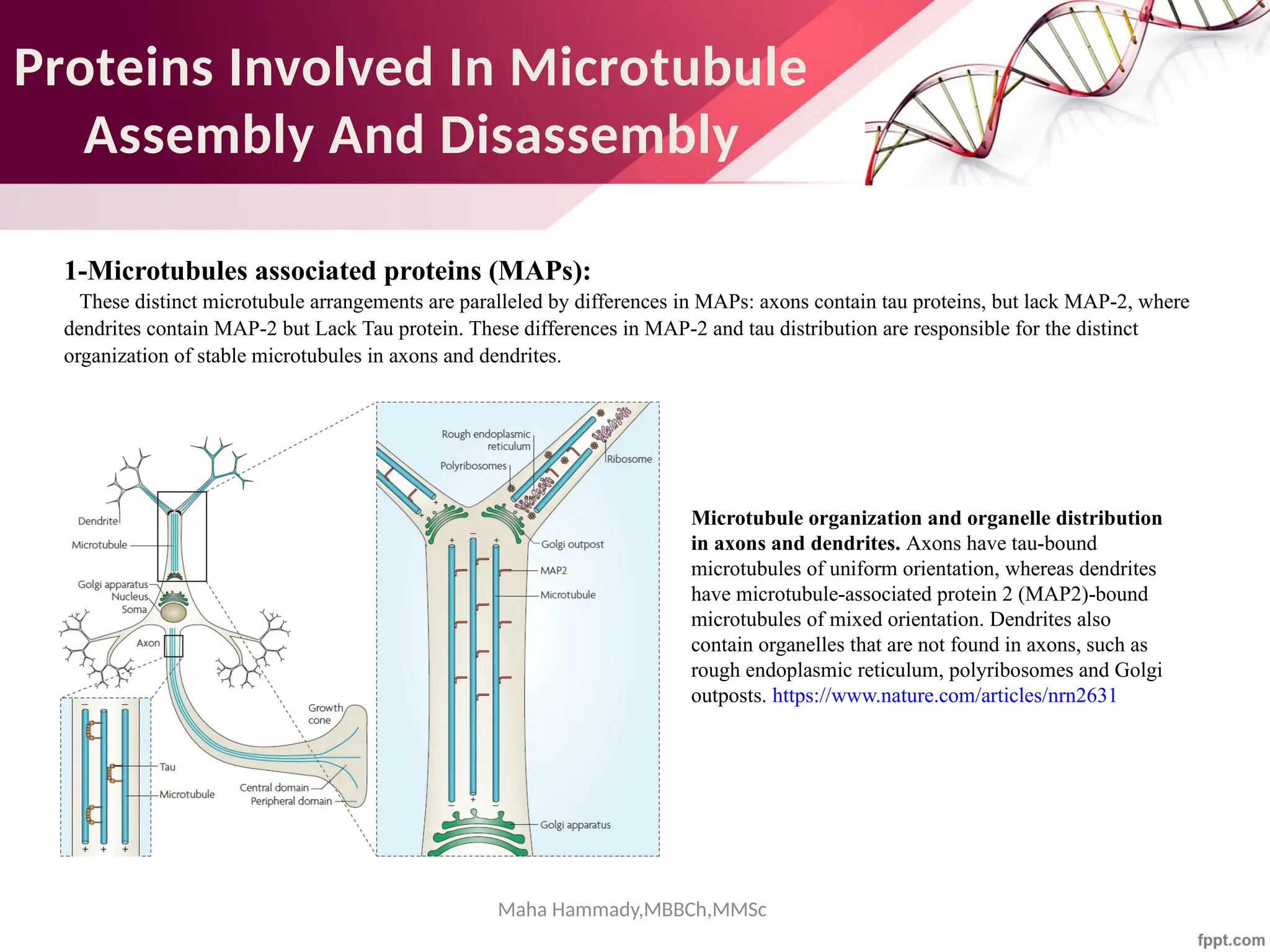
These distinct microtubule arrangements are paralleled by differences in MAPs: axons contain tau proteins, but lack MAP-2, where
dendrites contain MAP-2 but Lack Tau protein. These differences in MAP-2 and tau distribution are responsible for the distinct
organization of stable microtubules in axons and dendrites.
Microtubule organization and organelle distribution
in axons and dendrites. Axons have tau-bound
microtubules of uniform orientation, whereas dendrites
have microtubule-associated protein 2 (MAP2)-bound
microtubules of mixed orientation. Dendrites also
contain organelles that are not found in axons, such as
rough endoplasmic reticulum, polyribosomes and Golgi
outposts. https://www.nature.com/articles/nrn2631
Maha Hammady,MBBCh,MMSc
Proteins Involved In Microtubule
Assembly And Disassembly
2-Microtubule destabilizing MAPs
Stathmin/Op18 is a microtubule dynamics-regulating protein that has been
shown to have both catastrophe-promoting and tubulin-sequestering activities.
The level of its phosphorylation was proved in both in vitro and in vivo to be
important in modulating the microtubule destabilizing activity.
Maha Hammady,MBBCh,MMSc
Proteins Involved In Microtubule
Assembly And Disassembly
3-Microtubule severing maps
katanin severs microtubules into short fragments creates additional ends for
depolymerization.
As mentioned earlier, the association of a microtubule with MAPs (e.g.,
within the axoneme of a cilium or flagellum) effectively blocks this dynamic
instability and stabilizes the microtubules. In certain cells, such as neurons,
some microtubules that nucleated at the MTOC can be released by the action
of a microtubule-severing protein called katanin. Short, detached polymers of
microtubules are then transported along existing microtubules by molecular
motor proteins such as kinesins.
Maha Hammady,MBBCh,MMSc
Proteins Involved In Microtubule
Assembly And Disassembly
4-Microtubule associated motor proteins:
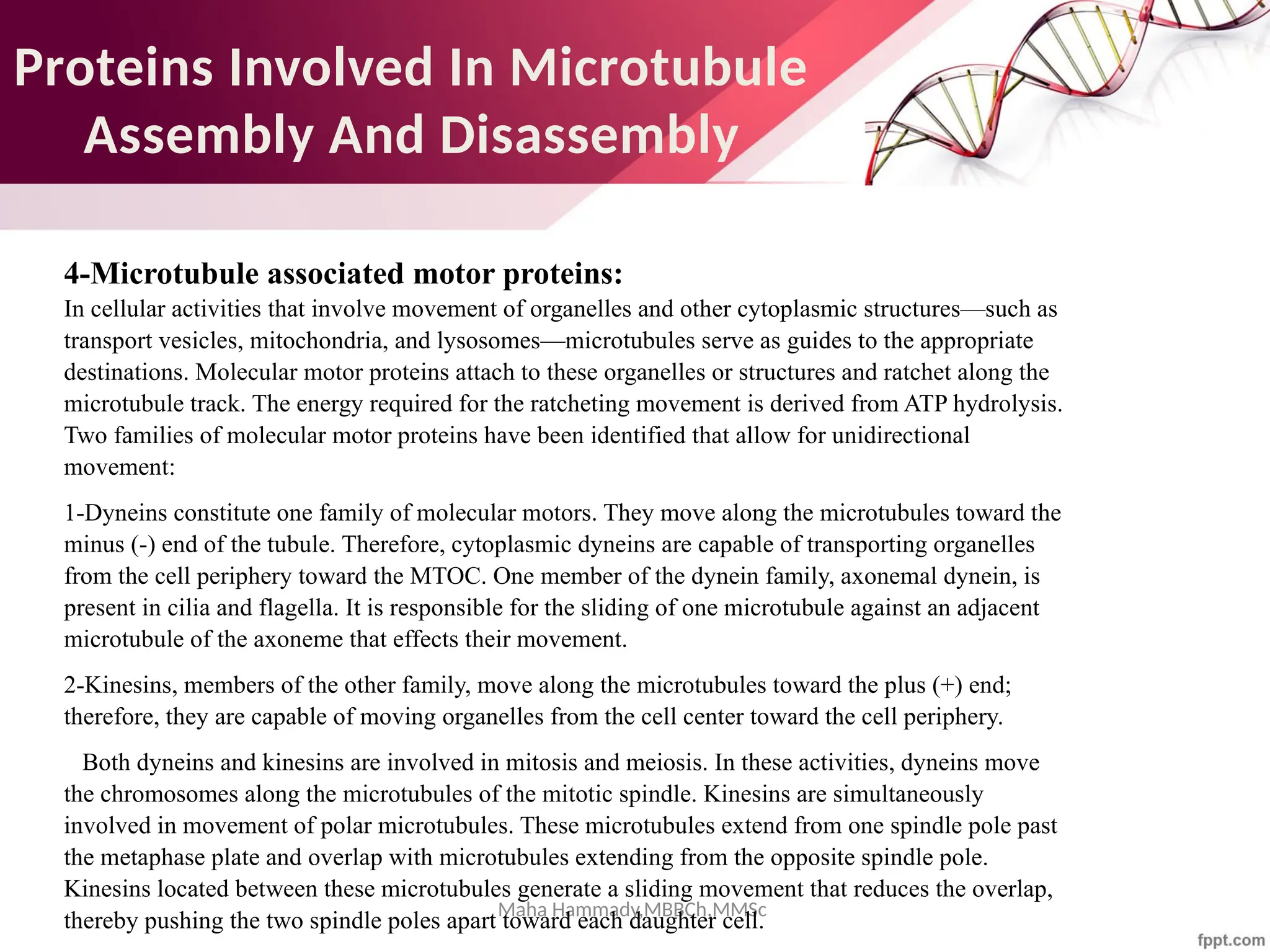
In cellular activities that involve movement of organelles and other cytoplasmic structures—such as
transport vesicles, mitochondria, and lysosomes—microtubules serve as guides to the appropriate
destinations. Molecular motor proteins attach to these organelles or structures and ratchet along the
microtubule track. The energy required for the ratcheting movement is derived from ATP hydrolysis.
Two families of molecular motor proteins have been identified that allow for unidirectional
movement:
1-Dyneins constitute one family of molecular motors. They move along the microtubules toward the
minus (-) end of the tubule. Therefore, cytoplasmic dyneins are capable of transporting organelles
from the cell periphery toward the MTOC. One member of the dynein family, axonemal dynein, is
present in cilia and flagella. It is responsible for the sliding of one microtubule against an adjacent
microtubule of the axoneme that effects their movement.
2-Kinesins, members of the other family, move along the microtubules toward the plus (+) end;
therefore, they are capable of moving organelles from the cell center toward the cell periphery.
Both dyneins and kinesins are involved in mitosis and meiosis. In these activities, dyneins move
the chromosomes along the microtubules of the mitotic spindle. Kinesins are simultaneously
involved in movement of polar microtubules. These microtubules extend from one spindle pole past
the metaphase plate and overlap with microtubules extending from the opposite spindle pole.
Kinesins located between these microtubules generate a sliding movement that reduces the overlap,
thereby pushing the two spindle poles apart toward each daughter cell.
Maha Hammady,MBBCh,MMSc
Proteins Involved In Microtubule
Assembly And Disassembly
4-Microtubule associated motor proteins:
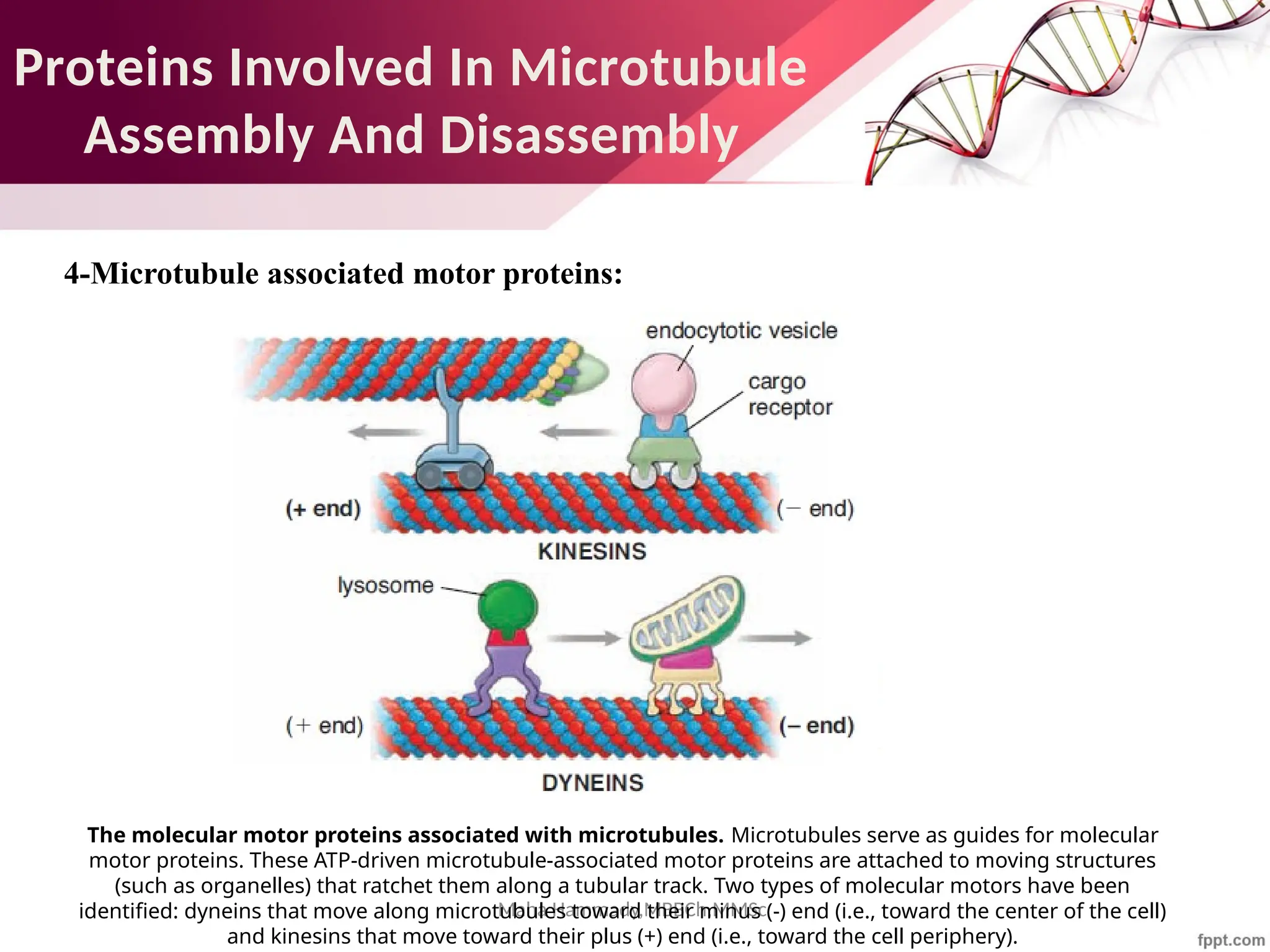
The molecular motor proteins associated with microtubules. Microtubules serve as guides for molecular
motor proteins. These ATP-driven microtubule-associated motor proteins are attached to moving structures
(such as organelles) that ratchet them along a tubular track. Two types of molecular motors have been
identified: dyneins that move along microtubules toward their minus (-) end (i.e., toward the center of the cell)
and kinesins that move toward their plus (+) end (i.e., toward the cell periphery).
Maha Hammady,MBBCh,MMSc
Proteins Involved In Microtubule
Assembly And Disassembly
4-Microtubule associated motor proteins:
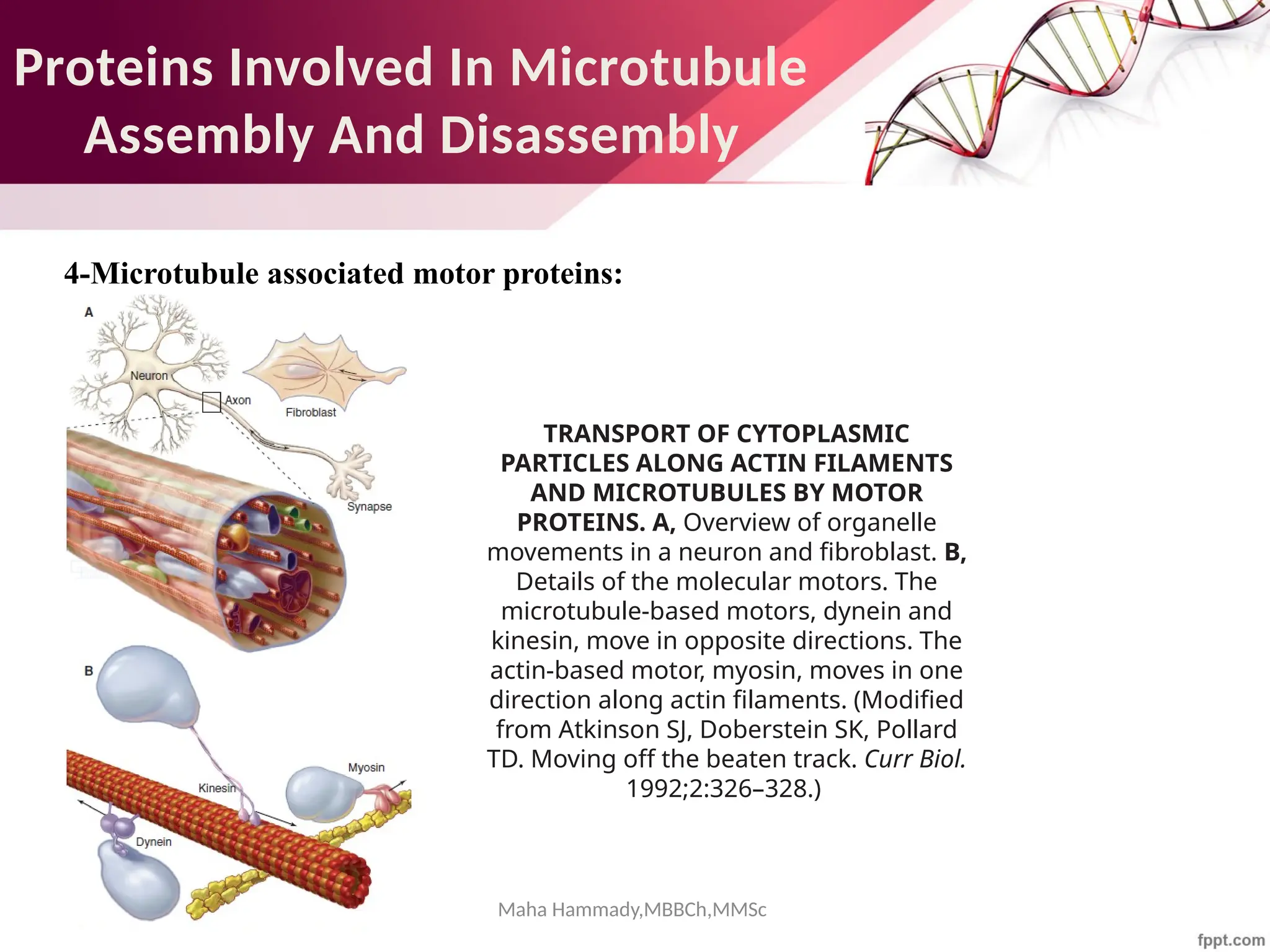
TRANSPORT OF CYTOPLASMIC
PARTICLES ALONG ACTIN FILAMENTS
AND MICROTUBULES BY MOTOR
PROTEINS. A, Overview of organelle
movements in a neuron and fibroblast. B,
Details of the molecular motors. The
microtubule-based motors, dynein and
kinesin, move in opposite directions. The
actin-based motor, myosin, moves in one
direction along actin filaments. (Modified
from Atkinson SJ, Doberstein SK, Pollard
TD. Moving off the beaten track. Curr Biol.
1992;2:326–328.)
Maha Hammady,MBBCh,MMSc
Proteins Involved In Microtubule
Assembly And Disassembly
4-Microtubule associated motor proteins:
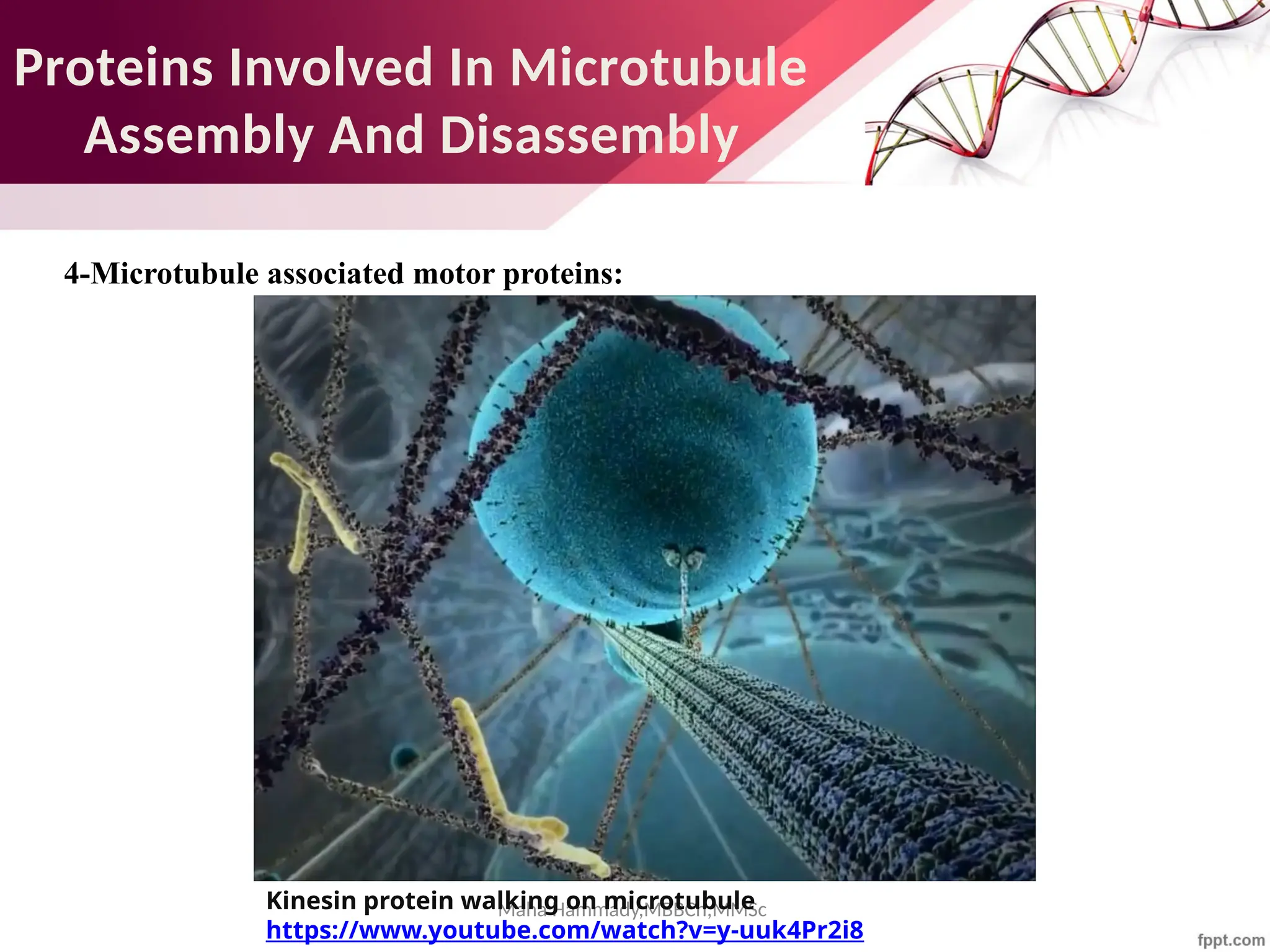
Kinesin protein walking on microtubule
https://www.youtube.com/watch?v=y-uuk4Pr2i8
Maha Hammady,MBBCh,MMSc
Types Of Microtubules
There are two populations of microtubules: stable, long-lived
microtubules, and unstable short-lived microtubules.
1-Unstable microtubules are found when cell structures composed of
microtubules need to assemble and dissemble quickly. For example,
during mitosis, this cytosolic microtubule network characteristic of
interface cells disappears, and that tubulin form the mitotic spindle.
2-in contrast to the short-lived, transient structures, some cells, usually
the non-replicating cells, contain stable microtubules-based
structures. These include the axonme of the sperm flagellum and the
marginal band of microtubules of the platelets. another example
occurs in axons of the neurons.
Maha Hammady,MBBCh,MMSc
Visualization
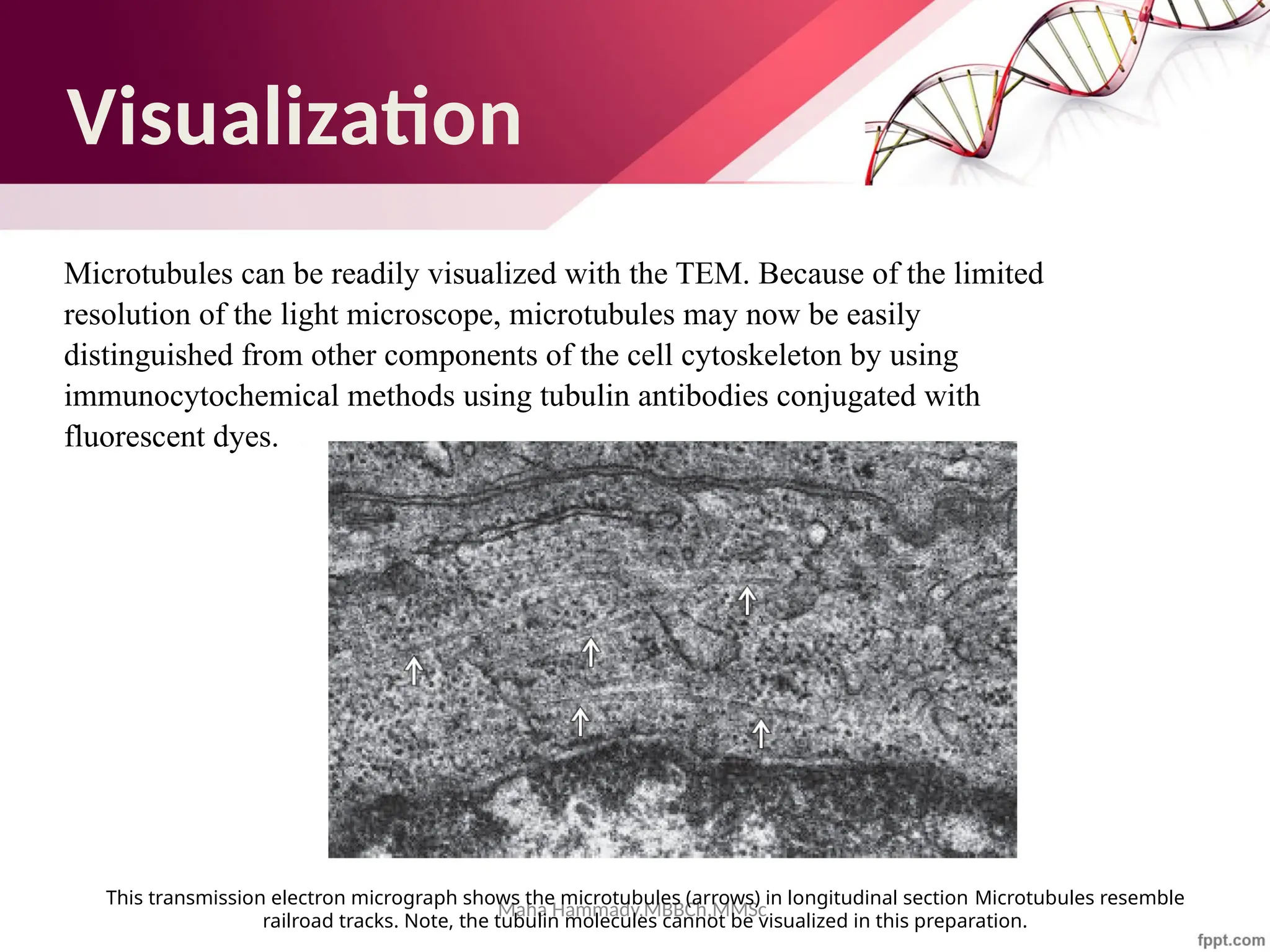
Microtubules can be readily visualized with the TEM. Because of the limited
resolution of the light microscope, microtubules may now be easily
distinguished from other components of the cell cytoskeleton by using
immunocytochemical methods using tubulin antibodies conjugated with
fluorescent dyes.
This transmission electron micrograph shows the microtubules (arrows) in longitudinal section Microtubules resemble
railroad tracks. Note, the tubulin molecules cannot be visualized in this preparation.
Maha Hammady,MBBCh,MMSc
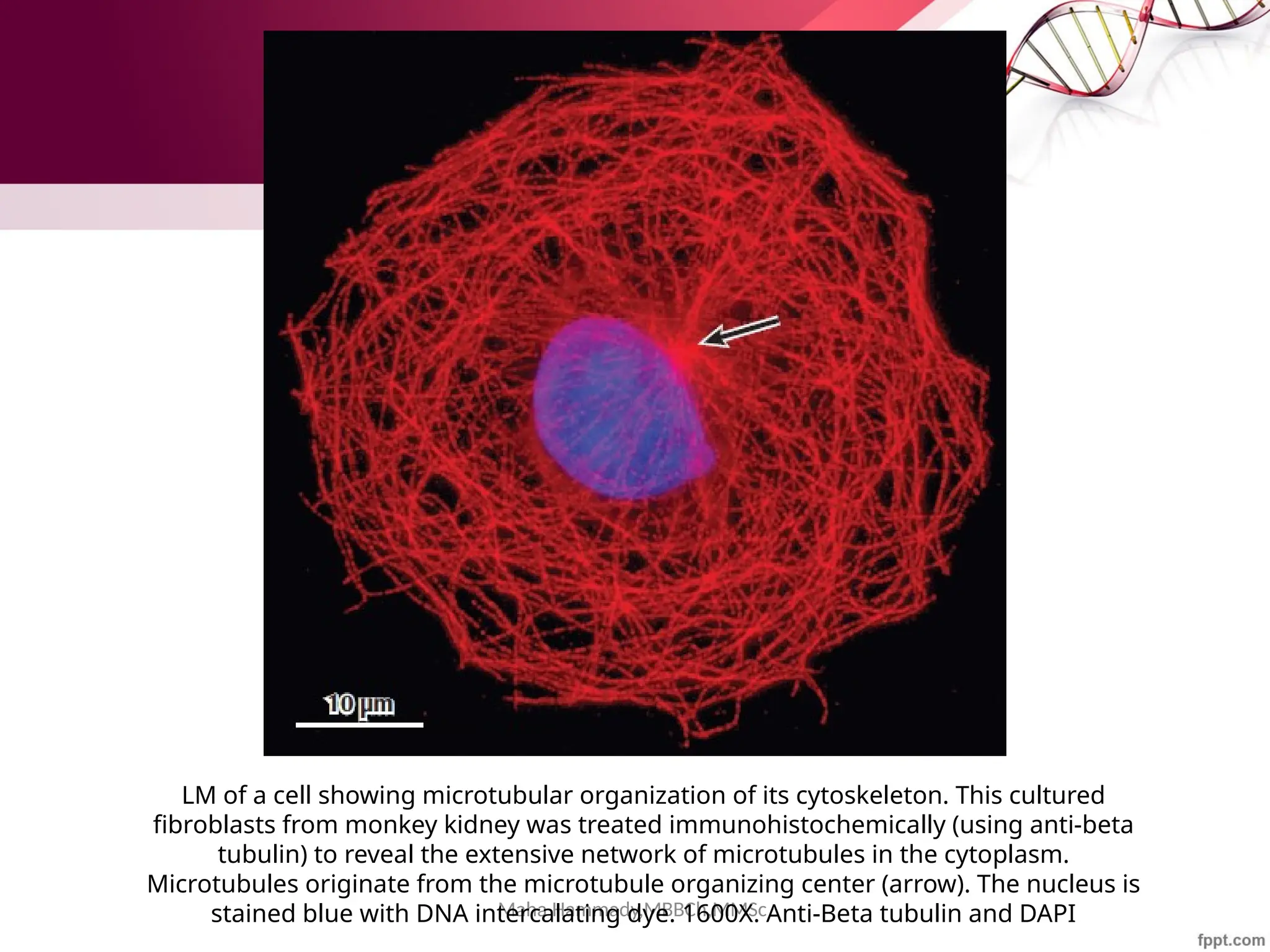
LM of a cell showing microtubular organization of its cytoskeleton. This cultured
fibroblasts from monkey kidney was treated immunohistochemically (using anti-beta
tubulin) to reveal the extensive network of microtubules in the cytoplasm.
Microtubules originate from the microtubule organizing center (arrow). The nucleus is
stained blue with DNA intercalating dye. 1600X. Anti-Beta tubulin and DAPI
Maha Hammady,MBBCh,MMSc
Centriole and Microtubules organizing center
01
02
03
Function of MTO
Structure of centriole
Clinical applications
Maha Hammady,MBBCh,MMSc
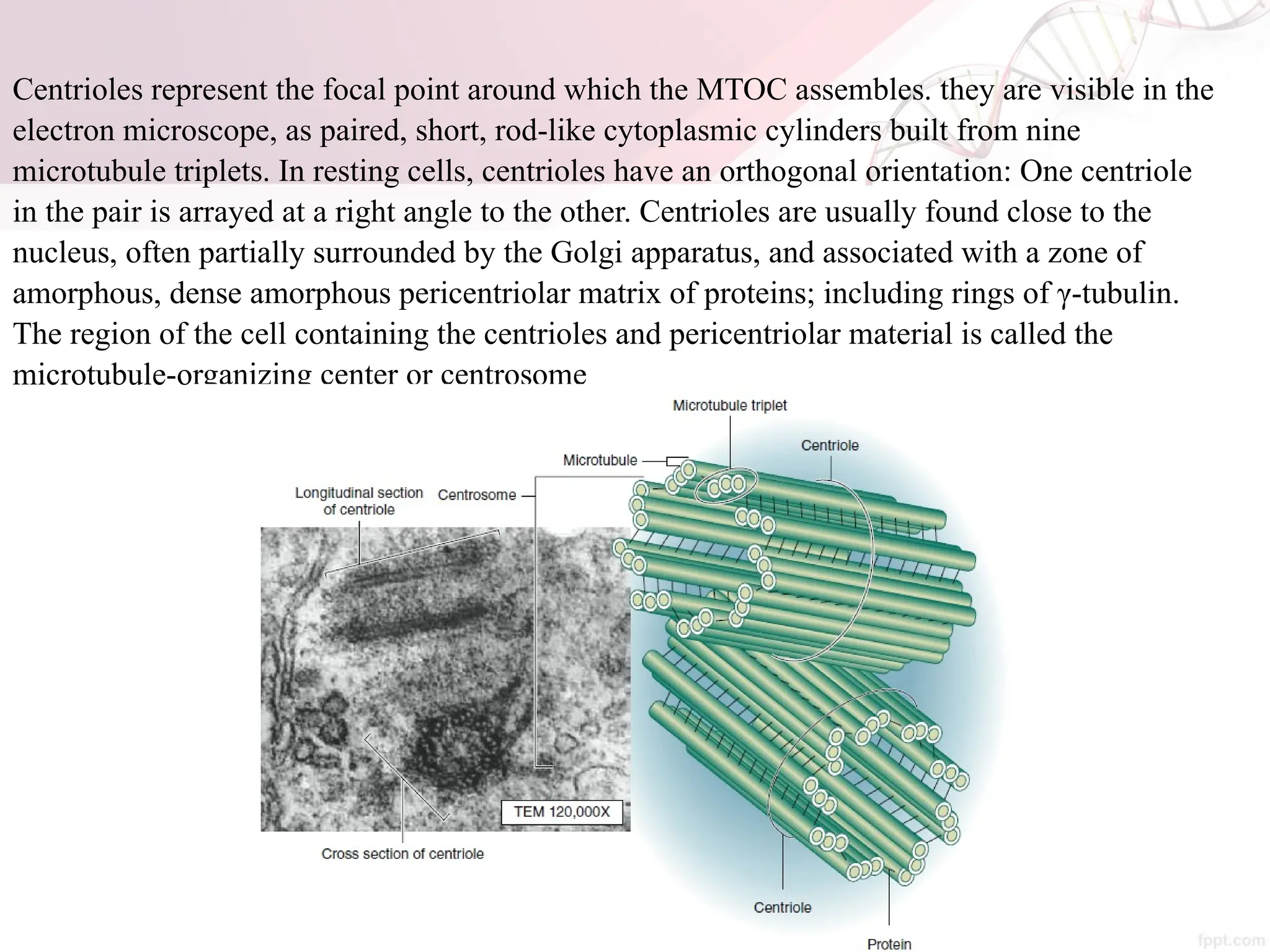
Centrioles represent the focal point around which the MTOC assembles. they are visible in the
electron microscope, as paired, short, rod-like cytoplasmic cylinders built from nine
microtubule triplets. In resting cells, centrioles have an orthogonal orientation: One centriole
in the pair is arrayed at a right angle to the other. Centrioles are usually found close to the
nucleus, often partially surrounded by the Golgi apparatus, and associated with a zone of
amorphous, dense amorphous pericentriolar matrix of proteins; including rings of γ-tubulin.
The region of the cell containing the centrioles and pericentriolar material is called the
microtubule-organizing center or centrosome
Maha Hammady,MBBCh,MMSc
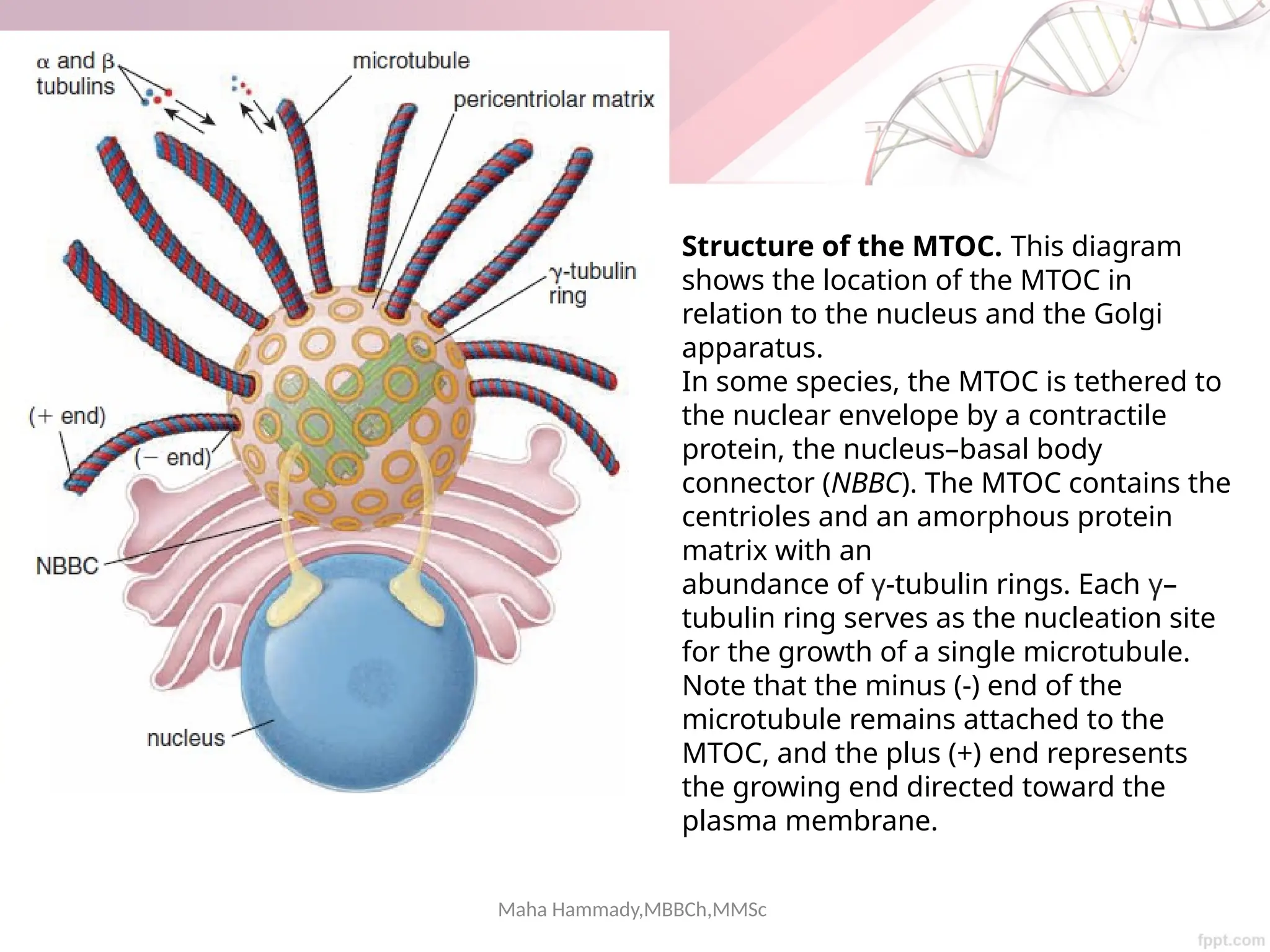
Structure of the MTOC. This diagram
shows the location of the MTOC in
relation to the nucleus and the Golgi
apparatus.
In some species, the MTOC is tethered to
the nuclear envelope by a contractile
protein, the nucleus–basal body
connector (NBBC). The MTOC contains the
centrioles and an amorphous protein
matrix with an
abundance of γ-tubulin rings. Each γ–
tubulin ring serves as the nucleation site
for the growth of a single microtubule.
Note that the minus (-) end of the
microtubule remains attached to the
MTOC, and the plus (+) end represents
the growing end directed toward the
plasma membrane.
Maha Hammady,MBBCh,MMSc
Function of MTO
1-The MTOC is the region where most microtubules are formed and from
which they are then directed to specific destinations within the cell. Therefore,
the MTOC controls the number, polarity, direction, orientation, and
organization of microtubules formed during the interphase of the cell cycle.
The MTOC contains centrioles and an amorphous pericentriolar matrix of
more than 200 proteins, including γ-tubulin that is organized in ring-shaped
structures. Each γ -tubulin ring serves as the starting point (nucleation site) for
the growth of one microtubule
Maha Hammady,MBBCh,MMSc
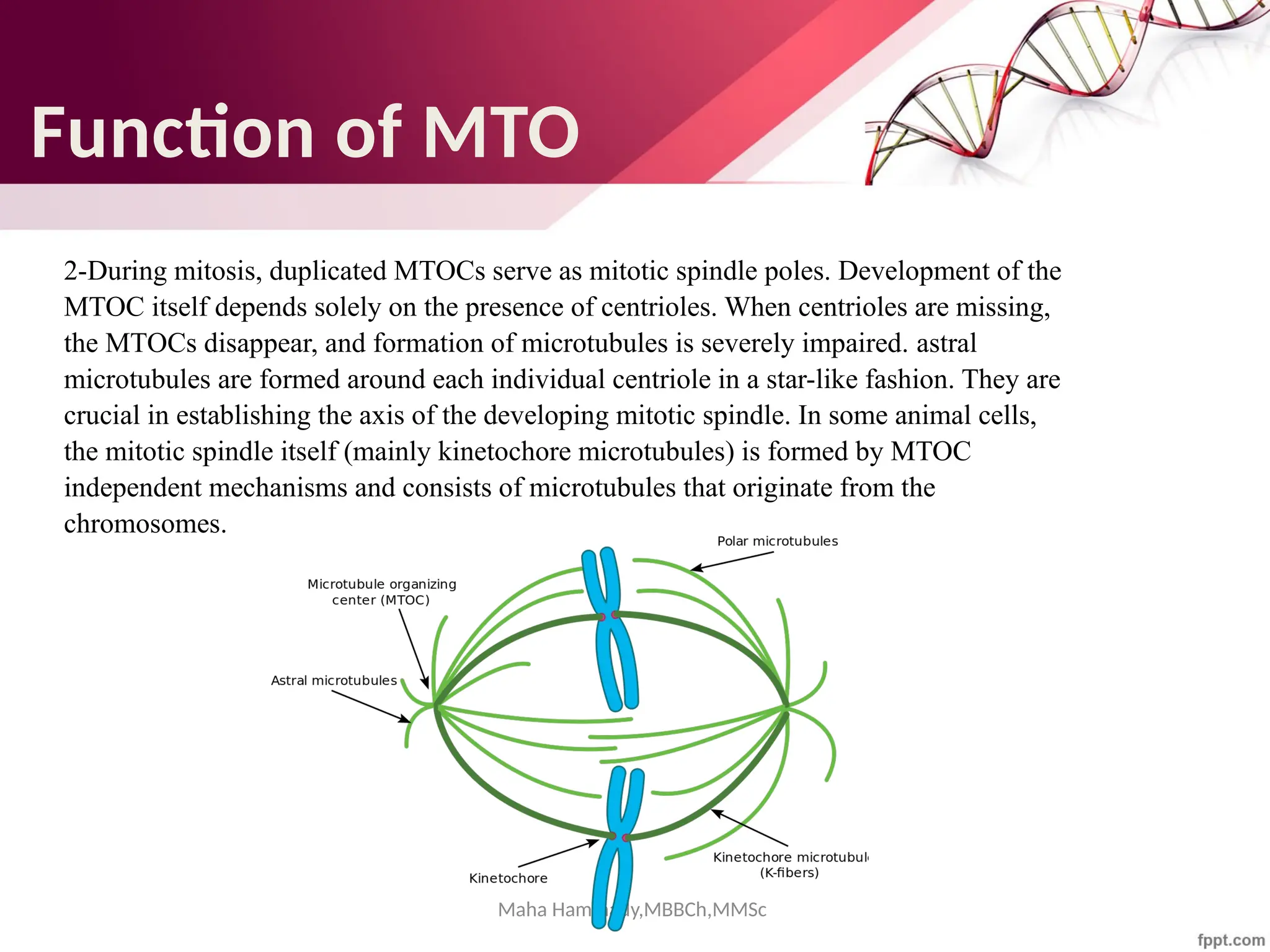
2-During mitosis, duplicated MTOCs serve as mitotic spindle poles. Development of the
MTOC itself depends solely on the presence of centrioles. When centrioles are missing,
the MTOCs disappear, and formation of microtubules is severely impaired. astral
microtubules are formed around each individual centriole in a star-like fashion. They are
crucial in establishing the axis of the developing mitotic spindle. In some animal cells,
the mitotic spindle itself (mainly kinetochore microtubules) is formed by MTOC
independent mechanisms and consists of microtubules that originate from the
chromosomes.
Function of MTO
Maha Hammady,MBBCh,MMSc
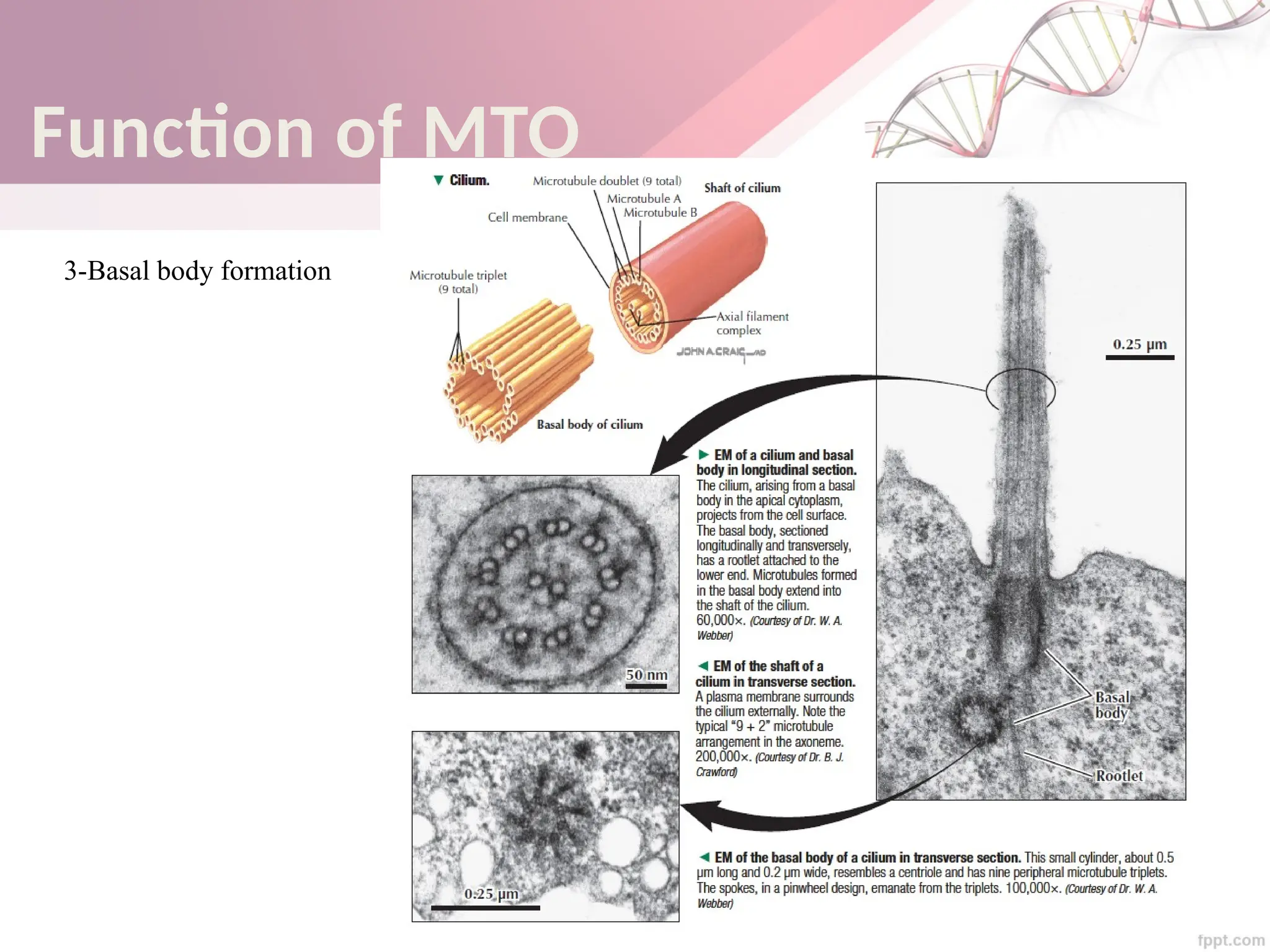
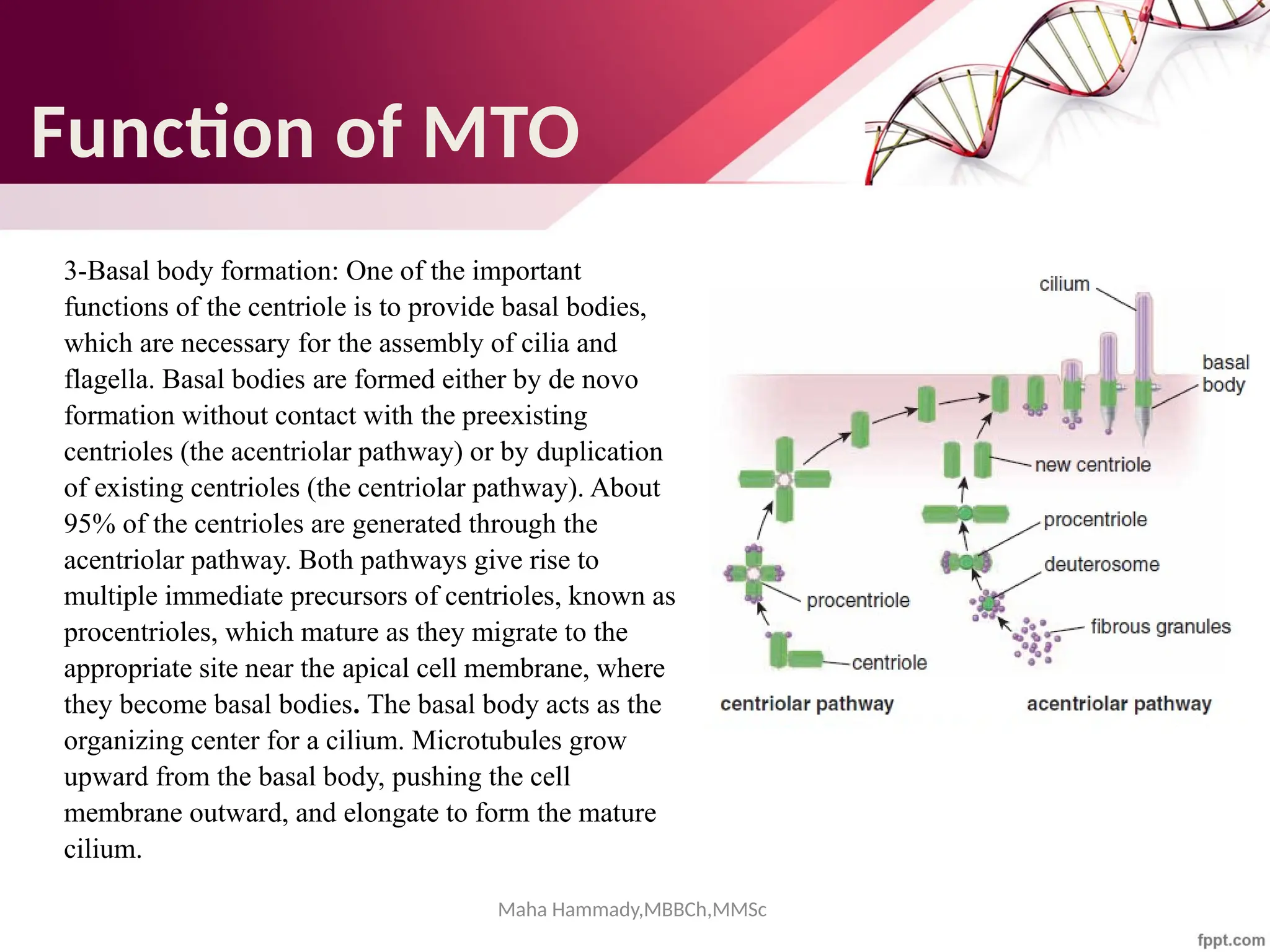
3-Basal body formation: One of the important
functions of the centriole is to provide basal bodies,
which are necessary for the assembly of cilia and
flagella. Basal bodies are formed either by de novo
formation without contact with the preexisting
centrioles (the acentriolar pathway) or by duplication
of existing centrioles (the centriolar pathway). About
95% of the centrioles are generated through the
acentriolar pathway. Both pathways give rise to
multiple immediate precursors of centrioles, known as
procentrioles, which mature as they migrate to the
appropriate site near the apical cell membrane, where
they become basal bodies. The basal body acts as the
organizing center for a cilium. Microtubules grow
upward from the basal body, pushing the cell
membrane outward, and elongate to form the mature
cilium.
Function of MTO
Maha Hammady,MBBCh,MMSc
3-Basal body formation
Function of MTO
Maha Hammady,MBBCh,MMSc
Structure Of Centriole
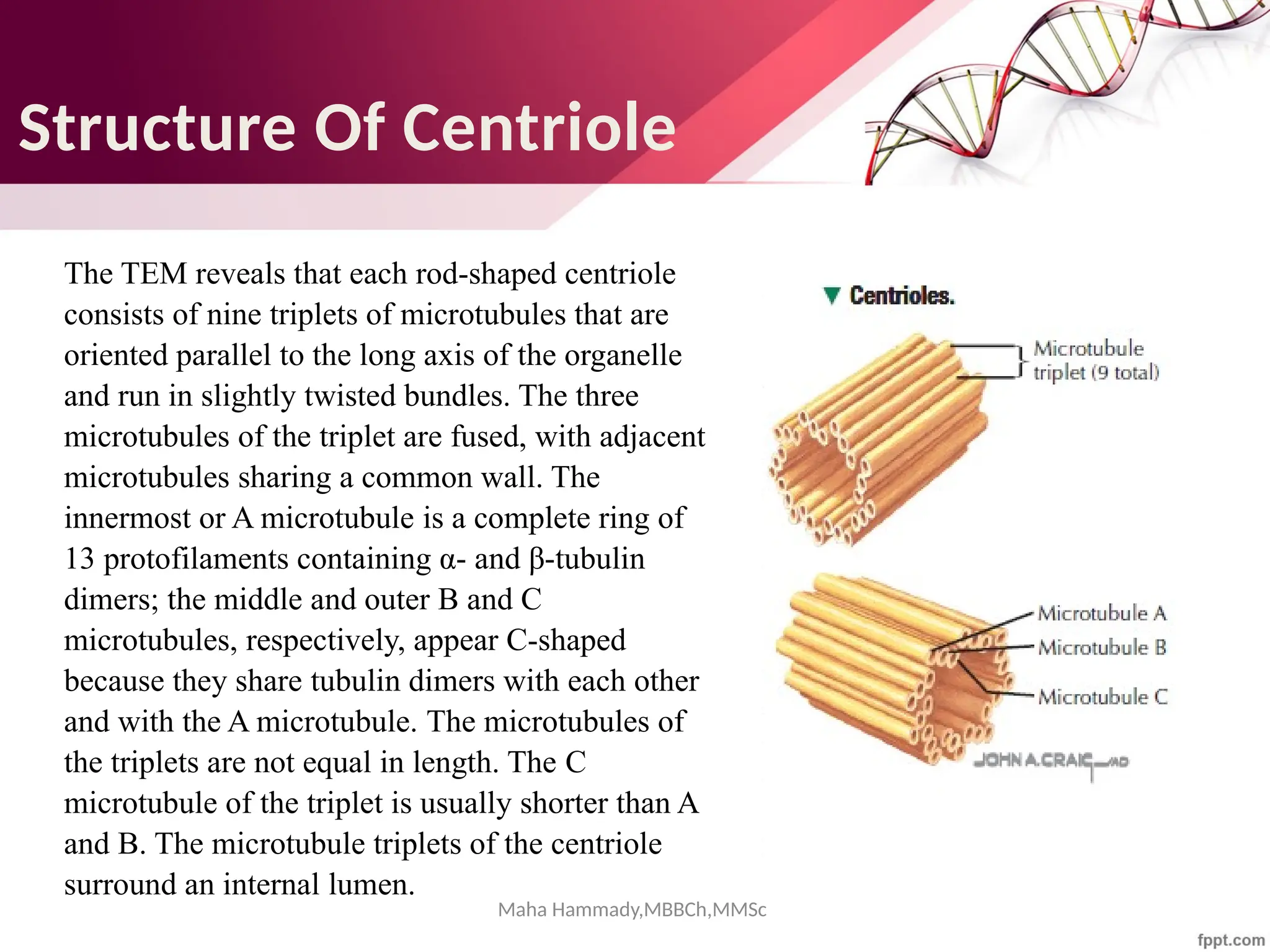
The TEM reveals that each rod-shaped centriole
consists of nine triplets of microtubules that are
oriented parallel to the long axis of the organelle
and run in slightly twisted bundles. The three
microtubules of the triplet are fused, with adjacent
microtubules sharing a common wall. The
innermost or A microtubule is a complete ring of
13 protofilaments containing α- and β-tubulin
dimers; the middle and outer B and C
microtubules, respectively, appear C-shaped
because they share tubulin dimers with each other
and with the A microtubule. The microtubules of
the triplets are not equal in length. The C
microtubule of the triplet is usually shorter than A
and B. The microtubule triplets of the centriole
surround an internal lumen.
Maha Hammady,MBBCh,MMSc
Clinical Application
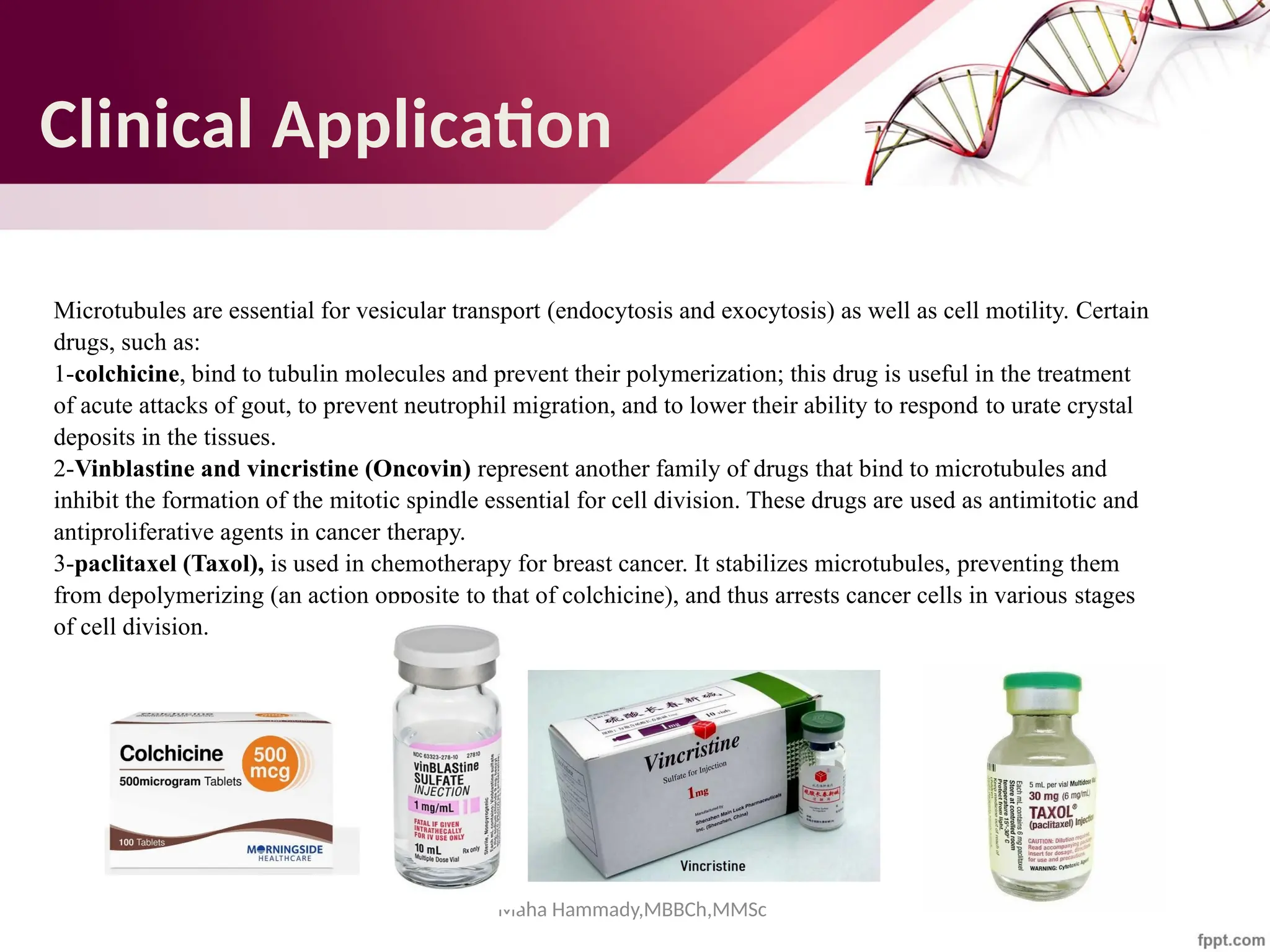
Microtubules are essential for vesicular transport (endocytosis and exocytosis) as well as cell motility. Certain
drugs, such as:
1-colchicine, bind to tubulin molecules and prevent their polymerization; this drug is useful in the treatment
of acute attacks of gout, to prevent neutrophil migration, and to lower their ability to respond to urate crystal
deposits in the tissues.
2-Vinblastine and vincristine (Oncovin) represent another family of drugs that bind to microtubules and
inhibit the formation of the mitotic spindle essential for cell division. These drugs are used as antimitotic and
antiproliferative agents in cancer therapy.
3-paclitaxel (Taxol), is used in chemotherapy for breast cancer. It stabilizes microtubules, preventing them
from depolymerizing (an action opposite to that of colchicine), and thus arrests cancer cells in various stages
of cell division.
Maha Hammady,MBBCh,MMSc
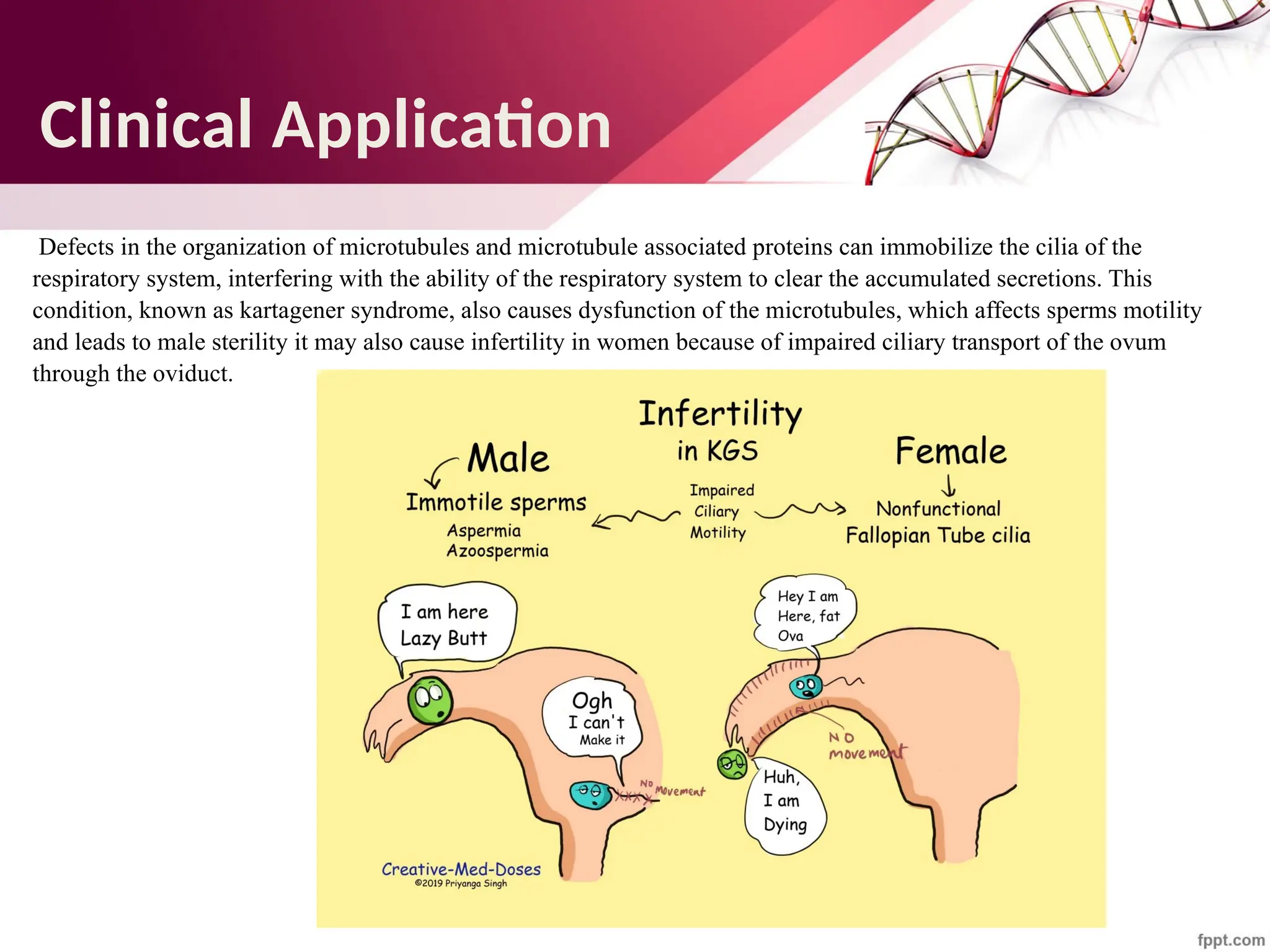
Defects in the organization of microtubules and microtubule associated proteins can immobilize the cilia of the
respiratory system, interfering with the ability of the respiratory system to clear the accumulated secretions. This
condition, known as kartagener syndrome, also causes dysfunction of the microtubules, which affects sperms motility
and leads to male sterility it may also cause infertility in women because of impaired ciliary transport of the ovum
through the oviduct.
Clinical Application
Maha Hammady,MBBCh,MMSc
Actin Filaments
01
02
03
04
05
Distribution
Structure
Actin binding proteins
Function of actin filaments
Types of actin
Maha Hammady,MBBCh,MMSc
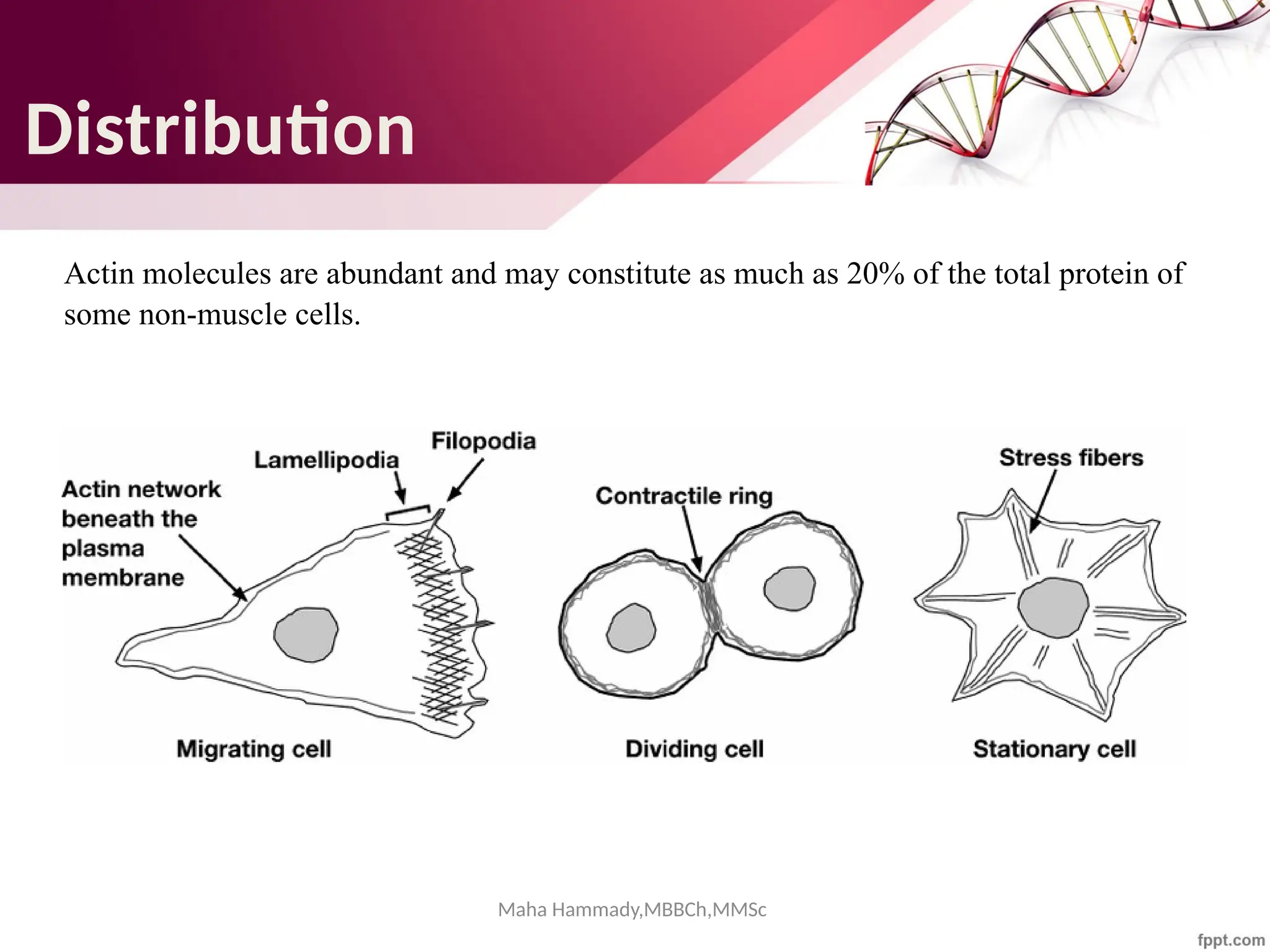
Distribution
Actin molecules are abundant and may constitute as much as 20% of the total protein of
some non-muscle cells.
Maha Hammady,MBBCh,MMSc
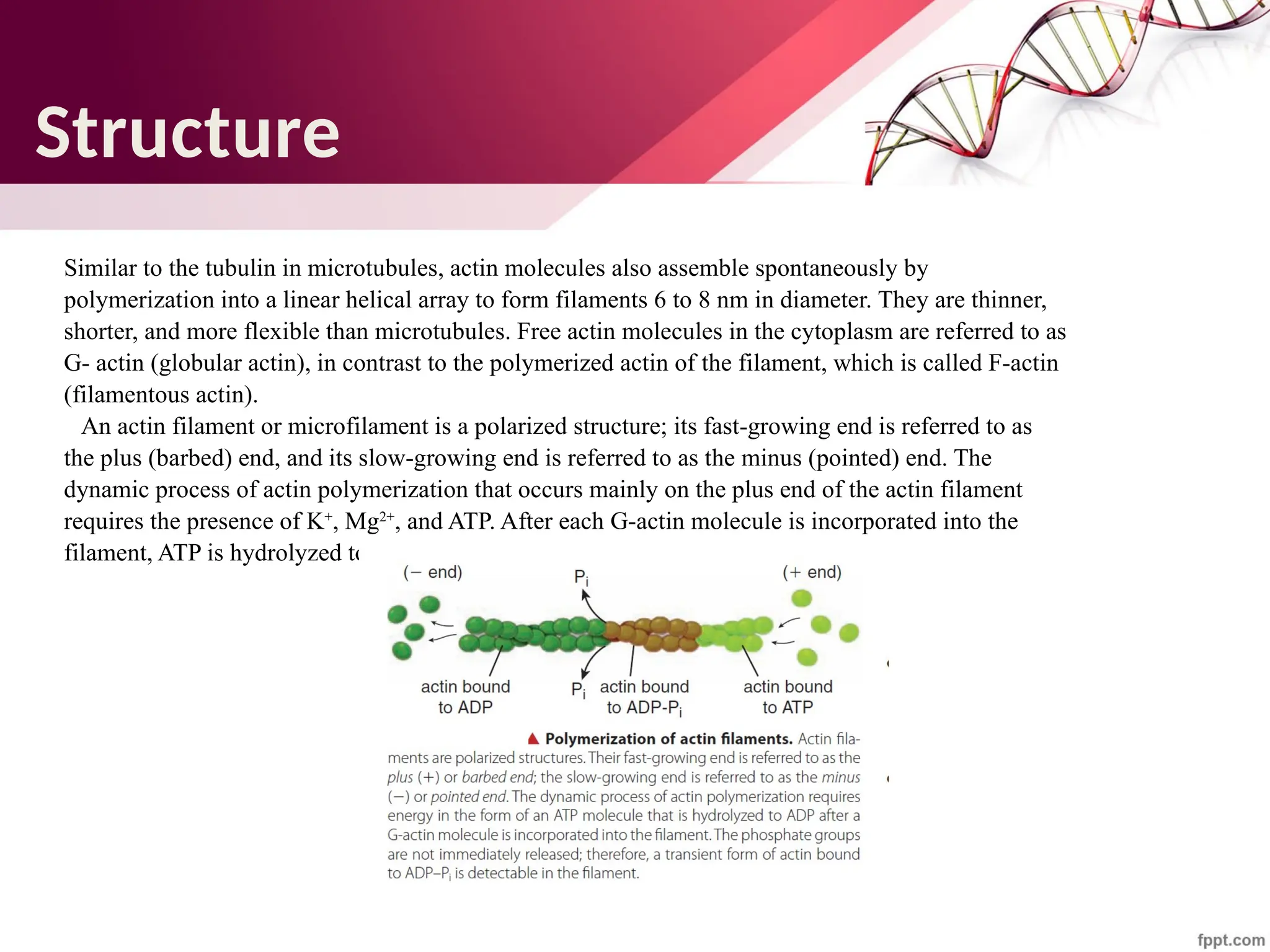
Structure
Similar to the tubulin in microtubules, actin molecules also assemble spontaneously by
polymerization into a linear helical array to form filaments 6 to 8 nm in diameter. They are thinner,
shorter, and more flexible than microtubules. Free actin molecules in the cytoplasm are referred to as
G- actin (globular actin), in contrast to the polymerized actin of the filament, which is called F-actin
(filamentous actin).
An actin filament or microfilament is a polarized structure; its fast-growing end is referred to as
the plus (barbed) end, and its slow-growing end is referred to as the minus (pointed) end. The
dynamic process of actin polymerization that occurs mainly on the plus end of the actin filament
requires the presence of K+
, Mg2+
, and ATP. After each G-actin molecule is incorporated into the
filament, ATP is hydrolyzed to ADP.
Maha Hammady,MBBCh,MMSc
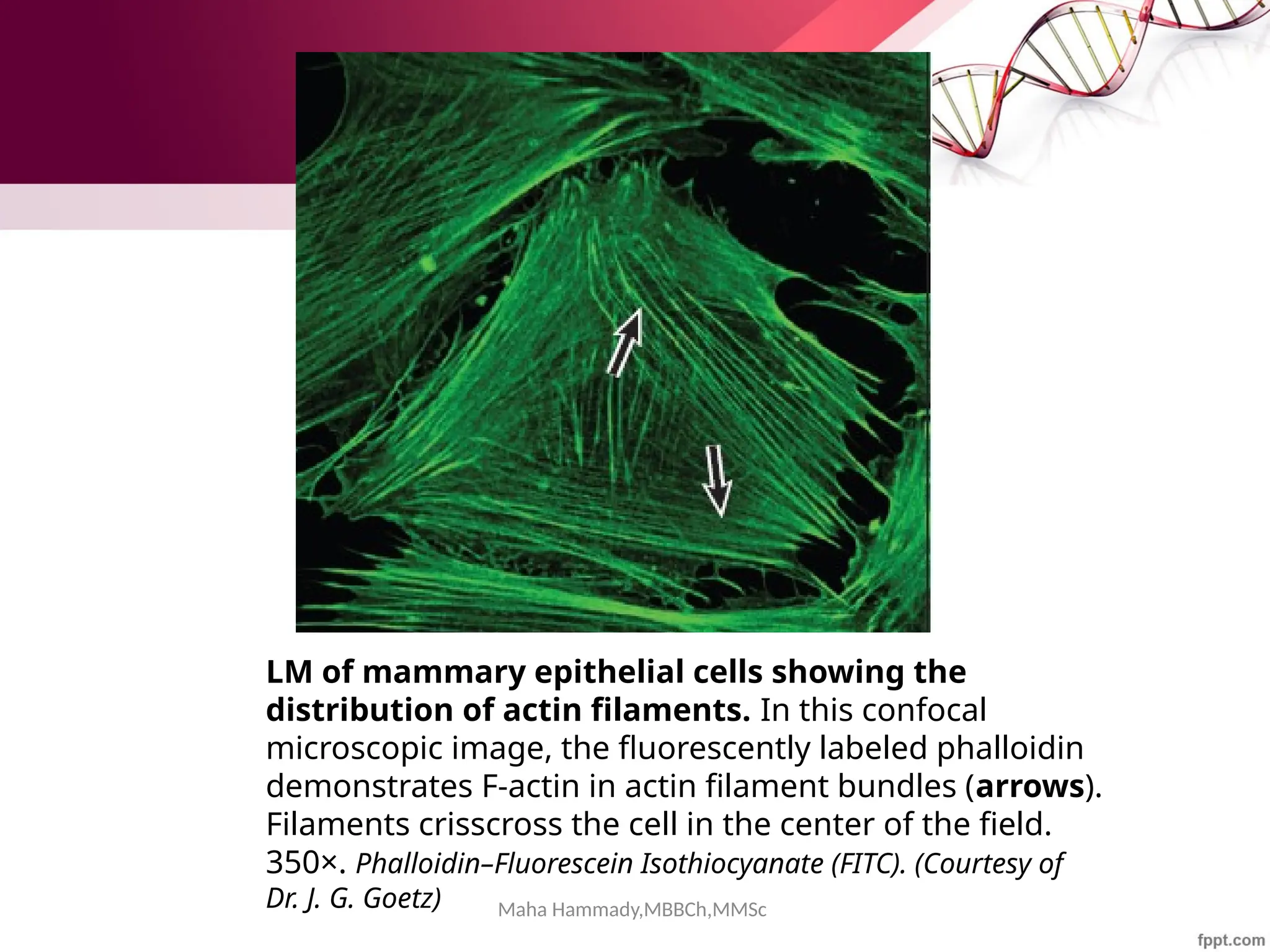
LM of mammary epithelial cells showing the
distribution of actin filaments. In this confocal
microscopic image, the fluorescently labeled phalloidin
demonstrates F-actin in actin filament bundles (arrows).
Filaments crisscross the cell in the center of the field.
350×. Phalloidin–Fluorescein Isothiocyanate (FITC). (Courtesy of
Dr. J. G. Goetz)
Maha Hammady,MBBCh,MMSc
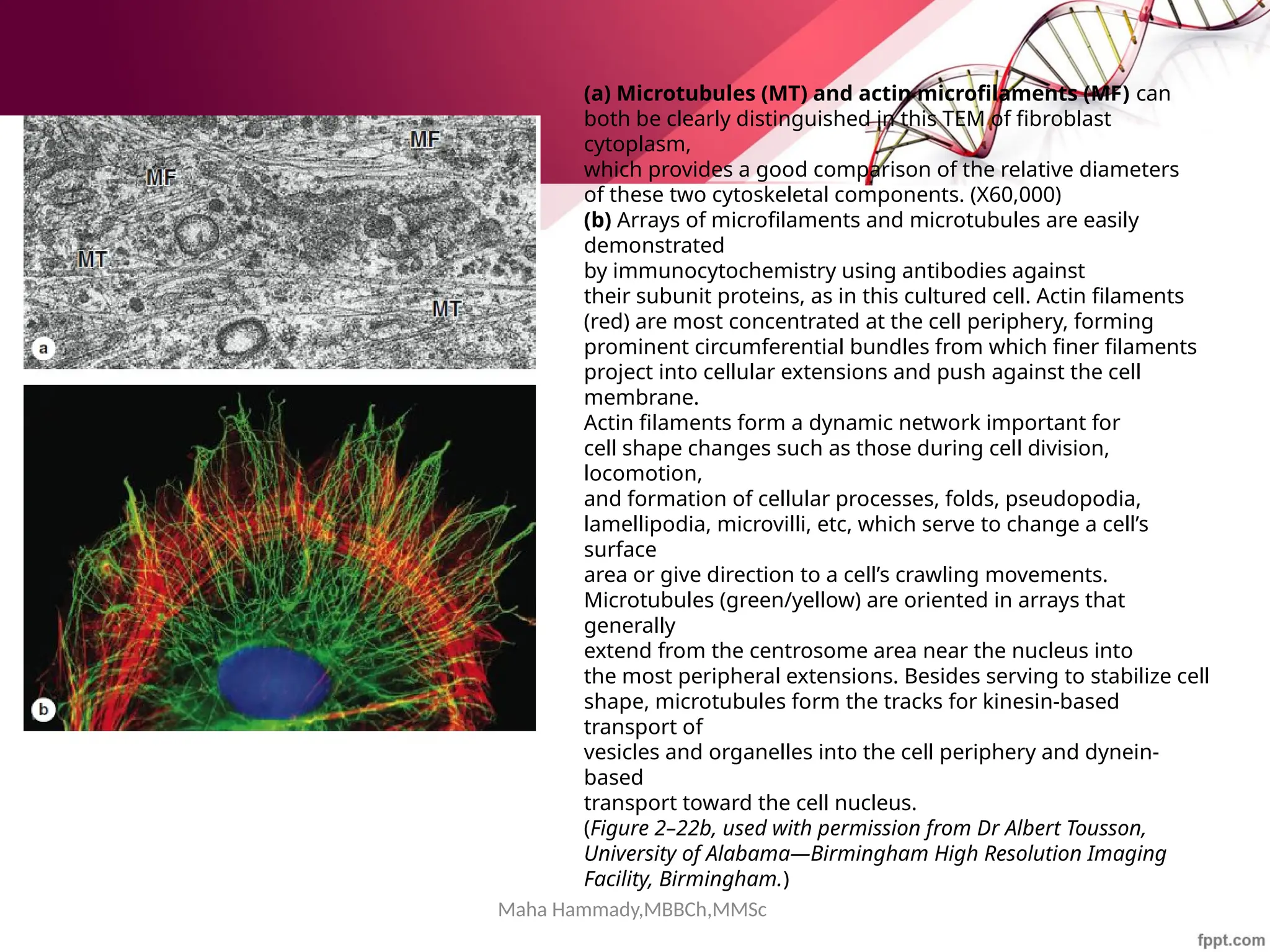
(a) Microtubules (MT) and actin microfilaments (MF) can
both be clearly distinguished in this TEM of fibroblast
cytoplasm,
which provides a good comparison of the relative diameters
of these two cytoskeletal components. (X60,000)
(b) Arrays of microfilaments and microtubules are easily
demonstrated
by immunocytochemistry using antibodies against
their subunit proteins, as in this cultured cell. Actin filaments
(red) are most concentrated at the cell periphery, forming
prominent circumferential bundles from which finer filaments
project into cellular extensions and push against the cell
membrane.
Actin filaments form a dynamic network important for
cell shape changes such as those during cell division,
locomotion,
and formation of cellular processes, folds, pseudopodia,
lamellipodia, microvilli, etc, which serve to change a cell’s
surface
area or give direction to a cell’s crawling movements.
Microtubules (green/yellow) are oriented in arrays that
generally
extend from the centrosome area near the nucleus into
the most peripheral extensions. Besides serving to stabilize cell
shape, microtubules form the tracks for kinesin-based
transport of
vesicles and organelles into the cell periphery and dynein-
based
transport toward the cell nucleus.
(Figure 2–22b, used with permission from Dr Albert Tousson,
University of Alabama—Birmingham High Resolution Imaging
Facility, Birmingham.)
Maha Hammady,MBBCh,MMSc
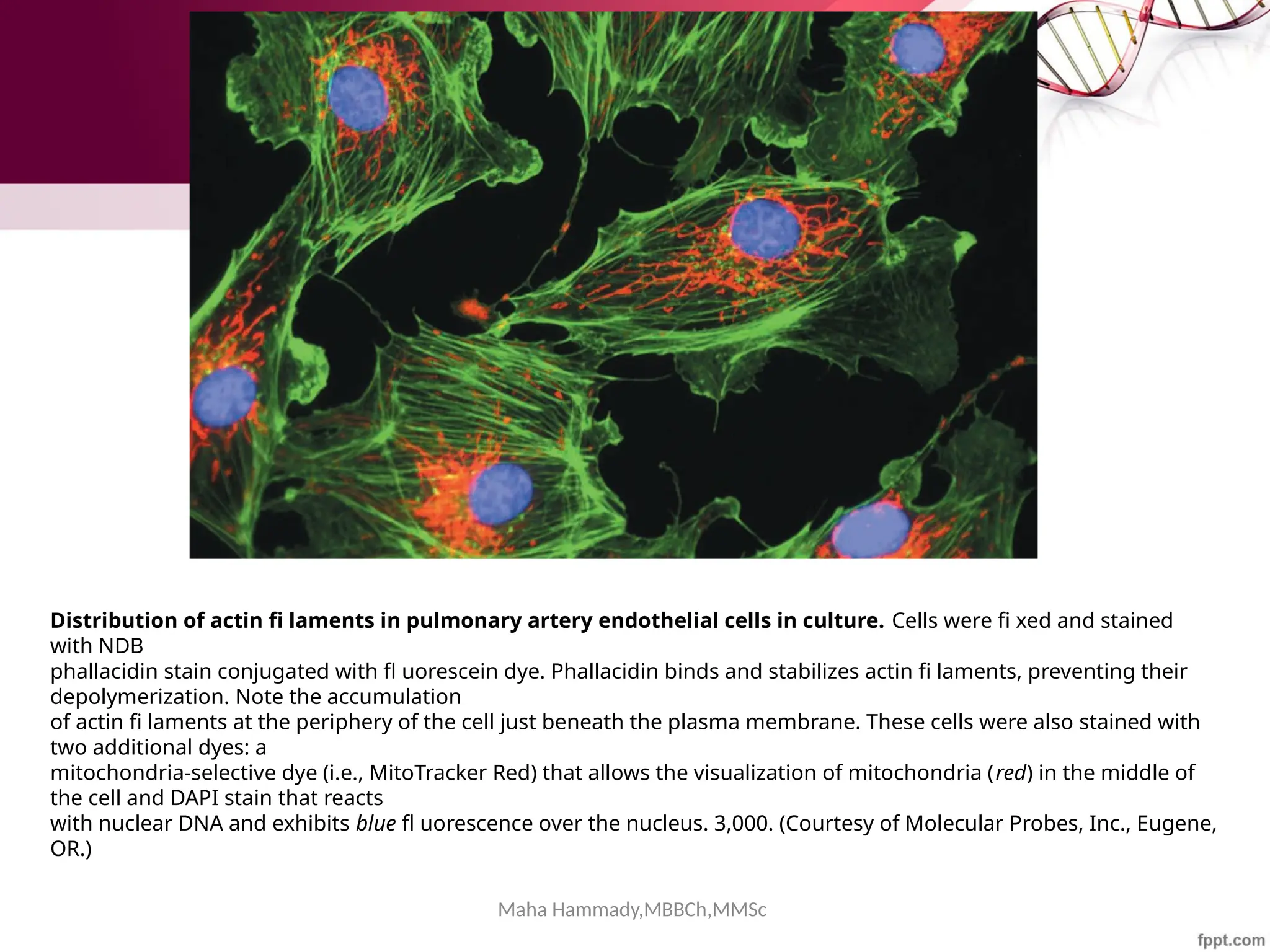
Distribution of actin fi laments in pulmonary artery endothelial cells in culture. Cells were fi xed and stained
with NDB
phallacidin stain conjugated with fl uorescein dye. Phallacidin binds and stabilizes actin fi laments, preventing their
depolymerization. Note the accumulation
of actin fi laments at the periphery of the cell just beneath the plasma membrane. These cells were also stained with
two additional dyes: a
mitochondria-selective dye (i.e., MitoTracker Red) that allows the visualization of mitochondria (red) in the middle of
the cell and DAPI stain that reacts
with nuclear DNA and exhibits blue fl uorescence over the nucleus. 3,000. (Courtesy of Molecular Probes, Inc., Eugene,
OR.)
Maha Hammady,MBBCh,MMSc
Types Of Actin
(Actin Isoforms)
There are three classes of actin: α-actin of muscle, and β-actin, and γ-actin of non-muscle
cells: αskeletal-actin, αcardiac-actin, αsmooth-actin, are expressed primarily in skeletal, cardiac, and
smooth muscle. The remaining two isoforms, βcyto-actin and γcyto-actin are widely expressed.
https://www.ncbi.nlm.nih.gov/pmc/articles/PMC2949686/
Maha Hammady,MBBCh,MMSc
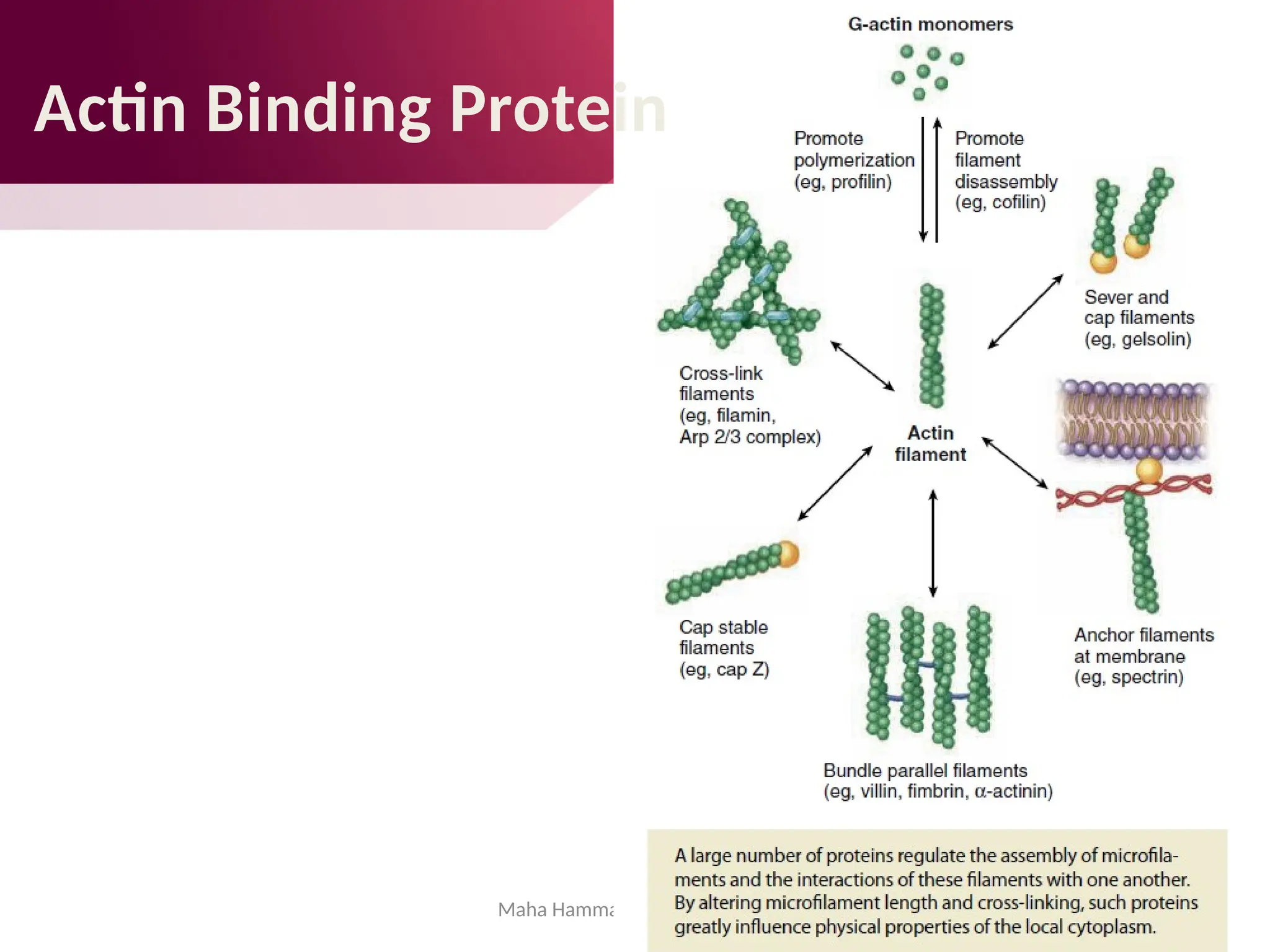
Actin Binding Protein
The control and regulation of the polymerization
process depends on the local concentration of G-actin
and the interaction of actin-binding proteins (ABPs),
which can prevent or enhance polymerization. In
addition to controlling the rate of polymerization of
actin filaments, ABPs are responsible for the
filaments’ organization. For example, a number of
proteins can modify or act on actin filaments to give
them various specific characteristics:
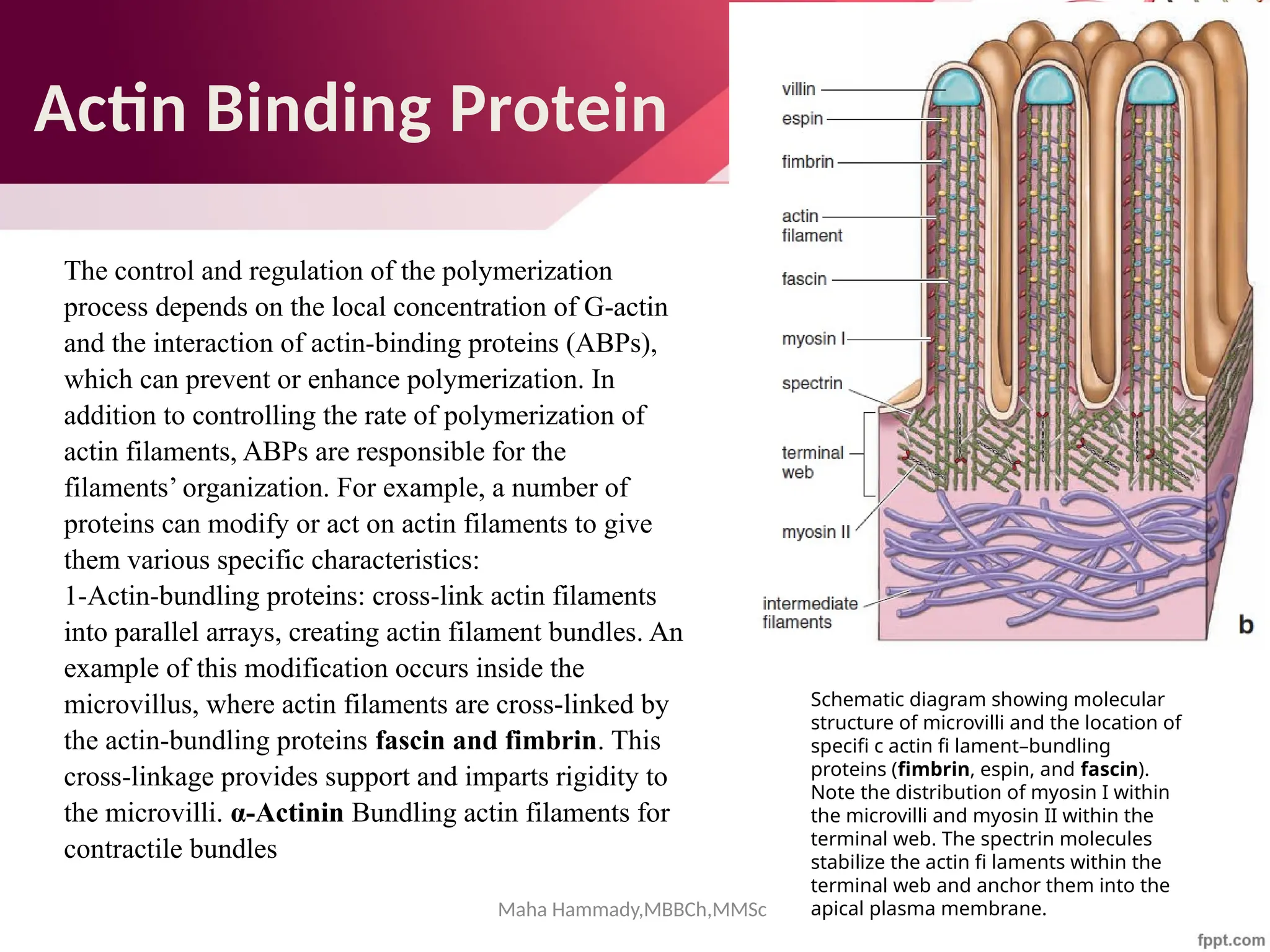
1-Actin-bundling proteins: cross-link actin filaments
into parallel arrays, creating actin filament bundles. An
example of this modification occurs inside the
microvillus, where actin filaments are cross-linked by
the actin-bundling proteins fascin and fimbrin. This
cross-linkage provides support and imparts rigidity to
the microvilli. α-Actinin Bundling actin filaments for
contractile bundles
Schematic diagram showing molecular
structure of microvilli and the location of
specifi c actin fi lament–bundling
proteins (fimbrin, espin, and fascin).
Note the distribution of myosin I within
the microvilli and myosin II within the
terminal web. The spectrin molecules
stabilize the actin fi laments within the
terminal web and anchor them into the
apical plasma membrane.
Maha Hammady,MBBCh,MMSc
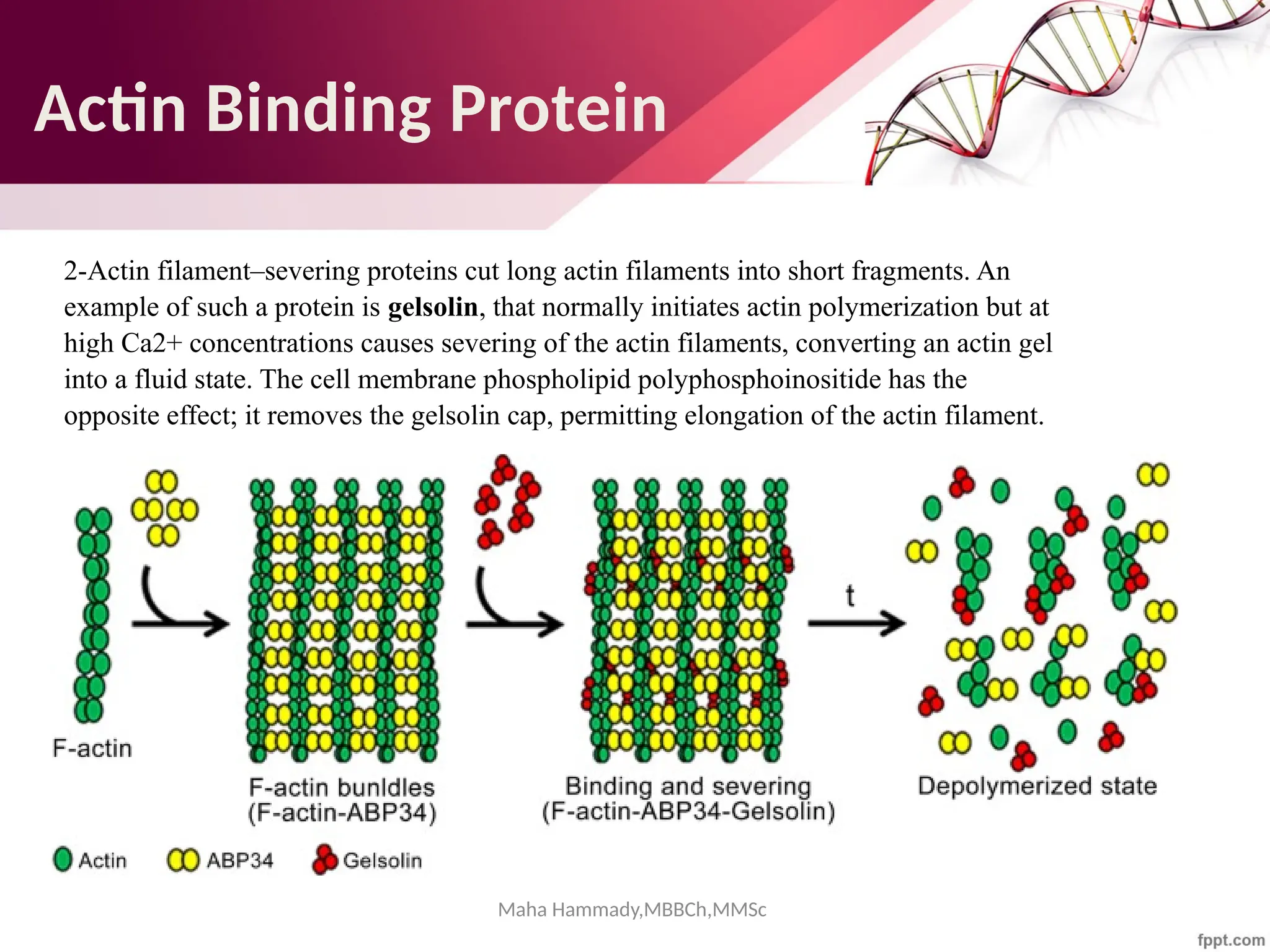
2-Actin filament–severing proteins cut long actin filaments into short fragments. An
example of such a protein is gelsolin, that normally initiates actin polymerization but at
high Ca2+ concentrations causes severing of the actin filaments, converting an actin gel
into a fluid state. The cell membrane phospholipid polyphosphoinositide has the
opposite effect; it removes the gelsolin cap, permitting elongation of the actin filament.
Actin Binding Protein
Maha Hammady,MBBCh,MMSc
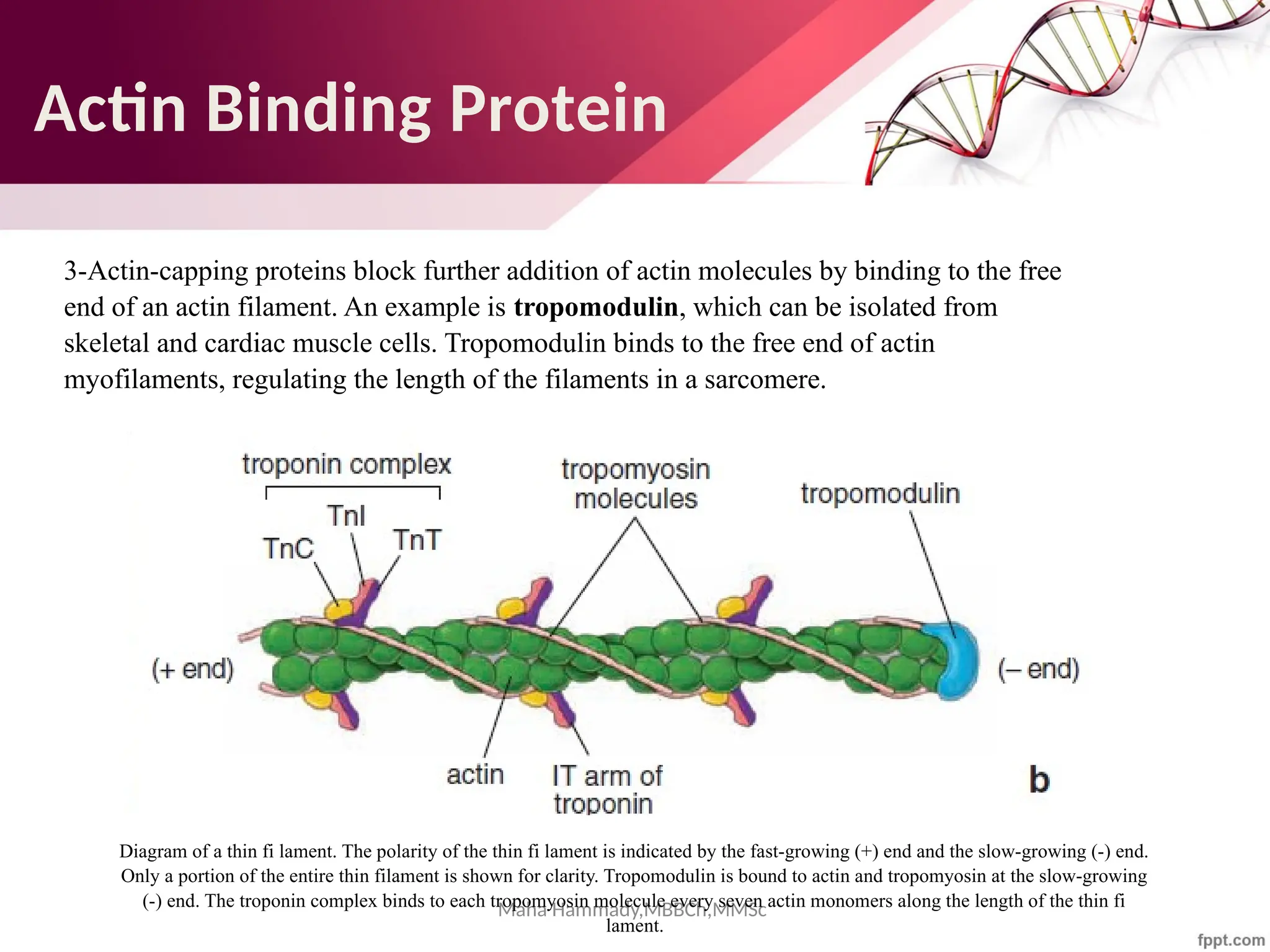
3-Actin-capping proteins block further addition of actin molecules by binding to the free
end of an actin filament. An example is tropomodulin, which can be isolated from
skeletal and cardiac muscle cells. Tropomodulin binds to the free end of actin
myofilaments, regulating the length of the filaments in a sarcomere.
Diagram of a thin fi lament. The polarity of the thin fi lament is indicated by the fast-growing (+) end and the slow-growing (-) end.
Only a portion of the entire thin filament is shown for clarity. Tropomodulin is bound to actin and tropomyosin at the slow-growing
(-) end. The troponin complex binds to each tropomyosin molecule every seven actin monomers along the length of the thin fi
lament.
Actin Binding Protein
Maha Hammady,MBBCh,MMSc
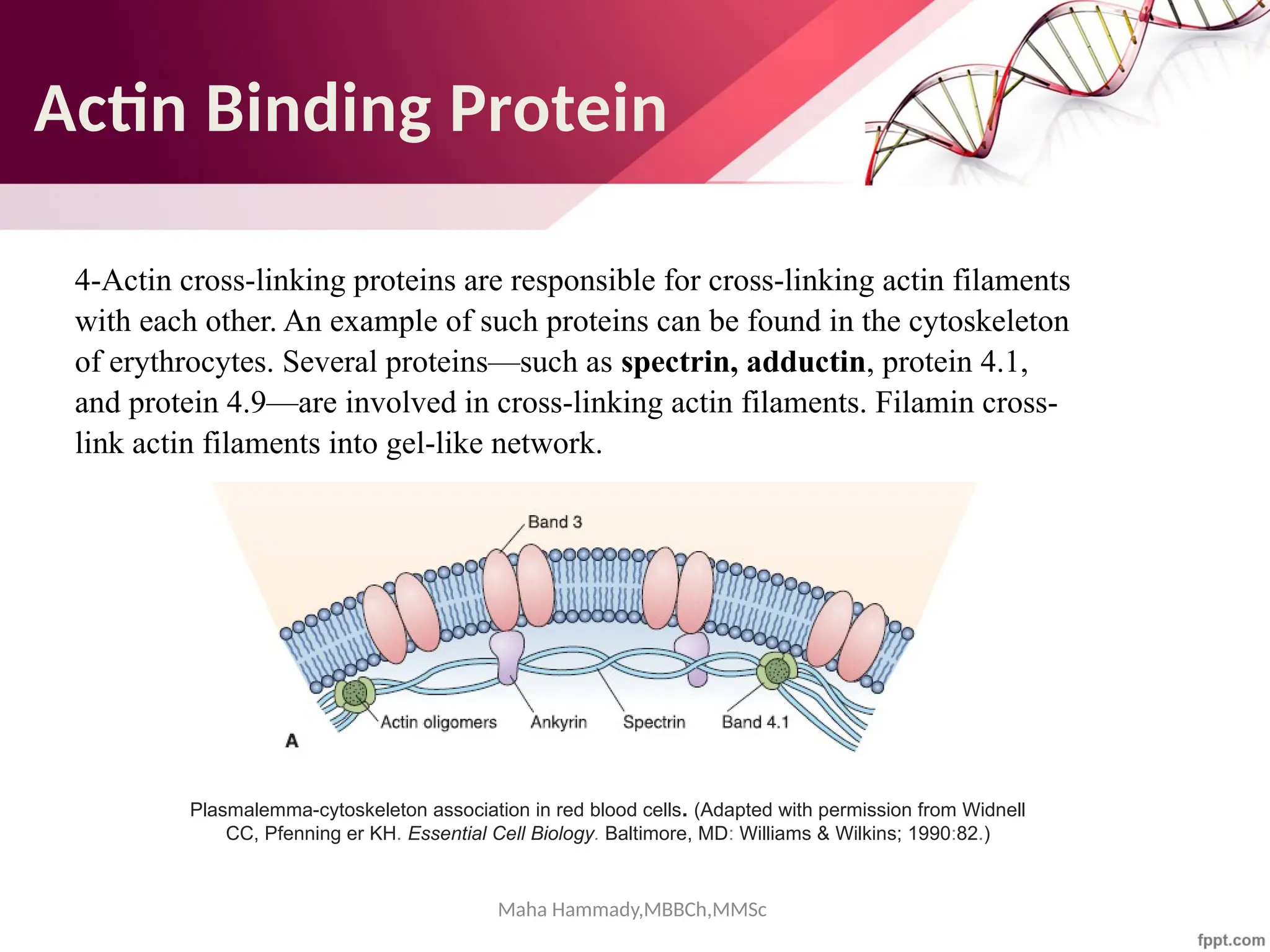
4-Actin cross-linking proteins are responsible for cross-linking actin filaments
with each other. An example of such proteins can be found in the cytoskeleton
of erythrocytes. Several proteins—such as spectrin, adductin, protein 4.1,
and protein 4.9—are involved in cross-linking actin filaments. Filamin cross-
link actin filaments into gel-like network.
Plasmalemma-cytoskeleton association in red blood cells. (Adapted with permission from Widnell
CC, Pfenning er KH. Essential Cell Biology. Baltimore, MD: Williams & Wilkins; 1990:82.)
Actin Binding Protein
Maha Hammady,MBBCh,MMSc
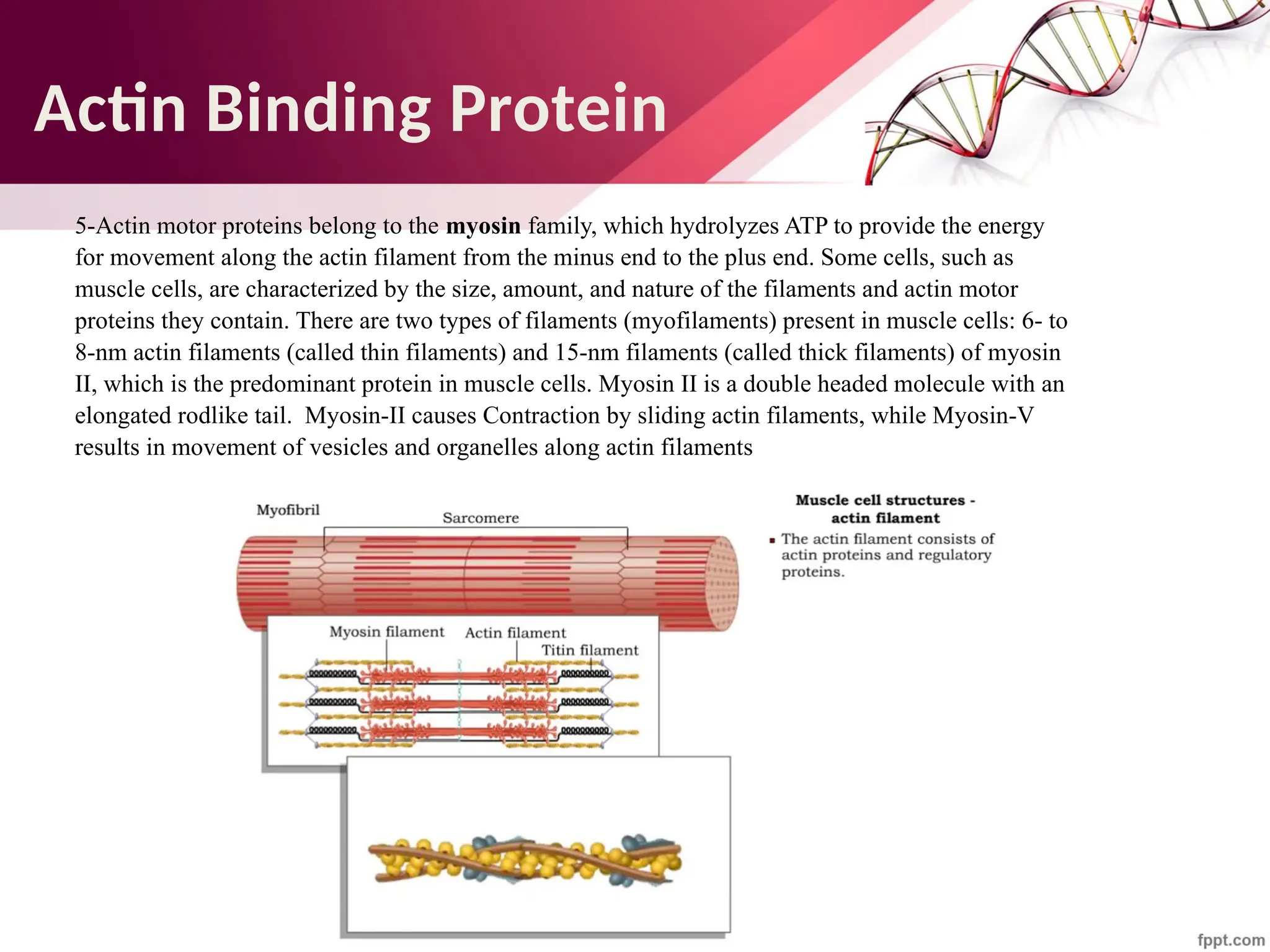
5-Actin motor proteins belong to the myosin family, which hydrolyzes ATP to provide the energy
for movement along the actin filament from the minus end to the plus end. Some cells, such as
muscle cells, are characterized by the size, amount, and nature of the filaments and actin motor
proteins they contain. There are two types of filaments (myofilaments) present in muscle cells: 6- to
8-nm actin filaments (called thin filaments) and 15-nm filaments (called thick filaments) of myosin
II, which is the predominant protein in muscle cells. Myosin II is a double headed molecule with an
elongated rodlike tail. Myosin-II causes Contraction by sliding actin filaments, while Myosin-V
results in movement of vesicles and organelles along actin filaments
Actin Binding Protein
Maha Hammady,MBBCh,MMSc
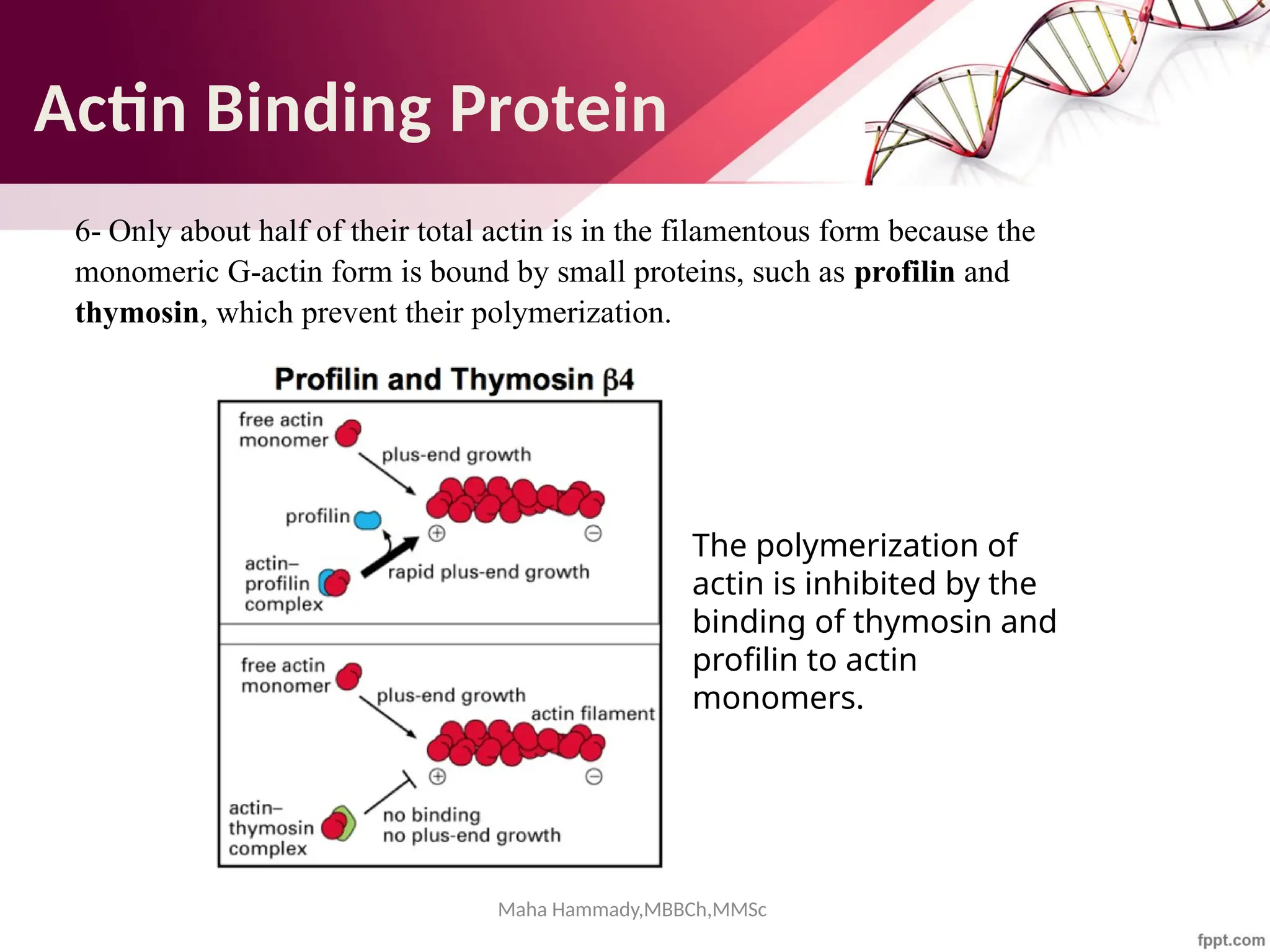
6- Only about half of their total actin is in the filamentous form because the
monomeric G-actin form is bound by small proteins, such as profilin and
thymosin, which prevent their polymerization.
The polymerization of
actin is inhibited by the
binding of thymosin and
profilin to actin
monomers.
Actin Binding Protein
Maha Hammady,MBBCh,MMSc
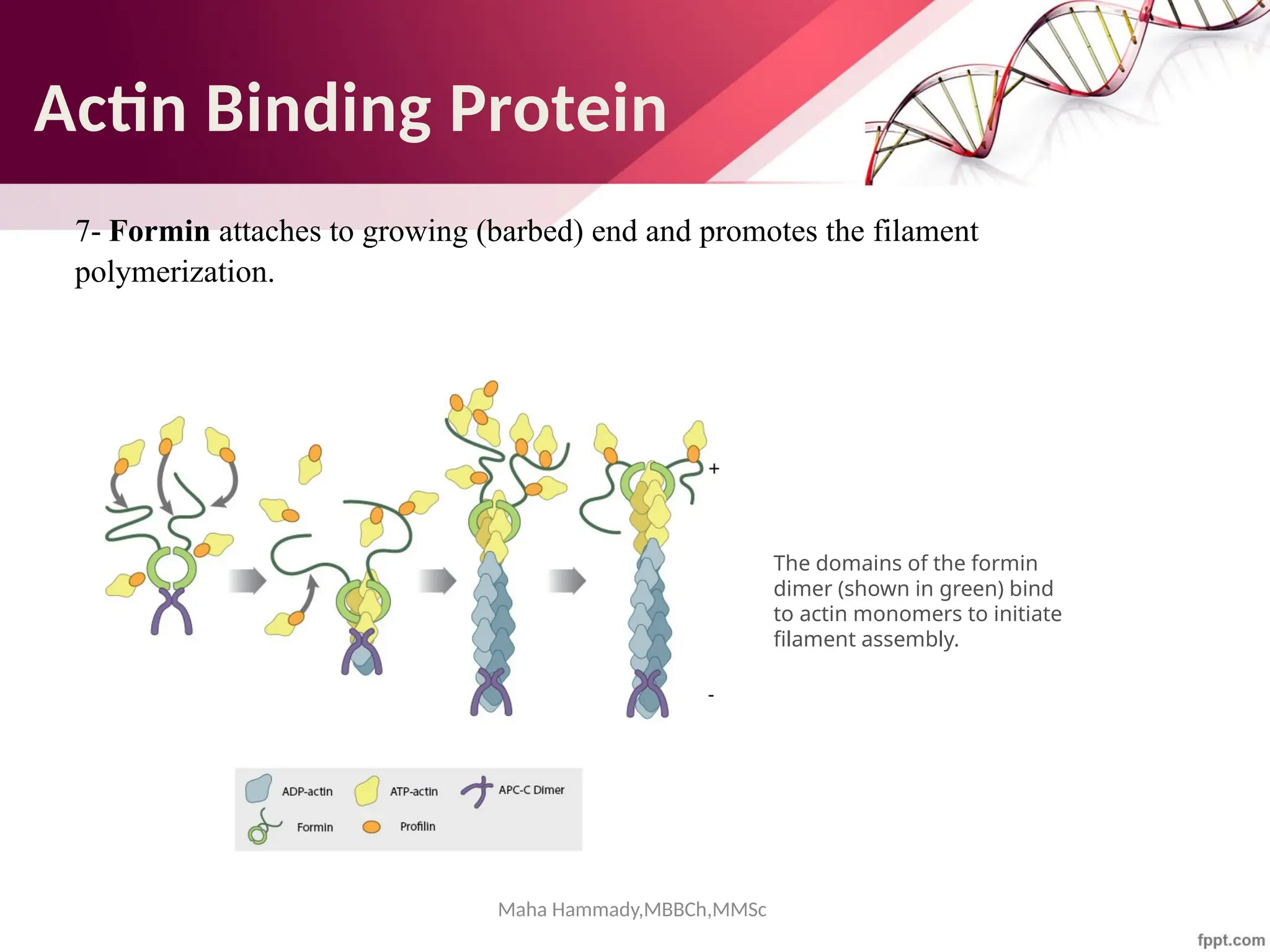
7- Formin attaches to growing (barbed) end and promotes the filament
polymerization.
The domains of the formin
dimer (shown in green) bind
to actin monomers to initiate
filament assembly.
Actin Binding Protein
Maha Hammady,MBBCh,MMSc
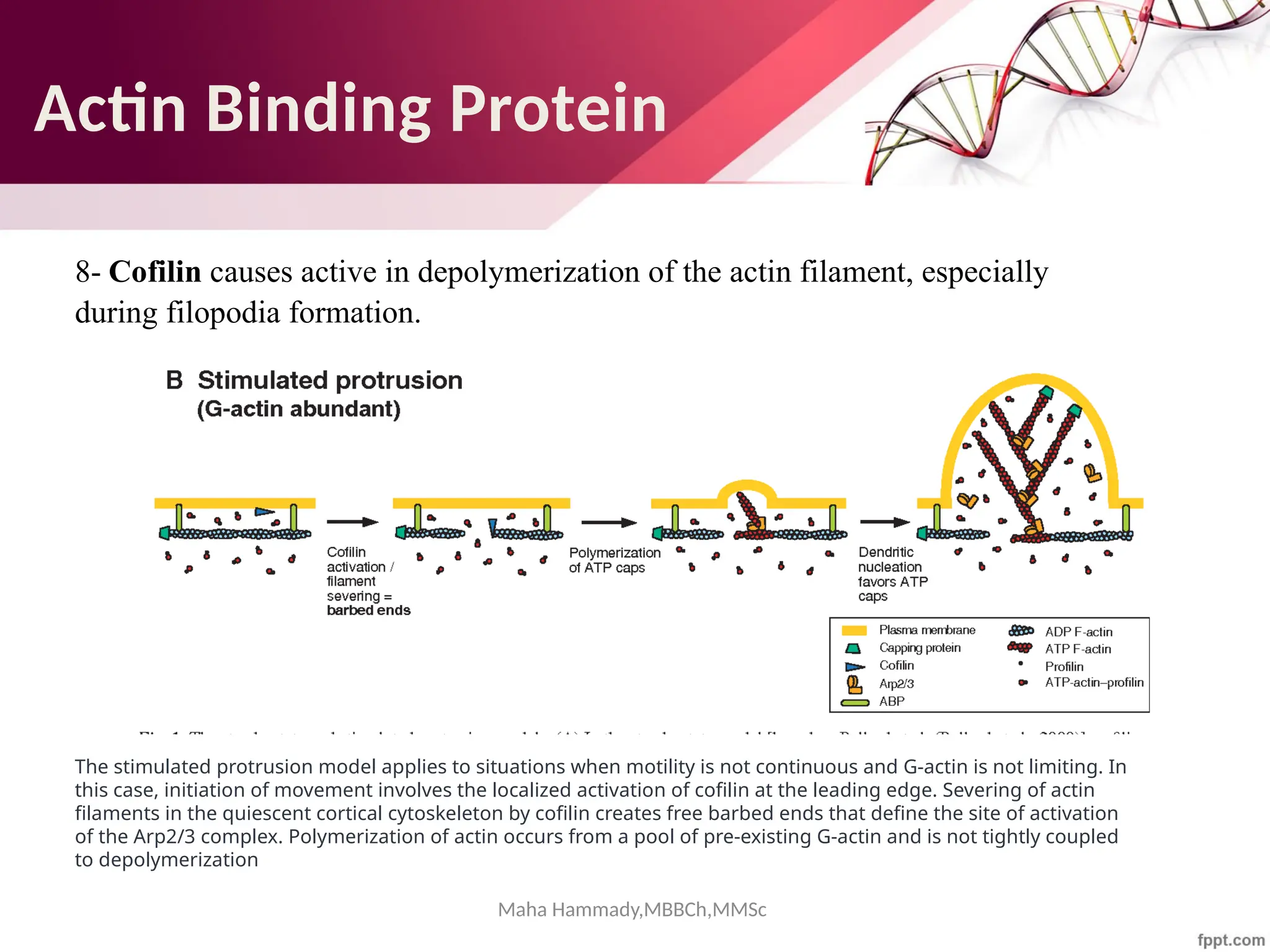
8- Cofilin causes active in depolymerization of the actin filament, especially
during filopodia formation.
The stimulated protrusion model applies to situations when motility is not continuous and G-actin is not limiting. In
this case, initiation of movement involves the localized activation of cofilin at the leading edge. Severing of actin
filaments in the quiescent cortical cytoskeleton by cofilin creates free barbed ends that define the site of activation
of the Arp2/3 complex. Polymerization of actin occurs from a pool of pre-existing G-actin and is not tightly coupled
to depolymerization
Actin Binding Protein
Maha Hammady,MBBCh,MMSc
Actin Binding Protein
Maha Hammady,MBBCh,MMSc
Function Of Actin
Filaments
Actin filaments are often grouped in bundles close to the plasma membrane. Functions of these membrane-associated
actin filaments include the following.
1-Anchorage and movement of membrane protein. Actin filaments are distributed in three-dimensional networks
throughout the cell and are used as anchors within specialized cell junctions such as focal adhesions.
2-Formation of the structural core of microvilli on absorptive epithelial cells.
3-Actin filaments may also help maintain the shape of the apical cell surface (e.g., the apical terminal web of actin
filaments serves as a set of tension cables under the cell surface). Gel-like networks provide the structural foundation
of much of the cell cortex. Their stiffness is due to the protein filamin, which assists in the establishment of a loosely
organized network of actin filaments resulting in localized high viscosity. During the formation of filopodia, the gel is
liquefied by proteins such as gelsolin, which, in the presence of ATP and high concentration of Ca2+, cleaves the actin
filaments and, by forming a cap over their plus end, prevents them from lengthening.
4-Locomotion of cells. Locomotion is achieved by the force exerted by actin filaments by polymerization at their
growing ends. Th is mechanism is used in many migrating cells—in particular, on transformed cells of invasive
tumors. As a result of actin polymerization at their leading edge, cells extend processes from their surface by pushing
the plasma membrane ahead of the growing actin fi laments. The leading-edge extensions of a crawling cell are called
lamellipodia; they contain elongating organized bundles of actin fi laments with their plus ends directed toward the
plasma membrane.
5-Extension of cell processes. These processes can be observed in many other cells that exhibit small protrusions
called filopodia, located around their surface. As in lamellipodia, these protrusions contain loose aggregations of 10 to
20 actin fi laments organized in the same direction, again with their plus ends directed toward the plasma membrane.
Actin fi laments are also essential in cytoplasmic streaming (i.e., the stream-like movement of cytoplasm that can be
observed in cultured cells).
6- Contractile bundles, such as those responsible for the formation of cleavage furrows (contractile rings) during
mitotic division, are usually associated with myosin.
Maha Hammady,MBBCh,MMSc
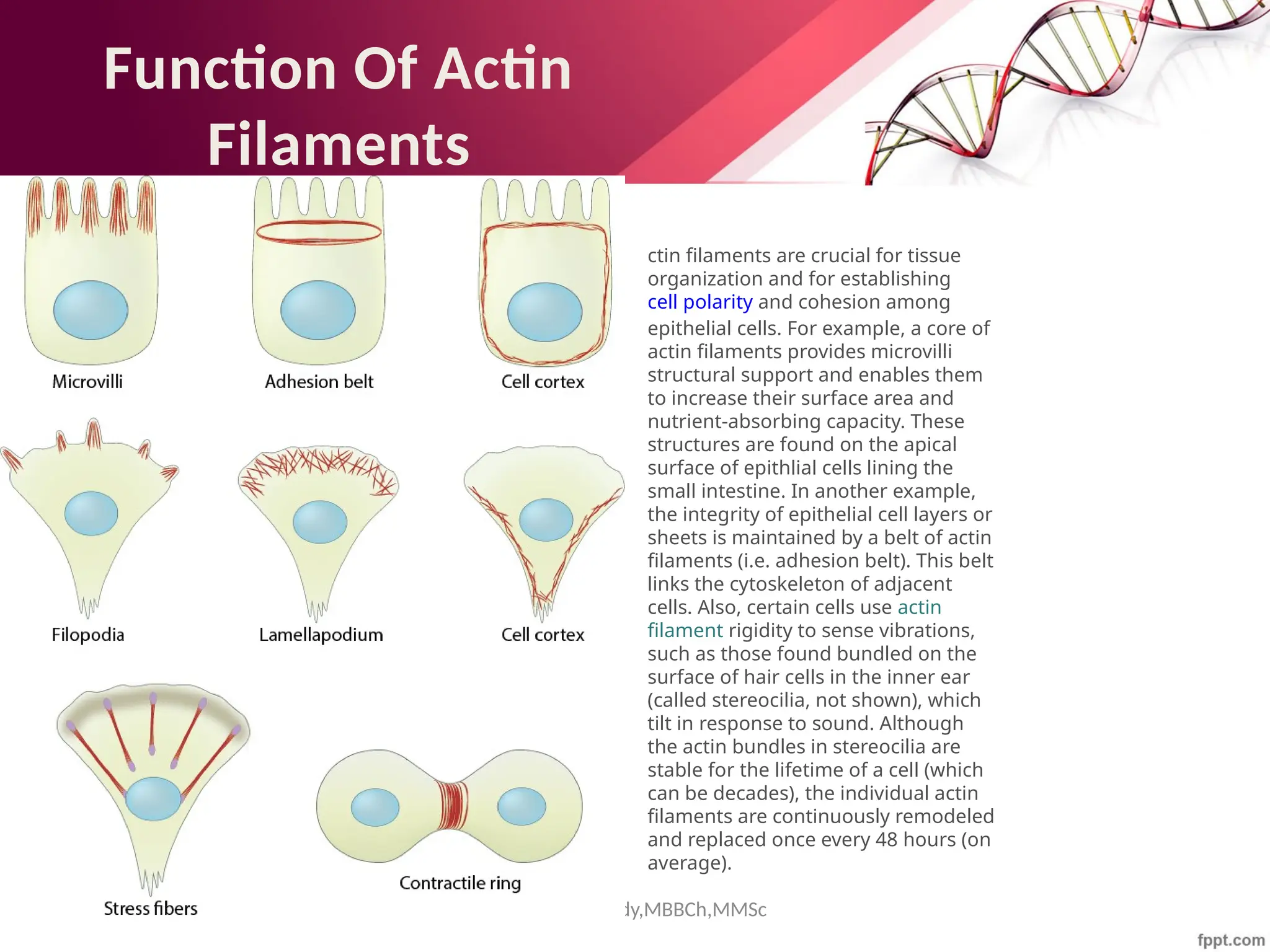
ctin filaments are crucial for tissue
organization and for establishing
cell polarity and cohesion among
epithelial cells. For example, a core of
actin filaments provides microvilli
structural support and enables them
to increase their surface area and
nutrient-absorbing capacity. These
structures are found on the apical
surface of epithlial cells lining the
small intestine. In another example,
the integrity of epithelial cell layers or
sheets is maintained by a belt of actin
filaments (i.e. adhesion belt). This belt
links the cytoskeleton of adjacent
cells. Also, certain cells use actin
filament rigidity to sense vibrations,
such as those found bundled on the
surface of hair cells in the inner ear
(called stereocilia, not shown), which
tilt in response to sound. Although
the actin bundles in stereocilia are
stable for the lifetime of a cell (which
can be decades), the individual actin
filaments are continuously remodeled
and replaced once every 48 hours (on
average).
Function Of Actin
Filaments
Maha Hammady,MBBCh,MMSc
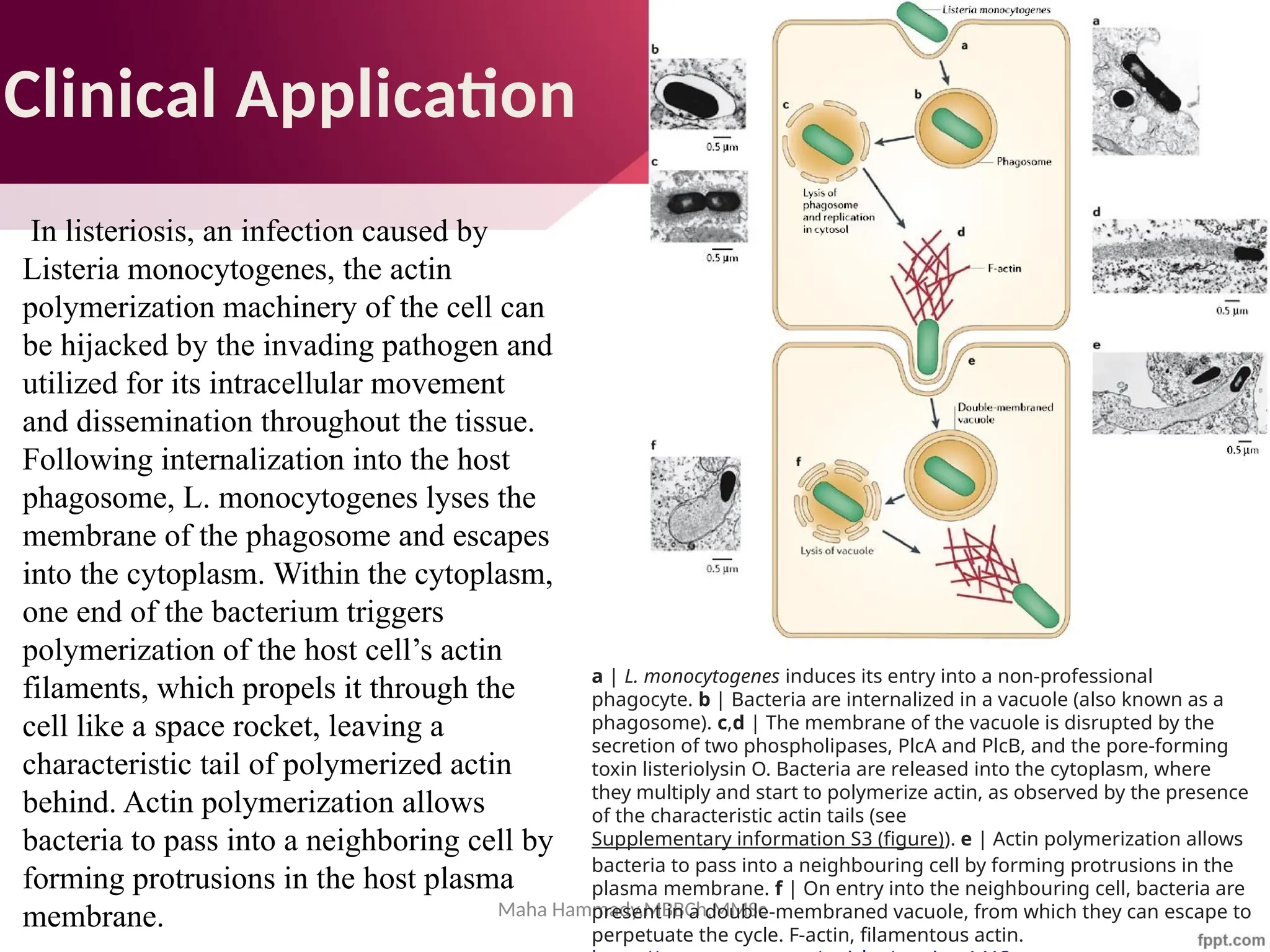
In listeriosis, an infection caused by
Listeria monocytogenes, the actin
polymerization machinery of the cell can
be hijacked by the invading pathogen and
utilized for its intracellular movement
and dissemination throughout the tissue.
Following internalization into the host
phagosome, L. monocytogenes lyses the
membrane of the phagosome and escapes
into the cytoplasm. Within the cytoplasm,
one end of the bacterium triggers
polymerization of the host cell’s actin
filaments, which propels it through the
cell like a space rocket, leaving a
characteristic tail of polymerized actin
behind. Actin polymerization allows
bacteria to pass into a neighboring cell by
forming protrusions in the host plasma
membrane.
Clinical Application
a | L. monocytogenes induces its entry into a non-professional
phagocyte. b | Bacteria are internalized in a vacuole (also known as a
phagosome). c,d | The membrane of the vacuole is disrupted by the
secretion of two phospholipases, PlcA and PlcB, and the pore-forming
toxin listeriolysin O. Bacteria are released into the cytoplasm, where
they multiply and start to polymerize actin, as observed by the presence
of the characteristic actin tails (see
Supplementary information S3 (figure)). e | Actin polymerization allows
bacteria to pass into a neighbouring cell by forming protrusions in the
plasma membrane. f | On entry into the neighbouring cell, bacteria are
present in a double-membraned vacuole, from which they can escape to
perpetuate the cycle. F-actin, filamentous actin.
Maha Hammady,MBBCh,MMSc
Intermediate filaments
01
02
03
04
05
Intracellular organization and function
Structure
Assembly
Types (clases)
Clinical applications
Maha Hammady,MBBCh,MMSc
Structure
Intermediate filaments play a supporting or general structural role. These rope-like
filaments are called intermediate because their diameter of 8 to 10 nm is between those
of actin filaments and microtubules.
Unlike those of microfilaments and microtubules, the protein subunits of intermediate
filaments show considerable diversity and tissue specificity. In addition, they do not
possess enzymatic activity and form nonpolar filaments. Intermediate filaments also do
not typically disappear and re-form in the continuous manner characteristic of most
microtubules and actin filaments. For these reasons, intermediate filaments are believed
to play a primarily structural role within the cell.
Despite considerable diversity in size and amino acid sequence, the various
intermediate filaments proteins share a common structural organization. All of the
intermediate filament proteins have a central α-helical rod domain of approximately 310
amino acids (350 amino acids in the nuclear Lamins). This central rod domain is flanked
by amino- and carboxy-terminus domains. They are a globular domains which are varied
among the different intermediate filament proteins in size, sequence, and secondary
structure. The α-helical rod domain plays a central role in filament assembly, while the
variable globular head and tail domains determine the specific function of the different
intermediate filament proteins.
Maha Hammady,MBBCh,MMSc
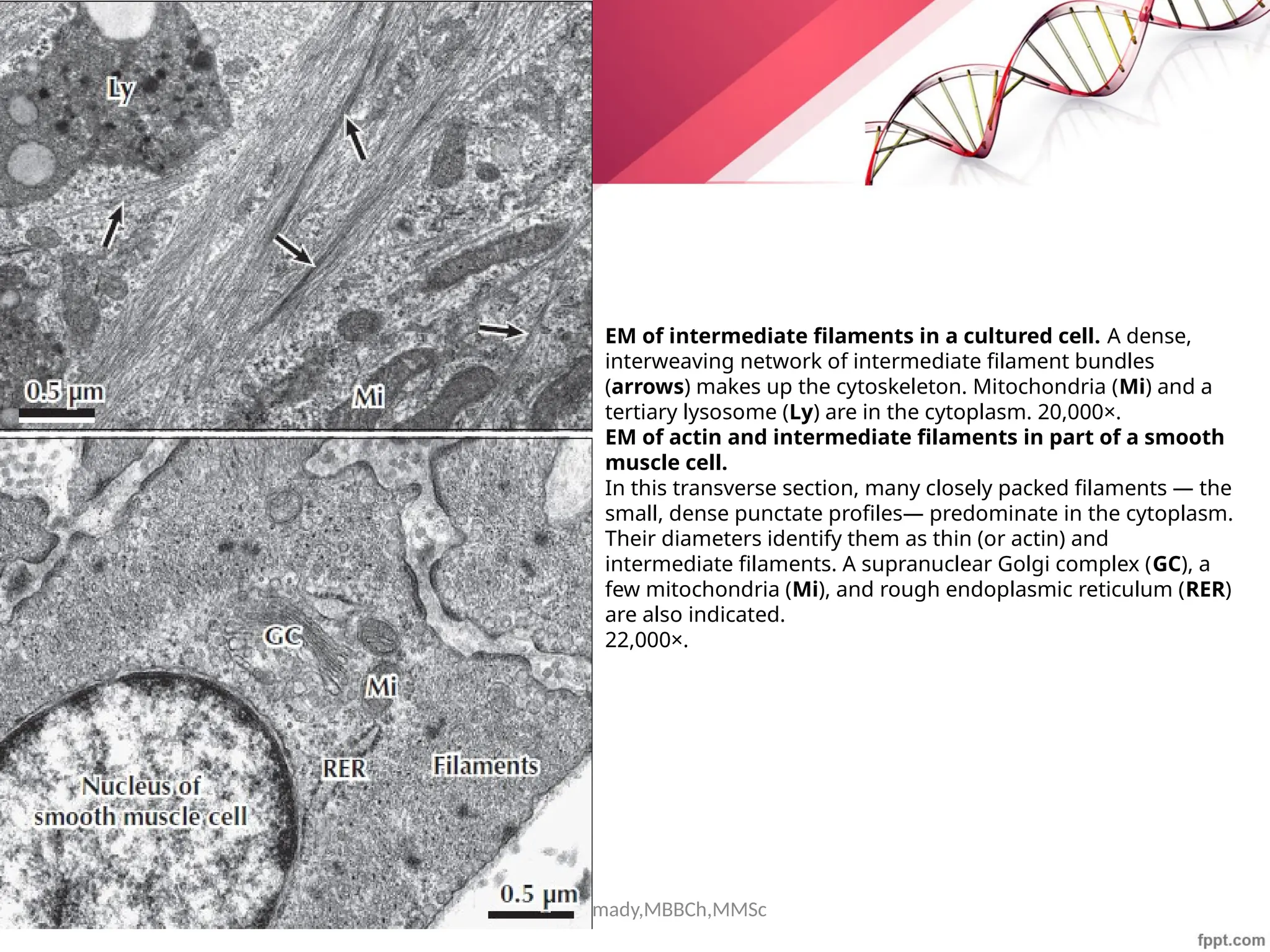
EM of intermediate filaments in a cultured cell. A dense,
interweaving network of intermediate filament bundles
(arrows) makes up the cytoskeleton. Mitochondria (Mi) and a
tertiary lysosome (Ly) are in the cytoplasm. 20,000×.
EM of actin and intermediate filaments in part of a smooth
muscle cell.
In this transverse section, many closely packed filaments — the
small, dense punctate profiles— predominate in the cytoplasm.
Their diameters identify them as thin (or actin) and
intermediate filaments. A supranuclear Golgi complex (GC), a
few mitochondria (Mi), and rough endoplasmic reticulum (RER)
are also indicated.
22,000×.
Maha Hammady,MBBCh,MMSc
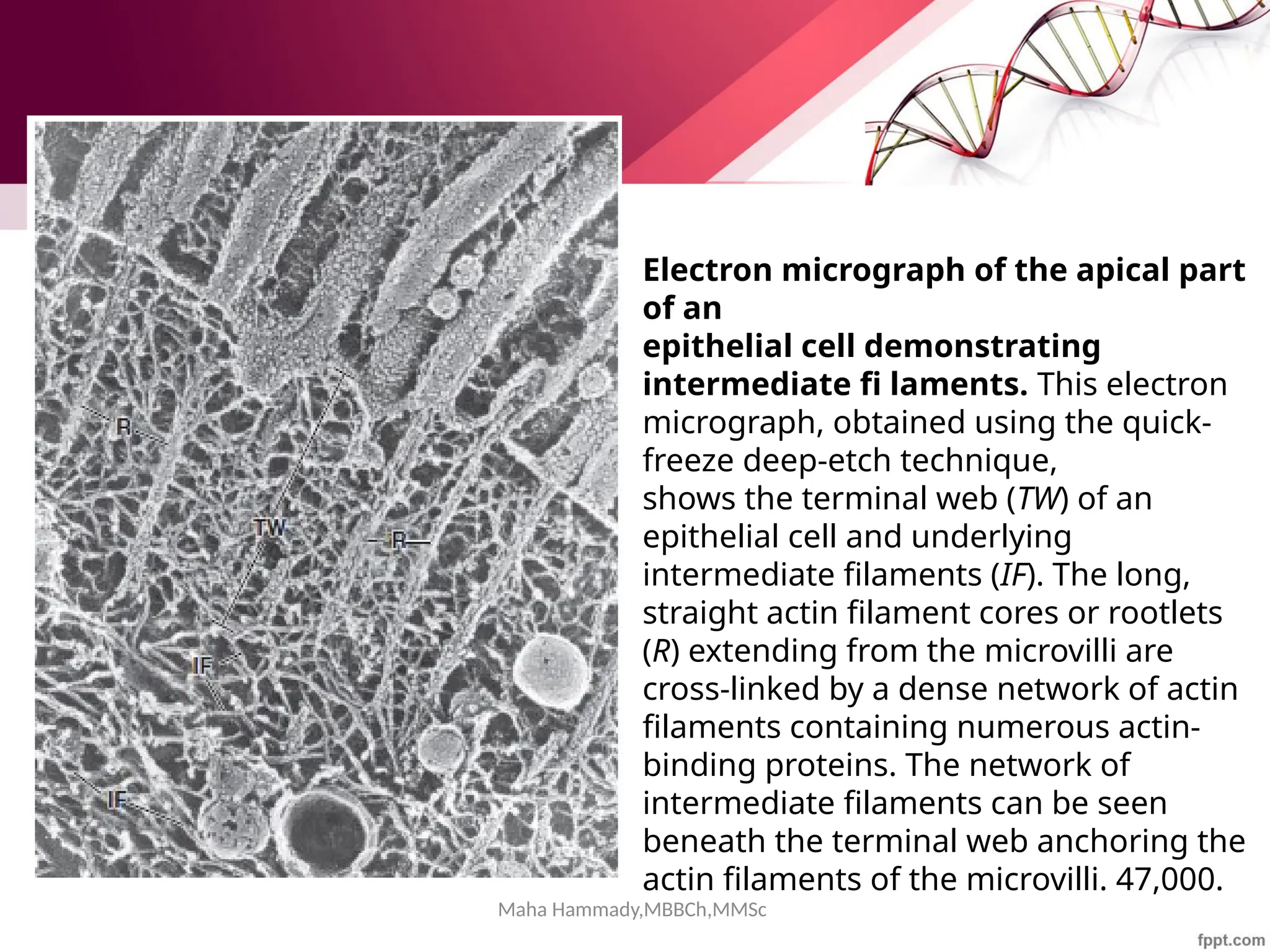
Electron micrograph of the apical part
of an
epithelial cell demonstrating
intermediate fi laments. This electron
micrograph, obtained using the quick-
freeze deep-etch technique,
shows the terminal web (TW) of an
epithelial cell and underlying
intermediate filaments (IF). The long,
straight actin filament cores or rootlets
(R) extending from the microvilli are
cross-linked by a dense network of actin
filaments containing numerous actin-
binding proteins. The network of
intermediate filaments can be seen
beneath the terminal web anchoring the
actin filaments of the microvilli. 47,000.
Maha Hammady,MBBCh,MMSc
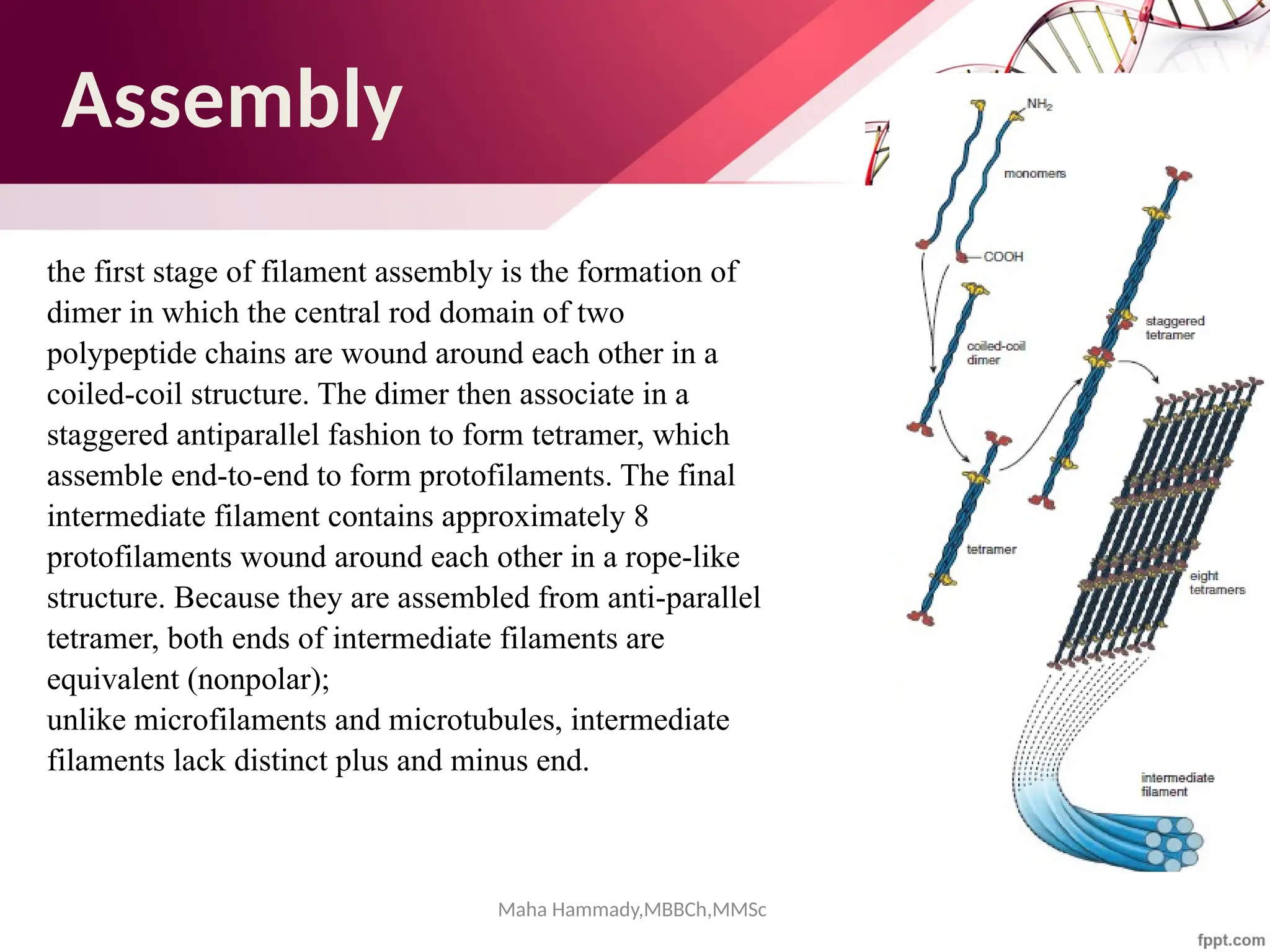
Assembly
the first stage of filament assembly is the formation of
dimer in which the central rod domain of two
polypeptide chains are wound around each other in a
coiled-coil structure. The dimer then associate in a
staggered antiparallel fashion to form tetramer, which
assemble end-to-end to form protofilaments. The final
intermediate filament contains approximately 8
protofilaments wound around each other in a rope-like
structure. Because they are assembled from anti-parallel
tetramer, both ends of intermediate filaments are
equivalent (nonpolar);
unlike microfilaments and microtubules, intermediate
filaments lack distinct plus and minus end.
Maha Hammady,MBBCh,MMSc
Types (classes)
Types (Classes)
Intermediate filaments are organized into six major classes on the basis of
gene structure, protein composition, and cellular distribution.
Classes 1(acidic cytokeratin) and 2 (basic cytokeratin): These are the most
diverse groups of intermediate filaments and are called keratins (cytokeratins).
These classes contain more than 50 different isoforms and account for most of
the intermediate filaments (about 54 genes of the total 70 human intermediate
filament genes are linked to keratin molecules). Keratin filaments are found in
different cells of epithelial origin. According to new nomenclature, keratins
are divided into groups: “soft keratin” which is present in epithelial tissues,
and structural keratins, also called “hard keratins”. The latest are found in skin
appendages such as hair and nails. Keratin filaments span the cytoplasm of
epithelial cells and, via desmosomes, connect with keratin filaments in
neighboring cells. Keratin subunits do not co-assemble with other classes of
intermediate filaments; therefore, they form a distinct cell-specific and tissue-
specific recognition system.
Maha Hammady,MBBCh,MMSc
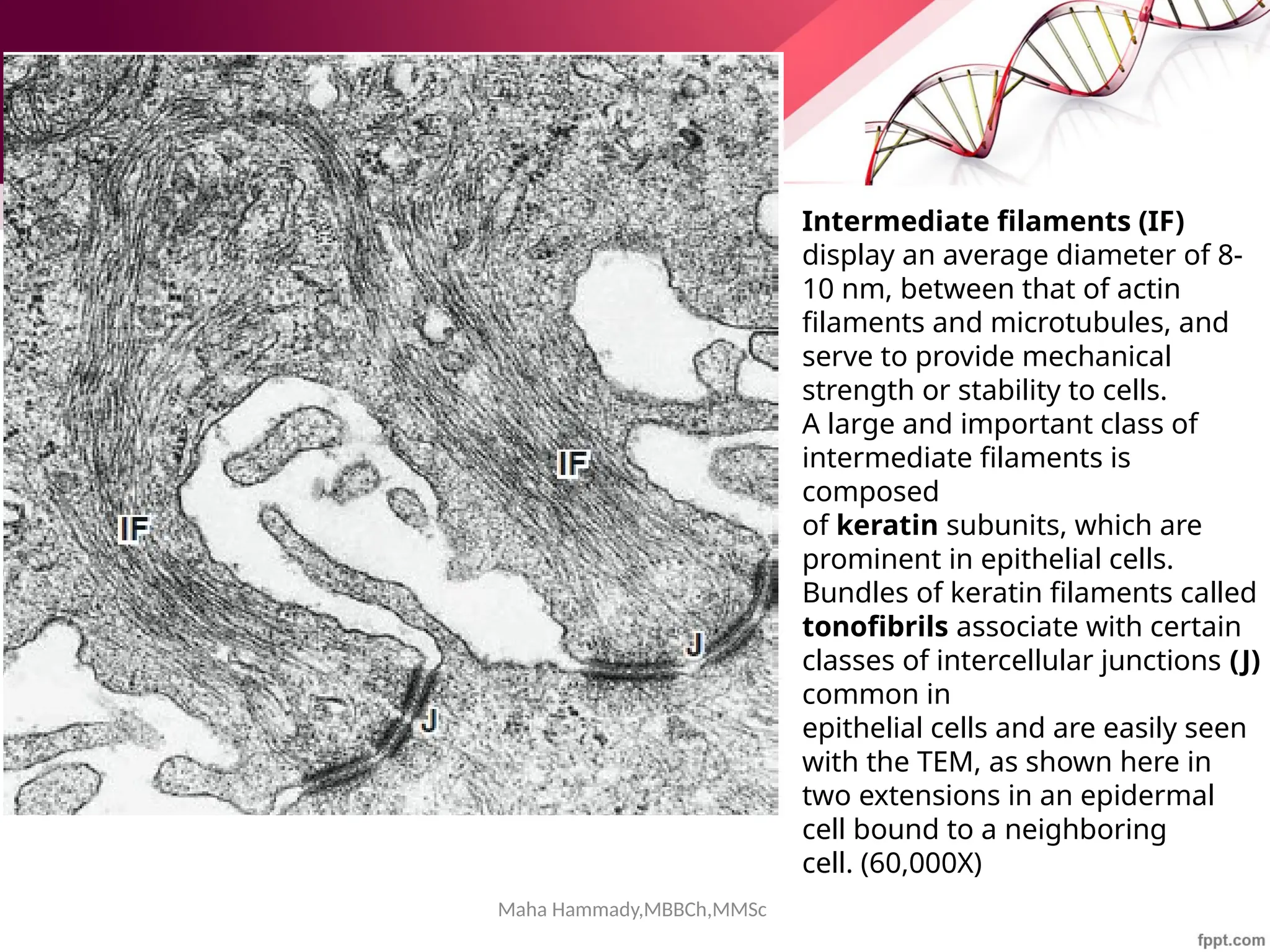
Intermediate filaments (IF)
display an average diameter of 8-
10 nm, between that of actin
filaments and microtubules, and
serve to provide mechanical
strength or stability to cells.
A large and important class of
intermediate filaments is
composed
of keratin subunits, which are
prominent in epithelial cells.
Bundles of keratin filaments called
tonofibrils associate with certain
classes of intercellular junctions (J)
common in
epithelial cells and are easily seen
with the TEM, as shown here in
two extensions in an epidermal
cell bound to a neighboring
cell. (60,000X)
Maha Hammady,MBBCh,MMSc
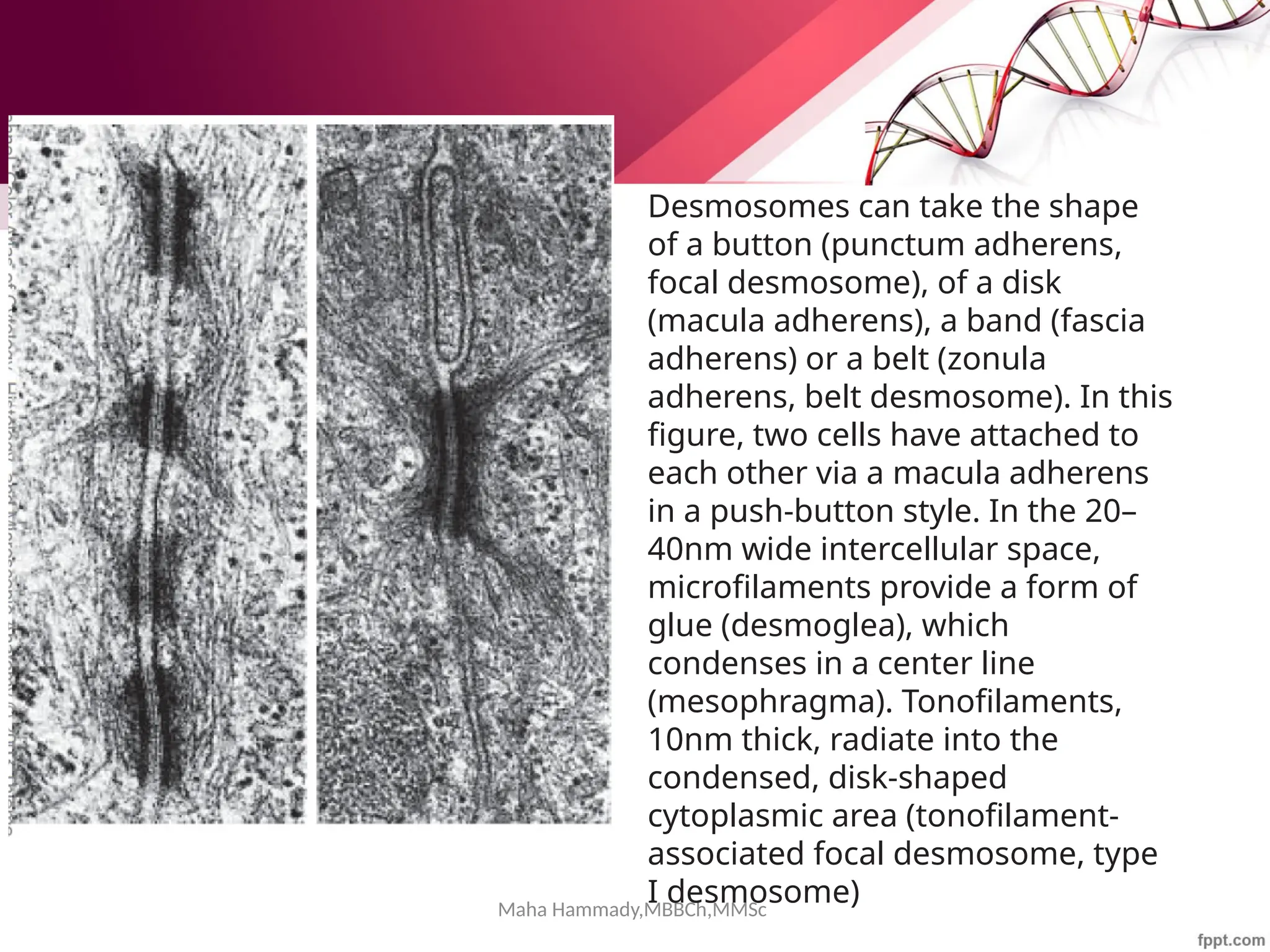
Desmosomes can take the shape
of a button (punctum adherens,
focal desmosome), of a disk
(macula adherens), a band (fascia
adherens) or a belt (zonula
adherens, belt desmosome). In this
figure, two cells have attached to
each other via a macula adherens
in a push-button style. In the 20–
40nm wide intercellular space,
microfilaments provide a form of
glue (desmoglea), which
condenses in a center line
(mesophragma). Tonofilaments,
10nm thick, radiate into the
condensed, disk-shaped
cytoplasmic area (tonofilament-
associated focal desmosome, type
I desmosome)
Maha Hammady,MBBCh,MMSc
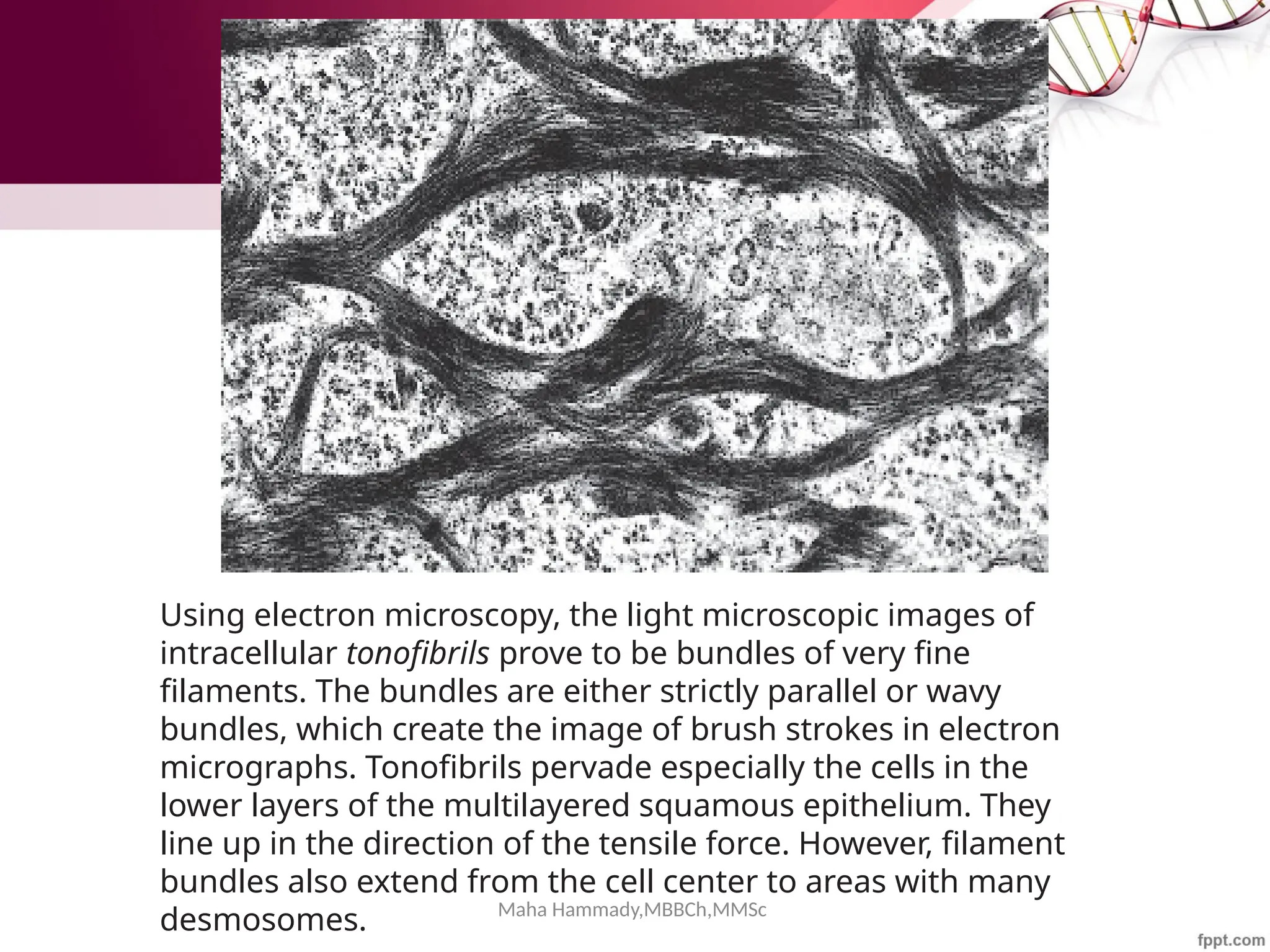
Using electron microscopy, the light microscopic images of
intracellular tonofibrils prove to be bundles of very fine
filaments. The bundles are either strictly parallel or wavy
bundles, which create the image of brush strokes in electron
micrographs. Tonofibrils pervade especially the cells in the
lower layers of the multilayered squamous epithelium. They
line up in the direction of the tensile force. However, filament
bundles also extend from the cell center to areas with many
desmosomes.
Maha Hammady,MBBCh,MMSc
Types (classes)
Class 3. This group contains four proteins:
1-vimentin, the most widely distributed intermediate filament protein in the
body,Vimentin is the most abundant intermediate filament found in all
mesoderm-derived cells, including fibroblasts,WBCs and smooth muscle.
Surrounds nuclear envelope; it is associated with cytoplasmic aspect of
nuclear pore complex.
2-desmin: desmin is characteristic of muscle cells. It links myofibrils in
striated muscle (around Z disks); attaches to cytoplasmic densities in smooth
muscle.
3-glial fibrillary acidic protein (GFAP): GFAP is found in glial cells (highly
specific for astrocytes)
4-peripherin: is found in many peripheral nerve cells.
They represent a diverse family of cytoplasmic filaments found in many cell
types.
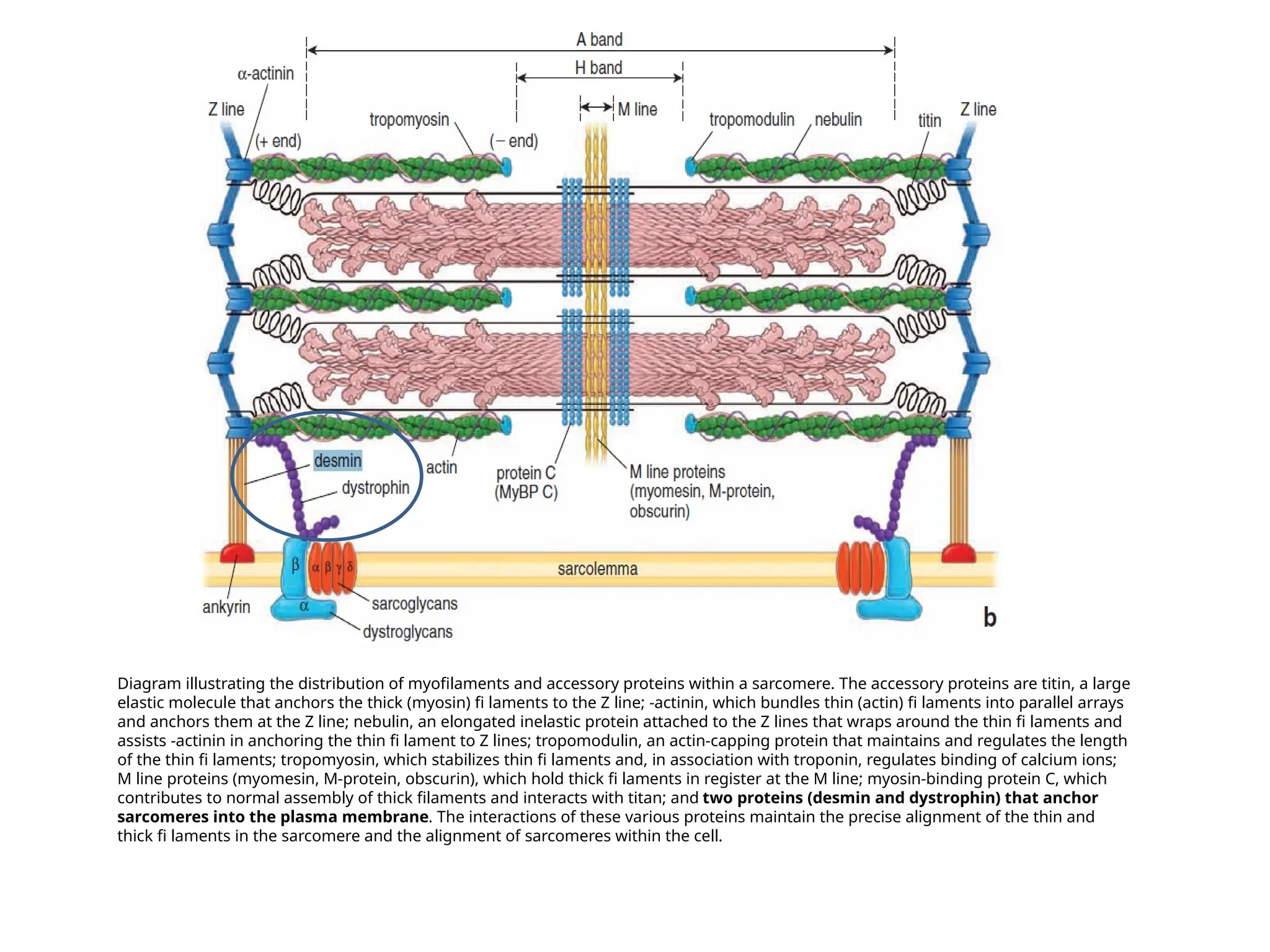
Diagram illustrating the distribution of myofilaments and accessory proteins within a sarcomere. The accessory proteins are titin, a large
elastic molecule that anchors the thick (myosin) fi laments to the Z line; -actinin, which bundles thin (actin) fi laments into parallel arrays
and anchors them at the Z line; nebulin, an elongated inelastic protein attached to the Z lines that wraps around the thin fi laments and
assists -actinin in anchoring the thin fi lament to Z lines; tropomodulin, an actin-capping protein that maintains and regulates the length
of the thin fi laments; tropomyosin, which stabilizes thin fi laments and, in association with troponin, regulates binding of calcium ions;
M line proteins (myomesin, M-protein, obscurin), which hold thick fi laments in register at the M line; myosin-binding protein C, which
contributes to normal assembly of thick filaments and interacts with titan; and two proteins (desmin and dystrophin) that anchor
sarcomeres into the plasma membrane. The interactions of these various proteins maintain the precise alignment of the thin and
thick fi laments in the sarcomere and the alignment of sarcomeres within the cell.
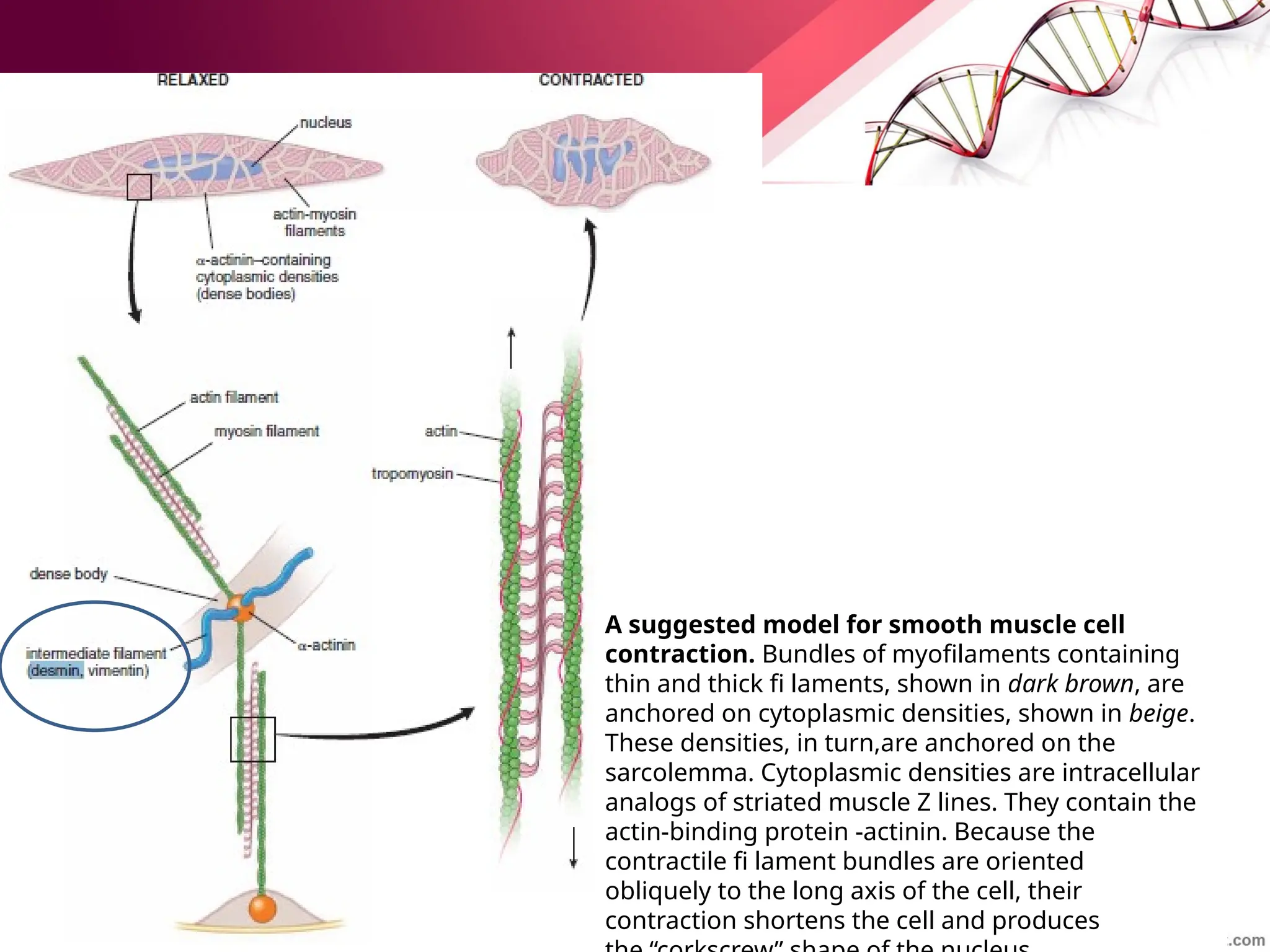
A suggested model for smooth muscle cell
contraction. Bundles of myofilaments containing
thin and thick fi laments, shown in dark brown, are
anchored on cytoplasmic densities, shown in beige.
These densities, in turn,are anchored on the
sarcolemma. Cytoplasmic densities are intracellular
analogs of striated muscle Z lines. They contain the
actin-binding protein -actinin. Because the
contractile fi lament bundles are oriented
obliquely to the long axis of the cell, their
contraction shortens the cell and produces
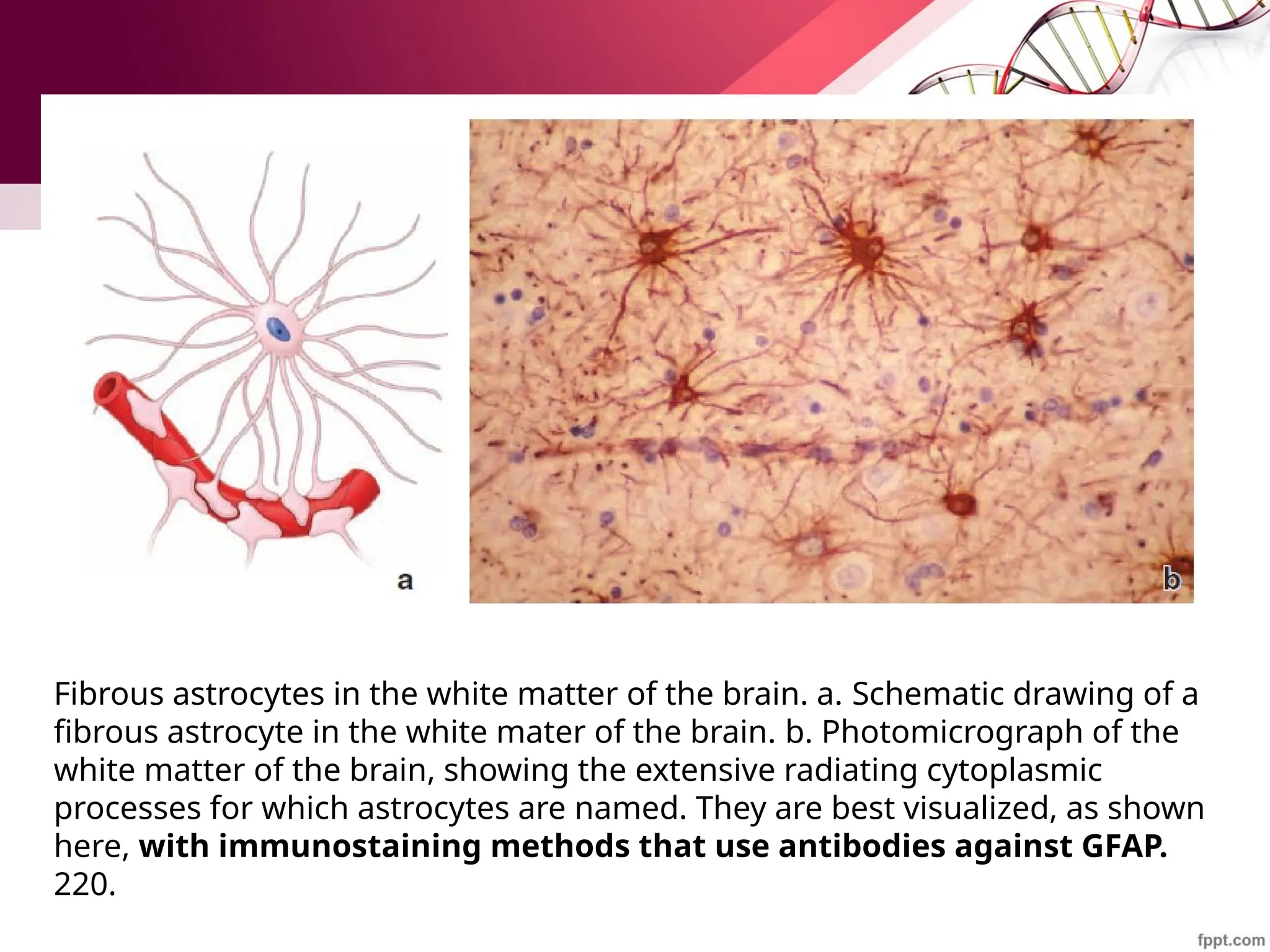
Fibrous astrocytes in the white matter of the brain. a. Schematic drawing of a
fibrous astrocyte in the white mater of the brain. b. Photomicrograph of the
white matter of the brain, showing the extensive radiating cytoplasmic
processes for which astrocytes are named. They are best visualized, as shown
here, with immunostaining methods that use antibodies against GFAP.
220.
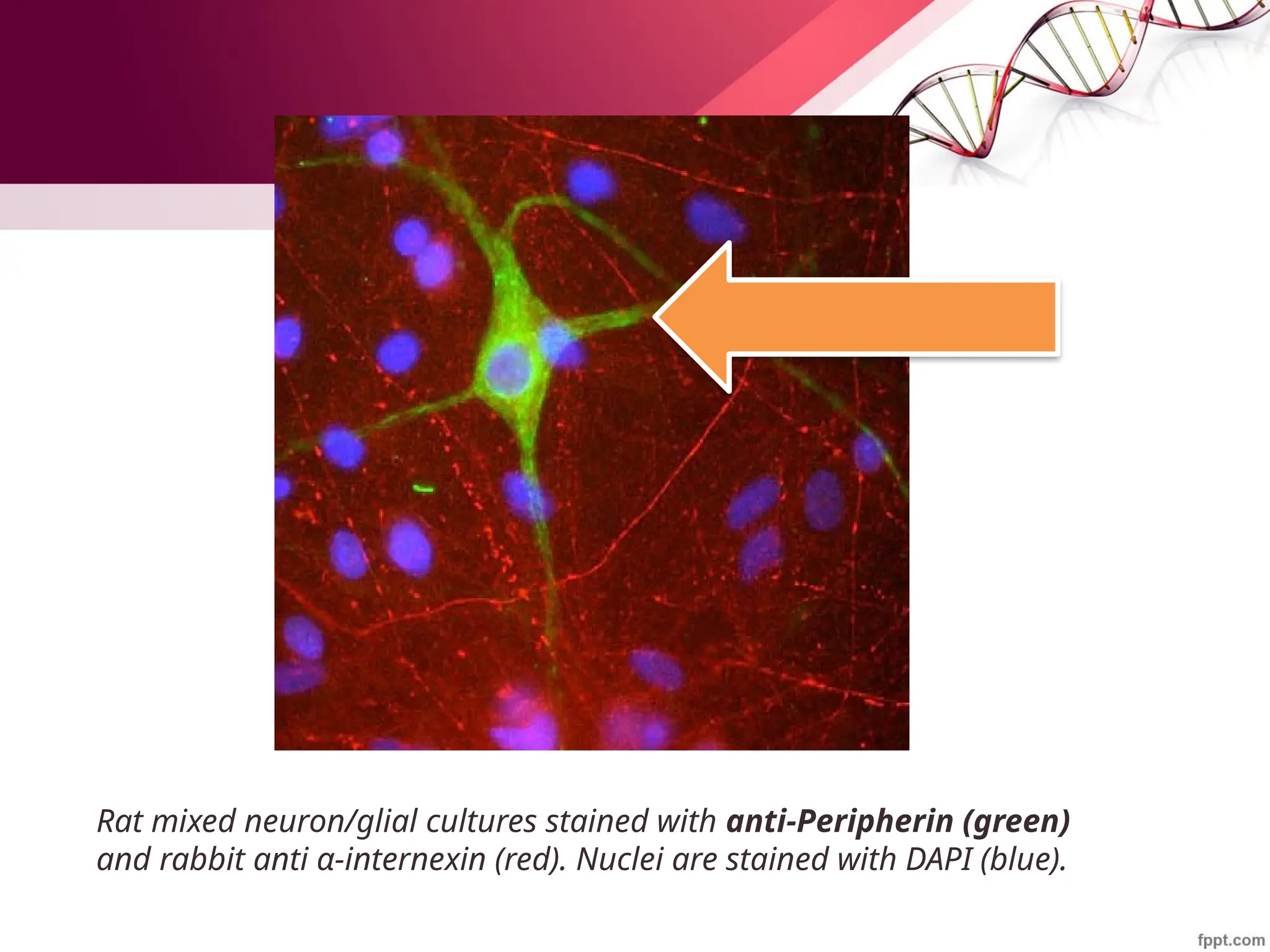
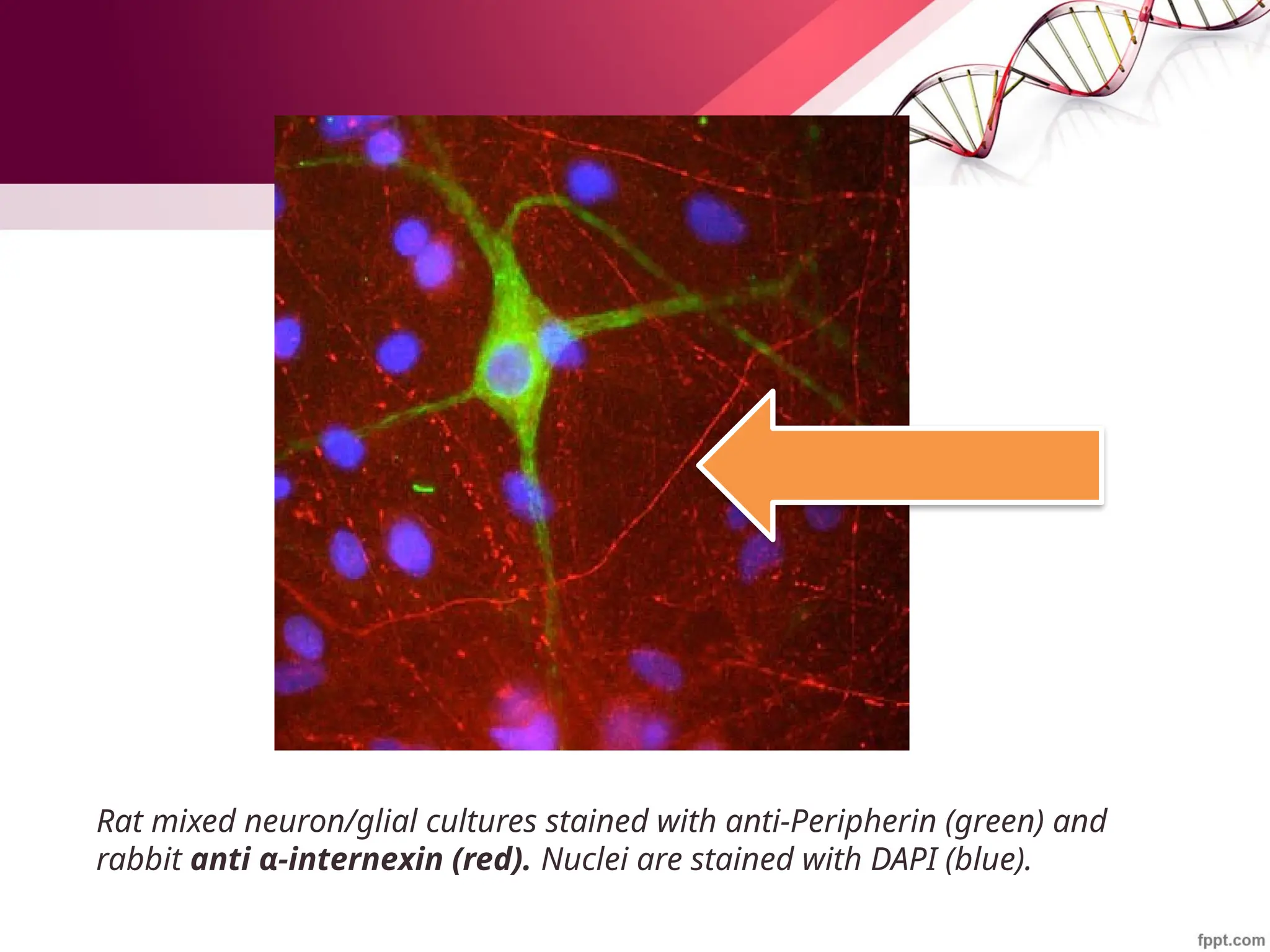
Rat mixed neuron/glial cultures stained with anti-Peripherin (green)
and rabbit anti α-internexin (red). Nuclei are stained with DAPI (blue).
Maha Hammady,MBBCh,MMSc
Types (classes)
Class 4. Historically, this group has been called neurofilaments; they contain
intermediate filament proteins that are expressed mostly in axons of nerve
cells. It is more abundantly in the long axons of motor neurons. The three
types of neurofilament proteins are of different molecular weights:
1-NF-L (a low-weight protein)
2-NF-M (a mediumweight protein)
3-NF-H (a high-weight protein).
All three proteins form neurofilaments that extend from the cell body into the
ends of axons and dendrites, providing structural support. However, genes for
class 4 proteins also encode several other intermediate filament proteins.
These include nestin and α-internexin in nerve cells as well as synemin,
syncoilin, and paranemin in muscle cells.
Maha Hammady,MBBCh,MMSc
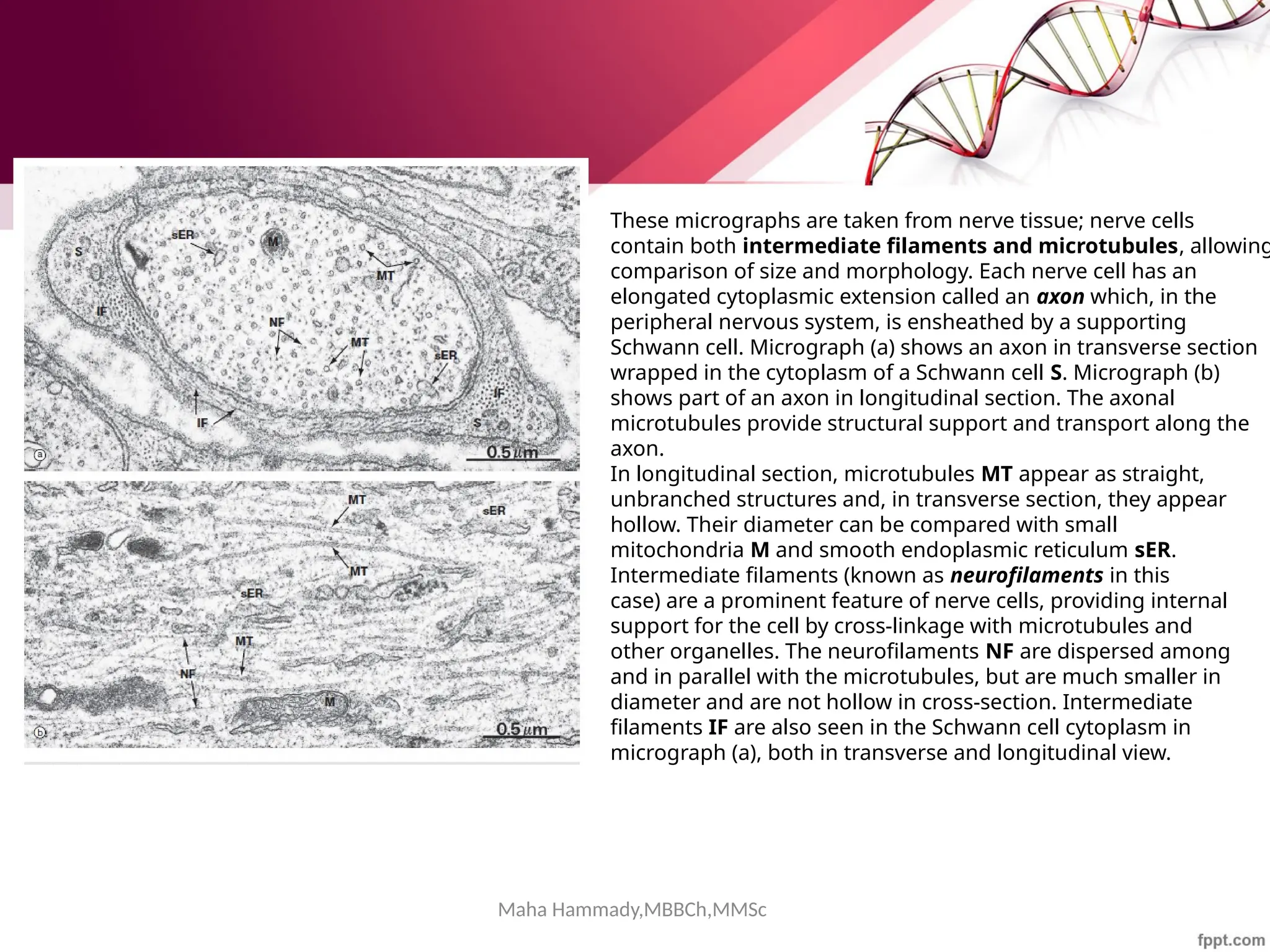
These micrographs are taken from nerve tissue; nerve cells
contain both intermediate filaments and microtubules, allowing
comparison of size and morphology. Each nerve cell has an
elongated cytoplasmic extension called an axon which, in the
peripheral nervous system, is ensheathed by a supporting
Schwann cell. Micrograph (a) shows an axon in transverse section
wrapped in the cytoplasm of a Schwann cell S. Micrograph (b)
shows part of an axon in longitudinal section. The axonal
microtubules provide structural support and transport along the
axon.
In longitudinal section, microtubules MT appear as straight,
unbranched structures and, in transverse section, they appear
hollow. Their diameter can be compared with small
mitochondria M and smooth endoplasmic reticulum sER.
Intermediate filaments (known as neurofilaments in this
case) are a prominent feature of nerve cells, providing internal
support for the cell by cross-linkage with microtubules and
other organelles. The neurofilaments NF are dispersed among
and in parallel with the microtubules, but are much smaller in
diameter and are not hollow in cross-section. Intermediate
filaments IF are also seen in the Schwann cell cytoplasm in
micrograph (a), both in transverse and longitudinal view.
Rat mixed neuron/glial cultures stained with anti-Peripherin (green) and
rabbit anti α-internexin (red). Nuclei are stained with DAPI (blue).
Types (classes)
Class 5. Lamins, specifically nuclear lamins, form a network-like structure
that is associated with the nuclear envelope. Lamins are represented by two
types of proteins, lamin A and lamin B. In contrast to other types of
intermediate filaments found in the cytoplasm, lamins are located within the
nucleoplasm of almost all differentiated cells in the body. Intermediate
filaments or cytoplasmic, The only exception is the lamins which are nuclear.
Maha Hammady,MBBCh,MMSc
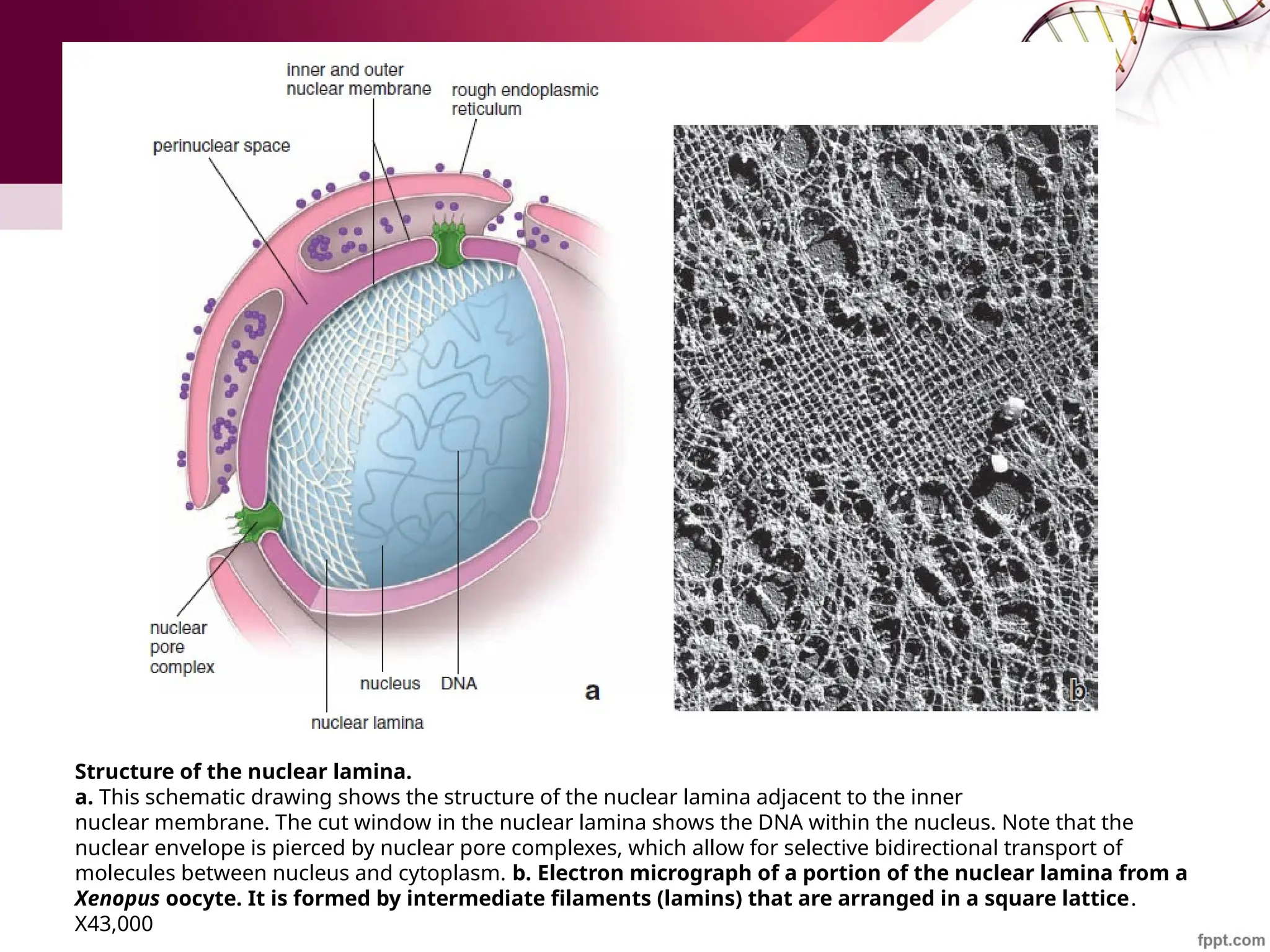
Structure of the nuclear lamina.
a. This schematic drawing shows the structure of the nuclear lamina adjacent to the inner
nuclear membrane. The cut window in the nuclear lamina shows the DNA within the nucleus. Note that the
nuclear envelope is pierced by nuclear pore complexes, which allow for selective bidirectional transport of
molecules between nucleus and cytoplasm. b. Electron micrograph of a portion of the nuclear lamina from a
Xenopus oocyte. It is formed by intermediate filaments (lamins) that are arranged in a square lattice.
X43,000
Maha Hammady,MBBCh,MMSc
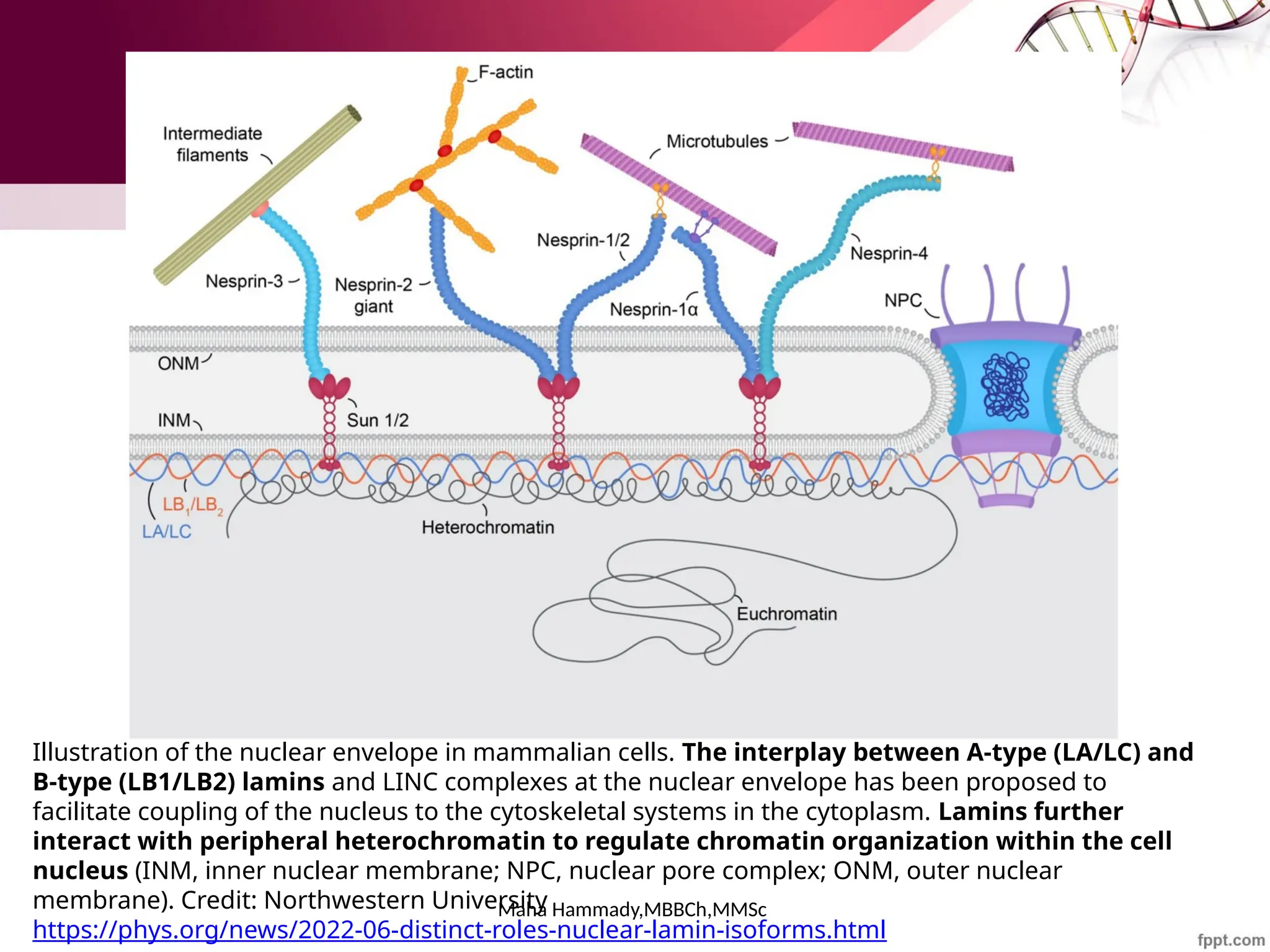
Illustration of the nuclear envelope in mammalian cells. The interplay between A-type (LA/LC) and
B-type (LB1/LB2) lamins and LINC complexes at the nuclear envelope has been proposed to
facilitate coupling of the nucleus to the cytoskeletal systems in the cytoplasm. Lamins further
interact with peripheral heterochromatin to regulate chromatin organization within the cell
nucleus (INM, inner nuclear membrane; NPC, nuclear pore complex; ONM, outer nuclear
membrane). Credit: Northwestern University
https://phys.org/news/2022-06-distinct-roles-nuclear-lamin-isoforms.html
Types (classes)
Class 6. This is a lens-specific group of intermediate filaments, or “beaded
filaments” containing two proteins, phakinin and filensin. The periodic bead-
like surface appearance of these filaments is attributed to the globular
structure of the carboxy-terminus of the filensin molecule, which projects out
from the assembled filament core. They Sustain the transparency of the lens.
Maha Hammady,MBBCh,MMSc
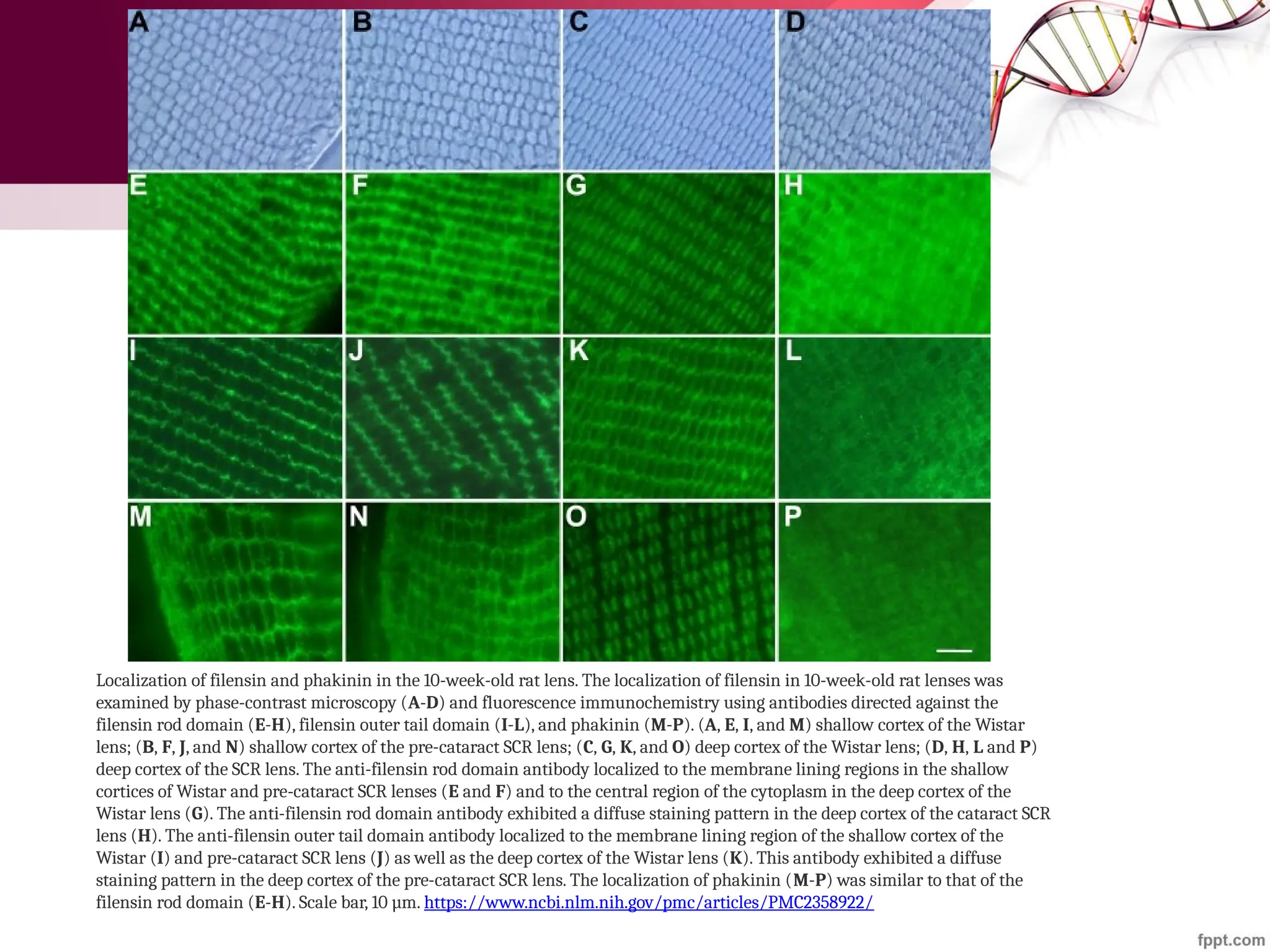
Localization of filensin and phakinin in the 10-week-old rat lens. The localization of filensin in 10-week-old rat lenses was
examined by phase-contrast microscopy (A-D) and fluorescence immunochemistry using antibodies directed against the
filensin rod domain (E-H), filensin outer tail domain (I-L), and phakinin (M-P). (A, E, I, and M) shallow cortex of the Wistar
lens; (B, F, J, and N) shallow cortex of the pre-cataract SCR lens; (C, G, K, and O) deep cortex of the Wistar lens; (D, H, L and P)
deep cortex of the SCR lens. The anti-filensin rod domain antibody localized to the membrane lining regions in the shallow
cortices of Wistar and pre-cataract SCR lenses (E and F) and to the central region of the cytoplasm in the deep cortex of the
Wistar lens (G). The anti-filensin rod domain antibody exhibited a diffuse staining pattern in the deep cortex of the cataract SCR
lens (H). The anti-filensin outer tail domain antibody localized to the membrane lining region of the shallow cortex of the
Wistar (I) and pre-cataract SCR lens (J) as well as the deep cortex of the Wistar lens (K). This antibody exhibited a diffuse
staining pattern in the deep cortex of the pre-cataract SCR lens. The localization of phakinin (M-P) was similar to that of the
filensin rod domain (E-H). Scale bar, 10 µm. https://www.ncbi.nlm.nih.gov/pmc/articles/PMC2358922/
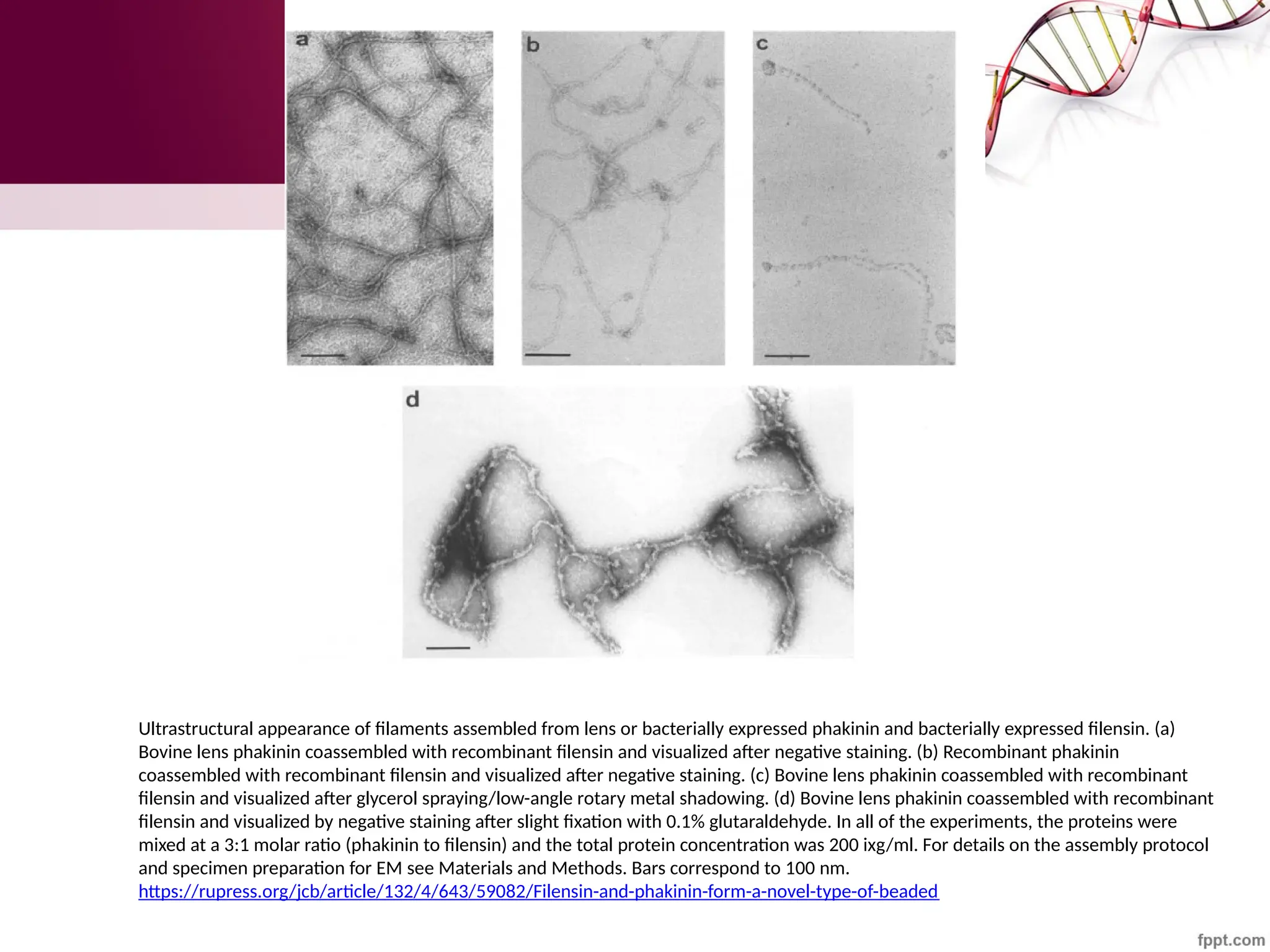
Ultrastructural appearance of filaments assembled from lens or bacterially expressed phakinin and bacterially expressed filensin. (a)
Bovine lens phakinin coassembled with recombinant filensin and visualized after negative staining. (b) Recombinant phakinin
coassembled with recombinant filensin and visualized after negative staining. (c) Bovine lens phakinin coassembled with recombinant
filensin and visualized after glycerol spraying/low-angle rotary metal shadowing. (d) Bovine lens phakinin coassembled with recombinant
filensin and visualized by negative staining after slight fixation with 0.1% glutaraldehyde. In all of the experiments, the proteins were
mixed at a 3:1 molar ratio (phakinin to filensin) and the total protein concentration was 200 ixg/ml. For details on the assembly protocol
and specimen preparation for EM see Materials and Methods. Bars correspond to 100 nm.
https://rupress.org/jcb/article/132/4/643/59082/Filensin-and-phakinin-form-a-novel-type-of-beaded
Maha Hammady,MBBCh,MMSc
Intracellular Organization And
Function
Intermediate filaments form an elaborate network in the cytoplasm of most cells, extending from
ring around the nucleus to the plasma membrane.A variety of intermediate filament–associated
proteins function within the cytoskeleton as integral parts of the molecular architecture of cells:
1-both keratin and vimentin filaments attached to the nuclear envelope from its cytoplasmic aspect
serves to hold and anchor the nucleus within its position within the cell
2-Some proteins, such as those of the plectin family, possess binding sites for actin filaments,
microtubules, and intermediate filaments and are thus important in the proper assembly of the
cytoskeleton.
3-Lamins, the intermediate filaments in the nucleus, are associated with numerous proteins in the
inner nuclear membrane, including emerin, lamin B receptor (LBR), nurim, and several lamina-
associated polypeptides. Some of these proteins have multiple binding sites to intermediate
filaments, actin, chromatin, and signaling proteins; thus, they function in chromatin organization,
gene expression, nuclear architecture, and cell signaling and provide an essential link between the
nucleoskeleton and cytoskeleton of the cell.
4-Another important family of intermediate filament–associated proteins consists of desmoplakins,
desmoplakin-like proteins, and plakoglobins. These proteins form the attachment plaques for
intermediate filaments, an essential part of desmosomes and hemidesmosomes. The interaction of
intermediate filaments with cell-to-cell and cell-to-extracellular matrix junctions provides
mechanical strength to the whole tissue.
Maha Hammady,MBBCh,MMSc
Clinical Application
As noted, the molecular structure of intermediate filaments is tissue-specific and consists of many different types of
proteins. Several diseases are caused by defects in the proper assembly of intermediate filaments. These defects have
also been induced experimentally by mutations in intermediate filament genes in laboratory animals.
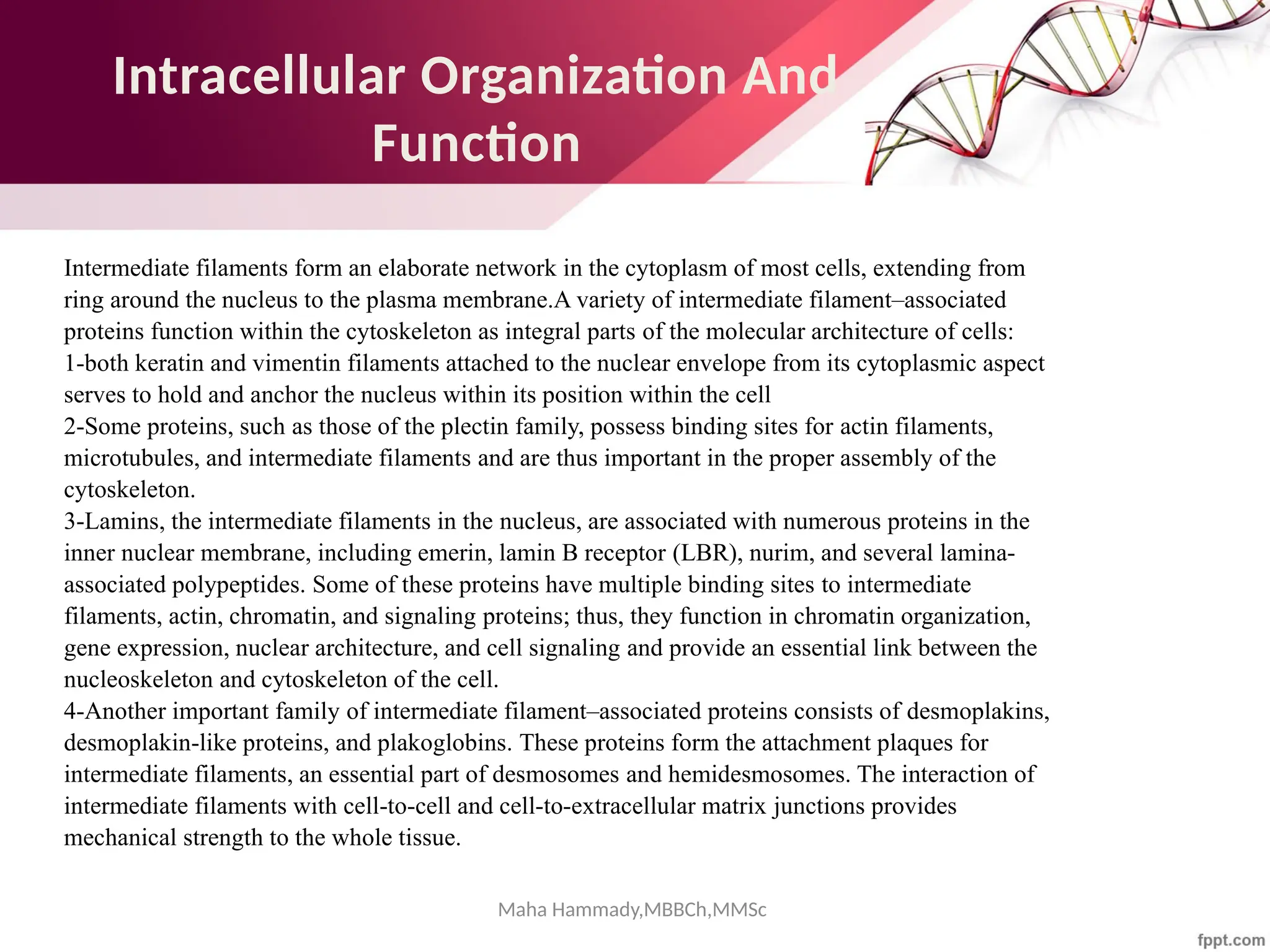
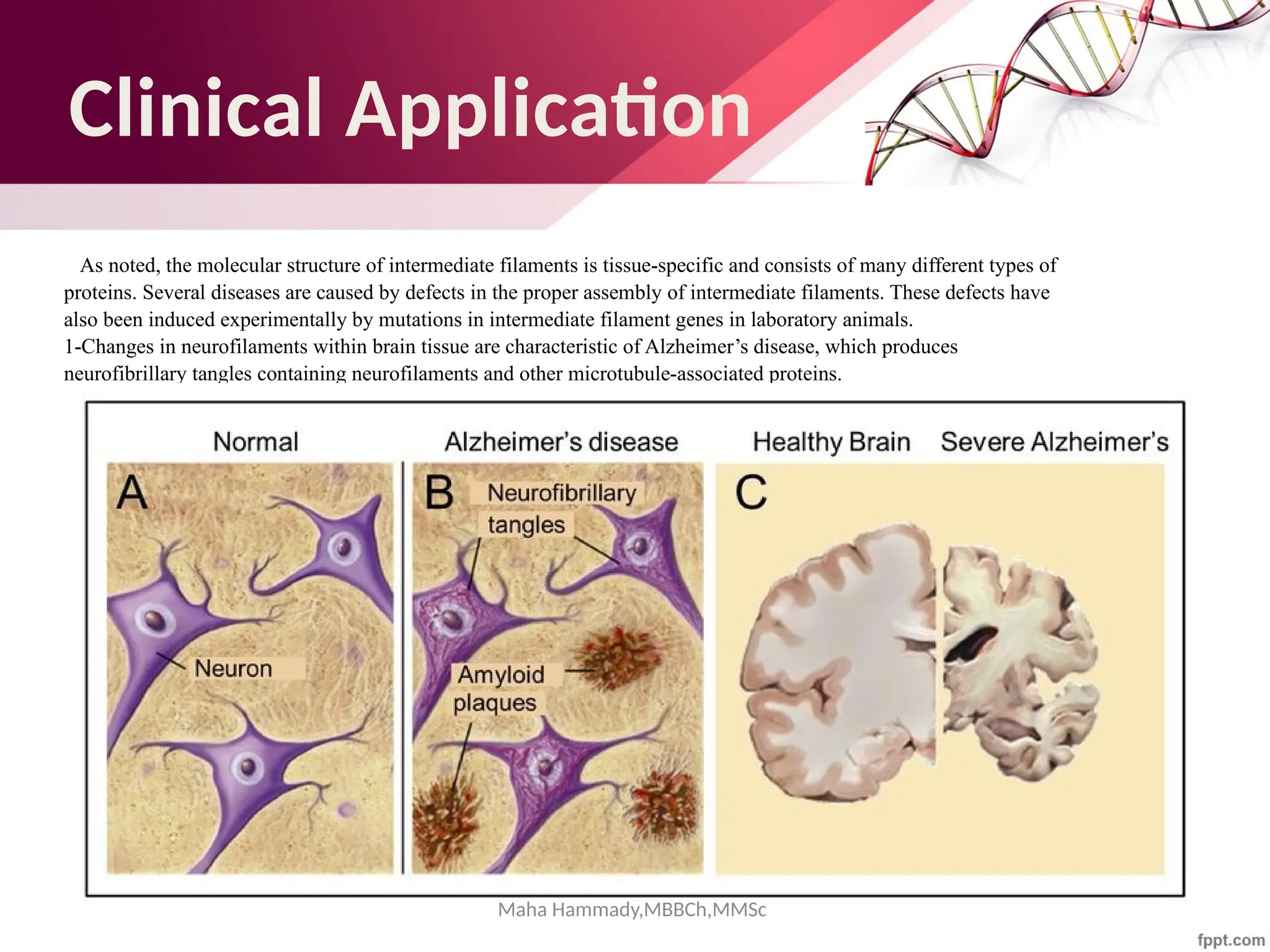
1-Changes in neurofilaments within brain tissue are characteristic of Alzheimer’s disease, which produces
neurofibrillary tangles containing neurofilaments and other microtubule-associated proteins.
Maha Hammady,MBBCh,MMSc
Clinical Application
As noted, the molecular structure of intermediate filaments is tissue-specific and consists of many different types of
proteins. Several diseases are caused by defects in the proper assembly of intermediate filaments. These defects have
also been induced experimentally by mutations in intermediate filament genes in laboratory animals.
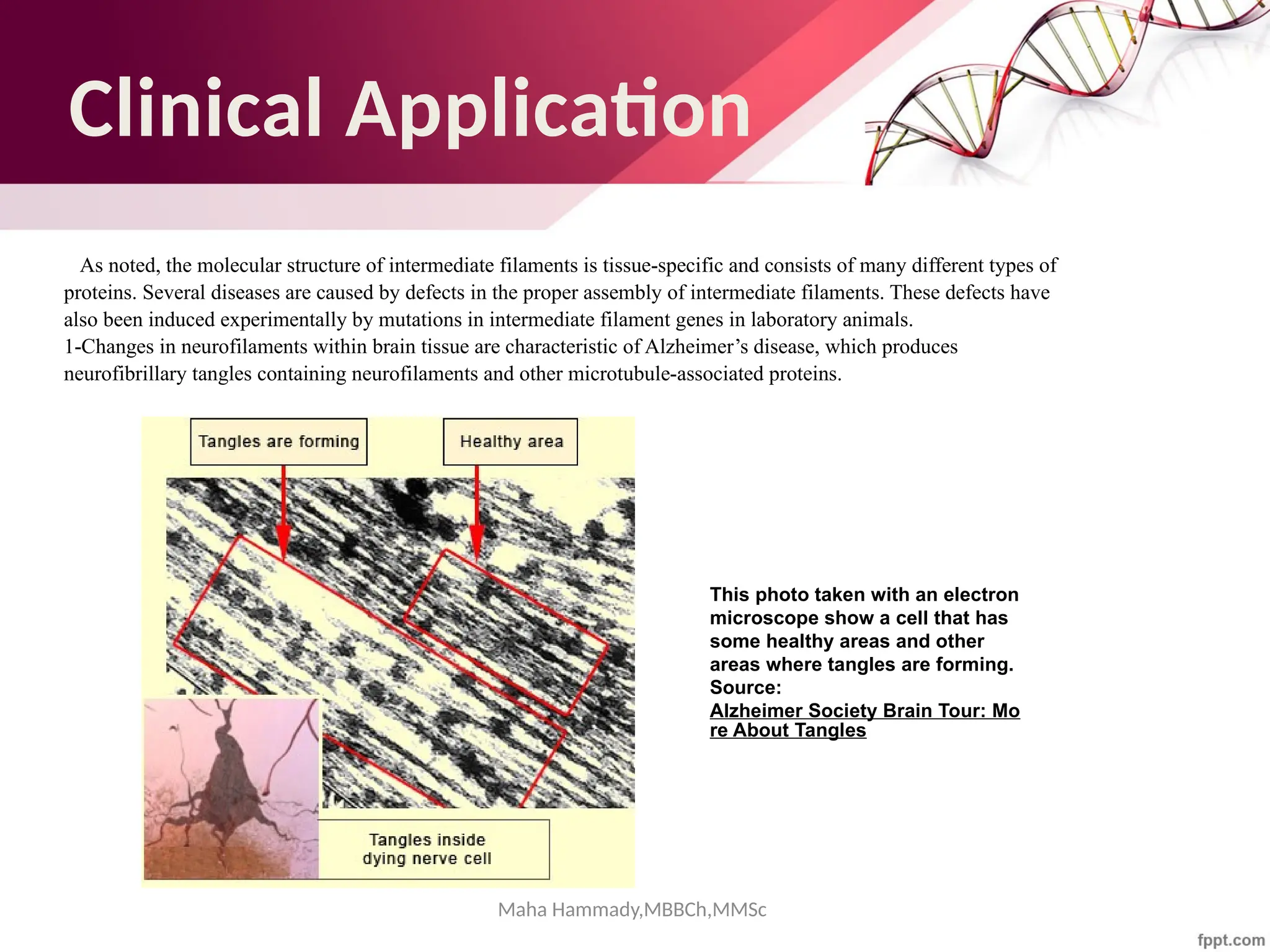
1-Changes in neurofilaments within brain tissue are characteristic of Alzheimer’s disease, which produces
neurofibrillary tangles containing neurofilaments and other microtubule-associated proteins.
This photo taken with an electron
microscope show a cell that has
some healthy areas and other
areas where tangles are forming.
Source:
Alzheimer Society Brain Tour: Mo
re About Tangles
Maha Hammady,MBBCh,MMSc
Clinical Application
2-Another disorder of the central nervous system, Alexander disease is associated with
mutations in the coding region of the GFAP gene. The pathologic feature of this disease
is the presence of cytoplasmic inclusions in astrocytes (Rosenthal fibers) that contain
accumulation of intermediate filament protein GFAP. Altered GFAP prevents the
assembly not only of intermediate filaments but also of other proteins that contribute to
the structural integrity and function of astrocytes. Infants with Alexander disease
develop leukoencephalopathy (infection of the brain) with macrocephaly (abnormally
large head), seizures, and psychomotor impairment, leading to death usually within the
first decade of life.
Maha Hammady,MBBCh,MMSc
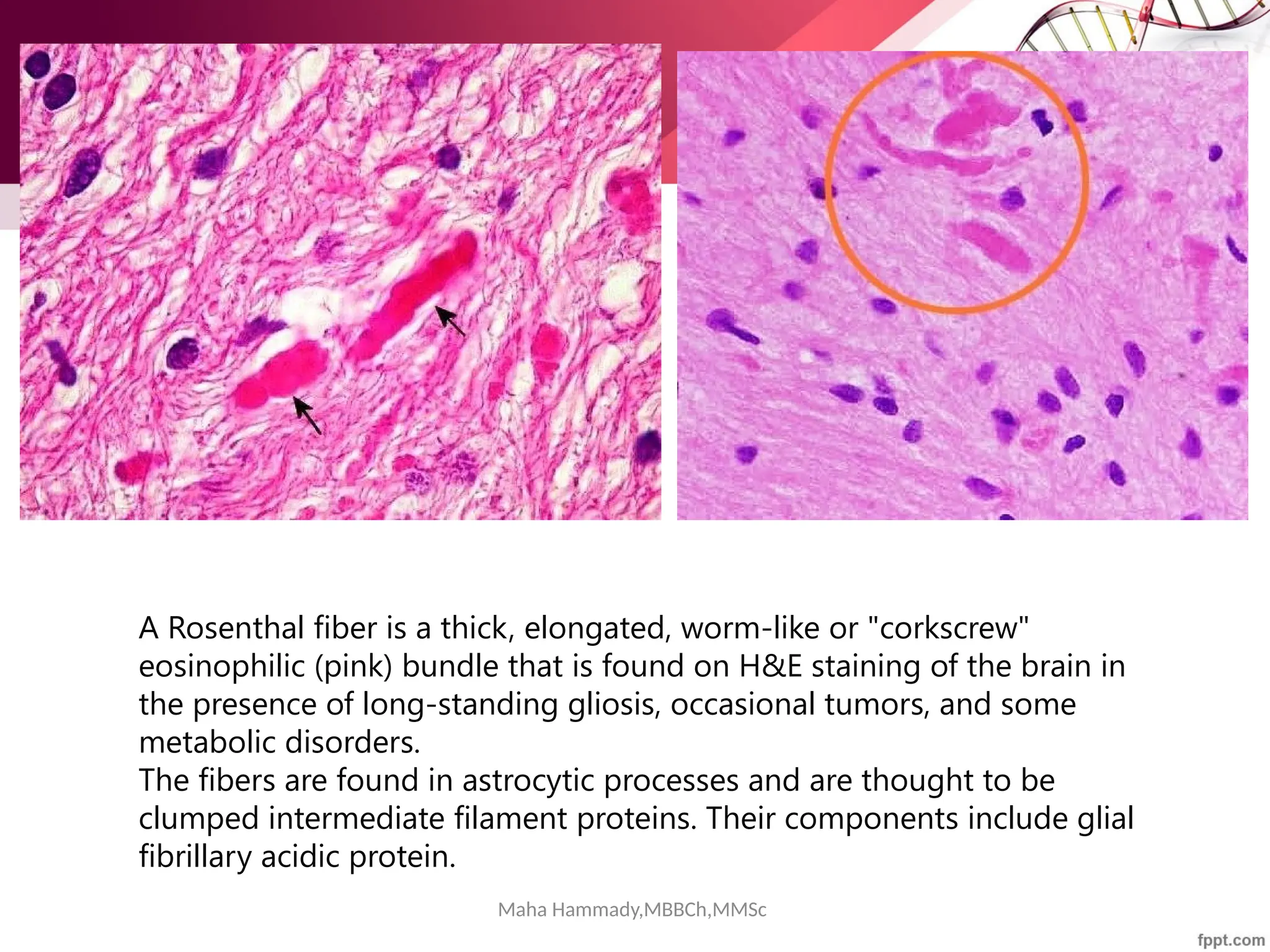
A Rosenthal fiber is a thick, elongated, worm-like or "corkscrew"
eosinophilic (pink) bundle that is found on H&E staining of the brain in
the presence of long-standing gliosis, occasional tumors, and some
metabolic disorders.
The fibers are found in astrocytic processes and are thought to be
clumped intermediate filament proteins. Their components include glial
fibrillary acidic protein.
Maha Hammady,MBBCh,MMSc
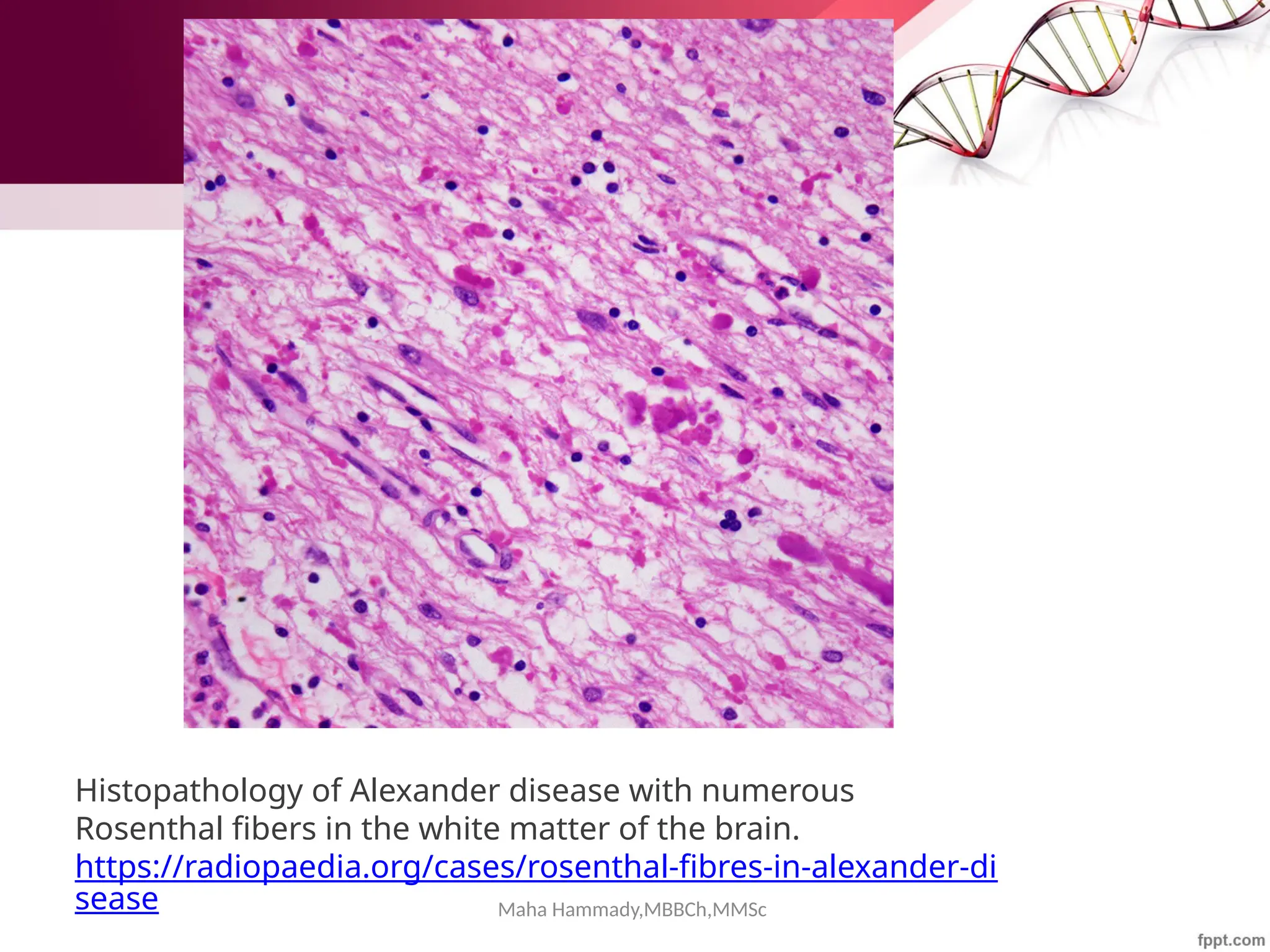
Histopathology of Alexander disease with numerous
Rosenthal fibers in the white matter of the brain.
https://radiopaedia.org/cases/rosenthal-fibres-in-alexander-di
sease
Maha Hammady,MBBCh,MMSc
Photomicrograph from a pilocytic astrocytoma showing brightly staining red Rosenthal
fibers (arrowheads). (Hematoxylin-eosin [H&E]; original magnification, 1000×
https://www.ajnr.org/content/27/5/958
Maha Hammady,MBBCh,MMSc
Clinical Application
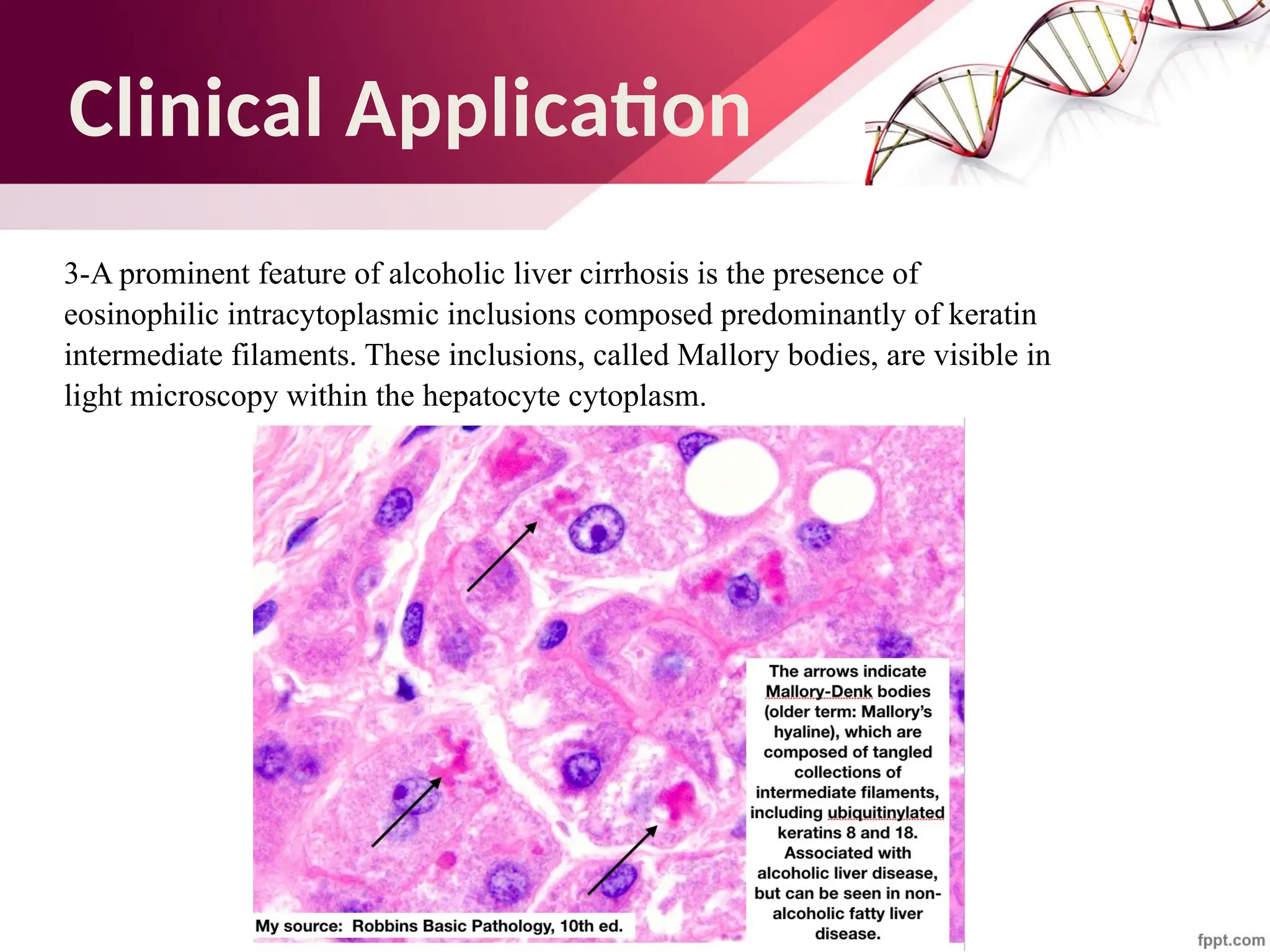
3-A prominent feature of alcoholic liver cirrhosis is the presence of
eosinophilic intracytoplasmic inclusions composed predominantly of keratin
intermediate filaments. These inclusions, called Mallory bodies, are visible in
light microscopy within the hepatocyte cytoplasm.
Clinical Application
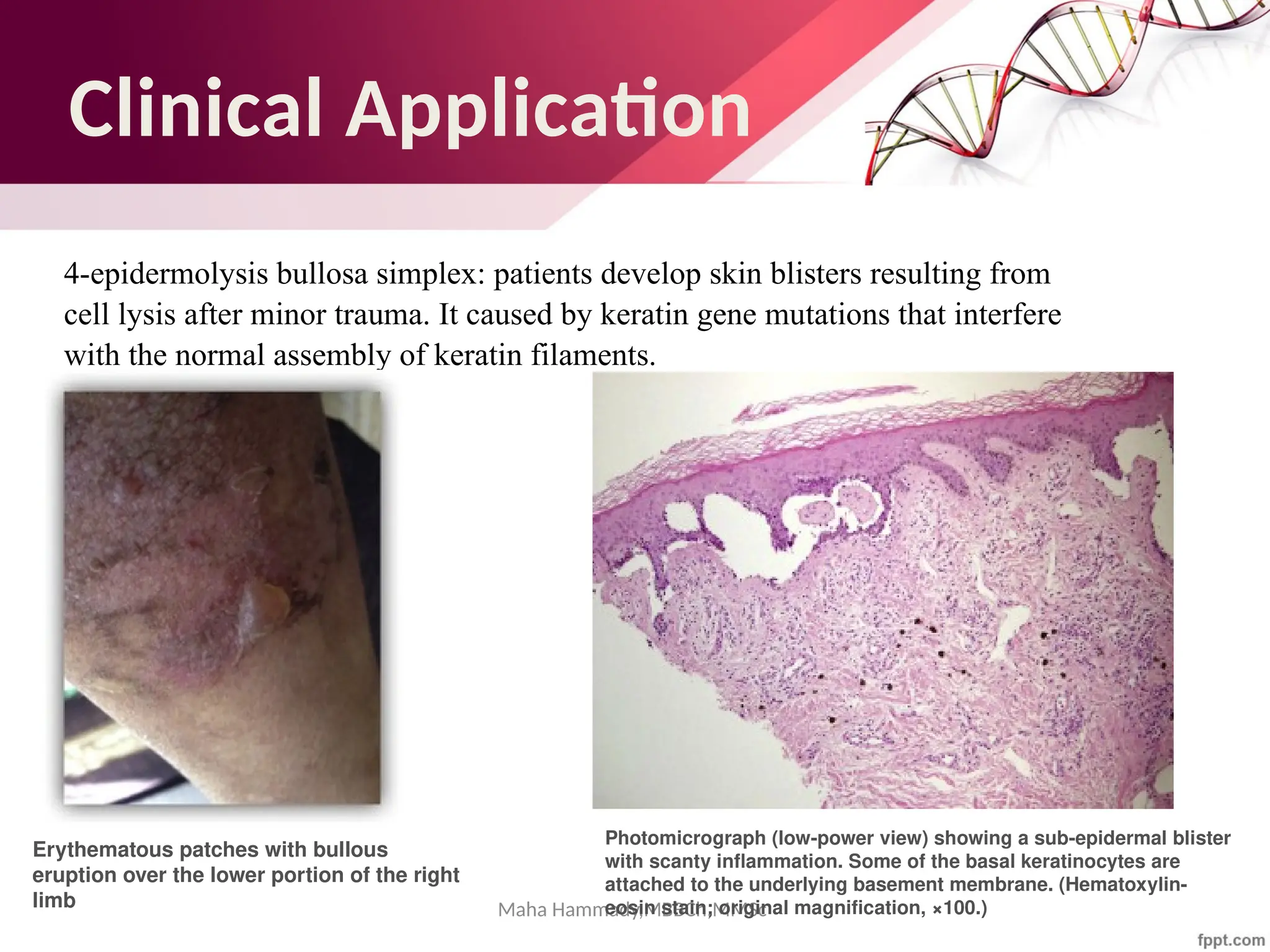
4-epidermolysis bullosa simplex: patients develop skin blisters resulting from
cell lysis after minor trauma. It caused by keratin gene mutations that interfere
with the normal assembly of keratin filaments.
Maha Hammady,MBBCh,MMSc
Erythematous patches with bullous
eruption over the lower portion of the right
limb
Photomicrograph (low-power view) showing a sub-epidermal blister
with scanty inflammation. Some of the basal keratinocytes are
attached to the underlying basement membrane. (Hematoxylin-
eosin stain; original magnification, ×100.)
Maha Hammady,MBBCh,MMSc
Clinical Application
5-The presence of a specific type of intermediate filament in tumors can often
reveal the cellular origin of the tumor, information important for diagnosis and
treatment of the cancer. Identification of intermediate filament proteins by
means of immunocytochemical methods is a routine procedure. One example
is the use of GFAP to identify astrocytomas, the most common type of brain
tumor.
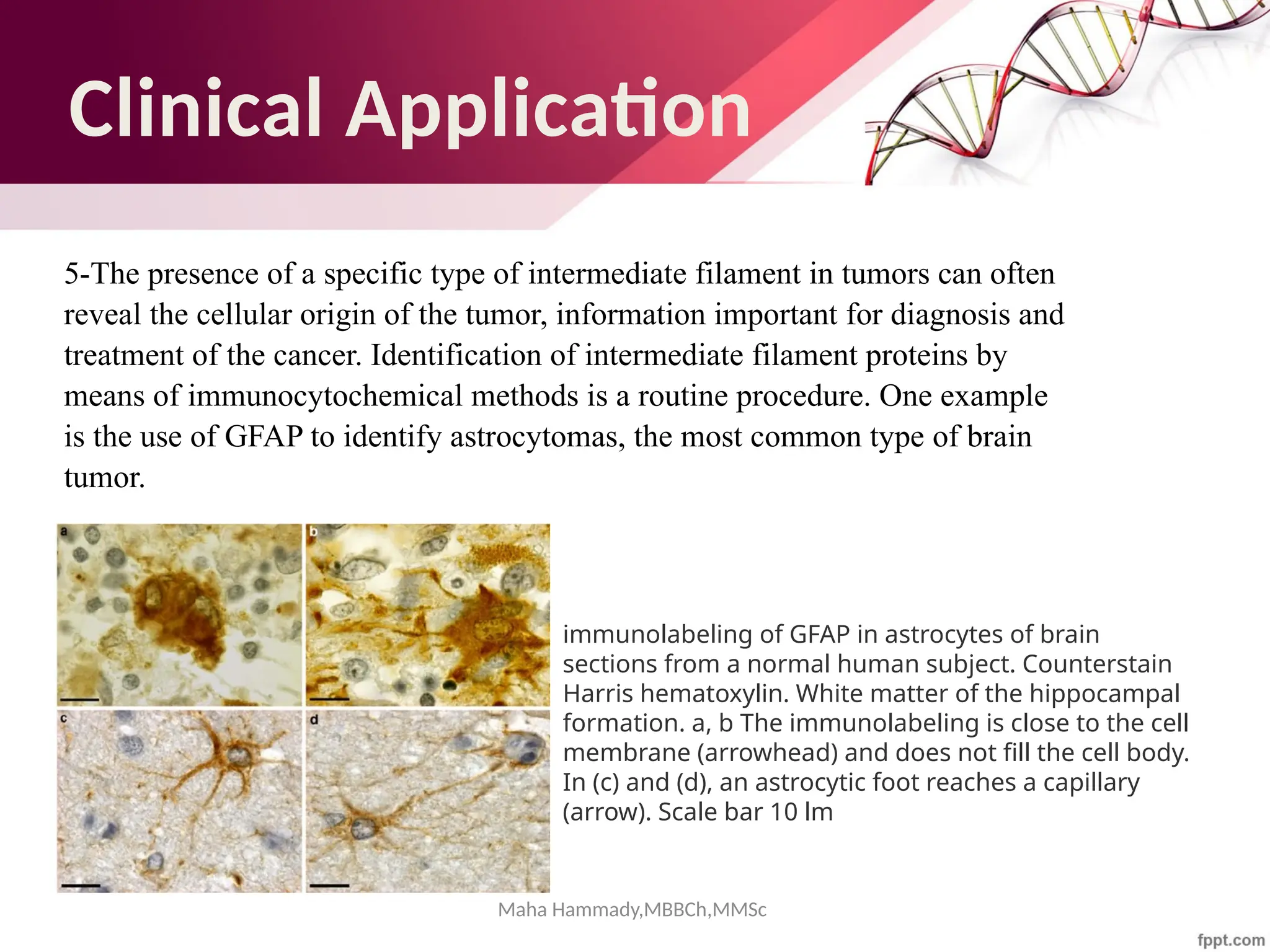
immunolabeling of GFAP in astrocytes of brain
sections from a normal human subject. Counterstain
Harris hematoxylin. White matter of the hippocampal
formation. a, b The immunolabeling is close to the cell
membrane (arrowhead) and does not fill the cell body.
In (c) and (d), an astrocytic foot reaches a capillary
(arrow). Scale bar 10 lm
Clinical Application
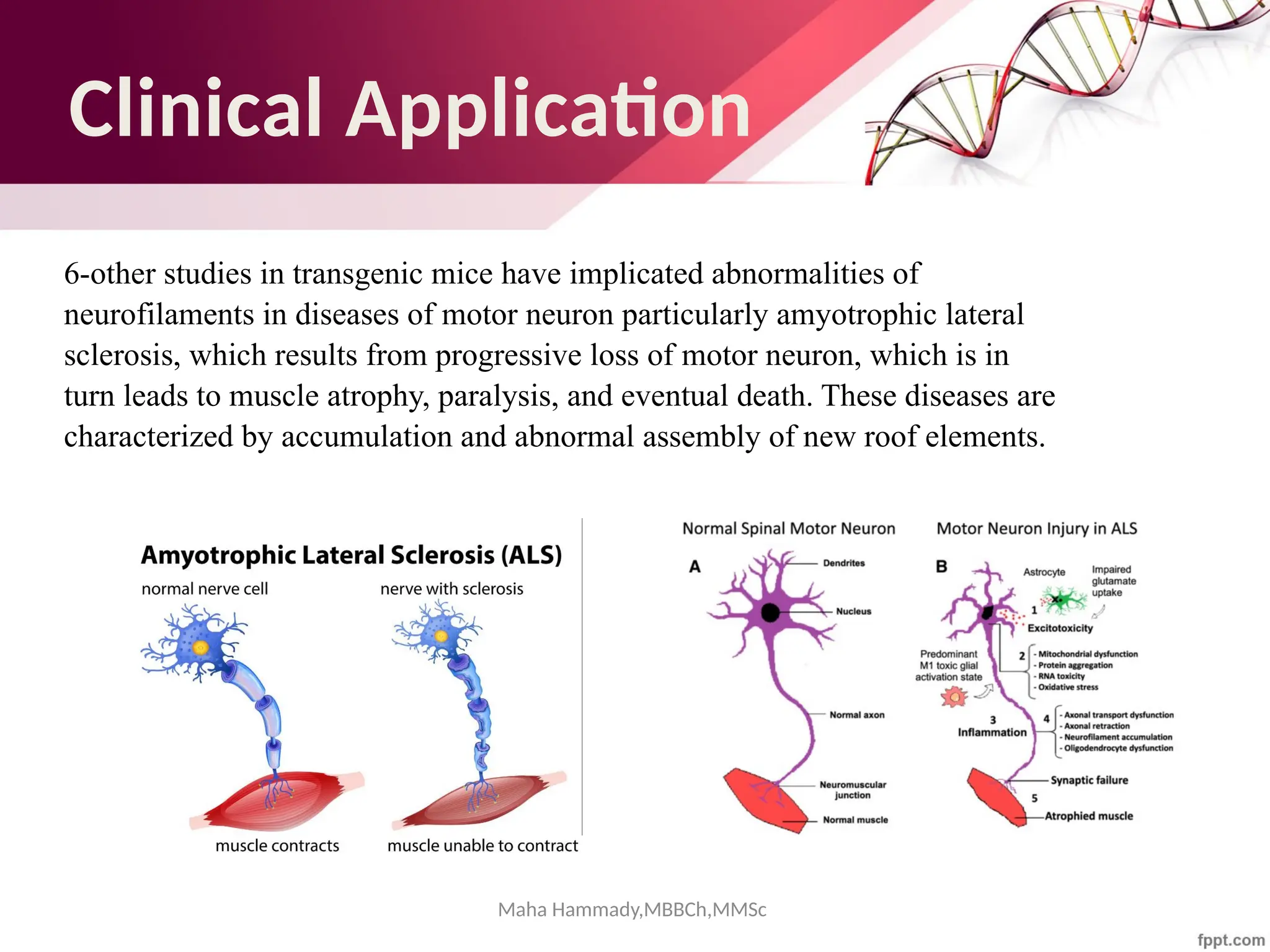
6-other studies in transgenic mice have implicated abnormalities of
neurofilaments in diseases of motor neuron particularly amyotrophic lateral
sclerosis, which results from progressive loss of motor neuron, which is in
turn leads to muscle atrophy, paralysis, and eventual death. These diseases are
characterized by accumulation and abnormal assembly of new roof elements.
Maha Hammady,MBBCh,MMSc

The Cytoskeleton: Structure, Function, and Cellular Dynamics - maha hammady.pptx

  • 1.
  • 2.
    Maha Hammady,MBBCh,MMSc CYTOSKELETON By/ MahaHammady Hemdan MBBCh- MMSc - Faculty of Medicine, Alexandria University. 2015 Supervised by: Prof. Dr. Amany Abd-Elmonem Soliman
  • 3.
    Maha Hammady,MBBCh,MMSc The cytoplasmof animal cells contains a cytoskeleton, an intricate three-dimensional meshwork of protein filaments that are responsible for the maintenance of cellular morphology. Additionally, the cytoskeleton is an active participant in cellular motion, whether of organelles or vesicles within the cytoplasm, regions of the cell, or the entire cell. The cytoskeleton has three components: microtubules, thin filaments (microfilaments), and intermediate filaments.
  • 4.
    Maha Hammady,MBBCh,MMSc ELECTRON MICROGRAPHOF THE CYTOPLASMIC MATRIX. A fibroblast cell was prepared by detergent extraction of soluble components, rapid freezing, sublimation of ice, and coating with metal. IF, intermediate filaments; MT, microtubules (shaded red).
  • 5.
    Maha Hammady,MBBCh,MMSc Diagram ofthe elements of the cytoskeleton and centriole.
  • 6.
    Maha Hammady,MBBCh,MMSc The complexityand interrelations of microfilaments, intermediate filaments, and microtubules with the plasma membrane and other organelles are depicted in this figure.
  • 7.
    Maha Hammady,MBBCh,MMSc Microtubules 01 02 03 04 05 Definition Location structure Assembly anddisassembly Dynamic instability 06 Proteins associated proteins Types of microtubules 07 08 Visualization
  • 8.
    Maha Hammady,MBBCh,MMSc Definition Microtubules arenon-branching, rigid and hollow tubes of polymerized protein that can rapidly assemble and equally rapidly disassemble. Rigidity of microtubules enable them to support cellular structure, while rabid assembly and dissemble allow them to generate movement of the cell and its subcellular structures.
  • 9.
    Maha Hammady,MBBCh,MMSc Location 1-In general,microtubules are found in the cytoplasm, where they originate from the MTOC. They grow from the MTOC located near the nucleus and extend toward the cell periphery. 2-Microtubules are also present in cilia and flagella, where they form the axoneme and its anchoring basal body 3- in centrioles and the mitotic spindle 4-in elongating processes of the cell, such as those in growing axons. MICROTUBULES USE RECYCLED SUBUNITS TO REORGANIZE COMPLETELY DURING THE CELL CYCLE. A, Interphase. Microtubules (green) form a cytoplasmic network radiating from the microtubule organizing center at the centrosome, stained red. The nuclear DNA is blue. B, Mitosis. Duplicated centrosomes become the poles of the bipolar mitotic apparatus. Microtubules (green) radiate from the poles to contact chromosomes (blue) at centromeres (red), pulling the chromosomes to the poles. After mitosis, the interphase arrangement of microtubules reassembles.
  • 10.
    Maha Hammady,MBBCh,MMSc vesicles vesicles Function 1-Intracellular vesiculartransport (i.e., movement of secretory vesicles, endosomes, and lysosomes). Microtubules create a system of connections within the cell, frequently compared with railroad tracks originating from the grand central station, along which vesicular movement occurs. Microtubules Dynein
  • 11.
  • 12.
    Maha Hammady,MBBCh,MMSc Function 3-Attachment ofchromosomes to the mitotic spindle and their movement during mitosis and meiosis. During the early telophase stage of mitotic division, the chromosomes (Ch) have reached the opposite poles of the cell. The cell membrane constricts to separate the cell into the two new daughter cells, forming a cleavage furrow (arrowheads). The spindle apparatus is visible as parallel, horizontal lines (arrow) that eventually form the midbody. As telophase progresses, the two new daughter cells will uncoil their chromosomes and the nuclear membrane and nucleoli will become reestablished.
  • 13.
    Maha Hammady,MBBCh,MMSc Function 4-Cell elongationand movement (migration). 5-Maintenance of cell shape, particularly its asymmetry.
  • 14.
    Maha Hammady,MBBCh,MMSc Structure Microtubules arecylindrical tubes measuring 20 to 25 nm in diameter. The wall of the microtubule is approximately 5 nm thick and consists of 13 circularly arrayed globular dimeric tubulin molecules. The tubulin is a heterodimer formed from an α-tubulin and a β-tubulin molecule. It polymerizes in an end-to-end fashion, head to tail, with the α molecule of one dimer bound to the β molecule of the next dimer in a repeating pattern. Longitudinal contacts between dimers link them into a linear structure called a protofilament. While lateral interactions allow protofilaments to associate side by side into a cylinder formed of 13 protofilaments.
  • 15.
    Maha Hammady,MBBCh,MMSc Formation (assembly anddisassembly) Microtubule formation can be traced to hundreds of γ-tubulin rings that form an integral part of the MTOC and function as templates for the correct assembly of microtubules. The α - and β -tubulin dimers are added to a γ- tubulin ring in an end-to-end fashion. Polymerization of tubulin dimers requires the presence of guanosine triphosphate (GTP) and Mg2+ . Each tubulin molecule binds GTP before it is incorporated into the forming microtubule. The tubulin dimers containing GTP have a conformation that favors stronger lateral interactions between dimers resulting in polymerization. As a result of this polymerization pattern, microtubules are polar structures because all the dimers in each protofilament have the same orientation. Each microtubule possesses a nongrowing (-) end that corresponds to α-tubulin; in the cell, it is usually embedded in the MTOC and often stabilized by actin- capping proteins. The growing (+) end of microtubules corresponds to β- tubulin and extends the cell periphery.
  • 16.
    Maha Hammady,MBBCh,MMSc Microtubules aremajor components of the cytoskeleton. They are found in all eukaryotic cells, and they are involved in mitosis, cell motility, intracellular transport, and maintenance of cell shape. Microtubules are composed of alpha- and beta-tubulin subunits assembled into linear protofilaments. A single microtubule contains 10 to 15 protofilaments (13 in mammalian cells) that wind together to form a 24 nm wide hollow cylinder. Microtubules are structures that can rapidly grow (via polymerization) or shrink (via depolymerization) in size, depending on how many tubulin molecules they contain
  • 17.
  • 18.
    Maha Hammady,MBBCh,MMSc Dynamic Instability Tubulindimers dissociate from microtubules in the steady state, which adds a pool of free tubulin dimers to the cytoplasm. This pool is in equilibrium with the polymerized tubulin in the microtubules; therefore, polymerization and depolymerization are in equilibrium. Microtubules are constantly growing toward the cell periphery by addition (polymerization) of tubulin dimers and then suddenly shrinking in the direction of the MTOC by removal (depolymerization) of tubulin dimers. This constant remodeling process, known as dynamic instability, is linked to a pattern of GTP hydrolysis during the microtubule assembly and disassembly process. The tubulin dimers bound to GTP at the growing (+) end of the microtubule protect it from disassembly. In contrast, tubulin dimers bound to GDP are prone to depolymerization that leads to a rapid microtubule disassembly and shrinking. During disassembly, the tubulin dimers bound to GDP lose lateral interaction with each other and protofilaments of the tubulin dimers curl away from the end of the microtubule, producing “split ends”. The process of switching from a growing to a shrinking microtubule is often called a microtubule catastrophe. The average half-life of a microtubule is only about 10 minutes. The speed of polymerization or depolymerization can be modified by interaction with specific microtubule-associated proteins (MAPs). These proteins, regulate microtubule assembly and anchor the microtubules to specific organelles. When the microtubule encounters stabilization factors (such as MAPs), it is captured and changes its dynamic behavior. This selective stabilization process allows the cell to establish an organized system of microtubules linking peripheral structures and organelles with the MTOC.
  • 19.
    Maha Hammady,MBBCh,MMSc Life historyof a microtubule undergoing dynamic instability inside a living cell Random oscillation between periods of growth and shortening. Microtubule grows until it reaches the point when it starts to shrink (catastrophe) And then shrinks until it starts to grow again(rescue) Dynamic Instability
  • 20.
    Maha Hammady,MBBCh,MMSc Proteins InvolvedIn Microtubule Assembly And Disassembly 1-Microtubules associated proteins (MAPs): The speed of polymerization or depolymerization can be modified by interaction with specific microtubule-associated proteins (MAPs). These proteins, such as MAP-1, -2, -3, and -4, MAP-tau, MAP-Lis 1 and TOG, regulate microtubule assembly and anchor the microtubules to specific organelles. MAPs are also responsible for the existence of stable populations of non-depolymerizing microtubules in the cell, such as those found in cilia and flagella. MAP-1,-2 and Tau are isolated from neuronal cells, while MAP-4 is present in all non-nueronal cells. The primary functions of the MAPs are to prevent depolymerization of microtubules and to assist in the intracellular movement of organelles and vesicles, whereas Lis 1 functions during brain development and is responsible for the formation of sulci and gyri of the cerebral hemispheres.
  • 21.
    Maha Hammady,MBBCh,MMSc Proteins InvolvedIn Microtubule Assembly And Disassembly 1-Microtubules associated proteins (MAPs): A good example of the role of stable microtubules in determining cell polarity is provided by nerve cell axons and dendrites which are supported by stable microtubules together with neurofilaments. however, the microtubules in axons and dendrites are organized differently and associated with distinct MAPs. In axons the microtubules are oriented with their plus ends away from the cell body, similar to the general orientation of microtubules in all other cell types. The minus ends of most of the microtubules in axons are not anchored in the centrosome, instead both of the plus and minus ends with these microtubules terminates in the cytoplasm of the axon. In dendrites, the microtubules are oriented in both directions, some plus ends pointed toward the cell body and some points toward the cell periphery. Microtubule organization in neurons. Microtubule (MT) organization is tightly regulated in the different neuronal compartments. In axon, MTs form stable, polarized bundles with uniform polarity orientation, exposing their plus minus ends away from the cell body. In proximal dendrites, MTs are organized in antiparallel bundles oriented with their plus ends pointing away or toward the soma. In the growth cone, MTs adopt four characteristic distributions: splayed, captured at the cortical matrix, looped, and bundled. At the top, MT structure (slide view and end view) is shown. https://www.mdpi.com/1422-0067/21/19/7354
  • 22.
    Maha Hammady,MBBCh,MMSc Proteins InvolvedIn Microtubule Assembly And Disassembly 1-Microtubules associated proteins (MAPs): MT polarization in axons and dendrites. MT orientation is almost entirely plus-end out in axons, whereas there is mixed polarity in dendrites with proximal dendritic regions a mixture of plus- and minus-ends out vs a majority of plus-end out MTs in the distal parts of the dendrite. Motor-mediated transport along MTs is polarized. In axons, kinesin motors (e.g., KIF5) transport cargoes anterogradely, whereas dynein transports retrogradely. In the proximal part of dendrites with mixed polarity MTs, dynein transports cargoes bidirectionally. In the more distal part of dendrites with mainly plus-end out MTs, KIF17 transports cargoes away from the cell body. https://www.cytoskeleton.com/microtubules-and-polarity-in-neurons
  • 23.
    Maha Hammady,MBBCh,MMSc Proteins InvolvedIn Microtubule Assembly And Disassembly 1-Microtubules associated proteins (MAPs): Microtubules within axons and dendrites are distinctly organized. Axonal microtubules are uniformly oriented with their plus-ends positioned distal, or away from the cell body. Microtubules in the dendrites of invertebrate neurons are largely oriented with their plus-ends toward the cell body whereas microtubules in vertebrate dendrites typically have a mixed polarity. https://www.sciencedirect.com/science/article/pii/S0959438818302745
  • 24.
    Maha Hammady,MBBCh,MMSc Proteins InvolvedIn Microtubule Assembly And Disassembly 1-Microtubules associated proteins (MAPs): These distinct microtubule arrangements are paralleled by differences in MAPs: axons contain tau proteins, but lack MAP-2, where dendrites contain MAP-2 but Lack Tau protein. These differences in MAP-2 and tau distribution are responsible for the distinct organization of stable microtubules in axons and dendrites. Microtubule organization and organelle distribution in axons and dendrites. Axons have tau-bound microtubules of uniform orientation, whereas dendrites have microtubule-associated protein 2 (MAP2)-bound microtubules of mixed orientation. Dendrites also contain organelles that are not found in axons, such as rough endoplasmic reticulum, polyribosomes and Golgi outposts. https://www.nature.com/articles/nrn2631
  • 25.
    Maha Hammady,MBBCh,MMSc Proteins InvolvedIn Microtubule Assembly And Disassembly 2-Microtubule destabilizing MAPs Stathmin/Op18 is a microtubule dynamics-regulating protein that has been shown to have both catastrophe-promoting and tubulin-sequestering activities. The level of its phosphorylation was proved in both in vitro and in vivo to be important in modulating the microtubule destabilizing activity.
  • 26.
    Maha Hammady,MBBCh,MMSc Proteins InvolvedIn Microtubule Assembly And Disassembly 3-Microtubule severing maps katanin severs microtubules into short fragments creates additional ends for depolymerization. As mentioned earlier, the association of a microtubule with MAPs (e.g., within the axoneme of a cilium or flagellum) effectively blocks this dynamic instability and stabilizes the microtubules. In certain cells, such as neurons, some microtubules that nucleated at the MTOC can be released by the action of a microtubule-severing protein called katanin. Short, detached polymers of microtubules are then transported along existing microtubules by molecular motor proteins such as kinesins.
  • 27.
    Maha Hammady,MBBCh,MMSc Proteins InvolvedIn Microtubule Assembly And Disassembly 4-Microtubule associated motor proteins: In cellular activities that involve movement of organelles and other cytoplasmic structures—such as transport vesicles, mitochondria, and lysosomes—microtubules serve as guides to the appropriate destinations. Molecular motor proteins attach to these organelles or structures and ratchet along the microtubule track. The energy required for the ratcheting movement is derived from ATP hydrolysis. Two families of molecular motor proteins have been identified that allow for unidirectional movement: 1-Dyneins constitute one family of molecular motors. They move along the microtubules toward the minus (-) end of the tubule. Therefore, cytoplasmic dyneins are capable of transporting organelles from the cell periphery toward the MTOC. One member of the dynein family, axonemal dynein, is present in cilia and flagella. It is responsible for the sliding of one microtubule against an adjacent microtubule of the axoneme that effects their movement. 2-Kinesins, members of the other family, move along the microtubules toward the plus (+) end; therefore, they are capable of moving organelles from the cell center toward the cell periphery. Both dyneins and kinesins are involved in mitosis and meiosis. In these activities, dyneins move the chromosomes along the microtubules of the mitotic spindle. Kinesins are simultaneously involved in movement of polar microtubules. These microtubules extend from one spindle pole past the metaphase plate and overlap with microtubules extending from the opposite spindle pole. Kinesins located between these microtubules generate a sliding movement that reduces the overlap, thereby pushing the two spindle poles apart toward each daughter cell.
  • 28.
    Maha Hammady,MBBCh,MMSc Proteins InvolvedIn Microtubule Assembly And Disassembly 4-Microtubule associated motor proteins: The molecular motor proteins associated with microtubules. Microtubules serve as guides for molecular motor proteins. These ATP-driven microtubule-associated motor proteins are attached to moving structures (such as organelles) that ratchet them along a tubular track. Two types of molecular motors have been identified: dyneins that move along microtubules toward their minus (-) end (i.e., toward the center of the cell) and kinesins that move toward their plus (+) end (i.e., toward the cell periphery).
  • 29.
    Maha Hammady,MBBCh,MMSc Proteins InvolvedIn Microtubule Assembly And Disassembly 4-Microtubule associated motor proteins: TRANSPORT OF CYTOPLASMIC PARTICLES ALONG ACTIN FILAMENTS AND MICROTUBULES BY MOTOR PROTEINS. A, Overview of organelle movements in a neuron and fibroblast. B, Details of the molecular motors. The microtubule-based motors, dynein and kinesin, move in opposite directions. The actin-based motor, myosin, moves in one direction along actin filaments. (Modified from Atkinson SJ, Doberstein SK, Pollard TD. Moving off the beaten track. Curr Biol. 1992;2:326–328.)
  • 30.
    Maha Hammady,MBBCh,MMSc Proteins InvolvedIn Microtubule Assembly And Disassembly 4-Microtubule associated motor proteins: Kinesin protein walking on microtubule https://www.youtube.com/watch?v=y-uuk4Pr2i8
  • 31.
    Maha Hammady,MBBCh,MMSc Types OfMicrotubules There are two populations of microtubules: stable, long-lived microtubules, and unstable short-lived microtubules. 1-Unstable microtubules are found when cell structures composed of microtubules need to assemble and dissemble quickly. For example, during mitosis, this cytosolic microtubule network characteristic of interface cells disappears, and that tubulin form the mitotic spindle. 2-in contrast to the short-lived, transient structures, some cells, usually the non-replicating cells, contain stable microtubules-based structures. These include the axonme of the sperm flagellum and the marginal band of microtubules of the platelets. another example occurs in axons of the neurons.
  • 32.
    Maha Hammady,MBBCh,MMSc Visualization Microtubules canbe readily visualized with the TEM. Because of the limited resolution of the light microscope, microtubules may now be easily distinguished from other components of the cell cytoskeleton by using immunocytochemical methods using tubulin antibodies conjugated with fluorescent dyes. This transmission electron micrograph shows the microtubules (arrows) in longitudinal section Microtubules resemble railroad tracks. Note, the tubulin molecules cannot be visualized in this preparation.
  • 33.
    Maha Hammady,MBBCh,MMSc LM ofa cell showing microtubular organization of its cytoskeleton. This cultured fibroblasts from monkey kidney was treated immunohistochemically (using anti-beta tubulin) to reveal the extensive network of microtubules in the cytoplasm. Microtubules originate from the microtubule organizing center (arrow). The nucleus is stained blue with DNA intercalating dye. 1600X. Anti-Beta tubulin and DAPI
  • 34.
    Maha Hammady,MBBCh,MMSc Centriole andMicrotubules organizing center 01 02 03 Function of MTO Structure of centriole Clinical applications
  • 35.
    Maha Hammady,MBBCh,MMSc Centrioles representthe focal point around which the MTOC assembles. they are visible in the electron microscope, as paired, short, rod-like cytoplasmic cylinders built from nine microtubule triplets. In resting cells, centrioles have an orthogonal orientation: One centriole in the pair is arrayed at a right angle to the other. Centrioles are usually found close to the nucleus, often partially surrounded by the Golgi apparatus, and associated with a zone of amorphous, dense amorphous pericentriolar matrix of proteins; including rings of γ-tubulin. The region of the cell containing the centrioles and pericentriolar material is called the microtubule-organizing center or centrosome
  • 36.
    Maha Hammady,MBBCh,MMSc Structure ofthe MTOC. This diagram shows the location of the MTOC in relation to the nucleus and the Golgi apparatus. In some species, the MTOC is tethered to the nuclear envelope by a contractile protein, the nucleus–basal body connector (NBBC). The MTOC contains the centrioles and an amorphous protein matrix with an abundance of γ-tubulin rings. Each γ– tubulin ring serves as the nucleation site for the growth of a single microtubule. Note that the minus (-) end of the microtubule remains attached to the MTOC, and the plus (+) end represents the growing end directed toward the plasma membrane.
  • 37.
    Maha Hammady,MBBCh,MMSc Function ofMTO 1-The MTOC is the region where most microtubules are formed and from which they are then directed to specific destinations within the cell. Therefore, the MTOC controls the number, polarity, direction, orientation, and organization of microtubules formed during the interphase of the cell cycle. The MTOC contains centrioles and an amorphous pericentriolar matrix of more than 200 proteins, including γ-tubulin that is organized in ring-shaped structures. Each γ -tubulin ring serves as the starting point (nucleation site) for the growth of one microtubule
  • 38.
    Maha Hammady,MBBCh,MMSc 2-During mitosis,duplicated MTOCs serve as mitotic spindle poles. Development of the MTOC itself depends solely on the presence of centrioles. When centrioles are missing, the MTOCs disappear, and formation of microtubules is severely impaired. astral microtubules are formed around each individual centriole in a star-like fashion. They are crucial in establishing the axis of the developing mitotic spindle. In some animal cells, the mitotic spindle itself (mainly kinetochore microtubules) is formed by MTOC independent mechanisms and consists of microtubules that originate from the chromosomes. Function of MTO
  • 39.
    Maha Hammady,MBBCh,MMSc 3-Basal bodyformation: One of the important functions of the centriole is to provide basal bodies, which are necessary for the assembly of cilia and flagella. Basal bodies are formed either by de novo formation without contact with the preexisting centrioles (the acentriolar pathway) or by duplication of existing centrioles (the centriolar pathway). About 95% of the centrioles are generated through the acentriolar pathway. Both pathways give rise to multiple immediate precursors of centrioles, known as procentrioles, which mature as they migrate to the appropriate site near the apical cell membrane, where they become basal bodies. The basal body acts as the organizing center for a cilium. Microtubules grow upward from the basal body, pushing the cell membrane outward, and elongate to form the mature cilium. Function of MTO
  • 40.
    Maha Hammady,MBBCh,MMSc 3-Basal bodyformation Function of MTO
  • 41.
    Maha Hammady,MBBCh,MMSc Structure OfCentriole The TEM reveals that each rod-shaped centriole consists of nine triplets of microtubules that are oriented parallel to the long axis of the organelle and run in slightly twisted bundles. The three microtubules of the triplet are fused, with adjacent microtubules sharing a common wall. The innermost or A microtubule is a complete ring of 13 protofilaments containing α- and β-tubulin dimers; the middle and outer B and C microtubules, respectively, appear C-shaped because they share tubulin dimers with each other and with the A microtubule. The microtubules of the triplets are not equal in length. The C microtubule of the triplet is usually shorter than A and B. The microtubule triplets of the centriole surround an internal lumen.
  • 42.
    Maha Hammady,MBBCh,MMSc Clinical Application Microtubulesare essential for vesicular transport (endocytosis and exocytosis) as well as cell motility. Certain drugs, such as: 1-colchicine, bind to tubulin molecules and prevent their polymerization; this drug is useful in the treatment of acute attacks of gout, to prevent neutrophil migration, and to lower their ability to respond to urate crystal deposits in the tissues. 2-Vinblastine and vincristine (Oncovin) represent another family of drugs that bind to microtubules and inhibit the formation of the mitotic spindle essential for cell division. These drugs are used as antimitotic and antiproliferative agents in cancer therapy. 3-paclitaxel (Taxol), is used in chemotherapy for breast cancer. It stabilizes microtubules, preventing them from depolymerizing (an action opposite to that of colchicine), and thus arrests cancer cells in various stages of cell division.
  • 43.
    Maha Hammady,MBBCh,MMSc Defects inthe organization of microtubules and microtubule associated proteins can immobilize the cilia of the respiratory system, interfering with the ability of the respiratory system to clear the accumulated secretions. This condition, known as kartagener syndrome, also causes dysfunction of the microtubules, which affects sperms motility and leads to male sterility it may also cause infertility in women because of impaired ciliary transport of the ovum through the oviduct. Clinical Application
  • 44.
    Maha Hammady,MBBCh,MMSc Actin Filaments 01 02 03 04 05 Distribution Structure Actinbinding proteins Function of actin filaments Types of actin
  • 45.
    Maha Hammady,MBBCh,MMSc Distribution Actin moleculesare abundant and may constitute as much as 20% of the total protein of some non-muscle cells.
  • 46.
    Maha Hammady,MBBCh,MMSc Structure Similar tothe tubulin in microtubules, actin molecules also assemble spontaneously by polymerization into a linear helical array to form filaments 6 to 8 nm in diameter. They are thinner, shorter, and more flexible than microtubules. Free actin molecules in the cytoplasm are referred to as G- actin (globular actin), in contrast to the polymerized actin of the filament, which is called F-actin (filamentous actin). An actin filament or microfilament is a polarized structure; its fast-growing end is referred to as the plus (barbed) end, and its slow-growing end is referred to as the minus (pointed) end. The dynamic process of actin polymerization that occurs mainly on the plus end of the actin filament requires the presence of K+ , Mg2+ , and ATP. After each G-actin molecule is incorporated into the filament, ATP is hydrolyzed to ADP.
  • 47.
    Maha Hammady,MBBCh,MMSc LM ofmammary epithelial cells showing the distribution of actin filaments. In this confocal microscopic image, the fluorescently labeled phalloidin demonstrates F-actin in actin filament bundles (arrows). Filaments crisscross the cell in the center of the field. 350×. Phalloidin–Fluorescein Isothiocyanate (FITC). (Courtesy of Dr. J. G. Goetz)
  • 48.
    Maha Hammady,MBBCh,MMSc (a) Microtubules(MT) and actin microfilaments (MF) can both be clearly distinguished in this TEM of fibroblast cytoplasm, which provides a good comparison of the relative diameters of these two cytoskeletal components. (X60,000) (b) Arrays of microfilaments and microtubules are easily demonstrated by immunocytochemistry using antibodies against their subunit proteins, as in this cultured cell. Actin filaments (red) are most concentrated at the cell periphery, forming prominent circumferential bundles from which finer filaments project into cellular extensions and push against the cell membrane. Actin filaments form a dynamic network important for cell shape changes such as those during cell division, locomotion, and formation of cellular processes, folds, pseudopodia, lamellipodia, microvilli, etc, which serve to change a cell’s surface area or give direction to a cell’s crawling movements. Microtubules (green/yellow) are oriented in arrays that generally extend from the centrosome area near the nucleus into the most peripheral extensions. Besides serving to stabilize cell shape, microtubules form the tracks for kinesin-based transport of vesicles and organelles into the cell periphery and dynein- based transport toward the cell nucleus. (Figure 2–22b, used with permission from Dr Albert Tousson, University of Alabama—Birmingham High Resolution Imaging Facility, Birmingham.)
  • 49.
    Maha Hammady,MBBCh,MMSc Distribution ofactin fi laments in pulmonary artery endothelial cells in culture. Cells were fi xed and stained with NDB phallacidin stain conjugated with fl uorescein dye. Phallacidin binds and stabilizes actin fi laments, preventing their depolymerization. Note the accumulation of actin fi laments at the periphery of the cell just beneath the plasma membrane. These cells were also stained with two additional dyes: a mitochondria-selective dye (i.e., MitoTracker Red) that allows the visualization of mitochondria (red) in the middle of the cell and DAPI stain that reacts with nuclear DNA and exhibits blue fl uorescence over the nucleus. 3,000. (Courtesy of Molecular Probes, Inc., Eugene, OR.)
  • 50.
    Maha Hammady,MBBCh,MMSc Types OfActin (Actin Isoforms) There are three classes of actin: α-actin of muscle, and β-actin, and γ-actin of non-muscle cells: αskeletal-actin, αcardiac-actin, αsmooth-actin, are expressed primarily in skeletal, cardiac, and smooth muscle. The remaining two isoforms, βcyto-actin and γcyto-actin are widely expressed. https://www.ncbi.nlm.nih.gov/pmc/articles/PMC2949686/
  • 51.
    Maha Hammady,MBBCh,MMSc Actin BindingProtein The control and regulation of the polymerization process depends on the local concentration of G-actin and the interaction of actin-binding proteins (ABPs), which can prevent or enhance polymerization. In addition to controlling the rate of polymerization of actin filaments, ABPs are responsible for the filaments’ organization. For example, a number of proteins can modify or act on actin filaments to give them various specific characteristics: 1-Actin-bundling proteins: cross-link actin filaments into parallel arrays, creating actin filament bundles. An example of this modification occurs inside the microvillus, where actin filaments are cross-linked by the actin-bundling proteins fascin and fimbrin. This cross-linkage provides support and imparts rigidity to the microvilli. α-Actinin Bundling actin filaments for contractile bundles Schematic diagram showing molecular structure of microvilli and the location of specifi c actin fi lament–bundling proteins (fimbrin, espin, and fascin). Note the distribution of myosin I within the microvilli and myosin II within the terminal web. The spectrin molecules stabilize the actin fi laments within the terminal web and anchor them into the apical plasma membrane.
  • 52.
    Maha Hammady,MBBCh,MMSc 2-Actin filament–severingproteins cut long actin filaments into short fragments. An example of such a protein is gelsolin, that normally initiates actin polymerization but at high Ca2+ concentrations causes severing of the actin filaments, converting an actin gel into a fluid state. The cell membrane phospholipid polyphosphoinositide has the opposite effect; it removes the gelsolin cap, permitting elongation of the actin filament. Actin Binding Protein
  • 53.
    Maha Hammady,MBBCh,MMSc 3-Actin-capping proteinsblock further addition of actin molecules by binding to the free end of an actin filament. An example is tropomodulin, which can be isolated from skeletal and cardiac muscle cells. Tropomodulin binds to the free end of actin myofilaments, regulating the length of the filaments in a sarcomere. Diagram of a thin fi lament. The polarity of the thin fi lament is indicated by the fast-growing (+) end and the slow-growing (-) end. Only a portion of the entire thin filament is shown for clarity. Tropomodulin is bound to actin and tropomyosin at the slow-growing (-) end. The troponin complex binds to each tropomyosin molecule every seven actin monomers along the length of the thin fi lament. Actin Binding Protein
  • 54.
    Maha Hammady,MBBCh,MMSc 4-Actin cross-linkingproteins are responsible for cross-linking actin filaments with each other. An example of such proteins can be found in the cytoskeleton of erythrocytes. Several proteins—such as spectrin, adductin, protein 4.1, and protein 4.9—are involved in cross-linking actin filaments. Filamin cross- link actin filaments into gel-like network. Plasmalemma-cytoskeleton association in red blood cells. (Adapted with permission from Widnell CC, Pfenning er KH. Essential Cell Biology. Baltimore, MD: Williams & Wilkins; 1990:82.) Actin Binding Protein
  • 55.
    Maha Hammady,MBBCh,MMSc 5-Actin motorproteins belong to the myosin family, which hydrolyzes ATP to provide the energy for movement along the actin filament from the minus end to the plus end. Some cells, such as muscle cells, are characterized by the size, amount, and nature of the filaments and actin motor proteins they contain. There are two types of filaments (myofilaments) present in muscle cells: 6- to 8-nm actin filaments (called thin filaments) and 15-nm filaments (called thick filaments) of myosin II, which is the predominant protein in muscle cells. Myosin II is a double headed molecule with an elongated rodlike tail. Myosin-II causes Contraction by sliding actin filaments, while Myosin-V results in movement of vesicles and organelles along actin filaments Actin Binding Protein
  • 56.
    Maha Hammady,MBBCh,MMSc 6- Onlyabout half of their total actin is in the filamentous form because the monomeric G-actin form is bound by small proteins, such as profilin and thymosin, which prevent their polymerization. The polymerization of actin is inhibited by the binding of thymosin and profilin to actin monomers. Actin Binding Protein
  • 57.
    Maha Hammady,MBBCh,MMSc 7- Forminattaches to growing (barbed) end and promotes the filament polymerization. The domains of the formin dimer (shown in green) bind to actin monomers to initiate filament assembly. Actin Binding Protein
  • 58.
    Maha Hammady,MBBCh,MMSc 8- Cofilincauses active in depolymerization of the actin filament, especially during filopodia formation. The stimulated protrusion model applies to situations when motility is not continuous and G-actin is not limiting. In this case, initiation of movement involves the localized activation of cofilin at the leading edge. Severing of actin filaments in the quiescent cortical cytoskeleton by cofilin creates free barbed ends that define the site of activation of the Arp2/3 complex. Polymerization of actin occurs from a pool of pre-existing G-actin and is not tightly coupled to depolymerization Actin Binding Protein
  • 59.
  • 60.
    Maha Hammady,MBBCh,MMSc Function OfActin Filaments Actin filaments are often grouped in bundles close to the plasma membrane. Functions of these membrane-associated actin filaments include the following. 1-Anchorage and movement of membrane protein. Actin filaments are distributed in three-dimensional networks throughout the cell and are used as anchors within specialized cell junctions such as focal adhesions. 2-Formation of the structural core of microvilli on absorptive epithelial cells. 3-Actin filaments may also help maintain the shape of the apical cell surface (e.g., the apical terminal web of actin filaments serves as a set of tension cables under the cell surface). Gel-like networks provide the structural foundation of much of the cell cortex. Their stiffness is due to the protein filamin, which assists in the establishment of a loosely organized network of actin filaments resulting in localized high viscosity. During the formation of filopodia, the gel is liquefied by proteins such as gelsolin, which, in the presence of ATP and high concentration of Ca2+, cleaves the actin filaments and, by forming a cap over their plus end, prevents them from lengthening. 4-Locomotion of cells. Locomotion is achieved by the force exerted by actin filaments by polymerization at their growing ends. Th is mechanism is used in many migrating cells—in particular, on transformed cells of invasive tumors. As a result of actin polymerization at their leading edge, cells extend processes from their surface by pushing the plasma membrane ahead of the growing actin fi laments. The leading-edge extensions of a crawling cell are called lamellipodia; they contain elongating organized bundles of actin fi laments with their plus ends directed toward the plasma membrane. 5-Extension of cell processes. These processes can be observed in many other cells that exhibit small protrusions called filopodia, located around their surface. As in lamellipodia, these protrusions contain loose aggregations of 10 to 20 actin fi laments organized in the same direction, again with their plus ends directed toward the plasma membrane. Actin fi laments are also essential in cytoplasmic streaming (i.e., the stream-like movement of cytoplasm that can be observed in cultured cells). 6- Contractile bundles, such as those responsible for the formation of cleavage furrows (contractile rings) during mitotic division, are usually associated with myosin.
  • 61.
    Maha Hammady,MBBCh,MMSc ctin filamentsare crucial for tissue organization and for establishing cell polarity and cohesion among epithelial cells. For example, a core of actin filaments provides microvilli structural support and enables them to increase their surface area and nutrient-absorbing capacity. These structures are found on the apical surface of epithlial cells lining the small intestine. In another example, the integrity of epithelial cell layers or sheets is maintained by a belt of actin filaments (i.e. adhesion belt). This belt links the cytoskeleton of adjacent cells. Also, certain cells use actin filament rigidity to sense vibrations, such as those found bundled on the surface of hair cells in the inner ear (called stereocilia, not shown), which tilt in response to sound. Although the actin bundles in stereocilia are stable for the lifetime of a cell (which can be decades), the individual actin filaments are continuously remodeled and replaced once every 48 hours (on average). Function Of Actin Filaments
  • 62.
    Maha Hammady,MBBCh,MMSc In listeriosis,an infection caused by Listeria monocytogenes, the actin polymerization machinery of the cell can be hijacked by the invading pathogen and utilized for its intracellular movement and dissemination throughout the tissue. Following internalization into the host phagosome, L. monocytogenes lyses the membrane of the phagosome and escapes into the cytoplasm. Within the cytoplasm, one end of the bacterium triggers polymerization of the host cell’s actin filaments, which propels it through the cell like a space rocket, leaving a characteristic tail of polymerized actin behind. Actin polymerization allows bacteria to pass into a neighboring cell by forming protrusions in the host plasma membrane. Clinical Application a | L. monocytogenes induces its entry into a non-professional phagocyte. b | Bacteria are internalized in a vacuole (also known as a phagosome). c,d | The membrane of the vacuole is disrupted by the secretion of two phospholipases, PlcA and PlcB, and the pore-forming toxin listeriolysin O. Bacteria are released into the cytoplasm, where they multiply and start to polymerize actin, as observed by the presence of the characteristic actin tails (see Supplementary information S3 (figure)). e | Actin polymerization allows bacteria to pass into a neighbouring cell by forming protrusions in the plasma membrane. f | On entry into the neighbouring cell, bacteria are present in a double-membraned vacuole, from which they can escape to perpetuate the cycle. F-actin, filamentous actin.
  • 63.
    Maha Hammady,MBBCh,MMSc Intermediate filaments 01 02 03 04 05 Intracellularorganization and function Structure Assembly Types (clases) Clinical applications
  • 64.
    Maha Hammady,MBBCh,MMSc Structure Intermediate filamentsplay a supporting or general structural role. These rope-like filaments are called intermediate because their diameter of 8 to 10 nm is between those of actin filaments and microtubules. Unlike those of microfilaments and microtubules, the protein subunits of intermediate filaments show considerable diversity and tissue specificity. In addition, they do not possess enzymatic activity and form nonpolar filaments. Intermediate filaments also do not typically disappear and re-form in the continuous manner characteristic of most microtubules and actin filaments. For these reasons, intermediate filaments are believed to play a primarily structural role within the cell. Despite considerable diversity in size and amino acid sequence, the various intermediate filaments proteins share a common structural organization. All of the intermediate filament proteins have a central α-helical rod domain of approximately 310 amino acids (350 amino acids in the nuclear Lamins). This central rod domain is flanked by amino- and carboxy-terminus domains. They are a globular domains which are varied among the different intermediate filament proteins in size, sequence, and secondary structure. The α-helical rod domain plays a central role in filament assembly, while the variable globular head and tail domains determine the specific function of the different intermediate filament proteins.
  • 65.
    Maha Hammady,MBBCh,MMSc EM ofintermediate filaments in a cultured cell. A dense, interweaving network of intermediate filament bundles (arrows) makes up the cytoskeleton. Mitochondria (Mi) and a tertiary lysosome (Ly) are in the cytoplasm. 20,000×. EM of actin and intermediate filaments in part of a smooth muscle cell. In this transverse section, many closely packed filaments — the small, dense punctate profiles— predominate in the cytoplasm. Their diameters identify them as thin (or actin) and intermediate filaments. A supranuclear Golgi complex (GC), a few mitochondria (Mi), and rough endoplasmic reticulum (RER) are also indicated. 22,000×.
  • 66.
    Maha Hammady,MBBCh,MMSc Electron micrographof the apical part of an epithelial cell demonstrating intermediate fi laments. This electron micrograph, obtained using the quick- freeze deep-etch technique, shows the terminal web (TW) of an epithelial cell and underlying intermediate filaments (IF). The long, straight actin filament cores or rootlets (R) extending from the microvilli are cross-linked by a dense network of actin filaments containing numerous actin- binding proteins. The network of intermediate filaments can be seen beneath the terminal web anchoring the actin filaments of the microvilli. 47,000.
  • 67.
    Maha Hammady,MBBCh,MMSc Assembly the firststage of filament assembly is the formation of dimer in which the central rod domain of two polypeptide chains are wound around each other in a coiled-coil structure. The dimer then associate in a staggered antiparallel fashion to form tetramer, which assemble end-to-end to form protofilaments. The final intermediate filament contains approximately 8 protofilaments wound around each other in a rope-like structure. Because they are assembled from anti-parallel tetramer, both ends of intermediate filaments are equivalent (nonpolar); unlike microfilaments and microtubules, intermediate filaments lack distinct plus and minus end.
  • 68.
  • 69.
    Maha Hammady,MBBCh,MMSc Types (classes) Types(Classes) Intermediate filaments are organized into six major classes on the basis of gene structure, protein composition, and cellular distribution. Classes 1(acidic cytokeratin) and 2 (basic cytokeratin): These are the most diverse groups of intermediate filaments and are called keratins (cytokeratins). These classes contain more than 50 different isoforms and account for most of the intermediate filaments (about 54 genes of the total 70 human intermediate filament genes are linked to keratin molecules). Keratin filaments are found in different cells of epithelial origin. According to new nomenclature, keratins are divided into groups: “soft keratin” which is present in epithelial tissues, and structural keratins, also called “hard keratins”. The latest are found in skin appendages such as hair and nails. Keratin filaments span the cytoplasm of epithelial cells and, via desmosomes, connect with keratin filaments in neighboring cells. Keratin subunits do not co-assemble with other classes of intermediate filaments; therefore, they form a distinct cell-specific and tissue- specific recognition system.
  • 70.
    Maha Hammady,MBBCh,MMSc Intermediate filaments(IF) display an average diameter of 8- 10 nm, between that of actin filaments and microtubules, and serve to provide mechanical strength or stability to cells. A large and important class of intermediate filaments is composed of keratin subunits, which are prominent in epithelial cells. Bundles of keratin filaments called tonofibrils associate with certain classes of intercellular junctions (J) common in epithelial cells and are easily seen with the TEM, as shown here in two extensions in an epidermal cell bound to a neighboring cell. (60,000X)
  • 71.
    Maha Hammady,MBBCh,MMSc Desmosomes cantake the shape of a button (punctum adherens, focal desmosome), of a disk (macula adherens), a band (fascia adherens) or a belt (zonula adherens, belt desmosome). In this figure, two cells have attached to each other via a macula adherens in a push-button style. In the 20– 40nm wide intercellular space, microfilaments provide a form of glue (desmoglea), which condenses in a center line (mesophragma). Tonofilaments, 10nm thick, radiate into the condensed, disk-shaped cytoplasmic area (tonofilament- associated focal desmosome, type I desmosome)
  • 72.
    Maha Hammady,MBBCh,MMSc Using electronmicroscopy, the light microscopic images of intracellular tonofibrils prove to be bundles of very fine filaments. The bundles are either strictly parallel or wavy bundles, which create the image of brush strokes in electron micrographs. Tonofibrils pervade especially the cells in the lower layers of the multilayered squamous epithelium. They line up in the direction of the tensile force. However, filament bundles also extend from the cell center to areas with many desmosomes.
  • 73.
    Maha Hammady,MBBCh,MMSc Types (classes) Class3. This group contains four proteins: 1-vimentin, the most widely distributed intermediate filament protein in the body,Vimentin is the most abundant intermediate filament found in all mesoderm-derived cells, including fibroblasts,WBCs and smooth muscle. Surrounds nuclear envelope; it is associated with cytoplasmic aspect of nuclear pore complex. 2-desmin: desmin is characteristic of muscle cells. It links myofibrils in striated muscle (around Z disks); attaches to cytoplasmic densities in smooth muscle. 3-glial fibrillary acidic protein (GFAP): GFAP is found in glial cells (highly specific for astrocytes) 4-peripherin: is found in many peripheral nerve cells. They represent a diverse family of cytoplasmic filaments found in many cell types.
  • 74.
    Diagram illustrating thedistribution of myofilaments and accessory proteins within a sarcomere. The accessory proteins are titin, a large elastic molecule that anchors the thick (myosin) fi laments to the Z line; -actinin, which bundles thin (actin) fi laments into parallel arrays and anchors them at the Z line; nebulin, an elongated inelastic protein attached to the Z lines that wraps around the thin fi laments and assists -actinin in anchoring the thin fi lament to Z lines; tropomodulin, an actin-capping protein that maintains and regulates the length of the thin fi laments; tropomyosin, which stabilizes thin fi laments and, in association with troponin, regulates binding of calcium ions; M line proteins (myomesin, M-protein, obscurin), which hold thick fi laments in register at the M line; myosin-binding protein C, which contributes to normal assembly of thick filaments and interacts with titan; and two proteins (desmin and dystrophin) that anchor sarcomeres into the plasma membrane. The interactions of these various proteins maintain the precise alignment of the thin and thick fi laments in the sarcomere and the alignment of sarcomeres within the cell.
  • 75.
    A suggested modelfor smooth muscle cell contraction. Bundles of myofilaments containing thin and thick fi laments, shown in dark brown, are anchored on cytoplasmic densities, shown in beige. These densities, in turn,are anchored on the sarcolemma. Cytoplasmic densities are intracellular analogs of striated muscle Z lines. They contain the actin-binding protein -actinin. Because the contractile fi lament bundles are oriented obliquely to the long axis of the cell, their contraction shortens the cell and produces
  • 76.
    Fibrous astrocytes inthe white matter of the brain. a. Schematic drawing of a fibrous astrocyte in the white mater of the brain. b. Photomicrograph of the white matter of the brain, showing the extensive radiating cytoplasmic processes for which astrocytes are named. They are best visualized, as shown here, with immunostaining methods that use antibodies against GFAP. 220.
  • 77.
    Rat mixed neuron/glialcultures stained with anti-Peripherin (green) and rabbit anti α-internexin (red). Nuclei are stained with DAPI (blue).
  • 78.
    Maha Hammady,MBBCh,MMSc Types (classes) Class4. Historically, this group has been called neurofilaments; they contain intermediate filament proteins that are expressed mostly in axons of nerve cells. It is more abundantly in the long axons of motor neurons. The three types of neurofilament proteins are of different molecular weights: 1-NF-L (a low-weight protein) 2-NF-M (a mediumweight protein) 3-NF-H (a high-weight protein). All three proteins form neurofilaments that extend from the cell body into the ends of axons and dendrites, providing structural support. However, genes for class 4 proteins also encode several other intermediate filament proteins. These include nestin and α-internexin in nerve cells as well as synemin, syncoilin, and paranemin in muscle cells.
  • 79.
    Maha Hammady,MBBCh,MMSc These micrographsare taken from nerve tissue; nerve cells contain both intermediate filaments and microtubules, allowing comparison of size and morphology. Each nerve cell has an elongated cytoplasmic extension called an axon which, in the peripheral nervous system, is ensheathed by a supporting Schwann cell. Micrograph (a) shows an axon in transverse section wrapped in the cytoplasm of a Schwann cell S. Micrograph (b) shows part of an axon in longitudinal section. The axonal microtubules provide structural support and transport along the axon. In longitudinal section, microtubules MT appear as straight, unbranched structures and, in transverse section, they appear hollow. Their diameter can be compared with small mitochondria M and smooth endoplasmic reticulum sER. Intermediate filaments (known as neurofilaments in this case) are a prominent feature of nerve cells, providing internal support for the cell by cross-linkage with microtubules and other organelles. The neurofilaments NF are dispersed among and in parallel with the microtubules, but are much smaller in diameter and are not hollow in cross-section. Intermediate filaments IF are also seen in the Schwann cell cytoplasm in micrograph (a), both in transverse and longitudinal view.
  • 80.
    Rat mixed neuron/glialcultures stained with anti-Peripherin (green) and rabbit anti α-internexin (red). Nuclei are stained with DAPI (blue).
  • 81.
    Types (classes) Class 5.Lamins, specifically nuclear lamins, form a network-like structure that is associated with the nuclear envelope. Lamins are represented by two types of proteins, lamin A and lamin B. In contrast to other types of intermediate filaments found in the cytoplasm, lamins are located within the nucleoplasm of almost all differentiated cells in the body. Intermediate filaments or cytoplasmic, The only exception is the lamins which are nuclear. Maha Hammady,MBBCh,MMSc
  • 82.
    Structure of thenuclear lamina. a. This schematic drawing shows the structure of the nuclear lamina adjacent to the inner nuclear membrane. The cut window in the nuclear lamina shows the DNA within the nucleus. Note that the nuclear envelope is pierced by nuclear pore complexes, which allow for selective bidirectional transport of molecules between nucleus and cytoplasm. b. Electron micrograph of a portion of the nuclear lamina from a Xenopus oocyte. It is formed by intermediate filaments (lamins) that are arranged in a square lattice. X43,000
  • 83.
    Maha Hammady,MBBCh,MMSc Illustration ofthe nuclear envelope in mammalian cells. The interplay between A-type (LA/LC) and B-type (LB1/LB2) lamins and LINC complexes at the nuclear envelope has been proposed to facilitate coupling of the nucleus to the cytoskeletal systems in the cytoplasm. Lamins further interact with peripheral heterochromatin to regulate chromatin organization within the cell nucleus (INM, inner nuclear membrane; NPC, nuclear pore complex; ONM, outer nuclear membrane). Credit: Northwestern University https://phys.org/news/2022-06-distinct-roles-nuclear-lamin-isoforms.html
  • 84.
    Types (classes) Class 6.This is a lens-specific group of intermediate filaments, or “beaded filaments” containing two proteins, phakinin and filensin. The periodic bead- like surface appearance of these filaments is attributed to the globular structure of the carboxy-terminus of the filensin molecule, which projects out from the assembled filament core. They Sustain the transparency of the lens. Maha Hammady,MBBCh,MMSc
  • 85.
    Localization of filensinand phakinin in the 10-week-old rat lens. The localization of filensin in 10-week-old rat lenses was examined by phase-contrast microscopy (A-D) and fluorescence immunochemistry using antibodies directed against the filensin rod domain (E-H), filensin outer tail domain (I-L), and phakinin (M-P). (A, E, I, and M) shallow cortex of the Wistar lens; (B, F, J, and N) shallow cortex of the pre-cataract SCR lens; (C, G, K, and O) deep cortex of the Wistar lens; (D, H, L and P) deep cortex of the SCR lens. The anti-filensin rod domain antibody localized to the membrane lining regions in the shallow cortices of Wistar and pre-cataract SCR lenses (E and F) and to the central region of the cytoplasm in the deep cortex of the Wistar lens (G). The anti-filensin rod domain antibody exhibited a diffuse staining pattern in the deep cortex of the cataract SCR lens (H). The anti-filensin outer tail domain antibody localized to the membrane lining region of the shallow cortex of the Wistar (I) and pre-cataract SCR lens (J) as well as the deep cortex of the Wistar lens (K). This antibody exhibited a diffuse staining pattern in the deep cortex of the pre-cataract SCR lens. The localization of phakinin (M-P) was similar to that of the filensin rod domain (E-H). Scale bar, 10 µm. https://www.ncbi.nlm.nih.gov/pmc/articles/PMC2358922/
  • 86.
    Ultrastructural appearance offilaments assembled from lens or bacterially expressed phakinin and bacterially expressed filensin. (a) Bovine lens phakinin coassembled with recombinant filensin and visualized after negative staining. (b) Recombinant phakinin coassembled with recombinant filensin and visualized after negative staining. (c) Bovine lens phakinin coassembled with recombinant filensin and visualized after glycerol spraying/low-angle rotary metal shadowing. (d) Bovine lens phakinin coassembled with recombinant filensin and visualized by negative staining after slight fixation with 0.1% glutaraldehyde. In all of the experiments, the proteins were mixed at a 3:1 molar ratio (phakinin to filensin) and the total protein concentration was 200 ixg/ml. For details on the assembly protocol and specimen preparation for EM see Materials and Methods. Bars correspond to 100 nm. https://rupress.org/jcb/article/132/4/643/59082/Filensin-and-phakinin-form-a-novel-type-of-beaded
  • 87.
    Maha Hammady,MBBCh,MMSc Intracellular OrganizationAnd Function Intermediate filaments form an elaborate network in the cytoplasm of most cells, extending from ring around the nucleus to the plasma membrane.A variety of intermediate filament–associated proteins function within the cytoskeleton as integral parts of the molecular architecture of cells: 1-both keratin and vimentin filaments attached to the nuclear envelope from its cytoplasmic aspect serves to hold and anchor the nucleus within its position within the cell 2-Some proteins, such as those of the plectin family, possess binding sites for actin filaments, microtubules, and intermediate filaments and are thus important in the proper assembly of the cytoskeleton. 3-Lamins, the intermediate filaments in the nucleus, are associated with numerous proteins in the inner nuclear membrane, including emerin, lamin B receptor (LBR), nurim, and several lamina- associated polypeptides. Some of these proteins have multiple binding sites to intermediate filaments, actin, chromatin, and signaling proteins; thus, they function in chromatin organization, gene expression, nuclear architecture, and cell signaling and provide an essential link between the nucleoskeleton and cytoskeleton of the cell. 4-Another important family of intermediate filament–associated proteins consists of desmoplakins, desmoplakin-like proteins, and plakoglobins. These proteins form the attachment plaques for intermediate filaments, an essential part of desmosomes and hemidesmosomes. The interaction of intermediate filaments with cell-to-cell and cell-to-extracellular matrix junctions provides mechanical strength to the whole tissue.
  • 88.
    Maha Hammady,MBBCh,MMSc Clinical Application Asnoted, the molecular structure of intermediate filaments is tissue-specific and consists of many different types of proteins. Several diseases are caused by defects in the proper assembly of intermediate filaments. These defects have also been induced experimentally by mutations in intermediate filament genes in laboratory animals. 1-Changes in neurofilaments within brain tissue are characteristic of Alzheimer’s disease, which produces neurofibrillary tangles containing neurofilaments and other microtubule-associated proteins.
  • 89.
    Maha Hammady,MBBCh,MMSc Clinical Application Asnoted, the molecular structure of intermediate filaments is tissue-specific and consists of many different types of proteins. Several diseases are caused by defects in the proper assembly of intermediate filaments. These defects have also been induced experimentally by mutations in intermediate filament genes in laboratory animals. 1-Changes in neurofilaments within brain tissue are characteristic of Alzheimer’s disease, which produces neurofibrillary tangles containing neurofilaments and other microtubule-associated proteins. This photo taken with an electron microscope show a cell that has some healthy areas and other areas where tangles are forming. Source: Alzheimer Society Brain Tour: Mo re About Tangles
  • 90.
    Maha Hammady,MBBCh,MMSc Clinical Application 2-Anotherdisorder of the central nervous system, Alexander disease is associated with mutations in the coding region of the GFAP gene. The pathologic feature of this disease is the presence of cytoplasmic inclusions in astrocytes (Rosenthal fibers) that contain accumulation of intermediate filament protein GFAP. Altered GFAP prevents the assembly not only of intermediate filaments but also of other proteins that contribute to the structural integrity and function of astrocytes. Infants with Alexander disease develop leukoencephalopathy (infection of the brain) with macrocephaly (abnormally large head), seizures, and psychomotor impairment, leading to death usually within the first decade of life.
  • 91.
    Maha Hammady,MBBCh,MMSc A Rosenthalfiber is a thick, elongated, worm-like or "corkscrew" eosinophilic (pink) bundle that is found on H&E staining of the brain in the presence of long-standing gliosis, occasional tumors, and some metabolic disorders. The fibers are found in astrocytic processes and are thought to be clumped intermediate filament proteins. Their components include glial fibrillary acidic protein.
  • 92.
    Maha Hammady,MBBCh,MMSc Histopathology ofAlexander disease with numerous Rosenthal fibers in the white matter of the brain. https://radiopaedia.org/cases/rosenthal-fibres-in-alexander-di sease
  • 93.
    Maha Hammady,MBBCh,MMSc Photomicrograph froma pilocytic astrocytoma showing brightly staining red Rosenthal fibers (arrowheads). (Hematoxylin-eosin [H&E]; original magnification, 1000× https://www.ajnr.org/content/27/5/958
  • 94.
    Maha Hammady,MBBCh,MMSc Clinical Application 3-Aprominent feature of alcoholic liver cirrhosis is the presence of eosinophilic intracytoplasmic inclusions composed predominantly of keratin intermediate filaments. These inclusions, called Mallory bodies, are visible in light microscopy within the hepatocyte cytoplasm.
  • 95.
    Clinical Application 4-epidermolysis bullosasimplex: patients develop skin blisters resulting from cell lysis after minor trauma. It caused by keratin gene mutations that interfere with the normal assembly of keratin filaments. Maha Hammady,MBBCh,MMSc Erythematous patches with bullous eruption over the lower portion of the right limb Photomicrograph (low-power view) showing a sub-epidermal blister with scanty inflammation. Some of the basal keratinocytes are attached to the underlying basement membrane. (Hematoxylin- eosin stain; original magnification, ×100.)
  • 96.
    Maha Hammady,MBBCh,MMSc Clinical Application 5-Thepresence of a specific type of intermediate filament in tumors can often reveal the cellular origin of the tumor, information important for diagnosis and treatment of the cancer. Identification of intermediate filament proteins by means of immunocytochemical methods is a routine procedure. One example is the use of GFAP to identify astrocytomas, the most common type of brain tumor. immunolabeling of GFAP in astrocytes of brain sections from a normal human subject. Counterstain Harris hematoxylin. White matter of the hippocampal formation. a, b The immunolabeling is close to the cell membrane (arrowhead) and does not fill the cell body. In (c) and (d), an astrocytic foot reaches a capillary (arrow). Scale bar 10 lm
  • 97.
    Clinical Application 6-other studiesin transgenic mice have implicated abnormalities of neurofilaments in diseases of motor neuron particularly amyotrophic lateral sclerosis, which results from progressive loss of motor neuron, which is in turn leads to muscle atrophy, paralysis, and eventual death. These diseases are characterized by accumulation and abnormal assembly of new roof elements. Maha Hammady,MBBCh,MMSc
  • 98.