The Connection of Reading and WritingHow does reading affect the writing process?
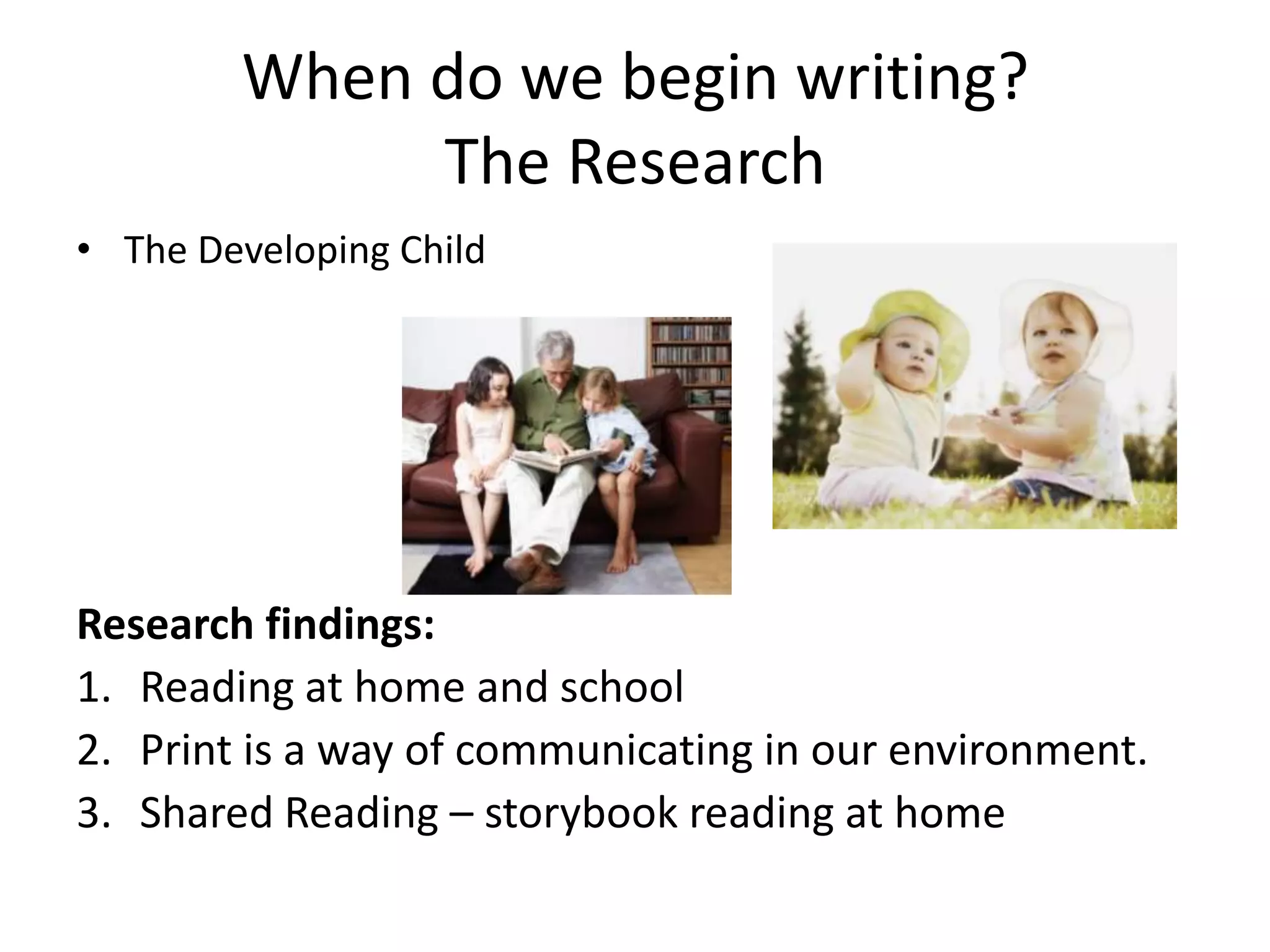
When do we begin writing?The ResearchThe Developing Child Research findings:Reading at home and schoolPrint is a way of communicating in our environment.Shared Reading – storybook reading at home
Snippets:  A Gathering of Poems, Pictures, and PossibilitiesActivity for teacher demonstration:My  Snippets*Materials:  Worksheet, pencil, and ideas Listen to 5 different  “snippets” from the book.Using the theme of your chose, write a short snippet of your own.Share your snippet with a friend.
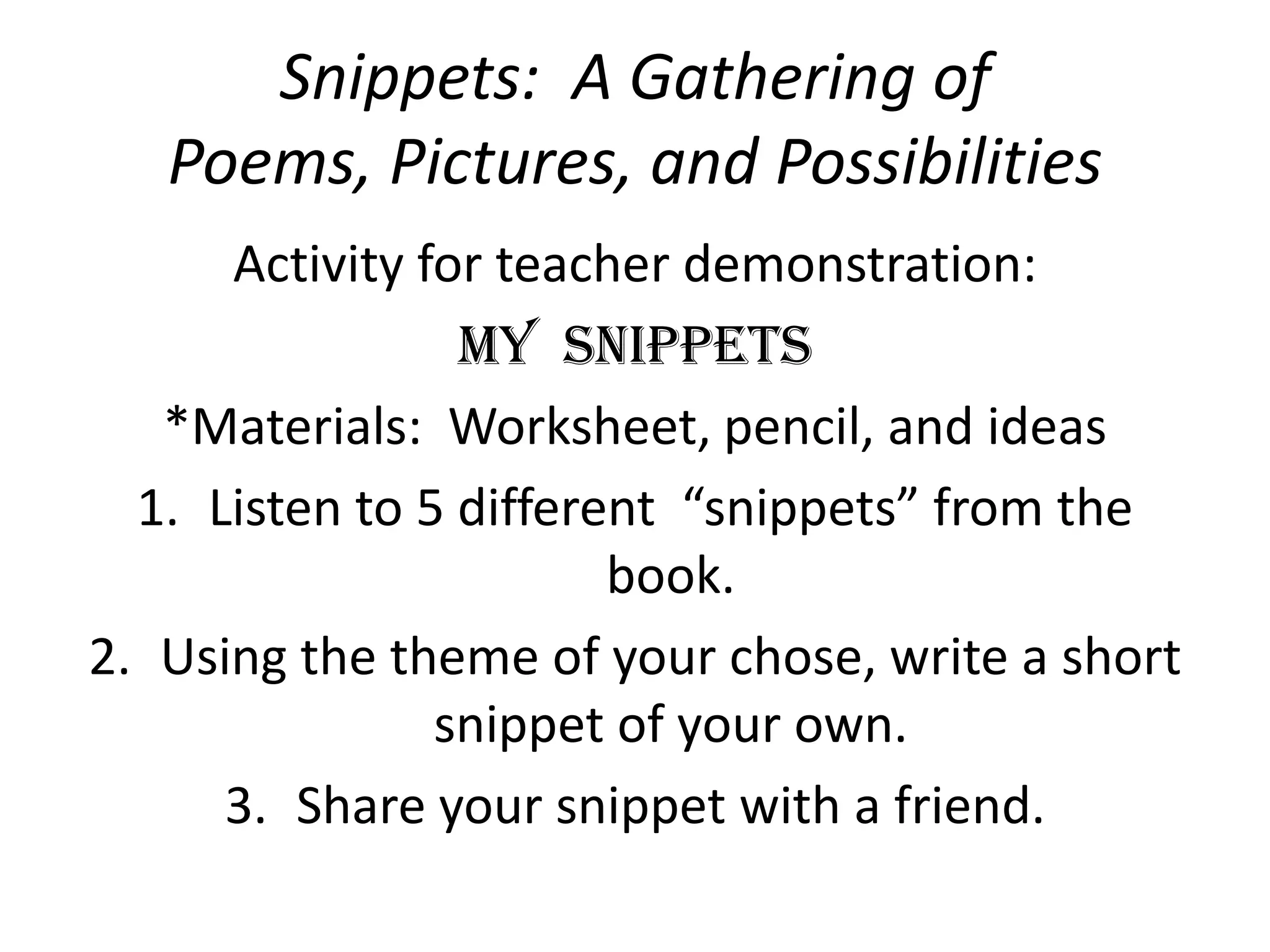
Twilightby Stephenie MeyerUsing a book that the children can relate to or have read can be a great source for a story starter.
“Writing for the Reader”The old red truck barely made the turn as it rounded the curve.
 "Writing for the Reader"1.  Pair with a partner2.   Each group contains a Reader and a Writer3.  Writer will compose a sentence that will begin a paragraph.4.  Reader reads the sentence silently and then poses a question about Writer’s sentence.5.  Writer then answers Reader’s question by adding a sentence immediately following the first one.  6.  Reader then reads the new sentence and asks an appropriate question pertaining to it.  7.  Continue this process for several more sentences.Implementing the Reading-Writing Connection (Smith & Ramonda, 1997).
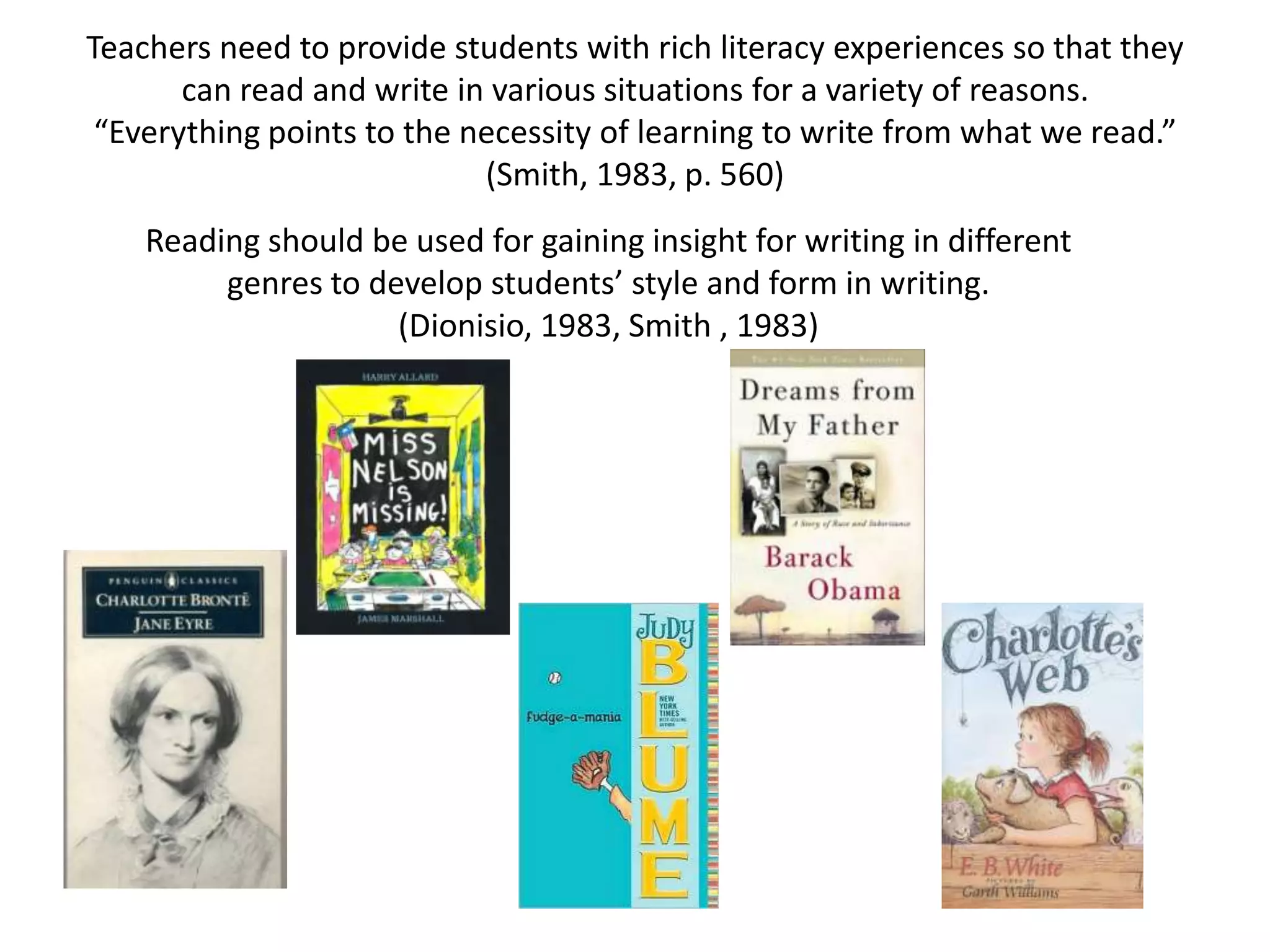
Teachers need to provide students with rich literacy experiences so that they can read and write in various situations for a variety of reasons.“Everything points to the necessity of learning to write from what we read.” (Smith, 1983, p. 560)Reading should be used for gaining insight for writing in different genres to develop students’ style and form in writing.  (Dionisio, 1983, Smith , 1983)
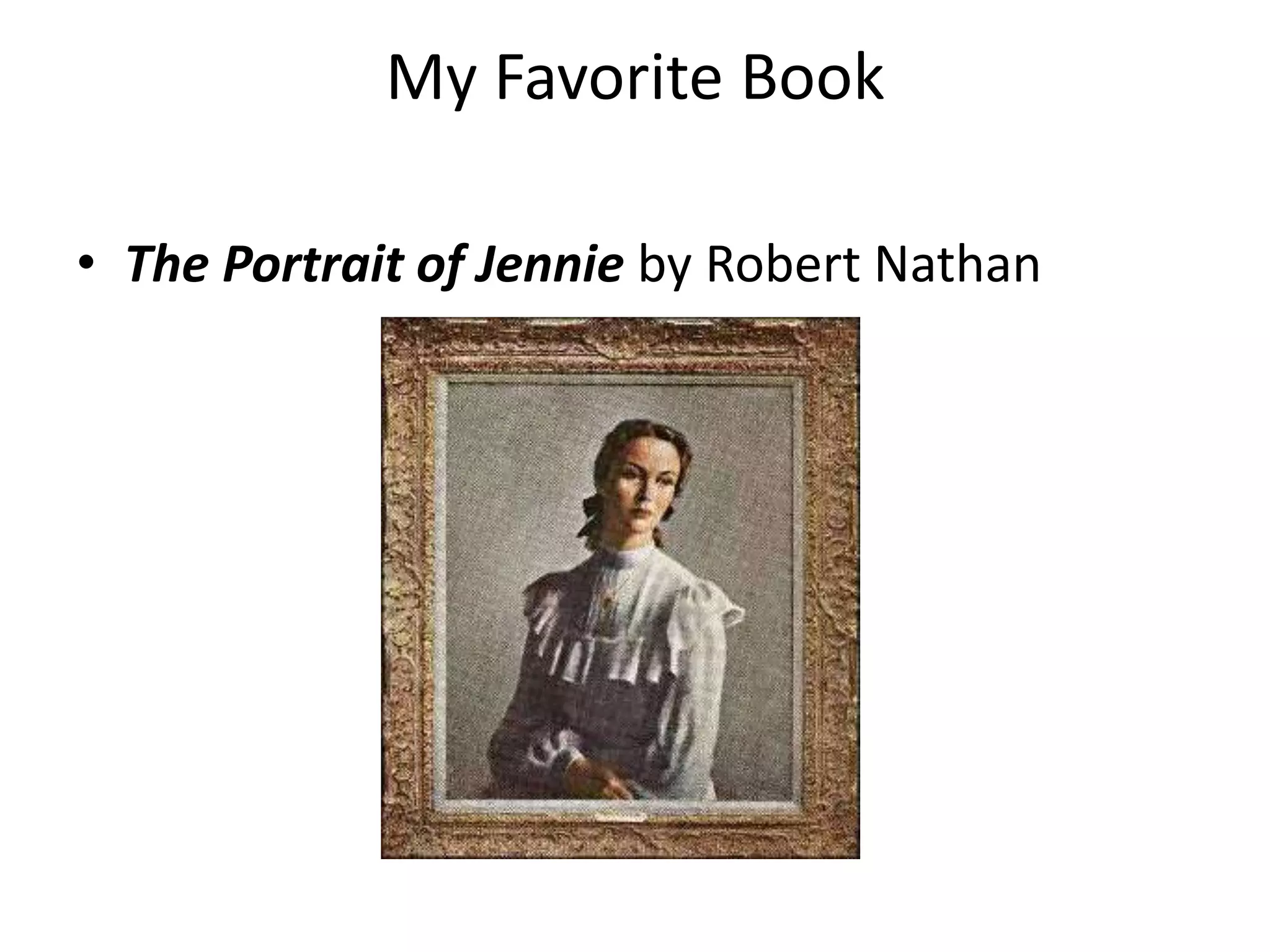
My Favorite BookThe Portrait of Jennie by Robert Nathan
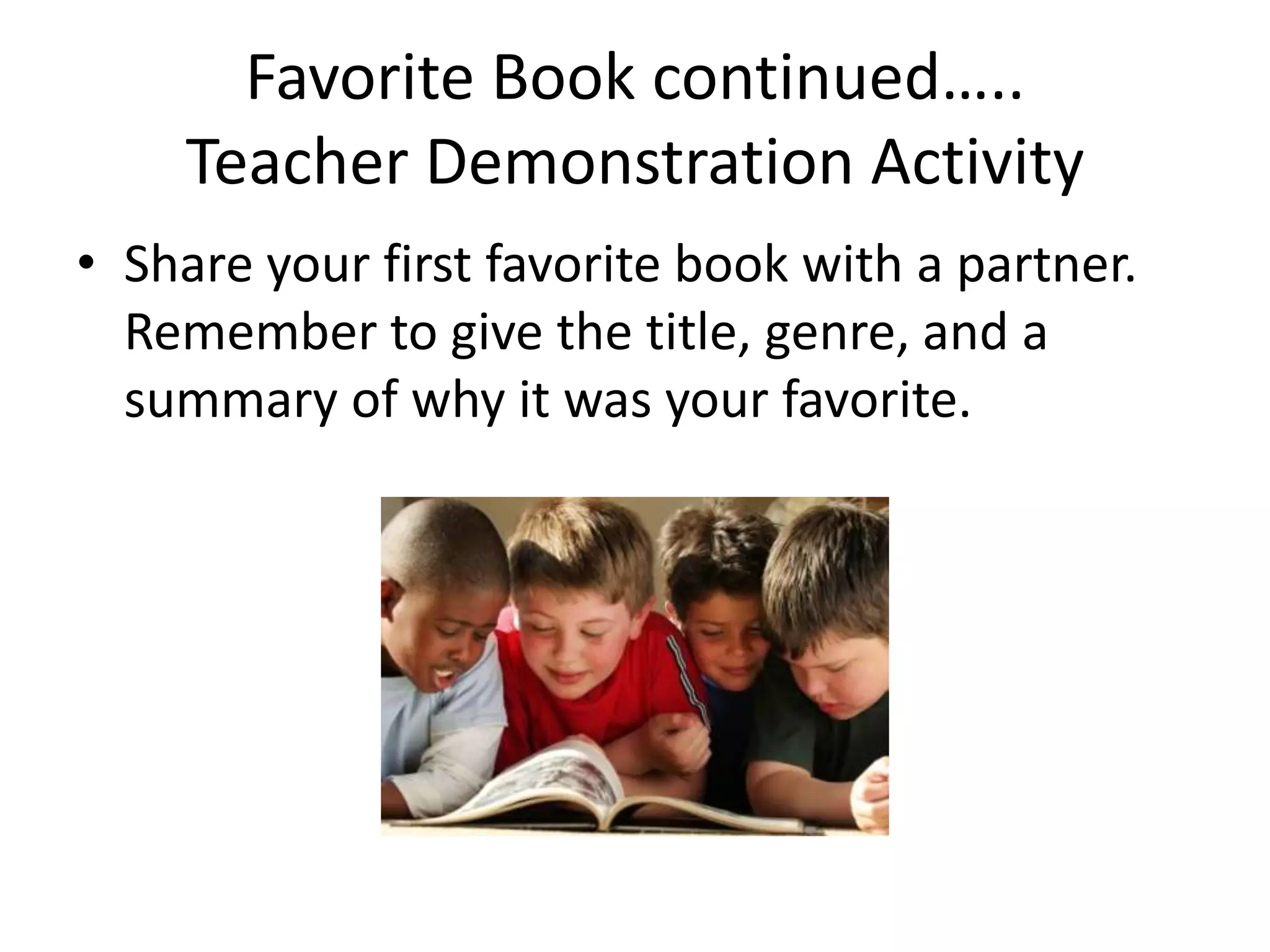
Favorite Book continued…..Teacher Demonstration ActivityShare your first favorite book with a partner.  Remember to give the title, genre, and a summary of why it was your favorite.
Good TeachingOne of the best examples of good teaching I have everencountered was with a golf professional. On my first lesson,he said, “Here is a bucket of balls…hit ‘em.” A few minuteslater he wandered back and quietly said, “Keep hitting them,only this time keep your head down, eye on the ball.” By thenext bucket of balls he had introduced one more skill for the day…no more.Before a few weeks were out, he had quietly attended to my feet, grip,shoulder level, and follow through. A few years later I realized with a startthat every single one of my problems was visible on that first lesson. If I hadattended to all of them that first day, I would probably have missed the ballentirely and resigned in disgust from ever playing golf again.Donald GravesWriting: Teacher & Children At WorkPermission is granted by Northwest Regional Education Laboratory for reproduction by schools forclassroom use only
Works cited

The Connection C

  • 1.
    The Connection ofReading and WritingHow does reading affect the writing process?
  • 2.
    When do webegin writing?The ResearchThe Developing Child Research findings:Reading at home and schoolPrint is a way of communicating in our environment.Shared Reading – storybook reading at home
  • 3.
    Snippets: AGathering of Poems, Pictures, and PossibilitiesActivity for teacher demonstration:My Snippets*Materials: Worksheet, pencil, and ideas Listen to 5 different “snippets” from the book.Using the theme of your chose, write a short snippet of your own.Share your snippet with a friend.
  • 4.
    Twilightby Stephenie MeyerUsinga book that the children can relate to or have read can be a great source for a story starter.
  • 5.
    “Writing for theReader”The old red truck barely made the turn as it rounded the curve.
  • 6.
    "Writing forthe Reader"1. Pair with a partner2. Each group contains a Reader and a Writer3. Writer will compose a sentence that will begin a paragraph.4. Reader reads the sentence silently and then poses a question about Writer’s sentence.5. Writer then answers Reader’s question by adding a sentence immediately following the first one. 6. Reader then reads the new sentence and asks an appropriate question pertaining to it. 7. Continue this process for several more sentences.Implementing the Reading-Writing Connection (Smith & Ramonda, 1997).
  • 7.
    Teachers need toprovide students with rich literacy experiences so that they can read and write in various situations for a variety of reasons.“Everything points to the necessity of learning to write from what we read.” (Smith, 1983, p. 560)Reading should be used for gaining insight for writing in different genres to develop students’ style and form in writing. (Dionisio, 1983, Smith , 1983)
  • 8.
    My Favorite BookThePortrait of Jennie by Robert Nathan
  • 9.
    Favorite Book continued…..TeacherDemonstration ActivityShare your first favorite book with a partner. Remember to give the title, genre, and a summary of why it was your favorite.
  • 10.
    Good TeachingOne ofthe best examples of good teaching I have everencountered was with a golf professional. On my first lesson,he said, “Here is a bucket of balls…hit ‘em.” A few minuteslater he wandered back and quietly said, “Keep hitting them,only this time keep your head down, eye on the ball.” By thenext bucket of balls he had introduced one more skill for the day…no more.Before a few weeks were out, he had quietly attended to my feet, grip,shoulder level, and follow through. A few years later I realized with a startthat every single one of my problems was visible on that first lesson. If I hadattended to all of them that first day, I would probably have missed the ballentirely and resigned in disgust from ever playing golf again.Donald GravesWriting: Teacher & Children At WorkPermission is granted by Northwest Regional Education Laboratory for reproduction by schools forclassroom use only
  • 11.