EnglishThe Clause
Prof. Glorivette Anibarro
The Clause
 What is a clause?
A sentence
 What are the three things that a sentence
needs?
A subject, a verb and a complete idea.
 What is an independent clause?
A complete sentence that can stand by
itself.
• What is a subordinate clause?
A sentence that is incomplete and
cannot stand by itself.
The Clause
Identify the underlined clause as independent or
subordinate.
1. Anyone who wants salad should order it separately.
Subordinate
2. The puppy that is sitting in the corner seems very shy.
Independent
3. What Dr. Chan said has started to worry me.
Subordinate
4. Judy Garland first appeared onstage when she was
only five years old.
Subordinate
5. Unless the weather improves, the trail ride will be
canceled.
Independent
Adjective Clauses modify a noun or a
pronoun. They answer what kind? Or
which one?
Examples:
White water rafting is a sport that you might
enjoy. (It modifies the noun sport, telling what
kind.)
Our guide, whom we know well, showed us
photographs of her last rafting trip. (It modifies
the noun guide, telling which one.)
Adjective clauses begin with relative pronouns
that, who, whom, whose, which; or relative
adverbs when, where, why, before, since.)
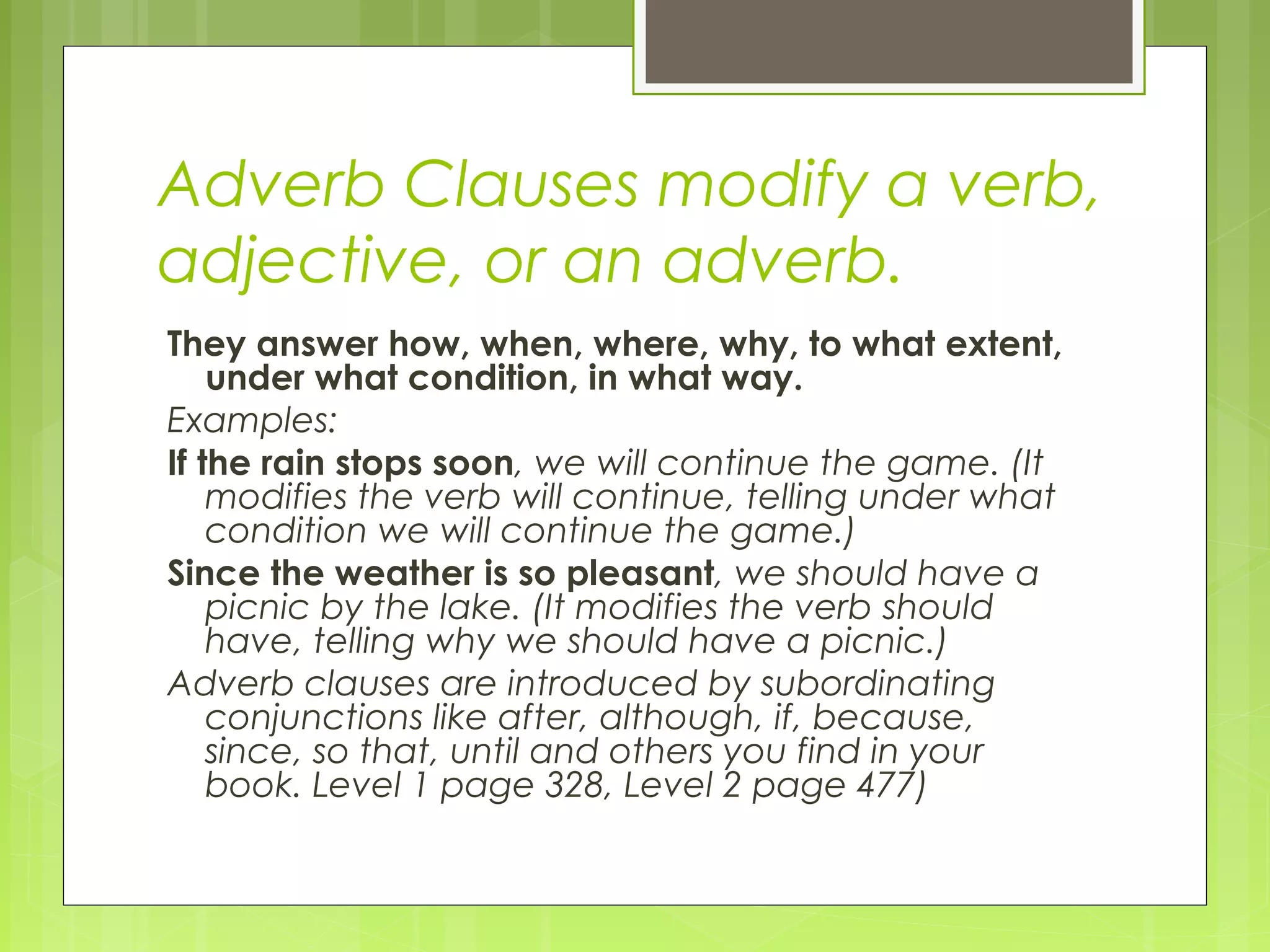
Adverb Clauses modify a verb,
adjective, or an adverb.
They answer how, when, where, why, to what extent,
under what condition, in what way.
Examples:
If the rain stops soon, we will continue the game. (It
modifies the verb will continue, telling under what
condition we will continue the game.)
Since the weather is so pleasant, we should have a
picnic by the lake. (It modifies the verb should
have, telling why we should have a picnic.)
Adverb clauses are introduced by subordinating
conjunctions like after, although, if, because,
since, so that, until and others you find in your
book. Level 1 page 328, Level 2 page 477)
Noun clauses are used as nouns in
the sentence.
Used as:
• Subject: the main word or word group that
tells whom or what the sentence is about
That Marie Curie changed modern science is
well known.
• Predicate nominative: word or word group
that is in the predicate and that identifies the
subject or refers to it
Horticulture was what he studied in college.
Noun clauses
 Direct object: a noun, pronoun, or word
group that tells who or what receives the
action of a verb
He showed that he had talent for painting.
 Indirect object: a noun, pronoun or word
group that often appears in sentences
containing direct objects. It tells to whom or
to what (for whom or for what) the action of
the verb is done.
Give whatever parts need cleaning a rinse in
detergent.
Noun clauses
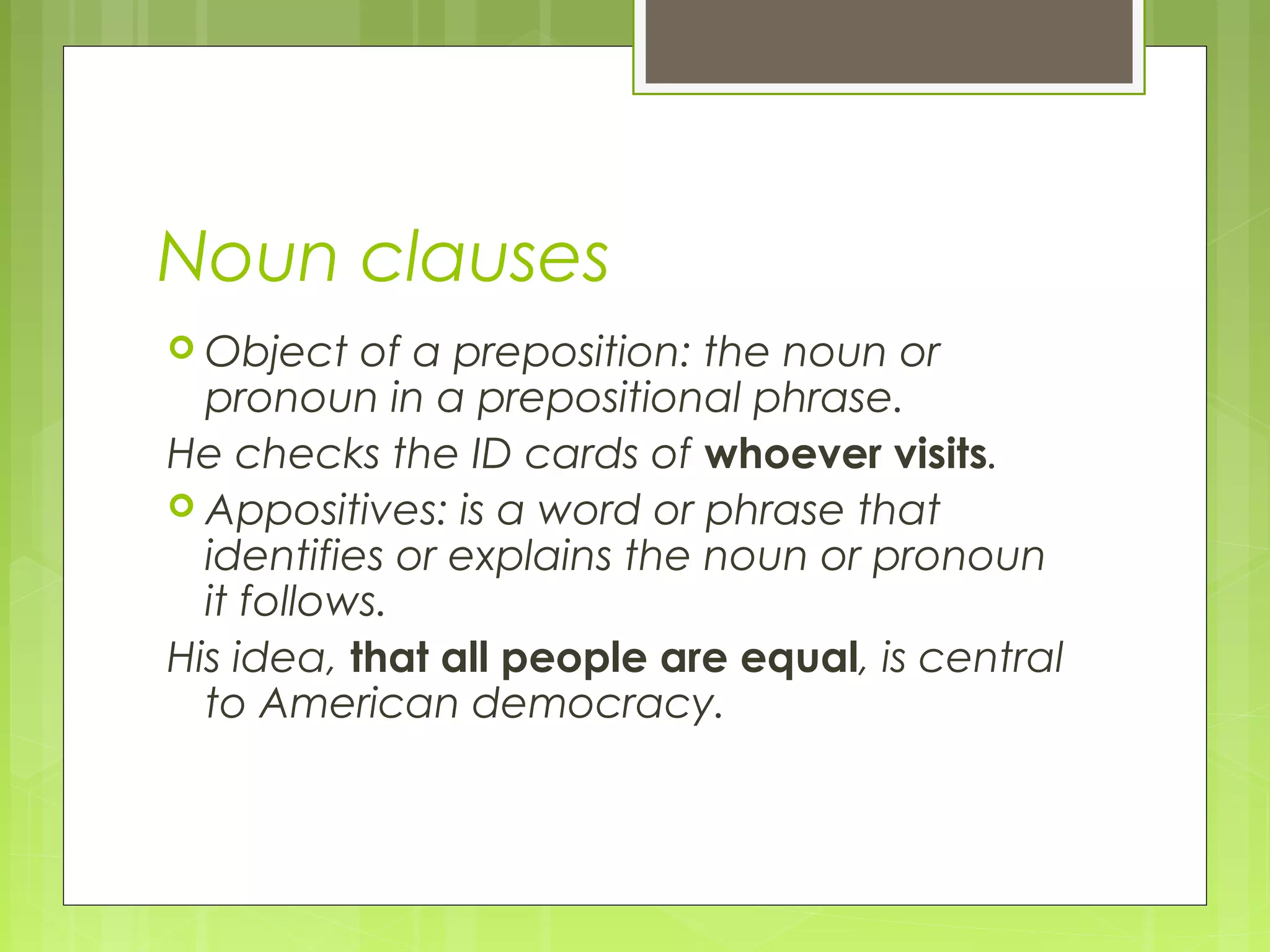
 Object of a preposition: the noun or
pronoun in a prepositional phrase.
He checks the ID cards of whoever visits.
 Appositives: is a word or phrase that
identifies or explains the noun or pronoun
it follows.
His idea, that all people are equal, is central
to American democracy.
The Clause
Sentences
Classified
According to
Structure
Sentences Classified According to
Structure
Depending on its structure (the
number and types of clauses in
a sentence), a sentence can
be classified as simple,
compound, complex, and
compound-complex.
Sentences Classified According to
Structure
 Simple Sentences
A simple sentence contains one independent
clause and NO subordinate clauses. It may
have a compound subject, a compound
verb, and any number of phrases.
Examples:
The boys wanted to take a vacation last
summer.
Ray and Joe worked and saved enough for a
trip to Ohio.
Sentences Classified According to
Structure
 Compound Sentences
A compound sentence contains two or more
independent clauses and NO subordinate
clauses.
Examples:
Originally, they wanted to ride bikes all the way, but
they decided to take the train instead.
Ray looked forward to seeing his cousins; Joe was
eager to play with his uncle’s band.
Uncle James played in a country music band; however,
Joe preferred rock music.
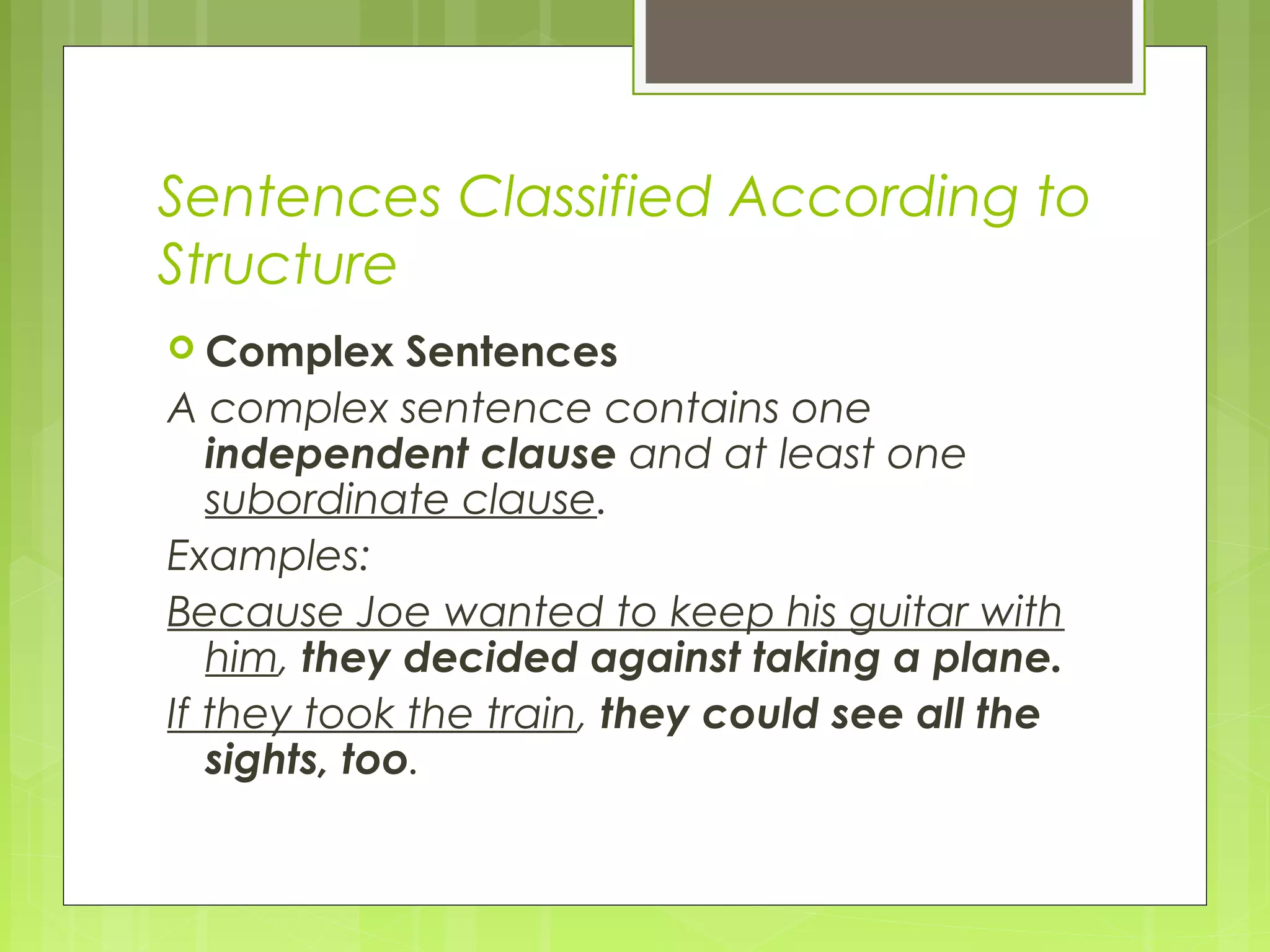
Sentences Classified According to
Structure
 Complex Sentences
A complex sentence contains one
independent clause and at least one
subordinate clause.
Examples:
Because Joe wanted to keep his guitar with
him, they decided against taking a plane.
If they took the train, they could see all the
sights, too.
Sentences Classified According to
Structure
 Compound-Complex Sentences
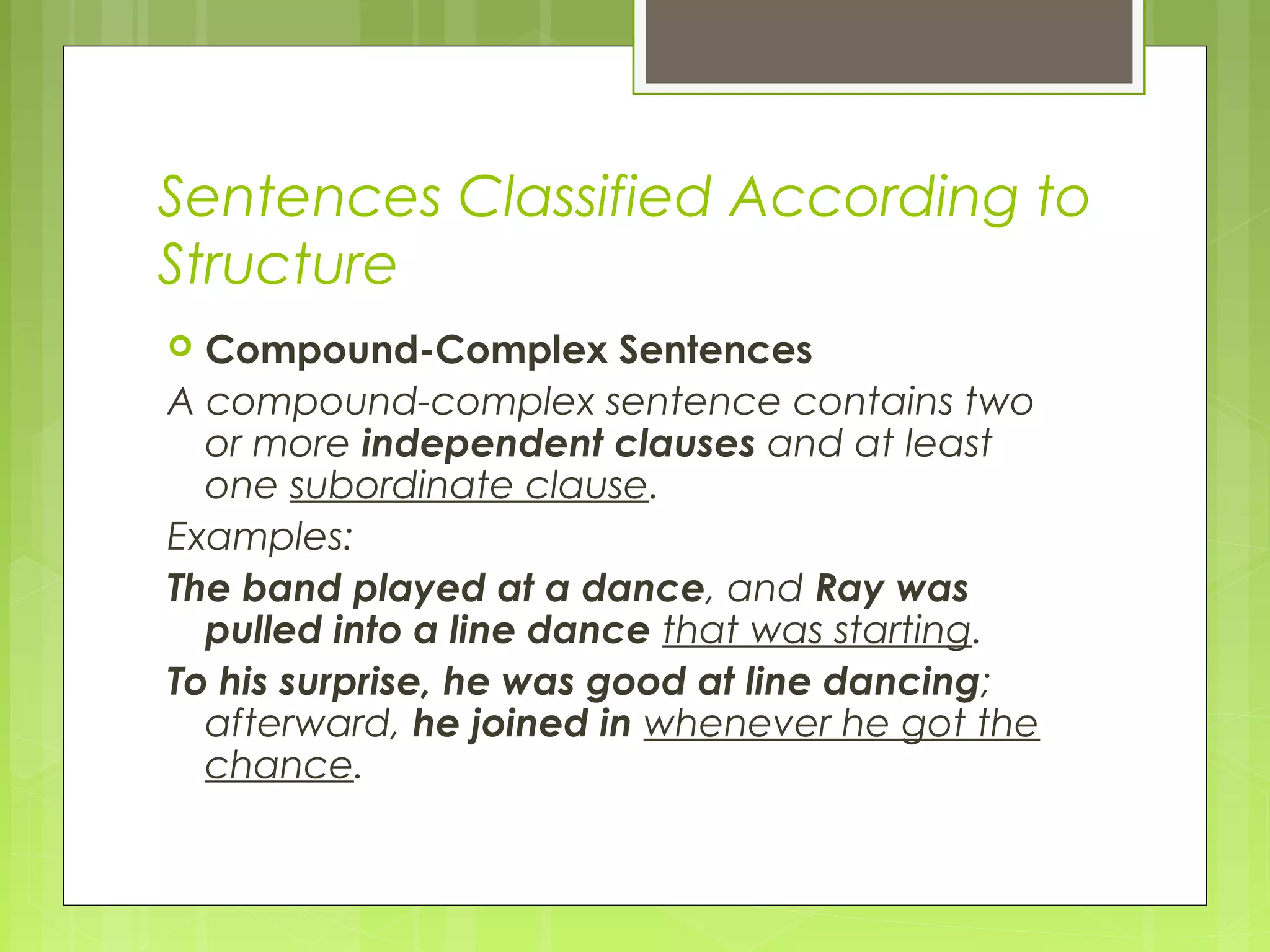
A compound-complex sentence contains two
or more independent clauses and at least
one subordinate clause.
Examples:
The band played at a dance, and Ray was
pulled into a line dance that was starting.
To his surprise, he was good at line dancing;
afterward, he joined in whenever he got the
chance.
Sentences Classified According to
Structure
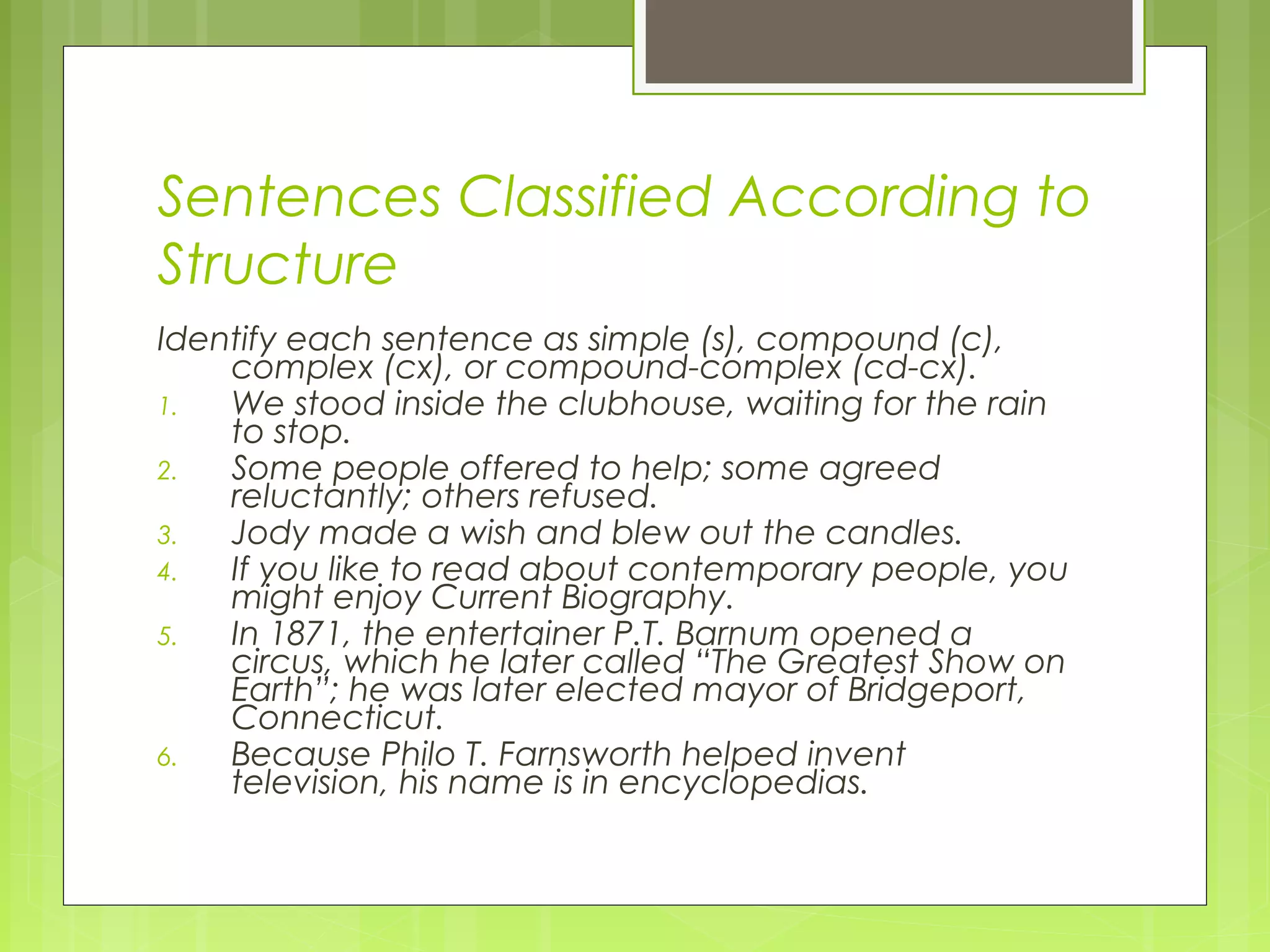
Identify each sentence as simple (s), compound (c),
complex (cx), or compound-complex (cd-cx).
1. We stood inside the clubhouse, waiting for the rain
to stop.
2. Some people offered to help; some agreed
reluctantly; others refused.
3. Jody made a wish and blew out the candles.
4. If you like to read about contemporary people, you
might enjoy Current Biography.
5. In 1871, the entertainer P.T. Barnum opened a
circus, which he later called “The Greatest Show on
Earth”; he was later elected mayor of Bridgeport,
Connecticut.
6. Because Philo T. Farnsworth helped invent
television, his name is in encyclopedias.
Sentences Classified
According to Structure
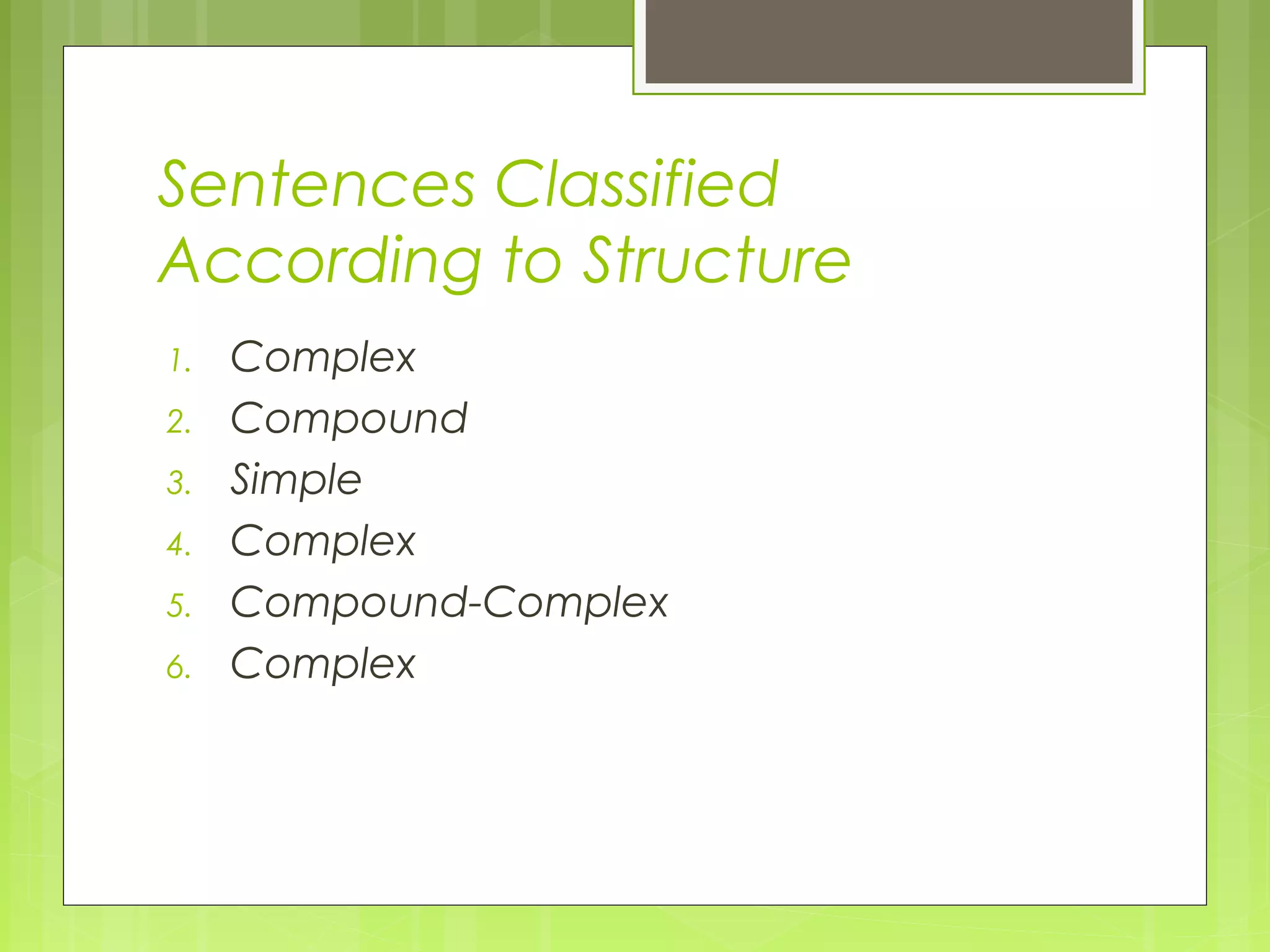
1. Complex
2. Compound
3. Simple
4. Complex
5. Compound-Complex
6. Complex

The clause

  • 1.
  • 2.
    The Clause  Whatis a clause? A sentence  What are the three things that a sentence needs? A subject, a verb and a complete idea.  What is an independent clause? A complete sentence that can stand by itself. • What is a subordinate clause? A sentence that is incomplete and cannot stand by itself.
  • 3.
    The Clause Identify theunderlined clause as independent or subordinate. 1. Anyone who wants salad should order it separately. Subordinate 2. The puppy that is sitting in the corner seems very shy. Independent 3. What Dr. Chan said has started to worry me. Subordinate 4. Judy Garland first appeared onstage when she was only five years old. Subordinate 5. Unless the weather improves, the trail ride will be canceled. Independent
  • 4.
    Adjective Clauses modifya noun or a pronoun. They answer what kind? Or which one? Examples: White water rafting is a sport that you might enjoy. (It modifies the noun sport, telling what kind.) Our guide, whom we know well, showed us photographs of her last rafting trip. (It modifies the noun guide, telling which one.) Adjective clauses begin with relative pronouns that, who, whom, whose, which; or relative adverbs when, where, why, before, since.)
  • 5.
    Adverb Clauses modifya verb, adjective, or an adverb. They answer how, when, where, why, to what extent, under what condition, in what way. Examples: If the rain stops soon, we will continue the game. (It modifies the verb will continue, telling under what condition we will continue the game.) Since the weather is so pleasant, we should have a picnic by the lake. (It modifies the verb should have, telling why we should have a picnic.) Adverb clauses are introduced by subordinating conjunctions like after, although, if, because, since, so that, until and others you find in your book. Level 1 page 328, Level 2 page 477)
  • 6.
    Noun clauses areused as nouns in the sentence. Used as: • Subject: the main word or word group that tells whom or what the sentence is about That Marie Curie changed modern science is well known. • Predicate nominative: word or word group that is in the predicate and that identifies the subject or refers to it Horticulture was what he studied in college.
  • 7.
    Noun clauses  Directobject: a noun, pronoun, or word group that tells who or what receives the action of a verb He showed that he had talent for painting.  Indirect object: a noun, pronoun or word group that often appears in sentences containing direct objects. It tells to whom or to what (for whom or for what) the action of the verb is done. Give whatever parts need cleaning a rinse in detergent.
  • 8.
    Noun clauses  Objectof a preposition: the noun or pronoun in a prepositional phrase. He checks the ID cards of whoever visits.  Appositives: is a word or phrase that identifies or explains the noun or pronoun it follows. His idea, that all people are equal, is central to American democracy.
  • 9.
  • 10.
    Sentences Classified Accordingto Structure Depending on its structure (the number and types of clauses in a sentence), a sentence can be classified as simple, compound, complex, and compound-complex.
  • 11.
    Sentences Classified Accordingto Structure  Simple Sentences A simple sentence contains one independent clause and NO subordinate clauses. It may have a compound subject, a compound verb, and any number of phrases. Examples: The boys wanted to take a vacation last summer. Ray and Joe worked and saved enough for a trip to Ohio.
  • 12.
    Sentences Classified Accordingto Structure  Compound Sentences A compound sentence contains two or more independent clauses and NO subordinate clauses. Examples: Originally, they wanted to ride bikes all the way, but they decided to take the train instead. Ray looked forward to seeing his cousins; Joe was eager to play with his uncle’s band. Uncle James played in a country music band; however, Joe preferred rock music.
  • 13.
    Sentences Classified Accordingto Structure  Complex Sentences A complex sentence contains one independent clause and at least one subordinate clause. Examples: Because Joe wanted to keep his guitar with him, they decided against taking a plane. If they took the train, they could see all the sights, too.
  • 14.
    Sentences Classified Accordingto Structure  Compound-Complex Sentences A compound-complex sentence contains two or more independent clauses and at least one subordinate clause. Examples: The band played at a dance, and Ray was pulled into a line dance that was starting. To his surprise, he was good at line dancing; afterward, he joined in whenever he got the chance.
  • 15.
    Sentences Classified Accordingto Structure Identify each sentence as simple (s), compound (c), complex (cx), or compound-complex (cd-cx). 1. We stood inside the clubhouse, waiting for the rain to stop. 2. Some people offered to help; some agreed reluctantly; others refused. 3. Jody made a wish and blew out the candles. 4. If you like to read about contemporary people, you might enjoy Current Biography. 5. In 1871, the entertainer P.T. Barnum opened a circus, which he later called “The Greatest Show on Earth”; he was later elected mayor of Bridgeport, Connecticut. 6. Because Philo T. Farnsworth helped invent television, his name is in encyclopedias.
  • 16.
    Sentences Classified According toStructure 1. Complex 2. Compound 3. Simple 4. Complex 5. Compound-Complex 6. Complex