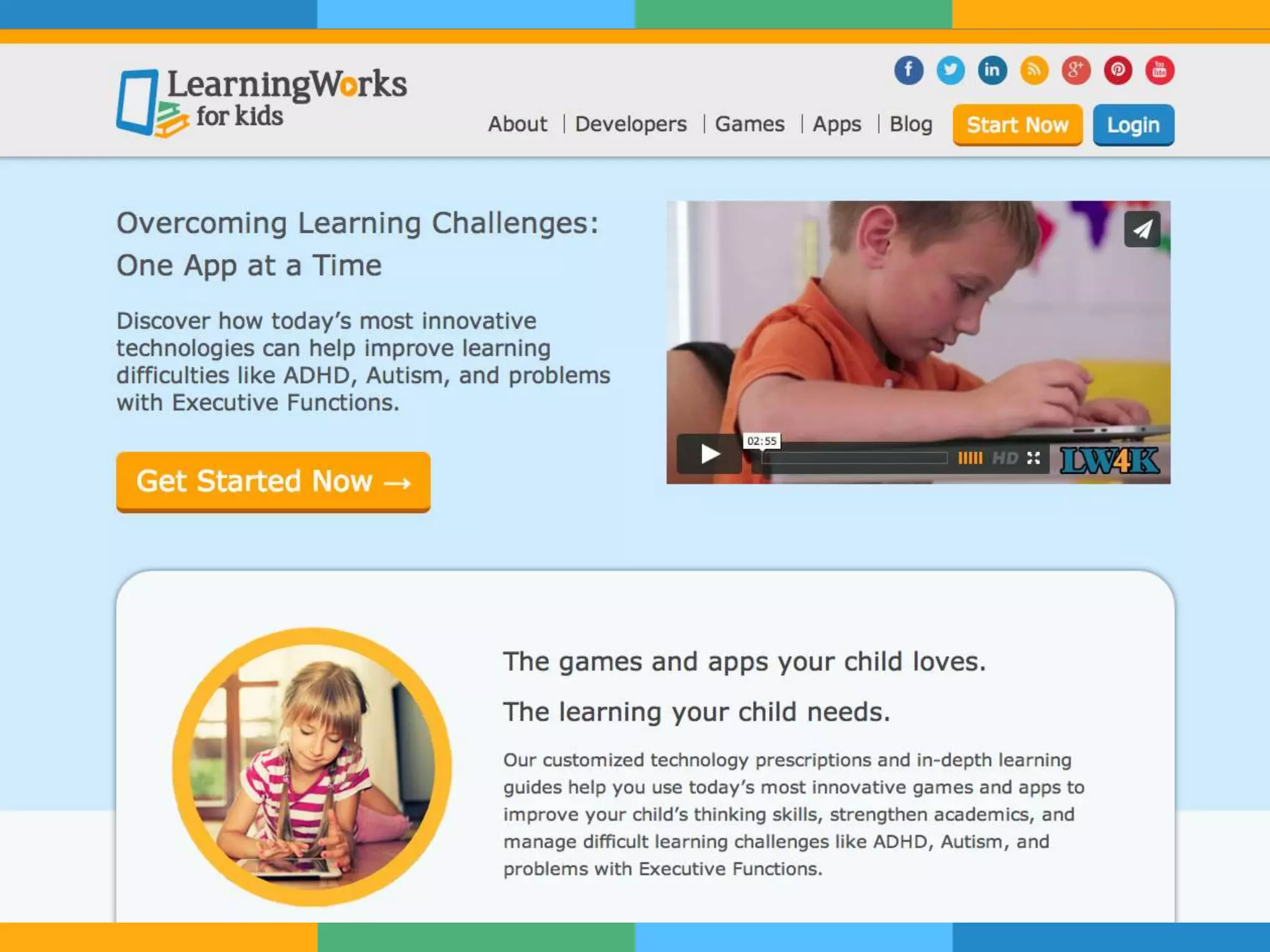
LearningWorks
for Kids
The Best Apps, Games, and Software to
Help Your Child Succeed
Randy Kulman
James Daley
ADDitude Webinar, February 18, 2014
Did you Know?
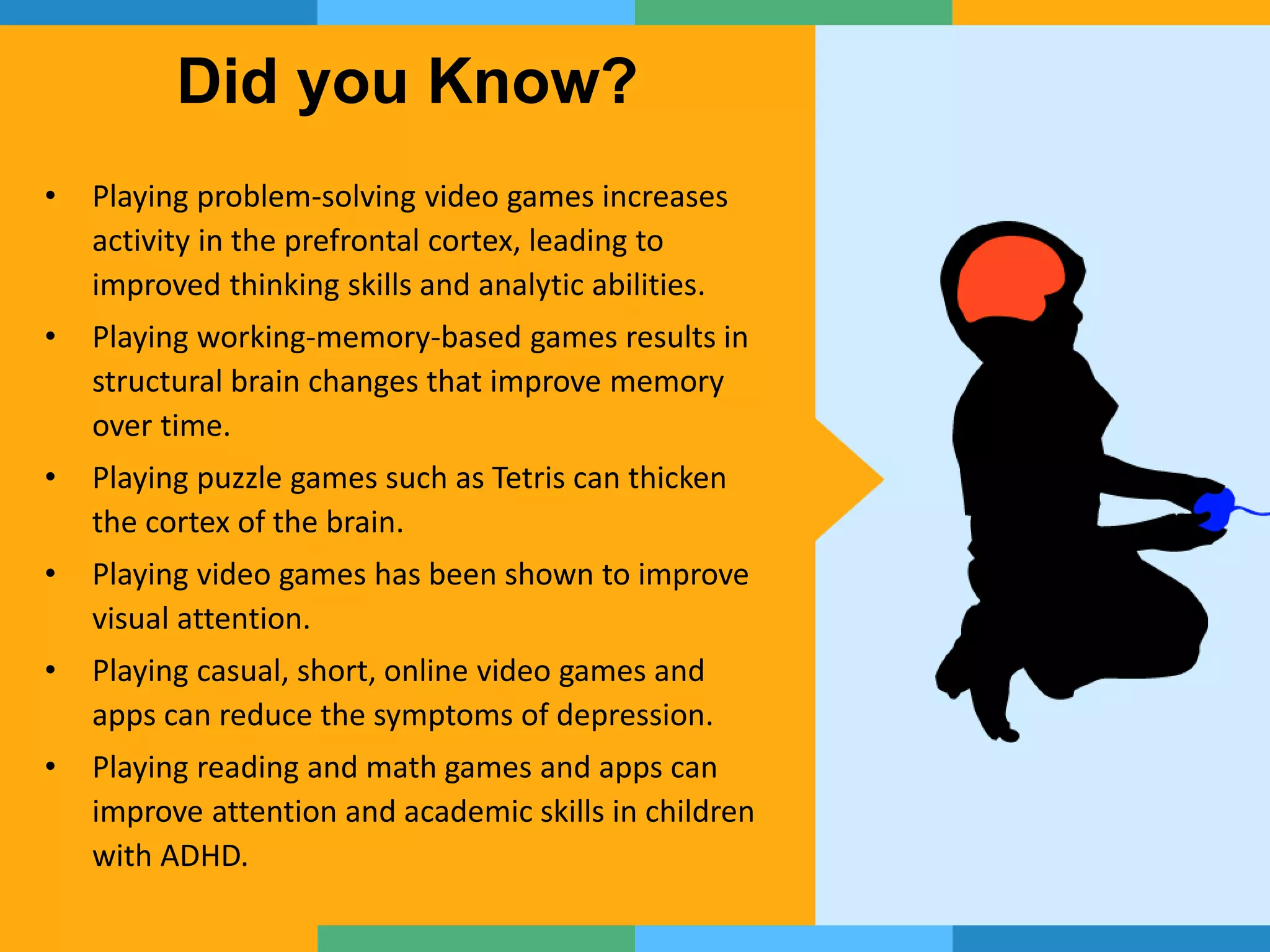
• Playing problem-solving video games increases
activity in the prefrontal cortex, leading to
improved thinking skills and analytic abilities.
• Playing working-memory-based games results in
structural brain changes that improve memory
over time.
• Playing puzzle games such as Tetris can thicken
the cortex of the brain.
• Playing video games has been shown to improve
visual attention.
• Playing casual, short, online video games and
apps can reduce the symptoms of depression.
• Playing reading and math games and apps can
improve attention and academic skills in children
with ADHD.
Why use video games and digital media to help children
with ADHD?
• Video game play requires the use of executive functioning skills.
• Other skills such as organization and metacognitive skills are required for
success.
• Both simple and complex video games
regularly use skills such as planning,
cognitive flexibility, self-control, and time
management.
• Many games specifically tax working
memory skills and attention skills.
What are the characteristics of interventions that
work best with children With ADHD?
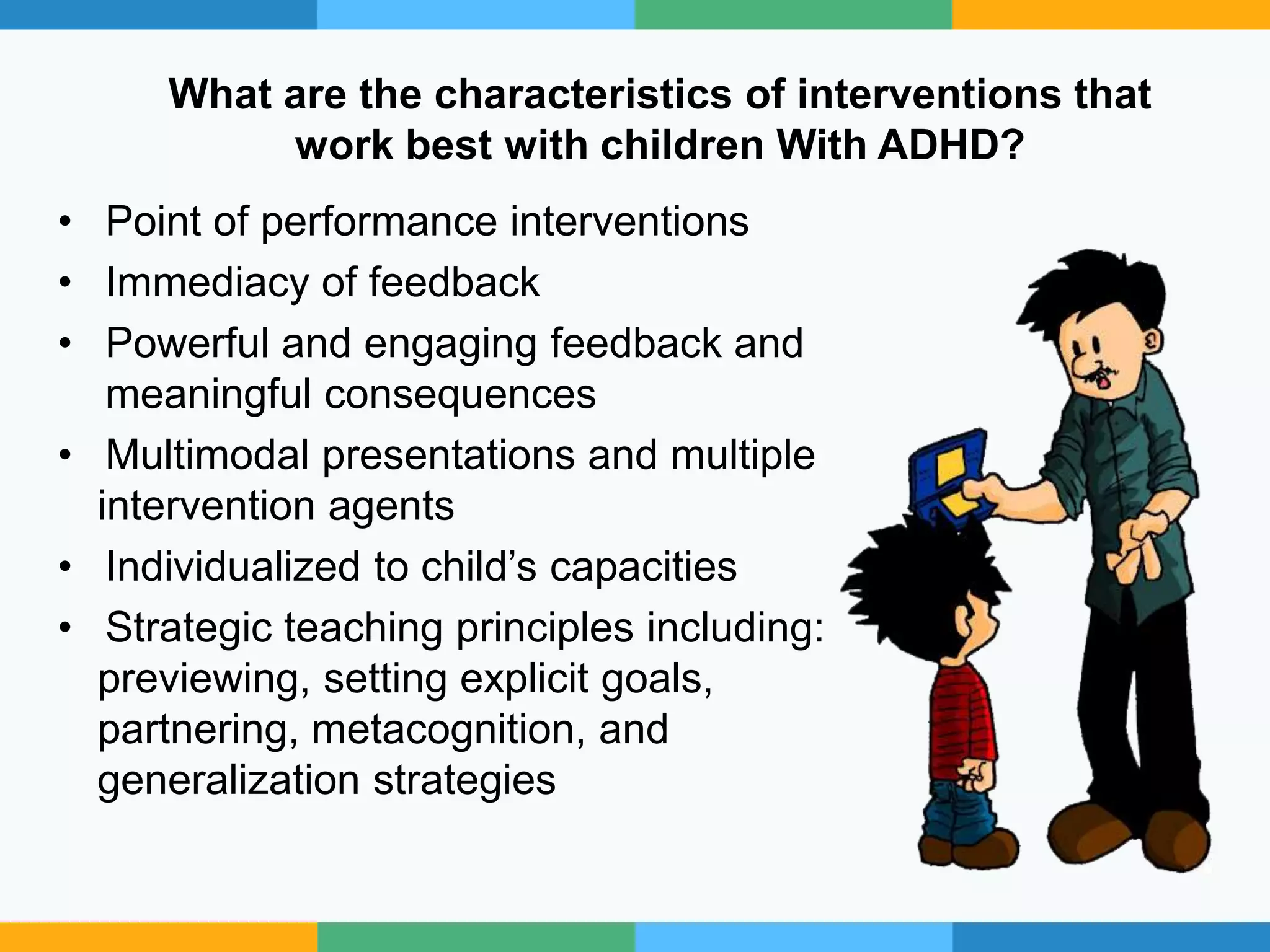
• Point of performance interventions
• Immediacy of feedback
• Powerful and engaging feedback and
meaningful consequences
• Multimodal presentations and multiple
intervention agents
• Individualized to child’s capacities
• Strategic teaching principles including:
previewing, setting explicit goals,
partnering, metacognition, and
generalization strategies
What makes a game or app a good
teaching tool for children with ADHD?
• It is engaging and sustains attention.
• It practices a specific skill the child needs to improve such as
focus, planning, or time management.
• It promotes persistence of effort and a willingness to overcome
obstacles.
• It is complex and interesting enough to result in duration and
intensity of game play.
• Generalization of game-based skills can be applied to the real
world.
How Much Should Your Child with
ADHD Play Video Games?
Age Amount of Time
0 to 24 months not at all
2 to 5 years 30 to 60 minutes a day (joint
media engagement the rule)
6 to 9 years 30 to 60 minutes a day
(parents select games)
10 to 13 years 30 to 60 minutes a day (parents
monitor game selection)
14 years old older 30 to 90 minutes a day
(emphasize social gaming)
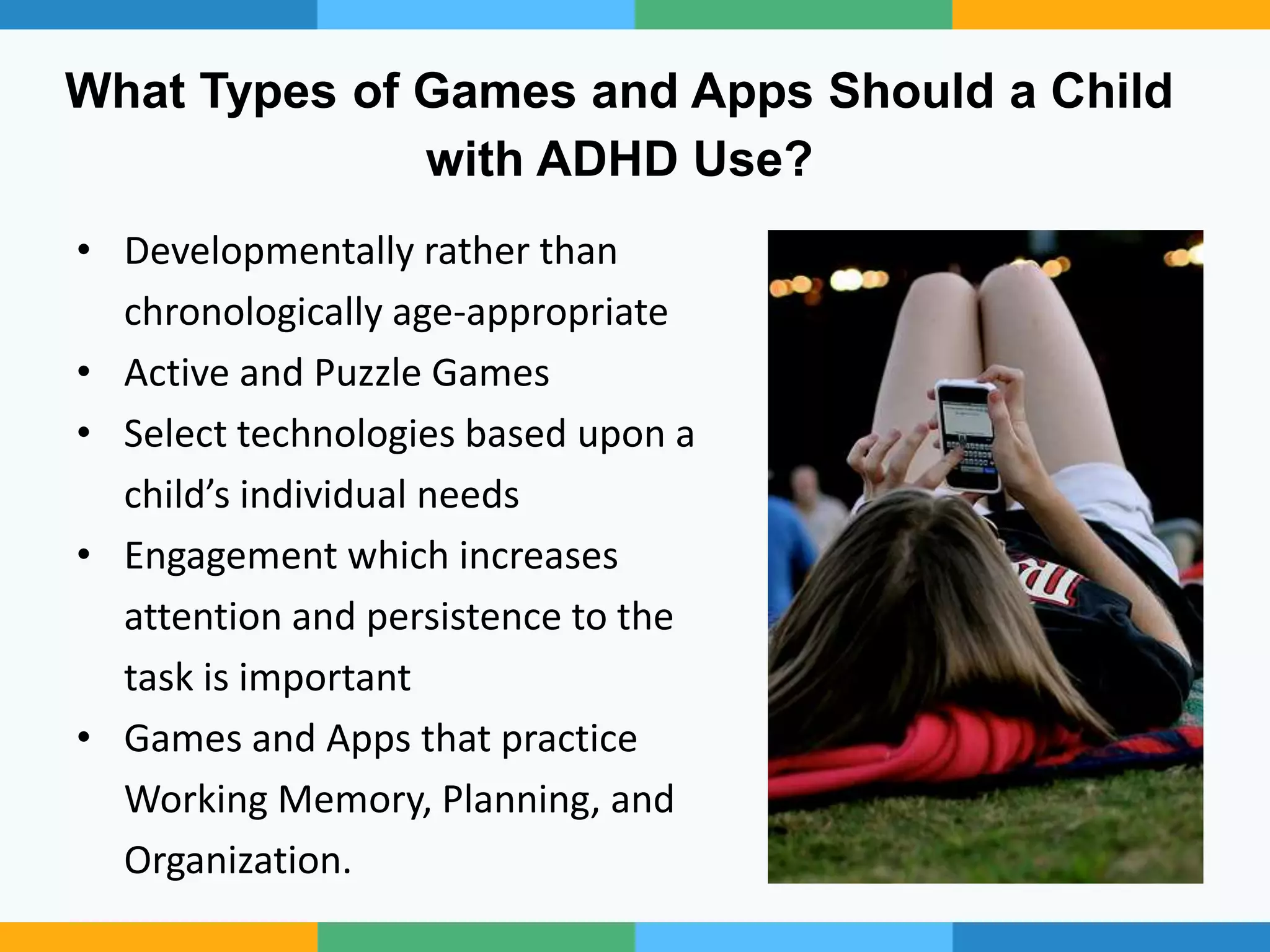
What Types of Games and Apps Should a Child
with ADHD Use?
• Developmentally rather than
chronologically age-appropriate
• Active and Puzzle Games
• Select technologies based upon a
child’s individual needs
• Engagement which increases
attention and persistence to the
task is important
• Games and Apps that practice
Working Memory, Planning, and
Organization.
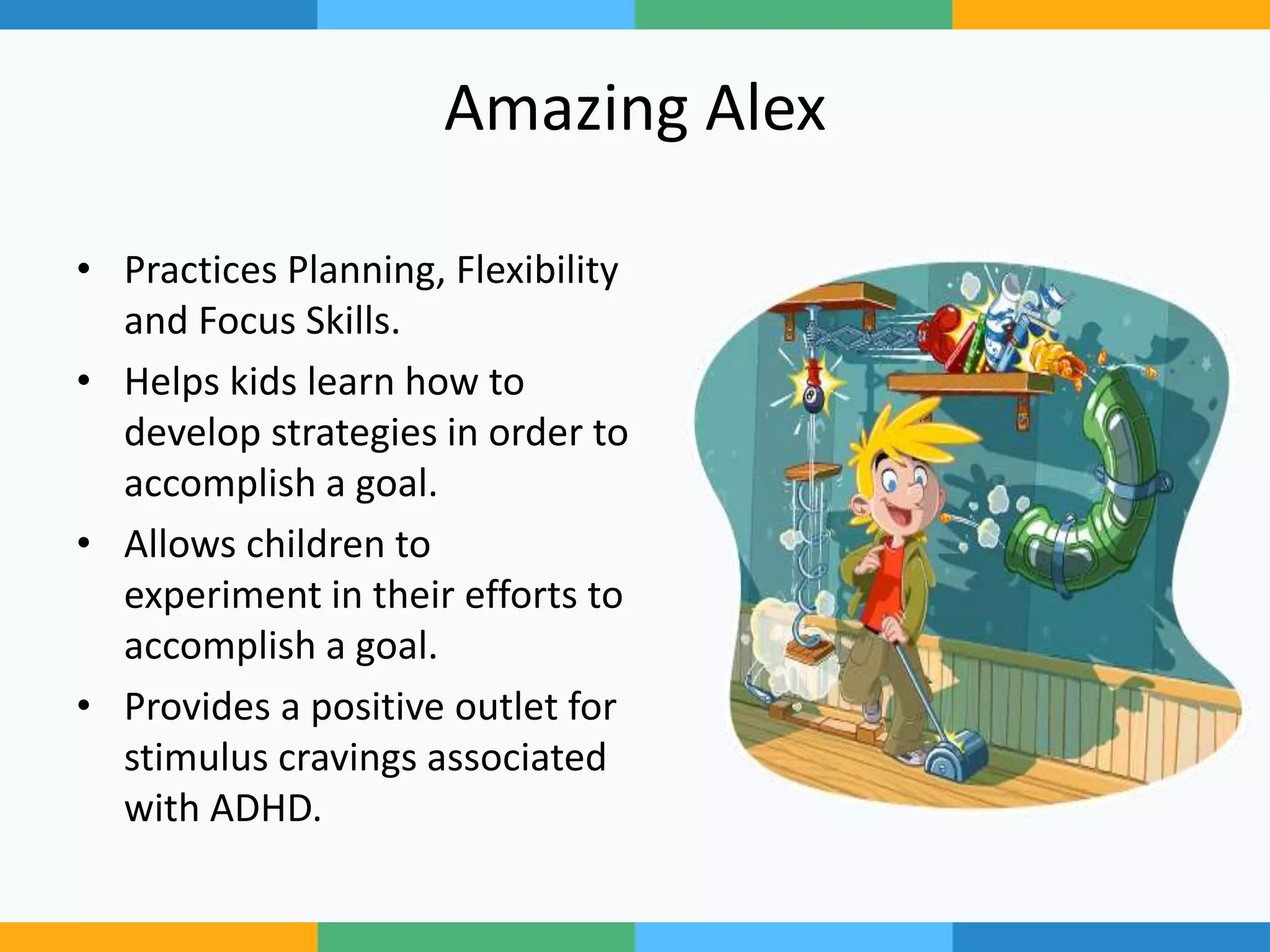
Amazing Alex
• Practices Planning, Flexibility
and Focus Skills.
• Helps kids learn how to
develop strategies in order to
accomplish a goal.
• Allows children to
experiment in their efforts to
accomplish a goal.
• Provides a positive outlet for
stimulus cravings associated
with ADHD.
ANGRY BIRDS
• Birds are used as projectiles
to hit pigs that are protected
by structures.
• Players plan out each shot
and predict the
consequences of his shot.
• Each level is set out uniquely
so the player to flexibly
change strategies.
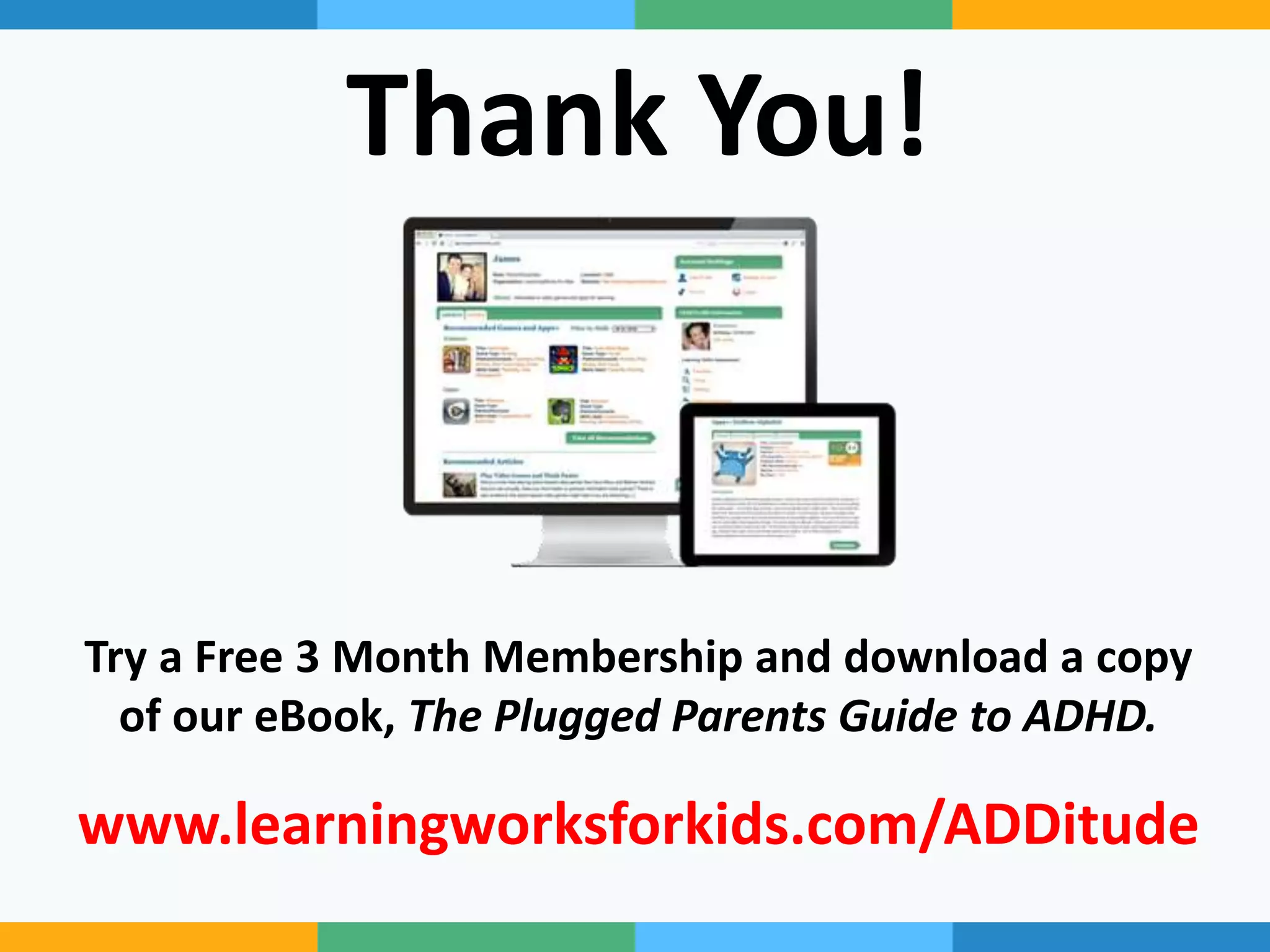
Thank You!
Try a Free 3 Month Membership and download a copy
of our eBook, The Plugged Parents Guide to ADHD.
www.learningworksforkids.com/ADDitude

The Best Apps, Games, and Software to Help Your Child Succeed

  • 1.
    LearningWorks for Kids The BestApps, Games, and Software to Help Your Child Succeed Randy Kulman James Daley ADDitude Webinar, February 18, 2014
  • 2.
    Did you Know? •Playing problem-solving video games increases activity in the prefrontal cortex, leading to improved thinking skills and analytic abilities. • Playing working-memory-based games results in structural brain changes that improve memory over time. • Playing puzzle games such as Tetris can thicken the cortex of the brain. • Playing video games has been shown to improve visual attention. • Playing casual, short, online video games and apps can reduce the symptoms of depression. • Playing reading and math games and apps can improve attention and academic skills in children with ADHD.
  • 5.
    Why use videogames and digital media to help children with ADHD? • Video game play requires the use of executive functioning skills. • Other skills such as organization and metacognitive skills are required for success. • Both simple and complex video games regularly use skills such as planning, cognitive flexibility, self-control, and time management. • Many games specifically tax working memory skills and attention skills.
  • 6.
    What are thecharacteristics of interventions that work best with children With ADHD? • Point of performance interventions • Immediacy of feedback • Powerful and engaging feedback and meaningful consequences • Multimodal presentations and multiple intervention agents • Individualized to child’s capacities • Strategic teaching principles including: previewing, setting explicit goals, partnering, metacognition, and generalization strategies
  • 7.
    What makes agame or app a good teaching tool for children with ADHD? • It is engaging and sustains attention. • It practices a specific skill the child needs to improve such as focus, planning, or time management. • It promotes persistence of effort and a willingness to overcome obstacles. • It is complex and interesting enough to result in duration and intensity of game play. • Generalization of game-based skills can be applied to the real world.
  • 8.
    How Much ShouldYour Child with ADHD Play Video Games? Age Amount of Time 0 to 24 months not at all 2 to 5 years 30 to 60 minutes a day (joint media engagement the rule) 6 to 9 years 30 to 60 minutes a day (parents select games) 10 to 13 years 30 to 60 minutes a day (parents monitor game selection) 14 years old older 30 to 90 minutes a day (emphasize social gaming)
  • 9.
    What Types ofGames and Apps Should a Child with ADHD Use? • Developmentally rather than chronologically age-appropriate • Active and Puzzle Games • Select technologies based upon a child’s individual needs • Engagement which increases attention and persistence to the task is important • Games and Apps that practice Working Memory, Planning, and Organization.
  • 10.
    Amazing Alex • PracticesPlanning, Flexibility and Focus Skills. • Helps kids learn how to develop strategies in order to accomplish a goal. • Allows children to experiment in their efforts to accomplish a goal. • Provides a positive outlet for stimulus cravings associated with ADHD.
  • 11.
    ANGRY BIRDS • Birdsare used as projectiles to hit pigs that are protected by structures. • Players plan out each shot and predict the consequences of his shot. • Each level is set out uniquely so the player to flexibly change strategies.
  • 13.
    Thank You! Try aFree 3 Month Membership and download a copy of our eBook, The Plugged Parents Guide to ADHD. www.learningworksforkids.com/ADDitude

Editor's Notes

  • #2 Ben asked us to give a business history and describe our journey
  • #4 But simply setting a child in front of a computer screen–with no direction or guidance–will never translate into better grades at school or improved behavior at home.
  • #5 The connection must be created by parents, teachers, clinicians, etc.
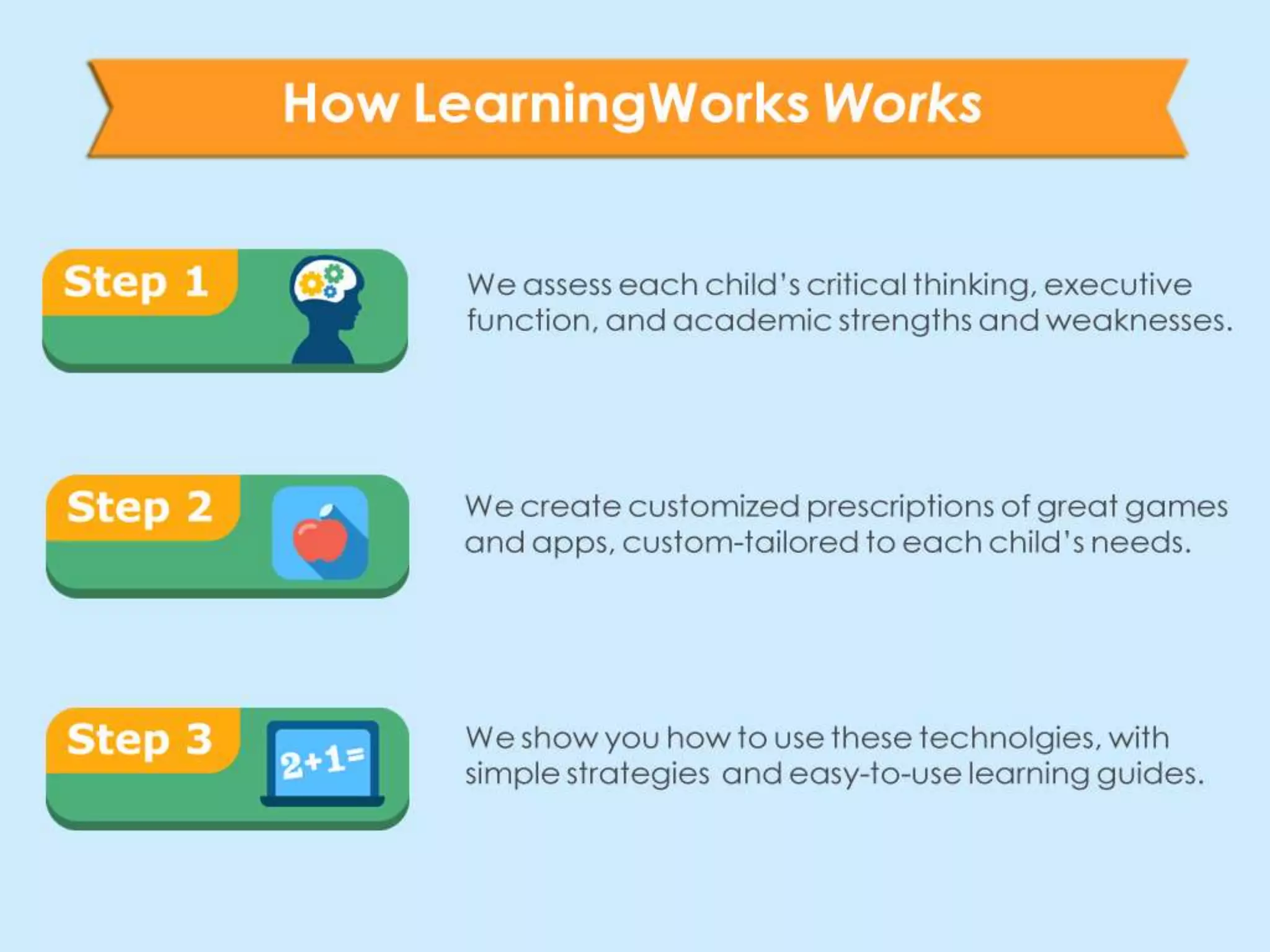
  • #7 General strategies that work with ADHD children… something to do, to be able to move, to be able to talk , or to be able to fidget when concentrating Research on ADHD and vigorous exercise (Verret et al 2010, Ratey in Spark)…what about exergames as a tool for increasing focusing skills Best (2011) Exergaming immediately enhance EFs
  • #10 Give examples of psychoeducational games -
  • #13 Here’s how we do it… Identify which Thinking Skills their children need help with Choose the best games and technologies for each child, based on their needs. Show parents how the game helps, and what they can do to connect to the child’s learningin.