DEFINITION
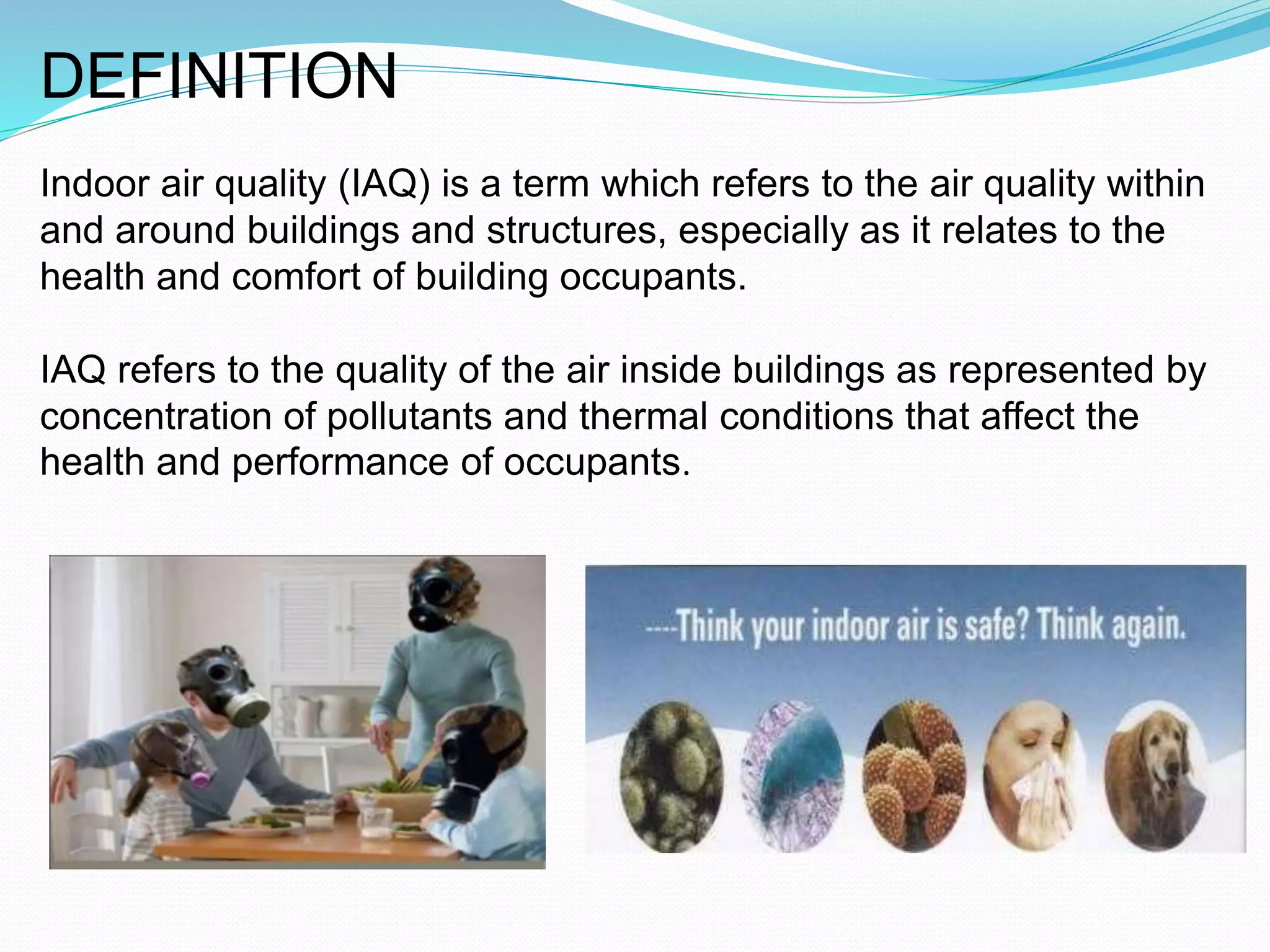
Indoor air quality (IAQ) is a term which refers to the air quality within
and around buildings and structures, especially as it relates to the
health and comfort of building occupants.
IAQ refers to the quality of the air inside buildings as represented by
concentration of pollutants and thermal conditions that affect the
health and performance of occupants.
IAQ – AREA OF CONCERN
• Indoor air quality is linked to health of the occupants
• IAQ is an important concern – both rural and urban
• US EPA pointed out that indoor air pollution poses a greater risk than
outdoor air pollution - people spend 80-90% of their time indoors (Yu and
Browers, 2013)
• Carbon based gaseous pollutants (VOCs) indoors could be 2 to 5 times
higher than outdoors
• Presence of air pollutants in indoor environment a global issue due to
adverse effects on human health (Tsakas, Siskos and Siskos, 2011)
• Indoor air pollution - ranked among the top five environmental health risks
to the public by EPA.
• Indoor air pollution – one of the top 10 death, disease risk factors - India
WHY INDOOR AIR IS IMPORTANT
People spend about 90% of their time indoors. Many people spend their
entire working day inside an office, shop, factory, or other facility.
In recent years, people have become more aware of potential health
and comfort problems that may be associated with poor indoor air
quality. This is partly due to the move to more tightly sealed buildings,
the implementation of energy conservation programs, and the growing
use of laser printers, photocopiers, and other sources of indoor air
contamination.
In some indoor environments, poor air
quality has been blamed for physical
symptoms and complaints such as
headaches, eye irritation, and coughs.
These physical symptoms and complaints
can affect people’s health, comfort, job
satisfaction, and work performance.
POLLUTANTS AND SOURCES
CASUAL FACTORS
• Not enough ventilation, lack of fresh outdoor air or contaminated air
being brought into the building.
• Poor upkeep of ventilation, heating and air-conditioning systems.
• Dampness and moisture damage due to leaks, flooding or high humidity.
• Sometimes, specific contaminants like dust from construction or
renovation, mold, cleaning supplies, pesticides, or other airborne chemicals
may cause poor IAQ.
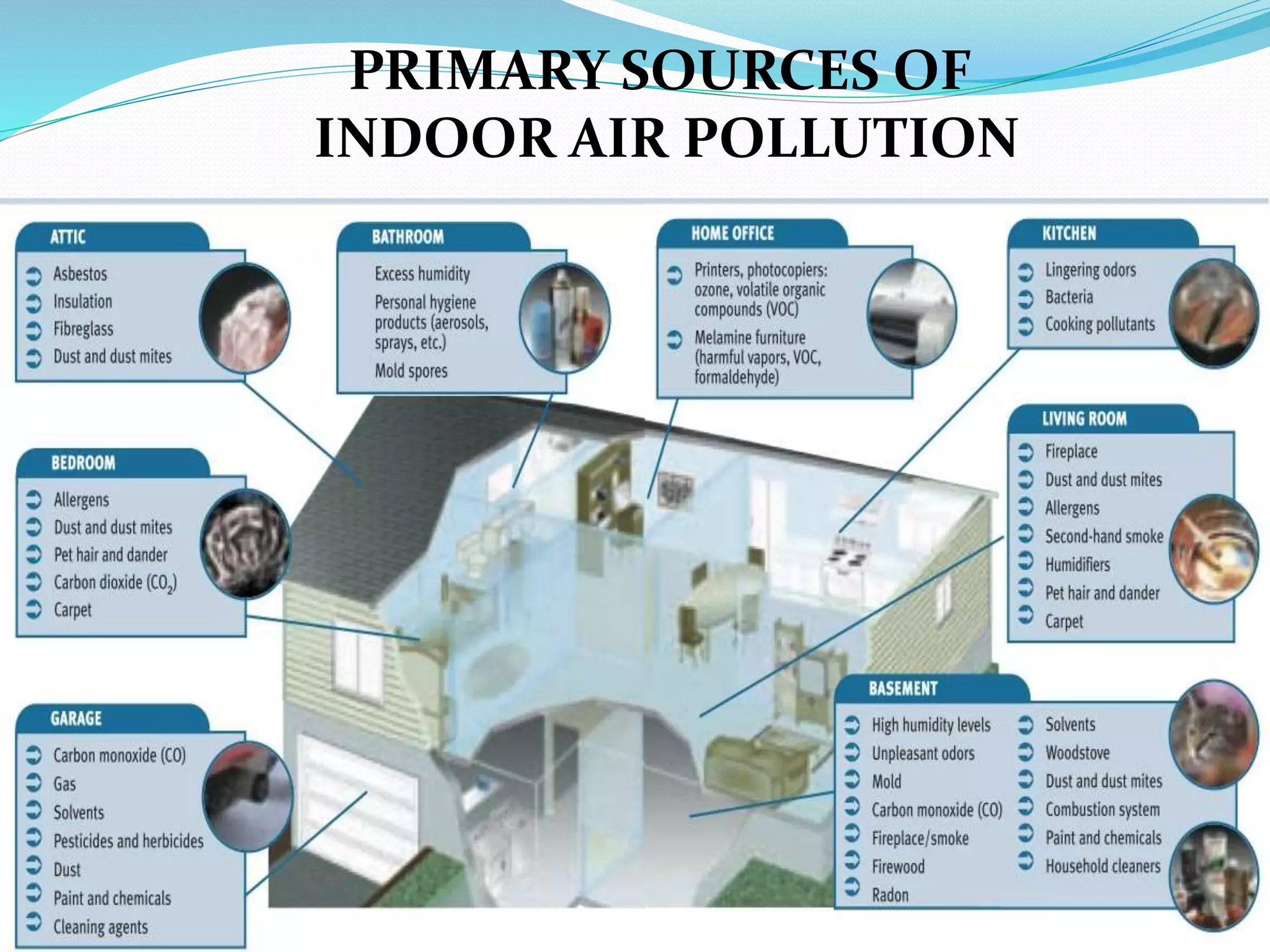
PRIMARY SOURCES OF
INDOOR AIR POLLUTION
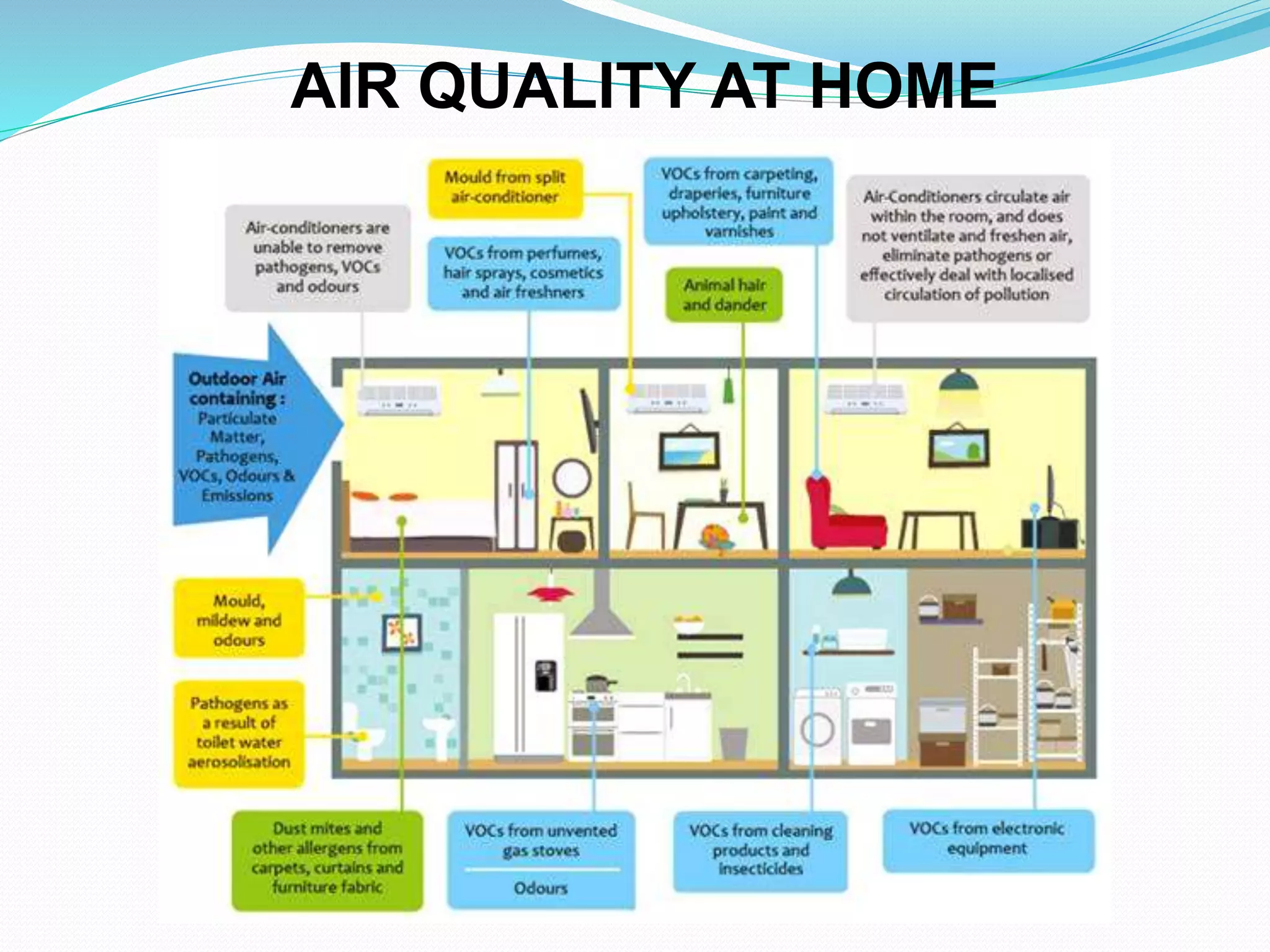
AIR QUALITY AT HOME
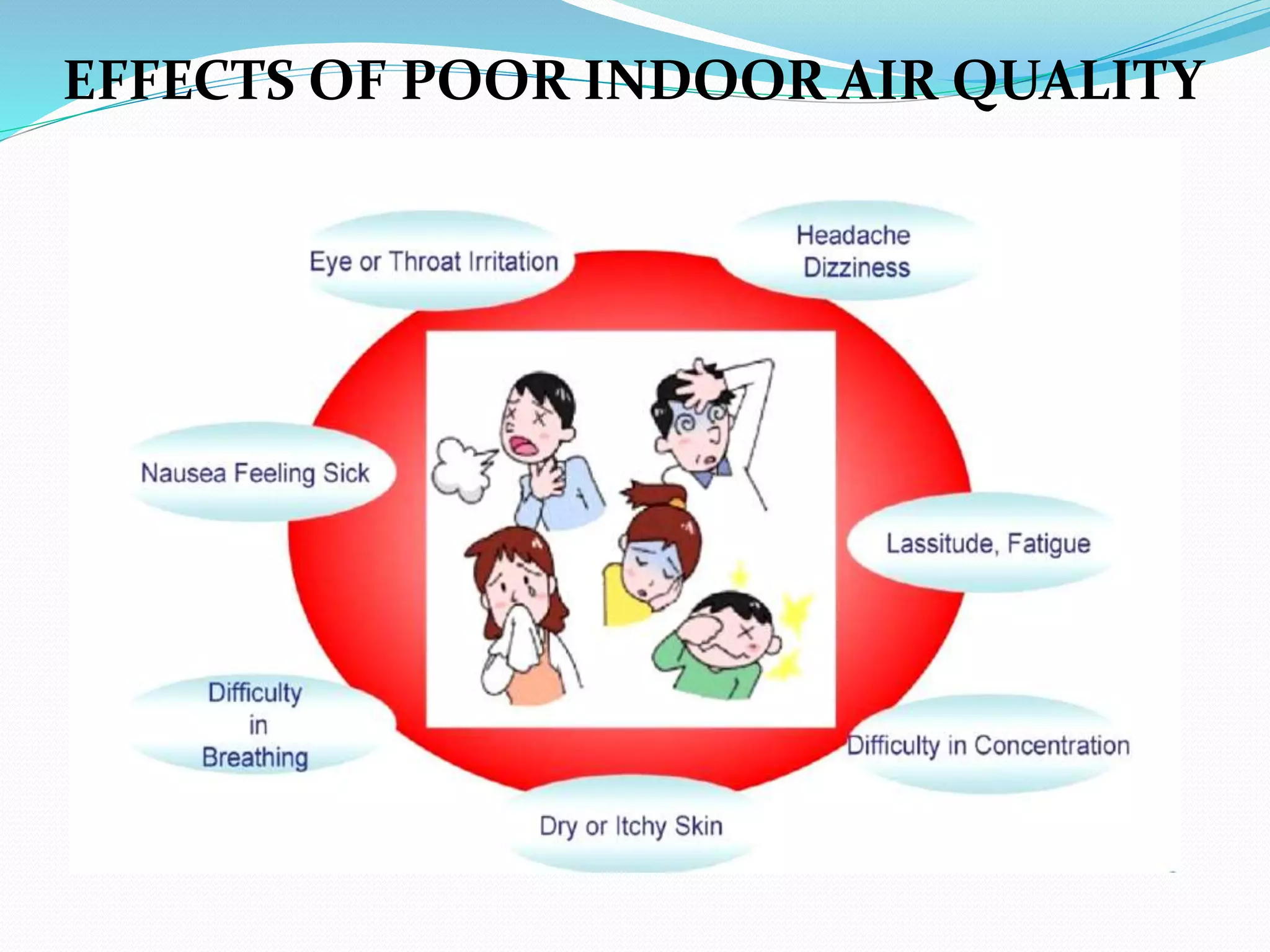
EFFECTS OF POOR INDOOR AIR QUALITY

Indoor air quality

  • 2.
    DEFINITION Indoor air quality(IAQ) is a term which refers to the air quality within and around buildings and structures, especially as it relates to the health and comfort of building occupants. IAQ refers to the quality of the air inside buildings as represented by concentration of pollutants and thermal conditions that affect the health and performance of occupants.
  • 3.
    IAQ – AREAOF CONCERN • Indoor air quality is linked to health of the occupants • IAQ is an important concern – both rural and urban • US EPA pointed out that indoor air pollution poses a greater risk than outdoor air pollution - people spend 80-90% of their time indoors (Yu and Browers, 2013) • Carbon based gaseous pollutants (VOCs) indoors could be 2 to 5 times higher than outdoors • Presence of air pollutants in indoor environment a global issue due to adverse effects on human health (Tsakas, Siskos and Siskos, 2011) • Indoor air pollution - ranked among the top five environmental health risks to the public by EPA. • Indoor air pollution – one of the top 10 death, disease risk factors - India
  • 4.
    WHY INDOOR AIRIS IMPORTANT People spend about 90% of their time indoors. Many people spend their entire working day inside an office, shop, factory, or other facility. In recent years, people have become more aware of potential health and comfort problems that may be associated with poor indoor air quality. This is partly due to the move to more tightly sealed buildings, the implementation of energy conservation programs, and the growing use of laser printers, photocopiers, and other sources of indoor air contamination. In some indoor environments, poor air quality has been blamed for physical symptoms and complaints such as headaches, eye irritation, and coughs. These physical symptoms and complaints can affect people’s health, comfort, job satisfaction, and work performance.
  • 5.
  • 6.
    CASUAL FACTORS • Notenough ventilation, lack of fresh outdoor air or contaminated air being brought into the building. • Poor upkeep of ventilation, heating and air-conditioning systems. • Dampness and moisture damage due to leaks, flooding or high humidity. • Sometimes, specific contaminants like dust from construction or renovation, mold, cleaning supplies, pesticides, or other airborne chemicals may cause poor IAQ.
  • 7.
  • 8.
  • 9.
    EFFECTS OF POORINDOOR AIR QUALITY