 The atmosphere is the air around the Earth. We
 find rain, cloud, fog and wind in the atmosphere.
 Earth’s atmosphere make life possible.
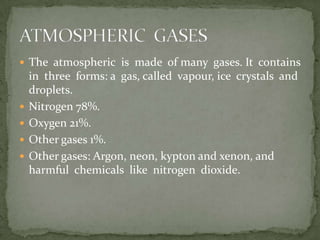
 The atmospheric is made of many gases. It contains
    in three forms: a gas, called vapour, ice crystals and
    droplets.
   Nitrogen 78%.
   Oxygen 21%.
   Other gases 1%.
   Other gases: Argon, neon, kypton and xenon, and
    harmful chemicals like nitrogen dioxide.
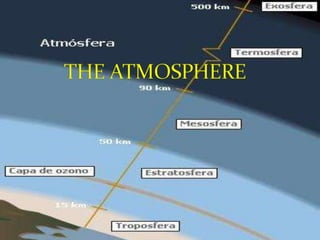
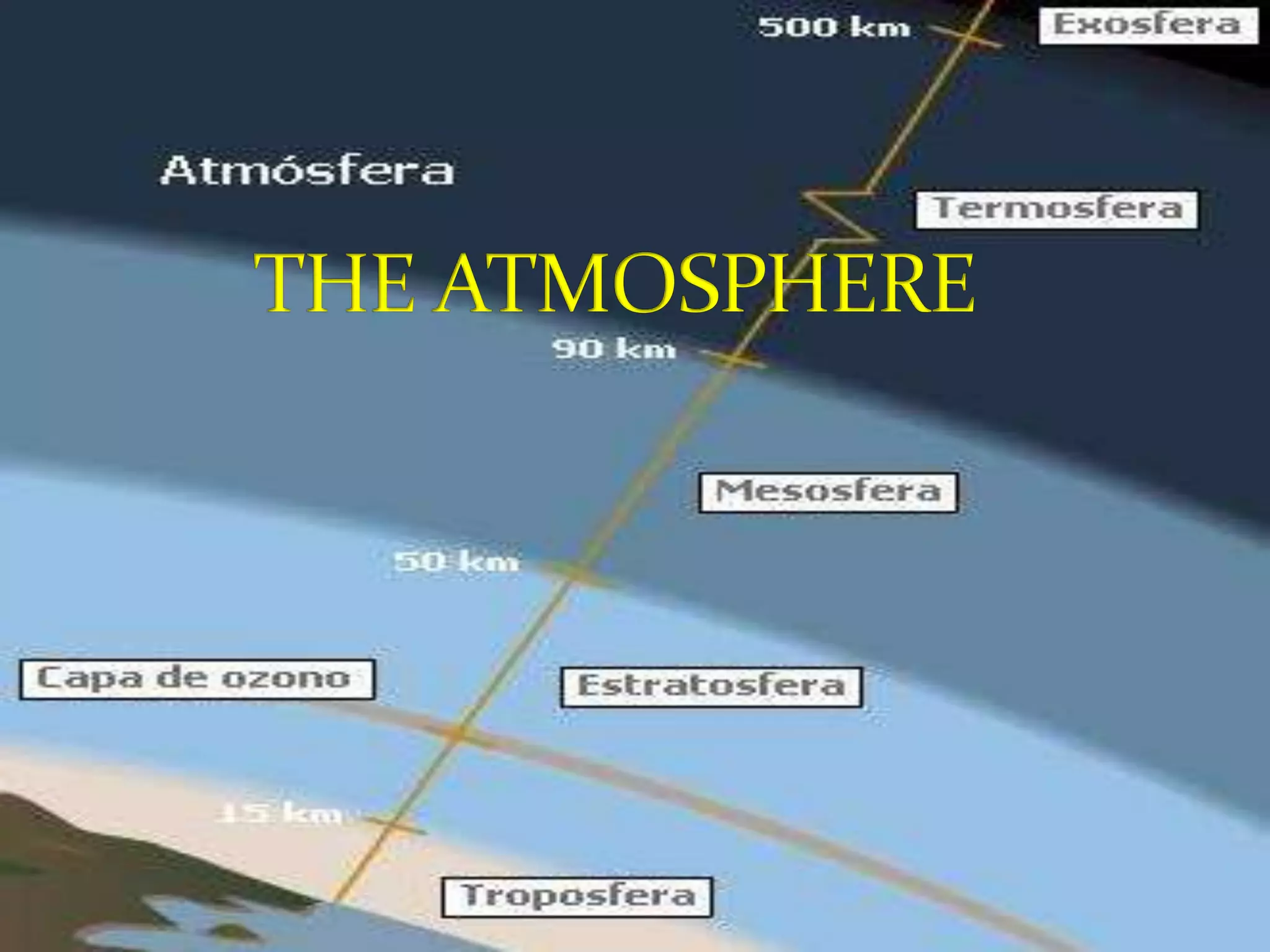
 The TROPOSPHERE is where weather occurs. You
    brea the the air in the troposphere.
   Many airplanes fly in the STRATOSPHERE because it
    is very stable.
   Many rocks fragment from space burn up in the
    MESOSPHERE.
   The THERMOSPHERE is very thin.
   The upper limit of four atmospkere is the
    EXOSPHERE.
 A tiny number of gases in the atmosphere can trap
    heat around the Earth.
   The traced gases regulate the climate.
   Not all the heat we feel on Earth comes from the Sun.
   As Earth warms up, it gives heat as low-energy infared
    rays.
   The greenhouse gases trap most of infared rays.
   Without greenhouse gases, Earth’s surface
    temperature would -18.
 THE CONSEQUENCES…
 1. Our glaciers are melting.
 2. Our cities are flooding.


 WE NEED TO MAKE A CHANGE.
 1. Recycle and reuse.
 2. Consider alternative energy methods.
 GLOBAL WARMING is when the greenhouse effect
  gets stronger, the Earth’s average temperature rises.
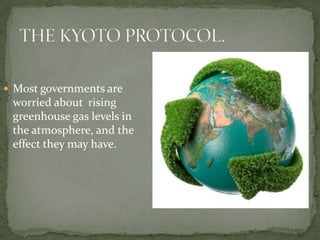
 Most governments are
 worried about rising
 greenhouse gas levels in
 the atmosphere, and the
 effect they may have.
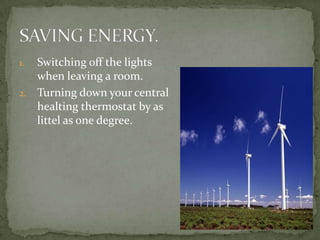
1. Switching off the lights
   when leaving a room.
2. Turning down your central
   healting thermostat by as
   littel as one degree.
 Francesc Mortes.
 Andreu Morera.
 Jaume Gil.
 Gerard Montes.

The atmosphere

  • 2.
     The atmosphereis the air around the Earth. We find rain, cloud, fog and wind in the atmosphere. Earth’s atmosphere make life possible.
  • 3.
     The atmosphericis made of many gases. It contains in three forms: a gas, called vapour, ice crystals and droplets.  Nitrogen 78%.  Oxygen 21%.  Other gases 1%.  Other gases: Argon, neon, kypton and xenon, and harmful chemicals like nitrogen dioxide.
  • 4.
     The TROPOSPHEREis where weather occurs. You brea the the air in the troposphere.  Many airplanes fly in the STRATOSPHERE because it is very stable.  Many rocks fragment from space burn up in the MESOSPHERE.  The THERMOSPHERE is very thin.  The upper limit of four atmospkere is the EXOSPHERE.
  • 5.
     A tinynumber of gases in the atmosphere can trap heat around the Earth.  The traced gases regulate the climate.  Not all the heat we feel on Earth comes from the Sun.  As Earth warms up, it gives heat as low-energy infared rays.  The greenhouse gases trap most of infared rays.  Without greenhouse gases, Earth’s surface temperature would -18.
  • 6.
     THE CONSEQUENCES… 1. Our glaciers are melting.  2. Our cities are flooding.  WE NEED TO MAKE A CHANGE.  1. Recycle and reuse.  2. Consider alternative energy methods.  GLOBAL WARMING is when the greenhouse effect gets stronger, the Earth’s average temperature rises.
  • 7.
     Most governmentsare worried about rising greenhouse gas levels in the atmosphere, and the effect they may have.
  • 8.
    1. Switching offthe lights when leaving a room. 2. Turning down your central healting thermostat by as littel as one degree.
  • 9.
     Francesc Mortes. Andreu Morera.  Jaume Gil.  Gerard Montes.