The Anti-Classic What can happen in the space that immediately  follows the peak moment of an idea?
Anti- :  against, in opposition .  It does not refer to the  non-  or  un-  elements.  The difference is  intent. Tensions between opposites can become a symbiotic  (mutually beneficial) , working relationship.  Both helps to define and clarify the other.
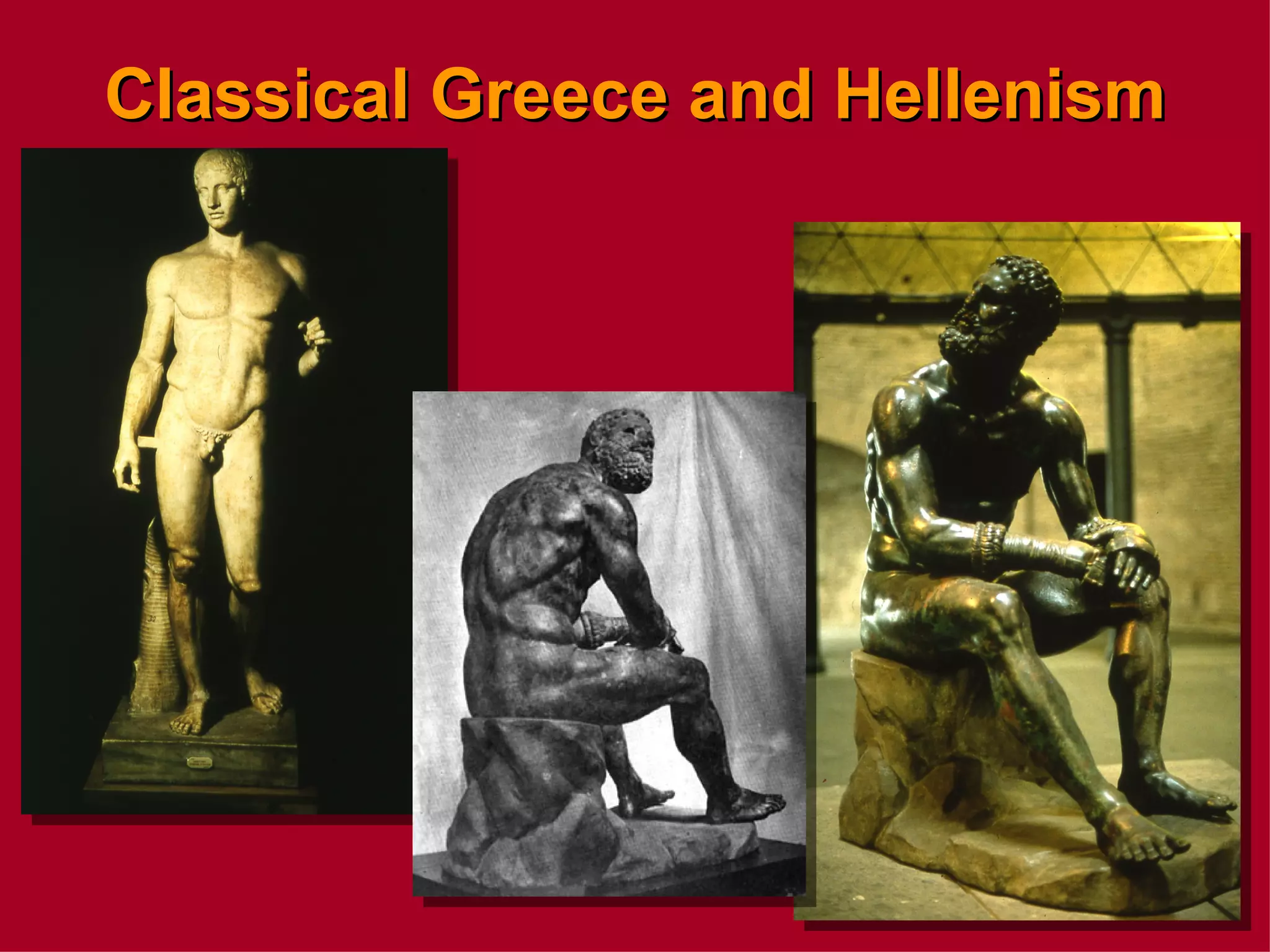
Classical Greece and Hellenism
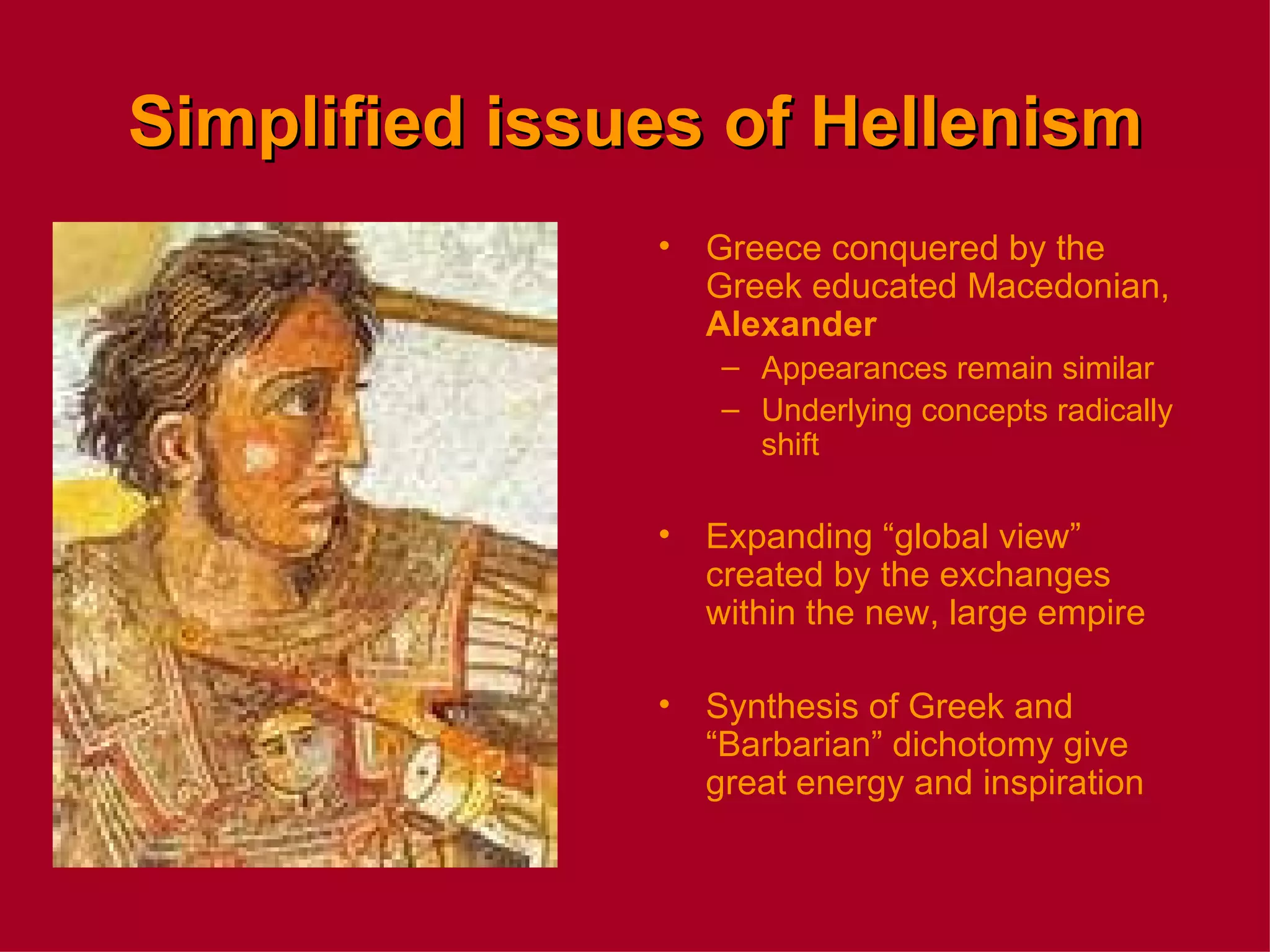
Simplified issues of Hellenism Greece conquered by the Greek educated Macedonian,  Alexander Appearances remain similar Underlying concepts radically shift Expanding “global view” created by the exchanges within the new, large empire Synthesis of Greek and “Barbarian” dichotomy give great energy and inspiration
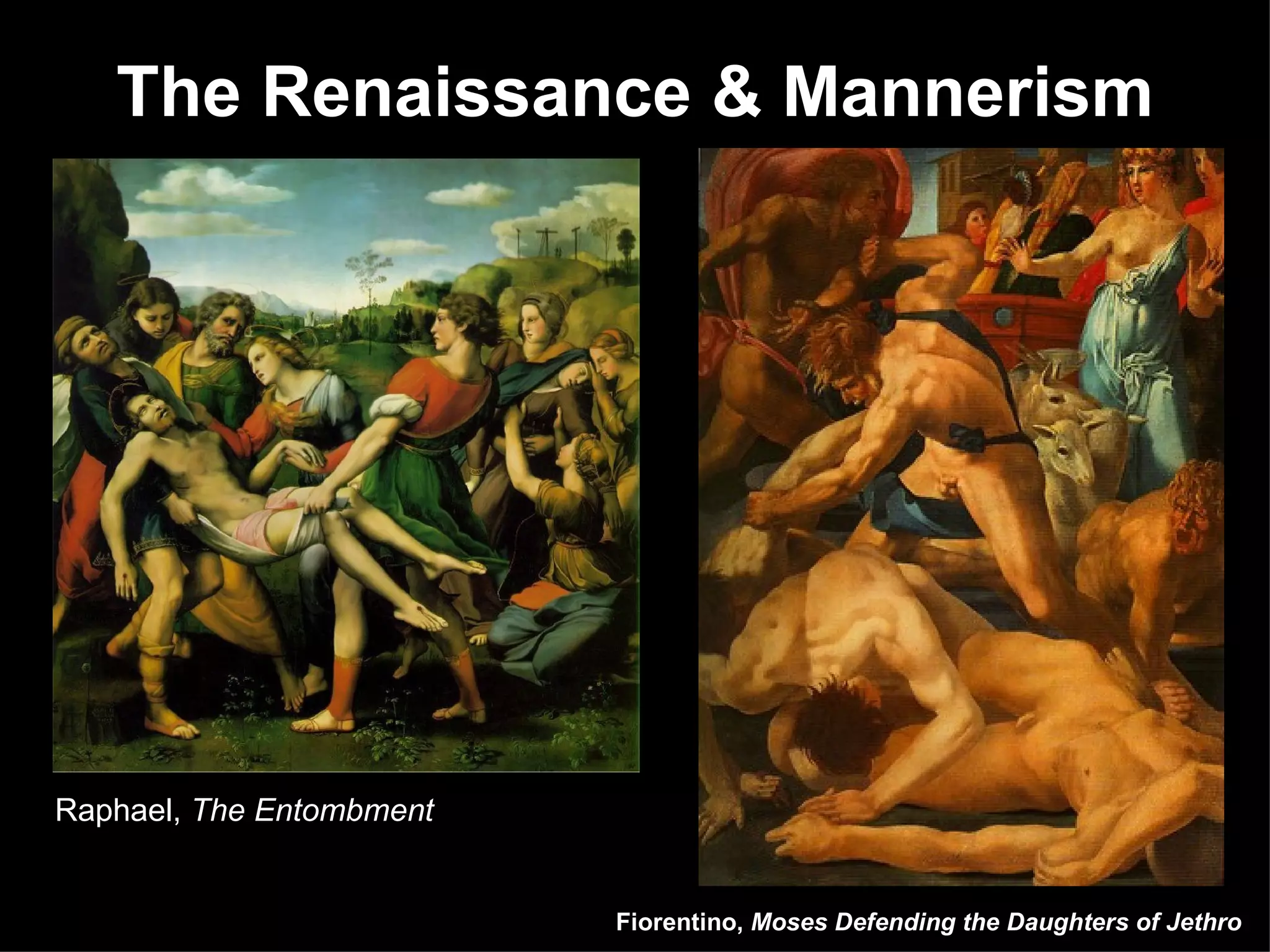
The Renaissance & Mannerism Raphael,  The Entombment Fiorentino,  Moses Defending the Daughters of Jethro
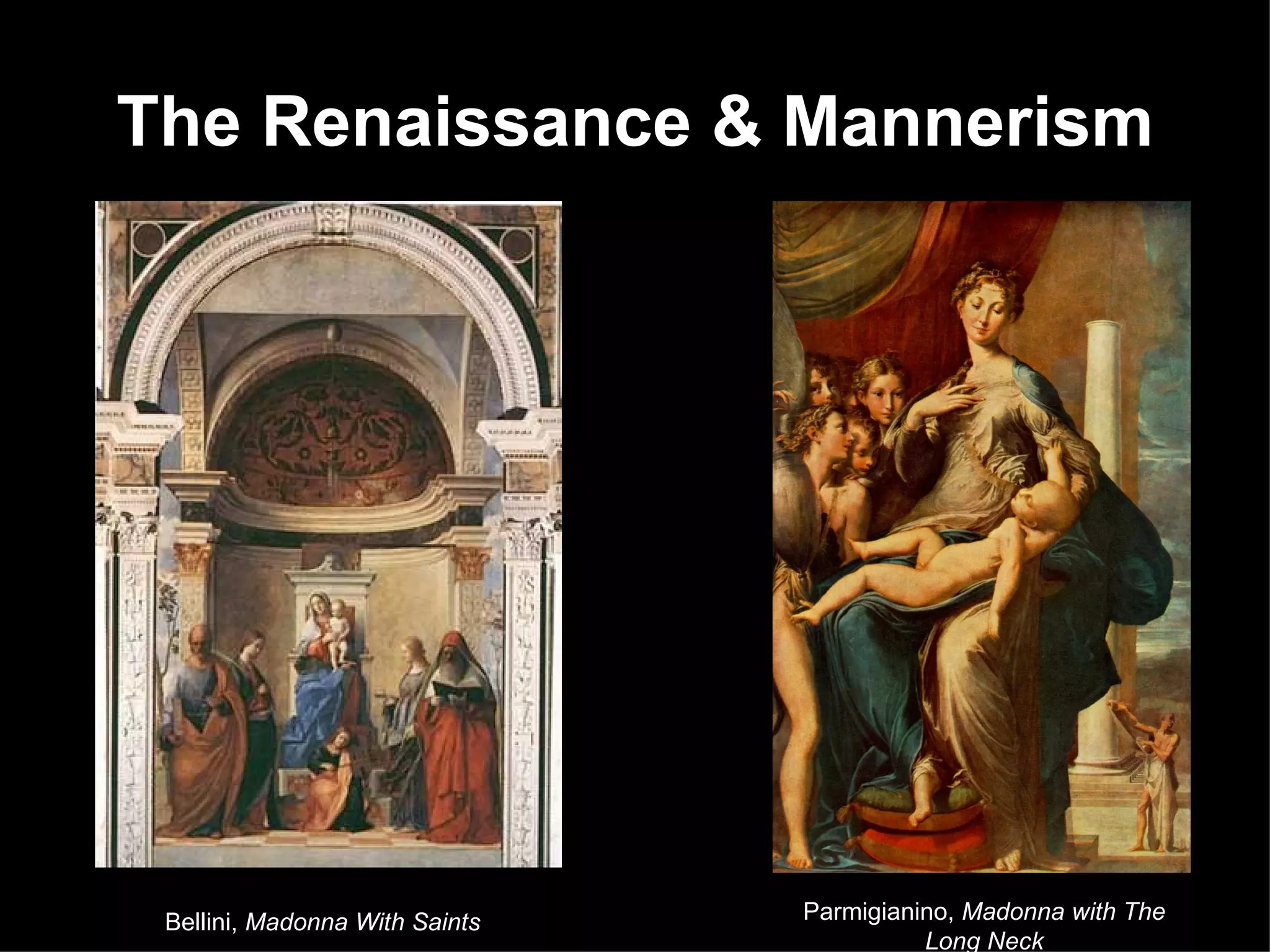
The Renaissance & Mannerism Bellini,  Madonna With Saints Parmigianino,  Madonna with The Long Neck
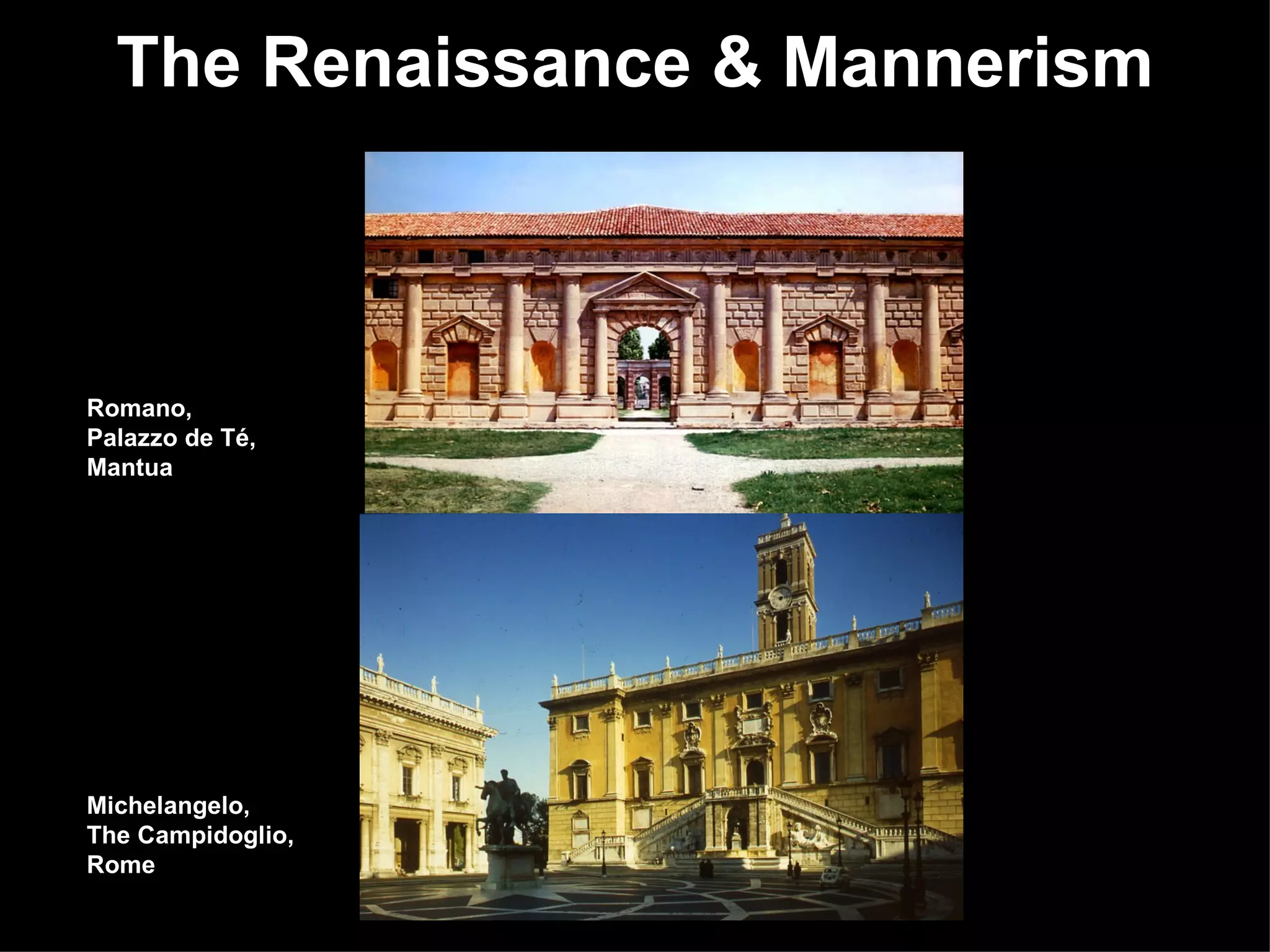
The Renaissance & Mannerism Romano,  Palazzo de T é,  Mantua Michelangelo,  The Campidoglio, Rome
The End of the Renaissance What do you do after Raphael and the other “super-geniuses” of the age? How can it be improved? Where else can this trajectory continue? Sack of Rome in 1527 by mutinous troops of H.R.E. Charles V - final episode of a power struggle within the Catholic church Loss of identity Shattered continuity of traditions Florence, the birthplace of the Renaissance rose up against the influence of the de’ Medici clan, the original patrons of the  R . Loss of significant patronage
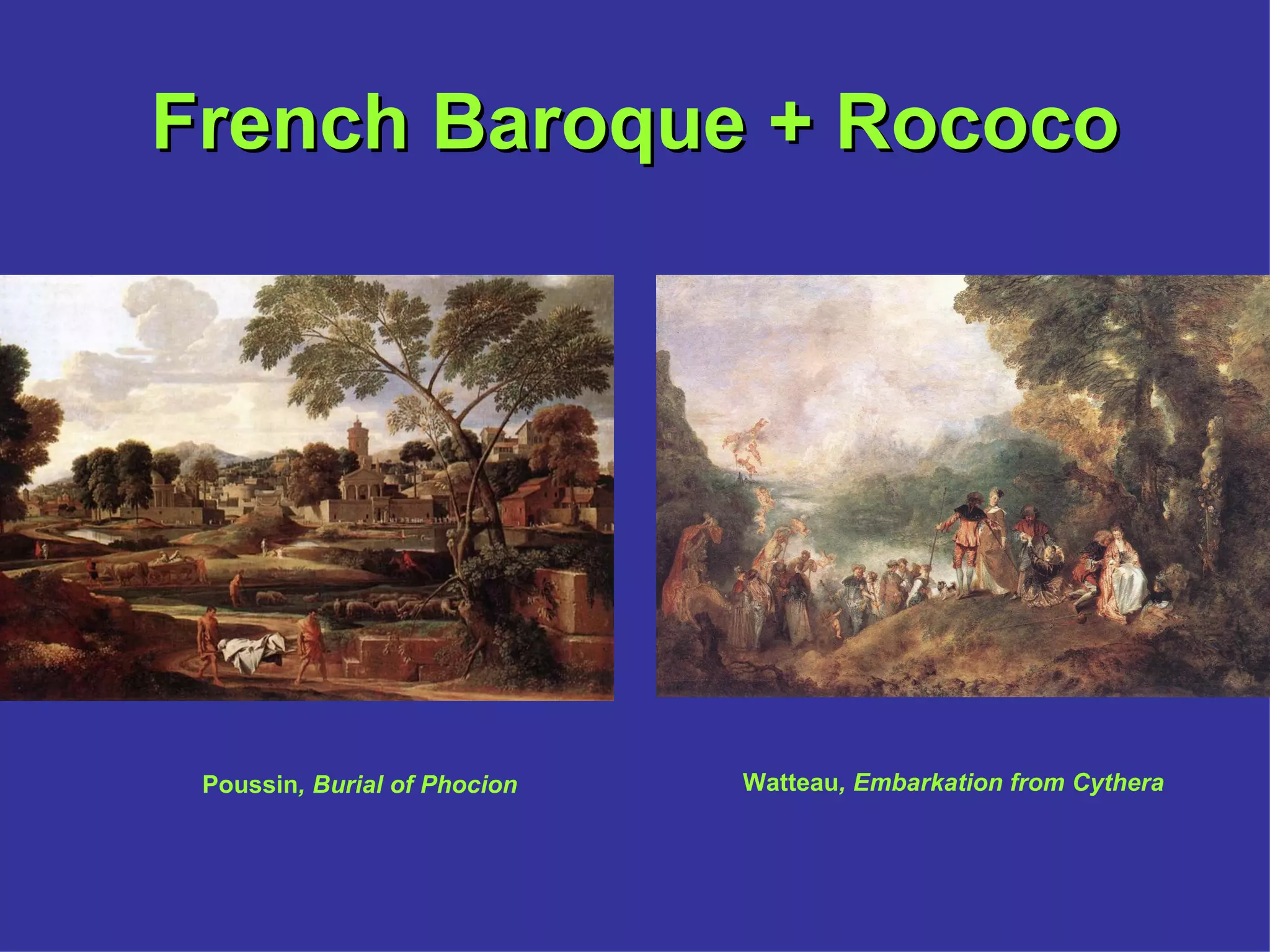
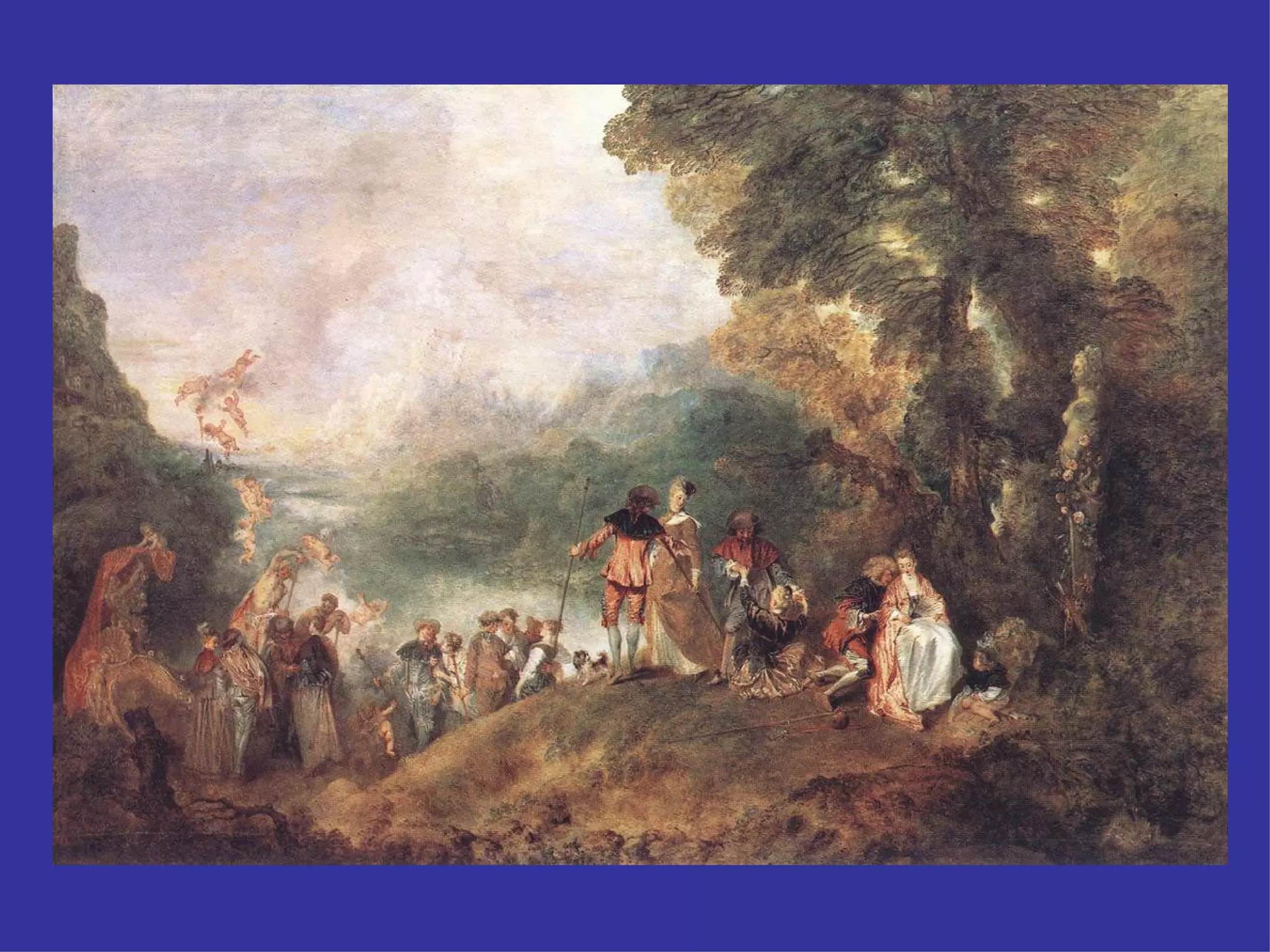
French Baroque + Rococo Watteau , Embarkation from Cythera Poussin , Burial of Phocion
 
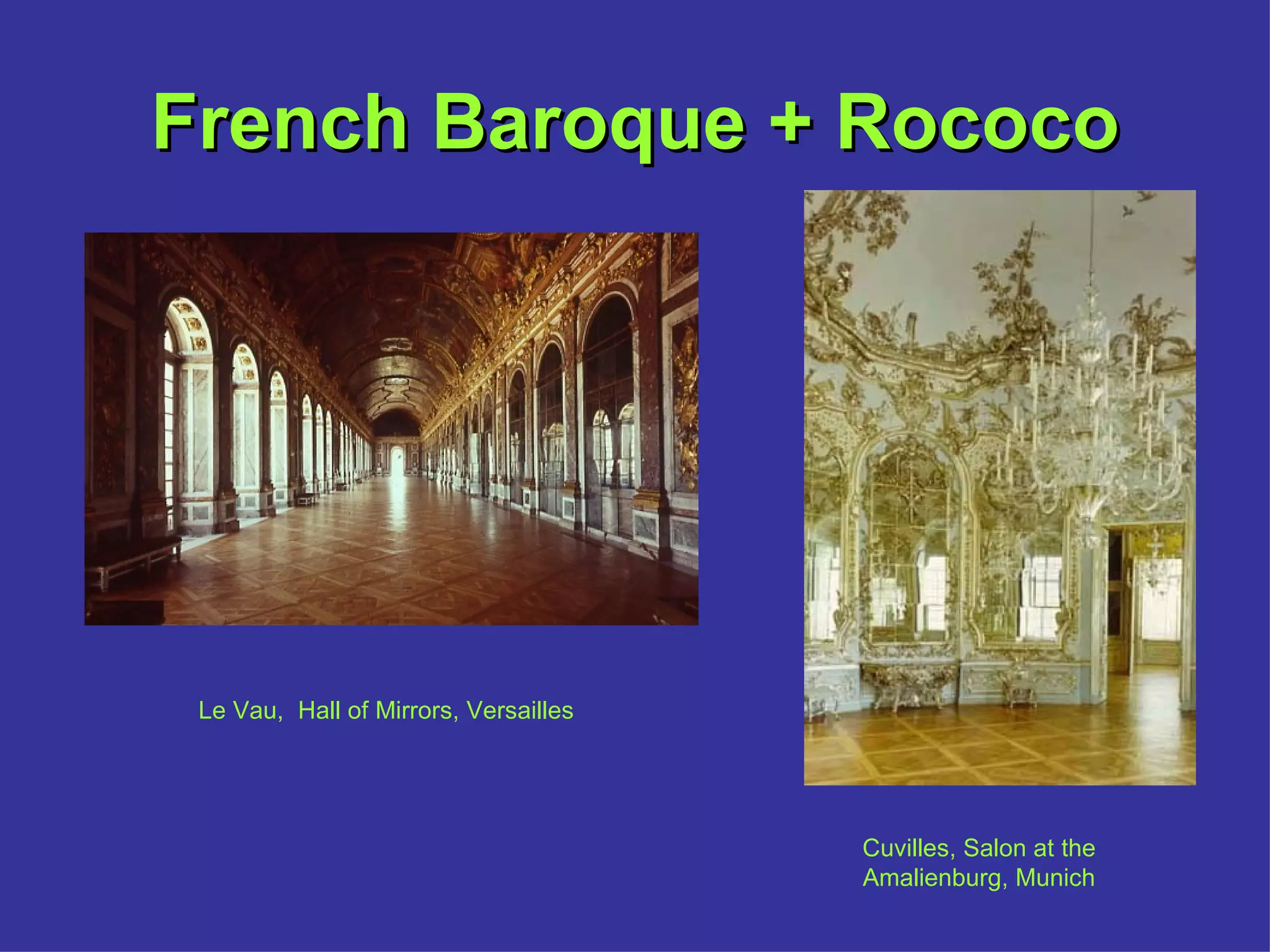
French Baroque + Rococo Le Vau,  Hall of Mirrors, Versailles Cuvilles, Salon at the Amalienburg, Munich
Reasons for the Rococo In part Rococo was an extension of the idealized aesthetic of the Baroque – originally was an interior design concept Change of French Kings (Louis XIV  XV) = change in the court’s favor:  the  Grand Manner  became replaced by an endless search of the pleasurable life The grandeur and excess of the Baroque  (Versailles) provided a reason to seek a more intimate approach Neoclassicism will eventually replace

The Anti Classic

  • 1.
    The Anti-Classic Whatcan happen in the space that immediately follows the peak moment of an idea?
  • 2.
    Anti- : against, in opposition . It does not refer to the non- or un- elements. The difference is intent. Tensions between opposites can become a symbiotic (mutually beneficial) , working relationship. Both helps to define and clarify the other.
  • 3.
  • 4.
    Simplified issues ofHellenism Greece conquered by the Greek educated Macedonian, Alexander Appearances remain similar Underlying concepts radically shift Expanding “global view” created by the exchanges within the new, large empire Synthesis of Greek and “Barbarian” dichotomy give great energy and inspiration
  • 5.
    The Renaissance &Mannerism Raphael, The Entombment Fiorentino, Moses Defending the Daughters of Jethro
  • 6.
    The Renaissance &Mannerism Bellini, Madonna With Saints Parmigianino, Madonna with The Long Neck
  • 7.
    The Renaissance &Mannerism Romano, Palazzo de T é, Mantua Michelangelo, The Campidoglio, Rome
  • 8.
    The End ofthe Renaissance What do you do after Raphael and the other “super-geniuses” of the age? How can it be improved? Where else can this trajectory continue? Sack of Rome in 1527 by mutinous troops of H.R.E. Charles V - final episode of a power struggle within the Catholic church Loss of identity Shattered continuity of traditions Florence, the birthplace of the Renaissance rose up against the influence of the de’ Medici clan, the original patrons of the R . Loss of significant patronage
  • 9.
    French Baroque +Rococo Watteau , Embarkation from Cythera Poussin , Burial of Phocion
  • 10.
  • 11.
    French Baroque +Rococo Le Vau, Hall of Mirrors, Versailles Cuvilles, Salon at the Amalienburg, Munich
  • 12.
    Reasons for theRococo In part Rococo was an extension of the idealized aesthetic of the Baroque – originally was an interior design concept Change of French Kings (Louis XIV  XV) = change in the court’s favor: the Grand Manner became replaced by an endless search of the pleasurable life The grandeur and excess of the Baroque (Versailles) provided a reason to seek a more intimate approach Neoclassicism will eventually replace