The African Context:
emissions, projections and mitigation plans
Alessandro Ferrara
MAGHG Team

Third FAO Regional Workshop on Statistics for Greenhouse Gas
Emissions Casablanca, Morocco 2-3 December 2013
Overview
1. The African Context: the importance of the agricultural sector
2. National Communications to the UNFCCC

3. Mitigation Actions
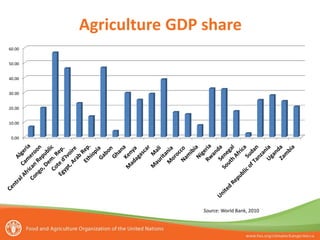
Agriculture GDP share
60.00
50.00
40.00
30.00
20.00
10.00
0.00

Source: World Bank, 2010
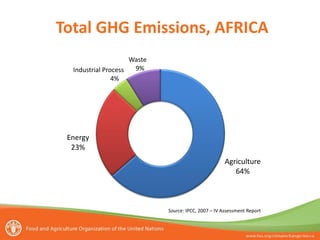
Total GHG Emissions, AFRICA
Waste
9%
Industrial Process
4%

Energy
23%
Agriculture
64%

Source: IPCC, 2007 – IV Assessment Report
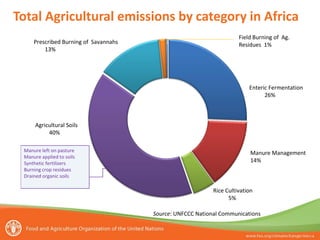
Total Agricultural emissions by category in Africa
Prescribed Burning of Savannahs
13%

Field Burning of Ag.
Residues 1%

Enteric Fermentation
26%

Agricultural Soils
40%
Manure left on pasture
Manure applied to soils
Synthetic fertilizers
Burning crop residues
Drained organic soils

Manure Management
14%

Rice Cultivation
5%
Source: UNFCCC National Communications
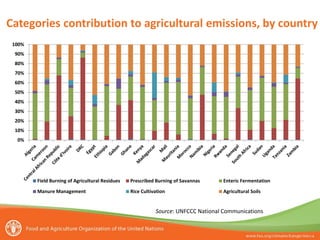
Categories contribution to agricultural emissions, by country
100%
90%
80%
70%
60%
50%
40%
30%
20%
10%
0%

Field Burning of Agricultural Residues

Prescribed Burning of Savannas

Enteric Fermentation

Manure Management

Rice Cultivation

Agricultural Soils

Source: UNFCCC National Communications
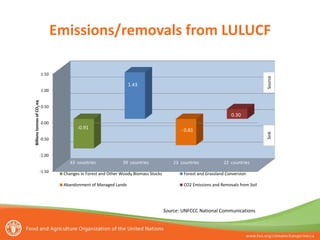
Emissions/removals from LULUCF
Source

1.50

1.43

0.50

0.30
0.00

-0.91

- 0.81

Sink

Billions tonnes of CO2 eq

1.00

-0.50

-1.00

43 countries
-1.50

39 countries

23 countries

22 countries

Changes in Forest and Other Woody Biomass Stocks

Forest and Grassland Conversion

Abandonment of Managed Lands

CO2 Emissions and Removals from Soil

Source: UNFCCC National Communications
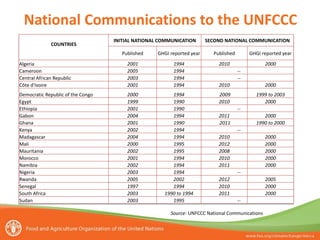
National Communications to the UNFCCC
COUNTRIES

INITIAL NATIONAL COMMUNICATION

SECOND NATIONAL COMMUNICATION

Published

GHGI reported year

Published

GHGI reported year

Algeria
Cameroon
Central African Republic
Côte d'Ivoire

2001
2005
2003
2001

1994
1994
1994
1994

2010

2000

2010

2000

Democratic Republic of the Congo
Egypt
Ethiopia
Gabon
Ghana
Kenya
Madagascar
Mali
Mauritania
Morocco
Namibia
Nigeria
Rwanda
Senegal
South Africa
Sudan

2000
1999
2001
2004
2001
2002
2004
2000
2002
2001
2002
2003
2005
1997
2003
2003

1994
1990
1990
1994
1990
1994
1994
1995
1995
1994
1994
1994
2002
1994
1990 to 1994
1995

2009
2010

1999 to 2003
2000

---

-2011
2011

2000
1990 to 2000
--

2010
2012
2008
2010
2011

2000
2000
2000
2000
2000
--

2012
2010
2011

2005
2000
2000
--

Source: UNFCCC National Communications
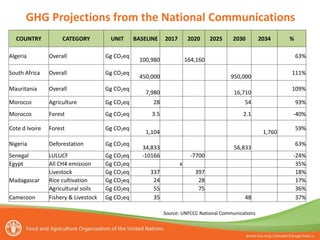
GHG Projections from the National Communications
COUNTRY

CATEGORY

UNIT

Algeria

Overall

Gg CO2eq

South Africa

Overall

Gg CO2eq

Mauritania

Overall

Gg CO2eq

Morocco

Agriculture

Morocco

BASELINE

2017

2020

100,980

2025

2030

2034

%
63%

164,160

111%

450,000

950,000

7,980

16,710

Gg CO2eq

28

54

93%

Forest

Gg CO2eq

3.5

2.1

-40%

Cote d Ivoire

Forest

Gg CO2eq

Nigeria

Deforestation

Gg CO2eq

Senegal
Egypt

LULUCF
All CH4 emission
Livestock
Rice cultivation
Agricultural soils
Fishery & Livestock

Gg CO2eq
Gg CO2eq
Gg CO2eq
Gg CO2eq
Gg CO2eq
Gg CO2eq

Madagascar

Cameroon

1,104

1,760

34,833
-10166

56,833
-7700
x

337
24
55
35

109%

397
28
75

48
Source: UNFCCC National Communications

59%
63%
-24%
35%
18%
17%
36%
37%
Mitigation Actions
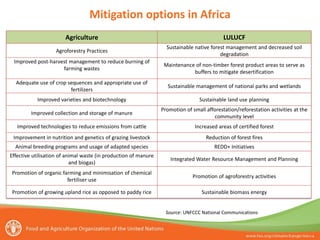
Mitigation options in Africa
Agriculture

LULUCF

Agroforestry Practices

Sustainable native forest management and decreased soil
degradation

Improved post-harvest management to reduce burning of
farming wastes

Maintenance of non-timber forest product areas to serve as
buffers to mitigate desertification

Adequate use of crop sequences and appropriate use of
fertilizers

Sustainable management of national parks and wetlands

Improved varieties and biotechnology

Sustainable land use planning

Improved collection and storage of manure

Promotion of small afforestation/reforestation activities at the
community level

Improved technologies to reduce emissions from cattle

Increased areas of certified forest

Improvement in nutrition and genetics of grazing livestock

Reduction of forest fires

Animal breeding programs and usage of adapted species

REDD+ Initiatives

Effective utilisation of animal waste (in production of manure
and biogas)

Integrated Water Resource Management and Planning

Promotion of organic farming and minimisation of chemical
fertiliser use

Promotion of agroforestry activities

Promotion of growing upland rice as opposed to paddy rice

Sustainable biomass energy

Source: UNFCCC National Communications
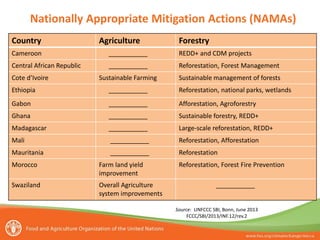
Nationally Appropriate Mitigation Actions (NAMAs)
Country

Agriculture

Forestry

Cameroon

___________

REDD+ and CDM projects

Central African Republic

___________

Reforestation, Forest Management

Sustainable Farming

Sustainable management of forests

Cote d’Ivoire
Ethiopia

___________

Reforestation, national parks, wetlands

Gabon

___________

Afforestation, Agroforestry

Ghana

___________

Sustainable forestry, REDD+

Madagascar

___________

Large-scale reforestation, REDD+

Mali

___________

Reforestation, Afforestation

Mauritania

___________

Reforestation

Morocco

Farm land yield
improvement

Swaziland

Overall Agriculture
system improvements

Reforestation, Forest Fire Prevention
___________

Source: UNFCCC SBI, Bonn, June 2013
FCCC/SBI/2013/INF.12/rev.2
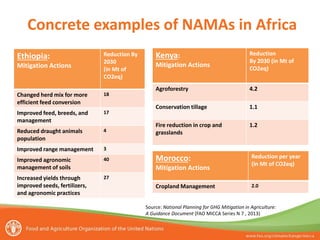
Concrete examples of NAMAs in Africa
Ethiopia:
Mitigation Actions

Reduction By
2030
(in Mt of
CO2eq)

Changed herd mix for more
efficient feed conversion

18

Improved feed, breeds, and
management

17

Reduced draught animals
population

4

Improved range management

40

Increased yields through
improved seeds, fertilizers,
and agronomic practices

Mitigation Actions

Reduction
By 2030 (in Mt of
CO2eq)

Agroforestry

4.2

Conservation tillage

1.1

Fire reduction in crop and
grasslands

1.2

3

Improved agronomic
management of soils

Kenya:

27

Morocco:
Mitigation Actions
Cropland Management

Reduction per year
(in Mt of CO2eq)

2.0

Source: National Planning for GHG Mitigation in Agriculture:
A Guidance Document (FAO MICCA Series N 7 , 2013)
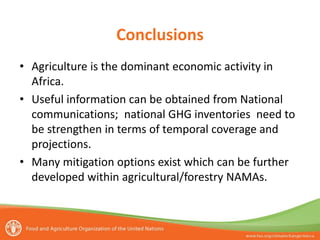
Conclusions
• Agriculture is the dominant economic activity in
Africa.
• Useful information can be obtained from National
communications; national GHG inventories need to
be strengthen in terms of temporal coverage and
projections.
• Many mitigation options exist which can be further
developed within agricultural/forestry NAMAs.
Thank you!
Contact: MAGHG@fao.org
MAGHG website: www.fao.org/climatechange/micca/ghg
FAOSTAT website: http://faostat.fao.org
Financed by:

The African Context: emissions, projections and mitigation plans

  • 1.
    The African Context: emissions,projections and mitigation plans Alessandro Ferrara MAGHG Team Third FAO Regional Workshop on Statistics for Greenhouse Gas Emissions Casablanca, Morocco 2-3 December 2013
  • 2.
    Overview 1. The AfricanContext: the importance of the agricultural sector 2. National Communications to the UNFCCC 3. Mitigation Actions
  • 3.
  • 4.
    Total GHG Emissions,AFRICA Waste 9% Industrial Process 4% Energy 23% Agriculture 64% Source: IPCC, 2007 – IV Assessment Report
  • 5.
    Total Agricultural emissionsby category in Africa Prescribed Burning of Savannahs 13% Field Burning of Ag. Residues 1% Enteric Fermentation 26% Agricultural Soils 40% Manure left on pasture Manure applied to soils Synthetic fertilizers Burning crop residues Drained organic soils Manure Management 14% Rice Cultivation 5% Source: UNFCCC National Communications
  • 6.
    Categories contribution toagricultural emissions, by country 100% 90% 80% 70% 60% 50% 40% 30% 20% 10% 0% Field Burning of Agricultural Residues Prescribed Burning of Savannas Enteric Fermentation Manure Management Rice Cultivation Agricultural Soils Source: UNFCCC National Communications
  • 7.
    Emissions/removals from LULUCF Source 1.50 1.43 0.50 0.30 0.00 -0.91 -0.81 Sink Billions tonnes of CO2 eq 1.00 -0.50 -1.00 43 countries -1.50 39 countries 23 countries 22 countries Changes in Forest and Other Woody Biomass Stocks Forest and Grassland Conversion Abandonment of Managed Lands CO2 Emissions and Removals from Soil Source: UNFCCC National Communications
  • 8.
    National Communications tothe UNFCCC COUNTRIES INITIAL NATIONAL COMMUNICATION SECOND NATIONAL COMMUNICATION Published GHGI reported year Published GHGI reported year Algeria Cameroon Central African Republic Côte d'Ivoire 2001 2005 2003 2001 1994 1994 1994 1994 2010 2000 2010 2000 Democratic Republic of the Congo Egypt Ethiopia Gabon Ghana Kenya Madagascar Mali Mauritania Morocco Namibia Nigeria Rwanda Senegal South Africa Sudan 2000 1999 2001 2004 2001 2002 2004 2000 2002 2001 2002 2003 2005 1997 2003 2003 1994 1990 1990 1994 1990 1994 1994 1995 1995 1994 1994 1994 2002 1994 1990 to 1994 1995 2009 2010 1999 to 2003 2000 --- -2011 2011 2000 1990 to 2000 -- 2010 2012 2008 2010 2011 2000 2000 2000 2000 2000 -- 2012 2010 2011 2005 2000 2000 -- Source: UNFCCC National Communications
  • 9.
    GHG Projections fromthe National Communications COUNTRY CATEGORY UNIT Algeria Overall Gg CO2eq South Africa Overall Gg CO2eq Mauritania Overall Gg CO2eq Morocco Agriculture Morocco BASELINE 2017 2020 100,980 2025 2030 2034 % 63% 164,160 111% 450,000 950,000 7,980 16,710 Gg CO2eq 28 54 93% Forest Gg CO2eq 3.5 2.1 -40% Cote d Ivoire Forest Gg CO2eq Nigeria Deforestation Gg CO2eq Senegal Egypt LULUCF All CH4 emission Livestock Rice cultivation Agricultural soils Fishery & Livestock Gg CO2eq Gg CO2eq Gg CO2eq Gg CO2eq Gg CO2eq Gg CO2eq Madagascar Cameroon 1,104 1,760 34,833 -10166 56,833 -7700 x 337 24 55 35 109% 397 28 75 48 Source: UNFCCC National Communications 59% 63% -24% 35% 18% 17% 36% 37%
  • 10.
  • 11.
    Mitigation options inAfrica Agriculture LULUCF Agroforestry Practices Sustainable native forest management and decreased soil degradation Improved post-harvest management to reduce burning of farming wastes Maintenance of non-timber forest product areas to serve as buffers to mitigate desertification Adequate use of crop sequences and appropriate use of fertilizers Sustainable management of national parks and wetlands Improved varieties and biotechnology Sustainable land use planning Improved collection and storage of manure Promotion of small afforestation/reforestation activities at the community level Improved technologies to reduce emissions from cattle Increased areas of certified forest Improvement in nutrition and genetics of grazing livestock Reduction of forest fires Animal breeding programs and usage of adapted species REDD+ Initiatives Effective utilisation of animal waste (in production of manure and biogas) Integrated Water Resource Management and Planning Promotion of organic farming and minimisation of chemical fertiliser use Promotion of agroforestry activities Promotion of growing upland rice as opposed to paddy rice Sustainable biomass energy Source: UNFCCC National Communications
  • 12.
    Nationally Appropriate MitigationActions (NAMAs) Country Agriculture Forestry Cameroon ___________ REDD+ and CDM projects Central African Republic ___________ Reforestation, Forest Management Sustainable Farming Sustainable management of forests Cote d’Ivoire Ethiopia ___________ Reforestation, national parks, wetlands Gabon ___________ Afforestation, Agroforestry Ghana ___________ Sustainable forestry, REDD+ Madagascar ___________ Large-scale reforestation, REDD+ Mali ___________ Reforestation, Afforestation Mauritania ___________ Reforestation Morocco Farm land yield improvement Swaziland Overall Agriculture system improvements Reforestation, Forest Fire Prevention ___________ Source: UNFCCC SBI, Bonn, June 2013 FCCC/SBI/2013/INF.12/rev.2
  • 13.
    Concrete examples ofNAMAs in Africa Ethiopia: Mitigation Actions Reduction By 2030 (in Mt of CO2eq) Changed herd mix for more efficient feed conversion 18 Improved feed, breeds, and management 17 Reduced draught animals population 4 Improved range management 40 Increased yields through improved seeds, fertilizers, and agronomic practices Mitigation Actions Reduction By 2030 (in Mt of CO2eq) Agroforestry 4.2 Conservation tillage 1.1 Fire reduction in crop and grasslands 1.2 3 Improved agronomic management of soils Kenya: 27 Morocco: Mitigation Actions Cropland Management Reduction per year (in Mt of CO2eq) 2.0 Source: National Planning for GHG Mitigation in Agriculture: A Guidance Document (FAO MICCA Series N 7 , 2013)
  • 14.
    Conclusions • Agriculture isthe dominant economic activity in Africa. • Useful information can be obtained from National communications; national GHG inventories need to be strengthen in terms of temporal coverage and projections. • Many mitigation options exist which can be further developed within agricultural/forestry NAMAs.
  • 15.
    Thank you! Contact: MAGHG@fao.org MAGHGwebsite: www.fao.org/climatechange/micca/ghg FAOSTAT website: http://faostat.fao.org Financed by: