Advancing innovations in health care delivery for low-income Americans
www.chcs.org | @CHCShealth
The 6|18 Initiative Case Study:
Capitalizing on Partners’ Unique
Skills and Strengths
2017 Practical Playbook National Meeting
June 2, 2017
Maia Crawford, CHCS
Made possible by the Robert Wood Johnson Foundation
 The 6|18 Initiative
» Background, objectives and accomplishments
» The Medicaid-Public Health partnership
 Group Discussion
 Sample Scenario
2
Agenda
3
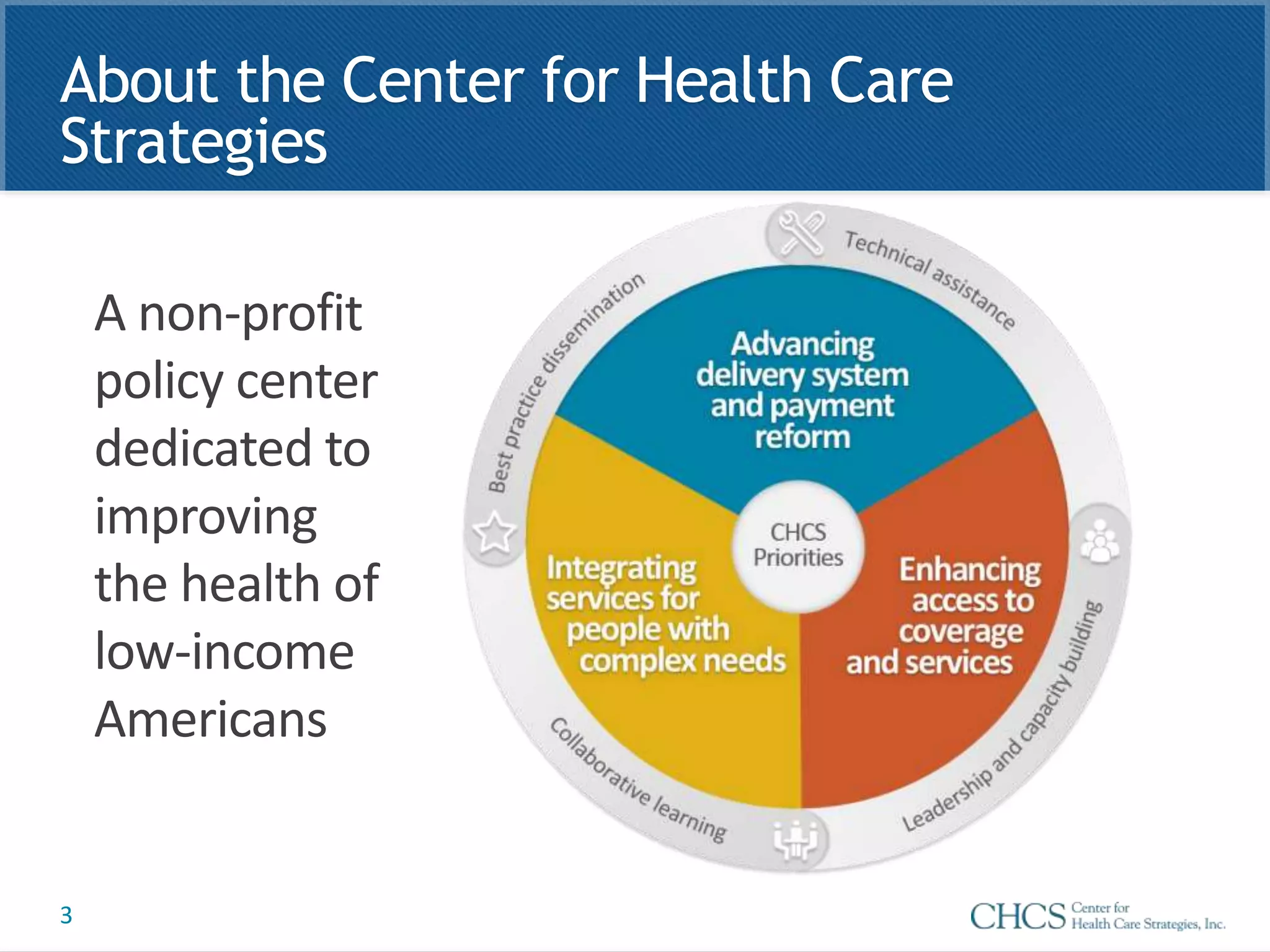
About the Center for Health Care
Strategies
A non-profit
policy center
dedicated to
improving
the health of
low-income
Americans
4
Select CHCS Initiatives
 Affinity Group for
U.S. Charity Care
Programs
 Ensuring Health
Coverage and Access
for Justice-Involved
Individuals
 Advancing the CDC’s
6|18 Initiative: State
Medicaid & Public
Health Collaboration
 Medicaid
Accountable Care
Organization Learning
Collaborative
 State Innovation
Model Technical
Assistance
 Advancing Trauma-
Informed Care
 Complex Care
Innovation Lab
 Promoting Youth
Substance Use
Disorder Prevention
Strategies in
Medicaid
 Transforming
Complex Care
 Medicaid Leadership
Institute
 Medicaid Academies
 State Oral Health
Leadership Institute
Accessto
Coverage
andServices
DeliverySystem
andPayment
Reform
Servicesfor
Peoplewith
ComplexNeeds
Leadership
andCapacity
Promoteadoptionofevidence-basedinterventionsin
collaborationwithhealthcarepurchasers,payers,andproviders
5
The 6|18 Initiative
High-burden
health conditions
6 18Evidence-based
interventions that improve
healthand save money
CDC.gov/sixeighteen
Hester, J. A., J. Auerbach, L. Seeff, J. Wheaton, K. Brusuelas, and C. Singleton 2015. CDC’s 6|18 Initiative: Accelerating evidence into action.
National Academy of Medicine, Washington, DC. http://nam.edu/wp-content/uploads/2016/02/CDCs-618-Initiative-Accelerating-Evidence-into-Action.pdf
|
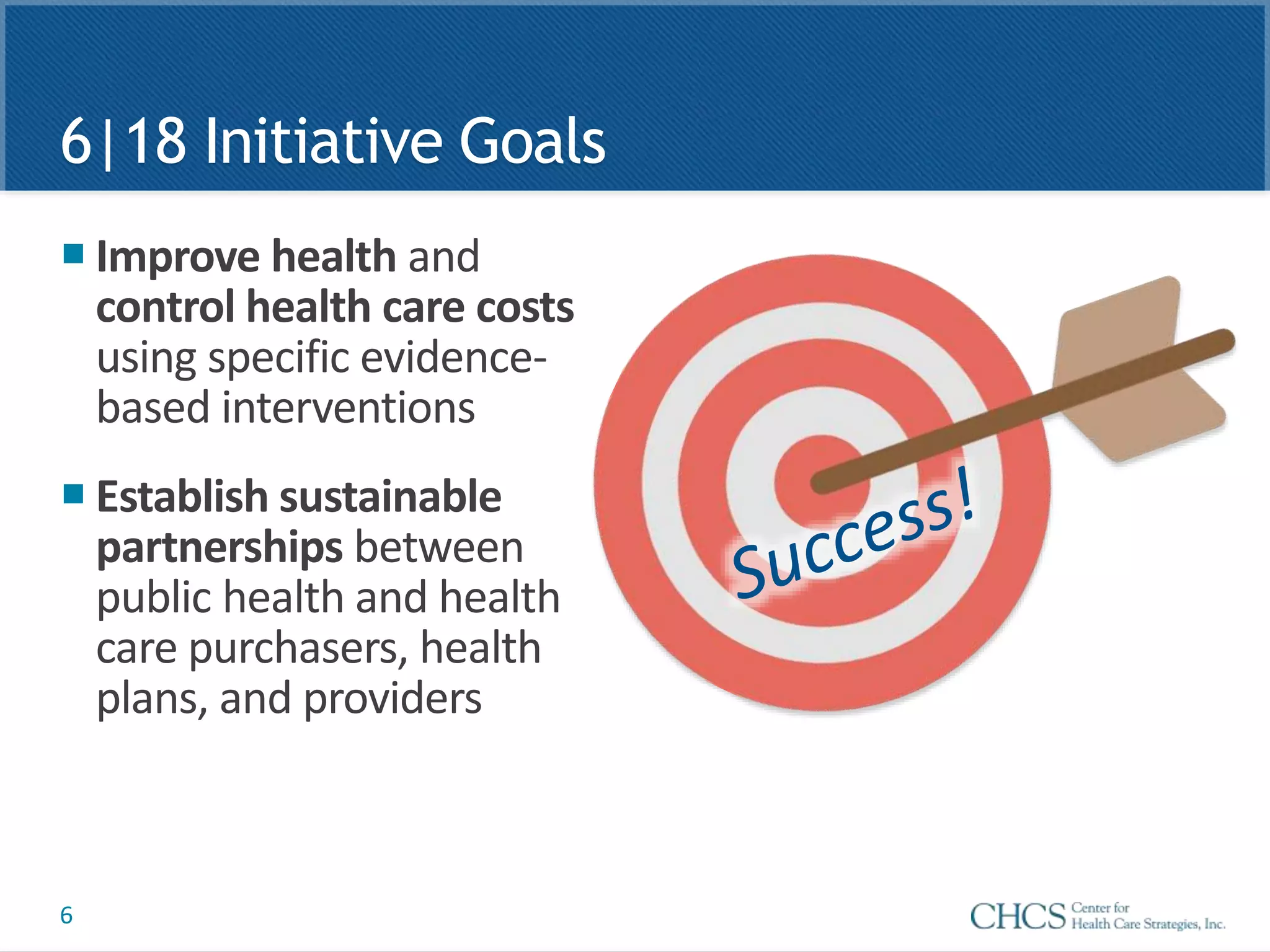
 Improve health and
control health care costs
using specific evidence-
based interventions
 Establish sustainable
partnerships between
public health and health
care purchasers, health
plans, and providers
6
6|18 Initiative Goals
 High-burden
 Costly
 Preventable
 Scalable
 Purchasers and payers
7
Six High-Burden Health Conditions
 High-
burden
 Costly
 Preventable
 Scalable
 Purchasers
and payers
8
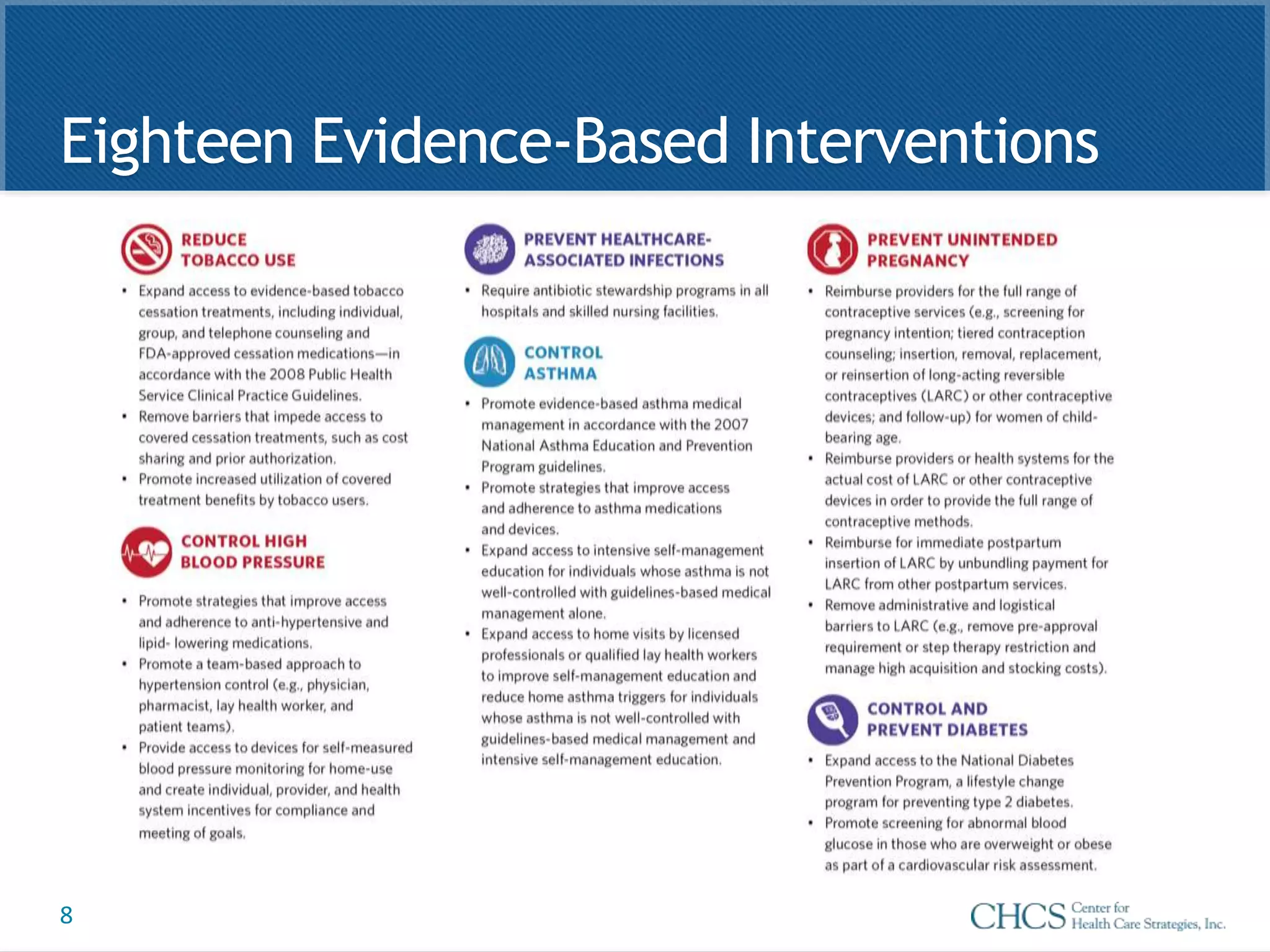
Eighteen Evidence-Based Interventions
9
Utah
Texas
North
Carolina
Nevada
Alaska
Colorado
Georgia
New
York
Map of 6|18 Participants
Maryland
District of Columbia
Michigan
Louisiana
South Carolina
Massachusetts
Rhode Island
KEY
Cohort 2
Cohort 1
Minnesota
Los Angeles County,
California
 Baseline coverage and utilization
assessment
 State Plan Amendments to enhance Medicaid
benefits
 Changes in billing
 Managed care organization contractual negotiations
 Payment pilots
 New scope of practice legislative authority
 Provider and member education and outreach
10
Examples of
6|18 Accomplishments
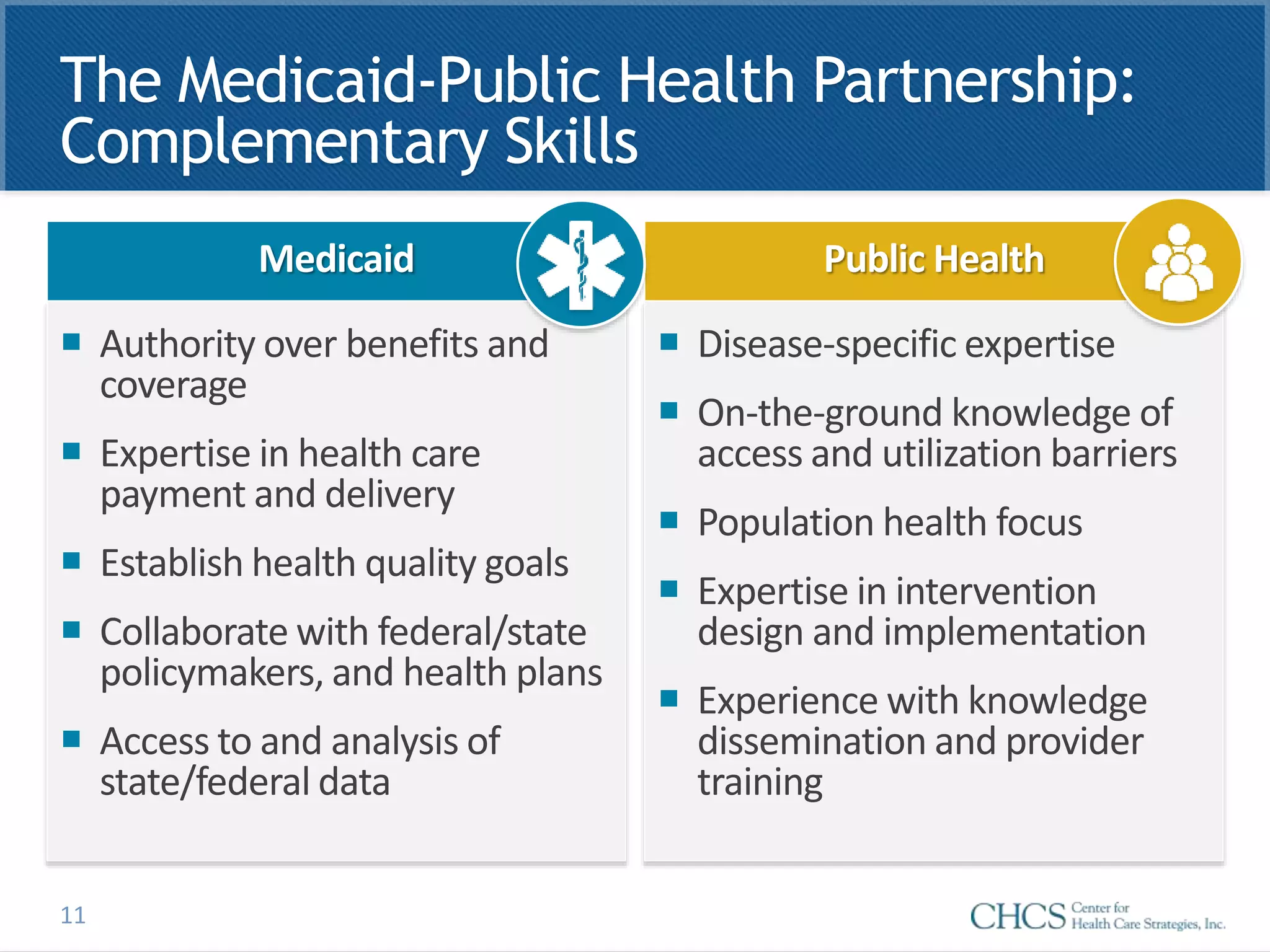
The Medicaid-Public Health Partnership:
Complementary Skills
Medicaid
 Authority over benefits and
coverage
 Expertise in health care
payment and delivery
 Establish health quality goals
 Collaborate with federal/state
policymakers, and health plans
 Access to and analysis of
state/federal data
Public Health
 Disease-specific expertise
 On-the-ground knowledge of
access and utilization barriers
 Population health focus
 Expertise in intervention
design and implementation
 Experience with knowledge
dissemination and provider
training
11
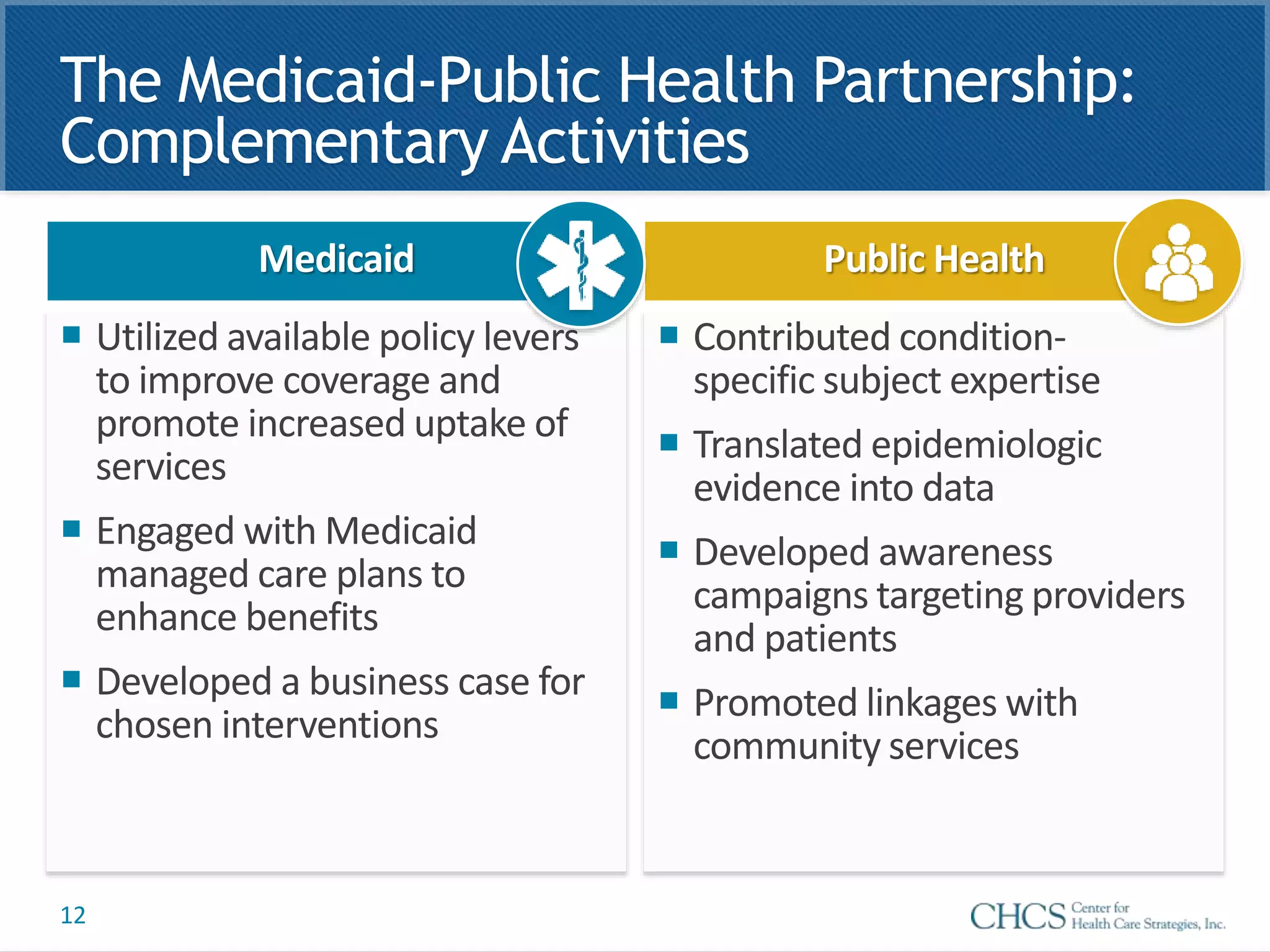
The Medicaid-Public Health Partnership:
Complementary Activities
Medicaid
 Utilized available policy levers
to improve coverage and
promote increased uptake of
services
 Engaged with Medicaid
managed care plans to
enhance benefits
 Developed a business case for
chosen interventions
Public Health
 Contributed condition-
specific subject expertise
 Translated epidemiologic
evidence into data
 Developed awareness
campaigns targeting providers
and patients
 Promoted linkages with
community services
12
 Early leadership buy-in from both agencies
 In-person kick-off convening
 Concrete and well-defined interventions
 Creation of a joint work plan with collaboratively
developed goals and activities
 Monthly calls
 Access to a common set of subject matter experts
and technical assistance opportunities
13
Project Components that
Facilitated Collaboration
 Can you share an example of a project in
which different partners contributed unique
skills or expertise that led to a positive end result?
 What strategies have you found effective at bringing together
diverse partners and harnessing their respective abilities or
knowledge?
 What challenges have you encountered in working with partners
from different sectors or backgrounds?
 How did you overcome “cultural” or language differences across
diverse partners?
 What lessons or takeaways from the 6|18 Initiative might translate
to efforts to enhance public health-primary care collaboration?
14
Group Discussion
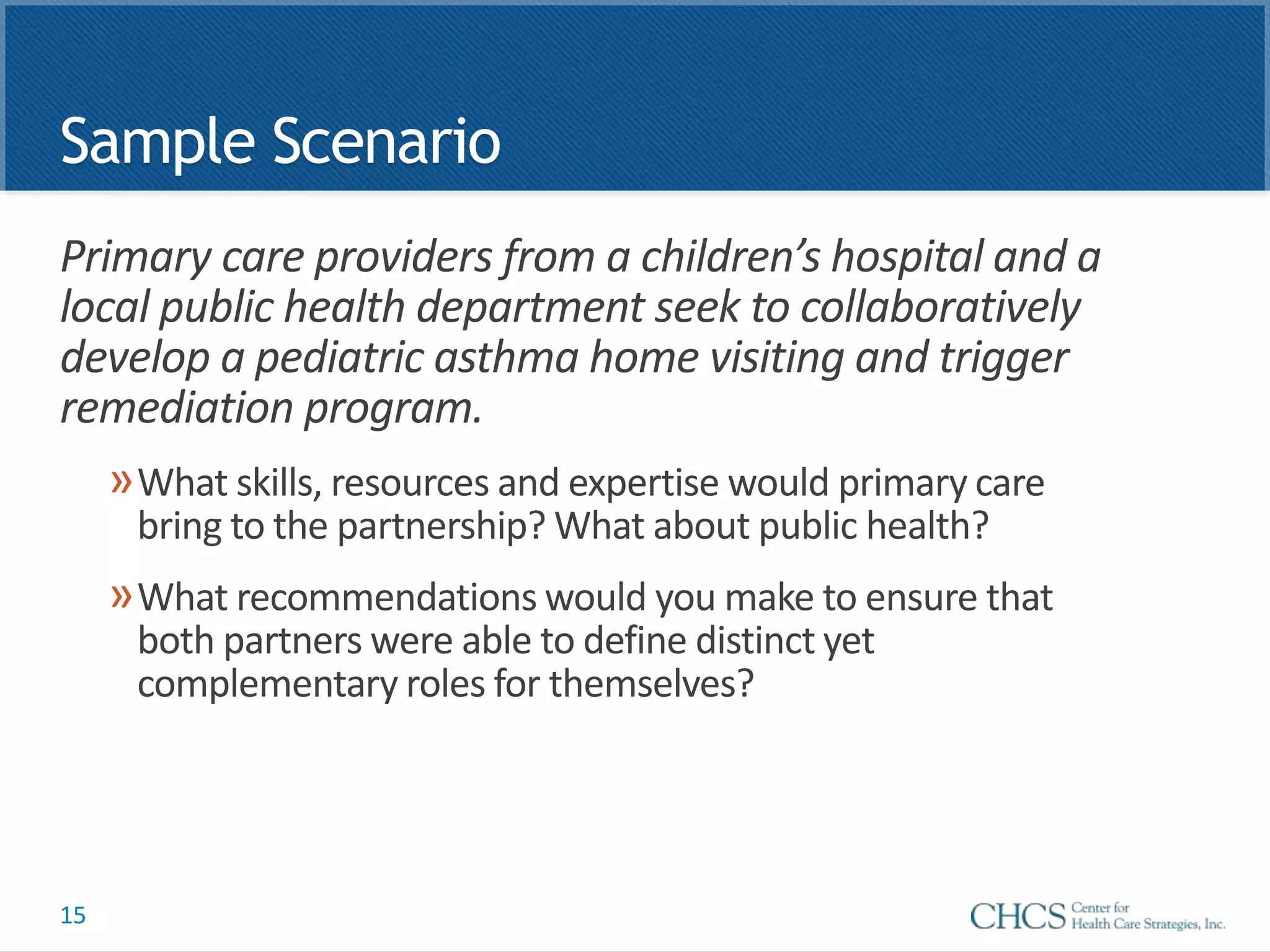
Primary care providers from a children’s hospital and a
local public health department seek to collaboratively
develop a pediatric asthma home visiting and trigger
remediation program.
»What skills, resources and expertise would primary care
bring to the partnership? What about public health?
»What recommendations would you make to ensure that
both partners were able to define distinct yet
complementary roles for themselves?
15
Sample Scenario
16
For more information, contact:
Maia Crawford
Senior Program Officer
Center for Health Care Strategies
mcrawford@chcs.org
(609) 528-8400
Visit CHCS.org to…
 Download practical resources
to improve the quality and cost-
effectiveness of Medicaid services
 Learn about cutting-edge effortsto
improve care for Medicaid’s highest-
need, highest-cost beneficiaries
 Subscribe toCHCS e-mail, blog
and social media updates to learn
about new programs and resources
 Followuson Twitter @CHCShealth
17

The 6|18 Initiative Case Study: Capitalizing on Partners' Unique Skills and Strengths

  • 1.
    Advancing innovations inhealth care delivery for low-income Americans www.chcs.org | @CHCShealth The 6|18 Initiative Case Study: Capitalizing on Partners’ Unique Skills and Strengths 2017 Practical Playbook National Meeting June 2, 2017 Maia Crawford, CHCS Made possible by the Robert Wood Johnson Foundation
  • 2.
     The 6|18Initiative » Background, objectives and accomplishments » The Medicaid-Public Health partnership  Group Discussion  Sample Scenario 2 Agenda
  • 3.
    3 About the Centerfor Health Care Strategies A non-profit policy center dedicated to improving the health of low-income Americans
  • 4.
    4 Select CHCS Initiatives Affinity Group for U.S. Charity Care Programs  Ensuring Health Coverage and Access for Justice-Involved Individuals  Advancing the CDC’s 6|18 Initiative: State Medicaid & Public Health Collaboration  Medicaid Accountable Care Organization Learning Collaborative  State Innovation Model Technical Assistance  Advancing Trauma- Informed Care  Complex Care Innovation Lab  Promoting Youth Substance Use Disorder Prevention Strategies in Medicaid  Transforming Complex Care  Medicaid Leadership Institute  Medicaid Academies  State Oral Health Leadership Institute Accessto Coverage andServices DeliverySystem andPayment Reform Servicesfor Peoplewith ComplexNeeds Leadership andCapacity
  • 5.
    Promoteadoptionofevidence-basedinterventionsin collaborationwithhealthcarepurchasers,payers,andproviders 5 The 6|18 Initiative High-burden healthconditions 6 18Evidence-based interventions that improve healthand save money CDC.gov/sixeighteen Hester, J. A., J. Auerbach, L. Seeff, J. Wheaton, K. Brusuelas, and C. Singleton 2015. CDC’s 6|18 Initiative: Accelerating evidence into action. National Academy of Medicine, Washington, DC. http://nam.edu/wp-content/uploads/2016/02/CDCs-618-Initiative-Accelerating-Evidence-into-Action.pdf |
  • 6.
     Improve healthand control health care costs using specific evidence- based interventions  Establish sustainable partnerships between public health and health care purchasers, health plans, and providers 6 6|18 Initiative Goals
  • 7.
     High-burden  Costly Preventable  Scalable  Purchasers and payers 7 Six High-Burden Health Conditions  High- burden  Costly  Preventable  Scalable  Purchasers and payers
  • 8.
  • 9.
    9 Utah Texas North Carolina Nevada Alaska Colorado Georgia New York Map of 6|18Participants Maryland District of Columbia Michigan Louisiana South Carolina Massachusetts Rhode Island KEY Cohort 2 Cohort 1 Minnesota Los Angeles County, California
  • 10.
     Baseline coverageand utilization assessment  State Plan Amendments to enhance Medicaid benefits  Changes in billing  Managed care organization contractual negotiations  Payment pilots  New scope of practice legislative authority  Provider and member education and outreach 10 Examples of 6|18 Accomplishments
  • 11.
    The Medicaid-Public HealthPartnership: Complementary Skills Medicaid  Authority over benefits and coverage  Expertise in health care payment and delivery  Establish health quality goals  Collaborate with federal/state policymakers, and health plans  Access to and analysis of state/federal data Public Health  Disease-specific expertise  On-the-ground knowledge of access and utilization barriers  Population health focus  Expertise in intervention design and implementation  Experience with knowledge dissemination and provider training 11
  • 12.
    The Medicaid-Public HealthPartnership: Complementary Activities Medicaid  Utilized available policy levers to improve coverage and promote increased uptake of services  Engaged with Medicaid managed care plans to enhance benefits  Developed a business case for chosen interventions Public Health  Contributed condition- specific subject expertise  Translated epidemiologic evidence into data  Developed awareness campaigns targeting providers and patients  Promoted linkages with community services 12
  • 13.
     Early leadershipbuy-in from both agencies  In-person kick-off convening  Concrete and well-defined interventions  Creation of a joint work plan with collaboratively developed goals and activities  Monthly calls  Access to a common set of subject matter experts and technical assistance opportunities 13 Project Components that Facilitated Collaboration
  • 14.
     Can youshare an example of a project in which different partners contributed unique skills or expertise that led to a positive end result?  What strategies have you found effective at bringing together diverse partners and harnessing their respective abilities or knowledge?  What challenges have you encountered in working with partners from different sectors or backgrounds?  How did you overcome “cultural” or language differences across diverse partners?  What lessons or takeaways from the 6|18 Initiative might translate to efforts to enhance public health-primary care collaboration? 14 Group Discussion
  • 15.
    Primary care providersfrom a children’s hospital and a local public health department seek to collaboratively develop a pediatric asthma home visiting and trigger remediation program. »What skills, resources and expertise would primary care bring to the partnership? What about public health? »What recommendations would you make to ensure that both partners were able to define distinct yet complementary roles for themselves? 15 Sample Scenario
  • 16.
    16 For more information,contact: Maia Crawford Senior Program Officer Center for Health Care Strategies mcrawford@chcs.org (609) 528-8400
  • 17.
    Visit CHCS.org to… Download practical resources to improve the quality and cost- effectiveness of Medicaid services  Learn about cutting-edge effortsto improve care for Medicaid’s highest- need, highest-cost beneficiaries  Subscribe toCHCS e-mail, blog and social media updates to learn about new programs and resources  Followuson Twitter @CHCShealth 17

Editor's Notes

  • #6 CDC has developed the 6|18 Initiative to promote adoption by health care purchasers, payers, and providers of evidence-based interventions to improve health and control costs in the short term – in less than 5 years. The name “6|18” comes from the initial focus on 6 high-burden high-cost health conditions and 18 evidence-based interventions that can improve health and control costs.
  • #7 The initiative goals are as follows: To improve health and control health care costs using specific evidence-based interventions and To establish sustainable links between public health and health care purchasers, payers, and providers as partners in population health improvement
  • #8 The 6 in 6|18 represents the 6 initial health conditions, including: Tobacco Use, High Blood Pressure, Health Care-Associated Infections, Asthma, Unintended Pregnancies, and Diabetes. These conditions were selected because they meet the following criteria: They affect large numbers of people They are associated with high health care costs Evidence-based interventions are available to prevent or control these conditions in a short time horizon (less than 5 years) The evidence-based interventions can be implemented by the health care sector - health care purchasers, health plans, and providers.
  • #10 Yellow = Phase I States: CO, GA, LA, MA, MI, MN, NY, RI, SC Orange = Phase II States: AK, DC, MD, NC, NV, TX, UT, and LA County Also looking to engage a large city public health department and a tribal nation.