
Contract and Consumer law
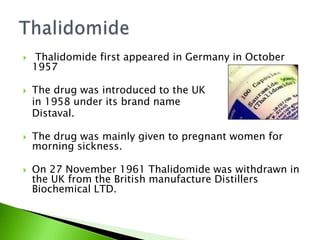
   Thalidomide first appeared in Germany in October
    1957

   The drug was introduced to the UK
    in 1958 under its brand name
    Distaval.

   The drug was mainly given to pregnant women for
    morning sickness.

   On 27 November 1961 Thalidomide was withdrawn in
    the UK from the British manufacture Distillers
    Biochemical LTD.
   The first British thalidomide victim was born
    in January 1959.

   There are currently 455 thalidomide survivors
    in the UK.

   In 1976 it was revealed that Distillers had not
    met the basic testing requirements of the
    time.
   The victim's disabilities range from
    missing limbs and internal
    deformities.

   it is estimated around 40% of thalidomide
    victims died before their first birthday.

   The Thalidomide Trust was established in
    August 1973, to provide support
   Sue for tort of negligence – civil law

   High court – Queen’s Bench

   First case Donoghue v Stevenson 1932

   Must prove duty of care and breach of duty i.e.
    fault

   The Congenital Disabilities (Civil Liability) Act
    1976 – duty of care owed to unborn child
   Breach of duty hard to prove – what would other
    manufacturers have done? Had they taken all
    reasonable care?

   Daniels v White & Son – 14 year old girl sniffing
    bottles of lemonade – breach of duty not proved

   Difficult /impossible to prove breach – Distillers
    would claim they tested product as any other
    manufacturer would have done – drug was
    licensed

   Any compensation – out of court settlement
   Now strict tortious liability under Consumer
    Protection Act 1984 part 1

   No need to prove fault

   But state of art defence would allow manufacturer to
    escape liability

   State of scientific and technical knowledge –
    manufacturer would only have to carry out tests
    known at the time and those that other
    manufacturers would carry out

   Claim would still fail
   The parents of British Thalidomiders were forced to
    fight a protracted court battle for compensation.

   In 1968 a deal was negotiated with Distillers which
    gave 62 victims compensation in an out of court
    settlement (40% of what they might have won if court
    case had been successful)

   After 1968 many out of court settlements followed

   "Y-list“ - 98 children who were suspected of suffering
    deformities due to the drug, but who could not prove
    it and so were unable to claim compensation.
   In 1972, The Sunday Times published the first in a series of
    articles under the headline “Our Thalidomide Children: a Cause
    for National Shame”

   An injunction was issued to stop the campaign

   The Sunday Times then decided to fight the injunction on its
    investigation into the origins and testing of the drug.

 The case went right through the British legal system and up to
  the European Court of Human Rights, which decided that the
  injunction violated the right of “freedom of expression”.
http://www.hrcr.org/safrica/limitations/sunday_times_uk.html
   1973 after 11 year campaign Distillers agreed to pay
    £20 million and to set up a trust fund for victims

   In 2005 Distillers, now part of Diageo, agreed an
    extra one-off payment worth 70% of the annual
    payments

   In 2010 Government issues long-awaited apology
    and a new £20m compensation package to 466
    thalidomiders

   Currently in the UK victims receive, on average
    £18,000 a year

Thalidomide

  • 1.
  • 2.
    Thalidomide first appeared in Germany in October 1957  The drug was introduced to the UK in 1958 under its brand name Distaval.  The drug was mainly given to pregnant women for morning sickness.  On 27 November 1961 Thalidomide was withdrawn in the UK from the British manufacture Distillers Biochemical LTD.
  • 3.
    The first British thalidomide victim was born in January 1959.  There are currently 455 thalidomide survivors in the UK.  In 1976 it was revealed that Distillers had not met the basic testing requirements of the time.
  • 4.
    The victim's disabilities range from missing limbs and internal deformities.  it is estimated around 40% of thalidomide victims died before their first birthday.  The Thalidomide Trust was established in August 1973, to provide support
  • 5.
    Sue for tort of negligence – civil law  High court – Queen’s Bench  First case Donoghue v Stevenson 1932  Must prove duty of care and breach of duty i.e. fault  The Congenital Disabilities (Civil Liability) Act 1976 – duty of care owed to unborn child
  • 6.
    Breach of duty hard to prove – what would other manufacturers have done? Had they taken all reasonable care?  Daniels v White & Son – 14 year old girl sniffing bottles of lemonade – breach of duty not proved  Difficult /impossible to prove breach – Distillers would claim they tested product as any other manufacturer would have done – drug was licensed  Any compensation – out of court settlement
  • 7.
    Now strict tortious liability under Consumer Protection Act 1984 part 1  No need to prove fault  But state of art defence would allow manufacturer to escape liability  State of scientific and technical knowledge – manufacturer would only have to carry out tests known at the time and those that other manufacturers would carry out  Claim would still fail
  • 8.
    The parents of British Thalidomiders were forced to fight a protracted court battle for compensation.  In 1968 a deal was negotiated with Distillers which gave 62 victims compensation in an out of court settlement (40% of what they might have won if court case had been successful)  After 1968 many out of court settlements followed  "Y-list“ - 98 children who were suspected of suffering deformities due to the drug, but who could not prove it and so were unable to claim compensation.
  • 9.
    In 1972, The Sunday Times published the first in a series of articles under the headline “Our Thalidomide Children: a Cause for National Shame”  An injunction was issued to stop the campaign  The Sunday Times then decided to fight the injunction on its investigation into the origins and testing of the drug.  The case went right through the British legal system and up to the European Court of Human Rights, which decided that the injunction violated the right of “freedom of expression”. http://www.hrcr.org/safrica/limitations/sunday_times_uk.html
  • 10.
    1973 after 11 year campaign Distillers agreed to pay £20 million and to set up a trust fund for victims  In 2005 Distillers, now part of Diageo, agreed an extra one-off payment worth 70% of the annual payments  In 2010 Government issues long-awaited apology and a new £20m compensation package to 466 thalidomiders  Currently in the UK victims receive, on average £18,000 a year