Presented by
ALAN SUTHAN
II ND YEAR BSC NURSING

There is no cure for tetanus.
Treatment focuses on managing complications until the effects
of tetanus toxin resolves.
Fatality is high in individuals who haven’t been immunized and
in older adults with adequate immunization
MEDICAL MANAGEMENT OF
TETANUS

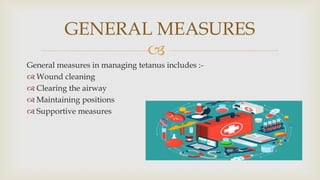
General measures in managing tetanus includes :-
 Wound cleaning
 Clearing the airway
 Maintaining positions
 Supportive measures
GENERAL MEASURES

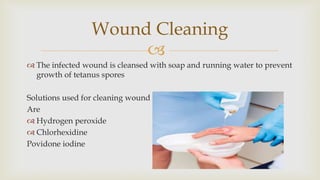
 The infected wound is cleansed with soap and running water to prevent
growth of tetanus spores
Solutions used for cleaning wound
Are
 Hydrogen peroxide
 Chlorhexidine
Povidone iodine
Wound Cleaning

 If muscle spasms or seizure activity occurs, place the patient at risk for
airway compromise. Use Chin lift or jaw thrust to maintain an open
airway
 Insert an oral or nasal airway before seizures, but if patient has
lock jaw do not attempt to force a airway in place. Because, you may
injure the patient and worsen the airway patency
Clearing Airway

 Place the patient in a quiet, dark room to reduce
environmental stimuli.
Position the patient who is unconscious or paralyzed from
pharmacological agents in a sidelying position
Turn the patient every second hourly
Maintaining Positions

Support effective coping mechanisms and provide
appropriate referals to the chaplain, or counsellor. If the
patient of family members demonstrate ineffective coping
behaviour
Supportive Measures

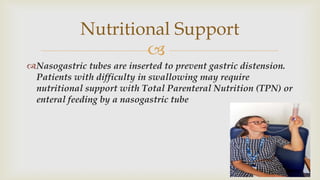
Nasogastric tubes are inserted to prevent gastric distension.
Patients with difficulty in swallowing may require
nutritional support with Total Parenteral Nutrition (TPN) or
enteral feeding by a nasogastric tube
Nutritional Support

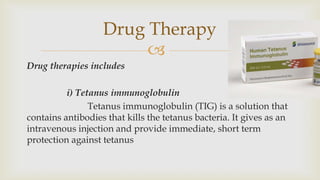
Drug therapies includes
i) Tetanus immunoglobulin
Tetanus immunoglobulin (TIG) is a solution that
contains antibodies that kills the tetanus bacteria. It gives as an
intravenous injection and provide immediate, short term
protection against tetanus
Drug Therapy

ii) Antibiotics
Antibiotics such as Penicillin and Metronidazole are sometimes used to
treat tetanus infection. They work by preventing the clostridium tetany
bacteria from multiply stopping the tetanospasmin from spreading
Tab Metronidazole 500mg IV Q8h
Penicillin G :- 2-4 Million units IV Q6h
Drug therapy

Muscle Relaxants
Baclofen (Liovesal) and dantrolene (dantrium) are two muscle
relaxing medicines that are sometimes prescribed as to help ease the
symptoms of muscle stiffness and muscle spasm. Pantrolene is prescribed
incase of chronic muscle spasticity
Drug Therapy

Anti Convulsants
Anticonvulsants such as Diazepam are often used to treat muscle spasms
caused by tetanus infection
Neuromuscular Blocking Agents
It blocks the signals transmitted from the nerves to muscle fiber and
controlls muscle spasms
Eg :- Vencuronium
Drug Therapy

1. Foods can only be given in liquid form, but if a front or side tooth is
absent. A soft rubber catheter is passed in a between the set teeth
and fluids can be poured into mouth through it
2. Milk , egg albumin, egg noy, beef, mutton, malted gruels shiuld be
given as frequently as the condition of patient will admit
3. Calorie intake :- The people with infection needs to consume a high
amount of calories of 3,500 -4,000 is recommended
Dietary management

 Protein intake
 15g of protein rich foods like milk egg, pulses should be
consumed in a day
Dietary Management

ASSESSMENT
 Assess the patient for clinical manifestations like muscle spasms
 Assess the medical and vaccination history of the client to check the level
of immunity
 Monitor vital signs regularly
 Regularly check the clients ability to swallow food
 Assess the puncture site, if any occurence of infections
Nursing Management

 Provide complete bed rest to the client
 Keep the client in a dimlighted, quiet and well ventilated room, as
spasms can be preciptated by bright light, noise or even touch
 Minimize the external stimuli
 Fluid and electrolyte balance should maintained
 Prompt Suctioning and oxygen administration is essential
 Due to spasm and increased Muscle activity, latients are exhausted and
beed extra calories, so provide high calories and protein diet to patient
Nursing interventions

 NG feeding must be given incase of dysphagia
 Tepid sponging may be done regularly incase of high fever
 Change positions every 2nd hourly to prevent bedsores
 General hygiene including bathing, oral care and elimination should be
maintained
 Carewound such as removal of necrotized tissues, cleaning with
antibiotic ointment is done
Nursing interventions

 Acute pain related to spasm of facial muscles as manifested by patients
verbalization / pain scale reading
 Altered thermoregulatory pattern related to fever and chills as
manifested by elevated body temperature
 Disturbed sleeping pattern related to headache as manifested by sunken
eyes and frequent yawning
 Fluid volume deficit related to diarrhea as manifeeted by intake output
chart
Nursing Diagnosis

 Anxiety related to hospitalization as manifested by facial expression
 Knowledge deficit related to disease condition as manifested by
frequently asking doubts
Nursing Diagnosis

tetanus.pptx communicable diseases medsurg

  • 1.
    Presented by ALAN SUTHAN IIND YEAR BSC NURSING
  • 2.
     There is nocure for tetanus. Treatment focuses on managing complications until the effects of tetanus toxin resolves. Fatality is high in individuals who haven’t been immunized and in older adults with adequate immunization MEDICAL MANAGEMENT OF TETANUS
  • 3.
     General measures inmanaging tetanus includes :-  Wound cleaning  Clearing the airway  Maintaining positions  Supportive measures GENERAL MEASURES
  • 4.
      The infectedwound is cleansed with soap and running water to prevent growth of tetanus spores Solutions used for cleaning wound Are  Hydrogen peroxide  Chlorhexidine Povidone iodine Wound Cleaning
  • 5.
      If musclespasms or seizure activity occurs, place the patient at risk for airway compromise. Use Chin lift or jaw thrust to maintain an open airway  Insert an oral or nasal airway before seizures, but if patient has lock jaw do not attempt to force a airway in place. Because, you may injure the patient and worsen the airway patency Clearing Airway
  • 6.
      Place thepatient in a quiet, dark room to reduce environmental stimuli. Position the patient who is unconscious or paralyzed from pharmacological agents in a sidelying position Turn the patient every second hourly Maintaining Positions
  • 7.
     Support effective copingmechanisms and provide appropriate referals to the chaplain, or counsellor. If the patient of family members demonstrate ineffective coping behaviour Supportive Measures
  • 8.
     Nasogastric tubes areinserted to prevent gastric distension. Patients with difficulty in swallowing may require nutritional support with Total Parenteral Nutrition (TPN) or enteral feeding by a nasogastric tube Nutritional Support
  • 9.
     Drug therapies includes i)Tetanus immunoglobulin Tetanus immunoglobulin (TIG) is a solution that contains antibodies that kills the tetanus bacteria. It gives as an intravenous injection and provide immediate, short term protection against tetanus Drug Therapy
  • 10.
     ii) Antibiotics Antibiotics suchas Penicillin and Metronidazole are sometimes used to treat tetanus infection. They work by preventing the clostridium tetany bacteria from multiply stopping the tetanospasmin from spreading Tab Metronidazole 500mg IV Q8h Penicillin G :- 2-4 Million units IV Q6h Drug therapy
  • 11.
     Muscle Relaxants Baclofen (Liovesal)and dantrolene (dantrium) are two muscle relaxing medicines that are sometimes prescribed as to help ease the symptoms of muscle stiffness and muscle spasm. Pantrolene is prescribed incase of chronic muscle spasticity Drug Therapy
  • 12.
     Anti Convulsants Anticonvulsants suchas Diazepam are often used to treat muscle spasms caused by tetanus infection Neuromuscular Blocking Agents It blocks the signals transmitted from the nerves to muscle fiber and controlls muscle spasms Eg :- Vencuronium Drug Therapy
  • 13.
     1. Foods canonly be given in liquid form, but if a front or side tooth is absent. A soft rubber catheter is passed in a between the set teeth and fluids can be poured into mouth through it 2. Milk , egg albumin, egg noy, beef, mutton, malted gruels shiuld be given as frequently as the condition of patient will admit 3. Calorie intake :- The people with infection needs to consume a high amount of calories of 3,500 -4,000 is recommended Dietary management
  • 14.
      Protein intake 15g of protein rich foods like milk egg, pulses should be consumed in a day Dietary Management
  • 15.
     ASSESSMENT  Assess thepatient for clinical manifestations like muscle spasms  Assess the medical and vaccination history of the client to check the level of immunity  Monitor vital signs regularly  Regularly check the clients ability to swallow food  Assess the puncture site, if any occurence of infections Nursing Management
  • 16.
      Provide completebed rest to the client  Keep the client in a dimlighted, quiet and well ventilated room, as spasms can be preciptated by bright light, noise or even touch  Minimize the external stimuli  Fluid and electrolyte balance should maintained  Prompt Suctioning and oxygen administration is essential  Due to spasm and increased Muscle activity, latients are exhausted and beed extra calories, so provide high calories and protein diet to patient Nursing interventions
  • 17.
      NG feedingmust be given incase of dysphagia  Tepid sponging may be done regularly incase of high fever  Change positions every 2nd hourly to prevent bedsores  General hygiene including bathing, oral care and elimination should be maintained  Carewound such as removal of necrotized tissues, cleaning with antibiotic ointment is done Nursing interventions
  • 18.
      Acute painrelated to spasm of facial muscles as manifested by patients verbalization / pain scale reading  Altered thermoregulatory pattern related to fever and chills as manifested by elevated body temperature  Disturbed sleeping pattern related to headache as manifested by sunken eyes and frequent yawning  Fluid volume deficit related to diarrhea as manifeeted by intake output chart Nursing Diagnosis
  • 19.
      Anxiety relatedto hospitalization as manifested by facial expression  Knowledge deficit related to disease condition as manifested by frequently asking doubts Nursing Diagnosis