Test Taking Skills

University of Miami School of Nursing and
              Health Studies
Be Positive
 Maintaining a positive attitude will help you
  succeed.

 Take responsibility for your learning. Avoid
  negative talk about the faculty or the exam itself.

 Exams measure performance not your personal
  worth.

 Practice positive self- talk.
Examples of Affirmations
 “I am an excellent test-taker.”
 “I have a strong knowledge
  base in this content.”
 “I will pass this test.”
Be Calm
 Being well prepared for an exam will help to
 decrease anxiety- Maintain a positive attitude
 while preparing for exam is important

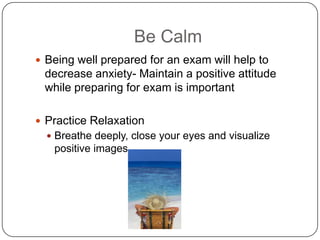
 Practice Relaxation
   Breathe deeply, close your eyes and visualize
   positive images
Be Calm
 Arrive to class early to avoid the stress of being
 late

 Avoid the last minute chatter of other students


 Bring everything you will need for the exam such
 as your laptop, pencil and calculator if needed.
Be Prepared Physically

 Get a good nights sleep prior to the exam. Sleep
 deprivation is a leading cause of poor productivity
 and performance.
  Without a proper amount of sleep your reaction
 time, memory and concentration can all be
 affected. Don’t cram the night before the exam.
Be Prepared Physically
 Choose to wear comfortable, layered clothes
 Eat a healthy but light meal before leaving to take the
  exam
   Avoid simple carbohydrates like a donut or danish

   Choose to eat something with protein and fat to
     sustain you through the exam; examples
    include peanut butter on toast
    or an egg sandwich

 Avoid excessive caffeine or   other stimulants
Be Prepared Academically
 Devise a study schedule in advance of the exam.
 Plan to review content area per evening, day, or
 weekend for example. Students often feel they
 have run out of time.

 Utilize available resources such as your textbook,
 on line practice questions, case studies, etc.

 Seek study partners that challenge you. Avoid
 study groups that are non productive.

 Refer to study skills presentation for more
 information.
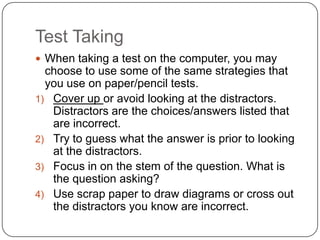
Test Taking
 When taking a test on the computer, you may
  choose to use some of the same strategies that
  you use on paper/pencil tests.
1) Cover up or avoid looking at the distractors.
   Distractors are the choices/answers listed that
   are incorrect.
2) Try to guess what the answer is prior to looking
   at the distractors.
3) Focus in on the stem of the question. What is
   the question asking?
4) Use scrap paper to draw diagrams or cross out
   the distractors you know are incorrect.
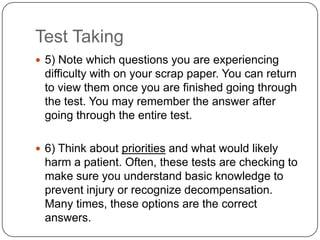
Test Taking
 5) Note which questions you are experiencing
 difficulty with on your scrap paper. You can return
 to view them once you are finished going through
 the test. You may remember the answer after
 going through the entire test.

 6) Think about priorities and what would likely
 harm a patient. Often, these tests are checking to
 make sure you understand basic knowledge to
 prevent injury or recognize decompensation.
 Many times, these options are the correct
 answers.
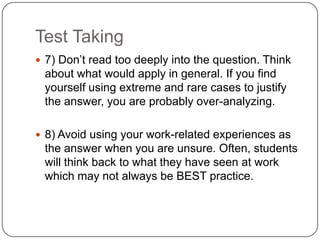
Test Taking
 7) Don’t read too deeply into the question. Think
 about what would apply in general. If you find
 yourself using extreme and rare cases to justify
 the answer, you are probably over-analyzing.

 8) Avoid using your work-related experiences as
 the answer when you are unsure. Often, students
 will think back to what they have seen at work
 which may not always be BEST practice.
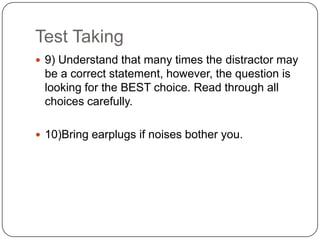
Test Taking
 9) Understand that many times the distractor may
 be a correct statement, however, the question is
 looking for the BEST choice. Read through all
 choices carefully.

 10)Bring earplugs if noises bother you.
Test-Taking Anxiety
 If you experience a bit of test-taking anxiety at
 first (i.e. heart pounding, sweating, difficulty
 thinking), just wait it out. Generally, the fight-or-
 flight response settles within 5 minutes. You may
 want to exercise prior to the exam to relieve
 stress if anxiety continues to be an issue. A brisk
 walk around campus might help.
“Decide what you want,
 decide what you are willing
 to exchange for it.
 Establish your priorities
 and go to work.”
 H. L. Hunt

Testtakingskills5 24-12

  • 1.
    Test Taking Skills Universityof Miami School of Nursing and Health Studies
  • 2.
    Be Positive  Maintaininga positive attitude will help you succeed.  Take responsibility for your learning. Avoid negative talk about the faculty or the exam itself.  Exams measure performance not your personal worth.  Practice positive self- talk.
  • 3.
    Examples of Affirmations “I am an excellent test-taker.”  “I have a strong knowledge base in this content.”  “I will pass this test.”
  • 4.
    Be Calm  Beingwell prepared for an exam will help to decrease anxiety- Maintain a positive attitude while preparing for exam is important  Practice Relaxation  Breathe deeply, close your eyes and visualize positive images
  • 5.
    Be Calm  Arriveto class early to avoid the stress of being late  Avoid the last minute chatter of other students  Bring everything you will need for the exam such as your laptop, pencil and calculator if needed.
  • 6.
    Be Prepared Physically Get a good nights sleep prior to the exam. Sleep deprivation is a leading cause of poor productivity and performance. Without a proper amount of sleep your reaction time, memory and concentration can all be affected. Don’t cram the night before the exam.
  • 7.
    Be Prepared Physically Choose to wear comfortable, layered clothes  Eat a healthy but light meal before leaving to take the exam  Avoid simple carbohydrates like a donut or danish  Choose to eat something with protein and fat to sustain you through the exam; examples include peanut butter on toast or an egg sandwich  Avoid excessive caffeine or other stimulants
  • 8.
    Be Prepared Academically Devise a study schedule in advance of the exam. Plan to review content area per evening, day, or weekend for example. Students often feel they have run out of time.  Utilize available resources such as your textbook, on line practice questions, case studies, etc.  Seek study partners that challenge you. Avoid study groups that are non productive.  Refer to study skills presentation for more information.
  • 9.
    Test Taking  Whentaking a test on the computer, you may choose to use some of the same strategies that you use on paper/pencil tests. 1) Cover up or avoid looking at the distractors. Distractors are the choices/answers listed that are incorrect. 2) Try to guess what the answer is prior to looking at the distractors. 3) Focus in on the stem of the question. What is the question asking? 4) Use scrap paper to draw diagrams or cross out the distractors you know are incorrect.
  • 10.
    Test Taking  5)Note which questions you are experiencing difficulty with on your scrap paper. You can return to view them once you are finished going through the test. You may remember the answer after going through the entire test.  6) Think about priorities and what would likely harm a patient. Often, these tests are checking to make sure you understand basic knowledge to prevent injury or recognize decompensation. Many times, these options are the correct answers.
  • 11.
    Test Taking  7)Don’t read too deeply into the question. Think about what would apply in general. If you find yourself using extreme and rare cases to justify the answer, you are probably over-analyzing.  8) Avoid using your work-related experiences as the answer when you are unsure. Often, students will think back to what they have seen at work which may not always be BEST practice.
  • 12.
    Test Taking  9)Understand that many times the distractor may be a correct statement, however, the question is looking for the BEST choice. Read through all choices carefully.  10)Bring earplugs if noises bother you.
  • 13.
    Test-Taking Anxiety  Ifyou experience a bit of test-taking anxiety at first (i.e. heart pounding, sweating, difficulty thinking), just wait it out. Generally, the fight-or- flight response settles within 5 minutes. You may want to exercise prior to the exam to relieve stress if anxiety continues to be an issue. A brisk walk around campus might help.
  • 14.
    “Decide what youwant, decide what you are willing to exchange for it. Establish your priorities and go to work.” H. L. Hunt